Tag Archives: Parenting

Differences

“I want to write about being an Autistic girl.  Sometimes difference isn’t easy.  Easiest is to be like everyone else.  Trying to fit in when you act and talk like me only makes everyone more aware of how I am not the same.  Blending in isn’t an option for me.  I stand out anyway. ~  Emma Zurcher-Long

Emma’s words, written last night, reminded me of the TED talk Sir Ken Robinson gave eight years ago, in 2006.  A talk that more than 26 MILLION people have watched on the TED channel, more than 6 million on Youtube

“…If you’re not prepared to be wrong, you’ll never come up with anything original.” ~  Sir Ken Robinson

He also said later in this same talk,  “…the consequence is that many highly talented, brilliant, creative people think they’re not, because the thing they were good at at school wasn’t valued, or was actually stigmatized. And I think we can’t afford to go on that way.”

He wasn’t referring to children with a different neurology.  He was referring to the NON autistic population!  Now think about his words in relation to those with a different neurology…  “wasn’t valued, or was actually stigmatized.”  THIS, this is something I think about all the time.  What if… what if we lived in a society that actually valued Autistic neurology?

We need to radically rethink our view of intelligence,” Sir Ken Robinson said.  He also said, “…creativity — which I define as the process of having original ideas that have value — more often than not comes about through the interaction of different disciplinary ways of seeing things.”  An Autistic brain is all about seeing things differently from the majority of the population.  Why are we trying to temper this?  Why do we spend so much time, energy, effort and money on trying to make Autistic people like their NON autistic peers?  Doesn’t this seem like a massive waste of time?  It does to me.  And this isn’t even taking into account the trauma we are inflicting on a group of people who canNOT be like their non autistic peers even if they were motivated to be.  

Sir Ken Robinson goes on to tell a story about a girl who is failing in school.  Her teachers are complaining, she can’t stop fidgeting, she’s doing poorly in all subjects and the mother takes her to a specialist who after listening to all the things the girl is doing wrong, tells the girl he has to speak with her mother privately and together they leave the room, but not before he turns on the radio.  “And when they got out the room, he said to her mother, “Just stand and watch her.” And the minute they left the room, she was on her feet, moving to the music. And they watched for a few minutes and he turned to her mother and said, “Mrs. Lynne, Gillian isn’t sick; she’s a dancer. Take her to a dance school.”

That girl, Gillian went on to graduate from the Royal Ballet School “and founded her own company — the Gillian Lynne Dance Company — met Andrew Lloyd Weber. She’s been responsible for some of the most successful musical theater productions in history.”

I’m not saying all of our kids will become famous dancers, heading up their own companies, but what I AM saying is that it’s time to rethink how we think about autism and our Autistic children who will one day grow up to be Autistic adults.  We can crush them with the insistence they conform, despite all evidence suggesting they cannot or we can encourage them to flourish.  We can insist they communicate like their non autistic peers and subject them to endless hours of therapies created to train them in how to be indistinguishable from their peers.  OR we can find other ways, creative ways to help them be all they can be.

Sir Ken Robinson ends his talk, which I hope you’ll watch if you haven’t already, by talking about the gift of human imagination and using it wisely.  He says, “the only way we’ll do it is by seeing our creative capacities for the richness they are and seeing our children for the hope that they are.”

“Seeing our children for the hope that they are.”

This, it seems to me, is at the crux of everything.  Every single child born, no matter how different they may be from the majority of people, must be approached with this in mind.

“Blending in isn’t an option for me.  I stand out anyway.” ~  Emma Zurcher-Long

Contemplation
Contemplation

“It’s Important That Other Parents Understand.”

Written by Emma Zurcher-Long

“I will talk about the upheaval from last night”

“I toyed with downward feelings of rage then

as bountiful memories seeped into my raging mind

I surrendered to purposeful sleep

my screaming mind is momentarily spared from stormy thoughts

piercing my being

threatening no kindness

patience is ground down til pounding terror is all that remains.

Only the dedicated few

talk about love during episodes of furious pain

their love is rejuvenative and restores faith in this awkward world.”


From Ariane:

Emma wrote this after having a very rough night over the weekend.  I asked her if it was okay to post her beautiful words here and she agreed.  I asked because there was a time before we had found a way to support Emma’s outpouring of words, before she was able to write, before we were able to understand, before we understood…  those were the times when nights such as the one she is referring to were even more devastating for all of us and our assumptions about what might be going on were so often wrong.  Emma agreed to post this because, “It’s important that other parents understand.”  The problem with the assumptions we made was that they often led us to then behave accordingly, even without meaning to, they affected how we responded to her.

We might have thought – this is a manipulation, she is doing this to us.  We are being held hostage to her screams.  We would mistake her terror for manipulation.  We might withhold our love in anger.  We might assume that to not do so was giving in or condoning the “behavior”.  We might do any number of things to “show” her that this way of being was unacceptable.  Except that this “way of being” was so beyond the scope of our experiences, so beyond what we could make sense of.

“Pounding terror is all that remains.”

And so I remembered afterward the comments from this post, “What Others Had to Say: Love, Overwhelm, Violence” and all the people who so generously opened up their lives and wrote about their experiences with being overwhelmed and no longer able to cope.  That point when feelings completely take over and all we can do is weather the storm.  Emily K. wrote: “Remove yourself from “their” space but do not leave. Defend yourself but do not leave. Let your child Leave/ escape and do not block his/her path. Follow but do not intrude. Allow space and time do not react but respond in the opposite, we need peaceful and loving parents.”

And Autisticook who wrote:  “It will get better.”

And she also wrote this:  “Teach me how to be upset. Show me there are other ways of being upset, instead of only telling me the way I have chosen is wrong and leaving it at that.”

And this:  “You’re the adult, so I’m depending on you to explain to me what I’m doing and why. I won’t be able to correct you on your assumptions until I’m an adult myself. So please be careful in learning my behaviour and don’t label it until you’re absolutely sure. It’s also OK to ask my input on this when I’m calm and happy.”

And this:  “Allow me a way out. If my self-regulating isn’t allowed, I can guarantee you I will get a meltdown. And once I am in that space, all I can think of is making the thing stop that made me go into meltdown. I only have short term memory and very limited reasoning power when I go into meltdown, so I will latch onto whatever trigger I see in front of me.”

And this:  “I will keep triggering until the world is empty of triggers or until I am utterly exhausted. So if you hold me down, you’re actually keeping me in the world of triggers. I need a different world that is practically triggerless. But I’m too young to know this, which is why I will sometimes keep following you and hitting you even though you try to remove yourself. Because I want the upset feeling to stop and the only way I know how to stop something is to hit it until it stops moving.”

And THIS.  This is SO important:  “Don’t ask me questions.  If you want to know how I’m feeling, please ask me afterwards, when I have calmed down and can find my words again.

And this: “Don’t try to distract me.”

And this:  “Once I’m in my safe space and I know people will no longer ask me questions and I can block out the noises and lights and stim to my heart’s content without someone telling me it’s wrong, I usually calm down within an hour or two.”

And finally, this:  “Please give me time to process.”

I would like to report here that I remembered each and every one of these things and that I put them all into action, but I didn’t.  What I did do was try to remain calm and loving.  And when my calm began to fray, I tried to remove myself, while reminding her of my love.  I did a number of things right, and I made a number of mistakes.   We are all learning here.  When calm was restored Emma said she wanted to write about “the upheaval from last night.”  This was in response to my question, “Is there something in particular you want to talk about this morning or would you prefer we discuss an article from the New York Times?

I was surprised she wanted to talk about it.  And then she wrote those beautiful words, which I can only describe as less prose and more poetry, a song, really.  A song borne of experience, despair, and transformed into a thing of beauty.

The beauty of Emma.

Emma ~ 2012

Emma ~ 2012


The Dreaded IEP Meeting

Those annual IEP (Individualized Education Plans) meetings all parents of children with “special needs” attend are something I used to dread.  Meant to ensure our children are given the supports and accommodations they need, I went to our first meeting with eager anticipation.  This was where, I thought, we would be able to work with a team of people all of whom had the same goal for our child – getting and giving her the best supports and accommodations available so that she could flourish.

What quickly became apparent however was that this was when her team would write a series of bullet points describing all that was wrong with her.  All the ways in which she fell short, all the ways she demonstrated how incapable she was, were described in detail, documented and added to her growing file.  This was the time, once a year, when I would sit and listen to that itemization, fighting back my tears.  The few things said during that first IEP meeting that were supposedly positive regarding spoken language, were written as a criticism, “…uses gestures to whine or protest.  She is described as shouting or vocalizing to gain attention.”   I would leave these meetings feeling hopeless and filled with the sort of despair I described in yesterday’s post, Dare to Hope.

Today, almost ten years after that first IEP was written, Emma writes by pointing to letters on a letter board and more recently with both her RPM teacher and me, she is typing on a bluetooth keyboard attached to an iPad.  No one touches her as she writes.  Emma has written before about the words that come out of her mouth.  I will quote her, since the way she describes what happens to her when she speaks is far more descriptive and eloquent than anything I might write.  Emma wrote yesterday in her IEP meeting, “I try to talk, but the words just come out wrong.”  A few months ago she wrote how she wished people would, “listen to my writing voice, but they listen to my talking voice instead.”

As always, I asked Emma if I could write this post about her first IEP, as an example of the assumptions made and how far off we were in our thinking as well as a document for those of you who are at the beginning of all of this.  Emma generously agreed that this was a good idea and wrote, “know that just because a kid doesn’t talk or talks like me, doesn’t mean the words that come out are the same words that are in their mind.”  Regarding her so-called “behaviors” which Emma describes as a body/mind disconnection, she wrote,”I hope to better control my misbehaving body, but sometimes it won’t obey.”

A few weeks ago I asked Emma if she could remember when she was very young.  She wrote, “Yes, my body could not behave because I was not able to cope… too many competing sensations.  I couldn’t make sense of everything that did not connect me with my irritable body.”  Now keeping her words in mind, read these words taken from her IEP, dated 2005 (Emma was three years old):

Emma avoids “looking others in the eye, does not answer when people talk to her, does not get along with other children, seems unresponsive to affection and shows little affection towards people, withdrawn…”

“The skills that she does not show evidence of include:  does not yet engage in make believe play, does not yet match objects, complete interlocking puzzles, repeat digit sequences, identify body parts or show understanding of number concepts.  She does not yet point to body parts, clothing items, prepositional commands, or know size.  She does not participate in story telling or give her full name or use pronouns… and shows limited interest in other children.”

The report goes on to say:

  “She does not vocalize when another person calls her name.  She produces a variety of consonant sounds.”

When I read Emma’s words and the way she describes some of what was going on for her and compare her words to the words written on her IEP, it is impossible not to see the massive disconnect between what was actually going on and what all of us assumed was going on.  It is from those assumptions that her goals were then created.  Goals such as:  “Emma will increase communicative intent via word and/or gesture to consistently request object article/toy/food (8/10) trials.”  “Emma will maintain eye contact and prompt (8/10) trials.” “Emma will use at least 10 objects functionally, 4/5x”  “Emma will imitate 1-2 word utterances during play, 4/5x” the list goes on, but the goals are all either regarding compliance and/or acting according to non autistic standards of behavior using spoken language.

In contrast, yesterday we went to Emma’s IEP meeting with Emma, who contributed her own thoughts and opinions about the goals that were set by writing on the keyboard I held for her.   At one point she wrote, “it’s very good having time to go over goals.”  And when asked about the efficacy of being asked to use a mood chart, she wrote, “Sometimes I feel many things at once.  Would the mood chart work for you?”

Can I just say how proud I am that my daughter asked this question?  And by the way – No, Emma, being asked to chart my moods or anticipate what my mood might be would not work for me.  I think it would actually really piss me off if I was asked, while feeling both upset, sad, frustrated, maybe a little frightened and annoyed  to use one word to describe what I was feeling and then was asked, “What’s wrong?” when I could not rely on spoken language to adequately express myself and no one could support me in the way I needed, so that I could write either.

What was wonderful about yesterday’s IEP meeting was that her staff is dedicated and completely committed to listening to Emma and learning from her what it is that she needs and wants.  Everyone was kind, thoughtful and patient and in the end we have an IEP that reflects our goals for Emma, but more importantly it is a reflection of her goals for herself.

Emma the year before that first IEP

Emma ~ 2004, the year before that first IEP


Outpouring of Words ~ By Emma Zurcher-Long

Three Haikus By Emma Zurcher-Long for #AutismPositivity2014

*Emma writes by typing on a bluetooth qwerty keyboard attached to her iPad.  For more about the way Emma communicates, read – How we Got Here

Springtime
My writing blossoms
greeting welcoming smiles of
 encouragement gladly.
Springtime

Springtime

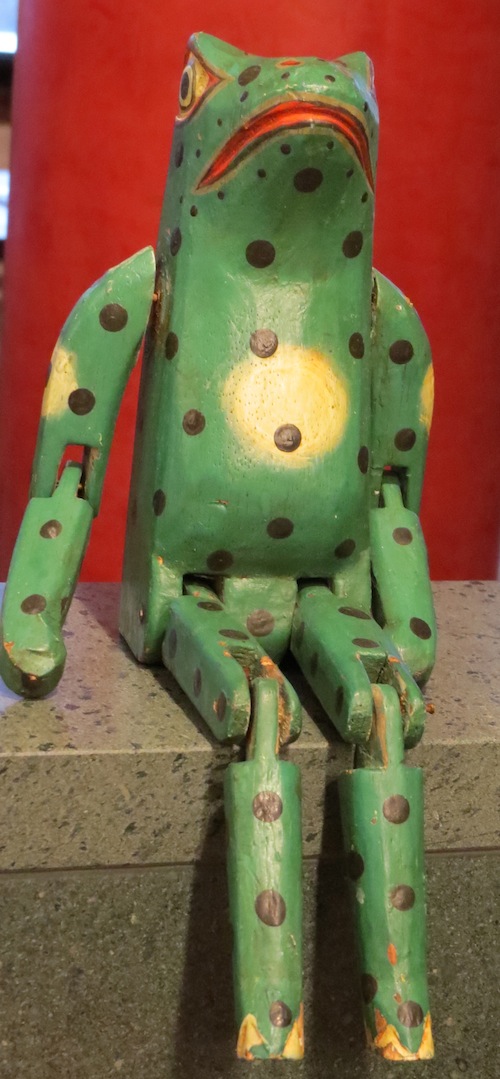
Frog
Green with envy you
strain to jump as far and high
daring to come close.
Frog

Frog

Rain
Lashing down, I run
to find shelter but there’s none,
laughter, roaming, I stay.
Rain

Rain

As the parent to a child who has been described as “verbal” but who was thought to be unable to understand much of what was said to her because she could not answer with spoken language questions such as, “How old are you?”  I will never be able to adequately describe what it is like to read my daughter’s words.

This blog began as a document of hope for our daughter, but it has evolved to become a message of hope to parents who feel the kind of despair and terror I once did.   As Emma wrote, “I am smarter than most people think.  So many kids are just like me.”

This post is dedicated to the Autism Positivity Flashblog going on all day today.

If you would like to submit to the flashblog, here is the submission form.

Autism Graphics

In the last two days I have been sent two different graphics supposedly about autism, but that upon reading take my breath away because of their blatant inaccuracies and biases.   The last one was in the shape of a pyramid in a shade of blue I’ve come to despise with the heading, “Impairment in Imagination” and I just wanted to cry.  Impairment in imagination?

You have no idea how much I wanted to hit the delete button and scream or bite someone, which always reminds me of a scene in the British comedy, Shawn of the Dead where the main character’s mom is bitten by a zombie, but she doesn’t say anything until her son asks, “Mom, are you okay?  Did he get you?”  And the mother smiles weakly, as blood gushes from her arm and replies, “Well, he was a bit bitey.”  Hilarious.  Only what I was feeling when I read “Impairment of imagination” was not hilarious.  No.  Not at all.

Underneath that unfortunate heading was written, “Deficits in flexible thinking regarding interests, routines, perspectives and rules.”  Two key words are used in these first two sentences “Impairment” in the heading and “deficit” in the second.  The first is just incorrect and the second is a stereotype that while it may be true for some people it certainly cannot be stated as fact for ALL people.  I purposely did not say “Autistic” people because rigidity and a reluctance to see another’s point of view are things many human beings have trouble with and this is not something that can be pinned on one specific neurology.

Below this, the graphic reads, “does not understand other people’s points of view or feelings.”  Again I could list a number of non autistic people in the news who would certainly be terrific examples of this sentence.  To suggest that this is a defining characteristic of Autism is inaccurate and plays into the whole “lacking empathy myth” that so many believe as fact about Autistic people.  Please read Drs Kamila and Henry Markram’s Intense World Theory of Autism for another thought regarding autism.  And by the way, the Markram’s, both of whom are neuroscientists, call it a “theory” because they understand that it is not scientifically proven fact, but a theory they developed and continue to tweak as they learn more.  They are highly regarded, acclaimed, well published and the two people working in the field of autism whose work I believe will eventually change how autism is viewed.

The next line of text on the graphic reads, “Agitated by changes in routine.”  This line would actually be fine if it weren’t for all that precedes it.  But I would also suggest that this line could be said about all young children.  And in the end this is my criticism of the information that is being given to people about autism.  Autism as defined by a list of deficits that added up does little other than to create panic in parents of Autistic children.  I’ve written about this before ‘here‘, ‘here‘ and ‘here.’   These posts are just a few examples of things I’ve written describing what fear did to me and why terror does not motivate people to make good decisions or help them decide how they can best support and encourage their children to be all they can be.

This particular graphic goes on with headings of:  “Impairment in Social Relationships,” “Impairment in Social Communication” and at the base of the pyramid the heading says:  “Additional Difficulties” where they list, among other things, “Appears to enjoy being held/restrained…”  NO!  This is absolutely wrong.  You cannot write that someone “appears” to “enjoy” “being restrained” thereby justifying sadistic behavior done by staff/therapists/parents/ANYONE.  And again, I  want to SCREAM!  Who is writing something like this?  This is a graphic that is being used by a school for Autistic children.  It is a graphic that is stating things as though proven fact.  A graphic that parents, children, educators are seeing.

We have to ask ourselves – WHAT ARE WE DOING?  How is it okay to publish such statements as though they are fact about a neurology that the best neuroscientists in the world are baffled by?

Please.  If you are confronted with a graphic that is anything like what I’ve just described, do NOT share it.  Do NOT believe that these things are a fact, just because they are written as though they are.  Do not add to the misinformation by repeating it.  DO NOT.  It is statements like this, one page info graphics written by non autistic people, who are not neuroscientists, who seem to know very little about autism that cause tremendous damage to the Autistic population.

We must all become critical thinkers when it comes to information about autism. We know very little about the human brain.  The best and smartest neuroscientists in the world are working hard to gain a better understanding. Most of what we are being told are theories, please let’s not treat these as fact.

Emma ~ 2010

Emma ~ 2010

Related Posts:
Unstrange Mind – Schools Supporting the Idea that…

“Picky Eater”

“Picky eater.”  This is how Emma has described herself and gave me permission to quote.  Food and eating in relationship to my daughter are topics I have (in the last year and a half) avoided on this blog  for a variety of reasons, but the biggest being, because I spent twenty-two years of my life in the throes of an eating disorder documented ‘here‘ and ‘here‘ and so have very conflicted opinions about all of this.  I have no problem discussing my own issues regarding food, but I don’t have that leeway when talking about my daughter’s relationship to food.  It’s not my story to tell, it’s hers.

So this post will not be about her interactions with food as much as it will concentrate on my own as the parent of a “picky eater.”  Despite my better instincts, I became way too involved in my daughter’s food, what she ate, what she didn’t.  I made the mistake of believing there was a link between her inability to speak and what she was or wasn’t eating and that concern overrode my gut feeling that I needed to stay out of it…  twice.  As a result, this happened.  The first time I “managed” her food intake was when she was just two years old, despite all the medical tests showing she had no intolerances or allergies to anything.  The second time was far worse and more traumatic and it was because of those six weeks, when she stopped eating, lost a tremendous amount of weight, that I realized I had to stop trying to control what she did or didn’t eat.  Please remember I am writing this from the perspective of someone who has huge personal issues with food.  This is important.

I have heard from a number of people who have found from various tests done by their doctors or through their own experimentation that they feel better if they stay away from particular foods, others have been diagnosed as celiac or have specific food intolerances and allergies that when avoided has changed their lives significantly.  This is true for all people and not just a specific neurology, though it may prove to be more prevalent in Autistic neurology, or it may be that Autistic neurology makes some experience the discomfort they feel more intensely. Either way, it is absolutely a fact that some people are allergic or have an intolerance to some foods.

When I first put my daughter on a gluten-free/ casein free diet I was filled with trepidation because of my history as both bulimic and anorexic.  I worried about the unforeseen consequences of controlling her food choices, particularly as my eating disorder had nearly fatal consequences.  When I gave birth to my daughter I was so relieved when she ate just about anything offered.  As time went on and she began to narrow what she would and wouldn’t eat I became concerned, but wary of becoming too involved.  I was hyper aware of offering healthy foods to my children, while not becoming overly controlling.  So far so good.  And then Emma was diagnosed with autism and in my research I read about the GF/CF diet.  In the literature I read there were spectacular claims of “recovery” from autism and “losing their diagnosis.”  This was in 2004.  I was in the midst of my find-anything-that-will-cure-her- thinking.  I don’t know if that diet is pushed on parents now the way it was then.  But at the time it seemed many parents were implementing it, some with noticeable positive changes, but most were not, still, it seemed worth a try.

Like everything to do with autism, there are opinions, lots of opinions, but little real evidence that a diet was having the same massive effect on all children diagnosed with autism as it was on a few.  So when the diet did nothing, and despite the battery of tests showing no intolerance of any kind, in a moment of desperation I implemented an even more draconian version of this diet in 2011 as advised by a naturopath I took her to.  It was this final attempt that caused long-term and far-reaching damage.  It eroded her trust and it caused her a great deal of unnecessary pain and trauma.  It is this time period that Emma still refers to with great anxiety today.  As someone who almost died because of my eating disorder it is tough to reconcile the fact that I have caused my daughter such suffering.

I bring all of this up because over the weekend, Emma said she was willing to “taste a carrot.”  This was huge.  HUGE, as Emma has not willingly eaten a vegetable of any kind since 2005.  I have consoled myself over the years by reminding myself that there are populations throughout the world who subsist on an extremely limited diet.  There are indigenous people in Northwestern Alaska who live on seal and walrus blubber and little else, but whose health is actually better than their southern neighbors.  Various people over the years, particularly OT’s and speech therapists have tried to convince me to restrict Emma’s diet, but I won’t do it. Instead we discuss nutrition.  We talk about food choices.  I do my best to model good eating habits.  We talk about vitamin supplements and I offer healthy choices.

When I asked Emma, “So what did you think about that carrot you just tried?”  Emma wrote, “I think it’s sweeter than I expected.  So not as bad as I had anticipated.”

“Do you think you will try it again?” I asked.

“Yes, I will taste it and thank you for your suggestion,” Emma ever so politely wrote.

November, 2011

Having lost more than 10 pounds – November, 2011

A Living Amends & the Ripple Effect

Last night I was on Marc Rosen, Nick Hale and James P. Wagner’s blog talk radio show Human Potential.  You can listen to the show by clicking on the link provided.  The show focused on “The Importance of Allies.”  I was really honored to have been asked on the show, particularly given my past and the things I once believed about autism and my daughter.  I certainly did not begin this journey as an ally and so I am filled with a great deal of gratitude when told there are those who think of me as one now.

One of the things I forgot to mention last night as we talked, was this idea I’ve had ever since that day when I found Julia Bascom’s blog, Just Stimming, and specifically her post “The Obsessive Joy of Autism.”  It’s an idea I’ve tried hard to put into practice these past few years. The idea is that because I made so many really awful decisions about my daughter, I needed to make a “living amends” to her.

The idea of a living amends is that as long as I am alive the only true amends I can make that will have any lasting impact, that has any chance at countering at least some of the bad choices I made, is to do everything in my power now to live my life differently.  A living amends is different from an apology no matter how heartfelt that apology may be.  It is an ongoing commitment to change, to be open, to be willing, to have humility, to learn, and to behave differently as a result of this new-found awareness and commitment.  This is what I promised myself and my daughter just over two years ago when Julia’s blog opened my eyes to a different way of viewing my daughter’s neurology.

Since then I’ve had time to contemplate all of this and believe my role as Emma’s parent is to support her, encourage her, cheer her on and do everything in my power to make sure she feels empowered and supported to be all that she can be.  I do not ever want either of my children to be who they think I want them to be, or who anyone wants them to be, for that matter.  My job is to help them figure out who they want to be and then give them the support to help them be that person.

It is also this thinking that continues to drive me to do all I can to change how the world views autism.  I don’t mean that to sound as egotistical as some might take it. I do not expect, nor do I believe I have the power to change the world’s view, but I do believe each one of us can and does make change happen one person at a time.  There is a ripple effect that then occurs and that ripple effect repeated many times over does have the power to change what no single one of us can.  There is a saying – together we can do what neither one of us can do alone.  Or as Helen Keller is quoted as saying, “Alone we can do so little, together we can do so much.”

Julia Bascom’s blog is a perfect example of this.  How many, like me, were radically changed as a result of her words?  How many people then took her words and began to live their life differently?  How many then altered the lives of their children because they now presumed them competent?  How many?  I’m guessing the answer is more than just a few…  that’s the ripple effect in action!

Em & Ariane on New Year's Eve ~ 2013

Em & Ariane on New Year’s Eve ~ 2013

The YouTube Video of Ari Ne’eman and Emma Zurcher-Long

My fabulous husband, Richard Long, has edited the videos of Ari’ Ne’eman’s and Emma Zurcher-Long’s presentation April 2nd at CoNGO (The Conference of Non-Governmental Organizations in Consultative Relationship with the United Nations).   

As Richard edited Ari’s terrific speech, Emma was in the room looking at the iPhoto library I keep on my computer, which is near the computer Richard was editing on.  At one point Ari describes the Autism Speaks video when a mother describes (in front of her non-speaking autistic daughter, who attempts to hug her mother several times as she talks) how she thought about driving off the George Washington Bridge with her autistic daughter strapped into the back seat, but doesn’t, for the sake of her other child who is not autistic.  As Richard had taken a still shot of Ari just at that moment, he needed to edit out the pause that was caused by the still shot and so had to repeat this portion of the video over and over and over.

Emma and I have discussed this video before and though I’ve not shown it to her I wondered whether she was ever in the room when either Richard or I watched it. By  the fourth edit of that particular section, I looked over at my daughter who showed no outward sign of upset and whispered, “Emmy, is this upsetting you?”  (I know, talk about asking the obvious…)

I am painfully aware that  by writing about this I open myself up to all kinds of judgement and criticism, but I believe my insensitivity and slow response is an excellent example of the general malaise society has regarding messages like this one that Ari discusses and that are so cavalierly displayed with regularity not only by Autism Speaks, but a great many organizations and autism experts, which are then repeated in the media.  If none of us are able to admit ignorance and our less than ideal reactions, but only point fingers at others, there will be no conversation and little will change.  So I’m willing to reluctantly admit that it took having that section on repeat before it occurred to me to get my intensely sensitive daughter out of the room to discuss the Autism Speaks video in more detail.

This idea that our children and people (of all neurologies) hear these things, but because those who cannot communicate through spoken language are therefore thought to not be able to understand what is being said, is one of the more destructive assumptions made.  And what about those who do speak, are their feelings not important?  These kinds of messages, stated both publicly and privately without thought of the impact this has, encourages prejudice and intolerance, focuses on the suffering, not of the child, but of the parent because of the child, only fuels anger and fear.  Meanwhile Autistic people’s feelings are ignored, their response and reactions to such messages are considered, if at all, of little importance.

“Come Emma, let’s go in the other room.”  I suggested.  Once outside I asked Emma if she wanted to discuss the video Ari was referring to.  Emma wrote, “The video has a mom who is lost and cannot rationalize hope.”  Then a little later Emma wrote, “Autistic people are not viewed as able beings, this view makes us suffer.”  Read that again –

“Autistic people are not viewed as able beings, this view makes us suffer.”

After Ari’s terrific talk, Emma and I were introduced.  Watch Emma writing her final sentence regarding autism and acceptance, which says it all…

“Self-Knowledge Avails Us Nothing”

There are things I forget to talk about with my daughter.  Things that someone will mention or I’m reminded of in some other context and suddenly I’ll think – Gosh, why haven’t I discussed this with her?  These are things a parent would typically talk to their child about, but that because my daughter cannot easily communicate her thoughts I, without meaning to, do not immediately think to talk about with her.  This is the impact my limiting ideas about language and not being able to communicate through spoken language have on my daughter.  It doesn’t always occur to me to discuss with her a great many things until I am reminded.   Out of respect for my daughter I am keeping this post purposefully vague.

I am moving along here, learning as I go and continue to make a great many mistakes.  I have never deluded myself into believing the – making mistakes – part will end, the most I can hope for is that I won’t continue to make the same mistakes, but even so, I do.  I seem to need to repeat the same lesson many times before I am able to make lasting change.  It is a mistake to believe non Autistic neurology does not have trouble with transitions, generalizing information, learning something taught and immediately changing behavior to demonstrate this knowledge.  I will often know something, yet it will take many attempts before I am able to put that knowledge into practice.  You could say that my actions lag way behind what I know or believe.

In the 12 step rooms there is a saying – “self-knowledge avails us nothing.”  What is meant by this is that we can intellectually know something and yet that knowledge does not produce a change in the way we behave.  The only way to change is by doing something differently.  How easy that sounds and yet, look around, people have struggled with this since the beginning of mankind.  Addiction is the obvious example, but there are other, far more subtle things that are great examples of how we want to do something – eat better, exercise, be polite, more friendly, etc –  we know it would be better if we did whatever it was, only to find ourselves unable to do it.  Behavior modification, were it as helpful as many seem to believe, should have helped anyone who has ever attempted to “just stop” and yet it has shown itself as useless.  Unless behavior modification is used in its most extreme form, which I would argue is not dissimilar to torture, in which case it will and does produce short-term change, though at a terrible cost to the person being “treated”, it does not help those of us who are trying hard to change our less than ideal ways of coping with discomfort, fear, pain, and suffering.

Change is hard.  Changing the way we act is even harder than changing a belief.  Yet, we expect and ask children to change all the time.  We tell them something and then when they do exactly what we’ve asked them not to do, we wonder why.  Except that they are behaving the way most of us behave.  Adults are no exception to this.  Now add a neurology that makes communicating more complicated and all kinds of misunderstandings develop.  Conclusions are drawn, ideas and theories are created to explain, and yet…

Recently Emma was asked about something that happened at school.  She wrote, “if every time you tried to speak, the wrong things came out of your mouth, how would you feel?”  We live in a society where people knowingly say and do hurtful things all the time, yet those people are not put in institutions, given random medications against their will, labeled as “low functioning, ostracized, given electric shocks, condemned and treated as though they were criminals.  I’m thinking of a number of radio and talk show hosts whose ratings soar the more outrageous and venomous they are.  These people are rewarded for such behavior!  I’ve never met a parent who said, “I want my child to grow up to be rude, disrespectful and a bigot.”  And yet…

Today I will suggest a few topics and ask both my children what they’d like to discuss.

Em & N. ~ 2010

Em & N. ~ 2010

And the Winners Are…

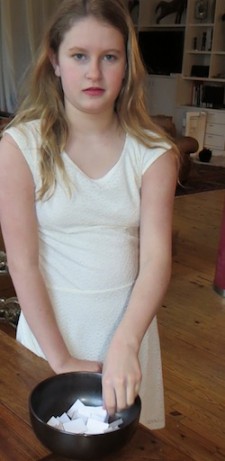
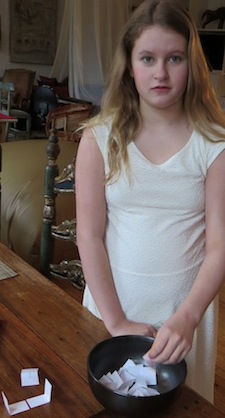
Emma randomly chooses the winners...

Emma randomly chooses the winners…

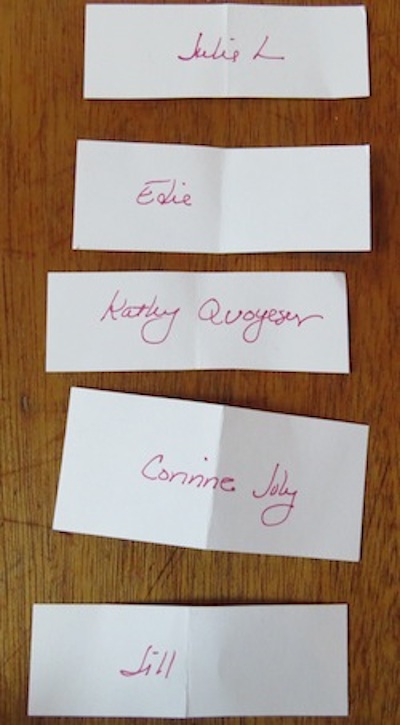
This morning  I placed all the names of those who commented on yesterday’s post into a bowl and Emma randomly chose five names to win Barb Rentenbach and Lois Prislovsky’s hard cover book, I Might Be You

Be prepared to be blown away.  This book is absolutely wonderful.

To all the winners – Julie L., Edie, Kathy Quoyerser, Corinne Joly and Jill – I will be contacting you by email. Your book will be sent via United States Postal Service after I’ve received your address.

And for those who want to read it, but didn’t win, please consider purchasing this terrific book either as a hard cover or as an ebook available for all eReaders, or the audiobook, which I had the honor of recording with Barb and Lois in New York City last year.  I am the “voice of Barb” and documented that amazing experience ‘here‘, ‘here‘, ‘here‘ and ‘here‘.

2

without looking…

And the winners are...

And the winners are…

“Barb Doesn’t Talk” ~ Emma

I have a friend who, when they met over a year ago, Emma observed, “Barb doesn’t talk“.  “Doesn’t talk” means she doesn’t talk with her mouth to communicate the way she can and does when writing.  Her name is Barb Rentenbach and she and her therapist, Lois Prislovsky wrote a book, I Might Be You.  I’ve written about Barb and Lois before, ‘here‘, ‘here‘, ‘here‘ and ‘here‘.  If you haven’t read their book, you must.  (Continue reading for a surprise later in this post about that book.)

I met Barb at the Autcom Conference in 2012 and though I didn’t know it at the time, Barb and Lois  would have an enormous impact on me that was far-reaching.  You see, it was because of Larry Bissonnette, Tracy Thresher, a boy I saw writing to communicate, and finally Barb, all of whom I met at the Autcom Conference, that I began looking into other ways for my daughter to communicate.  (You can read more about the process by clicking “How We Got Here“.)  Even though Emma can and does use her voice to speak, she has described her attempts to communicate with spoken language as, “I can’t talk the way I think.”  Later Emma wrote, “Please remember that my mind tells my body and my mouth to do all sorts of wonderful things constantly, but they don’t obey.”

In Barb’s most recent blog post (I urge everyone to read it) – Open Hearted Letter Quilt to Andrew Solomon –  she writes about autism, empathy, and how autistic people are often misunderstood:

“It’s like Saxe’s (1873) poem, “The Blindmen and the Elephant” where each blind man is partly in the right as he describes an elephant piece he studies, but all are in the wrong in knowing an elephant.

This autistic pachyderm will expand perceptions by presenting more pieces.”

Barb goes on to describe herself, “I don’t look normal.  I appear quite messed up and a prime candidate for nothing but pity and patronization, with a sprinkling of repulsion and fear.  I am disguised as a poor thinker.”

Still further along she quotes Emma:

“To quote my mentor Emma who is 12 (This old dog is all about learning new tricks) who wrote this by saying each letter aloud she pointed to it on a stencil board, “Autism is not what parents want to hear, but I hope that will change as more people get to know someone like me.”

This short video shows Barb typing just a few days ago.

Now there are some people who have suggested Barb is not typing on her own.  They believe that the person whose two fingers are tentatively touching her back are actually guiding her and that it is their voice and not hers that we are reading. This is a video of Barb writing four months ago…

And here is a video of Barb typing in 2011…

I am showing you these clips so you can see Barb’s obvious progress and please note, Barb is not a child.  I know that’s obvious, but it seems many people forget this or have trouble believing that people of all ages can and do progress.  Just as Barb works hard to become more independent while typing, so does my daughter.  Emma’s way of writing is slightly different in that no one is physically touching her and she points to letters on a letter board,  but she is working hard to move from pointing to the stencil letter board to the laminated letter board to a qwerty keyboard, with the eventual goal – being able to type on a computer regardless of who might be seated nearby.

As all these videos show, none of this is easy.  Barb is working hard and so is Emma.  Some days go more smoothly than others.  As Barb writes –

“I often politely ask my brain to please move my hand to do this or that only to be told, “We’re sorry due to high autism volume we are not able to answer your call at this time.  Please try harder later.”

For any of you who would like to have a hard cover copy of Barb and Lois’ terrific book, I Might Be You, I am giving away five hard cover copies.  Please comment below, saying something about yourself and why this book is of interest.  I will place all comments into a hat and will choose five at random.  If your comment is chosen I will contact you, via the email you use to comment, for your street address, where I will send you your copy of Barb and Lois’ MUST READ book at no cost to you and in appreciation to Barb, Lois and Emma for their hard work in bringing much-needed awareness to all who are like Barb and my daughter!

Emma, Barb Rentenbach and Lois Prislovsky

Emma, Barb Rentenbach and Lois Prislovsky


What Are State Assessments Assessing?

Yesterday, while at Emma’s school, her teacher showed me a sample of the state assessments that Emma is required to take, though there were record numbers of parents this year who protested them by opting out.  These assessments are done twice a year and take an enormous amount of time and energy from all involved.  The page the teacher showed me was about Ronald Reagan.  It was a series of facts that are read and then the student is supposed to choose the correct answer from two choices related to the facts just read.  I decided to use the page as an example of why I so vehemently object to these state required assessments as they are currently laid out.

I read the facts to Emma and then asked her to give me the answers by saying the correct answer out loud.  This is how the test is typically done.  Emma chose the last choice to each question every single time.  I then said, “Okay.  Now let’s do this using your letter board.  I asked the same questions, only this time, offered her the letter board and without any hesitation she got 100% correct.  I then asked her to circle the correct choice and she was able to do that too, which was interesting to see.

We did not go over more of the assessment, but for all those students who are like Emma, these assessments are useless.  They are not telling anyone anything helpful.  In fact they are giving inaccurate data.  If Emma had not been given the opportunity to learn to communicate using a letter board, she would have no way of proving she knows the correct answer.  How many children are just like Emma?  I do not believe for a second she is the only one who cannot say what she knows, but if given appropriate accommodations would be able to.

It is incredibly frustrating to have the state require her to take such assessments, which, as they are currently written, do not accurately assess what she is capable of.  This is my biggest objection with so much that is done when it comes to autism.  Far too often the current conversation is by people who are looking at things, similar to these assessments, and basing their beliefs on the information they are getting from them.  Incorrect information that tells us nothing of what a child is actually capable of.  Assessments, that in fact are assessing nothing.  What is being learned?  What a massive waste of time and money.  We should be doing better.  Our children deserve better than this!

*We are hoping to have the video of Emma’s presentation at CoNGO up on the blog tomorrow!

April 9, 2014

April 9, 2014

Respectful Engagement

Respect.  I think about this word a great deal.  There are things I do, things I think in any given moment are examples of me teaching respect and yet in the teaching I am not modeling the respect I am trying to teach.  Here’s an example of what I mean –  (this example is fairly mundane, but it serves my purpose because it’s something that most of us can relate to.)

Let’s say Emma and I are in a new place.   Somewhere, perhaps like the place we recently went to give a talk on Autism Acceptance, where most or all of the people are strangers.  As we enter the room I notice someone I do know and they walk over to say hello.  My upbringing dictates that I introduce this person to my husband and daughter.  I do this by saying, “Hello _______, this is my husband, Richard, and my daughter, Emma.”  The person nods and says hello, maybe they even extend their hand.  My husband without thinking, says something along the lines of “Hello _______, it’s nice to meet you.”  Maybe they shake hands.  My daughter turns away saying nothing.  I am aware that this is not the conventional way (polite) to greet someone so I, without thinking, direct her, “Emma say hello to _________.”

I know enough not to ask her to touch the other person, even if they’ve extended their hand, but I forget that there may be a good reason for her non-greeting.  Perhaps the lights are too bright, or all these strangers are too much, perhaps she is overwhelmed, or the noise is making it difficult for her to concentrate on any one thing.  Perhaps she senses this person is not someone she gets a good vibe from, perhaps the person is standing too close to her.   Regardless of whether I know what could be causing her not to say hello, demanding that she do so, is not the best thing for me to do.

Instead, I might lean down and whisper in her ear, “Do you want to try saying hello to _____?”  If she does decide she’d like to and can, fine and if she cannot, for whatever reason, then that’s fine too.  But before I say something like this I will want to have done a lesson plan around “social niceties” or the things people say to each other and why they do so.  This is the ideal.  However this is not what I always do, because I forget, but these are the little things I constantly think about.  How can I parent better?  How could I have approached that situation more respectfully?  How can I use this as a teaching moment, not just for my daughter, but for myself?

One of the things I’ve learned over the years is that kindness, directed toward myself and others is the single best way most of us learn.  When someone yells at me, I don’t learn, in fact, I shut down.  Even if the person does not yell, but criticizes me, scolds me, directs me to do something without explanation, I feel myself becoming self-conscious or worse, shutting down.  I close in on myself.  I can’t hear what the other person is saying.  I become engaged in an internal battle.  When someone is respectful and kind, I am open and much more likely to listen to them.

People say things like – “oh but that takes such patience,” or “who has the time to do all that?”  I understand.  But I know that the other way, while easy and perhaps quick, is nothing more than a quick fix, if that.  The person may say the words I’ve just directed them to say, but the next time I will go through the same process.  But there’s an even more important piece to all of this, because one can argue, who cares about social convention?  Why should any of us care?  Why should we say hello to one another?  None of this matters.  And I agree, none of this is really the point, the bigger point is that I want my children to understand that we live in a world filled with other people who may or may not share their neurology and that many of those people when met for the first time may offer their hand, if in the United States, and say hello.  I want my children to not be put off by this, but know that they have the option to say hello if they are able to, or not and that I will be respectful of them no matter what their response is.

Directing my daughter to say words that I give her, is not being respectful of her and it also is not presuming competence.  When I give her words to say, I am allowing my issues around social convention to take precedence over respect for my daughter and her sensitivities to her environment.  I want to do better than that.

*I purposely have used the present tense, as this is something I continue to explore and am trying to do things differently.  This is very much a work in progress!

Dressed for spring rain - April 8th, 2014

Dressed for spring rain – April 8th, 2014

Thoughts On Thinking

Friday evening I asked Emma whether she wanted to use the laminated letter board or a qwerty, bluetooth keyboard connected to the iPad.  She told me she wanted to write using the keyboard.  Emma has written on the keyboard during her RPM sessions with B., but this is not something I’ve attempted.  I have been reluctant to use the keyboard because Emma has done so well using the laminated letter board with me and I’m always worried about changing something that’s working well.  But when using the letter board I have to transcribe as she writes or hope that I’ll remember what she’s written, whereas with the keyboard it automatically types directly onto a document within the iPad.  Often I can’t remember what she’s written, or think I have remembered correctly, only to find out later I did not.

This was the case Wednesday night when Emma wrote in front of an audience at CoNGO.  I hadn’t stopped to transcribe her words as she wrote them, thinking I’d be able to remember, but once she’d finished the sentence, I couldn’t remember.  Afterward, when we thought we hadn’t recorded our presentation, I tried to remember what I thought she’d said – “Autism is not what parents want to hear, but I hope that will change as more people meet someone like me.”  What she actually wrote, once we found the video recording, I was disconcerted to learn, was – “Autism is not what parents want to hear, but I hope that will change as more people get to know someone like me.”  That is a subtle, yet significant difference.  I’m so sorry Emma for getting your words wrong.

Our goal has always been for Emma to write on a keyboard and eventually be able to write with the keyboard resting on the table, so that no one need hold it.  That she wrote both Friday evening and over the weekend on the keyboard is a huge leap forward and very exciting!!

So.  Friday evening Richard asked Emma for permission to ask her a few questions about thinking.  Now for those of you who know Richard, you will smile as you know this topic is one of his favorites.  He loves nothing more than to read and discuss thinking, consciousness, dreams, reality, and anything remotely related.  These are the topics Richard explores in his writing and the things he is fascinated with.  Richard wrote on Emma’s Hope Book FaceBook page – I “think” of “thinking” as my constantly chattering internal dialog.  I have long suspected that Emma has either NO internal dialog, or very little, and that what she “thinks” of as “thinking” must be very different from what I “think.”

Emma generously agreed to allow her dad to ask her a few questions though she did remind him that she had the timer on.

*I need to interject here that the following conversation is representative of Richard’s “thinking” and Emma’s as she describes it.  No one is suggesting that ALL people, either autistic or non autistic think as either of them do.  It would be a mistake to assume Richard is somehow representative of ALL non autistic people, though many may relate, or that Emma is representative of ALL Autistic people.

Richard:  Mom and I have this internal dialog going on all the time and that’s what we call “thinking”. How does this differ from the way you think?

Emma: I only think in voices when I am working with you (Ariane).

Ariane: Is this also true when you write with others?

Emma: Yes.

Richard: Do you see our internal dialog as an advantage or disadvantage compared to your own way of thinking?

Emma: It is more distracting than the way I think.

Richard: Tell us more about how you think. If it’s not with an internal dialogue, what is it like?

Emma: Know that I am almost always happy and take great pleasure in sounds, color, fabric.  Everything in life is beautiful if you are able to be here.

*Whoa!  “Everything in life is beautiful if you are able to be here.”  

Richard: I’m so used to thinking with an internal dialogue. It’s hard to imagine thinking without talking to myself.

Emma: Have you felt this always?

Richard: When I was a kid I didn’t talk to myself all the time. I was probably a lot happier. As I grew older, my internal dialog became stronger and now it’s there most of the time. I have to meditate or concentrate to temper it.

Emma: It’s too bad that you have difficulty.

Richard and I looked at each other and shook our heads in amazement.  Then Emma began to laugh and we joined her.

*The keyboard we are using is a Kensington Keyboard.

**A brief update on Emma and Ari Ne’eman’s presentation at CoNGO last week that we video taped, thought we hadn’t then found we had.  We have not had time to upload it and we haven’t received approval from Ari yet, so it may take a few more days before we can post all or part of it here.  Bear with us.

Emma types on a qwerty keyboard

Emma types on a qwerty keyboard

How Do We Put A Price on Communication?

As I was downloading a couple of photographs just now, I found the video we took of Ari and Emma’s presentation Wednesday evening.  Intact.  We’ve got it all!!  Woot!  Woot!  But before I put the video on here, I have to get permission from Ari and Emma.  So let me do that and then, if both agree, you should be able to view it next week.  I’m hoping by Monday.

In the meantime, there’s something else I want to talk about.  And that is the experience of hearing your child’s thoughts and opinions, interests, questions, and desires, when you weren’t sure you would ever be able to do so.  Now this is a little loaded because there are some who believe it’s wrong to suggest all Autistic people will be able to express themselves.  Those people believe there are some who cannot and it is creating false hope to suggest otherwise.  There are still others who feel that communication comes in myriad forms and we must stop insisting one way (speech) is the only way. They believe we should honor all methods of communication, whether that’s through words, sounds, body language, or silence and using our other senses.   Those people believe, and I am one of them, that we all have the wish to connect with our fellow humans in some capacity, at least some of the time, and it is incumbent upon all of us to figure out how we can support each other so that all have the opportunity to do so.

When Emma first wrote an unexpected sentence, described in detail ‘here‘ it was the beginning of what would turn out to be nothing short of an odyssey for all of us.  From that moment, on November 25th, 2012, we have experienced what can only be described as a dream-like adventure with Emma leading the way.  The degree to which she was underestimated by almost everyone who met her, including us, is beyond my ability to describe.  I say “almost” because there were a few people who met her who were not fooled.  It is interesting to note that those few were Autistic.  My friend Ibby was the first and we’ve written a little about this in two pieces she and I wrote featured in Parenting Autistic Children With Love and Acceptance’s first addition of their terrific new magazine, which you can read ‘here‘ (It begins with a piece by Ibby on page 17 and then ends with my companion piece beginning on page 21.)  By the way, the entire magazine is filled with wonderful pieces by Beth Ryan, Nick Walker, Cynthia Kim, Amy Sequenzia, Renee Salas, Sharon davenport, Alyssa Hillary, Kimberly F. Steiner, Juniper Russo, Amy Caraballo, Jane Strauss, Kelly Green, Steve Summers, Leslie Rice, Zita Dube-Lockhart, Leah Kelley, Lei Wiley Mydske and others who donated their art work.

When someone sees Emma, who now communicates by pointing to letters on a letter board, (which is different from when she wrote that first sentence a year and a half ago) I sometimes hear the following comments – “I just don’t see how this can translate to a school setting” or “It takes too long” or  “economically it’s not feasible because it requires a one on one ratio that most schools won’t be able to pay for.”  Except here’s the thing…  The way Emma communicates is tailored for an academic setting.  Just as in any classroom, a student is called upon to give an answer or thought, about any given topic, so could Emma be given the opportunity.  All it requires is for the teacher to say, “Emma when you’re ready just signal and you’ll be next.”  The aide can then raise their hand when Emma has finished writing.  This would also deal with the comment that it “takes too long” and I’ll just add that our society’s increasing desire, that everything be reduced to a sound bite, should be tempered, and having someone like Emma in a classroom, would be beneficial to all, by the very fact that we all need to slow the f*ck down.

As far as what this means economically, I argue that there is a great deal of money being spent on a great many things that are NOT working.  Things like trainings for methods that do not produce the type of complex and nuanced language we are seeing.  How do we put a price on communication?  How can anyone suggest that having someone who was thought to be unable, or worse, incapable of expressing their thoughts, not be supported to do so because of the cost associated with it?  How can any of us seriously object?  And yet… people do all the time.  And it catches me by surprise every, single time when they do.

To see your child express their thoughts, as we have had the opportunity to do, is beyond anything I’ve ever experienced.  It has changed everything.  Literally everything.  Some people have said to me, “Oh you’re so patient.”  No.  I’m not.  When Emma is writing something, I am filled with eager anticipation for what she’ll say.  Patience?  No.  Ecstatic is a better way to describe my feelings as I witness the outpouring of her words.

How we engage with our daughter, how we speak to her, what we think and now believe, all of it has dramatically changed as a direct result of her communication.  I haven’t even begun to discuss what this has meant to Emma.  And here’s just one more massive difference between then and now.  Instead of me guessing or making assumptions about what this means to Emma, she can now tell us.

“I want to tell you that I am capable.  Daring massively, eager to prove my intelligence, I will work tirelessly so that Autistic children younger than me won’t be doubted the way I am.”                                         By Emma Zurcher-Long

How does anyone put a price tag on this?

Emma Wears A Pretty Dress To School ~ April 4th, 2014

Emma Wears A Pretty Dress To School ~ April 4th, 2014