Author Archives: arianezurcher

Two Strangers, Two Responses to Autism

Stranger number one:  A man seated next to me on the flight from New York City to Denver.   He was distressed and upset because of the extensive delays we experienced and assumed he would miss his connection home to Vancouver where his two sons and wife awaited him.  As he spoke to me, he looked over at Emma, seated in the window seat and who appeared to be sleeping, thumb in her mouth, head resting on her horse pillow, a small scrap of her green blanket clasped in her fist.  Her hair fell over her face, covering part of it.  He nodded toward her, “She’s tired, huh?”

“Yes,” I said, looking over at her and smiling.  Emma opened one eye and made a little grunting noise, before closing her eye again.

He asked me if I was traveling alone.  I explained to him that in fact we were all spread out over many rows.  Because of all the delays the airlines changed our seats, giving most of us middle seats, making it impossible to convince anyone to switch with us so that we might sit together.  At a certain point, I took a lapse in the conversation as an opportunity to pull out my book, Representing Autism.

“Are you a teacher?” the man asked.

I told him I was not, that my daughter was autistic and it was a subject I was particularly interested in.

“Ah,” he said, knowingly.  “My eldest son is too.”

He went on to relate how his son had been poisoned by high levels of lead because his wife had drunk tea throughout her pregnancy from a samovar.  This was confusing as, strictly speaking, his description would make his son’s issues lead poisoning and not autism, but before I had time to think of an appropriate response, he told me that because they had him chelated he was now high functioning and that God had blessed him with a child who could speak.   And while I think it’s wonderful many people find solace in “God” I really hate comments like this, where it has to then be concluded that God is not blessing others with things like poverty, starvation, murder.  I know, I know, don’t get me started.  

He then told me his wife contributed to his son’s autism because it was genetic and “the mother carries the genes that cause autism.  That’s why more than 80% of them are boys.”  This last remark was so staggering in it’s complete lack of logic I was thrown into a state of stunned silence.  Then he capped the conversation off with a nod to Emma and asked, “Is she functioning?”

Do NOT say another word,  I pleaded silently, while also thinking,   You have the chance to say something that might change this man’s point of view.  But I couldn’t.  I was too angry and tired, the delays had taken their toll.  I had hit a wall, silently cursed this man and just wanted to escape into my book.  I no longer felt magnanimous or in the mood to offer an opposing view.  I felt hateful, furious and resentful.  I was disturbed by the man’s, seemingly unintentional, but never-the-less confused ideas of cause and blame, not to mention the casual comment about chelation coupled with how his son’s heart stopped twice while doing so and that didn’t even cover the comment about God, which would have taken me down a whole other path.

“Does she speak?” he continued.

“She’s autistic.   Her hearing is actually excellent,” I snapped.  “And I do not speak about her as though she cannot understand.  Her intellect is as sharp as her hearing.”

“Oh!” the man said, taken aback.

All thoughts of offering patient opposing views in a kind tone went out the window.  I pulled out my book, a pen and my notepad and began reading.  End of conversation.  It must be said, this was not one of my prouder moments, but I didn’t have it in me, I just didn’t and it depressed me that so many are so misinformed.

The second stranger was a woman with two small children who asked me, as Emma and I were waiting for the bathroom, if I would keep an eye on her two kids so that she might use the bathroom.  Emma peered with curiosity at her daughter who was four-years old and son, who was not quite two.  “Boy,” Emma said, pointing at the little boy.

“Yes,”  I said, kneeling down.  “What’s your name?”

We learned that the children, Alice and James were also headed for Aspen on the same connecting flight as us.  Their Dad couldn’t go with them, but their Granma was meeting them in Denver.  When Emma and I returned to our seats, Emma said repeatedly, “Go see  Alice and James.  All go together to Aspen.  Go to Granma’s house and play with Alice and James.”

When we found the gate for our connecting flight, there was Alice and James with their mother who proceeded to ask Emma questions.  “What was her name, how old was she, did she have a brother, his name, age, where we were going, etc.  All the questions she directed to Emma and she waited for Emma to answer, even when it seemed she might not.    A couple of Emma’s answers were somewhat cryptic, as when asked what she liked doing when in Aspen and Emma answered, “Make cake.”  But all in all it was really nice to see someone behave in a sensitive manner while respecting Emma’s need to process, giving her the time to do so. It was in stark contrast to the first stranger.

This morning when I told Richard I was posting this piece, I said, “I’m too tired to find the humor.”

“My brain is operating on a case by case, need to know, basis,” Richard replied.

And that remark made me laugh.

English: Looking south from Top of the Rock, N...

(Photo credit: Wikipedia)

A Call To Action – “Wake Up The Boys And Grab The Plunger”

6:22AM –   “Honey, I’m hopping  into the shower.  And I mean that literally,” I announced.

“Time to wake up the boys and grab the plunger,”  Richard replied.

“You’re a funny man,”  I said, laughing.  “God I love our life.”

“It’s a good one,” Richard grinned.

A little back story:

Our bedroom is like Grand Central Station.  Allow me to explain and for the record – no, it is not because we’re running some sort of upscale brothel.   Our bedroom is the first place both the children want to be when entering our home.  Is anyone thinking, these people clearly need boundaries?  Well for those who are, you have a valid point.  I don’t agree with it, but it’s valid and for those who were not thinking it, I’ve probably planted that little seed into your minds and NOW you are at least considering the idea.  To you I say… whatever, eye roll and shrug before walking away.  But I digress…

Our children are drawn to our bedroom like bees to the hive.  It’s like some  kind of  vortex, a siren song calling to them.  A place that instills comfort, a feeling of safety and serenity, like a soft, sensual womb.  Or maybe it’s the really big TV screen that calls to Nic and our king sized bed with silky sheets that beckons to Emma, it’s hard to say and I haven’t done a scientific study (pause)  yet.  As a result our bed is in a constant state of unmade disarray, rumpled sheets, pillows abandoned on the floor, mattress askew.  Richard, who, it has to be said, is just a tad compulsive – cough, cough, totally OCD, cough – about the bed being made each morning, is driven to distraction by this state of affairs.  We make our bed at least four times throughout the day.  Richard is rolling his eyes and muttering – What’s she talking about “we”?  I’m the one who’s making it all the time, not her.   But why quibble about the details?  All of that is beside the point.

It is not just our bedroom that draws the occupants of our house, it is our bathroom as well.  We have three bathrooms and yet, the children prefer ours.  Again, I have no answers.  So it is not unusual for Richard and I, as happened last night, to come home from our “date night” to find our toilet clogged.  To be blunt, both our children are cloggers, ‘nuf said.   I’m German, or at least part German and could go on and on about this, but the Swiss part of me is calling for a little restraint, so I will.  Restrain.  Myself.

Because we are busy and somewhat disorganized, we have not gotten it together to purchase more than one plunger for the house.  And last night that one, coveted plunger was not in our bathroom.   Not wanting to risk waking either child to locate said plunger, we opted to leave the toilet seat down and figure it out in the morning.  I know, this is bordering on TMI (too much information).  What?  I’ve already entered into the TMI zone?  Okay, well again, whatever… All of this is in explanation for Richard’s call to action, “Wake up the boys and grab the plunger!”  Personally, I think it’s an excellent way to start the morning. I intend to repeat this, completely out of context, in the coming weeks and months, because, well that’s the way I roll.

As a quick aside,  Emma will be singing in her end of the year performance at her school this morning.  I cannot wait!

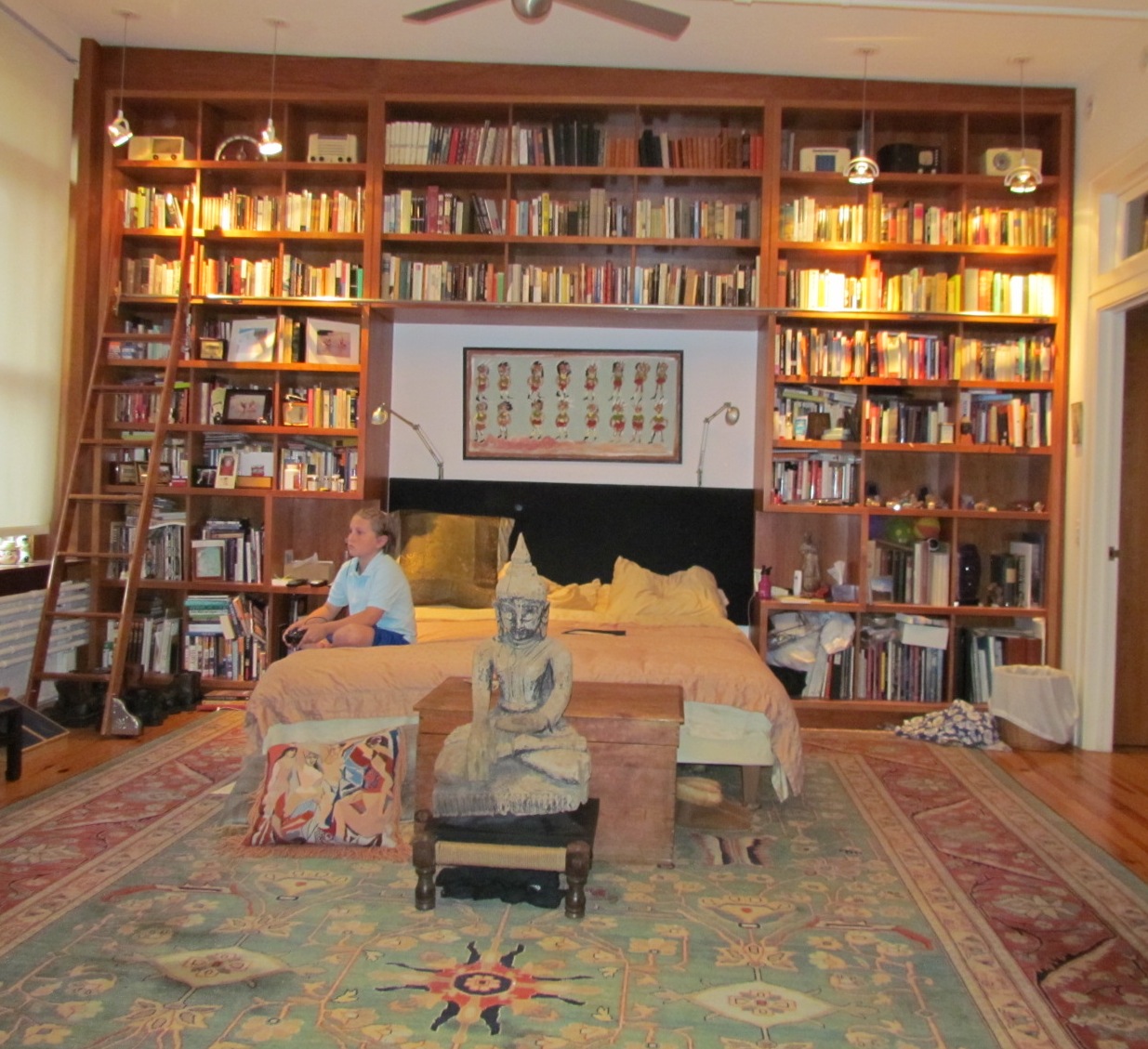
Emma took this photograph of our bedroom two days ago.  Can we all appreciate the symmetry, the angle, the lighting…

Laura Nagle, Vectors of Autism and Other Exciting News

In response to my post – Losing Sleep, Autism and Strange Noises in NYC – I received a great comment (all the comments I get are great) but I’m referring to one specifically.  It was about the Theory of Mind as well as lack of empathy conclusions Simon Baron-Cohen and others like him have made.  The person who is autistic, wrote:  “But we are not being laughed at, dismissed or ignored anymore. People are arguing with us. That means they hear our message and they are aware that it conflicts with what they have been taught. Their confusion will diminish over time. The people who need to be told what to think will always listen to, and agree with, the loudest voices. And our voices are becoming louder. If we perseverate, then we will persevere.”

In keeping with this thought, you must watch this YouTube video –  A preview for the upcoming “Laura Nagle: Vectors of Autism.”

The 50 minute documentary, which this video is a preview to, will be awaiting me when I return to NYC in July.  I will be reviewing it here and for the Huffington Post.  Leah Kelley has been posting about the documentary and Laura for a while now on her blog – 30 Days of Autism.  In this brief preview Laura talks about how quickly she can read, she says, “I’m good at that” (pause and then laughs) “I’m not good at life.”    I won’t say more as I really want everyone reading this post to please take 5 minutes to watch the video, it is wonderful.

I also want to urge all who are as fascinated and disturbed by some of the various “theories” out there about autism as I am, to go over to the blog – Autistic Hoya.  There are so many terrific posts it was difficult to decide which to add links to, but to begin here are two of my favorites (but the whole blog is an education)  The Dangers Of Misrepresentation and The Other Side Of Disclosure.

I will be covering the Aspen Ideas Festival for the Huffington Post from June 27th – July 3rd, unrelated to autism, but still very exciting.  I have no intention of shirking my posting responsibilities here on Emma’s Hope Book, but may be posting on the run as they say, so please forgive typos and seemingly random thoughts.  On second thought you probably won’t even notice as that’s pretty much the norm for me anyway!   I have been asked to cover the icare4autism conference in Jerusalem, July 31st – August 2nd.  I have accepted their generous offer and am very excited!  A quick back story – when Richard and I first heard about Henry Markram and his Intense World Theory for Autism (this link is an in depth scientific paper.  It is not light reading, but if you’re interested, it is very interesting), we read that he would be giving a talk in Jerusalem in August.  At the time, now more than seven months ago, we joked – wouldn’t it be great if we could go to Jerusalem to hear him?  Just over a week ago I received the invitation and learned that this was the conference he will be presenting at!

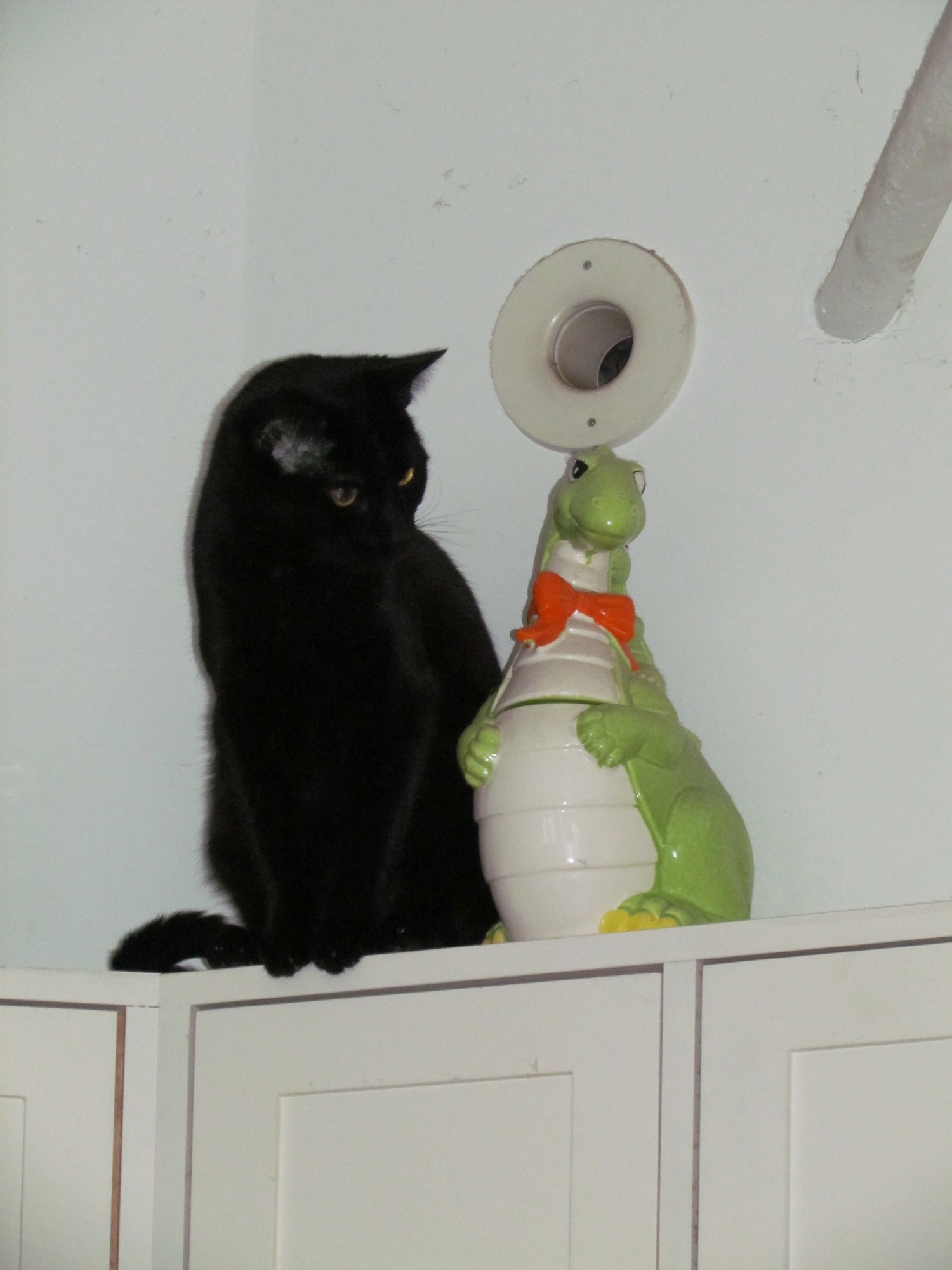
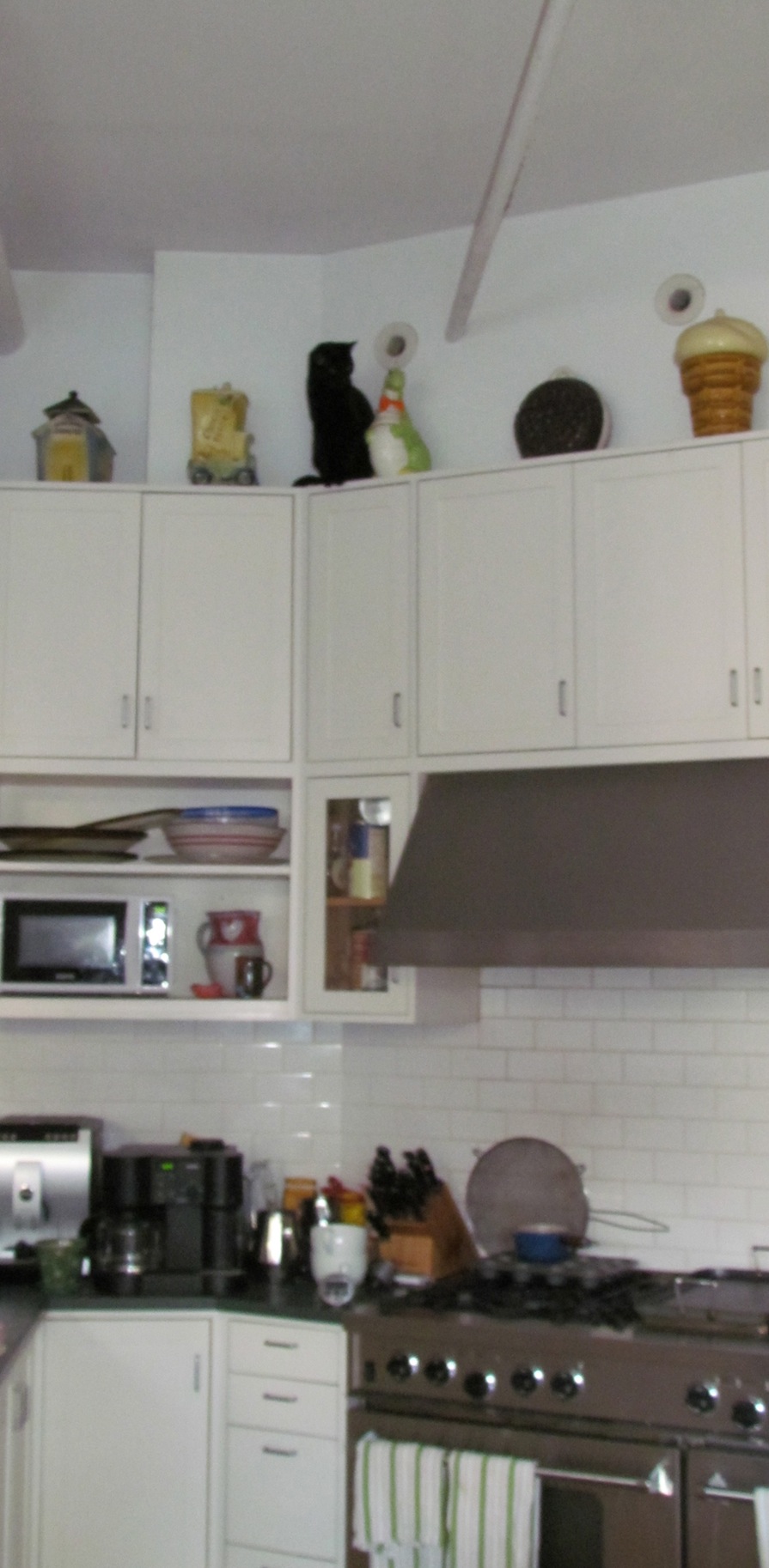
And finally, I am including two, completely arbitrary and utterly unrelated photos…  just because… well, because I can and I felt like it and they make me smile and maybe they’ll make you smile too.  Please ignore the dust.

Merlin and the Gator

For a little perspective…

Related articles

Merlin & Emma – Or How To Not Do Something You Don’t Want To Do

6:03AM – Our bedroom

Em:  Hi Mommy!

Me:  Hi Emma!

Em:  It’s six zero three.

Me:  You’re awesome.  Merlin comes over in all his silky, soft adorableness.  Aww…  Look Em.  It’s the kitty.  He is so soft!

Emma smiles at me.  But makes no attempt to pet him and he’s rubbing his body against her.

Me:  Emmy, look at the kitty.  He’s so soft!  I stroke Merlin, who begins purring loudly.  Emma begins to hum a little song.

Me:  Em!  Come on!  Pet Merly.  He’s such a good kitty.  I say this as I stroke Merlin who walks lazily passed Emma towards the end of the bed.

Em:  Oh!  Oh!  I can’t reach!  I can’t reach the kitty!  She says this while in an exaggerated display, extends her arm as though she were trying to pet Merlin.  He is, in fact, within reach.

Richard begins to laugh.

Me:  Emmy!  You can too reach him!  Now Richard and I are both laughing.

Em:  Huge grin and with feigned sadness says – Oh no.  I cannot reach the kitty.  I can’t pet him.  Awwww.  I can’t pet Merly.

I love that kid.

7:30AM – In our study

Em:  Mommy, I want you to help me brush my teeth please!

Me:  Okay Em.  

Me:  (To Richard)  I’m almost finished with this post. I’m keeping it short and sweet.

Richard:  You mean like me.

I love that man.

Walking the walk

Losing Sleep, Autism and Strange Noises in New York City

I’m operating on about three hours of sleep.  The piece I rewrote about Simon Baron-Cohen and The Theory Of Mind for the Huffington Post was published yesterday evening.  I knew I’d get some opposing views.  I’m used to that.  I understand that by putting my thoughts out there,  people will and do disagree.  So irritating when people disagree with me.  Eye roll, sharp intake of breath.

When I began writing at the Huffington Post I submitted a piece about Emma and her interesting use of language.  It was not a scholarly piece, (none of my pieces are, it’s not what I write)  just some observations and thoughts I had.  Once the piece was published I received a couple of scathing comments, many of which were marked as “abusive” and were removed, but one that remains, was from a retired speech pathologist who wrote,  “A jewelry designer (author of the article) who has bizarre ideas about language development should be countered by an expert opinion.”   I imagined as she wrote that comment she was looking grim and making tsking sounds.  I felt as though I were back in first grade being scolded for not paying attention.

Another piece I submitted about Emma’s painting, a number of people made derogatory comments, which were removed.  One of those comments was,  (I’m paraphrasing here) Oh great!  Stupid references to Dr. Seuss, Autism and painting all in one sentence.  How is this news?  

News?  I was supposed to write a journalistic, investigative piece?  Shit!  Where was I when that memo got sent?   I thought I was writing a piece about the joy I felt watching my daughter paint.

It’s anxiety causing to get such contemptuous responses, but over the years I’ve developed a “thicker skin” though I’m so literal-minded that phrase strikes me as really creepy.  Still, in this last piece it is I who am attacking someone else.  And while I’m sure Simon Baron-Cohen wouldn’t lose any sleep were he made aware of my rant about his questionable test and the even more questionable conclusions he’s drawn, it’s not in my nature to attack others.  I don’t feel comfortable doing it.  Against my better judgement I submitted the piece anyway because I believe strongly in its message.

As I reiterated in a comment I made to another person’s response –  SBC  is presenting himself as an “expert” on autism. It isn’t as though he was the parent of an Autistic child, had a blog and wrote the occasional piece for the Huffington Post, while making inflammatory statements, which everyone could read, laugh, argue with and forget. He has made a career for himself, based on his academic achievements. His theories should and must be held to a higher standard. His words and ideas have tremendous power. It is irresponsible to be in such a position of power while basing ideas and theories on faulty tests with no consideration of the implications. I, too, could cite many examples of my daughter’s actions, which could then be used to (erroneously) support SBC’s various theories. That doesn’t make his theory correct, it brings into question my thinking.  I urge you to read Dr. Henry Markram’s alternate theory – http://www.wrongplanet.net/article419.html – I can find many more examples of Emma’s behaviors, which support his theory. The TOM theory is a dangerous one because of the way it can be used to justify the negative perceptions of Autistics. If someone has little or no empathy, we are much more likely to behave in a less caring manner toward them. We may insist this isn’t so, but there have been studies suggesting otherwise.”

As a result of all this I’ve paid the price by getting very little sleep.  Ask me about the traffic patterns on 7th Avenue between the hours of 2 and 4.  And exactly what was going on with that woman who kept shouting WooWoo at around 3:30AM?  Was she celebrating?  In the beginning stages of labor?  These are the questions plaguing me at the moment.

Emma making her silly face, which pretty much sums up how I’m feeling at the moment.

An Ode To Richard

I’m not trying to confuse anyone.  I post Monday through Friday.  Father’s Day was yesterday, so technically, writing an “Ode to Richard” today makes more sense than posting it last Friday when it would have been more than 48 hours away as opposed to about ten (at the time of this writing.)  Or so goes my convoluted logic.

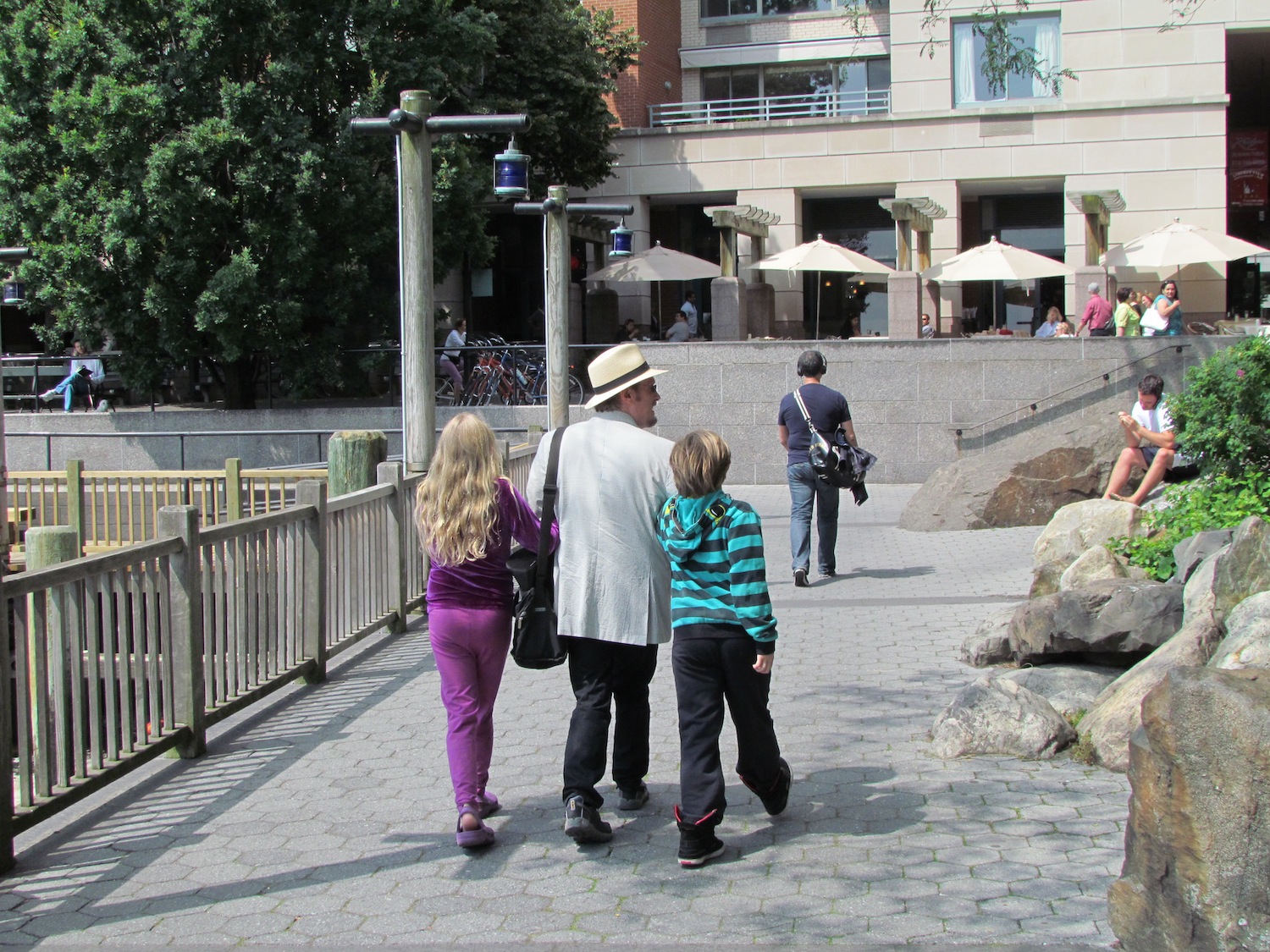
Father’s Day, 2012 – Richard walking along the Hudson River with Emma and Nic

Autism doesn’t say much about all those dads out there who are tirelessly working to help their autistic children.  I know a few of them, but the one I know best, obviously is my husband, Richard.  This post is for him.

An Ode To Richard

You didn’t have a role model in your own father, yet you’ve managed to become one to your two children, Nic and Emma.

You’ve taken the traumas of your past, looked at them, dissected them and in doing so, pushed yourself to make sure you won’t repeat their lessons.

You are strong and secure enough to know that men can and do cry and those tears in no way diminish who you are, but serve to make you even more courageous and brave.

Your sense of humor has taught your children that nothing is so serious we cannot laugh.

By pursuing your dreams and doggedly doing what you love, you have shown them that they too can dream.

By never giving up, persevering and following your heart instead of a career you detest, but that will ensure a large income, you have encouraged them to follow their own.

By working tirelessly toward a goal, no matter how many obstacles have been thrown in your path, you have taught them to never give up.

By never accepting the word ‘no’ when applied to something you want, you have taught your children that what they want and care about is important.  You have taught them that they are important.

Through your compassion you show your children the path leading toward humanity, love and kindness and away from violence, cruelty and narcissism.

By giving your children your time, by enjoying their presence, by actively participating in their daily struggles, you have given them a gift no one will ever be able to take from them.

You have provided them with a role model so that they may not have to work as hard as you have.

You have given them the gift of knowing they are loved by their father, accepted completely for who they are and who they will become and in doing so you have provided them with a stability and security no structure or amount of money can.

You have provided them with a map, to help them navigate this life.

In giving, you have received.  In listening,  you have been heard.   In leading, you have been led.  In loving them, you are loved.  And yet you do all of this, not because you want anything in return, you do all of this because this is who you are.

To Richard.  My love.  My partner.  My inspiration.

Related Articles:

Richard, Oxytocin, Literacy & Love – Not Necessarily in That Order

Aspen, Work and Richard

Marriage – Part I

Marriage – Part II

This one is for the dads (Stuart Duncan’s Blog – Autism From a Father’s Point of View)

((((((Emma)))))), Facebook, Twitter, Blogs and Other Joys

When you look at the title to this post do you read it to mean – Hugging Emma, Facebook, Twitter, Blogs and Other Joys?

(If you answered yes, you are correct.  ((((Insert name)))) = Hugging.  The more parentheses, the bigger the hug.)

Within the autism community where Facebook reigns as the ultimate gathering place, the use of emoticons, ways of expressing emotions and physical actions, are commonplace.  I would argue that within the autism community the use of emoticons is more prevalent than within the neuromajority population.  But I need verification from my Autistic friends before I make such a statement.  It’s a thought based on my observations and interactions.  Which, by the way, speaks as much against Simon Baron-Cohen‘s various theories about Autists lacking empathy and a desire for interactions as it does to the level of support, gestures of kindness and friendships that are developed and maintained over the internet.  (I just submitted an amended version of my recent post – An Empathic Debunking of the Theory of Mind – to Huffington Post so he’s very much on my mind these days.  I’ll give an update when I see if and when it’s been published over there.)

Facebook, a crowded virtual space where conversations overlap, people you’ve never met interject themselves into a conversation before moving on, friendships are formed, rekindled and developed, strangers “poke” you to say hi, even if the only connection you have is that you both occupy space in that crazy mosh pit that Facebook single-handedly created.  If you think about it in these terms, Linkedin has a more conservative, suit and tie required at the door feel to it, I haven’t figured out where twitter falls in all of this, maybe it’s akin to speed dating, while blogs are the mothership, making the insanity over at Facebook all the more raucous and surprising.

It must be said, I hated Facebook when it began.  I refused to join, I felt indignant when people would discuss their “friends” or about something that had gone “viral.”  Who cares?  Who has the time?   I scoffed.  This is just a bunch of people with way too much time on their hands.   And then I would settle back to my tenth game of Spider, while reminding myself that I really should get some sleep.  But eventually I joined.  For business reasons, I told myself.  This is a pattern for me.  I observe, remain on the side lines, dip a toe in the murky waters, sit back, observe some more and then dive head first into the deep end, blissfully unaware of any rocks that may lurk under the surface.  I’m not encouraging this approach, it’s just an honest assessment of what I have a tendency to do.

Yesterday I was a mess.  For those of you who reached out, thank you.  I was teetering on the edge, trying to keep it together, not doing a great job, but doing my best to work, taking on one small task at a time.  And then my friend stepped in and held out her virtual hand.  (((((( Insert Name ))))))  Like a life line, she held her hand out and gently pulled me off the ledge.   Lots of emoticons were used.  I’m not fluent in emoticon, but she’s been a kind and patient teacher.  Did I mention she’s Autistic, not that it matters, except that it does, if only for this reason:  Autistics aren’t suppose to be like that.  That’s what we neurotypicals are taught.  Right?  It’s what all those autism specialists tell us, right?

She sat with me, literally, while I wept.  ((((((((((Insert my friend’s name)))))))))   She said all the right things and by the time we both went back to work, I was laughing.  But wait, that can’t be right.  She must not be autistic, because she doesn’t fit the mold.  Right?  Isn’t that what we do when someone defies a stereotype, instead of re-examining the stereotype, we relabel the person?  Can we all agree to toss this insane theory about Autists lacking empathy, lacking a desire for interaction and friendship?  Can we please just stop it?  Imagine if you tried to reach out to someone, only to have them reject you because of some mistaken idea they had about who you are and how you are supposed to behave?

Which brings me back to Emma.  My beautiful daughter.  I don’t know if she’s already aware of these stereotypes and how they apply to her.  My guess is, she is.  It’s one of the many things I wish I could control and change.  But I cannot.  What I can do is make sure she knows that I am here, supporting her, encouraging her, with my arms open for those times when she needs to feel them wrapped around her securely in loving embrace, just as my friend did to me yesterday.

(((((((Emma)))))))

Listening to Emma

“Bad ear infection.”  This was the pronouncement made by the doctor who Emma saw yesterday.  Emma knew.  (Click ‘here‘ for a post about another time Emma knew and the only other time Emma had an ear infection.)  Emma told us to take her to the doctor.

We are relieved we made an appointment and sought help.  We are grateful to have her on antibiotics, which will ease her pain.  We are happy she is feeling better.  Those are the important points.  All the other words racing around in my head are less factual and more words that poorly convey my feelings of despair that I didn’t realize her pain was different than usual, that it meant something else was going on than a change in air pressure and anger with myself that I didn’t rush her to the doctor the minute the school called me two days ago.  My defensiveness, like the stereotypical white angel perched on one shoulder whispering, but you didn’t know, you couldn’t have known, is countered by the angel with devil’s horns yelling, “Yeah, but you should have!”  That dialogue or actually any dialogue that begins with – But you should have known – is better left elsewhere.

The art of the beat up job, something I could certainly write a handbook on at this point is not a message I am interested in perpetuating or sending.   What I am interested in is how I  might avoid a similar scenario in the future and take the necessary actions so that next time I can take care of my daughter in a more timely manner.   That’s interesting.  The beat up job is not.

Conclusion:  When Emma says, “Go see doctor.”  Immediately get her to the doctor.  Do not wait to see if things will get better.  Emma knows.  The cliché “better safe than sorry” leaps to mind.

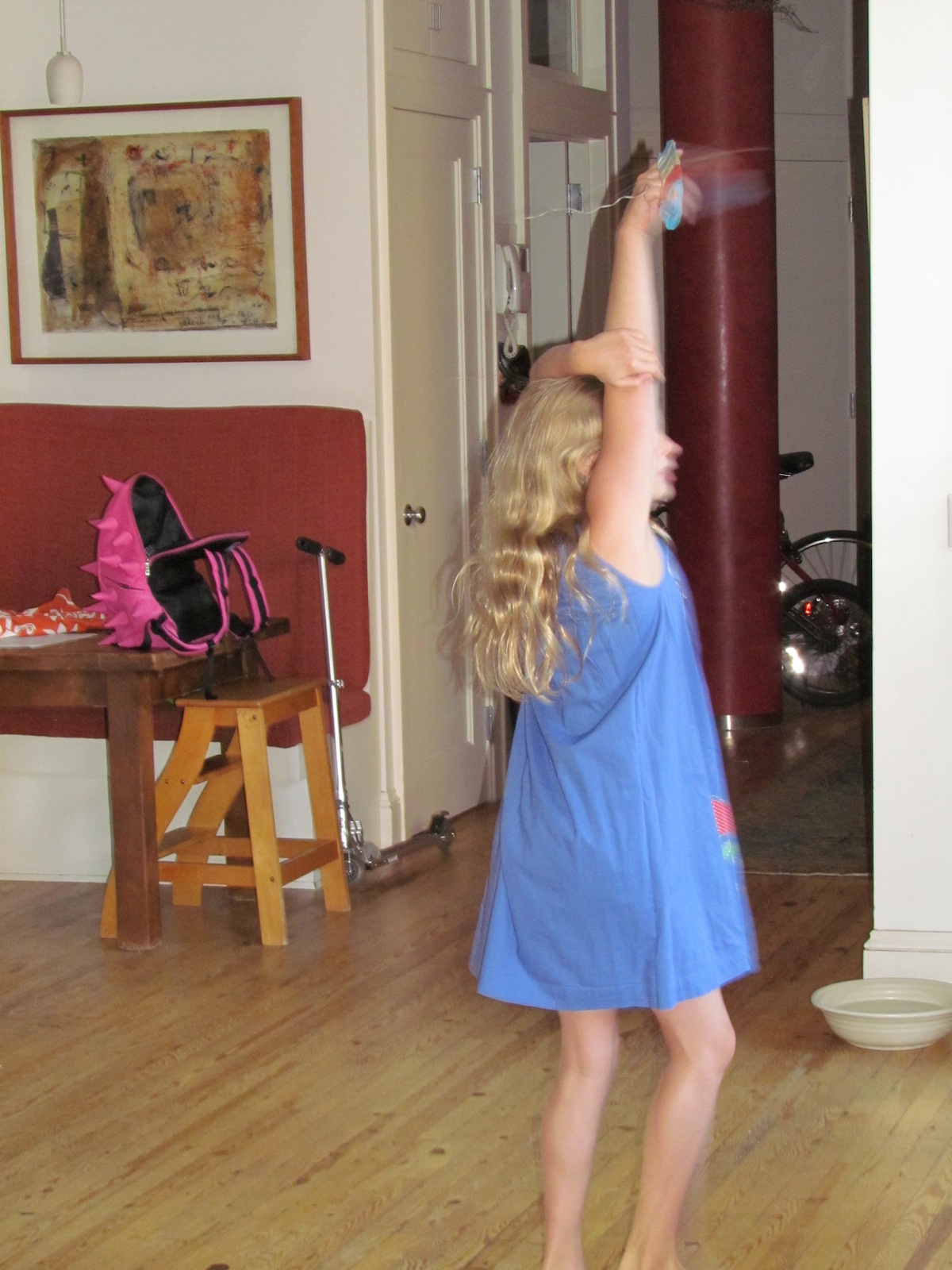
This morning – Emma dancing to MJ’s Beat it 

Emma’s new-and-improved old string is back!

An Empathic Debunking of the Theory Of Mind

Simon Baron-Cohen, the man who has single-handedly done more damage to the perception of Autistics than any other human being (though there are arguably a number of people vying for that title), depresses me.

I need to say that before continuing.

Simon Baron-Cohen developed the “Theory of Mind” based on the results from the now famous “Sally-Anne” test.  The Sally-Anne test, where the child is shown two dolls, is an example of dubious “science.”  Sally has a basket in front of her, while Anne has a box.  Sally, presumably made to move by an adult, which further complicates the test, puts a marble into her basket and leaves the room.  While she is gone, Anne takes the marble from Sally’s basket and places it in the box.  When Sally returns, the child is asked, “Where will Sally look for the marble?”  Only 20% of the Autistic children were able to correctly answer the question – Sally will look in her basket.

Emma, typically, when asked what one of her doll’s name is, will reply, “Doll” or “girl.”  This is just one example of Emma’s literal mind at work.  She is not wrong, her doll is a doll and yes, she is a girl.  To take away any other conclusion from her answer would be ridiculous.

Yet, from this “test” Simon Baron-Cohen concluded, “that the core problem in autism is the inability to think about other peoples, or one’s own thoughts.”

Except that his test did not take into consideration the level of anxiety, stress or mood of the Autistic participants at the time of testing.  Nor did it take into account the language issues, pronoun challenges or literal thinking many Autists have, which the test inevitably presented.  In addition Simon Baron-Cohen based his theory, which is taken by many as proven fact, on assumptions that the Autistic participants understood the question.  He then set about publicizing his theory, which inadvertently or not, is used by many in the neuromajority to abuse and mistreat the very people whom he categorizes as lacking empathy.  Does anyone else see a problem here?

When Emma was diagnosed I came upon the Theory of Mind paper early on in my research.  I remember thinking that this explained why, when any of us were upset, Emma seemed oblivious.  But as I continued along the road of educating myself, coupled with observing my daughter, I began to question his theory.  I read about Autistics who avoided looking in people’s eyes because it was too intense.  One Autist described it as akin to seeing into a person’s soul.  Other’s talked about how they could sense immediately upon entering a room, the various occupants emotional state and became so overwhelmed they would seek refuge in a corner, try to leave or would stim as a way to counter the intensity of what they were experiencing.

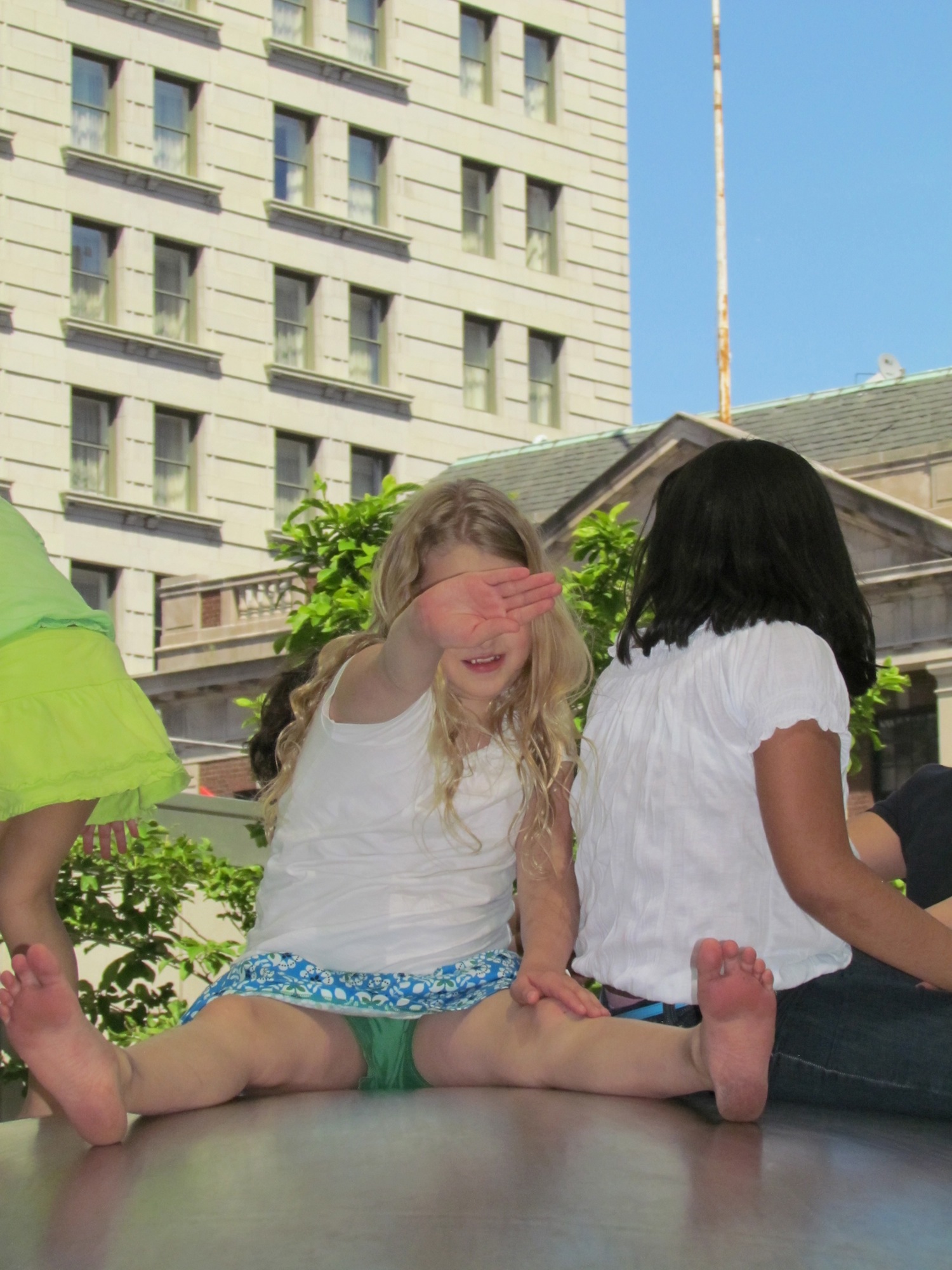
There are times when Emma will, with outstretched arm, put her hand out in front of her face like a shield.  Often it is done, I believe, as a response to the intensity of feelings, either hers or others or both, or as Jessy Park, Clara Claiborne Park’s daughter was quoted as saying, “It’s too good.”   Landon Bryce over on his terrific blog, thAutcast has a wonderful video of an Autistic artist, Tina, who talks about how she trained herself to look into people’s eyes because she paints portraits.  It is a beautiful video, as is she.

What struck me, after reading half a dozen articles and interviews by and with Simon Baron-Cohen, is the damage he is doing.  His most recent book, Zero Degrees of Empathy, (which I am not providing a link for on purpose) where he includes Autistics along with psychopaths and borderline personality disorder as examples of groups who lack empathy will further the suffering of Autistics.  For a man who claims Autists lack empathy, he is bizarrely unaware of his own lack of empathy.

For those who would like to read an opposing theory and one that seems much more in keeping with what I see demonstrated by not only my daughter, but the many Autistics I have had the honor of getting to know, read this interview with Henry Markram.

Is There A Future for Emma in the Theatre?

Yesterday, as we were leaving Nic and Emma’s gymnastics class, Emma found a stray balloon.  No doubt left by one of the children who attended a birthday party there earlier, Emma looked at me with a sly grin, then grabbed the balloon and said, “Look!  It’s a birthday party balloon.  Take it home?”

Emma loves nothing more than birthday parties, balloons and singing Happy Birthday.  “Sure Em.  But remember to hold on to it, because if you let go, it’ll fly away,” I said.

Emma nodded her head gravely and said, “You have to hold it.  If you let go, the balloon goes up in the air.  Oh no!  Don’t go away balloon.  You have to hold it.  But listen, if you let go, there will be no more balloon!”

Emma’s way of coping with anxiety is to repeat a script of sorts.  These are things she’s heard from a variety of sources.  She pulls together threads and combines them to make a dialogue that she then repeats.  Many Autistics script.  Some people feel scripting is to be ignored and even discouraged, but I find Emma’s scripts are informative and useful.  It is the way she is attempting to communicate.  I don’t believe they are nonsense or meaningless.  I believe she uses them in situations when she cannot come up with words of her own.

Emma managed to get through the next four hours without losing the balloon.  This was no small accomplishment as those four hours were packed with activities, ranging from shopping for shorts and an awesome camouflage swim cap for Nic, bathing suits for Em, swim goggles for me, ear plugs for all of us, slices of pizza for everyone, before meeting Richard at the local Y to swim.  Emma attempted to jam the balloon inside our locker, (we ended up letting it float outside the locker, with the string inside the locker ensuring it wouldn’t float away.)  After swimming we went to a room where they’d set up an obstacle course and bouncy castle.  Meanwhile Emma’s balloon, which she’d secured inside my swim bag, stayed put.

Once outside as we headed home Emma suddenly gasped.  All of us watched with dread as her beloved balloon sailed out of reach.  In the past, losing her balloon would have induced a meltdown of epic proportions.  “Oh no, my balloon!” Emma said, her tone and inflection sounded vaguely familiar.  Emma stomped her foot and said again, “Oh no, my balloon!  Can you tell how Katy feels about losing her balloon?  Yes, Katy is mad she lost her balloon.  We can tell she’s mad because she’s raising her fist and stomping her foot.”

I looked at Emma in shock. Emma was repeating the dialogue from an app Marc Zimmerman, CEO of the app The Social Express Lite sent me more than six months ago.  At the time I showed it to Emma who liked it and watched the five different lessons a couple dozen times and so a few months later, I bought the long version of the Social Express, but other things took precedence, so it was soon forgotten.

“Emma lost her balloon,” Emma said looking at me as I awaited the meltdown I was sure would come.  Instead, Emma stood still, gazed up at the balloon floating farther and farther away and said, “Emma’s mad she lost her balloon.”  Emma stared at me for a moment and began to laugh.

I was amazed.  This was NOT the reaction I expected.  “Katy’s mad.  Emma’s mad,” Emma laughed.  She gave me her pretend “mad” face –  frowning, mouth set in a silent scream – and dissolved into peals of laughter.

I was reminded of a conversation I had with a friend of mine (who’s autistic), just two days ago.  She told me how going into a theatre program changed her life.  She told me how theatre taught her a range of things, including an increased desire to read because there was a reason to,  she learned how others thought and what motivated them.  She said, “In theater, everyone is honest, they have to be.  If they are not, the director says, No, be honest.”

“I am determined to find a theatre program for Emma,” I said to Richard.  “I think it is the thing that could change everything for her.”

“I’m with you,” Richard said.

When we got home Emma and I watched the Social Express together.  When the story with Katy losing her balloon came on, Emma pointed to the screen.  “Oh no! Katy lost her balloon too!”

And she began laughing.

Emma demonstrating her angry face

Be Honest And Why That Often Hurts

Every morning I sit down to write a post for Emma’s Hope Book on this computer in my studio and look at the traffic speeding to and from Manhattan on the 59th Street bridge.  Sometimes I already know what I want to write about.  Often  I thought of something the night before, or if Emma did something I feel compelled to write about, I do.  But there are other mornings when I have a number of things I want to write about, but none seem ready to be put on the page.

Be honest.  I repeat to myself each morning before I begin.  But there are some mornings I don’t want to be honest, because honesty can be painful.  Some mornings I just want to write some other version of my life, a fantasy that doesn’t require me to dig down into the darkness.

Cover of "Boy Alone: A Brother's Memoir"

Cover of Boy Alone: A Brother’s Memoir

I read a memoir a few years ago, by Karl Greenfeld called A Boy Alone.  Karl’s father, Josh Greenfeld wrote a memoir about his son, Karl’s brother, A Child Called Noah  several decades earlier.  I didn’t love Josh’s memoir, but I was enthralled with Karl’s as he writes beautifully.

(Spoiler alert – do not read the next 2 paragraphs if you have any intention of reading A Boy Alone as I am going to give away the entire ending.)

Toward the end of the book, Karl writes about moving away from home and how over time, as he struggled with addiction and other challenges, his autistic brother seemed to find himself and eventually could not only live independently, but seemed to have a maturity and wisdom Karl was still struggling to obtain.  As I read these pages I began to read more quickly, trying to figure out how this could have happened, what therapy helped Noah, what exactly was it that propelled him forward, allowing him to become verbal and freeing him from a  life of institutionalization?  But Karl was not forthcoming with this information.

Karl ends the book with doctor’s reports from the various institutions Noah was placed in. The reports are horrifying, the drugs, the restraints, the “therapies,” sadly commonplace in such places are all documented in the dry, hollow tone of doctors and caregivers who have completely separated themselves from the human beings they are administering to.  As I read, I began to reluctantly realize that these reports were the truth, not the previous pages of Noah’s miraculous progress from institution to independence and I wept.  I hated the book.  I felt betrayed.  I felt manipulated.  That book, A Boy Alone has haunted me ever since.  Even now years later I cry when I think of it.

I’m nine-years old home sick with the flu.  My father comes in to read me a story before he goes out horseback riding.  He says to me before he leaves, “I’ll finish the story when I come home.”

“When will that be?” I ask him, turning away from the bright sunlight pouring in through my bedroom window.  

“Soon,” he promises.

Only he never came back to finish that story.  That afternoon he went over a jump with his horse where there was a low hanging tree branch from a massive oak.  His horse cleared the jump, but in doing so my father was crushed by that branch.  He fell to the ground, his back broken.  Paramedics were called and sped him off to the hospital where it was determined he might not live.  Later we were informed he would likely be paralyzed for the rest of his life.  He spent many months in the hospital.  Every few weeks the doctors would gravely give us their opinions.  They were almost always wrong.  Eventually he came home, over the years of physical therapy, exercises, sheer force of will and determination, my father was able to walk and even got back on a horse.   But the nerve damage to his legs was extensive and as he aged he lost more and more of his strength.  The last decade of his life was spent in a wheelchair. 

I write this because, though I didn’t know it at the time, his accident changed everything and has informed my life today in ways I could not have imagined.  I saw how people treated him.  I saw how a wheelchair had the power to change the conversation.  Often it was a subtle change, but there was no mistaking the looks of pity, the attempts to disguise their discomfort, the undisguised irritation strangers would display if his wheelchair caused them to slow down, move out of the way or forced them to accommodate him.  My father was a proud man, athletic, capable and prided himself in never depending on anyone for anything.  And yet, in the end he had to and he hated it.

Be honest.

I am.

What’s a “Good” Mother, Anyway?

I cannot stop thinking about one of the Autists who commented on my latest Huffington Post piece.  He is Autistic and is unable to function without the support of his family.  He writes about his wish for a cure.   He writes about his short-term memory, his “lack of visual-spatial and motor abilities, inability to interact with others in basic interactions, weak attention span, processing speed, reaction time…”  He writes, “If I had skills and could really absorb knowledge, I’d have some kind of a career and I would do basic things without my family all the time.”

Before I responded to him I reached out to some Autists I know asking for their thoughts.  Some people responded, for which I am grateful.  Steve, diagnosed after his child was diagnosed, thoughtfully provided me with a number of links and introduced me to Amy Sequenzia, a non-speaking, Autistic self-advocate.  Amy blogs for a wonderful community blog Ollibean and was profiled on The Thinking Person’s Guide to Autism, Slice of Life Series (click on her name to read) and  Paula Durbin-Westby the mastermind behind “International Autism Acceptance Year”  also profiled on TPGA’s Slice of Life series offered some suggestions.

As I read their thoughts and opinions and words I felt a surge of anger.  Because these are the people the neuromajority should be listening to.  Take a moment to imagine.  Imagine you were unable to do a number of things without the help of others.  Think how you would feel if those people, the very people you depended on spoke to you with undisguised annoyance, or worse, outright contempt.  Think about how that would effect you.  You didn’t have the choice to walk away.  You didn’t have the ability to leave.  You had to stay because you needed their help.  But their help came with a price.  It wasn’t given freely.  There was disdain, irritation and often you were spoken to as though you were dirty, damaged or contagious.  Or perhaps people were kind, but full of pity and spoke to you as though you were a child.  Think how years and years of being treated this way would make you feel?  (Obviously this is not every Autistics experience, but sadly it is a great many.)

Now think  how you’d feel when the coverage in the news and elsewhere about you, about the things that effected your life, were spoken without a word from people like yourself.  Those voices weren’t being heard.  Those voices were drowned out by all the other louder voices intent on making decisions about YOUR life and for you.  How would you feel?  I would be angry and then I would feel depressed and in despair and yes, I just might wish for a cure.

But as the parent of an autistic child, that cure idea has done a great deal of harm.   It caused me to lose the ability to logically see things from a practical perspective.  As I wrote in my reply to Billy – When Emma was diagnosed I was determined to cure her. I thought that’s what a “good” mother should do. In my determination to cure her, I lost sight of who she was. I thought she was hidden under the “autism” and if I could get rid of it, there she’d be, like a baby chick emerging from its  shell. Only that’s not what happened. I couldn’t find a cure. I discovered, when I stopped looking, she was there, waiting for me to see her as she was, as she is. Will she have difficulty in life? Absolutely. Will the world treat her as less than? Yes, sadly so many will.  Some speak to her as though she were an animal. I would do anything to have the way people treat her change.

I can’t make people do that, but I can try to make them think about their assumptions. And while I’m doing that I can appreciate Emma for who she is in this moment, exactly as she is.

I don’t have time to write more now.  But this conversation, whether I just end up talking to myself, or whether I can get others to join in, I will continue, with the same relentless determination that I once pursued a cure for my daughter.

How Emma Takes Control of Time

We have a morning routine.  This is not a routine forced upon us because Emma is autistic.  This is our morning routine.  A routine we all profit from.  It smooths the transition from groggy-still-asleep-trudgery to wakeful-functioning-so-that-we-can-get-out-the-front-door-and-go-our-various-ways.  In other words routine simplifies our lives.

Emma’s body clock, and  mine too, wakes at 5:30AM.  To tell her to go back to sleep is like telling me to take a nap at 11:00AM.  It’s not going to happen. But she knows she isn’t allowed to leap into our bed until 6:00AM.  This morning she came into our bedroom and announced “It says five and three and eight.”  Then, because she knows she isn’t suppose to come to us until six, she wandered out.

At exactly 5:57AM she reappeared.  I can’t tell her to leave with only three minutes to go!  She crouched in front of the DVD player and whispered, “It’s five and five and seven.”  She waited for exactly three minutes and then crawled onto our bed with an enormous grin.  “It’s six!” she said with gleeful abandon as she dove under the covers, tossing  Merlin from the bed like a toy sailboat on stormy seas.   He landed on the floor with a dejected plop.

Later, after Nic had reluctantly awakened, breakfast was eaten, dishes cleared, lunch made, Merlin fed, his water bowl refreshed and his  litter box cleaned, Emma ran into the other room, returning with my iPhone in her hand.  “Have to use the clock,” she said.  She then set the timer app to one minute.  She sat back in a chair, humming to herself.  When the timer went off she said, “Uh!  Time to take the vitamins!” and ran off to do just that.  She returned moments later and again set the timer for one minute.  Again she waited until the timer beeped.  “Uh!  Have to go brush my teeth and hair!”  and off she went.

What is astounding about this is that these are not things Emma particularly enjoys doing.  I must remind her, to which she will inevitably reply, “Just one more minute?”  “No, Em.  Do it now and then you can have a minute after you’ve finished,” I reply.  So Emma came up with a solution to this.  She has incorporated her need for the one minute adjustment period she needs into her routine before I reminded her!

As I write this, while marveling at Emma’s creative process and progress,  I can hear the timer going off again.  She is rummaging around in the dryer.  “Cokie‘s clean!” she says triumphantly.

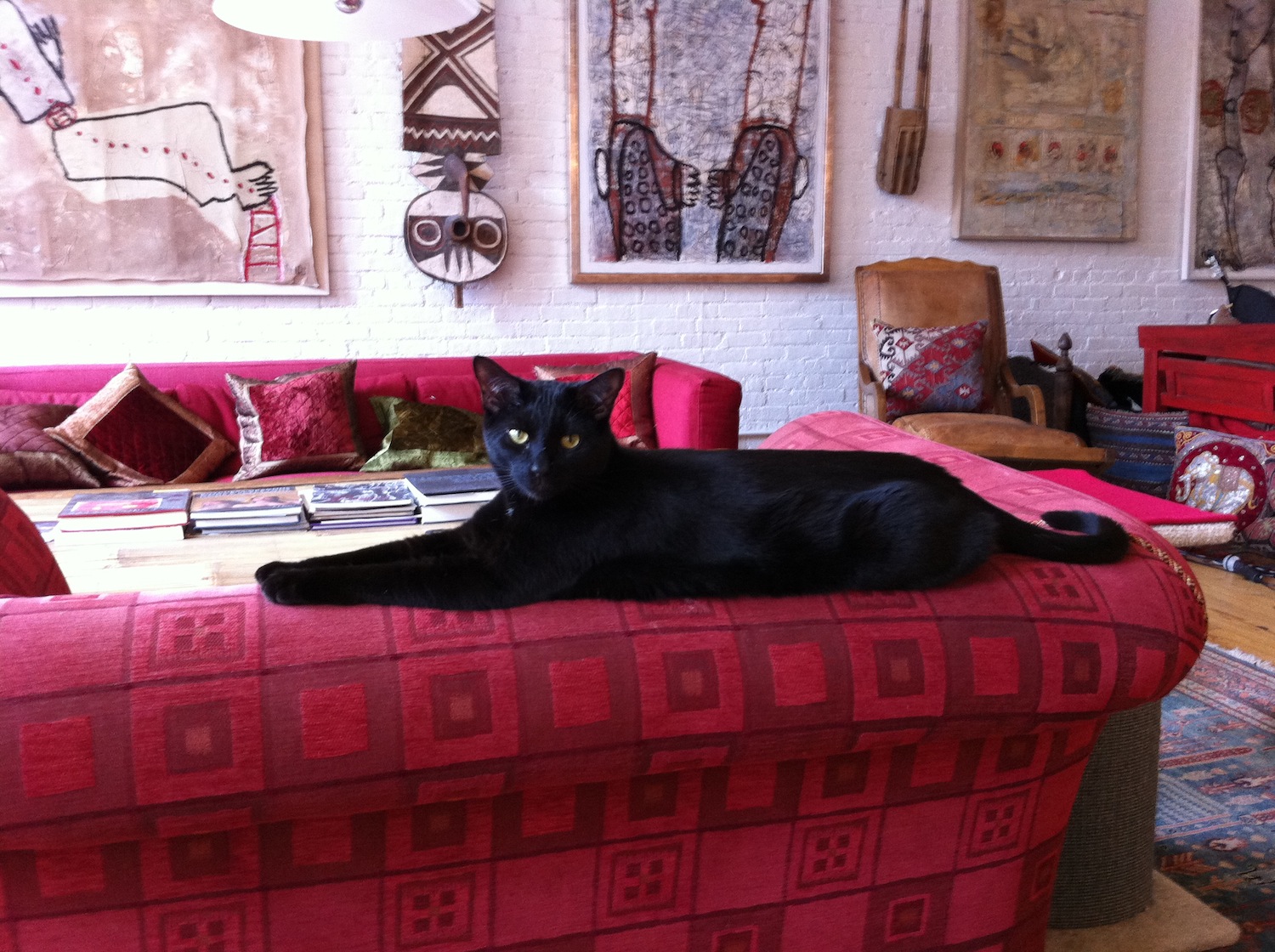
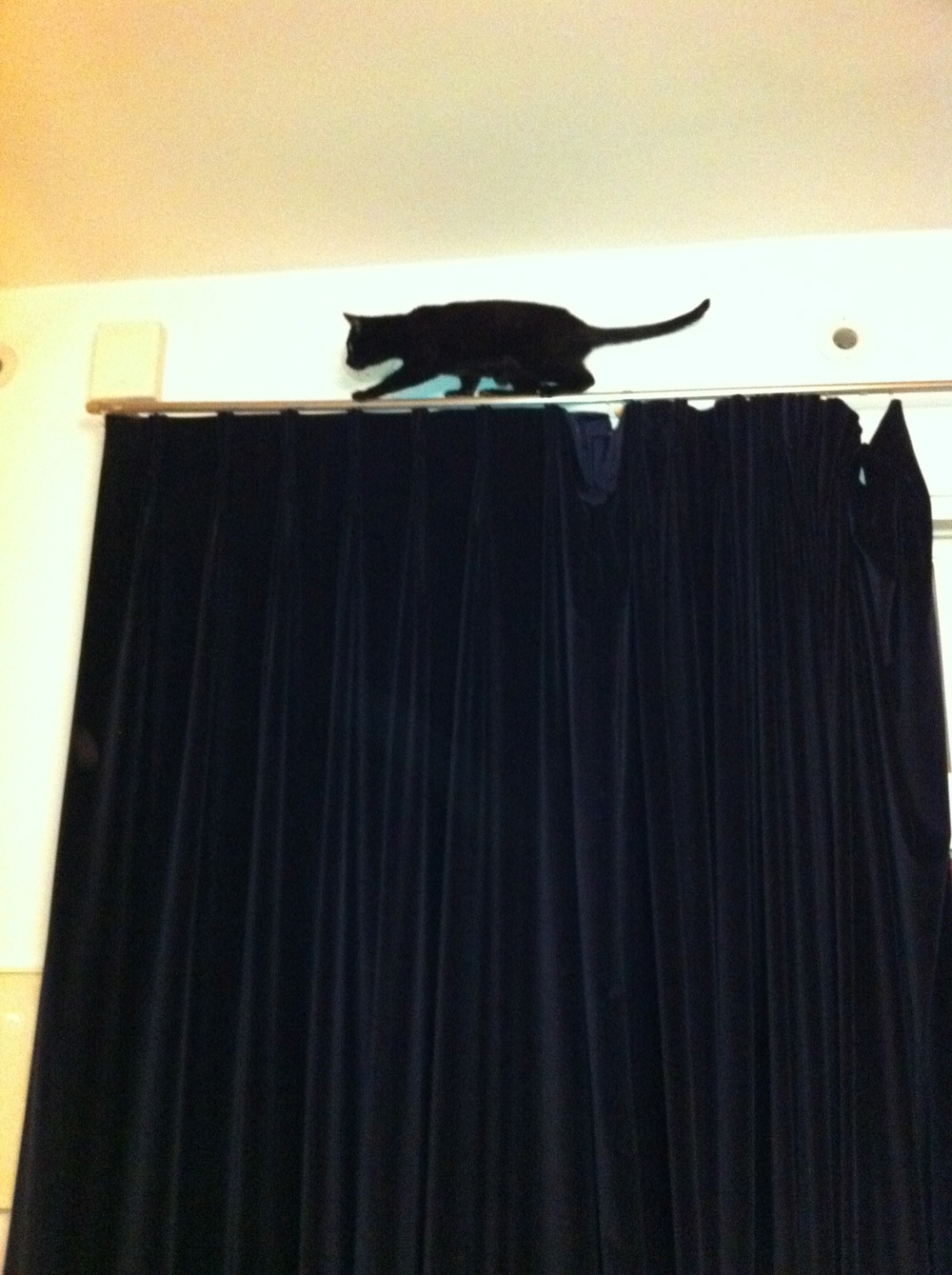
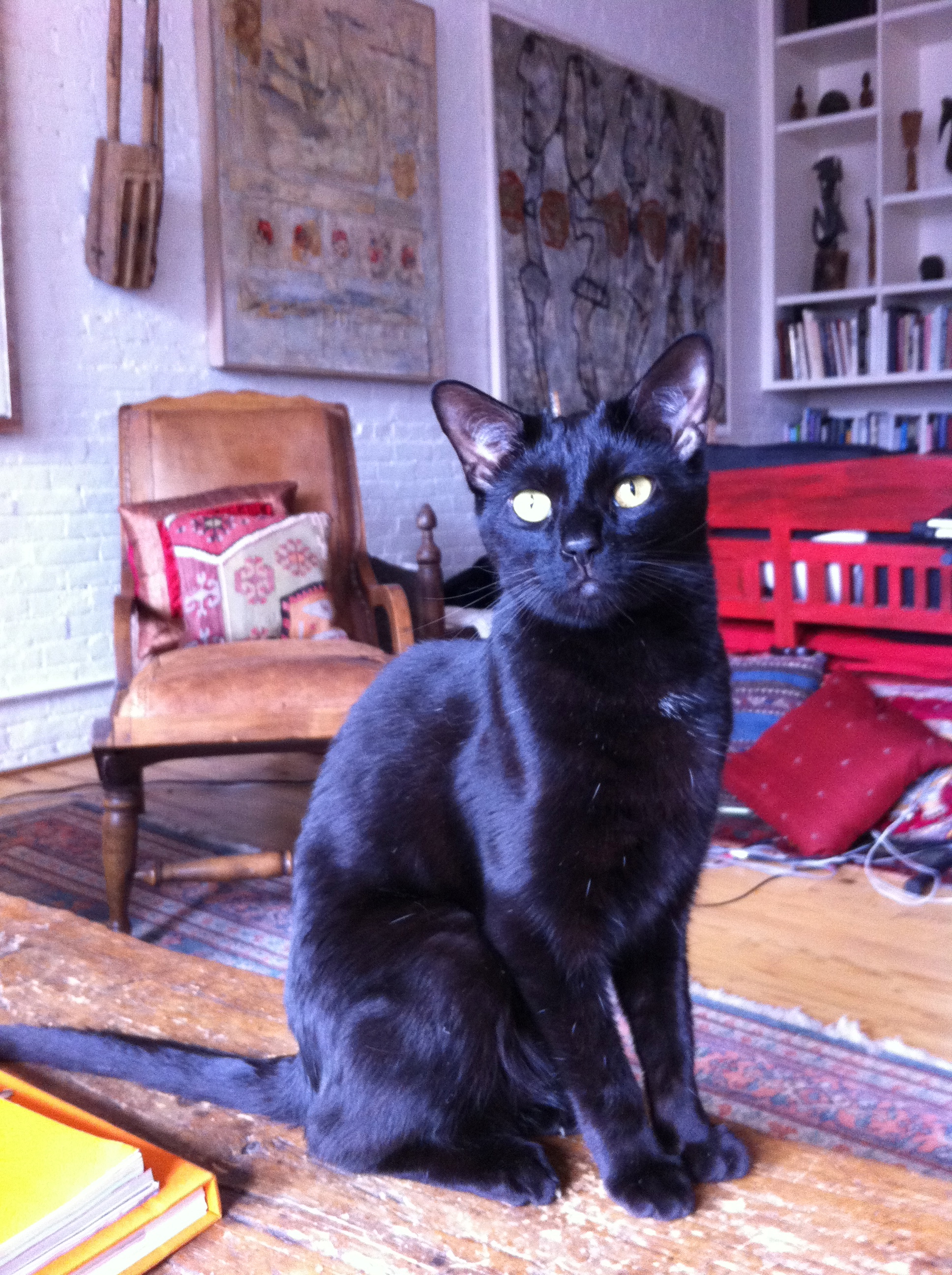
Merlin looking majestic

How I Made a Mistake and Was Given The Opportunity to Say I’m Sorry

“You put the toast in the basement.  That made me sad.”  Emma stared at me expectantly.

I drew in a breath.  My chest felt tight.  I knew exactly what she was referring to.  We’ve had similar conversations, but she’s never said it so directly.

This past fall in one last gasp of determined insanity I decided that I hadn’t done the gluten-free/casein free diet “right” when we put her on it a month after she was diagnosed and still two-years old.  So this fall, I took Emma to a naturopath, who’d been recommended to me, and after a number of “tests” he mapped out an even more restrictive diet than the standard GF/CF.   You can click on the links I’ve provided for more about all of this.  On the first day of the diet I cleared the house of all the foods Emma loved, but could no longer eat, according to the new diet.  Except I forgot to remove her favorite bread.

That morning she saw the bread and attacked it with the vigor of a rabid dog.   I whisked it away and hurried down to the basement with it, where I threw it into one of the large garbage bins, while Emma screamed and clawed at the door in an attempt to follow me.  I had it in my mind that it would all be worth it if the diet worked.   Which, to me, meant that she would suddenly begin to speak in beautifully articulated sentences, would be able to concentrate, would be able to comprehend what she read and would eat a wider range of nutritious foods.   Only the diet didn’t “work.”  Just as the GF/CF diet we’d put her on six years before, didn’t work.

Emma after 6 weeks on the diet

In many ways, that diet was a turning point for me.  After a couple of months on it and no change other than a significant weight loss, I reintroduced Emma to all her old foods, the foods she loves, the textures and smells she was familiar with and she was in bliss.  But Emma remembered those seven weeks when I had taken everything away from her.  The trauma she felt as a result of my actions was something I have been aware of.  I have, on several occasions, told her how sorry I am for what I did.  I have spoken at length to her about it, but in all those conversations, Emma has contributed very little until last night.  Now it was clear she needed to express herself.

When I started making decisions about treatments for Emma, many of them Richard did not agree with and he, thankfully, said, “No.  We are not going to chelate.”  Or “No.  We are not going to subject her to B-12 shots.”  Or “No.  We are not going to take her for another hyperbaric chamber treatment.”  There have been a number of things, that in my desperation to be a “great Mom” I would have tried had my wise husband not stopped me.  These are not moments I am proud of.  I have made a lot of mistakes.  This last diet was just one in a long line of bad ideas.  I know I will have more.  I understand it is human nature, but I also will be damned if I’m going to try to gloss over the choices I made that hurt Emma.

I promised myself long ago that when I became aware of a mistake, I would try to make immediate amends.  I don’t mean a quick, “Oops, sorry about that.”  I mean an amends.  Which is different from an apology.  An apology is what you say to someone you bump into by mistake on the subway.  An amends is when you seek to change your behavior so that you might at least have the chance of not repeating that mistake.  I try to do that consistently with both Nic and Emma.  I am sad to say, I have had to make a great many amends over the course of their short lives and some I’ve had to say over and over because I just can’t seem to get it right.  So when Emma said to me, “You put it in the basement.  You made me sad.”  I knew what I had to do.  I knew I had to listen to her.  I knew I had to resist the urge to make it better.  I knew I had to be present, no matter how much it might hurt to hear the things she would say, I owed it to her.  I had to give her that, at least, I needed to give her that.

I put my hand on her arm.  “Tell me, Em.  I promise to listen.”

Emma nodded her head.  “Never, ever.  You put the toast in the basement.  Mommy no!  Ahhhhh.  Mommy please!”  She pretended to grab at the bread and then she made a muffled screaming noise.  She got up off her bed and twirled her string.  She looked over at me.  “You made me so sad.  Emma’s crying.”

I nodded.  “Emma.  I’m so sorry I did that.  I made a terrible mistake.”

Emma looked at me.  She put her hand on her chest and she said the following words that broke my heart.  She said,  “You have to say you’re sorry to Mommy.”

I thought about all those Autists who talk about their awful childhoods and  how they were made to feel broken, not good enough and that it was somehow their fault for the terrible ways they were treated.   I thought of how those feelings about themselves continue to bleed into their lives today.  I thought about how they felt they needed to apologize for who they were and how so many of them believed these lies and some continue to.

“Oh God, Em!  No.  No.  You did nothing.  It was not your fault. I was wrong.”  I put my hand out to her.  “I should never have done that.   I am so, so sorry.”

Emma came over to me and sat down.  She put her hand on my shoulder and leaned her head into me and said in a quiet voice, “Mommy says I’m sorry.  No more bread in the basement.”  She paused and then said, “But next time just one?”

“No Emma.  Not one.  Not any.  I will never do that to you again.”

“Not one.  Zero.”  Emma smiled.

“That’s right.  Zero.”

“Not one, not two, not three…”  Emma counted up to one hundred.   When she got to a hundred, she smiled and made a zero shape with her hand.  “Not one hundred, only zero.”

I smiled.  “Yes, Em.  Only zero.”

Emma nodded and then she said, “Mommy lie with Emma and read stories.”

“Okay,” I said.  As we snuggled under her blankets together I said, “Who’s the most amazing girl in the whole world?”

“I am,” she said with a smile.

 The Depiction of Autism and Why it Matters on Huffington Post

Autism, AutCom, Huffington Post, Podcasts, Sprinkler Parks and Tea Parties

It was a jam-packed weekend.  Sunday Nic and Emma played together in one of the many sprinkler parks dotting this amazing city we are fortunate enough to call home.  (Not the sprinkler park.  Home, as in New York city… okay, you know what?  Never mind.  Just look at the adorable photograph.)

Yesterday, Richard and I spent the entire day at the Upublish BEA conference, which was pretty amazing.  Richard’s any-day-now-soon-to-be-listed-on-Amazon-five-star-Clarion-reviewed-amazing-genre-straddling-thriller, The Book Of Paul, will be available for public consumption soon and so this was a particularly relevant conference for him, and me as I am working on my book about Autism, our family and Emma.  I know – do we really need another book about autism?  I’m thinking we do, particularly after reading some of the comments on my most recent piece on Huffington Post, The Depiction of Autism and Why it Matters.
Meanwhile the wonderfully fun and up-for -anything Jackie, adored by both our children, took the kids to various parks and swimming.  She then invited Emma to a tea party celebrating her arrival to New York five years ago.  (This is the kind of thing we New Yorkers do, throw parties to celebrate our moving to this wonderful city of ours.)
Emma, thrilled with any event that affords her the opportunity to wear one of her pretty dresses, was extremely pleased.
Meanwhile halfway through the Upublish conference, I received an email inviting me to speak at the upcoming AutCom conference this October, which will be held in Maryland this year.  I am honored and look forward to it!
Friday afternoon my piece The Depiction of Autism and Why it Matters was published on the Huffington Post.  By Sunday it was getting some attention on Facebook and so they bumped it up on HuffPo, giving it a more prominent place on their Health News home page.  A large number of Autists commented, for which I am grateful, both for their perspective and support, but also because, as one of my favorite people, Ibby said, “You’ve found your daughter’s people.”
Finally, the interview I gave on Friday (my first podcast!) with Bryn Johnson of WebTalkRadio – Business Cafe – When a Passion Leads to a Business with guest Ariane Zurcher  is now available for your listening pleasure.  The first half is about business and being an entrepreneur and the second is almost exclusively about this blog and autism.