Tag Archives: Parenting

Excitement, Impatience and Waiting

The day before Thanksgiving a facilitator, P. came over to work with Emma.  I met P. at the AutCom Conference in October and asked him for some guidance in helping Emma communicate more effectively through typing.  And while Emma is verbal, she can voice basic desires, has even begun to comment on things going on around her, she has not communicated more complex thoughts.  I know Emma is intelligent with a great many ideas and interests.  I want to help her express herself in whatever way proves most advantageous, whether that is verbally, through typing or some other, still unknown, way.   I want to help her be a full participant in this world so that she can have choices and options available to her.

P. has facilitated people for several decades, so I felt confident he would be able to help me learn how I can help Emma better and was excited to have him work directly with her while I watched.  We started with a number of apps, Emma had no trouble pointing, using her index finger to match words with images that she knows.  But in the past when it comes to typing an idea, Em will usually type, “yes” or “no” and then repeat the question, which is what she was taught to do with her most recent literacy program.  I am hoping Emma can be encouraged to move beyond that.

As P. worked with her, slowing her down so she couldn’t simply repeat what had been asked, holding her arm at the elbow, putting up some resistance to her desire to type quickly, reminding her to write what she was thinking, asking if that’s what she meant, I felt tremendous hope.  P. asked Em to bring a book she liked.  She brought him a collection of fairy tales and plopped the large book on the table in front of him.  Em chose to discuss Goldilocks and the three bears.  Most of what was typed were fairly simple ideas about the bears and Goldilocks and the havoc Goldilocks causes (much to Em’s delight.)  But then P. asked Em what she would do if she went into her own bedroom and found baby bear in her bed, Em typed, “I would be scared and I would watch his mother.”

I read that sentence several times.  How can I describe the feelings that came with reading it?  How can I express the surge of hope I felt?  How can I possibly describe the feeling of euphoria?  This sentence, this idea was beyond what I have come to expect.  It suggested a whole other level of thinking, a thought process far beyond anything she has been able to express before.  It was a terrific idea, one I have discussed with both children during the summer months when we visit my mother in Colorado where we often see bears.  I have warned the children that if they encounter a bear, especially a mother with her cubs, to not get between them, to keep their distance, to keep their eye on the mother and to make loud noises.

But Emma wasn’t finished.  She then typed, “By the way, this is a very sad story.”  I was astonished.  I had a million questions.  Emma has never spoken this way.  Ever.  “By the way” is something both Richard and I say, both in jest as well as seriously.   Em has never uttered these words, let alone typed them.  And why does she think it’s a “sad story”?  What strikes her as sad?  Which part or does she think the whole thing is sad?  It is sad, I thought and then I Immediately went to,  I have to become trained in facilitated communication.  I have to find a way to communicate like this with Emma.  As I am not able to become trained in facilitated communication in the next 24 hours, I made an appointment to Skype with P. in another week, which feels like an eternity, and will try to do whatever I can to continue to learn so that I am better able to help my daughter become an independent communicator.

Between now and that Skype call, I am doing my best to manage my impatience, my excitement, my hopes and dreams and the reality that my daughter has a great deal to say and boy do I want to hear it all!

Em & P.

Related articles
A Story About Our Black Cat

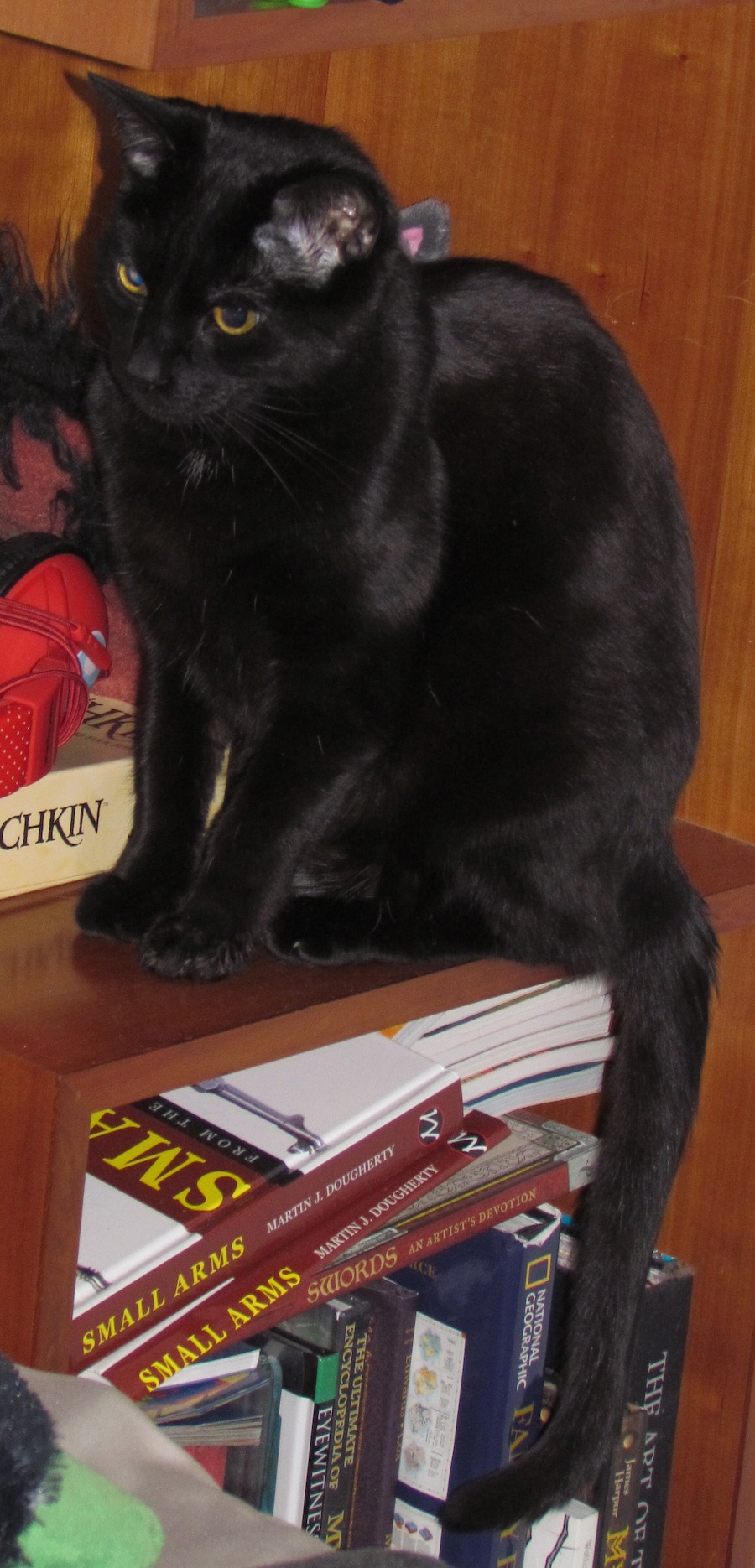
About nine months ago I read this post from E.  click ‘here‘.  It’s about her cat M. (I just loved she chose to keep him anonymous!)  When I found E.’s blog The Third Glance I went to the beginning and read every single post she’d written.  She was fairly new to the blogging world and so it was relatively easy to read all her posts in a few days.  I sent Richard the link to My Cat is My Hero because we have a black cat also with a name starting with the letter M.  Also from a rescue shelter and also a pet that we absolutely adore.  Unlike E.’s cat however, Merlin announces his presence to anyone who is capable of bending down to pet him.  He demands attention and shamelessly pursues anyone who seems remotely willing to give him his due.

Prior to Merlin, Richard was a self-proclaimed “dog man”.  He explained to me patiently that he did not particularly like cats, that given his preference he would surround himself with dogs.  In fact, Richard, when I brought up the idea of getting a cat after the children kept asking for one, said to me, “If you care about me and our marriage, you will not bring this up again.”  To which I replied, “I do care about you and our marriage.”  And the subject was dropped.  (By me.)  However that did not hold for Nic and Emma.  They brought the subject up repeatedly (and I did nothing to discourage them, though I will deny this to Richard, even after he reads this here, I’m still going to deny it.)  And finally when Emma said, in a particularly adorable and sad voice, “Bring kitty home?” while at our weekly trip to the pet store, Richard said, “What do you think about getting a cat?”  To which I casually replied, “Oh, good idea.” Eye roll and the slightest of smirks.

When we arrived at the pet store we explained that the cat we were looking for would need to be comfortable with children and loud music.  One of the employees brought over a rust colored cat whom he assured us loved being held and was a “lap cat”.  He was adorable, but Richard looking slightly ill, leaned over as I held the kitty in my lap and whispered, “We are not getting that cat, he looks like liverwurst.”  “He does not Dad!” Nic cried.  But Richard stood firm.  We continued to view the dozens of cats and then Nic said, “Mom.  Look at this one!” And there he was, black as chimney soot, green eyes calmly staring at us, he even swaggered as he made his way over to us.   I had been reading Temple Grandin’s book, Animals Make Us Human  and had made a mental note about her suggestion that black, male cats were often calmer and she advised gently putting the cat on his back with a light hand on his belly to see what he would do.  If he bit or clawed or panicked, he was probably not the right cat for a family with children, but if he was calm, he was, most likely ideal.  I did as suggested and Merlin purred, relishing in the attention, then righted himself when he’d had enough and wandered over to Emma, who began to pet him.

Both Nic and Emma expressed their approval and after the lengthy intake process where we had to present referrals and swear to uphold a lengthy list of requirements such as promising not to declaw him, take him regularly to the vet, etc we were allowed to bring Merlin home.  Though there was an anguished moment when Nic asked Richard, “Dad, aren’t you so excited?” And Richard said loudly, “Yeah, right Nic.  I am NOT excited to have this animal come home with us.” Meanwhile the manager of the shelter was standing behind Richard looking none too pleased.  It was one of those moments when I thought our plans to adopt were dashed and Merlin would not be released to us after all.  But even with Richard’s ill-timed, less than enthusiastic response, within hours Merlin was home and strutting about as if he owned the place and by the second day was scaling the curtains, climbing to the highest places he could find, walking like a tightrope walker along the curtain rods and then leaping down on top of us, much to our terror.

Despite all of this, or perhaps because of it, Richard began to soften.  Merlin being the brilliant cat that he is, immediately began following Richard around as though he were a faithful hound and NOT a cat at all.  Within a week Richard was speaking to him and by the end of that first month it was clear Richard had succumbed to Merlin’s charms.  In addition to all of this there were sightings by Nic of him using the toilet to pee and it was also around this time that Merlin taught us to play fetch with him, which sealed the deal for Richard who now cannot be away from Merlin for more than a few hours before mentioning him.

Please enjoy this video, shot by the ever adoring, Richard just last week while I go brine our turkey.

Merlin

Mistakes Have Been Made and Random Acts of Kindness

A few months ago someone typed into a search engine – “how can a 56 year old make a mistake” – and they were led to my blog.  Which is either a great relief or pretty horrifying, I haven’t decided.  I read those words and my first thought was, Why are they being led to my blog?  I am NOT 56 years old!  But when I am, I will undoubtedly still be making mistakes.  Do any of us stop making mistakes?  Isn’t that part of being in the world, being human and being alive?  To err is human and all of that?  None of us get out of here doing this perfectly.  So yeah, I’m okay with the fact that someone was led to my blog who may have been incredulous that a 56-year-old or even a 52-year-old (my actual age) could make a mistake or, as is my case, many, many mistakes.  I have, I do, no doubt I will continue to make mistakes.  But the wisdom of years is that I don’t need to pretend I’m doing everything perfectly, I don’t need to hide from my mistakes.  I can look at them, see them for what they are and hopefully, move on.

Which brings me to Emma.  I would really like to not repeat a great number of the mistakes I’ve made when it comes to my daughter.  Some I can’t even call “mistakes” because I kept repeating them and at a certain point repeated actions get pushed out of the “mistakes” category and into the “bad decision” category.  (It’s kind of like when someone says they’re going to go take a nap and then disappear for four hours.  That’s not a “nap”, that’s going back to sleep!  It doesn’t matter that it’s in the middle of the day.)   So yeah, I’ve made plenty of decisions I really wish I hadn’t, decisions that affected my daughter.  Decisions I don’t feel happy about or proud of.  There are others I am even ashamed of and feel tremendous guilt over.  It would be dishonest of me to say otherwise.

But here’s the thing, beating myself up over those things doesn’t make me behave better, it doesn’t make me a better parent.  I used to think that if I just punished myself enough I’d stop doing whatever it was, but that never happened.  Punishment just led to more feelings of guilt and shame.  Punishment meant I felt worse about myself not better.  Punishment and self-criticism make me exhausted and keep me firmly rooted in my ‘self’.  There are two things I know to do when I’m feeling this way (but still forget to do them, so this post is equivalent to putting a string around my finger.)  I need to do both these things at the same time, or within close proximity to each other.  I need to be specific about what I’ve done that I feel is unforgivable.  I need to list these things and then I need to tell on myself. I have to be careful with this part.  I have to find people who I’m pretty sure will not condemn me, but instead will be kind and loving.  I need to admit what I’ve done and then I need to reach out to others and “be of service”.

The concept of being of service has saved my life.  I don’t mean to suggest that I think of myself as a martyr or Mother Teresa or Gandhi.  I mean that it is crucial for me to reach out to others and not just when I’m in self punishing mode, but every day.   Random acts of kindness.  I had to learn how to do this years ago.  It was something I had to practice, because it didn’t come naturally to me, particularly when I was in self punishment mode.

I will never forget when both the children were young.  I had Nic in a backpack and Em was a baby in a sling.  I was waiting for the light to turn green on our way home from a day spent in the park.  Both kids were tired, I was tired and feeling grumpy.  I was obsessing over how I’d spoken crossly to Nic and was exasperated with Emma because she wouldn’t nap.  I began beating myself up.  I wasn’t a good mother, I should be more patient, I shouldn’t be so easily annoyed.  And as I was ruminating about all of this I noticed there was a blind man waiting on the corner with us.  I had been practicing random acts of kindness for several years by then so without thinking I said, “Would you like help crossing the street?” and the elderly man said he would.  I offered him my arm, he held it right where my elbow was bent and the four of us crossed the street.  As we were crossing Nic began to coo and Emma was making gurgling noises, the man turned his head and said, “sounds like you’ve got your hands full!”  So I told him about how I was carrying my baby daughter in a sling and my son loved being in a Kelty backpack and the man just thought this was hilarious.  We ended up walking with him for several blocks beyond our home and when he was close to where he lived we parted.  I no longer felt grumpy or tired, I felt exuberant, in love with the world and all its inhabitants.  I bet that man doesn’t remember us, but I’ve never forgotten him.  He gave me a gift that day, something I hadn’t been able to give myself and it was beautiful.

He gave me kindness and forgiveness.

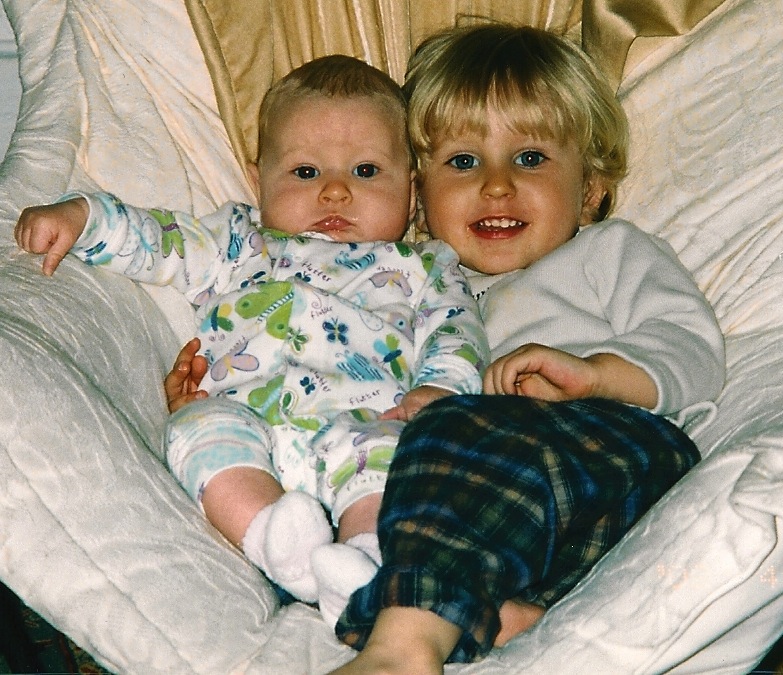
Emma & Nic – April 2002

Related articles

“Nearly Every Moment…”

My friend Paula Moerland allowed me to post this.

Nearly every moment of my existence
Has been filled with the necessity of caring for this body
This emotional body, so distraught
This mental body, so busy
This physical body, so out of balance
Always

I am not selfish

I am exhausted

When I first read this I had to close my eyes and sit very still.  And as I sat, I remembered something my father said to me so many years ago when he was in a wheel chair. He told me constant pain was exhausting.  I was surprised by this.  I had never before considered what it must be like to be in constant pain.

None of us are getting out of here alive and while we live our lives there’s going to be pain, but some people have to endure terrible suffering.  Too awful for most of us to fully understand or even know.  All of us know someone who has dealt with inordinate pain and yet somehow managed to find a way to transcend it, or used it to create something magnificent.  Those people are guides.  I hear their stories and am in awe of their ability to cope with physical and mental abuse often at the hands of those they should have been able to trust, the very people who should have been there to comfort them, to care for them , but instead turned on them.  Yet despite those wounds they are trying to transcend it, they have the desire to rise above it, not give into it.  There is tremendous power in that.  We humans have an astonishing ability to not only endure, but create astonishing beauty.

Thank you Paula for sending me your beautiful words.

New York City in October

Fog

When I climbed the stairs out of the subway this morning and began heading west to my studio, fog completely obscured the Manhattan skyline.  I’m no stranger to fog, whether metaphorical or actual.  In northern California where I grew up, fog was a constant.  Each morning the fog would cover the mountains near our house, but by 11:00AM it would have lifted.  I feel a certain nostalgia for fog.  As I walked the four blocks to my studio this morning I thought about how, when we can’t see something we often assume it isn’t there or what we assume is there, actually isn’t.   Had I not known fog was covering an entire thriving metropolis called Manhattan, I would not have been able to imagine it.  That’s the beauty of fog, it usually lifts and when it does, it often reveals surprising things.

This has been my experience with my daughter and autism.  Autism was, for a great many years, like the fog, obscuring the child within.  I kept trying to lift the fog, thinking that if I could do so, I would “find” my daughter.  Then I began to realize the “fog” was my thinking.  The way I thought about autism was obscuring my daughter.   My daughter has always been there, just like Manhattan is and when the fog lifts I can see her in all her magnificent glory.

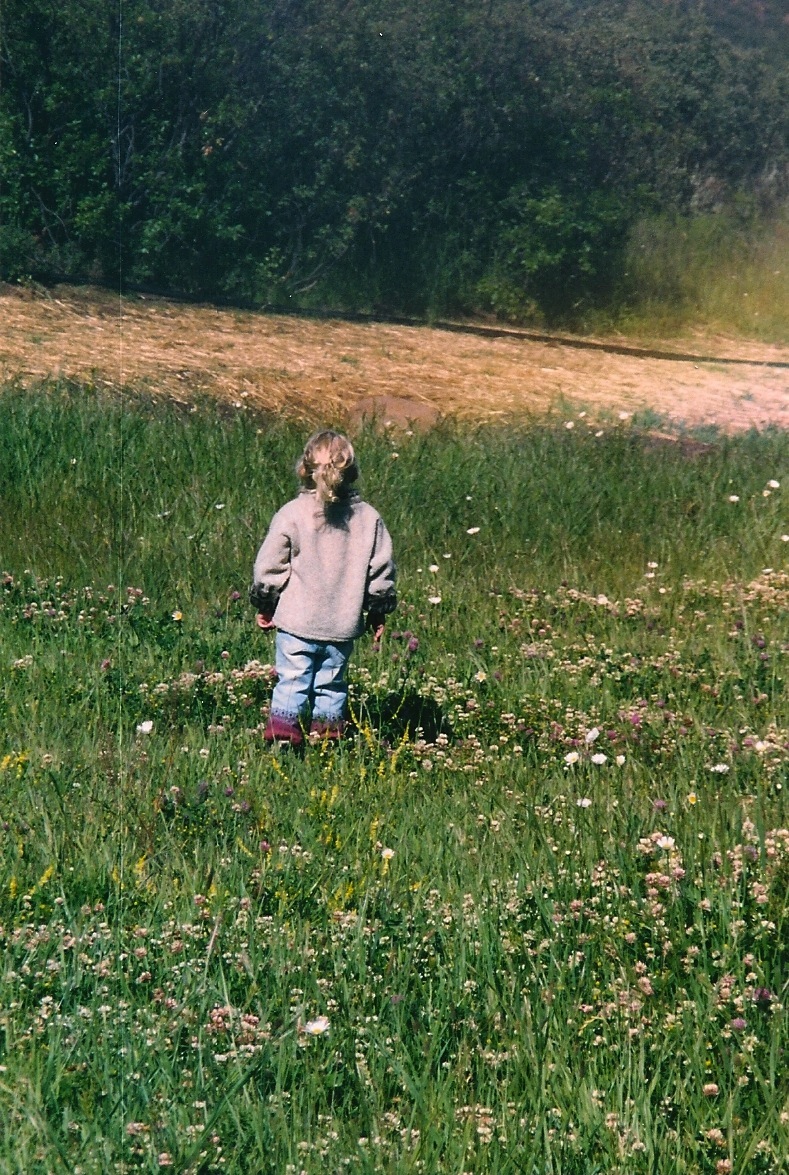
Emma – 2004

The Best Marital Advice I Was Ever Given and How It Applies to My Daughter

One of the single best pieces of marital/relationship advice I was ever given was:  Every day record all the things your partner did that was kind, helpful, thoughtful, ‘right’.  What are the things you love about this person?  What do you admire about this person?  What do you respect about them?  What are the things they do that make you happy?  What do they do that fills you with joy?  To many, these questions may seem obvious, but try doing this when you’re angry or fearful or even just annoyed.  I remember sitting with my journal that first evening and wondering what the hell was I going to write?  He breathes?  Could that really be seen as a good thing?  (It’s okay to laugh.)  I’m a master at this exercise now.   In fact, I’m so good at it, I now think of the positives FIRST!  And guess what?  My marriage is pretty fabulous, of course it helps that I’m married to such an amazing guy.

The first time anyone asked me about Emma’s assets we were a year or two into the diagnosis.  I thought it was a trick question.  Seriously.  It was my brother Chris, who asked, “What does Emma like to do?  What is she interested in?  What is she good at?”

My mind went completely blank.  No one had asked me these three important questions about my Autistic daughter.  Listing assets does not fit neatly into all those questionnaires I was constantly having to fill out.  Those little booklets with questions broken into categories of age.   Example:  From 3-5 years old:  Your child plays appropriately with toys  The choices were:  Never, Rarely, Sometimes, Usually, Always.   My pencil would hover over the choices as my mind raced.  What does “appropriate” even mean?  Why is pretending a doll is an actual baby, when it clearly is not, considered “appropriate”?   Eventually I resigned myself to the task and considered “Rarely” and “Sometimes”.   Depending on my mood, I would mark one of the two and feel the all too familiar sensation of constriction in my stomach and throat.  Fear flooded my body and mind as I tried to concentrate on the next question:  Your child eats using all utensils.  Again I would resist the urge to fudge the truth.  I had to force myself to choose the answer that came closest to reality.  I came to dread those questionnaires almost as much as reading the evaluation reports sent in once a year from the Board Of Education.  They were both exercises in, so-called, critical thinking – Look at this picture and tell me what’s wrong with it.  Look at this child.  Now let’s compare her to her neurotypical peers.  Let’s make a list of all that’s “wrong” so we can make things “right”.

But wait!  How is this helpful to anyone?  Comparing anyone to anyone else is a lesson in how to live one’s life in hell.  But compare a neuroatypical person to a neurotypical one is absurd.  Why do we even do this?  To what end?  How is this helpful?  Certainly it isn’t helpful to the neuroatypical person.  We do not say to a person who uses a wheelchair, well, you’re not walking and your same age ambulatory peer is, so let’s get you up and out of that chair and try to build those muscles. Then, when you resist or protest, we restrain you, tell you to stop complaining or tell you that you can’t fully comprehend the situation.  When you still do not manage to stand, let alone walk, we shake our heads sadly and tell you, you really need to have a better attitude and try harder, but don’t worry, it’s okay, we’ll keep working on it.

What does this thinking do to a person over the long-term?  If we are judged, compared, relentlessly criticized, taught that we fall short, told we don’t measure up, dissected publicly, privately and shunned, what does that do to us?  What would that do to any of us?  We are, after all, regardless of our neurology, human beings.  We do all share that.  Has the human piece gotten lost in all of this?

What does she like?  What’s she good at?  What is she interested in?

I’ll have to get a bigger pad of paper.

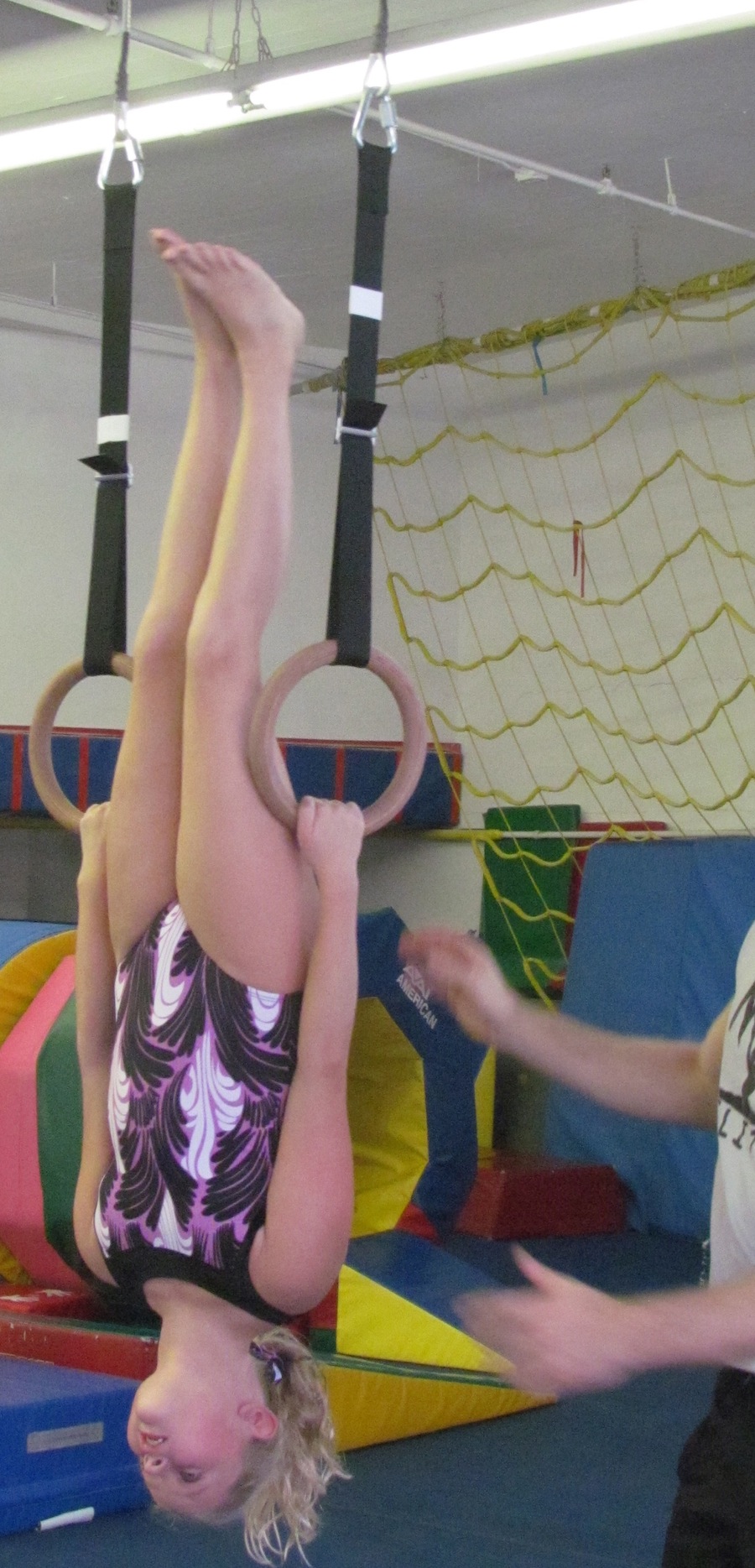
Em at Gymnastics – October, 2012

Related articles

An Ode To My Daughter

Dearest One,

When you were first born I had an idea about you, it was an idea I have come back to, all these years later, it was an idea that was more right than wrong.  You were very much your own person right from that first moment you drew breath.  I remember marveling at your strength and independence.  I knew almost nothing about autism.  I hadn’t taken the idea of independence and remolded it as “autism” yet, only to rework that idea back to its original concept later.  I saw you and appreciated you for who I saw you to be.  Defiant, independent, strong, determined and silly.  Even as a baby you loved to laugh and appreciated silliness in all its various forms.  You loved playing peek-a-boo and being thrown in the air.  Those first eighteen months, before I knew words like “vestibular”, “proprioceptive”, “stimming”, “perseverative”, “echolalia” and all the other words that threatened to push you from center stage, making you less you and more an example of a diagnosis weighted with other’s learned opinions, I was in awe of you.

Words have power, but words can confuse, they blinded me for many years, I became caught up in what they meant or what others thought they meant and as a result was less able to appreciate you.  I used to wield those words as though they were weapons banishing what was, into something else, something undefinable, something “other”, something I wanted to find a way to control or remove.

As a baby before I knew those other words, you were in a state of either bliss or agitation.  I use to watch you with wonder and admiration.  You were distressed by the lights and the air seemed to hurt you, as though it scraped against your skin.  You liked being swaddled tightly in one of the soft baby blankets I had bought for your arrival.  You slept almost constantly those first two weeks.  Then your deep slumber was interrupted by internal discomforts I could not guess or see.  You greeted these intrusions with indignation, howls of distress and I felt a helplessness I had not known could exist.  A helplessness borne from not knowing; watching, but not able to intervene, hearing, but unable to understand.  I tried to comfort you, but my understanding of what comfort meant was not the same as yours and so your teaching began.  You have been so very patient with me, dearest one.  You have never given up on me.

You have painstakingly tried to communicate in a language that does not come naturally to you.  You have met me more than half way.  You have tried over and over to help me understand and you’ve never stopped.  It has taken me a long time to learn some very basic things about you, things you’ve been telling me ever since you were born, but that I couldn’t understand.  Things I still forget, but  I’m getting better at listening to you and understanding that words are not the only way a human being communicates.  I am getting better at hearing you.  I have learned to listen to your behavior as though it were a conversation, because it is how you reach out, it is the way you connect.  I am learning to lean into you, to not try to do a word-for-word interpretation of your verbal utterances, but to try to feel the meaning of what you are doing or saying.

You are Autistic.  Do not let other’s interpretation of that word define you, rather help others understand that you define it.  Make your mark in this world by continuing to believe in yourself.  Continue to stand up for yourself.  Advocate. Let your voice be heard.  “Actions speak louder than words,” people say, but they don’t seem to apply that to you and others who cannot and do not rely solely on language.  Those people need to be taught, because actions DO speak louder than words if we can learn to listen to them.

You, my beautiful daughter, are kind and good and honest and talented and funny and caring and sensitive and yes, Autistic.  Be proud of your neurology, but do not allow others to limit you because of it.  Do not allow someone’s idea of what that means to encroach on who you are or how you perceive yourself.  You are Autistic and you are my daughter.  It could be argued that both come with a great deal of baggage, but both also come with many wonders and advantages.  Concentrate on the positives, lean into them, and make your way.  Reach out to me, grab my hand, together we are stronger than we are alone.

I am so proud of you.

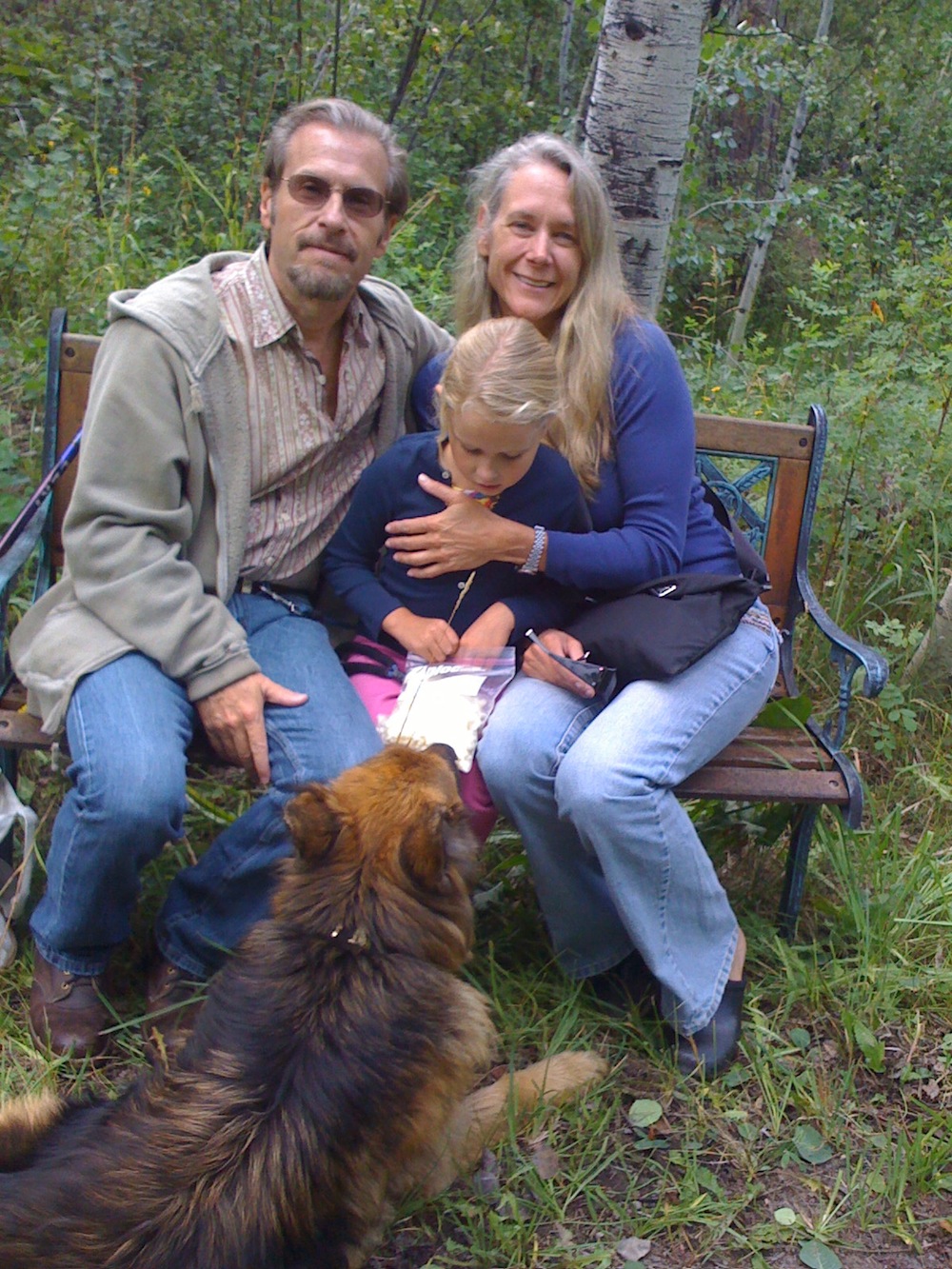
Richard, Em & Me – 2010


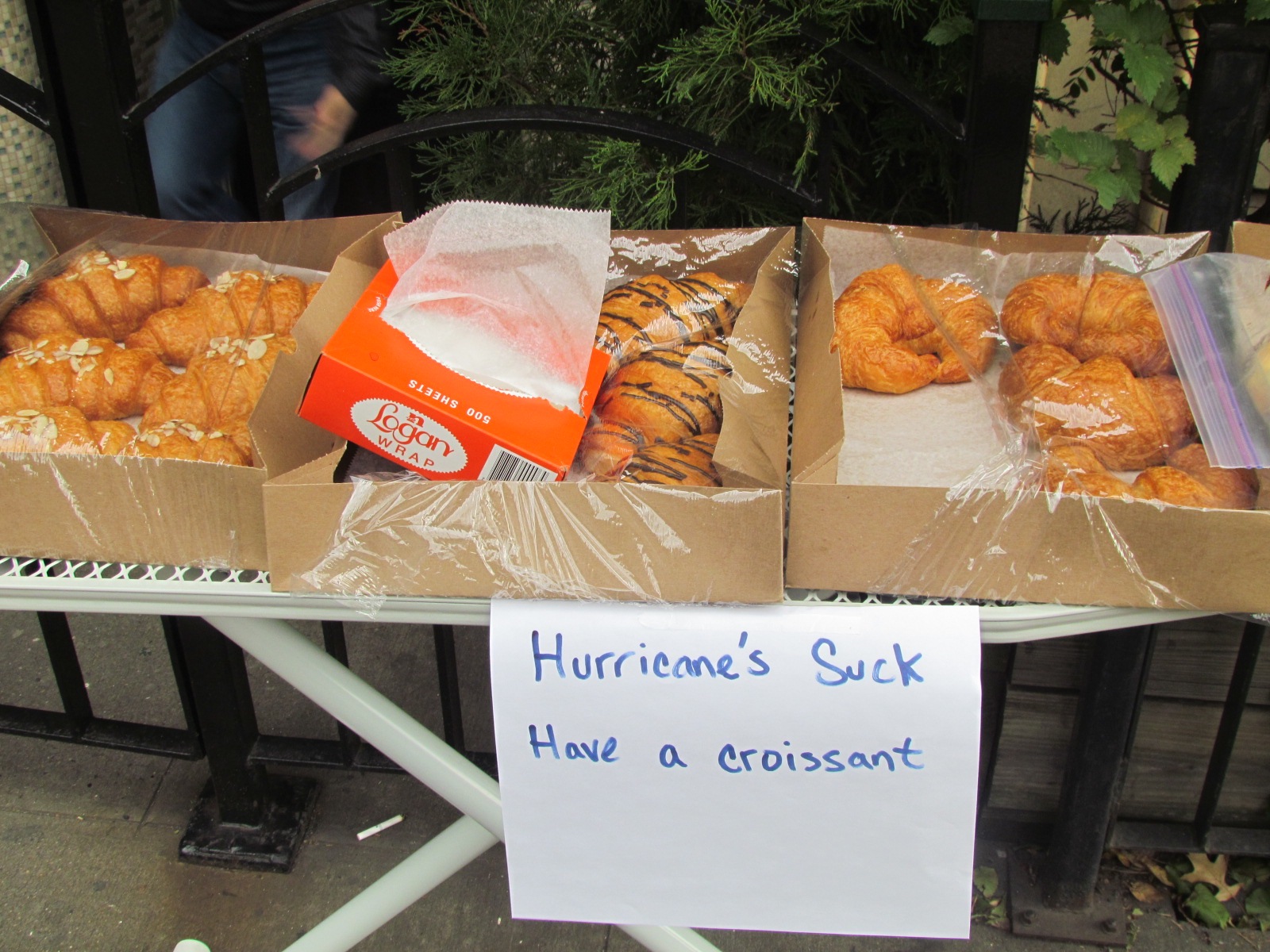
“Hurricane’s Suck, Have A Croissant”

Processing…  I haven’t.  There are still too many people who are without power, whose homes have been destroyed, too many people who continue to have no heat, no hot water or any water at all, too many displaced people, too many who have lost so much….  How does one process this?

Nic had nightmares last night about a zombie apocalypse where he was the lone survivor.  Emma is perseverating more than usual; her stims have gotten noticeably worse; her scripting more pronounced.  I watched her yesterday as she did her Sunday morning DJ routine, listening to all her favorite songs, singing and dancing, losing herself in the music and felt both grateful for all we have and utterly exhausted.  I slept seven and half hours last night and yet feel as though it were 5.  I am feeling fragile particularly sensitive and emotional, and we were the lucky ones.  We have power, heat, hot water, a home that is undamaged, everything’s back to “normal” and yet it isn’t.  I don’t know what normal means anymore.  Where do we go from here?  How do we process this?

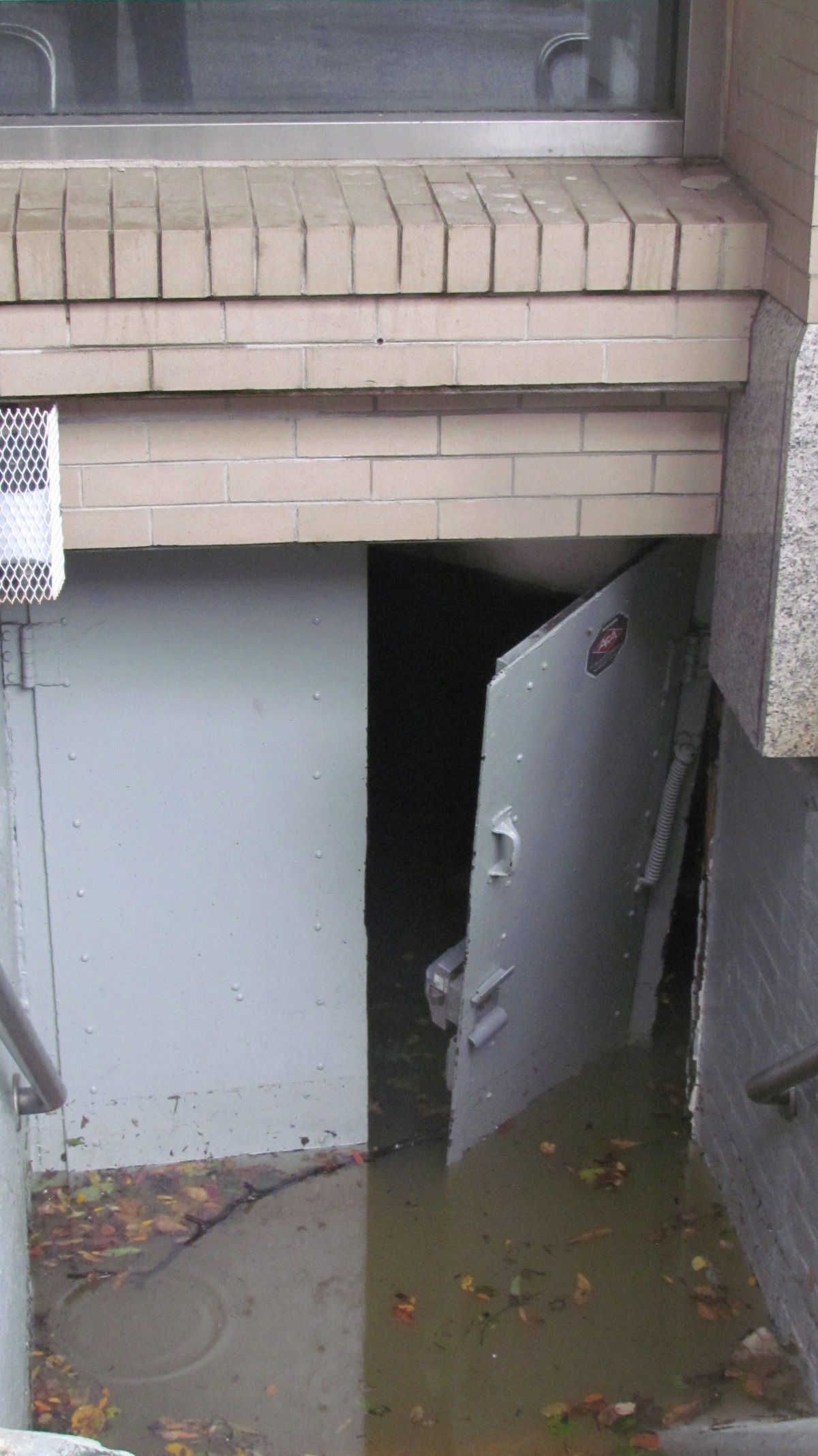
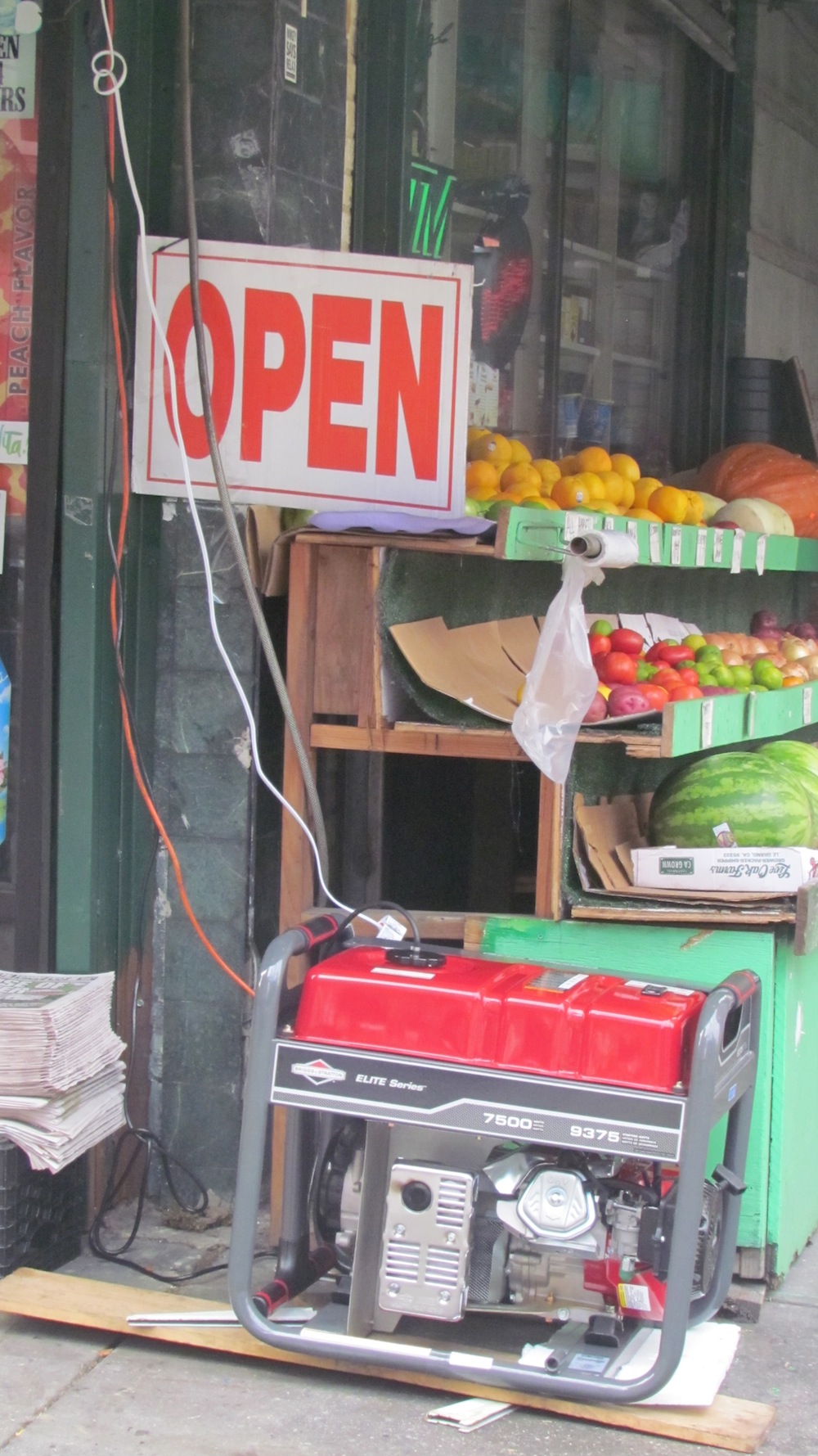
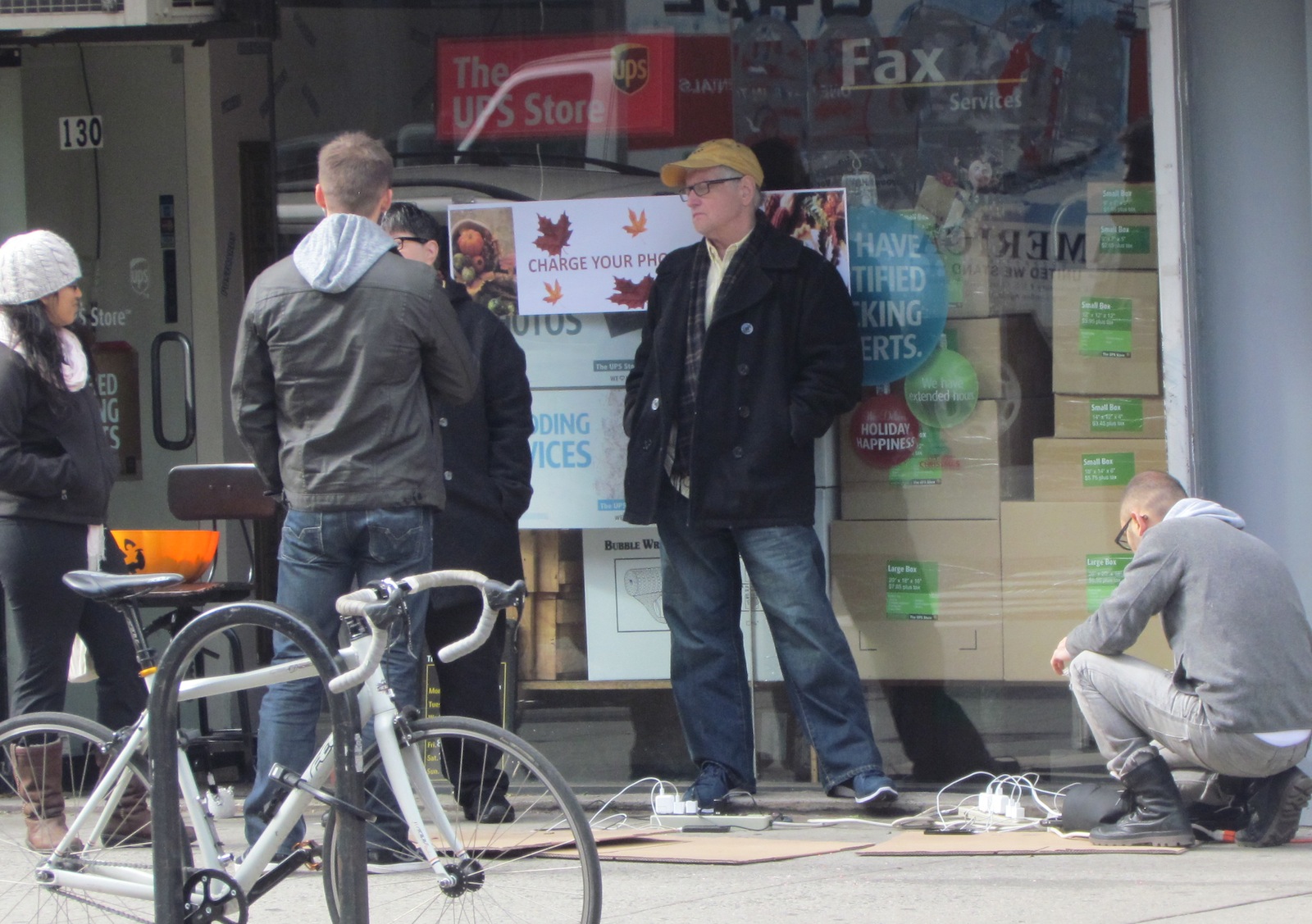
On Friday I went downtown and took photographs.  The lighting wasn’t great, it was impossible to capture the mood or what it felt like to walk along empty streets where the only lights came from headlights on busses, taxis and those who still had enough gas in their cars to get around.  I couldn’t photograph the group of young women weeping in the street or the man looking for his father whom he had not heard from in four days or the old woman painstakingly climbing the stairs of her unlit building, her pug tugging on its leash, urging her upwards into the darkness or the faces of all those people I passed obsessively checking their dead cell phones, trudging north with the hope they might find an available electrical socket that would breathe life into it.  I’m not a skilled enough photographer to be able to capture any of that.  (I’ve provided a couple of links to some professional photographers who were though.)  But I did get a few images that at least document the storm and our resilience…

One of the many Chelsea art galleries whose flooded basement held art work. 

An intrepid New Yorker who found a way to stay open despite the power outage downtown

Powering up on 7th Avenue

The “Doll House” on 8th Avenue

Kindness on 14th Street

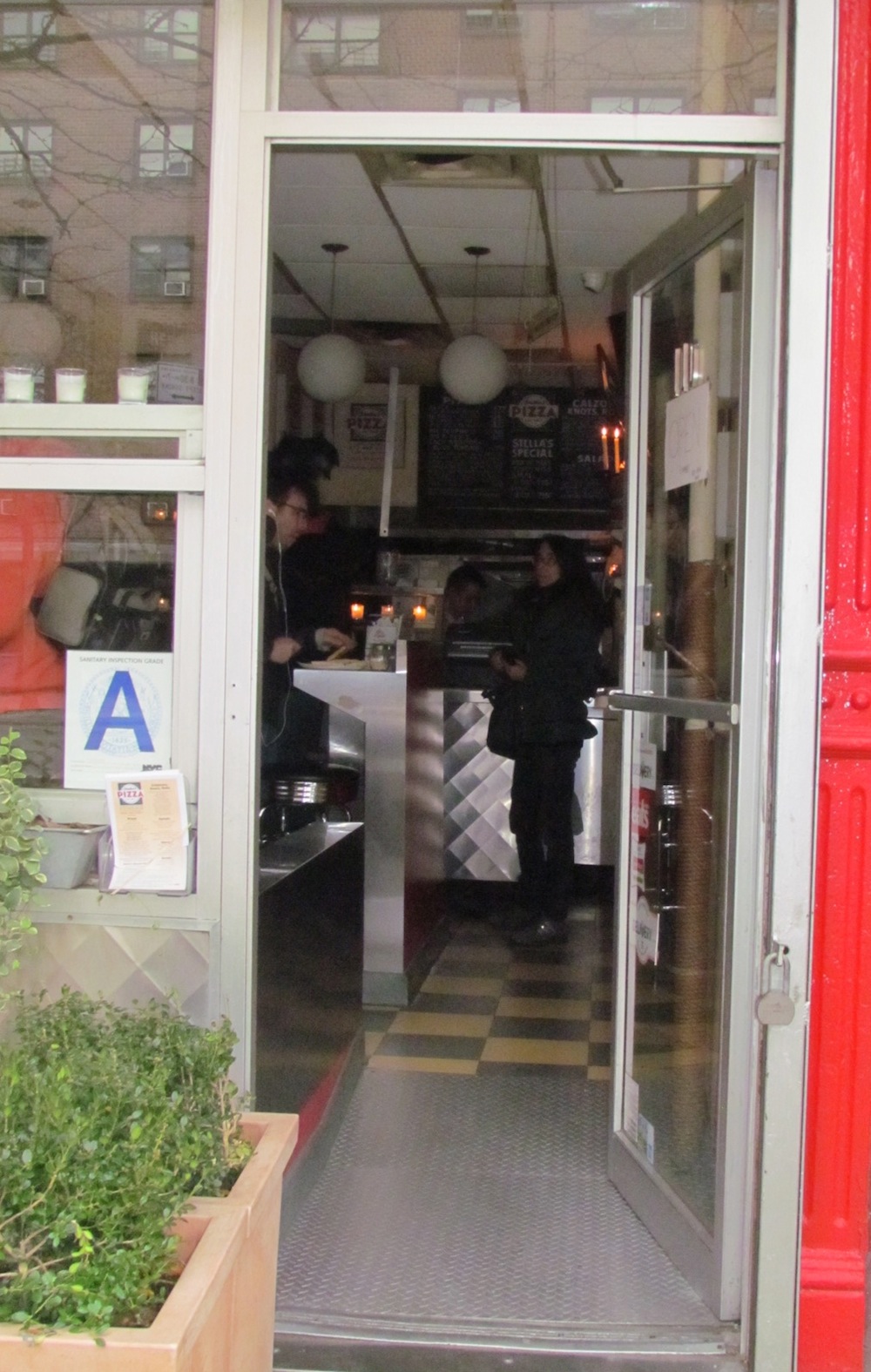
Pizza by candle light

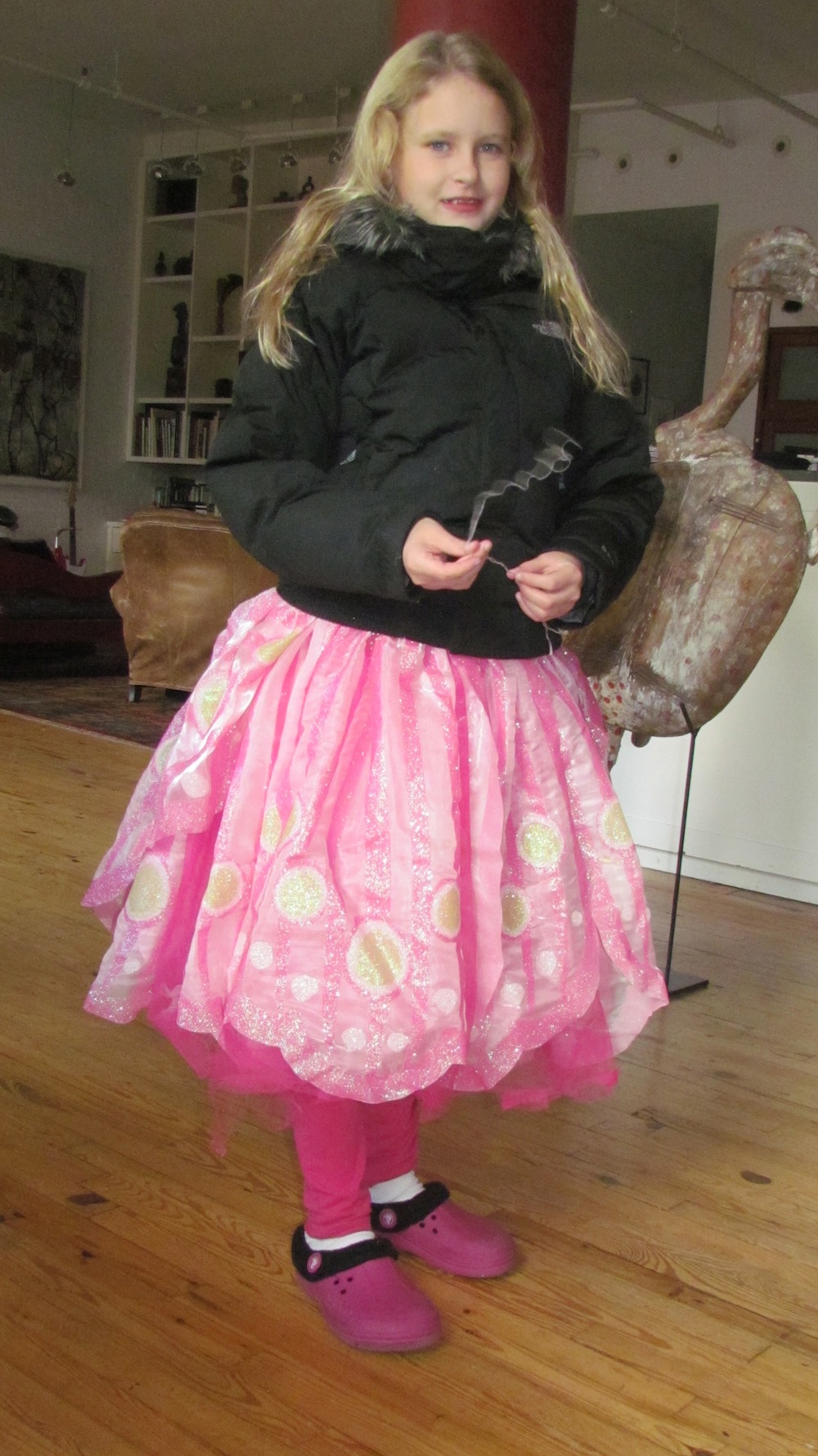
Emma wasn’t able to go trick or treating, but she still dressed as a butterfly on October 31st

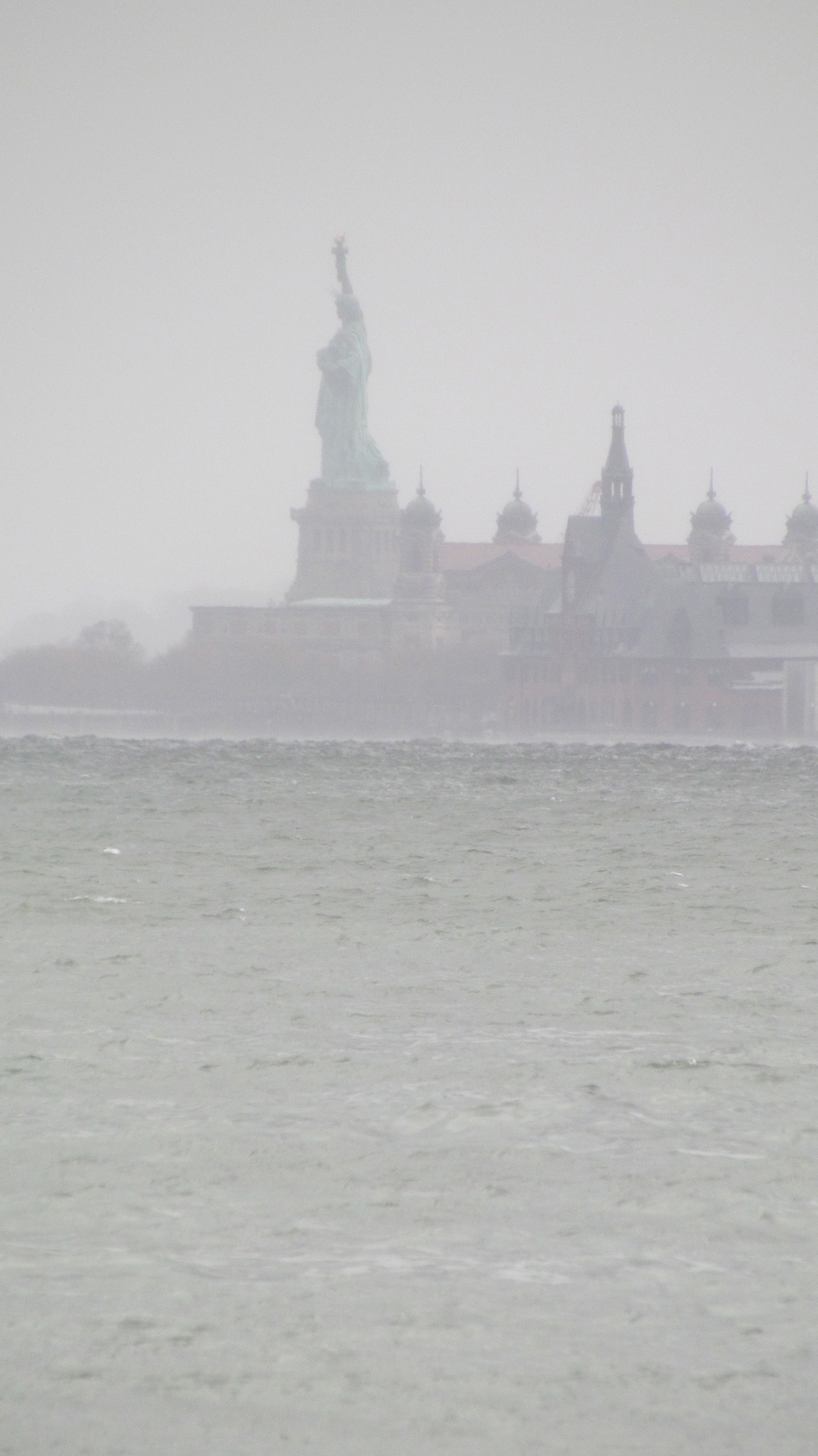
The Statue of Liberty during the storm

We are capable of so much.

Be grateful.

I am.

Awaiting the Storm

If you listen to the news, which I haven’t but Richard, in an uncharacteristic display of interest regarding the weather, has been keeping abreast of the latest news by reading updates on the NYTimes online, you already know Hurricane Sandy is heading inland and may or may not hit New York City at some unknown point…  it’s hard to say. Meanwhile, everything is shut. All the stores are closed, all public transportation has screeched to a halt, friends of ours who are in “Zone A” have had the boilers in their building shut off since yesterday evening, some others have been evacuated, and yet, other than the occasional breeze and light sprinkle, there is nothing to suggest anything is amiss.

On Saturday as Nic and I did our weekly grocery shopping run, Nic commented on the long lines. The typical four-hour window given for delivery of one’s groceries had been suspended and other than thinking it strange that so many more people were out getting groceries, it didn’t occur to me to be concerned.  It has to be said, we do not watch the news on television and my reading of the NYTimes online is topic specific.  When Nic asked why so many people were grocery shopping I said something about how it was always like this on Saturdays and then went into a lengthy explanation about typical Monday through Friday work weeks and how it made sense that Saturday was a good day for grocery shopping. By the glazed expression on my eldest child’s face, I’m pretty sure I lost him after the first 30 seconds. Looking back, the incredulous expression on the woman’s face directly behind us now makes sense and I feel a little saddened to realize it was not a look of awe at my brilliant analysis of the shopping habits of fellow New Yorkers.

Last night I explained to Emma that there was a big storm headed our way and because of it, school would be closed and that there might be heavy rain during the night, but that we were all going to be safe.  I was a bit more concerned that the changing air pressure might wake her in the night, causing her pain and upset.  When she woke this morning and came running into our room, I said, “Em, has it started raining yet?”  She said, “Rain, lightning and thunder!”

“Really?” I said, peering out into the darkness.  “I don’t hear any rain.”

“It’s raining.  No school,” Emma said, with the kind of unerring certainty that does not invite argument.   Then she pulled the bed sheets up over her head.

I asked Em if she wanted to go up on the roof to see first hand what the weather was like.  I grabbed my camera and rain gear .  “Oh honey,” Richard said as he watched me zip up my rain jacket, “you’re going to document the storm,” he wiggled his fingers to make quotation marks.  “I love that.”

“It hasn’t hit us yet,” I told him.  “It might.  Later.  You never know.  They’re saying 95 mile per hour winds and 10 foot waves.  Maybe I’ll take the kids to the river later,” I announced.

“I love that you’re going out to record the weather and not hunkering down into fear-bomb-shelter mode,” he looked at me with what I’m pretty sure can only be described as pure, unadulterated, adoration and admiration. (I am convinced I’m reading his look correctly and NOT the way I completely misinterpreted the look of the woman in the grocery store.  Of course, I have been wrong before…)

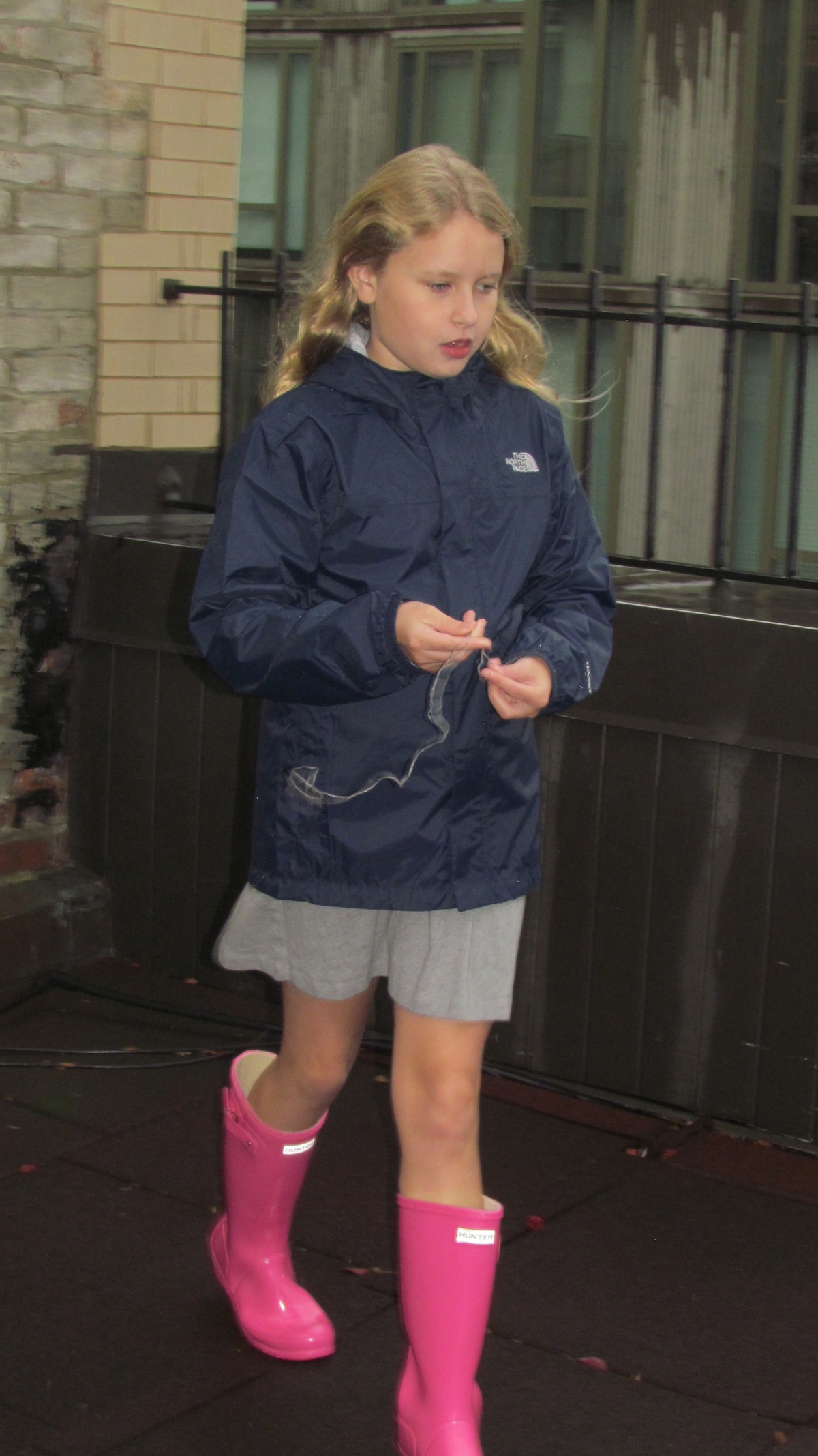
Em on the roof just now in appropriate, pre-Sandy, attire

The Impact of Acceptance and Non-Acceptance

My friend Steve Summers wrote this a few days ago.  I asked Steve if I could repost his words here and he gave me his permission.

“Today I feel tired. —

Tired of being rejected.
Tired of being ignored.
Tired of being excluded.
Tired of being treated like an outcast.
Tired of being treated like a misfit.
Tired of feeling like others look down on me for being different.
Tired of being expected to try and act ‘normal’ to have a ‘normal’ life. — I am not ‘normal.’ I am Autistic.
Tired of people who think that just trying harder will make Autistic people ‘more normal.’ — Would you tell a blind person to try harder to see? Would you tell a paraplegic to try harder to walk? Would you tell a colorblind person to try harder to see the colors that they can’t see?
Tired of people who don’t understand Autism and who don’t make any effort to learn about Autism so that they can cure their own ignorance.
Tired of people who refuse to accept Autistic people just as they are.
Tired of people who presume incompetence.
Tired of neuro-bigotry.
Tired of the silence of others. Silence is *not* support.
 
Want to help us? —
Listen to Autistic people.
Make an effort to learn about Autism.
Educate yourself about what we go through each and every day.
Learn about how negative attitudes make us feel.
Practice Autism Acceptance.
Accept that we are different, not less.
Accept that we are different, but *not* defective. Don’t try to make us into a poor copy of your idea of ‘normal.’
Accept that we are okay to be ourselves — just as we are.
Accept that we are  humans with feelings just like everyone else.
Accept that Autistic rights are human rights.
Presume our competence.
Don’t avoid us, include us.
Most of us have social anxiety. Please be kind and reassuring to us.
Please reach out to us. We won’t often make the first move after suffering from a lifetime of rejection, exclusion, and being bullied.
Please practice inclusion.
 
I am Autistic and I want to be valued and accepted for simply being me. ~ Steve Summers”

Steve is my friend.  I am so glad I know him.  I value our friendship.  I enjoy our conversations.

Yesterday I wrote about acceptance, specifically acceptance of one’s Autistic child by a parent.   Parents who do not accept their “child’s autism” often feel criticized and bristle at the perceived implication that they do not “love” their child, “correctly”, “in the right way” or “enough”.   I know how completely uninterested I was in the idea of acceptance when I was engaged in an all out battle with Emma’s autism, intent on extricating her from its gnarled grasp.  (This last sentence was very much in keeping with how I thought of autism at the time.)  What I didn’t consider, what I didn’t know to consider, was Steve and every single person who is autistic who feels the way Steve does.

My inability to accept my daughter’s autism impacts her.  Just as I cannot extricate the Autistic parts of her, I cannot pluck out the “autism” from how she sees herself.  My non-acceptance, as well intended, as well-meaning as it was, was still felt by her as a criticism of her.  But I didn’t know that at the time.

I think we, human beings, forget how pervasive and destructive our ideas about others are.  If we are in the majority, our influence, the reach of our opinions are even more destructive.  We say, oh but I love her, I just hate the way she walks, talks, the sound of her voice, the color of her skin, eyes, hair.  I love her, but I hate the way her mind works, how long it takes her to get dressed, the way she eats…  No really, I DO love her.  And we do.  We feel tremendous love.  I loved my daughter all those years I was fighting her autism.  I did.  I absolutely did.  I fought her autism BECAUSE I loved her so much.  But then I met people like Steve and Julia and E. and Kassiane and Bridget and Savannah and Laura N. and Sam and Amy and Gareeth and I read what it was like to be brought up by parents who didn’t accept their “autism” and how it felt.   And I began to understand.  I was able to hear what they were saying and I began to see the connection.

Thank you Steve for allowing me to print your words here. Thank you for writing this.  Thank you for helping me parent my daughter differently, so that in ten, fifteen, twenty years from now maybe, just maybe, she will not feel quite so tired.

Emma – 2004

  Related articles

Reading and Reading Comprehension

Emma’s teacher and I have been brainstorming new ways to increase Emma’s reading comprehension.  We have tried the standard reading comprehension questions, which, as my friend Ibby pointed out, are typically filled with inconsistencies and problems.  We’ve tried the more standard reading comprehension questions such as a story about a boy named Peter who takes a taxi to the airport.  He gets on an airplane, buckles his seat belt and the plane takes off.  The questions are then, “Who took a taxi?” The answer, obviously is Peter took a taxi.  But the second question, “Where was he going?” is tougher to answer because we aren’t given the destination other than he took a taxi to the airplane and that isn’t actually accurate as he took the taxi to the airport, but the airport isn’t part of the story.  It tells us he took a taxi and then got onto the airplane where he buckled his seat belt, so Emma answered, “Going to visit Granma in Aspen!”  And while this isn’t the answer the creators of the questions were presumably looking for, it demonstrates that Emma certainly understands what the story is about and she is adding her own personal experience to the gaping holes the story provides.  In addition, the story has been dumbed down so completely, if we are “presuming competence” then Emma must be going out of her mind with boredom.

So this is the question I come up against almost constantly – how do we make the material interesting and engaging, but not so difficult it becomes frustrating.  How do we set Emma up to succeed and not fail without boring her?  How do we deal with her resistance to reading and writing?  I’ve made some headway by trying to do some playacting and using some of her favorite songs, but reading itself remains difficult for Em and she certainly doesn’t enjoy it.  Maybe I am making it too complicated. Maybe I’m over-thinking the whole thing.  Maybe it’s better to just present reading material and have her read it silently.  Then type questions that she types the answers to.  Maybe having her read aloud is causing problems.

What I am seeing over and over is that when she has trouble with a text we make the text easier, but I don’t believe that’s the answer.  I’m not sure making it “simpler” is better.  My biggest challenge with all of this is that this is not my area of expertise and I have no idea how to proceed.  Emma’s teacher continues to try different things, but we haven’t found anything that seems to captivate, motivate or particularly interest her.  I have to think about this more.  I’ve printed out some of her favorite song lyrics, but there were too many words she couldn’t read and so much slang, I quickly abandoned the idea.  I need to find reading material that isn’t so easy it’s boring and not so difficult it makes her frustrated.  Looking back  over the past year, I can see how well she was doing and how so much of that progress has stopped.  I need to revisit those earlier concepts and see if I can find material that will pick up where we left off.

Lots of Questions and The Journey Continues

I haven’t been sleeping well.  I’m having nightmares.  I’m waking at 2:00 and 3:00 AM, unable to go back to sleep.  I am worrying.  I feel I shouldn’t be.  But I am.  The lack of sleep doesn’t help my worrying, it exacerbates it.  There are a couple of things going on that are causing this.  I am not managing the work/writing balance.  I need to work.  I don’t have a choice.  I also like what I do. So there’s that.  And I need to figure out how to balance work better.

Then there’s this…  my writing, this blog and autism.  Specifically my growing discomfort in writing about Emma, without Emma.  More and more I try to keep my writing about my own issues and how they weigh on my responses and reactions, but even so, I end up writing about her.  I asked Emma the other day, “Hey Em.  Does it bother you that I write about you?”  “Nyeah,” she said, which is her way of saying No.  It sounds like knee-yeah when she says it and she scrunches her face up and smiles while shaking her head from side to side.  “Okay, but do you know that lots and lots of people read the blog every day?  Not just family or people we know,” I continued.  She looked at me, nodded her head up and down and grinned.  “Do you care that I put photos of you on it?”  “Nyeah,” she said again.

I asked Nic what his feelings were.  Without hesitation he said he wasn’t comfortable being written about or having his photo on the blog or Facebook or anywhere else.  So Em tells me she doesn’t care or mind, but Nic certainly does and I can’t get rid of my anxiety.  I didn’t do what so many bloggers have done.  I never made my family anonymous while keeping our whereabouts a mystery.  It never occurred to me to do that.  I started this blog as a way of documenting Emma’s progress.  That original concept has changed over the years.  I don’t know how to keep writing about “our journey” without “all of us” writing it.  Nic has no interest and whenever I have asked Emma if she’d like to write something, she’s declined.  The truth is the blog has become “my journey”.  I have moved away from feeling sad about my family and am now in a place of contentment.  I feel tremendously lucky.  I feel incredibly grateful for my two children and my husband and the life we have together.  I no longer delineate one child from the other.  I don’t see one as one thing and the other as something else.

We often talk about our children as though they grow up in a vacuum.  We express shock when children bully each other and make schools accountable and yet our children are being raised in a culture where adults bully all the time.  We are a culture of bullies.  Of course bullying is a problem in schools, how could it not be?  Look at the adults they see, hear and watch on TV and in the movies.  They are surrounded by bullies, even bullied by those adults and yet we are horrified and shake our heads and wonder how this could happen?  How could it NOT happen?  Parents have strong opinions about race, sexuality and difference and their children often adopt similar beliefs.  We want tolerance?  We must begin with ourselves.  We want to stop bullying?  We must look to our own behaviors first.

So I ask myself:  Am I contributing to a culture that thrives on putting others down?  Do I do and/or say things to make people feel badly about themselves?  Do I gossip?  Am I judgmental?  Do I engage in disrespectful conversations about those I do not agree with?  Am I more interested in making my point than hearing another’s?  What sort of person do I model for my children?  I believe in tolerance, embracing difference, being of service, acceptance, but do my actions mimic my beliefs?  Do I believe that what I believe is the “truth”?  Do I consider those who disagree as inferior?  I know I am guilty of all these things at least on occasion and a few more than occasionally.

I have an ideal for myself, it is a kind of end goal, the person I strive to be, but know I will never achieve.  As long as I keep traveling toward my ideal I will have lived a good life, or, at the very least, a better life than if I don’t.  I know I won’t do any of this perfectly, but I can keep trying.  I can keep holding myself accountable.  When I make mistakes I can admit them, make amends and do all that I can to try and make the necessary changes so I won’t repeat myself.  I don’t know what the answer is to my questions and discomfort.  But I’ll keep looking, asking and being aware of how I feel.  Once I’ve figured it out, who knows? But until then I’ll keep writing about it.  After all, this blog is less Emma’s Hope Book and more “A Journey.”

New York City – Built as a Courthouse in 1874-1877, later used as a Public Library this clock tower remains standing 

Henry Makes Waves & Everyone’s An “Expert”

Yesterday the interview (published on Huffington Post, click ‘here‘) with Henry, the 13-year old non-speaking Autistic boy, son, brother, friend, student and all around amazing kid who has been denied enrollment to the public school across the street from his house went viral.  At the moment it has 152 comments and over 1,000 people have “liked” it, with almost 400 people sharing it on Facebook.  The comments began pouring in yesterday afternoon.  A few were particularly troubling for a couple of reasons.  The first being that a completely uninformed person(s) made broad sweeping generalizations about autism while bolstering their opinions with statements like this:  “and then there are the non verbal Autistic who need constant care.  One can’t tell if they understand language, but they can’t speak for some reason. I do know this as a fact from the Autistic that I’ve worked with in my youth.”  Another commenter suggested, “Maybe he should consider speaking …..If he wants to go to that school so badly…”  And yet another said something about how Autistic kids “drag” the rest of the students down.  All of these comments were uninformed, but the thing that was actually frightening  was when another commenter then referred to the first commenter as an “expert”.

So I lost it.  Completely.  Utterly.  Lost.  It.  Heart racing, hands shaking, head pounding, throat constricted, feeling nauseous, lost it…  Which is how many who are marginalized and live with prejudice, feel all the time.  That feeling of terror that their lives are threatened and in real danger as a result of incredible ignorance.  I should have walked away.  I should have done some breathing exercises.  I should have meditated.  But I didn’t.  Instead I reached out with words and hit back.  I used words to hurt.  I used words to wound.  I didn’t ask questions.  I didn’t wait for more information.  And here’s the thing, I don’t know that I was wrong to do so.  I feel ambivalent.  I feel I should regret my actions more than I do.

I responded with this: “…the degree to which you misunderstand Autism is actually more than frightening, it is terrifying. That you also worked with this population says more about the tragic state of the place you worked and their hiring policies, not to mention their training, which appears to be none, than your profound ignorance.”  To which he responded, “I wasn’t hired to do anything. The camp/school had normal and special kids and they had that one Autistic boy. I was nine. I wasn’t hired.”

People in the comment thread were describing a man as an “expert” who claimed knowledge of autism because he met an Autistic boy when he was nine years old.  At camp.  Nine.  And I thought of Joe Scarborough and his comment about the Aurora shooter.  I thought of Simon Baron-Cohen who actually is something of an “expert” and yet I completely disagree with his conclusions.  I thought of all the doctors, researchers, neurologists and “autism specialists” I’ve met, spoken with and consulted over the years, many of whom I do not agree with and some whom I do.  But the point is, so much of this is up for grabs.  There is a great deal of information out there that all of us have access to, but how do we know what is correct?  We’ve got doctors drawing conclusions that seem illogical and even irresponsible, while others whom we might agree with.  There are some very smart people out there working hard, publishing their work, making informed opinions, but how do we know who to believe?

I don’t.  What I do know is that anyone I read or hear I try (usually) to find out more about.  Who is this person?  What are their credentials?  What is their hands on experience?  And I get a second opinion from those who are autistic.  There are a number of people, all Autistic whom I particularly respect (this is by no means a comprehensive list and in no particular order, just thinking off the top of my head; please feel free to share anyone else I may have forgotten) Judy Endow, Lynne Soraya, Emily Willingham, Elizabeth J. Grace and Michelle Dawson.

A commenter on this blog wrote a hilarious comment about “Dr. Mom”, “Nurse Mom” and “Psych Mom”.  It was not only very funny, it was relevant to all of this. Who do we believe?  Hopefully not the guy who states they “know this for a fact” as compelling as the man might be for some.  And I’ll just add this; don’t believe me either.  I’m a mom.  I’m a writer.  I’m an artist.  I have opinions.  Sometimes I have really strong opinions, opinions that I think are right.  But I also know that over the years as I learn more, I no longer agree with many of the opinions I held a year ago, two years ago, three years ago.  My opinions change.  All I know is that I want to keep learning.  I want and try to keep my mind open.  Sometimes it’s really hard.  Sometimes I feel tremendous rage.  I don’t learn when I’m that angry.  But hopefully I calm down enough that I can go back to learning.

Let the learning continue!

Standing with Henry, Diets and Where Do You Go to Get Advice?

Please read, “like”, share and tweet my latest interview with 13-year-old Henry, published yesterday on Huffington Post.  For all you tweeters, I am trying to get Henry on Katie Couric’s show.  If you’ll click on the link above to read the interview, tweet the piece out and be sure to include @KatieCouric in your tweet.  This is what I’ve tweeted –  “@KatieCouric Henry’s fight for inclusion @arianezurcher http://t.co/vhSs85v2  Katie – Henry’s story would be terrific for your show!”  If enough people tweet her, she may just take notice.  Let’s stand with Henry!

Yesterday’s topic brought forth a wonderful discussion regarding “The Diet” whether it is a gluten-free/casein-free diet or a variation of it.  I realized in reading the comments that my post may have sounded critical of the diet and even critical of those who have tried it with positive results.  This was not my intention and so I want to be clear about that.  I have a lot of feelings about having put Emma through so much trauma as a result of putting her on the (in our case failed) diet. The first time we tried it, when she was still just two years old, did not seem to have the same negative impact that it did just a year ago when I took all her favorite foods away and implemented an even more restrictive diet under the guidance of a well-regarded naturopath.  This is something Emma still talks about, something she is still hyper-worried I might suddenly do again.  I should have placed more emphasis on this.  So to all who have experienced the joy of finding something that helped you or your child, I apologize.  I did not in any way mean to illegitimize what you’ve found to be so very helpful or to suggest the diet is quackery.

What is clear from reading all the links people thoughtfully provided and the many personal stories, a GFCF diet and its various variations, has and does help many children and adults, regardless of their neurology.  An important point, made several times in the terrific comments, was that because of the hyper-sensitivities experienced by so many Autistic people, what might be experienced as a mild intestinal discomfort in a non-Autistic person could be felt intensely and painfully by someone with a different neurology.   Hence a food “intolerance” not even an allergy could cause great distress.

In the post I hypothetically asked, were I able to do it all over again would I have put Emma on the diet?  I wrote, “…I would have sought out a reputable pediatric neurologist who could have given Emma the blood work necessary to tell us whether the diet was something she would benefit from.  I would have looked for scientific evidence giving me reason to put her on such a diet and without that evidence I would not have put her through it.”  Except, I realized last night as I thought more about this, we DID do these things.  We didn’t have a pediatric neurologist, but we did take her to a highly regarded pediatric allergist, did blood work and it showed she was not allergic to anything, but he suggested she may have food intolerances that might be contributing to her constipation issues.  It was this doctor who suggested we try the GFCF diet to see if it might help.

But as one commenter pointed out, in her country there isn’t anyone who will perform such tests.  She wrote, “If I had to do it all over again? I would have done it sooner to alleviate my daughter’s suffering.  For the first few years it was just dairy I removed from the diet.  I thought it too hard to cook gluten-free as well. When I finally adjusted the diet to gluten and dairy free at the age of 4 my daughter ‘s chronic painful distressing diarrhea ceased..”  In fact both her children have responded well to having their diet modified.   Hers is but one example of many who have benefited from implementing such a diet.

To another commenters point, even if they had been able to find such a doctor, their insurance would not cover such tests and they wouldn’t have been able to afford them.   For people like these, who either cannot afford to have such tests run or who cannot find a doctor to even perform these tests, what is the alternative?  What can those people do, other than read and learn all they can while hoping their decision helps themselves or their child.  As any of you know who read the various links to the many articles I posted yesterday on the diet, those articles are NOT all in agreement.  Some state that the diet has shown no positive change, while others suggest that in some cases the diet has helped.  So what is a person to do?

Which brings me to another terrific comment, in which she asked, “…maybe we should really think, do we have proper medical care?  Do we have good doctors? Are we listening to them? Are we skipping the doc and practicing our own medicine? Why are we not trusting our doctors?” By the way this same commenter left another longer and hilarious comment on yesterday’s post that is too long to reprint here, but is really relevant to not just this topic, but ALL topics related to parenting, who do we go to for advise, where do we get our information and why do so many of us no longer trust the medical professionals advising us and instead listen to other parents who are often not doctors or even have any medical training, but have found something that helps or doesn’t help them or their child?

I know it isn’t just me who has come to doubt almost everything I read about Autism.  I know a great many people who feel as I do –  we are almost constantly skeptical. And while some skepticism is a good thing, I don’t know that my past radical approach has proven to be so beneficial in the long run.  These days when I have questions regarding Autism, but particularly related to my daughter, there are a couple of things I do.

1)  I seek advice from a number of Autistics I know, am friends with and trust.  I ask them for both their personal experience and for any research they know of that might help me.

2) If it’s a medical issue related to autism and Emma I run it by my brother who is a bio-chemist and spent years working for a pharmaceutical company developing drug treatments and whose wife, also a bio-chemist who now runs a non-profit trying to make vaccines available to children in third world countries.

3) I get a second opinion either by getting referrals to researchers or people (preferably Autistic) in the field or I reach out to various neurologists I’ve met to get their views.

4) I read whatever I can find, sometimes sending particularly dense articles to my brother and/or my Autistic friends who are involved in whatever field of study it is.

5) Discuss with my husband, foisting said articles on him and try to hash out what we think and what we should do.  If we cannot agree, revisit steps 1, 2, 3 & 4.

I have no answers.

Emma – Summer 2004

How My Fears Drove Me To Pursue a Cure

A year ago if you’d asked me what my single greatest fear was, I would have told you it was what would happen to my daughter when my husband and I both died.  This fear was so worrisome, so looming that I often stayed up at night worrying.  Well meaning people would reassure me that “things will work out, they always do” or “group homes aren’t so bad, many are run by loving, caring people”, but none of this gave me solace.  My fear was the driving force behind my desperate pursuit of various medical interventions and treatments for my daughter.  This fear, more than any other was what drove me to search for a “cure”.  When I thought of my daughter’s future I saw one of those dark, formidable, gothic institutions, now used as set locations for horror movies.  Once my mind had latched on to that visual image my fear became so overwhelming, my throat so constricted, my body so awash in terror I would literally shut down, like an overloaded circuit.  Fade to black.

So what changed?  I began to read things like this –

Amy Sequenzia, a non-speaking, writer, poet, Autistic self-advocate from her poem Feeling Good:

“Feel the warmth of another soul                                                                                                   Ban the thoughts that block the light                                                                                           Refuse to hear what hurts, listen to the                                                                                    cry for help behind it

Well-being, feelings of unity                                                                                                             We are all the same”

Julia Bascom from her blog Just Stimming, her post Quiet Hands:

“1. When I was a little girl, they held my hands down in tacky glue while I cried.

5. When I was a little girl, I was autistic.  And when you’re autistic, it’s not abuse.  It’s therapy.”

Again from Julia, her post, The Obsessive Joy of Autism:

“If I could change three things about how the world sees autism, they would be these. That the world would see that we feel joy—sometimes a joy so intense and private and all-encompassing that it eclipses anything the world might feel. That the world would stop punishing us for our joy, stop grabbing flapping hands and eliminating interests that are not “age-appropriate”, stop shaming and gas-lighting us into believing that we are never, and can never be, happy. And that our joy would be valued in and of itself, seen as a necessary and beautiful part of our disability, pursued, and shared.”

The Third Glance, Words and Growing up Autistic: On Nature, Nurture and Abuse where she ends with this:

“But I’m not invisible anymore. I’m here, and I’m me, quirks, obsessions, passions, stims and everything else that makes me unique. Look out world, here I come.”

There were so many others, so many voices out there, somehow reading these blogs calmed my fears enough that I was able to begin dissecting them.  I was able to pause, even for a moment, allowing me to ask, what is this?  What is this fear really?  And although my immediate answer was that these were fears based in very real, logical assumptions, I was able to see that they were just that – assumptions.  They were still not reality.  Not yet.  I was also able to realize those fears were causing me to act in irrational ways.  My thought that the fear was a healthy, natural response to what I believed to be the reality of the situation, prompting me to pursue all kinds of risky, unproven and untested “treatments” for my daughter’s autism was taking all of us down a dark, dark path.  That fear caused me to behave differently toward her, but I couldn’t see that until I’d stopped and saw how my behavior toward her changed.  When I was able to stop, just for a moment and examine the fear, the fear began to fall apart.

My fears were based in things I assumed were the inevitable consequence of what I believed my daughter was or wasn’t capable of.  But this was not based in fact, I don’t have the ability to see inside my child’s mind.  In addition my fears were clouding all the things she was doing that I ignored or couldn’t see or hear.  Every single day, my daughter displays her vast intelligence.  When I read the writings of Autistic people occupying every point on the so-called spectrum, I began to see that my assumptions, what I had assumed I knew and believed were not based in anything other than that.  It was at that point that I realized I had a choice.  I could choose to believe in her incompetence and the inevitable outcome this perceived incompetence would take us or I could choose to believe her competent, making that looming horror no longer a given.

As I wrote recently in a comment to someone,  I chose the latter because to do otherwise and be wrong would be far, far worse.  This is something I cannot risk or would be able to forgive myself for.  But there’s another piece to this that is also important, and that is when we assume great things are possible, great things tend to happen.  It’s human nature to strive for independence, to communicate, to connect, ALL humans want this. Given a little encouragement we can do things we never imagined possible, but given nothing or criticism we wilt, become sad and angry.  My belief in my daughter will not change the very real challenges she faces, but it does and will help her far more than if I do not.

I’m off to the AutCom conference!