Tag Archives: Parenting

“The Signs Of Autism”

When my daughter was diagnosed I heard all the autism statistics.  I read a great deal and I learned a lot.  But what I learned was not so much about autism as it was about non-Autistic perceptions of autism and what that meant to those who are not Autistic.  Non Autistic people tend to view autism with tremendous fear.  There’s so much we don’t know.   Non Autistic parents are left trying to sift through the opposing opinions about a child they may have a difficult time understanding.  Most parents deeply love their children and want what they believe is best for their child.  So when they see literature describing the “signs of autism” it looks scary.  The various “signs of Autism” do not bring them any closer to understanding their child, rather they serve as a critique.  Right away parents are shown how to view their child as less than, as not good enough, as “wrong”.

From the Mayo Clinic the first sentence under the heading “Symptoms” reads, “Children with autism generally have problems in three crucial areas of development – social interaction, language and behavior.”

If I had read this sentence upon receiving my daughter’s diagnosis I would have thought, okay, so how do we fix these problems, because  problems are to be fixed, right?   And though I did not read this exact sentence in 2004 when my daughter was diagnosed, I read a great many just like it.  I never once thought about the sentence and who was writing it.  I never once questioned it’s validity or examined the words being used.  It never occurred to me to read this sentence with skepticism and doubt.  It didn’t occur to me to wonder how my two-year old daughter might feel growing up in a society that believes the ways in which she interacts, speaks and behaves are viewed as problematic.  But I think about all of this now.  Not because my daughter is reading a sentence like this or because we are discussing things of this nature, but because I see everything regarding autism and those who are Autistic differently.  I am hyper aware of the judgmental and critical tone in almost everything to do with autism because I now know a great many people who are Autistic and they explain it to me.  I now know how offensive this language is and I understand why.

So let me ask all of you who are not Autistic this – how would you feel if you were described from the moment you were born as problematic?  How would you feel if you were taken from one doctor to the next, examined and criticized?  How would it affect you if you were told, “Stop looking at me when I speak to you!”  And then when you found that impossible, the person physically reached down and turned your head away so that you could not make eye contact.   How would you feel if you were paying attention and suddenly two hands grabbed your wrists and shook them so that  your hands flapped rapidly on either side of your face.  When you tried to pull away, you were told, “Move your hands!”  How would you feel if you were happily playing with your dolls and your parent demanded, “What are doing? Why are you making them interact that way?  Why are you trying to feed it?   You understand this is a piece of plastic and not real, don’t you?”

The point I’m trying to make, (probably poorly) is that almost all the literature about Autism is written by NON Autistic people and negatively compares Autism to a different neurology.  Is it any wonder parents feel so confused?  How is this thinking helping our kids?  How is it helping parents?
Presents

Self Injurious Behaviors ~ Questions

I’ve been working on a post about self-injurious behaviors for a few days now, but I realized this morning I need some feedback from all of you before I proceed.  If you aren’t comfortable commenting here, please write me at emmashopeblog@gmail.com.  Everything anyone tells me will remain confidential, unless you specifically tell me I may quote you. If you are comfortable with my quoting you, be sure to tell me!

Have you or anyone you know engaged in self-injurious behaviors?  

Can you describe the behavior?

What was done?  

Did it help?  

If not, did it make it worse?  

Was there anything that did help?  

If so, what?

If you have witnessed someone who self injured did anyone speak to you about how you felt being a witness?  If so, was it helpful?  If not, do you think it would have been?

All comments on this topic are welcome, even if they do not answer any of these questions.

Thanks so much and have a great weekend everyone!

Emma’s Self Portrait – 2013

photo


The Magic of This Moment

Early this morning:

Nic: I’m late!  Gotta go Mom.

Me:  Okay,  babe.  Have a great day!

Nic:  I love you.

Me:  Love you!  Bye babe.

Emma:  Love you, Nicky..

Nic:  I love you Em.

Emma:  Bye bye

Just another typical conversation, right?

Um no.  No.  Not at all.  Nothing typical about it.  This.  This is why I don’t envy any other family, this is what I treasure about MY family.  This is exactly why, this conversation, this seemingly common, innocent, no-big-deal conversation…. yeah.  Because this conversation has never been uttered before until this morning.  And weirdly Nic and I were talking just five minutes before, while the three of us had breakfast about the importance and magic of being present.  We were discussing how this moment, right now, this second will never be repeated.  We may have moments like it, but this one?  Nope.  Never again.

And as we were talking about all of this, Nic interrupted me and we had the above conversation, the one I’ve just transcribed.  It may seem un-noteworthy to many of you, you may be thinking, so what?  Or who cares?  But to me, this conversation that other families have, perhaps on a daily basis and don’t think twice about, they are little nuggets of pure gold because these moments with my children are gifts, each one of them, pure gifts that I am so lucky to have.

In Buddhism there is emphasis on being present and practice and it isn’t easy.  It’s  a simple concept, but definitely not easy for most of us to actually do.  And yet, when I am able to really show up for this moment the joy is beyond description.

I will leave you with one more snippet.

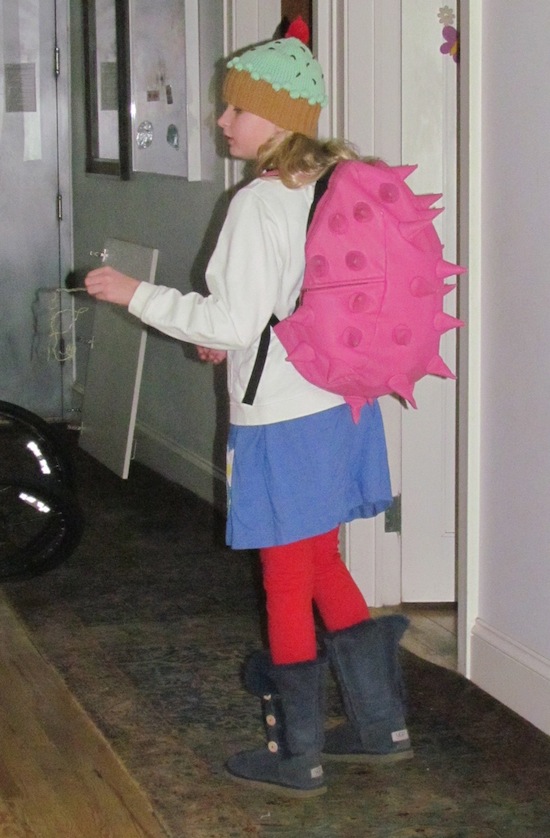
Later this morning as Em and I walked toward her school, we stopped at a red light.  As we waited she linked her arm through mine.  Not a single word was exchanged.  We waited, a mother and daughter, side by side for the light to turn green and once it did we made our way to the entrance to her school.  As Emma entered the gymnasium where the children and teachers were waiting, one of Em’s classmates called out, “It’s Emma.  Yay!  It’s Emma.  LOOK!  Look!  It’s a cupcake, I love cupcakes!”

And Em looked back at me and grinned before running to greet her friend.

The Cupcake Hat

A Celebration With Some Unexpected Surprises

This past weekend we spent celebrating Emma’s birthday.  For the past few months we have been planning Emma’s birthday with her.  Emma was very specific.  She asked that we spend the night in a hotel that had a swimming pool followed by a party at the same place she takes gymnastics with her brother every weekend.  We visited the hotel with Emma before booking it.  The pool was on the roof and when we visited, the saline water was at a lovely 94 degrees.  We booked the place where she wanted her party and sent out invitations.  We called the hotel ahead of time to confirm they had wi-fi and a DVD player as Em wanted to bring her favorite Charlie Brown video.  Saturday afternoon we piled into a taxi, arrived at the hotel, settled into our room, donned our bathing suits and made our way to the roof where it was windy and quite cold, but looked forward to the lovely warm water awaiting us.

Emma jumped into the water without hesitation, with Richard following.  I turned as Richard gasped in surprise.  It was the sound someone makes when the wind’s been knocked out of them.  I stared at him.  “It’s really, really cold!” Richard said in answer to my confused look.

“Seriously?”

“Uh.  Yeah.  Feel it.”

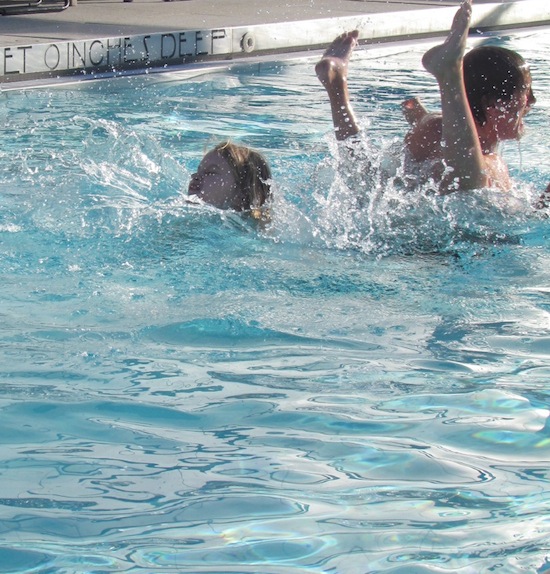
Tentatively I dipped a hand into the water.  It was not a lovely 94 degrees, it wasn’t even a tolerable 84, in fact, it seemed unlikely that it was anywhere close to being “warm”.  The outside temperature had barely climbed above 35 degrees and the wind was brisk.  Nic took one look at my face and voiced what I was thinking, “There’s no way I’m getting into that water.”  Richard, being the champ that he is, hung in there for another ten minutes before getting out, his lips having turned blue and his teeth chattering, while Emma, being impervious to cold of any kind lasted another half an hour.

It's Cold!

The beauty of Manhattan awash in the afternoon light. Taken from the hotel roof’s pool.

Manhattan

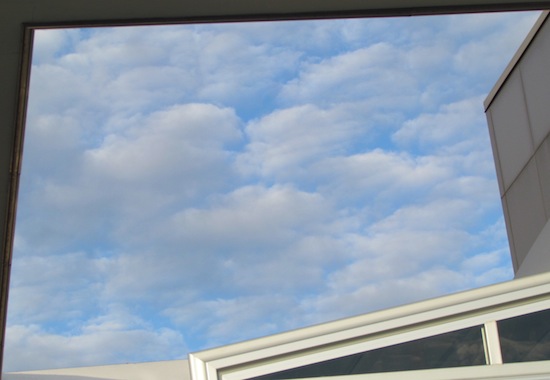
Framed Sky – Taken from the hotel’s roof while Em and Richard swam

Framed Sky

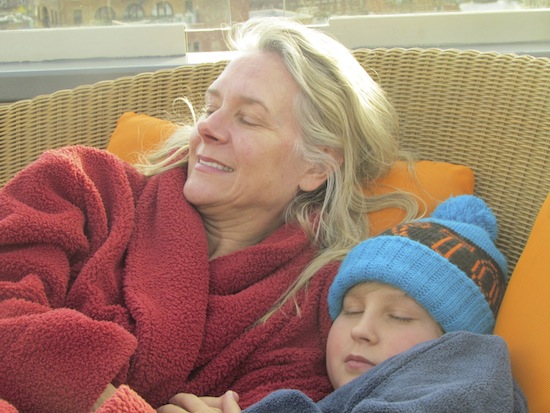
The hotel assured us the pool would be warmer by the following day, so we promised to come back the next morning for a longer swim.  Our evening was lovely, the children had a blast, and the next morning, after a wonderful breakfast we headed back up to the pool.  This time Emma did not immediately jump in, but felt the water with her toe.  It was a little warmer, though not much, but despite its cold temperature we resolved to bite the bullet and swim anyway if Emma chose to jump in.  Eventually she did and was delighted when the rest of us followed her.  It was cold, very, very cold, but it was also beautiful up on that roof, with the sun shining and the gorgeous view of Manhattan spread out before us.  We swam laps and splashed and played and Emma had a wonderful time.  When we finally got out of the water, dried off and put on our fluffy robes, we snuggled together on an enormous wicker chair, Richard called “the egg”.

Nic and I in the “egg”

In the egg

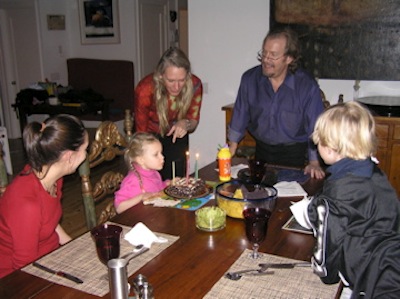
Later that afternoon we went to the gym where we celebrated Emma’s birthday with half a dozen other children whom she’d specifically asked to have invited.

Over the years we have learned to involve Emma in every aspect of planning her birthday, doing what she requests as much as possible.  Despite some unexpected surprises we have gotten better and better at giving her what she wants rather than what we think she might want.  And over the years we get it right more and more.

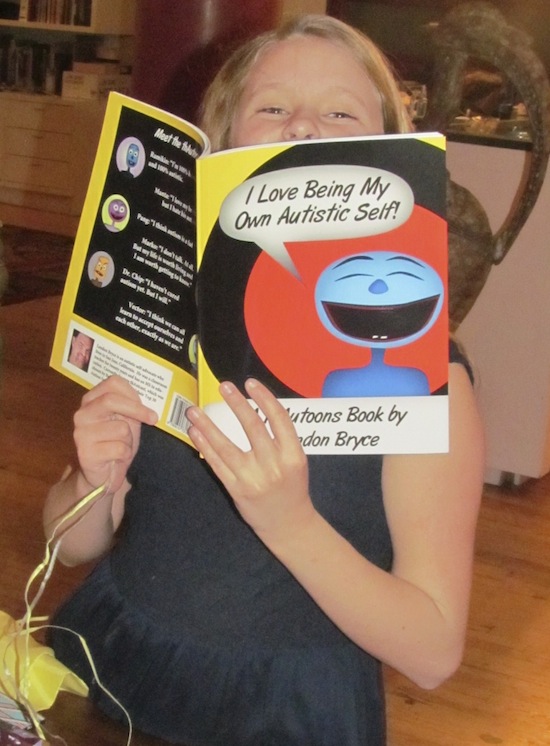
Em with her string and her new book – Landon Bryce’s “I Love Being My Own Autistic Self!”

Presents


Happy Birthday Dear Emma!

Happy Birthday Dear Emma!  

Eleven years ago you came into this world and graced us with your presence.  Eleven years ago you presented yourself to us and from that first moment that you drew breath you began to have an impact on all who met you.  You are an example of perfection, exactly as you are, without need of tweaking.  You are strong and wise and smart and intelligent and funny and talented and beautiful.  You are determined and a terrific negotiator.  You are fiercely independent and artistic and your mind, how you think, the way you perceive the world and those in it is a beautiful thing. You are patient and generous and kind.  You are loving and good.

You are perfect.

You are just at the beginning of your life, but already you have taught me more than I could ever teach you.  Eleven years ago I had no idea that because of your life, mine would change as dramatically as it has.  I could not know that because of you and who you are, my entire outlook on life, the world and it’s inhabitants would change so radically.  These are changes I welcome.  These are changes I am so very grateful for.  They are good changes, important changes.  You have forced me to see what I once could not.  You have shown me another way of living, a better way of being in this world.   You have opened my eyes to all that is possible, and it is beyond my wildest dreams.

You are perfect exactly as you are.

One day I hope you will be able to read this on your own.  But until that day arrives, I have one wish I would like to have granted on this day, your eleventh birthday and it is this –  flourish and do not ever, ever allow anyone to bring you down, make you feel badly or cause you to doubt yourself.  Spread your wings and fly dear Emma and I will be here to support you, to love you, to cheer you on and to remind you of your perfection.

You are beautiful Emma Rose.

You are perfect.

4:30PM January 17th, 2002 

sc000a1b04

January 17th,  2003

Birthday Girl-2003

Central Park – January 2004 

2004

January, 2005

2005

Jamuary 17, 2006

2006

January 17, 2007

2007

January, 2008

2008

January 2010

2010

January 2011

2011

January 2012

Birthday Girl-2012


Living in the Grey

No, this post has nothing to do with porn, soft, hard or anything in between.  In fact, this post is not about sex at all.   There will not be any numbers or shades or subtle, implied meanings of anything remotely titillating.  For those who were hoping otherwise, best to move along…

However, I do have a confession to make.  I tend toward extreme thinking.  An example, if someone cuts me off while I’m waiting for the subway, grabbing the one remaining, unoccupied seat, forcing me to stand, I can get into some pretty abysmal thinking.  I am likely to assume the day is cursed, as I engage in heinous thinking about the person who “stole” MY seat, to apocalyptic views about the nature of human beings.  I know this about myself.  I know I have a difficult time living in the soft, greyness of life, while rejecting the glaring, yet far more exciting black and white tragedy or ecstasy of my circumstances.

For years I felt mildly victimized by Em’s diagnosis.  I felt no one really understood or could possibly understand and any who suggested otherwise offended me.  Then I found Autistic adults who were not living the tragedy I had assumed was my daughter’s inevitable future.  In fact, these adults were interesting, smart, some spoke, some did not, others spoke on occasion, some communicated through typing, others communicated through typing with a facilitator, some had careers, others didn’t, some were in relationships, others weren’t, some had children, others did not.  Some have become friends, one in particular has become a close friend, someone I seek out, think about, want to spend time with, look forward to talking to and miss when our schedules do not allow us to connect.  In knowing her I’ve been able to dispense with the “victimized” mindset.  She’s helped me enormously, not just in giving me a better, more tempered view of autism and breaking down some of the more harmful stereotypes and beliefs I once held about autism and Autistic people, but in what it means to be human.

I have gone from feeling a low-grade sense of sorrow for my circumstances to feeling fortunate and grateful for my life and family.  I don’t mean that everything is perfection and that we never encounter moments of sadness or unhappiness, I just mean that I no longer pin my dark moods and feelings on “autism”.  In fact, I feel ridiculously fortunate.  I have met more fascinating people in the past year than I ever imagined possible.  I no longer wonder what life would be like had I not had an autistic child.  I am grateful for the life I have.  I am grateful for both my children and I’m grateful for my friendships.  I find I am living more and more often in that comfortable grey area of non-extremes.  (Please feel free to remind me of this post when I write something less “evolved”.)

And that woman on the subway, who for the past four years has shot in front of me to grab the only remaining unoccupied seat on more mornings than I can count?  I wish her well.  I even gave up my seat, so she could sit this morning AND I didn’t feel smug or resentful; I just kept reading my email.  Who knows?  Tomorrow I may even muster up the courage to smile at her.  Because you know what?  Life is just too damn short.  Besides I’m growing fond of the grey.

Christmas Eve Dinner – 2012

Impatience and Expectations

I’m impatient.  I know this about myself.  Impatience serves me to do a great many things.  It propels me to take action rather than not.  It makes me push harder, try harder.  My impatience, which usually begins with tremendous optimism can descend rapidly into disappointment and discouragement.  Fortunately I am also fiercely determined and dogged in my reluctance to give up which helps mitigate some of my impatience or maybe it just makes me confused. 😕

However, there are a great many things that are not helped by impatience, things like learning a language, learning to type or learning almost any new skill.  These are things that take time, practice and patience.  So I have to recognize this and continue despite my impatience.  This comes up over and over as I work with my daughter.  But in working with her, I’ve also come to recognize something else and that is my expectations.  Huge expectations, coupled with impatience can do harm.  I see that.  I’ve been very aware of how it affects me, but how does it affect Em?

I am learning how to support Em in her communication.  For example we will read a story together, such as a book Emma chose recently entitled, Who Pooped in the Park?  The story details a family outing where the two kids are upset when they don’t see a great many wild animals on their hike, but learn to identify what animals live in the area by the markings they leave.  During our session together I asked Em, “What were some of the animals the family identified?  One animal starts with the letter b.”  Emma then typed, “There was a bear and ciyoty and a deer.”   Other than misspelling coyote, this was a terrific answer and correct.  We went on to discuss another name for animal poop, which is scat and that all living things produce “waste” of some kind.  After our session was over, Richard asked, “So how did it go?”

“It was fine,” I answered.

“It sounded great!” Richard said with enthusiasm.

“Yeah, I guess,” I replied.  And then I had a tiny flicker of realization.  I was feeling disappointed in our session.  I was hoping for some brilliant, philosophical insight.  I was hoping that we would have a conversation that blew my mind and when I realized that, I also realized that my desire, my expectations, my impatience had caused me to not fully take in how terrific our session had been.  It also made me see how my response may have felt to Emma.  Here she was working hard, doing something that does not come easily and doing it really, really well, yet I had not responded with the kind of unbridled enthusiasm I would have hoped for had our roles been reversed.

During our next session we talked about her birthday, which she is very excited about, and the party and various events we’ve planned for her.  I tried hard to be aware of my response to what she was typing.  I became increasingly aware of my expectations as they arose and did my best to silently acknowledge them before responding with genuine enthusiasm and appreciation for Em’s work.  As a result our session was more fun for both of us.  Later when I spoke to a friend about all of this he pointed out that most communication is not wildly brilliant, philosophical or even necessarily enlightening.  And of course, he’s right.  The majority of our communication with one another is about pretty basic stuff.  Learning how to communicate basic things is relevant and important.  But my impatience and expectations make me forget that.

I have learned over the years that if I want to change a behavior I need to have awareness that I’m doing whatever it is, I then need to have some degree of acceptance that I’m doing it before I can begin to make little changes to it.  Those little changes repeated and added up can, over time, create bigger changes.  Admitting aloud I am doing whatever it is can be very helpful as well.  Without taking these steps however, I have no hope of changing the way I do something.

There’s a great deal of talk about autism and how our children and autistic adults need to work on a whole range of things, but there isn’t a great deal of conversation in the general population about our own neurological deficiencies.  It seems to me that if we are going to continue to have this ongoing discussion of deficits, it’s only fair that we begin to detail our own as well.  Now that’s a conversation I look forward to having.  And while we’re at it, let’s include the positive aspects of Autistic neurology as well, because a little balance is a good thing!

Sled

The Impact of Fearing Autism

Last night I spoke with my brother by phone.  He is unable to travel.  His voice was so raspy, his breathing slow and labored, had I not known it was my brother I was speaking to, I would not have been able to guess from the sound of his voice.  He wasn’t able to complete a sentence without pausing to take a breath.  It was clear listening to him that the act of talking was incredibly difficult and painful.  When we said good-bye to each other I was overcome with emotion.

My brother is very slowly recovering from pertussis, more familiarly known as whooping-cough.  Because so many parents have chosen not to vaccinate their children for fear that vaccinations cause autism, whooping-cough is on the rise.  I’m including some links ‘here‘ and ‘here‘, for those of you who may not be aware of just how serious and deadly whooping-cough is, not just to our children, but to teenagers and adults too.  This is the other side of not vaccinating, the side so many do not consider.  People of all ages are getting sick and even dying of diseases most of us assumed had been eradicated long ago.  Whooping cough, once unheard of, is now on the rise.  In my brother’s case, his coughing was so extreme he would vomit, was unable to breathe and speaking became impossible.  Fortunately he is slowly getting better, but whooping-cough can take more than three months to recover from, for those lucky enough to recover at all.

My children are vaccinated.  I am vaccinated.  I have had moments in the past when I wondered if there was a connection between vaccines and autism.  I never believed vaccines caused autism, but I did wonder if it exacerbated pre-existing conditions.  I no longer wonder because I stopped fearing autism and listening to those who would have us fear it and those who are Autistic.  And it seems this is what it comes down to.  When we fear “autism” so much that we are willing to put our child’s life at risk because of those fears, we must, as a society, look at what we are saying and believing.  Organizations intent on fueling those fears for monetary gain are being dishonest with themselves when they refuse to see the connection.  Adults, teenagers, children and babies are dying from preventable diseases because of people’s fears regarding causation and vaccinations.

When a parent makes the decision to not vaccinate their child they are not just putting their own child at risk for developing life threatening diseases, they are putting all of our lives at risk.  It’s important that we are clear about this.  None of us live in a bubble no matter how careful we might believe ourselves to be.  The decisions we make affect more than just ourselves and our families.  The decisions we make have larger ramifications that impact everyone we come into contact with.

For those of you on the fence regarding vaccinations – I understand the dilemma.  I understand how difficult it is.  I understand how debilitating fear can be.  Really I do.  I’ve felt it.  But in the end your decision comes down to this – are you willing to put not only your child’s life at risk, but your own and every person’s life you come into contact with?

Completely unrelated photograph taken yesterday of the rocky mountains

Perfection


Let Us All Be Safe

My favorite memories of Christmas are those spent at my grandmother’s house in Colorado when I was a little girl.   Every morning I would wake to see the snow covered mountains outside my bedroom window and snuggle deeper beneath the warmth and weight of the woolen blankets on my bed.  The smell of freshly baked orange buns and cinnamon rolls filled the air.  I grew up in Northern California not far from the Pacific ocean, so snow was a novelty and cause for great excitement.  The thrill of being in the mountains in Colorado during Christmas was something I anticipated with great excitement and impatience.   My grandmother always bought my sister and I a dirndl, the traditional German dress, to wear on Christmas eve, while my father, who was Swiss wore a pair of black leather lederhosen with white socks embroidered with green foliage, worn with black velvet slippers and a black or red cashmere turtleneck sweater.  Picture the Sound of Music with Christopher Plummer as my father and me as the youngest child, Gretyl and you get an image of how we looked on Christmas eve, though the similarities pretty much stop there.

When I had my two children I had an idea that I would dress them in lederhosen  and a dirndl, and over the Christmas holidays I would stay up late making yeast breads of various kinds and baking them early the next morning so that my children could have similar memories.  However this never came to be, though Em would probably love wearing a dirndl as she loves dressing up, just as I did when I was her age.   But as a parent I’ve learned that many of my memories do not need to be repeated, that my children will have their own memories and that they do not match mine is as it should be.  I have come to see that this is a good thing.   I had so many ideas about what it was going to be like to be a parent and almost all those ideas have proven wrong in the best possible way.  Letting go of my ideas about how anything should be has been a great gift, not just in parenting, but in life.  I did not come to this easily or without a fight.  And I still forget this truth often.

But I am grateful when I remember.   There is so much I cannot control.  In fact the only thing I have within my control is my own behavior.  I keep coming back to that over and over again.  I cannot control other people’s memories or behavior or prejudices or actions.  The only person I have any control over is me.  For today, let me behave well.  Let me be kind, loving and generous.  Let me give more than I take.  Let me help more than hinder.  Let me be the parent my children need and not the one I thought I should/would/was supposed to be.  And let us all be safe.

December 2009

xmas family-09

Related articles

The Decisions We Make…. Or Parenting and Being Human

I hear you out there, Em.  I can hear you singing the same refrain, “you’ll never go home, you’ll never go home, you’ll never, never, never….. you’ll never go home.”  It’s a catchy tune, a little sad, but I try not to read anything into it.  It’s just a song you like, with a repetitive tune.   Eventually I go out and ask what you’re singing.  You hesitate and say nothing at first.  Then you tell me, “Central Park, it was a long time ago, you see Peter Pan.”  And I know that you saw a production of Peter Pan many years ago in Central Park’s Marionette Theatre.  I smile and tell you how much I love hearing you sing.  You indulge me with a few refrains before snuggling back into the rocking chair and falling silent.

Today we are going to the orthodontist.  He’s going to put braces on your back molars to expand your mouth.  All those years of thumb-sucking have taken a toll on the curvature of your mouth.  It sounds painful to me, but I’ve been assured it’s not.  You cannot bite down with your front teeth any longer.  There’s a permanent gap there, a thumb-sized gap, a space created from years of self soothing.  People warned us over the years.  People said you should make her stop doing that.  People said, she’ll have serious problems, her teeth will be ruined, her mouth will become distorted and change shape.  They were right.  It did.  But would it have been better to stop you from doing the one thing that made you feel calmer, the one thing that soothed you more than anything else, the one thing you could completely rely on?  Would that have been better?

In another few hours we will go to the orthodontist and you will have bands put on your molars to begin the expansion.  We’ve been preparing you for this for months.  “Go to dentist.  You’re going to get braces!”  You’ve said for the past few weeks.  We were given the option of having a metal “thumb guard” put into your mouth as well, but opted not to do that.  The orthodontist made no comment upon hearing our decision, simply nodded his head and said, “I understand.”  Maybe he does.  We just couldn’t do that to you without knowing what harm it would do.  You have only a few self soothing tricks up your sleeve and sucking your thumb is first in line.  How could we take that from you?  What would you substitute that with?  Something better?  Something worse?

We’re your parents.  We’re suppose to know these things, right?  Wrong.  Being parents is a lot trickier than anyone ever mentioned.  There was all the talk about pregnancy and labor, we went to the required classes teaching us how to regulate our breathing, but there were no parenting classes required, we didn’t need a license or a certificate, we didn’t even need a permit.  Pretty quickly we learned that what’s best for one child, isn’t necessarily what’s best for another.  That was a tough concept to fully take in.  Thumb sucking?  She’ll grow out of it.  One day she won’t need to do that, some people said.  We weighed the pros and cons.  We took a chance.  We didn’t stop you from soothing yourself, were we wrong?  Who knows.  And now today, off we go to the orthodontist.  As bumps in the road go, this is a small one.   I told the orthodontist, “we’re not going for perfection here.”  He nodded as he peered into your mouth.  “Right,” he said.  “We’ll go with the expander and then braces.  We’ll discuss as we go.

That sounded reasonable.

I can hear you in the other room.  You’re not singing any longer.  You’re doing a familiar monologue, “Not safe to hang on the pipe and not safe to go in the ledge.  What happens when we go in the ledge?  We might fall down.  It’s not safe!  We bump your head if you go in the ledge.  We’re not going to take go in.” (You always say that last line in a sing songy way.  As though it were part of a song.)  “No not going to take go swimming.  No.  Go to the dentist.  Get braces.  Yeah, going to go get braces then Emma gotta have to go.  Yeah, Emma gotta have to go on the airplane.”

Those are your words, Em.  That’s what you said this morning just now.  Is this the verbal equivalent of sucking your thumb?  Is this how you’re trying to work through fear, uncertainty?  Are you scared?  I realize I don’t know the answer to this.  I’ve learned that when I don’t know how you feel or what you think about something to ask you.  So I ask you, “Hey Em are you scared to go to the dentist?”  “Neeyah,” you say, shaking your head no and laughing.  “You get to put on braces!” you say.  “Are you happy you get to have braces?” I ask.  You nod your head up and down.  “Yeah!  Put on braces, then come home work with Pascal!”  “Yeah, Em.  That’s right.  We have a Skype call with Pascal this afternoon.  Are you looking forward to that?”

“Yeah!”  You say nodding your head emphatically.

So who’s fearful?  Not you.  You’re singing now.  To MJ.  You love dancing and singing with abandon and that’s what you’re doing now as I type this.  As I try to work through the decisions we made that led up to this moment.  This moment…  a moment when you are laughing, singing and dancing in the other room with the music blaring.   Here, let me hit “publish” so I can join you.

!EM

Balancing Career, Family and Losing Things…

Balance.  Sometimes it’s impossible for me to balance family, career, marriage, kids, friends, writing, keeping up with emails, showering…  okay I do usually get the showering part in there somehow, but other things tend to fall through the cracks.  At the moment I’m consumed with work related things and so the showering part seems like kind of a pain.  Though the old “french bath” notion can be kind of awful if you are sensitive to perfumes and cologne, as I am.  The combination of body odor being masked by an aggressive dose of perfume, no matter how expensive, makes me a little nauseous just thinking about it.   So no, foregoing a shower isn’t an option, but other things fall by the way side or are delegated to others.  And while all this is going on I know I’m not alone.  I know others hold down full-time jobs, have kids, manage to get them fed and into fairly clean clothes and off to school without too many mishaps.

The basics do get taken care of, though Nic’s question of whats for dinner, and my answer, “Ummmm…. how about a bowl of Cheerios?” didn’t exactly gain me any parenting of the year points, Nic didn’t seem too traumatized and Em was thrilled.  In fact, she was already happily digging into her bowl of Cheerios, which is her second favorite meal falling only behind pancakes as her first choice.  I only learned a few months ago that Nic had begun wearing his school uniform to bed at night, “it’s easier, Mom” and I’m pleased to say I put a stop to that, though I was proud of his creative problem solving and told him so.   I am grateful for the small things…

Anne-Marie Slaughter wrote a piece for the Atlantic last summer entitled: Why Women Still Can’t Have it All .  That piece caused a stir, though I never was able to work out exactly why.  My only issue was with the word “still”, implying that we should be able to have it all or that someone else does, but women don’t.  The truth is, it seems to me, no one “has it all”.   I’m not even sure what that means really, but that’s probably not the point.  I did feel an uncontrollable urge to argue the definition of the word “all” and was only stopped by the lack of interest anyone I attempted to discuss this with showed.  The tricky balance of work, family, mother, wife, friend, while maintaining some semblance of sanity is one I continue to look for, but never seem to actually find.  Things just do get forgotten or lost in the shuffle.

I have mail that remains unopened, I know I received some emails that I now cannot find, which require answering.  I’ll try to find them later.  I know there are things I can’t remember that were on my to do list, if only I could remember where I put that list and it’s not a coincidence that the single most common question in my family is:  “have you seen my glasses?”  that or “anyone seen my keys/phone/wallet?”  And the predictable answer, “if I could find my glasses I’d help you look.”  Nic thinks all of this is hilarious and has taken to falling on the floor in feigned horror when either of us ask, our voices suggesting the panic we are already feeling, no matter how many times in a single day this occurs.  That both his parents seem so completely incapable of keeping track of these everyday items does not portend well for either of our children, but at the moment this thought hasn’t occurred to them and we aren’t planning to mention it.

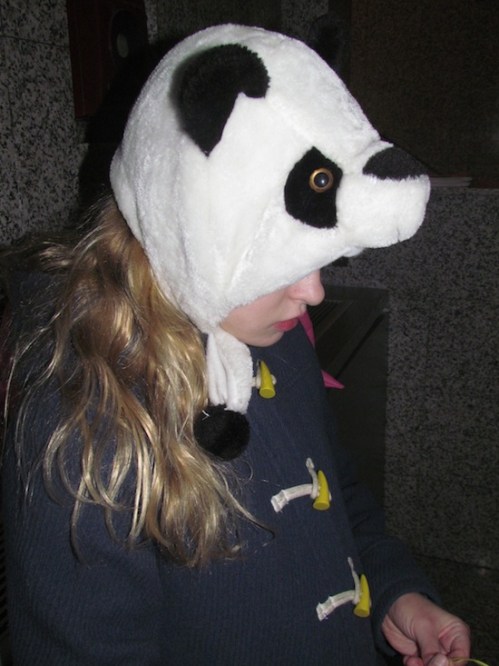
Em (wearing her favorite hat) made it out of the house this morning in one piece…

*Panda


An Unexpected Response and The Importance of Trust

During my supported typing session with Emma Saturday evening we discussed Little Red Riding Hood.  I asked Em what she thought Little Red was bringing Grandma in her basket.  Emma typed “blueberries”, which seemed like a terrific guess, particularly as Little Red could certainly have picked them herself, placing each blueberry in her basket as she made her way toward her Grandma’s house.  We discussed the wolf and I asked questions I thought it likely Em knew the answer to, but that I wouldn’t expect her to answer verbally, just as Pascal, who is helping me, advised.  Eventually I asked, “Em, what would you do if you were asleep in your bed and woke to see the big bad wolf?”  To which Emma typed,  “I would go to the three little pigs house”.  Though she paused after she’d typed, “I would go to the”.  I urged her, “Take your time Em.  Write what’s in your head.”  She looked at me and whispered, “three little pig’s house.”  She then typed the rest of the sentence with me.  “I would go to the three little pigs house.”

I looked at that sentence.  It took me a second and then I laughed and said, “Wow Em.  That is such a great idea!”  After all the three little pigs have had run-ins with the wolf.   They know, better than anyone, how to deal with him AND they figured out how to build a wolf-proof structure after much trial and error that the wolf cannot break into and where they are safe.  Emma grinned at me and then, very sweetly, patted my cheek.  I took her loving gesture as a sign of her encouragement and patience with me.

Supporting Emma’s typing is not easy.  It is actually much harder than I imagined it would be.  I am pretty sure Emma spoke the last four words of that sentence because she was not able to trust that I was able to support her well enough to type that.  I think she sensed my hesitation.  I had no idea what she was trying to type and because I am not well trained and am very new to this, my support varies and is not consistent yet.  I am hoping I will learn and be able to give her the support she needs to flourish and eventually type independently.  What is fascinating about FC (facilitated communication, more on that ‘here‘ and ‘here‘) is that had I asked this same question of Emma and expected a verbal response, I do not believe she would have given me this answer.  If she had, I would have been absolutely blown away.  These are not the types of things we have been able to “talk” about.  Typing is giving her the tool she needs to be able to express herself in a way that has not been possible to date.

As an aside, two years ago we hired a woman who developed a literacy program for Autistic children.  While I have some serious misgivings about certain aspects of her program, the literacy piece is extremely well mapped out and it was what finally gave Emma the tools and practice she needed to learn to form the letters of the alphabet and began to read, write and type.  Now two years later as a result, Emma is reading and writing at a second grade level, though it is probably much higher.  Emma was not taught through phonetics, in fact we never even taught her the names of the letters in the alphabet.  For two years Joe and I worked with Emma every day on her literacy program.  For more about that program you can read ‘here‘ and ‘here‘ or put the word “literacy” into the search box and everything I’ve written on the topic will come up (just be aware my ideas and views have changed pretty dramatically since many of these posts were written.)

I mention all of this, because I want people to understand that Emma did not sit down one day and begin typing in full sentences.  She did not suddenly pick up an encyclopedia and begin quoting from it.  I know there are those who have.  I wanted to pursue supported typing with Emma after going to the Autcom Conference this past October and meeting Pascal.  He was kind enough to speak with me about Emma and gave me some advice.  I didn’t know if she would be a good candidate for FC.  After all she has some language and typed independently with her two index fingers.  But I want her able to converse on a more sophisticated level.  It seemed to me, FC might be the method by which she would be able to do that.

I am always in awe of Emma’s patience with this world, with all of us, with me.  Her inner strength and resilience are incredible.  She has been ignored, doubted, talked down to, spoken of while she stood right there listening as though she were deaf, she has been misunderstood and treated as though she were incapable of understanding.  Were I treated this way I would be in a state of near constant rage, alternating with debilitating depression.  If any one of us were treated the way so many view and treat Autistic (whether non-speaking, marginally speaking or fully speaking) people, most of us would want to retreat from this world and lose all faith in people, even people we love.

I do not know how or where Emma gets the strength to greet each day with such cheer or how it is that she is so good-natured, kind and loving after all she has been through in her short life.  But she has and is.  I began this blog thinking it would be a document of Emma’s progress.  But in fact, this blog is a document of my progression.  I look back on entries made just a year ago and see how completely my ideas about Autism and my daughter have changed.  So much of what I thought and believed I no longer agree with or feel.  I have resisted the urge to delete all those past posts, because as horrified as I am by so many of them, I also know they are what I believed at the time.  My own journey is a reminder that we neuro-typical (not otherwise specified) adults can and do change, sometimes it just takes some of us a bit longer.

Me, Pascal, Richard and Em during our first “training” session

“Burden”? I Don’t Think So.

The roller coaster I call “autism” is less actual and more a description of my emotions, expectations and judgments surrounding specific things such as communication differences, internal issues, pain perception, sensory issues and the different ways in which Emma takes in information as opposed to the way my (more often than not) non-autistic brain works.  (My friend, AspieKid calls brains like mine NT-NOS, which I think is a hilarious and fitting acronym.) It is a “roller coaster” of my own design and construct.  A roller coaster being an accurate description of my emotional state, something I’ve grappled with my entire life and certainly well before I ever met my husband and had children.  Suggesting “autism” is the root cause for those pre-existing twists and turns my emotions tend to take or pinning the psychological upheavals I’m experiencing onto “autism” is not only wrong, it’s dishonest.

The truth is, I’ve always been a bit high-strung.  I live in New York City, a city whose inhabitants wear their neuroses proudly.  Neuroses in New York city are treated the way a runny nose is looked upon in the mid-west.  No big deal.  New Yorkers have melt downs at the drop of a hat.  I’ve seen fist fights break out between grown men in the middle of an intersection because of a perceived insult, people routinely scream at each other and cut each other off while driving.  Moms pushing babies and toddlers in Hummer-sized strollers wield them like tanks plowing a path for themselves along clogged sidewalks like Moses parting the Red Sea.  People think nothing of getting into loud arguments with lovers, neighbors, friends and strangers in the middle of the sidewalk, forcing pedestrians to walk around them.  It’s a city of ids and super egos.  It’s a city that is (perhaps) an exaggerated version of what one sees anywhere in the world.  People are capable of some pretty dreadful behavior.  Add a child with a different neurology to that already fragile, high-strung mix and you’re going to get some interesting results.  To then conclude that autism is to blame, defies all logic.  No one would do that.  Yet people blame their bad behavior, their inability to cope, their sadness, depression and general irritability on their autistic child all the time.

Suddenly it’s autism and Autistic people who are a “burden” to society.  Autism isn’t a “burden”.  It’s the negative views of autism, it’s the autism = untold horror, it’s the perception of autism and the lack of understanding and services, the lack of training and programs in our schools so they can help our Autistic children learn in a way that will ensure they flourish.  The “burden” is not our Autistic child on society.  The “burden” is the lack of support and adequate help families need so they can better support their child, giving them the sort of assistance  they need to thrive and flourish, a child who will one day become an Autistic adult and, in an ideal world, an active member of society.  We have to move away from this idea of Autism = burden.  Autism = tragedy.  Autism = _______ fill in the blank with a negative word.  We need to abandon our preconceived notions of what a non-speaking Autistic child cannot do.  We need to open our minds to the idea that our children are capable of far more than we may believe or can fathom.  We need to begin looking at what is good about Autism and the countless ways in which Autistic people can and do contribute to this world.  We need to remove the stigma and negativity and replace it with a more balanced and yes, positive view.

Imagine a world that includes Autistic people, accommodates Autistic people and stops shunning, restraining and abusing them.  A world in which it is not okay to have seclusion rooms and restraints, where a non-speaking person is treated with respect and without prejudice and where it is not assumed that because they do not speak they have nothing to say.  A world where people finally understand the burden isn’t the Autistic person, whether child or adult, it’s the lack of services, the judgments and the scare tactics being used.   Autism is big business and there is no better way to ensure dollars continue to pour in than when we are terrified. Let’s change that.

Having a child is joyful, exhausting, frustrating and the single most extraordinary experience a human being can have.  Having an Autistic child is joyful, exhausting, frustrating and the single most extraordinary experience a human being can have.   One can say that about a great many things in this life.  Let’s stop blaming Autism and our Autistic children for the ills of the world and the bad behavior displayed by people.

Emma and her infectious laugh

Em

EEEEEEEEEEEEE!

EEEEEEEEEE!!!!   (This is, but one, of many fabulous expressions I have come to love and use.  I first saw it used by my friend Paula and it made me happy.  I love that woman.)  What better way to express emotions that go far beyond “excitement”?  What words can possibly express joy and excitement and exuberance and that feeling when your throat constricts and tears flood your eyes and there’s that fluttering feeling in your chest that travels up and down as your vision blurs because of the tears?  Tears of joy.  Tears of overwhelming emotion that are impossible to express, that makes it difficult to breathe.  I don’t know of anything I could write here that would sum up what I am feeling.  EEEEEEEEEEEEEEEEEEE!   ⇐ comes the closest.

Yesterday was our second session with Pascal who is a trained facilitator of more than two decades.  Our first session I described ‘here‘.  Yesterday’s session took place over Skype.  It took us a while to get connected and once we did our connection kept going out on us.  At one point during a particularly exciting moment with Emma I squealed in delight, looked over to see Pascal’s expression and was met with a blank screen.  We’d lost him again.  “NOOOOOOO!  I cannot believe you just missed this!”  I shouted at the darkened screen while Joe, Emma’s therapist, and Richard laughed.  Our excitement was palpable.  But I’m getting ahead of myself.  Let me back up.

Two weeks ago we had our first session.  It was beyond exciting, but in the interim, between that session and our Skype call yesterday I’ve been filled with anxiety and so have only tried to practice with Emma a couple of times.  (For those of you unfamiliar with facilitated communication, it has a complicated history.  That history I’ve touched upon ‘here‘ and ‘here‘.)  I worried that I would inadvertently push Emma to type something she didn’t intend, I worried that I might betray her, by literally putting words in her mouth.  I have never forgotten one of the things Amy Sequenzia said to me regarding FC – that the most important piece was trust.  I didn’t want to do anything that would betray that, so I did nothing at all.

The first thing Pascal did was cover some of the basics.  We went over different things I could try.  We discussed the correct way of providing support firmly enough to ensure that trust, but not so much that it becomes a vise grip or so loosely that it is little more than an irritant.  Getting the support right is key and not as easy as it might sound.  There is also the resistance piece to all of this and there’s a rhythm that must be achieved as well.  The process is unlike anything I’ve ever done before.  I want to liken it to dancing, not the sort of dancing one does in a mosh pit, but ballroom dancing or learning the mambo, where you have to be in sync with your partner, both with your physical movements, but with your mind as well.  I’ve had some wonderful FC advisors (other moms who have generously talked to me and given me tips from their experiences doing FC) and so I remembered some of their suggestions.  One, from a new friend, Sheree, told me I need to empty my mind.  For anyone familiar with Buddhism this sounds much easier than it actually is.  But when I felt myself wanting to push Emma to hit a certain letter on the iPad, I “told on myself” immediately and Pascal would gently advise me.

As our session continued and I became more comfortable, feeling the rhythm and getting the right sense of her, we went beyond Emma typing answers to questions such as, “Where are they ice skating?” after being shown a photograph of ice skaters at the ice rink in Rockefeller Center and her dutifully typing Rockefeller Center (which I don’t mean to sound blasé about because you have no idea how  HUGE this was, but it was nothing compared to what happened next!)  We moved on to increasingly challenging questions, like “What is the name of the airport we have to fly into before we fly to Granma’s house?”  She typed “Denver” and I gasped.  *I keep wanting to tell you, to describe to you how massive this is.  I want to explain to you that while it may seem small or even utterly unexciting to you, it was beyond exciting for me to see her respond in this way.*  I don’t think I’ve ever heard Emma say the word “Denver” before and while this is something she has heard many, many times in her life; it is a place we must fly to several times a year when we go visit Granma, it is not something I expect Emma to utter.

Pascal continued to ask Emma more questions about visiting Granma and then I asked, without really thinking, “What kind of dogs does Granma have?”  Emma pointed her index finger and then reached for the “g”.  I think I may have held my breath.  Waiting.  Empty my mind.  Wait.  And then her finger found the “e” and I let myself take a tiny breath.  Keep breathing I told myself.  Keep breathing.  Quiet mind.  Be with her.  Let go.  Be with her.  Open mind.  Breathe.  And then her finger found the “r” and on we went until she’d written “german shepherds” complete with the “s” at the end because there are two and of course she’s correct and I sat there and stared at those words; the two most beautiful words my daughter has ever typed and I looked at her and pressed my forehead to her cheek.  I cannot convey the feelings.  Gratitude.  Joy, unbelievable joy and something else…  something I don’t know that I have the words for.  A knowing.  That’s all I can say.  I deep knowing that this is the right road we’ve taken.  We are on the right road.  And I exhaled and asked, “Em.  What kind of dog is Dozer?”  Emma looked at me and said, “Last time.”  And I laughed and hugged her and said, “Oh Em.  Really?  I want to talk to you like this all day!”  Emma beamed at me and then she patted my knee.  “Okay Em.  Last time,” I said. Then she typed, “nufandland.”

EEEEEEEEEEEEEEEEEEE!

*Cannot type through the tears.

Dozer with Emma, who is terrified of dogs and yet…

Dozer&Em

Sensory Overload and Sensory Cravings

My friend Ibby posted this video on her Facebook timeline (for those triggered by loud noise, flashing lights and/or prone to seizures, do NOT watch or at least turn the volume way down and stand back)  

A twitter friend, after I reposted this video, wrote that this was why he wears headphones and I tweeted back that while Emma is sensitive to some noises, for the most part she craves noise and typically turns the volume up as loud as it can physically go on both music and favorite movies, much to the horror of our various neighbors.  Even though we live in New York City (a place that is, for many, a sensory overload), people get cranky when woken at 6:30AM on Saturday morning to the strains of Michael Jackson’s Beat it.  Even hard-core MJ fans protest at the volume Emma prefers and at that time of day.

My twitter friend tweeted back, “I like certain noises, Avenge Sevenfold. ;D  It’s noises other than the one I’m trying to focus on that are the problem.”  And this is exactly the important distinction that I often forget or have trouble understanding.  Unless you have sensory issues, like the ones depicted in this video, I think it’s really hard to fully understand how debilitating sensory overload can be.

A couple of months ago I went to do our weekly grocery shopping run at Whole Foods.  Typically I go every Saturday in the early afternoon.  This is a time that isn’t too crazy, the lines aren’t insanely long and often it’s even comparatively quiet.  As I stood in front of the check-out person, the cashier next to her began loudly unfolding a paper bag.  The noise was deafening, a kind of snapping sound followed by crackling.   I actually felt physical pain from the noise.  My cashier looked over and laughed and then another cashier did the same thing with one of her bags.  In response the first guy did it back and suddenly I was in the midst of a cacophony of bags being banged opened, like a series of gun shots going off.  It was horrible. I stood there stunned.  I became so disoriented I could barely think and then I felt a surge of rage. How dare they make this kind of noise with those paper bags! How dare they behave this way!  I looked around trying to figure out who I should direct my anger to and noticed that not only were they smiling, some were even laughing and so were the other customers.

They were having fun!  I was astonished.  What was so incredibly painful to me, was amusing to others.  As I left the grocery store I reflected on sensory issues and how overwhelming they can be. I thought about Emma and wondered what it must be like for her.  Does she feel this way when she needs sensory input and cannot get it or is told she must turn the volume down?  I know there are certain noises she cannot tolerate, like the cuisinart.  She hates the sound it makes and will only tolerate it if I allow her to control it and put it on “pulse”, the same goes for the electric mixer.  If one of us sings along to music she’s listening to she can’t stand it and puts her hands over her ears.  (I completely understand her doing this when I sing, I’m pretty much tone-deaf and it IS painful to listen to for even those with no sensory issues, but she does this to anyone who sings along.)

After watching the video I posted above, I was grateful for the ending.  Not because it changed anything or showed some obvious solution, but because it was one human being taking the time to notice another human being in obvious pain without judgment or condemnation.

As an aside – I would love to hear from those who need and crave sensory input.  What is that like?  What does it feel like?  Is there anything you’ve done that has helped you.  Any advice or ways we can make your life more tolerable during those times?

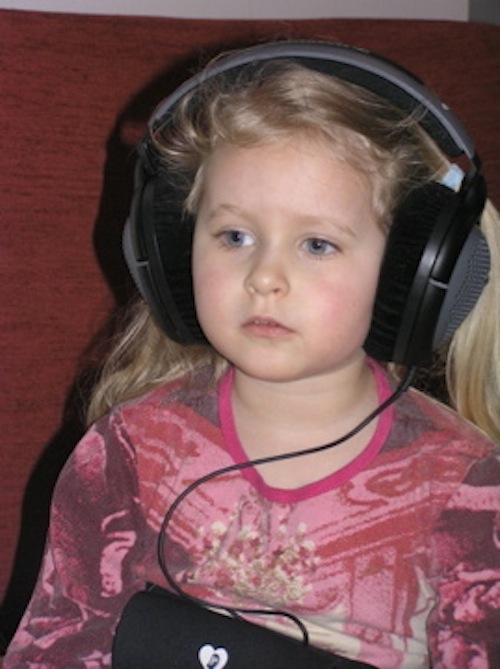
Emma – 2007 – Auditory Integration Therapy

Em