Tag Archives: Autism

ICare4Autism – An Opportunity to Make a Difference

I attended the ICare4Autism conference in Jerusalem last week.  I wrote about this not long ago in the post Synchronicity, Jerusalem and Autism. As a quick recap Jerusalem was the place Richard and I had intended to go for our honeymoon.  Not six weeks before we were due to leave, the intifada broke out, forcing us to abandon our plans. That was thirteen years ago.  This past May I received a letter from the “State of Israel” inviting me to be their guest.

In addition Dr. Henry and Dr. Kamila Markram were presenting at the conference.  They are the neuroscientist team who came up with The Intense World Theory For Autism, the only theory to date that has validated my observations of my ten-year old daughter, Emma.  When I read they were going to be in Jerusalem this past winter I joked with Richard about how amazing it would be to meet them AND go to Jerusalem.  At the time we just laughed at the insanity of the idea and went on with our lives.  Then the invitation arrived.  I knew it meant I would need to write about the conference.  Writing about the conference was why I’d been invited.

Except I do not consider myself a “journalist.”  I am not an impartial, unbiased observer, prepared to provide an even-handed summation of my observations.  I am highly opinionated and exceptionally biased in my ever evolving perspective on autism.  I regard the motivations of most so-called autism advocacy organizations with suspicion and even outrage.  I am frequently hostile in my view of the self-appointed Autism experts, medical charlatans and other “professionals” who make a living off desperate parents, like myself.  If I had all the money I’ve spent on the various “cures,” biomedical interventions and dubious therapies we have employed over these past eight years, I wouldn’t have cared about an invitation providing me with airfare and hotel accommodations.

In less than a year, my perspective has radically changed.  Had I attended this conference last August my focus would have been on meeting as many researchers and doctors as time would allow.  I would have spent each break roaming through the many tables set up outside the conference rooms selling all manner of goods purported to help a child with Autism (and yes, that is how I would have described my daughter – a child with Autism) hoping for something that would cure my daughter with the same longing and desperation that had dragged me from one “specialist” to the next for all those years, not so very long ago.

But that was before.

That was before we began implementing Emma’s literacy program.  That was before Emma showed signs that something we tried could and would work.  That was before I read Henry and Kamila Markram’s Intense World Theory.  That was before I began reading the blogs of Autistic adults and as a result began communicating with a number of them (see yesterday’s post).   Suddenly, and it really was relatively quick,  I began to view my daughter through the eyes of someone seeking to understand rather than fix.  I began to see her actions, whether it was stimming or echolalia or self-injurious behavior – as her attempts to communicate rather than aberrant behaviors that needed to be quelled and eliminated.

Was ICare4Autism going to be different than any of the other organizations out there promoting interventions, therapies and the ever illusive and questionable promise of a cure?  The information I compiled prior to the conference did not look promising.  But, I kept reassuring myself, the Markrams would be there and if nothing else, I had set up an interview to speak with them.  Beyond that there seemed little to distinguish them from any of the other organizations using “autism” in their name.  Still I went to the opening dinner with an upbeat, hopeful attitude, eager for a better idea of the organizations intentions.  When the opening video played I consoled myself that at least the distraught parents filmed were not openly weeping and talking about their distress in front of their children.  By the way, just in case anyone misunderstands me, less than two years ago I could have been one of those sobbing parents and I would have wept in front of my daughter and spoken of her with the mistaken assumption that she couldn’t understand.  It would not have occurred to me that hearing her mother speak of a desire to cure her might have made her feel horrible, sad and depressed, things she wouldn’t be able to communicate to me, which would only further her sadness and feelings of isolation.  I get it.  Really I do.

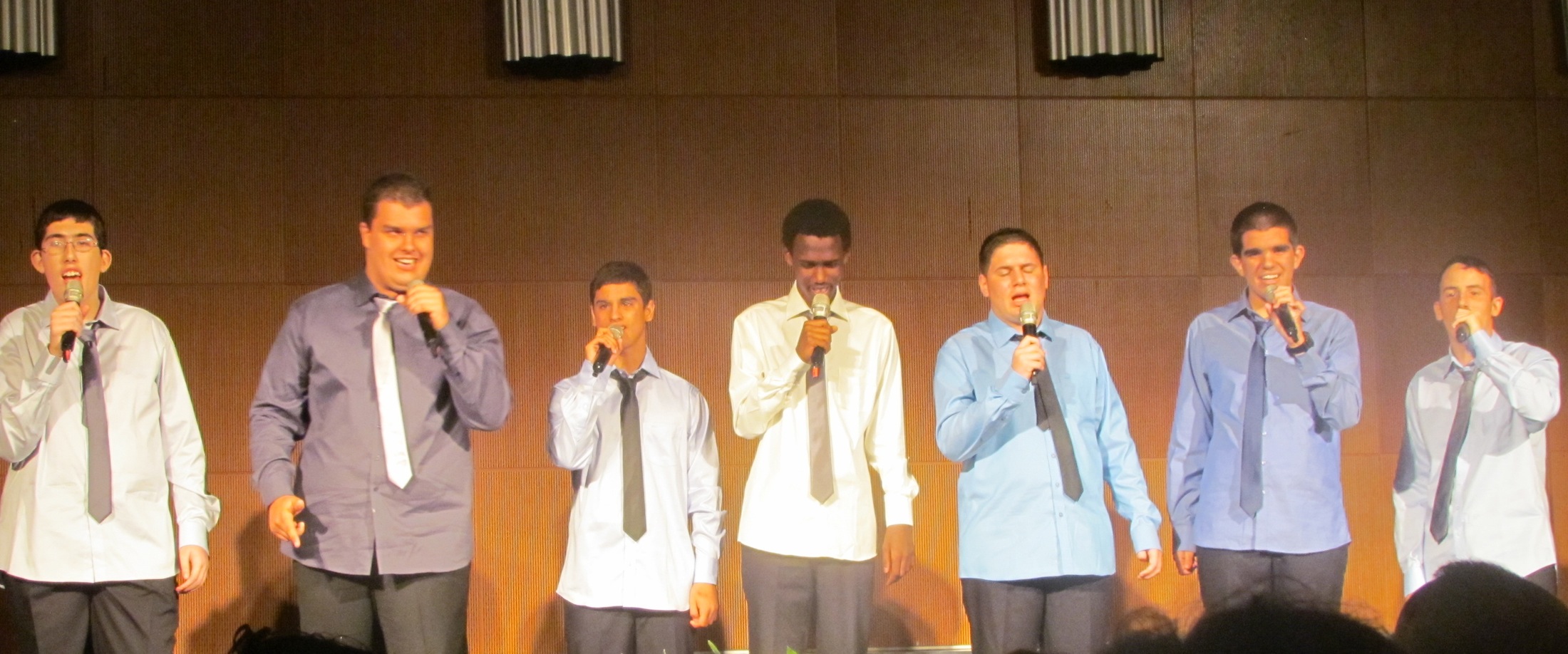
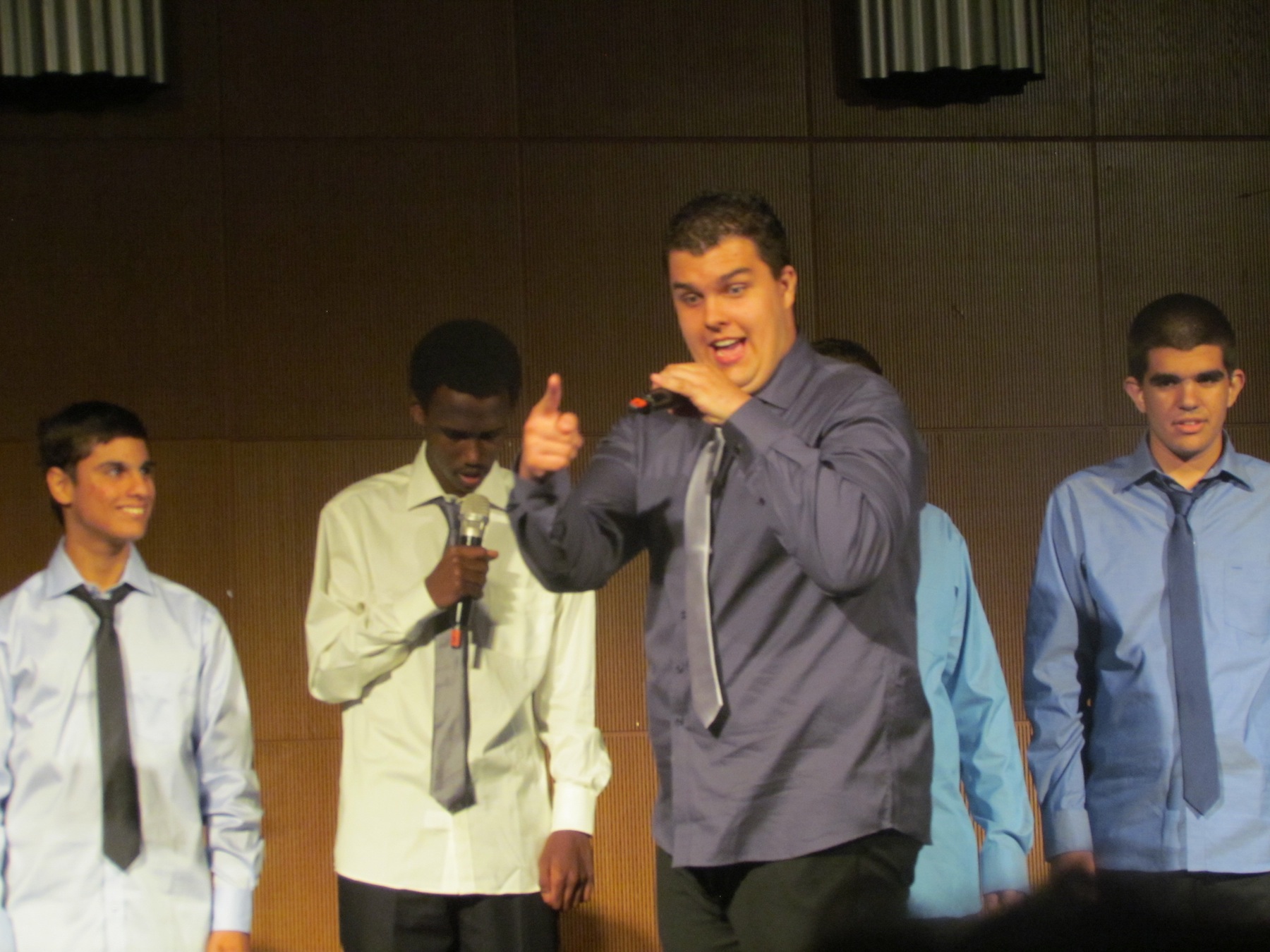
The conference began with a Welcoming Ceremony with a speech from the founder and CEO, Joshua Weinstein, who called for communication and collaboration.  He spoke of plans to move their headquarters to Jerusalem, a city with a long history of misunderstanding and strife, making his call for communication and collaboration all the more significant. The Mayor of Jerusalem, Nir Barkat spoke of his pride in hosting the ICare4Autism conference and eagerness in it becoming a world center for Autism research.  Dr. Shekhar Saxena, director of Mental Health and Substance Abuse at the World Health Organization spoke briefly as did a number of others.  And then the Autistic Boys Choir got on the stage.  Seven teenagers began to sing, their voices rang loud and clear, their pitch was perfect, their enthusiasm and joy infectious and the audience began to weep.  I was right there with them, madly rummaging around for my kleenex, trying not to let out too much noise other than the odd sniffle.   I wept from sheer gratitude, because these teenage boys/men were like my daughter.  One young man in particular who clearly reveled in performing reminded me of Emma.  So yes, I wept from relief, from joy, from seeing Autism shown not as a tragedy, but as difference and of hope for what can only be described as the possibilities, not just for our children, but for us as a society when we hand the microphone over to those we say we care about and want to help – Autistics.

Over the course of the next day and a half I tried to meet with Joshua Weinstein, but for a variety of reasons, wasn’t able to.  Then finally in the afternoon of the last day of the conference, I saw Joshua Weinstein and mustered up the courage to approach him.  I spoke to him about why the Autism = Tragedy model needed to be discarded, that while it may get people to write checks it was an unbalanced view, completely disregarding the feelings of Autistics (our children) who are being sent the message that they make their parents and families desperately unhappy, the very people who are supposedly trying to help them.  Josh was not only kind and receptive, but later thanked me for coming over to him.   He assured me that he really was interested in communicating with Autistics and would take me up on my offer to introduce him to a number of people I know, both verbal and nonverbal, and am in contact with.

Josh invited me to be on the advisory board, which I’ve agreed to.  He is working with a number of people at the UN, as well as WHO (World Health Organization) and asked that I attend the UN meeting.  He has, since we spoke at the conference called and we are in email contact demonstrating his sincere desire to follow through with his promises and words.  Am I surprised?  Yes.  I am.  But more than that I am hopeful.  Hopeful that ICare4Autism will actually include the very people they say they care about by putting them on their advisory board and by listening to them as they develop and attempt to fulfill their mission in becoming a world-wide Autism organization that does more than pay lip service to those who are Autistic.

“Caring about autism – what we know of it and how we put it in our narratives – is something from which all manner of people can and must benefit.”  Representing Autism Culture, Narrative, Fascination by Stuart Murray

Autistic Boys Choir
Related articles
A Little Gratitude And Love

I have to begin this post with some gratitude.  Angela, whose blog – Half Past Normal – a wonderful blog I hope all of you will visit, reached out to me yesterday with a lovely comment.  As with all the comments people leave, I was left feeling so fortunate to be among such a wonderfully vibrant and diverse community.  Thank you Angela for thinking of me and reaching out to me.  It made me very, very happy.

I wrote yesterday about feeling off kilter, feeling what my father would have termed – je ne c’est quoi – I couldn’t put my finger on it, thought it was from all the travel and jet lag, maybe some overwhelm too, I didn’t know really.  But I’m closer now to what it is.  My friend Ib, whom I adore and carry with me in my heart at all moments, helped clarify it for me yesterday.  She calls it “weltschmerz” and she said, “it is located in your language of erosion of trust… disappointment… the need to help underscored with a note of (in my ears) not being sure it will work or anyone will listen… I think it is weltschmerz and I think it got in your body like it does for us and made your bones tired.”  The “us” she is referring to are all the Autistics who are advocating for change.  They are constantly working to change our thinking, our perceptions and the way Autism and Autistics are viewed and treated.

As I read Ib’s explanation I thought of @Coyotetooth who tweets poems in 140 characters or less and photos of his walks.  He is one of the many brilliant, kind souls who is quietly making a difference.  His post, Unshattered is just one example of his poetry on his blog CoyoteTooth13.  His tweets are the ones I try to find first thing in the morning. Sometimes if I’m very lucky I will come upon his and @AspieChap’s conversations, often conducted in rhyme, the best way to begin any morning, it seems to me.  Then there’s @Aspie_Warrior who is tweeting and blogging (blog – Aspiewarrior) about  what it’s like for him as Dad to AS son and NT family.  He writes, “This has led to me working as kind of translator in my household. Kind of a bridge between my NT family and my son.”

@SpectrumScribe with his wonderful blog, Postcards From the Edge of the Spectrum writes about his journey of discovery, revelation, acceptance and self-reconciliation.  He has wonderful suggestions for books and film in addition to his terrific posts.  There’s @AspieKid whose comments on Emma’s Hope Book have inspired whole posts  and who writes on his blog, AspieKid about his life and what it was like for him as a child.  There’s Laura Nagle, featured in the wonderful documentary, Vectors of Autism: Laura Nagle and gives one of the best monologues I’ve ever heard about what it is to be Autistic.

There is Amy Sequenzia and Peyton Goddard and Emma Studer, all of whom are nonverbal Autistics communicating through typing and whose words are having an impact.  One by one they are changing people’s perceptions of their children and what it means to be a nonverbal Autistic adult in the world.  There are countless others and I will try to include them in future posts, but these are all Autistic people who help me understand, who through their kindness help me forgive myself for the mistakes I’ve made, who have helped me do things differently.  Maybe they already know they are making a difference or maybe this will come as a surprise, but they are and they have.  They have made a difference in my life and by extension in my daughter’s life.

If there is one thing I can do with my writing and with this blog, I hope it is to inspire other parents and organizations to read what Autistics are writing and to interact with Autistic people.  If I can have any impact on the organization – icare4autism – it is to persuade them to seek out the advice of Autistics, to hand the microphone over to them and to work closely with them in moving their organization forward.   We parents can give each other support and cheer each other on, but it is Autistics who can best advocate for themselves, who can explain to the rest of us what it’s like, who can encourage us to not concentrate on deficits, but on assets and who can show us we are not so different.  We are, after all, human, regardless of our neurology.  Perhaps it is in sharing our commonalities, rather than our differences that will encourage people, all people to come together to help one another.

I have to end this post with my friend Ib.  Ib doesn’t have a blog, but she is a powerful presenter and advocate.  She also is my friend, someone who reminds me when I feel discouraged, frustrated, tired or angry that kindness was what changed things for me.  Kindness from Autistics who reached out to me and extended their hand not so long ago.  E. from the blog The Third Glance was one of the first, and I’ll never forget how much her comment on this blog meant to me.  Ib has not only extended her hand to me, but opened her arms in embrace, no matter my mood, no matter my lack of understanding, patiently, lovingly, she has given herself in friendship and I can only hope she feels my love for her in return.

Yesterday evening


The icare4autism Conference in Jerusalem

The icare4autism conference ended this afternoon.  It was a whirlwind of activity spanning 48 hours of discussions and presentations led by scientists, therapists, neuroscientists, policy makers, parents and advocates.  Stephen Shore, who is Autistic, gave the single most entertaining presentation, entitled:  Employment Opportunities for People with Autism: Observations on Promoting Success.

On the first day I interviewed Henry and Kamila Markram, the neuroscientists who came up with the Intense World Theory of Autism, the only theory I’ve read and heard that makes any sense and which validates my own observations of my daughter, Emma.  Yesterday I spoke with Joshua Weinstein, the CEO and President of icare4autism.  He seemed genuinely interested in hearing from people.  He actively sought out suggestions, made himself available to anyone who approached him.  He seemed sincere in his desire to bring scientists, therapists, parents, researchers, educators and advocates  together.

The organization’s weakest point is in having Autistics on their advisory committee.  According to the sheet I received there aren’t any, and only one Autistic person, Stephen Shore, was at the conference presenting.  Perhaps after today’s conversation that will change.  I hope so.  I would like nothing more than to write glowingly about an organization that carries the word “autism” in it’s name.  I spoke out whenever it seemed even remotely appropriate.  But by the end of the conference I had made my – Autistics must be included in this organization -speech more than a dozen times.  Only once was I met with any argument and interestingly enough, that one time was from a parent of a “severely autistic child” as she described him, who was furious with me for suggesting we needed to move beyond the autism = tragedy model.

There is tremendous misunderstanding surrounding labels and the designations of low, high, severe and mild.  It was clear that people do not understand why these labels are unhelpful and the terms were thrown around a great deal during a number of the presentations I attended.  Another huge misperception surrounds intelligence or “lack” of in Autism.  I was astonished to hear the words “mental retardation” used in connection with autism during a couple of the comments from the audience.  I hadn’t realized that was still thought, by many, to be synonymous with autism.

The really good news is, I heard questions surrounding the “ethics” of various treatments and interventions for Autism and I was relieved to hear a number of people talk about the abuse, mistreatment and need for greater advocacy among the Autistic population.  Of course the best advocates are Autistics themselves and so I hope icare4autism will heed some of my suggestions.  I was not the only one making these suggestions, by the way.  There were a number of people, including Stephen Shore who was wonderfully articulate in his opinions and ideas, who brought up the need for Autistics to represent themselves and the importance of Autistics to be involved in all levels of any organization that carries the word autism in its title.

Finally, I miss Emma terribly and cannot WAIT to see her this afternoon.

Em in the playground

To The Mayor Of Jerusalem Regarding Autism

The Mayor of Jerusalem made some remarks during the opening of the icare4autism conference yesterday morning.  The organization intends to have a home in Jerusalem and while they seem to be doing a great many wonderful things, there are a few things that are not so wonderful.  The following is a letter I wrote and sent to the Mayor’s spokesperson yesterday.

“Dear Mr. Mayor,

I am a writer and a mother of an Autistic child.  I am writing a piece I intend to submit to the Huffington Post about the Icare4Autism conference and Jerusalem’s involvement.  

I am in regular contact with a number of adult Autistics, both verbal and nonverbal, who are deeply concerned with the amount of press (almost all negative) that autism receives.  The autism = tragedy model is one they vehemently object to as well as the fact that they are rarely included or invited to be on the boards, advisory committees or consulted when organizations are formed or policy is made about them.  I am hoping both you and Icare4Autism will consider their concerns and am interested to know what you are planning for the future in this regard.  
 
Will you consider including autistic people as advisors, at the very least, who can help in creating better awareness and understanding not just in Jerusalem, but in the world?  You, Jerusalem, Israel and your association with icare4autism have the unique opportunity to do something none have done to date –  work with and help develop an organization that changes the public perception of autism by including Autistic people.  But this will require more than just one or two token Autistics, it will mean truly giving Autistics the opportunity to be a part of the development of policy and organizations meant to help them.  Autism is not a tragedy, however public perception of it is.  
 
Autism is a neurological difference from that of a neuromajority.  Suggesting cures, promoting imagery that is depressing with melancholy music, showing Autistics as burdens who are broken is something that in the US is sadly the norm.  The single largest Autism organization in the US is Autism Speaks, an organization that is abhorred by a massive number of Autistics.  The prevailing perception of autism as tragic and a devastating crisis creates more misunderstanding, panic and fear.  To be Autistic, to feel that your very existence is in jeopardy because of organizations intent on “cures” only increases that fear.  None of us make good decisions or behave well when fearful.  
 
I hope that you will consider the Autistic adults who are speaking out, who are asking to be heard, respected and given a say in organizations which use the word “autism” as part of their identity.  
 
I would love to include a quote from you on any of this.  
Thank you so much.  
All my best to you and your vision for Jerusalem and autism,
Ariane”

I am going to meet with the head of the icare4autism organization this morning and will speak with him about these concerns as well.  Keep your fingers crossed and wish me luck!

The photograph below is of the Autistic Boys Choir.  They performed yesterday at the opening.  People were openly weeping.  The performance was terrific, their voices exquisite, the joy infectious and a wonderful example of what “Autism looks like.”

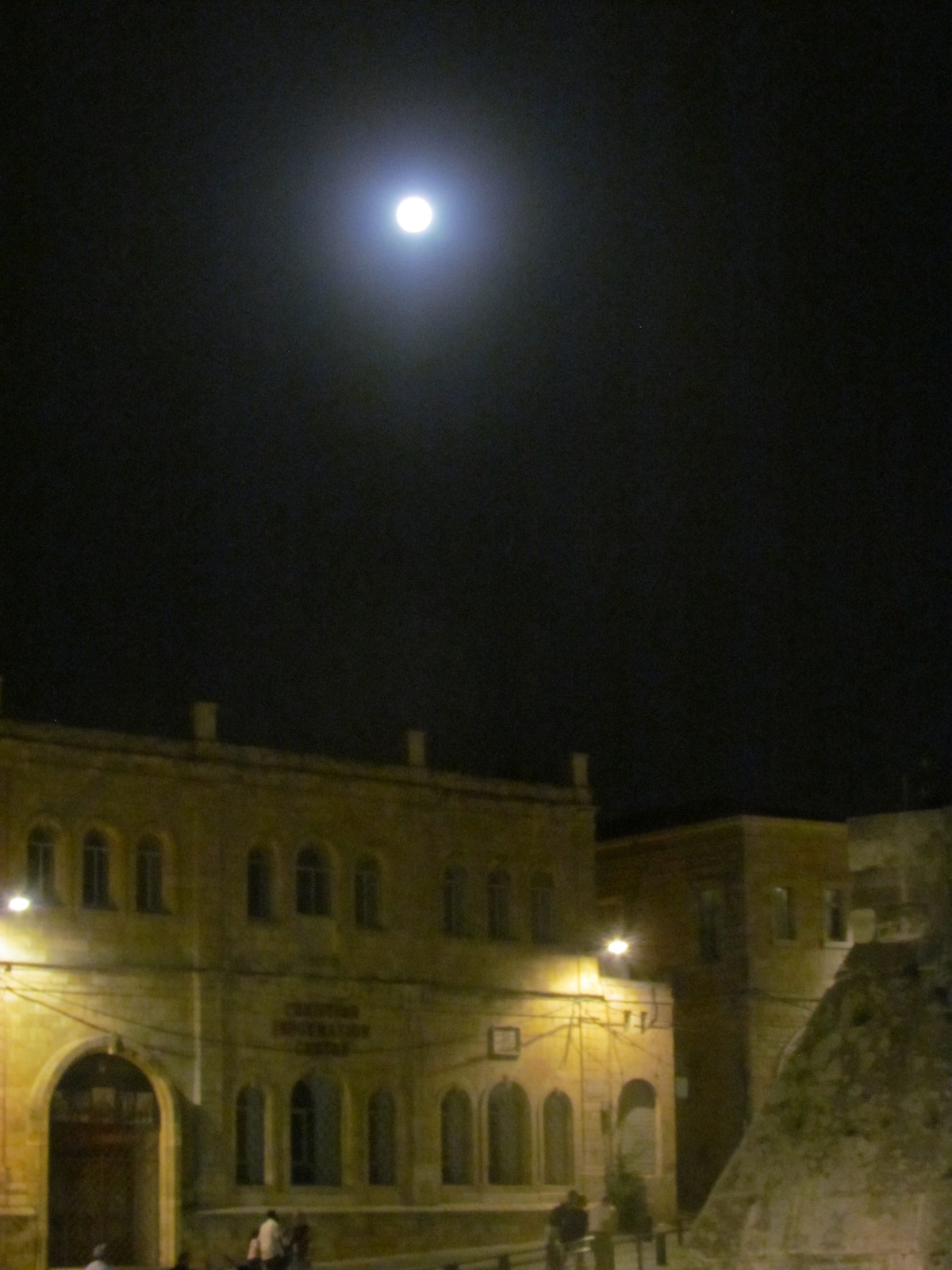
 The moon over the Old City last night

Letters, Photos, Autism And Jerusalem

I have been meaning to quote from a letter I received last week from Peyton Goddard and another from her mother, Dianne Goddard.  Peyton and Dianne Goddard wrote a book, I am intelligent, which I posted a couple of weeks ago, since then I am honored to be in communication with both of them.  Click ‘here‘ to read that post again.  I asked them for permission to quote from their letters here.  They have agreed.

This is part of an email Peyton wrote me, responding to the post I wrote about her book and labels.

“Pleasured I am pointed to hearing your understanding that lasted, large, limiting, linear labels are hulking jungles greeted by limitations. Keeping one limited is to measure there wastes of their great gifts.  One’s tears taste lime. Understares, terror builds. One washes their tears by return try freed to their Creator, as rest there they hunger. Polling my limits I kettled boiling red, as heard I’m trapped. There I wasted my lived times in pity. Limiting labels murder poignancy of sweet journey. I watered my liking to keep open living by questing for others better lives poignantly sweetened by encouraging swiping labels away. Wastes caging pertinent persons must stop. A trepid heart needs verses assuring “I’m deared by this very looking world. I can be me. My heart need caw no longer.” There joy is heard. These awesome pertinent persons can be freed to limitless. It greeted I hurrah…”

And this is part of an email from Peyton’s mother, Dianne –  

I spent much of Peyton’s first twenty years deliberating and comparing the severity of differences in persons labeled with disabilities that I met or read about. In the early years, this private, internal discussion between me, myself and I, offered some relief to my worries over Peyton’s delays and differences, as her challenges did not seem insurmountable if I therapied her enough. And professionals agreed. In the days before Internet could bring me many children to compare her levels of functionings and measured progress to, I found I could usually comfort my fearful self with observations that the few children we met with disabilities seemed to have much greater challenges than hers. A case in point was (removed the name for privacy’s sake) who was several years younger than Peyton. When talkative W. was three and not walking, he was tested. Duchene’s muscular dystrophy was diagnosed.  Debilitating muscles until death in his early twenties was the best case scenario. Pity him I did. And compare I did. While Peyton would be continuing to improve, he would be suffering a slow and sure death.

Not so. Peyton lost functioning and filled with a suffocating sadness she could not begin to shake for well over a decade. Yet W. lived happy. At his celebration of life five years ago I reflected on my foolish attempts to comfort myself by comparing the severity of challenges, and how thankful I am for new understandings of acceptance and valuing Peyton for ALL she is. Above all, I am comforted knowing she can really feel my love finally.”

The Icare4Autism Conference begins tomorrow.  More on that later.  To end, a few more photographs from our adventures in Jerusalem.

The Dome of the Rock  

Fragment of an Ancient Column in the Courtyard of The Dome of the Rock

Old Tombs in Valley of Jehoshaphat

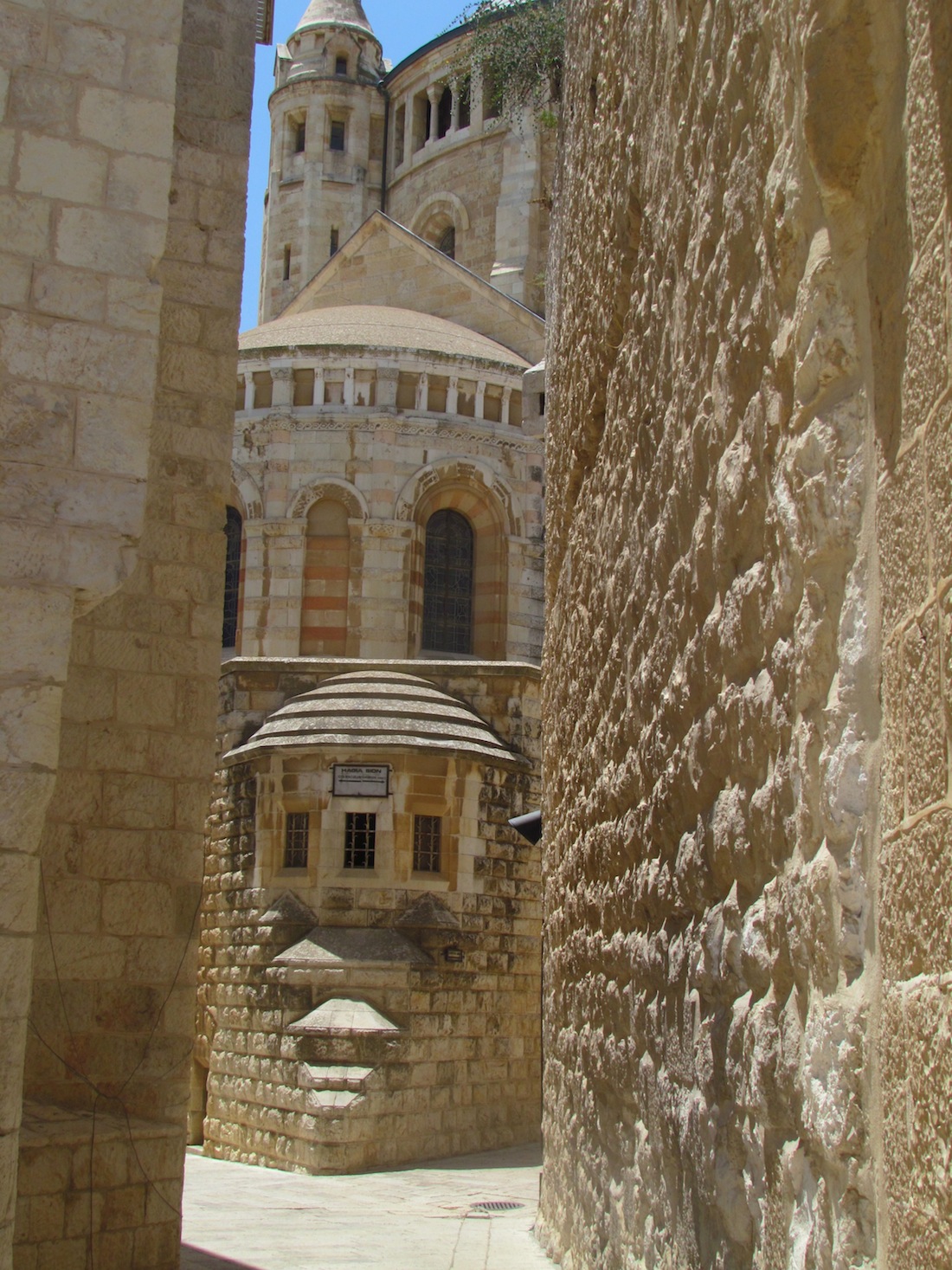
Outside Zion’s Gate in the Old City

 Related articles
Synchronicity, Jerusalem and Autism

I am leaving for Jerusalem tomorrow.  I will be covering the Icare4Autism Conference and am meeting Kamila and Henry Markram, the neuroscientists and creators of The Intense World Theory for Autism.  I intend to continue to post as usual, Monday through Friday, but because of the time change and depending on my level of jet lag, my posting times may be a bit wonky.

I am very nervous about this trip.  Not because of the traveling, but because we will be away from Emma for a full week, which marks the longest we’ve spent away from her since she was born ten and a half years ago.  I have gone over our itinerary with her.  I have spoken to her about how many days before we return, we have studied the calendar together.  We have discussed what she will do while we are gone.  But still, I am nervous.  Whooooo.  Breathe.

Today I pack while trying to remember to breathe.  Emma will be fine.  She will be okay.  Breathe.  Try not to panic.

I’ve never been to Jerusalem and am excited that Richard will be accompanying me.  This was where we had intended to go for our honeymoon, (with our then nine month old son, Nic in tow, making it less a honeymoon and more an insanely, ambitious trip with a baby)  had made our reservations to spend Christmas Day and the following week at the King David Hotel, then had planned to spend New Years Eve in Giza at a hotel overlooking the pyramids, a week in Cairo, then a side jaunt to Lebanon and Petra before returning to Jerusalem.  In all we had planned to be gone for three weeks.  Two months before our wedding the intifada broke out and we were advised, because we were traveling with a baby, not to go.  We still have all the guide books with their dog-eared pages marking the places we’d hoped to see.

This time we will have just three days of sight-seeing before the conference begins.  But, as with so many things that have to do with Emma and Autism, the synchronicity of the following events is not completely lost on me.  Just over eight months ago our lives and by extension Emma’s radically changed because of the links I was finding to Autistic blogs.  I’ve shared those posts and blogs on here.  During that same period I came across the Markram’s Intense World Theory and Richard and I, through our research, learned they were going to be in Jerusalem in August presenting their work at a conference.  At the time I didn’t know it was a conference focused on Autism.  I remember Richard and I joked with each other, wouldn’t it be great to figure out a way to go to Jerusalem and meet them?  It was a joke, literally, neither of us for a moment seriously considered the idea.  And life continued.

This past spring, I was invited to be on a panel and give a talk at the AutCom Conference in Baltimore this coming October.  I accepted the invitation.  And again life continued.  Not long after that invitation, I received a letter from the “State of Israel” asking if I would like to be their guest to cover the ICare4Autism Conference in Jerusalem this August.  When I received that letter I read it to Richard and we just looked at one another.  I will never forget the expression on Richard’s face.  It was a slow motion grin that didn’t end with me saying something like, “How weird is this?”

Sometimes life throws stuff at you and you know, you just know you have to figure out a way to grab the opportunity.  So we did.  And now we’re going.  How exciting is that?

English: Old City Walls of Jerusalem - on Moun...

English: Old City Walls of Jerusalem – on Mount Zion – View towards the King David Hotel (Photo credit: Wikipedia)

Joe Scarborough’s Ignorance And What It Means To The American Public

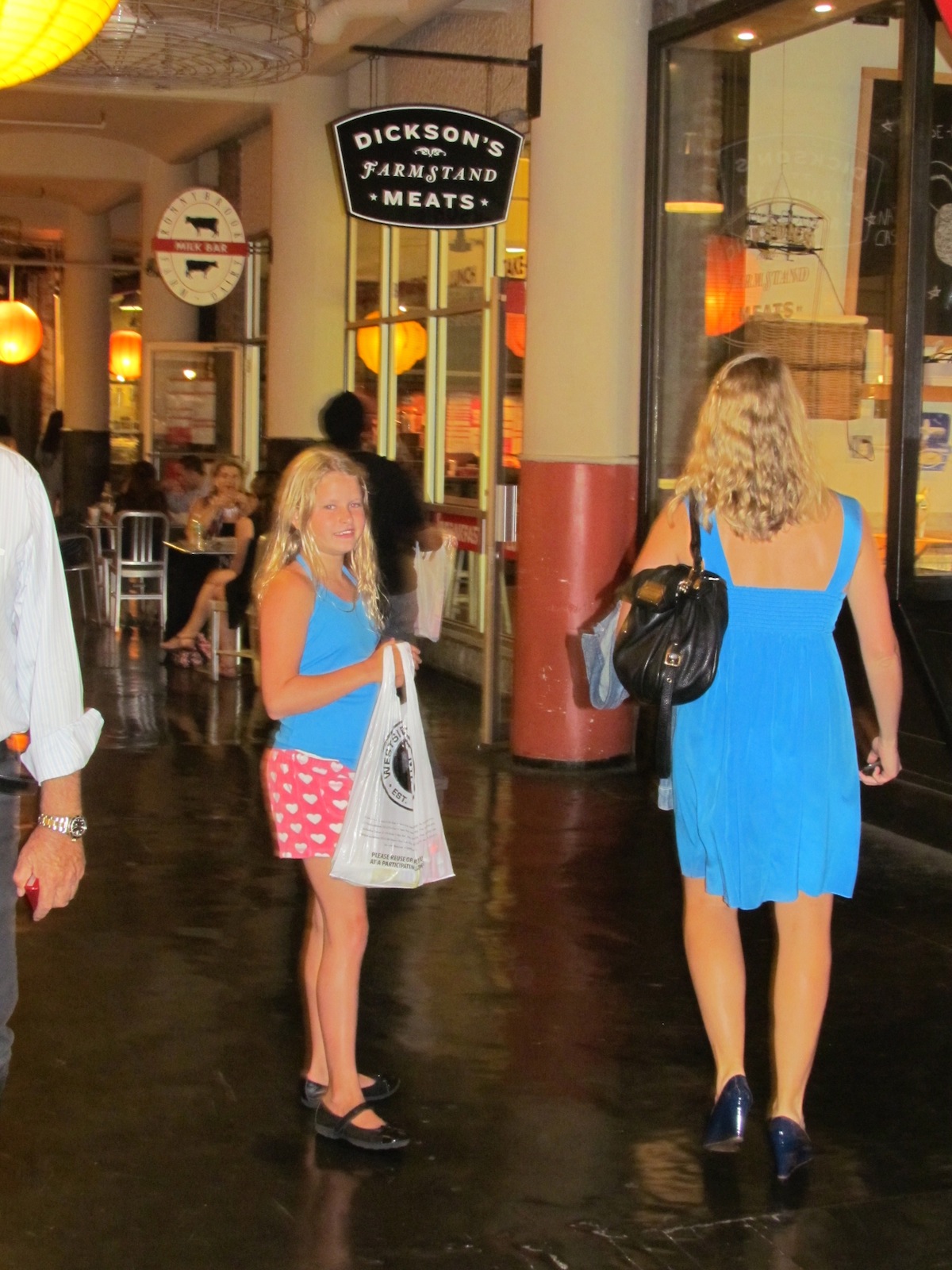
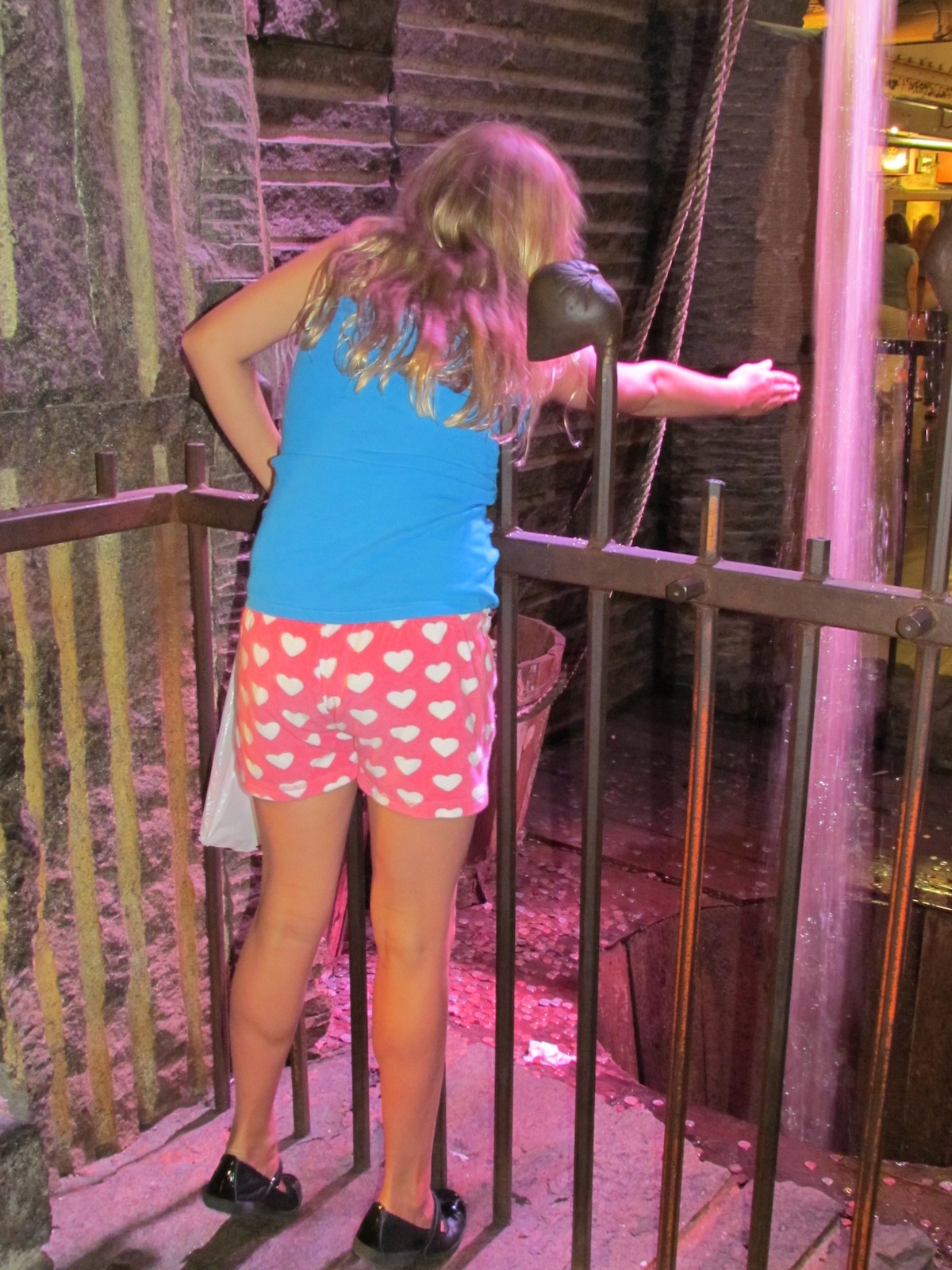
I wanted to write about how Richard came home yesterday (Yay!) and how we took Emma to the Chelsea Market and how she insisted on wearing a pair of black patent leather shoes, turquoise tank top and pink terry cloth shorts with white hearts.  I wanted to post a couple of photos of her so you could see for yourself how great she looks, but when I sat down to write I knew I had to write about something else.

I don’t want to talk about Joe Scarborough any more.  Yet his unfortunate, ridiculous, careless and ignorant remarks, make it impossible not to mention him, because he has a huge following, because people imagine he knows something about Autism.  Joe Scarborough’s remarks are indicative of a larger issue – ignorance and misinformation, which leads to opinions and a general consensus about Autism that is incorrect.  One such commenter on an article about Joe Scarborough’s remarks, said he believed Joe Scarborough knew more about autism than he did because he has a son who is Autistic.  And that is exactly why this is about more than just some asshole with a radio show.  There are countless people spewing all kinds of venom on the radio and everywhere else.  Much of it is dismissed.  But when someone, whether it’s a pseudo celebrity or a talk show host with a large following says they have a child on the spectrum ears perk up.  Forget that AUTISTICS are talking about what it’s like to be autistic ALL THE TIME and their words are almost never in accordance with what that parent with an Autistic child is saying.

So just to reiterate:

Autism is NOT a “mental health” issue.  It is neurological, neither good nor bad, just DIFFERENT.

Joe Scarborough, (I know, there’s his name again) said in a statement he made yesterday, which was neither apologetic nor a retraction from his original inflammatory comments, “I look forward to continuing my work with wonderful organizations like Autism Speaks to provide badly needed support to millions of Americans who struggle with Autism every day.”

Autism Speaks does NOT provide badly needed support to Autistics.  In fact Autism Speaks is uniformly HATED by a massive number of Autistics who speak to that fact on a daily basis.  If you google “Autistics who hate Autism Speaks” you will see more than a dozen pages of links addressing why this is so.  (Really, I just googled it.)

While I’m at it, let’s dispel a couple more myths, something Autistics are doing ALL the time on their blogs.

Autistic people are not inherently violent.

Autistic people do not LACK empathy.

Autistic people are not all loners sitting in a corner banging their heads against the wall  (That would better describe me right about now)  until they can no longer take it and go on a murderous rampage.

Autistic people are not all depressed and friendless.

I’m depressed right now.  But this isn’t about me, or how I feel, or anything else that contains the word, me or I.  This is about prejudices and prejudices are always negative, reinforced by ignorance, ingested by those who believe they are being told the truth by someone who is more knowledgable than they are about something they know nothing about.  This is how it works.  This is how it has always worked throughout history, the demonization of a group of people whose voices are drowned out by the larger roar of ignorance and stupidity.

I refuse to end on this note, however.  So here.  Here are a couple of photos of Emma in the outfit she threw on to go to Chelsea Market yesterday evening.  Because Em is one more example of what Autism looks like.  Emma is inherently HAPPY.  Emma is inherently SOCIAL.  Emma is inherently KIND.  Emma is inherently EMPATHIC.  I’m trying really hard to follow her lead.

This is Autism.  This is Emma.

Loved that as I took this photo a woman wearing black patent leather pumps and turquoise dress walked toward her!

“I can’t reach!”

Related articles
Autism, Assumptions and Perpetuating Misperceptions

I was going to write something about the Aurora shootings, but I think it’s better if I give some links to things others have written.

This link is from Lydia Brown on her blog Autistic Hoya – All I Want to do is Weep.  She wrote it last Friday, July 20th before Joe Scarborough, whose son is Autistic, weighed in with his damaging, destructive words, needlessly adding fuel to the flames of ignorance and misperceptions that roar whenever the word autism is spoken.

Then, just as Lydia and others within the Autism community predicted, Joe Scarborough said,  “As soon as I hear about this shooting, I knew who it was. I knew it was a young, white male, probably from an affluent neighborhood, disconnected from society — it happens time and time again..”  He added, “Most of it has to do with mental health; you have these people that are somewhere, I believe, on the autism scale. I don’t know if that’s the case here, but it happens more often than not.”

His words, so predictable, so incredibly stupid it would have been comical had it not been so very harmful to so many.  When I read his comments I thought, people will read Lydia’s piece and assume she’s psychic, because that would be the only explanation for her ability to predict such a thing.  Right?

Kassiane Sibly wrote on her blog Radical Neurodivergence Speaking – Open Letter to the Media in the Wake of the Aurora Shootings

Paula Durbin-Westby wrote: Autism, Aurora Shooter, and Actual Crime Statistics

Rachel Cohen-Rottenberg wrote: Despicable: Joe Scarborogh’s  Words on Autims and Mass Murder

And finally here is the petition Rachel started, demanding Joe Scarborogh retract his statement.  Please sign.  This is too important.

Sign this Petition

These “theories” and it seems they are always “theories” which appear to be code for “opinion” are doing damage to people who are living their lives in a society that not only does not understand, seems unwilling to understand and even actively refuses to understand despite all the people who are trying to help them understand.

Autistics are saying – LISTEN TO US!   And we look around and say, huh, I don’t hear anything.

Autistics are saying – STOP SAYING THINGS ABOUT US WITHOUT INCLUDING US IN THE CONVERSATION!  And we look around and say to one another, Huh.  Did you hear something?  Nah.  Carry on.

Autistics are saying – NOTHING ABOUT US WITHOUT US and we say, I don’t understand.  Why are they so angry?

Autistics are saying – YOUR MISPERCEPTIONS ABOUT US ARE HURTING US and we say, oh those autistics are not like my child, that’s not what my child would say.  My child is nonverbal.  My child can’t type.  My child doesn’t have a blog.  My child can’t say the things those Autistics can say and do.  My child is different.

How do you know? 

How do you know?

Joe.  You made a mistake.  Retract.  Apologize.  Make amends.  Have an Autistic on your show.  Listen to them.  Listen to your son.  Do the right thing, educate yourself.  You have a massive following.  You could make an incredible difference to so many lives including your son’s and your own.

I will end with this thought. I choose to presume competence, not just in Emma, but in myself and in my fellow human beings.  We ARE capable of listening to one another.  We ARE capable of shifting the perceptions of autism and Autistics, one person at a time.  I believe that, because to do otherwise is to live in a world I cannot and do not want to be a part of.

I Think I Finally Understand – But I May Still Need Your Help

I am reading I am intelligent by Peyton Goddard and Dianne Goddard with Carol Cujec.  I am not finished yet.  It is a powerful, beautifully written tale of triumph about Peyton who was denigrated, undermined, diagnosed as “mentally retarded” believed to be incompetent then learned to communicate through a facilitator as a young adult and proved everyone wrong.  Peyton’s story is shocking, heartbreaking and revelatory.  Her mother writes with a poetic beauty about her own evolution as she worked to help her daughter, refusing the labels being applied and yet allowing that they seep into our thinking unbidden despite our rejections of them.  I have been  unable to think of little else.

As I read Peyton’s and her mother’s words I finally understood why so many object to the labels of “high,” “low,” “moderate” when describing an Autistic person.  This is a concept I thought I understood, I certainly understood it intellectually, but I didn’t feel I completely understood until I was about half way through this terrific book.  I have felt uneasy when people have rejected the delineations for autism.  A  little voice in my head whispered those clichéd words, yes but if their child weren’t so high functioning they wouldn’t be so quick to dismiss these terms.  I admit to having felt uncomfortable and even upset when I read accounts of other parent’s struggles with their brilliant, verbose, hyperlexic children.  What I would give to have a child who could speak and think circles around me, I thought with envy.

Mostly I’ve remained silent, understanding that my thinking was limiting but unable to work out exactly why.  I felt the pull of other parents whose children are non-verbal, some violent in their frustration to be understood and unable to communicate. When those parents used the word “severe” it was a short-hand I thought I understood.  Yet, I read a blog of a parent who described her two children as being “severe” and then felt confusion when I read her posts because the children described were academically and verbally much more advanced than my own “moderately” Autistic child.  But I said nothing and tried to move on, understanding that I didn’t understand.

Finally I sent such a post to a close autistic friend whom I trust and knew would not judge me harshly.  I ranted and admitted how I felt.  She was patient with me.  She gave me the space to be confused, though it must have been difficult to stay calm in the face of my non-understanding.  Particularly as she is one who could be labeled “high” functioning and yet her teeth cause her pain when she is lied to, she suffers migraines and becomes overwhelmed, yet feels she has to pretend that she’s fine.  She carries the weight of not wanting to burden those who love her, because she “should” be able to deal with the things that she cannot.

As I read about how Peyton started to communicate by typing and how people began to see how intelligent she was, a little light went off in my brain and I got it.  Because (and this is probably obvious to many of you already, but I’m a slow learner you see) Peyton was labeled all sorts of things by people throughout her childhood, but those rating systems did nothing but hurt her.  Not one of them actually helped her, they didn’t support her, they were used to further segregate her and they were used by some to abuse her horribly.  As I was reading, I thought, right because Emma is considered “moderately” autistic, but she’s not moderately intelligent.  Her intelligence is extremely high, so what does moderate really mean.  Is that how she “seems” to neurotypicals?  But how is that helping her?  It doesn’t help her.  In fact, by thinking of Emma as moderate or severe or mild she is being limited.  If someone who is thought of as “high” functioning then can’t cope in a crowded place with fluorescent lighting and begins shouting and flailing about, the common thought is, well he could control himself, but is choosing not to.  Just as a “severely” Autistic person is an inspiration and miracle when they are able to express themselves and communicate their thoughts to those who had slapped a low IQ on their charts.  These ratings become the method by which a human being is seen as non-human or less human.

In my enthusiasm I wrote to my friend, Ib last night.

Me:  I think I finally understand what you and others have meant about characterizing autism in terms of mild, severe etc I suddenly had a brain flash and I think I understand why.

Ib:  Oh thank heavens 😀

Ib reminded me that the scaling system is ineffective as a descriptive device as children grow, progress and become adults where they continue to grow, evolve and progress.  I thought of Peyton finally finding a way to communicate in her early twenties.

Ib said, “You wouldn’t grade me now as you would grade teenager me the level doesn’t stay we grow, like anyone else.  I remember things that is why I can suggest to you what Emma may mean with levels-thinking, you may never have seen me as a resource because “Ib is not like my Em” but you see that I am.”

Ib is right.  She is my friend, first and foremost, but she is also someone I rely on to help me understand.  Because there is so much that I don’t.  But with help I can.

I would love to hear from anyone who cares to chime in here.   If I’ve been disrespectful, please let me know.  I think I’m getting it, finally, but I want to hear from all of you.  I need to understand this.  For my daughter’s sake, I have to understand and she can’t explain it to me…  yet.

Laura Nagle – Paving the Way

The following was a “comment” sent to me by Laura Nagle, who is the star of the wonderful, powerful and not to be missed documentary:  Vectors of Autism: Laura Nagle.  I couldn’t just include it in the comments section, you will see why.  So I asked and received Laura’s permission to publish it here as a post on its own.

Laura Nagle writes:
“I self diagnosed with Asperger’s Syndrome several years ago. I told my sister, who told our father who confirmed my suspicions with recollection of my official autism diagnosis long ago, before the flood. I soon learned of a local chapter of the Autism Society of America, meeting in Flagstaff. I went there. Walking into that first meeting was a large and difficult step. I am so glad that I summoned the courage.

You see, I have always been autistic. I have always been a misfit in the world. I have had all the typical autism issues, but without having any answers as to why. I have paid my bills, but otherwise have wandered aimless upon the earth. I have lived in crushing financial poverty, as do far too many of us. I have found a form of poverty so much worse than that of mere money; and have lived this soul poverty most of my life.

You see, I have had nothing to give. I have been so deep in money trouble that I have not been able to give to charity. By the end of a day’s work in the real and generally entee world I am exhausted, and melted,  and depressed, and not capable of any optional accomplishments. And I have lacked any special worth or skill or talents. What can a poor, fatigued, worthless loner give to anyone. Nothing. Nothing at all. That is the desolation that I have endured. . .

. . . Until my walking into the meeting of the Northern Arizona chapter, ASA. I must note, and strongly, that my life did not change at that moment. That would be to assume that I had a life prior to the ASA chapter and the people I met there. I did not have a life, I had a rude existence. My life began at that moment.

I found the ASA and was found by them as well. It turns out that all that I learned during those harsh years is of value to others. It happens that I have an essential talent of putting an esoteric condition and its personal reality into words understandable by persons who will never experience it. This talent is a gift, I cannot take credit for it, but I will use it as well and as often as I can.

I am motivated. As I scan the decades of my life I see so many ”autistic moments” in which I adjusted my life’s trajectory downward. I see so many moments in which things might have turned out better for me if only I. . . If only someone near me had known the whats and hows of autism. They did not. I want new ones of my Spectrumite Tribe to excel! I want them to do far better than have I! I want them to exceed me in every way.

And I have the chance to do this! These wonderful people around me, people of ASA, people of TASH, these people have given me purpose and friendship and thus life itself – on a silver platter! I have gone so long in a drought! I have people and purpose! The drought is broken, and I am blessed beyond my wildest dreams, and I so deeply appreciate it all!

Without the ever growing people I cannot fulfill my purpose. I need people to dream with me and also for support and guidance. I need those people who listen to my message and apply these concepts in real life and so insure that new auties shall exceed me and my success! People and purpose. I would never have dreamed of this. I have thanks that would take several lives to give.

And I would like to offer those thanks here! Thanks big and wide to the ”Vectors of Autism” team, to my ASA and TASH friends and to all who watch our film and are moved by it. Special thanks go to John, our director, who insisted on making this film more than a documentary. Thanks to our cameraman, Matt who lent his vision – literally! And most of all, thanks to Susan, producer of this film, and of my life!

Dang I am lucky!”

*I believe, but I haven’t verified this with Laura, that when she writes “entee” she is referring to NT (neurotypical).

I was going to title this post “Laura Nagle – Paving the Way For Emma” because Laura is, but it isn’t just Emma who profits from her words and this documentary.  The more Autistics are given a platform from which they can speak out, discuss their experience of the world, the better this world will be for all of us, not just our children, but for every single child and every human being on this earth.

Thank you Laura for writing this.  Thank you for being who you are.  And thank you Leah Kelley of Thirty Days of Autism for introducing me to Laura.

The Beauty in a Conversation

Emma and I are heading out to Fire Island this afternoon with my friend, Bobbie.  This has been cause for great excitement as Emma has counted the days until we leave.  Last night, Emma and I had the following conversation.

Emma:  Go to take Bobbie at the beach!

Me:  Yeah.  Are you excited?

Em:  Yeah!  So excited to see Bobbie and Mina and Luca.  Going to go in the ocean.

Me:  Yup, we can go swimming and…

Em:  (interrupting) Going to go play in the sand.

Me:  Yes.  We’re going to spend the night.  We’re going to spend two nights there.

Em:  (Holding up her fingers) Three minus one equals two!  Having a sleepover with Bobbie at the beach.  Going to bring Cokie!  (Cokie is a scrap of what was once a blanket, measuring about five by three inches and is constantly getting lost leading Emma to panic.  We live in dread of this last large scrap one day mysteriously disappearing into the great dark unknown along with the rest of her blanket.)

Me:  But Cokie has to stay in your bedroom.

Em:  Cokie get lost!  Ahhhhh!  Who took it?  Somebody threw it away.  They threw it.  You cannot throw Cokie.  (All of this was said very quickly in an animated voice, it’s a kind of scripting, but it’s within a context in that Emma is expressing her fears and anxiety that her blanket might get mislaid.)  No, not going to bring Cokie into the water.  You can’t bring Cokie onto the beach, that’s silly.  Cokie might get lost!  Cokie will get dirty.  Ick!  Cokie has to take a bath!

Me:  You’re funny.

Em:  (Laughing)   No.  Not going to put Cokie in the washing machine!  It’s too little.  No, not going to put Max in the washing machine, he’s too big.  Max can’t breath.  You have to pull him out.  That’s too small!

Me:  Do you think we should wash Cokie before we take it to the beach?

Em:  Nah.  Have to gotta go.  Max came to the book party.  You hit Max.  You pull Max’s hair.  No.  You cannot pull Max’s hair.  You have to stop.  You can’t do that.  Max is hurt!  (This is another script, but it’s one she made up and it’s really a spoken memory of Richard’s book party celebrating the publication of his novel a month ago.  Max is a great friend and someone Emma adores.  When Emma really likes someone she wants to pull their hair and hit them.  She is still trying to sort out how to resolve some of these impulses while also connecting and making physical contact with another human being without hurting them.  We are working on this.)

Me:  Yeah.  That’s really hard, isn’t it Em?

Em:  Makes me so frustrated! Grrrrr!

Me:  (Laughing)  Do you feel frustrated now?

Em:  Nah!  Emma’s happy!  Going to go with Bobbie to the beach.  Going to have so much fun!

Just before I had this conversation with Emma, I was talking with my friend Ib.  She said, “It is easy to picture Emma talking more.  She can still be her if she does.  She will talk oddly about odd things that she blisses out about while twirling string, and walk away mid sentence.”

And I wrote back, “Yeah, and I’ll (removed explicative) love that!  Seriously love that!  Because I want to walk away in mid sentence half the time…”  Ib then wrote back “And frankly, in your family, it won’t be that odd.  Hehe.”

Which made me laugh out loud and filled me with so much hope and happiness with the thought that Em and I could converse the way Ib and I do.  And then Emma came home and I told Ib I’d talk to her tomorrow and Emma and I proceeded to have the conversation I’ve transcribed above.

Yup, there are little miracles happening all the time!

Have a wonderful weekend everyone!  The journey continues…

Vectors Of Autism: Laura Nagle

Vectors of Autism: Laura Nagle   For those of you who have not yet viewed this powerful documentary, you must.  I cannot urge you enough.  Just do it.  Watch it.  Keep a box of tissue nearby, because if you’re like me, you’ll need it.  I wept throughout the entire film, from joy, from sadness, from relief that such a film has finally been made, from pain that we have so far to go in educating ourselves, the public, the media about autism and what it means to be autistic.  At one point Laura laughs and says, “I figure I was built out of reworked parts.”  It is a poignant example of both her sense of humor, but also how society’s view of her has weighed heavily.

Anything I say about this documentary is inadequate.  So I’m going to give you a couple of fun facts while you click on that link above and purchase the DVD.  I know, it’s $35.00 but think of it as an investment in your child’s future and to the future of this film.  The more people who buy it, the more likely it will make it to film festivals, and to the larger public where this message needs to be seen more than ever.

Laura Nagle wrote the lyrics to the theme song and plays the harmonica on it, she’s also an architect, an artist and Autistic.  It’s hauntingly beautiful, which is kind of perfect because so is she and so is the documentary about her.  The couple in the documentary with two little girls on the spectrum, Jennifer Turrell and Stewart Anderson wrote the music.

*Addendum – I was so tired when I wrote this post late last night, I just didn’t have the energy to write more.  But I need to add, this documentary is everything I and others like me have been saying.  It is imperative Autistics speak out about their experiences and it is vital that we, in the neuromajority, listen.  For those of you who are still uncertain as to why I say this, it is because I know I am not the only parent of an autistic child who went through a hellish period (far too many years) in which I struggled with my daughter’s diagnosis and what that meant to her and to us as her family.  I tried my best to understand, I did what I could with the knowledge I had available to me, but even so, I fell short.  I cannot help but wonder, had I heard Laura Nagle and others speak of their experience, would I have done things differently?  Would my stress and fears have been abated even if only by a little?  Would I have sought the opinions of all those specialists with such tenacity and fervor?  Would I have been able to set aside some of my fears in favor of a more rational and calmer mindset?  And most importantly, would any of this have effected Emma?  I think it would have.  I hope others can learn from some of my mistakes.  I hope that by writing about my journey, others who are closer to the beginning of theirs can avoid some of the traps I so easily and readily fell into.

What I know now is that having operated with a stress level hovering in the red for so many years, I am relieved to see this documentary.  I am grateful to have friends who are autistic and whose lives, opinions and experiences help pave the way for my daughter.  The question is – how do we go about making these kinds of connections available to other families?  Families who do not have blogs, who do not know where to go to find Autistic adults who are interested in speaking to them and sharing their experiences with them.

One of the reasons 12-step programs work as well as they do, is because they provide a model for living through mentorship.  The role of the addict who has cobbled together some time as a sober and abstinent being, who then goes on to offer support to other addicts with less experience and who may be still struggling with their addictions is a powerful model for any community.  A huge component of 12-step programs is the idea of being of service.  Without being of service to a fellow addict we will almost certainly lose our way.  But this idea, this model can be translated to include any community.   Within the autism community, for those self-appointed Autistics who have a desire to extend their hand to families with autistic children, it is a vital lifeline, one that everyone involved can profit from.

If you’re still undecided here’s a preview video:

After you have watched it, I want to hear your thoughts.  What did you think?  What did you learn?  What surprised you?  What made you cry?  What made you laugh?  Laura is very funny, so that one is probably easy!  Laura has not just started a conversation, she is extending her hand.  It is up to us to grab it.

A Sleepover, a Storm and Our “Adventure”

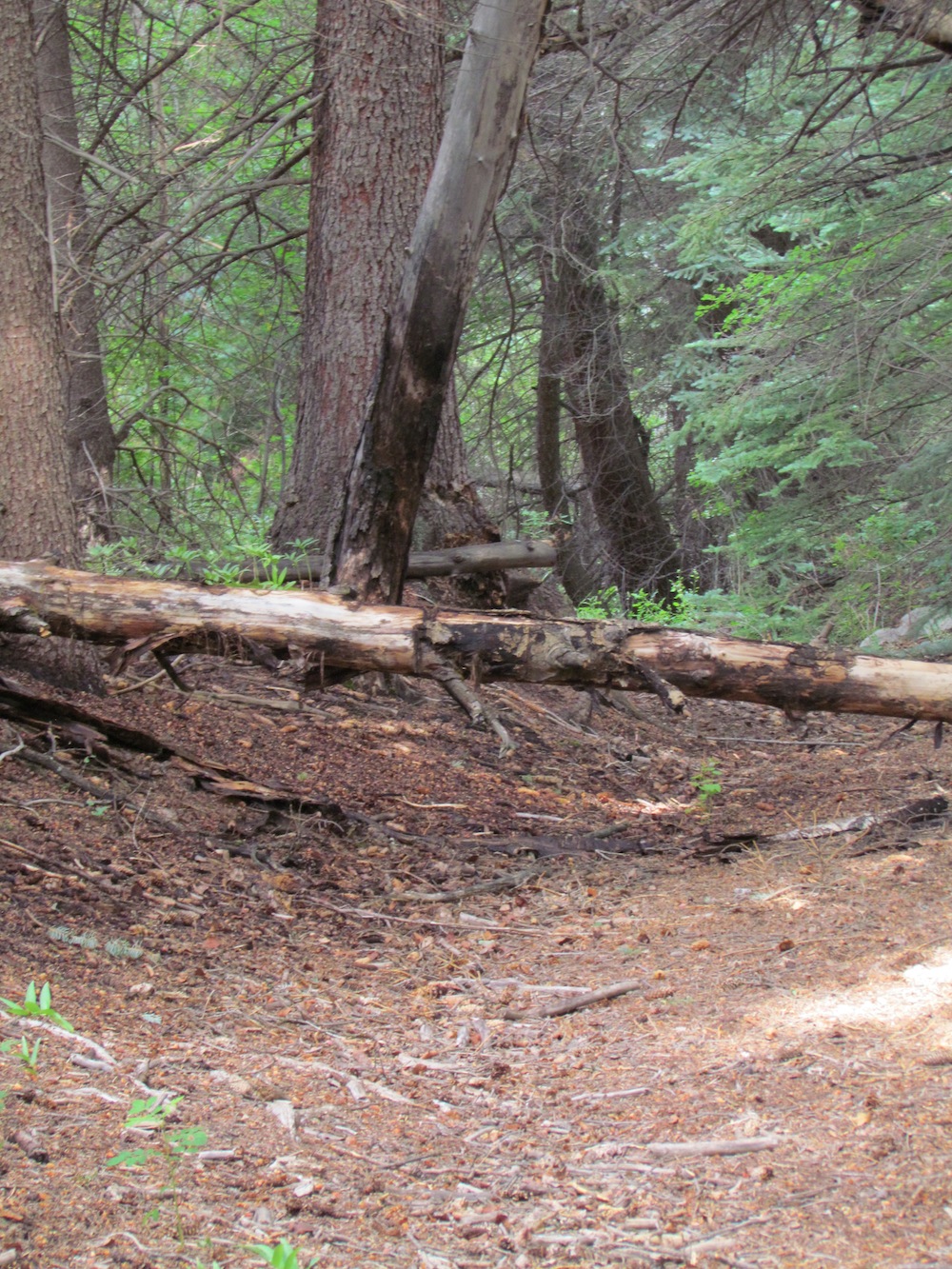
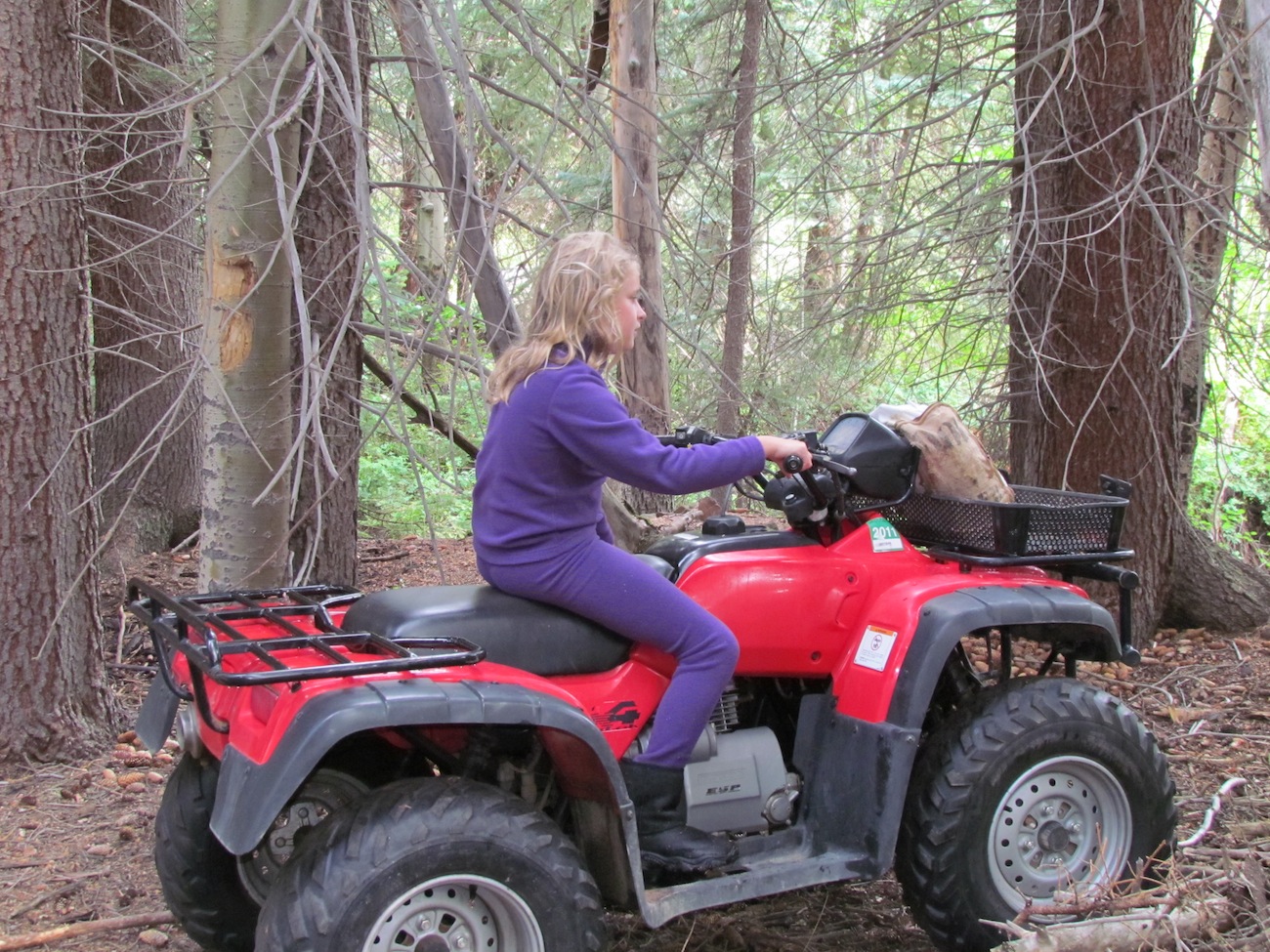
Emma loves going to our cabin.  It has become a tradition to spend the night there at least once during any given trip to Aspen.  Yesterday was our designated “sleepover” night and Emma was beside herself with excitement.  We packed backpacks and some bags up, put them into the front of the 4-wheeler and set off.  This is our equivalent of taking a fully equipped camper out to a campsite and calling it a “trek.”  I made a number of derisive comments about our lack of adventure (aka laziness) while Richard and Emma ignored me.  At one point Richard stopped the 4-wheeler and said, “No one’s stopping you from walking, you know.”  Which pretty much shut me up.  Until we ran into this –

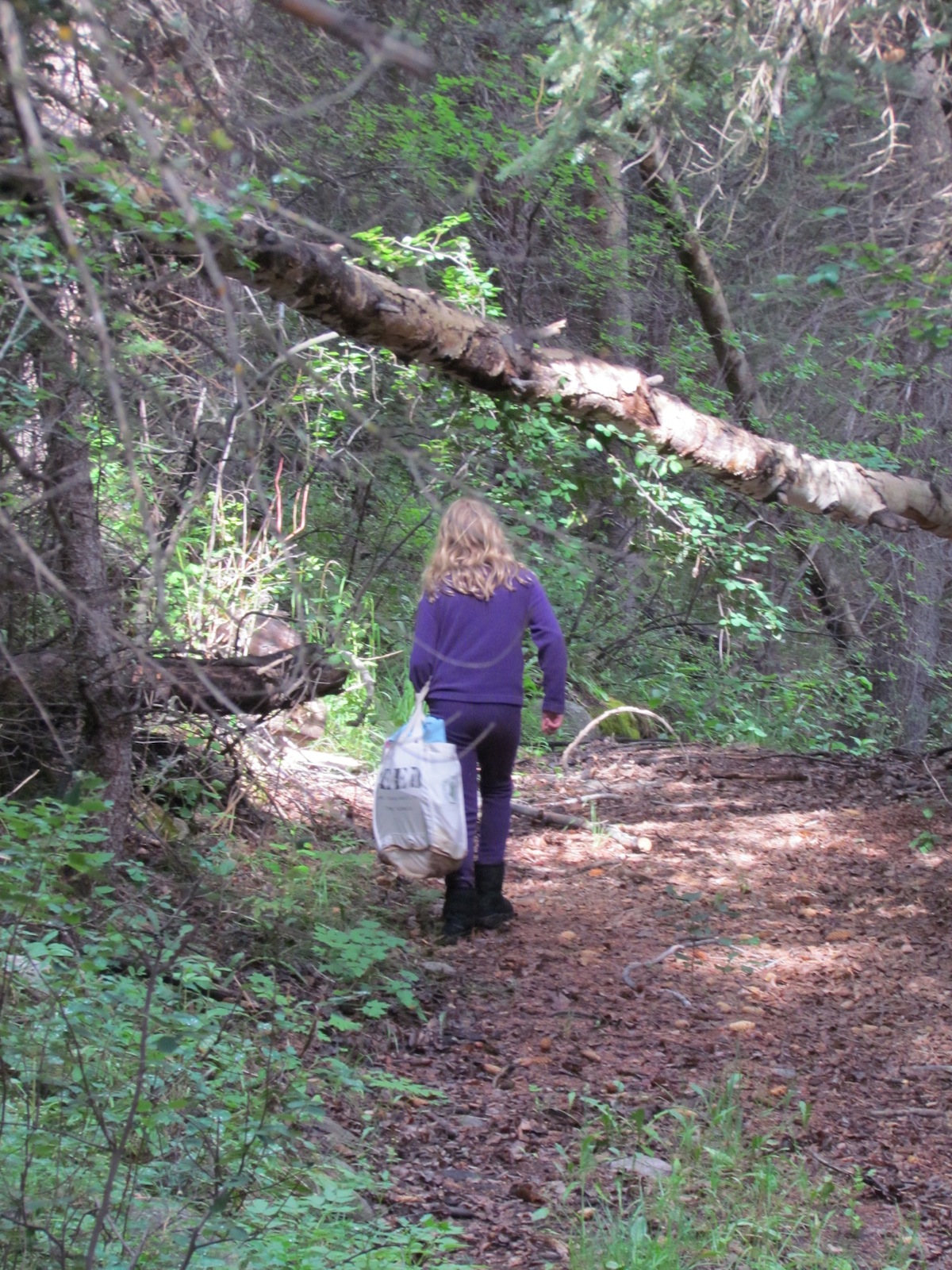
Richard, not one to be easily deterred, proceeded to put the 4-wheeler in reverse in an attempt to go around the tree branch, and in doing so went up a steep incline and over a large boulder, while almost flipping it.  After much excitement (aka me yelling in a hysterical voice, “you’re going to flip it!” causing Richard to say, as one wheel hovered a full foot off the ground, “you know, you’re not exactly helping.”  Eventually he brought the 4-wheeler to a stop with all four wheels planted firmly on the ground (much to my relief) and we abandoned it.  “Well you get the best of both worlds,” Richard remarked, as we hoisted our backpacks and bags (some filled with Emma’s books) on our backs.  “Now you get to walk.”

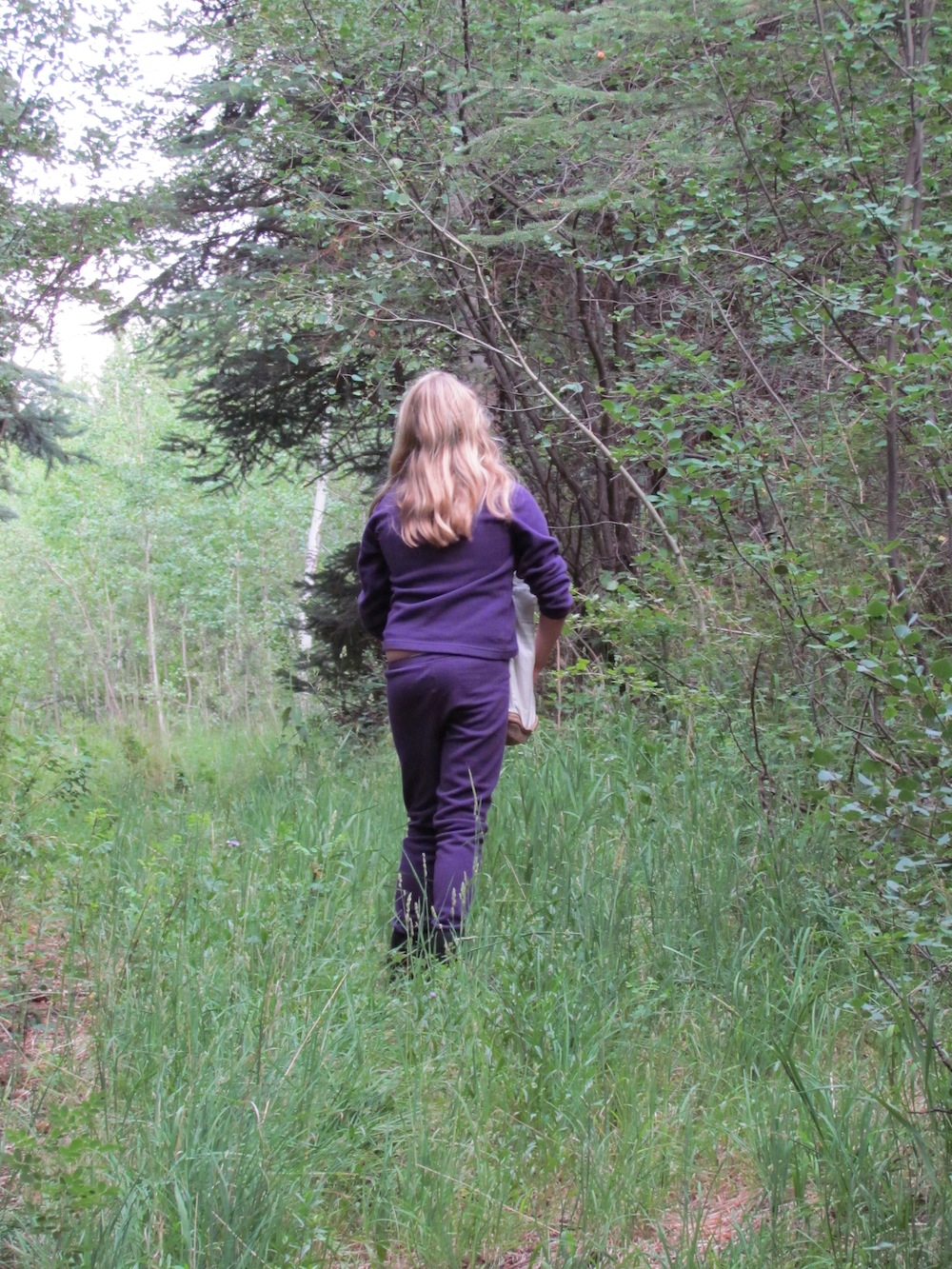
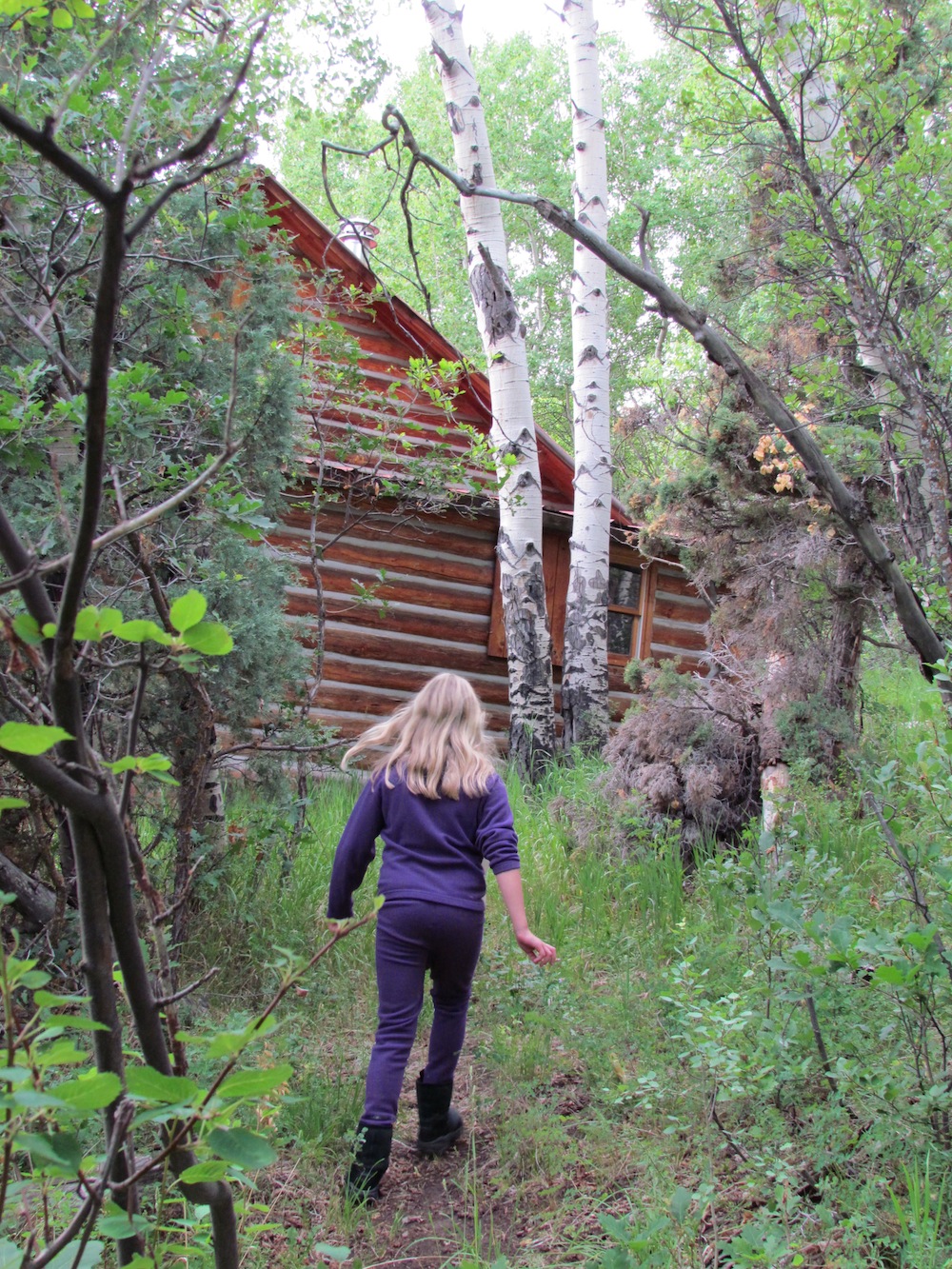
When the cabin came into sight Emma, carrying the bag with her books in them, began to run.

“It’s the cabin!”  Emma yelled as she bounded up the steps.  We settled in, put the screens into all the windows, swept up the cobwebs and made up the beds, while clouds began to roll in over the mountains.  A number of red-tailed hawks flew overhead calling to each other, or at least that’s what I assumed they were doing.

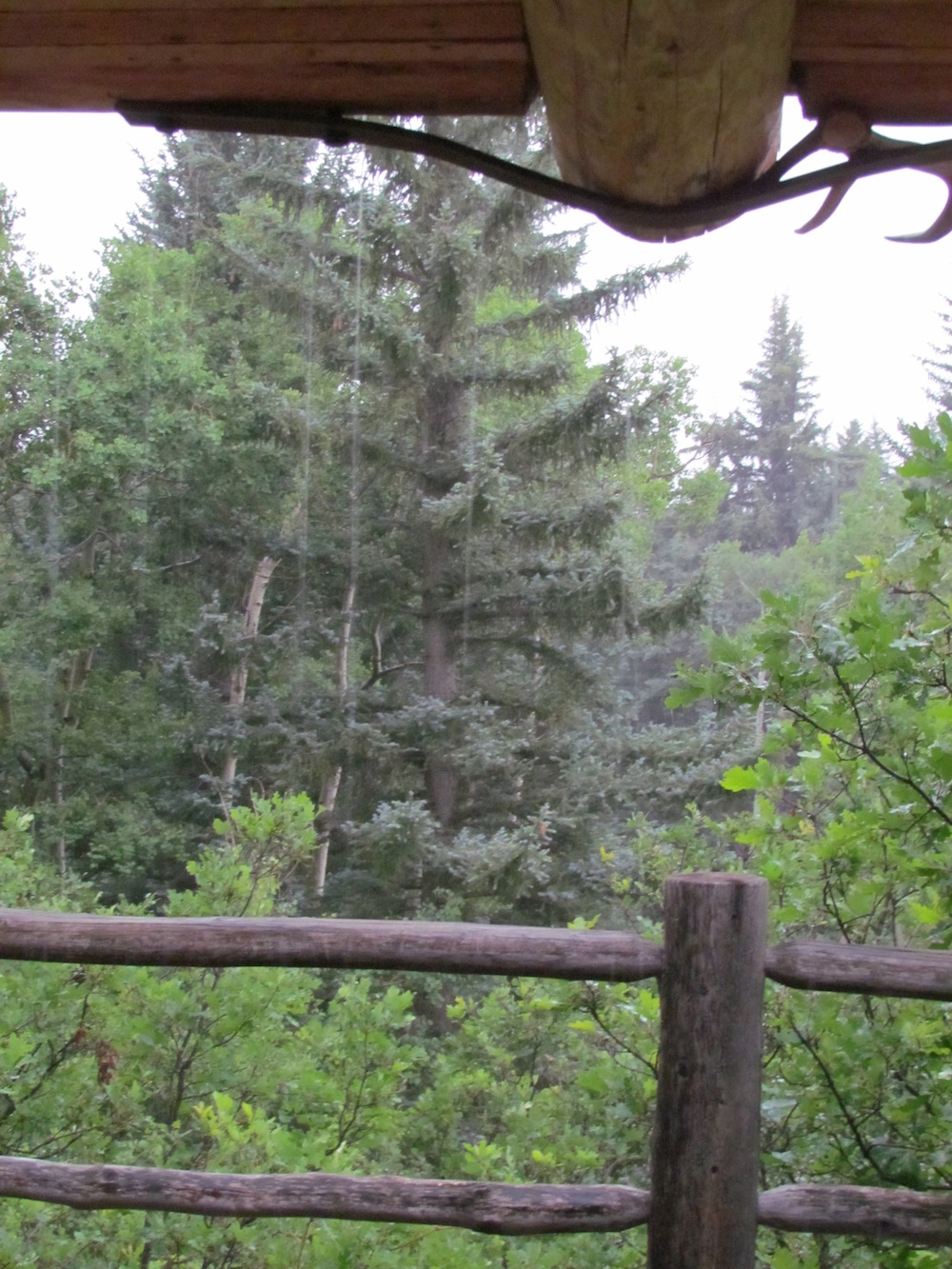
The rain came first preceded by a smell I cannot describe, but one that I recognize as being the forerunner to a storm.

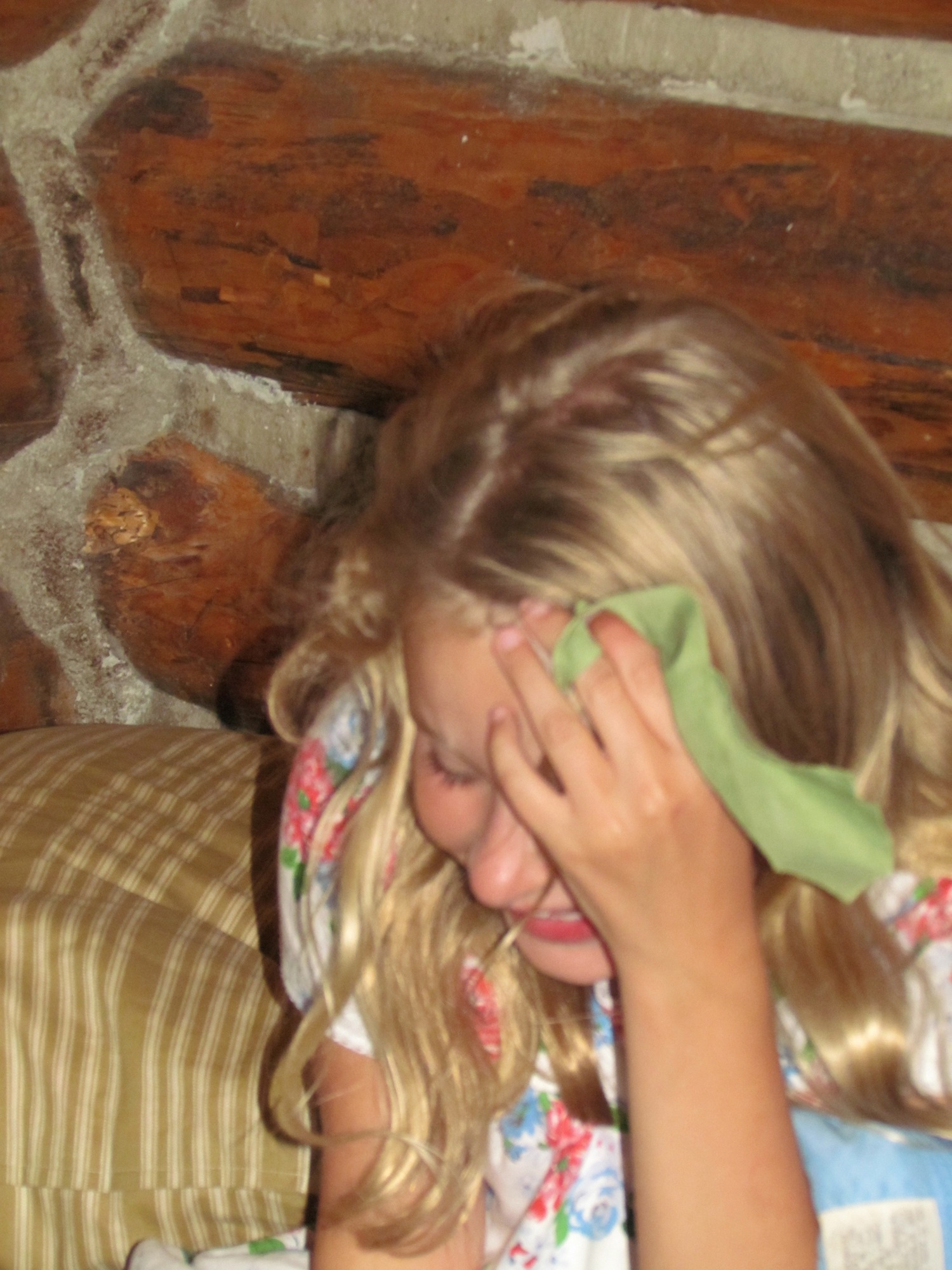
Lightening and thunder followed.  The rain came down in sheets.  Emma stayed inside.  She peered out the window and made loud crashing noises.  “It’s scary,” she said.  “I don’t like it.  Mommy come.  Sit together.”  So we did.

But eventually she felt safe enough to go sit next to her dad on the porch.  Together they watched the storm.

Within an hour the storm had blown past and Emma was happy.

By 10:00PM all of us were asleep.  Emma slept until after 8:00AM.  This was noteworthy as her usual waking is 6:00AM.  Reluctantly we packed up and made our way back to where we’d abandoned the 4-wheeler.

When we got back home, where Nic and my mother were I said, “I bet you guys were worried about us during that terrific electrical storm!”

My mother smiled and said, “No.  Actually when it began to rain we said to each other – Boy am I glad we stayed home!”

They have no idea what they missed.

Do We Really Believe the Things We Tell Ourselves?

There was an exercise I was told about in high school.  I was told to hold my arm out, while repeating to myself, “I am strong, I can do it, I am strong,” while the other person tried to push my arm down.  Then I was told to rest for 30 seconds, and hold my arm out again, but this time repeating, “I can’t do it, I’m a failure, I can’t do anything,” while the other person tried to push my arm down.

Have you ever tried this?  If you haven’t, do.  It’s an amazing example of how powerful self talk is.  (Richard just came in and I tried it with him.  “Wait do it again,” he said.  We did with the same results.)   I was able to push Richard’s arm down both times, but it was much harder when he was repeating to himself that he was strong and could do it.

It made me wonder how that same exercise would work if the other person said, “you’re strong, you can do this,” even if I didn’t say it to myself.  So I tried that and it helped a little, but not as much as when I said it.  As I was thinking about all of this, I thought about how Emma will often walk away if asked a question I know she knows the answer to.  Such as, “Emma what color is the 4-wheeler?”  She will walk away, as if to say, “Why are you asking me such an idiotic question?  Why should I even bother answering this question?”  I don’t know that this is what goes through her mind, but recently AspieKid wrote in a comment (he gave me permission to reprint his reaction to Simon Baron-Cohen‘s flawed Sally-Anne test) the following:

“Here is what would have gone through my mind if I were part of that study.

The researcher would set up the test, and then ask me where the other kid would look for the ball. My mind would have raced through its usual sets of combinations and permutations and a logical consideration of the question. But I would not be thinking about what researchers would have expected me to think about. I would have been thinking things like, “Why are they asking me this? Sally and Anne don’t even exist. I have no way to know where people would look for a ball, and even fewer ways to know where non-existent people would look for it. Even if the person were real, I have no information about their intelligence or their sanity, and no reason to assume they would look in any particular place. Nor do I care. Furthermore, there is no consequence for guessing the wrong answer and no reward for guessing the right answer, so it doesn’t matter what answer I give at all.

When I was a kid, those thoughts would have gone through my mind in a couple of seconds. But I would not have expressed any of those thoughts. I would have said as little as possible and probably made no eye contact whatsoever. I probably would have felt uncomfortable being there.

I probably would have thought the researcher was both stupid and insane, and he was assuming that I was both stupid and insane as well. I might have felt a little nervous about being around someone who asks such senseless questions. I might have tried to make like an ostrich and bury my head in the proverbial sand so they would just leave me alone, but that would probably not work. In that case, I would have given them any arbitrary answer that would get them to leave me alone as fast as possible so I could return to my own thoughts.

That’s mostly how I treated schoolwork too. I knew I was smarter than most people (even my teachers), but I had no interest in proving it to anyone. I was a genius (by IQ) but I did not do well in school most of the time. I did what I needed to do to get them to leave me alone, that’s all. The Sally-Anne test was based on the false assumption that autistic kids are eager to share their ways of thinking with researchers, but in reality I think most of them would rather just be left alone. I’m going to go out on a limb and say that most of the autistic kids who participated in the Sally-Anne test probably put almost no thought into that researcher’s question, nor did they have a reason to.

Like the old saying goes, “if you ask a stupid question, you’ll get a stupid answer”.

This comment from AspieKid was beautiful in it’s explanation of how we NTs “dumb down” our language, assume incompetence in the face of silence.  Assume someone does not understand the question when in fact, as AspieKid so eloquently states, this is not the case at all and is quite the opposite.  How do years of these kinds of interactions effect someone?  How do you believe in yourself when everyone around you assumes you’re incompetent.  How do you fight against those perceptions?  Do you even try?

How do we instill positive self talk in another?  Is it enough to tell another person they can do it?  Is our belief in them enough?  When we model that kind of belief in ourselves, are our children able to see that and incorporate those behaviors?

Huffington Post, Life and What’s Really Important

My piece on the Aspen Ideas Festival has just been published on Huffington Post.  Click ‘here‘ to read.  I wrote a great many drafts before finally submitting the post that has been published.  It was a long night of writing and rewriting until finally I knew I couldn’t write about the Ideas Festival without writing about my grandfather, but that too, made me uneasy.

The truth is I have a great many feelings about my grandparents and the various institutions they created and left behind here in Aspen.  Mostly I am awed by Grandfather’s vision and determination to see his vision through, while also aware that my feelings have little to do with anything.  I never knew my grandfather, he died the year I was born.  However I did know my grandmother, Elizabeth Paepcke.  As a child I thought all grandparents were like mine.  I assumed my experience was everyone’s.  I don’t remember when it dawned on me that this assumption was incorrect, but it was around that time that I also learned having famous grandparents came with other assumptions about me and my family that had nothing to do with our actual lives.

“Friends” became tricky.  People wanted to be “friends” because of an idea they had and not because they actually wanted and liked who I was.  “I” was often inconsequential in such interactions, it was the idea of being close to someone else they were after.  That makes for some odd interactions and can be disconcerting, a kind of objectification of another human being, but something we, in a culture of celebrity adoration, often do.

When I began social “networking” I felt horrified by the things others suggested I do to help my business.  It felt false to me.  I found myself going home at night incredibly depressed.  I would lie awake and wonder where was I in all of this?  My desire to get my business off the ground could be seen as self promoting in a way that other people were not accused of.  So began my process of trying to untangle myself from two people who created organizations and institutions that have had a longstanding impact on a great many people and following my own passions and interests.  I don’t always get it right, I still get caught up in trying to sort out what it is I need and want to do and what I believe others want from me.  It’s a balance, but like everything, its progress and not perfection.

Last night Emma came to me with the keys to the 4-wheeler in her hand.  When we got outside and turned on the ignition, it began to rain.  Not a light sprinkling, but a downpour.  “Em, are you sure you want to go for a ride?  We’re going to get soaked,” I told her.

“Yes!  Drive on the 4-wheeler with Mommy!”  Emma said, without hesitation.

I remembered a time when I was very young, standing at our front door and looking out at the rain.  I told my mother I wanted to go swimming.  I remember she laughed and said I couldn’t go swimming because it was raining, which made no sense to me.  As I remembered this, I zipped up my hoodie, took my glasses off and said, “Okay Em, hang on!” and put the 4-wheeler in reverse, before roaring off down the ranch road.   Emma clasped her arms around my waist and lay her head on my back as the rain pounded down on us.  It was bliss.  As we headed back to the house, completely soaked, I thought Em is going to be okay.  And then I amended that thought and said to myself, Emma IS okay.  I felt such a surge of relief, I began to cry.

I’m bombing down the road, with Emma clinging to my back and humming, in a torrential downpour, crying, soaking wet, and feeling euphoric.

These moments of pure joy shared with another human being, that’s what is important, everything else pales.

Happy Fourth of July!

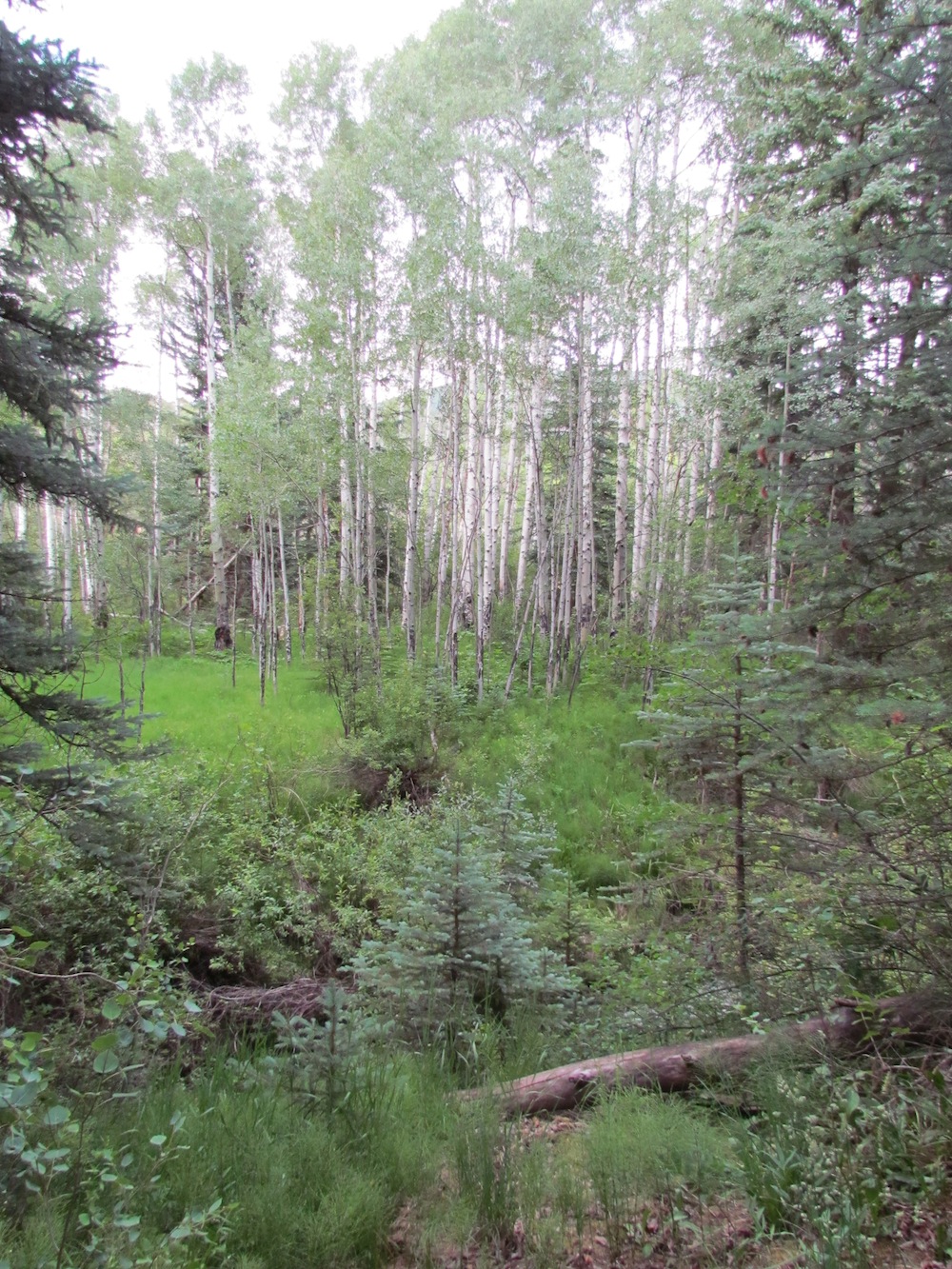
View of the Rockies taken from the ranch while on the 4-wheeler