Synchronicity, Jerusalem and Autism

I am leaving for Jerusalem tomorrow.  I will be covering the Icare4Autism Conference and am meeting Kamila and Henry Markram, the neuroscientists and creators of The Intense World Theory for Autism.  I intend to continue to post as usual, Monday through Friday, but because of the time change and depending on my level of jet lag, my posting times may be a bit wonky.

I am very nervous about this trip.  Not because of the traveling, but because we will be away from Emma for a full week, which marks the longest we’ve spent away from her since she was born ten and a half years ago.  I have gone over our itinerary with her.  I have spoken to her about how many days before we return, we have studied the calendar together.  We have discussed what she will do while we are gone.  But still, I am nervous.  Whooooo.  Breathe.

Today I pack while trying to remember to breathe.  Emma will be fine.  She will be okay.  Breathe.  Try not to panic.

I’ve never been to Jerusalem and am excited that Richard will be accompanying me.  This was where we had intended to go for our honeymoon, (with our then nine month old son, Nic in tow, making it less a honeymoon and more an insanely, ambitious trip with a baby)  had made our reservations to spend Christmas Day and the following week at the King David Hotel, then had planned to spend New Years Eve in Giza at a hotel overlooking the pyramids, a week in Cairo, then a side jaunt to Lebanon and Petra before returning to Jerusalem.  In all we had planned to be gone for three weeks.  Two months before our wedding the intifada broke out and we were advised, because we were traveling with a baby, not to go.  We still have all the guide books with their dog-eared pages marking the places we’d hoped to see.

This time we will have just three days of sight-seeing before the conference begins.  But, as with so many things that have to do with Emma and Autism, the synchronicity of the following events is not completely lost on me.  Just over eight months ago our lives and by extension Emma’s radically changed because of the links I was finding to Autistic blogs.  I’ve shared those posts and blogs on here.  During that same period I came across the Markram’s Intense World Theory and Richard and I, through our research, learned they were going to be in Jerusalem in August presenting their work at a conference.  At the time I didn’t know it was a conference focused on Autism.  I remember Richard and I joked with each other, wouldn’t it be great to figure out a way to go to Jerusalem and meet them?  It was a joke, literally, neither of us for a moment seriously considered the idea.  And life continued.

This past spring, I was invited to be on a panel and give a talk at the AutCom Conference in Baltimore this coming October.  I accepted the invitation.  And again life continued.  Not long after that invitation, I received a letter from the “State of Israel” asking if I would like to be their guest to cover the ICare4Autism Conference in Jerusalem this August.  When I received that letter I read it to Richard and we just looked at one another.  I will never forget the expression on Richard’s face.  It was a slow motion grin that didn’t end with me saying something like, “How weird is this?”

Sometimes life throws stuff at you and you know, you just know you have to figure out a way to grab the opportunity.  So we did.  And now we’re going.  How exciting is that?

English: Old City Walls of Jerusalem - on Moun...

English: Old City Walls of Jerusalem – on Mount Zion – View towards the King David Hotel (Photo credit: Wikipedia)
Joe Scarborough’s Ignorance And What It Means To The American Public

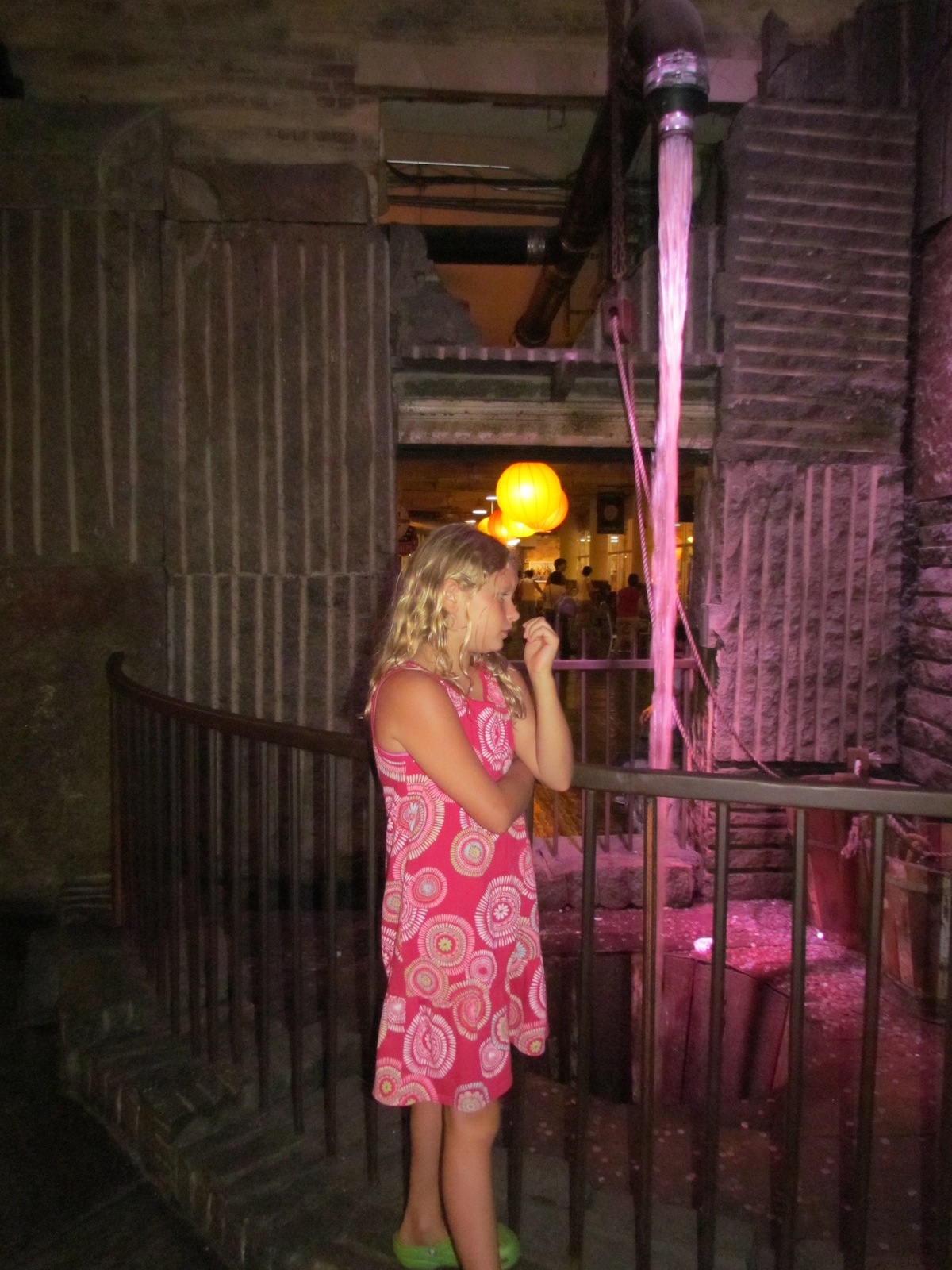
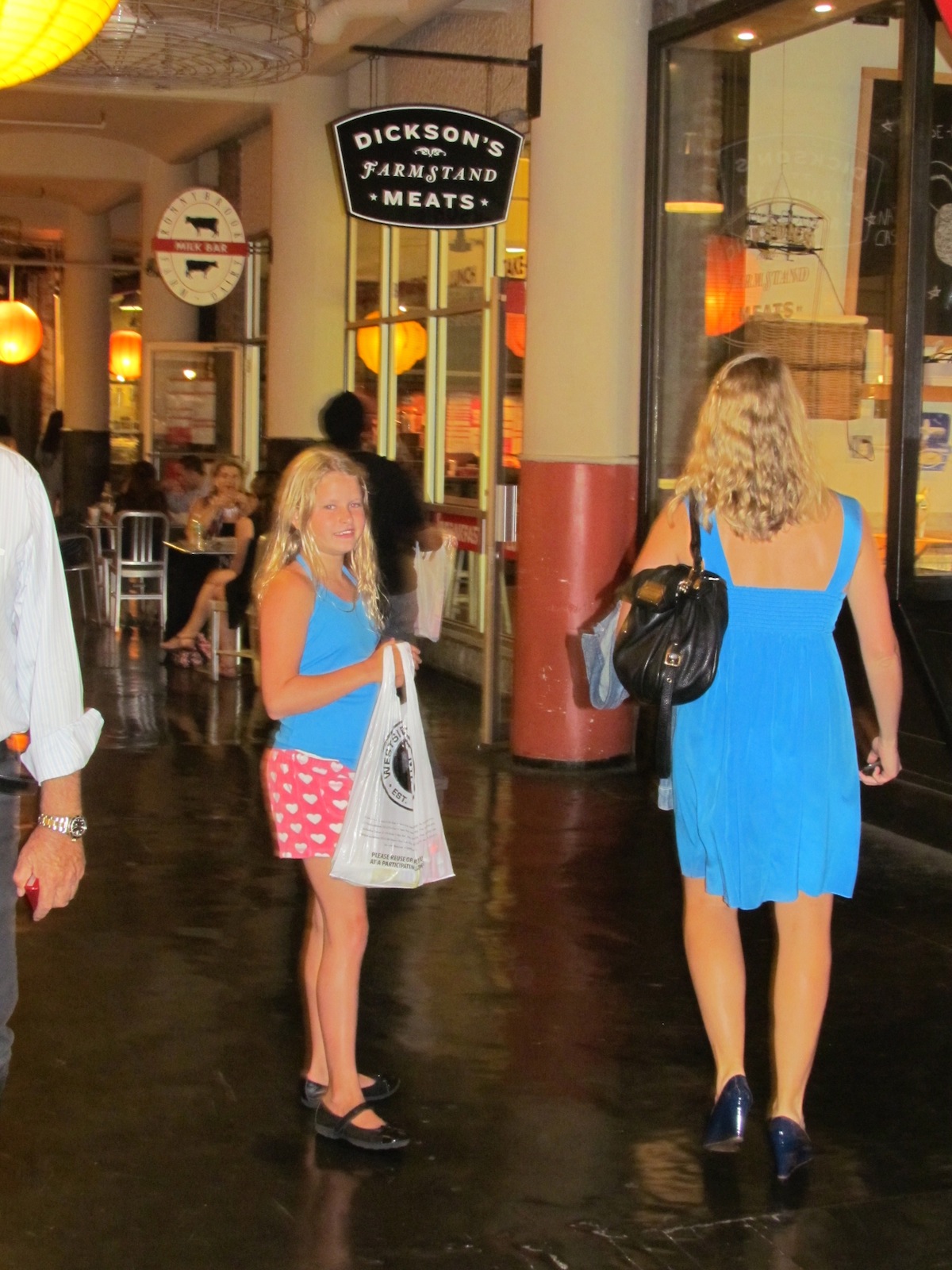
I wanted to write about how Richard came home yesterday (Yay!) and how we took Emma to the Chelsea Market and how she insisted on wearing a pair of black patent leather shoes, turquoise tank top and pink terry cloth shorts with white hearts.  I wanted to post a couple of photos of her so you could see for yourself how great she looks, but when I sat down to write I knew I had to write about something else.
I don’t want to talk about Joe Scarborough any more.  Yet his unfortunate, ridiculous, careless and ignorant remarks, make it impossible not to mention him, because he has a huge following, because people imagine he knows something about Autism.  Joe Scarborough’s remarks are indicative of a larger issue – ignorance and misinformation, which leads to opinions and a general consensus about Autism that is incorrect.  One such commenter on an article about Joe Scarborough’s remarks, said he believed Joe Scarborough knew more about autism than he did because he has a son who is Autistic.  And that is exactly why this is about more than just some asshole with a radio show.  There are countless people spewing all kinds of venom on the radio and everywhere else.  Much of it is dismissed.  But when someone, whether it’s a pseudo celebrity or a talk show host with a large following says they have a child on the spectrum ears perk up.  Forget that AUTISTICS are talking about what it’s like to be autistic ALL THE TIME and their words are almost never in accordance with what that parent with an Autistic child is saying.

So just to reiterate:

Autism is NOT a “mental health” issue.  It is neurological, neither good nor bad, just DIFFERENT.

Joe Scarborough, (I know, there’s his name again) said in a statement he made yesterday, which was neither apologetic nor a retraction from his original inflammatory comments, “I look forward to continuing my work with wonderful organizations like Autism Speaks to provide badly needed support to millions of Americans who struggle with Autism every day.”

Autism Speaks does NOT provide badly needed support to Autistics.  In fact Autism Speaks is uniformly HATED by a massive number of Autistics who speak to that fact on a daily basis.  If you google “Autistics who hate Autism Speaks” you will see more than a dozen pages of links addressing why this is so.  (Really, I just googled it.)

While I’m at it, let’s dispel a couple more myths, something Autistics are doing ALL the time on their blogs.

Autistic people are not inherently violent.

Autistic people do not LACK empathy.

Autistic people are not all loners sitting in a corner banging their heads against the wall  (That would better describe me right about now)  until they can no longer take it and go on a murderous rampage.

Autistic people are not all depressed and friendless.

I’m depressed right now.  But this isn’t about me, or how I feel, or anything else that contains the word, me or I.  This is about prejudices and prejudices are always negative, reinforced by ignorance, ingested by those who believe they are being told the truth by someone who is more knowledgable than they are about something they know nothing about.  This is how it works.  This is how it has always worked throughout history, the demonization of a group of people whose voices are drowned out by the larger roar of ignorance and stupidity.

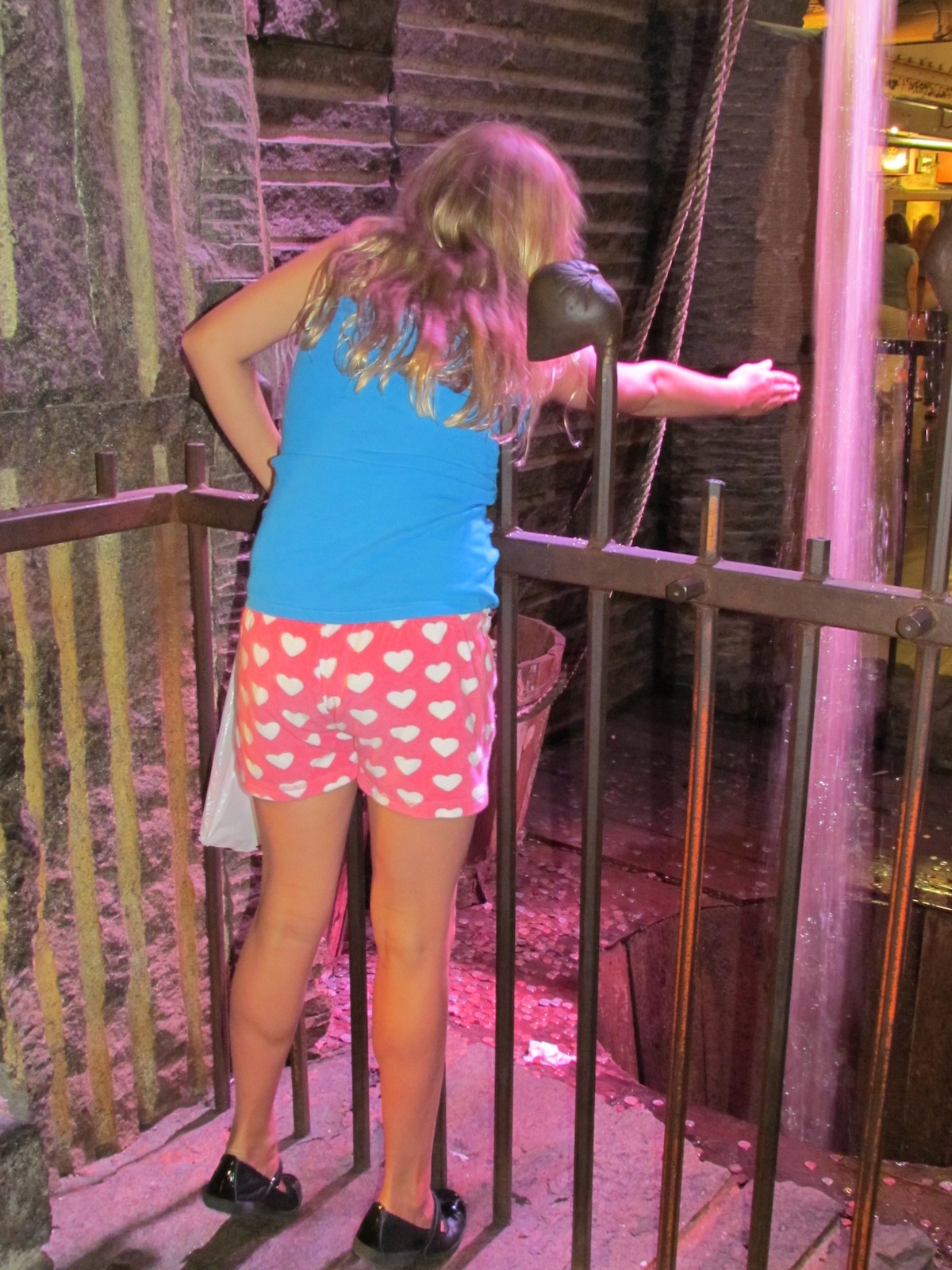
I refuse to end on this note, however.  So here.  Here are a couple of photos of Emma in the outfit she threw on to go to Chelsea Market yesterday evening.  Because Em is one more example of what Autism looks like.  Emma is inherently HAPPY.  Emma is inherently SOCIAL.  Emma is inherently KIND.  Emma is inherently EMPATHIC.  I’m trying really hard to follow her lead.

This is Autism.  This is Emma.

Loved that as I took this photo a woman wearing black patent leather pumps and turquoise dress walked toward her!

“I can’t reach!”

Related articles

Autism, Assumptions and Perpetuating Misperceptions

I was going to write something about the Aurora shootings, but I think it’s better if I give some links to things others have written.

This link is from Lydia Brown on her blog Autistic Hoya – All I Want to do is Weep.  She wrote it last Friday, July 20th before Joe Scarborough, whose son is Autistic, weighed in with his damaging, destructive words, needlessly adding fuel to the flames of ignorance and misperceptions that roar whenever the word autism is spoken.

Then, just as Lydia and others within the Autism community predicted, Joe Scarborough said,  “As soon as I hear about this shooting, I knew who it was. I knew it was a young, white male, probably from an affluent neighborhood, disconnected from society — it happens time and time again..”  He added, “Most of it has to do with mental health; you have these people that are somewhere, I believe, on the autism scale. I don’t know if that’s the case here, but it happens more often than not.”

His words, so predictable, so incredibly stupid it would have been comical had it not been so very harmful to so many.  When I read his comments I thought, people will read Lydia’s piece and assume she’s psychic, because that would be the only explanation for her ability to predict such a thing.  Right?

Kassiane Sibly wrote on her blog Radical Neurodivergence Speaking – Open Letter to the Media in the Wake of the Aurora Shootings

Paula Durbin-Westby wrote: Autism, Aurora Shooter, and Actual Crime Statistics

Rachel Cohen-Rottenberg wrote: Despicable: Joe Scarborogh’s  Words on Autims and Mass Murder

And finally here is the petition Rachel started, demanding Joe Scarborogh retract his statement.  Please sign.  This is too important.

Sign this Petition

These “theories” and it seems they are always “theories” which appear to be code for “opinion” are doing damage to people who are living their lives in a society that not only does not understand, seems unwilling to understand and even actively refuses to understand despite all the people who are trying to help them understand.

Autistics are saying – LISTEN TO US!   And we look around and say, huh, I don’t hear anything.

Autistics are saying – STOP SAYING THINGS ABOUT US WITHOUT INCLUDING US IN THE CONVERSATION!  And we look around and say to one another, Huh.  Did you hear something?  Nah.  Carry on.

Autistics are saying – NOTHING ABOUT US WITHOUT US and we say, I don’t understand.  Why are they so angry?

Autistics are saying – YOUR MISPERCEPTIONS ABOUT US ARE HURTING US and we say, oh those autistics are not like my child, that’s not what my child would say.  My child is nonverbal.  My child can’t type.  My child doesn’t have a blog.  My child can’t say the things those Autistics can say and do.  My child is different.

How do you know? 

How do you know?

Joe.  You made a mistake.  Retract.  Apologize.  Make amends.  Have an Autistic on your show.  Listen to them.  Listen to your son.  Do the right thing, educate yourself.  You have a massive following.  You could make an incredible difference to so many lives including your son’s and your own.

I will end with this thought. I choose to presume competence, not just in Emma, but in myself and in my fellow human beings.  We ARE capable of listening to one another.  We ARE capable of shifting the perceptions of autism and Autistics, one person at a time.  I believe that, because to do otherwise is to live in a world I cannot and do not want to be a part of.

Emma Takes Mom on An Awesome Adventure

Yesterday Em asked to go to Victoria Gardens, the amusement park, that each summer transforms the ice skating rink  in Central Park into a kid’s idea of heaven.  “Sure, that’s a good idea,” I told her.
“Take the F train,” Emma announced and began to walk purposefully toward Sixth Avenue.  “But the F doesn’t take us to Columbus Circle.  Why don’t we take the 1?”  “Take the F train,” Emma said matter-of-factly and continued walking toward Sixth.   Once on the train Emma found a single vacant seat in the crowded car and said, “Oh no!  There’s no seat for Mommy!  Mommy has to stand.”  The man sitting next to her immediately got up with a guilty expression and offered me his seat.  “Oh no, that’s alright.  It’s no problem,” I tried to assure him.  But he refused to sit back down, further humiliated, no doubt, by Emma’s interjection of “Oh Mommy cannot sit down next to Emma!”  (Clever girl, I thought to myself, and I’ll admit, with a tiny bit of pride.)  Even though that poor man who gave up his seat had no way of knowing that Emma actually prefers I stand and not sit next to her.  It’s become something of a game, with Em saying in a pretend sad voice, “Oh no!” but then when I sit next to her she pushes me or tries to get me to sit across from her.   (Making me all the more determined to get Emma some theatre training.)

When the train pulled up to Rockefeller Center Emma stood up and said, “Have to take the D train.”  I know enough not to argue with Emma because there are a number of things Emma knows better than anyone and one of them is how to navigate the labyrinthine maze that is the New York City subway system.  Except that when we arrived at Columbus Circle Emma stayed put.  “Hey don’t you want to go to Victoria Gardens?” I asked.  Emma grinned at me and said, “Go fast!”  Then she shook her head and said, “Train goes fast, fast, fast?”

“You want to stay on the train?”

“Yes!”  Emma said.  So we did.  As we sped past each stop Emma shouted out, like the seasoned guide that she is, a specific playground or significant landmark.  “Oh, there’s the American Museum of Natural History!  Oh there’s the tar playground! Oh there’s the …”  We raced along until 125th Street where Emma then led me off the train and walked over to the tracks heading back downtown.  “Where to now Em?”  I asked, having decided after we left the house that Em was going to direct the day, I was very much the passenger along for the ride.  And what a ride it turned out to be.

We eventually made it to Victoria Gardens, but not before we stopped at another large playground and ran through various sprinklers, went through a tunnel, listened to a musician playing his Saxophone, past the artist who’d set up shop  face painting small children to look like fairies, goblins and ghouls.

After several hours at Victoria Gardens we took more trains downtown, transferring so many times I can no longer keep our route in my head, but ending at Seal Park where I ran into one of my close girlfriends and her son.  Another hour and then Em said, “Now go to Chelsea Market!”   Off we went, with Emma lacing her arm through mine and occasionally she’d press her soft cheek against my upper arm.  Emma talked about the new school she will be attending in the fall, she listed all her friends, teachers and therapists, “Justus is gone, Sol is gone, Charlie is gone, Lauren is gone, Miriam is gone.  Emma goes to new school!”  (I’ll write a separate post about that another day.)

Upon our arrival to Chelsea Market Emma raced to the water feature and began to point at various things that she wanted to know the name of.  We discussed how there were wooden planks on the floor and what was under those planks – maybe a hole, darkness, who knows?  She tested the plank by sliding her foot through the guard railing and pressing down on it.  She pointed to the water gushing from a large pipe overhead.  We discussed where the water might come from, “Ocean” was Emma’s guess, and it did have a briny smell, either that or the Lobster Place and Seafood Market just opposite was giving off the distinct scent of salt water and fish.  Emma pointed to the large pipe and we walked around to the other side, following the pipe.  A huge wheel hung from the pipe and Emma said, “I can’t reach!  Have to get a ladder to turn the water off.”

This conversation with Emma was revelatory for many reasons, but most importantly it was the first time I have had such a lengthy conversation with her about something that did not have to do with a want, desire or need.  She was curious and though she spoke cryptically throughout our conversation leaving me confused as to what she was saying or asking, it was fantastic.  “Plank fall in,” she said at one point pointing to the water.”  And then again pointing up at the pipe, which I didn’t understand, making me wish I could put the pieces together.  I have been unable to find out any more about the water feature at Chelsea Market, having spent some time on google when we returned home.  I tried to find out the source of the water, does it ever get turned off, is it recycled, etc. so that I could tell Em more about it.   She was curious, engaged even mesmerized.

Eventually we headed back home, but not before we stopped at one last playground to run through the sprinklers!

When we arrived home, Em said, “We have to call Daddy!”  It was just one more first in a whole day filled with them!

Related articles

Continuing The Conversation…

Be honest.

I’ve written about this before.  Writing, writing that really reaches out and pulls others in is about honesty.  Even if you write fiction, it’s still about honesty, the feelings portrayed, the dialogue;  it has to be honest for those of us reading or we can sense it.  We know something’s a little off.  Sometimes it’s hard to pin down, it doesn’t seem obvious right away, but I’ve found it’s because I don’t believe what I’m reading.  It’s not entirely honest.  I have had this experience with my writing.  I have written things and then wondered why it didn’t feel quite right and it’s because I either hadn’t dug deep enough or I wasn’t being honest, which in many ways is the same thing.  Self dishonesty is one of the most difficult things to spot.  I spent years and years in a place of deception, of hiding from myself, my feelings, my desires, my ambitions.  I shut down.  I hid and it caused great pain, not just to me, but to those who loved me.  It’s hard work to be honest.

A couple of days ago I wrote about labels and my struggle to understand how and why they do not apply to our Autistic children.  Why they cause damage, why they are destructive and not constructive.  As is often the case, I use this blog to figure things out.  I think of it as my sketch pad where I play with ideas and then either move on to the next sketch or work and refine.  The pieces I work on a bit more, I often submit to HuffPo, I think of it as filling in with color and others I keep working on with the hope of putting them into a book, a finished canvas (this last part is very hard for me, sketching is easy.)  But as I’ve also said, I’m a SLOW learner so sometimes ideas will fall easily onto the page, or in this case the screen, but not move beyond it.  And that’s where the work comes in.  Because ideas are great, but if I can’t take them to the next level they won’t go anywhere.  Some things seem to take me awhile to really get, to fully  incorporate in a way that they become less an idea and more a knowing.

So it was this morning as Em and I made her breakfast.  I was thinking about labels and why they matter or don’t matter and why they bother me and cause me to ruminate and at a certain point I tired of the ongoing controversy raging  in my head, so I forced myself to shift my thinking away and be present for my daughter.  I was able to and eventually off she went with Joe onto the camp bus and I turned to my email and there was Outrunning’s latest post.  Now for those of you unfamiliar with Outrunning The Storm, click on the name, I’ve provided the link.  Did you read it?  The post – How Do We Talk About This?  I’ll wait.

I’m waiting…

Okay.  So there it is.  For those of you who didn’t click on the link, skip to the next paragraph, but for those who did, and if you’re like me, you also clicked on the comments and saw the first three from Moms who got what Outrunning was saying, who’ve been on the receiving end of exactly what she’s referring to and get it.  They get it, or so it seemed to me when I read their comments.  And then there’s my comment.  Yeah.  Okay.  So I still have some work to do.  I’m pleased to say that I did go off after leaving my comment and sobbed.

I’ve been very weepy lately.  Partly I blame my husband’s absence, he and Nic remain in Colorado while Em and I are here in New York, so I’m a little off-balance.  There’s a lot going on this summer and at times it all feels overwhelming, in a good way, but never-the-less overwhelming.  But I think most of my emotional overload is due to the fact that Peyton and Dianne Goddard’s book – I am intelligent – has stayed with me, in addition I received an email from Emma (not my daughter, another Emma, who two years ago began to communicate through typing and has a blog) that both delighted me and filled me with emotion.  I asked her permission to quote her and she has given it, but I want to be sure I also respect her and so will quote just two sentences.

“me name is emma and i am like peyton.”

And this:

“i am pleased if our emails teach people how to measure words or personal stories in front of people they think cant communicate..

Emma”

Take a deep breath.  Okay.  Be honest.

I spent years doing this to my daughter, exactly what Emma is pleading that we not do.  It has only been within the last year that I have stopped doing this.  I have to make a concerted effort to refrain from the temptation.  So I read Emma’s words again.  I have memorized them.  “I am pleased if our emails teach people how to measure words or personal stories in front of people they think can’t communicate.”  Read that again.  There is no condemnation, no criticism, just a heartfelt request.

We are in this, all of us, together.  Your version may be different from mine, you may have children, you may not, you may have someone you love who is Autistic or you may not.  You may be Autistic, you may not.  But we are all, each one of us in this together.  There are Autistics calling out, trying to be heard, blogging, talking, communicating, asking for respect, asking for a chance to join the conversation.  There is no conversation if a whole group is silent.  Whatever group that may be.  We are ALL served by listening, by sharing our experiences, by trying to understand.  As human beings it is our obligation to be honest, to try to dig deeper, to listen.

Alone we can do so little, together we can do so much.”  Helen Keller

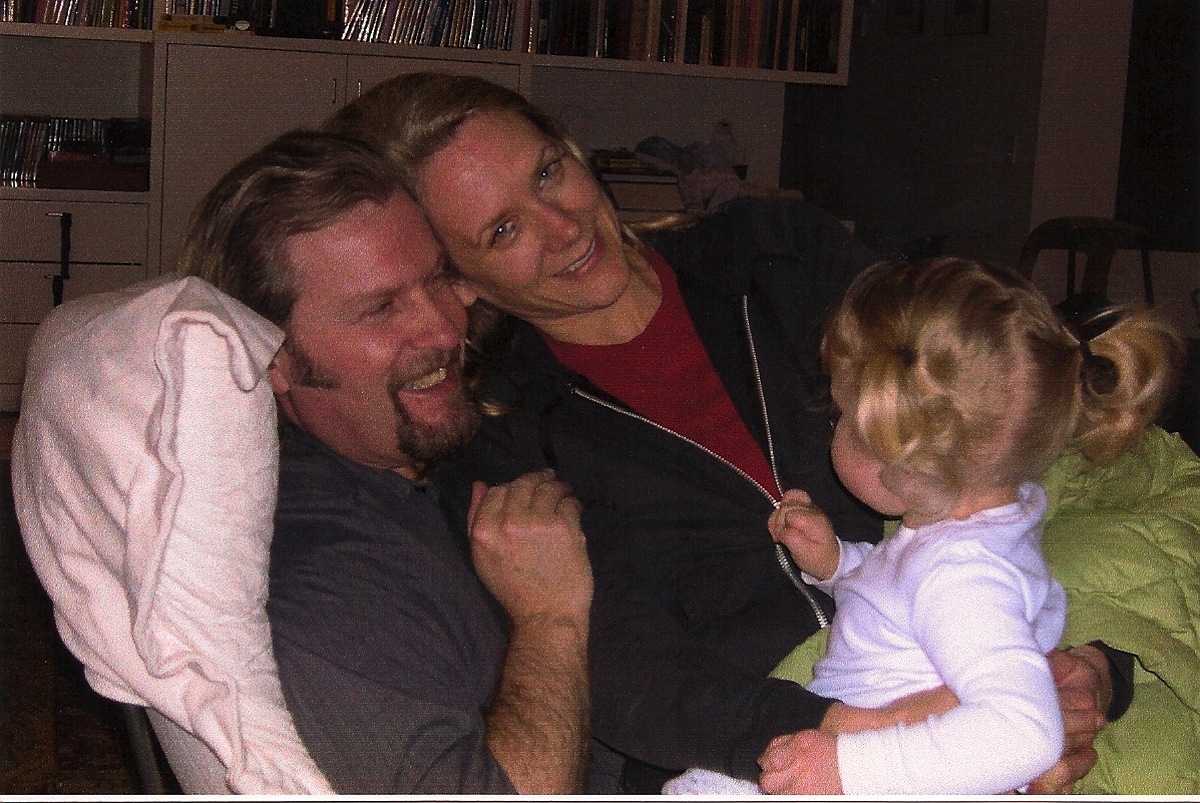
Richard, Me & Em – 2003

Nic and Emma – 2011

Related articles

A Mess, A Mom & Marriage In That Order

Mess of Me

I was a pretty messed up teenager.  I quickly developed into a very messed up twenty something, who progressed into an even more messed up thirty something.  Taking a breath.  Whoooo.  I’ll spare you the gory details, suffice it to say, I was a mess.  Another breath.  I don’t think I’ll get a great deal of argument from those who knew me then.   In fact, it took me until I was 36 to realize I was far too old to be so confused and such an utter mess.   I found people who had also once been where I now found myself, some worse, some not as bad, but they reached out and pulled me up.  Because of them I learned how to reach out to others.  I learned how to ask for support.  I learned to take suggestions.  I learned how to make amends, not apologies, amends.  I learned that in order to feel better I had to behave better.  I learned that the most important thing I would ever do in my life was to become the type of person I admired and those people all had one thing in common.  They were kind.

Becoming that person meant learning to do small thoughtful acts.  Remember I was a mess.  Doing the obvious, was not my strong suit.  I couldn’t suddenly transform myself into someone else, I had to learn to look for things that I could do to help others.  In the beginning it was things like holding the door for someone, giving up my subway seat to someone else, holding the elevator doors open for someone just entering the building instead of madly jamming my index finger at the “close door” button.   I had to learn how to refrain from letting out an exasperated and audible sigh when someone annoyed me, (still working on that one) I had to learn that sometimes saying nothing was better than saying something. This may sound like common courtesy, but I live in New York City, where holding the elevator doors for someone or relinquishing your subway seat brands you as crazy, (exaggeration) in addition I was a mess, remember, which automatically trumps being polite, thoughtful or kind.  By behaving in a way that engendered smiles and utterances of gratitude I gradually began to feel better about myself.  By helping others, mentoring other people younger than me who were also having a tough time, but who now saw a person they wanted to emulate, I began to feel I was worthy and living a life of value. I learned how to be a part of a larger group and that while I often craved solitude, I found I needed community.

About two years after I was hit with the realization that I was far too old to be such a mess, I met Richard.   We decided we wanted children, had Nic, got married, had Emma and suddenly there we were, five years later, after I had that moment of dawning awareness that there must be more to life than what I’d been living.  So yeah, I’m not a great role model in how to graciously and elegantly enter adulthood, easily taking small manageable steps until one day there you are with an infant, a toddler, and a husband.  But I had a little road map, a kind of guide-book with rules and suggestions, not literally, but figuratively and I was continuing to work on how best to behave in any given situation.  I had phone numbers and emails of people who helped me and of the people I helped too, so I felt fairly certain I could handle whatever might come my way.  But parenting is unlike anything else.

Despite what some people might think, okay strike that, no one is thinking this, but it works as the beginning to the next sentence,  I was not given a super hero’s cape along with matching Lycra body suit with the word MOM in dayglo colors emblazoned across the chest when my son was born.   I did not, after 38 hours of natural child-birth suddenly find I could dash into arbitrary enclosed structures, don my supermom costume and reappear in all my lycraed, daygloed glory with  powers of insight, lightening quick reflexes and the infallible ability to intuit what my son needed and wanted at any given moment of the day or night.  Ditto when my daughter, Emma was born.  No handbook came with either child, carefully guiding me through their very specific needs and issues.  Nic cried and held his small hands over his ears when a siren went by or the subway came to a screeching halt in front of us, Emma screamed from internal discomforts none of us could see for the first few months of her life.  Who knew?  We certainly didn’t.

We humans, we come with baggage.  Some have more than others.  Me, I came with a couple of steamer trunks, but I also had that well-worn guide-book from when I was such a mess and couldn’t figure out whether it was better to keep sleeping or wake up and do something.  It was and is my lifeline.  It’s expanded to include lists of blogs, twitter contacts and Facebook friends all of whom I can reach out to.   You see, I now have hundreds of people I can interact with and these people are my community, my tribe.  Sometimes we behave badly, sometimes we don’t agree.  But I know hiding is no longer an option.  Checking out doesn’t work.  The only way out is by staying in.  I know I’m not alone.  I’ve learned that it’s perfectly reasonable to not know or understand something and this is something I have learned from my Autistic friends, the beauty in asking for clarification.  It’s okay to not understand as long as you are willing and want to understand.

There is a great deal of talk about Autistic children.  There is a tremendous amount of fear that if we miss that critical period of our child’s first five years, all is lost.  But we humans have a tendency to grow and progress throughout our lives.  Some perhaps more than others.  I cannot speak for others, but I can speak for myself.  I am not the person I was in my teens, my twenties or even my thirties.  I figure as long as I keep my mind curious, my ideas open to alternate views and continually engage in conversation I will not stop progressing.  There is always hope.

I Think I Finally Understand – But I May Still Need Your Help

I am reading I am intelligent by Peyton Goddard and Dianne Goddard with Carol Cujec.  I am not finished yet.  It is a powerful, beautifully written tale of triumph about Peyton who was denigrated, undermined, diagnosed as “mentally retarded” believed to be incompetent then learned to communicate through a facilitator as a young adult and proved everyone wrong.  Peyton’s story is shocking, heartbreaking and revelatory.  Her mother writes with a poetic beauty about her own evolution as she worked to help her daughter, refusing the labels being applied and yet allowing that they seep into our thinking unbidden despite our rejections of them.  I have been  unable to think of little else.

As I read Peyton’s and her mother’s words I finally understood why so many object to the labels of “high,” “low,” “moderate” when describing an Autistic person.  This is a concept I thought I understood, I certainly understood it intellectually, but I didn’t feel I completely understood until I was about half way through this terrific book.  I have felt uneasy when people have rejected the delineations for autism.  A  little voice in my head whispered those clichéd words, yes but if their child weren’t so high functioning they wouldn’t be so quick to dismiss these terms.  I admit to having felt uncomfortable and even upset when I read accounts of other parent’s struggles with their brilliant, verbose, hyperlexic children.  What I would give to have a child who could speak and think circles around me, I thought with envy.

Mostly I’ve remained silent, understanding that my thinking was limiting but unable to work out exactly why.  I felt the pull of other parents whose children are non-verbal, some violent in their frustration to be understood and unable to communicate. When those parents used the word “severe” it was a short-hand I thought I understood.  Yet, I read a blog of a parent who described her two children as being “severe” and then felt confusion when I read her posts because the children described were academically and verbally much more advanced than my own “moderately” Autistic child.  But I said nothing and tried to move on, understanding that I didn’t understand.

Finally I sent such a post to a close autistic friend whom I trust and knew would not judge me harshly.  I ranted and admitted how I felt.  She was patient with me.  She gave me the space to be confused, though it must have been difficult to stay calm in the face of my non-understanding.  Particularly as she is one who could be labeled “high” functioning and yet her teeth cause her pain when she is lied to, she suffers migraines and becomes overwhelmed, yet feels she has to pretend that she’s fine.  She carries the weight of not wanting to burden those who love her, because she “should” be able to deal with the things that she cannot.

As I read about how Peyton started to communicate by typing and how people began to see how intelligent she was, a little light went off in my brain and I got it.  Because (and this is probably obvious to many of you already, but I’m a slow learner you see) Peyton was labeled all sorts of things by people throughout her childhood, but those rating systems did nothing but hurt her.  Not one of them actually helped her, they didn’t support her, they were used to further segregate her and they were used by some to abuse her horribly.  As I was reading, I thought, right because Emma is considered “moderately” autistic, but she’s not moderately intelligent.  Her intelligence is extremely high, so what does moderate really mean.  Is that how she “seems” to neurotypicals?  But how is that helping her?  It doesn’t help her.  In fact, by thinking of Emma as moderate or severe or mild she is being limited.  If someone who is thought of as “high” functioning then can’t cope in a crowded place with fluorescent lighting and begins shouting and flailing about, the common thought is, well he could control himself, but is choosing not to.  Just as a “severely” Autistic person is an inspiration and miracle when they are able to express themselves and communicate their thoughts to those who had slapped a low IQ on their charts.  These ratings become the method by which a human being is seen as non-human or less human.

In my enthusiasm I wrote to my friend, Ib last night.

Me:  I think I finally understand what you and others have meant about characterizing autism in terms of mild, severe etc I suddenly had a brain flash and I think I understand why.

Ib:  Oh thank heavens 😀

Ib reminded me that the scaling system is ineffective as a descriptive device as children grow, progress and become adults where they continue to grow, evolve and progress.  I thought of Peyton finally finding a way to communicate in her early twenties.

Ib said, “You wouldn’t grade me now as you would grade teenager me the level doesn’t stay we grow, like anyone else.  I remember things that is why I can suggest to you what Emma may mean with levels-thinking, you may never have seen me as a resource because “Ib is not like my Em” but you see that I am.”

Ib is right.  She is my friend, first and foremost, but she is also someone I rely on to help me understand.  Because there is so much that I don’t.  But with help I can.

I would love to hear from anyone who cares to chime in here.   If I’ve been disrespectful, please let me know.  I think I’m getting it, finally, but I want to hear from all of you.  I need to understand this.  For my daughter’s sake, I have to understand and she can’t explain it to me…  yet.

Sometimes it Takes Someone Else to Believe

This past weekend Em and I went to stay with my friend Bobbie on Fire Island.  I wrote about all my worries and concerns at length in a post last week that I’ve linked Bobbie’s name to in the above sentence.  It was a really long list of What ifs.  I knew if things got to be too much, Em and I could always head back to the city by ferry and then train.  I had a plan B.  I was prepared.  Fourteen years living with Richard, the ultimate boy scout, seemed to finally have worn off on me.  I packed lightly.  I had my computer, my iPad, a book, Douglas Biklen’s Autism and the Myth of the Person Alone;  I printed out stacks of scientific papers by the neuroscientists, Kamila and Henry Markram as I will be interviewing them in Jerusalem in another ten days and because this is what constitutes “light” reading for me.  I brought a variety of highlighters and pens and pencils and my camera.

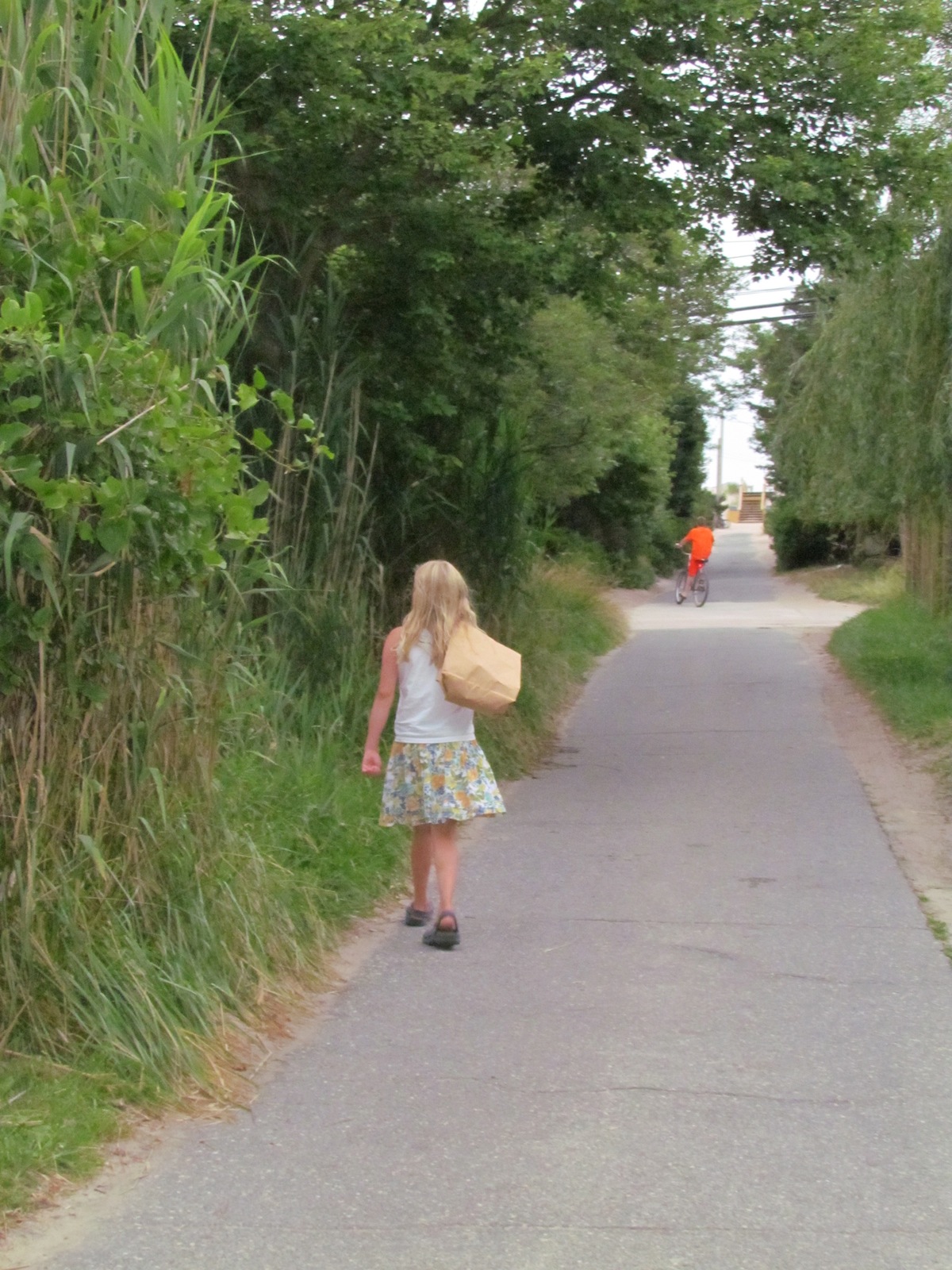
Emma insisted we bring ten of her books, which I tried really hard to talk her out of, but that she finally convinced me she couldn’t be without.  We had more books and technological devices with us than clothing.  Never mind, I thought to myself, it’s hot, we’ll be living in our bathing suits.  And then Bobbie was outside and we ran downstairs, piled into her car and headed off on our little adventure.   By the time we arrived in Fire Island it was afternoon.  There are no roads so all the homes come with bicycles.  You drag your things from the ferry in a little cart, which you then unload and leave the cart and bikes outside your house.  Inside children ranging in age from 4 to 14 raced around and adults ranging in age from their late 30’s to late 60’s chatted.  Emma was in her element.  She loves nothing more than a house bustling with people and lots of noise.

The ocean beckoned, but Emma caught sight of a swimming pool on someone’s deck, “Go swimming in the pool?” she asked pointing to the neighboring house.  I explained that this wouldn’t be possible, though I could tell Emma remained unconvinced and when Bobbie told us there was an Inn just a few houses away with a big swimming pool, it was decided.  Off we went with Bobbie’s daughter Mina, who is exactly the same age as Em.  We  jumped and splashed and played “chicken” where the girls sat on our shoulders while they tried to push each other off.  There was lots of laughter and squealing with excitement and delight and I had a moment when I realized I was laughing and Emma was laughing and Mina was laughing and Bobbie was laughing.  I stared up at the sky in that moment, atheist that I am, and said a silent thank you.  It was heartfelt and honest.  I was relieved.  So incredibly relieved.

Here I was with my daughter, visiting my closest girlfriend with her family and another family, whom I didn’t know, but who were wonderful and we were welcomed.   The children were kind and inclusive, no one looked at me or Emma in that odd way, as though they wanted to say something, but weren’t sure they should.  No one spoke about Emma to me in front of her as though she were deaf.  No one treated her as though she couldn’t understand.  Everyone, children and adults alike, were kind and when Emma insisted on playing her special version of Duck , Duck,  Goose for the 25th time everyone played and came up with inventive word groups and laughed and chased each other around and around.

Em carrying our left over Buffalo Chicken Wings home


“Sleep wake up, go swimming in the pool, go to the beach, say hi to Bobbie and Mina and Frankie and Molly and Luca, play.  Sleep wake up go swimming, play in the ocean, sleep wake up…” Emma said that first night as I snuggled next to her.

“Wait Em, we’re here two nights and then you have camp on Monday remember?”

Em nodded her head, but the following night she said the same thing.

On Sunday morning she said, “Stay on Fire Island with Bobbie?”

“No Em.  We have to go home this afternoon,” I told her.

“I want to stay with Bobbie?”  Emma said sadly.

“I know, Em, but Bobbie has to go back too.  We’ve had a great time.  But we have to go back to the city.”

Emma nodded her head and said, “That makes me sad.  Come back later?  Come back next week?”

“Maybe next year.”

Emma nodded.  “Okay.  Come back next year!”

I thought about how fearful I’d been, how I had carefully planned for problems that never transpired.  I felt such gratitude toward Bobbie for having believed this was a good idea and for urging me to go, for providing me and Emma with a safe place to test the waters.  It reminded me of something an elderly woman said to me when I was in my thirties and struggling – sometimes you have to let others believe in you, so you can learn to believe in yourself.

Em at dusk on the beach

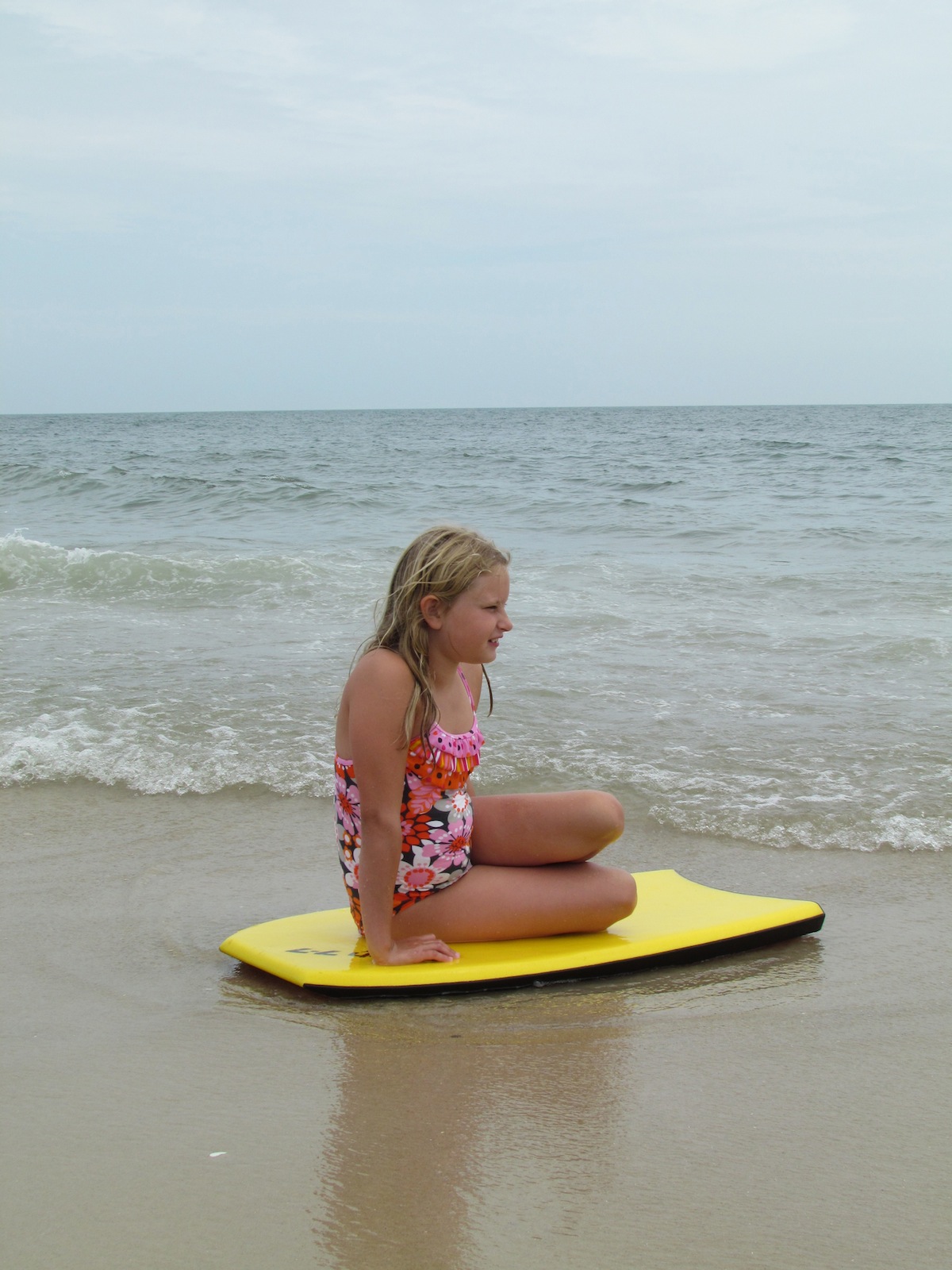
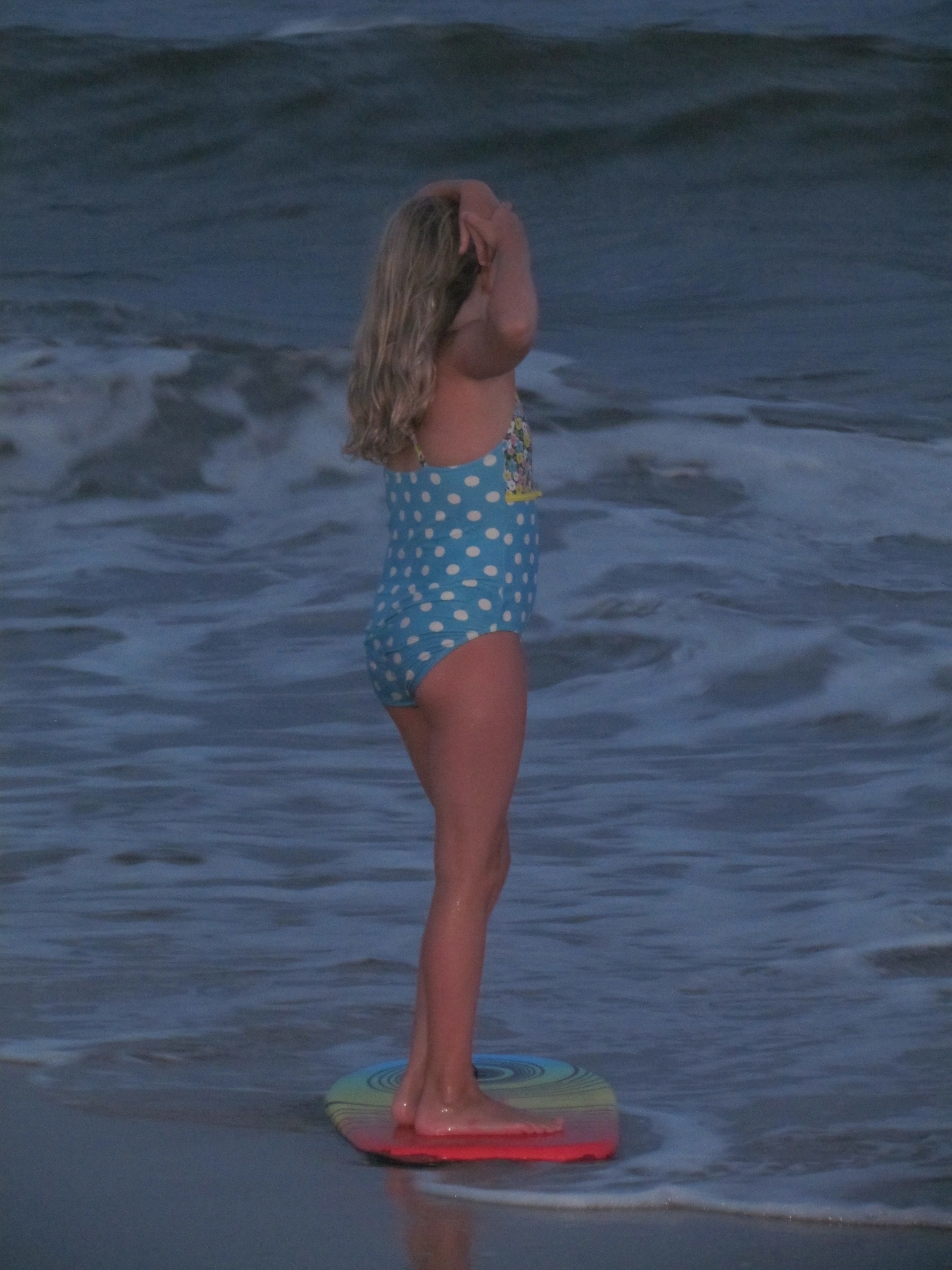
Saturday night on the bogie board

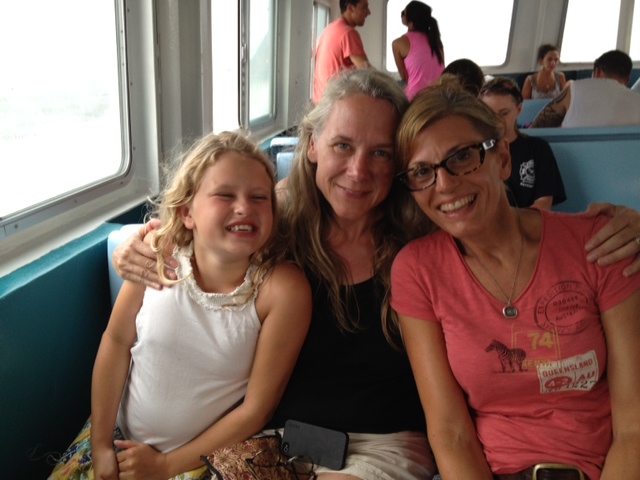
Em, Me and Bobbie heading back to NYC on the ferry

Laura Nagle – Paving the Way

The following was a “comment” sent to me by Laura Nagle, who is the star of the wonderful, powerful and not to be missed documentary:  Vectors of Autism: Laura Nagle.  I couldn’t just include it in the comments section, you will see why.  So I asked and received Laura’s permission to publish it here as a post on its own.

Laura Nagle writes:
“I self diagnosed with Asperger’s Syndrome several years ago. I told my sister, who told our father who confirmed my suspicions with recollection of my official autism diagnosis long ago, before the flood. I soon learned of a local chapter of the Autism Society of America, meeting in Flagstaff. I went there. Walking into that first meeting was a large and difficult step. I am so glad that I summoned the courage.

You see, I have always been autistic. I have always been a misfit in the world. I have had all the typical autism issues, but without having any answers as to why. I have paid my bills, but otherwise have wandered aimless upon the earth. I have lived in crushing financial poverty, as do far too many of us. I have found a form of poverty so much worse than that of mere money; and have lived this soul poverty most of my life.

You see, I have had nothing to give. I have been so deep in money trouble that I have not been able to give to charity. By the end of a day’s work in the real and generally entee world I am exhausted, and melted,  and depressed, and not capable of any optional accomplishments. And I have lacked any special worth or skill or talents. What can a poor, fatigued, worthless loner give to anyone. Nothing. Nothing at all. That is the desolation that I have endured. . .

. . . Until my walking into the meeting of the Northern Arizona chapter, ASA. I must note, and strongly, that my life did not change at that moment. That would be to assume that I had a life prior to the ASA chapter and the people I met there. I did not have a life, I had a rude existence. My life began at that moment.

I found the ASA and was found by them as well. It turns out that all that I learned during those harsh years is of value to others. It happens that I have an essential talent of putting an esoteric condition and its personal reality into words understandable by persons who will never experience it. This talent is a gift, I cannot take credit for it, but I will use it as well and as often as I can.

I am motivated. As I scan the decades of my life I see so many ”autistic moments” in which I adjusted my life’s trajectory downward. I see so many moments in which things might have turned out better for me if only I. . . If only someone near me had known the whats and hows of autism. They did not. I want new ones of my Spectrumite Tribe to excel! I want them to do far better than have I! I want them to exceed me in every way.

And I have the chance to do this! These wonderful people around me, people of ASA, people of TASH, these people have given me purpose and friendship and thus life itself – on a silver platter! I have gone so long in a drought! I have people and purpose! The drought is broken, and I am blessed beyond my wildest dreams, and I so deeply appreciate it all!

Without the ever growing people I cannot fulfill my purpose. I need people to dream with me and also for support and guidance. I need those people who listen to my message and apply these concepts in real life and so insure that new auties shall exceed me and my success! People and purpose. I would never have dreamed of this. I have thanks that would take several lives to give.

And I would like to offer those thanks here! Thanks big and wide to the ”Vectors of Autism” team, to my ASA and TASH friends and to all who watch our film and are moved by it. Special thanks go to John, our director, who insisted on making this film more than a documentary. Thanks to our cameraman, Matt who lent his vision – literally! And most of all, thanks to Susan, producer of this film, and of my life!

Dang I am lucky!”

*I believe, but I haven’t verified this with Laura, that when she writes “entee” she is referring to NT (neurotypical).

I was going to title this post “Laura Nagle – Paving the Way For Emma” because Laura is, but it isn’t just Emma who profits from her words and this documentary.  The more Autistics are given a platform from which they can speak out, discuss their experience of the world, the better this world will be for all of us, not just our children, but for every single child and every human being on this earth.

Thank you Laura for writing this.  Thank you for being who you are.  And thank you Leah Kelley of Thirty Days of Autism for introducing me to Laura.

The Beauty in a Conversation

Emma and I are heading out to Fire Island this afternoon with my friend, Bobbie.  This has been cause for great excitement as Emma has counted the days until we leave.  Last night, Emma and I had the following conversation.

Emma:  Go to take Bobbie at the beach!

Me:  Yeah.  Are you excited?

Em:  Yeah!  So excited to see Bobbie and Mina and Luca.  Going to go in the ocean.

Me:  Yup, we can go swimming and…

Em:  (interrupting) Going to go play in the sand.

Me:  Yes.  We’re going to spend the night.  We’re going to spend two nights there.

Em:  (Holding up her fingers) Three minus one equals two!  Having a sleepover with Bobbie at the beach.  Going to bring Cokie!  (Cokie is a scrap of what was once a blanket, measuring about five by three inches and is constantly getting lost leading Emma to panic.  We live in dread of this last large scrap one day mysteriously disappearing into the great dark unknown along with the rest of her blanket.)

Me:  But Cokie has to stay in your bedroom.

Em:  Cokie get lost!  Ahhhhh!  Who took it?  Somebody threw it away.  They threw it.  You cannot throw Cokie.  (All of this was said very quickly in an animated voice, it’s a kind of scripting, but it’s within a context in that Emma is expressing her fears and anxiety that her blanket might get mislaid.)  No, not going to bring Cokie into the water.  You can’t bring Cokie onto the beach, that’s silly.  Cokie might get lost!  Cokie will get dirty.  Ick!  Cokie has to take a bath!

Me:  You’re funny.

Em:  (Laughing)   No.  Not going to put Cokie in the washing machine!  It’s too little.  No, not going to put Max in the washing machine, he’s too big.  Max can’t breath.  You have to pull him out.  That’s too small!

Me:  Do you think we should wash Cokie before we take it to the beach?

Em:  Nah.  Have to gotta go.  Max came to the book party.  You hit Max.  You pull Max’s hair.  No.  You cannot pull Max’s hair.  You have to stop.  You can’t do that.  Max is hurt!  (This is another script, but it’s one she made up and it’s really a spoken memory of Richard’s book party celebrating the publication of his novel a month ago.  Max is a great friend and someone Emma adores.  When Emma really likes someone she wants to pull their hair and hit them.  She is still trying to sort out how to resolve some of these impulses while also connecting and making physical contact with another human being without hurting them.  We are working on this.)

Me:  Yeah.  That’s really hard, isn’t it Em?

Em:  Makes me so frustrated! Grrrrr!

Me:  (Laughing)  Do you feel frustrated now?

Em:  Nah!  Emma’s happy!  Going to go with Bobbie to the beach.  Going to have so much fun!

Just before I had this conversation with Emma, I was talking with my friend Ib.  She said, “It is easy to picture Emma talking more.  She can still be her if she does.  She will talk oddly about odd things that she blisses out about while twirling string, and walk away mid sentence.”

And I wrote back, “Yeah, and I’ll (removed explicative) love that!  Seriously love that!  Because I want to walk away in mid sentence half the time…”  Ib then wrote back “And frankly, in your family, it won’t be that odd.  Hehe.”

Which made me laugh out loud and filled me with so much hope and happiness with the thought that Em and I could converse the way Ib and I do.  And then Emma came home and I told Ib I’d talk to her tomorrow and Emma and I proceeded to have the conversation I’ve transcribed above.

Yup, there are little miracles happening all the time!

Have a wonderful weekend everyone!  The journey continues…

Vectors Of Autism: Laura Nagle

Vectors of Autism: Laura Nagle   For those of you who have not yet viewed this powerful documentary, you must.  I cannot urge you enough.  Just do it.  Watch it.  Keep a box of tissue nearby, because if you’re like me, you’ll need it.  I wept throughout the entire film, from joy, from sadness, from relief that such a film has finally been made, from pain that we have so far to go in educating ourselves, the public, the media about autism and what it means to be autistic.  At one point Laura laughs and says, “I figure I was built out of reworked parts.”  It is a poignant example of both her sense of humor, but also how society’s view of her has weighed heavily.

Anything I say about this documentary is inadequate.  So I’m going to give you a couple of fun facts while you click on that link above and purchase the DVD.  I know, it’s $35.00 but think of it as an investment in your child’s future and to the future of this film.  The more people who buy it, the more likely it will make it to film festivals, and to the larger public where this message needs to be seen more than ever.

Laura Nagle wrote the lyrics to the theme song and plays the harmonica on it, she’s also an architect, an artist and Autistic.  It’s hauntingly beautiful, which is kind of perfect because so is she and so is the documentary about her.  The couple in the documentary with two little girls on the spectrum, Jennifer Turrell and Stewart Anderson wrote the music.

*Addendum – I was so tired when I wrote this post late last night, I just didn’t have the energy to write more.  But I need to add, this documentary is everything I and others like me have been saying.  It is imperative Autistics speak out about their experiences and it is vital that we, in the neuromajority, listen.  For those of you who are still uncertain as to why I say this, it is because I know I am not the only parent of an autistic child who went through a hellish period (far too many years) in which I struggled with my daughter’s diagnosis and what that meant to her and to us as her family.  I tried my best to understand, I did what I could with the knowledge I had available to me, but even so, I fell short.  I cannot help but wonder, had I heard Laura Nagle and others speak of their experience, would I have done things differently?  Would my stress and fears have been abated even if only by a little?  Would I have sought the opinions of all those specialists with such tenacity and fervor?  Would I have been able to set aside some of my fears in favor of a more rational and calmer mindset?  And most importantly, would any of this have effected Emma?  I think it would have.  I hope others can learn from some of my mistakes.  I hope that by writing about my journey, others who are closer to the beginning of theirs can avoid some of the traps I so easily and readily fell into.

What I know now is that having operated with a stress level hovering in the red for so many years, I am relieved to see this documentary.  I am grateful to have friends who are autistic and whose lives, opinions and experiences help pave the way for my daughter.  The question is – how do we go about making these kinds of connections available to other families?  Families who do not have blogs, who do not know where to go to find Autistic adults who are interested in speaking to them and sharing their experiences with them.

One of the reasons 12-step programs work as well as they do, is because they provide a model for living through mentorship.  The role of the addict who has cobbled together some time as a sober and abstinent being, who then goes on to offer support to other addicts with less experience and who may be still struggling with their addictions is a powerful model for any community.  A huge component of 12-step programs is the idea of being of service.  Without being of service to a fellow addict we will almost certainly lose our way.  But this idea, this model can be translated to include any community.   Within the autism community, for those self-appointed Autistics who have a desire to extend their hand to families with autistic children, it is a vital lifeline, one that everyone involved can profit from.

If you’re still undecided here’s a preview video:

After you have watched it, I want to hear your thoughts.  What did you think?  What did you learn?  What surprised you?  What made you cry?  What made you laugh?  Laura is very funny, so that one is probably easy!  Laura has not just started a conversation, she is extending her hand.  It is up to us to grab it.

Look! She’s a Therapist, She’s a Teacher, No She’s a Mom

Sometimes it all feels wrong.  You know?  We’ve been working with Emma on her literacy, reading, writing, typing and then a couple of months ago I just couldn’t keep doing it.  I hit a wall.  I kept telling myself, you’re just tired.  You’ll get back in the saddle, give yourself a break, you’ll feel more energetic, you will.  You just need a little break.

But now it’s several months since I gave myself that little talk and I am no closer to “getting back into the saddle” than the day I said all of that.  And here’s the thing…  when Em was first diagnosed, we did what everyone advised us to do.  We fought and were given 40 hours of ABA, we were trained to continue the ABA after the therapists went home and during the weekends.  Emma was bombarded.  We called it baby boot camp.  It was horrible.  I hated it.  I remember saying to the diminishing few who’d listen, But I don’t want to be Emma’s therapist.  I want to be her mother.

I use to sit with Nic and Em in our big rocking chair, we still have it.  We still fight over who gets to sit in it, though these days, Richard has successfully commandeered it as his own.  But when the children were still little, it was mine, all mine and I’d sit in it with both children in my lap, holding them, rocking them.  Smelling their heads, that smell that only small children have, that smell that no one’s managed to bottle, but that if anyone did, they’d make millions off all us moms.  I loved my new role as mom and I wasn’t thrilled to trade it in for therapist/autism mom extraordinaire.

What was so wild about those early days was how all the “experts” I listened to, I believed they knew better than me.  Despite the fact I kept reading the masses of research saying how little we actually knew, how much we had to learn, there was never any shortage of people who seemed to think they knew it all.  Funny that I never thought to question them in the beginning.  Or more accurately, I did question them, but I tamped those questions down because I so wanted to believe, I needed to believe that someone somewhere knew what the hell they were talking about.

But they didn’t.  Not really.  They certainly didn’t know about Emma.  Every single thing anyone in the field of autism predicted about Emma has proven incorrect.  Everything.  It’s kind of astounding.  But it’s true.  “Oh, she’ll be mainstreamed by the time she’s in kindergarten” they assured us, always with the codicil, “if you keep doing ______  (fill in the blank).”  “You’re fortunate she’s so mild.  She’ll be one of those kids who loses the diagnosis,” they’d say with a tone of certainty.  And so we put our better judgment aside, we tamped down our questions, we trained, we worked with her, we questioned her, we showed her the flash cards with the bike and the green t-shirt and the yellow car, we played umpteen games of peek-a-boo and sang the ABC song and Head, shoulders, knees and toes for the nine hundredth time, never questioning why we were doing this.  Never asking ourselves, is this really the best way to spend our time with her?  Are any of these things remotely meaningful to her or are we doing this because this is what a neurotypical child would sing or play?  That Emma was not a neurotypical child was, evidently, not the point.

Now Emma’s ten.  If you ask her, she’ll tell you she’s nine.  I keep meaning to teach her the old, don’t-you-know-its-rude-to-ask-a-lady-her-age routine, thus letting her off the hook.  Because really, who cares?  We ask each other questions like “how old are you,” which is equivalent to the adult question, “what do you do?” but it’s really a way to fill in the silence.  A silence that can be painful.  A silence that doesn’t right the feeling that it’s all wrong.  So we fill it in with words and ideas and studies and tests, but we don’t stop to think, what exactly are we testing?  What exactly are we studying?  What exactly are we doing?  If we test someone and make conclusions based in neurotypical thinking aren’t we missing the point?

I spoke with an Autistic friend yesterday.  She told me she was given a standard IQ test where she proceeded to get every single answer right, so they kept giving it to her, trying to figure out how it was that she was getting all those answers right because she presented as having so many other “issues” and was clearly autistic, they concluded that something was wrong with the way the test was being given.  Meanwhile she thought it all great fun and each time they gave the test to her, she just dug in and cheerfully gave all the correct answers again and again, confounding them.

Which brings me back to all these therapies that require parents to become teacher and therapist.  I’m not a teacher for good reason.  I do not have the skills or the desire to be.  And while I’ve stepped up to the proverbial plate again and again to do what needed to be done, I don’t want to continue.  I want to be Emma’s mom.  I like being Emma’s mom.  I love reading to her and playing with her and dancing with her and being silly and making stupid faces and making up ridiculous sounding laughs and running around pretending to be a monster and cooking with her and showing her how to fold and sort the laundry and how to brush her hair and give her pedicures and manicures and run through the sprinklers together.  I don’t want to be her teacher too.

And maybe, just maybe I don’t have to be.  Maybe all those experts and autism specialists are wrong.  Maybe I can just be her Mom and that’s enough.

Fears Reduced to Nothing

Even though Emma and I traveled all day yesterday to get back to New York City, even though all kinds of things went through my mind as we spent the four-hour layover walking the entire length of the Denver Airport THREE times, in search of the ever elusive Nestle’s Chocolate milk, because no other chocolate milk will do as far as Emma’s concerned, even though I have a number of things I could say about all of that, I’m not.  Instead I’m posting these photos taken our last day and night in Aspen.

Because it was so wonderful to witness Nic and three of his friends being so great with Emma.  Because the last photo in particular piggybacks on, so beautifully to yesterday’s post about all my fears regarding Emma and neurotypical kids.  Because so often fears have nothing to do with reality.   And because I need to be reminded of that.

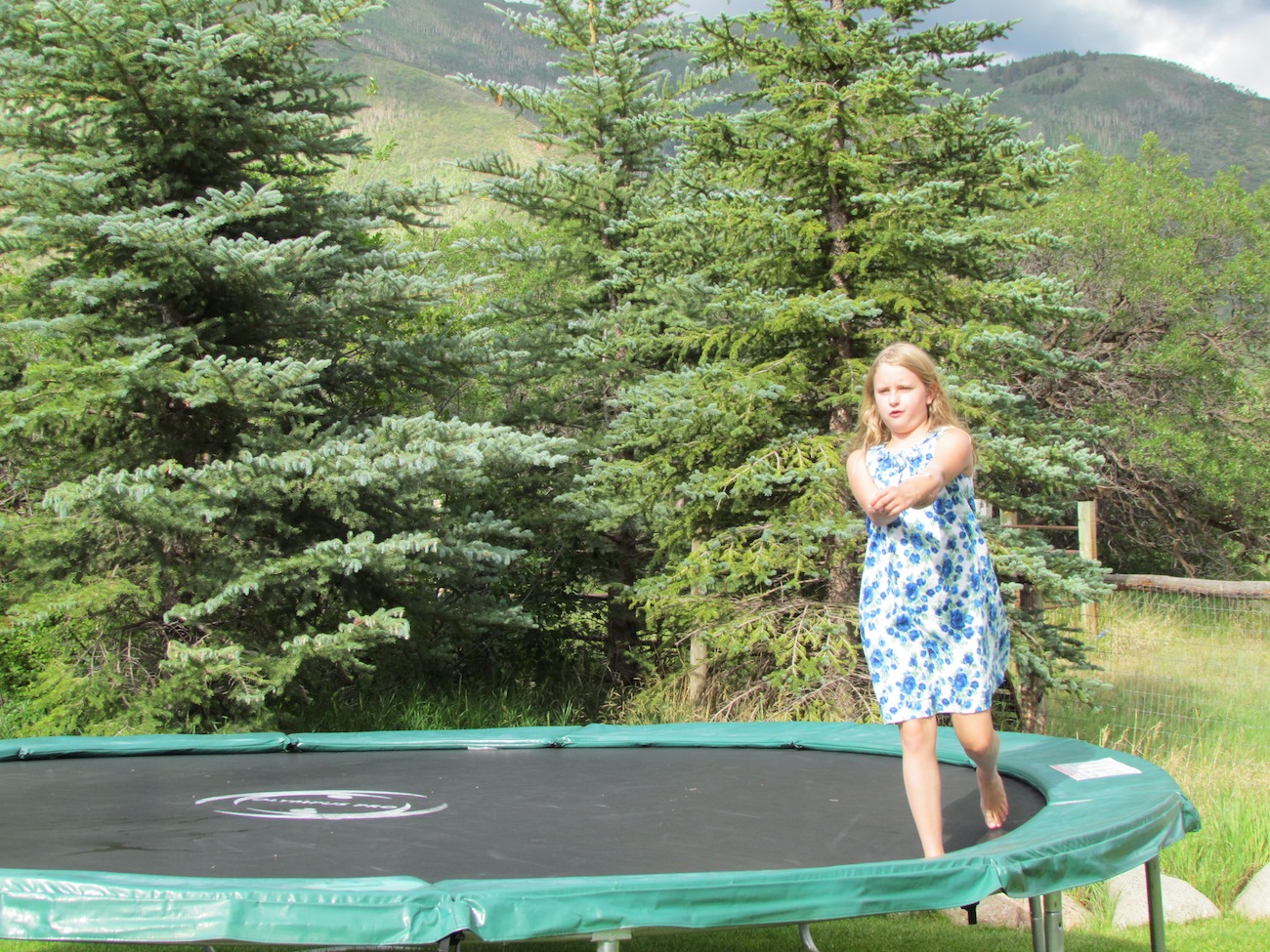
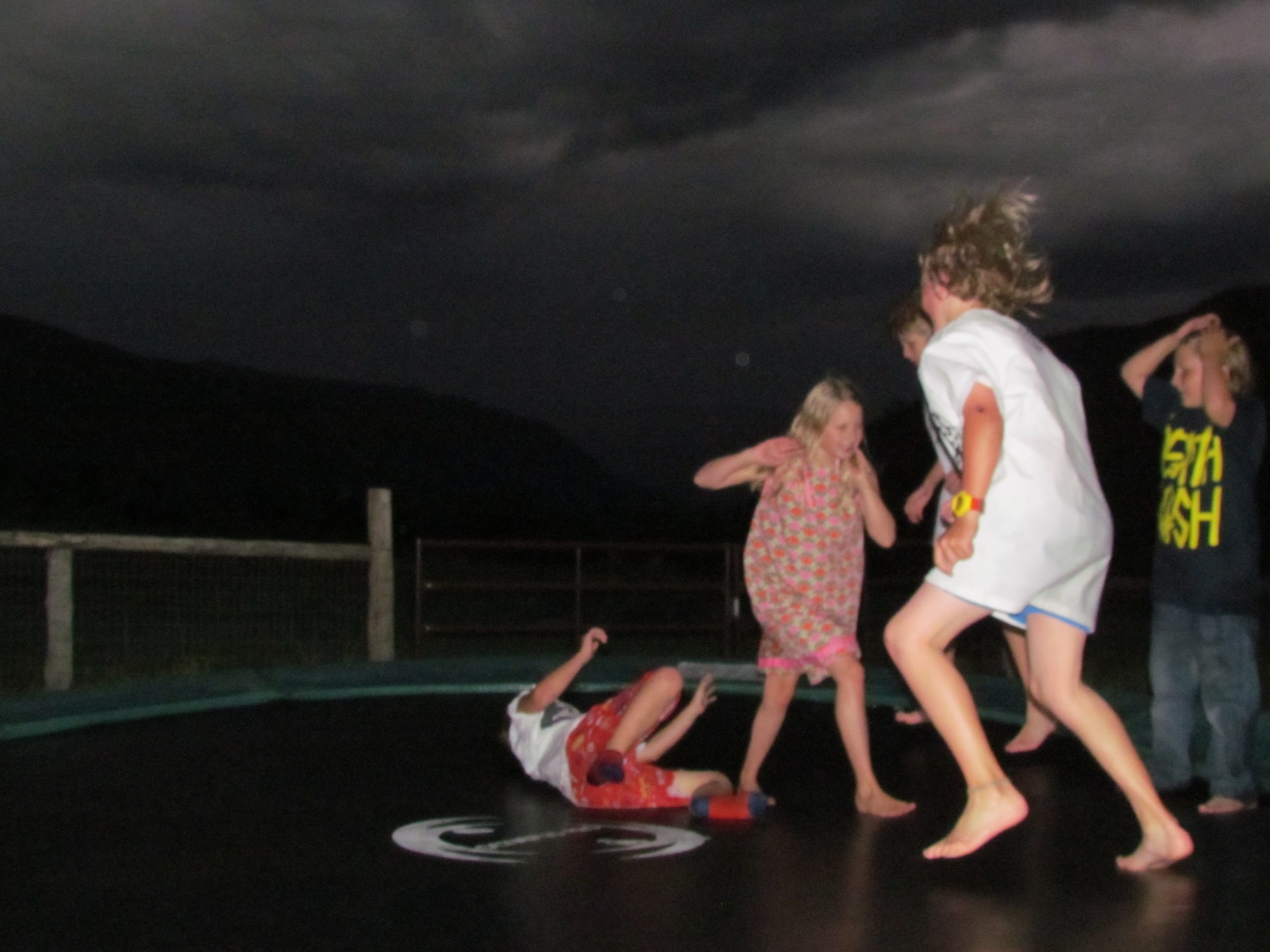
Emma on the Hunt’s trampoline 

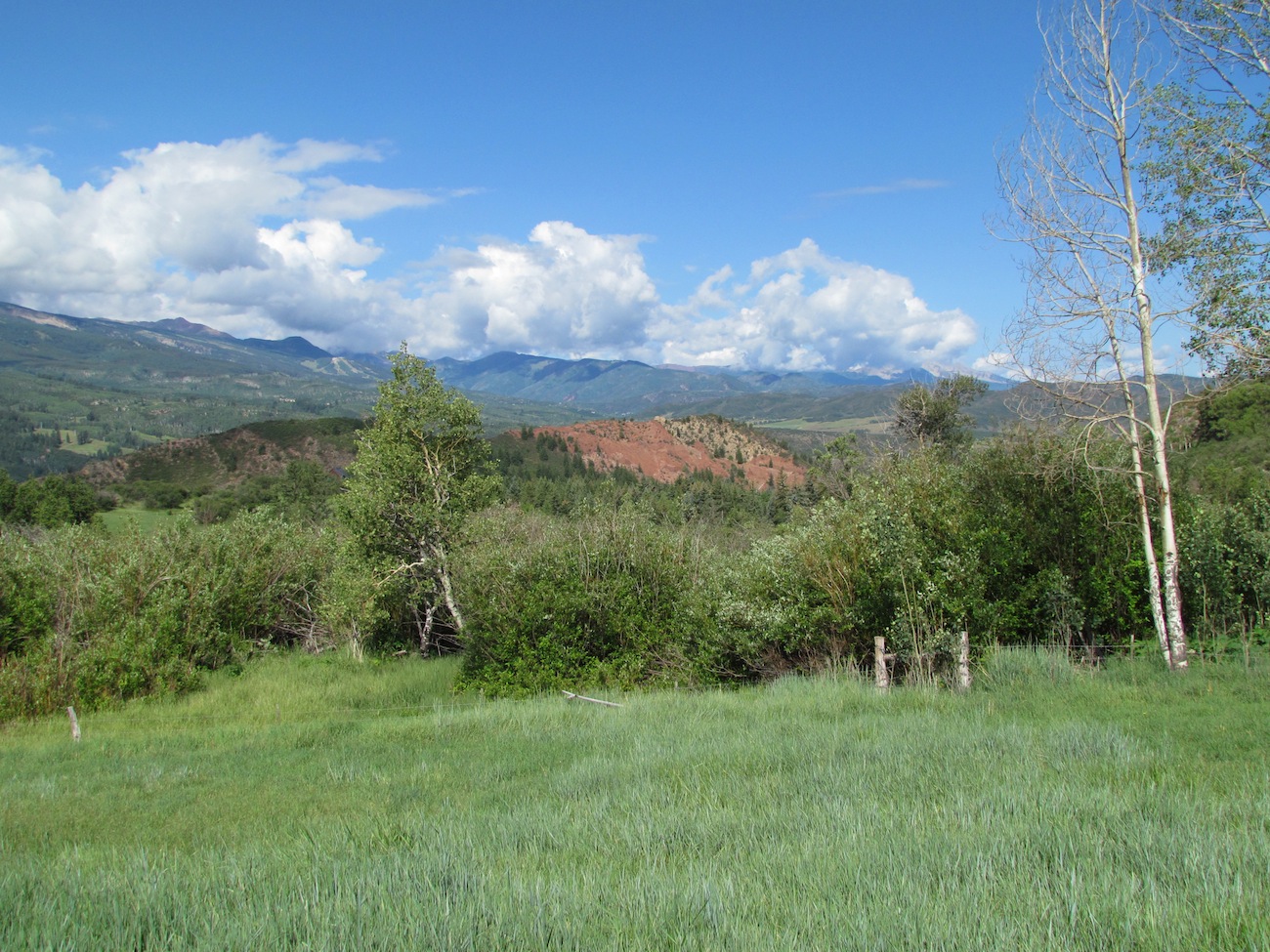
A young buck in the field right outside my mother’s house

Emma,  the Hunt boys, Nic and Jack playing “Dead Man, dead man”


Emma, Nic (doing a flip), Ethan and Jack 

Emma was intent on jumping on the trampoline with Nic, the Hunt boys and their friend Jack, but none of them wanted to go.  It was already dark out, it had been raining, the trampoline was soaking wet, they were having fun rough-housing, it was unanimous, not one of them wanted to go.

Emma:  You have to ask.  Nicky, do you want to go on the trampoline?

Nic:  No, Em.  No. I don’t.

Emma:  Ethan do you want to go on the trampoline?  Yes?  Or No?

Ethan:  No.

Emma:  Say YES!

The boys start laughing.

Emma:   Yes, you do want to go jump on the trampoline.

Ethan:  Looking unsure, but smiling at Emma.  Well…

Emma:  C’mon, let’s  go!

And they did.  They all traipsed outdoors in the dark and they had a blast.  Emma was ecstatic.

And so was I.

The Endless Parade of What Ifs

Emma and I are leaving this…


and returning to this…

without Richard and Nic.  I know.

Crazy, right?  Except that Emma is going to day camp.  A camp she adores and has been going to for the past four years.  A camp for neurotypical children, run by a man who welcomed Emma and urged us to let her attend four summers ago.  Each summer he gives me updates on how she is faring.  Joe will shadow Emma as he has the last three summers.  I will write and get work done for my business, before heading to Jerusalem for the Icare4Autism conference at the end of July.

This Thursday Emma and I are going to Fire Island to stay with my dear friend, Bobbie for the weekend.  She and her family have rented a house on Fire Island for the summer and invited us out several months ago.  Emma has been talking about going since April.  And while Emma is excited and can’t wait to go, I am filled with trepidation.  Because along with Bobbie and her two children, one of whom is Emma’s age, there will be another family too.  I have never done this, spent an extended period with a neurotypical family, forget TWO neurotypical families.  It will be just me and Em, with no one to help out if things start to go badly.  It is a testament to my friendship that I was able to accept Bobbie’s kind invitation.  I have spoken to her at length about some of my fears.  She has a vague idea of what I’m talking about.  But it’s vague at best.

What if the other children don’t include her?  What if they do include her?  What if she wants me to spend the entire time in the cold ocean?  What if she takes off all of her clothing and runs through the house naked?  What if she makes strange noises and whips her string around?   What if the other children make fun of her?  What if they say things to her that hurt her?  What if they pretend she doesn’t exist?  What if they talk about her in front of her?  What if I’ve turned away, even for just a second when this is done?  What if she wants to play “duck, duck, goose” and they tease her or laugh at her for wanting to?  Will I be able to remain calm if any of these things happen?  What if I don’t have the words to explain that they need to appreciate her?  What if I can’t find the right words to describe how amazing she is if they’d just put aside what they’ve been taught to expect from someone?  What if?  What if?  What if?

Why do I think in these terms?  Emma is Emma.  Let me take a page from her book of self acceptance.  She is who she is and who she is, is pretty f@#king fabulous.  I do not need to worry that Emma will behave in a cruel or manipulative way to another child.  I don’t have to worry that she will gossip or whisper behind another child’s back or knowingly exclude a child.  She will not bully or lie.  She will not play favorites or tell secrets.  Emma will not play tricks on any of the other children or make them feel badly about themselves.  It’s not in Emma’s nature to tease or ridicule.  She isn’t capable of behaving in hurtful ways to others.

I’d be lying if I didn’t admit to worrying.  Emma is different and truthfully, so am I.   I have never felt completely secure in these kinds of situations.  I have never felt fully at ease in groups.  I have always felt slightly apart from.  As though everyone else got the same script, but the script I was given was to a different play with different characters and in a different place.  It’s been this way, long before I had children.  I feel most comfortable with people who are a bit “quirky.”   One of the things I love about communicating with Autistics is that I don’t have to second guess anything.  If I don’t understand something I say that, I don’t have to pretend.  There aren’t any hidden agendas.  No one’s trying to socially outdo the other.  There is a directness and an honesty that I appreciate.  No one is going to talk about the weather or if they do, it’s because it’s somehow impacting them in a meaningful way.

My friend Bobbie and I have known each other for more than twenty  years.  We have been through a great deal together.  She’s one of those friends who asks questions instead of giving advice.  She has listened to me go on and on about Em and autism and she has followed Emma’s progress, and mine too.  She has been there for me, applauding me, cheering me on and when I’ve asked for it, given me her opinion.  When I think of her, an image of an extended hand comes to mind.  She is there for me.  She always has been.

So I’m taking a chance.  Whatever happens it will be memorable.  And who knows, we may even have a really nice time.  But regardless, I will have pushed past my comfort zone by trying something new and this time, Emma is leading the way.

A Sleepover, a Storm and Our “Adventure”

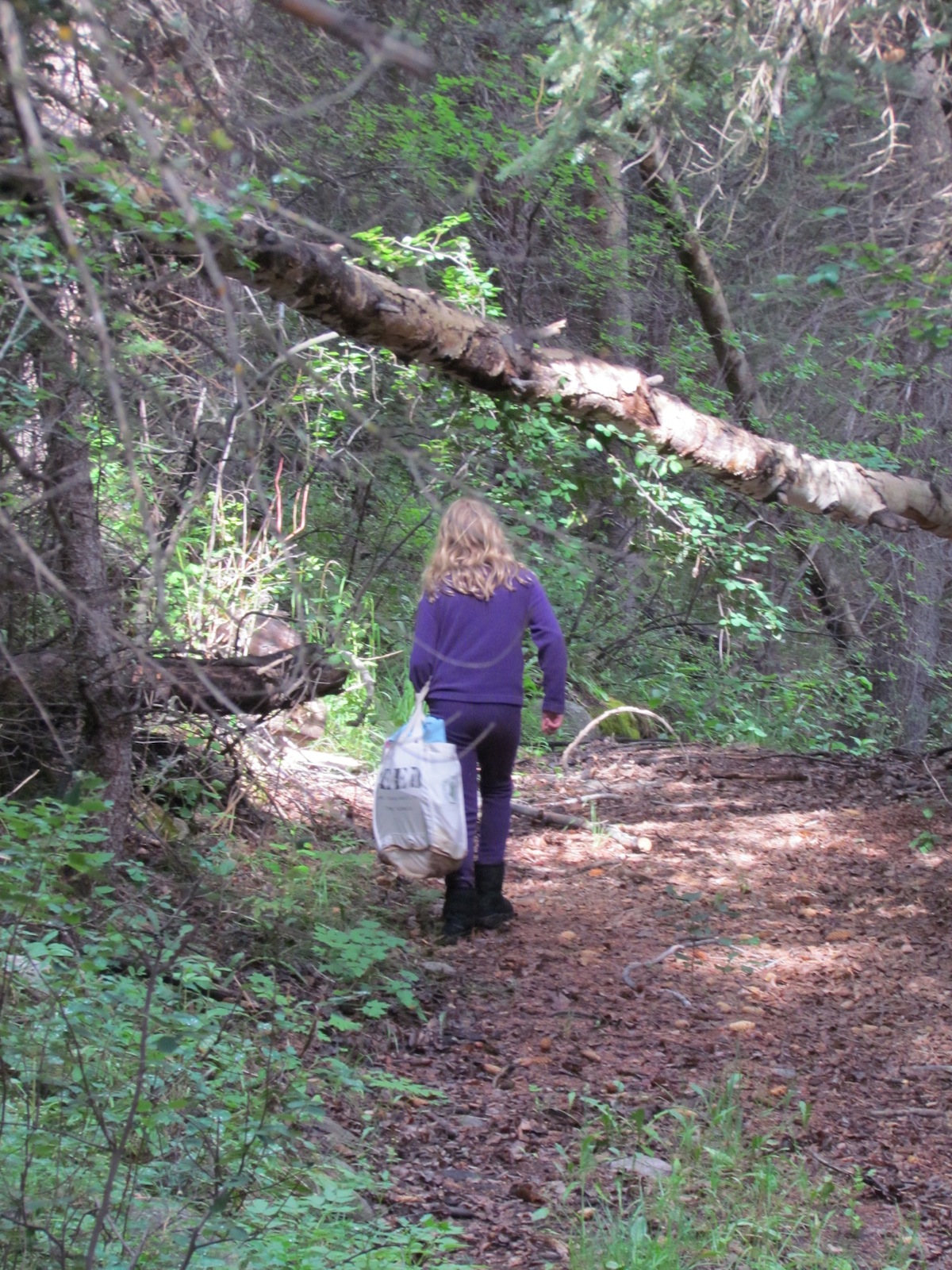
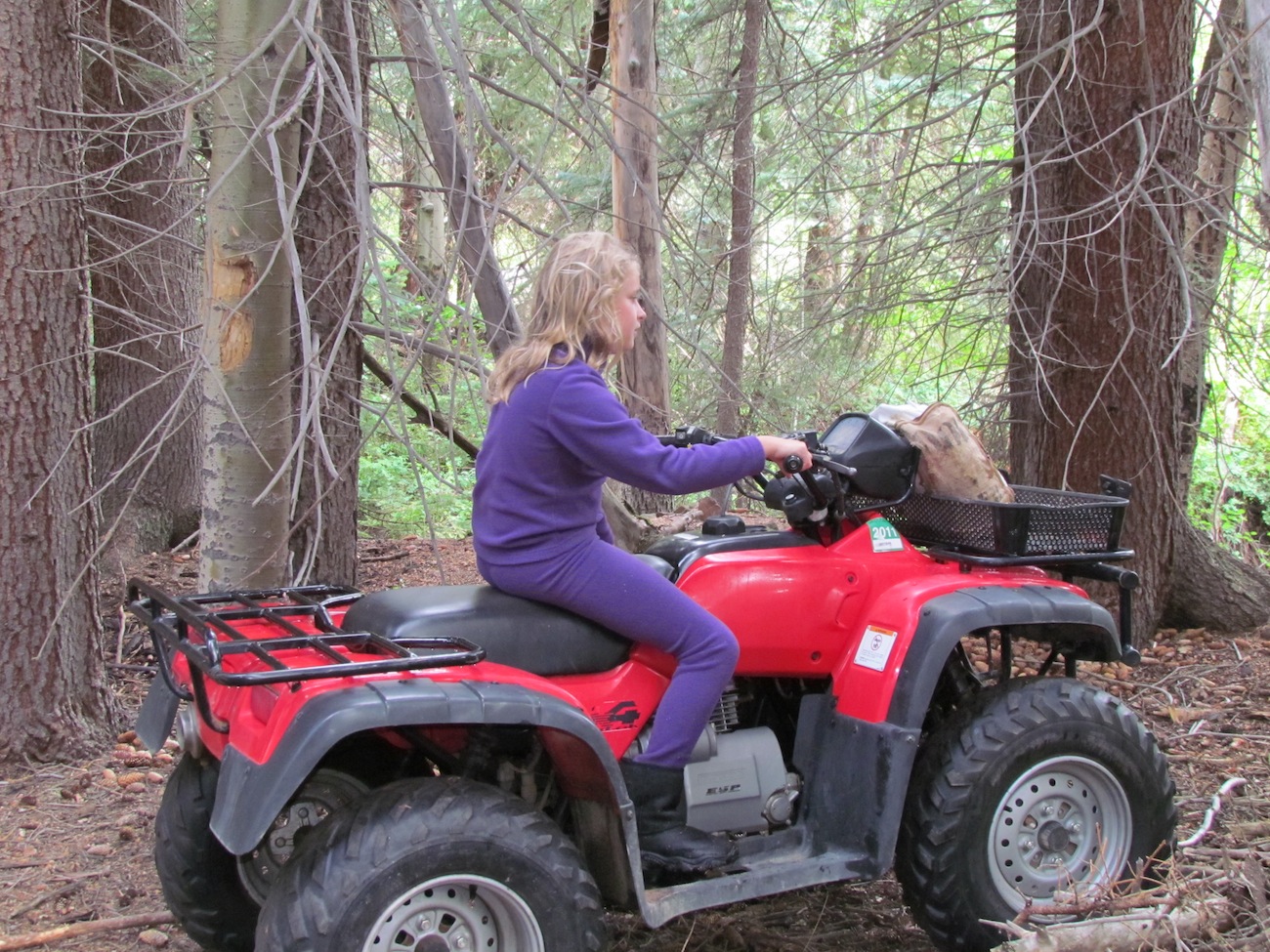
Emma loves going to our cabin.  It has become a tradition to spend the night there at least once during any given trip to Aspen.  Yesterday was our designated “sleepover” night and Emma was beside herself with excitement.  We packed backpacks and some bags up, put them into the front of the 4-wheeler and set off.  This is our equivalent of taking a fully equipped camper out to a campsite and calling it a “trek.”  I made a number of derisive comments about our lack of adventure (aka laziness) while Richard and Emma ignored me.  At one point Richard stopped the 4-wheeler and said, “No one’s stopping you from walking, you know.”  Which pretty much shut me up.  Until we ran into this –

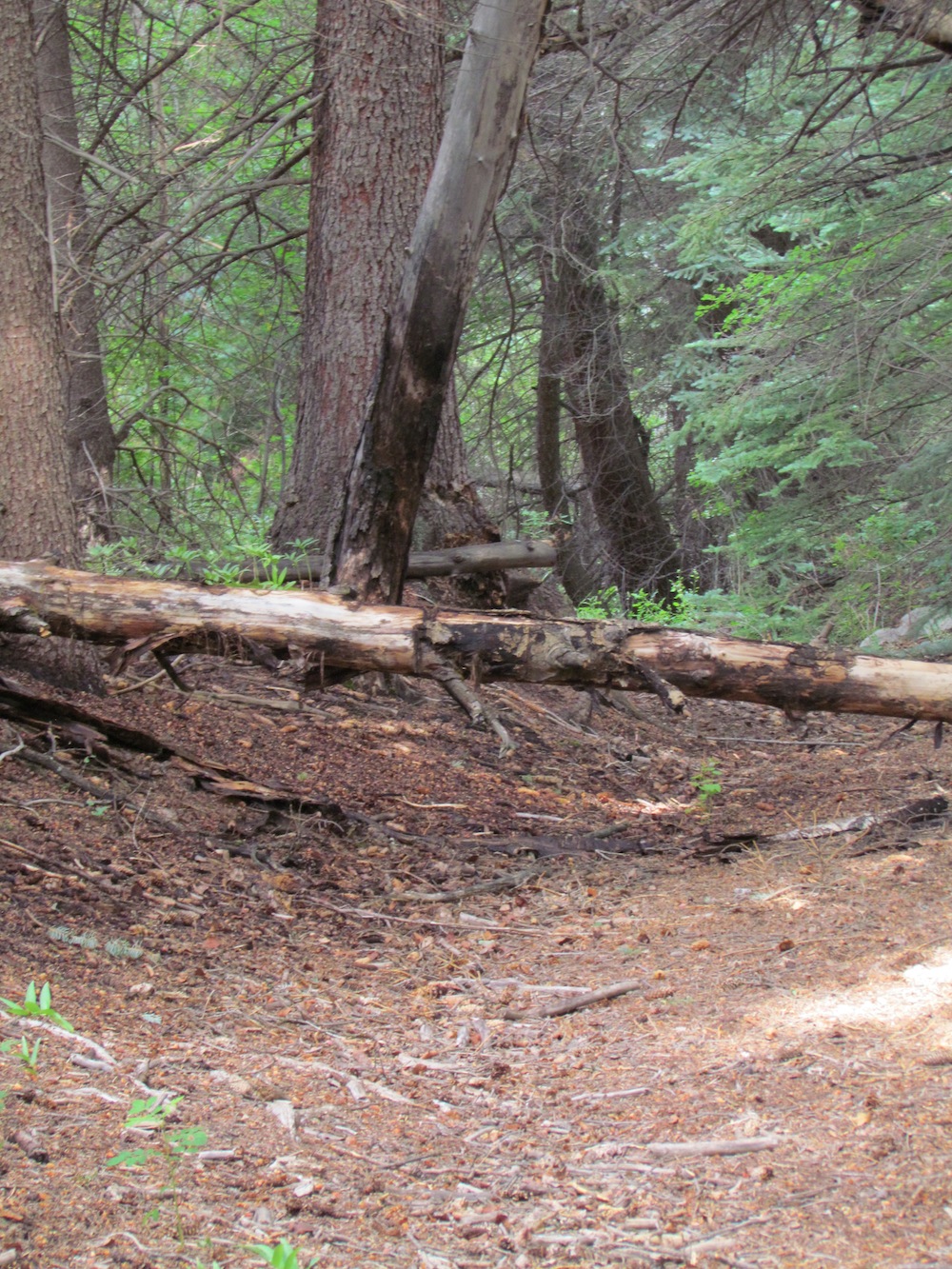
Richard, not one to be easily deterred, proceeded to put the 4-wheeler in reverse in an attempt to go around the tree branch, and in doing so went up a steep incline and over a large boulder, while almost flipping it.  After much excitement (aka me yelling in a hysterical voice, “you’re going to flip it!” causing Richard to say, as one wheel hovered a full foot off the ground, “you know, you’re not exactly helping.”  Eventually he brought the 4-wheeler to a stop with all four wheels planted firmly on the ground (much to my relief) and we abandoned it.  “Well you get the best of both worlds,” Richard remarked, as we hoisted our backpacks and bags (some filled with Emma’s books) on our backs.  “Now you get to walk.”

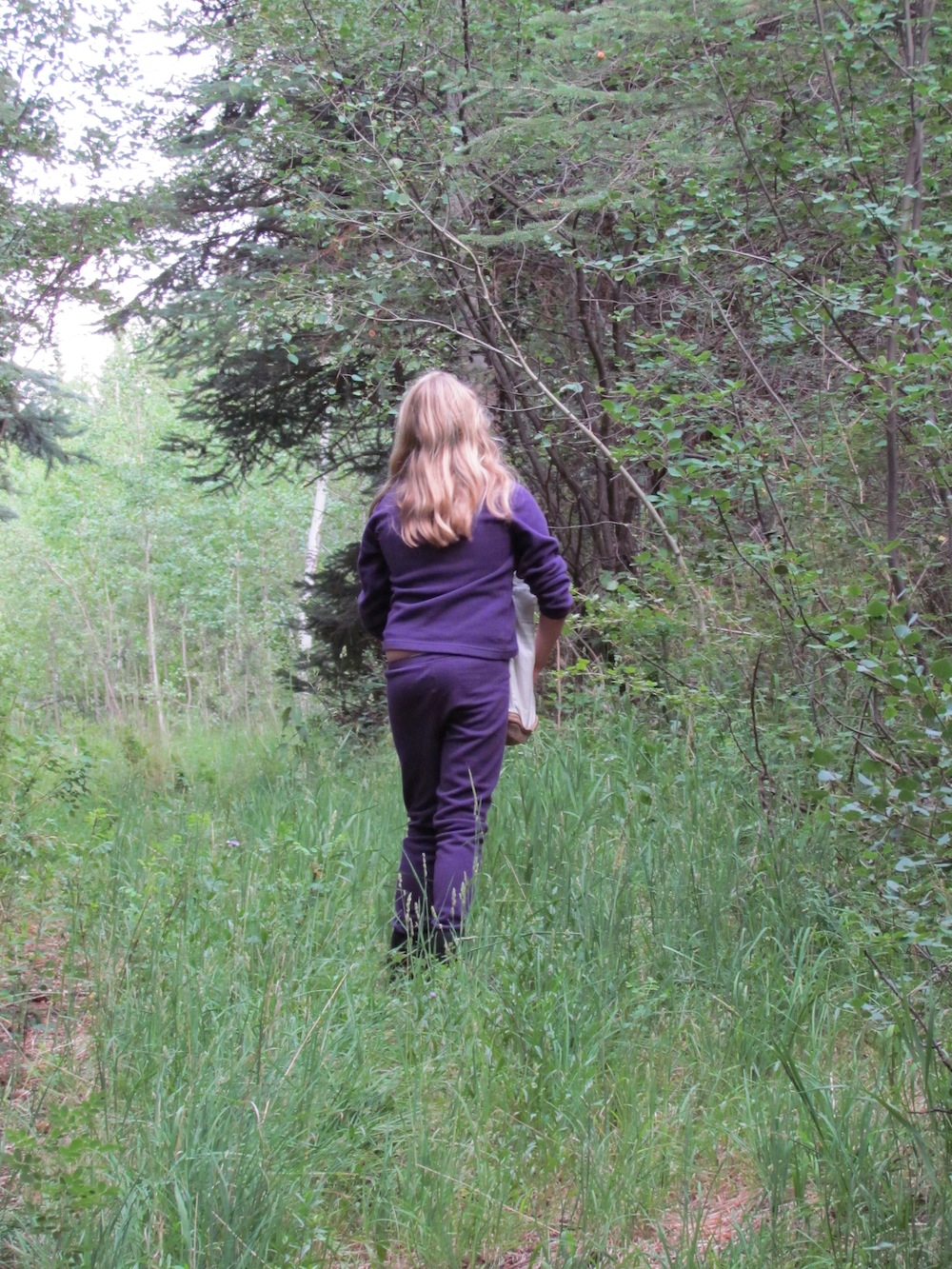
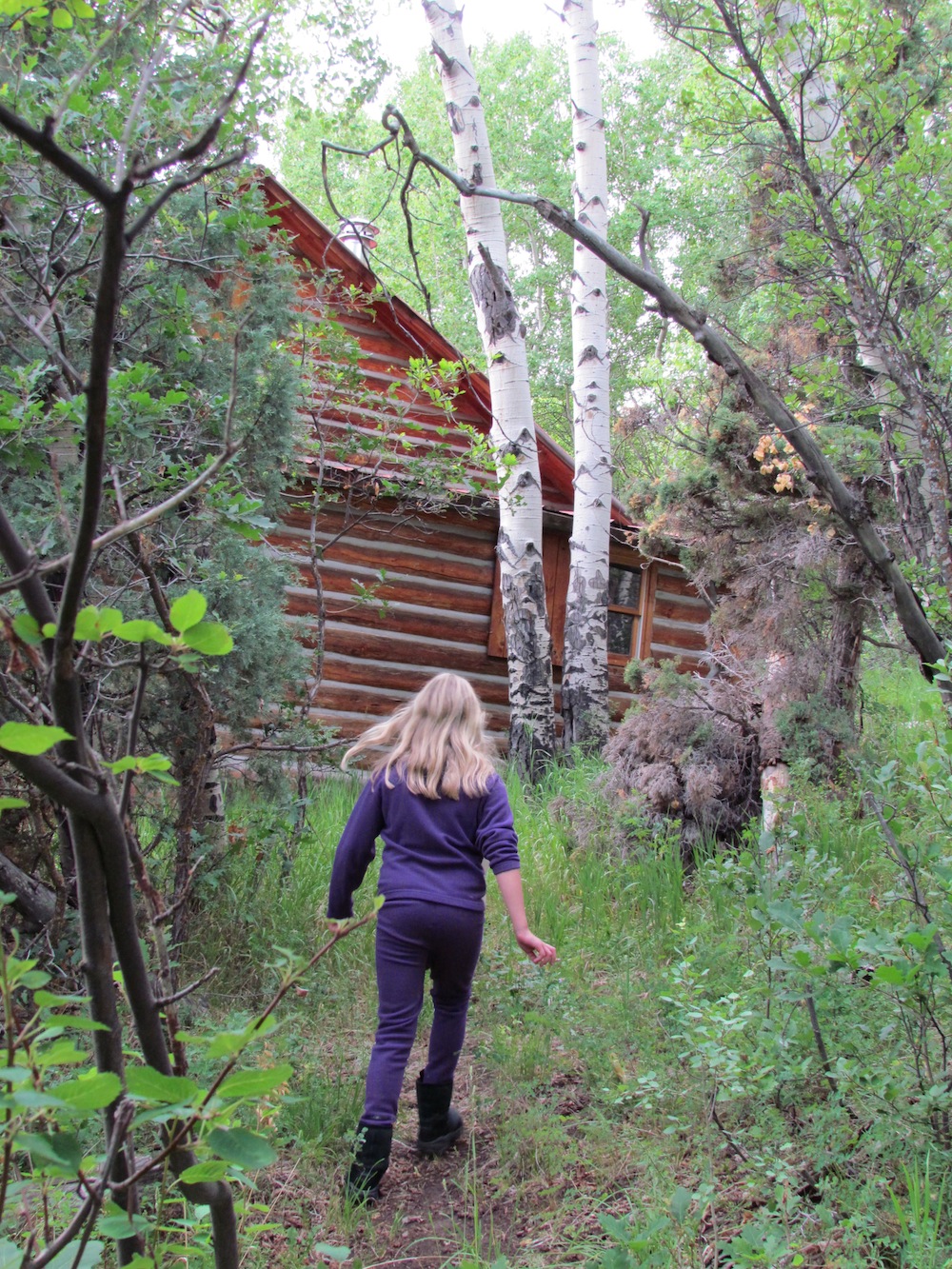
When the cabin came into sight Emma, carrying the bag with her books in them, began to run.

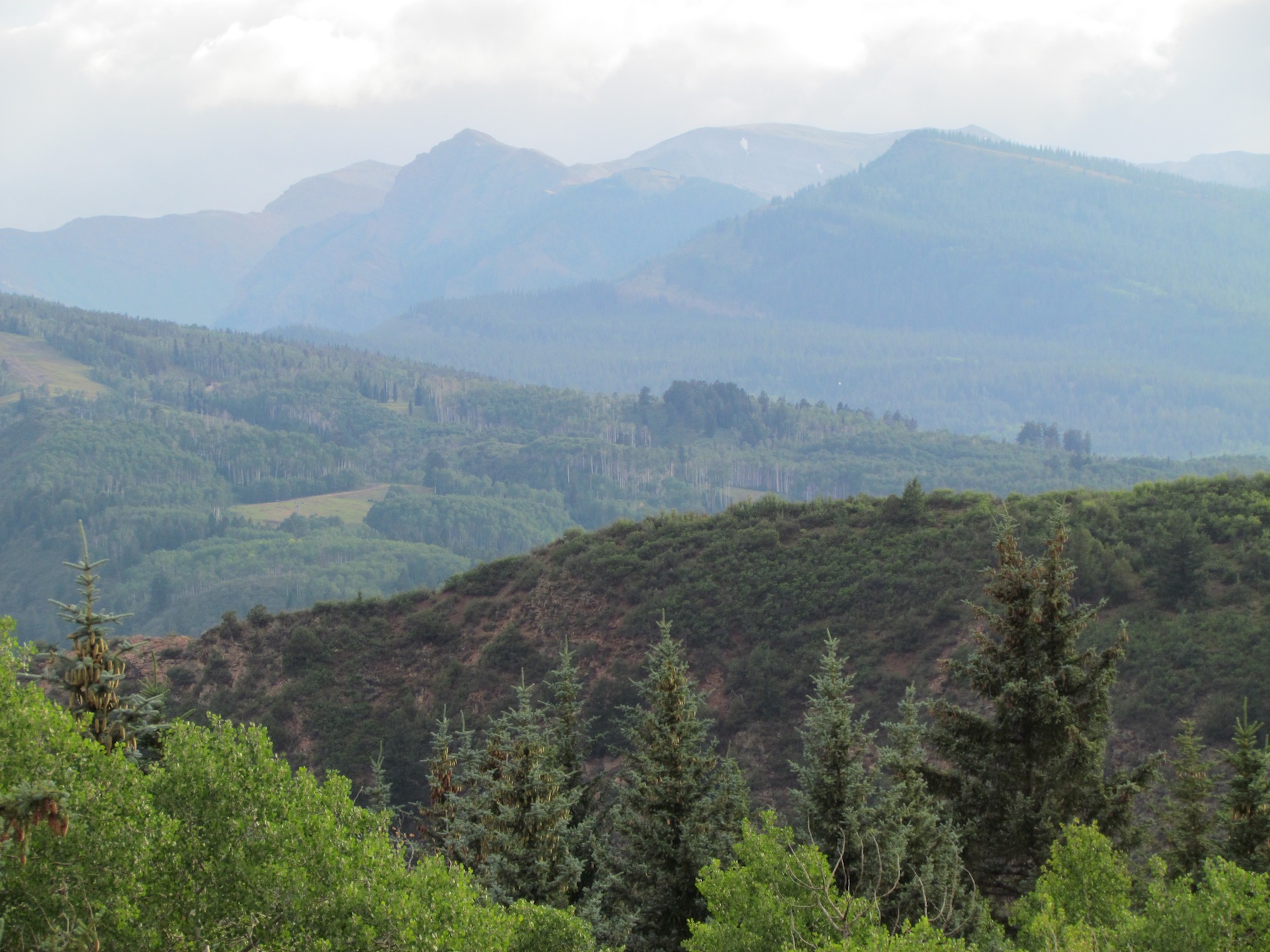
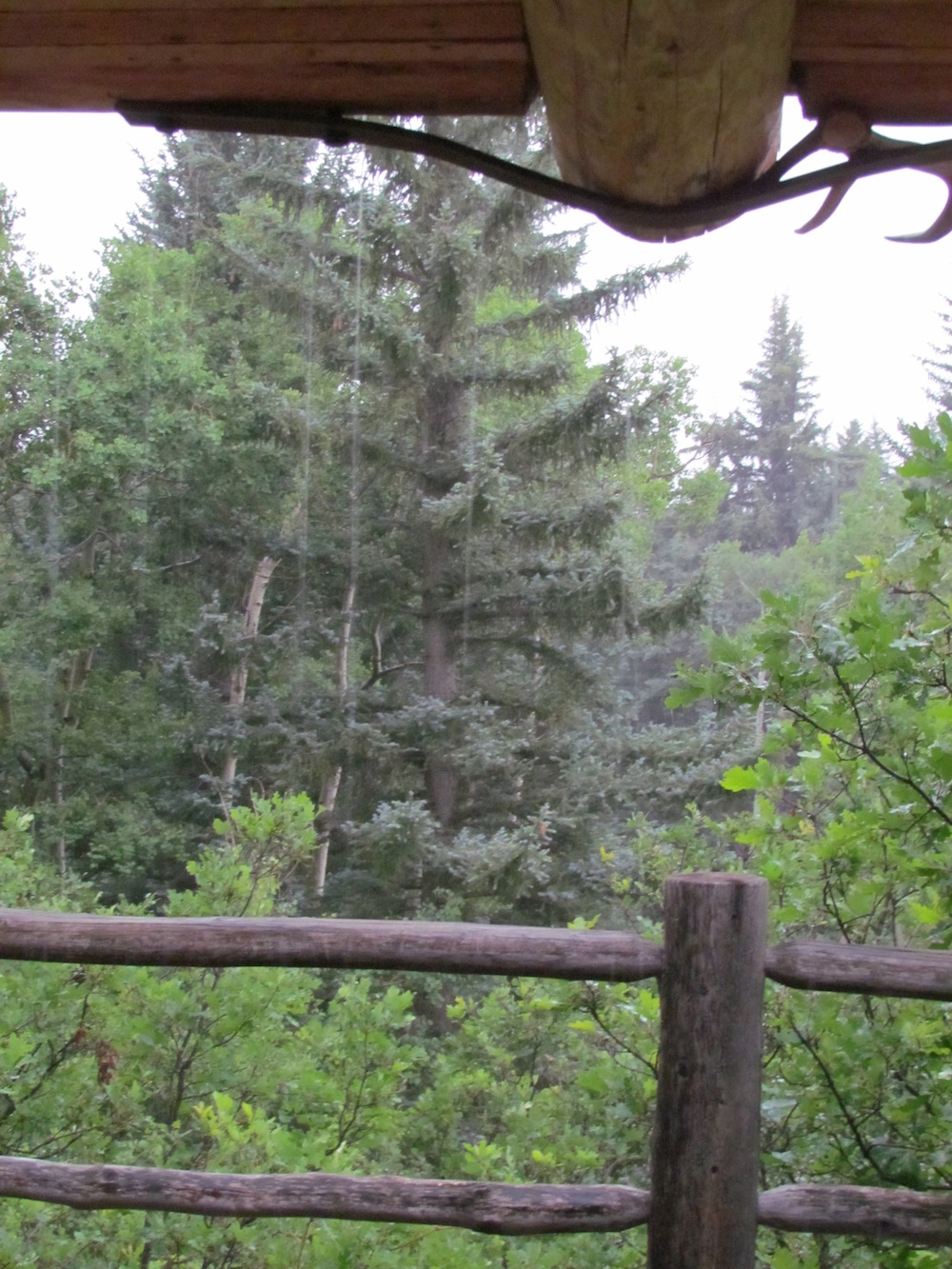
“It’s the cabin!”  Emma yelled as she bounded up the steps.  We settled in, put the screens into all the windows, swept up the cobwebs and made up the beds, while clouds began to roll in over the mountains.  A number of red-tailed hawks flew overhead calling to each other, or at least that’s what I assumed they were doing.

The rain came first preceded by a smell I cannot describe, but one that I recognize as being the forerunner to a storm.

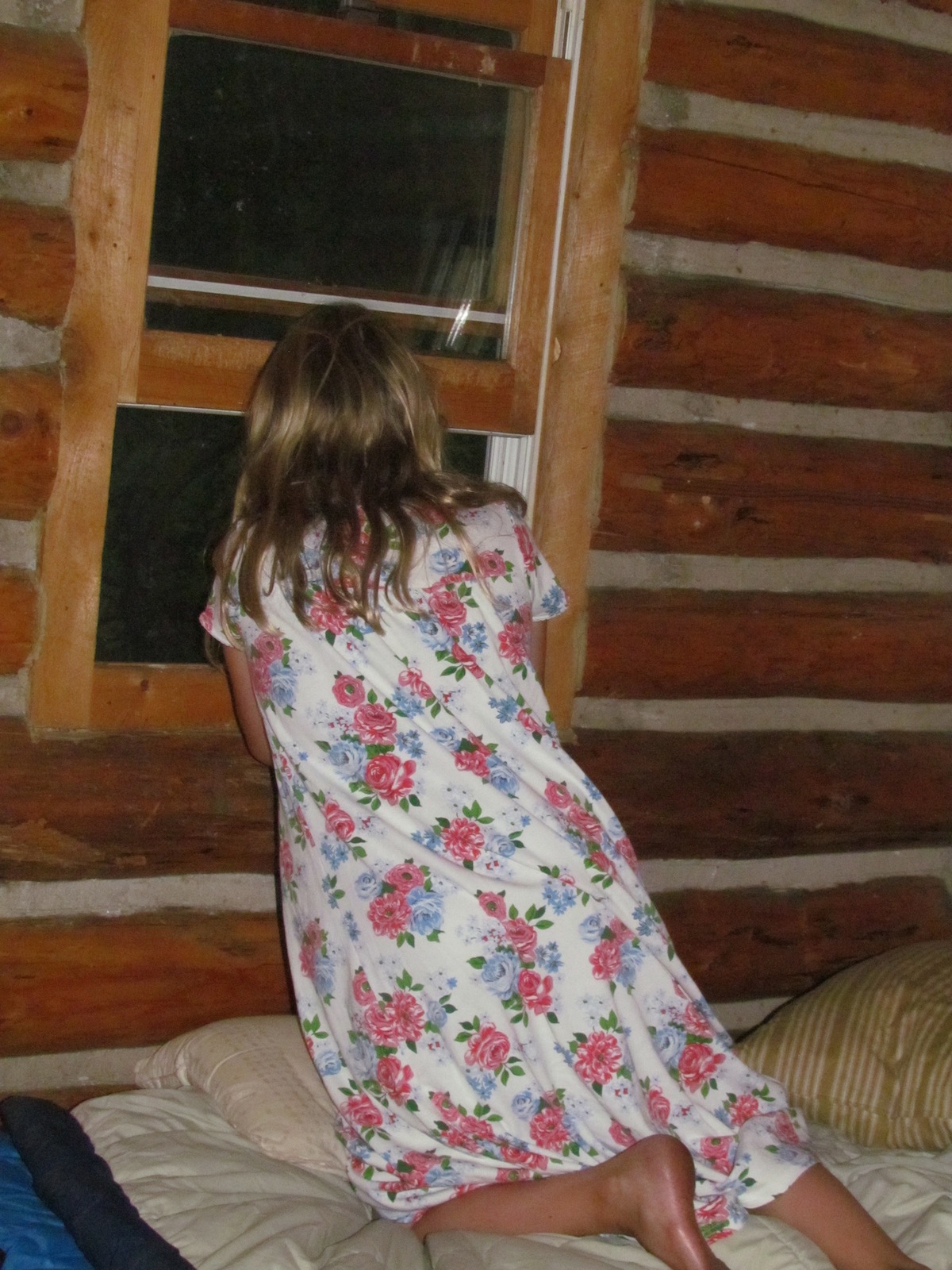
Lightening and thunder followed.  The rain came down in sheets.  Emma stayed inside.  She peered out the window and made loud crashing noises.  “It’s scary,” she said.  “I don’t like it.  Mommy come.  Sit together.”  So we did.

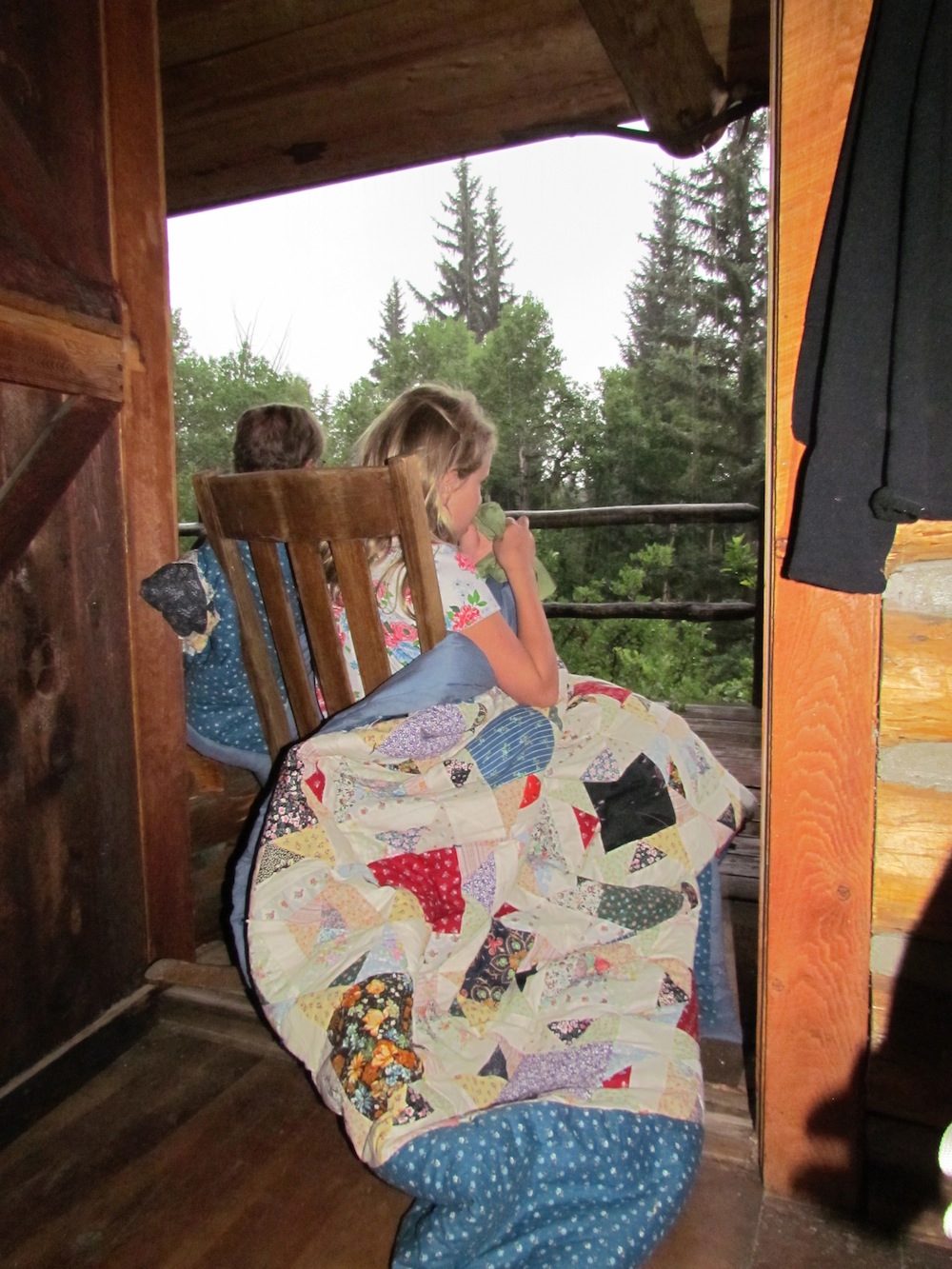
But eventually she felt safe enough to go sit next to her dad on the porch.  Together they watched the storm.

Within an hour the storm had blown past and Emma was happy.

By 10:00PM all of us were asleep.  Emma slept until after 8:00AM.  This was noteworthy as her usual waking is 6:00AM.  Reluctantly we packed up and made our way back to where we’d abandoned the 4-wheeler.

When we got back home, where Nic and my mother were I said, “I bet you guys were worried about us during that terrific electrical storm!”

My mother smiled and said, “No.  Actually when it began to rain we said to each other – Boy am I glad we stayed home!”

They have no idea what they missed.