Category Archives: Parenting

Entries about what it means to be the parents of an autistic child.

Emma’s New String And A New School

Emma will be attending a new school this fall.  We were given a placement by the Department of Education mid June that was not over an hour from our home. This new school seems to understand the concept of sensory issues and needs, or at least they’ve heard of the idea and appear willing to consider that this is important to Emma.  They seem interested in my desire to be involved.  We will be working together on a transition.  I plan to meet with her new teachers and the assistant principal.  I will photograph all of them as well as the interior and exterior of the school to put in a book that Emma can look at prior to her first day.

The school has a large gymnasium and a huge auditorium with a stage.  There’s a roof playground and a little area filled with books.  It’s a special education school within a larger “regular” public school.  They seem interested in having Emma do at least some things, like PE, with the kids from the larger school, so she’s not completely segregated out.  It’s by no means ideal, but we have yet to visit a school, private or public, that is.

I took Emma to visit the school in July.  She was anxious, kept saying, “No, I don’t like the new school.  I don’t want to go to new school.”  We talked about how new things are scary.  I told her that at this school she would be able to go swimming in the pool across the street once a week and that there would be new teachers and children.  I could see how anxious she was, just visiting.  I felt the tightness in my heart and stomach.  That feeling hasn’t left me.  I am as frightened as Emma.  This is a big change.  It is an enormous question mark.  Emma has been dealing with her anxiety by saying goodbye to all her old teachers and classmates.  “Lauren is gone.  Charlie is gone.  Soufien is gone.  Rachel J. is gone…” Emma will go through the lengthy list and then always ends with, “Emma goes to a new school!”  I’ve asked her whether she’d like to visit her old school to say goodbye, she is adamant that she does not.  I’ve asked if she’d like to see some of her old friends, she has shaken her head no.

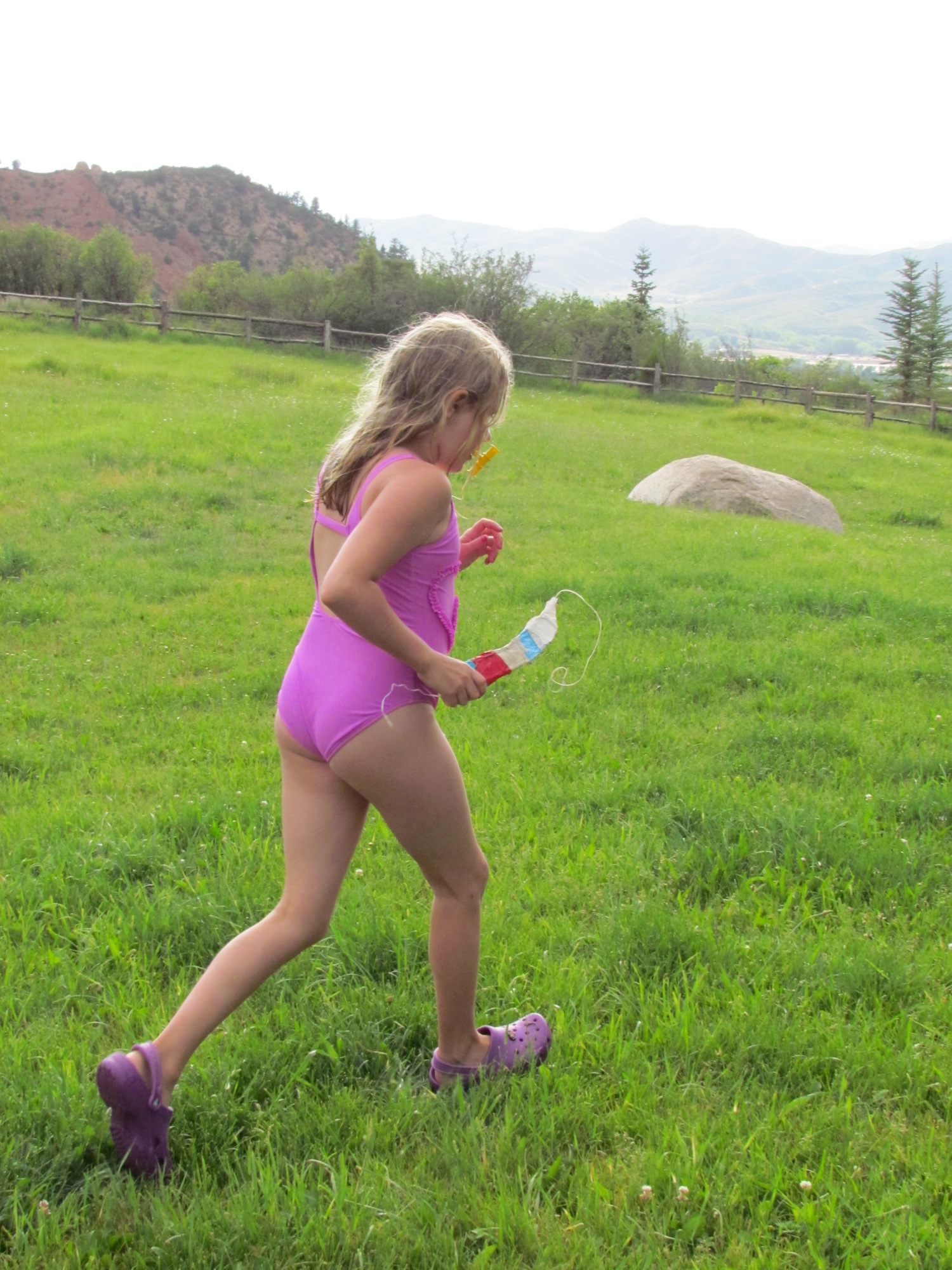
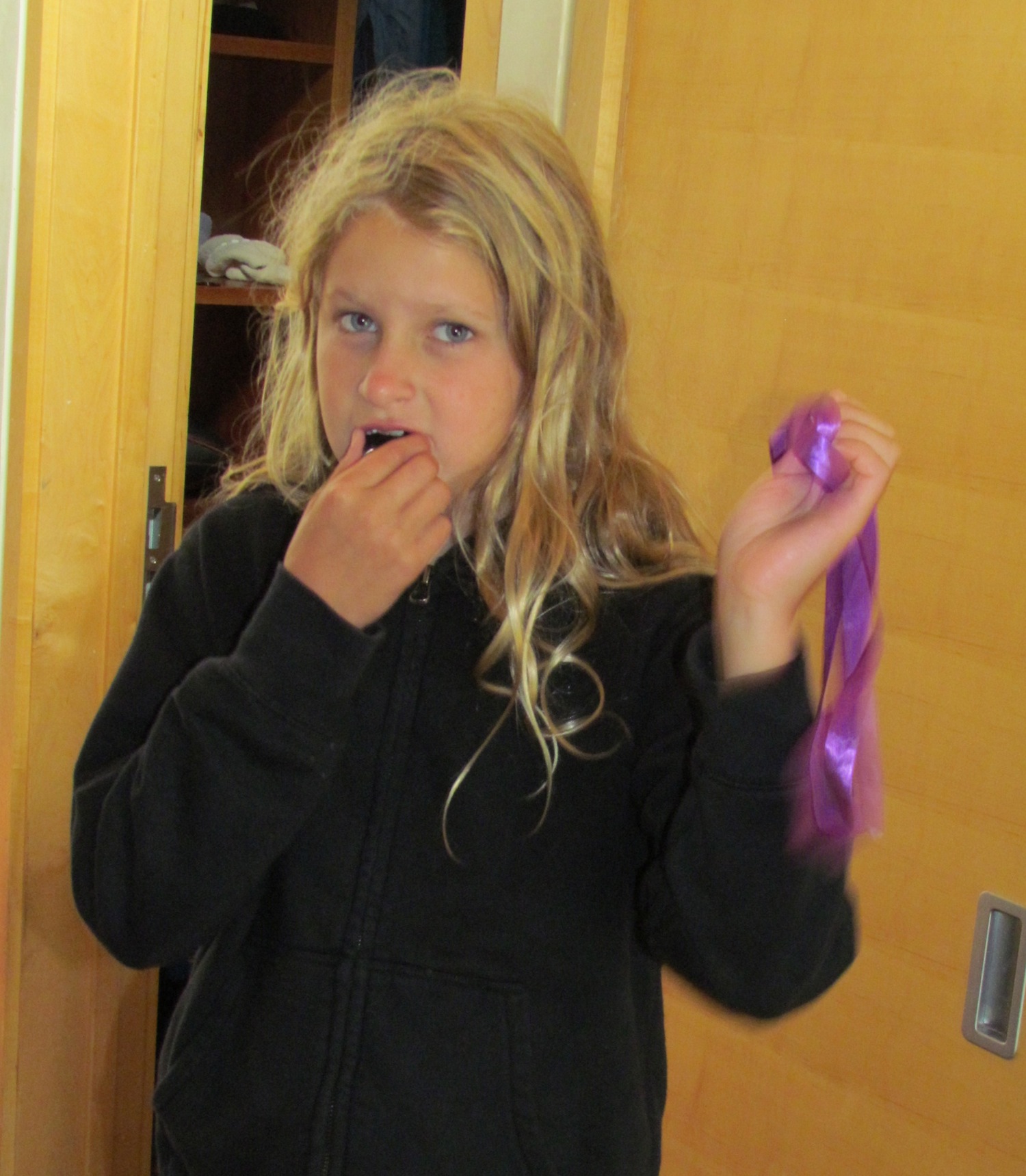
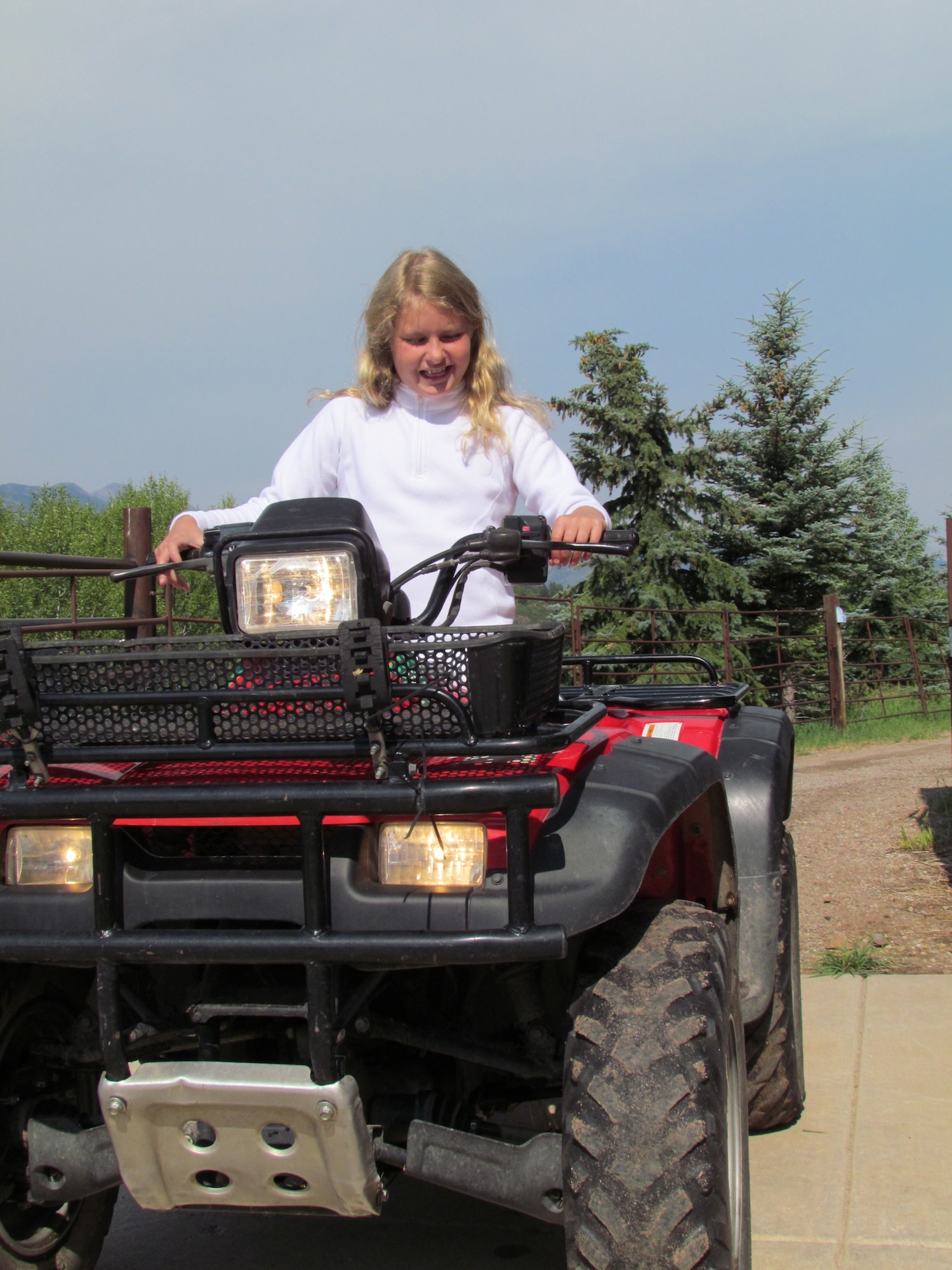
Emma has a new string that she loves.  I’ve written about her string before.  Unlike her scrap of blanket (cokie) which works like a sedative and makes her sleepy, her string seems to help her focus.  She twirls it or will hold it in her hand as she runs, jumps on the trampoline and plays.  Since we’ve been in Aspen she has lost her string three times now, leading to shrieks of terror and screams of “You lost it.  You cannot throw it.  Have to look.  Mommy!  I need help!”  And then tears.  Lots of terrified crying.  Each time we’ve turned the house upside down and eventually found it, but it’s been traumatic for all of us.  This last time it went missing, Richard and I began to think we’d have to place limits on it to ensure it didn’t get lost.  A couple of friends suggested alternate strings, a kind of backup string.  So I asked Em if she’d like to find an “outdoor” string.  She easily chose a long piece of purple ribbon.  She cheerfully took it out with her when we went for our morning ride on the 4-wheeler yesterday.

It occurred to me then that she could have a number of alternate strings.  I thought about her new school and realized she could have a special “school” string too.  I asked her if she liked this idea and she nodded her head vigorously.  “How about a school string and a Saturday string, a back up string and we can find another indoor string,” I said.  “Yes!” Emma replied, clasping her new purple string in her hand as she got on the 4-wheeler.

At her old school several years ago one of her teachers introduced a school “cokie” to detrimental effect.  Emma would sit in the corner with her scrap zoning out.  Over the years her various teachers tried to curtail her use, put limits on her cokie, but nothing they did worked.  Every few months I would get a call from her teacher describing melt downs, her inability to attend, her desire to have it with her all the time.  Each time my heart ached for her as I put the phone down knowing I’d been unable to help alleviate the situation.  At her new school we are hoping by providing her with a school string some of her anxiety may be mitigated. I am hoping she does not latch on to a “school cokie” I am praying some well-meaning teacher does not introduce her to one.  We will see.  In the meantime if any of you have suggestions about how to help us help her with this transition – let loose!

Emma’s Cokie
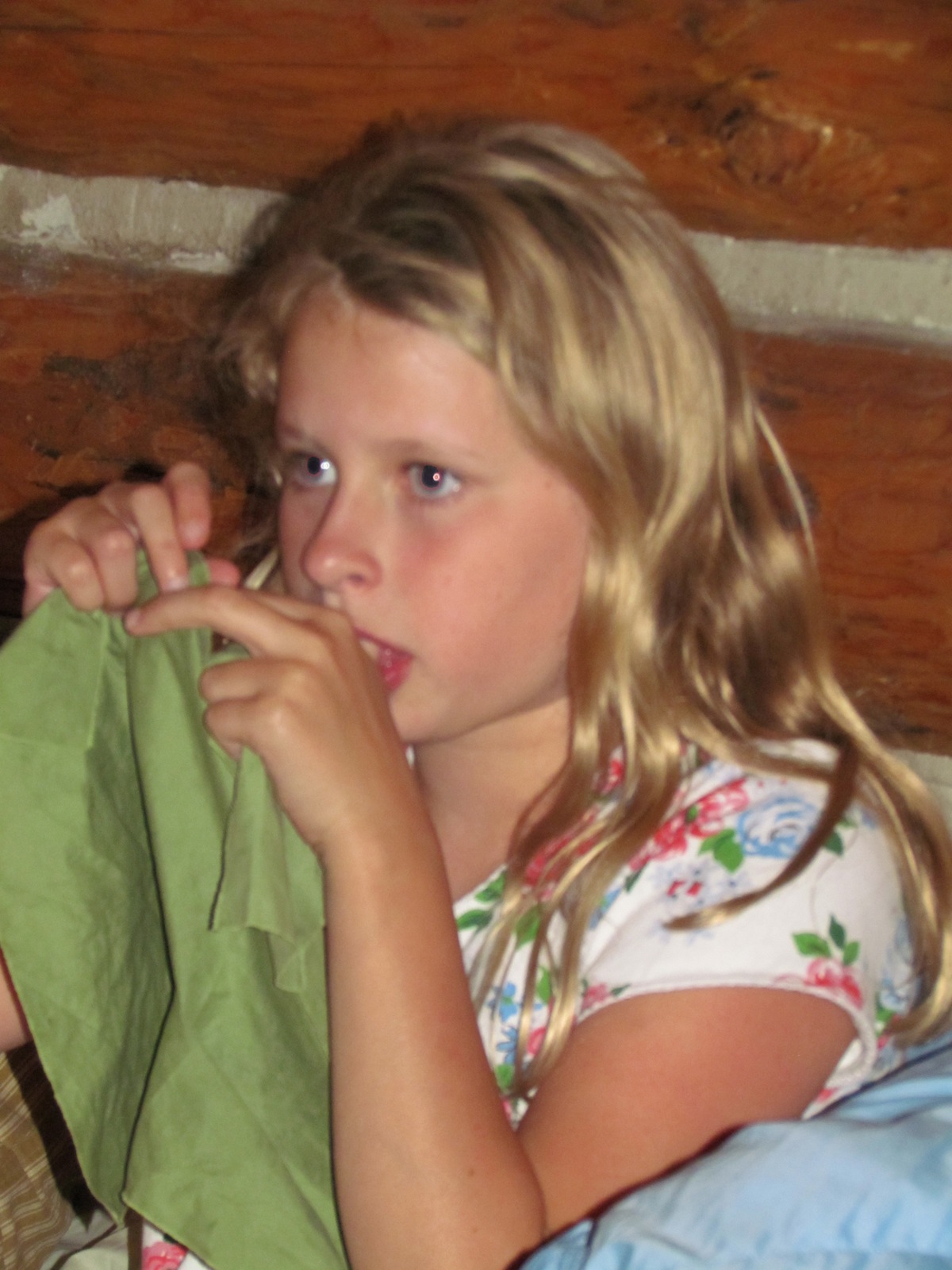
Emma’s old string
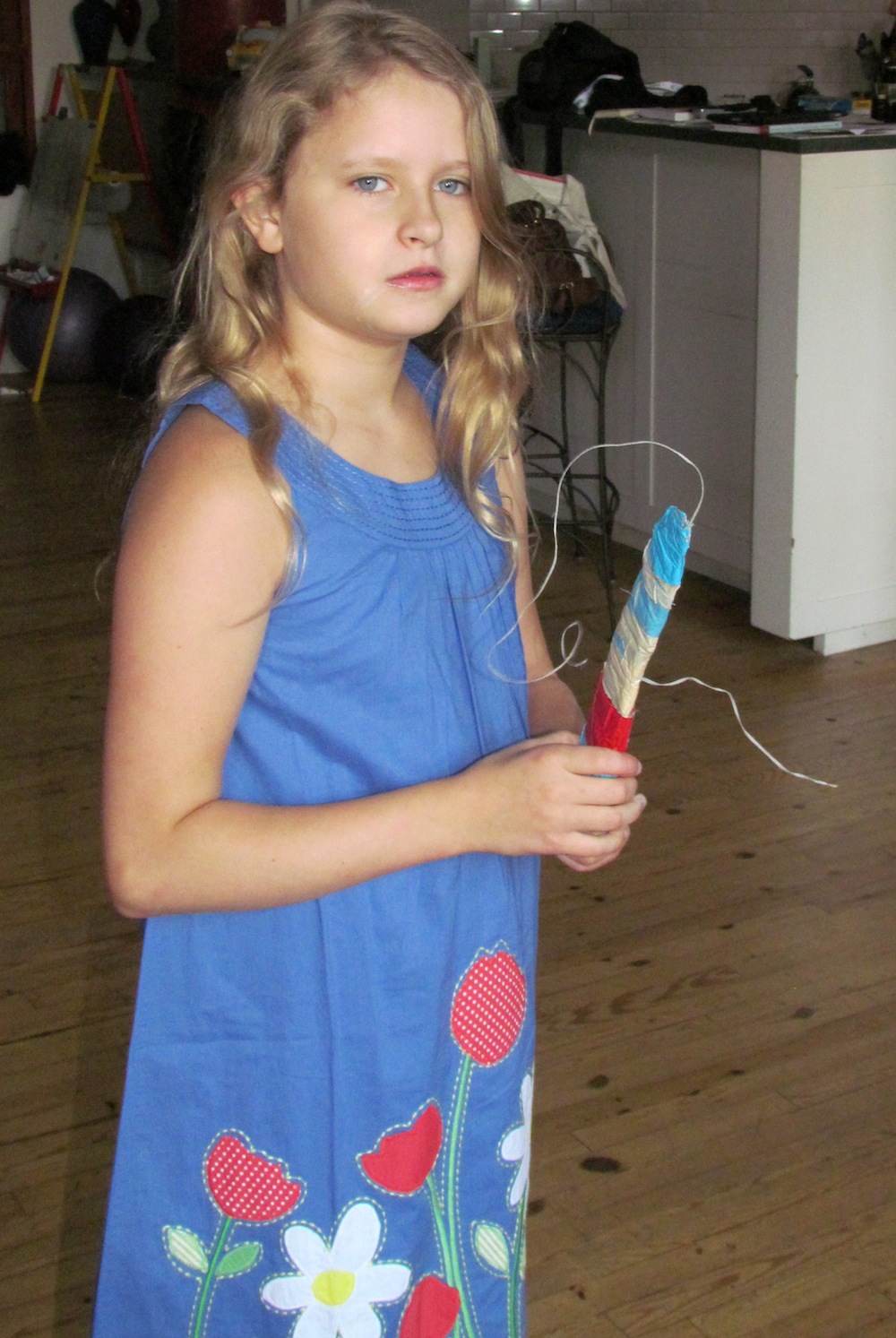
Emma’s new string

Emma’s purple string
Posting Under Pressure

I’m working on a post of my interview with Henry and Kamila Markram when I was in Jerusalem attending the ICare4Autism Conference.  Henry and Kamila Markram are the neuroscientist team who created The Intense World Theory For Autism.  I am trying to finish that for tomorrow’s post.  However, Em is up right now and insisting I made cake with her and that takes precedence over this post getting written.   Besides she has a timer which she’s just set for fifteen minutes.  She started with three minutes, but I’ve negotiated for the fifteen, so I’ve got just enough time to post these photos…

Say hello to Walter.  Yup, he’s one of three bucks who lives next to the barn.  And yes, my cousins named him…  Walter, after my grandfather.  Yeah, I know.  It is a specific sense of humor.  And yes it appears it is genetic.

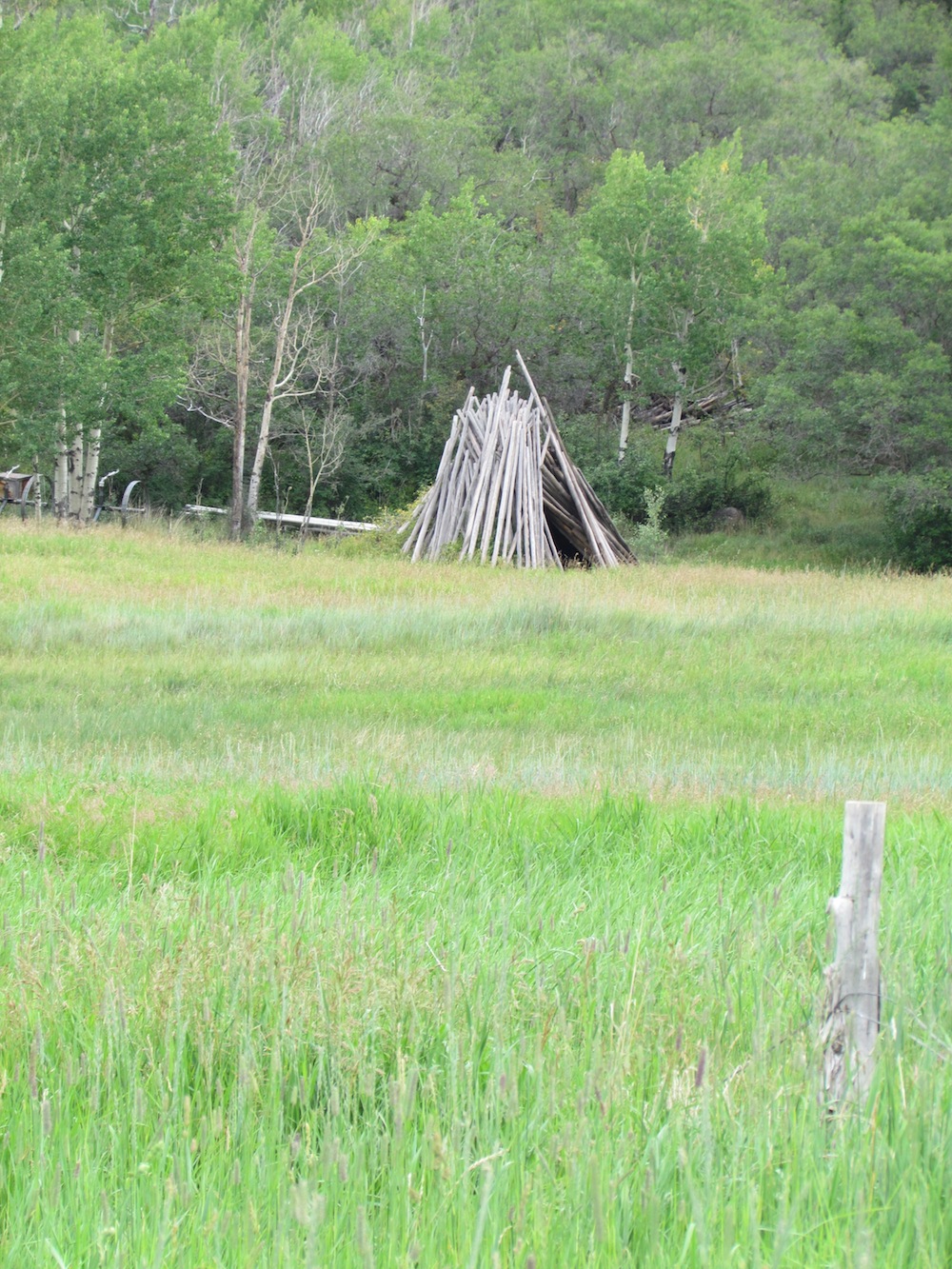
The teepee that has been on the property since the 70’s or maybe even the 60’s, I can’t remember.  I just know it’s been here almost as long as I have been on this earth.

The dogs – Folgen & Gaia – who love nothing more than to have their frisbee thrown to them.  Emma likes it when I throw their frisbee too.  They just don’t like giving it back to me so that I can throw it again.  Which leads to lots of yelling, “Drop it!  Drop the frisbee!”  And then they do this…

And when they’ve had enough running after the frisbee they take it far away and guard it.  Like this.

We have been playing some massive games of Duck, duck, goose and even Granma has started to run when picked.  My brother and sister-in-law are here so  the game has become a nightly event with lots of laughter and shouting, “Hurry, hurry, SIT, SIT!”

Emma waits to be chosen…

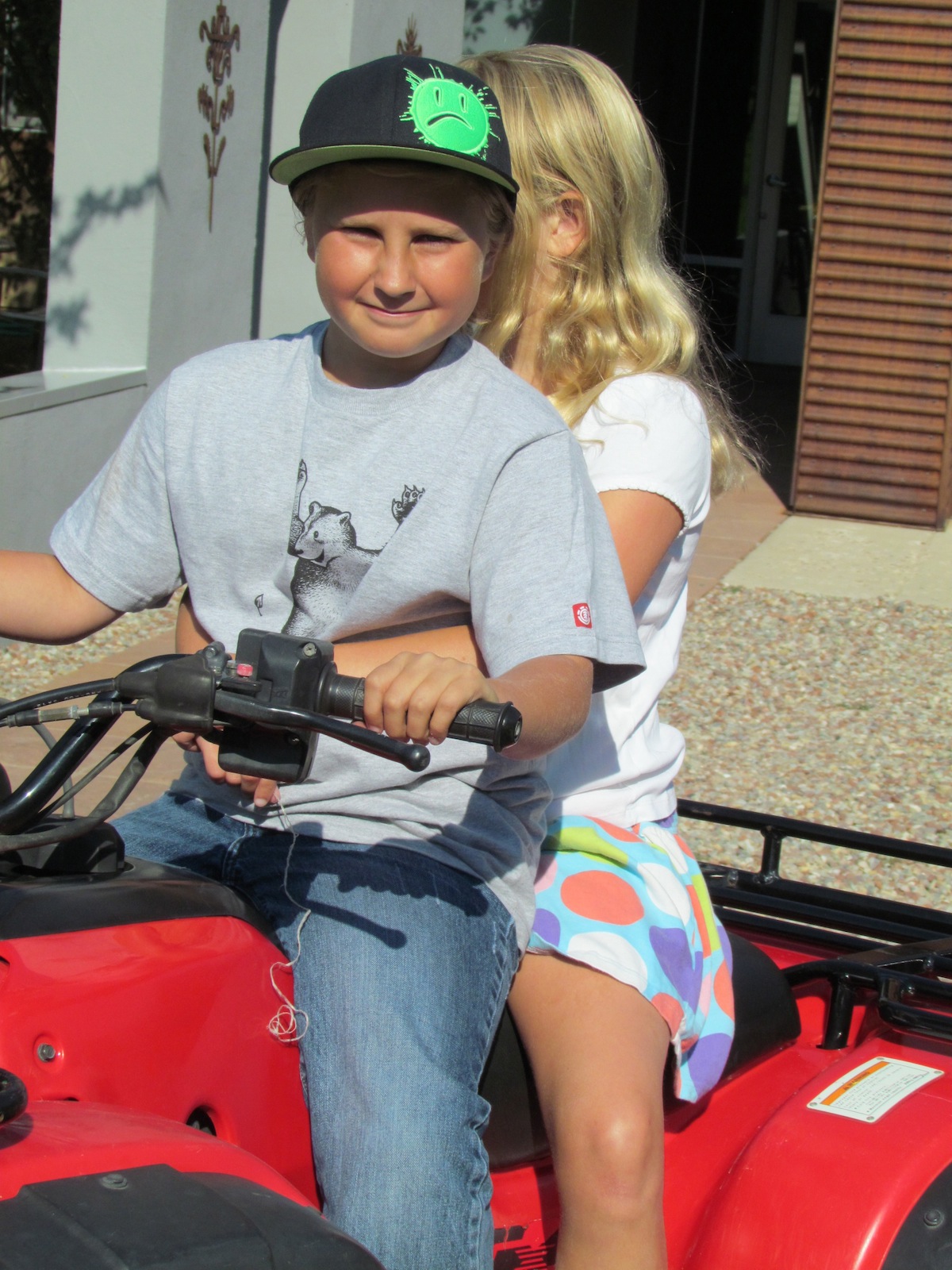
Nic has mastered the art of driving the 4-Wheeler and now takes Em around the ranch.

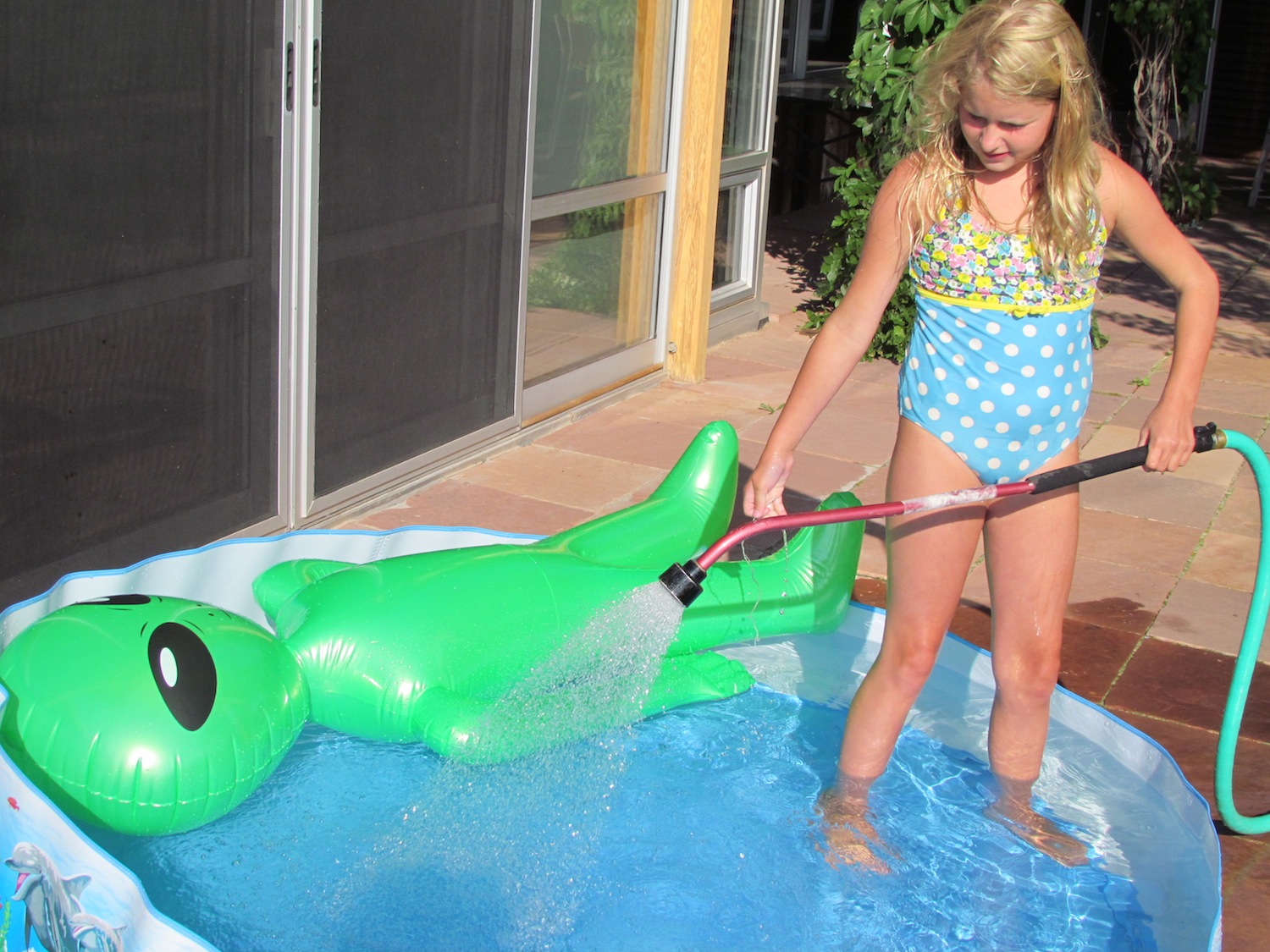
Em takes the Alien swimming

Whew!  That’s it, I’ve got 42 seconds to hit the “Publish” button!

Related articles

It’s A Man’s World – The Cabin, Outhouses, Peeing & Bladders

I have the bladder of a camel.  Only now that I think of it, this may be factually incorrect as I’m not certain camels really do have exceptionally large bladders, for all I know, they just pee where ever they are because they can, and that I’m confusing this with the fact that they go for long periods of time without drinking water, but that first sentence has a certain power to it and it gets the point across.  Okay, moving right along here…

You may wonder why I bring this up.  You may be thinking, this is not the sort of post I am interested in reading.  You may be thinking I don’t care about camels or bladders in general and particularly not hers and anyway what has this got to do with autism?  Or you may be thinking – Oh DO get on with it.. or you may be heading over to google because now you want to know all about camels, or you may be..  okay, okay.

Allow me to explain.  Both my children have, it appears, inherited my ability to not pee for inordinately long periods of time.  I can also go for long periods of time not drinking any liquids, coupled with my excruciatingly slow metabolism I could basically out live anyone should I ever be stranded somewhere, like a broken elevator, where there was access to neither.  (Oh I know.  Welcome to my mind.)  This ability to go long periods without having to pee comes in handy: long car trips, aversions to using public restrooms, and sleepovers at our cabin.

I’ve mentioned our cabin before.  It’s a rustic, one room log cabin, which my family built (literally) in the late 70’s.  It has no electricity or running water.  There is a sink with cold water piped in from the creek that runs nearby, but I think we turned that off and since no one lives in the cabin, it’s not something we bother with.  My father dug and built an open sided outhouse just up the mountain.  The outhouse is far enough away that you definitely do not want to try to go there in the middle of the night or at any time of the day or night during the winter because of the snow drifts, unless you’re wearing neck high gators.  Trust me, post-holing up the mountain at 3AM, while trying to locate the outhouse because you forgot to bring a flashlight (and toilet paper) in below zero temperatures to pee is not a good idea.  I speak from experience.

Emma LOVES the cabin, as do I and Richard, who couldn’t quite figure out the allure the cabin held, was converted last summer when he had his first sleepover there.  Nic…  not so much.  Every time we come out here to stay with my mother, it’s a given that we will have a sleepover at the cabin.  Emma anticipates this event days in advance.  “Sleep, wake-up, sleep, wake-up, sleep, wake-up, sleep, wake-up, have sleep over at the cabin!” she will say upon our arrival and before we’ve even had a chance to unpack.  “Yes!” one of us will confirm, while Nic looks at us with a look of Please-tell-me-I-do-not-have-to-go-too on his face.  (That kid has way too much attitude for a twelve-year old.)

I think I look forward to sleepovers in the cabin as much as Emma does.  Last night was our designated sleepover night.  After unpacking our things, sweeping out mice droppings, cobwebs, dead wasps, opening the windows and airing the place out I realized I hadn’t peed before leaving my mother’s house.  “Hey Em, do you have to pee?” I asked, figuring I’d take her with me, since I was going to make the trek to the outhouse anyway.  “No!” Emma said emphatically.  So off I went while contemplating the positioning of the outhouse, its considerable distance from the cabin, how inconveniently located it was, how Richard AND Nic have never even used the outhouse, how only a man would build an outhouse this far away and while it was certainly positioned in such a way that one could appreciate the view as one sat in it, how many people were seriously going to do that when it was freezing cold or in the middle of the night?  No, I concluded, this was the sort of outhouse only a man would build and then never use.  And then I bushwhacked my way back to my family.

Which brings me back to my bladder and the ability I, and both my children, have  in not needing to relieve ourselves for hours on end.  It’s a gift, pure and simple.  One that I was particularly grateful for last night, knowing that not only would Emma not require me to accompany her up the mountain at some ungodly hour, but that I would not need to go either.

It’s important to contemplate these things.

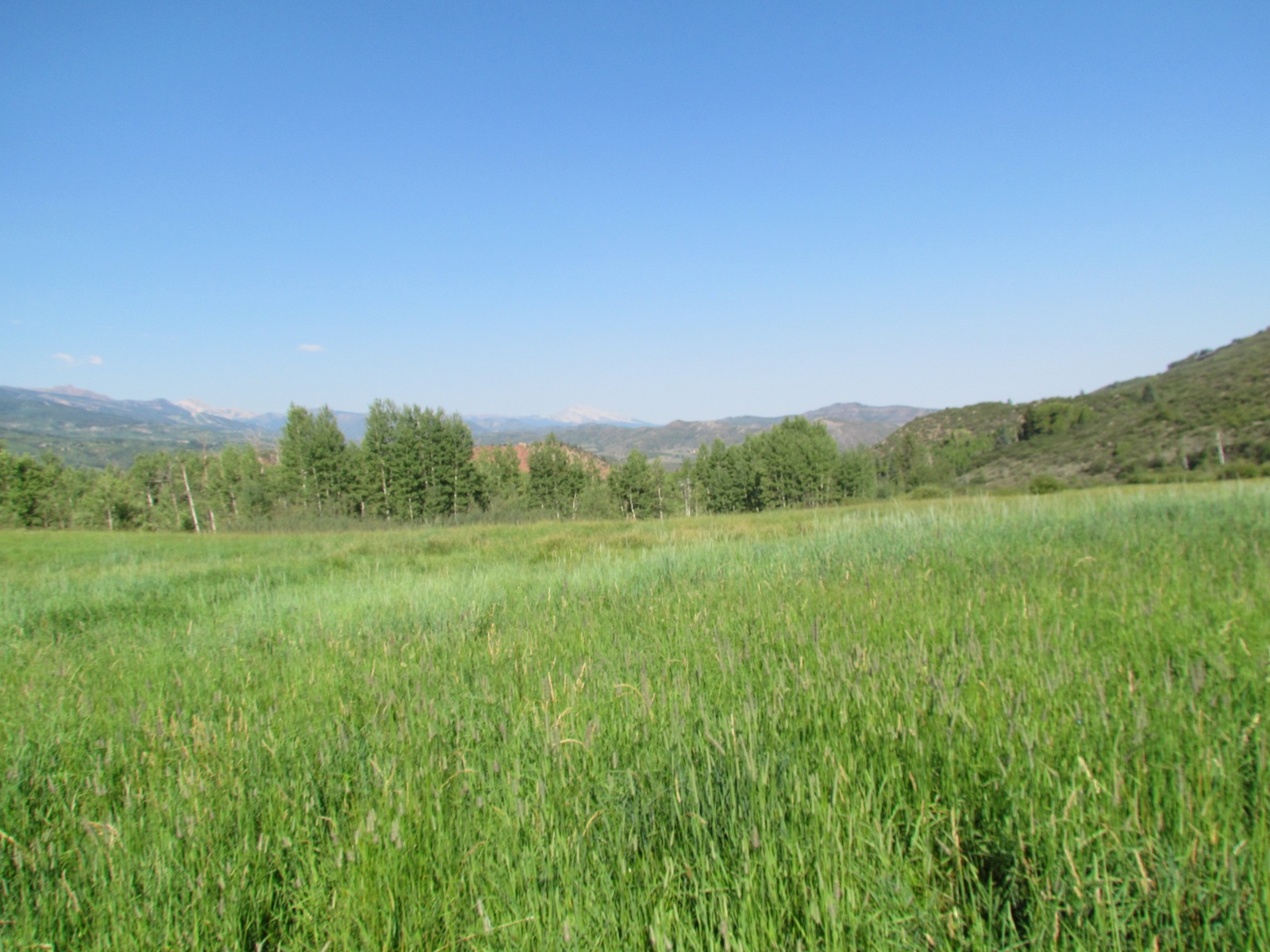
Bucks – there were three of them, but I was only able to capture two, the third is just to the right.

View of our ranch

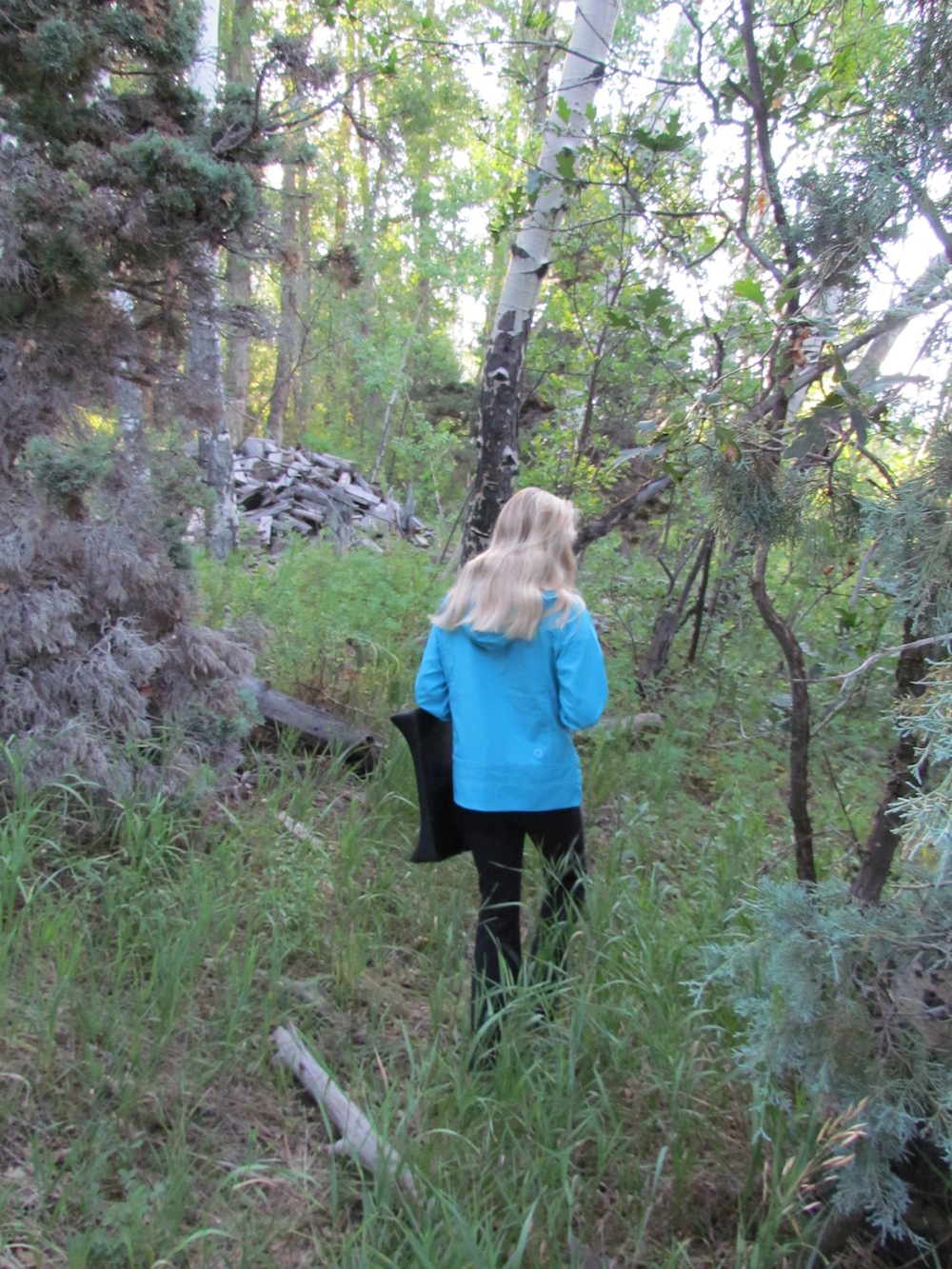
Emma heading up to the cabin

View of the Rockies from the cabin’s porch

Em heading home

Related articles

ICare4Autism – An Opportunity to Make a Difference

I attended the ICare4Autism conference in Jerusalem last week.  I wrote about this not long ago in the post Synchronicity, Jerusalem and Autism. As a quick recap Jerusalem was the place Richard and I had intended to go for our honeymoon.  Not six weeks before we were due to leave, the intifada broke out, forcing us to abandon our plans. That was thirteen years ago.  This past May I received a letter from the “State of Israel” inviting me to be their guest.

In addition Dr. Henry and Dr. Kamila Markram were presenting at the conference.  They are the neuroscientist team who came up with The Intense World Theory For Autism, the only theory to date that has validated my observations of my ten-year old daughter, Emma.  When I read they were going to be in Jerusalem this past winter I joked with Richard about how amazing it would be to meet them AND go to Jerusalem.  At the time we just laughed at the insanity of the idea and went on with our lives.  Then the invitation arrived.  I knew it meant I would need to write about the conference.  Writing about the conference was why I’d been invited.

Except I do not consider myself a “journalist.”  I am not an impartial, unbiased observer, prepared to provide an even-handed summation of my observations.  I am highly opinionated and exceptionally biased in my ever evolving perspective on autism.  I regard the motivations of most so-called autism advocacy organizations with suspicion and even outrage.  I am frequently hostile in my view of the self-appointed Autism experts, medical charlatans and other “professionals” who make a living off desperate parents, like myself.  If I had all the money I’ve spent on the various “cures,” biomedical interventions and dubious therapies we have employed over these past eight years, I wouldn’t have cared about an invitation providing me with airfare and hotel accommodations.

In less than a year, my perspective has radically changed.  Had I attended this conference last August my focus would have been on meeting as many researchers and doctors as time would allow.  I would have spent each break roaming through the many tables set up outside the conference rooms selling all manner of goods purported to help a child with Autism (and yes, that is how I would have described my daughter – a child with Autism) hoping for something that would cure my daughter with the same longing and desperation that had dragged me from one “specialist” to the next for all those years, not so very long ago.

But that was before.

That was before we began implementing Emma’s literacy program.  That was before Emma showed signs that something we tried could and would work.  That was before I read Henry and Kamila Markram’s Intense World Theory.  That was before I began reading the blogs of Autistic adults and as a result began communicating with a number of them (see yesterday’s post).   Suddenly, and it really was relatively quick,  I began to view my daughter through the eyes of someone seeking to understand rather than fix.  I began to see her actions, whether it was stimming or echolalia or self-injurious behavior – as her attempts to communicate rather than aberrant behaviors that needed to be quelled and eliminated.

Was ICare4Autism going to be different than any of the other organizations out there promoting interventions, therapies and the ever illusive and questionable promise of a cure?  The information I compiled prior to the conference did not look promising.  But, I kept reassuring myself, the Markrams would be there and if nothing else, I had set up an interview to speak with them.  Beyond that there seemed little to distinguish them from any of the other organizations using “autism” in their name.  Still I went to the opening dinner with an upbeat, hopeful attitude, eager for a better idea of the organizations intentions.  When the opening video played I consoled myself that at least the distraught parents filmed were not openly weeping and talking about their distress in front of their children.  By the way, just in case anyone misunderstands me, less than two years ago I could have been one of those sobbing parents and I would have wept in front of my daughter and spoken of her with the mistaken assumption that she couldn’t understand.  It would not have occurred to me that hearing her mother speak of a desire to cure her might have made her feel horrible, sad and depressed, things she wouldn’t be able to communicate to me, which would only further her sadness and feelings of isolation.  I get it.  Really I do.

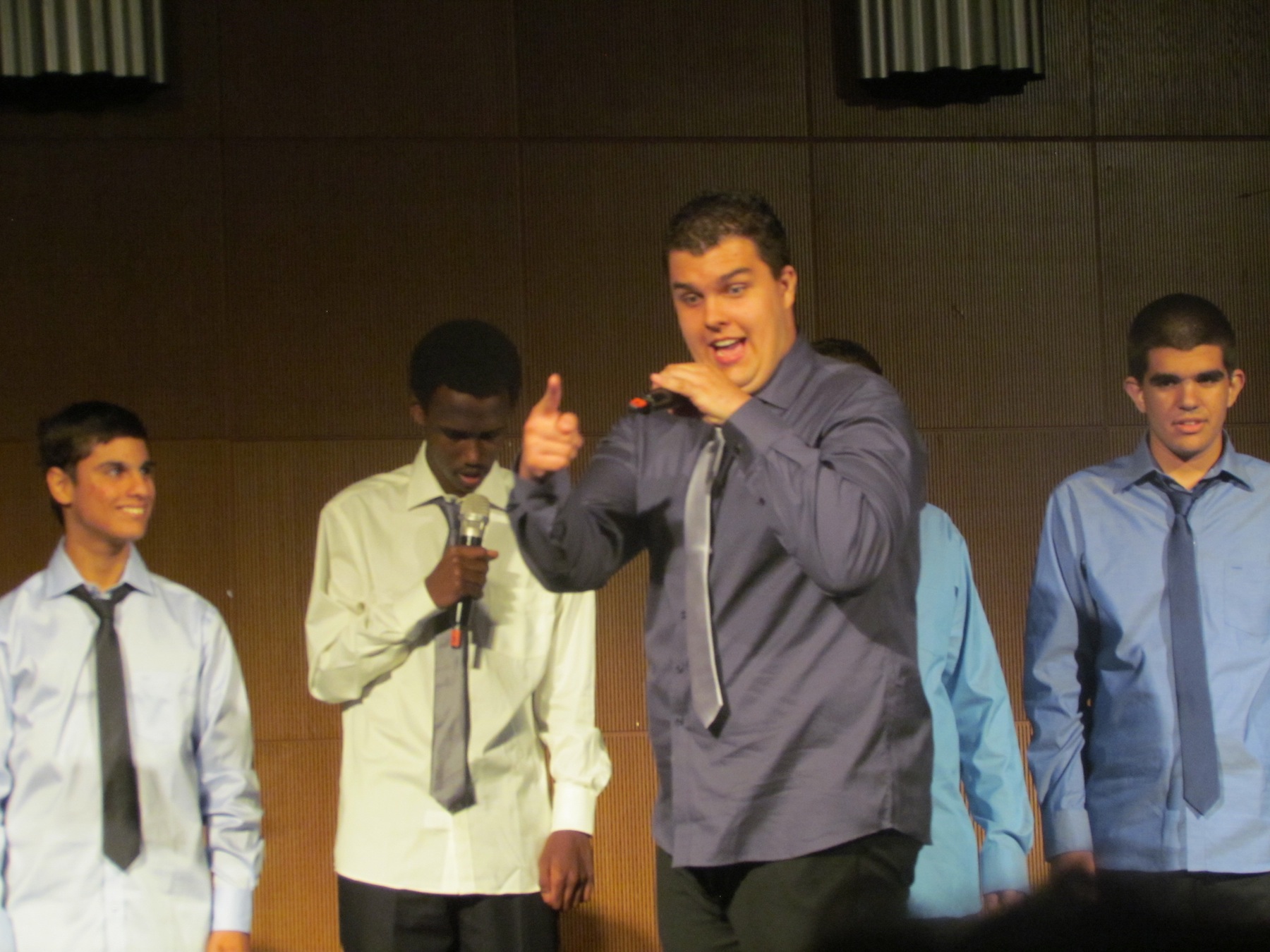
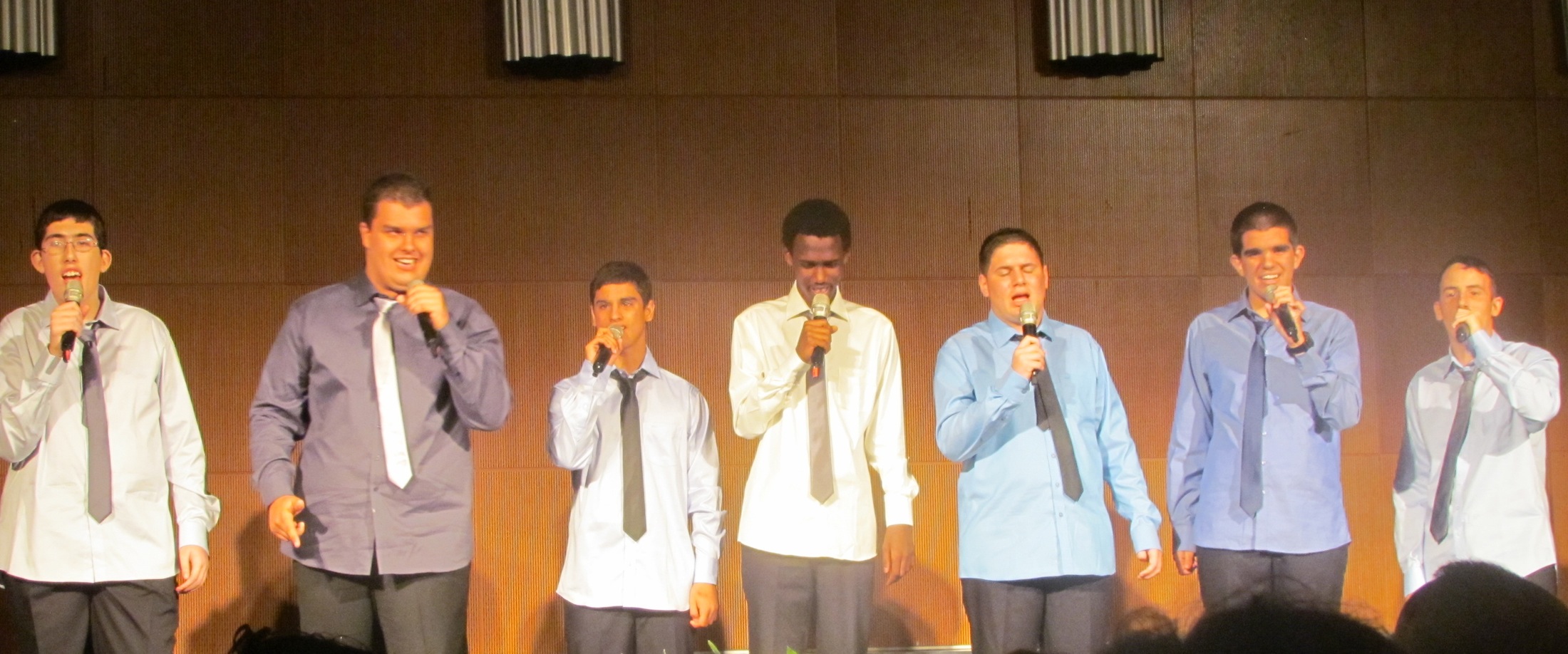
The conference began with a Welcoming Ceremony with a speech from the founder and CEO, Joshua Weinstein, who called for communication and collaboration.  He spoke of plans to move their headquarters to Jerusalem, a city with a long history of misunderstanding and strife, making his call for communication and collaboration all the more significant. The Mayor of Jerusalem, Nir Barkat spoke of his pride in hosting the ICare4Autism conference and eagerness in it becoming a world center for Autism research.  Dr. Shekhar Saxena, director of Mental Health and Substance Abuse at the World Health Organization spoke briefly as did a number of others.  And then the Autistic Boys Choir got on the stage.  Seven teenagers began to sing, their voices rang loud and clear, their pitch was perfect, their enthusiasm and joy infectious and the audience began to weep.  I was right there with them, madly rummaging around for my kleenex, trying not to let out too much noise other than the odd sniffle.   I wept from sheer gratitude, because these teenage boys/men were like my daughter.  One young man in particular who clearly reveled in performing reminded me of Emma.  So yes, I wept from relief, from joy, from seeing Autism shown not as a tragedy, but as difference and of hope for what can only be described as the possibilities, not just for our children, but for us as a society when we hand the microphone over to those we say we care about and want to help – Autistics.

Over the course of the next day and a half I tried to meet with Joshua Weinstein, but for a variety of reasons, wasn’t able to.  Then finally in the afternoon of the last day of the conference, I saw Joshua Weinstein and mustered up the courage to approach him.  I spoke to him about why the Autism = Tragedy model needed to be discarded, that while it may get people to write checks it was an unbalanced view, completely disregarding the feelings of Autistics (our children) who are being sent the message that they make their parents and families desperately unhappy, the very people who are supposedly trying to help them.  Josh was not only kind and receptive, but later thanked me for coming over to him.   He assured me that he really was interested in communicating with Autistics and would take me up on my offer to introduce him to a number of people I know, both verbal and nonverbal, and am in contact with.

Josh invited me to be on the advisory board, which I’ve agreed to.  He is working with a number of people at the UN, as well as WHO (World Health Organization) and asked that I attend the UN meeting.  He has, since we spoke at the conference called and we are in email contact demonstrating his sincere desire to follow through with his promises and words.  Am I surprised?  Yes.  I am.  But more than that I am hopeful.  Hopeful that ICare4Autism will actually include the very people they say they care about by putting them on their advisory board and by listening to them as they develop and attempt to fulfill their mission in becoming a world-wide Autism organization that does more than pay lip service to those who are Autistic.

“Caring about autism – what we know of it and how we put it in our narratives – is something from which all manner of people can and must benefit.”  Representing Autism Culture, Narrative, Fascination by Stuart Murray

Autistic Boys Choir

Related articles

To The Mayor Of Jerusalem Regarding Autism

The Mayor of Jerusalem made some remarks during the opening of the icare4autism conference yesterday morning.  The organization intends to have a home in Jerusalem and while they seem to be doing a great many wonderful things, there are a few things that are not so wonderful.  The following is a letter I wrote and sent to the Mayor’s spokesperson yesterday.

“Dear Mr. Mayor,

I am a writer and a mother of an Autistic child.  I am writing a piece I intend to submit to the Huffington Post about the Icare4Autism conference and Jerusalem’s involvement.  

I am in regular contact with a number of adult Autistics, both verbal and nonverbal, who are deeply concerned with the amount of press (almost all negative) that autism receives.  The autism = tragedy model is one they vehemently object to as well as the fact that they are rarely included or invited to be on the boards, advisory committees or consulted when organizations are formed or policy is made about them.  I am hoping both you and Icare4Autism will consider their concerns and am interested to know what you are planning for the future in this regard.  
 
Will you consider including autistic people as advisors, at the very least, who can help in creating better awareness and understanding not just in Jerusalem, but in the world?  You, Jerusalem, Israel and your association with icare4autism have the unique opportunity to do something none have done to date –  work with and help develop an organization that changes the public perception of autism by including Autistic people.  But this will require more than just one or two token Autistics, it will mean truly giving Autistics the opportunity to be a part of the development of policy and organizations meant to help them.  Autism is not a tragedy, however public perception of it is.  
 
Autism is a neurological difference from that of a neuromajority.  Suggesting cures, promoting imagery that is depressing with melancholy music, showing Autistics as burdens who are broken is something that in the US is sadly the norm.  The single largest Autism organization in the US is Autism Speaks, an organization that is abhorred by a massive number of Autistics.  The prevailing perception of autism as tragic and a devastating crisis creates more misunderstanding, panic and fear.  To be Autistic, to feel that your very existence is in jeopardy because of organizations intent on “cures” only increases that fear.  None of us make good decisions or behave well when fearful.  
 
I hope that you will consider the Autistic adults who are speaking out, who are asking to be heard, respected and given a say in organizations which use the word “autism” as part of their identity.  
 
I would love to include a quote from you on any of this.  
Thank you so much.  
All my best to you and your vision for Jerusalem and autism,
Ariane”

I am going to meet with the head of the icare4autism organization this morning and will speak with him about these concerns as well.  Keep your fingers crossed and wish me luck!

The photograph below is of the Autistic Boys Choir.  They performed yesterday at the opening.  People were openly weeping.  The performance was terrific, their voices exquisite, the joy infectious and a wonderful example of what “Autism looks like.”

 The moon over the Old City last night

Jerusalem and Beyond

Day 1

The Citadel in the Old City of Jerusalem looking toward the Tower of David.  We kept saying to each other, “I wonder where all the people are.”  It turns out it was Shabbat and Ramadan, though that didn’t entirely answer our question.

View of The Dome of the Rock

During our explorations, we found ourselves in the Old City Market along with hundreds of Muslims, Christians, Jews and tourists speaking German, French, Italian, Spanish, Russian, English and those were only the languages I could identify.  It turns out we were on the Via Dolorosa, the path Christ is said to have taken to his crucifixion.

Mountains of Spice,

Fresh Fruits,

Baklava,

and yes, even bras, but look how colorful they are and so beautifully arranged.

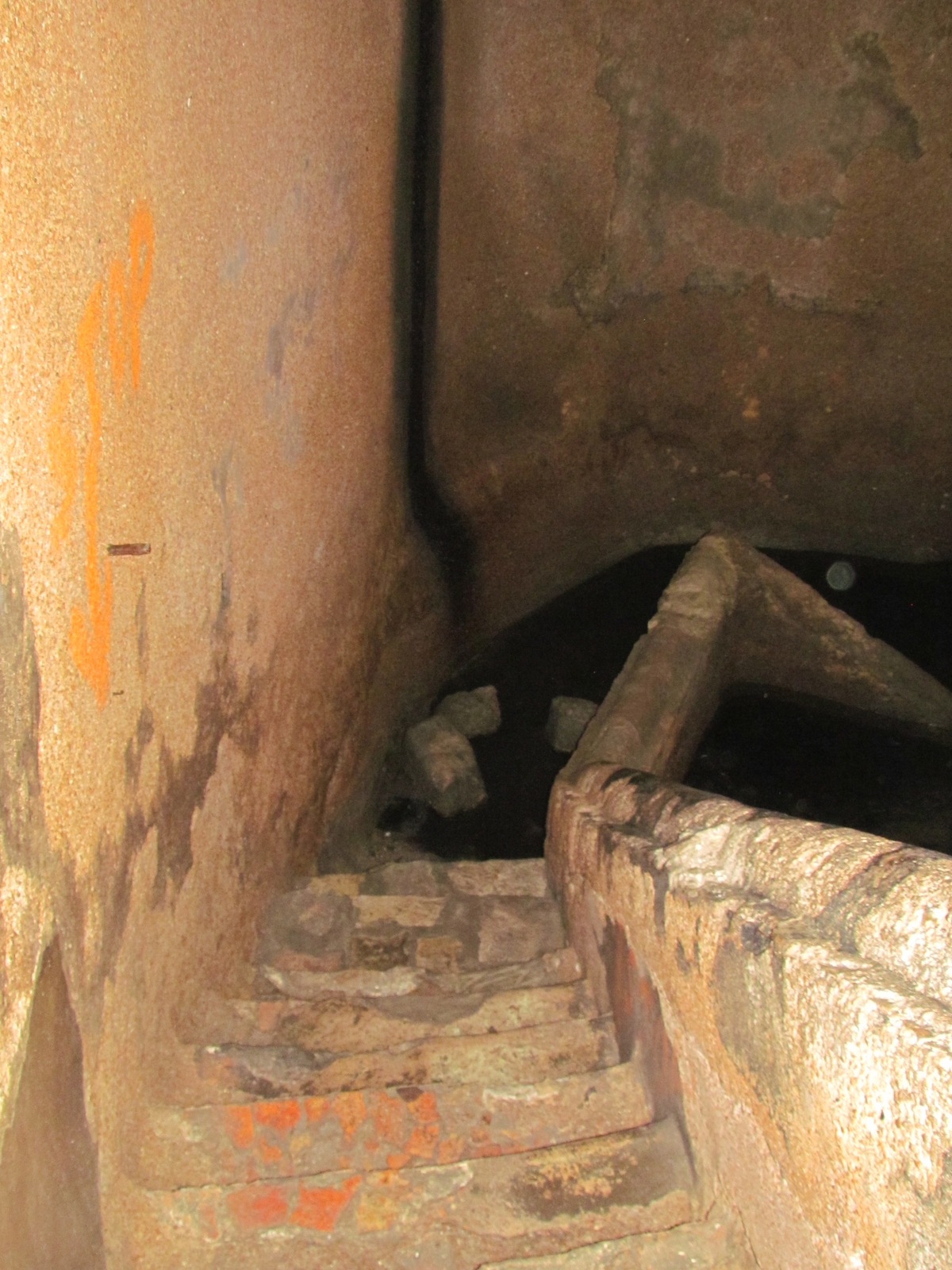
We went to the Church Of the Holy Sepulchre & The Chapel of St. Helena where we descended this…

leading to a massive cistern.  A tour guide was telling her group that the water was potable, though I remained dubious, having had too many run-ins with Giardia to last me a lifetime.

On we ventured to so many sites I’d have to pull out the guide-book to recite them all.  We sat at the entrance or was it the exit of Damascus Gate and reviewed where we were and what we still wanted to see.  We plunged back down into the depths of the market place, emerging out into the sunlight to visit the wailing wall, where I placed my hands against the giant stone slabs amidst tiny notes stuffed into its crevices, women on either side of me rocked, prayed, muttered, moaned and wept.  It was impossible not to feel the power of humility in this ancient, beautiful and complex place.

We ended the day by sitting at an outdoor café and eating falafel.

I turned to Richard as we waited for our food to arrive and said, “I’m hungry.  Do you realize we haven’t eaten anything today?”

To which he replied, “I falafel” (feel awful) before slapping his knee and doubling over in laughter at his own cleverness.

Oy.

Day 2

We spent the morning at the Holocaust Museum.  Words do not describe..  it is a powerful and painful reminder of what humans are capable of.

We drove to Masada where we roamed a fortress built on a barren mountaintop in a part of the world that gets barely one inch of rainfall throughout an entire year, during the 1st, possibly 2nd Century and further added to by Herod intent on making it into his “summer palace” complete with cisterns, hot baths, beautifully decorated walls where one can still see the frescoes, mosaic floors all  overlooking this expanse of arid land with the Dead Sea and Jordan just beyond.

and this wall…

On the way back to Jerusalem we drove to the Dead Sea where we swam or rather floated because of the heaviness of the salt water.

Salt encrusted rocks on the shore of the Dead Sea

Meanwhile, Jackie has sent me a daily update of Emma’s adventures while we are away.   Emma saying – “Cheese”

Synchronicity, Jerusalem and Autism

I am leaving for Jerusalem tomorrow.  I will be covering the Icare4Autism Conference and am meeting Kamila and Henry Markram, the neuroscientists and creators of The Intense World Theory for Autism.  I intend to continue to post as usual, Monday through Friday, but because of the time change and depending on my level of jet lag, my posting times may be a bit wonky.

I am very nervous about this trip.  Not because of the traveling, but because we will be away from Emma for a full week, which marks the longest we’ve spent away from her since she was born ten and a half years ago.  I have gone over our itinerary with her.  I have spoken to her about how many days before we return, we have studied the calendar together.  We have discussed what she will do while we are gone.  But still, I am nervous.  Whooooo.  Breathe.

Today I pack while trying to remember to breathe.  Emma will be fine.  She will be okay.  Breathe.  Try not to panic.

I’ve never been to Jerusalem and am excited that Richard will be accompanying me.  This was where we had intended to go for our honeymoon, (with our then nine month old son, Nic in tow, making it less a honeymoon and more an insanely, ambitious trip with a baby)  had made our reservations to spend Christmas Day and the following week at the King David Hotel, then had planned to spend New Years Eve in Giza at a hotel overlooking the pyramids, a week in Cairo, then a side jaunt to Lebanon and Petra before returning to Jerusalem.  In all we had planned to be gone for three weeks.  Two months before our wedding the intifada broke out and we were advised, because we were traveling with a baby, not to go.  We still have all the guide books with their dog-eared pages marking the places we’d hoped to see.

This time we will have just three days of sight-seeing before the conference begins.  But, as with so many things that have to do with Emma and Autism, the synchronicity of the following events is not completely lost on me.  Just over eight months ago our lives and by extension Emma’s radically changed because of the links I was finding to Autistic blogs.  I’ve shared those posts and blogs on here.  During that same period I came across the Markram’s Intense World Theory and Richard and I, through our research, learned they were going to be in Jerusalem in August presenting their work at a conference.  At the time I didn’t know it was a conference focused on Autism.  I remember Richard and I joked with each other, wouldn’t it be great to figure out a way to go to Jerusalem and meet them?  It was a joke, literally, neither of us for a moment seriously considered the idea.  And life continued.

This past spring, I was invited to be on a panel and give a talk at the AutCom Conference in Baltimore this coming October.  I accepted the invitation.  And again life continued.  Not long after that invitation, I received a letter from the “State of Israel” asking if I would like to be their guest to cover the ICare4Autism Conference in Jerusalem this August.  When I received that letter I read it to Richard and we just looked at one another.  I will never forget the expression on Richard’s face.  It was a slow motion grin that didn’t end with me saying something like, “How weird is this?”

Sometimes life throws stuff at you and you know, you just know you have to figure out a way to grab the opportunity.  So we did.  And now we’re going.  How exciting is that?

English: Old City Walls of Jerusalem - on Moun...

English: Old City Walls of Jerusalem – on Mount Zion – View towards the King David Hotel (Photo credit: Wikipedia)

Continuing The Conversation…

Be honest.

I’ve written about this before.  Writing, writing that really reaches out and pulls others in is about honesty.  Even if you write fiction, it’s still about honesty, the feelings portrayed, the dialogue;  it has to be honest for those of us reading or we can sense it.  We know something’s a little off.  Sometimes it’s hard to pin down, it doesn’t seem obvious right away, but I’ve found it’s because I don’t believe what I’m reading.  It’s not entirely honest.  I have had this experience with my writing.  I have written things and then wondered why it didn’t feel quite right and it’s because I either hadn’t dug deep enough or I wasn’t being honest, which in many ways is the same thing.  Self dishonesty is one of the most difficult things to spot.  I spent years and years in a place of deception, of hiding from myself, my feelings, my desires, my ambitions.  I shut down.  I hid and it caused great pain, not just to me, but to those who loved me.  It’s hard work to be honest.

A couple of days ago I wrote about labels and my struggle to understand how and why they do not apply to our Autistic children.  Why they cause damage, why they are destructive and not constructive.  As is often the case, I use this blog to figure things out.  I think of it as my sketch pad where I play with ideas and then either move on to the next sketch or work and refine.  The pieces I work on a bit more, I often submit to HuffPo, I think of it as filling in with color and others I keep working on with the hope of putting them into a book, a finished canvas (this last part is very hard for me, sketching is easy.)  But as I’ve also said, I’m a SLOW learner so sometimes ideas will fall easily onto the page, or in this case the screen, but not move beyond it.  And that’s where the work comes in.  Because ideas are great, but if I can’t take them to the next level they won’t go anywhere.  Some things seem to take me awhile to really get, to fully  incorporate in a way that they become less an idea and more a knowing.

So it was this morning as Em and I made her breakfast.  I was thinking about labels and why they matter or don’t matter and why they bother me and cause me to ruminate and at a certain point I tired of the ongoing controversy raging  in my head, so I forced myself to shift my thinking away and be present for my daughter.  I was able to and eventually off she went with Joe onto the camp bus and I turned to my email and there was Outrunning’s latest post.  Now for those of you unfamiliar with Outrunning The Storm, click on the name, I’ve provided the link.  Did you read it?  The post – How Do We Talk About This?  I’ll wait.

I’m waiting…

Okay.  So there it is.  For those of you who didn’t click on the link, skip to the next paragraph, but for those who did, and if you’re like me, you also clicked on the comments and saw the first three from Moms who got what Outrunning was saying, who’ve been on the receiving end of exactly what she’s referring to and get it.  They get it, or so it seemed to me when I read their comments.  And then there’s my comment.  Yeah.  Okay.  So I still have some work to do.  I’m pleased to say that I did go off after leaving my comment and sobbed.

I’ve been very weepy lately.  Partly I blame my husband’s absence, he and Nic remain in Colorado while Em and I are here in New York, so I’m a little off-balance.  There’s a lot going on this summer and at times it all feels overwhelming, in a good way, but never-the-less overwhelming.  But I think most of my emotional overload is due to the fact that Peyton and Dianne Goddard’s book – I am intelligent – has stayed with me, in addition I received an email from Emma (not my daughter, another Emma, who two years ago began to communicate through typing and has a blog) that both delighted me and filled me with emotion.  I asked her permission to quote her and she has given it, but I want to be sure I also respect her and so will quote just two sentences.

“me name is emma and i am like peyton.”

And this:

“i am pleased if our emails teach people how to measure words or personal stories in front of people they think cant communicate..

Emma”

Take a deep breath.  Okay.  Be honest.

I spent years doing this to my daughter, exactly what Emma is pleading that we not do.  It has only been within the last year that I have stopped doing this.  I have to make a concerted effort to refrain from the temptation.  So I read Emma’s words again.  I have memorized them.  “I am pleased if our emails teach people how to measure words or personal stories in front of people they think can’t communicate.”  Read that again.  There is no condemnation, no criticism, just a heartfelt request.

We are in this, all of us, together.  Your version may be different from mine, you may have children, you may not, you may have someone you love who is Autistic or you may not.  You may be Autistic, you may not.  But we are all, each one of us in this together.  There are Autistics calling out, trying to be heard, blogging, talking, communicating, asking for respect, asking for a chance to join the conversation.  There is no conversation if a whole group is silent.  Whatever group that may be.  We are ALL served by listening, by sharing our experiences, by trying to understand.  As human beings it is our obligation to be honest, to try to dig deeper, to listen.

Alone we can do so little, together we can do so much.”  Helen Keller

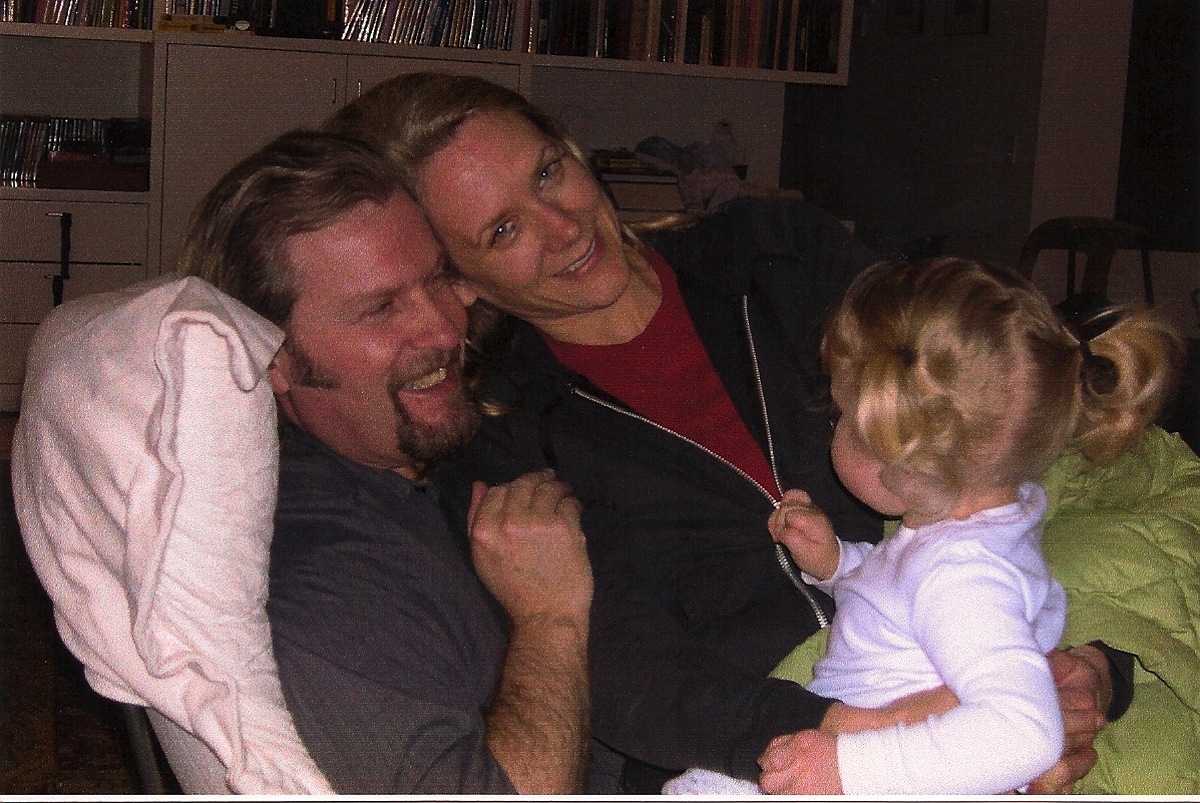
Richard, Me & Em – 2003

Nic and Emma – 2011

Related articles

A Mess, A Mom & Marriage In That Order

Mess of Me

I was a pretty messed up teenager.  I quickly developed into a very messed up twenty something, who progressed into an even more messed up thirty something.  Taking a breath.  Whoooo.  I’ll spare you the gory details, suffice it to say, I was a mess.  Another breath.  I don’t think I’ll get a great deal of argument from those who knew me then.   In fact, it took me until I was 36 to realize I was far too old to be so confused and such an utter mess.   I found people who had also once been where I now found myself, some worse, some not as bad, but they reached out and pulled me up.  Because of them I learned how to reach out to others.  I learned how to ask for support.  I learned to take suggestions.  I learned how to make amends, not apologies, amends.  I learned that in order to feel better I had to behave better.  I learned that the most important thing I would ever do in my life was to become the type of person I admired and those people all had one thing in common.  They were kind.

Becoming that person meant learning to do small thoughtful acts.  Remember I was a mess.  Doing the obvious, was not my strong suit.  I couldn’t suddenly transform myself into someone else, I had to learn to look for things that I could do to help others.  In the beginning it was things like holding the door for someone, giving up my subway seat to someone else, holding the elevator doors open for someone just entering the building instead of madly jamming my index finger at the “close door” button.   I had to learn how to refrain from letting out an exasperated and audible sigh when someone annoyed me, (still working on that one) I had to learn that sometimes saying nothing was better than saying something. This may sound like common courtesy, but I live in New York City, where holding the elevator doors for someone or relinquishing your subway seat brands you as crazy, (exaggeration) in addition I was a mess, remember, which automatically trumps being polite, thoughtful or kind.  By behaving in a way that engendered smiles and utterances of gratitude I gradually began to feel better about myself.  By helping others, mentoring other people younger than me who were also having a tough time, but who now saw a person they wanted to emulate, I began to feel I was worthy and living a life of value. I learned how to be a part of a larger group and that while I often craved solitude, I found I needed community.

About two years after I was hit with the realization that I was far too old to be such a mess, I met Richard.   We decided we wanted children, had Nic, got married, had Emma and suddenly there we were, five years later, after I had that moment of dawning awareness that there must be more to life than what I’d been living.  So yeah, I’m not a great role model in how to graciously and elegantly enter adulthood, easily taking small manageable steps until one day there you are with an infant, a toddler, and a husband.  But I had a little road map, a kind of guide-book with rules and suggestions, not literally, but figuratively and I was continuing to work on how best to behave in any given situation.  I had phone numbers and emails of people who helped me and of the people I helped too, so I felt fairly certain I could handle whatever might come my way.  But parenting is unlike anything else.

Despite what some people might think, okay strike that, no one is thinking this, but it works as the beginning to the next sentence,  I was not given a super hero’s cape along with matching Lycra body suit with the word MOM in dayglo colors emblazoned across the chest when my son was born.   I did not, after 38 hours of natural child-birth suddenly find I could dash into arbitrary enclosed structures, don my supermom costume and reappear in all my lycraed, daygloed glory with  powers of insight, lightening quick reflexes and the infallible ability to intuit what my son needed and wanted at any given moment of the day or night.  Ditto when my daughter, Emma was born.  No handbook came with either child, carefully guiding me through their very specific needs and issues.  Nic cried and held his small hands over his ears when a siren went by or the subway came to a screeching halt in front of us, Emma screamed from internal discomforts none of us could see for the first few months of her life.  Who knew?  We certainly didn’t.

We humans, we come with baggage.  Some have more than others.  Me, I came with a couple of steamer trunks, but I also had that well-worn guide-book from when I was such a mess and couldn’t figure out whether it was better to keep sleeping or wake up and do something.  It was and is my lifeline.  It’s expanded to include lists of blogs, twitter contacts and Facebook friends all of whom I can reach out to.   You see, I now have hundreds of people I can interact with and these people are my community, my tribe.  Sometimes we behave badly, sometimes we don’t agree.  But I know hiding is no longer an option.  Checking out doesn’t work.  The only way out is by staying in.  I know I’m not alone.  I’ve learned that it’s perfectly reasonable to not know or understand something and this is something I have learned from my Autistic friends, the beauty in asking for clarification.  It’s okay to not understand as long as you are willing and want to understand.

There is a great deal of talk about Autistic children.  There is a tremendous amount of fear that if we miss that critical period of our child’s first five years, all is lost.  But we humans have a tendency to grow and progress throughout our lives.  Some perhaps more than others.  I cannot speak for others, but I can speak for myself.  I am not the person I was in my teens, my twenties or even my thirties.  I figure as long as I keep my mind curious, my ideas open to alternate views and continually engage in conversation I will not stop progressing.  There is always hope.

I Think I Finally Understand – But I May Still Need Your Help

I am reading I am intelligent by Peyton Goddard and Dianne Goddard with Carol Cujec.  I am not finished yet.  It is a powerful, beautifully written tale of triumph about Peyton who was denigrated, undermined, diagnosed as “mentally retarded” believed to be incompetent then learned to communicate through a facilitator as a young adult and proved everyone wrong.  Peyton’s story is shocking, heartbreaking and revelatory.  Her mother writes with a poetic beauty about her own evolution as she worked to help her daughter, refusing the labels being applied and yet allowing that they seep into our thinking unbidden despite our rejections of them.  I have been  unable to think of little else.

As I read Peyton’s and her mother’s words I finally understood why so many object to the labels of “high,” “low,” “moderate” when describing an Autistic person.  This is a concept I thought I understood, I certainly understood it intellectually, but I didn’t feel I completely understood until I was about half way through this terrific book.  I have felt uneasy when people have rejected the delineations for autism.  A  little voice in my head whispered those clichéd words, yes but if their child weren’t so high functioning they wouldn’t be so quick to dismiss these terms.  I admit to having felt uncomfortable and even upset when I read accounts of other parent’s struggles with their brilliant, verbose, hyperlexic children.  What I would give to have a child who could speak and think circles around me, I thought with envy.

Mostly I’ve remained silent, understanding that my thinking was limiting but unable to work out exactly why.  I felt the pull of other parents whose children are non-verbal, some violent in their frustration to be understood and unable to communicate. When those parents used the word “severe” it was a short-hand I thought I understood.  Yet, I read a blog of a parent who described her two children as being “severe” and then felt confusion when I read her posts because the children described were academically and verbally much more advanced than my own “moderately” Autistic child.  But I said nothing and tried to move on, understanding that I didn’t understand.

Finally I sent such a post to a close autistic friend whom I trust and knew would not judge me harshly.  I ranted and admitted how I felt.  She was patient with me.  She gave me the space to be confused, though it must have been difficult to stay calm in the face of my non-understanding.  Particularly as she is one who could be labeled “high” functioning and yet her teeth cause her pain when she is lied to, she suffers migraines and becomes overwhelmed, yet feels she has to pretend that she’s fine.  She carries the weight of not wanting to burden those who love her, because she “should” be able to deal with the things that she cannot.

As I read about how Peyton started to communicate by typing and how people began to see how intelligent she was, a little light went off in my brain and I got it.  Because (and this is probably obvious to many of you already, but I’m a slow learner you see) Peyton was labeled all sorts of things by people throughout her childhood, but those rating systems did nothing but hurt her.  Not one of them actually helped her, they didn’t support her, they were used to further segregate her and they were used by some to abuse her horribly.  As I was reading, I thought, right because Emma is considered “moderately” autistic, but she’s not moderately intelligent.  Her intelligence is extremely high, so what does moderate really mean.  Is that how she “seems” to neurotypicals?  But how is that helping her?  It doesn’t help her.  In fact, by thinking of Emma as moderate or severe or mild she is being limited.  If someone who is thought of as “high” functioning then can’t cope in a crowded place with fluorescent lighting and begins shouting and flailing about, the common thought is, well he could control himself, but is choosing not to.  Just as a “severely” Autistic person is an inspiration and miracle when they are able to express themselves and communicate their thoughts to those who had slapped a low IQ on their charts.  These ratings become the method by which a human being is seen as non-human or less human.

In my enthusiasm I wrote to my friend, Ib last night.

Me:  I think I finally understand what you and others have meant about characterizing autism in terms of mild, severe etc I suddenly had a brain flash and I think I understand why.

Ib:  Oh thank heavens 😀

Ib reminded me that the scaling system is ineffective as a descriptive device as children grow, progress and become adults where they continue to grow, evolve and progress.  I thought of Peyton finally finding a way to communicate in her early twenties.

Ib said, “You wouldn’t grade me now as you would grade teenager me the level doesn’t stay we grow, like anyone else.  I remember things that is why I can suggest to you what Emma may mean with levels-thinking, you may never have seen me as a resource because “Ib is not like my Em” but you see that I am.”

Ib is right.  She is my friend, first and foremost, but she is also someone I rely on to help me understand.  Because there is so much that I don’t.  But with help I can.

I would love to hear from anyone who cares to chime in here.   If I’ve been disrespectful, please let me know.  I think I’m getting it, finally, but I want to hear from all of you.  I need to understand this.  For my daughter’s sake, I have to understand and she can’t explain it to me…  yet.

Look! She’s a Therapist, She’s a Teacher, No She’s a Mom

Sometimes it all feels wrong.  You know?  We’ve been working with Emma on her literacy, reading, writing, typing and then a couple of months ago I just couldn’t keep doing it.  I hit a wall.  I kept telling myself, you’re just tired.  You’ll get back in the saddle, give yourself a break, you’ll feel more energetic, you will.  You just need a little break.

But now it’s several months since I gave myself that little talk and I am no closer to “getting back into the saddle” than the day I said all of that.  And here’s the thing…  when Em was first diagnosed, we did what everyone advised us to do.  We fought and were given 40 hours of ABA, we were trained to continue the ABA after the therapists went home and during the weekends.  Emma was bombarded.  We called it baby boot camp.  It was horrible.  I hated it.  I remember saying to the diminishing few who’d listen, But I don’t want to be Emma’s therapist.  I want to be her mother.

I use to sit with Nic and Em in our big rocking chair, we still have it.  We still fight over who gets to sit in it, though these days, Richard has successfully commandeered it as his own.  But when the children were still little, it was mine, all mine and I’d sit in it with both children in my lap, holding them, rocking them.  Smelling their heads, that smell that only small children have, that smell that no one’s managed to bottle, but that if anyone did, they’d make millions off all us moms.  I loved my new role as mom and I wasn’t thrilled to trade it in for therapist/autism mom extraordinaire.

What was so wild about those early days was how all the “experts” I listened to, I believed they knew better than me.  Despite the fact I kept reading the masses of research saying how little we actually knew, how much we had to learn, there was never any shortage of people who seemed to think they knew it all.  Funny that I never thought to question them in the beginning.  Or more accurately, I did question them, but I tamped those questions down because I so wanted to believe, I needed to believe that someone somewhere knew what the hell they were talking about.

But they didn’t.  Not really.  They certainly didn’t know about Emma.  Every single thing anyone in the field of autism predicted about Emma has proven incorrect.  Everything.  It’s kind of astounding.  But it’s true.  “Oh, she’ll be mainstreamed by the time she’s in kindergarten” they assured us, always with the codicil, “if you keep doing ______  (fill in the blank).”  “You’re fortunate she’s so mild.  She’ll be one of those kids who loses the diagnosis,” they’d say with a tone of certainty.  And so we put our better judgment aside, we tamped down our questions, we trained, we worked with her, we questioned her, we showed her the flash cards with the bike and the green t-shirt and the yellow car, we played umpteen games of peek-a-boo and sang the ABC song and Head, shoulders, knees and toes for the nine hundredth time, never questioning why we were doing this.  Never asking ourselves, is this really the best way to spend our time with her?  Are any of these things remotely meaningful to her or are we doing this because this is what a neurotypical child would sing or play?  That Emma was not a neurotypical child was, evidently, not the point.

Now Emma’s ten.  If you ask her, she’ll tell you she’s nine.  I keep meaning to teach her the old, don’t-you-know-its-rude-to-ask-a-lady-her-age routine, thus letting her off the hook.  Because really, who cares?  We ask each other questions like “how old are you,” which is equivalent to the adult question, “what do you do?” but it’s really a way to fill in the silence.  A silence that can be painful.  A silence that doesn’t right the feeling that it’s all wrong.  So we fill it in with words and ideas and studies and tests, but we don’t stop to think, what exactly are we testing?  What exactly are we studying?  What exactly are we doing?  If we test someone and make conclusions based in neurotypical thinking aren’t we missing the point?

I spoke with an Autistic friend yesterday.  She told me she was given a standard IQ test where she proceeded to get every single answer right, so they kept giving it to her, trying to figure out how it was that she was getting all those answers right because she presented as having so many other “issues” and was clearly autistic, they concluded that something was wrong with the way the test was being given.  Meanwhile she thought it all great fun and each time they gave the test to her, she just dug in and cheerfully gave all the correct answers again and again, confounding them.

Which brings me back to all these therapies that require parents to become teacher and therapist.  I’m not a teacher for good reason.  I do not have the skills or the desire to be.  And while I’ve stepped up to the proverbial plate again and again to do what needed to be done, I don’t want to continue.  I want to be Emma’s mom.  I like being Emma’s mom.  I love reading to her and playing with her and dancing with her and being silly and making stupid faces and making up ridiculous sounding laughs and running around pretending to be a monster and cooking with her and showing her how to fold and sort the laundry and how to brush her hair and give her pedicures and manicures and run through the sprinklers together.  I don’t want to be her teacher too.

And maybe, just maybe I don’t have to be.  Maybe all those experts and autism specialists are wrong.  Maybe I can just be her Mom and that’s enough.

Do We Really Believe the Things We Tell Ourselves?

There was an exercise I was told about in high school.  I was told to hold my arm out, while repeating to myself, “I am strong, I can do it, I am strong,” while the other person tried to push my arm down.  Then I was told to rest for 30 seconds, and hold my arm out again, but this time repeating, “I can’t do it, I’m a failure, I can’t do anything,” while the other person tried to push my arm down.

Have you ever tried this?  If you haven’t, do.  It’s an amazing example of how powerful self talk is.  (Richard just came in and I tried it with him.  “Wait do it again,” he said.  We did with the same results.)   I was able to push Richard’s arm down both times, but it was much harder when he was repeating to himself that he was strong and could do it.

It made me wonder how that same exercise would work if the other person said, “you’re strong, you can do this,” even if I didn’t say it to myself.  So I tried that and it helped a little, but not as much as when I said it.  As I was thinking about all of this, I thought about how Emma will often walk away if asked a question I know she knows the answer to.  Such as, “Emma what color is the 4-wheeler?”  She will walk away, as if to say, “Why are you asking me such an idiotic question?  Why should I even bother answering this question?”  I don’t know that this is what goes through her mind, but recently AspieKid wrote in a comment (he gave me permission to reprint his reaction to Simon Baron-Cohen‘s flawed Sally-Anne test) the following:

“Here is what would have gone through my mind if I were part of that study.

The researcher would set up the test, and then ask me where the other kid would look for the ball. My mind would have raced through its usual sets of combinations and permutations and a logical consideration of the question. But I would not be thinking about what researchers would have expected me to think about. I would have been thinking things like, “Why are they asking me this? Sally and Anne don’t even exist. I have no way to know where people would look for a ball, and even fewer ways to know where non-existent people would look for it. Even if the person were real, I have no information about their intelligence or their sanity, and no reason to assume they would look in any particular place. Nor do I care. Furthermore, there is no consequence for guessing the wrong answer and no reward for guessing the right answer, so it doesn’t matter what answer I give at all.

When I was a kid, those thoughts would have gone through my mind in a couple of seconds. But I would not have expressed any of those thoughts. I would have said as little as possible and probably made no eye contact whatsoever. I probably would have felt uncomfortable being there.

I probably would have thought the researcher was both stupid and insane, and he was assuming that I was both stupid and insane as well. I might have felt a little nervous about being around someone who asks such senseless questions. I might have tried to make like an ostrich and bury my head in the proverbial sand so they would just leave me alone, but that would probably not work. In that case, I would have given them any arbitrary answer that would get them to leave me alone as fast as possible so I could return to my own thoughts.

That’s mostly how I treated schoolwork too. I knew I was smarter than most people (even my teachers), but I had no interest in proving it to anyone. I was a genius (by IQ) but I did not do well in school most of the time. I did what I needed to do to get them to leave me alone, that’s all. The Sally-Anne test was based on the false assumption that autistic kids are eager to share their ways of thinking with researchers, but in reality I think most of them would rather just be left alone. I’m going to go out on a limb and say that most of the autistic kids who participated in the Sally-Anne test probably put almost no thought into that researcher’s question, nor did they have a reason to.

Like the old saying goes, “if you ask a stupid question, you’ll get a stupid answer”.

This comment from AspieKid was beautiful in it’s explanation of how we NTs “dumb down” our language, assume incompetence in the face of silence.  Assume someone does not understand the question when in fact, as AspieKid so eloquently states, this is not the case at all and is quite the opposite.  How do years of these kinds of interactions effect someone?  How do you believe in yourself when everyone around you assumes you’re incompetent.  How do you fight against those perceptions?  Do you even try?

How do we instill positive self talk in another?  Is it enough to tell another person they can do it?  Is our belief in them enough?  When we model that kind of belief in ourselves, are our children able to see that and incorporate those behaviors?

Career, Parenting, Autism and Cultivating a Moral Imagination

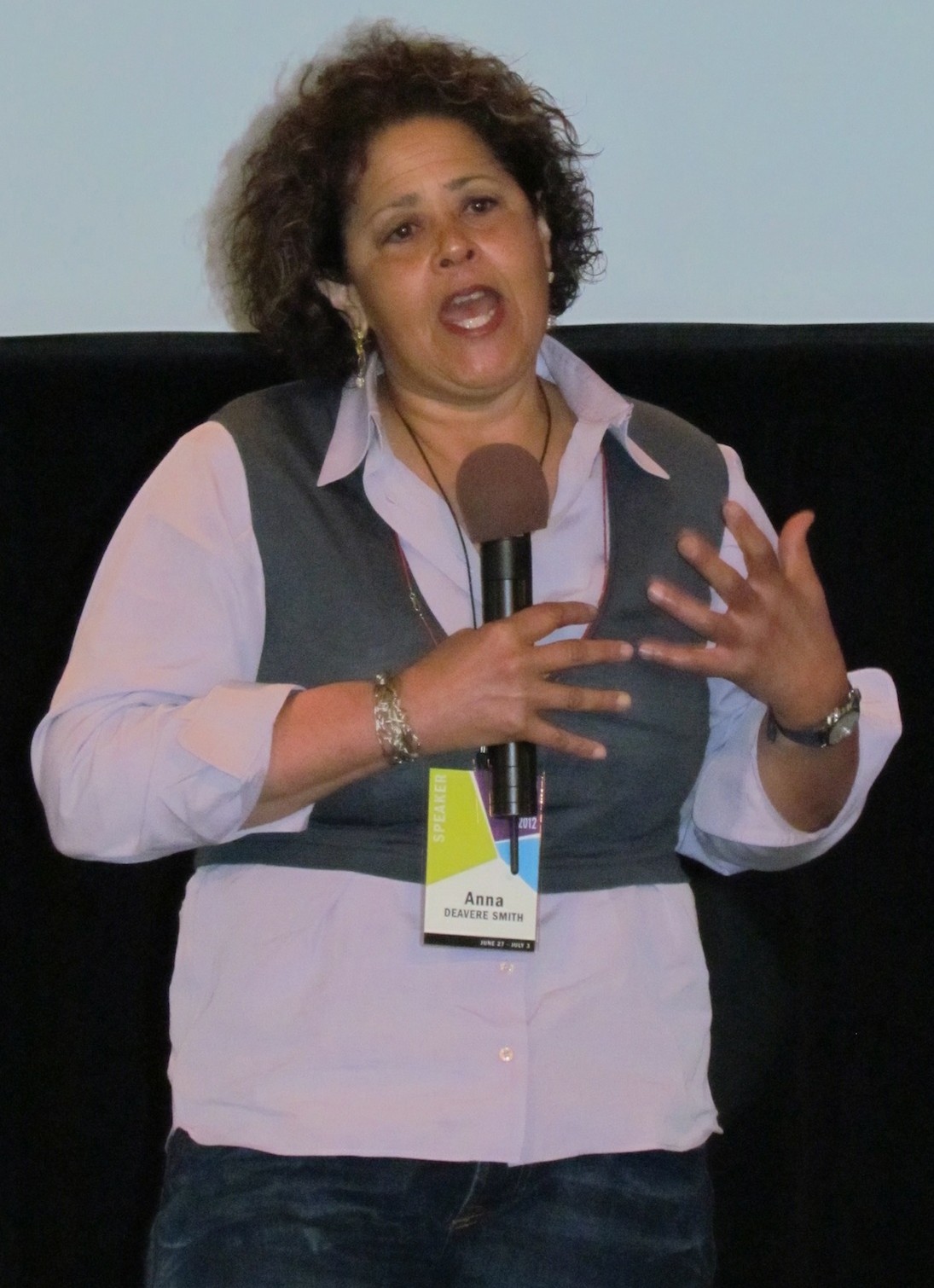
I’m attending the Aspen Ideas Festival from early in the morning until late at night.  Richard and I have joked that the Aspen Ideas Festival is summer camp for adults, minus the swimming, boating or water skiing activities.  As I am there almost constantly, Emma really misses me.  “Go with Mommy?” Emma asked yesterday morning as I got ready to attend a 7:45AM session on “Our Moral Imagination” with Jane Shaw, introduced by Anna Deavere Smith (I’m giving myself a shameless plug now) who was wearing Ariane Zurcher Designs 18 Kt gold earrings with Australian pearls.

For the Aspen Ideas Festival I am wearing my journalist’s hat.  “Come with me and Granma, Em.  She’s going to drop me off.  Do you want to come?”

“Yes, Granma and Mommy and me, go together,” Emma said, pointing to each of us.

“Right, but I have to go to work, so I’m going to get dropped off and then you and Granma will come back up to the ranch, okay?”

“Yes,” Emma said, but she looked sad.  “Mommy has to work,” Emma added.

I love working.  I’m lucky to have writing and design both of which I love.  My ambition is something I have only recently allowed myself to really appreciate or even recognize.  For years I felt the pull of guilt when I went off to work, and while I still do at times feel that familiar tug, I no longer condemn myself for loving what I do.  Loving work does not take away from the love I feel for my children.  It isn’t either/or.  It’s not as though enjoying a career means I do not enjoy and want to also be with my children.

I spent yesterday going to a number of sessions, the first beginning with the inspirational Jane Shaw who is a British Anglican priest and scholar as well as Dean of Grace Cathedral in San Francisco.  She spoke about empathy and asked, “Can we really command someone to love?”  Jane suggested art and poetry are doorways into another’s soul.  I immediately thought of nonverbal Autistic, Amy Sequenzia’s poem, Happy To Be Myself.  Jane spoke about empathy which she described as “a deep responsiveness to that which is different from us.”  I thought of my Autistic friend Ib, whose compassion and empathy is a lesson all humans would do well to learn.  And I thought of Emma.  I thought of my journey from trying desperately to find something that would change Emma’s brain to responding to the little girl who is right in front of me.   A journey that has taken me from striving, to being.

Throughout the day, Jackie texted me photos of Emma.

Emma goes bungee jumping

Emma on top of Aspen Mountain (notice the pose!)

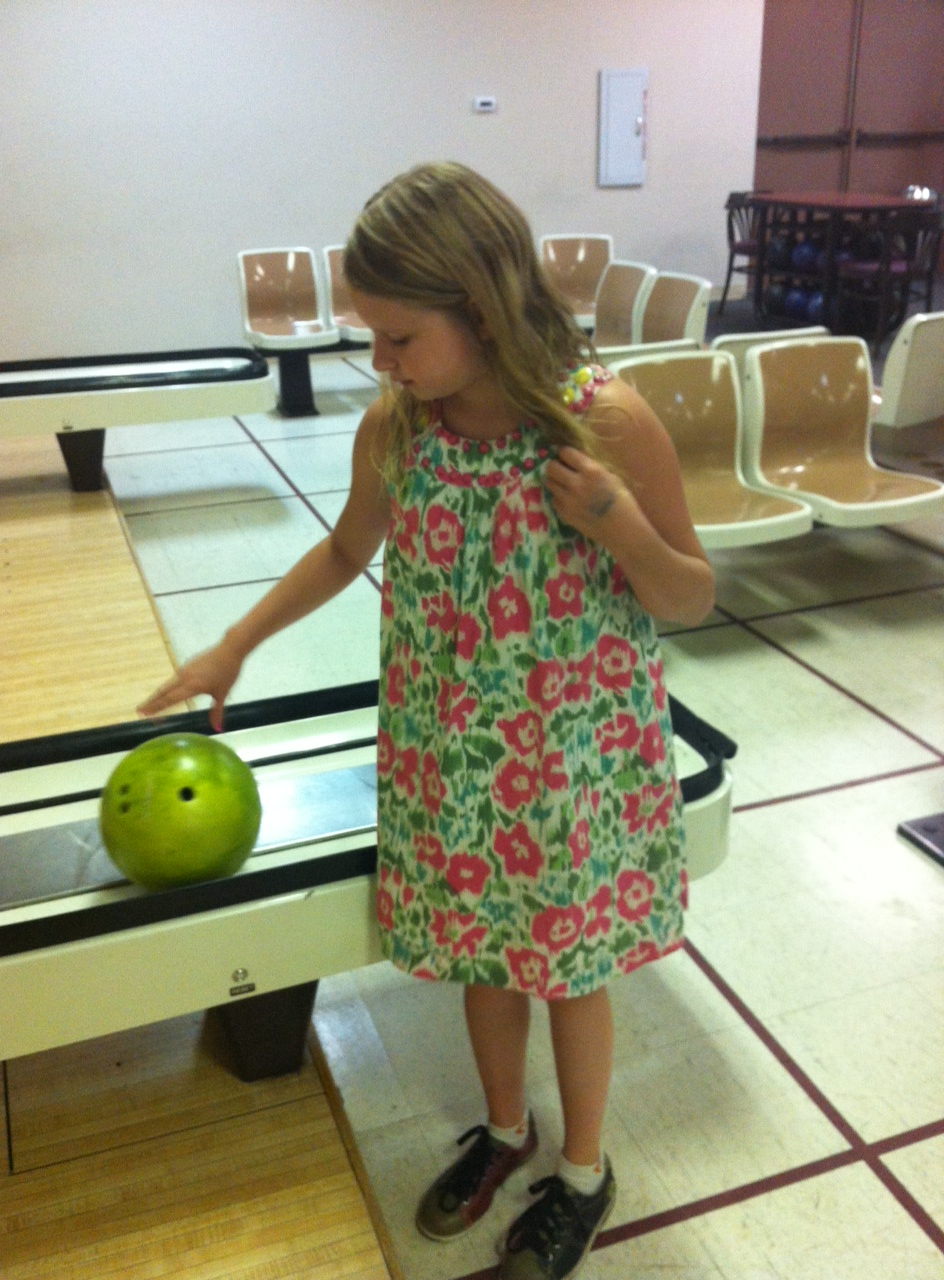
Emma goes bowling

Even when I’m working, I carry both my children in my mind.  I think about them, I wonder what they’re doing.  I hope they’re okay.

“How are we motivated to think about what it’s like to be another person?” Jane asked early in her presentation.  I thought about how for me, it began with tremendous pain, which led me to search, find and finally listen to Autistic adults.

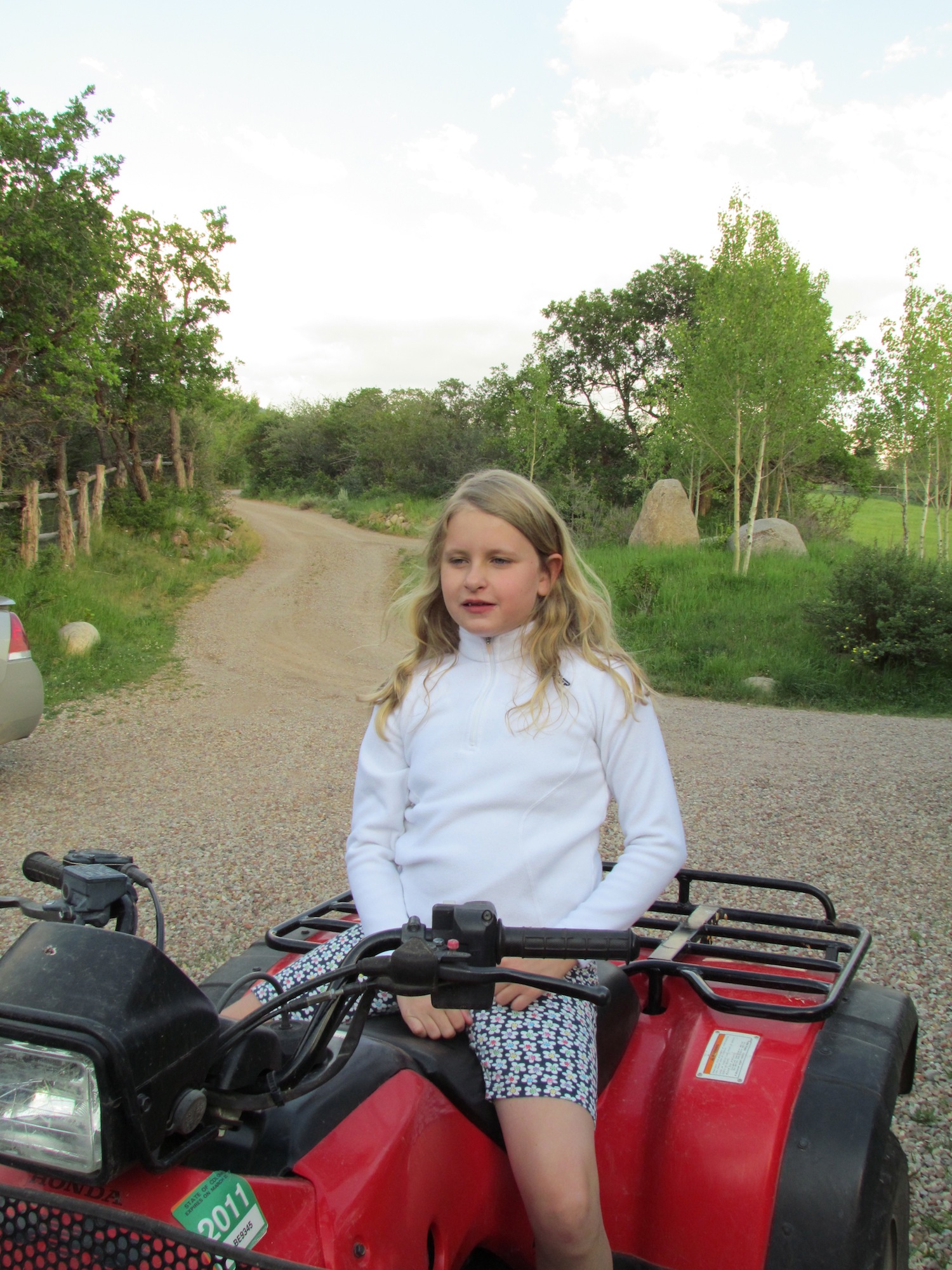
This photograph looking west to the ski area known as Buttermilk, with Highlands to the left was taken from our ranch road when I took Emma out on the 4-wheeler last night.  Or as Emma calls it, “Emma’s red 4-wheeler.”  And she’s right.  It is hers.

Ideas About Autism At The Aspen Ideas Festival

I’m attending the Aspen Ideas Festival for the next six days.  As a result I am meeting a great many interesting people.  But many people who see my Press badge are curious, what do I write about?  How is it that I’m at the Aspen Ideas Festival?  Inevitably the conversation comes around to autism, because let’s face it, that is what I write about more than anything else.  Autism is something that everyone has an opinion on, or if not an opinion, then a great many ideas.

Most of the comments I hear are in the – It’s an epidemic, vaccines must be the reason, or questions about where on the spectrum my daughter Emma falls.  If I say something positive about my daughter, they usually respond with the mistaken assumption, “Oh she must be Aspergers,” or “You’re so lucky she’s so “high functioning.”    As though that could be the only explanation for words that aren’t negative.  Amy Sequenzia eloquently describes her journey from ableist to advocate, on the blog, Autism Women’s Network.  It is the single best description I’ve read, which explains beautifully how our perceptions and ideas about autism affect those who are autistic.

Often people want to tell me stories about someone they know whose cousin, brother/niece/son/grandchild/best friend’s step brother/best friend’s neighbor, is autistic.  Sometimes people are genuinely interested and will ask me questions, but most of the time, they prefer telling me about that person they know twice removed who knows an autistic person.  There is a tremendous amount of fear out there.  I hear it all the time.  People talk about autism with the same grave tones they speak of the environment.

So I wasn’t surprised this evening when I met a couple who’s close friend’s grandchild was autistic.  “It’s so sad, just awful,” the woman said.  And then shaking her head she added, “It’s such a dreadful disease.”

“Actually it’s not a disease.   It’s not contagious.  It’s neurological,” I interjected.

The woman paused and stared at me and then said, “It’s horrible.  Very, very sad.”

“I don’t see it as a tragedy,” I began.

“Oh,”  The woman interrupted me, “well, of course you don’t.”  She took a step back and smiled.  And just like that, the conversation was over.

When I have these sorts of conversations, I see just how far we have to go in educating the public.  I know we will have to undo centuries of ingrained thinking about disability.  I understand that some people will never be convinced.  I hear others who have an opposite and yet equally unrealistic view of autism.  They are the ones who usually bring god into the mix, or talk about angels, or how these children are all geniuses or shamans, but whichever extreme they choose it is still an extreme and both do damage to those who are living their lives on the spectrum.  Whether they are being condemned as a tragedy or placed on an altar, they are being put in an impossible position that does nothing to actually help them.

It’s tricky.  How do you think about someone who needs tremendous support?  For many it is impossible not to project pain, suffering and the idea of tragedy onto them.  But very few people I know who are autistic or disabled want pity.  They want help, support and acceptance so they can flourish.  Pity or the converse of that, adulation, holding them up as divine creatures put on earth to teach the rest of us some hard-earned lessons, is not something I’ve ever heard an Autistic say.

One of the presenters at the Aspen Ideas Festival, Louie Psihoyos, who directed the amazing Academy Award winning documentary, The Cove, said during the Festival’s opening, “A few thoughtful people can change the world.”

I believe that absolutely, I believe.

Emma on the 4-Wheeler

Acting Out Emotions and Pink Fingernails

Emma came home yesterday afternoon and showed me this.

“Pink,” she said proudly.  Jackie had taken Emma for a manicure.  And not only had Emma sat still for it, she liked it!  I’ve been giving Emma manicures and pedicures since she was a baby.  She likes having her toenails painted, but never her fingernails.   This was a first!

That afternoon we took the children swimming.  While Nic and Richard threw a football back and forth, Emma and I sat in the shallow end and Emma said, “No Sarah cannot throw the bottle.  Sarah!  You have to leave the room!  Sarah is sad.”  Emma then looked very sad and nodded her head.

Suddenly I had an idea from my conversation with my friend Ib, who has told me about her theatre training and how much that’s helped her.  I couldn’t figure out how to get Emma to act out the emotions she was saying, so instead I said, “Hey, Em, I’m going to pretend to be Sarah, okay?”

Emma nodded her head and grinned.  “Yeah, Sarah is sad,” she repeated.

I began to pretend-cry.

Emma watched me for a second with a little frown on her face and then she said, “Soufien is so angry!  Grrrr!”

I shook my fist and pretended to stomp my foot under the water while grimacing, “Oh!  That makes me so angry!”

Emma smiled, “Justus is happy!”

We went on like this for almost twenty minutes with Emma attributing an emotion to a child in her class and me acting out the emotion, though I did stumble a little on “shy.”   These are all emotions Emma has read about in the book – The Way I Feel – by Janan Cain.  Emma adores that book.  We’ve gone through at least three copies of it over the years.  But what is interesting is that Emma was taking all the emotions described in the book and applying a child she knew to each of them.  I don’t know that I’ve had a back and forth interaction with Emma that has ever lasted this long.  It was incredible.

When we got home, Emma donned her pink bathing suit, which also happened to match her pink fingernails, and ran through the sprinklers until it was time for dinner.  (Notice Emma’s string, which has resurfaced and she has added to in the past month.)

Today the Aspen Ideas Festival begins, so things will be a bit hectic for the next six days.  But I will continue to post here.