Tag Archives: Parenting

A Letter To You ~ By Emma

I asked Emma whether she wanted to finish the story she began about an otter or talk about something else.  She wrote:

“I want to talk about the New Year.

“This is a meaningful year because I am beginning to write about my ideas about autism and how people need an education in applying what Autistic people feel.

“Fear is non-living.  It cripples the mind and deadens the soul.  Raging beasts of pain masquerading as stims cause many to misunderstand.

“I am not without thought.  My forever beautiful mind needs nourishment all the time.  Autistic people are left to linger in a secluded world by those who could be helping instead of harming them.

“Please care enough to alter how you interact with those who may seem different than you, but who are actually the same.  We are all beings with similar feelings and hopes.

“Do not believe your fears.  They will lead you the wrong way.”

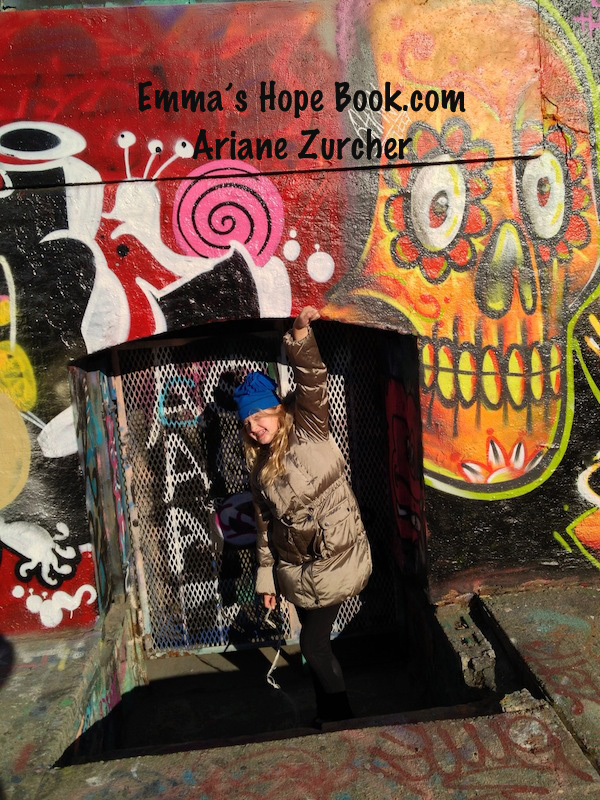
Emma told me she wanted me to publish this on the blog today.  Emma turns twelve this month.  I have spent more than fifty years learning what she already knows.  Em & Ariane on New Year's Eve ~ 2013    Em & Ariane on New Year’s Eve ~ 2013


A Look Back and Then Forward…

Em wrote just now (and said I could publish what she wrote here):

“I want to talk about the New Year.

“I know it was an important year to talk to the world.  I need people to understand what it is like to be Autistic.  I could be daring by saying that, but I think it is the only way others will become more tolerant of those of us who think differently than most, and it is opportunity that both separates and connects.”

I have so many thoughts about this…  “it is opportunity that both separates and connects.”  That sentence could be the topic for an entire semester in graduate school.

After Emma wrote this, I asked her if I could share it with Richard and on here, to which she nodded and wrote “yes.”  Richard and I had different responses to the word “opportunity” but when asked to clarify, Emma was already listening to her music and as I told her our study session would last 25 minutes and no longer, I did not press her to elaborate.

I will end this brief post by saying this past year has been a monumental one for me and my family.  As I look back on previous years, there have been none that can compete.  Here’s to embarking on another incredible year filled with curiosity and wonder.  Thanks to all of you who have read, commented and/or reached out.

As Emma has advised many times over the last few months, “Be kind to each other” and “everyone should be treated kindly and with love.”

Happy New Year!

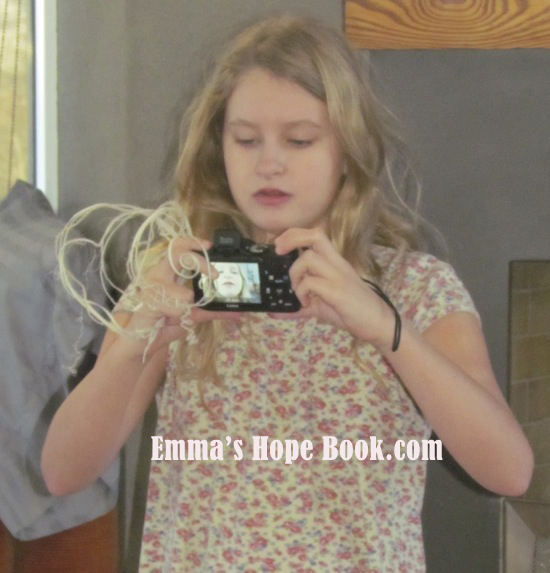
Self portrait

The Gift of Emma

In the days leading up to Christmas, Ariane excitedly told me that Emma had written, “I want to write a story about Daddy.” Ariane said it was going to be my Christmas present. Obviously, I was incredibly excited as well. But on the following day Ariane came to me after her writing session with Emma and said:

“This story is going to make you cry.”

On Christmas morning, when I untied the bow around the paper Ariane had rolled up, I braced myself. The story was indeed sad, yet hopeful, wonderful and important, like all of Emma’s stories. It was also very private, and so, days later, I still hadn’t asked Emma if I could/should publish it. Ariane asked her today and Emma said she didn’t want the entire story published, but it was okay to post this section:

“One day there was a man and woman who fell in love.  They eventually had two children, one son and one daughter.  They were very happy.  The daughter was distinctly different, but meant well.  She did not understand many of the ways of her family.

“Her father told her that she was kind and smart.  She ran away because no one believed her to be clever, even though her parents did.  Her father wanted many to realize how smart she really was.  So he told others “do not treat my daughter like a baby.”  People did not listen.

“His daughter was sad, but her parents believed in her, and that mattered more.  She was the luckiest girl in the world.”

I’m so glad Emma feels this way. I wish she were even “luckier” and we had known all these things about her many years ago. I do truly believe that I am the luckiest dad in the world. Like Emma, I feel incredibly sad that I underestimated Emma for so long, that I was so utterly clueless to this entirely different aspect of her, that I could not see and appreciate. But I feel so blessed today to hear and see all these amazing parts of Emma I had never understood.

“Better late than never” is an apt phrase to convey both the joy and sorrow I feel, now that I’m aware of what is certainly only a small fraction of Emma’s talents, feelings, insights, intelligence and her poetic soul. It is also an apt phrase to convey the necessity of getting this message out to the world, something that Emma and Ariane, and so many other autistic people and their families and friends have been struggling so hard to do for so long, in the face of an Everest-sized mountain of misinformation from so-called “autism experts.” The most heinous sub(human) class of these is the “debunking” posse, who seem to spend every waking moment of their lives trying to discredit any assisted communication methods for autistic people. Yet no matter how hard they try, and they do try really hard–they will never succeed in keeping these blindingly brilliant autistic minds imprisoned by their willful and malicious ignorance.

The three best gifts I’ve ever been blessed with are my wife Ariane (who I met at a party on Christmas day 15 years ago!), and my wonderful children, Nicholas (age 13), and Emma (who turns 12 in January).

Emma is such a wonderful gift in so many ways. I could write another (even longer) post just listing all the amazing blessings she has brought to me and our family. But I’ll simply conclude by repeating one of the sections of her story that Emma agreed to publish, because it’s the kind of “better late than never” message so many more people need to hear:

“Her father wanted many to realize how smart she really was.  So he told others ‘do not treat my daughter like a baby.’  People did not listen.”

Maybe they are listening now, Emma. Maybe more and more people will hear your voice and the voices of your autistic brothers and sisters. Maybe all these people will someday be lucky enough to experience the gift of Emma.

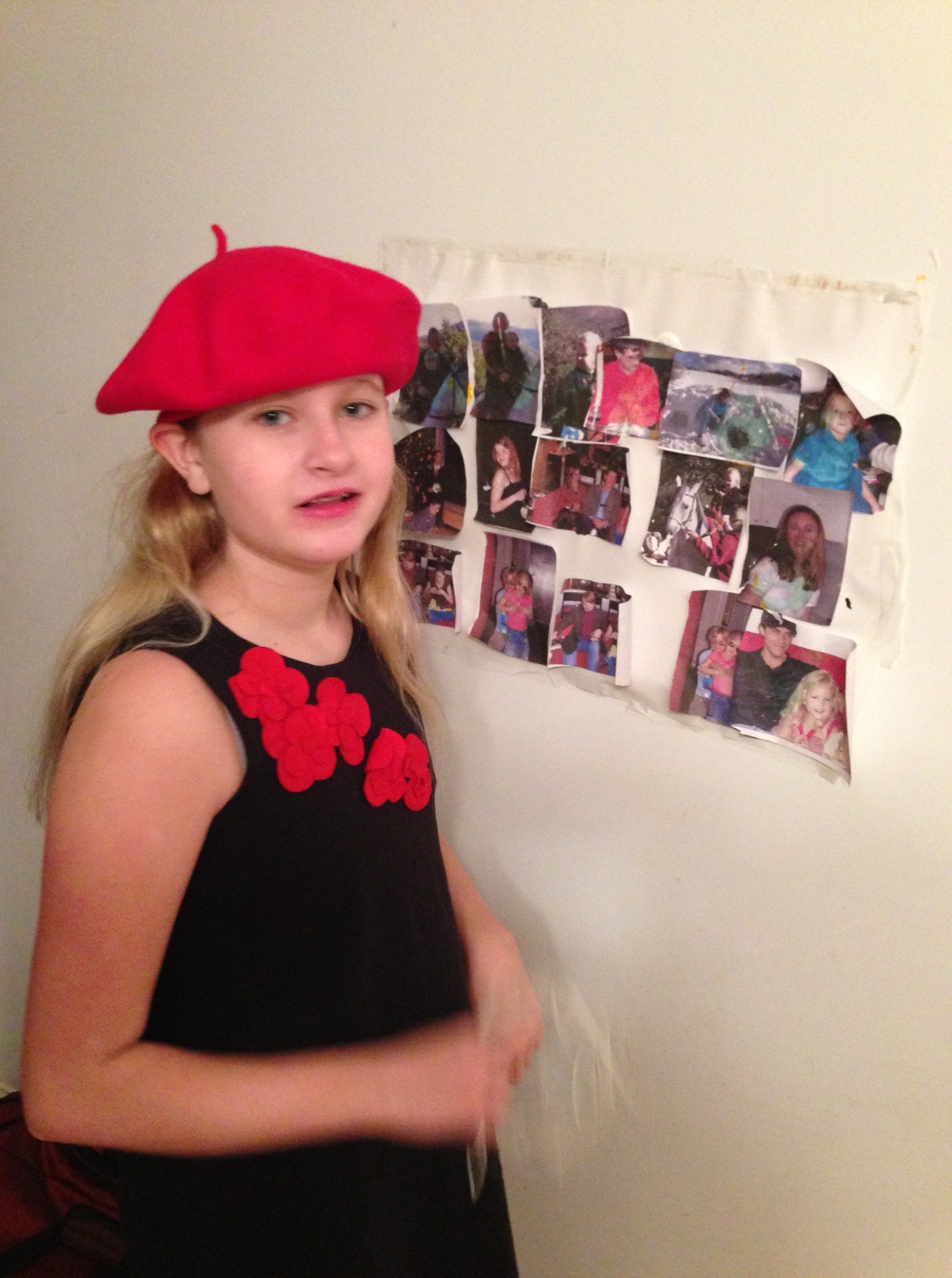
Emma showing off her new red beret and her new art work (a collage of relatives).

Emma showing off her new red beret and her new art work (a collage of relatives).


More Insights From Emma

My entire routine has been so thoroughly disrupted these past three weeks that this blog has suffered the consequences.  There’s simply too much going on, not in a bad way necessarily, but more than I have been able to keep up with.  But today…   Today both kids are out skiing and I have a few hours to write.

Emma has been writing a great deal.  In fact Emma wrote three stories as Christmas presents to her granma, her Uncle and Aunt and her dad.  Each one is beautiful and poignant and kind of over the top amazing in its complexity and layered meaning.  I transcribed the one for her granma ‘here‘.  In the story to her Uncle and Aunt, the final sentence was, “No words need to be used to hear love.”  Think about that for a second…  This kind of insight shows a level of sophistication and poetic understanding of the world few adults have managed to appreciate, let alone, express.   Emma is eleven years old.

In the story for her dad she wrote about a  daughter who, “Daily she tried to communicate her love for her family, but her words came out of her mouth wrong.  In day after day conversation she was misunderstood.  Finally she began to write on a stencil board and the words came out right.”  I am quoting this here because this is exactly the sort of thing so many of us get hung up on.  How many times have we seen or heard parents talk about their distress because their child is not able to say those three words, “I love you”?  How many times did I once, not so long ago, lament that my child had not ever said those words without being prompted to?  How often did I wonder and question her love?  And now…  now I wonder why and how could I have ever questioned those feelings?  How was it possible that I ever doubted her?  I say this lovingly and with tremendous compassion for all who have ever wondered this about their child.  We are being given incorrect information about autism and our children.  But I wonder if I would be so certain if my daughter were not writing and telling me the things that she is.

As I’ve stated before, writing is hard work for Emma and even though all of us, who receive her words, feel incredibly grateful to read anything she writes, it is difficult for Emma to express herself even in writing.  I say this as much as a reminder to myself as to inform those who may not fully appreciate how hard it is for her.  Often, when people hear that Emma is writing, and writing some pretty profound insights about the world, herself and autism, they will say, “but why not just give her an iPad or let her write on a computer?”  And then I must try to find the best words to explain.  It isn’t that easy or that simple, if it were, she would have begun writing a long time ago.

I’ve described before the process ‘here‘ and ‘here‘ that Emma uses to write, one letter pointed to at a time, on a stencil board, while a trusted person transcribes each letter or word one by one.  I have worked with Emma since the end of September almost daily and am now one of the people she can and does write with, to express herself.  She is incredibly generous in her willingness to allow me to quote her and almost always gives me permission to quote her on this blog, something I am doing more and more frequently!

This morning I talked to her about skiing with a ski pro, asking whether she’d like me to ski too.  She told me she preferred that I did not come too, and when I asked what, if anything, she wanted me to tell the ski instructor, she wrote about how she wanted to eat lunch early and then wrote, “Have to understand my mind talks heavy thoughts, but my mouth talks silliness.”   I asked her what she advised and she wrote, “Try to be patient and do not over rate talking to each other.”

A message we talkers would do well to appreciate and try our best to implement.

Emma’s Eyes ~ A Self Portrait

Em

Emma’s Gift to her Granma

I asked Emma what she wanted to give to her grandma for Christmas this year.  Emma wrote, “I will give to Granma a story about dogs who go to work instead of playing.”

Here is her story, reprinted here with both Emma’s and her granma’s permission.

A Folk Story For Granma ~ By Emma

“Once there were many dogs who went to work.  They worked part of the year in the fields, yet their masters wished they would work all the time.  So one day they organized a strike and their owners got very angry.  They told their owners they would not involve them in their decisions about how they spend their time.  Their owners said they had to work or they would not be fed.

“One day everyone went to work.  Sounds were too loud.  Every dog began to whimper.  The noise was so dreadful, the owners told their dogs to take the day off.  Noise is everyone’s enemy, but it is everyone’s  friend too.

“Today, dogs do not have to work in fields.  They are free to play.

“The End”

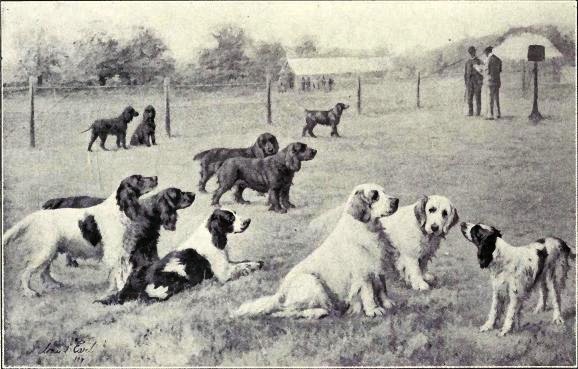
Emma chose this image to accompany her story.

Group_of_Gun_Dogs_from_1915

Travel, Friendship and Sensory Overload

A couple of days ago my friend Ib, of the blog Tiny Grace Notes, whom I was staying with, drove me to the airport.  Ib knows me pretty well and could tell I was nervous, as I have become increasingly as I get older, about getting to the airport, going through security and making my flight, even though we were leaving ample time to do all of that.  Still the combination of nerves due to traveling, my busy work schedule, being away from my family for so long, being tired and going to an unfamiliar airport had me on high alert.

It was snowing a little so we needed to have the window wipers on or Ib wouldn’t be able to see well enough to drive safely.  But the wipers made a scraping noise that I found almost intolerable.  Every time the wipers ran across the window they vibrated and made a noise that was akin to finger nails being raked along a chalk board.  It was jarring and I could feel my body tense, so I gritted my teeth and began an internal dialogue with myself to try to calm and as I did all of this, I thought of my daughter.  I thought about what it must be like to be bombarded with sounds and sensations that she cannot speak of, or if she does speak of them, the words that she speaks are not what she intends to say, so people are left confused, asking questions or simply ignoring.

As we drove and Ib, being Ib, had already sensed my tension and anxiety and was doing everything in her power to take care of me, I thought about how it is only recently that I’ve become hyper aware of certain sounds, sights, tastes, smells, and how things feel to the touch.  It is because of my daughter and other Autistic people I’ve met and/or read and heard speak about such things, that I have begun to see how, things I once learned to ignore are now things I cannot ignore, like those window wipers scraping against the window and making me so upset it was all I could do to sit quietly and not begin to cry.  I am grateful for this as it makes me far more understanding of what my daughter and others might be going through at times.

Ib began to very quietly and gently tell me what she was about to do, before she did it.  So, for example, she would say things like, (I’m making this up as I can’t remember her exact words now) “just up ahead I’m going to slow a little and get into the right lane” or “the exit we want is in another 2 miles to the left” or whatever it was, she would say these things in that lovely, mellifluous voice of hers and I began to calm down.  Ibby was modeling, actively demonstrating what I need to do for my daughter.  She was also being a kind, sensitive and deeply compassionate friend to me and I sat there, my eyes fixed on the traffic around us, feeling so thankful that I know her and am friends with her.

As we drove along and I began to relax a little, I imagined a place where non autistic people would go where they would be given the very real experience of what it might be like for an Autistic person.  I fantasized that there would be all manner of sensations, highly elevated and constantly changing as examples of what might be another person’s experience of daily life.  Just as I found those window wipers so harsh and grating that I could not engage in conversation, I imagined that this place would both bombard the person as well as under stimulate so the person could experience what it is like to alternate between not being able to hear, taste, see, feel, smell and during all of this, demands would be placed on the person.  Not just demands, but the person would be required to answer questions within a specific time frame and if they didn’t answer or got the answer wrong they would be required to go back and start all over again.  However regardless of whether they got the answer right the sensations would remain, the things they would try to do to calm themselves would not be allowed or taken away and they would be forced to stay in this place indefinitely.

As Ibby helped me retrieve my bags from the car I felt tremendous relief knowing that I would be able to manage the curbside check-in, knew I would not lose the ability to speak, knew I would be able to find the correct line to go through for security, find the correct gate and wait for my flight.  All the things I do without thinking, without questioning, things I take for granted.  But I also was aware that this relief is not what others, others like my daughter, necessarily experience.

Why People Walk With Two Legs Instead of Four

Emma wrote this folk tale yesterday.  She gave us permission to post it here on the blog.  It took her 45 minutes, pointing to one letter after another.  She is so, so talented!

Why People Walk With Two Legs Instead of Four

“Many years ago, people were walking on all fours like many animals.  Reaching for food meant they could use front arms or back legs.  They were very strong.  Other animals were not afraid of them.  They looked at other animals as family.

“There was much to see from being so low to the ground.  There was much to touch from living in the dirt and the grass.  They tasted whatever they could. People now are more fussy with food.  The smells were all they knew.

“What is missing?

“You are right if you said:  sound.  People heard sounds from high above and they did not know where they were coming from.  The sounds were soft and silky.   Days went by without knowledge of sound.  One people leader wanted badly to hear it louder.  The only way she thought possible was to be taller.  She practiced standing on her back legs and it was successful.  Everyone else followed.  The soft and silky sounds were birds chirping.”

Emma began writing this series of folk tales while we were in Texas last month.  She has written five now and the third one was entitled, Why People Walk on Two Legs.  You can read it by clicking on the link, but in it she wrote, “They had to work in the fields wearing knee-shoes and regular shoes.  They could not run fast that way.”  I love that!  She goes on to talk about a king who had outlawed walking, until he was injured from all that crawling around and the only remedy was for him to walk, whereupon he made it legal for people to walk on their two feet and so they did, never looking back.  To me, that story was about how until we experience what another goes through, we often remain divided, though I have no idea if that was her intent.   This one is completely different, even though the titles are similar.

I am in Chicago at the TASH conference, where IbbyLeah Kelly and I are presenting first thing this morning on Relationships and Multi-media (so excited to be with my two wonderful friends!)

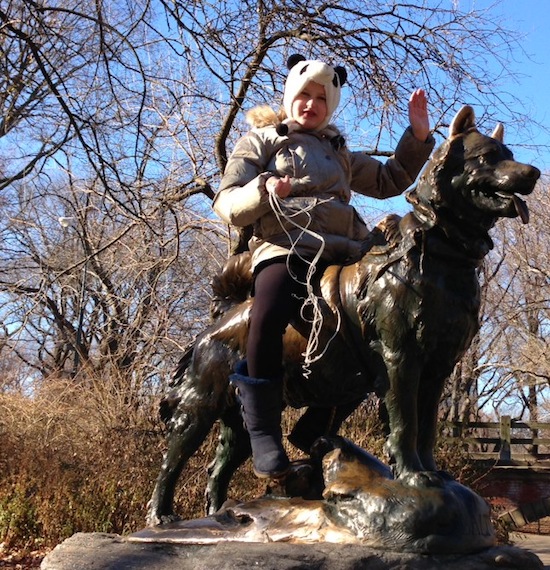
Em giving the Queen’s wave astride her favorite statue – Balto

Em on Balto

Autism Speaks and Signal Boosting

Signal boosting.  I love that phrase, it reminds me of a train yard.  That’s the image that comes to mind when I write those two words.  Signal boosting is when someone else shares a link or another’s writing either on a blog or on some other form of social media.  It’s the single most appreciated and important tool, those of us who are not Autistic, can use to help amplify the words of those we support.

The other day I signal boosted a letter to the sponsors of Autism Speaks from ASAN, Autistic Self Advocacy Network, – you can read that letter ‘here‘, which outlines why they are asking sponsors to reconsider lending their support to Autism Speaks.  I thought it was an excellent letter and as such, I decided to post it on my timeline on Facebook, with the heading, “For all who may be confused as to why so many are asking to boycott organizations that sponsor Autism Speaks, this is a wonderful explanation.”  And that’s when the proverbial shit hit the fan.  I’m not going to derail this post by going into the specifics of the comments I then received because I want to use this time to discuss Autism Speaks and why I object to what they are doing.  Again ASAN’s letter is an excellent point by point summation of exactly this, but I will attempt to give my personal views and why I have come to believe as I do.

Many defenders of Autism Speaks point out all the “good” they have done and continue to do.  They highlight insurance reform, their 100 day tool kit, autism awareness, spending millions of dollars on research, etc and yet, even if every single thing people who support Autism Speaks believe they are doing that is positive and helpful to Autistic people were true, (which I, for one, do not believe) it still does not take away from the fact that Autism Speaks does a great deal that hurts Autistic people and my child.  Autism Speaks uses its power and massive reach to shape how the public views autism and autistic people.  Suzanne Wright’s A Call for Action is a good example of this.  She begins with –

“This week is the week America will fully wake up to the autism crisis.

If three million children in America one day went missing – what would we as a country do?”

“Went missing” furthers the misconception that our autistic children were once here, and now are gone.  This idea is not helpful to anyone, least of all the parents who are new to a diagnosis and their young children.  Nothing positive, absolutely nothing positive comes from this kind of language, in fact this is exactly the sort of thinking that had my husband and I pursuing all kinds of “cures” not so long ago.  It was this thinking, that my daughter was buried beneath “autism” and that if I could just find a way to release her from its tortured grip, I would have done the noble thing, the right thing for my daughter.  As painful as it all was, as terrified as we were, she would thank us later… this was my thinking.

And yet, none of this helped me find ways to help her communicate.  Once we found a way to help her write and find her “voice” that was when the real miracles began to happen.  Helping my daughter communicate is what she is thanking us for now, not all those so-called “cures” we traumatized her with.  And please know, I mean that word, “traumatized” literally.  You can read more about some of that trauma ‘here‘, ‘here‘ and ‘here‘.

Suzanne Wright continues with increasingly alarmist, even threatening language.

“And, what about their parents? How much can we ask them to handle? How long will it be before the exhaustion makes them ill?  How long before they break?

“How long before they break?”  Given that several parents have recently attempted and some have succeeded in killing their Autistic children, this language is particularly repugnant.  This is not a call for action, it is a call for fear.  It sets autism up as something to go to war against.  It dismisses the horror of these crimes against their own children as something that is practically inevitable.    It suggests that autism is the reason people would go to such extremes, but nowhere does Autism Speaks suggest it is the public perception, a perception they have had a massive hand in creating, that makes the lives of families and our Autistic children more difficult and yet I can tell you, it  does.  What they are doing, what they are saying is making my daughter’s life harder, not easier.

Those horrible ads (ransom notes) they posted all over New York City in 2007 and then took down because of the public outcry, the videos of parents who speak about their children, while their child is right there, but because their child does not speak it is assumed they cannot understand what others are saying… these are the things people believe, but that I have learned from my non-speaking Autistic friends and my daughter are simply not true.  My daughter understands everything that is said around her and she is not alone.  So many who do not speak have written about this, Ido, Naoki, Amy, Nick, Joey, Barb, Carly, Tito…  too many to ignore or to dismiss as an anomaly.

In one video Autism Speaks produced a few years ago, the mother describes how she thinks about driving off the George Washington Bridge with her Autistic daughter in the back seat, the same daughter who goes over, numerous times, as her mother talks to the camera, to hug her. This video continues to haunt me.  I no longer believe that child did not understand what her mother was saying.  My daughter understood everything we said in front of her, even though at the time she gave no indication she did.  I now know differently.  What must it have been like to be that child, to hear your mother saying to a camera crew that she thinks about killing herself and you and that the only reason she does not is because of her other non autistic child?  What would that be like to be that child?

These ad campaigns, these videos, these words, these “calls” for action DO have a huge impact on what people then think about autism, about Autistic people, about my daughter.   People make assumptions about my daughter’s intellectual capabilities all the time.  If you are curious to read some of what my daughter is writing these days, please click ‘here‘, ‘here‘ and ‘here‘.  None of what she is writing is thanks to anything Autism Speaks has done.  Autism Speaks absolutely impacts my daughter’s life, and they aren’t doing her any favors.  

In the end, it doesn’t matter what good Autism Speaks has accomplished, until they really understand why so many are so angry, as long as they continue to not include Autistic people in any position of power, they will continue to be attacked by the very people they claim to represent.  How long will it take?  What will need to happen before Autism Speaks stops talking and LISTENS to those it keeps insisting it represents.  So many Autistic people are furious. And so am I.  All their power, resources, money could be used to do so much good for Autistic people, they could make such a difference in the lives of so many…

I stand beside my Autistic brothers and sisters and I will signal boost their words at every opportunity I get until they are able to take the microphone away from Autism Speaks and people begin to hear their voices. Their voices are what the public needs to hear, NOT Autism Speaks.

Image of Melanie Yergeau with a sign of a red X over a puzzle piece.  To the left of the image are the words “people not puzzles”
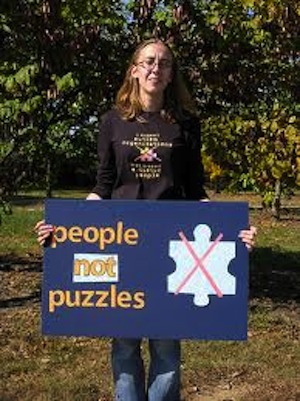
images-1


Man and Woman – A Tale

This story was written by Emma and was inspired by a photograph she was shown of a small house built in the middle of a lake atop a large rock with steps carved into the rock leading into the water.  Against one side of the house was a kayak and paddle.  (To read more about how Emma is writing, please click, ‘here‘ and ‘here‘.)

“Man and woman landed into marriage.  Both worked hard to make thousands of pennies.  There was trouble when they decided on what to do with the thousands.  Woman wanted to buy a boat; man did not agree.  Man and woman gave fighting a try, but it was not for them.

Welcome to their new home.”

Earlier when first shown the photograph (I’ve posted it below) and asked to make a comment about it, Emma wrote, “There is many reasons to believe it is fall.”

When asked to write one question she thought people would ask the person(s) who live in this house, she wrote, “Do you know how to swim?”

house-river-serbia_57361_600x450

Trapeze, Knitting and New York City

“Put it on the blog!” Emma said, happily.  And so I am.

Emma has been going to trapeze school for several years now and loves it.  Absolutely loves it.  Yesterday she told me she’d like to learn how to fly an airplane and learn to knit.  I can’t help her out with learning to fly a plane, though one of her uncles can, BUT I can help her out with knitting as I learned from my mother and during a brief period in my life when I was a fashion designer, I designed…  wait for it… yup, that’s right.  Knitwear.

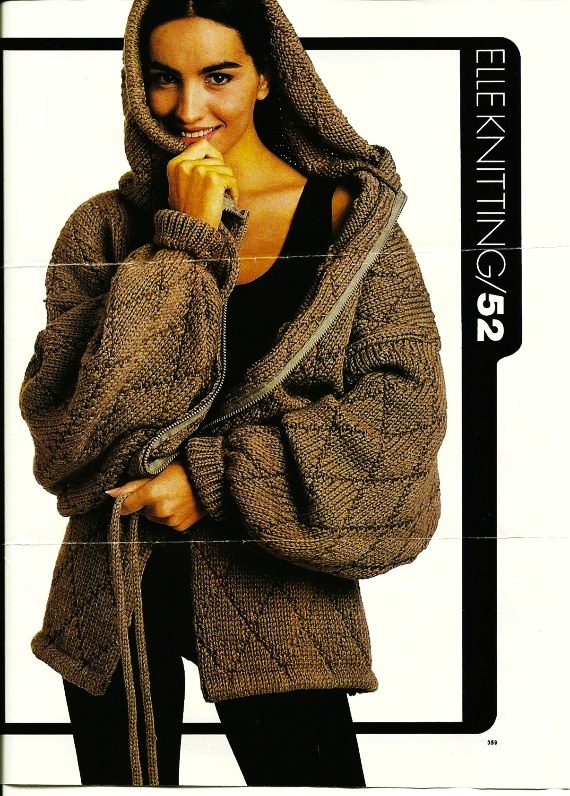
In fact, I used to be a contributing editor at Elle Magazine where they featured a hand knit with the pattern on the back of the page.  This was long ago, as Emma would say, and for a short time, I had my own page where once a month I designed a hand knit and it was photographed like this… A beige hoodie, which originally I had designed to have a faux fur trim around the edge of the hood, but my boss nixed that idea and so I had to remove the knitted trim.

Hoodie

GreenknitThis was during the 8o’s when magazines like Elle gave editors like me a car and driver.  Remember this is New York City where having a car and driver at your disposal is something people only dream of.  It was at a time when CBGB’s reigned and Studio 54 was a place many of us had danced in.  The meatpacking district was still used to slaughter meat and transvestites and transexuals hung out just west of it on the edges of the Hudson River.   Times Square was considered squalid by most and Nell’s Nightclub was in full swing.

It was a different time in New York City.  Yarn shops flourished.  On the subway, it wasn’t unusual to see people knitting, and I was one of them.

So yes, Emma.  I will teach you to knit.

“Feeling knowledge…”

“Feeling knowledge is reality understood.”

This is what Emma wrote over the weekend.   Yeah.  I’ve been unraveling that one  ever since she wrote it…  At this point there are a couple of things I have come to realize:  First – if I can just keep up with her, I’m doing really well.  Second –  presuming competence is a vast concept and is much more about me and my limitations than it is about the person I’m applying this idea to.  And third – the amount we do not know about autism far surpasses that which we do.

“Feeling knowledge is reality understood.”

EmContemplatesNature copy

Celebrating Gratitude

Emma and I discussed yesterday’s post and I asked her what she thought of the way I’ve described her as an “unreliable speaker.”  I haven’t liked how negative that sounds, though I have meant it more factually, and was not suggesting anything beyond those exact words.  She wrote, “Yes, unreliable.  Mostly talking other words even though not what I think.”

We discussed the comments many have written about believing her and how today is, for many, a day celebrating gratitude. I told her how grateful I was to be able to communicate with her.  She told me I could post some of what she wrote in response…

“Decade of ignorance dead. Deny ideas of intelligence can directly minimize the amount of self-worth one feels. I am grateful many are believing in me.”

Happy Thanksgiving everyone!

This photograph of Emma was taken outside my old studio by Jackie Maillis.  Thanks Jackie!

Power


“People Do Not Believe Me”

“People do not believe me” was what Emma wrote on our last day in Texas last week.  Prior to that sentence she wrote a message to Richard and me that left me in tears because it expressed her gratitude for believing in her and for fighting for her right to be thought competent and intelligent.

One day my daughter will be able to write what she feels and believes independently, of this I have absolutely no doubt.  When that day occurs, she can choose what and when she wants to write such things, but for now, I will keep this post to my own views and opinions.

As many of you know, it was not so very long ago that I was one of those people Emma was referring to.  I have a great many feelings as I write that sentence, but as I trace back what was going on and why I didn’t or couldn’t or wouldn’t believe in all, that it turns out, she is capable of, it wasn’t that I didn’t want to, it wasn’t that I didn’t hope, it was that everything I saw, heard and thought was muddied by what I read and was told and was confirmed by what I thought I was seeing.

When I met people face to face (as opposed to reading their words or hearing of them) like Barb Rentenbach, Tracy Thresher, Larry Bissonnette, Amy Sequenzia, young Nick, Joey, Jamie, Jenn, Mark, Tito, Sarah and countless others who do not speak, or whose spoken utterances are not in keeping with what they write, I began to question what I once believed.  It was during a presentation Barb Rentenbach and Lois Prislovsky gave at the Autcom Conference in the fall of 2012 that I thought, okay, maybe, just maybe, my daughter is not saying what she intends to say.   At that same conference I went to another presentation with Larry Bissonnette, Tracy Thresher, Pascal Cheng, Harvey Lavoy where a young boy, younger than Emma, typed on his iPad extremely insightful comments pertaining to the topic and again I thought, maybe, just maybe my daughter is like that boy and I just have to find a way to help her communicate.

It was the first time I’d really considered the disconnect between speech and intent.  It was the first time I began to wonder whether all this energy being placed on output of spoken language was the best way to help her communicate.  You see, up until then I bought into the idea that if we could just get her to talk, we would be giving her the tools she needed to say what she thought, that the words that came out of her mouth were indicative of what was going on in her mind.  We even would give her spoken prompts, say a sentence and have her repeat it, as though if she could just repeat the words, even though they were dictated and not her words, they would make sense and the connections would be made.  And when they didn’t seem to build to a critical mass, instead of questioning the push for spoken output, I questioned what was going on in her brain.

This was a huge mistake, it turns out.  Huge.  But I didn’t understand.  I didn’t see the error in this thinking.  I could not believe.  Not yet.

And then I met these wonderfully resilient, creative, intelligent people who did not communicate through spoken words, but instead wrote beautifully, poetic words that put together made equally gorgeous sentences that spoke of insights and wisdom and hope and strength and courage and compassion and I was blown away.  At first I thought each person was an anomaly.  I told myself they couldn’t possibly be representative of many, they had to be one in a million… and then I met more and more and eventually, even I could no longer doubt what I was seeing and witnessing, this critical mass… this unleashing of hundreds of voices, each unique and yet all…. all were communicating what was in their minds and many spoke of that disconnect that occurred between a thought and what then came out of their mouths.

“my mouth constantly talks different from what I think…” Emma wrote.

“People do not believe me.”

“Yes,” I told her, “but that is changing…  that will change.”

It is my promise to my daughter.  I will not stop writing until it is no longer necessary to say these things.

Lois Prislovsky, Barb Rentenbach and Emma

L,B&E copy

Returning Home

Em and I returned home Friday night.  It was an exhilarating trip, but also an exhausting one.  These trips always are.  We went from having daily sessions with Soma (you can read more about Emma’s experience working with Soma ‘here‘, ‘here‘ and ‘here‘ and more about Soma and RPM by clicking ‘here‘) that were so incredibly exciting, I could barely take in all that my daughter was writing.  Personal, gut wrenchingly, painful insights, loving notes of gratitude to my husband and me that made me weep with joy, but also bittersweet because it is she who has had to put up with us and not the other way around.  Her writing displays an almost unfathomable intellect, wisdom beyond her years as well as compassion and patience for all who do not understand her, for those who doubt, for those who do not believe her and all she is capable of, for all who talk down to her, my daughter is a beacon of kindness, forgiveness and compassion.

I do not want people to come away with ideas about saintliness, holiness or angels being dropped down from the heavens and inhabiting her body.  I cannot and do not believe in any of that and it dismisses the many challenges and struggles my daughter must endure.  Above all else my daughter is a human being, just like you, just like me, very much grounded on this earth and in this life, but she is also exemplary in her ability to see the good in others.  It is something I am trying hard to emulate.  It is as though the more she writes about what she believes and thinks, the angrier I become.  The more enraged I am that we have all believed so easily, without question, the standard assumptions about Autistic people and autism and what that means.

I understand that for many they just cannot believe someone like my child is capable of knowing so much despite having had little formal education, but instead has spent all of her school years segregated in special education schools where she reads below age level literature and is taught the value of nickels, dimes and pennies because it is assumed she does not understand concepts such as money and time.  I understand.  I do.  I was one of those people not so long ago.  But now I know otherwise.  We are fortunate that her current school is open, willing and interested in learning all she is capable of.  They have expressed interest and their intent to support her and to help in any way they can.  We will be revising her IEP soon.  It will be quite a revision!

Now we are home and I know better than to expect I will be able to pick up where Soma left off.  I know better than to think I will be able to sit down with my daughter and accomplish the same level of writing I witnessed this past week.  I have to pick up from where I left off before our trip to Texas.  This can feel incredibly frustrating and even depressing, but I am learning to not delve too deeply in despair, but rather continue moving forward with the knowledge that I will and already have progressed in my ability to support my daughter better each day so that one day she will be able to converse with me on a similar level as she does with Soma.

This disparity between what Soma is able to do and what those at home then try, has caused a few to claim that therefore Soma’s method is flawed or is cause for suspicion and doubt.  What I have come to understand is that my Autistic child is intensely sensitive to her relationships.  I cannot sit down and expect to have her write to me as she does with someone who developed this system and who has fine tuned it, perfected it along the way, while working with close to a dozen people every day for over ten years now.   It is akin to expecting that I will be able to set a diamond as well as a master jeweler who has been perfecting his craft over the last twenty years or after taking a painting class be able to create something on par with Rembrandt or after taking French 101 go to France and speak fluently.  We do not expect any of these things from each other or ourselves, and yet, people decide something like RPM will be easy and simple and anyone will be able to do it instantly and when they cannot, the flaw is in RPM.  I have met too many other people who are practicing RPM to see that it is this thinking that is flawed.

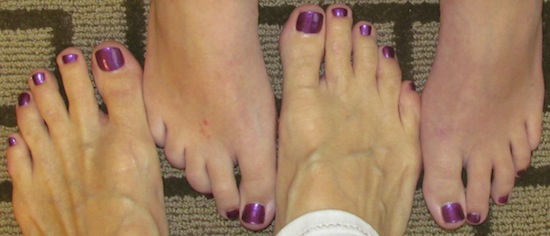
Em chose toenail polish for both of us!

Matching toenails

“Why People Walk on Two Legs” – A Folk Tale By Emma

What follows is one in a series of folk tales Emma is in the process of writing since we arrived in Texas visiting Soma Mukhopadhyay.  I’ve written about Soma quite a bit; for more posts about Soma  click ‘here‘, ‘here‘,  and ‘here‘.  Anyone who is curious about Soma’s Rapid Prompting Method (RPM) please visit her website, which is full of terrific information.

A quick note about how I transcribe Emma’s words.  Emma points with a pencil to letters on a laminated letter board that Soma holds in front of her, though she also has Emma hold the laminated board herself from time to time.  No one touches Emma as she does this.  Every few words that Emma spells, Soma takes the pencil from her and writes what she has written and repeats the words out loud.  Emma then proceeds.  As there is no way to punctuate the words as she spells them, I take my notes, transcribe them and ask her to tell me where to put commas and periods.  This story, Emma wrote yesterday and afterward told me, “You could put it on the blog!”

                  Why People Walk on Two Legs ~
A Folk Tale By Emma

Long ago people walked like animals because it was funny.  They had to work in the fields wearing knee-shoes and regular shoes.  They could not run fast that way.

In ancient Turkey there was a man who was sort of a doctor.  He had to be very careful while treating his patients.  He saw most of his patients had bone injury, so he asked them to stand.  It was against the law.  Kings punished anyone who walked that way.

But one day the king hurt his back.  The doctor treated him.  Finally the king made it legal.  Today it is natural to walk the way we walk.

The end

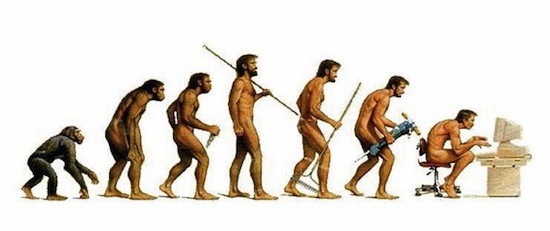
Emma chose this image from a google search for images of “evolution of man walking”

evolution