Tag Archives: Parenting

“No More School” and Other Important Topics

Emma (and I) will be presenting at the TASH Conference in Washington DC December 3-5.  We haven’t been given the exact date for our presentation yet, but once I know I will inform all of you.  I will be co-presenting with Emma, but the title, Rethinking Your Beliefs About Autism, and topic are Emma’s idea and I will be following her lead (as always.) 

On the “no more school” front, we are busy.  So busy I am having difficulty finding time to write anything for this blog.  I keep thinking once we get into the swing of things that will change.  I keep thinking if I just plan better, each day will move along easily and we will (miraculously) get the list of all the things we will do and cover, that I so painstakingly made upon getting up in the morning, done.  I even bought a Daily Planner, one of those things everyone used to use before we had smart phones, so that I could record all the subjects we are covering and the length of time spent on each…  Before you fall off your chairs laughing, I DIDN’T give in to my impulse to use a color coding system, so there’s at least that.  (Not that using a color coding system isn’t a great idea and if you tell me in the comments that’s EXACTLY what you do and how fabulous it works for you I promise to be impressed and probably quite envious as well.)

Here’s the thing about all of this.  So much of the problem I’m having is less with our daily adventures and more with the ideas I have about what we SHOULD or SHOULD NOT be doing.  It’s reminding me of the presentation Emma and I gave earlier this summer here in New York City.  I wanted to write everything I was going to say out onto little index cards, which I then planned to read out loud, pausing now and then for Emma to type whatever she wanted to add.  Emma, though, had very different thoughts about how we should do our presentation.  And in the end, as it was Emma’s presentation, we did as she wanted.  We winged it.  (What the hell is the past tense of “to wing it?”)  Winging it is pretty much what we are doing now, only instead of doing this for one presentation, we are doing this every single day and I know, I really, really know there’s got to be freedom in that once I stop hyperventilating.  

Meanwhile, just as she did during our presentation this past July, Emma is having a great time amidst learning about the cosmos, Hubble’s Law, light years, our ancestors, one of whom was a Colonel in the garrison of the King of France in the battle of Seneffe, where he died, against William III of Orange (who knew?) learning German, discussing current events, creative writing, AND planning a dinner party Emma intends to have, along with making up the guest list and meal I am to prepare.

There are several more exciting things in the works writing-wise, but more about all of that another time. 

It’s time for bed, though Emma may well stay up far longer than me.  She has a number of things she wants to do before going to sleep…

The Duke of Enghien saving his father, the Grand Condé at the battle of Seneffe: painting from 1786 by Bénigne Gagneraux

The Duke of Enghien saving his father, the Grand Condé at the battle of Seneffe: painting from 1786 by Bénigne Gagneraux
Being Home aka When School is No Longer an Option

Last spring we made the decision to pull our daughter from her middle school.  We did not come to this decision easily or without a great deal of thought.  Ultimately we decided we had no other choice.  Neither Richard nor I are “teachers.”  We are both far too impatient.  For the longest time I thought homeschooling meant recreating “school,” but at home.  This thought was both so awful and terrifying to contemplate, and was probably the reason it took me (I can’t speak for Richard) so long to come around to the idea, that having a child at home would be a good thing, and not bad.    

In many ways I wish school was still an option, but it isn’t. Richard and I know this. The conventional route is evidently not in the cards for us and frankly it never has been, but it’s taken me awhile to come to terms with what this means. That feeling of exhilaration and freedom, so many who do not have “school” as a part of their children’s lives talk about, is only now something I’m starting to feel and experience.  So it was with great joy that I read Emma’s thoughts on not going to school.  

Emma wrote, “Bathing for the first day of school is better when your classroom is closer by.”  When asked what she thought about not going to school, she wrote, “It’s invigorating.”  Then she paused and finished with, “I am a lucky gal.”   

When asked for advice on how we can help her learn and pursue her interests, she wrote, “Relax and relax some more.”

Which… yeah.  That’s sound, solid, advice for just about anything one is doing.

Back to school


My Imaginary Ancestor

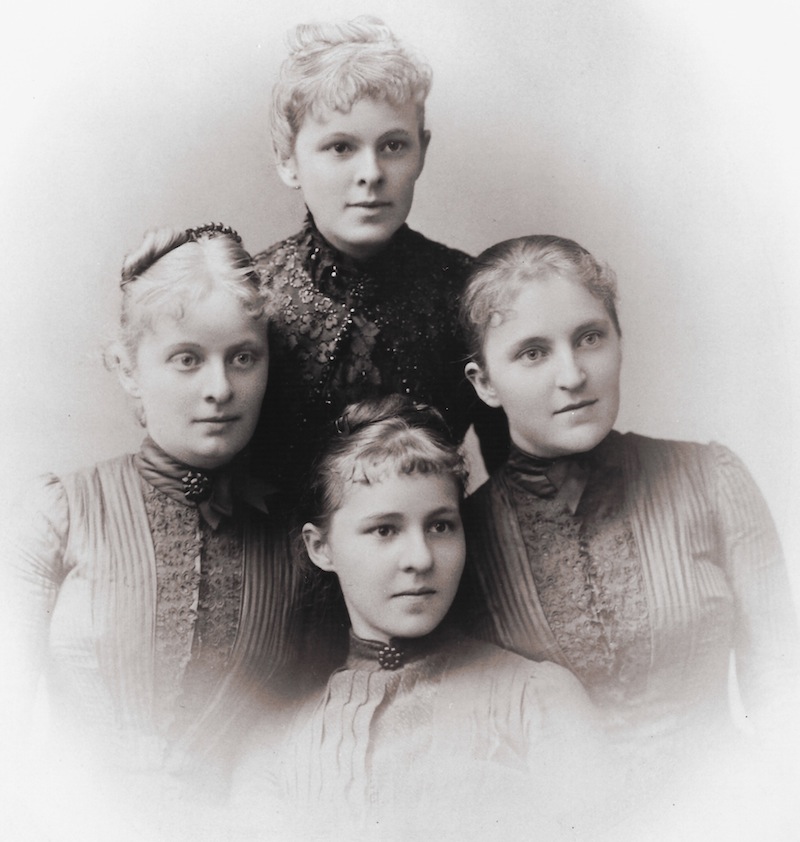
Preface:  My mother has been tracing our family’s history for many years now.  Many of our ancestors on her side of the family were German and wrote in German script.  She has been painstakingly translating the letters they wrote and kept.  During our recent vacation my mother told us about some of our ancestors and the lives they led.  All of it was fascinating.

This morning I asked Emma what she wanted to write about.  Emma typed, “I want to write about recent stories heard.”  I said, “Okay.  What do you mean by that?  What recent stories are you referring to?”  Emma then typed the following story.

 “I will write about an ancestor who is imaginary.

“Long ago in another era there lived a writer who did not think in words.  She was fiercely independent in an age when this was not viewed favorably.  She was believed to be peculiar and could not say what she thought as words escaped her, fleeing to dark, secret places out of reach.  The only way to capture the words was by writing them down, restraining them to the confines of a piece of paper.  This made her sad for the words that wanted nothing more than to run wild and free.  So she spoke and the words rushed out, but other people did not understand and thought she needed to be controlled.  She was my ancestor.”


Our Ancestors - Emma, Anina, Antonie and Marie

Our Ancestors – Top and going clockwise – Emma, Anina, Antonie and Marie

Science Lessons

This past month Emma has been having Skype calls with Dr. C. (PhD in bio-chemistry) Dr. C has been giving Emma science lessons three to four times a week and so far he’s covered cells, cell division, cell mutation, genetics, chromosomes, DNA, nutrition, ecological footprints, world population and so much more.  As we are now homeschooling having people like Dr. C., who volunteered to teach Emma science, has been invaluable. 

 Emma typed the other day that I should put some of the things she’s been learning on the blog.  I haven’t asked Dr. C permission so I cannot write more about their sessions other than to say they’ve been incredible.  Dr. C is a great teacher, is brilliant, passionate and has a great sense of humor.  What follows are two exchanges Emma recently had with him that were particularly great.

Regarding chromosomes:

Dr. C:  One pair is the sex chromosome and you, Emma, have two X chromosomes, while your brother, N. has one X and one Y.
Emma:  Poor N.

Regarding genetics:

Dr. C:  A brown haired mother mates with a blond haired father.  All of their children have brown hair, why is this?
Emma:  Dominant genes do not pay attention to prevailing standards of beauty.

August, 2014

August, 2014


Statistics and Parenting

Fear.  I have grappled with fear my entire life.  I’m 54 years old.   You’d think I’d have figured out a magic formula to ward off fear by now…  but I have not.  However I have figured out some things that used to frighten me, but that no longer do.  Things like this:

“Among all autistics, 75 percent are expected to score in the mentally retarded range on standard intelligence tests — that’s an IQ of 70 or less.” ~ Wired Magazine 2008

“Roughly 25 percent of people with autism speak few or no words.” ~ SFARI 2013

These two quotes had not yet been written when my daughter was diagnosed, instead there were countless other “statistics” spoken and/or written as though fact, that terrified me.  I had not yet learned to question everything we were told about autism.  I had not yet realized that almost everything people said to us about autism and our daughter would turn out to be untrue.  I had not yet understood that it was these types of things that caused me fear, not my daughter.

Often someone reaches out to me and they are filled with the same fear I once felt.  They remind me of all those predictions, the “statistics,” the warnings, all the things people said to us that caused me to stay up at night.  Terrified because the way autism was spoken of was filled with dire predictions, awful statistics, and because I did not yet know what autism would mean for my daughter.

It is one thing to read statistics that make you feel terrified and another to live with a person these statistics claim to represent.  A lived life, a human life, a living, breathing, feeling, human being who also has fears and thoughts and desires.  So many parents need help figuring all of this out so they can help their children flourish.  Parents who hear and read all the terrible things people say about autism and Autistic people and then are faced with their child and find all those things being said distance them from the genetically closest human being they will ever experience in this life.  (This was something Emma wrote to her brother not so long ago – “the one closest genetic person to you.”)

Statistics do not help us parent better.

One of the single most important things Richard and I began doing was to talk to Emma as though she understood, even when we were not sure she did, even when she walked away, even when she seemed uninterested, had her back to us, closed her eyes, said words that seemed completely unrelated, wandered off to some other part of the room, even then, we kept talking to her, including her in whatever conversation was going on.  And now.  Now we are so glad we began doing that, because, as it turns out, we were right, she understood it all.

She understood it all.

August, 2014

August, 2014

Another Year…

It’s been eleven days since anything was posted on this blog, the longest stretch, in the more than four years of its existence, that it has lay dormant.  It was not intended, but instead just happened.

This has been a year of incredible transformation…  I’ve turned a year older today and yet see how much there is to still learn.  Learning and traveling…  nothing makes me feel more alive, more happy, more eager.  And because of my daughter, I am learning more than I ever believed possible.  But that is for another post(s).  Today…  today is a day I am celebrating my family, friends and beautiful life.

Coyote looking back at us with the same curiosity we were viewing them.

Coyote roaming the ranch, looking back at us with the same curiosity we were viewing them

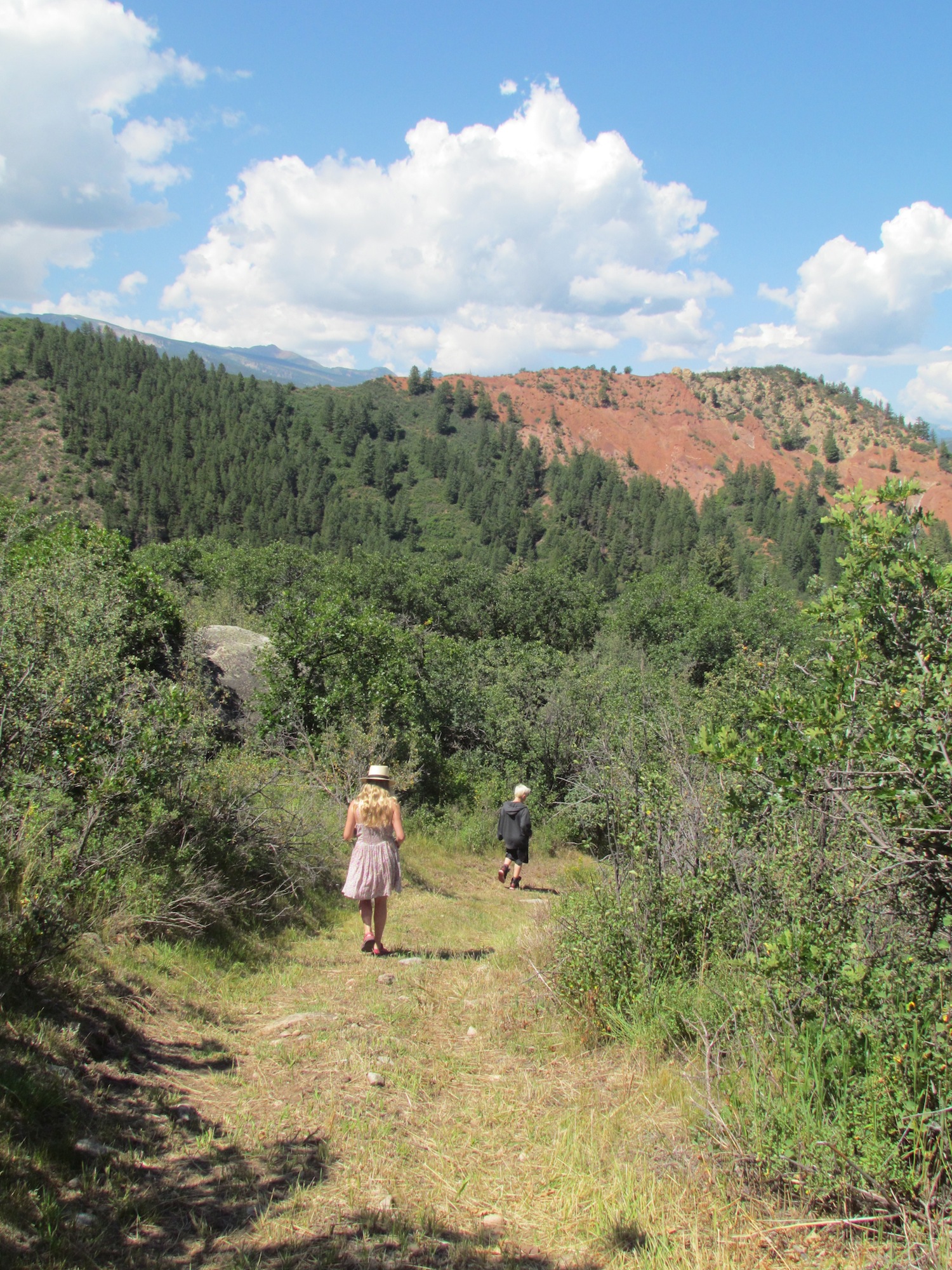
Heading out on a hike

Heading out on a hike

One of a number of bucks who hang around the barn...

One of a number of bucks who hang around the barn…

Sunset - The Rocky Mountains

Sunset – The Rocky Mountains

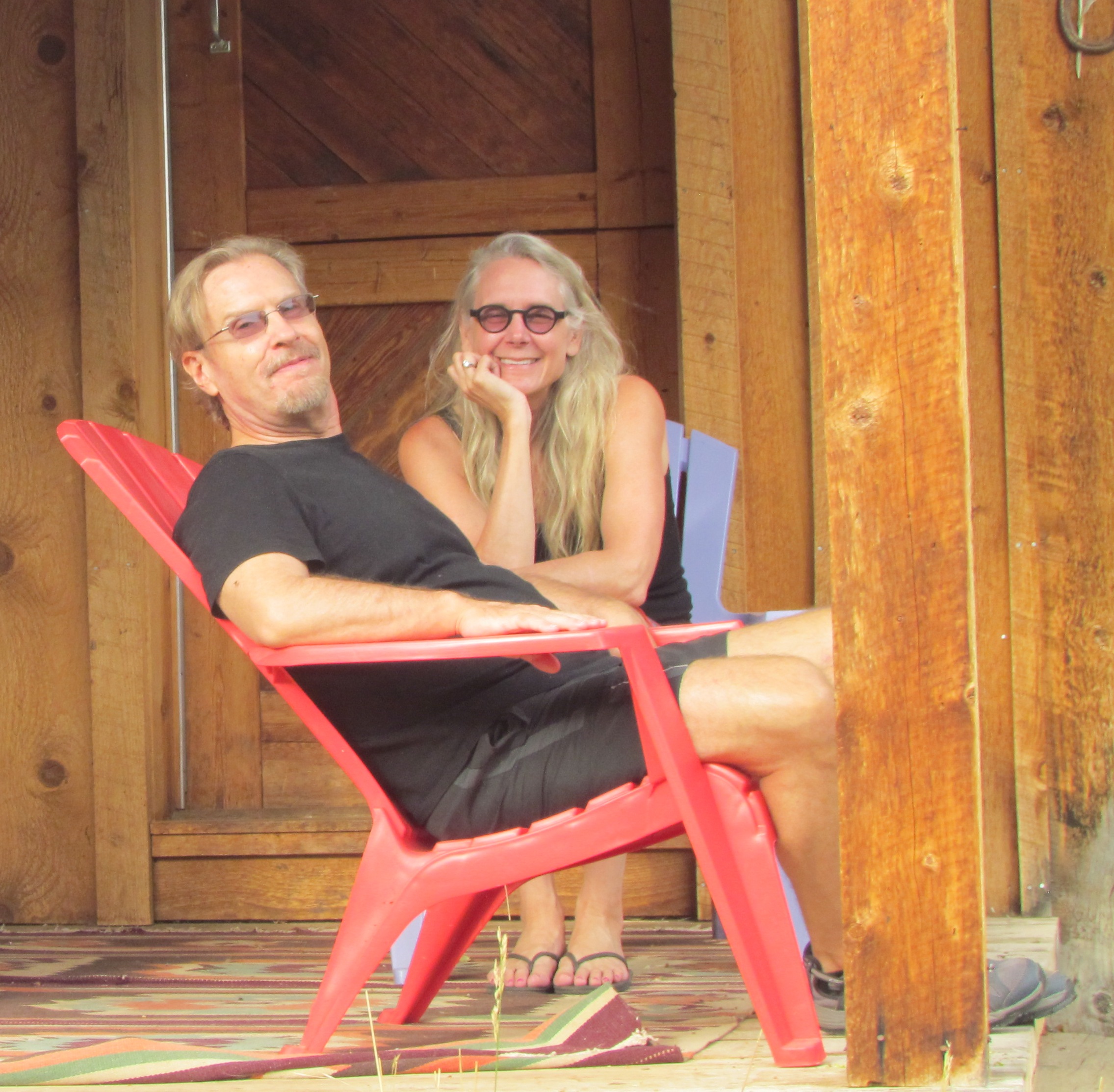
A rare photograph of  Richard and Ariane together as Ariane is usually behind the camera and not in front of it… Photograph taken by John Kelly.

A rare photograph of Richard and Ariane together as Ariane is usually behind the camera and not in front of it…
Photograph taken by John Kelly.

Wishing all of you a wonderful day.

More will be revealed…

The Messiness of Blogging

Years ago I wrote about the difficulties involved in writing a balanced and yet honest depiction of life.  I just reread that post and my first response was to delete it.  But as I no longer do things on this blog without asking Emma, I asked her if she wanted me to remove it and others like it.  She wrote, “no.”  So I’m leaving it, though, for the record, if this were left entirely up to me, I would delete it, along with a great many others where I detail personal things about my daughter without thinking about how she might feel having such information made public.  To be honest, I would delete the first two and a half years of this blog, just wipe the slate clean and begin with the spring of 2012 when I began to become aware of Autistic people who were writing about their lives.  But this blog is not mine alone.  This blog is a group blog, written by three people, one of whom has their name featured on it, Emma.  (Emma has said she likes the name of the blog and does not want it changed.)

A blog is a curated version of life.  We tell what we are comfortable discussing, what we are aware of and understand at the time of writing.  But when writing about others, particularly family members, things get trickier.  Even a year ago I wrote things I am not comfortable with, but as Emma wrote a few weeks ago, “it’s important to show that times were difficult.  It is still not easy at all times.”  Emma wrote this regarding another project, but when I asked her if her statement applied to this blog too, she wrote, “Yes.”  

My dilemma in continuing to contribute to this blog concerns that difficult balancing act of writing about the things I am learning, processing and thinking about, while being respectful of other members of my family and not writing in a way that suggests I speak for them.  Even so, I am not always successful.  But more and more there’s a great deal I don’t write about.  If Emma is going through something that causes her pain, I no longer feel comfortable writing about it, even from my perspective unless she asks me to.  I argue that a certain amount of self censorship, particularly when done to protect the confidences and security of others, is not necessarily a bad thing.

The only time I’ve posted things that are personal and painful are when Emma has written, “Put this on the blog.”  Or when I’ve asked her, “What do you want to talk about?” And her response was, “I want to write a blog post.”  But these omissions, this version of life that I do feel comfortable enough to discuss here, cannot, by their very nature, give a true picture of our lives.  So for some, it may seem our lives are ideal, or some readers may mistakenly think we never struggle, or perhaps these posts give the impression that we live a pain-free life of nothing but joy and ease.

Blogging is an intimate and immediate form of writing.  Those of us who blog are far more available to those who read what we write than other people who write. Anyone can make comments and most bloggers, even those who do not or rarely respond to comments, read what commenters have to say.  It is part of what makes blogging unique, and to me anyway, particularly compelling and interesting.  Comments from others, whether they agree or not, are fascinating, often thought-provoking and some even make me reconsider what I believe or how I think about something.

Blogging is the reality TV version of writing.  But even so, there is more left on the editing room floor than gets seen.  It is the nature of the beast.  Life is far too complex and messy, particularly when it is four lives or five, if one counts our mischievous kitty, to capture in 800 words or less, even when posting Monday through Friday.

WhiteWaterRafting copy

Alone? Frightened? Worried?

“No one knows how to help us.”  This was what I once said to my husband.  It was many years ago.  So many, I no longer remember the year.  Along with that realization was this one – “We are in this alone.”  And while, at the time, that thought terrified me, it was the beginning of finding another way.  It was the moment when I realized all these people we were looking to for guidance, didn’t know what was best for our daughter, even when they believed they did.

In the beginning we were told how fortunate we were, our daughter was “mild” we were told and if we followed their advice – an aggressive implementation of ABA, Speech Therapy and Occupational Therapy – she would be in a regular classroom by the time she entered kindergarten.  She was still two years old when she was diagnosed and we knew nothing about autism.  We did as we were told.  We were assured she would “skyrocket.”  We fought to increase the hours of therapy, we went to the team meetings, we took notes, we learned how to “play” with her using ABA’s techniques, we monitored her and kept charts.  We filled notebooks with our observations and we waited for her to “skyrocket.”

When she turned three we enrolled her in an ABA based pre-school.  By the end of that school year I no longer believed all that I was being told.  The therapists were no longer assuring us she would “skyrocket.”  Now words like “red flag” were being used to describe her behavior.  She had “behaviors” and these were being pinpointed and noted with alarming frequency.  We were getting reports of non-compliance, an inability to “use her words” as though she was being defiant  and then she began to self-injure. No one understood why.  Everyone was baffled.

And now, so many years later, I look back on those years and it all seems so understandable.  They say hind sight is 20/20, that looking back we can easily understand that which was once incomprehensible.  I understand now.  We didn’t appreciate what was going on.  We didn’t think we understood our child, and for the most part we didn’t and we kept looking to others to explain her to us.  The explanations they gave us, we believed.  We thought, since we didn’t understand and they seemed sure that they did, they must be right.  It took several more years for me to realize they didn’t and they didn’t know how to help us or her either.  When the methods they believed in didn’t do what they believed should and would happen, they blamed us and they blamed her.

Emma continues to remind me that “regret is not needed” and she’s right.  I am working hard on that one.  I cannot describe someone else’s experience, I can only write about mine.  This was mine.  As the mother of a daughter who was once believed “mild” and later “moderate” and finally “moderate to severe” on autism’s vast spectrum, we have learned a great deal.  And while many may not derive any solace in what I’m about to say, I would have.  No one can predict what life holds for your two, three, four, five, six or seven-year old child.  No one can predict another’s future, there are too many variables.

That my daughter has some spoken language is, and was, the single biggest red herring for those who meet her.  It never occurred to us that all that speech therapy, focusing on spoken language, would ultimately be unhelpful.  I knew nothing of AAC  (Augmentative and Alternative Communication) devices or methods and as spoken language seemed to me to be the ideal, the idea of her using something else honestly never crossed my mind.  Why would I encourage her to use something else to communicate if she could speak?  When, after years of speech therapy focusing on spoken language, she still couldn’t have a conversation with us, our answer was to try more, push harder and it would come.

So many people ask what we would have done, knowing all we know now.  This is a question that is specific to my daughter, but I know there are other children who are similar as I’ve met so many of them.  I would not have waited so long to begin using other forms of communication.  In fact, this would have been the thing I would have concentrated on right away.  There is no evidence that using an AAC device will have a negative effect on spoken language acquisition, in fact there are studies showing the opposite is likely to be true.  Had my daughter been able to communicate at an earlier age, many things would have changed.  The most important one being that we would have understood much earlier all that she knew and understood.  This may strike some as a little thing, but I can assure you, had we realized this early on, had we believed this right away, it would have changed every single decision we then made.  Not to mention the massive reduction in our stress, anxiety and fear.

There is so much we are learning and still have to learn, but we are no longer alone.  We are surrounded by other parents, professionals, educators and, most importantly, people who share our daughter’s neurology, those who are Autistic and who continue to share their experiences with us so that we might better parent our Autistic daughter.  And of course, our daughter, Emma whose patience, love, wisdom and endless compassion is teaching us more than any.


One year after the diagnosis

One year after the diagnosis

A Researcher Asks…

I speak with a researcher who says, “we need to hear the pain and needs of the parents of individuals affected by the disorder.”  She goes on to say, “Nobody else can know better what the needs of the affected person are.”  “Oh,” I say, “how about speaking with Autistic people?”  Surely they know better than any what it’s like to have once been a child.  The researcher tells me this is not their focus.  I try to understand what I’m missing, what is the focus then?  I ask more questions.  I listen.  As I listen I am aware of my heart.  It feels louder, is that possible I find myself wondering.  Can one’s heart actually beat harder?  I decide this cannot be true.  I’m upset.  I know I become more aware of my heart when I’m upset.  I try to listen to her words, but I’m not able to hear all of them.  I know I’m missing some of what she’s saying.  I concentrate harder.  My throat constricts.  My stomach tightens, my face feels warm.

I try to make a few helpful suggestions based on what I hear her saying.  But she is not interested in suggestions.  I try again.  It is as though we are speaking two different languages.  I cannot understand hers and she seems unable to understand mine.  We are becoming exasperated with one another. I try to provide answers from my perspective, but this is not the focus of her research she tells me.  The needs of Autistic people are not the focus.  I feel some confusion.  How is this research?  How can one do research if the questions are already skewed?  Isn’t research supposed to be unbiased?  Isn’t the point of research to learn more, to understand?  But we are trying to understand, she tells me.

We are circling each other with growing wariness.  The conversation began one way and somewhere it took a turn.  I’m trying to both back track to see where it changed from cordial, curious and open, to distrust, while also still listening and trying to understand what this research is meant for.  My daughter is behind me.  She drifts past where I’m sitting and stops.   She is looking up toward the ceiling, her head slightly cocked to one side.  I know she hears this conversation.  I know she can feel my growing tension.  “I’m just going to take this call into the other room,” I whisper to her.  I go into the other room and shut the door.  I don’t want my daughter exposed to more of this.

The constant barrage of words – Disorder.  Pain.  Afflicted.  These are the words the researcher uses.  These are the words, like a never-ending eddy threatening to pull my daughter down.  I once used these words too.  I once said things to others in front of her.  “You walk forward and not backward,” Emma wrote the other day.  Just before that she’d written, “…regrets are not needed.”  I owe this to her.  I must move forward and not backward.  Regret, like those words, pull me down.  I have made a commitment to become more aware of my regrets and to not allow them to keep me stuck.

I become aware of the researchers voice again.  She really wants to know, she says, about the pain.  And I lose my patience.  I tell her no one would dream of asking me this question regarding my non autistic child.  I tell her that if she is interested in understanding Autistic children, she should ask Autistic adults to describe what it was like.  She says, “Well, if you’d like us to speak to your daughter we can certainly do that too.”  But that isn’t what I suggested.

My exasperation with her has now crossed over into anger.  She compares autism to Parkinsons and I’m furious.  “Let’s not do this,” I say.  We are practically competing with each other as to who can hang up faster.  I am madly hitting the red button on my phone to hang up, but it won’t disconnect.  This would be comical if I weren’t so upset.  I have a moment when I see the humor, but it’s fleeting.  I remind myself to come back to this feeling.  Finally I stand there looking at my phone and I feel utterly defeated.  This was an opportunity to offer another point of view and I failed.  Miserably.  I go out into the other room, where Emma is listening to music and dancing.  I watch her, marveling at her beauty, her grace, her joy.  In contrast, I’m a churning mess of anger, indignation, sadness and upset.

“We are interested in the needs of the parents,” the researcher said.  More accurate information, unbiased research, questions that are not skewed to get a particular response, training that would have helped us support my daughter to communicate through typing at an early age, removing the emphasis on spoken language, abandoning functioning labels, showing me that my neurology has deficits too, that we have devised a society skewed to accommodate non autistics who use spoken language to communicate and how that benefits those of us who speak and aren’t Autistic, but hurts those who are, helping me understand that we have set up our schools to segregate a population that should be included and not excluded.  My needs?  Change the way autism is viewed and spoken of and my needs will dramatically decrease.  Help me navigate parenting an Autistic child by giving me access to Autistic people and culture.  Show me others who are parenting with love, compassion and complete and utter respect for their child.  Most of these are things I’ve found for myself, but what a wonderful difference this would have made earlier.

Research


Presuming Competence – Revised

Over the past few years I’ve written about presuming competence as I have come to understand it, ‘here,’ ‘here,’ ‘here,’ and ‘here‘.  Over the years my definition continues to shift or, perhaps more accurately I should say, my ability to practice presuming competence continues to shift.  I still grapple with whether I am going far enough when I  presume competence, though the simplest definition, is also the best one, which is that we presume all human beings are capable of learning if given the right supports and accommodations.  But many want to know what that means for a specific person they know or are working with.  What are those supports and accommodations?

There are a couple of universal things I have found extremely helpful.  (I’m hoping others will add what they’ve found universally helpful as well as specifics that may be particular to just one or two.)  The first is being respectful of the person and speaking to them as one would speak to any human being regardless of whether they use spoken language or not.  It may take some getting used to, because unlike someone who uses spoken language easily, you may not get a spoken reply, or you may get a spoken response that you cannot make sense of.  Either way, I have found, speaking to my daughter (and I’m now talking about before we knew all that she knows and before she was typing with us) as I would any person her age, was critical.  Explaining to her what was going on, what was going to happen next, what we would do if something we expected to happen didn’t, and including her in any and all conversations that were taking place in her presence, has been key.

In situations where a meeting is occurring, as might happen during an IEP meeting at school or with a team of therapists or with a doctor and nurse, I have found the single best thing I can do is include her in the conversation.  (I have made many mistakes over the years, so please do not interpret this as my suggesting I do all of this perfectly without ever stumbling along the way.)  So, for example, when we arrive at the place we are having the meeting, I will speak to her as I would anyone her age.  I will ask if she’s comfortable in a particular chair or if she’d prefer sitting in a different one, perhaps away from direct light, or one that might have a cushion.  Today I always sit to her right so that I can hold her keyboard for her as she types.  I make sure she knows why we are all gathered.

If others begin to speak about her (as they almost always do and will) I will then politely remind them that she is right here and has no issues with her hearing.  Emma wrote during one such meeting, “My hearing is excellent.”  These days I hold the keyboard for her to write questions she may have or to add whatever she might like.  As Emma now types with us daily and is more used to this, she will often initiate a question or comment without me asking her if she wants to add something.   But in the past, if the people at the meeting continued to speak about her as though she weren’t present or seemed completely confused by my insistence on including her, (which many undoubtedly will)  I might then say something about how hurtful and disrespectful it is to be spoken of in this way and that I’d appreciate it if they would rephrase their language.

If the talk becomes an endless list of deficits I would ask them to identify her many talents and assets and point out that constant criticism is unhelpful and destroys self-confidence and self-esteem.  If they are silent (as has happened to us in the past) and seem incapable of naming any assets, I would give them a few opportunities to learn and do better, but at a certain point, professionals should be held accountable for what they are doing and how they are behaving.  If after several opportunities, they continue to disregard my daughter and seem incapable of treating her with respect and seem convinced that she cannot understand, they do not deserve to be paid for their “services”.

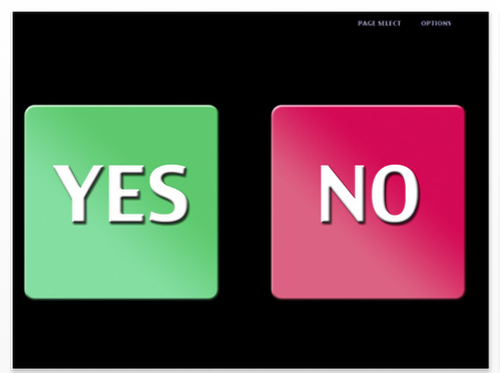
Another helpful tool is a yes/no laminated card.  I used to carry one or several around with me and would ask Emma to verify any yes or no question, because she often says “yes,” but means “no”.  I found that what she pointed to with the laminated card, was almost always correct, while the spoken answer wasn’t as much.  I have since seen iPhone and iPad apps that people use, which are almost exactly the same as the laminated card I once used.  A friend of mine holds up her index fingers from each hand and says, “yes” and gestures with the one index finger, or “no” and then gestures with the other index finger.  I remember being shocked that this simple method could produce accurate answers and yet it did.  Obviously if there are profound physical issues, this may not be possible, so the laminated card might work better as one can position it so that a large range of physical movement will not be required.

Yes/No

Yes/No


A Father’s Powerful & Extremely Personal Thoughts on Parenting

*This was what my wonderful husband, Richard, wrote as a comment on my post the other day.  I asked him if I could make it a post all on its own.  He gave me permission…

“Pain is inevitable, suffering is optional.”

There are plenty of difficulties in life. Parenting is hard, but “childering” is harder. Parents usually have some experience in navigating the complex social expectations of the world. Children must gain that experience with each passing day, hopefully with the guidance, support and unconditional love of parents who put their children’s needs ahead of their own.

But there are a lot of parents who aren’t like that. Mine for example. I was taught from birth that my obedience and subservience were more important than my own needs and desires, or personal considerations. When I didn’t do what I was told to do, or didn’t do it fast enough with a “good attitude” I was yelled at. Punished. Spanked. Slapped in the face. Called awful names. Verbally abused. Degraded. Humiliated. And that happened nearly every day of my life until I left home at the age of eighteen.

My parents constantly reminded me how difficult I was to cope with. How hard I made life for them. If I would only try harder, work harder, move faster, then their lives would be so much better. Their lives.

Me? I didn’t really matter.

I waited a long time before becoming a parent. For years I swore I would never have children, perhaps because I was afraid I might behave like my own parents. And no child deserved that. When I met Ariane, something shifted monumentally in me, and I was suddenly eager to be a dad. I was 40 years old. Maybe I was finally emotionally mature enough to handle the enormous responsibility of parenting. I was ready to put someone else’s needs ahead of my own. Because for me, that’s what parenting is about. Service. My children don’t exist to fulfill my expectations, or make me happy. They exist in order to experience life and fulfill their destinies.

It is indeed hard to be a parent. I empathize and sympathize with all the parents who feel overwhelmed, who don’t have the resources or support to cope well with these tremendous responsibilities. I know life is hard for you. But trust me, no matter how hard you think you have it, your children have it harder. They sense your frustration, your discontent, your fear and panic, your anger and rage, your sadness and depression and hopelessness.

And quite likely, they feel themselves to be responsible. Maybe they are even told they are responsible. They feel guilt and shame. They try harder to make you happy. To not be so upset with them. Because they have learned–deep, deep inside–that they are “the problem.”

I’m talking about all children here, not just autistic children. For autistic children, multiply that angst level by a thousand. If you are autistic, you live in a world where so many people are telling you that you are broken, that you need to be fixed, that you need to be trained, conditioned to “act normal.” If you like to spin around over and over, or bounce, or rock back and forth, you are given the message, sometimes spoken, sometimes not, that this is “wrong.” And therefore, by extension, there is “something wrong with you.”

If you are non-speaking, or have difficulty with speaking, or with other physical issues, life is even harder, because you are being told that there is something REALLY “wrong” with you. Meanwhile, you’re trying to live in a world of “talkers” that constantly underestimate your intelligence and capabilities, who treat you like babies, who give you dirty looks, or tease you, or bully you.

You are put to “work” when you’re only two or three years old, or as soon as it has been decided that something is “wrong” with you. Early Intervention is required, in order that you be “fixed” and/or “rescued.” This is not optional for you. It is mandatory. You have no choice in the matter. And if you can’t speak, you can’t even complain. So it begins. The endless conditioning. The continuous demand to stop being who you are and “fit in.”

And nearly the entire world of medicine and science and education is conspiring to maintain the status quo of the deficit model. Autism isn’t defined by all its wondrous capabilities, but by what is seen as lacking. Autism Speaks continuously fuels the bonfire of “wrongness” with every dollar they spend.

And it has to stop. It is wrong. It is life-killing and soul-killing. And if you, as a parent, can’t see that this is the reality your children are living with every second of every day, you need to open your eyes and ears and heart.

I so wish it hadn’t taken me so long to wake up. I so wish that I could erase all the damage I did to Emma, like subjecting her to the torture of ABA when she was only two years old. But I can’t change the past. I can’t take it back. What I can do, is speak the truth of what I’ve learned to whomever is willing to listen.

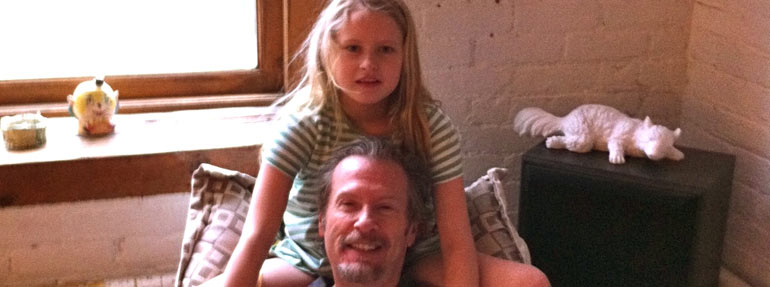
My Beautiful Husband and Daughter

Richard and Emma – 2011

The Battle…

“It’s all well and good for higher functioning people who have autism to talk about how unique and precious their lives are and how important it is for everyone to accept their differences, but for families who are dealing with low functioning individuals, this is not their experience.   Those families are in an ongoing battle.”  

The above is a version of a comment I’ve read countless times over the years.

Aside from the curious conflation of the first part of the sentence discussing Autistic people’s sense of themselves, to the last part, which discusses the family’s point of view, as though the “low functioning” individual is incapable of having a point of view, there is no point arguing with anyone about their lived experience. However, do not make your experience mine.  This is NOT my experience of my child.  This is NOT my family’s experience.  This is not the experience of many, many families I know.  And do not assume this is my daughter’s experience either.  Just because this is the way you view your child or sibling or relative or the person you know, does not mean that is their experience of the world or their family member’s experience.

I do not assume that because I choose to celebrate my daughter, every family and every Autistic person will agree or feel the same.  Nothing is as simple as any one-word descriptor.  The ongoing battle I find myself in is with the inaccurate information about autism and Autistic people.  The ongoing battle is not my daughter’s neurology, it’s the misperceptions people have that they then apply to my daughter.  The ongoing battle is not about her at all, it’s about functioning labels, what people continue to say and believe autism means, how people view disability, the stigma attached and how people fear, reject and punish what they do not understand.

That quote?  That is exactly what I am battling – the idea that because someone cannot use spoken language, they do not have an experience of the world, the misconception that if someone cannot interact with another person in a way the majority of the population can understand or recognize, it means they are less than, unworthy, and therefore excluded.  Exclusion is the battle.  Non-acceptance is the battle.  Intolerance is the battle.  Hatred is the battle.  Prejudice is the battle.  Discrimination is the battle.  Misinformation, inequality, superiority, arrogance, ignorance, and all the ways in which people then behave because they believe these things and all the things they tell themselves that lead to any of the above being acted upon, that’s the battle.

USA-in-chains-610x400

The Three Boxes ~ A Story

Emma’s story, which she edited slightly from the original:

There were three boxes that were left on three different doorsteps.  They appeared to be identical in physicality.  The size, shape, and color made them far from unique.  The way they each arrived is still unknown.  Assuming they are identical on the inside would be ignorant.

When the people opened their doors and saw the boxes left, their reactions varied.  One questioned why there were no markings on the box.  The other tripped over the box when leaving, but did not pay it more attention right then.  The third opened it immediately since she loved getting mail.

Inside the boxes were lives – a kitten, a puppy, and a baby.  We will never know who abandoned these precious lives.  The focus is on how these lives adapt to new environments.  The easy answer is not that easy.  The longer version is that once the boxes were opened – the kitten quickly scampered out, easily scaling the box’s cardboard sides, the puppy tried to get out, but the box was too deep and he was too little, so he looked around for help, and the baby lay there, too young to even roll over and simply cried.

Luckily the enthusiastic mail-lover became the baby’s new mother.

That is food for thought.

The End

The box with the kitten

The box with the kitten

A Few Thoughts From Emma

“Today I will talk about the weather,”  Emma wrote.  Then she smiled and wrote, “That’s a joke.”

*Quick aside from Ariane.  Emma has referred to those who are well versed in cocktail party conversation as “weather talkers”.

“You’re funny,” Ariane said.

“Lean trains of thought provide rich moments of quiet peace.  Purposeful silence holds meaningful interconnection between like-minded souls.  Caring beings care in the silence as much or more as with words.   Now for a moment of silence.”

The view from the deck where we are staying

The view from the deck where we are staying

Today’s Post Brought to You By Emma

Written by Emma Zurcher-Long

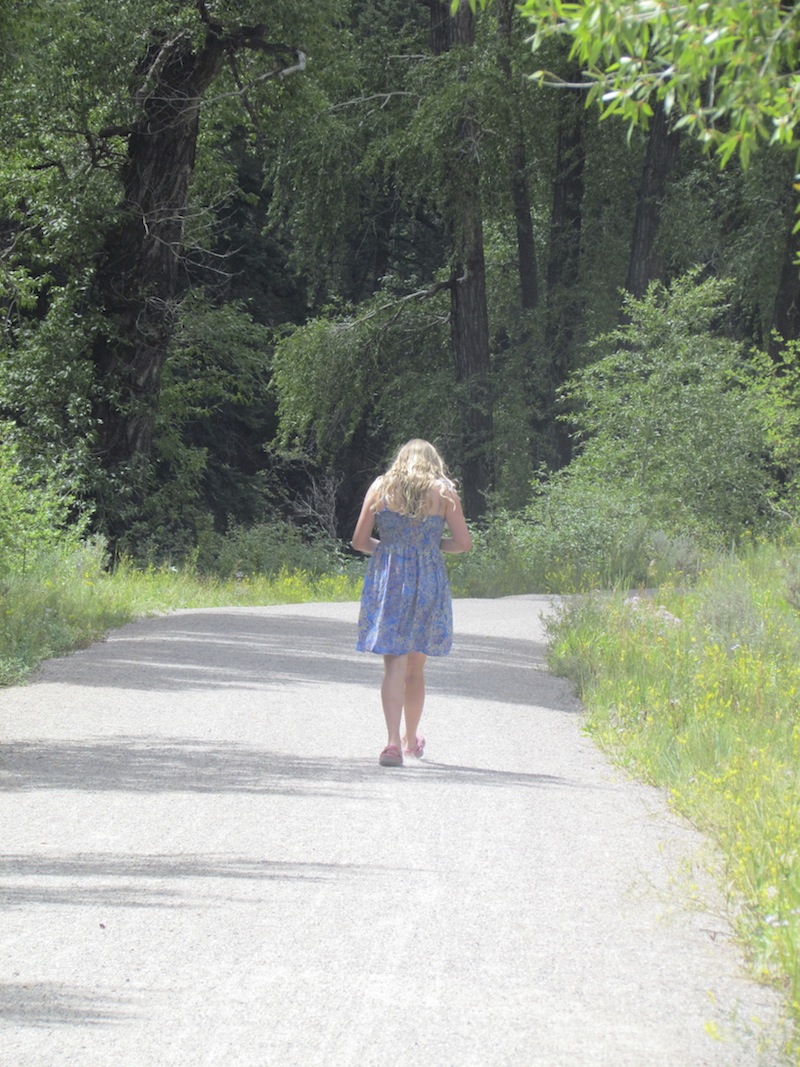
“Today I will tell a short story about a girl who wanted to speak to the wind.  She listened with ears attuned to wind’s song, and desired to speak with its power and beauty.  But the wind was not used to listening, and the sounds she made were ignored.  People heard her and told her to be less noisy.  The wind was loud, yet no one attempted to quiet it.  The girl understood the wind’s voice and eventually it heard her.  Neither one spoke with words.

“The End”

Emma Chose this image from a google search "Girl in the wind"

Emma chose this image from a google search “Girl in the wind”