Category Archives: Autism

And the Winners Are…

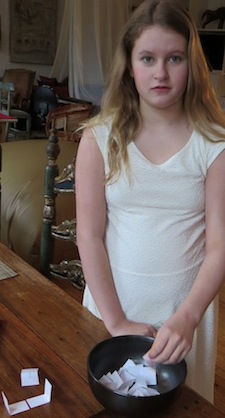
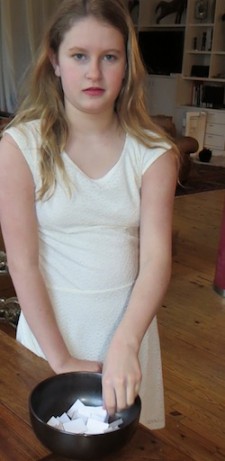
Emma randomly chooses the winners...

Emma randomly chooses the winners…

This morning  I placed all the names of those who commented on yesterday’s post into a bowl and Emma randomly chose five names to win Barb Rentenbach and Lois Prislovsky’s hard cover book, I Might Be You

Be prepared to be blown away.  This book is absolutely wonderful.

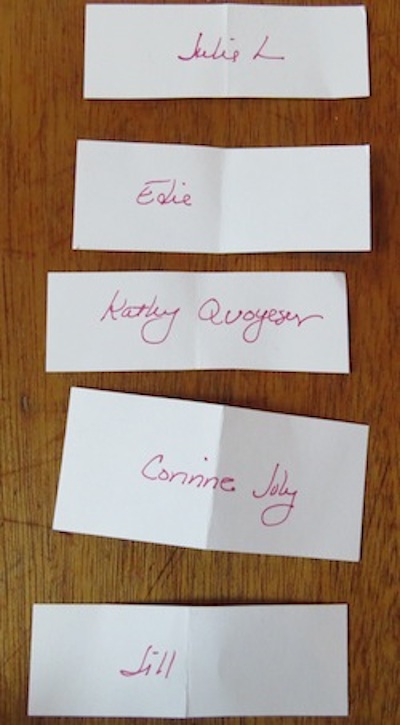
To all the winners – Julie L., Edie, Kathy Quoyerser, Corinne Joly and Jill – I will be contacting you by email. Your book will be sent via United States Postal Service after I’ve received your address.

And for those who want to read it, but didn’t win, please consider purchasing this terrific book either as a hard cover or as an ebook available for all eReaders, or the audiobook, which I had the honor of recording with Barb and Lois in New York City last year.  I am the “voice of Barb” and documented that amazing experience ‘here‘, ‘here‘, ‘here‘ and ‘here‘.

2

without looking…

And the winners are...

And the winners are…

“Barb Doesn’t Talk” ~ Emma

I have a friend who, when they met over a year ago, Emma observed, “Barb doesn’t talk“.  “Doesn’t talk” means she doesn’t talk with her mouth to communicate the way she can and does when writing.  Her name is Barb Rentenbach and she and her therapist, Lois Prislovsky wrote a book, I Might Be You.  I’ve written about Barb and Lois before, ‘here‘, ‘here‘, ‘here‘ and ‘here‘.  If you haven’t read their book, you must.  (Continue reading for a surprise later in this post about that book.)

I met Barb at the Autcom Conference in 2012 and though I didn’t know it at the time, Barb and Lois  would have an enormous impact on me that was far-reaching.  You see, it was because of Larry Bissonnette, Tracy Thresher, a boy I saw writing to communicate, and finally Barb, all of whom I met at the Autcom Conference, that I began looking into other ways for my daughter to communicate.  (You can read more about the process by clicking “How We Got Here“.)  Even though Emma can and does use her voice to speak, she has described her attempts to communicate with spoken language as, “I can’t talk the way I think.”  Later Emma wrote, “Please remember that my mind tells my body and my mouth to do all sorts of wonderful things constantly, but they don’t obey.”

In Barb’s most recent blog post (I urge everyone to read it) – Open Hearted Letter Quilt to Andrew Solomon –  she writes about autism, empathy, and how autistic people are often misunderstood:

“It’s like Saxe’s (1873) poem, “The Blindmen and the Elephant” where each blind man is partly in the right as he describes an elephant piece he studies, but all are in the wrong in knowing an elephant.

This autistic pachyderm will expand perceptions by presenting more pieces.”

Barb goes on to describe herself, “I don’t look normal.  I appear quite messed up and a prime candidate for nothing but pity and patronization, with a sprinkling of repulsion and fear.  I am disguised as a poor thinker.”

Still further along she quotes Emma:

“To quote my mentor Emma who is 12 (This old dog is all about learning new tricks) who wrote this by saying each letter aloud she pointed to it on a stencil board, “Autism is not what parents want to hear, but I hope that will change as more people get to know someone like me.”

This short video shows Barb typing just a few days ago.

Now there are some people who have suggested Barb is not typing on her own.  They believe that the person whose two fingers are tentatively touching her back are actually guiding her and that it is their voice and not hers that we are reading. This is a video of Barb writing four months ago…

And here is a video of Barb typing in 2011…

I am showing you these clips so you can see Barb’s obvious progress and please note, Barb is not a child.  I know that’s obvious, but it seems many people forget this or have trouble believing that people of all ages can and do progress.  Just as Barb works hard to become more independent while typing, so does my daughter.  Emma’s way of writing is slightly different in that no one is physically touching her and she points to letters on a letter board,  but she is working hard to move from pointing to the stencil letter board to the laminated letter board to a qwerty keyboard, with the eventual goal – being able to type on a computer regardless of who might be seated nearby.

As all these videos show, none of this is easy.  Barb is working hard and so is Emma.  Some days go more smoothly than others.  As Barb writes –

“I often politely ask my brain to please move my hand to do this or that only to be told, “We’re sorry due to high autism volume we are not able to answer your call at this time.  Please try harder later.”

For any of you who would like to have a hard cover copy of Barb and Lois’ terrific book, I Might Be You, I am giving away five hard cover copies.  Please comment below, saying something about yourself and why this book is of interest.  I will place all comments into a hat and will choose five at random.  If your comment is chosen I will contact you, via the email you use to comment, for your street address, where I will send you your copy of Barb and Lois’ MUST READ book at no cost to you and in appreciation to Barb, Lois and Emma for their hard work in bringing much-needed awareness to all who are like Barb and my daughter!

Emma, Barb Rentenbach and Lois Prislovsky

Emma, Barb Rentenbach and Lois Prislovsky


What Are State Assessments Assessing?

Yesterday, while at Emma’s school, her teacher showed me a sample of the state assessments that Emma is required to take, though there were record numbers of parents this year who protested them by opting out.  These assessments are done twice a year and take an enormous amount of time and energy from all involved.  The page the teacher showed me was about Ronald Reagan.  It was a series of facts that are read and then the student is supposed to choose the correct answer from two choices related to the facts just read.  I decided to use the page as an example of why I so vehemently object to these state required assessments as they are currently laid out.

I read the facts to Emma and then asked her to give me the answers by saying the correct answer out loud.  This is how the test is typically done.  Emma chose the last choice to each question every single time.  I then said, “Okay.  Now let’s do this using your letter board.  I asked the same questions, only this time, offered her the letter board and without any hesitation she got 100% correct.  I then asked her to circle the correct choice and she was able to do that too, which was interesting to see.

We did not go over more of the assessment, but for all those students who are like Emma, these assessments are useless.  They are not telling anyone anything helpful.  In fact they are giving inaccurate data.  If Emma had not been given the opportunity to learn to communicate using a letter board, she would have no way of proving she knows the correct answer.  How many children are just like Emma?  I do not believe for a second she is the only one who cannot say what she knows, but if given appropriate accommodations would be able to.

It is incredibly frustrating to have the state require her to take such assessments, which, as they are currently written, do not accurately assess what she is capable of.  This is my biggest objection with so much that is done when it comes to autism.  Far too often the current conversation is by people who are looking at things, similar to these assessments, and basing their beliefs on the information they are getting from them.  Incorrect information that tells us nothing of what a child is actually capable of.  Assessments, that in fact are assessing nothing.  What is being learned?  What a massive waste of time and money.  We should be doing better.  Our children deserve better than this!

*We are hoping to have the video of Emma’s presentation at CoNGO up on the blog tomorrow!

April 9, 2014

April 9, 2014

Respectful Engagement

Respect.  I think about this word a great deal.  There are things I do, things I think in any given moment are examples of me teaching respect and yet in the teaching I am not modeling the respect I am trying to teach.  Here’s an example of what I mean –  (this example is fairly mundane, but it serves my purpose because it’s something that most of us can relate to.)

Let’s say Emma and I are in a new place.   Somewhere, perhaps like the place we recently went to give a talk on Autism Acceptance, where most or all of the people are strangers.  As we enter the room I notice someone I do know and they walk over to say hello.  My upbringing dictates that I introduce this person to my husband and daughter.  I do this by saying, “Hello _______, this is my husband, Richard, and my daughter, Emma.”  The person nods and says hello, maybe they even extend their hand.  My husband without thinking, says something along the lines of “Hello _______, it’s nice to meet you.”  Maybe they shake hands.  My daughter turns away saying nothing.  I am aware that this is not the conventional way (polite) to greet someone so I, without thinking, direct her, “Emma say hello to _________.”

I know enough not to ask her to touch the other person, even if they’ve extended their hand, but I forget that there may be a good reason for her non-greeting.  Perhaps the lights are too bright, or all these strangers are too much, perhaps she is overwhelmed, or the noise is making it difficult for her to concentrate on any one thing.  Perhaps she senses this person is not someone she gets a good vibe from, perhaps the person is standing too close to her.   Regardless of whether I know what could be causing her not to say hello, demanding that she do so, is not the best thing for me to do.

Instead, I might lean down and whisper in her ear, “Do you want to try saying hello to _____?”  If she does decide she’d like to and can, fine and if she cannot, for whatever reason, then that’s fine too.  But before I say something like this I will want to have done a lesson plan around “social niceties” or the things people say to each other and why they do so.  This is the ideal.  However this is not what I always do, because I forget, but these are the little things I constantly think about.  How can I parent better?  How could I have approached that situation more respectfully?  How can I use this as a teaching moment, not just for my daughter, but for myself?

One of the things I’ve learned over the years is that kindness, directed toward myself and others is the single best way most of us learn.  When someone yells at me, I don’t learn, in fact, I shut down.  Even if the person does not yell, but criticizes me, scolds me, directs me to do something without explanation, I feel myself becoming self-conscious or worse, shutting down.  I close in on myself.  I can’t hear what the other person is saying.  I become engaged in an internal battle.  When someone is respectful and kind, I am open and much more likely to listen to them.

People say things like – “oh but that takes such patience,” or “who has the time to do all that?”  I understand.  But I know that the other way, while easy and perhaps quick, is nothing more than a quick fix, if that.  The person may say the words I’ve just directed them to say, but the next time I will go through the same process.  But there’s an even more important piece to all of this, because one can argue, who cares about social convention?  Why should any of us care?  Why should we say hello to one another?  None of this matters.  And I agree, none of this is really the point, the bigger point is that I want my children to understand that we live in a world filled with other people who may or may not share their neurology and that many of those people when met for the first time may offer their hand, if in the United States, and say hello.  I want my children to not be put off by this, but know that they have the option to say hello if they are able to, or not and that I will be respectful of them no matter what their response is.

Directing my daughter to say words that I give her, is not being respectful of her and it also is not presuming competence.  When I give her words to say, I am allowing my issues around social convention to take precedence over respect for my daughter and her sensitivities to her environment.  I want to do better than that.

*I purposely have used the present tense, as this is something I continue to explore and am trying to do things differently.  This is very much a work in progress!

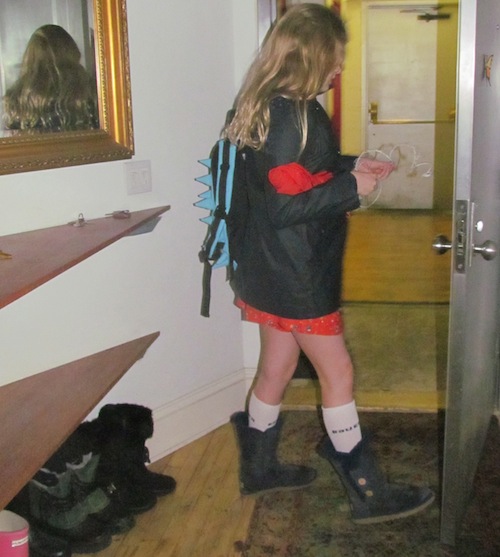
Dressed for spring rain - April 8th, 2014

Dressed for spring rain – April 8th, 2014

Thoughts On Thinking

Friday evening I asked Emma whether she wanted to use the laminated letter board or a qwerty, bluetooth keyboard connected to the iPad.  She told me she wanted to write using the keyboard.  Emma has written on the keyboard during her RPM sessions with B., but this is not something I’ve attempted.  I have been reluctant to use the keyboard because Emma has done so well using the laminated letter board with me and I’m always worried about changing something that’s working well.  But when using the letter board I have to transcribe as she writes or hope that I’ll remember what she’s written, whereas with the keyboard it automatically types directly onto a document within the iPad.  Often I can’t remember what she’s written, or think I have remembered correctly, only to find out later I did not.

This was the case Wednesday night when Emma wrote in front of an audience at CoNGO.  I hadn’t stopped to transcribe her words as she wrote them, thinking I’d be able to remember, but once she’d finished the sentence, I couldn’t remember.  Afterward, when we thought we hadn’t recorded our presentation, I tried to remember what I thought she’d said – “Autism is not what parents want to hear, but I hope that will change as more people meet someone like me.”  What she actually wrote, once we found the video recording, I was disconcerted to learn, was – “Autism is not what parents want to hear, but I hope that will change as more people get to know someone like me.”  That is a subtle, yet significant difference.  I’m so sorry Emma for getting your words wrong.

Our goal has always been for Emma to write on a keyboard and eventually be able to write with the keyboard resting on the table, so that no one need hold it.  That she wrote both Friday evening and over the weekend on the keyboard is a huge leap forward and very exciting!!

So.  Friday evening Richard asked Emma for permission to ask her a few questions about thinking.  Now for those of you who know Richard, you will smile as you know this topic is one of his favorites.  He loves nothing more than to read and discuss thinking, consciousness, dreams, reality, and anything remotely related.  These are the topics Richard explores in his writing and the things he is fascinated with.  Richard wrote on Emma’s Hope Book FaceBook page – I “think” of “thinking” as my constantly chattering internal dialog.  I have long suspected that Emma has either NO internal dialog, or very little, and that what she “thinks” of as “thinking” must be very different from what I “think.”

Emma generously agreed to allow her dad to ask her a few questions though she did remind him that she had the timer on.

*I need to interject here that the following conversation is representative of Richard’s “thinking” and Emma’s as she describes it.  No one is suggesting that ALL people, either autistic or non autistic think as either of them do.  It would be a mistake to assume Richard is somehow representative of ALL non autistic people, though many may relate, or that Emma is representative of ALL Autistic people.

Richard:  Mom and I have this internal dialog going on all the time and that’s what we call “thinking”. How does this differ from the way you think?

Emma: I only think in voices when I am working with you (Ariane).

Ariane: Is this also true when you write with others?

Emma: Yes.

Richard: Do you see our internal dialog as an advantage or disadvantage compared to your own way of thinking?

Emma: It is more distracting than the way I think.

Richard: Tell us more about how you think. If it’s not with an internal dialogue, what is it like?

Emma: Know that I am almost always happy and take great pleasure in sounds, color, fabric.  Everything in life is beautiful if you are able to be here.

*Whoa!  “Everything in life is beautiful if you are able to be here.”  

Richard: I’m so used to thinking with an internal dialogue. It’s hard to imagine thinking without talking to myself.

Emma: Have you felt this always?

Richard: When I was a kid I didn’t talk to myself all the time. I was probably a lot happier. As I grew older, my internal dialog became stronger and now it’s there most of the time. I have to meditate or concentrate to temper it.

Emma: It’s too bad that you have difficulty.

Richard and I looked at each other and shook our heads in amazement.  Then Emma began to laugh and we joined her.

*The keyboard we are using is a Kensington Keyboard.

**A brief update on Emma and Ari Ne’eman’s presentation at CoNGO last week that we video taped, thought we hadn’t then found we had.  We have not had time to upload it and we haven’t received approval from Ari yet, so it may take a few more days before we can post all or part of it here.  Bear with us.

Emma types on a qwerty keyboard

Emma types on a qwerty keyboard

How Do We Put A Price on Communication?

As I was downloading a couple of photographs just now, I found the video we took of Ari and Emma’s presentation Wednesday evening.  Intact.  We’ve got it all!!  Woot!  Woot!  But before I put the video on here, I have to get permission from Ari and Emma.  So let me do that and then, if both agree, you should be able to view it next week.  I’m hoping by Monday.

In the meantime, there’s something else I want to talk about.  And that is the experience of hearing your child’s thoughts and opinions, interests, questions, and desires, when you weren’t sure you would ever be able to do so.  Now this is a little loaded because there are some who believe it’s wrong to suggest all Autistic people will be able to express themselves.  Those people believe there are some who cannot and it is creating false hope to suggest otherwise.  There are still others who feel that communication comes in myriad forms and we must stop insisting one way (speech) is the only way. They believe we should honor all methods of communication, whether that’s through words, sounds, body language, or silence and using our other senses.   Those people believe, and I am one of them, that we all have the wish to connect with our fellow humans in some capacity, at least some of the time, and it is incumbent upon all of us to figure out how we can support each other so that all have the opportunity to do so.

When Emma first wrote an unexpected sentence, described in detail ‘here‘ it was the beginning of what would turn out to be nothing short of an odyssey for all of us.  From that moment, on November 25th, 2012, we have experienced what can only be described as a dream-like adventure with Emma leading the way.  The degree to which she was underestimated by almost everyone who met her, including us, is beyond my ability to describe.  I say “almost” because there were a few people who met her who were not fooled.  It is interesting to note that those few were Autistic.  My friend Ibby was the first and we’ve written a little about this in two pieces she and I wrote featured in Parenting Autistic Children With Love and Acceptance’s first addition of their terrific new magazine, which you can read ‘here‘ (It begins with a piece by Ibby on page 17 and then ends with my companion piece beginning on page 21.)  By the way, the entire magazine is filled with wonderful pieces by Beth Ryan, Nick Walker, Cynthia Kim, Amy Sequenzia, Renee Salas, Sharon davenport, Alyssa Hillary, Kimberly F. Steiner, Juniper Russo, Amy Caraballo, Jane Strauss, Kelly Green, Steve Summers, Leslie Rice, Zita Dube-Lockhart, Leah Kelley, Lei Wiley Mydske and others who donated their art work.

When someone sees Emma, who now communicates by pointing to letters on a letter board, (which is different from when she wrote that first sentence a year and a half ago) I sometimes hear the following comments – “I just don’t see how this can translate to a school setting” or “It takes too long” or  “economically it’s not feasible because it requires a one on one ratio that most schools won’t be able to pay for.”  Except here’s the thing…  The way Emma communicates is tailored for an academic setting.  Just as in any classroom, a student is called upon to give an answer or thought, about any given topic, so could Emma be given the opportunity.  All it requires is for the teacher to say, “Emma when you’re ready just signal and you’ll be next.”  The aide can then raise their hand when Emma has finished writing.  This would also deal with the comment that it “takes too long” and I’ll just add that our society’s increasing desire, that everything be reduced to a sound bite, should be tempered, and having someone like Emma in a classroom, would be beneficial to all, by the very fact that we all need to slow the f*ck down.

As far as what this means economically, I argue that there is a great deal of money being spent on a great many things that are NOT working.  Things like trainings for methods that do not produce the type of complex and nuanced language we are seeing.  How do we put a price on communication?  How can anyone suggest that having someone who was thought to be unable, or worse, incapable of expressing their thoughts, not be supported to do so because of the cost associated with it?  How can any of us seriously object?  And yet… people do all the time.  And it catches me by surprise every, single time when they do.

To see your child express their thoughts, as we have had the opportunity to do, is beyond anything I’ve ever experienced.  It has changed everything.  Literally everything.  Some people have said to me, “Oh you’re so patient.”  No.  I’m not.  When Emma is writing something, I am filled with eager anticipation for what she’ll say.  Patience?  No.  Ecstatic is a better way to describe my feelings as I witness the outpouring of her words.

How we engage with our daughter, how we speak to her, what we think and now believe, all of it has dramatically changed as a direct result of her communication.  I haven’t even begun to discuss what this has meant to Emma.  And here’s just one more massive difference between then and now.  Instead of me guessing or making assumptions about what this means to Emma, she can now tell us.

“I want to tell you that I am capable.  Daring massively, eager to prove my intelligence, I will work tirelessly so that Autistic children younger than me won’t be doubted the way I am.”                                         By Emma Zurcher-Long

How does anyone put a price tag on this?

Emma Wears A Pretty Dress To School ~ April 4th, 2014

Emma Wears A Pretty Dress To School ~ April 4th, 2014
Emma Presents At CoNGo With Ari Ne’eman

Tuesday night I received a message from Jess of the blog  – Diary of a Mom – telling me she wasn’t feeling great, was supposed to get on an airplane the next morning to come to New York City to give a presentation, along with Ari Ne’eman, co-founder of ASAN (Autistic Self Advocacy Network) at CoNGO (Conference of NGO’s) in consultative relationship with the UN.  She asked me if I’d be able to step in if she still felt awful Wednesday morning.  I told her, not to worry, “we’ve got this,” urged her to drink liquids and get lots of rest, but that I fully expected her to wake feeling much better and that none of this would be necessary.

Fade to the following day.

Jess texts me to say she’s feeling wretched, definitely has the flu, there’s no way she’s going anywhere and has contacted the person who invited her to speak to tell him she can’t make it, but that she’s asked me and is hoping he’s okay with this change in plans.  So we wait to hear from him and I go about my day, trying as best I can to not think about it.

Three hours before the event I was able to check my email and see that I’d been given the green light.  I had a few things I needed to do before I could even think about what I would say, but because of an earlier conversation I’d had with Erich who organized the event, I felt I had a pretty good idea.  Basically I intended to introduce Emma and begin by reading her A Letter to the World followed by Emma Discusses Awareness, a quote from something Emma wrote about Acceptance just a few hours before and ending with a question to Emma, “would you like to add anything?”  An hour before the event I was in a panic, while Emma was cheerfully singing and dancing to Donna Summers, wearing her pretty party dress which she chose specifically for the presentation.

We arrived and Ari gave a terrific speech about autism, acceptance, the reason calling a group of people “burdensome” and an “epidemic” is hurtful and problematic and then it was Emma’s turn.  After I read Emma’s words about “Awareness” I said, “I asked Emma earlier today what she thought about awareness versus acceptance.  Emma wrote, “I am aware of many things, and so are you.  Acceptance takes more dedication.”  I paused and then turned to Emma and said, “Do you have anything else you’d like to add?”  I held her stencil board and gave her a pencil.  Emma wrote, saying each letter as it was pointed to, “Yes.  Autism was not something parents wanted to hear, but I hope that will change when more people meet someone like me.”

Applause.

I intended to post the video of the whole thing here, but our camera had a different idea and when we returned home, excited to see the footage, nothing had been recorded.  And because we thought the whole thing was being recorded we didn’t bother taking any still shots either.  So other than a few photographs of Ari, we got nothing.  (Insert sad emoticon.)

Regardless, Ari and Emma rocked and I’m guessing at least a few people came away with a very different idea of what autism is and isn’t.  And if I’m right then it was worth every second.

PS  Jess, I’m hoping you’re feeling better.

Ari Ne'eman

Ari Ne’eman


Awareness Sucks

Today I wanted to do a companion post to yesterday’s “Emma Discusses – Awareness“, with a post entitled, “Emma Discusses – Acceptance”.  I love when Emma tells me to put something she’s written on the blog, because her words are always so profound and insightful.  But once we returned home Em was too tired, so I resigned myself to writing about Autism Awareness and what that means to me.  After all today is World Autism Awareness Day.

A year ago I wrote a  post – Autism Awareness? where I discussed how my awareness regarding autism has changed over the years.  The next day I wrote  – “What I Wish I’d Been Made Aware of When my Daughter Was Diagnosed With Autism“.  After rereading those posts, I then remembered a couple of others I’d written about autism awareness and acceptance, ‘here,’ ‘here,’ ‘here,’ and ‘here‘.  And after all that I just felt cranky.  Seriously.  Just cranky.

I don’t look forward to April the way I once did.  April is a loaded month when many of my friends feel they must hide or cannot look at social media because they know they’ll be triggered by all the calls to “light it up blue,” the hype from organizations like Autism Speaks who seem to do nothing, but speak… it’s exhausting and in the end the awareness they’re pushing isn’t awareness that helps either me or my daughter.   What they seem to call awareness, is to my mind hyperbole, fear mongering and irresponsible.  I’ll be honest, I would be happy if Autism Speaks folded up their little tents and found something else to rant about.

In addition to Autism Speaks’ dire calls for action, the CDC released new statistics – 1 in 68 – and I just groaned because I know how those numbers will be used, forget that they’re almost completely meaningless and actually not an accurate number as Jim Martin explains in his most recent post, 3 Reasons Why Canadians (and Everyone Else) Should Stop Using the 1 in 68 Autism Stat (For Now).  More fear. More anger.  More calls for action.  More listening to people who don’t know what they’re talking about.  More and more and more and more and I just want to crank up Pharrell Williams’ Happy at full volume, put it on repeat and dance.

So in the midst of all the calls for awareness I’m going to hold my daughter close, revel in her presence, sink into my immeasurable gratitude that I get to be her mom and feel the joy in knowing she is a young woman who is talented, funny, creative, wise, insightful, kind, and more forgiving than anyone I’ve ever met. And, boy, am I proud of her.

How’s that for a little awareness?

Emma ~ 2010

Emma ~ 2010

Emma Discusses – Awareness

“Awareness is deciding something is worth your time and attention.  It is not necessarily good.  Real awareness needs to be balanced.” ~ Emma Zurcher-Long

I asked Emma whether she wanted to write something about autism awareness since April 2nd is World Autism Awareness Day, designated by the UN in 1989.  Emma wrote,

“Autism awareness really does me very little.  It is not honoring or making my life easier.  So many believe I am unintelligent even though I write well.  Until they see me writing, it is not what they assume.  What good is awareness if it doesn’t tell people the truth?”

Ariane:  “What is the truth?”

“The truth is, so much of what we perceive compared to another, isn’t known.  People see me, but don’t understand what they are seeing.  I want people to know what it is like to have smart thoughts, but not be able to prove it.

“No one wants to be treated with impatience.  I am happy when people are aware of how bright I am.  Maybe they have a special light bulb for that.  Shine some awareness on those of us who can’t talk the way we think.”

Texas ~ September, 2013

Texas ~ September, 2013

Experiencing Without Words

Over the weekend we played a story telling game.  The round robin story telling was an idea Emma came up with during an RPM session she had a few weeks ago and it seemed like a great idea for a rainy Sunday morning.  (Unfortunately, I didn’t get everyone’s permission to print our story here.)  Suffice it to say, it involved rain, a family made up of two parents, a girl, a boy, and a tornado carrying a herd of walrus.

Emma began the story with one sentence, then each person added a sentence and we continued going around in a circle.  Emma spelled out her sentences by pointing to letters on her laminated letter board, my husband and son said their sentences out loud while I transcribed what they said, but when it was my turn, I found it very difficult to think of what to add out loud, and so I wrote my sentence down first and then read it to the group.

After each person’s contribution there was much laughter and ad-libbing.  At one point Richard, who, it must be said, couldn’t help himself, constructed perhaps the longest, and wonderfully, creative run-on sentence every spoken.  He did look a bit sheepish afterwards, but the story moved along until it was Emma’s turn again, where upon she said, “All done.  No.  You have to work!”  Her comment reminded me that for Emma this “game” that was intended as fun, was “work” for her.  As no one else was viewing it as work we stopped after the fourth go around, at which point Emma raced off.

I think a great deal about how hard it is for Emma to communicate, whether that is through spoken language or writing; they are both hard.  This surprises many people who assume, as did I, at least in the beginning, that someone who cannot rely on spoken language to communicate, would be more than a little relieved to finally find a way to express themselves by writing instead.  However Emma has told me on several occasions that while she is relieved that people finally can understand her when she writes, it is also very, very difficult for her.

Emma recently described writing as, “It’s too hard work,” but it’s easier for the rest of us, particularly as it tends to be more accurate of her thinking than her spoken language.  Not long ago Emma wrote, “I can’t talk the way I think.”   But it would be a mistake to then assume writing is easy or that she eagerly does it.  And I was reminded of all of this when it was my turn to come up with a sentence for the story.  I couldn’t come up with a sentence through spoken language, but had to write it down first.  What if everyone had insisted that I say my sentence out loud, what if someone had said that it was against the rules to write the sentence down first?

I can tell you it would have been much more difficult for me, though it still would have been fun.  But what if I experienced the world in other ways and not with words?  What if my experience of people and things was not through pictures, words or anything that can even be described with words?  Wouldn’t both written and spoken language through the use of words be equally difficult for me?  What if my experience of the world was completely different and having to translate this experience into words was actually impossible?  What if so much was lost in the translation that it no longer represented my experience?  What then?

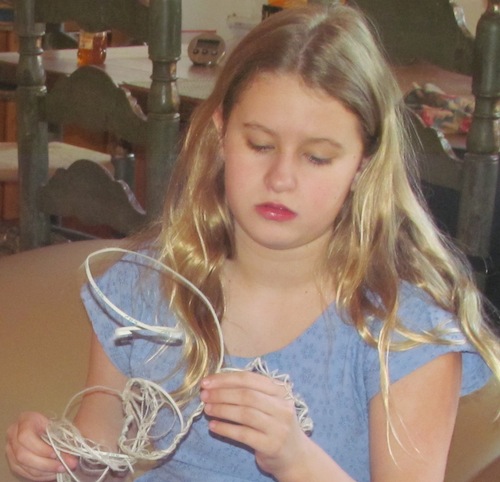
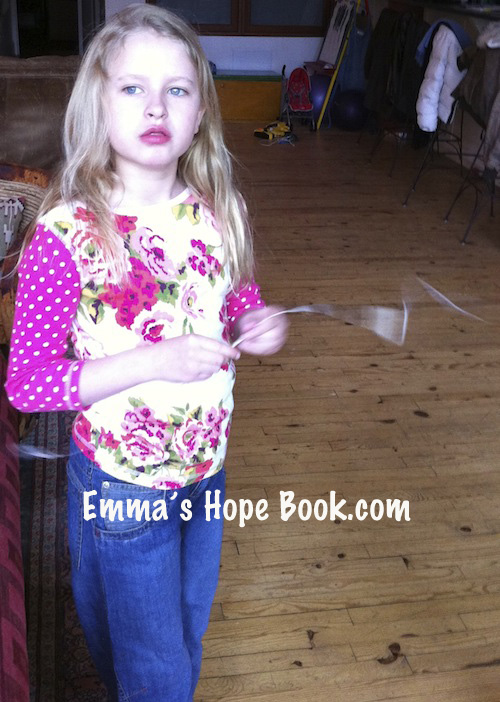
Em with her string

Em with her string

Seeing Others Write To Communicate

I often think about that first time I saw someone who was unable to express themselves through spoken language, but who spoke through writing.  There is nothing quite like seeing to believe or at least to begin to believe what many of us have been told is impossible.   So I’ve compiled a few Youtube videos of different people who communicate the way Emma does.  A couple of them show people who have graduated from the laminated letter board and now type independently on a stationary keyboard.  This is our goal and what Emma is working toward.   For those who may feel someone holding a laminated letter board is cumbersome and suspect, please keep in mind the letter board is a stepping stone, which all hope will eventually lead to full independence.

The first video is of Ido who now types independently on a keyboard.  Ido’s blog is Ido in Autismland where, in a recent post, A Challenge to Autism Professionals, he wrote:

“The theories regarding autism have been based on observation of our odd behaviors. Lists of these behaviors make a diagnosis. I have limited independence in selfcare. I have limited eye contact. I have flat affect often. I can’t express my ideas verbally. I have poor fine motor control. I have impaired initiation. I have impaired gross motor control. I have difficulty controlling intense emotions. I have impulse control challenges and self stimulatory behavior.”

At the end of this terrific post he writes:

“Thousands of autistic people like me live life in isolation and loneliness, denied education, condemned to baby talk and high fives, and never able to express a thought. The price of assuming that nonverbal people with autism have impaired thinking is a high one to families and to people who live in solitary confinement within their own bodies. It is high time professionals rethought their theories.”

Ido wrote a book with the same title as his blog – Ido in Autismland.  I cannot recommend this book enough and have written about it before ‘here‘ and ‘here.’   It should be required reading for all parents with an Autistic child as well as anyone who is considering entering or is already in the field of special education and/or autism.

This second Youtube video is of a boy who writes a letter to his church.

Jackie Dorhurst is a speech/language pathologist shown here working with Gavin.  Jackie has an organization called RPM+ located in Wisconsin.

This next video is of my friend Sue Finnes’s son Chris.  Sue has a wealth of videos that she’s posted on Youtube over the years of Chris working with a number of people whom she’s trained to work with him.

And finally this video is of another independent typer, Mitch Helt who writes a letter to his aide.

This post was inspired by a comment from Ari,  who has a wonderful blog, Pixie Perceptions.  You are not alone Ari.  Doing all I can to make sure others realize this…

Talking By Writing

*Emma gave me permission to write about the following…*

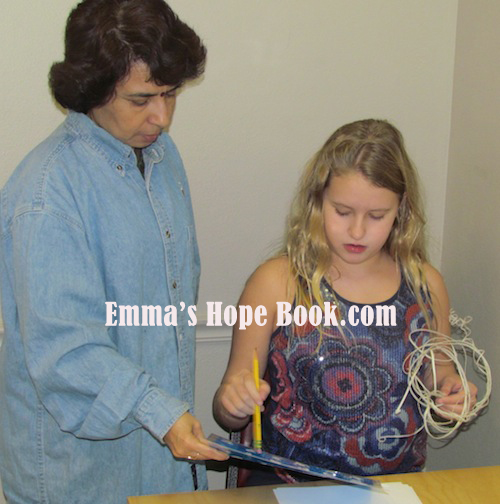
Every Tuesday afternoon I go to Emma’s school where Emma and I do a sample lesson, or Emma answers questions from staff or sometimes someone wants to share what they worked on with her and what her answer was.  As Emma “talks” by pointing with a pencil to the letters on a laminated letter board she twirls her string, and often, while she is “talking” by writing, she is also talking, as she describes it, “with my mouth” at the same time.  When I mentioned this to her at our last training session she smiled and wrote, “It is hard for non autistic people to multitask as well as I can.”  Which was one of those frequent – oh-my-gosh-Emma-you-are-so-fabulous – moments, because, really, not only does she have a wickedly wonderful sense of humor, but whoa(!) how right she is!

Later Emma wrote in answer to the question, “Is it problematic for you to switch from the letter board to a qwerty board, she wrote, “No.  It’s not a problem.  Is it hard for you?”  I was so taken aback by her response, because, honestly I had not ever considered that it isn’t a problem for me, so why did I assume it would be for her?  And yet, I have.   This was yet another reminder to me of how I presume competence as best I can with all that I know and yet, am humbled by constant little nudges urging me to go farther.  How beautiful is that?  Seriously?!

When I began witnessing people who use spoken language like my daughter does or who do not speak at all, but write, often poetically, often beautifully, I was astonished.  It was unlike anything I had ever seen before.  It’s been close to two years now since that first time I witnessed in real life someone communicating this way.  At first I was so incredulous, all I could do was watch and try to take in what I was witnessing.  After many encounters, repeated by so many people, men, women, teenagers, boys and girls as young as seven or eight I went from shocked amazement to a more calm feeling of  excitement, but even now, having spent nearly every day watching my daughter write this way, I often still feel like I’m in a dream.   It is as though I have been allowed into another dimension, and it is more beautiful than anything I ever believed possible.

"Talking" with the letter board

“Talking” to Soma using the letter board


On Being Judgmental

The other day a parent felt I was being judgmental because of my Demanding Speech post.  I felt terrible that was her take away from the post, but I also understood why she felt that way.  One walks a fine line when criticizing current therapies or suggesting we do things differently while not sounding preachy or judgmental to those who feel the very thing I’m criticizing has helped their child. And I have to admit here that in writing the previous sentence I initially wrote, “suggesting we do things better for the sake of our kids…” which, yeah…  that sounds judgmental and yet…

So how do we protest, how do we talk about things, things we feel outrage about, things we believe are wrong without sounding like all those “autism experts” I so often criticize here on this very blog?

And the only answer I have, for myself and anyone else, is – stay open to other points of view, be willing to listen and learn.  But how do I speak my truth while understanding that what I say may upset some?  I don’t think it’s possible and I’m okay with that.  Not everyone is going to agree with me.  That’s okay.  I don’t agree with the vast majority!  But what I won’t do is stop talking about all of this.  I won’t.  And while I talk about all of this, people comment and email and reach out and give me feedback and many times after reading what they’ve written I rethink my position. I change, I grow, I learn.  All of this is a process, and by that very fact it means that what I believe, is in a state of constant flux, there’s movement, more to learn, more to understand.

I know what it feels like to feel another person is judging me.  It isn’t a great feeling.  And it doesn’t help me understand the other person’s point of view and it definitely doesn’t make me feel particularly inclined to stick around to hear what else they might have to say.  In fact, when I believe someone is judging me, my visceral response is to retreat or fight back.  But, if I can let go of that initial desire to flee, I often learn, even if it is a lesson in verifying what I already thought.  The most important thing I can do is not preach, not convince, not judge, but speak honestly about my experience.  If that resonates with others, great, if it makes people angry, so be it, if it alienates some, okay, but this blog is about our experience, mine, Emma’s and Richard’s.  I don’t speak for anyone but myself.  I don’t pretend to know what Emma’s experience is, even when she writes about it here.  The best I can do is interpret it, respond to her words, talk about what it means to me and ask more questions, but that’s it.  The same goes for my husband, I don’t and cannot speak for him.

And in the end, that’s all any of us can do.  I hold deep convictions about much of what I see going on with autism.  I object to most of what is commonly believed to be the “truth”.  Yet I also know I continue to get things wrong.  I have tremendous humility when it comes to all of this.  I am constantly learning.  People, usually Autistic people, are generous enough to share with me their experience of things and it changes my thinking.  I listen. I revise.  I tweak my constantly shifting beliefs.  I ask questions.  I continue to learn more, I realize how I haven’t gone far enough in my thinking.  I  dig deeper.

But when I am in a room where a teenage boy is being watched like he is a prisoner while eating his lunch, pelted with questions he cannot easily answer by speaking, his favorite food, in this case, rice, withheld until he finishes some other food, again in this particular case fresh, cut up fruit, overseen by someone else, whose only real power is that they can speak easily while the boy cannot, spoken to with barely concealed impatience and irritation, I’ve got a problem with that.  When I see a group of people being treated as unequal, with less respect simply because their neurology is in the minority, I feel physically ill.  When someone who cannot communicate through spoken language is treated as incompetent I feel sick.  When people speak to my daughter or speak about her, often in front of her, with exasperation, irritation, barely disguised annoyance, I feel enraged.  When a human being is treated with condescension by another human being simply because that person is deemed less intelligent regardless of whether this is true or not, I am motivated to speak out.

This is personal, it isn’t just some issue I feel strongly about.  Do I feel judgmental?  Sometimes, but more often I feel  sad.

What follows are a few photos that make me happy…

Henry and me laughing as Emma tries to convince Henry that the water isn't freezing cold

Henry and I laughing as Emma tries to convince Henry that the water isn’t freezing cold

My friend Ibby

My beautiful friend Ibby.  Photo taken by Emma

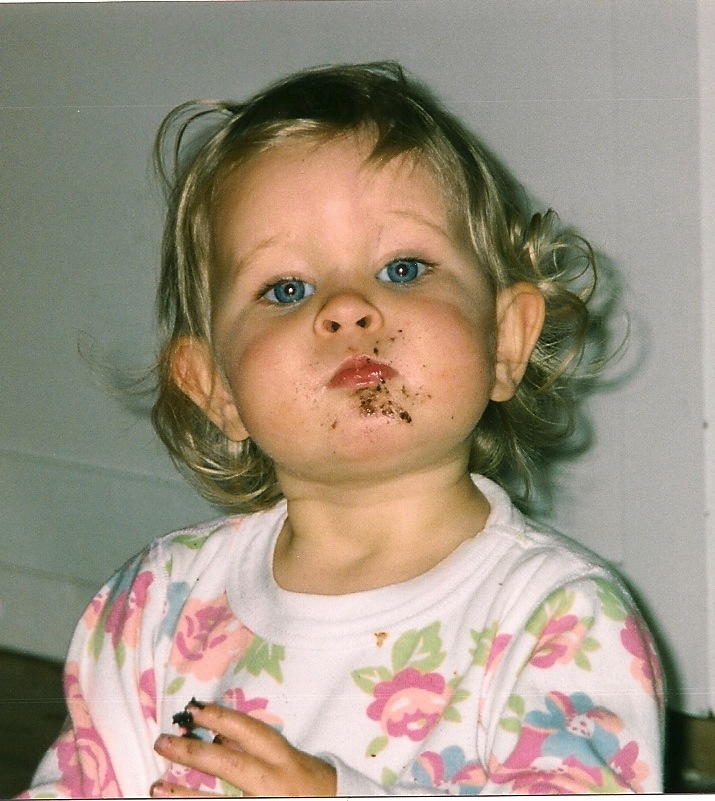
One of my favorite photos of Emma as a baby, because even then her personality shines!

One of my favorite photos of Emma as a baby, because even then her personality shines!

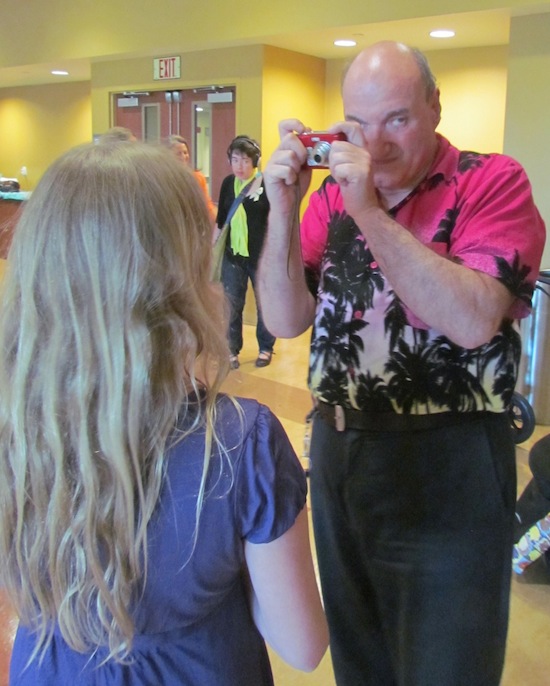
Larry Bissonette takes Emma's photograph

Larry Bissonette takes Emma’s photograph

Some Thoughts on Stereotypes and Empathy

Stereotypes are more problematic than not and yet most people, even though they may be unconscious of this, behave according to what they’ve been told or have observed to be true, even though it may not be true.  So, for example, if we are told Autistic people lack empathy, we will unconsciously be on high alert for any example of this.  In doing so, we behave in accordance with the very stereotype we are critical of.  In other words our own empathy suffers.

In the case of war, where we are fighting an “enemy” this type of stereotyping is actively sought and pursued so that those who are on the front lines can justify their actions.  We are told the enemy are “radicals” or “terrorists” or “fundamentalists” or “extremists” or unduly aggressive, thus justifying our own aggression toward them, which is seen as “good” and “necessary”.  Often we are told the enemy is deceitful, even “evil” or “bad”.  Stereotyping is usually negative, but not always.  It is a way to claim pride and feel a sense of belonging to one group, while seeing the other group as different, lacking understanding and often threatening.

To take this a step further, the people, usually a group of people who are not the majority, such as those who are being grouped into the “lacking empathy” category, may also internalize this idea and be on the look out for instances where they “lack empathy.”  And yet, most of us can find examples of this if we look hard and long enough, times when we have behaved in ways that would be seen as “lacking empathy”.

Empathy is both a feeling and the ability to sense another person’s emotions as well as imagine what they might be thinking or feeling, coupled with the ability to communicate all of this.  If communication is even remotely an issue, expressing one’s empathy will be difficult.  If you are in a country where the spoken language is not one you understood or know, its culture one you are not familiar with, would you be able to adequately express the empathy you felt in a way that would be recognized and understood?   Is it possible you would be misunderstood and labeled as something that you are not, simply because the cultural norms did not come naturally to you or you had not learned them and could not express yourself in a way that the other group recognized?

Additionally being on the defensive, feeling constantly attacked and criticized might also erode your ability to express yourself.  Feeling anxiety, judged, and ill at ease might put you on high alert.  It’s really tough to feel for other people when you are in a state of almost constant attack.  This is counter intuitive to all human beings regardless of their neurology.  But saying that those who are under almost constant attack (and for those of you who will argue that this is hyperbole, please know I am not suggesting every single person whose neurology is Autistic is feeling attacked, rather I am pointing out that many are and have been saying so for quite some time now) lack empathy is an interesting twist, exonerating one’s own actions and part in all of this, while holding another to a higher set of standards.

While stereotypes may help one identify with a specific group, they are largely negative and encourage assumptions that, more often than not, exclude rather than include.   I keep hoping we are heading toward a more inclusive society, but so many of the current debates suggest otherwise…

Emma, Mark Utter and Ibby at the ICI Conference - July, 2013

Emma, Mark Utter and Ibby at the ICI Conference – July, 2013

This post was inspired by yesterday’s post over on  Diary of A Mom, that Jess alerted me to.

Related Links from others:

Empathy as a Form of Communication by Michael Forbes Wilcox
Not Guilty by BJForshaw
I am in here by Mark Utter
The Sound and Worry By Arianna
Inventing Empathy by M Kelter

Demanding Speech

Over the weekend I witnessed a young man who did not easily speak and when he did say a word, it was clear how hard he was having to work for that one syllable.  Yet the people around him bombarded him with questions.   Questions he could not answer with spoken language, but that did not stop them from asking.  When he managed to make a sound resembling the answer they wanted, they would pause for a moment before asking him another question.  After about ten minutes of this he retreated into what looked like a sensory friendly room, where he rocked gently back and forth, holding his hands over his ears.  Even so, the questions continued.  

Another boy who was having his lunch was told during a ten minute time period to “look at me” more than a dozen times.  He too could not easily speak and was asked a great many questions.  Things like, “Is that good?” When he said, what sounded like, “Yes,” the other person said, “Look at me.  Stop.  Put down your fork.  Look at me.  Is it very good?”  When he again said, “Yes,” he was allowed to eat his lunch for a few seconds in peace before the next question came.

People often ask me why I object to ABA therapy.  It is not only ABA therapy that I object to.  It is ANY therapy that treats another human being as these very well-intentioned people were treating these young people, all of whom were teenagers.  I object to the way so many, who are in the field of autism are trained and how that training  affects how they speak to and interact with people who are autistic.   I do not, for a moment, doubt that they believed that what they were doing was good and ultimately helpful to the kids they were working with.  Yet each one of them was unconsciously or not, treating those kids as though they could not and did not understand what was being said to and about them.  The kids were not being treated as one would treat their same age non autistic peers.

On the Presume Competence – What Does That Mean Exactly – post I wrote, “What I have come to understand, is that a presumption of competence is much more than a set of beliefs, it is a way of interacting with another human being who is seen as a true equal and as having the same basic human rights as I have.”

What I saw was fairly typical of what I see often – well-meaning people who are working with autistic people, but who do NOT presume them competent, not really.  Had I said something to any of these people, I’m sure they would have expressed surprise with my observations of what they were doing and how they were interacting.  I would even guess that they would have told me that they were presuming them competent.  These were not mean people, they were not sadistic people, these were people who believed in the training they’ve been given and believed this was the best way to interact with these teenagers.

At one point the young man who was trying to eat his lunch, looked over at me and my son.  My son, smiled at him and I did a little wave and said, “hi.” He nodded his head ever so slightly at us and then the person who was paid to sit with him, asked him another question.  I do not doubt for a second that all the kids there were competent.  In fact I am convinced of it.  I know it to the core of my being as I have been around so many people who cannot speak, or who can speak, but not easily or naturally and who are all competent.  But this was not how they were being treated.  This idea, which is popular with a number of therapies, not just ABA, that we withhold desirable things until the person speaks as demanded, is not something I agree with because it is based in a presumption that wanting something is equated with ability and this is incorrect, even if it obtains the desired result – a verbal utterance.

Until Emma began to write, using her letter board, I had a great many thoughts about her that have proven incorrect.  Until she began to express herself through those words she painstakingly spells out, I was not treating her as the exceedingly  competent human being that she is, even though I often thought I was.  Even now, on any given day, I do not do this as well as I’d like to.  All those years of ingrained thinking are extremely difficult to change.  But change I must…

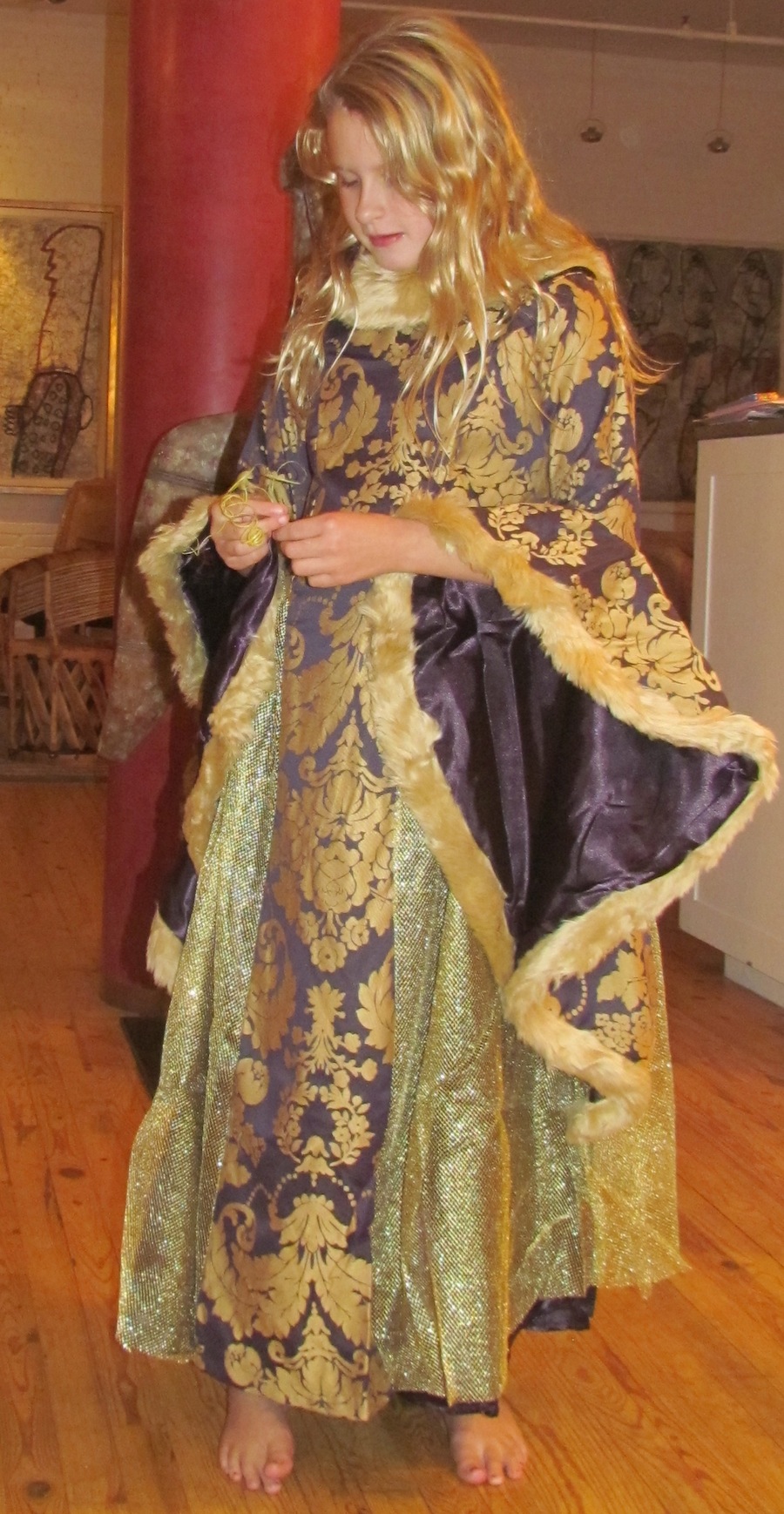
A Renassaince Princess

A Renassaince Princess