Category Archives: Autism

A Radical Notion

As I fantasize about a world in which autism is not consider a “bad” thing, but instead is seen as yet another type of neurology with its pluses and minuses, I continue to rewrite the “ideal introduction to autism” with the hope that one day this may actually be a parent’s experience.  I can’t imagine what that would be like, but I know for a fact, it would be a hell of a lot better than the very real, very upsetting, confusing and painful introduction to autism that I was given almost ten years ago.

First off, the literature regarding autism…  more and more there are books and blogs (!) written by Autistic people introducing the idea of autism as another kind of neurology with both innate challenges and wonders.  I’ve listed many of them on the Resources page on this blog.  As there were no blogs (written by Autistic people) that I knew of in the fall of 2004 I went to Barnes & Noble and bought pretty much every single book written on Autism.  Some would say that was my first mistake, as I was greeted with nothing but gloom and doom.  Other than Donna Williams and Temple Grandin, all the books were written by non autistic people about the dire, horrors of autism and what that meant for your child. (And none of it was good.)  Autism was most definitely not something to celebrate.

The idea that autism could be seen as anything but terrible was not even a radical notion, it was a thought that hadn’t made it into the public sphere.  When Emma was diagnosed the big names associated with autism were Andrew Wakefield, Jenny McCarthy and Bernard Rimland.  It was impossible to read anything about autism without those three names coming up.  Parents new to all of this, fumbled around trying to make sense of the various thoughts about cause, was it really an epidemic and how to best serve our children who were said to have been snatched from our protective arms.  I’ve written about the depth of my fear during those first few months that turned quickly into years in numerous posts on this blog.

My fantasy is nothing short of radical, but perhaps one day it will not be seen as such, but instead, will be commonplace.  My fantasy introduction to autism begins with the evaluation.  At least one of the therapists who came to our home in September of 2004 would have been Autistic.  Once it was thought my daughter might occupy a place on the Autism spectrum, more Autistic therapists, social workers and psychologists would have come to conduct the evaluation and talk to us.  This, then, would have been our introduction to autism…  meeting actual Autistic people, who are able to articulate what the challenges are and what the joys are!  People who could offer a balanced view of a neurology that I would be able to identify with and see there was overlap with my own.  People who would gently encourage me to review my own neurology and see that my daughter’s experience and processing of the world, while different from mine, has many similarities.  People who could help me so that I was in a better position to be the mother my daughter needed me to be.

After the evaluation and diagnosis had been made, we would then be given support in finding at least a few Autistic people who were in the profession of working with families with Autistic children.  In my fantasy, Autistic people would be among those creating schools, designing curriculums, teaching academics, conducting seminars for us, the parents of Autistic children, to attend so that we might better help our kids.  It seems to me a radical shift in all aspects of autism, what is said about what it is to be Autistic and what is being told to those who are non autistic, needs to occur.  My dream team would include Autistic and non autistic alike, but it would be a blend of those who presume my child competent, who treat my child with respect, who are interested in my child’s well being and want to work towards her strengths, encouraging her to be all she can be and cheering her on.  photo
Trauma & Autism

Studies confirm that people who are Autistic often respond to stimuli more intensely than those who are not.  Hypo and hyper sensitivities are often discussed when it comes to vision, taste, hearing, smell and touch in Autistic people.  Often there is a mixture of both hyper and hypo sensitivities in any one person.  (I use these terms because we have a lack of good words to describe these things.  Both hyper and hypo sensitivities are subjective and are used in comparison to non autistic people, which is problematic in and of itself, but for the sake of this post, it is the best language I have.)  What happens to a person who experiences the world more intensely than the majority of people, particularly when confronted with frightening situations, anger, loud noises, etc?

Recent studies have confirmed that children with autism have very active Amygdalas; the center of the brain that stores traumatic events.” Traumatizing Events and Autism

When Emma was just two, we went to visit my mother, the proud owner of an adorable German Shepherd puppy.  Emma had no fear of dogs, but during that visit, the puppy playfully chased Emma, nipping at her ankles and Emma began to scream in terror.  By the time I was able to rescue her, hoisting her up in the air and away from the puppy’s sharp little teeth, the damage had been done.  To this day, Emma is frightened of dogs and upon seeing one that gets too close, she will cry, “Mommy pick me up!”  Despite the fact that Emma is now much older, the trauma is real and intensely felt.  For years I couldn’t understand how something so (seemingly) benign could cause her such incredible, and to me anyway, over-the-top terror.  I continued to believe this was a fear she would “outgrow” and that it was only a matter of time before she did so.  But so far, her fear, while not as extreme as it once was, is very much intact.

I am on a family picnic.  My parents pull out a french baguette, an imported pâté, a coveted gift from my father’s sister who lives in Paris, and some Swiss chocolate.  I am hungry and excited as pâté and chocolate are two of my favorite things to eat.  On the way home I begin to feel sick.  By the time we return home, I am vomiting and have the flu, but associate the feeling of nausea with the pâté.   It is almost two decades before I can stand the smell of pâté, let alone taste it without gagging.

These are both relatively benign examples of sensory issues intersecting with memory and causing longer term associations, but what about intense trauma such as physical and emotional traumas?  What about the time when the ABA therapist locked Emma, who was only three years old, in her room for 30 minutes, instructing me to stay out or he would pull all our services, while she screamed and begged to be let out?  I know how traumatized I was and continue to be because of those 30 minutes, what about Emma’s experience?  Did this cause untold damage?  Did Emma experience the degree of trauma that I did?  Is her experience even more profound?  What about how she experienced her own mother not saving her from such a person?  How has she integrated these events into her life experience?  Is it felt as the ultimate betrayal?  How will it manifest in the future?

These are the things I think about.  Not because I am intent on beating myself up, but because these are things that happened and I don’t think any of us are served by NOT talking about them.  These are the kinds of dilemmas many parents have experienced.  These are the questions so many of us have. Questions that are, as yet, unanswered.  We have to ask ourselves when we are considering a methodology and those who will come into contact with our children, are they going to be respectful and kind?  Does this methodology presume competence, is it respectful of my child?  Will the person be patient? Will they treat our children as inferior because they see autism as an inferior neurology and one that needs to be “trained” away?

What does trauma do to the brain?

“Severe or repeated trauma can re-route emergency systems that are meant to be used only occasionally, and leaves them active, like a switch stuck in the “on” position. This can shrink or damage the part of the brain that thinks and plans, and potentially damages the brain’s ability to feel love and safety in the presence of others.

“To deal with this pain and stress, the individual may become more rigid and inflexible in his or her thinking and develop tunnel vision and selective listening. Over time to compensate for the damage done to the short term memory and ability to sequence by continued exposure to our fight or flight response, or allostasis, the individual may develop rituals, become rigid and controlling or “oppositional”, shut down, withdraw, rage, retreat into a special place, or become over-involved in things that help the individual to escape.” ~ Autism and Trauma:  Calming Anxious Brains 

It is tragic that the very methods a traumatized Autistic person may use to calm themselves from the trauma they’ve experienced, are often the very things those who are not Autistic pinpoint as “behaviors” or actions that must be stopped.   Not only is the person trying as best they can to deal with the initial traumatic event(s), but they are often being punished and told to stop using the only ways they know of that actually help them cope, thus creating further trauma.

Traumatic events often occur during developmentally vulnerable stages in the individual’s life, and in this process become intertwined with the child’s bio- psychosocial development. How easy it would be to dismiss this in a child with an ASD, who by definition is struggling with development of a sense of self, and is uncomfortable in an alien world, even prior to repeated exposure to trauma.” ~  Commentary: Complex Post-Traumatic Stress Disorder. Implications for Individuals with Autism Spectrum Disorders—Part II 

Trauma, in relation to autism, is something I wish I’d heard about during those first few years so that I might have made better and different choices for my daughter.  Those I know who are Autistic talk about their trauma often, yet there is very little written about trauma in relation to autism in the general conversations currently going on.  This must change.

Em with the dogs

A Teacher You Want to Clone

Having had a downright, dreadful experience at our daughter’s ABA based preschool that was publicly funded and had come highly recommended, we were determined not to make the same mistake twice.   We found a private school, the only non-ABA based school around at that time and for the next six years she went to it.  She was loved, she was well taken care of and she learned almost nothing.  It wasn’t that no one tried to teach her, it was that the way she was being taught was not a way she was able to learn.  So we hired a private literacy specialist and over the next two years, Emma learned to read and write.  But there was a “behavioral” piece to this person’s program that came at a cost.  I don’t mean a financial cost, though there was that too, I mean a different sort of cost, the kind you can’t completely assess or gauge until years later.  It was the cost that comes with being put into an emotional strait jacket.  So, at a certain point, as I learned more about autism from Autistic people I realized we could not continue, despite her terrific gains in learning to read, write and type.

A year ago we found a public school (most no longer adhere to any one methodology, thankfully) where Emma is loved and well taken care of AND is learning.  Her teacher is wonderful.  The kind of teacher all parents dream of for their child.  Loving, patient, kind, observant, respectful, presumes competence of all the children in her class, smart, has a sense of humor and open to anything that may prove helpful in teaching.  The sort of teacher who takes time out of a Sunday afternoon to sit in on a session with Soma Mukhopadhyay and Emma and takes notes and then asks to borrow books written by Soma on her method.  The sort of teacher who then comes over to our house to do a strategy session and begins to incorporate what she saw and has learned into her teaching.  Suddenly Em’s backpack is filled with material from a grade level curriculum she is now doing at school with this amazing teacher.  The sort of teacher who seems too good to be true.  The sort of teacher you wish you could clone…  The sort of teacher who is better than Xanax, Wellbutrin and Prozac without any of the side effects.  Except that the school year is almost over and this amazing teacher is leaving to teach somewhere else and Emma is entering middle school, so we must say goodbye to her wonderful school and her incredible teacher.

This morning we toured a middle school.  And guess what?  It emphasizes the performing arts AND it looks wonderful, with a fantastic sensory gym and a “theatre room” with photos lining the hallways of the children performing their own musical that they wrote and performed in.  Could we have created such a place more perfectly suited to Emma?  It could be a little closer to where we live, but that would be nit-picky of me.  So come this September, Emma will go to yet another school.  That’s three different schools in three years.  For any kid, that’s a lot of change.  For Em, who was such a trooper about her “new” school last September, I am keeping my fingers crossed the transition will be as positive.  Anyone have a cloning machine perfected?  Because if her current teacher could just be cloned and her head teacher in this newer new school, I’d have no stress at all!

In the meantime, Em will visit her “new” school a couple of times over the summer months.  From what we’ve seen so far, we are filled with hope!

**Em

An Interview With Tracy Thresher of Wretches and Jabberers

Wretches and Jabberers, the not-to-be-missed documentary by Oscar Award winning and two-time Academy award-nominated filmmaker Gerardine Wurtzburg, follows two non-speaking Autistic men, Tracy Thresher and Larry Bissonnette as they travel the world, reaching out to other non-speaking Autistic people in an attempt to change public perceptions surrounding intelligence and autism.

I’ve written about the film ‘here‘, ‘here‘ and ‘here‘ and about meeting Tracy and Larry, ‘here‘, ‘here‘ and ‘here‘.  I cannot emphasize enough how mind altering this documentary is. It is imperative people begin to examine their own ideas about what intelligence is and what that means, particularly as parents of children who may be similar to Larry and Tracy, who appear profoundly disabled or have difficulties with verbal communication.  Tracy and Larry exemplify all that is thought to be “other” and yet, when they type, they are eloquent, often hilarious, articulate and philosophical, as well as insightful about society’s view of them.  After watching Wretches and Jabberers, one cannot help but conclude we are all more alike than not.  The divisions we perceive are shown as constructs of our own making.  The biases we have towards those with disabilities is something we all must actively change.

A few months ago Tracy Thresher generously agreed to answer a few of my questions.  What follows is our conversation, but as you read this, please think about questions you may have and leave them for me in the comments section or email me privately with them at:  emmashopeblog@gmail.com.  (Do tell me whether you prefer to remain anonymous as I will credit you with any questions I end up using, unless you prefer I do not.)  I intend to submit this interview, once it’s finished, to Huffington Post and hope it might inspire people to reconsider their assumptions.

AZ:  Tracy, how would you describe the documentary, Wretches and Jabberers?

TT:  Our film catapulted me to realize my dream of traveling the world to educate, learn and change old attitudes of discrimination toward people of varying abilities. The Larry and Tracy duo illustrates how intelligence is often worked out in a much different way. Our journey takes us to places of enlightenment and our humanity, humor and intelligence comes shining through our typing. Our mission to spread the reality of our amazing intelligence through our typing is our way of promoting the Presumption of Competence dispelling myths. Our story is one that is a road trip for two friends who are in Larry’s words “more like you than not”.

AZ:  “More like you than not” is such a wonderful description.  So much of the literature surrounding autism is about the “deficits” of Autistic neurology compared to non Autistic neurology. Can you talk about the assets and the similarities?

TT:  In my way of thinking, my experience initially was uncontrollable anger for the life I had trying to break through the misunderstanding in school. Kids can be brutally honest, reflecting the language that was the accepted norm in my childhood. Labeling kids is crippling. MR (mental retardation) on a diagnostic chart equates to NOT a candidate for the honor roll. Now I am able to communicate the reality of autism. I met Monk Hogen during the filming of “Wretches and Jabberers”, shining his wisdom on my autism. My true desire and purpose in life is breaking the walls of injustice down and my autism is the gift God gave me. I now focus on how I am connecting with all kinds of people through my work on the road. The high I feel in my own community is so wonderful, knowing that people want to know me. The man I am today is because my autism is the gift I was given to be a leader to anyone who has ever felt less than human based on their appearance. Martin Luther King knew that hurt and he took it to the mountain of peace. My mind is more like a Mensa candidate than I can type. My life is a testimony to the lesson of humanity. Like Larry typed “More like you than not” is the guiding principle to inclusion.

The anger on stage during my presentation in Japan was related to the lost opportunities in my education. I kept shouting out my automatics like “Look at me now! The kid you told one another to keep in isolation now is mentoring students which is healing salve to old wounds of injustice.” The other anger in Sri Lanka is more about the heat in the way it took my overly heated mix of perspiration soaking my clothing to extreme discomfort. Also, the popular foods in their culture are not in my comfort zone. Finland washed my anger, turning my heart to love of the climate. The cuisine helped too. Primarily, beautiful lands of countryside put my spirit at ease. Henna melted years of lost hope by crumbling away the feelings of isolating my heart to love.

People in the world often fear the paradox that autism usually presents. Larry and I mostly felt gracious vibes in our travels but the camera crew likely alters reality. To reflect on the cultural attitudes, the typing of my international friends is the true compass pointing to injustice.

AZ:  For children who may be trying to cope with similar frustrations and anger, what do you suggest to them and their parents, teachers and therapists?

TT:  This is my mission to show kids and their supports that putting communication to the top of their list of priorities is vitally cleansing to the mind. Releasing deep thoughts is the key to alleviating anxiety. Frustration leads the body to unproductive anger. Being able to show intelligent thought is the path to happier futures and true quality of life, leading to purpose. That is what I sought and found with typing.

AZ:  Was there anything others might have done to help you when you were overwhelmed with anger?

Harvey and I have trust in our partnership. I need his firm yet kind support to stay on course with managing my autism. Harvey and I work well together. Typing is my outlet and open communication is the key.  Long term shared goals helps to keep me on track. Harvey’s commitment to my communication is the big time dosing of calm energy that I need. The commitment to presuming competence is the major breeze of refreshing air to cooling anger.

AZ:  You communicate by typing, but need someone to support your typing.  Why is it necessary for you to have someone supporting you?

TT:  Impulse to type out my most irritating automatics like going to radio stations or wcax news gets looping in my mind. Having good facilitators is helping me to slow my typing to think and connect to my inner thoughts. I also need high goal of working on fading physical support to be more independent and type with lessening support. Building trust is critical to fading.

Tracy Thresher

Walk Toward the Light

First there was the evaluation.  The therapists, the psychologist, the questions. Everyone arrived with their little bag of toys that remained untouched by session’s end.  Some tried to interact, others just observed, but all, eventually, turned to us to ask pointed questions.  Questions meant to gather information, but that felt like tiny daggers, cloaked in kindness, laced with concern.  They jotted down things we could not see, little bits of information they would, no doubt, refer to later, once back in the safety of their office.

Meanwhile we were in the midst of it, with our child who behaved in ways we couldn’t anticipate and often did not understand.  None helped us with that. Their reports finished, their conclusions made, their notes and jottings summarized into a single word – autism.  Delivered to us by phone, we were told, like a psychic delivering a premonition, the cold, hard “truth”.  Our daughter’s life, suddenly bled of joy, like so many leeches placed on a feverish body, draining her of all vibrancy.  Her bright future no longer bright, she was categorized.   Her deficits itemized and highlighted, her strengths dismissed or ignored, the solution, the remedy, the therapeutic interventions, the “behavior modification” programs could now begin.  If we were lucky she could be trained.  She could be “modified”.  She was young, we were reassured.  There was still time.  We were congratulated for having caught “it” so early.  Early intervention was key, we were told.  Intervention…

That was the beginning.  That was the beginning.  Instead of reassurances, we were given dire statistics, useless advice, asides about inner strength, courage, even “god” was evoked with alarming frequency.  People learned of our news. Carried along on the same wave of terror, they tried their best to conceal what they really thought.  Some were more successful than others.  Some, couldn’t help themselves, in an ill-conceived attempt to prop up, they said things like, “I don’t think I’m strong enough to have such a child…” or “I wouldn’t be able to handle it if…” or simply “How do you do it?”  and with each, the darkness crept closer, enveloping us in arms of sadness and pity.  The darkness became familiar, soon, without realizing it, I had embraced it and found others who felt similarly.

What I would have given to have had my Autistic friends there with me during that period when everything was so scary and the unknown loomed before us like a dark  impenetrable wall.  What I would have given, for someone to say, “You are frightened now, but they do not know, they do not understand, they may mean well, but they cannot help you.   You see, they are coming at all of this from the perspective of their own limited neurology.  They cannot see beyond what they believe to be true.  But there is another “truth” and it is one they are unable to tell.  The words they use will only lead you down a path you must reject.  It is a path that will descend into more fear, more terror.  It will not lead you and your child to anywhere you want to go.  Come with me, instead.  Walk with me.  Walk toward the light.

In my ever evolving fantasy of – What if? – I imagine all my friends… my friends who are Autistic, some of whom do not speak, some who do, some have similar interests as my daughter, others do not, but all… all share her neurology… and it is towards them that I walk.  It is with them that I surround myself.  It is with them that I choose to be among, because they know.  They know what it is to be Autistic.  They put beauty in the word “autism”.  It is their faces, their words that I think of when I think about autism and my fear is vanquished.  Fear, now replaced with pride and hope and joy that my daughter is part of such a caring, loving group of people; I am relieved.   A community who has come together to care for each other in a world that continues to ostracize, segregate and criticize, this is the community that stands with their arms open wide, in acceptance, in celebration of all that my daughter is and will become.

Walk with me… walk toward the light…

Rainbow Clouds

Muddying the Water: Alleviating Pain ≠ “Recovery”

A few months ago I wrote about how, once we were given an autism diagnosis for our daughter, so many of the things we believed were uniquely and wonderfully “Emma”, were suddenly thought to be examples of her “autism”.  Things were either categorized as a deficit or a “splinter skill”.  Splinter Skills and Other Words We Use concentrated on talents, interests and abilities.  My friend, Chavisory reminded me yesterday of the physical issues often mistakenly believed to be part of autism.  Things like allergies, insomnia, GI problems, epilepsy and food and eating challenges that often people who are Autistic have, but that many in the general population also experience.

Chavisory mentioned in her comment, a NYTimes article about a drug trial thought to minimize social withdrawal in Autistic people and those with Fragile X.  She wrote, “social withdrawal is not actually a core feature of autism. It’s a consequence of deeper issues with language, sensory processing, and motor differences.” Chavisory’s point is an important one.  This distinction is critical.  Not only because researchers are often trying to treat something that is actually something else, but because it confuses caregivers into believing they can “cure their child of autism”.

When a non autistic person has food allergies or insomnia, we say they have food allergies or insomnia. When an Autistic person has a food allergy or insomnia, many believe it to be yet another aspect of their autism.  People talk about “co-morbid” diagnoses of an Autistic person as though it were all folded into the autism diagnosis.  The problem with all of this is, it muddies the waters and makes people misunderstand what autism is and isn’t.  And it opens the door for many to believe they are curing their child of autism.  Taking care of allergies, GI issues and insomnia will not make an Autistic person non Autistic, however it will make them feel a lot better.

When an Autistic person with food allergies or debilitating insomnia, who also has hyper sensitivities to texture, taste, smell and sound, is given melatonin to help them sleep or a diet that complements their specific constitution, it stands to reason they will exhibit behavior that reflects that.  When anyone, who is in extreme pain and exhausted is helped to have that pain and exhaustion alleviated, they will feel better.  They will be able to smile perhaps, focus, be more alert, even engage in conversation, with an ease they would not exhibit when overwhelmed with pain and exhaustion.  But when this person happens to be Autistic, people use language suggesting their “autism” has been reduced; words like “recovery” and “cure” creep into the conversation.

Suddenly people become convinced that every Autistic person has food allergies, GI issues and sleep disorders and therefore ALL should do x, y or z.    If that doesn’t work, instead of questioning the underlying issue (that perhaps this person does not have an allergy or insomnia)  many will up the ante by doing more radical “treatments” to treat an allergy or condition that the person actually does NOT have.   Logic falls away.  Common sense is rejected.  The pursuit of a perceived “problem” that may have never existed is discounted as not the problem.   The answer is to pour more money into finding the thing that will remove the “autism” even though autism is not what is causing the pain and discomfort.  Special doctors and “autism specialists” are brought in to advise and treat.

When we start throwing all kinds of things at an “autism” diagnosis, when a massive array of physical and emotional things get added, when temperament, interests, preferences, talents become embedded in the “autism” diagnosis we are causing far more confusion and problems to an already confusing diagnosis.  And people misunderstand and say they’ve “recovered” their child or their child has been “cured” instead of recognizing that what’s really happened is they found something that helped their Autistic child, who had allergies or insomnia feel better.  Meanwhile thousands more, who pursue similar ‘treatments’ with no benefit to their child, conclude they need to find a better doctor, or treatment, or diet instead of acknowledging their child doesn’t have an allergy.

Em listening to an opera rehearsal over the weekend 

*Emma

From Cure to Celebration

Yesterday Richard wrote a wonderful post on his blog entitled ~ Happy Father’s Day.  In it he talks about being a father and how having children has changed him and his life.  He ends the post with, “To all our children, thanks for making our lives matter!”  I love that.  That’s it, right there.  That’s the feeling I’ve had, but couldn’t find the words to so beautifully or succinctly express.

Richard also wrote, “…We got a beautiful boy, Nic. Eighteen months later, we got a beautiful girl, Emma. One of each, as they say. We got “one of each” in another way, too. One autistic, one not.”  I read that and smiled, because it’s so true.  We have been fortunate enough to have a child of each sex AND of two different neurologies!  Three years ago I would not have been able to write any of this, I was still in the – Autism is tragic – mindset.  But happily all of that has changed. Some people object to those of us who have chosen to celebrate our child’s neurology.  They say we are sugar-coating what is real and difficult and makes it seem less serious than it is.  I disagree with that thinking.  I think we can still acknowledge the massive challenges our Autistic children face in this world, while still celebrating who they are and the beauty of their specific way of thinking and being.

I do not, for a second, believe that my daughter has an easy time or that she will not face all kinds of things a non Autistic peer would not have to deal with, but I do not need to increase her challenges by not accepting her, believing in her and celebrating her, exactly as she is, now, in this moment.  Adding my expectations, despair and ongoing critique and comparison of her, to the very real issues she must cope with on a daily basis does not make her life easier.  And I really want to make her life easier, not harder.  I’d like to be the person who champions her, makes the bumps she will inevitably face a bit less bumpy and help her navigate some of the twists and turns of life, by giving her acceptance and unconditional love for every aspect of her being.

I keep thinking about all our children who have trouble speaking, how when they are able to communicate in some way, either through typing or speaking, we non autistics are far more likely to listen and assume intelligence than not.  I keep wondering what would happen if all our time, money and energy were spent on finding ways to help our children communicate through typing and other AAC devises, instead of on cures; would we see a shift in society’s perception regarding autism?  Or would all those people dismiss their words because they are written and not spoken?  Amy Sequenzia writes about this ‘here‘.

You see, we were one of those families who pursued the bio-med route.  For years I tried all kinds of things, thinking we could cure.  As long as I believed in a cure, everything else took a backseat.  What I didn’t realize was that accepting and celebrating my child, fully and without amendment was the answer I had been looking for in all those doctors and specialists who claimed cure remedies.  The remedy wasn’t a cure, the remedy was celebrating the child I have, exactly as she is – that’s the remedy.

Nic & Em


“People Have to Listen”

Stop Hurting Kids is a campaign to “end restraint and seclusion abuse in schools.”  Restraint and Seclusion: Hear Our Stories is a 27 minute film by documentary filmmaker, Dan Habib.   Creator of Including Samuel and Who Cares About Kelsey?  Dan Habib is “Filmmaker in Residence at the Institute on Disability at the University of New Hampshire.”  The transcript of Restraint and Seclusion is available here.

For those of you who do not have the time or inclination to watch the film, here are a few quotes from it, which I hope will serve to pique your interest enough to watch the film in its entirety.  Because this is happening all around us, because this could be one of our children, because we, as a society, must become aware of what is going on, because without awareness and protest this will continue, because prejudice and brutality are not the answer, because as Barb Rentenbach continues to remind us, I might be you, because as my daughter, Emma has said on numerous occasions, “People have to listen.  Mommy, people do not listen to Emma.”

“The National Disability Rights Network reported that in recent years, the misuse of restraint and seclusion has resulted in hundreds of deaths and thousands of injuries.”

Peyton Goddard – “It was bruted power jired by purses wrongfully called teachers trying to beat I. This war wasted my rest. The sweet in I evaporated out.”

Helena – “He slammed me up against the wall, arm barred me across the throat and lifted up so I couldn’t breathe. And then whispered, “How am I supposed to talk to you nice and slow so you can understand?”

Wil Beaudoin – “One particular day we went to see my son and we were going to give him a haircut. So, we took off his shirt and he was covered with bruises and abrasions, fifteen to twenty on his body…everywhere.”

Peyton Goddard – “Fright opted I timid, silent and unable to fight back. Telling myself sweet lies that the tortures did not matter.”

Brianna – “I did not have a speech-generating device. Good evaluation would have made that happen. I tried to tell my mother. She did not understand me or she thought the teachers knew everything.” 

Peyton Goddard – “Try to see potent powerful potentials in each pierced person. There you will free their gifts. There I can feel I’m treasured. There nary I’m fret. I’m ready. Are you? Try please.”

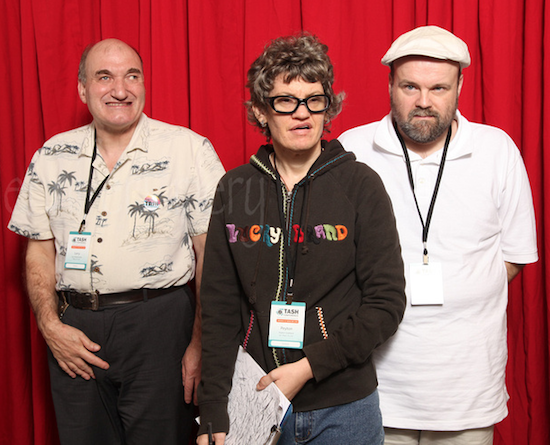
Larry Bissonnette, Peyton Goddard and Tracy Thresher at TASH

TASH 6


But What About Alex?

Another Autistic child has died… stabbed… multiple times, in the chest, by his mother. Alex Spourdalakis was 14 years old.

The mother of a 14-year-old with severe autism who was found stabbed to death…” ~ Daily Herald.com

But what about Alex?

The mother of a 14-year-old with severe autism…” ~ Pantagraph.com

But what about Alex?

First degree murder charges have been filed against Dorothy Spourdalakis, the mother of a teen with severe autism…” ~ abclocal.go.com

But what about Alex?

A young man. Stabbed. Not once. Multiple times.

We hold these truths to be self-evident, that all men are created equal, that they are endowed by their Creator with certain unalienable Rights, that among these are Life, Liberty and the Pursuit of happiness.” The United States Declaration of Independence – 1776

But what about Alex?

In the 237 years since those words were first written we have failed miserably at putting this idea into practice. All human life is not treated as equal; apparently it is not “self-evident”. We continue to live in a world where equality is still desperately sought by a great many.

For those who are born unable to speak and Autistic, those among us, who are given the label “severe”, their lives matter even less. We not only think of ourselves, (those of us who are able to speak and whose neurology is not Autistic) as superior, our lives deemed more worthwhile, but we are reminded of our superiority every single day of our existence, just as those who are born unlike us are told in myriad ways how they are not.

Autistic people, particularly those with multiple physical challenges, are spoken of as “burdens” to society, they are talked about as though none who are Autistic are capable of understanding the words being used to describe them. They are not consulted. They are not listened to. For the most part they are being ignored. And those who are raising their voices in protest, who dare to speak out against the crimes committed against them, they are met with resistance, anger, indignation. They are often ridiculed, dismissed, silenced or simply ignored.

When a parent murders their child, we cringe in horror. When that child is disabled we sympathize. The media brings in psychologists to help us understand. We dissect the child’s history, we look for clues, what could have provoked a parent to do such a thing? Sometimes we conclude the parent was crazy and unfit, but not before we make sure there was nothing unusual about the child. As we rally around, trying to distance or identify with the parent, Alex and those like him are all but forgotten. His life is seen as an example of what some must endure. His life becomes an illustration of that burden on society that everyone wishes would just go away.

But what about Alex?

What about what Alex had to endure? What about what it must have been like to live his life for those 14 years? Where are the news articles discussing who this young man was? What did he love? What were his passions? What made him happy? What must it be like to not be able to speak? Did he communicate through typing?  Did he read and write and if so what did he like to read?   What was his favorite subject?  Did he love music?   Did he like animals?  Was there something special he enjoyed doing?

What about Alex?

Alex


Another Way to Silence – Shame

Shame has a long and twisted history.   Over the centuries it has been used to coerce, to convert, to make people compliant, to keep people in line.  I’m not sure there is a “healthy” aspect to feeling shame, though I may be in the minority here as this article states, “Embarrassment and shame are important in the regulation of social behavior. Both emotions tend to occur when rules have been violated.”  But what if those “rules” are not actually in place for the good of ALL?  What if those societal “rules” serve the majority, but actually are a disservice to a minority?

The argument that without shame we would all resort to violent, unethical and amoral behavior is one I don’t agree with.  Plenty of people behave badly who are filled with shame, often as a direct result of the burden of shame they live with, but usually those who feel tremendous shame hurt themselves more often.  I question how often shame, actually motivates us to respond in positive and constructive ways.  In most cases, it seems to me, shame is less a controller of bad behavior and more an instigator of self-betrayal and self harm.

Shame is what people feel who have been on the receiving end of violence, violations, betrayal and abuse.  Numerous studies have linked shame with depression, suicidal ideation, post-traumatic stress, rape and incest.  The very people who could actually use a little shame appear to be without, while those they victimize carry the vast portion of it.  In these cases, shame is the emotional equivalent to metal restraints, intended to keep people in check, compliant and silent, particularly when used on children or a group of people who are already in the minority.

Many of the methods used, with supposedly great success, on Autistic children, has created a population of adults who feel tremendous shame, lack self-esteem, feel inferior, have anxiety, live with ongoing debilitating stress, all of which exacerbates the very “behaviors” these therapies attempted to remove.   The unending destructive cycle shame creates, does nothing positive for anyone, least of all our children.

I believe shame keeps us from flourishing.  It causes us to doubt, to become hyper aware, self-critical of our desires, our urges, our instincts.  Shame makes us feel incapable, unable, frozen and of little value.  From my perspective, shame is far more damaging than it is “healthy”.  Shame is exactly what I do not want my children feeling.  Ever.  In fact, shame is a warning sign that something has been taught improperly.  If either of my children exhibit shame about something, it is a signal that more needs to be discussed.

I do not want my children behaving in a certain way because they feel shame if they don’t.  I want my children behaving in a kind and loving manner towards themselves and others because they have learned it feels good to do so, because they have come to see that self-seeking, hurting others, gossip, betrayal and acts motivated by resentment and vindictiveness lead to more harm and like-minded behavior. All behavior is infectious.  All behaviors, good or bad can provoke others to do the same.  I am not naïve enough to believe it’s a given, but I do know that I like myself far more when I am kind and being of service than when I’m not.

I hope my children are learning the antithesis of shame and silent compliance, which is a strong sense of self-worth.  I want them to know now, while they are still so young, the beauty and joy of a healthy sense of self, that wonderful feeling of liking who they are as human beings, that feeling we are born with, but that over time can be taken from us.  I want my children to be in touch with those wonderful feelings of curiosity, awe and joy, so that when they make mistakes they aren’t destroyed by them, overwhelmed with shame and become silent.  I want to bolster them up, reassure them, encourage them, support them, so one day, they will be able to give hope and encouragement to someone else who may desperately need it.

Emma – three years old – 2005 

2005

A(nother) Performer in the Family

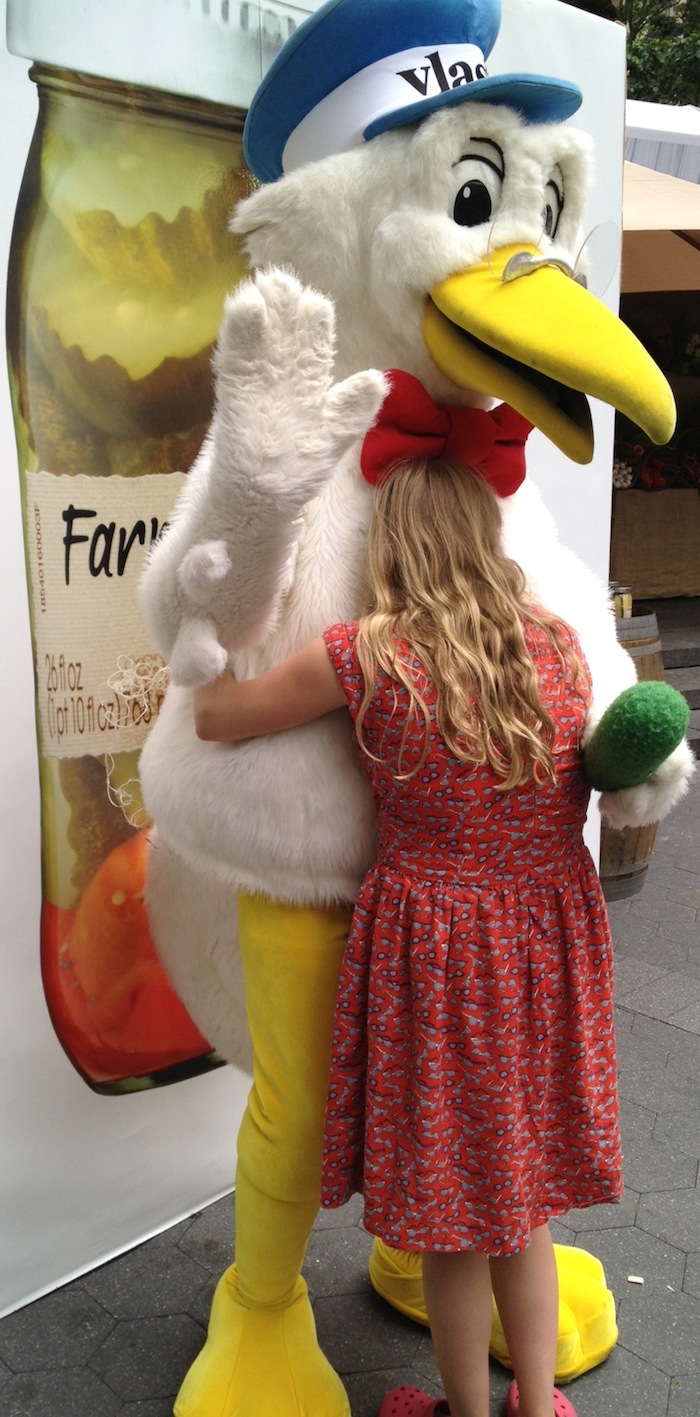
I asked Em if it was okay to post the following photographs of her.  She said, “Yeah!  Post on blog!”

“But is it okay to first post on Facebook?” I asked.  And again without hesitation Em gave me an enthusiastic thumbs up.

I have to admit, whenever Em says yes to me, regarding posting an image of her or something she’s said or typed, I feel more than a little ambivalent.   I wonder if she fully understands what it means to post on Facebook or here on the blog, despite my lengthy (and more than one) explanations of what this means, how many people may see it, who those people are or might be.  People remind me of the importance of listening.  And part of listening is to also honor and respect what I hear.   I’m trying to do that, while also trusting my own instincts and hopefully I’m getting it “right” more often than not.

I compare Emma’s response to her older brother’s, who has made it known to us that under no circumstances is he okay having us post his photograph, except on very rare occasions when he’ll shrug and say, “Seriously, Mom?”  There’s usually a moment when he stares at me with a slight grin and then says, “Yeah, okay.”  But my daughter is not like her older brother.  My daughter has a completely different personality.  Emma, adores the spot light.  If there is a stage, she will head for it.  If there’s a microphone, she will grab it, if there’s a crowd she wants to be in front of it, preferably singing.  Emma does not have inhibitions, she does not worry about what others will think or may think.  Emma has that wonderful ability to be herself among strangers and doesn’t modify herself in accordance with what she thinks they may or may not like.  Emma is MY role model!

What follows are the photos I asked Emma if it was okay to post, to which she said cheerfully, “Yes!”

First there was this…

1Em

And then this...
2Em

And finally, this…
3Em

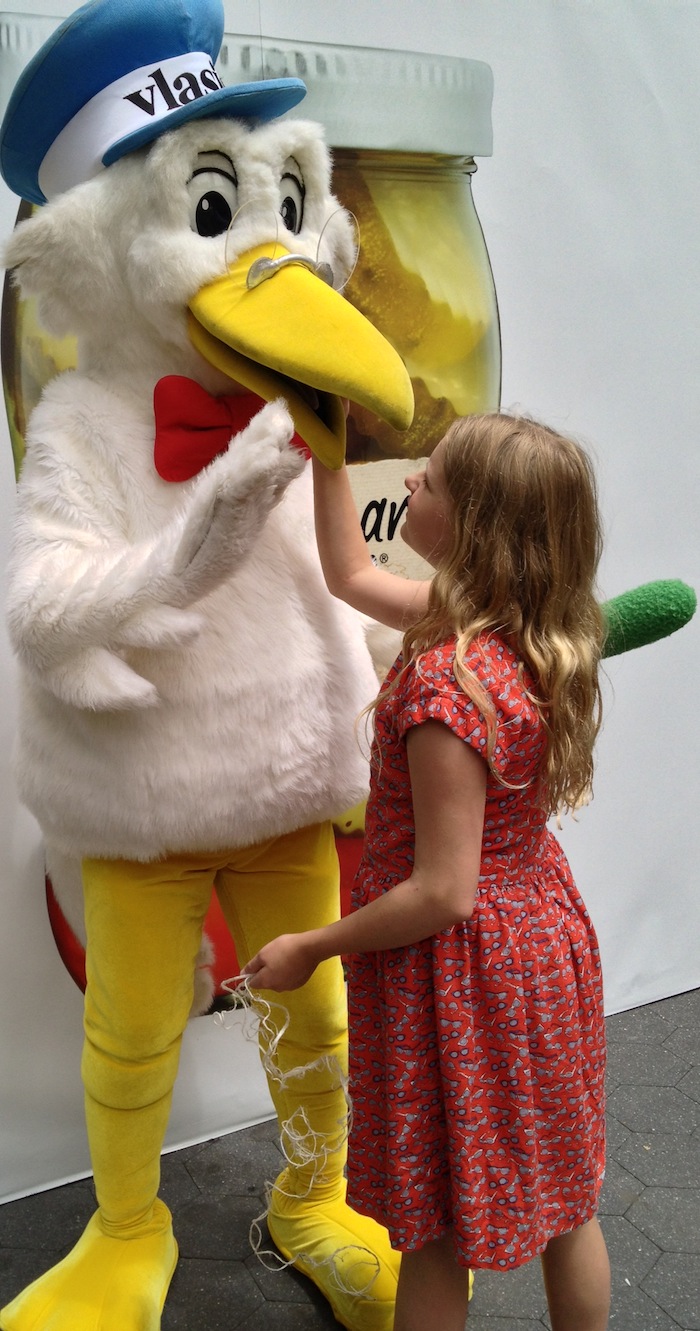
Okay, I don’t know about the rest of you, but for some reason Emma hugging the Vlasic Pickle Mascot makes me tear up… Every. Single. Time.

*A quick side note – the Vlasic Pickle mascot is a stork. Why, you might ask? Well, I googled it and found out that in the ’60’s their tag line was, “the pickle pregnant women crave…”

I have to run, because Emma’s mom is in a flash mob today outside the stock exchange…  yeah, you read that right.  YouTube video to follow…  😀

A Word Of Thanks

A friend of mine hasn’t been feeling well.  She had a cold or maybe it was the flu.  When she wrote me I could tell by the uncharacteristic abundance of typos that she wasn’t feeling great.  I thought about her, hoping she’d feel better soon.  And then yesterday there she was, so much better, her old self, witty, funny, silly, and I felt tremendous relief.  I hadn’t realized how concerned I was until she was better.

When I was nine my father went horse back riding.  It was a Wednesday.  He and my mother always went riding Wednesday afternoons.  I was home, sick with the flu that afternoon.  I remember staring out the window of my bedroom, the sunlight far too harsh forced me to turn my head from its glaring light.  My father told me he’d look in on me when he returned.  He never did.  At least not for a long time.  That afternoon he fell off his horse and, as luck would have it, he did not die as, those who administered to his broken body, predicted.  He did not die, but he was never the same.

Sometimes our lives change so suddenly it is impossible for our minds to keep up.  Sometimes it takes years to fully appreciate how one second can change so much.

When Emma was born, I could not have anticipated how completely my life would change as a result of her being.  It took years for me to process, to catch up, to fully appreciate the magnitude of one child’s existence and all that would occur as a direct result.  I could not have imagined how completely her life would change mine.   And now, today, in this moment I can say with complete and utter conviction, her life has made mine infinitely better, infinitely more enriched, infinitely more meaningful.  Her life.  Her existence.  Selfishly, and I do mean that literally, selfishly, I have benefited so completely from her being in this world, it takes my breath away.

In any given moment our lives can change.  Just like that.  And in that moment we have no way of knowing where we will be led.  Awhile ago I made a choice.  I didn’t think of it as a choice at the time, but I see now, that in fact it was.  I chose to view the things that have happened in my life as moments of possibility.  As long as I am allowed to live, each moment is a possibility to learn, to grow, to be open to new ideas.  I can say that easily now.  I understand this.  As lives go, mine has been a privileged one.  My perceived “hardship” is nothing compared to what so many have endured.  I do not say any of this flippantly.  This choice I made has been relatively easy to follow.

When my friend was sick I worried, when my father almost died I was devastated, when my child was diagnosed I despaired, but these things happened regardless of my response.  My response to them didn’t change their occurrence.

In this moment it’s raining outside.  Drops of water plop erratically on the air conditioning unit outside my studio, the clouds drift lazily along, skimming the tops of the multilevel buildings I see outside my window.  The red brake lights from the cars careening along the interlaced roadways create a moving collage as they speed off and on the exit ramps of the 59th Street bridge.  In this moment I am safe, my husband is safe, my family is safe, my friend is feeling better…  In this moment, in this brief moment, all is well and I am filled with gratitude for all I have.  I am filled with appreciation for the enormity of how one life has so profoundly changed my own in ways I could not have dared imagine.  I am humbled, knowing I will never be able to fully repay the gifts she has given me.

Beautiful Emma

Em


Non-Speaking People Who Type

This is a topic I would prefer not to discuss, but a few things happened recently that make it difficult not to write about this.  So… here goes…

Facilitated communication has had a bumpy history.  It began in the ’70’s and has been lurching along ever since.  There have been studies done, both proving it’s validity and others proving it as an invalid method of aiding those who do not speak to communicate.  This post is not about whether FC is valid.  Those who do not believe in FC’s ability to help those who cannot speak will not be swayed by anything I write here.  For those who are interested in reading more about FC and its history you can do so by reading this and this and the many links embedded in these posts.

What I will write about however, is all those FC users who have gone on to type independently.  And here is where things get really interesting.  Those same people who are convinced FC is all a mirage, a kind of non-speaking, Autistic version of an elaborate magic show, remain convinced the non-speaking person who now types independently is not really doing so.  Those people continue to insist it is a “hoax” despite witnessing, some even after seeing in real life, a non-speaking person type on their own.

Just to be clear, I am not writing about hand over hand or a hand on a forearm assistance.  I am writing about the many people who began typing with a facilitator, but who now type independently.  By independently I am referring to those who may still need a trusted person standing nearby.   Some type with another person’s hand placed on the middle of their back, others may need a hand gently placed on their shoulder.  Yet these same people who speak out forcefully, often aggressively to any who dare write about someone who is non-speaking and writing of their experiences, say even a hand on the back proves these non-speakers cannot and do not type their own words.  They insist that they are merely puppets doing the bidding of the person who is physically nearby.

What fascinates me about this is that these same people who insist it’s all a “hoax” (this is the word they usually use) would rather believe a person can move a seated, non-speaking person’s hand to hit specific keys on a keyboard by virtue of their physical presence, rather than entertain the notion that this non-speaking person, may in fact, be typing their own words.  One such person commenting on a blog post about something unrelated to FC, but that had a link to Barb Rentenbach’s book, I Might Be You, wrote, ” I don’t consider typing with an arm on the shoulder independent typing. You can clearly see the facilitator nudging her towards the letters.”  Not to quibble, but seriously?  So this is like some sort of typed ventriloquism?  Touch someone’s back and direct them to write thoughts that are not their own?

I urge any of you who believe this is possible to try doing it… place your hand on another’s shoulder or the middle of their back and see if you are able to control what that person then types.  And while you’re at it, try standing next to the person and psychically urge them to write something.  It seems incredible, but there are those who not only believe this to be the case, but they then demand “proof” that this person is typing independently, despite the fact that they’ve just been given the very “proof” they asked for.  Evidently “proof” is subjective.

What bothers me about all of this is that those who are typing to communicate are doing so because they have no other means.  This is not a “choice” that’s being made.  The people who continue to insist they are a “hoax”, that it’s all a “mirage”, that they are being “controlled” are taking away the only way they can communicate.  They are silencing them.  They counter this assertion by saying that on the contrary, they are actually “advocating” for those who do not speak and are protecting those who are at the mercy of a facilitator who is putting words into another’s mouth.  Yet, even when confronted with a non-speaking person’s typed words, typed without anyone’s hand on their arm, they continue to insist the very presence of this other person is all it takes.  The transference of perceived power to cover up their dehumanization of another is convoluted.

If you google “Carly Fleischmann” the third entry that comes up is “Carly Fleischmann fake”.  Sadly Carly is not alone when it comes to such beliefs.  There is a long and horrible history of non-speaking people being discounted and effectively silenced by those who believe they cannot possibly be intelligent, insightful beings.  There are those who will dismiss people like Carly as an anomaly, a “prodigy” and thereby ignore the years of effort it has taken her to get to where she now is, or they conclude she is a “fake”.  There is nothing new about the silencing of human beings deemed inferior.  (Read Inventing the Feeble Mind by James W. Trent, Jr.)  The ingrained prejudices and dehumanization of Autistic people continues.

I want to end with one last thought, which is this – if you found yourself unable to speak, but could type to communicate, yet when you did so, people doubted the validity of your words, accused you of not actually writing what you’d so painstakingly typed, what would you do?  How would you respond?  How would you fight back?  Could you fight back?  Restraints come in many forms, but all are effective.

As Barb Rentenbach writes, “I might be you.”  For those who doubt that sentence is her own, you better hope those words are wrong.

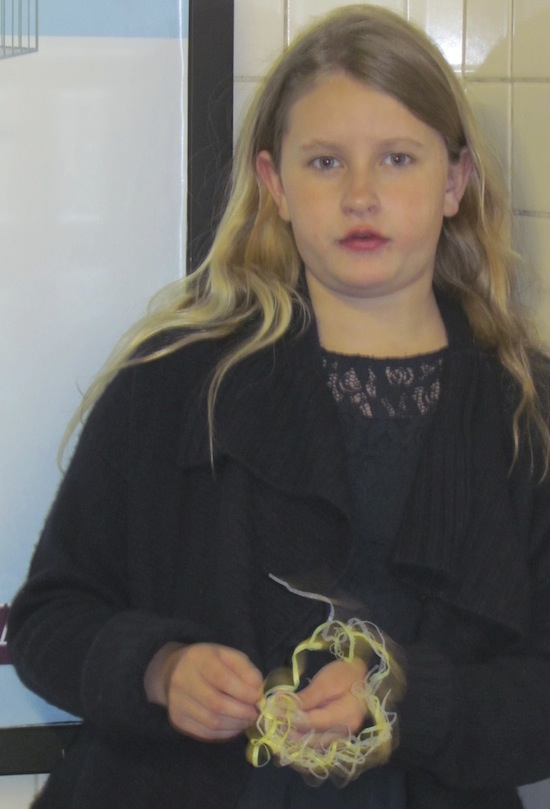
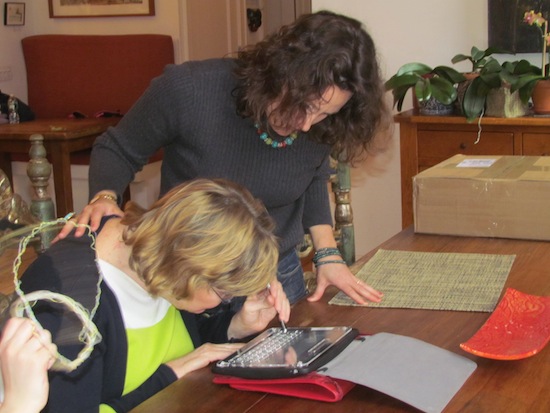
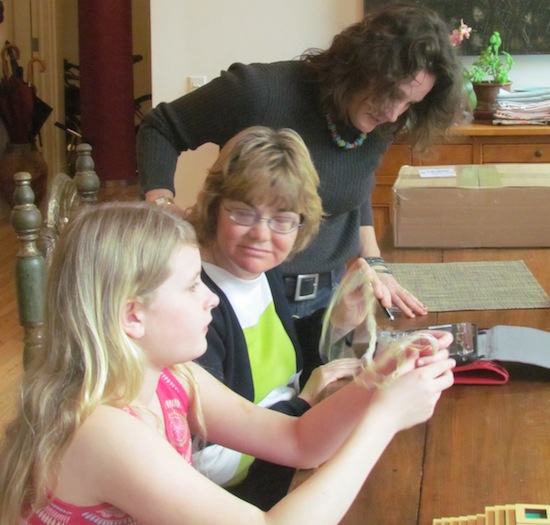
Barb types with Lois’s hand on her back as Emma twirls her string – April 2013

Barb types

We Are in This Together

It is in our best interest to remember that we are all the same.” ~ Barb Rentenbach in her book, I Might Be You.

One of the most insidious and destructive messages parents are given about their Autistic child is “the list.”  I am referring to that list of deficits we are given.  The list that enumerates all the reasons why our child has earned the “autism” diagnosis.   It is a list that divides.  It sets us a part from our child.  It makes us question our maternal instincts.  It makes us wonder what we did wrong.  It is the list that becomes our to-do list.  A list of things we now set out to “fix”.  Or so this was my experience when my daughter, Emma was first diagnosed.

That list, filled with judgment, a critique of my not-yet-three-year-old child, the same child that just moments before, I knew was different from what I expected, different than my son, yet still was a part of, was now branded with “other”.  If we are going to make such lists, I think it only fair the “evaluator” and all members of the human race be given similar critiques.  I would be curious to see how each of us stands up under such scrutiny.  Let us be evaluated by someone who does not share our particular neurology.  Let us each be judged by another – another who deems themselves superior.  Let’s see how well that plays out.

Loneliness is the most predominant side effect of our unique design. Many times, autistics revert to isolation by default rather than preference. It is infinitely easier to back away and not try to be included instead of oafishly stepping in and attempting to convey you intend to be a part.” ~ Barb Rentenbach in I Might Be You.

Have you ever felt like a fraud?  Have you ever said something to someone only to realize you said the wrong thing?  Have you ever been in a social situation and left, wondering why you feel uneasy, upset or just sad?  Have you ever spent time in the presence of a group, yet felt lonelier than had you been alone?  Have you ever had the thought that if people really knew you, they wouldn’t like what they found?  Have you ever felt separate from, less than, not good enough?  Have you ever felt critical of the way you look, the shape of your body, the size of a particular body part and wished it were different?  Have you ever thought if only that part was smaller, larger, different, if only the number on the scale was less, if only your hair was lighter, darker, straight, curly, your skin was a different shade, your height…  Have you ever thought if only X was different, I wouldn’t feel this way?

Remember a time, no matter how brief, when you felt that magical euphoria of connecting with another human being?  That moment when you felt the wonder and bliss that only comes with friendship and love, the beauty of connecting with another?  Remember what that felt like?  Wasn’t it beautiful?  Wasn’t it unlike anything you’ve ever felt?  A kind of anything-is-possible feeling?  A feeling of all being right with the world, that joy of knowing we belong.  Who among us has not experienced both?  Who among us has not felt the horror of feeling separate from, the worry that we are somehow damaged, not right?  Who among us has not felt the inextricable sadness that comes from feeling we are all alone?  Now add an entire society, a whole group of people, all of whom have decided we are “less than”.  Feel what that feels like.

Go back to the memory of bliss, of joy, of connection.  Feel the vibrancy, the exuberance that comes with that.  Which do you choose?  Would any choose differently?  We are all served by remembering we are more alike than not.

Reach out and connect with those who may be struggling with separation. It takes just one person to care to change a life for the positive. Be that for someone.” ~ Barb Rentenbach in I Might Be You.

Emma, Barb & Lois the week we recorded the audiobook of I Might Be You

Em, Barb & Lois

Autism And Stress

Lest you think this post is about stress felt by parents, let me quickly say, it’s not.  This post is about the stress I have observed my daughter experiences.  The stress she feels and that I (often unwittingly and unknowingly) exacerbate.  This is not about  beating myself up, but is an honest look at how my reactions can make matters worse.  As I’ve said before, it is my hope that as Emma’s mother I continue to make progress in my parenting, but also as a human being.  Just as I hope and expect my daughter to learn and progress, I hope the same for myself.

“We have to minimize her stress.”  This was something Soma Mukhopadhyay said during Emma’s most recent session with her.  It was in answer to my question about when to graduate from using a letter board to a computer keyboard during her RPM (rapid prompting method) sessions.  During the session Emma pointed to a letter, then Soma wrote the letter down, Emma pointed to another letter, and on it went until Emma had written an entire sentence.  This technique, of one letter pointed to, one letter written down, helps with Emma’s impulsivity, which is amplified when she’s feeling stress.  It was during this same session that Emma answered Soma’s question about whether she could feel colors, with, “Of course.  That answer, those two words spelled out so easily by my daughter, made me laugh and cry at the same time.

My daughter types and does things that astound me.  It doesn’t matter how much I believe in her competence, I am continually astonished, ecstatic and heartbroken all at the same time.  Astonished because of the ease and confidence with which she will say something like, “Of course” in answer to a highly complex question, heartbroken because for so long these were words I never imagined I’d hear, let alone learn what I am now learning about her.  I no longer believe these feelings are mutually exclusive to each other.  Now, instead of wondering whether it was all a dream, I celebrate the exquisite beauty of my child and all she does that constantly reminds me of just how vast and incredible the human mind is.  I am humbled, on a daily basis, in the best possible way.  I would not trade the awe I get to feel when in the presence of my child for anything.  Seeing my daughter defy every limited idea about her that has ever been uttered, including my own thinking, gives me tremendous hope for this world, for my own growth and for humanity.

I witness greatness when I watch her work and it is a beautiful thing.  So when she expresses upset, which I now am able to identify as stress, it breaks my heart in a way that it didn’t, before I understood.  What I used to think of as stubbornness or a temper tantrum or a form of manipulation, I now see as a product of the enormous stress she feels.  And I have to wonder, exactly how much stress must she cope with?  I have talked about what I perceived to be her “resistance” in typing, but am now beginning to think of it as less “resistance” and more stress.  Stress from how very difficult it is.  Stress from expectations, stress from making a mistake, stress from doing something different, and those are just the stresses I can easily come up with and relate to.  I’m guessing there are many more I am completely unaware of.

Stress is something that, when she is gripped by it, all systems seem to simultaneously crash.  To make matters worse, my stress level rises in direct proportion to hers and I am confronted with how unhelpful I am when I allow my stress to overwhelm me as was the case the other day.  My response to Emma’s panic was to panic too.  So much so that I could barely breathe.  “You have to calm down!” I instructed her, while my own sense of calm, shattered so completely, was a perfect example of what NOT to do.  It was the antithesis of modeling behavior sought and it reminded me of something my father used to say to my siblings and me – “Do as I say and not as I do!”  I think he thought it amusing, however I remember it as anything but.

There are times I cannot predict, when something happens, things I don’t know or understand, and suddenly my seemingly placid, happy child is in a turmoil of upset.  There is often a sensory component I’m unaware of.  During these times sentences are repeated that are obviously meaningful to her, but that I find confusing.  As her stress escalates, her ability to verbalize what’s going on plummets and my frenzied request that she “type it out” does nothing to alleviate the situation.  The longer all of this goes on, the more I feel completely ill-equipped to keep my stress level from going into the red, let alone help her with hers.  That Emma seems convinced I am, not only capable of pulling it together, but will be able to help her, is an example of my daughter presuming in my competence, which makes me all the more determined to work through my own issues and do better.  I owe it to her.

September, 2009

September '09