Tag Archives: Rapid Prompting Method

“Just Being Funny”

Last week Soma and Emma discussed different proverbs.  Soma explained that one of the proverbs was about how a new person can be very enthusiastic upon getting a new job, eager to prove their worth they do a great deal, but as time goes on they lose some of their enthusiasm and do not do as much.  Emma then wrote, “It is like a new husband.”

When Soma asked her to say more, Emma wrote, “Just being funny.”

And she was.  Really funny.  In fact, I burst out laughing.   One of the great things about someone who says the unexpected is that it often is very funny, and that she also intended to be so, makes it all the more joyful.  (There is nothing more upsetting and hurtful to the other person than laughing at something that strikes you as funny, only to realize the person speaking did not intend or mean to be funny.)

I cannot anticipate what Emma will write.  The way she phrases ideas and thoughts, even questions are unexpected.  I am biased, I know, but I see her way with words as one of her many, many talents.  The beautiful and unexpected way in which she will phrase a thought or express a feeling fills me with emotion. I am in eager anticipation and gratitude for every word she writes.  I sit and watch her and am mesmerized.  There are few things I enjoy doing as much, truthfully.

At the moment Emma’s two favorite songs are Clint Eastwood by the group Gorillaz and Cage the Elephant’s Ain’t No Rest For the Wicked.  Like me, when Emma likes a song she will play it over and over and over.  When I was a teenager I wore out record albums (yup, that’s how old I am) from playing the same favored song repeatedly, causing the album to get scratched from my insistence that only the one or two songs be played and not the record in its entirety.  Dancing to those favorite songs is an added bonus.  Emma loves to dance and so do I, something my husband loves doing as well.  Listening to music requires no speech; no words need to be exchanged.  Given how hard Emma must work to write her thoughts, it is nice to do something we all love, that isn’t hard work.

Yesterday Emma and I were discussing death, something Emma speaks about regularly in repetitious utterances about various pets and people who have died.  We have talked about death before, but this time Emma wrote a sentence that I couldn’t make sense of.  It was at the end of a 40 minute session, so I figured she was tired and we’d come back to it later.  Since our time was up, I left the sheet of paper with Emma’s sentence on it, on the table.  This morning, just before I left for work, I reread the sentence.

“Hysterical rant on death is assuring story, but does nothing to understand reality of story.”

And I began to wonder whether her spoken phrases, “Bertie died, Bertie has to be careful.  Yeah, Bertie got old.  Bertie lay down and went to sleep.  Bertie died…” about my very old cat who was seventeen when he finally died, is a kind of calming self talk.  Perhaps a way to make the unknown less frightening and yet she still knows that even in trying to soothe her fears, the repetitive talk does nothing to help her understand.

So this afternoon, I will ask her and afterward we will listen to Gorillaz and Cage the Elephant and dance.

Dancing ~ 2012

Dancing ~ 2012

“Why is my Mind Autistic and Yours is Not?”

Yesterday Emma wrote, “Why is my mind autistic and yours is not?”

That sentence took over two minutes for her to write.  I say this as a factual statement so that people reading this have a better understanding of the enormous effort and energy it takes for my daughter to communicate.  If it took everyone a few minutes to communicate a single sentence, perhaps we would be more thoughtful about what we said and wrote.  Two minutes.  With someone like Soma, Emma is able to write much more quickly, but I am fairly new to this (I’ve been working with Emma on an alphabet board on a daily basis since the end of September) and so with me, it takes longer.  With someone else it may take even longer still, or she may not be able to write more than a single word.   But the more salient point is, that sentence is gold, and worth every second it takes for her to point to one letter at a time to create words and then whole sentences.

Until we found this way of communicating, we were left guessing about Emma’s likes and dislikes, what interested her, what she was curious about.  And while there were a great many things we knew or believed we knew without her telling us, there was also a great deal more that we did not know or understand.  For example, I was astonished to learn last week that Emma was curious about Africa and wanted to know why so many of it’s inhabitants are poor.  Later I asked her if she’d like me to read about an African photojournalist, Echwalu, whom I love and whose blog I follow, Echwalu Photography .  She said she was interested.  We have since begun subscribing to National Geographic and I am now reading articles from the New York Times to her.

“Why is my mind autistic and yours is not?”

So I did my best to explain that no one actually knows the answer to that question.  I explained that most people believe genetics plays a role and that though I am not autistic, I do share a great many “autistic-like” traits.  I went on to explain that there is more about autism that is unknown than there is known and then our session time was up.  Emma went to listen to music while I thought more about her question, and resolved to read to her the Markram’s, Intense World Theory.  I thought about how our brains differ, but also how much they are alike.

I thought about how relatively easy it is for me to communicate and how I take most of my communication for granted.  In fact there is so much I take for granted.  I thought about how easy some things are for Emma, things that I am not able to do, like singing on key, being able to remember a melody and imitate it note for note.  Her ability to absorb knowledge without having been taught, like multiplication, division, vocabulary words, to name just a few.

This idea that Autism is a massive list of deficits needs to change.  The truth is we, non Autistics know almost nothing about Autism and what it means to be Autistic.  In fact, the human brain is constantly astonishing neuroscientists.  To say we understand or know without a doubt what any one of us is able to do is to underestimate, not just ourselves, but everyone else too.

Emma ~ 2012

Emma ~ 2012

Social Expectations

Yesterday there was some discussion about accepting and rejecting social rules.  Asked to talk about the rules she would reject, Emma wrote four that she would prefer were not required and expected of her.  When we returned to our hotel we discussed this further and Emma slightly amended what she’d written and added one to the list she’d made during her morning session.  I’m guessing there are additions to this list, but these sessions are exhausting and I didn’t want to push for more.

1.  “Giving eye contact when I don’t want to.”

2. “Being expected to answer verbally.”

3. “Being happy when I don’t feel up to it.”

4. “Keeping my body still”

5. “Trying to be Temple Grandin”

When Emma wrote “being happy when I don’t feel up to it” Soma asked, “do you feel social pressure to be happy?”  Emma wrote, “Don’t you?”

So here’s my question to all of you…  if you could change a societal expectation, what would it be?

Oh, and this is the eagle Emma drew after her last session…

Emma's Eagle ~ January 29th, 2014

Emma’s Eagle ~ January 29th, 2014

“Voices”

The Halo Center has published a little pamphlet of Autistic people’s writing. It’s called “Voices” and this year’s issue – “Voices” 2013 edition –  is available for purchase ‘here‘.  One of Emma’s fabulous folk tales is in it, along with dozens of others.  For anyone who is even remotely interested in Soma Mukhopadhyay’s Rapid Prompting Method or RPM, it is a great sample of the writings of a wide range of people of all ages who do not rely on spoken language to communicate, but who write to communicate.

“Butterflies used to be sticky as butter.  But they had curiosity.” ~ Emma

I am not going to reprint Emma’s entire story here as I hope some of you will go over and purchase a copy.

Soma and RPM have completely transformed our lives.  It is my dream that every school, every educator, every therapist, and all people who are in the field of autism have the opportunity to witness someone like my daughter writing her thoughts on the letter board.  Eventually Emma will write on her iPad and computer, but for now she is using a laminated letter board with me, her iPad with the person she sees here and the laminated board, which she even holds herself at times, with Soma.

A Session With Soma

A Session With Soma

Emma’s “Folk Tale”

*Emma worked on this story for a week and it took many 45 minute sessions to complete.

“Once upon a time there was a duck and she bought a gorgeous pair of shoes.  She could not force her webbed feet into the lovely shoes, so she fell into a terrible depression.

“Oh what is the matter with me?” she cried.

“Her once beautiful feet now disgusted her.  The new shoes languished in her closet.  Golden hopes for her acting debut were dashed.  Without her new shoes she believed she would not be as highly regarded as she would be while wearing them.  Delightful she once was, but now no longer.

“Dawn arose like a spring crocus and she decided matters could only improve if only her feet were dainty.  Seeking the advice of an aged, old, spotted owl, she wondered if her feet could be changed.

“The ancient bird asked, “Have you always hated your feet this way?”

“No,” she said, “I have always enjoyed my wonderfully webbed feet.”

“Then, ” asked the sage, “why do you dislike them so, now?”

“Because,” she replied, “my new shoes do not fit and they are so pretty.  Could they be changed so I may wear them?”

“Yes.” Owl smiled.

Relieved to be in the company of one so wise, Duck had seen the failure of her ways.  It was not her feet needing amendment, it was her perception.

Duck's Lovely Webbed Feet

Duck’s Lovely Webbed Feet

Today is Emma’s birthday.  She turns 12.  Happy Birthday to my beautiful girl!!

Emma’s Letter to Her Teachers

This is a letter Emma wrote yesterday to her teachers.

Dear ____________________,

I would like to teach you how to use a stencil board so that I can show you how much I know and so we can discuss what you are teaching me in class.

I want to learn both syntax and style of diverse writers.  Poetry and prose both interest me.  I love to write stories and welcome the opportunity to do so.

You try to teach me, but not in a way that I can learn.  Try to learn what my mother has learned from Soma and change how you think about autism.

Addition and subtraction are fun, but I have been doing that for many years and numbers are easy for me to understand.  It is boring to do the same thing over and over all the time.

I do not like school and I wish I could go to a regular school where I was treated like other kids.

Sincerely,

Emma

After Emma wrote this letter I sat with my husband Richard, clutching the three pages it took to contain these words that Emma wrote, pointing to one letter at a time on her laminated letter board.  I asked Emma if I had her permission to read her words aloud to her dad, she nodded yes and then said out loud, “on the blog.”

Education for our kids, whatever their neurology, is something every parent worries about.  Our schools are buckling under the weight of mismanagement, bureaucracy, out dated and irrelevant standardized test requirements, politics, and the diverse needs of our children, make any one-size-fits-all method of teaching impossible.

I don’t have any answers, but I intend to get some.

To anyone who has successfully gotten their non-speaking child (or a child like Emma who is able to speak, but says things they do not intend) into a “regular” school, please contact me and let me know how you did it.  Does your child have a one-on-one aide?  Did you train the aide yourself?  Do you do RPM?  Did the school work with you?  If they didn’t, what did you do instead?  Any and all experiences are welcome.  You can also contact me by email:  emmashopeblog@gmail.com.

A Session With Soma

A Session With Soma

How We Got Here

I was asked recently to talk about the process that led to my daughter being able to write the insightful posts she’s been writing of late.  And while I initially thought I HAD written about all of this and so much more throughout this blog, upon further reflection I realized I have not written about the process in a condensed form, so will attempt to do so now.  (Wish me luck.)  For those of you who are interested in a more detailed, chronological version of what we’ve been doing that has led to Emma writing posts like ‘this‘, ‘this‘, ‘this‘, ‘this‘, ‘this‘, ‘this‘, ‘this‘, ‘this‘, ‘this’ and ‘this‘ for this blog (and to see the daily progress) you can enter terms such as, RPM, Halo, Soma, communication and non-speaking in the “search” box or just begin reading the posts starting in mid-September until now.   For those of you who are REALLY curious, you can go back to October, 2012 when I went to the Autcom Conference.

There’s no way to say that on such and such date everything changed.  Like so much in life it was the incremental, seemingly, not-so-important things that occurred one after the other that then allowed for the next thing and the next until there was that moment we remembered and now look back upon and say, “oh yes, that was when everything shifted.”  Our version of having a – Helen Keller moment –  the day when W-A-T-E-R suddenly made sense, didn’t happen.  At least not like that.  There wasn’t any ONE moment when it all changed, but more a series of moments one after the other that led to a number of “OH!” moments.

One of those “OH!” moments was when Emma went to see Soma Mukhopadhyay (I wrote about that session ‘here‘) and we sat with tears streaming down our cheeks because Emma knew how to spell October and that it was a month in Autumn.  Another moment, previous to that, was when Emma was working with Pascal (documented ‘here‘) over a year ago.  Pascal “asked Em what she would do if she went into her own bedroom and found baby bear in her bed, Em typed, “I would be scared and I would watch his mother.”

I read that sentence several times.  How can I describe the feelings that came with reading it?  How can I express the surge of hope I felt?  How can I possibly describe the feeling of euphoria?  This sentence, this idea was beyond what I have come to expect.  It suggested a whole other level of thinking, a thought process far beyond anything she has been able to express before.”

In retrospect it seems incredible that all of this came as such a shock to us, but it did.  As I’ve said before, we knew nothing.  Literally.  Nothing.  But we thought we knew a great deal.  We knew what we’d been told up until that point and then it seemed as though over night, we realized everything we thought we knew was wrong.  So it was little moments just like these, over and over and over again, that continued to happen leading up to the first time I took Emma to see Soma in Texas (described in more detail ‘here‘, ‘here‘, ‘here‘ and ‘here‘) last September and then returning home and not being able to replicate what Soma was doing. But I was so determined and had to fight how depressed I felt because Emma seemed unable to write words that I’d just seen her write with Soma and yet with me, nothing.  Nothing at all.  There was self-doubt and fear, just tremendous fear that I wouldn’t be able to learn how to do this.  Fear that I would never be able to communicate with my daughter in the way I witnessed her communicating with others like Soma and Rosie and Pascal and Harvey and Leah.

So I had to begin at the beginning with simple choices and felt so impatient and so worried that this was how it was going to be for the rest of our lives.  But I kept showing up each day and making us do our “study room” together setting a timer for ten minutes and then 15 and then 20 and eventually up to 45 minutes and making lesson plans and wondering, wondering, always wondering whether she would be able to get to the point where she could trust me and write with me as I saw her writing with Soma.

I found a woman in NYC whom Soma had trained and we began taking Emma to see her too and I studied the videos of Soma working with Emma and I made notes and spent hours and hours pouring over them and making lesson plans and practicing.  I wrote out scripts of exactly what I would say during our “study room” session, leaving nothing to chance and I kept at it. Finally, after what seemed like an eternity, but actually it was more like six weeks, I arranged to have a Skype call with Soma, having sent her a video of me working with Emma.  Soma advised me to ask her one open ended question at the end of each lesson, which I hadn’t dared do as the one session I had, it was a disaster and she wouldn’t answer me.  I said as much to Soma.  I told her I didn’t think we were ready for that and Soma said, oh yes, but she’s ready.  You must ask something simple at the end of each lesson. So I did.  I did because Soma was so matter-of-fact and sure that this was what needed to happen next.

Emma began answering these open ended questions, at first with a few words and then with longer, more complex sentences.  I began to ask clarifying questions and now…  now look at her go!  It makes me cry thinking about this actually.  I couldn’t have known it would all happen as quickly as it did.  At the time, the process seemed to take forever, but looking back one’s perspective is different and I see it as very fast and I’m just so grateful for all that work, for all those days I struggled and cried to my husband and didn’t believe it would ever be any other way…

By the way, I DO think those Helen Keller moments that Hollywood then immortalizes, has all of us very impatient and thinking life is like that. Of course you and I know, life isn’t so simple or easy, nothing ever is. There’s work, hard, hard work and hours upon hours of showing up over and over again, and then slowly change occurs and it seems incredible, even miraculous!  But no one sees all that work, all those days when things didn’t go well, all those days when tempers flared, when there were tears and frustration and doubt and even disbelief that it would ever be different… until it is.

To all of you reading this – this has been my experience, as a parent, as someone who has always been terribly impatient, but determined.  Emma’s experience has been different (I’m hoping she’ll want to write about that at some point.) Everyone’s experience will differ, but perhaps, just perhaps, my experience will be useful to those of you just beginning, or will bring a smile of recognition to those of you ahead of me, either way, none of us need do this alone.  I didn’t and I am so grateful to all of you who have helped me help my daughter get to where she is now.
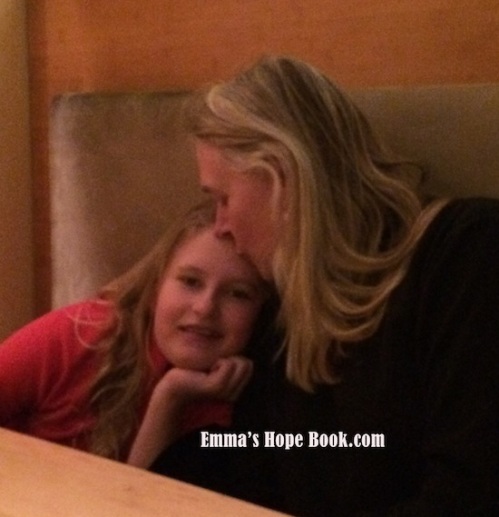
Em & Ariane on New Year's Eve ~ 2013

Em & Ariane on New Year’s Eve ~ 2013

The Gift of Emma

In the days leading up to Christmas, Ariane excitedly told me that Emma had written, “I want to write a story about Daddy.” Ariane said it was going to be my Christmas present. Obviously, I was incredibly excited as well. But on the following day Ariane came to me after her writing session with Emma and said:

“This story is going to make you cry.”

On Christmas morning, when I untied the bow around the paper Ariane had rolled up, I braced myself. The story was indeed sad, yet hopeful, wonderful and important, like all of Emma’s stories. It was also very private, and so, days later, I still hadn’t asked Emma if I could/should publish it. Ariane asked her today and Emma said she didn’t want the entire story published, but it was okay to post this section:

“One day there was a man and woman who fell in love.  They eventually had two children, one son and one daughter.  They were very happy.  The daughter was distinctly different, but meant well.  She did not understand many of the ways of her family.

“Her father told her that she was kind and smart.  She ran away because no one believed her to be clever, even though her parents did.  Her father wanted many to realize how smart she really was.  So he told others “do not treat my daughter like a baby.”  People did not listen.

“His daughter was sad, but her parents believed in her, and that mattered more.  She was the luckiest girl in the world.”

I’m so glad Emma feels this way. I wish she were even “luckier” and we had known all these things about her many years ago. I do truly believe that I am the luckiest dad in the world. Like Emma, I feel incredibly sad that I underestimated Emma for so long, that I was so utterly clueless to this entirely different aspect of her, that I could not see and appreciate. But I feel so blessed today to hear and see all these amazing parts of Emma I had never understood.

“Better late than never” is an apt phrase to convey both the joy and sorrow I feel, now that I’m aware of what is certainly only a small fraction of Emma’s talents, feelings, insights, intelligence and her poetic soul. It is also an apt phrase to convey the necessity of getting this message out to the world, something that Emma and Ariane, and so many other autistic people and their families and friends have been struggling so hard to do for so long, in the face of an Everest-sized mountain of misinformation from so-called “autism experts.” The most heinous sub(human) class of these is the “debunking” posse, who seem to spend every waking moment of their lives trying to discredit any assisted communication methods for autistic people. Yet no matter how hard they try, and they do try really hard–they will never succeed in keeping these blindingly brilliant autistic minds imprisoned by their willful and malicious ignorance.

The three best gifts I’ve ever been blessed with are my wife Ariane (who I met at a party on Christmas day 15 years ago!), and my wonderful children, Nicholas (age 13), and Emma (who turns 12 in January).

Emma is such a wonderful gift in so many ways. I could write another (even longer) post just listing all the amazing blessings she has brought to me and our family. But I’ll simply conclude by repeating one of the sections of her story that Emma agreed to publish, because it’s the kind of “better late than never” message so many more people need to hear:

“Her father wanted many to realize how smart she really was.  So he told others ‘do not treat my daughter like a baby.’  People did not listen.”

Maybe they are listening now, Emma. Maybe more and more people will hear your voice and the voices of your autistic brothers and sisters. Maybe all these people will someday be lucky enough to experience the gift of Emma.

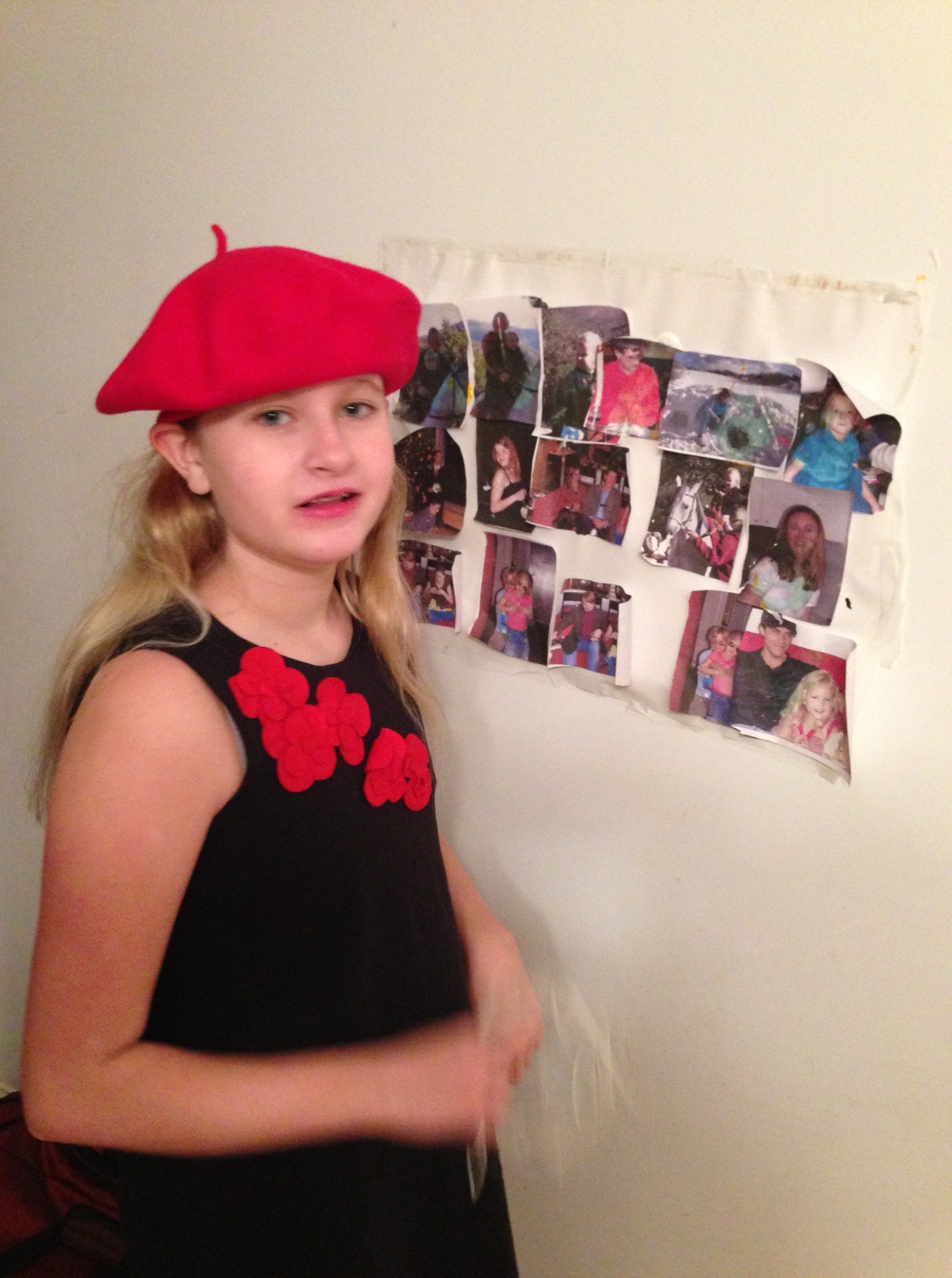
Emma showing off her new red beret and her new art work (a collage of relatives).

Emma showing off her new red beret and her new art work (a collage of relatives).


More Insights From Emma

My entire routine has been so thoroughly disrupted these past three weeks that this blog has suffered the consequences.  There’s simply too much going on, not in a bad way necessarily, but more than I have been able to keep up with.  But today…   Today both kids are out skiing and I have a few hours to write.

Emma has been writing a great deal.  In fact Emma wrote three stories as Christmas presents to her granma, her Uncle and Aunt and her dad.  Each one is beautiful and poignant and kind of over the top amazing in its complexity and layered meaning.  I transcribed the one for her granma ‘here‘.  In the story to her Uncle and Aunt, the final sentence was, “No words need to be used to hear love.”  Think about that for a second…  This kind of insight shows a level of sophistication and poetic understanding of the world few adults have managed to appreciate, let alone, express.   Emma is eleven years old.

In the story for her dad she wrote about a  daughter who, “Daily she tried to communicate her love for her family, but her words came out of her mouth wrong.  In day after day conversation she was misunderstood.  Finally she began to write on a stencil board and the words came out right.”  I am quoting this here because this is exactly the sort of thing so many of us get hung up on.  How many times have we seen or heard parents talk about their distress because their child is not able to say those three words, “I love you”?  How many times did I once, not so long ago, lament that my child had not ever said those words without being prompted to?  How often did I wonder and question her love?  And now…  now I wonder why and how could I have ever questioned those feelings?  How was it possible that I ever doubted her?  I say this lovingly and with tremendous compassion for all who have ever wondered this about their child.  We are being given incorrect information about autism and our children.  But I wonder if I would be so certain if my daughter were not writing and telling me the things that she is.

As I’ve stated before, writing is hard work for Emma and even though all of us, who receive her words, feel incredibly grateful to read anything she writes, it is difficult for Emma to express herself even in writing.  I say this as much as a reminder to myself as to inform those who may not fully appreciate how hard it is for her.  Often, when people hear that Emma is writing, and writing some pretty profound insights about the world, herself and autism, they will say, “but why not just give her an iPad or let her write on a computer?”  And then I must try to find the best words to explain.  It isn’t that easy or that simple, if it were, she would have begun writing a long time ago.

I’ve described before the process ‘here‘ and ‘here‘ that Emma uses to write, one letter pointed to at a time, on a stencil board, while a trusted person transcribes each letter or word one by one.  I have worked with Emma since the end of September almost daily and am now one of the people she can and does write with, to express herself.  She is incredibly generous in her willingness to allow me to quote her and almost always gives me permission to quote her on this blog, something I am doing more and more frequently!

This morning I talked to her about skiing with a ski pro, asking whether she’d like me to ski too.  She told me she preferred that I did not come too, and when I asked what, if anything, she wanted me to tell the ski instructor, she wrote about how she wanted to eat lunch early and then wrote, “Have to understand my mind talks heavy thoughts, but my mouth talks silliness.”   I asked her what she advised and she wrote, “Try to be patient and do not over rate talking to each other.”

A message we talkers would do well to appreciate and try our best to implement.

Emma’s Eyes ~ A Self Portrait

Em

Emma’s Gift to her Granma

I asked Emma what she wanted to give to her grandma for Christmas this year.  Emma wrote, “I will give to Granma a story about dogs who go to work instead of playing.”

Here is her story, reprinted here with both Emma’s and her granma’s permission.

A Folk Story For Granma ~ By Emma

“Once there were many dogs who went to work.  They worked part of the year in the fields, yet their masters wished they would work all the time.  So one day they organized a strike and their owners got very angry.  They told their owners they would not involve them in their decisions about how they spend their time.  Their owners said they had to work or they would not be fed.

“One day everyone went to work.  Sounds were too loud.  Every dog began to whimper.  The noise was so dreadful, the owners told their dogs to take the day off.  Noise is everyone’s enemy, but it is everyone’s  friend too.

“Today, dogs do not have to work in fields.  They are free to play.

“The End”

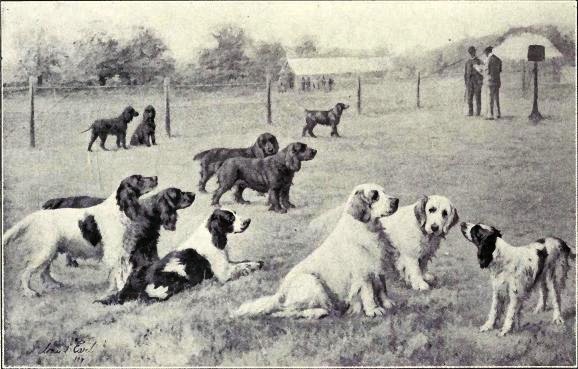
Emma chose this image to accompany her story.

Group_of_Gun_Dogs_from_1915

Silence and the Words That Fill it

Emma has been writing stories to give as Christmas presents to a couple of special people in her life.  It is an exhausting process for her and one that takes a great deal of time.  As the person who is witnessing and encouraging her to keep going, it is always revelatory.  Her gift to me is her ongoing commitment to keep showing up for the hard work that is required of her to communicate in ways most people consider most important, with words.   However as I sit with her I am increasingly aware of how much, those of us who are talkers, often miss.   Because of my daughter, I have a heightened appreciation for the beauty of silence words seek to fill.

I cannot quote anything from the amazing stories Emma has written for family members, as they are gifts to be given tonight and tomorrow.  But I can quote this, which Em wrote in response to my question – “Tell me one thing about Christmas?”

Emma wrote, “Christmas means love and family.”  (This, from an eleven year old.)

There is nothing more to say.

Merry Christmas to those of you who celebrate and for everyone else, may you experience love and family, in whatever way those words may mean for you this holiday season.

Why People Walk With Two Legs Instead of Four

Emma wrote this folk tale yesterday.  She gave us permission to post it here on the blog.  It took her 45 minutes, pointing to one letter after another.  She is so, so talented!

Why People Walk With Two Legs Instead of Four

“Many years ago, people were walking on all fours like many animals.  Reaching for food meant they could use front arms or back legs.  They were very strong.  Other animals were not afraid of them.  They looked at other animals as family.

“There was much to see from being so low to the ground.  There was much to touch from living in the dirt and the grass.  They tasted whatever they could. People now are more fussy with food.  The smells were all they knew.

“What is missing?

“You are right if you said:  sound.  People heard sounds from high above and they did not know where they were coming from.  The sounds were soft and silky.   Days went by without knowledge of sound.  One people leader wanted badly to hear it louder.  The only way she thought possible was to be taller.  She practiced standing on her back legs and it was successful.  Everyone else followed.  The soft and silky sounds were birds chirping.”

Emma began writing this series of folk tales while we were in Texas last month.  She has written five now and the third one was entitled, Why People Walk on Two Legs.  You can read it by clicking on the link, but in it she wrote, “They had to work in the fields wearing knee-shoes and regular shoes.  They could not run fast that way.”  I love that!  She goes on to talk about a king who had outlawed walking, until he was injured from all that crawling around and the only remedy was for him to walk, whereupon he made it legal for people to walk on their two feet and so they did, never looking back.  To me, that story was about how until we experience what another goes through, we often remain divided, though I have no idea if that was her intent.   This one is completely different, even though the titles are similar.

I am in Chicago at the TASH conference, where IbbyLeah Kelly and I are presenting first thing this morning on Relationships and Multi-media (so excited to be with my two wonderful friends!)

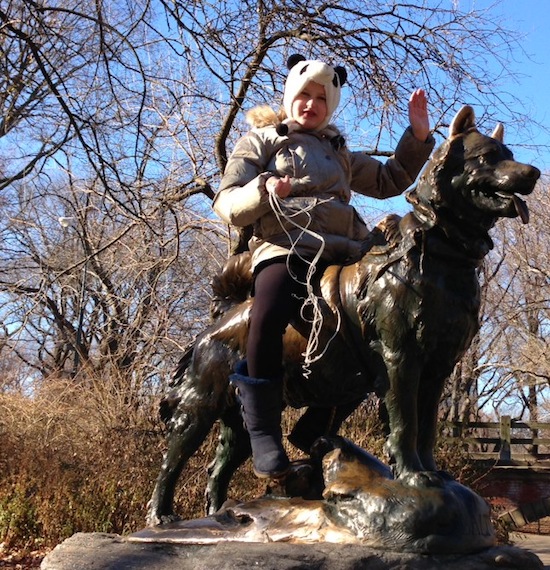
Em giving the Queen’s wave astride her favorite statue – Balto

Em on Balto

Man and Woman – A Tale

This story was written by Emma and was inspired by a photograph she was shown of a small house built in the middle of a lake atop a large rock with steps carved into the rock leading into the water.  Against one side of the house was a kayak and paddle.  (To read more about how Emma is writing, please click, ‘here‘ and ‘here‘.)

“Man and woman landed into marriage.  Both worked hard to make thousands of pennies.  There was trouble when they decided on what to do with the thousands.  Woman wanted to buy a boat; man did not agree.  Man and woman gave fighting a try, but it was not for them.

Welcome to their new home.”

Earlier when first shown the photograph (I’ve posted it below) and asked to make a comment about it, Emma wrote, “There is many reasons to believe it is fall.”

When asked to write one question she thought people would ask the person(s) who live in this house, she wrote, “Do you know how to swim?”

house-river-serbia_57361_600x450

Returning Home

Em and I returned home Friday night.  It was an exhilarating trip, but also an exhausting one.  These trips always are.  We went from having daily sessions with Soma (you can read more about Emma’s experience working with Soma ‘here‘, ‘here‘ and ‘here‘ and more about Soma and RPM by clicking ‘here‘) that were so incredibly exciting, I could barely take in all that my daughter was writing.  Personal, gut wrenchingly, painful insights, loving notes of gratitude to my husband and me that made me weep with joy, but also bittersweet because it is she who has had to put up with us and not the other way around.  Her writing displays an almost unfathomable intellect, wisdom beyond her years as well as compassion and patience for all who do not understand her, for those who doubt, for those who do not believe her and all she is capable of, for all who talk down to her, my daughter is a beacon of kindness, forgiveness and compassion.

I do not want people to come away with ideas about saintliness, holiness or angels being dropped down from the heavens and inhabiting her body.  I cannot and do not believe in any of that and it dismisses the many challenges and struggles my daughter must endure.  Above all else my daughter is a human being, just like you, just like me, very much grounded on this earth and in this life, but she is also exemplary in her ability to see the good in others.  It is something I am trying hard to emulate.  It is as though the more she writes about what she believes and thinks, the angrier I become.  The more enraged I am that we have all believed so easily, without question, the standard assumptions about Autistic people and autism and what that means.

I understand that for many they just cannot believe someone like my child is capable of knowing so much despite having had little formal education, but instead has spent all of her school years segregated in special education schools where she reads below age level literature and is taught the value of nickels, dimes and pennies because it is assumed she does not understand concepts such as money and time.  I understand.  I do.  I was one of those people not so long ago.  But now I know otherwise.  We are fortunate that her current school is open, willing and interested in learning all she is capable of.  They have expressed interest and their intent to support her and to help in any way they can.  We will be revising her IEP soon.  It will be quite a revision!

Now we are home and I know better than to expect I will be able to pick up where Soma left off.  I know better than to think I will be able to sit down with my daughter and accomplish the same level of writing I witnessed this past week.  I have to pick up from where I left off before our trip to Texas.  This can feel incredibly frustrating and even depressing, but I am learning to not delve too deeply in despair, but rather continue moving forward with the knowledge that I will and already have progressed in my ability to support my daughter better each day so that one day she will be able to converse with me on a similar level as she does with Soma.

This disparity between what Soma is able to do and what those at home then try, has caused a few to claim that therefore Soma’s method is flawed or is cause for suspicion and doubt.  What I have come to understand is that my Autistic child is intensely sensitive to her relationships.  I cannot sit down and expect to have her write to me as she does with someone who developed this system and who has fine tuned it, perfected it along the way, while working with close to a dozen people every day for over ten years now.   It is akin to expecting that I will be able to set a diamond as well as a master jeweler who has been perfecting his craft over the last twenty years or after taking a painting class be able to create something on par with Rembrandt or after taking French 101 go to France and speak fluently.  We do not expect any of these things from each other or ourselves, and yet, people decide something like RPM will be easy and simple and anyone will be able to do it instantly and when they cannot, the flaw is in RPM.  I have met too many other people who are practicing RPM to see that it is this thinking that is flawed.

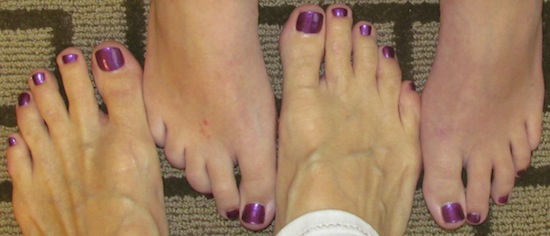
Em chose toenail polish for both of us!

Matching toenails

“Why People Walk on Two Legs” – A Folk Tale By Emma

What follows is one in a series of folk tales Emma is in the process of writing since we arrived in Texas visiting Soma Mukhopadhyay.  I’ve written about Soma quite a bit; for more posts about Soma  click ‘here‘, ‘here‘,  and ‘here‘.  Anyone who is curious about Soma’s Rapid Prompting Method (RPM) please visit her website, which is full of terrific information.

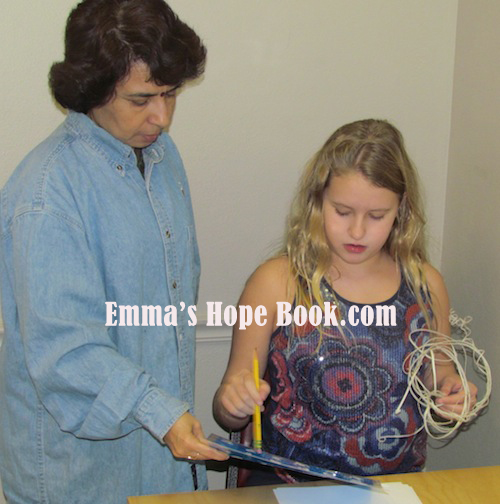
A quick note about how I transcribe Emma’s words.  Emma points with a pencil to letters on a laminated letter board that Soma holds in front of her, though she also has Emma hold the laminated board herself from time to time.  No one touches Emma as she does this.  Every few words that Emma spells, Soma takes the pencil from her and writes what she has written and repeats the words out loud.  Emma then proceeds.  As there is no way to punctuate the words as she spells them, I take my notes, transcribe them and ask her to tell me where to put commas and periods.  This story, Emma wrote yesterday and afterward told me, “You could put it on the blog!”

                  Why People Walk on Two Legs ~
A Folk Tale By Emma

Long ago people walked like animals because it was funny.  They had to work in the fields wearing knee-shoes and regular shoes.  They could not run fast that way.

In ancient Turkey there was a man who was sort of a doctor.  He had to be very careful while treating his patients.  He saw most of his patients had bone injury, so he asked them to stand.  It was against the law.  Kings punished anyone who walked that way.

But one day the king hurt his back.  The doctor treated him.  Finally the king made it legal.  Today it is natural to walk the way we walk.

The end

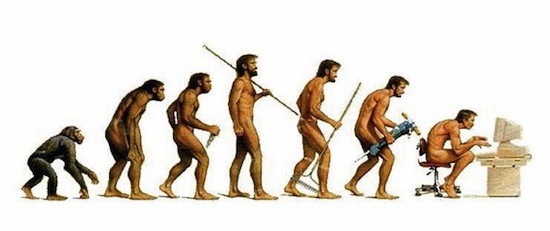
Emma chose this image from a google search for images of “evolution of man walking”

evolution