Tag Archives: language

On Being Judgmental

The other day a parent felt I was being judgmental because of my Demanding Speech post.  I felt terrible that was her take away from the post, but I also understood why she felt that way.  One walks a fine line when criticizing current therapies or suggesting we do things differently while not sounding preachy or judgmental to those who feel the very thing I’m criticizing has helped their child. And I have to admit here that in writing the previous sentence I initially wrote, “suggesting we do things better for the sake of our kids…” which, yeah…  that sounds judgmental and yet…

So how do we protest, how do we talk about things, things we feel outrage about, things we believe are wrong without sounding like all those “autism experts” I so often criticize here on this very blog?

And the only answer I have, for myself and anyone else, is – stay open to other points of view, be willing to listen and learn.  But how do I speak my truth while understanding that what I say may upset some?  I don’t think it’s possible and I’m okay with that.  Not everyone is going to agree with me.  That’s okay.  I don’t agree with the vast majority!  But what I won’t do is stop talking about all of this.  I won’t.  And while I talk about all of this, people comment and email and reach out and give me feedback and many times after reading what they’ve written I rethink my position. I change, I grow, I learn.  All of this is a process, and by that very fact it means that what I believe, is in a state of constant flux, there’s movement, more to learn, more to understand.

I know what it feels like to feel another person is judging me.  It isn’t a great feeling.  And it doesn’t help me understand the other person’s point of view and it definitely doesn’t make me feel particularly inclined to stick around to hear what else they might have to say.  In fact, when I believe someone is judging me, my visceral response is to retreat or fight back.  But, if I can let go of that initial desire to flee, I often learn, even if it is a lesson in verifying what I already thought.  The most important thing I can do is not preach, not convince, not judge, but speak honestly about my experience.  If that resonates with others, great, if it makes people angry, so be it, if it alienates some, okay, but this blog is about our experience, mine, Emma’s and Richard’s.  I don’t speak for anyone but myself.  I don’t pretend to know what Emma’s experience is, even when she writes about it here.  The best I can do is interpret it, respond to her words, talk about what it means to me and ask more questions, but that’s it.  The same goes for my husband, I don’t and cannot speak for him.

And in the end, that’s all any of us can do.  I hold deep convictions about much of what I see going on with autism.  I object to most of what is commonly believed to be the “truth”.  Yet I also know I continue to get things wrong.  I have tremendous humility when it comes to all of this.  I am constantly learning.  People, usually Autistic people, are generous enough to share with me their experience of things and it changes my thinking.  I listen. I revise.  I tweak my constantly shifting beliefs.  I ask questions.  I continue to learn more, I realize how I haven’t gone far enough in my thinking.  I  dig deeper.

But when I am in a room where a teenage boy is being watched like he is a prisoner while eating his lunch, pelted with questions he cannot easily answer by speaking, his favorite food, in this case, rice, withheld until he finishes some other food, again in this particular case fresh, cut up fruit, overseen by someone else, whose only real power is that they can speak easily while the boy cannot, spoken to with barely concealed impatience and irritation, I’ve got a problem with that.  When I see a group of people being treated as unequal, with less respect simply because their neurology is in the minority, I feel physically ill.  When someone who cannot communicate through spoken language is treated as incompetent I feel sick.  When people speak to my daughter or speak about her, often in front of her, with exasperation, irritation, barely disguised annoyance, I feel enraged.  When a human being is treated with condescension by another human being simply because that person is deemed less intelligent regardless of whether this is true or not, I am motivated to speak out.

This is personal, it isn’t just some issue I feel strongly about.  Do I feel judgmental?  Sometimes, but more often I feel  sad.

What follows are a few photos that make me happy…

Henry and me laughing as Emma tries to convince Henry that the water isn't freezing cold

Henry and I laughing as Emma tries to convince Henry that the water isn’t freezing cold

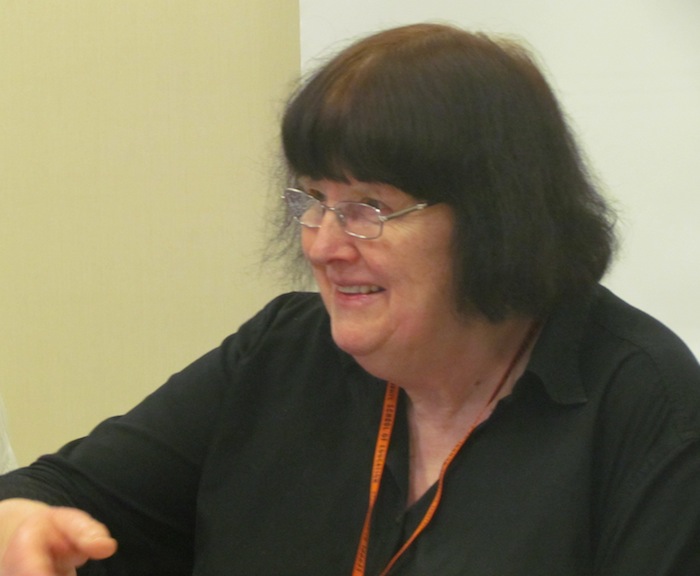
My friend Ibby

My beautiful friend Ibby.  Photo taken by Emma
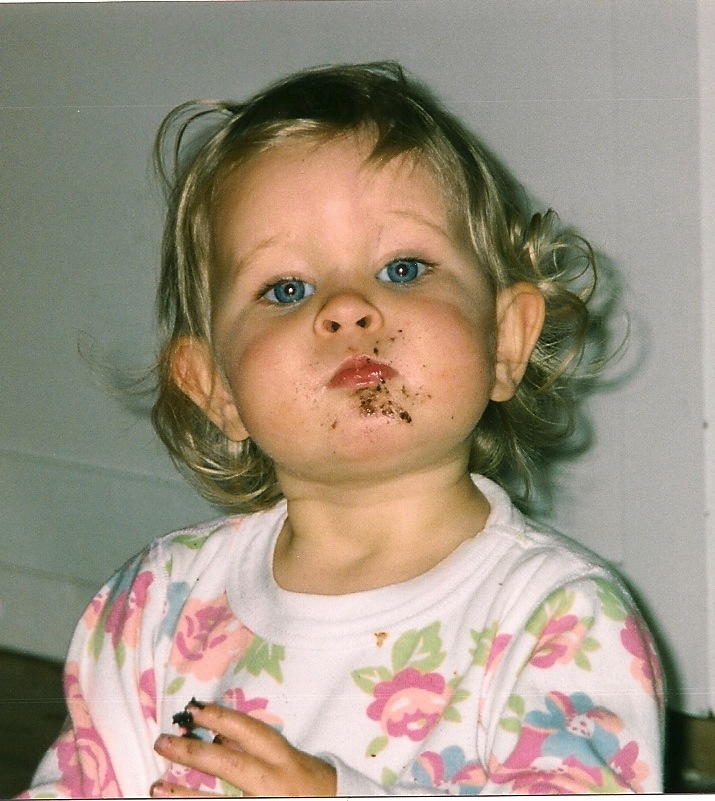
One of my favorite photos of Emma as a baby, because even then her personality shines!
One of my favorite photos of Emma as a baby, because even then her personality shines!

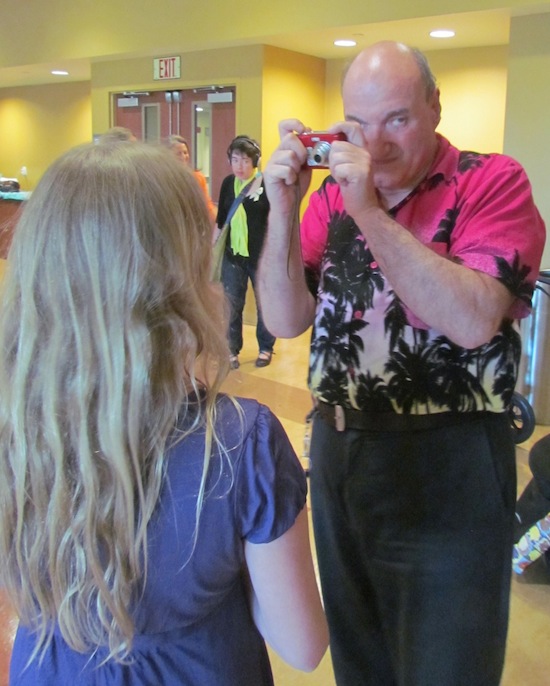
Larry Bissonette takes Emma's photograph

Larry Bissonette takes Emma’s photograph

Some Thoughts on Stereotypes and Empathy

Stereotypes are more problematic than not and yet most people, even though they may be unconscious of this, behave according to what they’ve been told or have observed to be true, even though it may not be true.  So, for example, if we are told Autistic people lack empathy, we will unconsciously be on high alert for any example of this.  In doing so, we behave in accordance with the very stereotype we are critical of.  In other words our own empathy suffers.

In the case of war, where we are fighting an “enemy” this type of stereotyping is actively sought and pursued so that those who are on the front lines can justify their actions.  We are told the enemy are “radicals” or “terrorists” or “fundamentalists” or “extremists” or unduly aggressive, thus justifying our own aggression toward them, which is seen as “good” and “necessary”.  Often we are told the enemy is deceitful, even “evil” or “bad”.  Stereotyping is usually negative, but not always.  It is a way to claim pride and feel a sense of belonging to one group, while seeing the other group as different, lacking understanding and often threatening.

To take this a step further, the people, usually a group of people who are not the majority, such as those who are being grouped into the “lacking empathy” category, may also internalize this idea and be on the look out for instances where they “lack empathy.”  And yet, most of us can find examples of this if we look hard and long enough, times when we have behaved in ways that would be seen as “lacking empathy”.

Empathy is both a feeling and the ability to sense another person’s emotions as well as imagine what they might be thinking or feeling, coupled with the ability to communicate all of this.  If communication is even remotely an issue, expressing one’s empathy will be difficult.  If you are in a country where the spoken language is not one you understood or know, its culture one you are not familiar with, would you be able to adequately express the empathy you felt in a way that would be recognized and understood?   Is it possible you would be misunderstood and labeled as something that you are not, simply because the cultural norms did not come naturally to you or you had not learned them and could not express yourself in a way that the other group recognized?

Additionally being on the defensive, feeling constantly attacked and criticized might also erode your ability to express yourself.  Feeling anxiety, judged, and ill at ease might put you on high alert.  It’s really tough to feel for other people when you are in a state of almost constant attack.  This is counter intuitive to all human beings regardless of their neurology.  But saying that those who are under almost constant attack (and for those of you who will argue that this is hyperbole, please know I am not suggesting every single person whose neurology is Autistic is feeling attacked, rather I am pointing out that many are and have been saying so for quite some time now) lack empathy is an interesting twist, exonerating one’s own actions and part in all of this, while holding another to a higher set of standards.

While stereotypes may help one identify with a specific group, they are largely negative and encourage assumptions that, more often than not, exclude rather than include.   I keep hoping we are heading toward a more inclusive society, but so many of the current debates suggest otherwise…

Emma, Mark Utter and Ibby at the ICI Conference - July, 2013

Emma, Mark Utter and Ibby at the ICI Conference – July, 2013

This post was inspired by yesterday’s post over on  Diary of A Mom, that Jess alerted me to.

Related Links from others:

Empathy as a Form of Communication by Michael Forbes Wilcox
Not Guilty by BJForshaw
I am in here by Mark Utter
The Sound and Worry By Arianna
Inventing Empathy by M Kelter

“Social Impairment”

“Autism spectrum disorder (ASD) is a range of complex neurodevelopment disorders, characterized by social impairments” ~ NIH (National Institute of Neurological Disorders)

When I first learned about autism, as defined by many organizations, I understood it to be a “disorder,” with “social impairments” being one of its defining characteristics.  As autism was also spoken of as meaning someone who did not and could not understand others, and that the very word “autism” stemming from the Greek word “autos” or “self”, suggested a person who had little interest in other people, I assumed this meant my child didn’t care about or want to make friends.

Add to this the unfortunate wording of what so many of our kids engage in – “self stimulation” – which to my ears anyway sounded vaguely  masturbatory, and as we live in a society tending toward the puritanical, self stimulation, even to my liberal notions, carried with it a decidedly negative connotation.  The word “stimming” is a bit better, but even so, I cannot get away from the sense that this feeds into those negative assumptions about intent and a lack of interest in connecting with others, which is still believed by a great many.

When my daughter described stimming as “self-care” (you can read that post ‘here‘) I  was filled with admiration.  Self care is such a wonderful way to describe what I see her doing.  Self care is not about rejecting others, but instead describes a way of regulating oneself so that one can engage with others.  This idea that autism means disinterest in other people, an idea so many have embraced, does not describe my daughter at all.  To the contrary, my daughter and so many of my friends who share her neurology care deeply and take tremendous pleasure in their various relationships, just as those who are not autistic do.  (That this last sentence is even necessary to write, demonstrates how far we have to go.)

This idea that autism characterized by “social impairments” is something that drives me crazy.  It isn’t a social impairment.  It’s a complete misrepresentation and misunderstanding of what autism means to those whose neurology is called autistic.  My daughter does not lack a desire for friendship or have a disinterest in other people.   Unable to often communicate what she intends, constantly distracted by things others cannot and do not necessarily see, hear or feel and a need to move her body in ways others misinterpret, it is no wonder “friendships” present a whole series of issues for her.

So many of the assumptions about autism, based on what non autistic people witness and believe they are seeing and the theories they then develop supporting these assumptions continues.  Assumptions, spoken of as though fact, with therapies devised to “help” what is assumed to be true and yet, is not, is based on a false premise.   But when we were given Emma’s diagnosis, I did not question these various theories.  I, as did so many others, took them at face value, believing that though there was much we still did not know about autism, these beliefs at least, were some of the things we DID know about autism and by extension autistic people.

Oh how wrong I was…

Emma holding Teddy

Emma holding Teddy With her String

When Time Stands Still

After publishing yesterday’s post, “So Many Kids Are Just Like Me” I added a video of Emma writing those words and more.  I hadn’t added it when I first wrote the post because Emma hadn’t given me permission yet and we were still trying to get the video uploaded, ran into problems with the picture being condensed and other issues.  In any case, for those who want to view it now, you can.  On a personal note, I’ll just add that this video makes me feel very squirmy because it does not capture the playfulness we usually have together, and I’m hyper aware of the anxiety I was feeling while we were taping…  Also the video does seem to be taking longer than it should to load, at least it is on my computer, but Emma has said she’d like to tape more, so I’m hoping we will get better at uploading as we continue.

My friend Alex commented on yesterday’s post about the impact of watching Emma write, as opposed to reading about it.  It was exactly for this reason that we decided it was important to post the video.  There is nothing like seeing in real-time another person writing this way.   No amount of words, no matter how well phrased can describe this process the way watching it in real-time does.

I will never forget that moment at the Autcom Conference in 2012 when I watched a boy, younger than Emma is now, write such insightful and profoundly wise comments  that his mother then read out loud during a presentation.  It was that moment when I thought to myself – maybe, just maybe my daughter has thoughts like this, and we just have to find a way for her to express them.  It makes me cry with gratitude thinking about that moment not so very long ago.  No one could have convinced me then that just a year and a half later we would be where we now find ourselves.

It is inevitable that there will be people who say things like, “well it takes too long” and  “how can this work in a class room?”  But as a parent who has wanted nothing more than to know what my daughter was thinking, who believed despite what the majority of people believed and were telling us that maybe, just maybe they were wrong, watching Emma write is when time stands still.  The excitement I feel when she begins to point to a letter is like nothing I’ve ever experienced.  Each letter she points to is a tiny gift wrapped in beautiful paper, as the paper peels back to uncover the word inside the world and everything in it stops.  It is a sensation like none other.

To my daughter, who works so very hard to accommodate my need to hear her experience of the world put into words, I thank you.  Every single time you do, even though you feel it’s tedious, I thank you.  Gratitude does not come anywhere near my feelings.  There are no words for this.  And I know this is a tiny glimpse into what you, Emma, feel every time you are asked to put into words your thoughts.  Words can’t come close…  finally I understand…

Em & Ariane on New Year's Eve ~ 2013

Em & Ariane on New Year’s Eve ~ 2013

“So Many Kids are Just Like Me”

“I am smarter than most people think.  So many kids are just like me.”

Emma wrote this yesterday in response to my question, “What would you like teachers, who want to teach Autistic kids, to know?”

There are a number of young people who write to communicate things that they cannot with spoken words, just as Emma does.  Many of them are starting blogs of their own, some have parents who have blogs and like Emma they are beginning to take ownership of those blogs.  On the “Resources” page here on Emma’s Hope Book I’ve listed a great many blogs beginning with those written by non-speakers, or people who write to communicate.

When Emma wrote “so many kids are just like me” I thought about how when Emma was diagnosed I knew of none (of any age) who wrote to communicate.  The entire concept was completely foreign to me.  In fact, and I hate admitting this, I hadn’t spent any time considering neurology, literacy, language, or which parts of the brain process language.  I remember being confused by the idea that someone who didn’t speak, could still read.  I’ve come a long way!

I would like to take the opportunity to list here just a few blogs that I personally know of where people around or near Emma’s age are writing to communicate.  This is by no means a comprehensive list and I welcome any additions, which I will add here and on the resources page as they come in.

Oliver – Day Sixty-Seven
Philip – Faith, Hope and Love… With Autism 
Aidan
Cindi’s Blog
Henry Frost – Ollibean
Matteo – Matteo’s Loving Blog
Ido – Ido in Autismland
Joey Lowenstein
Nick – Teen Typer

“So many kids are just like me…”

Emma with her friend Henry ~ January 30, 2014

Emma with her friend Henry ~ January 30, 2014

“Just Being Funny”

Last week Soma and Emma discussed different proverbs.  Soma explained that one of the proverbs was about how a new person can be very enthusiastic upon getting a new job, eager to prove their worth they do a great deal, but as time goes on they lose some of their enthusiasm and do not do as much.  Emma then wrote, “It is like a new husband.”

When Soma asked her to say more, Emma wrote, “Just being funny.”

And she was.  Really funny.  In fact, I burst out laughing.   One of the great things about someone who says the unexpected is that it often is very funny, and that she also intended to be so, makes it all the more joyful.  (There is nothing more upsetting and hurtful to the other person than laughing at something that strikes you as funny, only to realize the person speaking did not intend or mean to be funny.)

I cannot anticipate what Emma will write.  The way she phrases ideas and thoughts, even questions are unexpected.  I am biased, I know, but I see her way with words as one of her many, many talents.  The beautiful and unexpected way in which she will phrase a thought or express a feeling fills me with emotion. I am in eager anticipation and gratitude for every word she writes.  I sit and watch her and am mesmerized.  There are few things I enjoy doing as much, truthfully.

At the moment Emma’s two favorite songs are Clint Eastwood by the group Gorillaz and Cage the Elephant’s Ain’t No Rest For the Wicked.  Like me, when Emma likes a song she will play it over and over and over.  When I was a teenager I wore out record albums (yup, that’s how old I am) from playing the same favored song repeatedly, causing the album to get scratched from my insistence that only the one or two songs be played and not the record in its entirety.  Dancing to those favorite songs is an added bonus.  Emma loves to dance and so do I, something my husband loves doing as well.  Listening to music requires no speech; no words need to be exchanged.  Given how hard Emma must work to write her thoughts, it is nice to do something we all love, that isn’t hard work.

Yesterday Emma and I were discussing death, something Emma speaks about regularly in repetitious utterances about various pets and people who have died.  We have talked about death before, but this time Emma wrote a sentence that I couldn’t make sense of.  It was at the end of a 40 minute session, so I figured she was tired and we’d come back to it later.  Since our time was up, I left the sheet of paper with Emma’s sentence on it, on the table.  This morning, just before I left for work, I reread the sentence.

“Hysterical rant on death is assuring story, but does nothing to understand reality of story.”

And I began to wonder whether her spoken phrases, “Bertie died, Bertie has to be careful.  Yeah, Bertie got old.  Bertie lay down and went to sleep.  Bertie died…” about my very old cat who was seventeen when he finally died, is a kind of calming self talk.  Perhaps a way to make the unknown less frightening and yet she still knows that even in trying to soothe her fears, the repetitive talk does nothing to help her understand.

So this afternoon, I will ask her and afterward we will listen to Gorillaz and Cage the Elephant and dance.

Dancing ~ 2012

Dancing ~ 2012

My Star: Emma

Rhyming words, poetry, fables, history, science, multiplication, math word problems…  these are the things Soma has covered with Emma over the last three days.  Emma went from pointing to one letter at a time, to writing out several words and even whole sentences describing profound thoughts, insights, doubts and concerns, and I sat there witnessing this outpouring of words, this torrent of letters that, when added up, evoked emotion and identification and concern and understanding.  The power of language.  The power of communication.  There is tremendous power in both.

This has been a profound few days; transformative, exhilarating and exhausting.  I have watched my daughter work and she has worked very, very hard.  I have watched her and I have marveled at her and been dismayed by her and astonished with her.  I have laughed and wept and listened and listened and listened some more.  She has said things that have provoked more questions than answers, but she is here, very much rooted in this world and not, as many suggest or seem to think, somewhere else, off in her own “little world”.

I cannot write about anything specific this morning, I’m too tired and Emma has said she is too.  We have two more sessions today with Soma and then we head home.  We are lucky.  We are incredibly fortunate that we’ve had the means to do this, to come here, to stay for the week so that Emma could work with Soma.  All the young children Soma has worked with over the years, so many of them are now writing books, and are at an age where they are publishing their hard-won  words; there are too many to ignore.  They are communicating on letter boards and iPads and keyboards, an unbelievable output of thoughts, ideas and opinions.  “I want to be able to talk,” Emma wrote yesterday.  And maybe, just maybe one day she will be able to talk the way she writes, but until then we will keep providing her with every available resource we can find so that she has a better chance of achieving that goal.

Em standing beneath the “Star of Texas”

Em & Star of Texas copy

Language Acquisition?

Yesterday I wrote about some of the problems inherent in asking children to read out loud.  You can read that post ‘here‘.  The comments have been uniformly terrific, extremely informative, and very helpful.  Ischemgeek wrote several comments that I’ve actually printed out and even copied and pasted into emails to a few teachers I know.  She wrote a terrific explanation and series of suggestions in answer to a question I posed asking for her thoughts regarding handwriting.  My question to her was slightly off topic from the original post, but if you read the comments you’ll see how the conversation evolved.

Another comment, from bjforshaw, reminded me of how when Emma was a baby she seemed to acquire two or even three word phrases (“chase me”, “go out”, “all done”, “play catch” “I donwannta”)  as opposed to individual words.  Bjforshaw wrote, “I dislike reading aloud because it is so different from the way I normally read and this makes it feel uncomfortable. My usual reading speed is fast, much faster than my speech, and I scan phrases, groups of words, even whole sentences. In contrast when I read aloud I have to plod along one word at a time.

When I read his comment I had one of those “light bulb” moments.  You know, where you think – wow!  This reminds me of this other, seemingly unrelated thing, I wonder if there’s a relationship?  So I went to the internet to see if I could find any articles on the topic of language acquisition, but haven’t found any dealing with babies learning whole phrases and chunks of words at a time.  Not only have I not been able to find any articles written on this topic, but I cannot find many articles written about language acquisition and autism, specifically, that aren’t more than ten years old, which I find baffling. If anyone has relevant links, please send.

I have no idea if, for some, language learning is similar to the way bjforshaw describes his ability to read, but I’m curious now.  Could it be similar?  Has anyone heard or read anything about this?  For those of you who read in chunks and not the individual word, do you know or remember whether you also learned to speak this way?  In other words instead of learning one word and then building upon that word, did you learn a phrase or several words together?  Could this also then be related to scripts? I’m thinking out loud here, but I’m wondering if scripts are meaningful because they are learned chunks of language that come to represent more than the literal interpretation given by those listening. Do the scripts carry more (hidden) meanings to the person saying them?

Thanks again to all who have commented, and to those who intend to, thank you in advance.

Em types for an audience in Tampa, April 2013Em types with Pascal

The Pitfalls of Reading Out Loud

When Rosemary Crossley was here she spent several hours working with my daughter.  One of the many discoveries we made was that Emma can and does read very quickly, but if asked to read out loud, she will stumble and get so caught up in pronunciation I question whether she is able to comprehend what she’s reading at all.  I know I have trouble following the story.  Yet most schools ask children to read out loud, both as a way to assess what they are capable of, and also to make sure they are at the correct reading level.  If a child reads a first grade reader out loud with great difficulty, the impulse is to make the reading material simpler.  Except that if this is done with my daughter she will be stuck reading kindergarten and beginning level reading books for the foreseeable future.

I know Emma is able to read much more complicated texts than beginning readers.  I know this because I have seen her read with Rosemary and me very quickly.  I have witnessed her ability to read, not only faster than I can, but her ability to accurately answer multiple choice questions related to the text with ease when  given some resistance.  In other words, if she is asked to wait a beat, instead of being allowed to immediately point to an answer, her accuracy goes way up.  Without the pause she is just as likely to randomly pick any answer.  From Rosemary Crossley’s book, Speechless, “The resistance I provided slowed her down very substantially, and the quality of her output increased as her speed fell.  I gave Jan a picture of a cow and asked her to write me a sentence about it.  Instead she typed, THIS TYPING IS HARD.  I HAVE TO THINK.  That was, of course, the aim of the exercise.

This idea of providing resistance is a tricky one to explain to people.  I have had some people say they just cannot understand why this would be necessary.  The only way I know of to better explain, is by comparing it to the way many, who are like my daughter, will perseverate on a word, or will rely on favorite scripts.  It is not that these scripts have no meaning, it is more that they are often difficult for others to understand.  If I hand Emma her iPad and ask her to type me a story, she will most likely write something like, “rollercoaster, kiteflyer, greenride, hurricane harbor, waterslide” which is also in keeping with what she might say out loud.

These words are powerful to her, they hold a great deal of meaning, but to most people, they are seen as gibberish.  If this then is used to assess her capabilities she will not be well served.  However if I ask her to type me a story and then hold one end of a rod while she holds the other end with her typing hand and types with one finger while I pull her hand back after each letter is typed, she might type, ““One day there was a boy called george. He had been in afight can’t tell you how he got into the fight but he was bruised all over.  He fought a lot and his teacher was very angry.  The next day he was all purple and his mother said you can’t go to school looking like that.  The very clever boy covered himself in flower and his teacher thought he was sick and sent him home.  The end.”  

Incidentally, that story is one Emma wrote when Rosemary was here working with her and is typical of the sorts of things she can and does type when given the kind of resistance I’ve described.  (You can read the entire post I wrote about her session with Rosie, ‘here‘.)  However, ask Emma to read out loud a story similar to the one she typed and she will have a great deal of trouble.  What she is capable of is far greater than what one might assume from what she verbalizes, whether that means reading out loud or with spontaneous speech.  Ask Emma to sing the lyrics of a song, in Greek no less, and she will get much of it right, but that’s a whole other post.

But how does one convince others that this is so?  Particularly when many are trained and told that reading out loud is a good indicator of ability.  There is surprisingly little written on the topic of the problems with reading out loud for those who have spoken language and word retrieval issues.  Again, in Rosemary Crossley’s book, Speechless, she writes, “her reading aloud was bedeviled by the same word-finding problems which affected her spontaneous speech, preventing her reading with any fluency.”

Obviously there needs to be more written about all of this.  The closest I have found, other than Rosemary’s book, Speechless, is a blog, The Right Side of Normal,  that concentrates on “right brained children”.  And on that blog, this post specifically, Silent Reading versus Reading Aloud, which deals with, at least some of what I’m discussing here. If others know of other resources discussing any of this, please do leave me links in the comments section.

Rosemarie Crossley

Rosie

When We Say Things We Do Not Mean

Erratic speech.  Unreliable language.  These are all words to describe what many, like my daughter, experience.   Speech that does not represent what is meant,  but that people hear and make assumptions about the person based on what has been said.  Rosemary Crossley in her book, Speechless talks about nominal aphasia – “One of the familiar aftereffects of stroke, for example, is not being able to say what you mean.

Many years ago I became friends with a man who’d had a stroke, leaving him aphasic (meaning he was mostly unable to speak, though he understood what was being said to him.)  Every few months my then boyfriend and I would pick him up at his apartment and take him somewhere.  I don’t remember if he could type his thoughts, this was long before the advent of the iPad, and as he could not hold a writing implement, this was not something he did when we were together.  I do not remember him ever uttering a single word.  Prior to his stroke he had made a name for himself as an avant-garde theater director.  In the theater world he was thought of as a god.  After his stroke he went on to direct a number of works with many famous actors.  People were willing to believe he could not only understand what was being said, but that he had a great deal to say, even though he could not verbalize his thoughts.   His name was Joseph Chaikin.

For those who are Autistic and also have unreliable speech, people tend to take what they say at face value and believe their speech is indicative of their thinking and thought process.  Yet this could not be farther from the truth.  Many are willing to dispense with their disbelief when someone is famous and once spoke, but most are not as willing to believe when someone has word retrieval issues, that they are capable of more than what we hear them say.  “…children who have never been able to speak fluently have not had a chance to establish themselves.  They have not had the typical infant’s experience of controlling the world with their speech.” ~ Speechless by Rosemary Crossley

And as a result they also do not have the same types of interactions with others as those who have more fluent speech.

Because our judgments of intellectual capacity, both formal and informal, are strongly tied to speech, a child who says the wrong words, who gives “silly” answers when asked questions, is likely to be seen as stupid.  A child who can never find the word he wants, or a child who cannot make his tongue do what it should, can come to associate speech with tension, embarrassment, and failure.” ~ Speechless by Rosemary Crossley.

Children with severe speech impairments often develop behavioral problems. These may simply be a result of the frustration inherent in not being able to say what you mean, but this frustration may also be exacerbated by the reactions of the people around them.” ~ Speechless by Rosemary Crossley

One young man who had unreliable language and who Rosemary worked with typed, “I dont make sense and people think Im senseless.” Speechless by Rosemary Crossley

Typically, when someone speaks to us, we believe that what they say is what they mean to say.  We respond  accordingly.  When people tell me something Emma has said and how they don’t understand why she then became so upset because they were doing what she told them she wanted, I understand.  I understand how frustrating that must be, for her, for the other person, for everyone involved.  Emma does not have phrases like, “Oh I know the answer to that, but I can’t think of it just now” or “give me a minute, it will come to me” or “it’s on the tip of my tongue” or “I just had it, the word was right there” or “what’s the word, you know it sounds like ________?”  or “wait, I know this, I know this…” or any of the other things most of us say when we know something, but the words have momentarily escaped us.

Communication is not just speech and for some, spoken language is an unreliable method of communicating.  Finding a more reliable method then becomes essential.  For my daughter, typing is proving to be a far more reliable way to communicate.  And as it turns out, there are a great many others who are just like her.

Waiting

Speaking vs Typing

At an Autism Conference last month someone asked my daughter “Have you ever been to Australia?”  Em immediately answered “Yes!”  Yet when this person held up a laminated card with two boxes, one red with the word NO and the other box green with the word YES and asked the same question, Em promptly pointed to the red box with the word “NO”.  When asked what she had for breakfast that morning, she answered, “Vanilla cake!” but when asked the same question and asked to respond by typing she wrote, “I ate cereal, toast and yogurt.”

Many people ask me why we are spending so much time and energy learning to support Emma’s typing.  The most common two questions I’m asked regarding this are – why do you need to support her at all when she can use her two index fingers to type independently  (I will write a separate post on that question) and why do you encourage her to type when she does and can speak?

Ironically I have yet to find accurate words to describe my daughter’s speech.  I’ve said things like, “Her speech is unreliable” or “She can use language, but it often does not reflect what she really means to say” or “When she types we get a more accurate idea of what she intends to say, wants, or is thinking.”  But I’m never sure people understand what I mean or if they do understand, whether it helps them when they try to talk to someone like Emma.  (I have since met a great many people who have some language, but it is “unreliable” in that they will say things that are not necessarily the answer they mean or the words they meant to say.)  Inaccurate speech is not because the person means to evade or is willfully not telling the truth, but is indicative of specific brain function.  Lots of speech therapy, concentrating on spoken language, did not help Emma.

By the way verbal scripts serve as a default and come into play often in context to what is going on, but sometimes they are triggered by a detail.  The script can appear to have nothing to do with the topic being discussed.  For example we had an electrical storm the other night which reminds Emma of the fireworks on both New Year’s Eve and the Fourth of July.  Emma calls both firework displays and electrical storms, “thunder fireworks.”  She also calls rain storms and electrical storms, “firework bubbles” or “motorcycle bubbles”.  But if you didn’t know any of this and were with her when it began to rain, you probably would not understand the association when she said, “Ohhh, look!  It’s motorcycle bubbles!” and then pointed cheerfully out the window.

If I ask, “Em do you want to make vanilla cake?” Em will ecstatically respond, “Yes!”  She happens to love nothing more than vanilla cake with vanilla frosting.  I know this, no further questions are needed.  However, if I ask her, “Em what did you eat for dinner last night?” She might respond with, “Vanilla cake!” or she might respond with what she actually ate.  If I ask her why she was crying on the school bus, she might say, “You cannot scream!  You cannot scream and bite on the bus.  If you bite, no hitting!”  or some other equally cryptic answer that does not answer the question of why, though it does give me a good idea of what was said to her and that she became so upset she began to bite herself.

However if I ask her to type her answer, she might type, “A boy was scratching my seat.  I asked him to stop, but he kept scratching.  He made me mad.  The matron said, no kicking.  Emma’s sad, Emma bit her arm. I don’t like that boy.”  If pressed further, she will type his name and I will be able to tell the bus matron that Emma should not be seated near the boy whose name is X.  Problem solved.  The point is, when typing, Emma will write things she does not say. But to people who are unfamiliar with someone like this, they find it confusing.

When I showed Emma this photograph just now and asked, “what do you see?”  She answered, “Good!”  We went horseback riding while visiting my sister last week.  And it was.  It was “good!”

Horseback riding

Routines Disrupted

We have been traveling.  Our cell phone and internet coverage has been spotty and in some places we’ve had none at all.  As a result my routine, which usually means I wake up when Emma comes into our room, (anywhere from 5:15AM – 6:00AM) get dressed and go to my studio where I begin the day by writing, has been disrupted.  The beautiful thing about traveling is that there is no room for routines.  We’ve spent a few days with my sister, gone on a rafting trip down the Colorado River, gone horseback riding, gotten lost, spent time with one of my brothers, hung out with one of my cousins, (I have a large and sprawling family that live all over the United States and even world, and my mother’s house is often the only place we get to see one another.)  So it’s been really wonderful and lots of fun.

When I have gotten up early enough to write AND the internet is cooperating, I have begun a post only to have Em say she doesn’t want me to write about the topic I began writing about.  In fact, I have started three different posts, and Em has shot down every single one of them.  This could be seen as a bad thing, but I don’t view it that way.  I see this as an incredibly good, no, a great thing.  The first time I told her what I was starting to write about and asked her permission, she said no, I was surprised.  The second time I began writing about something else and asked her permission, I was surprised and amused when she typed “no, I do not want you to write that.”  The third time I thought – this is great!  Great because this blog began with no thought of her opinion and has evolved to represent only what she agrees to and may well end because of her thoughts and opinions.

What all of this means is that I haven’t been writing every morning.

So I will end with something Em typed to me the other day and told me I could post.  She typed, “Language is an awkward way to communicate.”  She would not elaborate further and why would she, as that sentence says it all.

The Rocky Mountains

View From Cabin

The Quest

The quest for various potions and remedies kept the mother  separate from her child, though she did not know this at the time.  The mother believed it a valiant quest, and prided herself in her vigilance and determination.  She would single-handedly conquer what had thus far proven unconquerable to vast numbers of scientists, neurologists, neuropharmacologists, researchers and all those who had devoted their lives to finding a cure for autism.  She would save her daughter and she would prevail.  Call it arrogance, a lack of humility or simply being unable to understand; she would reflect on her own near miss with death as justification for her belief in her ability to do what no one else to date had.  (And yes, she began to forget that her sobriety and abstinence were not due to will power or because she tried harder, but was because of the help she received from a larger group/ a power greater than herself.)  All thoughts of something being more powerful than herself were temporarily forgotten, or put on hold, or, depending on the day, justified as being part of what she was trying to do.  As I said before, she was veering from the path laid out for her by thousands of addicts who had years of sobriety and abstinence and practiced humility, honesty, openness, willingness and acceptance as the basic tenets of their ability to stay clean one day at a time.

“Courage to change the things I can…”  she would often repeat this to herself during particularly tough times, neither saying the first part, “Grant me the serenity to accept the things I cannot change,” nor the last, “and wisdom to know the difference.”  She believed herself to be courageous.  She knew herself to be courageous.  And she had learned over the years how to tap into her innate kindness, to foster it, encourage it and nurture it, though in her quest for a cure she felt increasingly out of touch with all that and began to struggle mightily with what it meant to take “the next right action”  or know what it meant to know any will other than her own.

Whether there is a G-O-D piece to all this is not something I can speak of, nor can she, as this is a word that never brought solace, so in the midst of all of this she abandoned even saying the word and stopped trying to make sense of what it may or may not mean.  She did, however, believe in something larger than herself, a power whose meaning shifted over the years and eventually evolved to mean – kindness, love, appreciation, gratitude – these were the things she knew to do and act upon when feelings began to feel factual, when feelings served to confuse her and make her believe them, despite what was happening and what she was witnessing.  Acts of kindness were the mainstay of her “practice” for no other reason than she knew her life was better when practicing kindness than when she did not.

So it was not a leap for her to believe that finding a cure for all that ailed her daughter was an act of kindness.   It’s important that I interject here that to this girl who had grown into a woman, had spent more than two decades of her life being an addict, found abstinence and sobriety through another way of being in this world, became a mother to two beautiful children, a “cure” meant removing all those things that caused her daughter pain.  A cure meant that her daughter would be able to carry on a conversation, the way non-autistic children do, that she would not have GI issues, she would not have sensitivities to texture and noise and pain, but that she would be relieved of all of that.  She told herself these were all things her daughter would want to have removed and be “cured” of if only she could tell her.  The mother believed this wholeheartedly and comforted herself that she was doing the right thing.  The only thing.  The best thing.  Not for a moment did she think of a “cure” as an eradication of her child, but more a version of her child.  A kind of fantasy, similar to believing in Santa Claus, of who her child would be if she were relieved of all or most of her physical pain and had the ability to get along in society and this world with ease.

Once Upon A Time (Part 3)

Part one and two are ‘here‘ and ‘here‘.

So this woman who was once a troubled girl, now the mother to two small children, one of whom was a beautiful little girl with curly white/blonde locks and chubby cheeks and dimpled knees, wondered how she ever gave birth to such perfection.  She was filled with gratitude and felt each of her children were gifts, tiny gifts that she was being given the opportunity to influence and even direct, but who were their own people, with their own temperaments and personalities, unique and wonderful in their own right.  She believed this fiercely.  But do not forget, this woman lived for many years of her adult life, prior to giving birth to her two wonderful children, believing she was bad.  She imagined that inside of her there was darkness, as though there was a bad seed deep within her soul and for many, many years she had tried to purge that badness from her being.  She believed she needed to be “fixed” and that left to her own devices she was fundamentally flawed and that if people got to know her, they too would learn this truth about her and it was only a matter of time before she was found out until others who had once felt similarly about themselves, convinced her that this was untrue.  These people showed her over time that in fact there was tremendous goodness within her and they taught her how to nurture that goodness and how to behave in ways that fostered it and encouraged it to grow and even flourish.

But then, now years later, she saw aspects of herself in her daughter.  Behaviors she used to do, but no longer did.  Her daughter loved to look at photographs and there were a great many to view.  Her daughter liked to sit on the floor with more than a hundred photographs piled in front of her and quickly scan them.  If one was missing, her daughter knew instantly and began to howl in great distress.  The mother watched in confusion as this scene unfurled.  The daughter, perfectly happy one minute, and then in terrible agony the next could not be consoled and would hurt herself by punching herself in the face or biting her hand or arm.  And something inside the mother clicked.  She recognized this desire to control her pain.  It took her back to a time when she needed things to be a certain way and when they were not she felt her entire life was unraveling and that her very existence was put into jeopardy and the only release from the horror was to hurt herself.  There was a kind of twisted logic to all of this, her self-induced pain, a pain that at least she could control, though awful, was not as terrible as her rampant and erratic feelings and somewhere along the way that self-induced pain made her feel she could endure, at least for a little while.

Now here was her daughter behaving, it seemed to her, in similar ways, expressing the agony she once knew so intimately.  She had no words to describe what she was witnessing, but she thought she could feel what her daughter was feeling, the despair, the pain, the fear that if the photograph was not immediately found she might die.  The mother believed this was what her daughter was going through and because she had lived through similar feelings she thought she would be able to help her.  She would provide her with the same sort of safety net she had been given.  A place to land, as it were, a safe space where her daughter could feel comforted, except that the things she said and did, did not provide her daughter with the comfort the mother expected and hoped she would feel.

You see, the mother forgot that her daughter was not a mirror of herself.  The mother forgot the thing that she knew when she gave birth to each of her children – that they were their own unique beings, quite separate and individual from anyone else.  She forgot all of this in her fear and worry over what she was witnessing and imagined her child was feeling and doing.  So she began to look outside herself for answers.  People, many, many people told her that they knew what would help and she listened to them.  These people spoke of her daughter using language all too familiar to the mother.  They used words like “broken,” “disorders,” “pervasive” and likened her neurology to cancer, which to the mother sounded a great deal like what she once thought of herself.  They said her daughter was part of an epidemic and that various methodologies would “treat” her disorder and might even reverse and cure her if done quickly and everyday for many, many hours.  The mother listened to all of these people and nodded her head as these people put into words what she had once believed to be true about herself.

Had she done this to her child?  Had she somehow passed along the worst aspects of herself to this beautiful, innocent child.  Was this some sort of karmic payback for all those years the mother had spent living a selfish, self-involved life?  Was her daughter the direct result of every mistake she’d made?  Was this really how life worked?  She could not believe this, at least not logically.  She refused to believe her daughter was being sacrificed for the sins of her mother.  She refused to believe there was some greater omnipotent power that would cause her daughter so much physical, emotional and psychic pain and yet she was terribly, terribly confused and somewhere she could not fully let herself off the hook.  Somewhere, unconsciously, she believed she was to blame for all that was causing her child pain and turmoil.  And if she was to blame, then she knew she, and she alone must make it right.

(To be continued) contemplation

That Wasn’t A Question

Last night.  I’m at my computer writing.  Emma walks past me.

Em:  Have cereal and toast?

Me:  Em, you just had dinner a little while ago.

Em:  Time for cereal and toast?

Richard:  What?  No Em.  You just ate.

Em:  Emma’s hungry.   Have cereal and toast.

It took three times, but then I understood.  This wasn’t a question, this was a statement.

And with that, Emma went into the kitchen and fixed herself dinner #2 – cereal and toast, while Richard and I looked at each other and laughed.  

Evening light – New York City, 2013

Light