Tag Archives: autistic

Early Intervention

Last week I wrote a post,  Autism “Experts” about how I used to attribute any action or sentence uttered by my daughter as evidence that whatever therapy or treatment we were employing at the time was “working.”  It was my way of staving off the persistent fear that if we were not intimately involved in a constant barrage of therapies, she would make no progress or whatever progress she made would be less, than if we devoted every waking hour to constant involvement and interaction.  Suddenly every waking moment became a moment we must engage, interact, teach and push for more.

We were told about the human brain and the small window when the brain’s plasticity is at its most optimal for learning.  From the moment that diagnosis was handed to us, we felt we were in a race against time.  Any time we sat down to read the newspaper or took ten minutes in our daughter’s presence to relax and just be in each other’s company without “working” with her was reason for guilt and the feeling that time was slipping away from us.  The nagging worry, if only we did more than we already were, she would be better served, is one I remember well and can still feel the residual stress of.

I want to clarify a couple of things that perhaps were not entirely clear in last week’s post.  I do not believe an autism diagnosis means we sit and do nothing to help our children, but I believe there must be a balance.  What we did was detrimental to all involved and I do not encourage anyone to follow in our footsteps.  All our hard work, the round the clock therapy, (more than 40 hours a week) the training, the evenings and weekends spent taking over once the therapists had gone home, did not ensure our child’s brain was rewired.  She was not mainstreamed within a few years.

This idea, popularized by the book, Let me Hear Your Voice by Catherine Maurice was NOT our story.  I do NOT recommend that book, in fact I urge parents to avoid it.  It was the first one recommended to me by Emma’s ABA supervisor and it set us on a very painful road of discouragement and disappointment, but perhaps even more importantly and destructive, it put into play the belief that Emma’s neurology could and should be “fixed.” And it pushed us further away from any degree of acceptance and eventually embracing and yes, celebrating our daughter for the amazing, uniquely beautiful being that she is.

That early intervention is so often equated with ABA is worrisome to me.  I hope this is changing.  People suggest it is, but when my daughter was diagnosed it was a given.  It was ABA or nothing.  Agencies offered versions of ABA, but it was still ABA.  My child was not helped by ABA.  I would not have done it could I do it all over again.  I’ve written about ABA before ‘here‘ and ‘here‘.  I know many of you feel it has helped your child, many have written to me and described some version of ABA that bears no resemblance to the method used with my daughter.   Evidently ABA has, in some cases, changed.  The bottom line is this – Does it presume competence?  Does it respect the child as a human being?   Is this a method I would use on a child who was not Autistic?

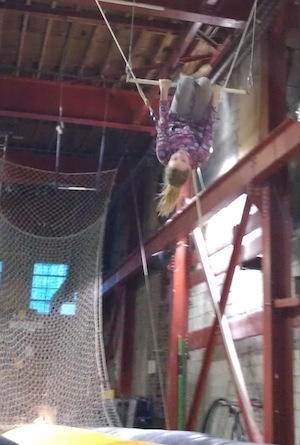
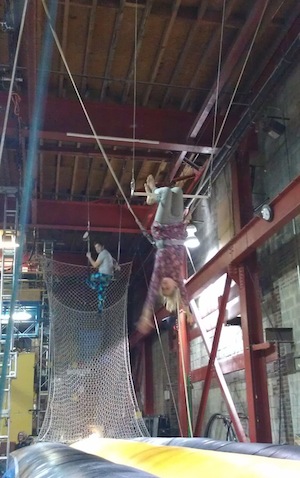
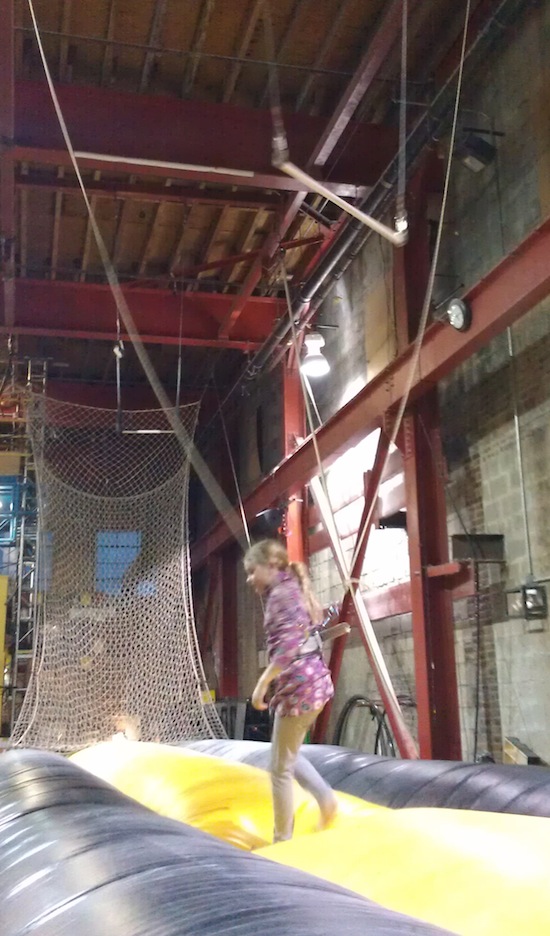
What I would have done when my daughter was first diagnosed was OT.  I would have enrolled her in gymnastics, trapeze school, swimming and I would have introduced her to a stencil board and AAC (Augmentative and Alternative Communication) devices.  I would have begun using Proloquo2go and many of the terrific Grasshopper apps had we had iPads when Emma was diagnosed.  And I would have begun working with Soma Mukhopadhyay.  In an ideal world all of these things would be a given.  All of these things would fall under “early intervention.”  All of these things would be available to ALL families despite their level of income.  These are the things that have proven to help my daughter.  All children may not respond to the things she has responded to.  But in an ideal world “services” would include an evaluation determining what things would help and a plan would be made.

In last week’s post I questioned those who are not Autistic and have little or no contact outside of a professional setting to those who are and yet call themselves “experts.”  I was not referring to the many professionals who are intimately involved in the autism community (and by that I mean the community of people who are Autistic) who have dedicated themselves to helping our kids and us so that we can be, not only the best parents we can be, but also equipped with information that will help us help our children flourish.  There are a great many of you out there, and to you I am incredibly grateful.  To all those professionals in the field of autism who are not familiar with Autistic blogs, books or do not have have any Autistic people in your life who are friends and colleagues, please become familiar with Autistic people’s work so you can tell parents.  Many parent’s first contact with anyone involved with autism, outside of their child, will be a therapist.

Please make sure parents know there is a growing population of adults who share our child’s neurology.  Even if that means just giving us a list of blogs and books written by Autistic people.  Ideally there would be programs in place that employed Autistic people, just as social workers, therapists, parent liaisons are employed. Autistic people who are interested in interacting with new parents and their newly diagnosed children would become a part of “Early Intervention.”

Ideally we would live in a society where we did not segregate those who were more profoundly affected by physical impairments and do not speak, so that all of us came into daily contact with those whose neurology was similar to our child’s as well as those with an array of impairments.  Perhaps families with older kids who are farther along in the process would volunteer to reach out and be available to other families new to all of this.   The point is that we could help each other more than is being currently done.

No family should feel they are alone, or feel the fear we felt or the terror and worry that dogged us every waking moment of those first years after my daughter’s diagnosis.  Years we spent in a state of almost constant panic that we should be doing more, that if we didn’t we were losing time, that our daughter’s life depended on it and that anything less meant we were failing her.

No one, who is given a diagnosis of autism, should feel they are alone.  None should feel less than or believe they are damaged or broken.  No child should feel ostracized or that the way they process and view the world is “wrong” or “bad.”  None should feel that because they are Autistic, they need to hide or feel abandoned by society. No one should be made to feel ashamed for the way they were born.  No one.  This is what I want to see change.  This is why I keep writing.  All of us can work together to create a world that embraces one another and encourages, rather than condemns.  Each of us can play a small part in making this happen, by increasing our awareness, by accepting difference, by working together.
**Em

Autism “Experts”

Yesterday Emma asked Richard a question.  It was a question she’d never asked before.  It was a question that made us both inwardly gasp and later discuss at length.  It was one of those things that was noteworthy and made us both rejoice.  It was an example of progress, not just Emma’s, but as I’ll explain, our’s too.  Emma’s reaction to Richard crying out when our impish kitty, Merlin leapt onto his back, was what one might expect, except it wasn’t.  As all four paws, claws extended made contact with Richard’s flesh, Richard howled out in considerable pain.  Emma ran into our bedroom and asked, “What happened Daddy?”

Had we been in the midst of some “therapy” or “treatment” protocol, as we almost always were a few years back, we would have attributed this new, never-before-heard question to that therapy or treatment.  We would have felt a wave of euphoria, believing, even if only briefly, that this new treatment or therapy could be credited for her voicing such a question.  We would have remarked to each other that this was proof and only later, perhaps the following day or day after that, we might have questioned our conclusions.  We might have discussed any other significant thing that might have occurred or we might have waited with guarded excitement for the “next” wonderful thing that would prove to us, once and for all, without a doubt that this thing we were doing was making a difference.  As though our daughter would otherwise stagnate without our constant tinkering.  As though she would not make any “progress” without our various interventions.  As though autism meant complete stagnation and no movement of any kind.

Since we no longer adhere to this line of thinking, we simply spoke of what we’d just witnessed with joy, while shaking our heads at how fabulous it was that we are making progress along side our wonderful daughter.  And as we mutually applauded ourselves for the headway we’ve made, we attributed all of it, her question and our reaction, to what it was – life, maturity, learning, growth and the fact that we humans have a tendency to change and progress and how wonderful is that?!

No one told us this seemingly obvious fact when Em was first diagnosed.  No one told us this, probably because no one thought it necessary to.  Except that in my case anyway, it was necessary.  It was more than necessary.  It was required.  Because with all the misinformation we received upon Emma’s diagnosis, one of the implications was that massive amounts of intervention, forced interaction and jumping through a million hoops was more than necessary, it was required if we wanted to see any “progress.”  It was suggested that if we didn’t do all these things, we might as well resign ourselves to the idea that our child would never move beyond where she currently was.

“I can’t stress strongly enough the importance of diving into action immediately. Every expert in the field agrees that early intervention is essential and critical. The “wait and see” approach is detrimental to your child.” ~  Lynn Koegel and Claire LaZebnik

It should be noted, “Every expert” who is NOT Autistic, may believe this, though I’d argue with the word “every.”  It wasn’t until I began reading blogs written by Autistic people and talking with my Autistic friends, that I started to seriously question this idea.  I also began questioning the whole idea of what “progress” really meant, but that will have to be tackled in another post.  It wasn’t until I began questioning the idea, that I then began also questioning who exactly were these people calling themselves “experts” and how none of them were Autistic, nor did they seem particularly interested in hearing what Autistic people were saying.  Do any of you find it curious that so many of these so-called “experts” do not seem to personally know any Autistic people outside of a clinical setting?  The very people they say they are experts on?  Don’t you find that odd?

Can you imagine if a number of men claimed to be “experts” of women and what it is to be female, but none actually knew any women outside of their professional setting?  Can you imagine that when women spoke up or suggested these views were in direct contrast to what they, as women, lived on a daily basis, these male “experts” ignored them or suggested they couldn’t possibly know what they were talking about because women couldn’t be relied upon to make sense of such things?  Perhaps even suggesting that women tended toward hysteria and being overly emotional? Can you imagine laws being enacted that directly affected women’s lives and their bodies, with a complete disregard for how women felt about such laws?  Any of this sound vaguely familiar?

“What happened, Daddy?”

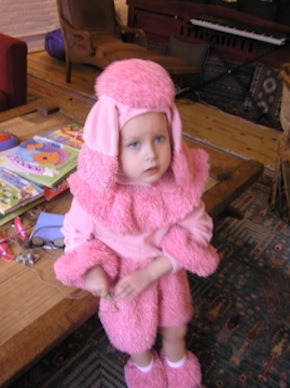
Em dressed as a pink poodle ~ 2007

Em- poodle

A Recipe For Living a Good Life

Last night Richard and I had one of our conversations.  It’s the conversation that starts with, “If only we’d known what we know now…”  The conversation that continues with, “If only we’d known our friends, particularly the ones whose neurology we don’t share, the ones who are Autistic…”  It’s the conversation that ends with both of us looking at each other and shaking our heads until one of us says, “We would have done everything differently…”   And then the other joins in with, “Literally.  We would have literally done everything differently!”

One of the biggest motivators I have for continuing to blog about autism is this idea that everything would have changed had we known what we know now.  How different our lives would have been had our introduction to autism not been abject fear, but to adults who are Autistic.  How different our approach would have been had we not reacted to the news of our daughter’s neurology with terror.  How much money, time, energy, not to mention pain would have been avoided had we not listened to all those non-autistic people who greeted our daughter’s diagnosis with, “Here’s what you need to do…”  “Here’s the name of a therapist/neurologist/homeopath/nutritionist/DAN doctor, call them now!”  “You should try…”

I’ve written about all of this before, but since I typically blog Monday through Friday, many of you may have missed those posts, so here are just a few…

What I Wish I’d Been Made Aware Of When My Daughter Was Diagnosed With Autism
How Fear Drove Me To Pursue A Cure
We Are in This Together
A Fantasy For Parents of Newly Diagnosed Autistic Children
To The Person Who Googled “I Don’t Know if I Can Handle Autism”

What we were told about autism was WRONG.  Everything we were told during those first few years after Emma was diagnosed have NOT proven to be true.  Having an Autistic child does not mean the entire family will be dragged down.  No one need “sacrifice” their life to support another, in fact, our lives are enhanced by each member of our family.  Each of us brings something unique and special to the family. Having an Autistic child is not the same as having a child diagnosed with cancer, this comparison is incredibly hurtful to my child, to your child, it is offensive to all of us.

We have been told all kinds of things about our daughter by non autistic people.  Not one of their predictions has come true.  NOT ONE!  Read that again.  Nothing we were told would happen, actually has!   Think about that.  Being given an autism diagnosis for your child is like listening to an anchorman predict the weather a year from now.  But we believed every single one of those pronouncements and then behaved as though each dire prediction was fact.  If I’d known all the people I know now, the people I’ve interviewed, whose blogs I read, all the people I am fortunate enough to call my friends, who have changed my life and helped me understand autism and what it’s like living in a world that doesn’t accept them, growing up with parents who believed they were doing what was best for them, but who were being told the same sorts of things we were told… Had I known all those people when Emma was first diagnosed, our response to the pronouncements and predictions given to us would have been to laugh and walk away. Literally.  We would have laughed and walked away.

We would not have hired the agency who provided us with round the clock therapists.  We would not have shuttled Emma from one doctor to the next.  We would not have spent all those nights lying awake, staring at the ceiling fearing what would never come to pass.  We would not have lost all those years, years we could have spent actually enjoying and loving our child, but that were spent in fear, engaged in a war on her neurology.   All those years when Richard and I felt beaten down, could have been spent embracing this amazing being who has taught us so much.  The challenges any parent faces, exhaustion, sleepless nights, worry, these would certainly have been a part of our story, but the terror… the terror did not have to be a part of it.

So here’s the truth about my Autistic child:

She is a human being with desires, wants, needs, emotions and feelings, just like any other child.  If I treat my (Autistic) child the way I would want to be treated, with unconditional love, respect, encouragement and support, I will have been a good parent.  If I can be kind, patient, vulnerable and willing to examine my preconceived beliefs about what it is to be a human being, while making amends for my mistakes;  I will have led a good life.

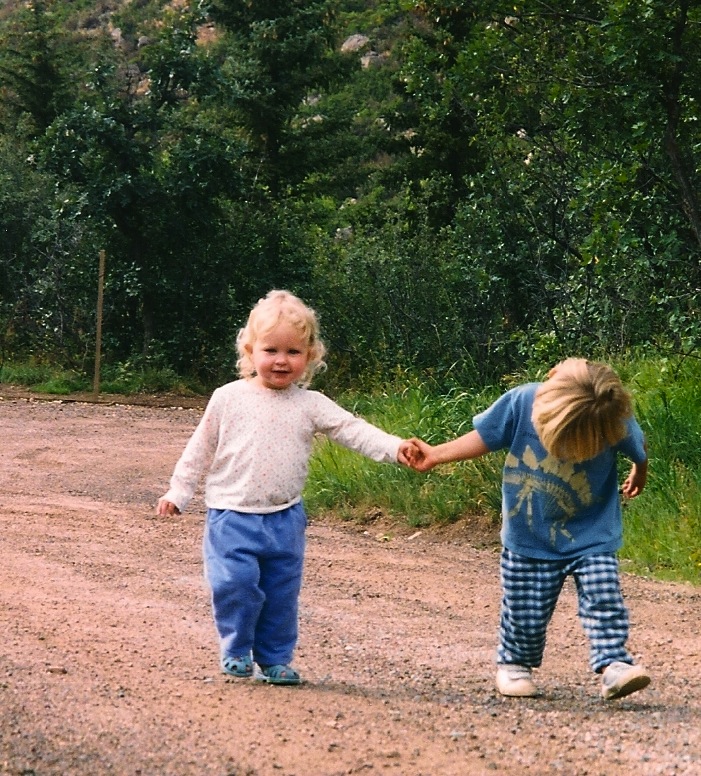
Emma and Nic ~ 2003

Em & Nic - 2003

Shame, Addiction & Autism

“We all have shame.  We all have good and bad, dark and light, inside of us.  But if we don’t come to terms with our shame, our struggles, we start believing that there’s something wrong with us – that we’re bad, flawed, not good enough – and even worse, we start acting on those beliefs. If we want to be fully engaged, to be connected, we have to be vulnerable.  In order to be vulnerable, we need to develop resilience to shame.” ~ Daring Greatly by Brené Brown

I’ve written about shame before.  A couple of commenters on my last post about shame told me to watch Brené Brown’s TED talks on vulnerability and shame, which I did.  B. Brown also has several books, Daring Greatly, is the one I’m currently reading, where she writes, “A sense of worthiness inspires us to be vulnerable, share openly, and persevere.  Shame keeps us small, resentful, and afraid.”

Shame is something I am intimate with.  I don’t know many addicts who aren’t.  I’ve written about addiction and specifically having an eating disorder ‘here‘, ‘here‘ and ‘here‘.  The self-betrayal implicit in addictive behavior exacerbates the pre-existing shame, creating depression and self-loathing.  Attempts to alleviate those feelings with addictive behavior only fuels them.  Shame heaped upon more shame is not a recipe for happiness or success.  Ignoring shame, trying to bury it, and trying harder to not feel it, doesn’t work either.

There have been a number of studies suggesting a link between addictive behavior and autism.  I don’t find this surprising given how feelings of alienation, isolation and fractured self-worth all contribute to wanting to seek refuge and escape. Except the thing we are trying to escape from is often ourselves.  Many of us have internalized our shame, particularly those of us who tend toward perfectionism.  Add to this obsessive tendencies, a desire to be loved, wanting to fit in, believing we are “less than” and addiction can feel like a perfect fit and the only way we can survive in a hostile, unaccepting world.

Oddly, we, as a society, tend to attribute laziness and a lack of will power as the reason people eat too much, drink too much or spend more money than they make.  Similarly, people seem to think autism is a choice or at least the behaviors associated with autism are.  These people apparently believe Autistic people can  “lose” their “autism” if they can just be trained to hide their “problem” behaviors or the things they do that make them obviously Autistic.  Many Autistic people talk about being scolded and punished when they were unable to produce the results expected of them when told they needed to “try harder.”  Trying harder will usually make the person feel more terrible about themselves.

I worry about a culture that is conditioned to believe we must ‘train’ our Autistic children to behave in ways that most cannot, or cannot without a massive cost to their self-esteem.  I worry about “autism treatments” and “therapies” whose underlying message is that our children are not okay.  I worry about what our children are internalizing.  I worry about addiction, depression, suicidal ideation, and how those things get set in motion at a very young age from feeling we are “bad,” not worthy and less than. I worry that because many do not understand autism is a neurological wiring, or do not take into account the experience so many Autistic people are describing, we are raising fearful children, filled with shame for who they are as human beings.  Instead of helping our children flourish, encouraging them to be all they can be, we are trying to make them into something they cannot be.

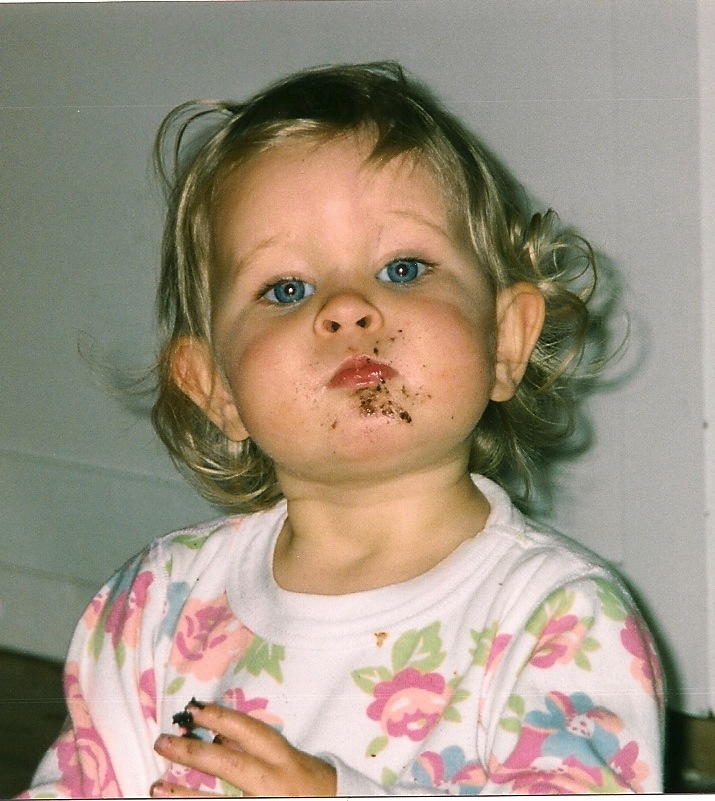
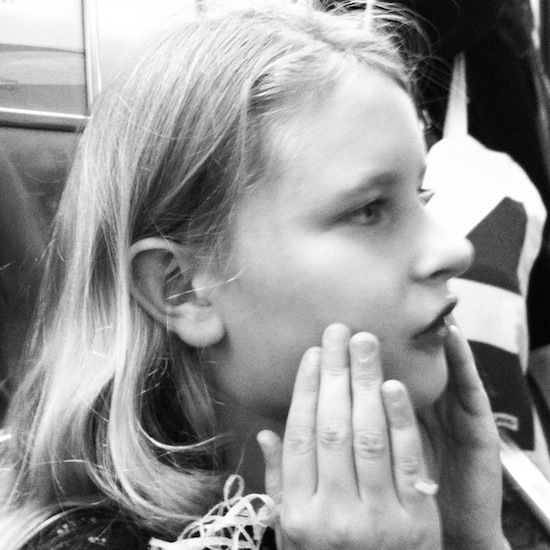
I love this photo of Emma because it captures her in all her Emma-ness!

Emma - 2002

Disability and Society’s Role

I have to preface this post by saying I’m still grappling with all of this.  I recognize that while I can intellectually understand something, it takes me much longer to completely “get it” to the degree that I can own it and incorporate it into my thinking.   Perhaps this is a specific quirk to my neurology…  Here goes – Yesterday afternoon something came up that I didn’t understand.  It was surrounding the words “disability”, “impairment” and the role society plays.  It was stated that autism is a neurological difference that can create certain impairments.  Impairments that can lead to disability when not accommodated.  I didn’t understand the concept at all.  I couldn’t wrap my mind around society’s role in creating disability by not accommodating.  I need to backtrack here for a second. Stay with me…

My father was in a wheelchair the last decade of his life due to a horseback riding accident that occurred when he was 40 years old.  Most of us, who do not require a wheelchair, probably don’t think about what can happen to the human body as a result of not being able to stand and walk around.  There are things that often occur as a direct result of being in a wheelchair for the majority of one’s waking day.  Things like sores, atrophied muscles, metabolism changes due to inactivity, which can lead to constipation, a greater risk for infection, etc.

My father’s accident was my introduction to “disability” as the word my father used to describe himself.  I didn’t spend much time thinking about society’s role beyond the easy to spot prejudices people obviously had upon seeing him, how some people were worse than others, either in the way they spoke to him with barely concealed pity or the way they raised their voice or slowed their speech as though he were intellectually impaired as well.  I was acutely aware of the many places he could not go because they were not accessible to his wheelchair.  And I was aware of the physical pain he was often in. But I didn’t think society played a role in creating his disability, but rather it exacerbated it.

I’m going to interrupt this train of thought for a second while you watch the following short video (1:26) via Ollibean, the terrific site that “unites disability-centric news & editorial led content- connecting families, self-advocates, & professionals through social conversations.”

This article (by  Lisa Egan) is a great one, sent to me by the wonderful, incredibly, kind and extremely thoughtful, Nick Walker, who is interviewed ‘here‘ on Shrink Rap Radio.  After I watched the video and read all the links, I felt I was beginning to understand.

My father’s accident left him physically impaired, but with the necessary accommodations in place he could still get around and do many of the things he enjoyed.  His quality of life was greatly reduced because many of the things he once enjoyed, playing tennis, skiing, were no longer possible, but he could do other things, swimming, gardening, spending time outside.  (Still, I feel confusion and can tell, I’m not quite there yet.  I think I have an understanding, without completely understanding, if that makes any sense.  And I’m also getting hung up on semantics.  But I have to keep going with this.)  I understand my father was impaired, but was he disabled?  Obviously he was to the degree that society didn’t do a great job accommodating him, but what about his weakened body and the pain he was in that kept him from pursuing things he enjoyed and would have done had he not been in such physical pain, such as travel?

*Those of you who understand all of this, please feel free to jump in and correct me.  As I said, I am processing!

Autism.  When my daughter was diagnosed I didn’t think of her as disabled, in fact I remember resenting the notion that anyone might think of her as such.   I understood she was different, and, sadly, I also bought into the “disease” thinking, which I’ve written about on this blog.  As my thinking evolved I thought of her as neurologically different from the majority of people and as such would face more challenges in the world, than if she were not Autistic.  Still later, and more recently I thought that because she cannot reliably use either speech or independent typing to communicate yet, she had a disability, but that her disability had little to do with society and was very much a result of the many issues she faced, physically, emotionally and neurologically.

The idea that society could and should do more to accommodate her and those like her is something I have witnessed first hand and am fighting for.  Yet, this idea that society created her disability, either some or all of it, is a new concept.  So last night I spent many hours reading.  This post from Savannah on her blog, Cracked Mirror in Shalott is terrific with great links to four other bloggers whose work I have tremendous respect for:  That Crazy Crippled Chick – A Musing on the Word Disabled, Radical Neurodivergence Speaking – In this place, in this activity, I am not disabled, Yes, That Too – Ablism is to Blame and  Autistic Hoya – Constructing Disability.   And finally this piece from Sparrow Jones, Voices of Experience on her blog Unstrange Minds where she writes, “In contrast to impairment, Reindal writes about disability as the “barrier to being,” suggesting that the social constructs that view those with impairments as lesser beings, not worthy of inclusion or accommodation, creates an existential crisis that extends deeply into the disabled person’s core being.”

And this is why all of this matters so much.  Because we as a society are adding to impairment.  My child is Autistic.  There are things that are much harder for her to do than the majority of the population.  Her hardship is exponentially increased by society’s lack of accommodations for her and those like her.  This post about my experience at the AutCom Conference last fall is an example of simple accommodations  easily put into place.  My daughter’s life will be infinitely easier if people were better informed about autism and what that means.

Society plays a role in all aspects of her life, from the education system and how we perceive inclusion, to air travel, where she could be allowed to sit by the window to accommodate her need to look out the window to better manage her stress, just as someone in a wheelchair is given an aisle seat and not expected to sit just anywhere.  I could go on and on, but I’m interested to hear from all of you and hear your thoughts on all of this.

Emma and Henry type to each other with Pascal and Harvey’s assistance

H &E type

Person First Language

I wrote yesterday about an evolving fantasy of my ideal introduction to autism and what that might look like.  Later I was asked privately about ‘person first’ language.  An example of ‘person first’ language is:  “My child has autism” or “She is a person with autism” as opposed to:  “My daughter is Autistic.” This topic comes up repeatedly so I thought I’d tackle it with a post of its own.  The current language used to describe autism and Autistic people, starting with the insistence among many parents, educational institutions and the medical establishment to use person-first language (read Jim Sinclair’s Why I Dislike ‘Person First’ Language),  is all about deficits, comparing Autistic neurology (inferior) to non Autistic neurology (superior) which is self-serving, biased and continues to further the general public’s misperceptions about autism and Autistic people.

Shame based language, the things we say because we don’t know better, because we’ve heard or been told it’s how, whatever the topic is, should be spoken of, is still shame based language.  For a long time I didn’t understand why person-first language was objectionable.  It seemed “respectful” to speak of the person first before adding their neurology.  Except that autism brings with it discrimination, prejudice, misunderstanding, assumptions about intelligence or a lack of, and so suddenly all those people who are being so careful to describe this person, whose neurology is “Autistic”, are actually implying that they think autism is something to be avoided, it’s something we pity, it’s something we’d like to be sure the person knows, we “understand” and are being careful to give them “respect” except we are doing exactly the opposite.  When we have no particular issue with some aspect of a person, we do not make sure they understand we are aware they are part of the human race.

I will always respect anyone’s personal preference, but in general, I will continue to use “Autistic” because I am not ashamed of my daughter’s neurology and I refuse to convey that underlying message of ‘less than’ inherent in ‘person first’ language.

Autistic perspective on ‘person first’ language:

ASAN – Identity First Language
Shaping Clay – Person-First Language Doesn’t Put People First, It Makes Them Invisibly
Autistic Hoya – A Second Argument Against Person-First Language
Radical Neurodivergence Speaking:  I don’t have autism.  I am autistic.
Amy Sequenzia – I am Autistic

Em

Walk Toward the Light

First there was the evaluation.  The therapists, the psychologist, the questions. Everyone arrived with their little bag of toys that remained untouched by session’s end.  Some tried to interact, others just observed, but all, eventually, turned to us to ask pointed questions.  Questions meant to gather information, but that felt like tiny daggers, cloaked in kindness, laced with concern.  They jotted down things we could not see, little bits of information they would, no doubt, refer to later, once back in the safety of their office.

Meanwhile we were in the midst of it, with our child who behaved in ways we couldn’t anticipate and often did not understand.  None helped us with that. Their reports finished, their conclusions made, their notes and jottings summarized into a single word – autism.  Delivered to us by phone, we were told, like a psychic delivering a premonition, the cold, hard “truth”.  Our daughter’s life, suddenly bled of joy, like so many leeches placed on a feverish body, draining her of all vibrancy.  Her bright future no longer bright, she was categorized.   Her deficits itemized and highlighted, her strengths dismissed or ignored, the solution, the remedy, the therapeutic interventions, the “behavior modification” programs could now begin.  If we were lucky she could be trained.  She could be “modified”.  She was young, we were reassured.  There was still time.  We were congratulated for having caught “it” so early.  Early intervention was key, we were told.  Intervention…

That was the beginning.  That was the beginning.  Instead of reassurances, we were given dire statistics, useless advice, asides about inner strength, courage, even “god” was evoked with alarming frequency.  People learned of our news. Carried along on the same wave of terror, they tried their best to conceal what they really thought.  Some were more successful than others.  Some, couldn’t help themselves, in an ill-conceived attempt to prop up, they said things like, “I don’t think I’m strong enough to have such a child…” or “I wouldn’t be able to handle it if…” or simply “How do you do it?”  and with each, the darkness crept closer, enveloping us in arms of sadness and pity.  The darkness became familiar, soon, without realizing it, I had embraced it and found others who felt similarly.

What I would have given to have had my Autistic friends there with me during that period when everything was so scary and the unknown loomed before us like a dark  impenetrable wall.  What I would have given, for someone to say, “You are frightened now, but they do not know, they do not understand, they may mean well, but they cannot help you.   You see, they are coming at all of this from the perspective of their own limited neurology.  They cannot see beyond what they believe to be true.  But there is another “truth” and it is one they are unable to tell.  The words they use will only lead you down a path you must reject.  It is a path that will descend into more fear, more terror.  It will not lead you and your child to anywhere you want to go.  Come with me, instead.  Walk with me.  Walk toward the light.

In my ever evolving fantasy of – What if? – I imagine all my friends… my friends who are Autistic, some of whom do not speak, some who do, some have similar interests as my daughter, others do not, but all… all share her neurology… and it is towards them that I walk.  It is with them that I surround myself.  It is with them that I choose to be among, because they know.  They know what it is to be Autistic.  They put beauty in the word “autism”.  It is their faces, their words that I think of when I think about autism and my fear is vanquished.  Fear, now replaced with pride and hope and joy that my daughter is part of such a caring, loving group of people; I am relieved.   A community who has come together to care for each other in a world that continues to ostracize, segregate and criticize, this is the community that stands with their arms open wide, in acceptance, in celebration of all that my daughter is and will become.

Walk with me… walk toward the light…

Rainbow Clouds

Muddying the Water: Alleviating Pain ≠ “Recovery”

A few months ago I wrote about how, once we were given an autism diagnosis for our daughter, so many of the things we believed were uniquely and wonderfully “Emma”, were suddenly thought to be examples of her “autism”.  Things were either categorized as a deficit or a “splinter skill”.  Splinter Skills and Other Words We Use concentrated on talents, interests and abilities.  My friend, Chavisory reminded me yesterday of the physical issues often mistakenly believed to be part of autism.  Things like allergies, insomnia, GI problems, epilepsy and food and eating challenges that often people who are Autistic have, but that many in the general population also experience.

Chavisory mentioned in her comment, a NYTimes article about a drug trial thought to minimize social withdrawal in Autistic people and those with Fragile X.  She wrote, “social withdrawal is not actually a core feature of autism. It’s a consequence of deeper issues with language, sensory processing, and motor differences.” Chavisory’s point is an important one.  This distinction is critical.  Not only because researchers are often trying to treat something that is actually something else, but because it confuses caregivers into believing they can “cure their child of autism”.

When a non autistic person has food allergies or insomnia, we say they have food allergies or insomnia. When an Autistic person has a food allergy or insomnia, many believe it to be yet another aspect of their autism.  People talk about “co-morbid” diagnoses of an Autistic person as though it were all folded into the autism diagnosis.  The problem with all of this is, it muddies the waters and makes people misunderstand what autism is and isn’t.  And it opens the door for many to believe they are curing their child of autism.  Taking care of allergies, GI issues and insomnia will not make an Autistic person non Autistic, however it will make them feel a lot better.

When an Autistic person with food allergies or debilitating insomnia, who also has hyper sensitivities to texture, taste, smell and sound, is given melatonin to help them sleep or a diet that complements their specific constitution, it stands to reason they will exhibit behavior that reflects that.  When anyone, who is in extreme pain and exhausted is helped to have that pain and exhaustion alleviated, they will feel better.  They will be able to smile perhaps, focus, be more alert, even engage in conversation, with an ease they would not exhibit when overwhelmed with pain and exhaustion.  But when this person happens to be Autistic, people use language suggesting their “autism” has been reduced; words like “recovery” and “cure” creep into the conversation.

Suddenly people become convinced that every Autistic person has food allergies, GI issues and sleep disorders and therefore ALL should do x, y or z.    If that doesn’t work, instead of questioning the underlying issue (that perhaps this person does not have an allergy or insomnia)  many will up the ante by doing more radical “treatments” to treat an allergy or condition that the person actually does NOT have.   Logic falls away.  Common sense is rejected.  The pursuit of a perceived “problem” that may have never existed is discounted as not the problem.   The answer is to pour more money into finding the thing that will remove the “autism” even though autism is not what is causing the pain and discomfort.  Special doctors and “autism specialists” are brought in to advise and treat.

When we start throwing all kinds of things at an “autism” diagnosis, when a massive array of physical and emotional things get added, when temperament, interests, preferences, talents become embedded in the “autism” diagnosis we are causing far more confusion and problems to an already confusing diagnosis.  And people misunderstand and say they’ve “recovered” their child or their child has been “cured” instead of recognizing that what’s really happened is they found something that helped their Autistic child, who had allergies or insomnia feel better.  Meanwhile thousands more, who pursue similar ‘treatments’ with no benefit to their child, conclude they need to find a better doctor, or treatment, or diet instead of acknowledging their child doesn’t have an allergy.

Em listening to an opera rehearsal over the weekend 

*Emma

Another Way to Silence – Shame

Shame has a long and twisted history.   Over the centuries it has been used to coerce, to convert, to make people compliant, to keep people in line.  I’m not sure there is a “healthy” aspect to feeling shame, though I may be in the minority here as this article states, “Embarrassment and shame are important in the regulation of social behavior. Both emotions tend to occur when rules have been violated.”  But what if those “rules” are not actually in place for the good of ALL?  What if those societal “rules” serve the majority, but actually are a disservice to a minority?

The argument that without shame we would all resort to violent, unethical and amoral behavior is one I don’t agree with.  Plenty of people behave badly who are filled with shame, often as a direct result of the burden of shame they live with, but usually those who feel tremendous shame hurt themselves more often.  I question how often shame, actually motivates us to respond in positive and constructive ways.  In most cases, it seems to me, shame is less a controller of bad behavior and more an instigator of self-betrayal and self harm.

Shame is what people feel who have been on the receiving end of violence, violations, betrayal and abuse.  Numerous studies have linked shame with depression, suicidal ideation, post-traumatic stress, rape and incest.  The very people who could actually use a little shame appear to be without, while those they victimize carry the vast portion of it.  In these cases, shame is the emotional equivalent to metal restraints, intended to keep people in check, compliant and silent, particularly when used on children or a group of people who are already in the minority.

Many of the methods used, with supposedly great success, on Autistic children, has created a population of adults who feel tremendous shame, lack self-esteem, feel inferior, have anxiety, live with ongoing debilitating stress, all of which exacerbates the very “behaviors” these therapies attempted to remove.   The unending destructive cycle shame creates, does nothing positive for anyone, least of all our children.

I believe shame keeps us from flourishing.  It causes us to doubt, to become hyper aware, self-critical of our desires, our urges, our instincts.  Shame makes us feel incapable, unable, frozen and of little value.  From my perspective, shame is far more damaging than it is “healthy”.  Shame is exactly what I do not want my children feeling.  Ever.  In fact, shame is a warning sign that something has been taught improperly.  If either of my children exhibit shame about something, it is a signal that more needs to be discussed.

I do not want my children behaving in a certain way because they feel shame if they don’t.  I want my children behaving in a kind and loving manner towards themselves and others because they have learned it feels good to do so, because they have come to see that self-seeking, hurting others, gossip, betrayal and acts motivated by resentment and vindictiveness lead to more harm and like-minded behavior. All behavior is infectious.  All behaviors, good or bad can provoke others to do the same.  I am not naïve enough to believe it’s a given, but I do know that I like myself far more when I am kind and being of service than when I’m not.

I hope my children are learning the antithesis of shame and silent compliance, which is a strong sense of self-worth.  I want them to know now, while they are still so young, the beauty and joy of a healthy sense of self, that wonderful feeling of liking who they are as human beings, that feeling we are born with, but that over time can be taken from us.  I want my children to be in touch with those wonderful feelings of curiosity, awe and joy, so that when they make mistakes they aren’t destroyed by them, overwhelmed with shame and become silent.  I want to bolster them up, reassure them, encourage them, support them, so one day, they will be able to give hope and encouragement to someone else who may desperately need it.

Emma – three years old – 2005 

2005

A(nother) Performer in the Family

I asked Em if it was okay to post the following photographs of her.  She said, “Yeah!  Post on blog!”

“But is it okay to first post on Facebook?” I asked.  And again without hesitation Em gave me an enthusiastic thumbs up.

I have to admit, whenever Em says yes to me, regarding posting an image of her or something she’s said or typed, I feel more than a little ambivalent.   I wonder if she fully understands what it means to post on Facebook or here on the blog, despite my lengthy (and more than one) explanations of what this means, how many people may see it, who those people are or might be.  People remind me of the importance of listening.  And part of listening is to also honor and respect what I hear.   I’m trying to do that, while also trusting my own instincts and hopefully I’m getting it “right” more often than not.

I compare Emma’s response to her older brother’s, who has made it known to us that under no circumstances is he okay having us post his photograph, except on very rare occasions when he’ll shrug and say, “Seriously, Mom?”  There’s usually a moment when he stares at me with a slight grin and then says, “Yeah, okay.”  But my daughter is not like her older brother.  My daughter has a completely different personality.  Emma, adores the spot light.  If there is a stage, she will head for it.  If there’s a microphone, she will grab it, if there’s a crowd she wants to be in front of it, preferably singing.  Emma does not have inhibitions, she does not worry about what others will think or may think.  Emma has that wonderful ability to be herself among strangers and doesn’t modify herself in accordance with what she thinks they may or may not like.  Emma is MY role model!

What follows are the photos I asked Emma if it was okay to post, to which she said cheerfully, “Yes!”

First there was this…

1Em

And then this...
2Em

And finally, this…
3Em

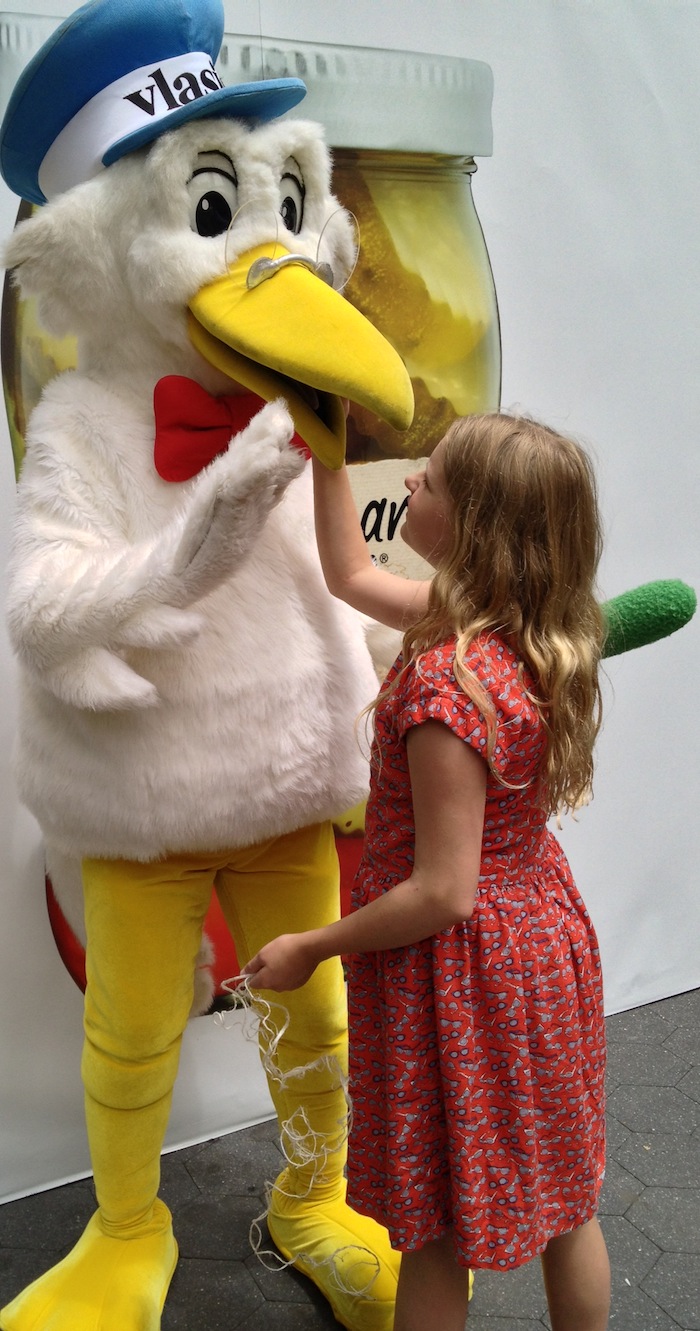
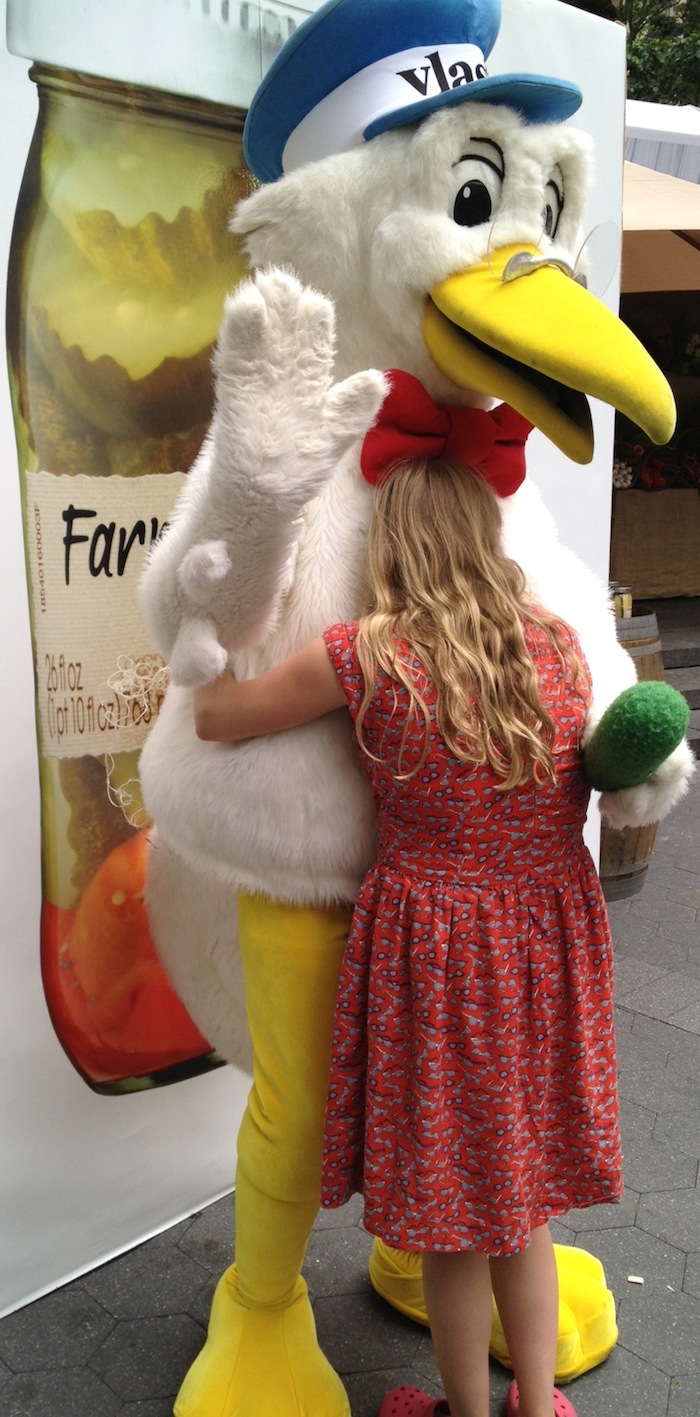
Okay, I don’t know about the rest of you, but for some reason Emma hugging the Vlasic Pickle Mascot makes me tear up… Every. Single. Time.

*A quick side note – the Vlasic Pickle mascot is a stork. Why, you might ask? Well, I googled it and found out that in the ’60’s their tag line was, “the pickle pregnant women crave…”

I have to run, because Emma’s mom is in a flash mob today outside the stock exchange…  yeah, you read that right.  YouTube video to follow…  😀

A Word Of Thanks

A friend of mine hasn’t been feeling well.  She had a cold or maybe it was the flu.  When she wrote me I could tell by the uncharacteristic abundance of typos that she wasn’t feeling great.  I thought about her, hoping she’d feel better soon.  And then yesterday there she was, so much better, her old self, witty, funny, silly, and I felt tremendous relief.  I hadn’t realized how concerned I was until she was better.

When I was nine my father went horse back riding.  It was a Wednesday.  He and my mother always went riding Wednesday afternoons.  I was home, sick with the flu that afternoon.  I remember staring out the window of my bedroom, the sunlight far too harsh forced me to turn my head from its glaring light.  My father told me he’d look in on me when he returned.  He never did.  At least not for a long time.  That afternoon he fell off his horse and, as luck would have it, he did not die as, those who administered to his broken body, predicted.  He did not die, but he was never the same.

Sometimes our lives change so suddenly it is impossible for our minds to keep up.  Sometimes it takes years to fully appreciate how one second can change so much.

When Emma was born, I could not have anticipated how completely my life would change as a result of her being.  It took years for me to process, to catch up, to fully appreciate the magnitude of one child’s existence and all that would occur as a direct result.  I could not have imagined how completely her life would change mine.   And now, today, in this moment I can say with complete and utter conviction, her life has made mine infinitely better, infinitely more enriched, infinitely more meaningful.  Her life.  Her existence.  Selfishly, and I do mean that literally, selfishly, I have benefited so completely from her being in this world, it takes my breath away.

In any given moment our lives can change.  Just like that.  And in that moment we have no way of knowing where we will be led.  Awhile ago I made a choice.  I didn’t think of it as a choice at the time, but I see now, that in fact it was.  I chose to view the things that have happened in my life as moments of possibility.  As long as I am allowed to live, each moment is a possibility to learn, to grow, to be open to new ideas.  I can say that easily now.  I understand this.  As lives go, mine has been a privileged one.  My perceived “hardship” is nothing compared to what so many have endured.  I do not say any of this flippantly.  This choice I made has been relatively easy to follow.

When my friend was sick I worried, when my father almost died I was devastated, when my child was diagnosed I despaired, but these things happened regardless of my response.  My response to them didn’t change their occurrence.

In this moment it’s raining outside.  Drops of water plop erratically on the air conditioning unit outside my studio, the clouds drift lazily along, skimming the tops of the multilevel buildings I see outside my window.  The red brake lights from the cars careening along the interlaced roadways create a moving collage as they speed off and on the exit ramps of the 59th Street bridge.  In this moment I am safe, my husband is safe, my family is safe, my friend is feeling better…  In this moment, in this brief moment, all is well and I am filled with gratitude for all I have.  I am filled with appreciation for the enormity of how one life has so profoundly changed my own in ways I could not have dared imagine.  I am humbled, knowing I will never be able to fully repay the gifts she has given me.

Beautiful Emma

Em


Non-Speaking People Who Type

This is a topic I would prefer not to discuss, but a few things happened recently that make it difficult not to write about this.  So… here goes…

Facilitated communication has had a bumpy history.  It began in the ’70’s and has been lurching along ever since.  There have been studies done, both proving it’s validity and others proving it as an invalid method of aiding those who do not speak to communicate.  This post is not about whether FC is valid.  Those who do not believe in FC’s ability to help those who cannot speak will not be swayed by anything I write here.  For those who are interested in reading more about FC and its history you can do so by reading this and this and the many links embedded in these posts.

What I will write about however, is all those FC users who have gone on to type independently.  And here is where things get really interesting.  Those same people who are convinced FC is all a mirage, a kind of non-speaking, Autistic version of an elaborate magic show, remain convinced the non-speaking person who now types independently is not really doing so.  Those people continue to insist it is a “hoax” despite witnessing, some even after seeing in real life, a non-speaking person type on their own.

Just to be clear, I am not writing about hand over hand or a hand on a forearm assistance.  I am writing about the many people who began typing with a facilitator, but who now type independently.  By independently I am referring to those who may still need a trusted person standing nearby.   Some type with another person’s hand placed on the middle of their back, others may need a hand gently placed on their shoulder.  Yet these same people who speak out forcefully, often aggressively to any who dare write about someone who is non-speaking and writing of their experiences, say even a hand on the back proves these non-speakers cannot and do not type their own words.  They insist that they are merely puppets doing the bidding of the person who is physically nearby.

What fascinates me about this is that these same people who insist it’s all a “hoax” (this is the word they usually use) would rather believe a person can move a seated, non-speaking person’s hand to hit specific keys on a keyboard by virtue of their physical presence, rather than entertain the notion that this non-speaking person, may in fact, be typing their own words.  One such person commenting on a blog post about something unrelated to FC, but that had a link to Barb Rentenbach’s book, I Might Be You, wrote, ” I don’t consider typing with an arm on the shoulder independent typing. You can clearly see the facilitator nudging her towards the letters.”  Not to quibble, but seriously?  So this is like some sort of typed ventriloquism?  Touch someone’s back and direct them to write thoughts that are not their own?

I urge any of you who believe this is possible to try doing it… place your hand on another’s shoulder or the middle of their back and see if you are able to control what that person then types.  And while you’re at it, try standing next to the person and psychically urge them to write something.  It seems incredible, but there are those who not only believe this to be the case, but they then demand “proof” that this person is typing independently, despite the fact that they’ve just been given the very “proof” they asked for.  Evidently “proof” is subjective.

What bothers me about all of this is that those who are typing to communicate are doing so because they have no other means.  This is not a “choice” that’s being made.  The people who continue to insist they are a “hoax”, that it’s all a “mirage”, that they are being “controlled” are taking away the only way they can communicate.  They are silencing them.  They counter this assertion by saying that on the contrary, they are actually “advocating” for those who do not speak and are protecting those who are at the mercy of a facilitator who is putting words into another’s mouth.  Yet, even when confronted with a non-speaking person’s typed words, typed without anyone’s hand on their arm, they continue to insist the very presence of this other person is all it takes.  The transference of perceived power to cover up their dehumanization of another is convoluted.

If you google “Carly Fleischmann” the third entry that comes up is “Carly Fleischmann fake”.  Sadly Carly is not alone when it comes to such beliefs.  There is a long and horrible history of non-speaking people being discounted and effectively silenced by those who believe they cannot possibly be intelligent, insightful beings.  There are those who will dismiss people like Carly as an anomaly, a “prodigy” and thereby ignore the years of effort it has taken her to get to where she now is, or they conclude she is a “fake”.  There is nothing new about the silencing of human beings deemed inferior.  (Read Inventing the Feeble Mind by James W. Trent, Jr.)  The ingrained prejudices and dehumanization of Autistic people continues.

I want to end with one last thought, which is this – if you found yourself unable to speak, but could type to communicate, yet when you did so, people doubted the validity of your words, accused you of not actually writing what you’d so painstakingly typed, what would you do?  How would you respond?  How would you fight back?  Could you fight back?  Restraints come in many forms, but all are effective.

As Barb Rentenbach writes, “I might be you.”  For those who doubt that sentence is her own, you better hope those words are wrong.

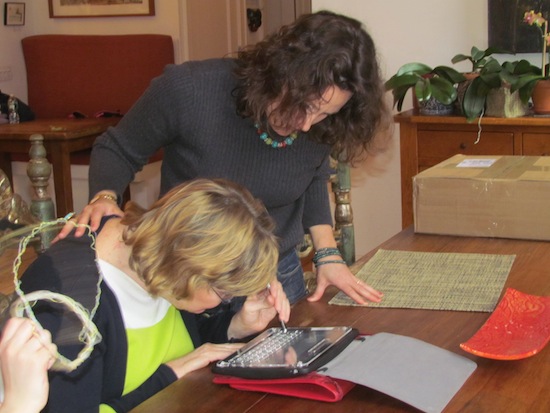
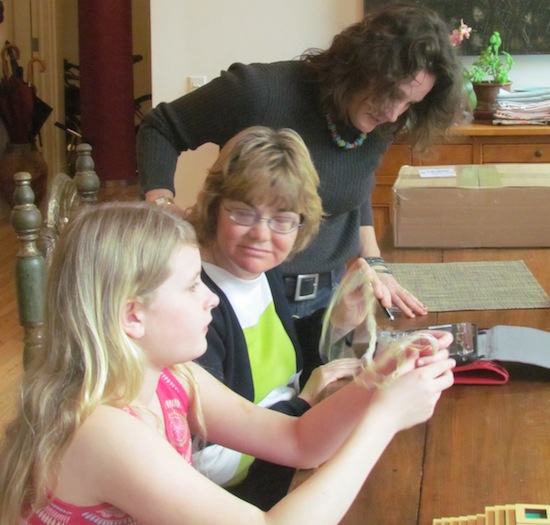
Barb types with Lois’s hand on her back as Emma twirls her string – April 2013

Barb types

We Are in This Together

It is in our best interest to remember that we are all the same.” ~ Barb Rentenbach in her book, I Might Be You.

One of the most insidious and destructive messages parents are given about their Autistic child is “the list.”  I am referring to that list of deficits we are given.  The list that enumerates all the reasons why our child has earned the “autism” diagnosis.   It is a list that divides.  It sets us a part from our child.  It makes us question our maternal instincts.  It makes us wonder what we did wrong.  It is the list that becomes our to-do list.  A list of things we now set out to “fix”.  Or so this was my experience when my daughter, Emma was first diagnosed.

That list, filled with judgment, a critique of my not-yet-three-year-old child, the same child that just moments before, I knew was different from what I expected, different than my son, yet still was a part of, was now branded with “other”.  If we are going to make such lists, I think it only fair the “evaluator” and all members of the human race be given similar critiques.  I would be curious to see how each of us stands up under such scrutiny.  Let us be evaluated by someone who does not share our particular neurology.  Let us each be judged by another – another who deems themselves superior.  Let’s see how well that plays out.

Loneliness is the most predominant side effect of our unique design. Many times, autistics revert to isolation by default rather than preference. It is infinitely easier to back away and not try to be included instead of oafishly stepping in and attempting to convey you intend to be a part.” ~ Barb Rentenbach in I Might Be You.

Have you ever felt like a fraud?  Have you ever said something to someone only to realize you said the wrong thing?  Have you ever been in a social situation and left, wondering why you feel uneasy, upset or just sad?  Have you ever spent time in the presence of a group, yet felt lonelier than had you been alone?  Have you ever had the thought that if people really knew you, they wouldn’t like what they found?  Have you ever felt separate from, less than, not good enough?  Have you ever felt critical of the way you look, the shape of your body, the size of a particular body part and wished it were different?  Have you ever thought if only that part was smaller, larger, different, if only the number on the scale was less, if only your hair was lighter, darker, straight, curly, your skin was a different shade, your height…  Have you ever thought if only X was different, I wouldn’t feel this way?

Remember a time, no matter how brief, when you felt that magical euphoria of connecting with another human being?  That moment when you felt the wonder and bliss that only comes with friendship and love, the beauty of connecting with another?  Remember what that felt like?  Wasn’t it beautiful?  Wasn’t it unlike anything you’ve ever felt?  A kind of anything-is-possible feeling?  A feeling of all being right with the world, that joy of knowing we belong.  Who among us has not experienced both?  Who among us has not felt the horror of feeling separate from, the worry that we are somehow damaged, not right?  Who among us has not felt the inextricable sadness that comes from feeling we are all alone?  Now add an entire society, a whole group of people, all of whom have decided we are “less than”.  Feel what that feels like.

Go back to the memory of bliss, of joy, of connection.  Feel the vibrancy, the exuberance that comes with that.  Which do you choose?  Would any choose differently?  We are all served by remembering we are more alike than not.

Reach out and connect with those who may be struggling with separation. It takes just one person to care to change a life for the positive. Be that for someone.” ~ Barb Rentenbach in I Might Be You.

Emma, Barb & Lois the week we recorded the audiobook of I Might Be You

Em, Barb & Lois

Respect

I don’t know about you, but there are definitely days when I lose sight of long-term goals.  I become impatient.  I forget to respect the process… whether it’s my own, my husband’s, a friend’s or either of my children’s.  I just don’t.  I want things to happen on MY time frame.  I like when things happen in exactly the way I imagined they would, with the speed in which I hoped for.  I LOVE when things happen even faster or in a way I couldn’t have imagined and end up even better than I thought.  But when things meander along, taking their time, going at a pace far too slow for my liking I have trouble…  My father used to say to me, “You want what you want, when you want it.”  This was NOT meant as a compliment.   He was right.  I am impatient.  I prefer when things I want to happen, happened yesterday.

I used to think I would become more patient with age, but if anything, growing older makes me even less patient as I’m more aware of my mortality and that there really is an “end” to all of this, or I should say an end to me(gasp!) and therefore I have to hurry if I’m going to get everything I want done, finished.  You know, things like changing the way people perceive autism, changing the way society treats people with disabilities, changing how our education system works… little stuff like that…  *Big grin.

So when I’m hit with a wave of impatience, when I am most definitely NOT respecting the process, whatever and whomever that may apply to, I must remind myself of my tendency toward impatience and that I do not control much of what happens in this world.  Everyone can let out their breath now; I know that was something most of you were concerned about.  *Said with a big smile and a generous dollop of sarcasm.

Respect… this is something I think about a great deal.  My daughter’s life is no less worthy of respect than my own.  Respecting her means, listening to her, finding out how best to communicate with her, I have to respect the way she learns, the best ways for her to express herself in any given situation, the way she takes in information, the time she needs to move from one thing to the next, the clear instructions she needs so she can do what is being asked and honoring her as a human being who deserves to be treated with dignity.

Respect.

Musings of an Aspie wrote a post the other day entitled, (Not) a Little Slow.  It’s a terrific post, one I wish was part of a “Welcome To The Tribe – Things You Should Know Handout”.  I wish this handout existed for all of us when we receive an autism diagnosis, whether for ourselves or our children.  Actually this imaginary handout should be made available to every human being on this planet.  If we treated all humans with the kind of generosity, respect and civility practiced at Autism conferences where Autistic people are not only in attendance, but are largely responsible for the creation of the programming and planning, this world would be a better place.

Respect.

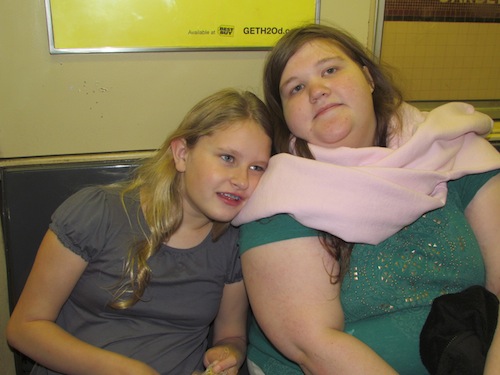
Em & Laura on the subway

Em & Laura

Letting Go and Trust

Yesterday Emma did another “catch” at her trapeze school.  Yesterday’s catch was more complicated than the one she perfected a month ago and I cannot wait to see it.  I asked Em last night whether I could post it here and she said, “Yes!  Post on blog!” Since Em’s therapist, Joe, hasn’t had time to upload and send me the link from yesterday , I’m sorry, I can’t help myself, I am posting her first catch from a month ago AGAIN.  Watch all the way through to hear what Em says at the end, it makes me teary just thinking about it.

2Watching her flying through the air makes me happy.  Seeing her joy and sense of accomplishment, makes me happy.  The first time I watched her swooshing through the air I felt a mixture of joy and trepidation, the second time a soaring hopefulness of all that is possible, the third time pride, knowing how hard she has worked, trained and practiced to get to this point.  Years.  Years of practicing.  Just now, as I watched it again, I was reminded of how, it is the connections with other people who make our lives full and joyous.  Connections rooted in trust, compassion, love, and a sense of belonging.

3When Emma releases the bar and reaches out to grab the forearms of the other person, I cannot help but hold my breath.  Even though I know the ending to this particular story, I still hold my breath.  Will they catch her?  Will she fall?  Will she get hurt?  Can she trust them, rely on them to be there for her?   As I write this I know these are universal questions.  Questions I have asked with both my children in mind, questions I have asked about everyone I’ve ever loved.  But in this one instance Emma trusts the other person will be there to catch her and the tears fill my eyes because they are, yet I know this won’t always be the case.   As much as I want to convince myself that I have that power to always be there, to have every situation in my control, there will be times when I won’t be able to protect her from the disappointment and heartache that will come from trusting someone who cannot be relied upon.

But before I drift off into a melancholy laced reverie, I have to remind myself that this is my interpretation of how my daughter may or may not feel when faced with disappointment and the deep sadness that comes with trusting someone, only to feel let down by them or worse, betrayed.  My daughter has a very different outlook on life than me.  She has proven to me repeatedly that my life experiences are not accurate lenses with which to view or predict her life.  The beauty of being a mom is realizing my ideas about how my children will or won’t cope with the things thrown at them are not necessarily correct.  I believe this is what older parents of children who are now adults refer to as “letting go”!

In the twelve-step rooms there’s a great deal of talk about the g-o-d word.  It’s not a word that brings me any degree of solace, so I’ve learned to do what my friend Ibby calls a “work around”.  I don’t do the g-word, but I have faith.  Faith that if I am kind, generous and try my best to be of service, I will be better off than if I’m not.  This thinking doesn’t ensure those I love will always be safe, but it helps me stay centered and present one day at a time.  I can hear Richard’s voice in my head saying, “What?  That’s it?”  And my answer is to laugh and say, “Yup.  That’s pretty much the extent of my wisdom.”

4