Author Archives: arianezurcher

An Ode To My Daughter

Dearest One,

When you were first born I had an idea about you, it was an idea I have come back to, all these years later, it was an idea that was more right than wrong.  You were very much your own person right from that first moment you drew breath.  I remember marveling at your strength and independence.  I knew almost nothing about autism.  I hadn’t taken the idea of independence and remolded it as “autism” yet, only to rework that idea back to its original concept later.  I saw you and appreciated you for who I saw you to be.  Defiant, independent, strong, determined and silly.  Even as a baby you loved to laugh and appreciated silliness in all its various forms.  You loved playing peek-a-boo and being thrown in the air.  Those first eighteen months, before I knew words like “vestibular”, “proprioceptive”, “stimming”, “perseverative”, “echolalia” and all the other words that threatened to push you from center stage, making you less you and more an example of a diagnosis weighted with other’s learned opinions, I was in awe of you.

Words have power, but words can confuse, they blinded me for many years, I became caught up in what they meant or what others thought they meant and as a result was less able to appreciate you.  I used to wield those words as though they were weapons banishing what was, into something else, something undefinable, something “other”, something I wanted to find a way to control or remove.

As a baby before I knew those other words, you were in a state of either bliss or agitation.  I use to watch you with wonder and admiration.  You were distressed by the lights and the air seemed to hurt you, as though it scraped against your skin.  You liked being swaddled tightly in one of the soft baby blankets I had bought for your arrival.  You slept almost constantly those first two weeks.  Then your deep slumber was interrupted by internal discomforts I could not guess or see.  You greeted these intrusions with indignation, howls of distress and I felt a helplessness I had not known could exist.  A helplessness borne from not knowing; watching, but not able to intervene, hearing, but unable to understand.  I tried to comfort you, but my understanding of what comfort meant was not the same as yours and so your teaching began.  You have been so very patient with me, dearest one.  You have never given up on me.

You have painstakingly tried to communicate in a language that does not come naturally to you.  You have met me more than half way.  You have tried over and over to help me understand and you’ve never stopped.  It has taken me a long time to learn some very basic things about you, things you’ve been telling me ever since you were born, but that I couldn’t understand.  Things I still forget, but  I’m getting better at listening to you and understanding that words are not the only way a human being communicates.  I am getting better at hearing you.  I have learned to listen to your behavior as though it were a conversation, because it is how you reach out, it is the way you connect.  I am learning to lean into you, to not try to do a word-for-word interpretation of your verbal utterances, but to try to feel the meaning of what you are doing or saying.

You are Autistic.  Do not let other’s interpretation of that word define you, rather help others understand that you define it.  Make your mark in this world by continuing to believe in yourself.  Continue to stand up for yourself.  Advocate. Let your voice be heard.  “Actions speak louder than words,” people say, but they don’t seem to apply that to you and others who cannot and do not rely solely on language.  Those people need to be taught, because actions DO speak louder than words if we can learn to listen to them.

You, my beautiful daughter, are kind and good and honest and talented and funny and caring and sensitive and yes, Autistic.  Be proud of your neurology, but do not allow others to limit you because of it.  Do not allow someone’s idea of what that means to encroach on who you are or how you perceive yourself.  You are Autistic and you are my daughter.  It could be argued that both come with a great deal of baggage, but both also come with many wonders and advantages.  Concentrate on the positives, lean into them, and make your way.  Reach out to me, grab my hand, together we are stronger than we are alone.

I am so proud of you.

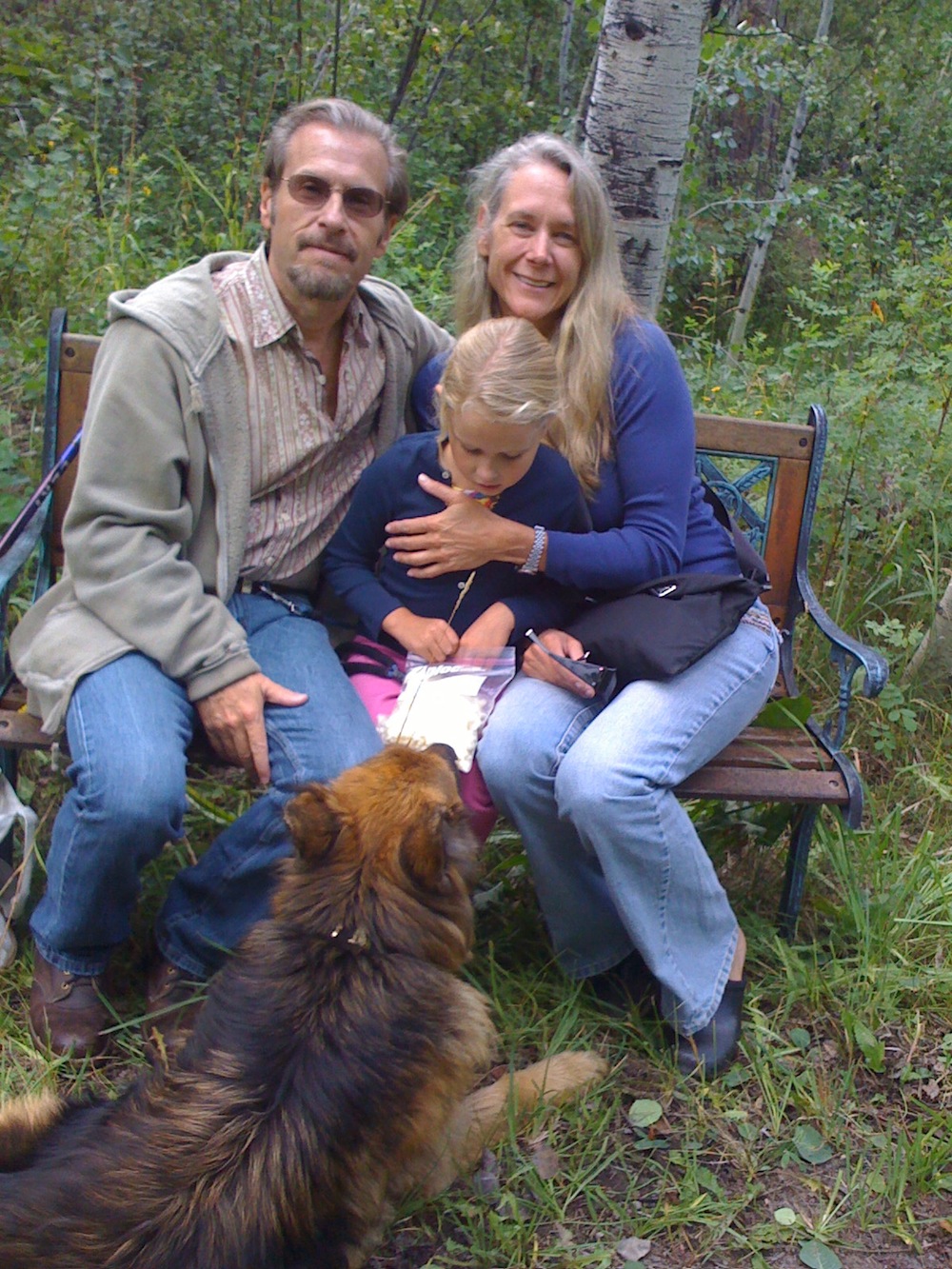
Richard, Em & Me – 2010
 

GO VOTE!

*A version of the following was sent to me a few weeks ago.  This is about women fighting for the right to vote, but it could be the battle engaged by any group in the minority, including those who are Autistic fighting for the right to have a say in the policies that ultimately harm or help them.  It is the same story, told over and over again.  This post was inspired by Lydia Brown’s recent post, Protesting Autism Speaks on her blog Autistic Hoya where she recounts the response she received as she and others offered ASAN (Autistic Self Advocacy Network) flyers to Autism Speaks supporters and asked, “Would you like to hear from Autistic people?” only to be told “No” over and over again.

Less than 100 years ago women did not have the right to vote.

The 19th Amendment, ratified August 18, 1920, granted women the right to vote. Prior to that women marched and picketed as a way to bring attention to their cause.  These tactics succeeded in raising awareness, but were often met with massive resistance and brutality.

On November 15, 1917, known as the “Night of Terror” when the prison warden at the Occoquan Workhouse in Virginia ordered his guards to teach a lesson to the suffragists imprisoned there because they picketed the White House for the right to vote.


By the end of the night, many were barely alive. Forty prison guards wielding clubs and with their warden’s blessing went on a rampage against the 33 women convicted of “obstructing sidewalk traffic”.
One of those women was Lucy Burns. They beat her, chained her hands to the cell bars above her head and left her hanging all night.
Dora Lewis

They threw Dora Lewis into a dark cell, smashed her head against an iron bed, knocking her out. Her cellmate, Alice Cosu, thinking Lewis dead, suffered a heart attack. Additional affidavits describe the guards grabbing, dragging, beating, choking and kicking the women.

Alice Paul

Alice Paul began a hunger strike so they tied her to a chair, forced a tube down her throat and poured liquid into her until she threw up. She was tortured for weeks until word was smuggled out to the press.

Edith Ainge

Voting is our right. It isn’t always convenient, we have to take off early from work, find childcare to watch our kids, stand in long lines, but it is our right. A right our grandmothers and great grandmothers did not have.  It’s easy to take for granted that which we have grown up believing is a given.  But it wasn’t always our right, and while it is doubtful it could ever be taken away, there are many in this world who still do not have that right even today.

Helena Hill Weed – Serving a 3-day sentence for carrying a banner saying, “Governments derive their just powers from the consent of the governed.”

Lest we forget, rights we think are a given, can be taken away.

Go out and vote!

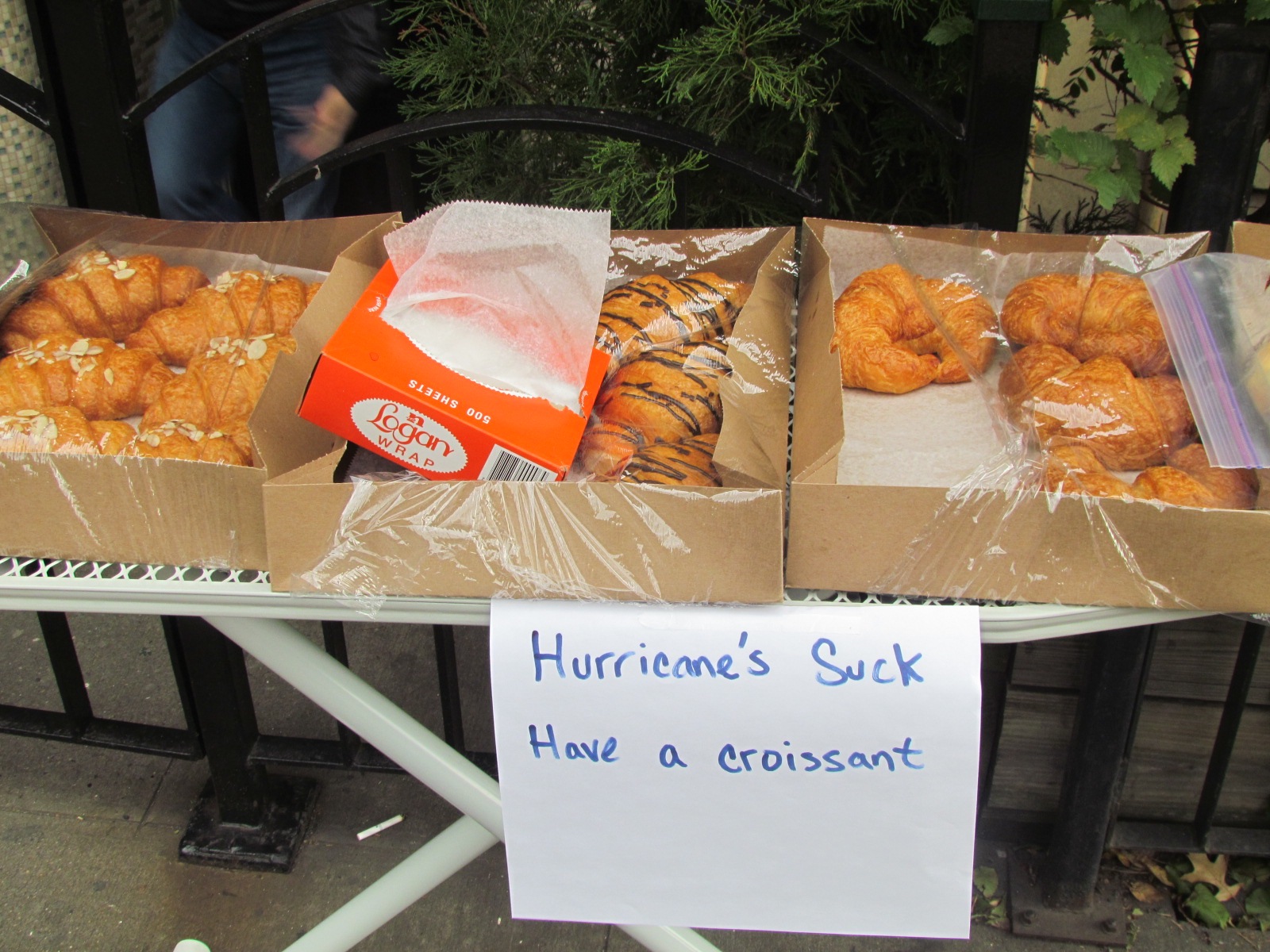
“Hurricane’s Suck, Have A Croissant”

Processing…  I haven’t.  There are still too many people who are without power, whose homes have been destroyed, too many people who continue to have no heat, no hot water or any water at all, too many displaced people, too many who have lost so much….  How does one process this?

Nic had nightmares last night about a zombie apocalypse where he was the lone survivor.  Emma is perseverating more than usual; her stims have gotten noticeably worse; her scripting more pronounced.  I watched her yesterday as she did her Sunday morning DJ routine, listening to all her favorite songs, singing and dancing, losing herself in the music and felt both grateful for all we have and utterly exhausted.  I slept seven and half hours last night and yet feel as though it were 5.  I am feeling fragile particularly sensitive and emotional, and we were the lucky ones.  We have power, heat, hot water, a home that is undamaged, everything’s back to “normal” and yet it isn’t.  I don’t know what normal means anymore.  Where do we go from here?  How do we process this?

On Friday I went downtown and took photographs.  The lighting wasn’t great, it was impossible to capture the mood or what it felt like to walk along empty streets where the only lights came from headlights on busses, taxis and those who still had enough gas in their cars to get around.  I couldn’t photograph the group of young women weeping in the street or the man looking for his father whom he had not heard from in four days or the old woman painstakingly climbing the stairs of her unlit building, her pug tugging on its leash, urging her upwards into the darkness or the faces of all those people I passed obsessively checking their dead cell phones, trudging north with the hope they might find an available electrical socket that would breathe life into it.  I’m not a skilled enough photographer to be able to capture any of that.  (I’ve provided a couple of links to some professional photographers who were though.)  But I did get a few images that at least document the storm and our resilience…

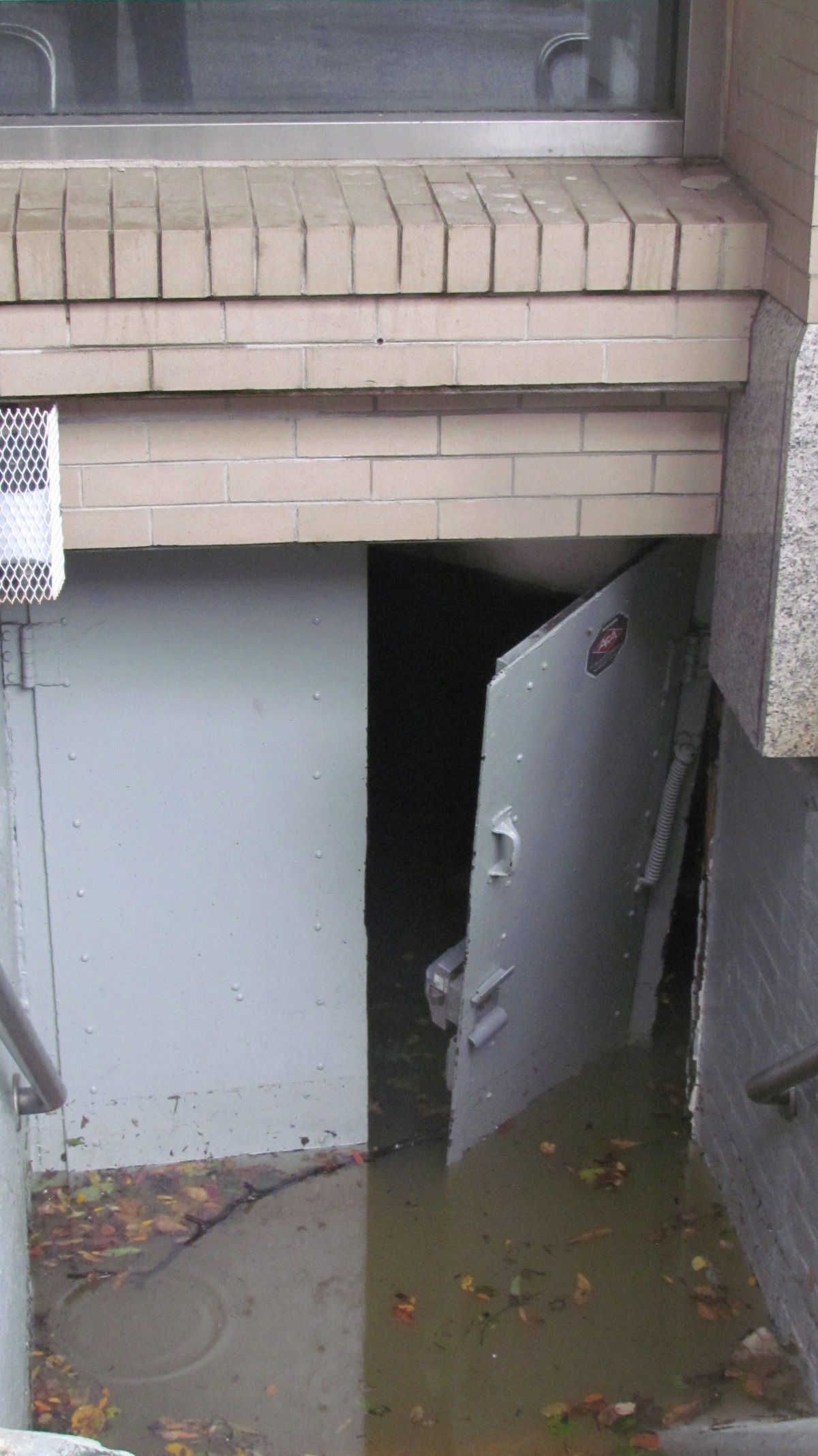
One of the many Chelsea art galleries whose flooded basement held art work. 

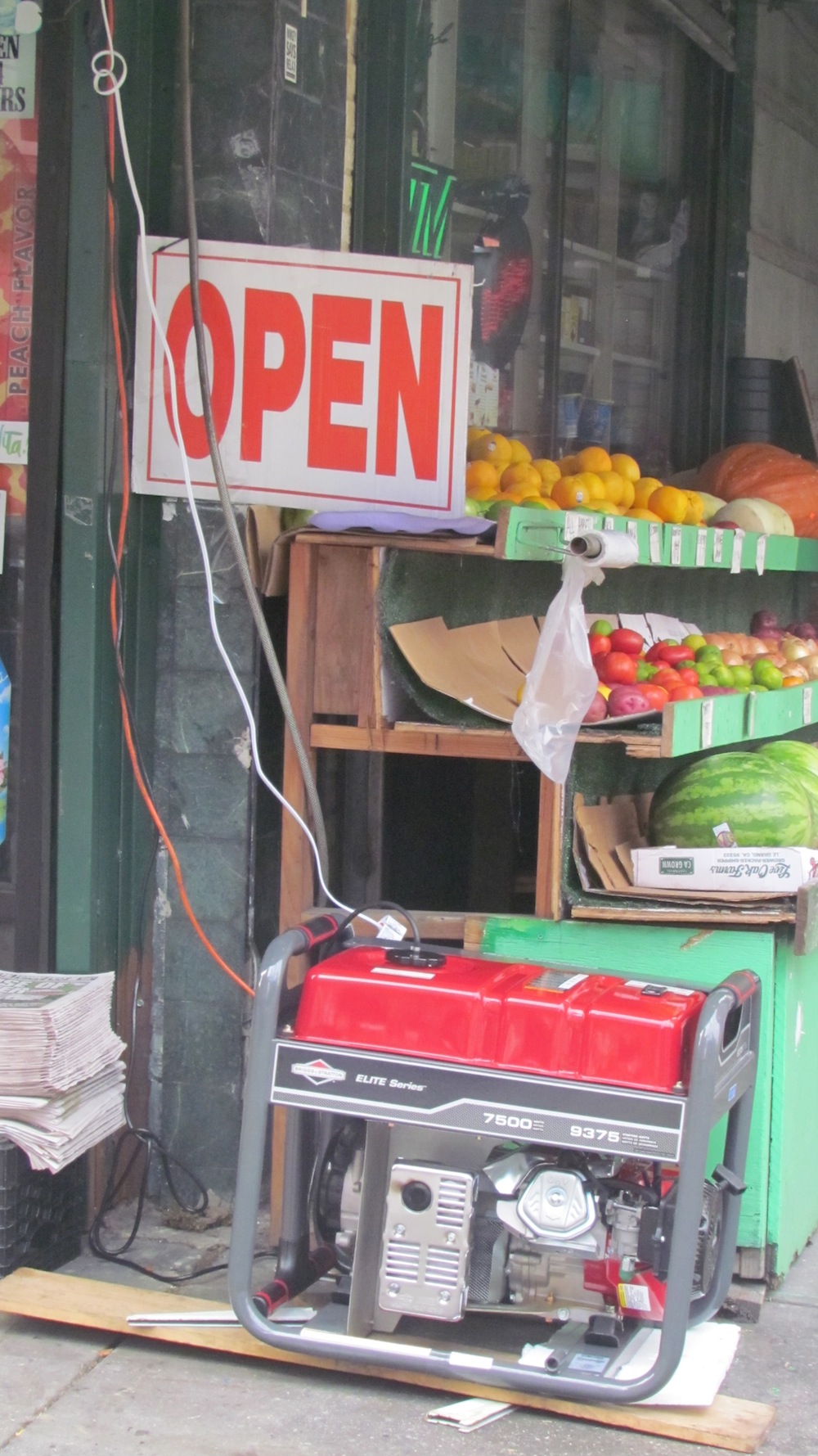
An intrepid New Yorker who found a way to stay open despite the power outage downtown

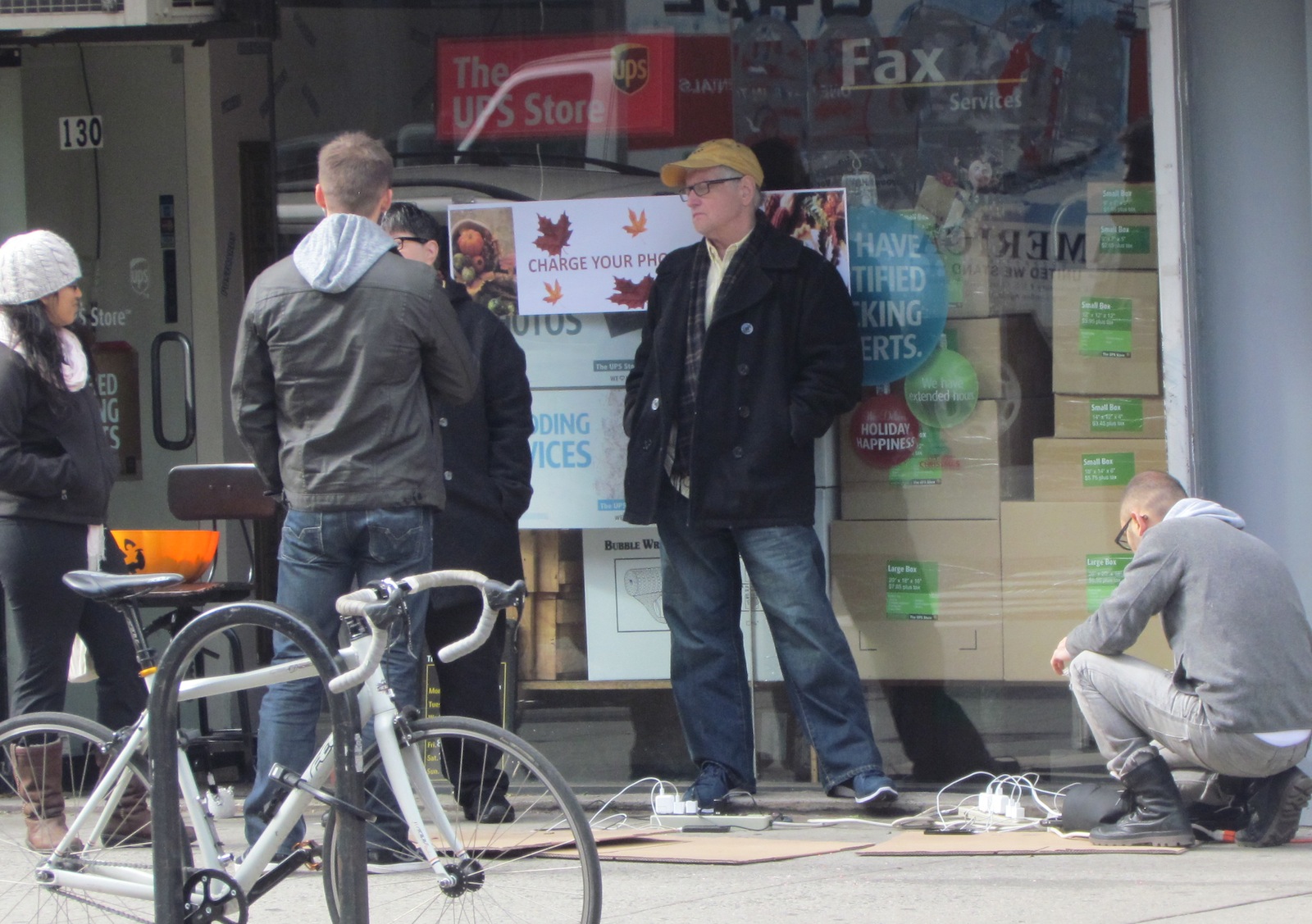
Powering up on 7th Avenue

The “Doll House” on 8th Avenue

Kindness on 14th Street

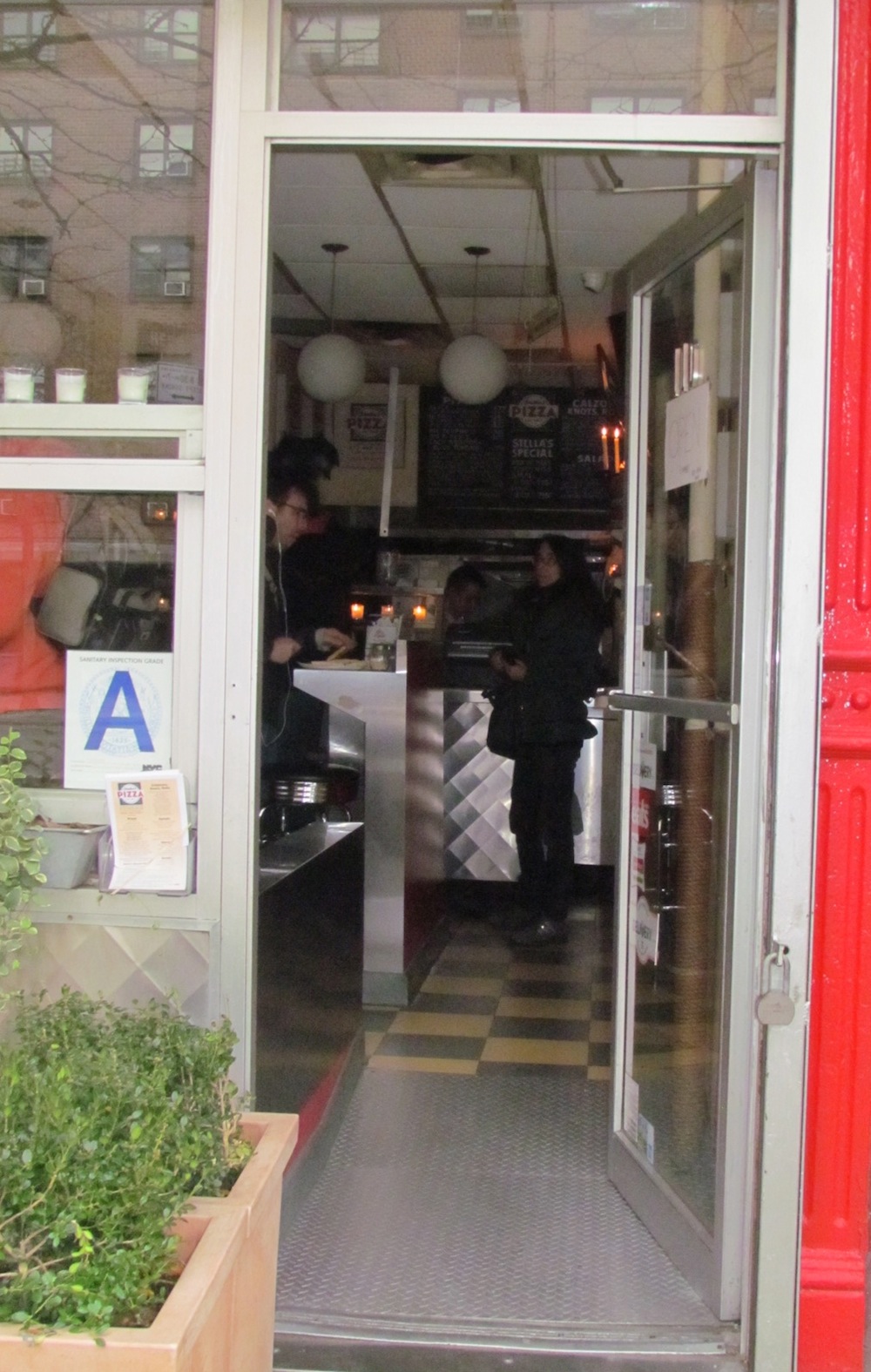
Pizza by candle light

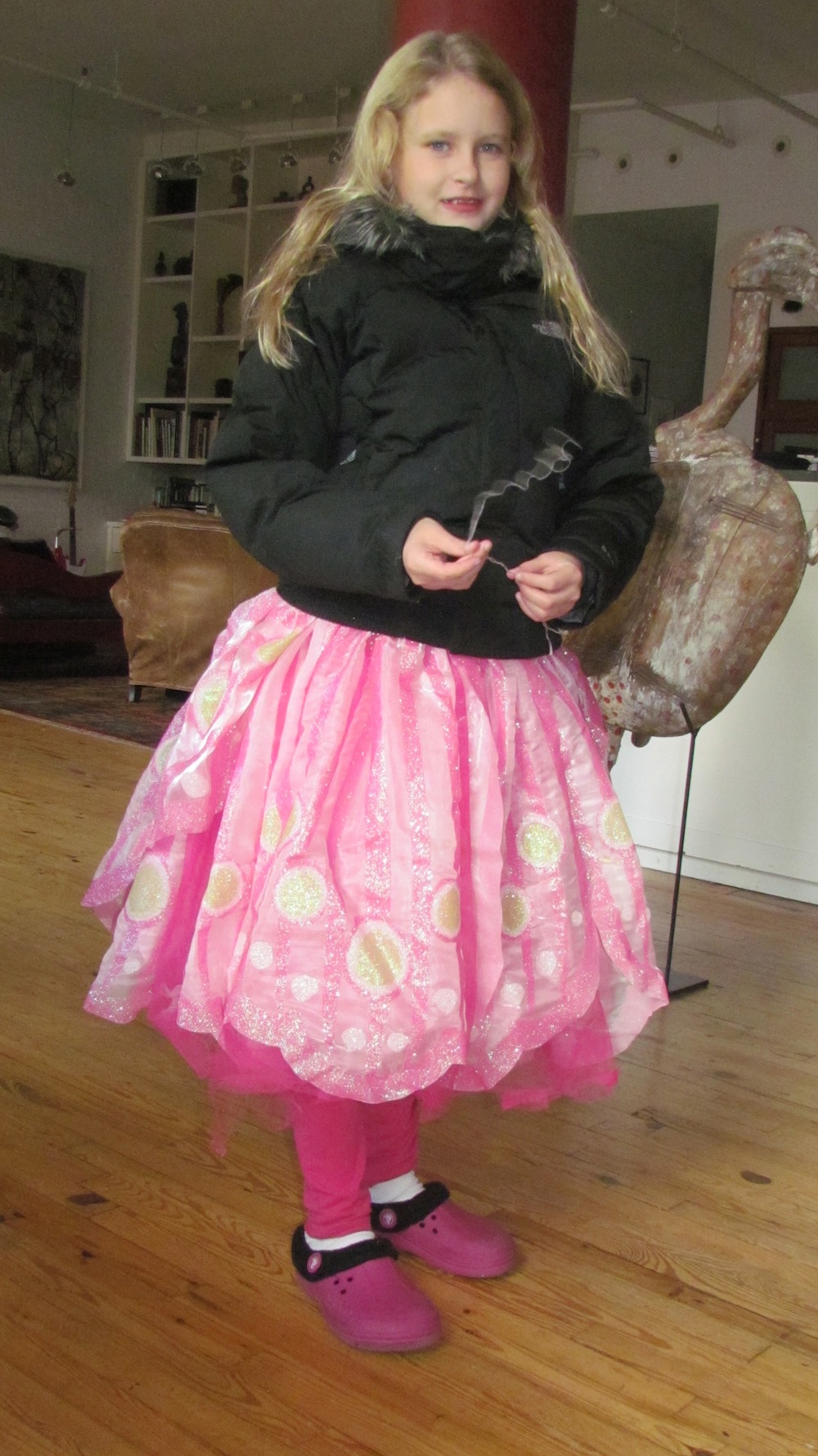
Emma wasn’t able to go trick or treating, but she still dressed as a butterfly on October 31st

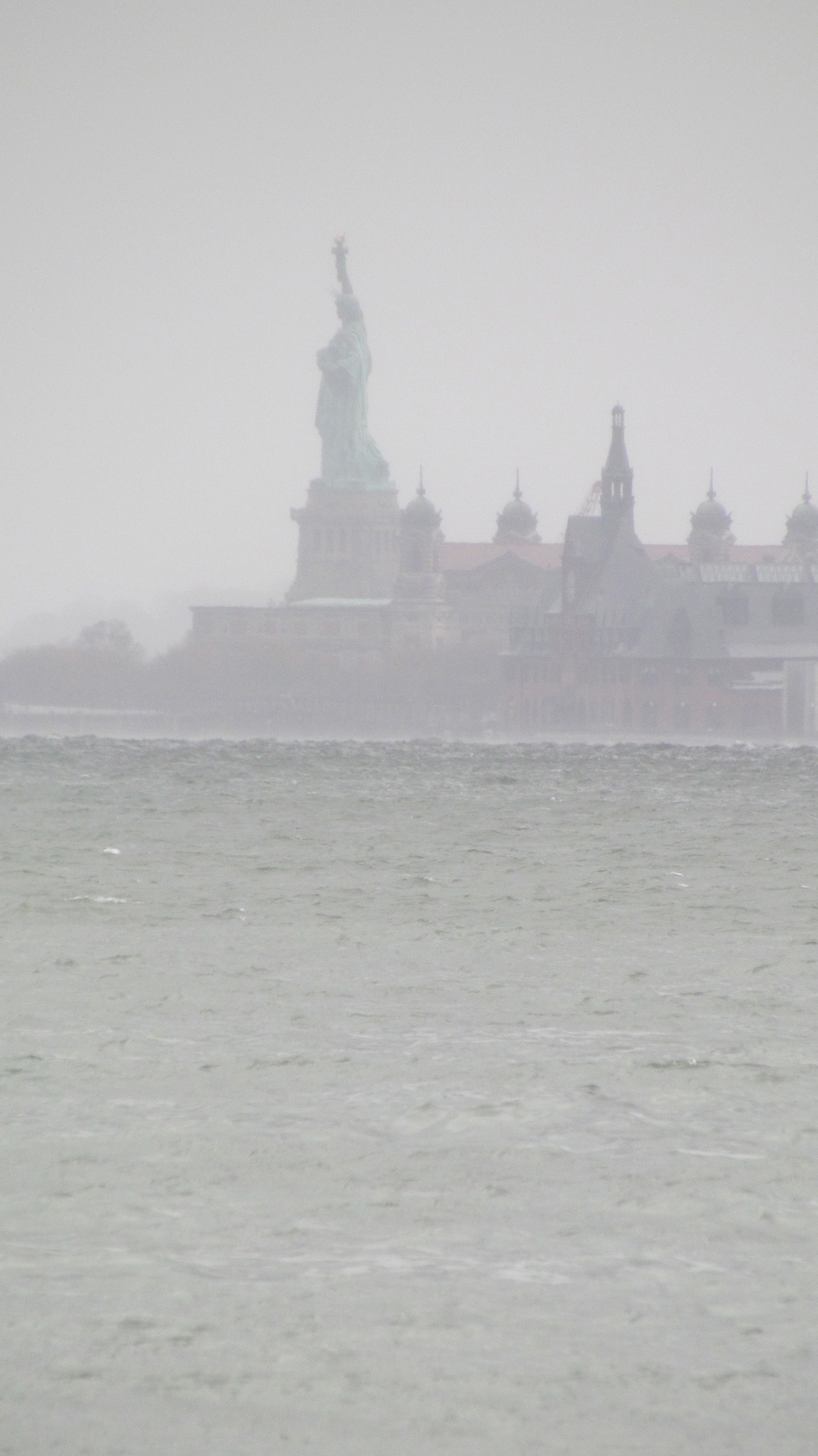
The Statue of Liberty during the storm

We are capable of so much.

Be grateful.

I am.

A City Divided

Today is the first morning I’ve had the time, the electrical power and the energy to write a post.  It’s with some horror that I read my last post.  Who knew Sandy would cause so much devastation and damage?  Evidently  pretty much everyone, well except us, it turns out…  I don’t think I need to say a whole lot more here, other than we were lucky and are fine.  We had a huge stock of batteries, thanks to a tendency to overstock supplies and having children with battery operated devices, I even found a solar-powered radio/flashlight my brother had sent me a few years ago after the last blackout and a drawer full of candles and flashlights.  My mother periodically called with updates and my brother sent text messages with the latest news.

A good friend who lives above 26th Street (and therefore had power) was kind enough to open her home to many of us without.  It took hours to power up our devices, but at least we weren’t standing in line at one of the many delis and stores north of 25th Street who had brought out power cords allowing as many people as possible to power up.

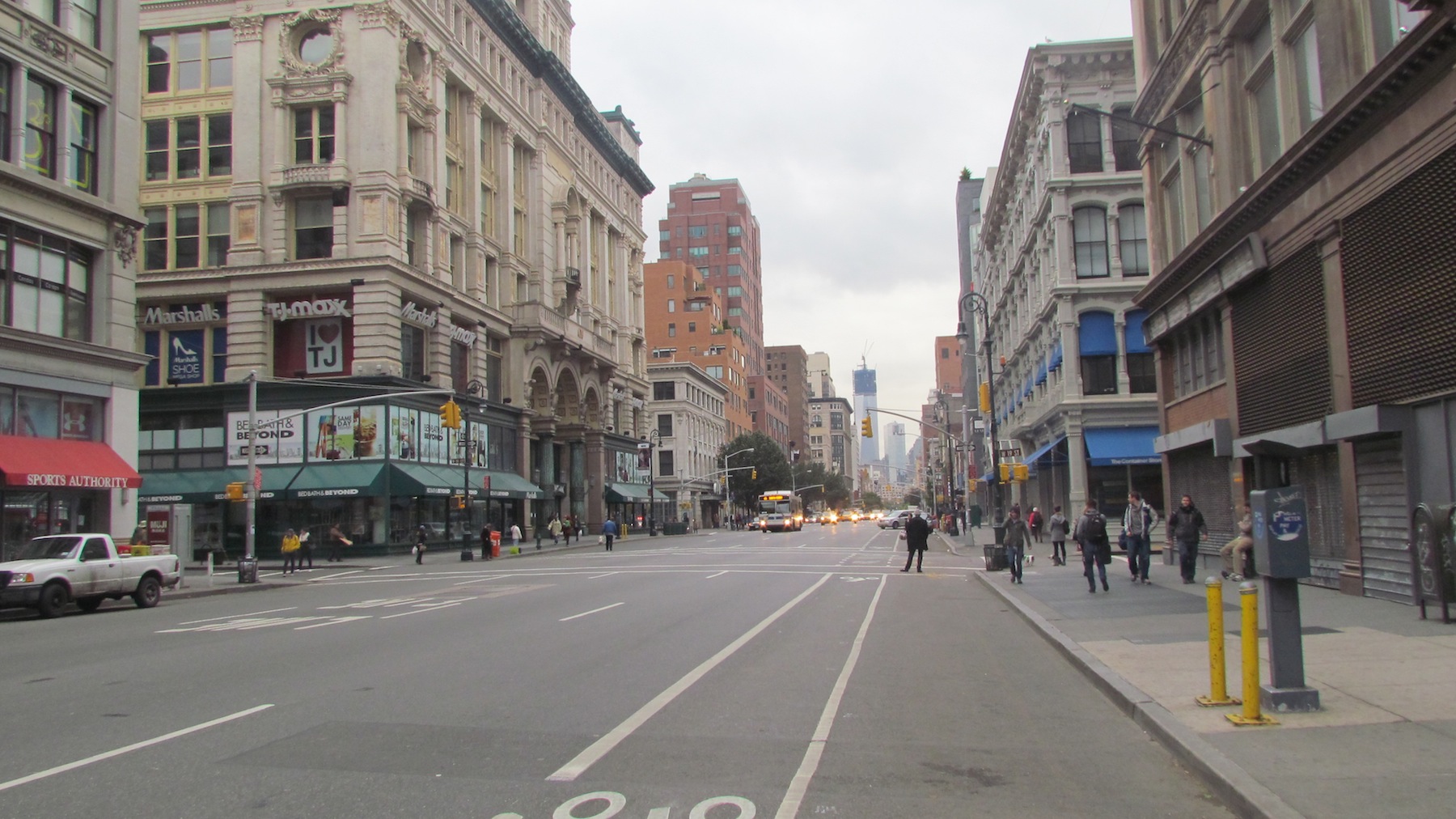
All is dark, including the traffic lights south of 25th Street


Monday morning as we took the children west to survey the damage in our now dark world, we attempted to cross 8th Avenue, but had to wait as cars raced past taking advantage of the power outage and dark traffic lights, never breaking despite the fact we were with two children.  For those cars on the cross streets waiting, hoping someone would slow down enough to let them through, it was a lesson in patience and a stark reminder of how badly people can behave given the opportunity.

One of many buildings in Chelsea near the West Side Highway

Our building still has water, it’s only now running out, other buildings are not as fortunate.  We also were fortunate enough to have a gas stove, which means we are able to heat water and even made pancakes for Emma one morning.  By the third day, Emma’s stress level had become noticeably worse.  (As had mine.) Perseveration, stimming and echolaic speech had all worsened.   I started looking into hotel rooms for us already on Monday while waiting for our phones to power up at my friend’s home, but couldn’t believe when I saw a “Budget Hotel” in midtown charging over twelve hundred dollars per night for a room.  I probably could have booked something had I thought to (and most hotels were not price gouging), but by Tuesday there were almost no rooms left and by the time we seriously began looking on Wednesday we found only one hotel with a room available, which we booked, only to learn that it had been evacuated because of the crane in Midtown that forced a number of blocks to shut down.

Richard took matters into his own hands and called my cousins who welcomed us into their beautiful home uptown.  We are grateful to have somewhere to go and relatives who were willing to take us in, people who were kind enough to open their doors and had spare bedrooms to accommodate us.  Meanwhile Nic went to his friend’s house in Brooklyn, where he is playing one endless marathon video game of who knows what with his friend.  We miss him, but are relieved to know he’s being taken care of and is happy.

I wrote the following and posted it on my Facebook page last night:  “It’s hard to capture a visual of A Tale of Two Cities: Downtown without power, Uptown life continues. North of 26th Street where there is power, lines of people wait to use an electrical plug to power up their cell phone, below 26th Street there is no power, many buildings are without water now, others will be without water soon. Guys are hawking C & D batteries on the street corners, one guy has a sign saying, “We sell CANDLES” Large flashlights are a hot commodity. And yet… just a few blocks north people are watching the news of devastation on their flat screen TVs. Two worlds divided by electrical haves and have nots.”

To be without electrical power is to literally be without power.  Those who are above 25th Street, a purely arbitrary division are able to listen to the news or not, make phone calls, take showers, fix nice meals for their families, choose to open their homes, help people if they decide to, but those south of 25th do not have these choices.  It is surreal.  Those without power who had the means and the wherewithal to book hotel rooms on Monday did so.  The decision to continue with the New York City marathon this Sunday was a stark example of the massive disconnect that has occurred in this city.  That officials were blithely holding press conferences defending this decision while people are trying desperately to locate family members they haven’t heard from who live in the southern parts of the city is  just one more example of how surreal things have gotten here in New York City.

*I am one of the people who feels it is insulting to carry on with the marathon, exacerbating the traffic jams, reducing the numbers of available hotel rooms, a symbolic thumbing of their noses at all those who have not showered, had something hot to drink or eat, are without heat, water, light or have been evacuated.  I see the people running along the streets, weaving in and out of the traffic grid lock and I can only assume, as they head south, that they will eventually head back north to a hot shower.  Yet another example of the difference a little electricity makes.

*This post was written before we lost wi-fi this morning and at the time the marathon had not been canceled.

Related articles

Awaiting the Storm

If you listen to the news, which I haven’t but Richard, in an uncharacteristic display of interest regarding the weather, has been keeping abreast of the latest news by reading updates on the NYTimes online, you already know Hurricane Sandy is heading inland and may or may not hit New York City at some unknown point…  it’s hard to say. Meanwhile, everything is shut. All the stores are closed, all public transportation has screeched to a halt, friends of ours who are in “Zone A” have had the boilers in their building shut off since yesterday evening, some others have been evacuated, and yet, other than the occasional breeze and light sprinkle, there is nothing to suggest anything is amiss.

On Saturday as Nic and I did our weekly grocery shopping run, Nic commented on the long lines. The typical four-hour window given for delivery of one’s groceries had been suspended and other than thinking it strange that so many more people were out getting groceries, it didn’t occur to me to be concerned.  It has to be said, we do not watch the news on television and my reading of the NYTimes online is topic specific.  When Nic asked why so many people were grocery shopping I said something about how it was always like this on Saturdays and then went into a lengthy explanation about typical Monday through Friday work weeks and how it made sense that Saturday was a good day for grocery shopping. By the glazed expression on my eldest child’s face, I’m pretty sure I lost him after the first 30 seconds. Looking back, the incredulous expression on the woman’s face directly behind us now makes sense and I feel a little saddened to realize it was not a look of awe at my brilliant analysis of the shopping habits of fellow New Yorkers.

Last night I explained to Emma that there was a big storm headed our way and because of it, school would be closed and that there might be heavy rain during the night, but that we were all going to be safe.  I was a bit more concerned that the changing air pressure might wake her in the night, causing her pain and upset.  When she woke this morning and came running into our room, I said, “Em, has it started raining yet?”  She said, “Rain, lightning and thunder!”

“Really?” I said, peering out into the darkness.  “I don’t hear any rain.”

“It’s raining.  No school,” Emma said, with the kind of unerring certainty that does not invite argument.   Then she pulled the bed sheets up over her head.

I asked Em if she wanted to go up on the roof to see first hand what the weather was like.  I grabbed my camera and rain gear .  “Oh honey,” Richard said as he watched me zip up my rain jacket, “you’re going to document the storm,” he wiggled his fingers to make quotation marks.  “I love that.”

“It hasn’t hit us yet,” I told him.  “It might.  Later.  You never know.  They’re saying 95 mile per hour winds and 10 foot waves.  Maybe I’ll take the kids to the river later,” I announced.

“I love that you’re going out to record the weather and not hunkering down into fear-bomb-shelter mode,” he looked at me with what I’m pretty sure can only be described as pure, unadulterated, adoration and admiration. (I am convinced I’m reading his look correctly and NOT the way I completely misinterpreted the look of the woman in the grocery store.  Of course, I have been wrong before…)

Em on the roof just now in appropriate, pre-Sandy, attire

The Impact of Acceptance and Non-Acceptance

My friend Steve Summers wrote this a few days ago.  I asked Steve if I could repost his words here and he gave me his permission.

“Today I feel tired. —

Tired of being rejected.
Tired of being ignored.
Tired of being excluded.
Tired of being treated like an outcast.
Tired of being treated like a misfit.
Tired of feeling like others look down on me for being different.
Tired of being expected to try and act ‘normal’ to have a ‘normal’ life. — I am not ‘normal.’ I am Autistic.
Tired of people who think that just trying harder will make Autistic people ‘more normal.’ — Would you tell a blind person to try harder to see? Would you tell a paraplegic to try harder to walk? Would you tell a colorblind person to try harder to see the colors that they can’t see?
Tired of people who don’t understand Autism and who don’t make any effort to learn about Autism so that they can cure their own ignorance.
Tired of people who refuse to accept Autistic people just as they are.
Tired of people who presume incompetence.
Tired of neuro-bigotry.
Tired of the silence of others. Silence is *not* support.
 
Want to help us? —
Listen to Autistic people.
Make an effort to learn about Autism.
Educate yourself about what we go through each and every day.
Learn about how negative attitudes make us feel.
Practice Autism Acceptance.
Accept that we are different, not less.
Accept that we are different, but *not* defective. Don’t try to make us into a poor copy of your idea of ‘normal.’
Accept that we are okay to be ourselves — just as we are.
Accept that we are  humans with feelings just like everyone else.
Accept that Autistic rights are human rights.
Presume our competence.
Don’t avoid us, include us.
Most of us have social anxiety. Please be kind and reassuring to us.
Please reach out to us. We won’t often make the first move after suffering from a lifetime of rejection, exclusion, and being bullied.
Please practice inclusion.
 
I am Autistic and I want to be valued and accepted for simply being me. ~ Steve Summers”

Steve is my friend.  I am so glad I know him.  I value our friendship.  I enjoy our conversations.

Yesterday I wrote about acceptance, specifically acceptance of one’s Autistic child by a parent.   Parents who do not accept their “child’s autism” often feel criticized and bristle at the perceived implication that they do not “love” their child, “correctly”, “in the right way” or “enough”.   I know how completely uninterested I was in the idea of acceptance when I was engaged in an all out battle with Emma’s autism, intent on extricating her from its gnarled grasp.  (This last sentence was very much in keeping with how I thought of autism at the time.)  What I didn’t consider, what I didn’t know to consider, was Steve and every single person who is autistic who feels the way Steve does.

My inability to accept my daughter’s autism impacts her.  Just as I cannot extricate the Autistic parts of her, I cannot pluck out the “autism” from how she sees herself.  My non-acceptance, as well intended, as well-meaning as it was, was still felt by her as a criticism of her.  But I didn’t know that at the time.

I think we, human beings, forget how pervasive and destructive our ideas about others are.  If we are in the majority, our influence, the reach of our opinions are even more destructive.  We say, oh but I love her, I just hate the way she walks, talks, the sound of her voice, the color of her skin, eyes, hair.  I love her, but I hate the way her mind works, how long it takes her to get dressed, the way she eats…  No really, I DO love her.  And we do.  We feel tremendous love.  I loved my daughter all those years I was fighting her autism.  I did.  I absolutely did.  I fought her autism BECAUSE I loved her so much.  But then I met people like Steve and Julia and E. and Kassiane and Bridget and Savannah and Laura N. and Sam and Amy and Gareeth and I read what it was like to be brought up by parents who didn’t accept their “autism” and how it felt.   And I began to understand.  I was able to hear what they were saying and I began to see the connection.

Thank you Steve for allowing me to print your words here. Thank you for writing this.  Thank you for helping me parent my daughter differently, so that in ten, fifteen, twenty years from now maybe, just maybe, she will not feel quite so tired.

Emma – 2004

  Related articles
Autism, Acceptance And Love

My friend Shannon Des Roches Rosa posted a great piece regarding understanding acceptance on Thinking Person’s Guide to Autism the other day. I wanted to write a comment, but had to think about what she’d written and then wrote a long, epic length, rambling comment, so lengthy that when I went to submit it I was informed I’d “timed out” and lost the whole thing.  But it got me thinking…

Whenever I think of acceptance the “serenity prayer” comes to mind – “…grant me the serenity to accept the things I cannot change; courage to change the things I can; and wisdom to know the difference.”  This prayer was what I repeated to myself each and every day for years after we were given Emma’s diagnosis.  “Courage to change the things I can” was what I clung to as I doggedly pursued treatment after unproven treatment.  One of the single biggest stumbling blocks for me in accepting my daughter’s “autism” (I write it this way, because this was how I thought of it, as something separate from her) was that I believed it was within my power to change her autism.  I thought I could remove it.   As long as I continued to hold onto that belief, I couldn’t accept her autism or the idea of her as an Autistic individual, she was Emma who was diagnosed with autism and therefore, my thinking went, could also be diagnosed withOUT autism.  These two points were key in my thinking.  Anyone who suggested I not think of my daughter and autism in this way were disregarded.

I no longer think in these terms.  But I read the often heated exchanges between parents who accept autism and their Autistic children, and those who maintain they accept their child, but do not accept autism.   Interchange the word “accept” for “love” and things start getting really volatile.  None of us welcome anyone who suggests we do not love our children.  And truthfully, this is where, I think, the disconnect happens.  I think this is less about love and more about having a different understanding of what Autism is.  If autism is seen as completely negative, (something Autism Speaks has perfected to a science by using words such as, affliction, epidemic, crisis and tragedy) this horrible thing that causes my child to writhe in agony, an “affliction” with no redeeming qualities, coupled with the belief that autism is something that can be removed, in fact has been removed by many parents who have gone on to write memoirs about their triumphant courage to change the things they can, then what parent wouldn’t welcome their child relief from that?

But if Autism is seen as something complex, woven into the very fabric of a human’s being with a wide range of attributes as well as challenges, all of this becomes far more complicated.  It was this idea, so beautifully described in eloquent detail by Julia Bascom in her blog Just Stimming that made me pause.  Her description of the challenges and joys of being Autistic were what made me stop and reconsider everything I thought I knew and believed.  As long as we hold to the view that our child is locked inside a seemingly impenetrable shell called “autism” while listening to that seductive, whispering voice assuring us that we can break through that shell if we just try x, y, and z we will struggle mightily with the idea of acceptance.

Emma – 2002

A Typed Conversation With My Daughter

This is the typed “conversation” I had with Emma last night inspired by the wonderful comments left here yesterday.  This was done with very little talking.  Emma’s replies are in italics.

“Hi Emma.  I know one of your favorite songs is “Beat it”.  What other songs do you like?

Emma likes Fireworks.  Emma likes to go swimming.

Hey!  Did you go swimming today?

Yes, it cold go swimming.

Emma, was the water cold or was the air outside cold or both?

 Both cold outside.

It is cold outside now because it is fall.  I like the fall when the air gets colder.  Do you like the fall too?

 Yes, I do like the fall too.

What do you want to do this weekend?

 I want to have a weekend with Jackie at the Vanderbilt wiyemseeay.  And go swimming.”

This was HUGE for Emma and me.  Rereading it now I’m kicking myself that I didn’t ask better questions and follow her lead more instead of directing the conversation.  For example I wish I’d spent more time talking to her about swimming instead of going off about the seasons, which were of little if any interest to her.  I could have asked her a great many questions about the pool and swimming and the water temperature, but didn’t.  I was so surprised when she wrote, “Yes, it cold go swimming.”  I literally laughed out loud when she wrote that, because this is just huge for her to introduce a new thought, to volunteer new information when typing together.  Excitement doesn’t really sum up what I felt.  I was ecstatic!

Emma kept trying to read my typed words out loud, but I reminded her to read silently.  I made a huge number of mistakes while having this conversation with her.  I corrected her spelling a couple of times, and wished I hadn’t.  I never know whether it’s best to let her spell things and go over the spelling later, separately or whether its better to correct it right away or better to leave it alone.  I wanted her to feel encouraged, supported and cheered on, not criticized.  So that’s something I am still questioning.  I also get so excited when she says anything off the grid, I get overwhelmed and can’t think what to say other than – “OMG you just introduced a new topic and I’m so excited!!”  Maybe I can learn to relax a little and go with it a bit more.  I am also aware that my excitement is an example of my NOT assuming competence or rather it is me feeling euphoric that Em shows her vast intelligence in a way that my NT brain can grasp.  I really want to learn how to move away from that limited thinking on my part.

When Emma was diagnosed with autism I remember that first day when all the therapists came to our home to work with her.  I’d done my homework, read all the materials the agency provided me with and then some.  Yet, I remember how everything was “dumbed down”.  Things that I knew she knew were treated as though she didn’t know them.  Really simple things were suddenly a huge deal if she indicated she knew them.  I remember vividly my confusion.  I began to doubt everything I thought I knew or assumed about Emma.  I completely capitulated to some set idea about my daughter given by a group of people who had never met her but made assumptions based on a single word – Autistic.

I’m old enough and have enough humility to admit I don’t know what I’m doing a great deal of the time.  This is not a popular statement in our culture of bullshit reigning supreme, even if it’s all a lie, even if it means people who know almost nothing about a given topic, but who claim “expertise” are suddenly seen as having something sensible to say.  The art of bullshit has become a well honed skill by about the age of ten these days.  It’s amazing how quickly children learn to adopt it.  Add a little chutzpah and you’ve got a kid who will go far in this world of ours without being particularly knowledgable in anything.

However, the art of bullshit requires a couple of things –  a massive dose of ego and an ability to lie.  My daughter Emma has neither of these.  Still, I am feeling confident she will do well in this crazy world of ours.

The ongoing construction of the Freedom Tower

Reading and Reading Comprehension

Emma’s teacher and I have been brainstorming new ways to increase Emma’s reading comprehension.  We have tried the standard reading comprehension questions, which, as my friend Ibby pointed out, are typically filled with inconsistencies and problems.  We’ve tried the more standard reading comprehension questions such as a story about a boy named Peter who takes a taxi to the airport.  He gets on an airplane, buckles his seat belt and the plane takes off.  The questions are then, “Who took a taxi?” The answer, obviously is Peter took a taxi.  But the second question, “Where was he going?” is tougher to answer because we aren’t given the destination other than he took a taxi to the airplane and that isn’t actually accurate as he took the taxi to the airport, but the airport isn’t part of the story.  It tells us he took a taxi and then got onto the airplane where he buckled his seat belt, so Emma answered, “Going to visit Granma in Aspen!”  And while this isn’t the answer the creators of the questions were presumably looking for, it demonstrates that Emma certainly understands what the story is about and she is adding her own personal experience to the gaping holes the story provides.  In addition, the story has been dumbed down so completely, if we are “presuming competence” then Emma must be going out of her mind with boredom.

So this is the question I come up against almost constantly – how do we make the material interesting and engaging, but not so difficult it becomes frustrating.  How do we set Emma up to succeed and not fail without boring her?  How do we deal with her resistance to reading and writing?  I’ve made some headway by trying to do some playacting and using some of her favorite songs, but reading itself remains difficult for Em and she certainly doesn’t enjoy it.  Maybe I am making it too complicated. Maybe I’m over-thinking the whole thing.  Maybe it’s better to just present reading material and have her read it silently.  Then type questions that she types the answers to.  Maybe having her read aloud is causing problems.

What I am seeing over and over is that when she has trouble with a text we make the text easier, but I don’t believe that’s the answer.  I’m not sure making it “simpler” is better.  My biggest challenge with all of this is that this is not my area of expertise and I have no idea how to proceed.  Emma’s teacher continues to try different things, but we haven’t found anything that seems to captivate, motivate or particularly interest her.  I have to think about this more.  I’ve printed out some of her favorite song lyrics, but there were too many words she couldn’t read and so much slang, I quickly abandoned the idea.  I need to find reading material that isn’t so easy it’s boring and not so difficult it makes her frustrated.  Looking back  over the past year, I can see how well she was doing and how so much of that progress has stopped.  I need to revisit those earlier concepts and see if I can find material that will pick up where we left off.

Lots of Questions and The Journey Continues

I haven’t been sleeping well.  I’m having nightmares.  I’m waking at 2:00 and 3:00 AM, unable to go back to sleep.  I am worrying.  I feel I shouldn’t be.  But I am.  The lack of sleep doesn’t help my worrying, it exacerbates it.  There are a couple of things going on that are causing this.  I am not managing the work/writing balance.  I need to work.  I don’t have a choice.  I also like what I do. So there’s that.  And I need to figure out how to balance work better.

Then there’s this…  my writing, this blog and autism.  Specifically my growing discomfort in writing about Emma, without Emma.  More and more I try to keep my writing about my own issues and how they weigh on my responses and reactions, but even so, I end up writing about her.  I asked Emma the other day, “Hey Em.  Does it bother you that I write about you?”  “Nyeah,” she said, which is her way of saying No.  It sounds like knee-yeah when she says it and she scrunches her face up and smiles while shaking her head from side to side.  “Okay, but do you know that lots and lots of people read the blog every day?  Not just family or people we know,” I continued.  She looked at me, nodded her head up and down and grinned.  “Do you care that I put photos of you on it?”  “Nyeah,” she said again.

I asked Nic what his feelings were.  Without hesitation he said he wasn’t comfortable being written about or having his photo on the blog or Facebook or anywhere else.  So Em tells me she doesn’t care or mind, but Nic certainly does and I can’t get rid of my anxiety.  I didn’t do what so many bloggers have done.  I never made my family anonymous while keeping our whereabouts a mystery.  It never occurred to me to do that.  I started this blog as a way of documenting Emma’s progress.  That original concept has changed over the years.  I don’t know how to keep writing about “our journey” without “all of us” writing it.  Nic has no interest and whenever I have asked Emma if she’d like to write something, she’s declined.  The truth is the blog has become “my journey”.  I have moved away from feeling sad about my family and am now in a place of contentment.  I feel tremendously lucky.  I feel incredibly grateful for my two children and my husband and the life we have together.  I no longer delineate one child from the other.  I don’t see one as one thing and the other as something else.

We often talk about our children as though they grow up in a vacuum.  We express shock when children bully each other and make schools accountable and yet our children are being raised in a culture where adults bully all the time.  We are a culture of bullies.  Of course bullying is a problem in schools, how could it not be?  Look at the adults they see, hear and watch on TV and in the movies.  They are surrounded by bullies, even bullied by those adults and yet we are horrified and shake our heads and wonder how this could happen?  How could it NOT happen?  Parents have strong opinions about race, sexuality and difference and their children often adopt similar beliefs.  We want tolerance?  We must begin with ourselves.  We want to stop bullying?  We must look to our own behaviors first.

So I ask myself:  Am I contributing to a culture that thrives on putting others down?  Do I do and/or say things to make people feel badly about themselves?  Do I gossip?  Am I judgmental?  Do I engage in disrespectful conversations about those I do not agree with?  Am I more interested in making my point than hearing another’s?  What sort of person do I model for my children?  I believe in tolerance, embracing difference, being of service, acceptance, but do my actions mimic my beliefs?  Do I believe that what I believe is the “truth”?  Do I consider those who disagree as inferior?  I know I am guilty of all these things at least on occasion and a few more than occasionally.

I have an ideal for myself, it is a kind of end goal, the person I strive to be, but know I will never achieve.  As long as I keep traveling toward my ideal I will have lived a good life, or, at the very least, a better life than if I don’t.  I know I won’t do any of this perfectly, but I can keep trying.  I can keep holding myself accountable.  When I make mistakes I can admit them, make amends and do all that I can to try and make the necessary changes so I won’t repeat myself.  I don’t know what the answer is to my questions and discomfort.  But I’ll keep looking, asking and being aware of how I feel.  Once I’ve figured it out, who knows? But until then I’ll keep writing about it.  After all, this blog is less Emma’s Hope Book and more “A Journey.”

New York City – Built as a Courthouse in 1874-1877, later used as a Public Library this clock tower remains standing 

IS Autism an Epidemic?

When Emma was diagnosed as Autistic, we read that autism was an “epidemic”.   I remember the figures – 1 in 166.  In 1980 the rate was 1 in 10,000 according to others it was more like 1 in 2,500.  Andrew Wakefield had published his “study” of 12 subjects in The Lancet, regarding his belief that vaccines were linked to autism, six years before.  The Lancet’s retraction of the Wakefield study did not occur until 2010, and the fallout was, at the time of Emma’s diagnosis, being widely felt.  What I didn’t know, until much later, was that Wakefield had applied for a patent just nine months prior to the publication of his, now discredited, study for a new MMR vaccine that he said was safer.  Wakefield, it seems, stood to make an enormous amount of money.  Yet I and many parents like me wondered if there was truth to Wakefield’s “findings”.  Despite subsequent studies showing that his findings were false, people wondered.  After all, autism was an “epidemic” so what was causing the epidemic?  It seemed vaccines provided an answer.

Except, what if there was no epidemic?  What if the word epidemic was being used by organizations intent on raising money?  These were the questions I began to ask.  If autism WASN’T an epidemic, then where were all those Autistic children when I was a kid?  And where were they now?  Why didn’t I know dozens and dozens of Autistic people?  They should be everywhere I concluded and since I didn’t know of any personally, I decided to look for them.  So began my search for Autistic people.  (I know my wording sounds archaic, but I actually meant for it to, because it illustrates my thinking not so long ago.)  I periodically googled phrases like – “where are all the autistic adults?” or “Autistic adults” or “Autistic adults in the work place” or anything else I could think of that might lead me to them.  I found very few.  I came upon Temple Grandin and Donna Williams, whose books I immediately read, there were a handful of others, but the shelves of the “Special Needs” section of the bookstores I frequented were filled with increasing numbers of memoirs written by parents, not Autistic people.  When more and more people began blogging, I started googling “Autistic blogs” and came up with not a one.  For years I would periodically look and when my searches came up empty, I concluded – It must be an epidemic.  It seemed a logical conclusion.  And eventually having concluded that autism was in fact an “epidemic” I stopped looking for Autistic adults.

Then two things happened within a six-week period.  A follower of this blog sent me a link to Julia Bascom’s blog – Just Stimming and another parent encouraged me to read the anthropologist and father of an Autistic child, Roy Richard Grinker’s Unstrange Minds:  Remapping the World of Autism who suggests autism is not an epidemic and the current rates are a more accurate reading of what has always existed.  It was a one-two punch; I began to question everything I thought I knew.  From Julia’s blog I began reading and reaching out to Autistic bloggers.  Through my, at first tentative, communications I began to find many, many more.  It was literally like discovering an alternate reality, and as mind-blowing as anything I’ve ever experienced.  The more I looked, the more I found.  Within eight months I went from not personally knowing any Autistic adults to knowing hundreds of people who are my age and older.

One friend of mine and I were discussing all of this the other day.  He pointed out that many people, like him were beaten, often brutally by their parents to make them stop their undesirable behaviors that might make them “stick out” or in any way noticeable.  He said, “People like me would hide our Autistic traits as best we could.  We were still considered the weird kids and the outcasts, but we were not called Autistic.”  He reminded me that he and others like him were trying their best to remain as “inconspicuous as possible because the only signs we had were the “Kick Me” signs that would be put on us by bullies.”  He then went on to say, “We had to do our best to be invisible and/or find a way to blend in or hide to stop the beatings by family and class-mates.”

As I think about all of this, I have more questions.  What about the autistic girls who were like my daughter?  Would my daughter, had she been born in the 50’s, have learned to “pass”?  And if so, what does that say about our school system, because Emma is in no way near grade level?  Would she have been deemed learning disabled, but taught how to “behave appropriately”?  Would she have, through punishment, been able to conform?  What about her language?  Would she have just been thought a “quiet” child?  The little girl who, if she’d been punished enough, learned to sit silently in the corner?  At what cost would this have occurred?  Or would we have been told to institutionalize her for the “good of the family”?  Would we have been advised to save our son and ourselves from being “dragged down”?  Has our thinking changed so much?

I ask these questions honestly.  It took me a very long time to find all those Autistic adults I’d been looking for since my daughter was diagnosed in 2004.  When I was still looking, I never, not for a second, thought in finding, I would also find hope.   It never occurred to me that I would form relationships that are, not only important to me, but relationships I cannot imagine being without.  Friendships that are vitally important to me, people I love and look forward to seeing and spending time with.  People who would patiently explain to me what it was like growing up in an era that did not “recognize” autism.  People who try to help me understand what it is like living in a society that does not want to see or hear them.  People who do not enjoy the basic rights I enjoy and do not even think about.  People who are condemned, abused and misunderstood.  And yet, that is exactly what happened.

The Insidiousness of Prejudice

A year ago, I would have gone to a parent/teacher conference and not thought twice about my daughter being in the same room while we spoke about her.  Six months ago, I knew enough to know that she understood what was being said even if she didn’t indicate that she did and would move to another room or arrange for child care during a conference so she would not be present.

This morning I received a passionate comment from someone who was responding to another comment about parent/teacher conferences.   You can see the whole comment by going to yesterday’s post, but she ended with this:

“These things can ONLY happen in context of a culture of acceptance of the exclusion of Autistic people from discussions about our own lives, and of acceptance of the ‘need’ to speak of us in negative inaccurate terms because that supposedly fulfills some ‘need’ that will bring us help and support. It doesn’t EVER bring us the support we actually need because negative inaccurate information ‘about’ us means any support is founded in untruth and therefore is not help and support of US as the ACTUAL human beings we are.

PLEASE, if you truly want to help Autistic people, stand up for our right to be part of the conversation about our own lives from a VERY young age. Advocating FOR us is GREAT, but ONLY if the purpose of that is to support us in our SELF-advocacy… and to put pressure on professionals to accept OUR voices and OUR choices as the determining forces in OUR lives.”

My initial reaction was a defensive one.  My first thought was – but children are never present at parent/teacher conferences.  And then I realized that isn’t true.  My son Nic is asked to attend our parent/teacher conferences and has been required to attend them since he entered middle school (the fifth grade, the age Emma is now).  My second thought was, but what if one of her teachers or an aide said something awful about Emma in front of her, what if they spoke of her in language that would be hurtful?  I can’t control how others speak.  But then I realized that were this to happen in my son’s presence I would not hesitate in saying something in front of him to that person.  I would correct them and tell them why it was unacceptable and he would hear this and understand that this person was wrong in speaking this way about him.  Then I thought, but wait, we might need to discuss topics that might make her sad, things about self-injurious behaviors or how she ran out into the hallway and it wouldn’t be appropriate for her to hear these kinds of conversations, but again I thought of my son and realized how we would include him in the conversation.  As I went through the various reasons why I couldn’t do what the commenter suggested, I saw quickly just how insidious the ingrained prejudices regarding autism are.  I saw how I still have so much more to learn.  And so I continue to and I tweak my thinking and my behavior and then someone else tells me something and I have to think about their words and then I have to tweak my behavior some more.

Directly after reading this thought-provoking comment (I am so grateful to the writer for having sent it) I received an email from someone I care deeply about.  I do not have explicit permission to write about the specifics so I will not, but it was about where these kinds of ingrained beliefs can lead.  It was about abuse.  It was a story I am becoming more and more familiar with.  It was about someone I know.  It was about a defenseless, nonverbal child.  It was about more than one event.  It was about many, many abuses occurring over and over by many, many different people.  My horror is never lessened no matter how many times I hear of this.  In fact my horror increases.  What I used to believe, what I used to console myself with, that these were unusual, isolated instances of horrible people behaving in heinous way, is not something I can cling to any more.  These stories are everywhere and I am hearing them all the time now.  I cannot console myself that they are unusual.  I can no longer wrap myself in a cocoon of optimistic assurances that this hasn’t happened and will never happen to my daughter, because even if we are lucky enough that they do not happen to our specific child, they are occurring constantly to other people’s children.  How is that any better?  How is that any different?

The abuse of people who are considered “less than” and “incompetent”.  The physical, sexual and emotional abuse that Autistic people and children are having to endure at the hands of people ALL THE TIME that they come into contact with, at school, their care givers, the people they are suppose to be able to trust, their relatives, neighbors, the list goes on and on.  This is going on around us and to those we love and care about.  This is about people who are hurting, not just our children, but people all over the world who are deemed “less than”.  This is so much bigger than “our children”.

Em’s “self-portrait” – 2011

Henry Makes Waves & Everyone’s An “Expert”

Yesterday the interview (published on Huffington Post, click ‘here‘) with Henry, the 13-year old non-speaking Autistic boy, son, brother, friend, student and all around amazing kid who has been denied enrollment to the public school across the street from his house went viral.  At the moment it has 152 comments and over 1,000 people have “liked” it, with almost 400 people sharing it on Facebook.  The comments began pouring in yesterday afternoon.  A few were particularly troubling for a couple of reasons.  The first being that a completely uninformed person(s) made broad sweeping generalizations about autism while bolstering their opinions with statements like this:  “and then there are the non verbal Autistic who need constant care.  One can’t tell if they understand language, but they can’t speak for some reason. I do know this as a fact from the Autistic that I’ve worked with in my youth.”  Another commenter suggested, “Maybe he should consider speaking …..If he wants to go to that school so badly…”  And yet another said something about how Autistic kids “drag” the rest of the students down.  All of these comments were uninformed, but the thing that was actually frightening  was when another commenter then referred to the first commenter as an “expert”.

So I lost it.  Completely.  Utterly.  Lost.  It.  Heart racing, hands shaking, head pounding, throat constricted, feeling nauseous, lost it…  Which is how many who are marginalized and live with prejudice, feel all the time.  That feeling of terror that their lives are threatened and in real danger as a result of incredible ignorance.  I should have walked away.  I should have done some breathing exercises.  I should have meditated.  But I didn’t.  Instead I reached out with words and hit back.  I used words to hurt.  I used words to wound.  I didn’t ask questions.  I didn’t wait for more information.  And here’s the thing, I don’t know that I was wrong to do so.  I feel ambivalent.  I feel I should regret my actions more than I do.

I responded with this: “…the degree to which you misunderstand Autism is actually more than frightening, it is terrifying. That you also worked with this population says more about the tragic state of the place you worked and their hiring policies, not to mention their training, which appears to be none, than your profound ignorance.”  To which he responded, “I wasn’t hired to do anything. The camp/school had normal and special kids and they had that one Autistic boy. I was nine. I wasn’t hired.”

People in the comment thread were describing a man as an “expert” who claimed knowledge of autism because he met an Autistic boy when he was nine years old.  At camp.  Nine.  And I thought of Joe Scarborough and his comment about the Aurora shooter.  I thought of Simon Baron-Cohen who actually is something of an “expert” and yet I completely disagree with his conclusions.  I thought of all the doctors, researchers, neurologists and “autism specialists” I’ve met, spoken with and consulted over the years, many of whom I do not agree with and some whom I do.  But the point is, so much of this is up for grabs.  There is a great deal of information out there that all of us have access to, but how do we know what is correct?  We’ve got doctors drawing conclusions that seem illogical and even irresponsible, while others whom we might agree with.  There are some very smart people out there working hard, publishing their work, making informed opinions, but how do we know who to believe?

I don’t.  What I do know is that anyone I read or hear I try (usually) to find out more about.  Who is this person?  What are their credentials?  What is their hands on experience?  And I get a second opinion from those who are autistic.  There are a number of people, all Autistic whom I particularly respect (this is by no means a comprehensive list and in no particular order, just thinking off the top of my head; please feel free to share anyone else I may have forgotten) Judy Endow, Lynne Soraya, Emily Willingham, Elizabeth J. Grace and Michelle Dawson.

A commenter on this blog wrote a hilarious comment about “Dr. Mom”, “Nurse Mom” and “Psych Mom”.  It was not only very funny, it was relevant to all of this. Who do we believe?  Hopefully not the guy who states they “know this for a fact” as compelling as the man might be for some.  And I’ll just add this; don’t believe me either.  I’m a mom.  I’m a writer.  I’m an artist.  I have opinions.  Sometimes I have really strong opinions, opinions that I think are right.  But I also know that over the years as I learn more, I no longer agree with many of the opinions I held a year ago, two years ago, three years ago.  My opinions change.  All I know is that I want to keep learning.  I want and try to keep my mind open.  Sometimes it’s really hard.  Sometimes I feel tremendous rage.  I don’t learn when I’m that angry.  But hopefully I calm down enough that I can go back to learning.

Let the learning continue!

Standing with Henry, Diets and Where Do You Go to Get Advice?

Please read, “like”, share and tweet my latest interview with 13-year-old Henry, published yesterday on Huffington Post.  For all you tweeters, I am trying to get Henry on Katie Couric’s show.  If you’ll click on the link above to read the interview, tweet the piece out and be sure to include @KatieCouric in your tweet.  This is what I’ve tweeted –  “@KatieCouric Henry’s fight for inclusion @arianezurcher http://t.co/vhSs85v2  Katie – Henry’s story would be terrific for your show!”  If enough people tweet her, she may just take notice.  Let’s stand with Henry!

Yesterday’s topic brought forth a wonderful discussion regarding “The Diet” whether it is a gluten-free/casein-free diet or a variation of it.  I realized in reading the comments that my post may have sounded critical of the diet and even critical of those who have tried it with positive results.  This was not my intention and so I want to be clear about that.  I have a lot of feelings about having put Emma through so much trauma as a result of putting her on the (in our case failed) diet. The first time we tried it, when she was still just two years old, did not seem to have the same negative impact that it did just a year ago when I took all her favorite foods away and implemented an even more restrictive diet under the guidance of a well-regarded naturopath.  This is something Emma still talks about, something she is still hyper-worried I might suddenly do again.  I should have placed more emphasis on this.  So to all who have experienced the joy of finding something that helped you or your child, I apologize.  I did not in any way mean to illegitimize what you’ve found to be so very helpful or to suggest the diet is quackery.

What is clear from reading all the links people thoughtfully provided and the many personal stories, a GFCF diet and its various variations, has and does help many children and adults, regardless of their neurology.  An important point, made several times in the terrific comments, was that because of the hyper-sensitivities experienced by so many Autistic people, what might be experienced as a mild intestinal discomfort in a non-Autistic person could be felt intensely and painfully by someone with a different neurology.   Hence a food “intolerance” not even an allergy could cause great distress.

In the post I hypothetically asked, were I able to do it all over again would I have put Emma on the diet?  I wrote, “…I would have sought out a reputable pediatric neurologist who could have given Emma the blood work necessary to tell us whether the diet was something she would benefit from.  I would have looked for scientific evidence giving me reason to put her on such a diet and without that evidence I would not have put her through it.”  Except, I realized last night as I thought more about this, we DID do these things.  We didn’t have a pediatric neurologist, but we did take her to a highly regarded pediatric allergist, did blood work and it showed she was not allergic to anything, but he suggested she may have food intolerances that might be contributing to her constipation issues.  It was this doctor who suggested we try the GFCF diet to see if it might help.

But as one commenter pointed out, in her country there isn’t anyone who will perform such tests.  She wrote, “If I had to do it all over again? I would have done it sooner to alleviate my daughter’s suffering.  For the first few years it was just dairy I removed from the diet.  I thought it too hard to cook gluten-free as well. When I finally adjusted the diet to gluten and dairy free at the age of 4 my daughter ‘s chronic painful distressing diarrhea ceased..”  In fact both her children have responded well to having their diet modified.   Hers is but one example of many who have benefited from implementing such a diet.

To another commenters point, even if they had been able to find such a doctor, their insurance would not cover such tests and they wouldn’t have been able to afford them.   For people like these, who either cannot afford to have such tests run or who cannot find a doctor to even perform these tests, what is the alternative?  What can those people do, other than read and learn all they can while hoping their decision helps themselves or their child.  As any of you know who read the various links to the many articles I posted yesterday on the diet, those articles are NOT all in agreement.  Some state that the diet has shown no positive change, while others suggest that in some cases the diet has helped.  So what is a person to do?

Which brings me to another terrific comment, in which she asked, “…maybe we should really think, do we have proper medical care?  Do we have good doctors? Are we listening to them? Are we skipping the doc and practicing our own medicine? Why are we not trusting our doctors?” By the way this same commenter left another longer and hilarious comment on yesterday’s post that is too long to reprint here, but is really relevant to not just this topic, but ALL topics related to parenting, who do we go to for advise, where do we get our information and why do so many of us no longer trust the medical professionals advising us and instead listen to other parents who are often not doctors or even have any medical training, but have found something that helps or doesn’t help them or their child?

I know it isn’t just me who has come to doubt almost everything I read about Autism.  I know a great many people who feel as I do –  we are almost constantly skeptical. And while some skepticism is a good thing, I don’t know that my past radical approach has proven to be so beneficial in the long run.  These days when I have questions regarding Autism, but particularly related to my daughter, there are a couple of things I do.

1)  I seek advice from a number of Autistics I know, am friends with and trust.  I ask them for both their personal experience and for any research they know of that might help me.

2) If it’s a medical issue related to autism and Emma I run it by my brother who is a bio-chemist and spent years working for a pharmaceutical company developing drug treatments and whose wife, also a bio-chemist who now runs a non-profit trying to make vaccines available to children in third world countries.

3) I get a second opinion either by getting referrals to researchers or people (preferably Autistic) in the field or I reach out to various neurologists I’ve met to get their views.

4) I read whatever I can find, sometimes sending particularly dense articles to my brother and/or my Autistic friends who are involved in whatever field of study it is.

5) Discuss with my husband, foisting said articles on him and try to hash out what we think and what we should do.  If we cannot agree, revisit steps 1, 2, 3 & 4.

I have no answers.

Emma – Summer 2004

Another Topic of Controversy… No I am NOT Trying to Find Them, They Are Everywhere

Ever feel compelled to write about something that you’d just as soon not talk about?  I’m feeling that way about today’s post for a whole host of reasons which I’ll discuss.  But before I do, let me just say,  this is another one of those topics people feel strongly about.  I’m going to launch in anyway, because I’m either a glutton for punishment or I just can’t help myself or maybe, just maybe, this will strike a chord for others who may find it helpful, but please do remember I am not pretending to be an expert about any of this.  I am going to relate my story.  If it resonates with anyone else, great and if it doesn’t that’s fine too, but it is one of those topics that needs to be discussed.  So let’s do that.

THE DIET.

The gluten-free, casein-free diet was one of the first things I read about after receiving Emma’s diagnosis.  I have to add that when I read about it I had enormous misgivings that had nothing to do with Autism or my daughter.  You see, from the age of fifteen until my mid-thirties I had an eating disorder.  I compulsively over-ate, I sought comfort and solace in food, but I was also morbidly afraid of gaining weight so I would eat enormous amounts and then taught myself to vomit.  Somewhere along the way I became anorexic too and over the next two plus decades yo-yoed between my all time lowest weight of just under 110 pounds to over 160 pounds.  Food and my weight were nothing short of an obsession.  In truth, I was an addict.  For those of you who recognize the addiction analogy with food I don’t need to say more, but for those of you new to this idea, I’ll just say this, food was as addictive to me as heroin is to a junky, the only difference being I can’t ever just stop eating.  I have to “play in the pool of my addiction” as my fabulous husband likes to say.

I’ve written about all of this ‘here‘ ‘here‘ and again ‘here‘ for those of you interested in all the gritty details.

In my mid-thirties I found help from other food addicts who were no longer active in their addiction.  I was able to form a whole support team who held my hand, talked me off the ledge, who became my allies and eventually I was able to stop the cycle of binging, puking and self-hatred that went along with those behaviors.  By the time I gave birth to Emma I had more than five years of freedom from my food obsessions. (Which at the time seemed like a VERY long time!)  I had my wonderful support group in place and a road map of tools and behaviors to help guide me.  So when I began reading about “the GF/CF diet” and how critical it was to implement should Emma be one of those kids who responded to it, I had a lot of “feelings” about it.  There was no question whether or not I would put her on it, but I also knew I had to be careful because of my history and what it would inevitable kick up for me.  So I called in my supports, made sure I kept honest, made sure my “team” of recovered addicts knew what I was about to embark on and took a deep breath before plunging into that dark water, which I hoped might help my daughter.

I won’t describe in great detail what happened as I’ve written about the diet in detail, ‘here‘, ‘here‘, ‘here‘ and ‘here‘.  You can also go to the right hand side bar on this blog, type “diet” into the search box and you’ll be taken to everything I’ve written on the topic over the years.  The short version of all of this is – we saw little change.  Emma’s constipation was unaffected, there may have been a slight increase in eye contact, but not enough to warrant the trauma the diet was causing Emma, who continued to drop weight at a frightening rate.  I wrote about the trauma of the diet and it’s aftermath ‘here‘.  But I must add that her trauma was a significant and distressing piece to all of this.  It is one thing for an individual to decide they must stop eating something because they know it causes their bodies distress, or allergies that are clearly identifiable and another thing to put a non-speaking child on a highly restrictive diet that they cannot comment on and which is only deemed successful by a parent who is doing their best to watch for measurable changes.

As a new parent who is just embarking on all of this, what do you do?  It was overwhelming for me.  I remember vividly how frightened I was.  There was so much information, often conflicting and I remember feeling the stress and anxiety all that information caused.  I also remember feeling terrified that I was doing everything wrong, that I was harming my daughter, setting her up to have an eating disorder further down the road and since my eating disorder was all consuming and eventually caused me to contemplate suicide, this was no small concern.  I became convinced that there was a right and wrong way, that if it worked it was “right” and if it didn’t it was my fault because I had done it “wrong”.

I don’t feel particularly comfortable giving advice to other parents.  As I wrote in the first paragraph, this is one story and it happens to be mine.  It’s the only one I can tell, but that doesn’t mean it will be yours.  So here’s the only question I can answer – If I had to do it all over again (thankfully I do not!) would I have put Emma on the diet that first time?  The answer is – I would have sought out a reputable pediatric neurologist who could have given Emma the blood work necessary to tell us whether the diet was something she would benefit from.  I would have looked for scientific evidence giving me reason to put her on such a diet and without that evidence I would not have put her through it.  There are enough people, regardless of their neurology, who have benefitted enormously from modifying their diet.  There are too many anecdotal stories of significant change from those who do benefit to ignore it as just another bit of quackery.  BUT, and this a big but, no diet, in my opinion, is capable of changing an Autistic child/person into a non-Autistic child or person.  Or as Karla Fisher gave me permission to quote her said, “… it can and may seem like the autism goes away but it is important to remember that it does not. The EF (executive functioning) and SP (sensory processing) issues get reduced but the context difference will always be there so child will always need support.” *Parentheses are mine.

So let’s discuss and if you disagree, explain why, if you agree, please say so because I really love being agreed with! 🙂  And if you have some other thoughts about all of this go ahead and say what they are, because this topic is one that comes up all the time and it is confusing, complicated and for new parents can be the cause for tremendous anxiety and worry, not to mention the upset and trauma it can cause our children.

Emma – November, 2011 – after five weeks on the diet