Tag Archives: writing

Changing Our Thinking

I asked Emma for her permission to talk about language retrieval issues, and specifically to describe some of what occurred during her first session with Soma last week.  She said it was okay for me to do so.  I’m incredibly grateful to my daughter for being so generous with what is personal information.  She has given me her permission, but to leave it at that, would be wrong.  To not acknowledge what this means would be negligent at best.  She is unbelievably generous to allow me to share these things.  I do not know how many of us would be willing for another to share such personal things about ourselves, and the trust she has bestowed upon me, the trust that I will not betray her…  it is something I not only take very seriously, but need to acknowledge.  To say I am grateful does not come close to describing the feelings of appreciation and awe my daughter inspires.  If all human beings could take a page from Emma, both in her cheerful generosity in giving of herself so that others might benefit and her compassion and willingness to see the best in people, even when so many have said and done cruel things to her, this world would be a far better place for all of us.

I wrote about Emma’s first session with Soma ‘here‘.  What I didn’t write about was how after Emma pointed to a letter she was encouraged to say the name of the letter, just as her Proloquo2Go program does on her iPad.  She was able to do so without hesitation.  But when Soma put the stencil board down and asked Emma to say the next letter of the word she was writing, without pointing to it first, Emma would, more often than not, say a random letter.  Soma then picked up the stencil board and again without hesitation, Emma pointed to the correct letter and was able to identify it correctly out loud.  After Emma wrote a sentence she was invited to read the sentence aloud, but could not do so.  This is a sentence she’d just written, one letter at a time.  A sentence she’d created, yet was not able to read.  It is not then surprising that Emma is unable to read a random story out loud, even though she is perfectly capable of reading it silently to herself and fully comprehending it.  See related post about reading aloud, ‘here‘.

To see this broken down, to witness this at the level of single letter retrieval and not a whole word even, made it all even clearer to me.   Which isn’t to say that Emma will never be able to do this.  Perhaps at another point, perhaps once she is proficient in writing her thoughts and identifying a letter after pointing to it, one letter at a time, she will then be able to work slowly, patiently and without the anxiety of feeling expectations are being placed on her, perhaps then she will be able to come up with the next letter before she points to it and from there the next word and on it goes until verbal language can catch up to her written.  But for now, it is imperative that every single person who comes into contact with my daughter understand how detrimental it is for her to have these expectations placed on her and then to have the inevitable conclusions drawn about her comprehension and ability.

My daughter is nothing short of brilliant.  I am not saying this as a biased mother who is basing her thoughts on nothing more than some sort of convoluted tip of the hat to genetics, or a round about way of bolstering my own ego and intellect.  I am saying this because I have seen the evidence.  Since her diagnosis, Emma has been treated as though she were intellectually impaired when, in fact, she is intellectually gifted.  This is, I’m sorry to say, something I am hearing from others.  We have a growing population of children and people who are treated as though they are incapable, when in countless cases the opposite is true.  The onus is on us to change our current teaching methods and the therapies we are employing and to open our minds to the idea that we have gone about this all wrong.  This is what must change.
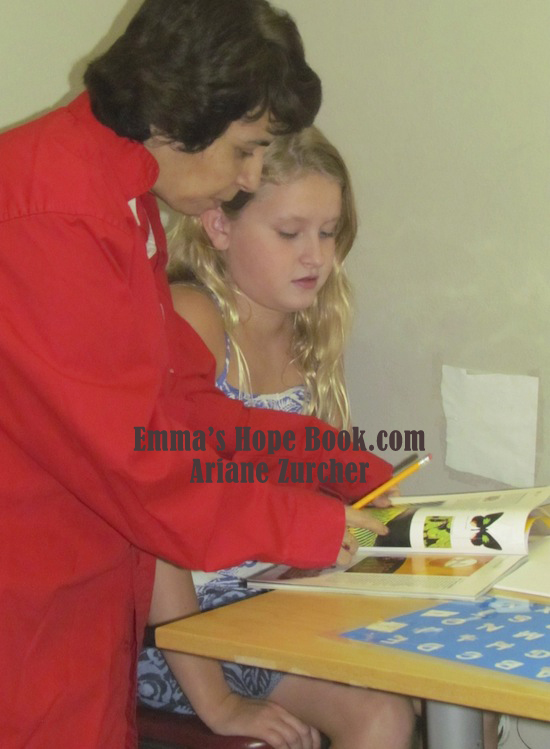
Soma & Em copy

Speaking vs Typing

At an Autism Conference last month someone asked my daughter “Have you ever been to Australia?”  Em immediately answered “Yes!”  Yet when this person held up a laminated card with two boxes, one red with the word NO and the other box green with the word YES and asked the same question, Em promptly pointed to the red box with the word “NO”.  When asked what she had for breakfast that morning, she answered, “Vanilla cake!” but when asked the same question and asked to respond by typing she wrote, “I ate cereal, toast and yogurt.”

Many people ask me why we are spending so much time and energy learning to support Emma’s typing.  The most common two questions I’m asked regarding this are – why do you need to support her at all when she can use her two index fingers to type independently  (I will write a separate post on that question) and why do you encourage her to type when she does and can speak?

Ironically I have yet to find accurate words to describe my daughter’s speech.  I’ve said things like, “Her speech is unreliable” or “She can use language, but it often does not reflect what she really means to say” or “When she types we get a more accurate idea of what she intends to say, wants, or is thinking.”  But I’m never sure people understand what I mean or if they do understand, whether it helps them when they try to talk to someone like Emma.  (I have since met a great many people who have some language, but it is “unreliable” in that they will say things that are not necessarily the answer they mean or the words they meant to say.)  Inaccurate speech is not because the person means to evade or is willfully not telling the truth, but is indicative of specific brain function.  Lots of speech therapy, concentrating on spoken language, did not help Emma.

By the way verbal scripts serve as a default and come into play often in context to what is going on, but sometimes they are triggered by a detail.  The script can appear to have nothing to do with the topic being discussed.  For example we had an electrical storm the other night which reminds Emma of the fireworks on both New Year’s Eve and the Fourth of July.  Emma calls both firework displays and electrical storms, “thunder fireworks.”  She also calls rain storms and electrical storms, “firework bubbles” or “motorcycle bubbles”.  But if you didn’t know any of this and were with her when it began to rain, you probably would not understand the association when she said, “Ohhh, look!  It’s motorcycle bubbles!” and then pointed cheerfully out the window.

If I ask, “Em do you want to make vanilla cake?” Em will ecstatically respond, “Yes!”  She happens to love nothing more than vanilla cake with vanilla frosting.  I know this, no further questions are needed.  However, if I ask her, “Em what did you eat for dinner last night?” She might respond with, “Vanilla cake!” or she might respond with what she actually ate.  If I ask her why she was crying on the school bus, she might say, “You cannot scream!  You cannot scream and bite on the bus.  If you bite, no hitting!”  or some other equally cryptic answer that does not answer the question of why, though it does give me a good idea of what was said to her and that she became so upset she began to bite herself.

However if I ask her to type her answer, she might type, “A boy was scratching my seat.  I asked him to stop, but he kept scratching.  He made me mad.  The matron said, no kicking.  Emma’s sad, Emma bit her arm. I don’t like that boy.”  If pressed further, she will type his name and I will be able to tell the bus matron that Emma should not be seated near the boy whose name is X.  Problem solved.  The point is, when typing, Emma will write things she does not say. But to people who are unfamiliar with someone like this, they find it confusing.

When I showed Emma this photograph just now and asked, “what do you see?”  She answered, “Good!”  We went horseback riding while visiting my sister last week.  And it was.  It was “good!”

Horseback riding

The Teen Behind the Blog

There’s a blog called, TeenTyper, written by someone who describes himself as, “an autistic teenage awesome boy.”  He started his blog two years ago when he was 14 years old.  On a recent post he wrote, “the feeling is bold saturated thimbles of strength.”  Em and I had the honor to meet the young man behind the blog while in Syracuse.  As he also lives in the same city as we do, we got together with him and his mom yesterday.   He is non-speaking, but types and so he and Em typed to each other for a little while and then I asked if it would be okay to talk to him about his blog.  He said it would.  I asked him, “Why did you start writing your blog?”

He typed, “i startd because my aggravation abt my spaz speaking.”

This is from his Subway Poem

“Subway subculture asserting the stroll
I watch and try to look like another old soul…”

Later I asked him, “Is the blog a place where you want to tell people something specific or is it more a general way to communicate your thoughts, or something else?”

He typed, “neurotypical need to be more conscious abt mean stares and hearing my voice will help them understand who I am.”

From Let me say:

“Before you judge let me say
You need to try being me
Before you judge let me say
I feel awful when you overly stare at me
Before you judge let me say…”

We need to be aware of the harm we do to each other with our judgments and implied criticism.  We need to pause and take our time.  We need to give each other the benefit of our kindness, we need to slow down…  we need to talk less and feel more, we need to give one another the gift of acceptance, we need to stop with our projected fears, our desire for sameness, our impatience, our disregard for another’s humanity…  we need to embrace one another.

From Wasted Words:

“Words wasted on nonsense
Still
Define…”

I urge everyone to go over to TeenTyper and give it, and the “badass awesome” teen who writes it, some love and support!

Watch Emma Fly!

Years ago Richard and I went to hear Temple Grandin speak (this was before the documentary about her had been made).  She had slides and gave a terrific talk about what it was like growing up as an Autistic child in a not autistic friendly world.  After the talk she went into the front entrance of the auditorium where she sat near a table displaying her latest book.  I went over to tell her how much I enjoyed reading her two previous books and to ask her if she had any suggestions for me regarding Emma’s inability to stay seated when on an airplane  prior to take off and again once we landed.  (This was something Em had a terrible time dealing with and would get a look of abject panic, before launching into a high volumed scream that had all the passengers covering their ears.  We were pretty desperate to find some way to help her cope.)

Temple said she was pretty sure there were sensory issues at work and gave some suggestions of things we might do to mitigate those.  I remember thinking that Temple in no way resembled my daughter and then made the assumption that Temple must have been far more able when she was my daughter’s age than my daughter currently was.  Whether this is actually true or not is something I cannot know, but a version of this thought process on my part is one I’ve repeated over the years on more than a few occasions.  So desperate to quell my fears and worries I have sought to find my daughter’s adult replica.  I have made the mistake of comparing an adult, possibly an adult who is now even in their 30’s, 40’s or even 50’s, and then drawn conclusions about what I imagine they were like when they were my daughter’s age.

Comparing Em to any adult has proven to be unhelpful to me, to my daughter and, I imagine to the person I am comparing her to, if they were aware I was doing it.  In addition, comparing a child to an adult is never going to give an accurate view of anything, there are too many variables involved.  And this kind of thinking completely ignores the fact that all human beings progress, evolve and change.  This is an obvious statement when applied to a non autistic child, but somehow I came to believe that my Autistic child was different.  I worried she would not progress.  I worried she would not be able to learn.  I worried because, in part anyway, we were given information about our Autistic child that has been proven to be not true.  We were given information that was in direct contrast to presuming competence.  Just as Emma no longer suffers when traveling in an airplane, she also now reads and writes and has, as of three days ago, mastered the complicated skill of a “catch” at her trapeze school.

http://youtu.be/fF46D0NMGnI

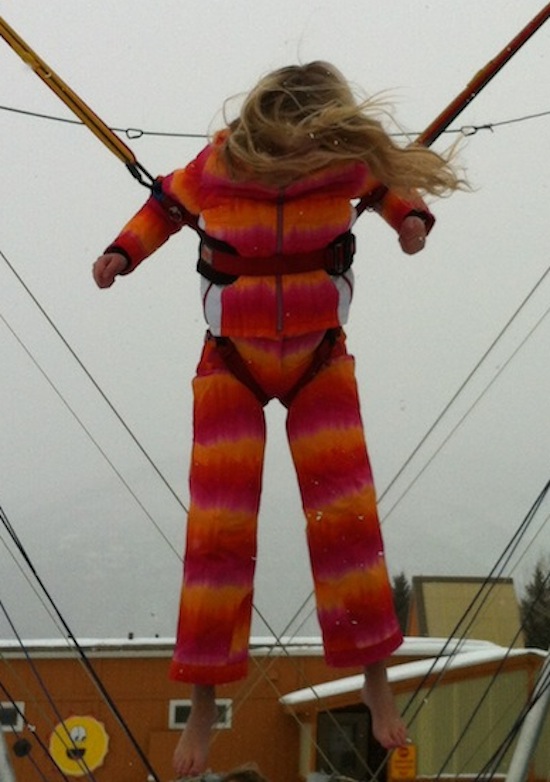
Excuse me while I jump up and down while wiping away my tears of joy.  Emma wasn’t able to do a catch upon her first try or second or even third.  Em has been going to trapeze school for more than two years.  She also goes to gymnastics once a week where she has been working hard for almost three years strengthening her core muscles.  In the last month she is now able to do a cartwheel.  Emma began learning to type two and a half years ago.  She practices every day.  She practices reading too.  She practices and works really hard.  None of this has come easily or automatically, there is no “magic” involved, unless magic means being given the opportunity to work toward her strengths, to learn and practice and the belief that she can and will succeed.  Watch that video again, because all her hard work is paying off.  Watch Emma fly!

Bungee jumping barefoot – December 2012

photo

Bloggers, Writers, Autism and a Huge Amount of Hope

When Emma was diagnosed with PDD-NOS (pervasive developmental disorder – not otherwise specified) in 2004, I was lulled into believing it was a temporary condition, nothing that a few years of therapy wouldn’t resolve.  I saw it as a kind of throw away diagnosis, not exactly full-blown autism, more like a mild version of something that resembled Autism, but wasn’t.  Kind of like a bad cold, not exactly a bacterial infection requiring antibiotics, but troublesome never-the-less and we’d have to ride it out.  Besides, I reasoned, just because many of Em’s behavior looked autistic-like, seemed autistic-ish, she probably wasn’t autistic because, well, no one really understood what autism was and so how could she be labeled something that no one understood or really knew what it even meant?  Or so my thinking went.  During this initial period I kept my eye out for any Autistic adults I could find, just in case, you know, she really was autistic, I wanted to know what we might expect.  I found none and concluded that since I couldn’t find any, there must not actually BE any to find.

Still, just on the off-chance I was somehow wrong, I kept looking.  Every now and again I’d find someone, read everything they wrote or said and conclude that my daughter wasn’t really like them or wasn’t like them enough to give me much hope that they were good examples of what she might be like later in life.   (In retrospect, since Em wants to be a singer, I should have been looking for performers who are autistic, but even so, would, most likely, have come to the same conclusion.) By the way, I have never met a neurotypical adult who seemed like an adult version of my neurotypical son, but this thought didn’t occur to me for a great many years.  Despite all of this, my search continued.

In 2005 Em’s PDD-NOS diagnosis officially became “autism”.  As time went on and my thinking continued to change, Emma remained Emma with all her “Autistic-like behaviors” very much in place and I continued to grapple with what this meant.  I wasn’t one of those parents who understood that regardless of her neurology, she was who she was and it was all good.  I bought into the autism is like cancer idea, and therapy was chemo.  (This idea was very popular back in 2004, though I hope it has waned.)  It took me awhile to question this thinking and it took me even longer to see how these beliefs made any “therapeutic” program somewhat reasonable, because, after all, nobody signs up to have chemo and talks about what an enjoyable experience it is.  The idea that Autism is NOT cancer, that this thinking in and of itself leads us down a very dark and dangerous path was something I didn’t come to until much later.

Now fast forward to this morning.  This morning I read a terrific post, The Princess, Her Socks and Her Late Pass on a wonderful blog I’ve begun reading regularly by Aspie Writer called, Twirling Naked in the Street and No-one Noticed, (love that title) which she describes as “A blogged book: Growing up with undiagnosed autism”.  Reading her post about how she hated wearing socks, (so does Emma) how the fabric bunched and the seam on her toes hurt and how the socks had tiny rocks in them that no one else could see or find, kept reminding me of Em.  Aspie Writer recounts how she was always late to class and keeps saying over and over, “I have to see Mr. Hiler for my late pass.”  It is a wonderfully written description about a baffling behavior.  She does such a terrific job describing her actions and words that they made total sense to me.  Not only was I able to identify with her thinking, it gave me a little glimpse into some of Em’s seemingly baffling actions or repeated sentences.

And I was reminded (again) of why reading blogs by Autistic people is of such vital importance to me.  It’s not because I think to myself, oh Emma is going to become this person when she’s an adult.  I don’t assume that because Aspie Writer is married, a mom of 3 and a wonderful writer this will be Emma’s future.  I haven’t met a single adult, autistic or otherwise who seems to be just like either of my children.  How could I?  There wasn’t an adult version of me when I was a child and I’m certainly not an adult version of anyone else’s child.  It’s kind of a ridiculous idea when you stop to think about it.  And yet, that’s what I wanted for all those years when I was searching.  I wanted to find someone who seemed just like Emma was.  I wanted this desperately because I was so fearful of her future.  Yet, all those autistic adults who are not exactly like my daughter  are the very reason I am no longer fearful and why I have so much hope.

Blogs, both the writing of this one and finding those written by Autistics have changed my life.  Blogs are a slice of life, immediate and interactive.  I can read a post and “like” it, comment on it, even though I may or may not get a response from the writer.  I can then tweet the post out, share it on Facebook and engage in a dialogue with the writer if they care to respond.  The immediacy of blogs is compelling, engaging and makes the reader feel more apart of than when reading a book.  Books are wonderful too, but they’re different.  They do not have the interactive element to them that makes blogging so wonderful.  Blogging is very much about “us”.  We, whether as a reader or writer, have the opportunity to become part of the process, a part of “them”.  Another aspect of blogging is – anyone can blog.  You don’t need an agent, you don’t need to even write “well” (though there are many wonderful writers who also blog), you just need to want to write.  So you have a great many people who may never have bothered to look for an agent or publisher, who are writing and because it’s a casual writing form, you also find some amazingly beautiful blogs written with honesty, unedited, raw and complex.

To all the Autistic people who are sharing your stories, your words, your lives, whether by commenting or by having a blog of your own or both, here’s a very loud and heartfelt thank you!  You are making a difference.  You have changed my life.  How does “thank you” even cover the enormity of that?  It doesn’t.

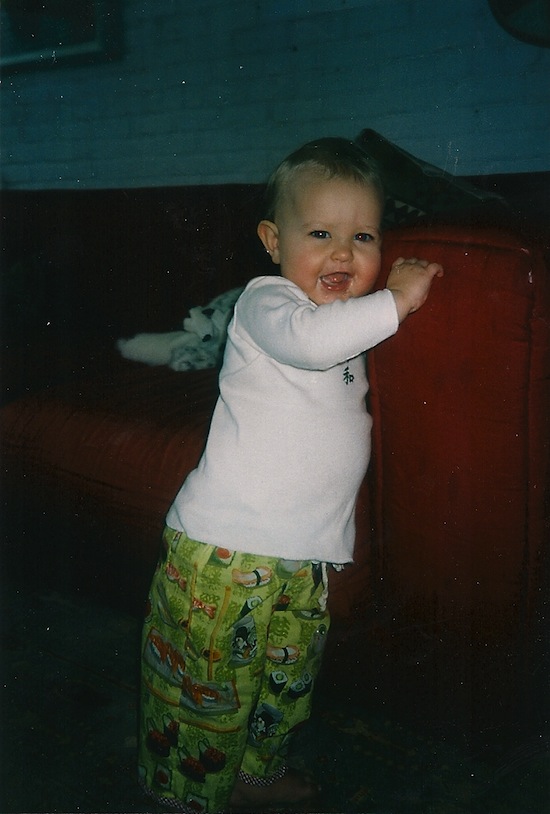
Emma – 2003

Fear = Feel Everything And Remain

Fear.  It creeps up on me, seemingly without warning.  Sometimes I get hit with it while brushing my teeth or waiting with my son, Nic, for his school bus or when I am walking to my studio.  Like a person suddenly appearing in front of me, it startles me every time.

There are phrases using fear as an acronym, such as:  F*ck Everything And Run, or False Evidence Appearing Real, or Failure Expected And Received, or Frantic Effort to Appear Real.  I like some of those, but the thing that I’ve found helps the most is to admit I’m feeling fearful out loud.  To “out” it.  To not allow it to sit, twisting and turning in my gut, while pretending it isn’t there.  Pretending it isn’t there rarely helps.  On the other hand, allowing myself to go into intricate detail about it often makes it worse, like feeding a dragon, or adding fuel to a fire, (pick a cliche) so it seems there’s a balance needed.  Feeling the fear, acknowledging it, and then trying to trudge along anyway, or do as my favorite saying regarding fear – feel the fear and do it anyway.  The “it” is often a moving target, particularly as this morning’s fear is all around future thinking involving Emma.

Which leads me to the two most detrimental things that lead me to despair faster than anything else when it comes to my daughter – future thinking and comparing her to others.  Compare and despair, they say.  Deadly.  It is deadly and it doesn’t matter whether I am comparing her to another autistic child or a neuro-typical, it is deadly.  I try to cut that one off at the pass.  If I see it coming I try to turn my back.  “Don’t go there,” I tell myself.  Sometimes it’s impossible, large gatherings with other children are the worst and sometimes it’s impossible  to avoid.  Sometimes I have to sit and hope it just washes over me and leaves.  I hope there will only be a few waves of it.  I hope I’ll be able to stay upright.  I hope that I’ll be strong enough not to cave under the weight.

That’s the thing about fear, it can be so all encompassing, so random, so…  sprawling.

Make a list.  This is an action step I take when I feel as though I can’t breathe.  Make a list.  Prioritize.  What needs to be done?  This past month I have not been as diligent with Emma’s “study room” and she has not been progressing as rapidly as she had been, so I’ll need to figure out how to manage my time better to get back to that.  Emma’s literacy program is one that continues to fill me with hope and gives me energy.  Seeing her progress with her reading and writing has been the single most helpful thing in keeping the fear at bay.  When Emma was stalled out, not moving forward, those were the darkest times.  As long as she continues to progress, her self-portrait, her letter, her writing about going to the zoo, are examples and the things I cling to like so many scraps of wood in the middle of an ocean of fear.  Just keep my head above the water, just hold on, keep treading, keep breathing, it will be okay.  It will be okay.

Make a list.  Check.

Don’t pretend I’m not feeling the fear.  Out it.  Check.

Feel it.  Check.

Keep moving forward.  Check.

I know these things won’t remove the fear, I know they won’t completely eradicate it, but they are the things I know to do that will help, even if not in this next moment, but in the next few hours, the next few days, the fear will dissipate.  It always does.  Take a deep breath.

FEAR = Feel Everything And Remain

To read my most recent Huffington Post, click ‘here.’

To read my guest post on Special Needs.com, click ‘here

Emma’s Literacy

Today Emma wrote the following sentences:

It is a good visual reminder of how nicely she is progressing.  After she wrote these sentences she became frustrated with two longer sentences she was suppose to remember and write.  I finally had to break them down into smaller pieces.  We then worked on reading comprehension.  The idea being – it won’t matter how well she reads if she cannot understand what it is she’s just read.  Like many children on the spectrum, Emma has a tough time saying what a story is about.  So we are slowly trying to build a foundation for her to be able to do so with increasing ease.  At the moment it remains very difficult for her.

Yesterday and this morning have been hard for Emma.  Her routine was interrupted, I spent a good part of yesterday cooking, we had guests for Thanksgiving and though Emma loved having family and friends over and sitting with us at the dinner table, I think the disruption proved tough.  She’s been out of sorts, a little crankier than usual.  This morning she kept insisting she go to the Central Park zoo and the big carousel; all things Richard did with her yesterday.

I never know what the reason is for her steps backwards, particularly when we can also see her many steps forward.  I keep hoping things will just move forward with no steps back, but this is unrealistic.  I know.  I have to keep my eye on the bigger picture and not get weighed down with the little daily upsets.  As we worked together this morning we had to stop several times as she became too upset to continue.  Her frustration is in glaring evidence during these moments.  She clenches her fist, hits her legs or pinches herself, so we had to stop each time and wait.  I understand how frustrating it must be to not be able to make the words come out right, to not be able to retain a seven or eight word sentence, to want to give up.

“We have to keep trying, Em.  I know it’s hard, but you can’t give up.”

“I know,” she said, nodding her head and looking sad.  “I know.  We have to do it again.”

“That’s right, Em.  You’re doing great.”

“Last time.”

“We’ll do it until you get it.”

“Okay.  Last time.”

And then she did it perfectly.

For more on Emma’s journey through a childhood of autism, go to:   www.Emma’s Hope Book.com

Emma’s Story

This is the story Emma made up and wrote this morning before she went to school.

I had to give her support a couple of times when she would say a word, such as “the” or “to” but then would forget to actually write it and wrote the next word (always a noun or verb) instead.  According to Dr. Marion Blank, the woman who created the literacy program we have been using with Emma for the past nine months, children on the spectrum dislike non-content words.

Emma then took her story over to her dad and read it to him!

We first met Dr. Blank almost a year ago now.  Before that first meeting we both read her book “The Reading Remedy” and were impressed by it.  In January of 2011 we began implementing her program with Emma.  During those first few months we worked on the beginning of letter formations and sequencing.  In April Emma was able to form all the letters of the alphabet and we began the first level of the literacy program.  Over the last seven months Dr. Blank has added other elements to the program, specifically designed for Emma so that we now are working on a spoken language program in conjunction with the literacy piece as well as the Phonics Plus Five and Reading Kingdom programs.

For more on Emma’s journey through a childhood of autism, go to:   www.Emma’s Hope Book.com

Amanda Boxtel

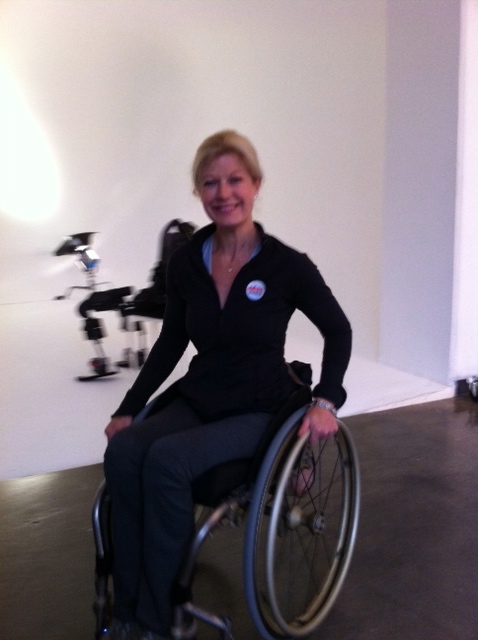
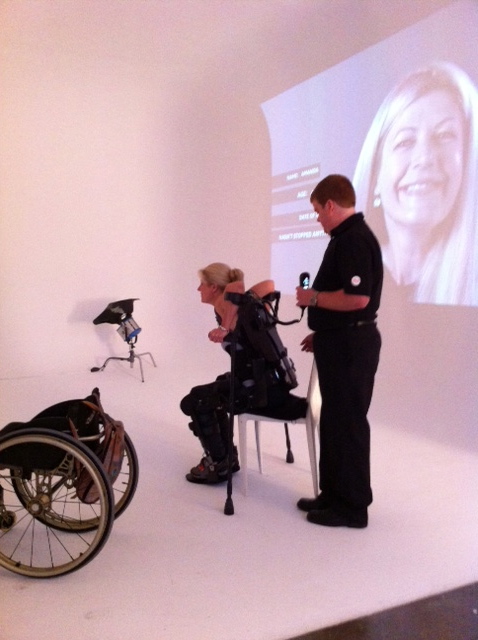
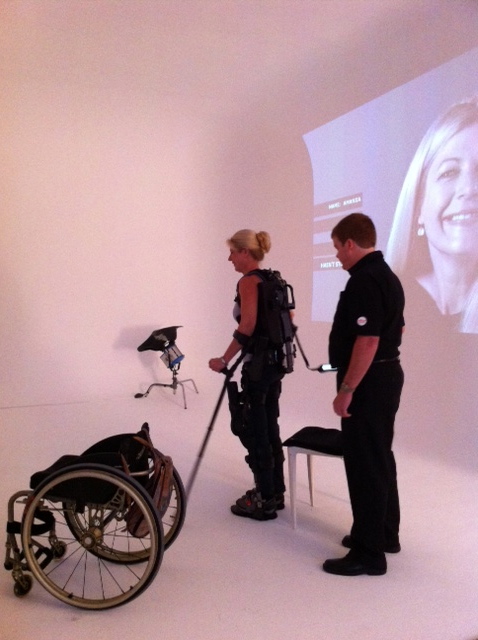
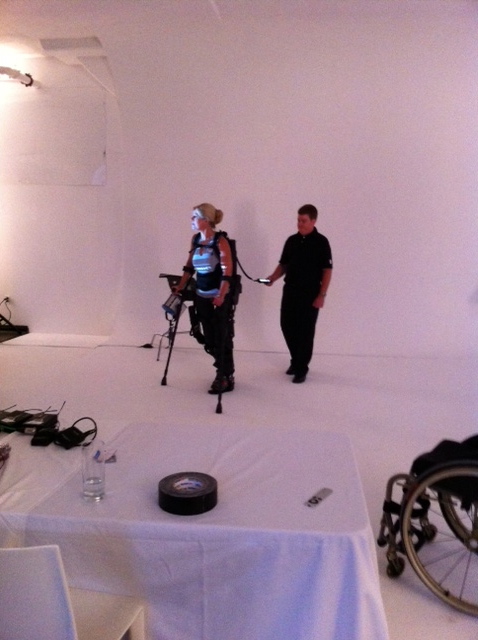
Last night Richard and I went to a launch party here in New York City of Ekso Bionics with a live demonstration by Amanda Boxtel.  Amanda was in a skiing accident over 20 years ago, which left her a paraplegic.  For more than two decades Amanda has lived her life from a wheel chair.

This photo is out of focus and does not do Amanda justice.

Amanda demonstrates the power of Ekso Bionics

This quote is from Amanda’s website.

“Imagine wanting something so badly for years and years—fluctuating between acceptance of what is and hope for something better.  Imagine if that one thing you longed for is to stand tall with your legs supporting your full body weight, and then taking your first step.”

When we took Emma to Costa Rica for her first stem cell treatment, fluid seeped from her spine into her blood stream.  Suddenly she was in excruciating pain and Richard and I were terrified.  Amanda wrote me and her letter, one of many I have kept, was a calm voice of strength and reassurance.  Amanda has been to India six times for stem cell treatments.  She is an inspiration and source of hope for all.

Watching Amanda stand and then walk last night was a visual confirmation of what is possible in this world, if we never give up.  I think of Amanda often as I work with my daughter, Emma. Writing is difficult for Emma, it does not come easily.  But then walking does not come easily to Amanda either and yet she has never allowed that to slow her down.

Emma’s writing from this morning

For more on Emma’s journey through a childhood of autism, go to:   www.EmmasHopeBook.com

A Written Conversation – Autism

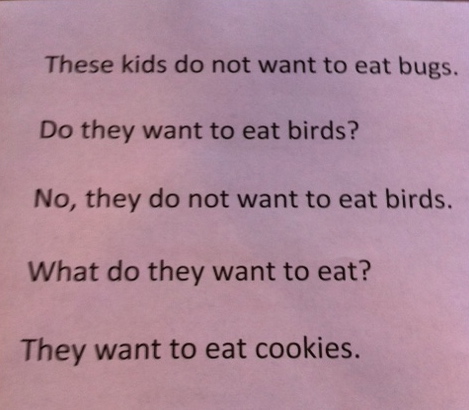
Yesterday afternoon, Emma said, “These kids do not want to eat bugs.”  Then she squinted her eyes and laughed, making her shoulders shake up and down.  It was a creative version of some of the work we’ve been doing during her literacy program.  We’ve been working on sentences such as – These are kids, they want to rest.  They are resting.  Or  This is a plane.  It can fly, but someone has to make it fly.

“That’s funny, Em.  Let’s type that.”  I pulled the computer forward and gestured toward it.

Em sat down and muttered, “Shift,” as she pressed the shift key with her right index finger while simultaneously pressing the “t” on the keyboard.  She then went on to type the sentence, only needing help with remembering to include the word “do”.  I then typed back a nonsense question – “Do they want to eat birds?”

Emma giggled and shook her head no.

I pushed the computer toward her.  “Type,” I said.

“No, they do not want to eat birds,” she wrote, being sure she made an upper case “n” for the start of the sentence.

“What do they want to eat?”  I typed.

Emma looked at me.  I shook my head, putting a finger to my lips and pushed the keyboard toward her.

Very slowly she typed, “They want to eat co”.  She smiled at me.  “Cookies,” she whispered.  “I need help.  Mommy hold hand.”

Cookies is not a word we’ve covered yet, so I held her hand and helped her type – cookies.

My typed conversation with Emma

For more on Emma’s journey through a childhood of autism, go to:  Emma’s Hope Book.com

Autism’s Murky Future

Yesterday the New York Times ran a front page piece entitled – Autistic and Seeking a Place in an Adult World.  I am always so grateful when I see anything on autism, even when I am not told anything I don’t already know.  I am particularly grateful when I see something on autism on the front page of the New York Times.  For those of us who are parents of a child with autism, the looming question of what will happen when our child becomes an adult is something we do not have the luxury to ignore.  Yet, the answer is not readily available to us, either.  There is no road map by which we can look to.  The future of our children is very much up in the air.  It is a tricky balance keeping the fear at bay, while also being practical and realistic about ones child’s future and how we might ensure she is taken care of should she not be able to hold down a job and live independently.

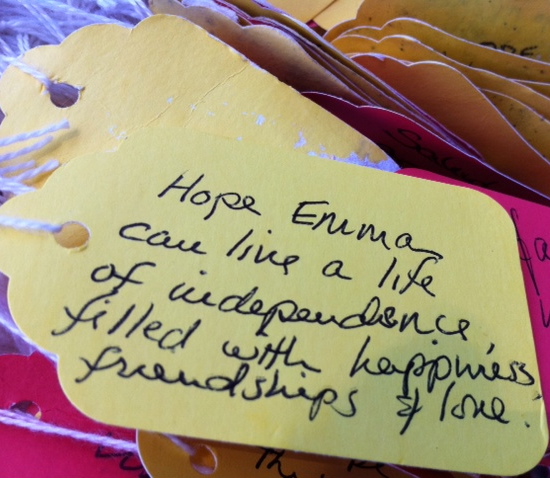
My message of hope on The Hope Installation at the entrance to the High Line

The truth is we cannot know what Emma will be like in another eight years, all we can do is continue to work as intensely and extensively with her as we currently are.

So this evening when I come home from work, I will work on the word – does.  After we spend an hour or so going over the word, both using it in hand written sentences and as well as typing sentences with it, we will also use the word verbally as when I lay out a frog, a boy, a bus and a dog and say, “Hand me the one who does not eat.”  After we have done all of that we will play some games using the word “does” and finally we will go over a list of words she has already learned and review them.  Somewhere during all of this – dinner will be prepared, Nic’s homework will get done, stories will be read and everyone will eventually go to bed.

For more on Emma’s journey through a childhood of autism, go to:  www.EmmasHopeBook.com

A Work In Progress

As we have added more work to Emma’s already busy schedule, I have had to adjust my own schedule to accommodate.  Since her new school year began this week, I am now doing her literacy session before the bus comes to take her to school in the morning, while Richard gets Nic ready.

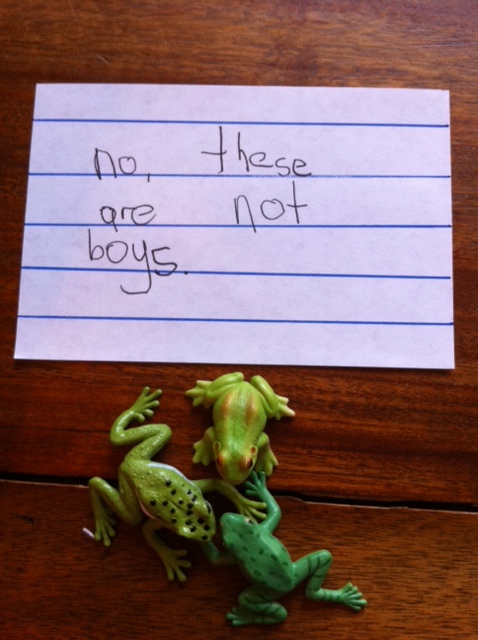
This morning we worked on the word “boy”.  Emma wrote this in answer to my question – “Are these boys?”

“What are they?”

Wait for it…

Yes, they most certainly are!

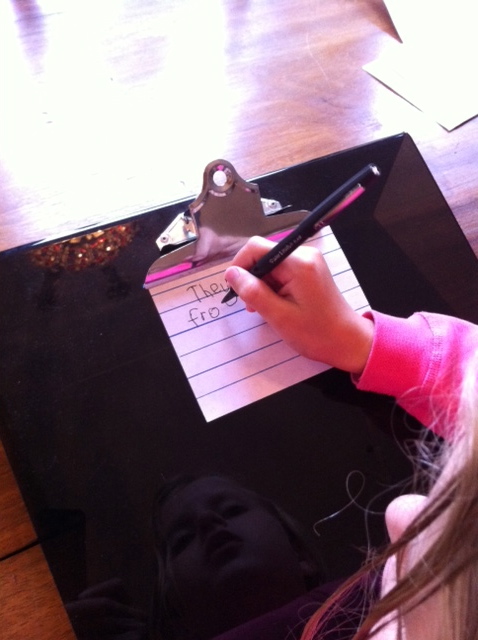
The beauty of this is that all of it is done non-verbally.  Emma is able to concentrate fully on answering the questions posed by either writing or typing the sentences on the computer.  Today she learned how to use the shift key while hitting the appropriate letter to create an upper case letter to mark the beginning of a sentence.  The grin on her face when she wrote:  “Here are some boys.  They are sitting.” complete with punctuation and upper case letters for the “H” and the “T” was as close to euphoria as one can get.  She even giggled when she was finished and beamed at me with pride.

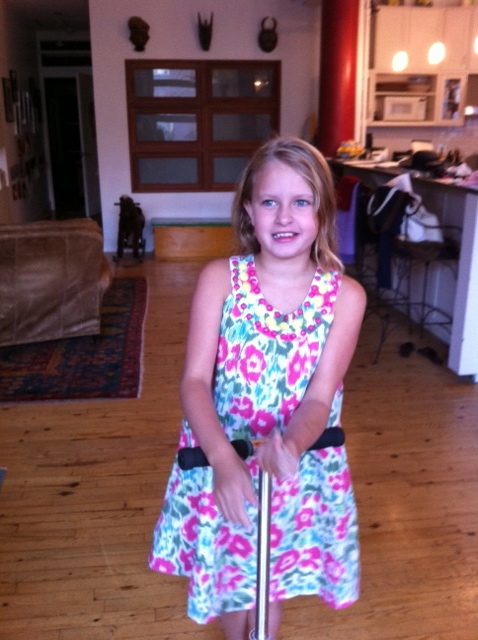
This is the dress Emma chose to wear to school today.

For more on Emma’s journey through a childhood of autism, go to:   www.EmmasHopeBook.com

An Inability to Generalize

I first heard that term used in reference to Emma almost seven years ago now.  It was one of those things people say, in this case her early intervention therapists, where you hear the words, you know what they are saying, but how exactly this is being applied to one’s own child suddenly doesn’t seem clear at all.

Emma, like many children diagnosed with autism, has a difficult time applying something she’s learned in different situations and settings.  For example when she was much younger, I tried to teach her what a t-shirt looked like by holding up an actual t-shirt, one of hers with a pink heart on it, she was able to remember what that particular t-shirt looked like and called it a “t-shirt”.  If I then took out a different t-shirt, one of mine or a different colored t-shirt from her drawer, she was not necessarily able to understand that this too was called a “t-shirt”.  If I showed her a flashcard with a green t-shirt and explained that this was the color green and then pointed to a slightly different shade of green, and perhaps on a chair, she wasn’t able to tell me that the color I was pointing to was green.  Temple Grandin, speaks about this at length, she calls it “thinking in pictures.”  She says she stores images in her mind and then flips through the images to come up with the correct one to fit the word being used.  She then goes on to describe how problematic this retrieval system is for her.  One can easily understand how difficult that must be.

Over the weekend I worked with Emma on two words:  “yes” and “not”.  “Yes” was a bit easier for her to incorporate into her writing, but “not” completely threw her.  If I said, “Emma, what are these?” and pointed to a picture of three trucks.  She answered correctly, “These are trucks.”  If I then asked her, “Are these trucks?” pointing to the trucks, she was able to understand that if you answer, “Yes, these are trucks” it didn’t change the structure of the sentence, one just needed to add “yes” to the beginning of the sentence.  But if I then asked, “Emma, are these trucks?” while pointing to three frogs, she had a terrible time answering, “These are not trucks.”  When I asked her, “Emma, give me the one that cannot walk,” from a field of four objects: a bus, a truck, a plane and a kid,” she handed me the kid.

I know Emma understands what “not” means, but in this context she was baffled.  It reminded me of those first few years when we were new to all of this, and almost constantly perplexed by almost everything she said and did.  I remember watching in dismay as she proceeded to memorize several hundred flashcards that her therapists used with her.  The therapist would hold up a card with a picture of a bike, and Emma would shout, “bike!”, the card with a dress, Emma would yell, “dress!” and on it went.  I fully expected her to go on to a regular kindergarten, at the rate she was going.  But very quickly I realized that though she had no trouble with her memory, could memorize some 400 flashcards, she could not use the information beyond the flashcards.  In other words, the information wasn’t being translated across a larger field.  She did not use the words, we now knew she knew in everyday sentences.  If we went out into the park and I saw a kid on a bike and said, “Em, look!  What’s that kid riding on?” she couldn’t tell me it was a bike.  It didn’t look exactly like the flashcard with a bike.  For one thing it was a kid’s bike and for another it had pink plastic tassels on the handlebars and a little bell with a picture of Dora on it.  This bike looked completely different from the bike on the flashcard and so Emma was at a loss as to what this new thing was called.

The good news is, Emma now can identify a bike, any bike, but it took awhile.  This is what we are up against when trying to teach Emma.

For more on Emma’s courageous journey through a childhood of autism and our admiration for her, go to: www.EmmasHopeBook.com

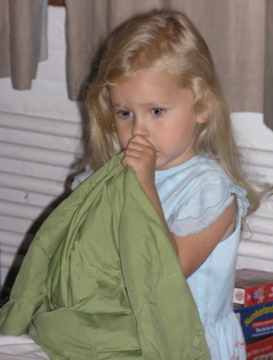
Emma with her green blanket when she was 3.

Emma and Art

This morning we had our parent/teacher conference with Emma’s team of teachers and therapists.  I am rarely told anything that completely catches me off guard at these meetings.  But this morning when her teachers related to us how Emma loves doing craft projects, I must admit I was astonished.

“Did you see the bracelets she made?  We sent them home in her backpack,” one of her teachers asked.

“Yes,” I said.  “But I assumed someone helped her with them.”

“No, no!  She did those all by herself,” I was told.

To say I was ecstatic is an understatement.  When I was pregnant with Emma I dreamed of the day when she would be old enough for me to teach her to knit, sew, embroider, do art projects, just as my mother had done with me.  Some of my favorite childhood memories are of my mother and I knitting, sewing, embroidering the figures for the nativity scene we made together one christmas that we still display on the mantle above my mother’s fireplace each December.  But up until now, Emma showed little if any interest in art projects, her fine motor skills are one of her biggest challenges, so my hopes of one day doing these things with her were pushed aside for the more pressing issues of helping her learn to read and write.

I am always looking for things Emma and I can do together.  Things that do not include her favorite outings – which can be very rigid and exacting – the Central Park Zoo, the American History Museum and the Central Park Carousel.  These are regulated outings with specific things that must be done in a particular order, “go see snake bite boy” in the museum, “go see bats” at the zoo.  One day, frustrated with Emma’s desire to ride the carousel over and over again I decided to just continue riding it to see how long she would do so before she asked to leave.  It took almost an hour and more than a dozen rides before she said, “All done.”  I was so dizzy I thought I was going to throw up and the next day she wanted to go back and do it all over again.

Emma has always shown an incredible memory for music, will hear a song once and then months later will hum or sing the entire song without missing a note.  I assumed, until now, that Emma’s artistic leanings were contained in her musical abilities. But every now and again I have wondered whether Emma might find some other medium with which to express herself since both her parents are artistic as is her Granma (she’ll deny this, but she is a terrific artist who did pencil sketches of us when we went on trips together that were amazing) and her great-grandmother was extremely artistic as well.  It definitely runs in the family, so to hear that Emma is deriving pleasure from her art projects at school is terrific.

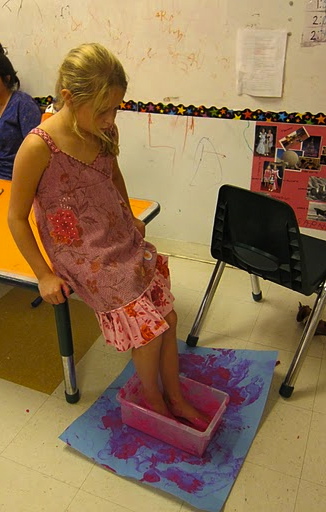
Emma at school using her feet to paint.

We have a bin filled with art supplies buried somewhere in Emma’s closet at home.  When I get home this evening I will pull it out.

For more on Emma’s artistic leanings and her journey through a childhood of autism go to:  www.EmmasHopeBook.com

Emma’s Handwriting

As those of you who follow this blog know, Joe (click on “Joe” to read an entire post devoted to him regarding his tireless efforts and hard work with our daughter, Emma) and I have been working diligently with Emma on her reading and writing skills and comprehension.  So when she requested Sunday morning to “go to the study room”, I wasn’t particularly surprised.  Just as she inquired however, Nic and his friend Max, who had spent the night, wandered into the kitchen asking for french toast.

“Hang on, Em.  Let me make the boys breakfast and then we’ll do study room,” I said.

“Study room now?”  Emma replied.

“Would you like to write something?” I asked pulling a pad of writing paper out.

“Yes.” Emma said, much to my surprise as handwriting is by far the most challenging aspect of the literacy program we’ve implemented for Emma.

“Okay.  Here.  Go ahead while I make breakfast.”  As I began the preparations for french toast I could see Emma at the dining room table writing.  I quelled the urge to go over and look.

After a few minutes Emma said, “Good job drawing hand!”

I went over to see and saw that above the drawing of her left hand she had written, “This a kid”.

What was remarkable about this was that she came up with this sentence on her own, did not copy it from anywhere, initiated the whole thing, used an upper case “T” to begin the sentence and other than the absence of the “is” and a period at the end, wrote a complete, grammatically correct sentence.  This is not a child who is learning their alphabet, this is a child who is reading and writing.  It was breathtakingly exciting.

“Good drawing hand!” Emma said when she saw me staring down at her work.

“Em!  You wrote – This a kid – that’s fantastic!” I answered.  “Look, you just forgot the is,” I said pointing to the space between this and a.  It’s fantastic!  And this has is in it, so it’s easy to forget.”

“Yeah!” Emma said, smiling broadly.

“I love how you wrote that, Em.  It’s so great!” I said staring at her handwriting and feeling tremendous pride.

“You writing,” Emma said.

“You have to say – I’m writing,” I told her.

“I’m writing,” she said.

“Hey, let’s write – This is a hand,” I said while writing the words to the right of her hand drawing.  “Now you write – hand,” I instructed.

Emma carefully took the marker and wrote – hand – underneath mine.

“That’s great.  And look, let’s write – Emma’s hand – here,” I said.

“Yeah.  That’s Emma’s hand!” she said, pointing.

“Wow, Em.  This is terrific,” I told her.

“Study room now?” Emma asked.

“Yes!  Let’s do your study room now,” I said.  “But first let’s write – This is a kid – again.”

Very methodically Emma took a separate piece of paper and wrote – This is a kid.  Then she reached over and made the toy kid sit on the edge of the page.

“Em, I’m so proud of you,” I told her.

“Emma’s writing!” Emma said, happily.

“I’m writing.  You say – I’m writing,” I said.

“I’m writing!”  Emma repeated.

Yes, she is.

For more on Emma’s journey through a childhood of autism go to:  EmmasHopeBook.com