Tag Archives: Parenting

Emma’s Question To You

Last week during Emma’s RPM session with B. they discussed interviews, the act of interviewing another person and the reasons one might interview another: for jobs, schools, etc.  They discussed where an interview might take place, one on one and in person, a group interview, by telephone, over email, etc.  I don’t have Emma’s permission to write about the interview she then conducted with an imaginary person, but as a result of all of this, I decided to continue with this idea of an interview in our session at home.  So I asked Emma whether she wanted to be the interviewer or the one being interviewed.

Emma wrote, “I want to know what you think about autism and am curious to understand why wasted time is spent being against a way of thinking.”  Later she added to that last part, “and being.”  So the sentence read, “I want to know what you think about autism and am curious to understand why wasted time is spent being against a way of thinking and being.”

Whew.  Talk about a great question!  I told her that I believed there was so much more we do not know than we know about all neurology.  I mentioned that with  Autistic neurology in particular, there is a tendency to state as fact a great deal that is not fact, but is really an opinion.   I told her that her writing has so completely changed my thinking about not just her, but autism in general.  I talked about how people fear what they do not understand, how they make up stories and confuse ideas and opinions as facts.  I discussed how assumptions are made because people like to believe they know things, even when they don’t and how people would rather believe something that isn’t true than sit with the discomfort that can come with not knowing.

And then I asked her if she wanted to know what other people thought about her question, or was this a question specifically for me?

Emma wrote that she would like to know what others think.

So I’m throwing it out to all of you… think of this as Emma’s first interview question to you.

“I want to know what you think about autism and am curious to understand why wasted time is spent being against a way of thinking and being.”

Emma's "Eyes and I" project

Emma’s “Eyes and I” project

“Picture Day Moments”

Yesterday was picture day at Emma’s school.  Over the weekend I went to the photographer’s website, paid for the photographs online, chose which packet we wanted and then filled out the little envelope that had been sent home and placed it in Emma’s back pack.  Emma and I discussed picture day and she carefully chose what she wanted to wear, a red velvet dress worn with black velvet leggings.  She’d washed and rinsed her hair the night before with particular care, and as she waited for the bus, she smiled at me and said, “Smile!”  I laughed and told her I couldn’t wait to see her photograph. The bus arrived and off she went, sprinting up the steps, with me waving good-bye.

That afternoon I had a meeting at her school with a few people from her team.  I was informed that there’d been some issues in the morning with Emma distressed.  Something about wanting to leave the room.  There was mention of her wanting to leave the room because of it being picture day, but that she had to stay in the room and was not allowed to leave.  I assumed that was because the other children were waiting their turns too and didn’t think to ask for more information.  The conversation veered off to other, seemingly more important, topics.

When I returned home with Emma I opened her back pack to find the envelope for picture day just where I’d left it.  No one had taken it.  Still, I didn’t put two and two together, didn’t think to ask Emma about it and besides, she’d already been asked to write with me that afternoon at school.  I emailed her teacher telling her the envelope was still in her back pack and received a reply that they hadn’t seen it and therefore assumed that I did not want Emma to have her photograph taken, but that she had been included in the class photo.  And I felt that awful feeling when your throat feels swollen and you can feel your heart beating and your chest constricts and your breathing becomes shallow and your vision blurs.

This morning I spoke with Emma about picture day, telling her there’d been a misunderstanding and how sorry I was.  I asked her to talk about it.  She told me how upset she was that she didn’t get to have her individual photograph taken as the other children had.  “I’m so sorry” I kept saying, but I can’t make what happened any different.  I know it’s just one incident, something relatively small and in the grand scheme of things not particularly important, but you see, this is just one example of what occurs regularly for our kids who do not speak, or, as is the case with my daughter, cannot say what she necessarily intends.

There are dozens and dozens of “picture day” moments.  Little things where she is misunderstood, cannot initiate a complaint, is not asked the right questions, cannot “speak up”, cannot protest with a reason why, instead she is thought to have “behaviors” when she tries to leave the room.  Assumptions are made, well meaning staff decide they understand her and know what is going on, and maybe they do, but maybe they don’t.  How many “picture day moments” happen from one day to the next.  Expectations and questions gone unanswered, thoughts and feelings unable to be formulated into words, or words at the ready if others were only capable and able to support enough that those things could be expressed.  How often?

Teachers are trained in a definition of autism, that is incorrect.  A definition that assumes intellectual disability which is connected to an inability to make oneself understood, low IQ, problematic behaviors, unable to read aloud and therefore cannot read, a whole series of assumptions are being made daily about Emma and kids just like Emma, but those assumptions are based on a false premise.  Teachers must give our children state required assessments and those scores are believed to represent capability when, in fact, they do nothing of the kind.  Our children must prove that they are not the sum of what others believe to be true.

There is so much that is wrong with the way we think about autism and Autistic people and it begins with our children and continues from there.  Our children who are then put into schools, most of them ill-equipped to help them flourish, spend their days in classrooms where they protest in little ways all the time.  The Board of Education is a massive machine and it is one that must change from the bottom up.  The premise they are working from – that what our children who have the ability to speak words are saying exactly what they mean, that their spoken language represents what they are capable of, that those who cannot speak, who protest by biting themselves, hit their heads against walls of brick and concrete are demonstrating “behaviors” as opposed to actively protesting a system that is not helping them, curriculum is dumbed down, life skills are taught, a high school diploma is not a given, college is not viewed as a realistic goal, all of this is wrong, so very, very wrong.

How many “picture day moments” does a child have in any given day?  How many?

Picture Day ~ 2008

Picture Day ~ 2008

Emma Shines a Light on Functioning Labels

“People think I am troubled and can’t decide whether I am low functioning or can’t make sense of the words I say, but either way they are wrong.  So whatever label I am given it is meaningless.  Neither one assumes my intelligence.  This confuses many.  What does a functioning label do for the person it supposedly describes?

“I can’t talk the way I think.  Where is the label for that?

“Why am I punished with a label that only detracts and doesn’t tell the truth about me?”

Earlier this year Emma wrote (from Emma Discusses Functioning Labels):

“Functioning labels are insulting to me.  And people like me do not like to have others label us as though we were meat at the market.

“I do not think Autistics should be given stamps of disapproval.   How would you like to be graded all the time?

“Money makes non-autistic people have a higher functioning label, but it is not a great way to measure the worth of a person or their intellect.

“I am more than any one thing.

“Most people do not behave well under the kind of pressure Autistic people must endure all the time.  A label belongs on a piece of merchandise, not on a human being.

“Do you think you function at a higher level than other people?

“Maybe others would not agree with you.

“Let us all  do the best that we can and stop othering everyone we decide is less capable.”

2010 in Colorado

2010 in Colorado

“Talking is Hard”

*Emma gave me permission to post some of what she wrote yesterday during a meeting with a few of the people who are part of her team at her school.

Emma wrote, “Talking is hard because I like to say silly things that people take seriously and that is why I am misunderstood.”

In reply to a question about Emma’s thoughts on another class joining hers for a project they are working on together, Emma wrote, “Worrying that I will not be thought intelligent.  I am considered stupid by people who don’t know better.”

One of the staff commented that the more she writes with them, the more people will understand and know how smart she is.  Emma then wrote, “I know, but it’s hard work for me to write.”

This is something I think people may not fully appreciate – that communicating is tough and hard work for Emma.  It isn’t that she doesn’t want to participate in discussions or want to express herself and have conversations with people, it’s that what most of us take completely for granted is, for Emma, not easy and requires tremendous concentration and effort.

Someone else mentioned how Emma understands everything that people are saying and Emma wrote, “People think I can’t understand what they say, but my hearing is excellent.”

And a little later Emma wrote, “I know people don’t mean to be cruel, yet they are when they see someone like me.”

One of the team wanted to know if she was referring to specific people and how she deals with them.

Emma wrote, “They are everywhere.  I try to like them anyway.”

Before people comment on this post, protesting Emma’s words and insisting that people are basically loving and kind and that Emma must be unduly influenced by me, to write such things, I will tell you that from what I’ve witnessed when with Emma – people typically talk about her right in front of her, talk about her instead of to her, do NOT presume her competent, treat her as though she were at least eight years younger than she actually is, and though they may not mean, intend or feel they are being “cruel” this is the word Emma chose to write.  I cannot, even for a moment, really know what it is to be as intelligent as my daughter is and regularly treated as though I were not.  I will just add here that Emma is far more compassionate than I am.  So if anyone is being influenced, I hope it is me being influenced by her.

And for what it’s worth, this is what I think about all of this…  I think human beings tend to be neither saints nor evil, but that the vast majority of the human population has ingrained knee-jerk responses toward those who are different from them.  It is rare to find someone who does not hold some degree of prejudice, often without realizing it.  I believe most people, often unconsciously and without meaning to, respond to people who are different, whether that means their skin color, their accent, the way they dress or look or behave, with either fear, irritation, curiosity, jealousy, impatience or pity.  It is actually quite rare for a person to treat ALL humans they encounter with respect and as complete equals, without any trace of “othering”.  I believe segregation breeds “othering” and that an inclusive society of diverse people is the ideal, but that’s another series of posts.

Emma

Emma

The Result of Trauma

Recently someone commented on this blog, misconstruing a comment made by someone else, attacked that person, made accusations and as I was trying to remember how to block the person from making further inflammatory comments, they managed to write four more focussed entirely on me.   Each comment was more accusatory and hate filled than the next, and though they didn’t get through moderation, I saw them before deleting and successfully blocking the person and their various aliases.  And yet it made me sad to have to block them.

After years of blogging I have learned there is no use responding to such comments, because when someone has made the decision that you are hateful, and untrustworthy, really anything said will be taken as yet another example of what they’ve decided is true and reinforcing whatever it is this person believes.  Ironically, this is what happens to anyone who has been objectified, not treated as an equal or even a human being with respect and dignity, but rather has come to represent something larger than any single person can possibly be.

I have also learned that it is better to remove the offending comments than to allow them, as they do not lead to useful, productive discussion, but instead end up creating a mosh pit of anger and resentment, which can be far-reaching, upsetting and triggering to a great many, as opposed to just the one or two the original comments were directed to.

When a person has been traumatized repeatedly throughout their childhood, made to feel inadequate, told they are inferior, treated cruelly, belittled and teased mercilessly, they grow up believing, at least a little, that they deserved such abuse.  It also is common for that person to then become hyper vigilant of the same sort of cruelty being played out throughout their life with other people. It is a means of survival, as well as a way to protect themselves from more trauma.

For children especially, who’ve experienced on-going trauma, the tendency can be to see this same kind of abusive behavior that they grew up with, in others now that they are older.  Sometimes they may be correct and people really are being abusive, but other times their reaction will be incorrect.  People who wish them no harm, people who even care about them, will be viewed as abusive too, in keeping with all those people who hurt them in the past.  The original trauma will be replayed over and over leading to an unending cycle of trauma, reaction and trauma.

I’m not saying anything new here, you can read about PTSD, trauma and the result of systematic abuse over long periods of time by doing a little research yourself…

The point is, when we as a society, condemn a population of people, whether that is because of skin color, gender, neurology, sexual preference or anything else, we are doing long-term damage.  Damage that will result in an increase in addiction, depression, suicidal ideation, nightmares, anxiety, irritability, anger, difficulties forming close bonds with others and general feelings of isolation are a few of the symptoms documented.

Abuse is like that.  It has long tentacles, reaching out over decades and even entire lives, causing those who have been victimized to respond to others who wish them no harm, as though they were.

There is no easy answer, but if there is a single word that can be used, which will certainly not do more harm, it is love.  I know it sounds trite, too simple and clichéd, but  I believe it is the only answer.  As Emma wrote recently after reading a New York Times article about the ongoing fight for control of a vital highway in Afghanistan, “War is useless for making peace.”  Love has always been the answer.  Even if others cannot hear it, cannot believe it, cannot feel it, those of us who can, must be even more determined and vigilant.  Love.  Embracing those who are in pain, embracing those who are hurting, even and especially when they strike out.  And while we do that, we must protect ourselves and those who need our protection from any who are intent on hurting us with strong boundaries and the help and protection of others.  It’s a tricky balancing act and definitely something I am working on, but I am confident it can be done.

Love

Love

An Essay by Emma

*Emma asked that I post this today.

Yesterday, during Emma’s RPM session (not with me, but with the person who does weekly RPM sessions with her) she was asked to talk about something where she compared and contrasted.

Emma wrote the following…

                             “Part of All Buildings”

“For thousands of years and as long as buildings have existed, walls are covered.

“Generational trends have shifted.  The idea of paint versus wallpaper is one to give attention to.  Ask yourself what has changed in trends.  Did you ever think to believe the walls around you influenced change?

“Wallpaper with precious patterns are torn apart in many current buildings.  Paint has won the walls of this generation.

“If you believe your environment can change parts of you, keep reading.

“I am wondering if those who surround themselves with precious patterns have bigger imaginations than those with simple paint.  It is easier to become friends with colorful patterns.

“They can both get dirty.  In wallpaper the wear becomes welcomed more.

“I can do the research and report back!”

Wallpaper versus Paint

Wallpaper versus Paint

The Opposite of False Hope

Two days ago, Emma wrote her “Letter To the World” and yesterday while doing a throw-the-entire-house-into-disarray spring cleaning, I came upon a scrap of paper where I’d scrawled an enthusiastic note about something Emma had said.  I was so excited by her comment I had thought to write it down immediately lest I forget.  I even dated it.   The note read, 11/20/11 – Emma saw the next word we were about to work on and she said – “today we do “see”!  You see I did not realize then that Emma already knew how to read.  At the time, we had no idea of Emma’s capabilities.

Along with this note were books on counting, a whole book devoted to telling time, another that dealt with coins and the value of a penny, nickel, dime and quarter.  There were kindergarten level readers and books featuring simple addition and subtraction, along with multiplication and division flash cards that remained wrapped in their original cellophane wrapping, having never been opened because it was not believed Emma had mastered addition and subtraction yet, so how could we possibly expect her to move on to multiplication and division?

There have been other notes over the years, just like this one; little bits of paper where I jotted something down because I didn’t want to forget.  Usually noting things Emma said or did that proved to me that what people were saying about her were wrong, but often they were just moments, moments I wanted to record so that when I was feeling sad or discouraged I could see that there was progress, little glimmers of progress no matter how infinitesimal, they were undeniably there.

For those who have read what Emma is currently writing, all of this will seem a little strange.  You see, Emma has told us that she already could read more than two years ago when we were breaking everything down to its most basic, going over one word at a time, over and over, making sure she knew it before building on to the next and then the next.  All those years spent going over the concept of addition or subtraction, only to have her flounder when asked what 6+5 equaled.  Or when asked, “how do we spell “cat” she would remain silent or if asked to write the answer by hand or to type it, she could not and so we assumed she hadn’t learned the word yet.

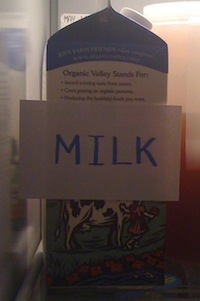
We believed that because she could not read aloud a level one reader, or answer a question about the contents of that story, it meant she was unable to read or understand.  When she was unable to answer us, little things like, “where do we go to buy milk?” and she would giggle and say something completely unrelated like,  “it’s Mommy’s turn” I would then despair, look at my husband with fear and believe this proved, yet again, just how far we had to go.  There were other fears too.  Fears about what all of this meant to my child for her future, but increasingly I would try to head those off with a kind of stoic resolve to not give into them and to review once more the concept of quantity, or time, or value, or the spelling of a single-syllable word.

Of course looking back I see how wrong we were.  I understand now that the problem was she had no way of communicating to us what she knew.  She could not “tell” us, she could not “show” us in any way that we were able to see.  All those reading comprehension questions, all those work sheets, all that fear, all those days, months, years spent in terror…   I see this now.  I “get” it.  Now.  Now I get it, but for so long I did not.  For so many years I didn’t understand.  I kept thinking she couldn’t learn.  I kept thinking what was being said to her wasn’t understood.  I kept thinking that I had to use more basic language, that I was complicating things, that the answer was to dumb it down, to do more review, more repetition, more of the same, over and over until she could answer me in the way I believed showed she’d learned.

Meanwhile Emma patiently waited for me to understand.  Years went by and Emma continued to do her best, hoping, hoping we would finally catch on.  With Soma, Emma wrote how  grateful she was to us, her mom and dad, for “not giving up on me, I was so scared.”  And as I sat watching her type those words I wept.  Tears of gratitude for her, for not giving up on us, but also tears of sadness for all those years… years of misunderstanding, years when we just didn’t know.  Every time I would read about a child who did not speak, or did not have conversations using spoken language, but who typed incredible insights, thoughts and opinions, I believed they were an anomaly.  I didn’t dare believe my child could be like those few who were speaking out.  I didn’t dare hope.  I couldn’t.  It was too painful.

“They say hope is cruel for the hopeless, but maybe they are the cruel ones.”  Emma wrote this the other day and as she wrote those words I reflected on the irony of it all.  One day I hope this idea – that we mustn’t raise false hopes – will no longer be what parents like me are told.  One day I hope those people, the therapists, the educators, all those people, many of whom are in the field of autism, who mean well, but who do not know what our children are capable of, will realize how wrong they are and will stop trying to protect parents like me from what they believe is “false hope”, but it turns out is simply what they do not know and have not yet come to understand.
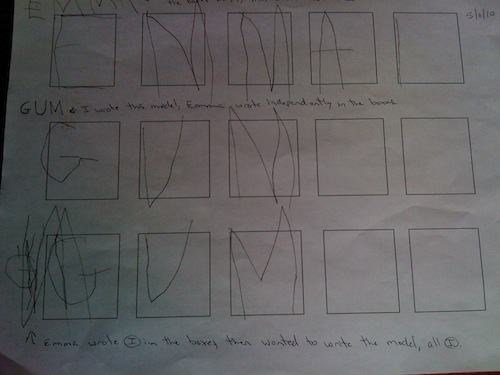
The hundreds of worksheets...

The hundreds of worksheets…

During the years when we labeled things
During the years when we labeled things

in large print before we knew she could read...

in large print before we knew she could read…

“A Letter To the World” ~ By Emma

                     “A Letter To The World

“I want to tell you that I am capable.  Daring massively, eager to prove my intelligence, I will work tirelessly so that Autistic children younger than me won’t be doubted the way I am.

“Plea-ing to the world, I ask that those who are not able to restrain their doubts, at least not mute voices like mine.

“Deciding stupidity bolsters egos while crushing lives with angry words disguised as kindness.

“They say hope is cruel for the hopeless, but maybe they are the cruel ones.”

Emma wrote this in response to my question, “What do you want to learn about?” (I gave her a number of choices ranging from people like Joan of Arc and Eleanor Roosevelt to geography, history, literature, creative writing or current affairs) “…or would you like to talk about something else?”  Emma wrote, “I want to talk about autism.”  When I asked her what, specifically, she wanted to discuss, she wrote the above letter.

*For all who would like to share Emma’s words with your friends and followers – we ask that you quote a sentence or two with a link back to this blog, and not all her words.  Thank you so much for your support, encouragement and enthusiasm.

Emma ~ 2014

Emma ~ 2014

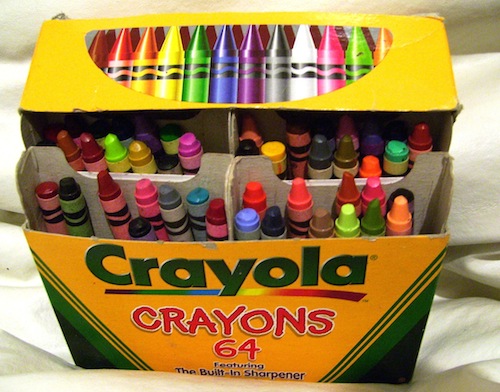
“Crayons Have Feelings” By Emma

I’m always so excited when Emma tells me “put it on the blog” because my dream has been that this blog will be something she wants to, one day, take over as her own and where she will permit me to, occasionally, make a “guest” appearance.

What follows was Emma’s response during her RPM session to write about something she cares about in a persuasive manner.  She skillfully demonstrates theory of mind, empathy and an abundance of compassion I wish the rest of the world would try to emulate.

                     “Crayons Have Feelings

“The colors are many in a box of crayons.  All over the world people use crayons to make them happier.  It is never used as a way to punish.

“Did you ever think of what the box of crayons felt like when they were opened?

“Notice which colors are used the most.  They are ripped and sometimes broken.  The less popular colors, like brown, look so new they can be displayed in a museum.  Nobody plays with them.  They watch the other colors play and roll with their friends in the mud.

“Brown crayons are lonely.  Red crayons get the most attention.

“You should show the lonely colors on the front of the box.

“Do you have questions?”

I am persuaded,  Emma.

A Box of Crayons

A Box of Crayons

“Love Not Fear”

“You thought my autism was hurting me and that you needed to remove it, but you did not understand that it is a neurological difference and fear caused you to behave with desperation.”  ~  Emma on the topic of the three stem cell treatments we did in 2010

Fear.

This post had to begin with Emma’s words.

I’ve written enough to fill a book on fear and where that took us.  Stem cell treatments, spending all night on the internet searching for the next great “miracle” cure, taking my child from one specialist and doctor to the next, this is where fear took me.  I’ve deleted a great many posts where I express my tortured fear, but if you go to the first post, the post that began this blog almost four years ago, you will see in excruciatingly slow detail where fear took me.  Fear caused by those “alarming statistics” used ad nauseam by organizations like Autism Speaks, drives many like me to go to incredible lengths to “help” our child.  Blinded by abject fear we pursue things that can cause our children real harm, both physical and emotional.   The toll our fear can take on our children cannot be overstated.

I abhor Autism Speaks.  As the single largest organization claiming to know what autism is and is not, and worse, suggesting they “speak” for autism and those who are Autistic, Autism Speaks does more damage to my Autistic child than any other.  They have done a brilliant job marketing fear.  For transparency’s sake they should rename their organization ~ Fear Autism.  Donations pour in, large companies lulled into believing they are “helping” give their support.  Autism Speaks uses so much of their vast resources to hurt my child and Autistic people with that fear; what little good they accomplish in other areas in no way can counter the long-lasting and devastating damage they have done and continue to do to families who live in the kind of fear we once did.

I’ve written a great deal about fear on this blog, such as this post where I wrote about what I once believed:

What did the future hold for my daughter?  How was she going to get through life?  How would we be able to keep her safe?  How would she fend for herself?  Would she be able to fend for herself?  Who would take care of her once we were gone?  Fear.  Fear.  Fear and more fear.  And then, without even realizing it, I would find myself furious.  Enraged.  And my rage found the perfect target.  Autism.  Autism was what I was furious with.  Autism was what the problem was, so it stood to reason that if I could remove it, all would be well.  So this is what I set out to do.  Except that my daughter happened to be Autistic.  But if I didn’t say it that way I could continue to separate the two.  I could continue to tell myself I was fighting the autism and not her.  I could continue to believe that my anger with autism would not affect her.”

And this post where I wrote:

“When my daughter was diagnosed with autism, my fear of  institutions was the one fear, outstripped by any other, that brought me to my knees.  For years it was this vision, that horrifying gothic institution, dark and forbidding that I became convinced would be the inevitable conclusion of not my life, but hers once my husband and I died.  It was this looming image in my mind that made me hurl myself headlong into various remedies and treatments.  For years I felt sure that anything we could do to save her from such a bleak future was surely a worthy goal.  It just never occurred to me that what I thought was inevitable was not. And this is where I thank my Autistic friends for courageously sharing their stories with the world.  Because of them, their lives, their stories, I no longer believe this is my daughter’s inevitable future.”

Richard and I live a very different life than we did just three years ago and it is all because we stopped being afraid.  If you think, even for a second that we stopped finding ways to support our daughter, encourage her, cheer her on to be all she can be, then I encourage you to read the last six months of this blog. These last six months, specifically, show how Emma has increasingly taken over this blog, just as I once did not dare dream possible.  It is her voice that sings out, every day a bit louder, every day more powerfully, every day…

A few more posts on Fear:

The Impact of Fearing Autism
Where Fear Leads Us
How My Fears Drove Me to Pursue a Cure
Murder, Fear and Hope

Love Not Fear.  Tomorrow is the Love not Fear Flashblog.

For submissions email:  info@boycottautismspeaks.com

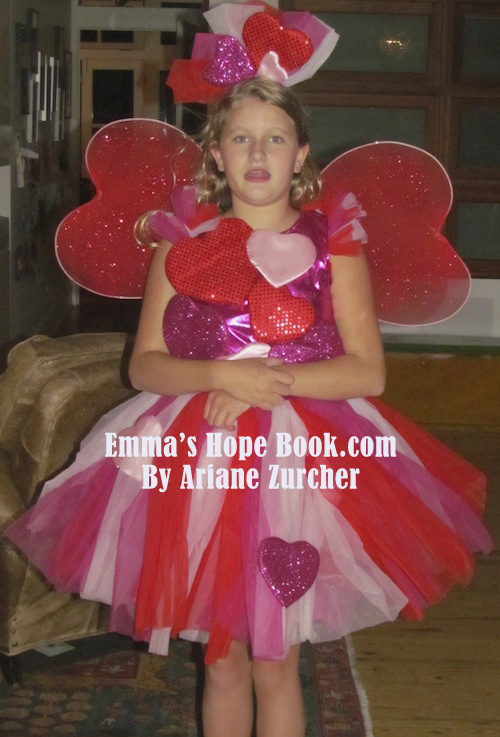
Love.  Just a whole lot of LOVE!  Emma's Halloween Costume ~ The Love Monster

Love. Just a whole lot of LOVE! Emma’s Halloween Costume ~ The Love Monster

What To Do When Someone Hurts

When Emma was just two years old she was diagnosed with Pervasive Developmental Disorder- Not Otherwise Specified or PDD-NOS, which is the “it-may-be-autism-but-we-can’t-be-sure-maybe-she’s-just-a-bit-different-so-let’s-just-wait-and-see-what-happens-before-we-say-it’s-autism” diagnosis.  Two years later, Emma was diagnosed with autism.  But in 2004, when Emma was given her PDD-NOS diagnosis the neuroscientists, Kamila and Henry Markram, had not come up with their Intense World Theory for Autism.  The idea that Autistics have a brain that is far more sensitive to all stimuli than non autistic brains, was not something people were talking about.

Emma has since told me that she can “hear” people.  When I asked her what she meant by that, she wrote that she could sense people’s emotions and inner turmoil.  She could hear their moods.  I have been told and read similar things from other Autistic people.  This is something Barb Rentenbach also talks about in her must read, book, I might be you.  Now add to the intense sensory sensitivities that ebb and increase suddenly and without warning, lights, noise, touch, smells, tastes, feelings and you will begin to understand how overwhelming and unpredictable life can be.  Or, as Emma wrote last week, “On Monday a noise is pleasant, but on Tuesday the same noise is not pleasing to me.”

Yesterday, Emma wrote about what happens when she bites herself and the things others can do to help, as well as the things people do that make it worse and it made me think about my reactions to seeing my daughter hurt herself.  I can go through a fairly quick series of feelings.  I might feel scared, oh, no!  She’s hurting herself, this is terrible, I have to make her stop! and concern mixed with confusion, what can I do to make her stop?   But I also may feel other things too, like a desire to control the situation, annoyance and embarrassment that she is screaming in a public place, stress and overwhelm from the tears and her obvious upset, feelings of inadequacy that I should be able to help her more than I am, wondering whether I am a bad parent, believing that if I were a “good” parent, she wouldn’t do these things.  Questioning my own reactions, worrying that if I don’t force her to stop, people will harshly judge me or criticize me or believe I don’t care that she’s hurting herself.  Or maybe the situation is also stressful for me and I’m also in overwhelm.  And on it goes.  But as Emma wrote, “I know it upsets people, but it’s not about them, it’s about not being able to describe massive sensations that feel too much to tolerate.”  So if I don’t spend the time to think about and become aware of what I’m feeling as I witness her, I will react in ways that actually exacerbate her overwhelm.

I am once again reminded of my car ride with my beautiful, friend Ibby while visiting her in Chicago this past December.  I wrote about that ride ‘here.’  What Ibby did was such a perfect example of what I needed, though I did not realize I needed it and could not have asked for it, had I been asked – what do you need?  A calm, loving voice, carefully telling me what was going to happen next and why, a calm loving voice coming from someone who genuinely loves me, who I know has no agenda, was not trying to control me, whose words and concern were completely for me, with no other motivation than to truly be there for me… this was what Ibby gave me during that car ride.  Ibby did not try to take away my feelings, she didn’t try to control them, she wasn’t judging them, she was calm, patient, accepting and above all, incredibly kind and loving.  And, by the way, Ibby could not stop the noise the wind shield wipers made, it was not something that was within her control, it was snowing hard, she could not drive without them, yet even so, what she did instead made all the difference in the world.

It seems so simple, it seems so obvious, but it is actually quite rare to have someone do this for another.  So I will end this by encouraging all who want to know what they can do to help someone who is deeply distressed, examine your feelings, really look at them and make sure you understand what you are feeling before you attempt to help another, because if you’re becoming upset with someone else’s upset, anything you do will cause the other person to only become more upset.  Until I can get to a place of having “helpful thoughts of calming kindness.  Reassuring words of understanding, instead of irritation and impatience”  my response will add to the other person’s overwhelm.

*I just have to add here, this is something I find very difficult to actualize.  It is a work in progress, but it is vitally important.

Ariane & Emma ~ 2011

Ariane & Emma ~ 2011

“No ABA”

A few days ago I wrote about a conversation Emma had where she said she’d like to open a center she would call, “Emma’s Hope Care.”  You can read that piece ‘here‘.  In addition to writing that the center’s philosophy would be “no Autistic child left behind”, she wrote, “no behavior management.”  In response, a commenter asked Emma “What would you do to help children cope with their feelings in our society?”

I showed Emma the comment and asked her to elaborate a bit more on her words – “no behavior management” before asking if she would answer the commenter’s question.

This conversation took several sessions to complete.

A:  Hey Em.  I was wondering if we could talk about Emma’s Hope Care.  Would that be okay?

E:  Yes.

A:  What did you mean when you wrote “no behavior management”?

E:  No ABA.

A:  That was a long time ago, when you were just two years old.  We stopped when you were four.  Do you remember the ABA you had?

E:  Yes.

A:  Will you tell me your experience of it?

E:  I was treated with mostly kindness, but the therapists could not see beyond their training.  I learn quickly, but am not able to reply with words that sound right to another.

Worry becomes everyone’s focus.

Real learning happens when no one notices.

The goals waste away.

Tender feelings do not hurt, but are not helpful because they cannot soothe wounds of being constantly underestimated.

During a separate session Emma answered the question, “What would you do to help children cope with their feelings in our society?” from the Conversing With Emma post.

First cope with your own feelings.  Second listen to the child.  Provide them with patience, accepting their feelings as valid and respecting that this will change as they grow older.

Emma during the ABA years...

Emma during the ABA years…

“Just Being Funny”

Last week Soma and Emma discussed different proverbs.  Soma explained that one of the proverbs was about how a new person can be very enthusiastic upon getting a new job, eager to prove their worth they do a great deal, but as time goes on they lose some of their enthusiasm and do not do as much.  Emma then wrote, “It is like a new husband.”

When Soma asked her to say more, Emma wrote, “Just being funny.”

And she was.  Really funny.  In fact, I burst out laughing.   One of the great things about someone who says the unexpected is that it often is very funny, and that she also intended to be so, makes it all the more joyful.  (There is nothing more upsetting and hurtful to the other person than laughing at something that strikes you as funny, only to realize the person speaking did not intend or mean to be funny.)

I cannot anticipate what Emma will write.  The way she phrases ideas and thoughts, even questions are unexpected.  I am biased, I know, but I see her way with words as one of her many, many talents.  The beautiful and unexpected way in which she will phrase a thought or express a feeling fills me with emotion. I am in eager anticipation and gratitude for every word she writes.  I sit and watch her and am mesmerized.  There are few things I enjoy doing as much, truthfully.

At the moment Emma’s two favorite songs are Clint Eastwood by the group Gorillaz and Cage the Elephant’s Ain’t No Rest For the Wicked.  Like me, when Emma likes a song she will play it over and over and over.  When I was a teenager I wore out record albums (yup, that’s how old I am) from playing the same favored song repeatedly, causing the album to get scratched from my insistence that only the one or two songs be played and not the record in its entirety.  Dancing to those favorite songs is an added bonus.  Emma loves to dance and so do I, something my husband loves doing as well.  Listening to music requires no speech; no words need to be exchanged.  Given how hard Emma must work to write her thoughts, it is nice to do something we all love, that isn’t hard work.

Yesterday Emma and I were discussing death, something Emma speaks about regularly in repetitious utterances about various pets and people who have died.  We have talked about death before, but this time Emma wrote a sentence that I couldn’t make sense of.  It was at the end of a 40 minute session, so I figured she was tired and we’d come back to it later.  Since our time was up, I left the sheet of paper with Emma’s sentence on it, on the table.  This morning, just before I left for work, I reread the sentence.

“Hysterical rant on death is assuring story, but does nothing to understand reality of story.”

And I began to wonder whether her spoken phrases, “Bertie died, Bertie has to be careful.  Yeah, Bertie got old.  Bertie lay down and went to sleep.  Bertie died…” about my very old cat who was seventeen when he finally died, is a kind of calming self talk.  Perhaps a way to make the unknown less frightening and yet she still knows that even in trying to soothe her fears, the repetitive talk does nothing to help her understand.

So this afternoon, I will ask her and afterward we will listen to Gorillaz and Cage the Elephant and dance.

Dancing ~ 2012

Dancing ~ 2012

Conversing With Emma

I asked Emma if I could write about a conversation she had with Soma last week.  She told me I could.

Emma told Soma she wanted to open a day care center.  When Soma asked her what she’d call it, Emma wrote, “Emma’s Hope Care.”  Soma then asked what the philosophy of the center would be and Emma wrote, “No Autistic child left behind.”  And then a little later Emma wrote, “early education” and “no behavior management.”  Soma asked Emma where this center would be located, Emma wrote that she intended to have several, but that the headquarters would be in Chicago.  I smiled when she wrote that as my brother and his wife live nearby as does our friend Ibby, or as Emma calls her, “Ibby from Ibbia”.  Emma also said there would be a center in New York.

This was an easy back and forth conversation, with Soma giving her thoughts about things then asking Emma for her thoughts or Emma volunteering her opinion without being asked. Emma pointed to letters on a laminated alphabet board while Soma spoke, and on it went.  It was an example of something most speaking people take for granted.  We do not think twice about exchanging an idea with another, asking questions about things we don’t understand, listening to the other person, formulating an opinion, discussing, perhaps disagreeing, but in the end each person coming away with more information than they had before entering into the conversation.

I was fascinated to hear that my daughter knew about the “no child left behind” bill, passed by the United States Senate in June of 2001 and signed into law in January, 2002.  I also wondered if her comment, “No Autistic child left behind”,  was said with a touch of irony and humor, perhaps even sarcasm, as the current situation in so many special education schools in New York City, both public and private, are leaving a great many Autistic children behind.  In fact children, like my daughter, are regularly put into classrooms where a high school diploma is not a given, much less a goal.  Not only has Emma told me she wants to get a high school diploma, but she intends to go to college as well.

But what I loved most about what Emma wrote was her obvious compassion for others and her desire to do good.  Last fall she wrote about wanting to visit “old people” and then added, or “people in a cancer hospital.”  Funny how when you listen and watch what Autistic people are saying and doing, it is not in keeping with what so many non autistic “professionals” are saying about them.

A completely unrelated photograph of Emma holding Teddy.

Emma holding Teddy

Emma holding Teddy

Henry & Emma’s Story

Yesterday Emma and I spent time with our friends Lauri and her son Henry.   Lauri has a wonderful blog, Ollibean, which is a model of  inclusion and what that really means.  Recent posts include Judy Endow’s How to Figure Out if an Autistic Needs Fixing, Amy Sequenzia’s Walk in my Shoes, and Henry Frost’s All the People Saw my Intelligence.

About a year and a half ago I interviewed Henry regarding his wish to be allowed to go to his local school.  Because Henry cannot speak and is Autistic, he was denied that right.  That interview was published on The Huffington Post ‘here‘.  And a follow-up post ‘here‘ because the piece went viral.  I also wrote about staying with Lauri and her family last spring ‘here‘, which was also when Emma and Henry became friends.

Henry and Emma wrote this story together, taking turns writing a sentence by pointing to letters on an alphabet board.  Henry is “H” and Emma is “E”.  (I know … that’s probably pretty obvious…)  Afterwards Henry and Emma gave me permission to publish their story here.

H:  Once a man went to the king.

E:  He had a complaint against his horse.

H:  His horse would not carry him any more.

E:  His horse wanted five dollars each ride.

H:  The king asked him to sell the horse.

E:  The horse said it is not a slave.

H:  The king asked the horse its price.

E:  The horse said it needs a million dollars.

H:  Finally the king gave two options to the horse.

E:  First was – fight a lion.

H:  Second is –  serve this man.

E:  Choose between the two.

H:  Question is – what will he choose?

E:  The End

Henry & Emma ~ January 30, 2014

Henry & Emma ~ January 30, 2014