
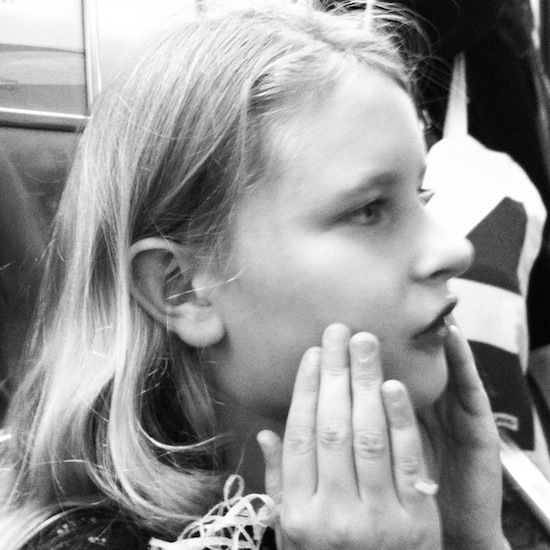
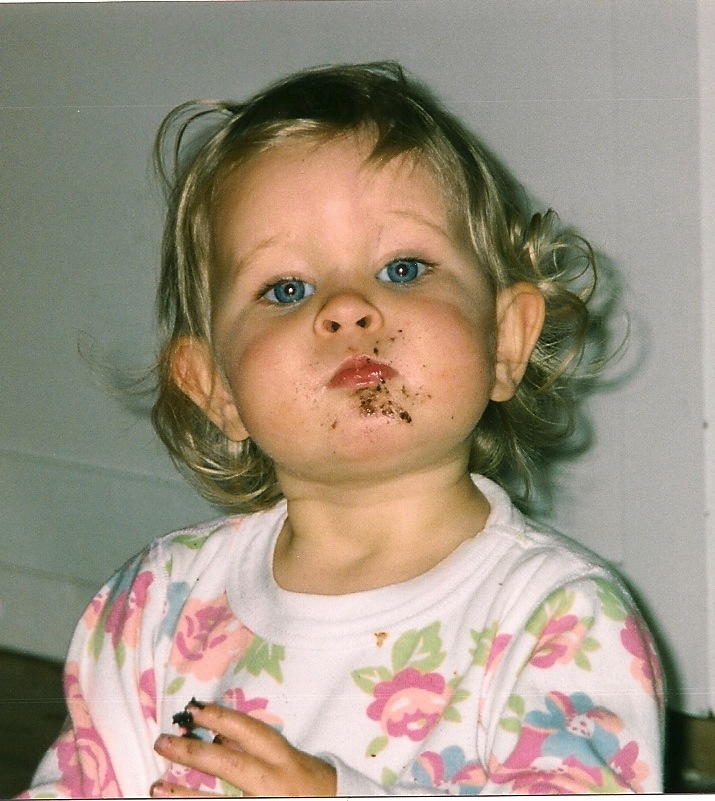
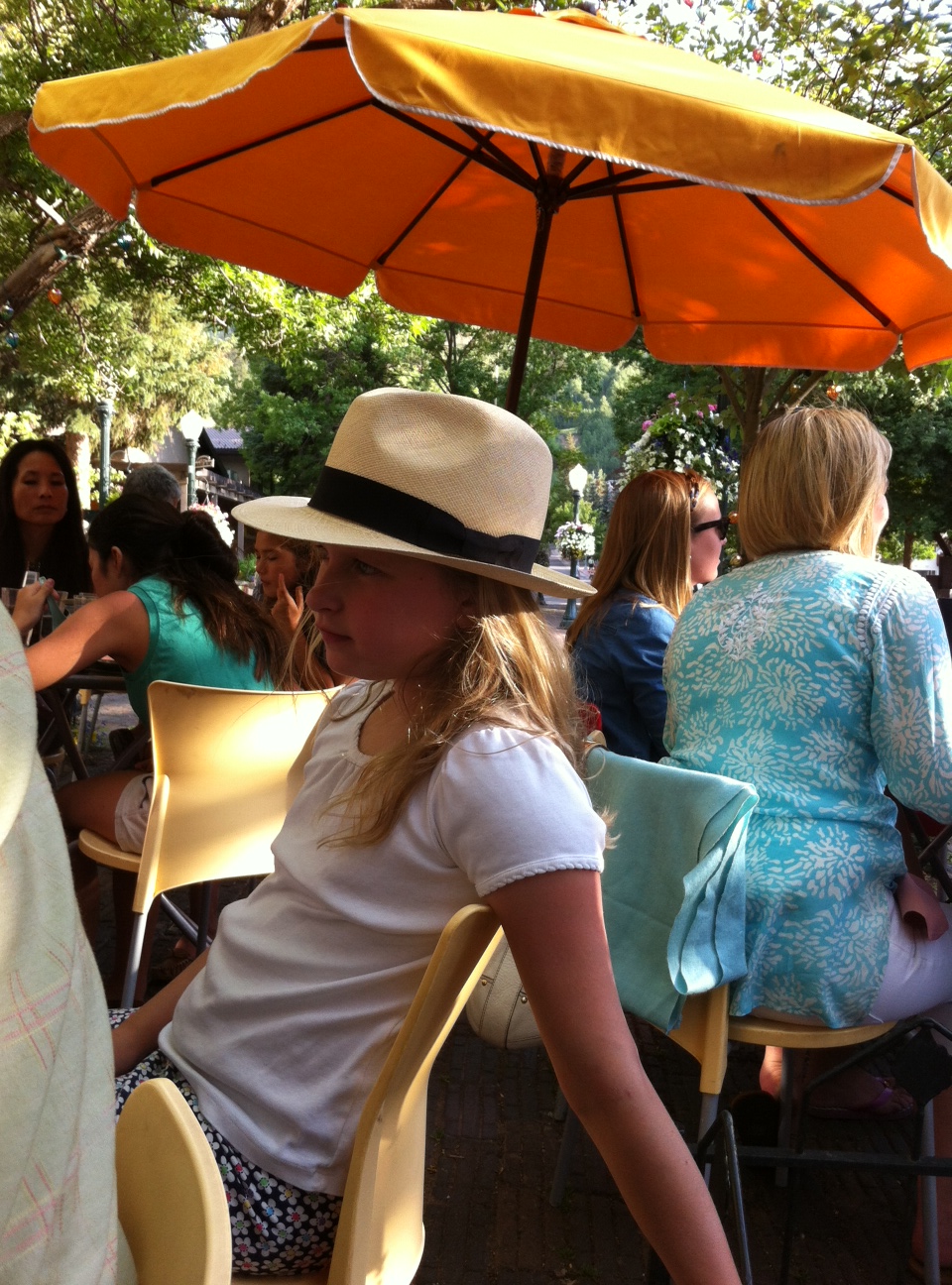
When some people hear that my daughter is Autistic they see a beautiful blonde haired girl with no noticeable physical impairments. They see a pre-teen who has terrific eye contact. They see someone who is happy and playful and who laughs often and with abandon. They see someone who loves loud music, a good party and will grab hold of a microphone if given the opportunity. They see someone who obviously loves to perform in front of an audience. She doesn’t fit their concept of autism so they assume the diagnosis must be wrong. They say things like, “But I never would have known if you hadn’t said something.”
When it becomes clear that she cannot carry on a conversation with them, but demonstrates her intelligence by typing something with lots of insights and wisdom, they see a doting mother who is supporting her daughter’s arm or holding on to the other end of a pole and they assume it is all a manipulation. They decide it is me who is writing these things, “putting words into her mouth”. After all my daughter cannot carry on a conversation, how could she possibly be writing such beautiful words? Later, when I am no longer present they might say, “Poor thing, she’s deluding herself about her daughter, of course she would, how could she not? It would be giving up all hope to do otherwise.”
“In our field, assumptions about labeled people are so deeply rooted that we tend to think they are facts. They are not – they are only shared beliefs.” ~ Autism: Sensory-Movement Differences and Diversity by Martha R. Leary and Anne M. Donnellan
I explain that my daughter is typing these things, but needs support to do so, without that support, which is in the form of resistance, she will impulsively revert to her favorite scripts, and they think to themselves – that doesn’t make sense. How is that possible? She can type independently now, why don’t they just leave her alone and let her type what she wants? If she can’t type these things independently, it must not be coming from her. Her mom must be writing those things for her daughter.
I then talk about how my daughter is doing math, multiplication and division (in her head) without any formal training and they think – well, that simply isn’t possible. That can’t be. They look to see if my daughter is somehow being manipulated, prompted, even though she is not being touched. When I state that my daughter is reading faster than I can, they wonder – but how can she really know that for sure? When Emma then obviously passes reading comprehension multiple choice tests, they think – well, but it’s just a coincidence, after all it IS multiple choice, that’s much easier than if she had to write an essay. Those who do believe, assume she must be the exception. They say things like, “But my child/the child I work with can’t possibly do that. You’re so lucky. Your daughter is very, very special.” They place my child into a little file in their mind. A file entitled – anomaly.
“When you have enough exceptions you have to start questioning the legitimacy of the rule, the assumptions, and the paradigm.” ~ Speechless by Rosemary Crossley.
I have interviewed a great many non-speaking Autistic people and published our conversations here and on the Huffington Post. I have an entire page on this blog devoted to Resources, the first list is of all the blogs and writings of non-speaking Autistics that I know of, but there are a great many more that I do not know about. Even so, people will write about how those non-speakers didn’t really write their own words or, conversely, they say – isn’t it wonderful that these individuals are so amazing and an inspiration, but they are exceptional, they are not like my non-speaking child, or the children I teach, or the children I work with or… Perhaps they are right, but what if they are wrong?
I would rather have my daughter surrounded by people who believe her capable than around those who do not.
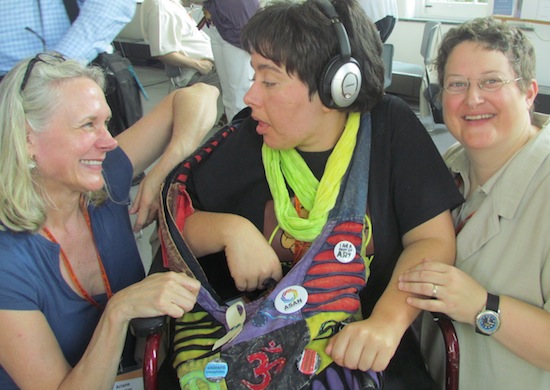
Ariane Zurcher, Amy Sequenzia and Ibby Grace at the ICI Conference ~ A conference dedicated to accommodating those who do not speak



 Emma's Hope Book