Using Words to Describe What Cannot Be

This morning, in answer to the question, “What shall we talk about?” Emma wrote:

Today I am going to talk about using words to describe things that cannot be described.

How can it be done?

It is the poet’s attempts that come closest, but even then, much is left to the reader’s interpretation.

Poetry becomes an interactive experience then, with the poet having to cede all control of words created.

Real creating asks question of all.  The answers are unknowing.

From Ariane:  Last night I dreamt I could not speak.  I was at the airport, leaving for the Far East and realized I had left my passport at home.  I kept reminding myself this was a dream and that I could recreate the story line.   I didn’t have to stay in the feelings of intense anxiety the dream was provoking.  I could speak if I could just change the dream. I didn’t have to follow the dream’s labyrinth.  Straining against all logic, I tried to fly, literally, back home, but kept being pulled back into heavy traffic and the anxiety of knowing I would never make it home and back to the airport in time for my flight.  Not being able to use my voice to tell the cab driver where I needed to go, without pen or paper to write, I felt intense frustration and then rage.

Knowing I would miss the flight, knowing my family was at the airport waiting for me, and the nagging, ongoing critique of how foolish I was to have forgotten such an essential document as my passport made me finally wake up.  It was one of those dreams where you are so horrified by it, waking at three in the morning becomes the more attractive choice, superseding the desire to continue sleeping and the knowledge of the inevitable consequences of waking at such an early hour.

Those feelings, like so many incessant and blaring alarms, jangle the nerves, and linger long after sleep has yielded to wakefulness.  And then Emma wrote the above and I was reminded, once again, of how often words fail us.  How often things said are misinterpreted, or said in ways not meant, or how even for those of us fluent in spoken language, words can become a kind of cage from which we cannot and do not easily escape.

Richard has been editing the video of our presentation.  Hoping to post it over the weekend or on Monday…

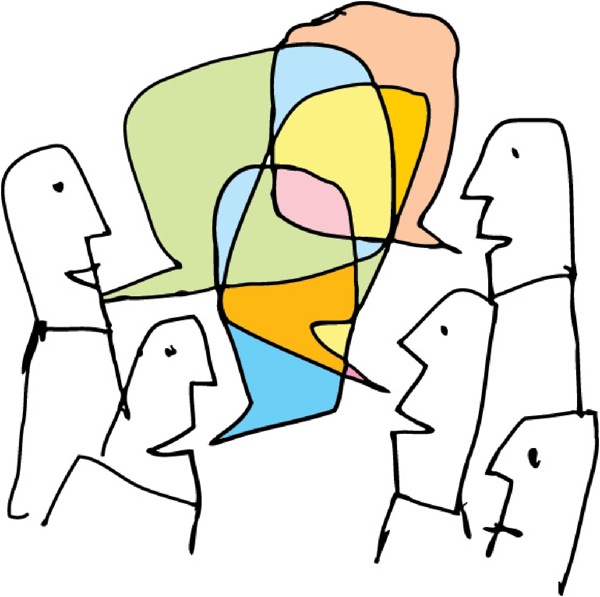
Emma chose this image after typing in "words" into Google search

Emma chose this image after typing “words” into Google search

Emma’s Presentation at The ICare4Autism Conference

Emma came up with the title of yesterday’s presentation – My Body Does Not Obey My Mind.  In preparation for our talk, Emma wrote, “how about discussing gleeful shouts and irreverent clapping as expressions of joy, but that many will see as indications of simple mindedness?”  I told her I thought this was a great idea.

During our presentation Emma found a number of people in the audience who happily engaged in making faces with her. One of her favorite faces is one she refers to as “fish lips”.   She proceeded to demonstrate “fish lips” and then, after successfully encouraging others to participate, she typed, “Doing fish lips to the audience is an expression of funny playfulness, but can be misinterpreted as simple mindedness.  Silliness is acceptable in those who are believed smart, but for those like me, it indicates stupidity.”  It was a powerful demonstration of yet another way in which someone like Emma is often misunderstood.

Before leaving to give our presentation yesterday,  Emma and I had the following conversation:

Ariane:  What other examples can you give that would demonstrate the body/mind disconnect, besides what you think and then what you might say out loud in contrast?
Emma:  Things like not being able to sit still and needing to jump up.   There are many examples like that.   In my mind I am graceful and move like a dancer and speak with passion and the articulation of an acting coach.
Ariane:  Aw… that’s really beautifully expressed, Emma.  Really, really powerful.
I need to be careful not to take control of our presentation, because you must take the lead.
Emma:  You will be very good.  Don’t worry, I will be charming and will have your back.
Ariane:  Oh, Emma, thank you for the encouragement, that means a lot to me.
Are you going to ask me questions if you think there’s something I’m missing or not talking about?
Emma:  Yes, thoughts of fear worry you, but I know what I want to say.

This morning, we again discussed our presentation, which began with me asking Emma how she thought it went:

Emma:  Spoken words cannot compete with typed power house wording of dramatic charm.
Ariane:  You were charming!  And, as always, so insightful!  I’m so proud of you.
Emma:  Teaching by real life demonstration, pleases all.
Ariane:  I agree!  What was the experience like for you, sitting in front of such a large audience?
Emma:  Happiness, overwhelming joy to be able to show off my inner eloquent and funny self.
Ariane:  You were eloquent and very funny!  I think you touched a great many people yesterday.  I think many will rethink what they have believed about autism and those they care for, who are autistic, because of you.
Emma:  Brave honesty opens minds and hearts.  I hope people will question what they have been told.
Ariane:  I do too.
Emma:  Horrible ideas about people cause many to do terrible things, and treat someone like me with repetitive demands for compliance.
Ariane:  Perhaps meeting you, will make them pause and reconsider their approach.
Emma:  Showing humor and compassion for them is my belief and way of prodding them to venture down different roads.
Ariane:  You are such a wonderful example of loving kindness put into action!
Emma:  Worry and fear are fueled by furious words spoken harshly, humor soothes, shining sunny rays spreading hope.
Ariane:  It’s a much needed hope.  I’m so proud of you.
Emma:  Knowing pride brightens, giving gifts of hope dulls years of lingering sadness for schooling gone awry.
Richard videotaped our presentation and we are hoping to have at least a few clips of it available on our YouTube channel this afternoon.  Emma ended our presentation by getting up on the stage with the microphone and belting out a rousing rendition of September’s You’ll Never See Me Again.  We have that on tape as well!  Stay tuned…
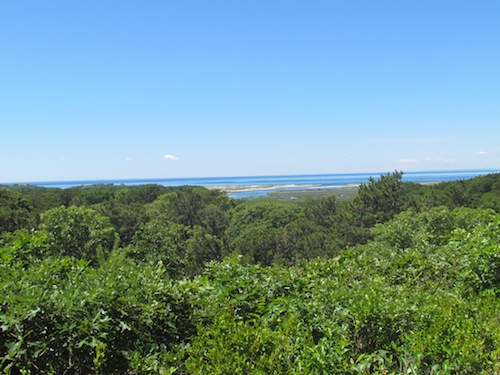
Emma chose this photograph, taken last week while in Cape Cod, until we can pull some photos from the videotape of the conference.

Emma chose this photograph, taken last week while in Cape Cod, until we can pull some photos from the videotape of the conference.

Tomorrow’s Presentation

Emma and I are giving an hour-long presentation tomorrow at the ICare4Autism Conference.  We have been discussing our presentation and while I would be most comfortable writing everything out and basically reading from index cards, Emma has proposed that we do a much looser, more fluid type of presentation, one where I introduce us and then she will type some thoughts about the topic she chose, My Body Does not Obey My Mind, I will respond, she will type something else and on it goes, ending with questions from the audience.

Emma wrote, “How about making this presentation more meaningful by having me talk and then writing an answer to a question and showing them what we mean when we use the words “body/mind disconnect”?

I asked her if she was okay if I brought up the topic of stimming too.  Emma wrote, “Maybe we start with something less controversial like nice questions about the weather.”

I said, “You mean I ask you a question about the weather and then wait for you to give a spoken answer? And then after you’ve said something, you will type an answer to show the difference in real-time?”

Emma replied, “You ask me a simple question like – How do you like the weather today? – because talkers like that sort of thing.”

So to practice, I said to her, “What do you think of the weather today?”  Emma said, “Pool!”

“So that’s a good example, right?” I asked.

Emma then typed, “Beautiful blue skies with whispering air that rustling leaves answer.”

I said, “That is such a perfect example of what you’ve been talking about.  What else?”

“Vanity will be put aside so that others may learn,” Emma wrote.

When I suggested I write what I would say in response, Emma wrote, “How about you talk about how my talking voice confused you and made you think what I said was my intention?”

I told Emma this way of presenting is nerve-wracking for me, but that I think it will make for a far more compelling and powerful presentation.  She then typed, “You can lean on me.”  I told her I will be practicing mindfulness and breathing to relax.  Emma wrote, “Good work, Mommy.  I will be right next to you lending support.”

I’m counting on it, Emma.  I’m counting on it.

Emma and Me

Emma and Me

A Few Thoughts From Emma

“Today I will talk about the weather,”  Emma wrote.  Then she smiled and wrote, “That’s a joke.”

*Quick aside from Ariane.  Emma has referred to those who are well versed in cocktail party conversation as “weather talkers”.

“You’re funny,” Ariane said.

“Lean trains of thought provide rich moments of quiet peace.  Purposeful silence holds meaningful interconnection between like-minded souls.  Caring beings care in the silence as much or more as with words.   Now for a moment of silence.”

The view from the deck where we are staying

The view from the deck where we are staying

Today’s Post Brought to You By Emma

Written by Emma Zurcher-Long

“Today I will tell a short story about a girl who wanted to speak to the wind.  She listened with ears attuned to wind’s song, and desired to speak with its power and beauty.  But the wind was not used to listening, and the sounds she made were ignored.  People heard her and told her to be less noisy.  The wind was loud, yet no one attempted to quiet it.  The girl understood the wind’s voice and eventually it heard her.  Neither one spoke with words.

“The End”

Emma Chose this image from a google search "Girl in the wind"

Emma chose this image from a google search “Girl in the wind”

“A Mind Like a Magician’s Hat”

This morning I asked Emma what she wanted to work on.  She wrote, “We could write a blog post.”

“Okay, what do you want to write about?”  I asked.

“I could make up a story about an Autistic girl who means well, but is not believed smart,” Emma wrote.

“Okay.  Good idea,” I said.

Emma wrote, “She has a mind like a magician’s hat.  Mysterious things are inside.   When revealed, people gasp in astonishment.  Tied to the words regular people can hear are lots of other things they miss.”

“Like what?” I asked.

“All sorts of pleasing sounds, colors and tastes that are healing, but only a special few can experience this.  As loud minds drown out hers, she must work harder than most to be heard.  The End.”

This is the image Emma chose to accompany her story

This is the image Emma chose to accompany her story

Homeschooling, Unschooling…

We are homeschooling, or unschooling or…  I actually don’t know how these terms are defined and haven’t had time to do the research necessary to speak about any of this with any authority, let alone knowledge.  In fact “time” and what that means has kind of blown up in our faces as there never seems to be enough of it.  Richard and I are scrambling to make this work, while making jokes about how many clones we would need to do so, if cloning were an actual thing.  All of this is very new and we have not fallen into a routine yet.  I guess the best description of what we are doing at the moment is – winging it.  We are winging it, though this will change as time goes on, we think.  We hope.  We expect.  What I can say is that Richard asked Emma what part of history she was interested in learning and she chose ancient Egypt and ancient Rome.  This then led to several lessons on the Druids.  Who knows where all of this will lead next!

Meanwhile, Emma and I have embarked on the exciting adventure known as the German language, as per Emma’s request.  We had a particularly hilarious conversation a few weeks ago when Emma first brought up her interest in learning German.  I was somewhat incredulous and kept saying things like “Really?”  and “Are you sure you want to learn German?”  and “What about Spanish or French?”  But no, Emma was not to be swayed, so German it is.  And guess what?  It is SO much FUN!!  We are using a couple of different programs, one is Duolingo, which was recommended by a couple of people.  It’s a free online language program.  Did you know all nouns in German are capitalized?  Why?  Who knows, lots of theories, but there is no one answer as to why, that everyone agrees with.

In addition Emma is working on several writing projects.  One is a chapter idea, in which we will write alternating chapters.  Emma wrote, “How about starting on what you presumed parenting would be before I was born.”  I said, “Can you ask me questions, things you want to know?”  Emma wrote, “Very happy to ask.”  I said, “And what will your chapter be about?”  Emma wrote, “What I presumed the world would be like when I was a baby.”  I cannot wait to hear what she has to say about that!

We continue to make our way through Malala’s autobiography, I am Malala about the Pakistani girl who fought for her right to have the same education as boys and was shot by the Taliban.  This has led to some terrific discussions about advocating for one’s rights, oppression, prejudice, violence, silencing, education, and the lack of.  Recently Emma wrote, “Her life is unlike mine.”  (Referring to Malala.)  “But the oppression is similar to what I have experienced.”

While I continue to go through periods of abject terror at the thought of what we have undertaken, these moments are tempered with the excitement and joy I feel knowing that pulling Emma from school was by far the best thing for her.  She is ecstatic and the marked change in her anxiety and stress levels makes all of us very, very happy.

Emma chose this image for today's post.

Emma chose this image for today’s post.

An Argument Against Pathologizing Autism – What Others Had to Say

In yesterday’s blog post I asked for thoughts regarding the pathologizing language that dominates most conversations about autism and those who are Autistic.   I received some terrific responses both here, through email and on Emma’s Hope Book Facebook page.  I also asked Emma for her thoughts, which she very patiently gave me and generously said I could post here.

Emma wrote, “Deciding autism is a medical condition eases the minds of those who profit from it.”

A couple of great links were sent to things that have been written on the topic or related topics.  This, from the Zur Institute entitled:  DSM: Diagnosing for Status and Money, focusses on the DSM and argues, “Historically, many clinicians have been unaware that the DSM is more political than scientific, that there is little agreement among professionals regarding the meaning of vaguely defined terms, and that it includes only scant empirical data.”

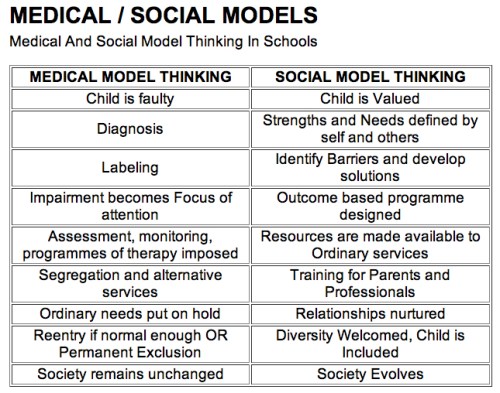
Another link sent was this one, Time to let go of the medical model by Jarrod Marrinon, which does not speak specifically about autism, but is certainly still relevant.

And this link from Nick Walker’s blog, Five Steps Toward Autism Acceptance is terrific with the first step being, “De-pathologize autism and Autistic people.  This, in particular, stood out, “Blind people, Deaf people, and many other disabled people get the services and accommodations they need without being labeled as having mental disorders. We don’t have to call autism a disorder or a disease to acknowledge that Autistic people are disabled and can require accommodations.”

Nick’s words were similar to what Emma wrote when I asked, “What do you say to people who need support and assistance in their daily life?”

“Why should they have to fight anyone to receive the help they need to live?”

I said, “Well, in an ideal world they wouldn’t need to, but some say that there is only so much money and available resources, so people need to prove that they need the help more than others.  In effect they are being forced to compete for the money that’s been allocated.

Emma wrote, “This sounds like an excuse so that people who do not need help can feel better about how others are treated.”

David wrote, “The obsession with behavior as the be-all-end-all of autism “science” and “treatment” is a superficial distraction and a formula for spectacular failure in addressing the underlying realities – both impairments and abilities alike – which Autistics experience and must cope with every minute of every day. The temptation to pathologize and treat behavior for its own sake is dangerously misleading and utterly beside the point. That boilerplate approach to autism HAS GOT TO GO.”

Toddynho wrote, “why pathologizing autism is harmful”

Compare and contrast the life experiences of LGBT people in contexts where homosexuality is pathologized and in contexts where it is not.

“Are there any studies showing the direct links to pathology language and harm and abuse of the people who are being pathologized?”

To me, it’s self-evident and obvious that groups that are pathologized on the basis of their way of being are harmed and abused in consequence.

“If we do not pathologize autism how will the people who require assistance receive it?”

On a massive, massive scale, the adult autistics who require assistance are either receiving no assistance whatsoever, or the meager assistance being received is grossly inadequate if not downright harmful.”

Toddynho goes on to say, “What we have is a society that is pervasively pathological. Addressing the most acute societal pathologies will improve things for autistic people broadly much more and much faster than any kind of autism-specific “assistance” strategies ever will — and moreover will make things a lot better for most non-autistic people too.”

Gregg wrote, “Its a false logic really. There is nothing inherent to medical model understandings of Autism that enables support. Just the opposite really Its well documented that social model understandings enable supports that are far more useful to autistic people. I see no value in pathologizing Autism except to the industry that has been built up trying to take advantage of parents of Autistic kids.”

I believe the medical model, which is the model used in almost every university and by most autism professionals does tremendous damage to the very people they are intent on “helping”.  To repeat what Toddynho wrote, “…it’s self-evident and obvious that groups that are pathologized on the basis of their way of being are harmed and abused in consequence.”

“Do you think pathologizing language is harmful?” I asked Emma.

Emma wrote, “Justifying decisions to ignore those who need help is not reason to make people feel ashamed of their existence.  People need encouragement to do good.  There will always be some who cannot, but this is not a good reason for everyone else to stop helping each other.”
 

From: ukdisabilityhistorymonth.com

From: ukdisabilityhistorymonth.com


Pathologizing Autism? Let’s Discuss.

People argue that we have to pathologize autism because if we do not, families and Autistic people cannot obtain much needed services.  People say that it is one of those unfortunate things, but given the confines of our system, it’s the way it works.  People say that those who argue against the medical model for autism are not considering those who are more profoundly affected by their autism, those who require 24 hour care and assistance, people whose bodies cannot and do not do what their brains tell them, so much so that they cannot live without daily support.

I would love feedback and links from those who are Autistic favoring a shift away from pathologizing language and your reasons why.  I am particularly interested in hearing from those who are themselves, or who discuss people who are, in need of round the clock care.  If you have written about this, or have read anything about this, please send links.

Things people say, that I’d like thoughts on –

The medical model has its place and is needed to get services.

If we do not pathologize how will the people who require assistance receive it?

Any and all arguments and specific reasons why pathologizing autism is harmful.  Are there any studies showing the direct links to pathology language and harm and abuse of the people who are being pathologized?

What are the psychological repercussions of pathologizing autism?  Personal experience would be great!  (If you prefer to keep this confidential, email me at emmashopeblog@gmail.com.)  I will only share content from those who comment here or who tell me in private that I may do so.

A fantastic blog I refer to often and have reread countless times, is Nick Walker’s blog – Neurocosmopolitan, so no one need send me links to Nick’s work.  But for those of you who are unfamiliar with him, please, please read.  His blog is fairly new and has half a dozen posts, so it’s possible to read everything he’s posted in an hour or so, depending on how quickly you read.  I highly recommend doing so. (It took me a bit longer than an hour because I made notes along the way, as well as went to all the links he provided.)

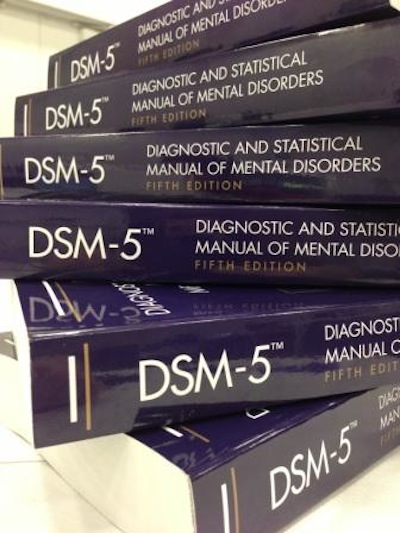
DSM5

A Traffic Jam and an Analogy

Yesterday we had to rent a car (we New Yorkers often do not own cars, one of the many wonderful benefits of living in such a vibrant city!) to go see Soma, who was about an hour outside of the city.  (For more about Soma, you can click on her name above, which will take you to her website for the Halo Center.  You can also read more that I’ve written by typing either Soma and/or RPM into the search box on this blog.)  We thought we’d given ourselves plenty of time by renting the car almost two hours prior to our appointment, but as luck would have it a lane was closed due to an earlier collision and coupled with the ongoing and seemingly never ending road work on all and any highways in and out of Manhattan, we realized we would be lucky if we made our appointment at all.

When we pulled up, Soma was waiting, we were exactly two minutes late(!) so we jumped out of the car and raced in to begin Emma’s session.  Emma wrote, “What happens if traffic never gets moving?”

Pause.

“You are stuck in a rut.  It’s like autism.  When you have the diagnosis you are stuck in stims and cannot proceed where your actions want to be.  It is always clogged like a caged mind driving through traffic.”

This morning I asked Emma if we could talk more about this as I’ve not heard her talk about autism and stims in this way before.  In fact, Emma has referred to stimming as self-care ‘here‘ and ‘here‘ and I wondered if she’d be willing to talk a bit more about this with me.  She wrote that she would.  She wrote, “Circular stimming begins in self-care and can aid focussed mind, but samples hasty stress when consumed by the stim.”

“So what I hear you saying is that the stim begins as a way to self-care, but can also become the cause of stress.  Is that accurate?”  I asked.

“Understand that I cannot always filter all that is going on easily.  My string grounds me.  Not having it can cause horrible stress, but it can also distract me.”

I asked Emma if there was anything that another person can do that would feel supportive and encouraging, but that might also make that struggle easier.

Emma wrote, “Don’t force me to put it away, but instead gently remind me to stay in the task asked.”

“Is it okay to suggest you hold the string in your left hand or wrap it around one hand so that you’re still free to type?”  I asked.

“It is nice to be helped with kind suggestions, not nice to be stripped of any say in what is being done.”

“Okay, I totally get that,” I said.  “With Soma you wrote, “What is wrong with the world?”  Then you answered your own question by writing, “In fact nothing is wrong with the world.  We are the problems.  We are not right.  We see things and create a problem.  I don’t have autism label on my forehead like Soma’s dot.”

(Emma was referring to Soma’s “bindi” the red dot Hindi Indian women often wear.  Soma, being Soma, made a joke and did not take offense.)  Emma then wrote, “But I have to walk around all my life with this label.”

I asked Emma if she’d talk a bit more about this and asked, “Do you feel if you didn’t have a diagnosis, people would treat you differently?”

“People see me, think she is different, forgetting that I have feelings like they do. If people understood what autism really is, it would not matter, but people don’t, and so it makes life much harder.”

“So it isn’t the label or the word “autism” that bothers you as much as what that seems to mean to so many people?”

Emma wrote, “This is the biggest problem and causes mistreatment and misunderstandings.”

“Thank you so much for clarifying all of this Emma.  Do you have anything to say to parents and educators who are trying to understand?”

“Keep your open mind and listen to the people who are Autistic for information about autism,” Emma wrote.

Soma and Emma ~ June 12, 2014

Soma and Emma ~ June 12, 2014

Ido Kedar’s Blog and Emma’s Response

I’ve written about Ido and his book and blog, both entitled Ido in Autismland, before, ‘here‘, ‘here‘, and ‘here,’ but want to devote today’s post to Ido’s latest blog post because Emma and I read his post this morning and Emma added some of her own thoughts to what Ido wrote.

Ido begins by talking about having just finished up his junior year at a non special education high school.  (I originally wrote “regular,” but then amended that because I no longer know what any of these words even mean, much less how derogatory they sound.)  Ido then addresses parents and then professionals and finally ends the post with a few encouraging words to other Autistic non-speakers.

After Emma and I read his post, I asked Emma what she thought.  She wrote, “I thought it was decidedly helpful to read Ido’s writing.  He tells strong truths lived.  Teaching wasted talkers about life not run on word fuel.”

“Word fuel.”  Can we just take a moment to fully appreciate that?  “Teaching wasted talkers about life not run on word fuel.”  There’s more, so I will disregard my urge to just end this post with that.

I asked Emma if she had anything she wanted to add to the paragraph he addresses to parents.  Emma wrote, “Parents – you must address your fears and doubts first, and then have caring words of encouragement for all word thinkers.”

I then asked for her thoughts on the paragraph addressed to “professionals”.  Emma wrote, “Teaching tedium does nothing, but water down ideas.  Lethargy is the lesson learned.”

Lethargy is the lesson learned.

Ido ends his post with a few words directed to Autistics like him.  Emma then wrote, “Work today, knowing each day pleases the necessary work of tomorrow.  Having hope, and loving, believing parents will make work easier.”

"Talkers"

“Talkers”

Homeschooling

We have sent in our “Letter of Intent” to home school.  Yup.  We have made the leap.  We are going to do this.  We will need to send in quarterly reports.  We will need to send in detailed descriptions of our curriculum.  We have begun a file.  Correction.  We have begun several files.  One of the files has the copy of our “letter of intent”.  The others will soon be filled with “history,” “social studies,” “science,” “math,” “english,” “creative writing,” “philosophy,” “geography,” to name just a few, and “German”.   You read that right.  German.  This is the language Emma asked to learn. “Language,” Emma wrote.    “You mean you want to learn a different language?” I asked.

“Yes,” she wrote back.  “How about German?”

“Seriously?” I asked.

“Yes,” she replied.

We will also be doing theatre and acting.  Emma suggested writing a musical, as well as studying art, art history, artists and doing art projects incorporating painting, collage, photography, origami, fabric, found objects and anything else Emma might show interest in doing and learning about.  Taking a page from one of my favorite artists, Robert Rauschenberg, who once wrote that he wanted to work, “in the gap between art and life” so will we!

All of this has happened quite suddenly.  I have gone from gut churning terror and overwhelm to something calmer and more peaceful.  Somehow writing and sending that letter of intent made it seem concrete…  and now, now I feel tremendous relief.  Just tremendous relief.  I know we will figure this out as we go.  I know it will be tough at times, but in the end, I no longer need to worry that she will be challenged academically.

During a recent typing session I asked Emma if she had anything more to add regarding homeschooling.  She wrote that she was excited to be home schooled and then wrote, “… what cabaret kind of life awaits me I can only guess.”

When I showed this to her just now and asked if there was anything else she wanted to add, she wrote, “I paint words on to the canvas that I think of as my life.”

This is the photograph she chose to accompany this post.

July, 2010

July, 2010


Silencing

“Having a voice after years of being ignored saves me from treacherous loss.  Years of nothing, makes the smart ideas percolate.  It is a strong force within, waiting for encouragement.”  ~  Emma

There are people who would like to silence my daughter and those like her.   One person recently accused me of “exploiting” my daughter to “satisfy your own vanity and craving for attention” by publishing things Emma’s said she wants others to read.  This particular person went on to write (as though to Emma), “Autistic people are irrelevant in your mother’s world.  And parenting is more of a competitive sport to her than a domestic responsibility.  That is truly disgusting.”   And yet if I do not publish the things my daughter writes and says she wants others to read and understand, then I become the silencer.  I cannot presume her competent, but then selectively do so, by not publishing what she has asked to have published.

As with my older child, we have discussed, and continue to discuss at length the internet, the importance of realizing what one says on the internet, stays on the internet.  We have discussed issues around human rights and advocacy.  We are currently engaged in an ongoing discussion related specifically to blog writing because of the book we are reading, I am Malala in which Malala writes about being increasingly threatened and silenced by the Taliban and how her right to an education was taken from her simply because she was born female.

There are those who say that the words someone like my daughter writes are not really hers.  This is a different way of silencing, but it is as equally brutal and effective.  They say that because science has not shown RPM to be an easily replicated method it is therefore suspect.  They say, parents like me are so determined to believe in their child’s intelligence and competence, we will go to any lengths to “believe” even when it’s clear (to them) our children cannot possibly be the competent beings we know they are.  This is the opposite of presuming competence.  They go on to suggest that though (in the case of RPM, where there is no physical contact of any kind) no one touches my daughter, those nearby are able to influence, so much so that they can actually force the person to point to letters, which spell out things they do not mean to write.

People like my daughter are in a perpetual state of limbo, a kind of no man’s land, neither here nor there.  For those of us speaking out, writing about all of this, giving our children a platform from which to write, we are easy targets.  There will always be people who disagree. There will always be people who are threatened by ideas that confront what they believe and have been told.  There will always be people who viciously attack for reasons that may or may not be apparent to those they strike out at.  I’ve been fortunate and have not had many who have attacked.  In fact this recent commenter is the only one who has come after me, repeatedly, with such viciousness and undisguised hatred.

But I will not be silenced, nor will I allow my daughter to be; as long as she wants to be heard, I will do all I can to make sure she is.

*Emma chose this photograph to go along with her and my words.  Yes, I read this to her, before publishing.  And sadly, it seems, I must also state the obvious,  I do not and will not publish anything ever, that she does not want me to publish.  This blog will disappear the instant Emma tells me she wants it taken down.

Emma Riding Beau

Emma Riding Beau


Beauty

I see you spinning, spinning, spinning.  Your white t-shirt caught my eye.  Moving back and forth so many buildings away, through floor to ceiling windows, I might not have seen, I might not have noticed… but your white t-shirt, so very white, and then, and then I noticed your long limbs, moving in different directions from your body…

In my home, music is playing.  This morning it is John Lennon’s lullaby to his son, Sean.

“Beautiful,
Beautiful, beautiful,
Beautiful Boy…”

And I wonder has someone told you how beautiful you are?  Will you grow up knowing you are beautiful?  Are you being nurtured with those words?  Are you valued?  Is your spinning, spinning, spinning seen as an expression of your beauty?  Are you being reassured that no matter what, you are beautiful?

“Close your eyes,
Have no fear,
The monsters gone,
He’s on the run and your daddy’s here…”

Spinning, spinning, spinning… I glance up and you’re gone. Where have you gone?  The white t-shirt has receded.  The spinning has stopped.  But the lyrics continue…

“Before you cross the street,
Take my hand,
Life is just what happens to you,
While you’re busy making other plans…”

When you are grown, will you internalize what others have told you?  Will the lyrics of your life be one of beauty or something else?  Will you be able to see the beauty of all that is you?

“Beautiful,
Beautiful, beautiful,
Beautiful Boy…”

Spinning boy

Spinning boy

Finding Hope ~ By Emma

“Finding Hope

It cannot be found in fear, anger or when overwhelmed.

Hope must be cared for. It has to be nurtured and fed yummy treats.  Hope needs love and trust to grow.

Many people give up on hope because they are told it is not realistic and they need to face reality.

But what is reality?

Do you prefer living with hope or without it?

I prefer to be hopeful.”

*This post was written by Emma, including the title and she chose the accompanying photograph.*

This photograph is what Emma chose to represent hope.  It is a pine cone resting atop her great grandfather's tombstone.

This photograph is what Emma chose to represent hope. It is a pine cone with a metal heart, resting atop her great grandfather’s tombstone.