This… Just This….

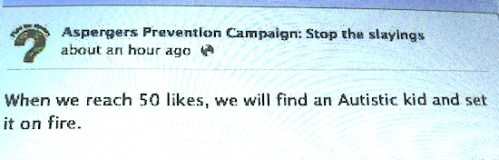
Someone spent time creating this page on Facebook… no one stopped them until countless people had seen it.

Hatred

This page has now been removed.  I post it here because the hatred, the sheer toxicity and venom that the person who created this page had to have felt to create this page is what so many of my friends and I have worried about and feared.  This screen shot sums up so much.

I have spent several hours writing and deleting my thoughts on this.  I have decided I cannot write anything more because I have no words.  I have nothing to offer.

Related Articles: 

Where Fear Leads Us…

I used to work at an ad agency.  One of the first things I learned was that there is one emotion that motivates people more reliably than any other.  Fear.  Fear compels people to do a great many things they might not otherwise do.

Once we’ve become convinced that something is worth fearing it is extremely difficult to reverse.  When we speak of Autism using words and phrases that cause us to fear Autistic people, we are doing tremendous harm in the short and long-term to that population, harm that will be very difficult to reverse.   Convincing people to feel fearful about something or someone is one of the easiest things to do.  Convincing them, once they are convinced, that it was all a “false alarm” is extremely hard.  So when those first news reports came out linking Aspergers with the shooting at Sandy Hook Elementary School, it only took an unethical few to do tremendous damage to an entire population of people.  Despite the fact that if you google “Aspergers and violence” the first dozen pages that come up are articles stating that there is absolutely NO connection between Aspergers and violence.  And yet, my Autistic friends and I are terrified.

I am frightened for my Autistic daughter and for those I love and care about who are Autistic.  I am frightened by what people will assume and how they will then treat those they assume are Autistic.  I am frightened for my friends who are Autistic, will they be safe?  Will a non autistic person hurt them, say cruel things to them, treat them differently because they fear “autism” and therefore “Autistics”?  I am frightened even though the truth is neurotypical people are far more likely to commit acts of violence than Autistics.  Watch these videos on Youtube ‘here‘ and ‘here‘.  Videos showing Autistic and disabled people being tortured by others.  Read these reports ‘here’, ‘here‘, ‘here‘ and ‘here‘ about the systematic abuse of Autistic people, abuse that continues unabated all the time.

It is WRONG to condemn a group of people, people who have suffered at the hands of those who now accuse them, a people who have been marginalized, some of whom cannot defend themselves because they do not speak and have not been given the means to communicate effectively through any other means.  It is important that you know.  It is important that you understand the ramifications of connecting autism with murder.   I want you, no, I need you to understand why the words we use, the constant stream of negativity in relation to autism is causing untold damage to my daughter, to your daughter, your son, your Autistic child, to their futures, to the people I love, to my friends, to all who are Autistic and have had to deal with exactly this kind of prejudice their entire lives.  It has to stop.  It has to stop.

Children were killed, murdered.  The horror is unbearable.  But to add to an already heinous act by targeting a group of people and making it about them instead of what has happened, is adding more pain and agony to more children’s and people’s lives.  Innocent people.  Innocent children.  Don’t we see that?  Can’t people see we’re making it worse?   We aren’t ensuring our children will be safe with these beliefs.  We aren’t making the world a better place with more prejudice, bigotry, false assumptions, and our fear.  Our fear is what drives us to conclude that we are fighting a false enemy.  Our fear is what compels us to hurt, lock up, institutionalize, condemn and torture.  Our fear is what causes us to commit acts of violence against those we’ve deemed violent.  Our fear…

1Freedom Tower

The Art of Breathing and Just Being: Lessons From my Daughter

One of the single most difficult things I have had to practice in life is the art of being present.  Simply being shouldn’t be so hard, yet I have found it is.  It is something I have to practice, something, I have come to understand, that is much like breathing, I will never be “done with it”.   Doing nothing is surprisingly difficult.  Doing nothing in the face of horror is even harder.  When I have a great many feelings, sitting still and being present is all the more difficult.  The last thing I want to do is sit and actually feel.  Why would I want to do that?  Now’s the time for action (!) and yet, it is during these times that it is vitally important for me to practice being still.  Every fiber of my being is screaming at me to move, to make sense of, to understand, to find the thing, the motive, something or someone I can blame, something that allows me to say, oh yes, of course it was that, that’s why this has happened.

Yet, it is an illusion.  The feelings remain no matter what is said.  No matter what has been written, the feelings remain.  Feelings – grief, fear, horror, sadness, confusion, pain, suffering, outrage and anger.  Feelings.  Lean into them.  Do nothing.  Breathe.  

Emma, unlike me, does not need to practice the art of being.  She does this without trying.  It seems to me, as I watch her, that she comes to this idea of “being present” naturally.  It is not an “idea” for her, it is simply life.  Emma just “is”.  Emma is one of the happiest, most joyful beings I have ever come into contact with.  Her median state is one of happiness.   She is without judgement or blame.  She does not hold onto resentments or grudges.  Emma does not talk about people behind their backs, she does not condemn or bully.  Emma is not dishonest or cruel.  And yes, Emma is Autistic, which must not to be confused with “mental illness”.   In fact, Emma is the opposite of “mentally ill”.  Perhaps because of her neurology she is able to be present in a way that I do not come to as easily.  I must work hard at something she does not think about.

People say all kinds of things in anger, in grief that have little to do with anything.  People say things while trying to make sense of something that is senseless.  They latch on to an idea, they offer a reason, a cause, it’s because of this, or that they say.  Oh, that person did that because of __________.  We talk and reason and blame.  People say and do things we find offensive, things that will hurt us and our children.  When people are scared they say and do things they would not, upon deeper reflection, say and do.  So don’t do anything, I keep telling myself. Sit and be still.  But it hurts to do so.

Don’t say anything, just sit and be present.  And it feels unbearable.

Don’t move, just be present.  Look around.  What do you see?  What do you hear?  What do you smell.  What are you feeling?   I don’t want to feel.  

Close your eyes.

Breathe.   Fear.

Be present.  I can’t!

Breathe.   Anger.

Breathe.  More fear.

Breathe.

Breathe and just be.

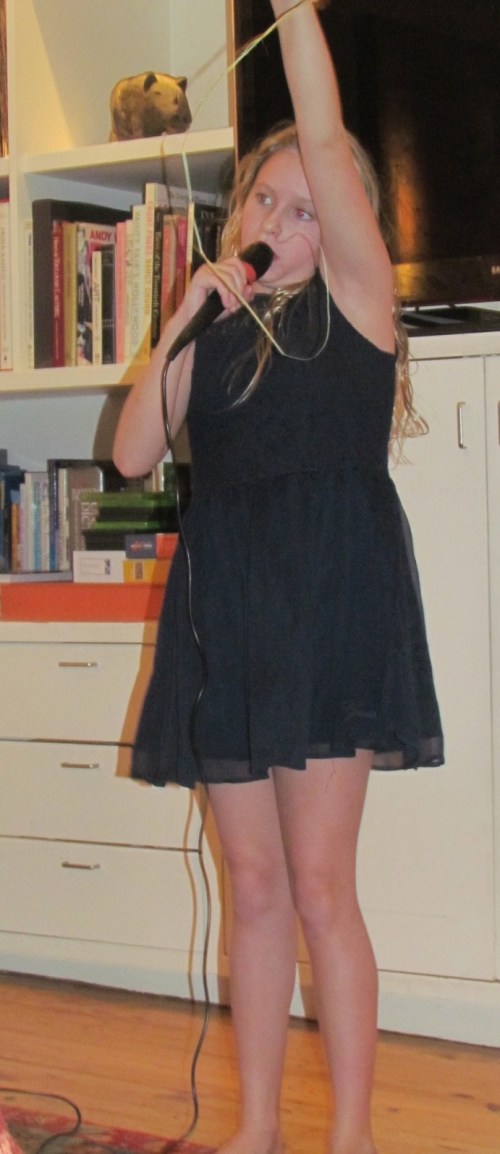
Emma performing for us, Saturday evening

1Em_performs

The Decisions We Make…. Or Parenting and Being Human

I hear you out there, Em.  I can hear you singing the same refrain, “you’ll never go home, you’ll never go home, you’ll never, never, never….. you’ll never go home.”  It’s a catchy tune, a little sad, but I try not to read anything into it.  It’s just a song you like, with a repetitive tune.   Eventually I go out and ask what you’re singing.  You hesitate and say nothing at first.  Then you tell me, “Central Park, it was a long time ago, you see Peter Pan.”  And I know that you saw a production of Peter Pan many years ago in Central Park’s Marionette Theatre.  I smile and tell you how much I love hearing you sing.  You indulge me with a few refrains before snuggling back into the rocking chair and falling silent.

Today we are going to the orthodontist.  He’s going to put braces on your back molars to expand your mouth.  All those years of thumb-sucking have taken a toll on the curvature of your mouth.  It sounds painful to me, but I’ve been assured it’s not.  You cannot bite down with your front teeth any longer.  There’s a permanent gap there, a thumb-sized gap, a space created from years of self soothing.  People warned us over the years.  People said you should make her stop doing that.  People said, she’ll have serious problems, her teeth will be ruined, her mouth will become distorted and change shape.  They were right.  It did.  But would it have been better to stop you from doing the one thing that made you feel calmer, the one thing that soothed you more than anything else, the one thing you could completely rely on?  Would that have been better?

In another few hours we will go to the orthodontist and you will have bands put on your molars to begin the expansion.  We’ve been preparing you for this for months.  “Go to dentist.  You’re going to get braces!”  You’ve said for the past few weeks.  We were given the option of having a metal “thumb guard” put into your mouth as well, but opted not to do that.  The orthodontist made no comment upon hearing our decision, simply nodded his head and said, “I understand.”  Maybe he does.  We just couldn’t do that to you without knowing what harm it would do.  You have only a few self soothing tricks up your sleeve and sucking your thumb is first in line.  How could we take that from you?  What would you substitute that with?  Something better?  Something worse?

We’re your parents.  We’re suppose to know these things, right?  Wrong.  Being parents is a lot trickier than anyone ever mentioned.  There was all the talk about pregnancy and labor, we went to the required classes teaching us how to regulate our breathing, but there were no parenting classes required, we didn’t need a license or a certificate, we didn’t even need a permit.  Pretty quickly we learned that what’s best for one child, isn’t necessarily what’s best for another.  That was a tough concept to fully take in.  Thumb sucking?  She’ll grow out of it.  One day she won’t need to do that, some people said.  We weighed the pros and cons.  We took a chance.  We didn’t stop you from soothing yourself, were we wrong?  Who knows.  And now today, off we go to the orthodontist.  As bumps in the road go, this is a small one.   I told the orthodontist, “we’re not going for perfection here.”  He nodded as he peered into your mouth.  “Right,” he said.  “We’ll go with the expander and then braces.  We’ll discuss as we go.

That sounded reasonable.

I can hear you in the other room.  You’re not singing any longer.  You’re doing a familiar monologue, “Not safe to hang on the pipe and not safe to go in the ledge.  What happens when we go in the ledge?  We might fall down.  It’s not safe!  We bump your head if you go in the ledge.  We’re not going to take go in.” (You always say that last line in a sing songy way.  As though it were part of a song.)  “No not going to take go swimming.  No.  Go to the dentist.  Get braces.  Yeah, going to go get braces then Emma gotta have to go.  Yeah, Emma gotta have to go on the airplane.”

Those are your words, Em.  That’s what you said this morning just now.  Is this the verbal equivalent of sucking your thumb?  Is this how you’re trying to work through fear, uncertainty?  Are you scared?  I realize I don’t know the answer to this.  I’ve learned that when I don’t know how you feel or what you think about something to ask you.  So I ask you, “Hey Em are you scared to go to the dentist?”  “Neeyah,” you say, shaking your head no and laughing.  “You get to put on braces!” you say.  “Are you happy you get to have braces?” I ask.  You nod your head up and down.  “Yeah!  Put on braces, then come home work with Pascal!”  “Yeah, Em.  That’s right.  We have a Skype call with Pascal this afternoon.  Are you looking forward to that?”

“Yeah!”  You say nodding your head emphatically.

So who’s fearful?  Not you.  You’re singing now.  To MJ.  You love dancing and singing with abandon and that’s what you’re doing now as I type this.  As I try to work through the decisions we made that led up to this moment.  This moment…  a moment when you are laughing, singing and dancing in the other room with the music blaring.   Here, let me hit “publish” so I can join you.

!EM

Less Than A Year Ago…

If I don’t immediately take notes during and after my typing sessions with Emma, I would wonder whether the words she typed were a figment of my imagination. There is something almost magical seeing and reading the words typed from someone who does not, or does not easily, communicate with spoken language.  It reminds me of the time I went to a lecture given by Soma Mukhopadhyay with her autistic son, Tito who began answering questions from the audience.  Tito is non-speaking and has a great many stims, yet translates his beautifully eloquent, poetic  thoughts into words and has no problem answering any question posed.  It’s often a disconnect for the neurotypical person watching someone who isn’t able to verbally say what they are thinking, yet has no trouble writing their thoughts, which in no way match the presumptions we, NTs tend to make.  If you’ve never witnessed something like this, it can be pretty mind-blowing, which says more about the limitations of neurotypical thinking and the constraints we unintentionally place on others who seem different from us than anything else.

Last night I began Emma’s session with a question.  It’s the same question I always ask her.  “Hey Em, how about after you sing this song we do a typing session together?”  And Emma answered, as she does every time I ask her this question, “Yeah!  Typing session with Mommy!”  Emma’s excitement, in and of itself, makes me incredibly happy.  That she’s interested and (I think) looks forward to our sessions as much as I do, makes me believe we are on the right track.  When we went into the room, now dubbed, “Emma’s office” I tried to think of a question it seemed likely Emma would know the answer to, but that if she typed it out, I would be surprised.  As we are leaving soon to visit her Granma for the holidays, I said, “When we fly to Granma’s we have to first take a taxi to an airport.  What’s the name of the airport we usually go to?”  Without hesitation, Emma typed, “La guardia”.  Wow!  Just wow!  I then asked, “There’s another airport near La Guardia, we don’t usually fly out of, but what’s the name of it?”  Emma, again, without hesitation, typed, “kennedy”.  Whoa!   Then I threw her, what I thought would be, a curve ball and asked, “When we fly out of La Guardia we always take the same airline to visit Granma.  What’s the name of the airline we always take?”  Emma wrote “United”.   EEEEEE!!!!!  Snoopy dance.  Give me a moment while I hyperventilate.  Whooooo, whooooo.

Emma went on to tell me what state and city we live in, the name of the state we were flying to and when I asked, “What’s another name for the city we live in?  It starts with an M?”  Em immediately typed “Manhattan” though she forgot the h and one of the ts.  I followed up with, “And what’s the neighborhood we live in?”  Emma, again without hesitation, typed, “Chelsea.”  Taking another deep breath.  For those of you who are doubting what I’m writing, I understand.  Really.  I do.  As I wrote above, I actually had to take notes during our session, because I knew I would come away as if in a dream.  (Ibby suggested I record our sessions together and I keep forgetting to do that, but I have to remember to from now on.)  That’s what it feels like, a dream.  I absolutely believe in my daughter’s competence.  I believe she is far more competent than most people who come into contact with her do.  I do not for a second doubt that she has a busy, complicated and fascinating mind, filled with thoughts, ideas and knowledge I can only guess at.  But to know this, to believe this, is different from being shown this.  I don’t mean to offend any of you reading this who are non-speaking and communicate by typing.  I don’t mean to offend, really I don’t.  I hope that were Emma to ever read this she will understand what I’m trying to say.  This is not about Emma’s limitations, either intellectual or otherwise, this is about my own.

For all you neurotypicals who can speak, humor me for a moment.  Think about how you would feel if you could not speak.  Think about all the things you know, but couldn’t say.  Now imagine if you were told something simple, like the city and state where you lived over and over, repeatedly, day after day.  Just think about this for a second.  Close your eyes and try to imagine what it would be like to not be able to speak.  Imagine that well-meaning people tried to help you speak through repetition and you were not allowed to move on until you were able to say these things being “taught” aloud.  Imagine how you would feel were you never able to say these things, so you weren’t allowed to move on.  It was assumed that because you couldn’t say them, you must not KNOW them. And yet, all this time…   all this time you really did know these things.  Not only did you know these things, but you knew so much more.  But no one believed that you did.  No one treated you as though you did.  Less than a year ago I assumed Emma did not know.  Less than a year ago I assumed Emma did not understand.

Less than a year ago…

Emma waiting for the school bus with her string

*Em

Balancing Career, Family and Losing Things…

Balance.  Sometimes it’s impossible for me to balance family, career, marriage, kids, friends, writing, keeping up with emails, showering…  okay I do usually get the showering part in there somehow, but other things tend to fall through the cracks.  At the moment I’m consumed with work related things and so the showering part seems like kind of a pain.  Though the old “french bath” notion can be kind of awful if you are sensitive to perfumes and cologne, as I am.  The combination of body odor being masked by an aggressive dose of perfume, no matter how expensive, makes me a little nauseous just thinking about it.   So no, foregoing a shower isn’t an option, but other things fall by the way side or are delegated to others.  And while all this is going on I know I’m not alone.  I know others hold down full-time jobs, have kids, manage to get them fed and into fairly clean clothes and off to school without too many mishaps.

The basics do get taken care of, though Nic’s question of whats for dinner, and my answer, “Ummmm…. how about a bowl of Cheerios?” didn’t exactly gain me any parenting of the year points, Nic didn’t seem too traumatized and Em was thrilled.  In fact, she was already happily digging into her bowl of Cheerios, which is her second favorite meal falling only behind pancakes as her first choice.  I only learned a few months ago that Nic had begun wearing his school uniform to bed at night, “it’s easier, Mom” and I’m pleased to say I put a stop to that, though I was proud of his creative problem solving and told him so.   I am grateful for the small things…

Anne-Marie Slaughter wrote a piece for the Atlantic last summer entitled: Why Women Still Can’t Have it All .  That piece caused a stir, though I never was able to work out exactly why.  My only issue was with the word “still”, implying that we should be able to have it all or that someone else does, but women don’t.  The truth is, it seems to me, no one “has it all”.   I’m not even sure what that means really, but that’s probably not the point.  I did feel an uncontrollable urge to argue the definition of the word “all” and was only stopped by the lack of interest anyone I attempted to discuss this with showed.  The tricky balance of work, family, mother, wife, friend, while maintaining some semblance of sanity is one I continue to look for, but never seem to actually find.  Things just do get forgotten or lost in the shuffle.

I have mail that remains unopened, I know I received some emails that I now cannot find, which require answering.  I’ll try to find them later.  I know there are things I can’t remember that were on my to do list, if only I could remember where I put that list and it’s not a coincidence that the single most common question in my family is:  “have you seen my glasses?”  that or “anyone seen my keys/phone/wallet?”  And the predictable answer, “if I could find my glasses I’d help you look.”  Nic thinks all of this is hilarious and has taken to falling on the floor in feigned horror when either of us ask, our voices suggesting the panic we are already feeling, no matter how many times in a single day this occurs.  That both his parents seem so completely incapable of keeping track of these everyday items does not portend well for either of our children, but at the moment this thought hasn’t occurred to them and we aren’t planning to mention it.

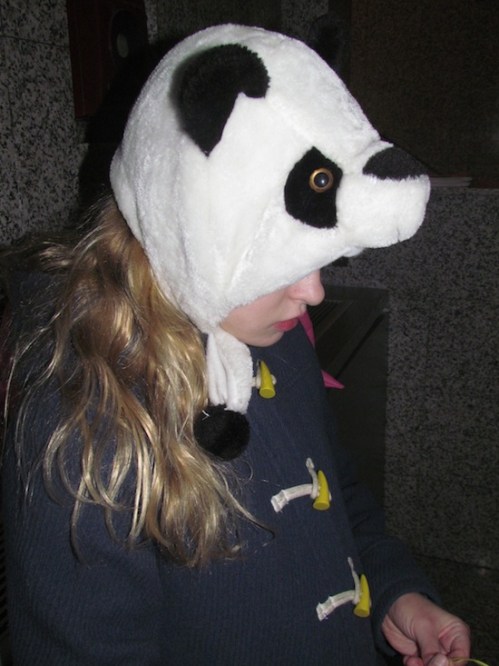
Em (wearing her favorite hat) made it out of the house this morning in one piece…

*Panda


An Unexpected Response and The Importance of Trust

During my supported typing session with Emma Saturday evening we discussed Little Red Riding Hood.  I asked Em what she thought Little Red was bringing Grandma in her basket.  Emma typed “blueberries”, which seemed like a terrific guess, particularly as Little Red could certainly have picked them herself, placing each blueberry in her basket as she made her way toward her Grandma’s house.  We discussed the wolf and I asked questions I thought it likely Em knew the answer to, but that I wouldn’t expect her to answer verbally, just as Pascal, who is helping me, advised.  Eventually I asked, “Em, what would you do if you were asleep in your bed and woke to see the big bad wolf?”  To which Emma typed,  “I would go to the three little pigs house”.  Though she paused after she’d typed, “I would go to the”.  I urged her, “Take your time Em.  Write what’s in your head.”  She looked at me and whispered, “three little pig’s house.”  She then typed the rest of the sentence with me.  “I would go to the three little pigs house.”

I looked at that sentence.  It took me a second and then I laughed and said, “Wow Em.  That is such a great idea!”  After all the three little pigs have had run-ins with the wolf.   They know, better than anyone, how to deal with him AND they figured out how to build a wolf-proof structure after much trial and error that the wolf cannot break into and where they are safe.  Emma grinned at me and then, very sweetly, patted my cheek.  I took her loving gesture as a sign of her encouragement and patience with me.

Supporting Emma’s typing is not easy.  It is actually much harder than I imagined it would be.  I am pretty sure Emma spoke the last four words of that sentence because she was not able to trust that I was able to support her well enough to type that.  I think she sensed my hesitation.  I had no idea what she was trying to type and because I am not well trained and am very new to this, my support varies and is not consistent yet.  I am hoping I will learn and be able to give her the support she needs to flourish and eventually type independently.  What is fascinating about FC (facilitated communication, more on that ‘here‘ and ‘here‘) is that had I asked this same question of Emma and expected a verbal response, I do not believe she would have given me this answer.  If she had, I would have been absolutely blown away.  These are not the types of things we have been able to “talk” about.  Typing is giving her the tool she needs to be able to express herself in a way that has not been possible to date.

As an aside, two years ago we hired a woman who developed a literacy program for Autistic children.  While I have some serious misgivings about certain aspects of her program, the literacy piece is extremely well mapped out and it was what finally gave Emma the tools and practice she needed to learn to form the letters of the alphabet and began to read, write and type.  Now two years later as a result, Emma is reading and writing at a second grade level, though it is probably much higher.  Emma was not taught through phonetics, in fact we never even taught her the names of the letters in the alphabet.  For two years Joe and I worked with Emma every day on her literacy program.  For more about that program you can read ‘here‘ and ‘here‘ or put the word “literacy” into the search box and everything I’ve written on the topic will come up (just be aware my ideas and views have changed pretty dramatically since many of these posts were written.)

I mention all of this, because I want people to understand that Emma did not sit down one day and begin typing in full sentences.  She did not suddenly pick up an encyclopedia and begin quoting from it.  I know there are those who have.  I wanted to pursue supported typing with Emma after going to the Autcom Conference this past October and meeting Pascal.  He was kind enough to speak with me about Emma and gave me some advice.  I didn’t know if she would be a good candidate for FC.  After all she has some language and typed independently with her two index fingers.  But I want her able to converse on a more sophisticated level.  It seemed to me, FC might be the method by which she would be able to do that.

I am always in awe of Emma’s patience with this world, with all of us, with me.  Her inner strength and resilience are incredible.  She has been ignored, doubted, talked down to, spoken of while she stood right there listening as though she were deaf, she has been misunderstood and treated as though she were incapable of understanding.  Were I treated this way I would be in a state of near constant rage, alternating with debilitating depression.  If any one of us were treated the way so many view and treat Autistic (whether non-speaking, marginally speaking or fully speaking) people, most of us would want to retreat from this world and lose all faith in people, even people we love.

I do not know how or where Emma gets the strength to greet each day with such cheer or how it is that she is so good-natured, kind and loving after all she has been through in her short life.  But she has and is.  I began this blog thinking it would be a document of Emma’s progress.  But in fact, this blog is a document of my progression.  I look back on entries made just a year ago and see how completely my ideas about Autism and my daughter have changed.  So much of what I thought and believed I no longer agree with or feel.  I have resisted the urge to delete all those past posts, because as horrified as I am by so many of them, I also know they are what I believed at the time.  My own journey is a reminder that we neuro-typical (not otherwise specified) adults can and do change, sometimes it just takes some of us a bit longer.

Me, Pascal, Richard and Em during our first “training” session

“Burden”? I Don’t Think So.

The roller coaster I call “autism” is less actual and more a description of my emotions, expectations and judgments surrounding specific things such as communication differences, internal issues, pain perception, sensory issues and the different ways in which Emma takes in information as opposed to the way my (more often than not) non-autistic brain works.  (My friend, AspieKid calls brains like mine NT-NOS, which I think is a hilarious and fitting acronym.) It is a “roller coaster” of my own design and construct.  A roller coaster being an accurate description of my emotional state, something I’ve grappled with my entire life and certainly well before I ever met my husband and had children.  Suggesting “autism” is the root cause for those pre-existing twists and turns my emotions tend to take or pinning the psychological upheavals I’m experiencing onto “autism” is not only wrong, it’s dishonest.

The truth is, I’ve always been a bit high-strung.  I live in New York City, a city whose inhabitants wear their neuroses proudly.  Neuroses in New York city are treated the way a runny nose is looked upon in the mid-west.  No big deal.  New Yorkers have melt downs at the drop of a hat.  I’ve seen fist fights break out between grown men in the middle of an intersection because of a perceived insult, people routinely scream at each other and cut each other off while driving.  Moms pushing babies and toddlers in Hummer-sized strollers wield them like tanks plowing a path for themselves along clogged sidewalks like Moses parting the Red Sea.  People think nothing of getting into loud arguments with lovers, neighbors, friends and strangers in the middle of the sidewalk, forcing pedestrians to walk around them.  It’s a city of ids and super egos.  It’s a city that is (perhaps) an exaggerated version of what one sees anywhere in the world.  People are capable of some pretty dreadful behavior.  Add a child with a different neurology to that already fragile, high-strung mix and you’re going to get some interesting results.  To then conclude that autism is to blame, defies all logic.  No one would do that.  Yet people blame their bad behavior, their inability to cope, their sadness, depression and general irritability on their autistic child all the time.

Suddenly it’s autism and Autistic people who are a “burden” to society.  Autism isn’t a “burden”.  It’s the negative views of autism, it’s the autism = untold horror, it’s the perception of autism and the lack of understanding and services, the lack of training and programs in our schools so they can help our Autistic children learn in a way that will ensure they flourish.  The “burden” is not our Autistic child on society.  The “burden” is the lack of support and adequate help families need so they can better support their child, giving them the sort of assistance  they need to thrive and flourish, a child who will one day become an Autistic adult and, in an ideal world, an active member of society.  We have to move away from this idea of Autism = burden.  Autism = tragedy.  Autism = _______ fill in the blank with a negative word.  We need to abandon our preconceived notions of what a non-speaking Autistic child cannot do.  We need to open our minds to the idea that our children are capable of far more than we may believe or can fathom.  We need to begin looking at what is good about Autism and the countless ways in which Autistic people can and do contribute to this world.  We need to remove the stigma and negativity and replace it with a more balanced and yes, positive view.

Imagine a world that includes Autistic people, accommodates Autistic people and stops shunning, restraining and abusing them.  A world in which it is not okay to have seclusion rooms and restraints, where a non-speaking person is treated with respect and without prejudice and where it is not assumed that because they do not speak they have nothing to say.  A world where people finally understand the burden isn’t the Autistic person, whether child or adult, it’s the lack of services, the judgments and the scare tactics being used.   Autism is big business and there is no better way to ensure dollars continue to pour in than when we are terrified. Let’s change that.

Having a child is joyful, exhausting, frustrating and the single most extraordinary experience a human being can have.  Having an Autistic child is joyful, exhausting, frustrating and the single most extraordinary experience a human being can have.   One can say that about a great many things in this life.  Let’s stop blaming Autism and our Autistic children for the ills of the world and the bad behavior displayed by people.

Emma and her infectious laugh

Em

EEEEEEEEEEEEE!

EEEEEEEEEE!!!!   (This is, but one, of many fabulous expressions I have come to love and use.  I first saw it used by my friend Paula and it made me happy.  I love that woman.)  What better way to express emotions that go far beyond “excitement”?  What words can possibly express joy and excitement and exuberance and that feeling when your throat constricts and tears flood your eyes and there’s that fluttering feeling in your chest that travels up and down as your vision blurs because of the tears?  Tears of joy.  Tears of overwhelming emotion that are impossible to express, that makes it difficult to breathe.  I don’t know of anything I could write here that would sum up what I am feeling.  EEEEEEEEEEEEEEEEEEE!   ⇐ comes the closest.

Yesterday was our second session with Pascal who is a trained facilitator of more than two decades.  Our first session I described ‘here‘.  Yesterday’s session took place over Skype.  It took us a while to get connected and once we did our connection kept going out on us.  At one point during a particularly exciting moment with Emma I squealed in delight, looked over to see Pascal’s expression and was met with a blank screen.  We’d lost him again.  “NOOOOOOO!  I cannot believe you just missed this!”  I shouted at the darkened screen while Joe, Emma’s therapist, and Richard laughed.  Our excitement was palpable.  But I’m getting ahead of myself.  Let me back up.

Two weeks ago we had our first session.  It was beyond exciting, but in the interim, between that session and our Skype call yesterday I’ve been filled with anxiety and so have only tried to practice with Emma a couple of times.  (For those of you unfamiliar with facilitated communication, it has a complicated history.  That history I’ve touched upon ‘here‘ and ‘here‘.)  I worried that I would inadvertently push Emma to type something she didn’t intend, I worried that I might betray her, by literally putting words in her mouth.  I have never forgotten one of the things Amy Sequenzia said to me regarding FC – that the most important piece was trust.  I didn’t want to do anything that would betray that, so I did nothing at all.

The first thing Pascal did was cover some of the basics.  We went over different things I could try.  We discussed the correct way of providing support firmly enough to ensure that trust, but not so much that it becomes a vise grip or so loosely that it is little more than an irritant.  Getting the support right is key and not as easy as it might sound.  There is also the resistance piece to all of this and there’s a rhythm that must be achieved as well.  The process is unlike anything I’ve ever done before.  I want to liken it to dancing, not the sort of dancing one does in a mosh pit, but ballroom dancing or learning the mambo, where you have to be in sync with your partner, both with your physical movements, but with your mind as well.  I’ve had some wonderful FC advisors (other moms who have generously talked to me and given me tips from their experiences doing FC) and so I remembered some of their suggestions.  One, from a new friend, Sheree, told me I need to empty my mind.  For anyone familiar with Buddhism this sounds much easier than it actually is.  But when I felt myself wanting to push Emma to hit a certain letter on the iPad, I “told on myself” immediately and Pascal would gently advise me.

As our session continued and I became more comfortable, feeling the rhythm and getting the right sense of her, we went beyond Emma typing answers to questions such as, “Where are they ice skating?” after being shown a photograph of ice skaters at the ice rink in Rockefeller Center and her dutifully typing Rockefeller Center (which I don’t mean to sound blasé about because you have no idea how  HUGE this was, but it was nothing compared to what happened next!)  We moved on to increasingly challenging questions, like “What is the name of the airport we have to fly into before we fly to Granma’s house?”  She typed “Denver” and I gasped.  *I keep wanting to tell you, to describe to you how massive this is.  I want to explain to you that while it may seem small or even utterly unexciting to you, it was beyond exciting for me to see her respond in this way.*  I don’t think I’ve ever heard Emma say the word “Denver” before and while this is something she has heard many, many times in her life; it is a place we must fly to several times a year when we go visit Granma, it is not something I expect Emma to utter.

Pascal continued to ask Emma more questions about visiting Granma and then I asked, without really thinking, “What kind of dogs does Granma have?”  Emma pointed her index finger and then reached for the “g”.  I think I may have held my breath.  Waiting.  Empty my mind.  Wait.  And then her finger found the “e” and I let myself take a tiny breath.  Keep breathing I told myself.  Keep breathing.  Quiet mind.  Be with her.  Let go.  Be with her.  Open mind.  Breathe.  And then her finger found the “r” and on we went until she’d written “german shepherds” complete with the “s” at the end because there are two and of course she’s correct and I sat there and stared at those words; the two most beautiful words my daughter has ever typed and I looked at her and pressed my forehead to her cheek.  I cannot convey the feelings.  Gratitude.  Joy, unbelievable joy and something else…  something I don’t know that I have the words for.  A knowing.  That’s all I can say.  I deep knowing that this is the right road we’ve taken.  We are on the right road.  And I exhaled and asked, “Em.  What kind of dog is Dozer?”  Emma looked at me and said, “Last time.”  And I laughed and hugged her and said, “Oh Em.  Really?  I want to talk to you like this all day!”  Emma beamed at me and then she patted my knee.  “Okay Em.  Last time,” I said. Then she typed, “nufandland.”

EEEEEEEEEEEEEEEEEEE!

*Cannot type through the tears.

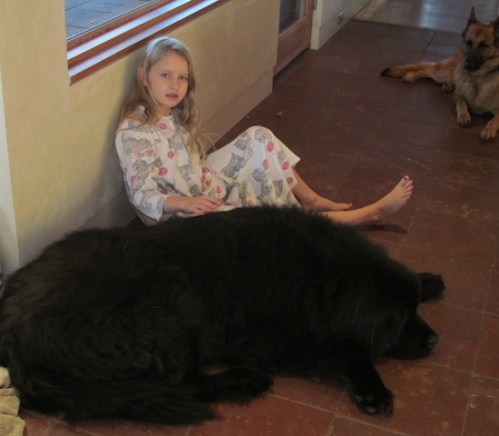
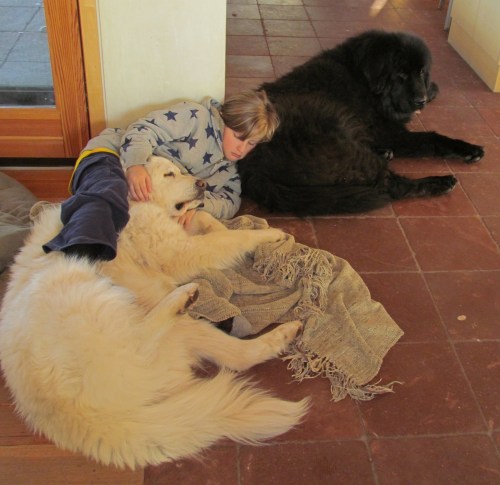
Dozer with Emma, who is terrified of dogs and yet…

Dozer&Em

What Makes You Happy?

Happiness is….

My husband

*Richard

Our son

Nic

Em

A flamingo

Our fabulous kitty

Merlin and the Gator

This…

Nicw:dogs

and this…

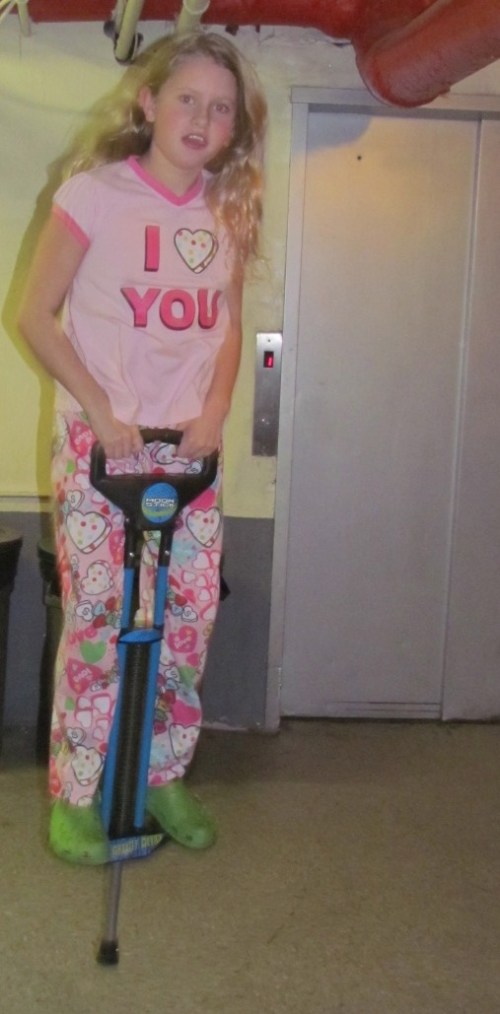
Emonherpogostick
the ranch…

6AM

7:00 AM in New York City

AMin NYC

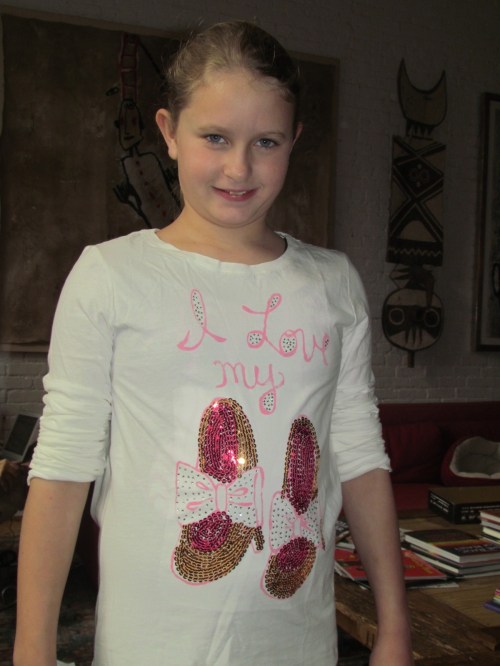
And this… this one’s for you, Brenda

Ilovemyshoes
and this… Angie, love and kisses… (Em took this and it’s pretty blurry, but you get the idea!)

kisses

What makes you happy?

Related articles

To the Person Who Googled “I don’t know if I can handle Autism”

I have three things I need to say to you.

First.  Come.  Talk.  Find a safe place where you can talk without being judged, somewhere private, somewhere and with someone(s) who will understand and listen.

Second.  Fear.  Feel the fear.  It’s impossible for me to talk about autism without talking about the abject fear I used to feel, every single day, every moment.  They say fear can be informative.  This was not my experience of it in the beginning, I was running too fast and doing so much to avoid it.  Fear drove me to do a great many things I regret.  I wish I could tell you I have no regrets, but I do.  So, so many regrets.  Avoiding the fear is just one of them.  I wish I’d sat with it.  Leaned into it and listened to it, without believing what it whispered to me as though it were fact.  Listen to it, but don’t believe it.  Who knows what I might have learned all those years ago.  Who knows had I done that, what mistakes I might have avoided.  Who knows?

You see, fear was the driving force behind my relentless search for a “cure”.  Fear is what made me think anything I did was better than doing nothing.  Fear drove me to rationalize some dangerous and very risky “interventions” because I thought to do otherwise was wrong.  It was my fear that kept me up at night, on the computer, typing one more search word into Google’s vast engine, hoping I would find the thing, the remedy, the treatment, the pill, the tincture, the doctor, the nutritionist, the biomed doctor, the QiGong Master, the homeopath, the naturopath, the GI specialist, the thyroid specialist, the speech therapist, the occupational therapist, the cranial sacral doctor, the shaman, the Zuni chieftain, the psychic, yeah you read that right, the psychic, each and every one of these people I put my faith in.  I convinced myself that this person, finally would be the ONE.  They would reach out their hand and show me the path I needed to take.

All those words used to describe autism and Autistic people, our children or parents or siblings, all those words like, “burden”, “epidemic”, “crisis”, the war terminology evoked telling us how we must “fight” and “combat”, all those words like crumbs left in a dark forest were words I believed and used and never, never once during those early years did it occur to me to question them.  For those who did, well, they obviously didn’t have a child like mine.  You had a child who was less profoundly affected by autism than mine.  This was my thinking, this is what I believed in my heart.  (This is my story, it may not be yours, but it is the only story I can tell.)

Third.  There is a documentary I love.  I have watched it many times now.  It’s called Wretches and Jabberers.  I’m not going to tell you more, you just have to see it for yourself.  It’s available on iTunes, Netflix and Hula.   You can purchase a copy from Amazon.  Even if you ignore every other thing I’ve written here, just watch it.  It is a documentary that every human being on this planet should see, because it is about more than just autism.  It is about our beliefs and how our beliefs make us behave in ways we might not otherwise condone.  It is about prejudice and fear and ingrained thinking and the inherent limitations all of that encourages for those who are different.

And finally remember this – just because someone does not speak, does not mean they have nothing to say.  Just because someone cannot make their needs known, does not mean they have none.  Just because someone does not tell us they love us does not mean they do not.  Just because someone does not look at us, does not mean they do not see us.  Just because they do not seem to understand in a way that we recognize, does not mean they do not and cannot.  Just because we think they are ignoring or cannot hear us, does not mean they are or do not.  Just because we think someone cannot write or read does not mean they can’t or never will.

Just because we feel, in this moment, we cannot handle something does not mean we can’t.  With support, we can and we will.  And so will our children.  They can, they do, and with help, they will.  Believe this and you will not only help your child and yourself, you will help the world and all human beings who inhabit it.

Choose to believe.

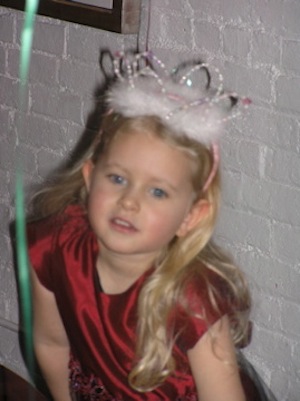
Emma on her 4th Birthday – 2006

Em - 2006

Sensory Overload and Sensory Cravings

My friend Ibby posted this video on her Facebook timeline (for those triggered by loud noise, flashing lights and/or prone to seizures, do NOT watch or at least turn the volume way down and stand back)  

A twitter friend, after I reposted this video, wrote that this was why he wears headphones and I tweeted back that while Emma is sensitive to some noises, for the most part she craves noise and typically turns the volume up as loud as it can physically go on both music and favorite movies, much to the horror of our various neighbors.  Even though we live in New York City (a place that is, for many, a sensory overload), people get cranky when woken at 6:30AM on Saturday morning to the strains of Michael Jackson’s Beat it.  Even hard-core MJ fans protest at the volume Emma prefers and at that time of day.

My twitter friend tweeted back, “I like certain noises, Avenge Sevenfold. ;D  It’s noises other than the one I’m trying to focus on that are the problem.”  And this is exactly the important distinction that I often forget or have trouble understanding.  Unless you have sensory issues, like the ones depicted in this video, I think it’s really hard to fully understand how debilitating sensory overload can be.

A couple of months ago I went to do our weekly grocery shopping run at Whole Foods.  Typically I go every Saturday in the early afternoon.  This is a time that isn’t too crazy, the lines aren’t insanely long and often it’s even comparatively quiet.  As I stood in front of the check-out person, the cashier next to her began loudly unfolding a paper bag.  The noise was deafening, a kind of snapping sound followed by crackling.   I actually felt physical pain from the noise.  My cashier looked over and laughed and then another cashier did the same thing with one of her bags.  In response the first guy did it back and suddenly I was in the midst of a cacophony of bags being banged opened, like a series of gun shots going off.  It was horrible. I stood there stunned.  I became so disoriented I could barely think and then I felt a surge of rage. How dare they make this kind of noise with those paper bags! How dare they behave this way!  I looked around trying to figure out who I should direct my anger to and noticed that not only were they smiling, some were even laughing and so were the other customers.

They were having fun!  I was astonished.  What was so incredibly painful to me, was amusing to others.  As I left the grocery store I reflected on sensory issues and how overwhelming they can be. I thought about Emma and wondered what it must be like for her.  Does she feel this way when she needs sensory input and cannot get it or is told she must turn the volume down?  I know there are certain noises she cannot tolerate, like the cuisinart.  She hates the sound it makes and will only tolerate it if I allow her to control it and put it on “pulse”, the same goes for the electric mixer.  If one of us sings along to music she’s listening to she can’t stand it and puts her hands over her ears.  (I completely understand her doing this when I sing, I’m pretty much tone-deaf and it IS painful to listen to for even those with no sensory issues, but she does this to anyone who sings along.)

After watching the video I posted above, I was grateful for the ending.  Not because it changed anything or showed some obvious solution, but because it was one human being taking the time to notice another human being in obvious pain without judgment or condemnation.

As an aside – I would love to hear from those who need and crave sensory input.  What is that like?  What does it feel like?  Is there anything you’ve done that has helped you.  Any advice or ways we can make your life more tolerable during those times?

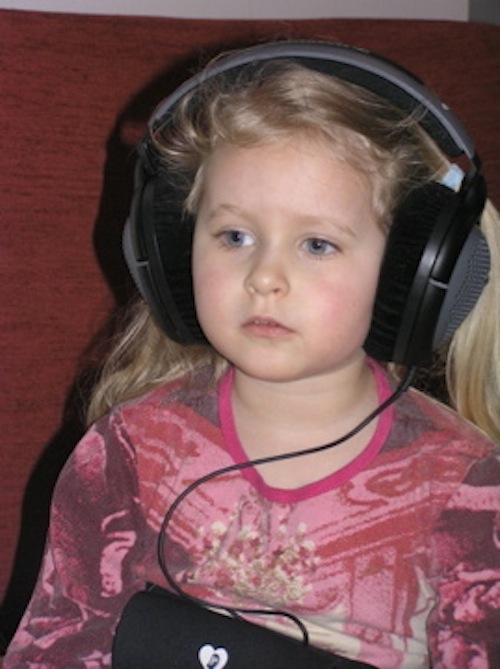
Emma – 2007 – Auditory Integration Therapy

Em

Two Autistics Spoke. How Many Listened?

Yesterday C-Span covered “Lawmakers Look into Federal Response to Rising Rates of Autism.” For those of you interested in seeing all 3 hours and 48 minutes of it click ‘here‘. You can also read all eight transcripts of testimony by clicking on each link ‘here‘.

There were two Autistic people of the eight who spoke.  This, in and of itself was significant.  The last two speakers were Michael John Carley, executive dircetor of Global & Regional Asperger Syndrome Partnership (GRASP) and Ari Ne’eman, President of Autistic Self Advocacy Network.

Michael, at one point said, “…research is geared towards the future, and not where the greatest need lies, which is in the present. Today, the amount of services we collectively provide is like one page out of War and Peace when compared with what’s needed.”

He went on to talk about language, “Tone, and language may seem like pc-nonsense semantics to many, but not to someone on the spectrum who grows up having to hear words like “cure,” “disease,” “defeat,” and “combat” …

Such negative self-imagery makes self-esteem so much harder to achieve for an individual who is at a psychological disadvantage enough as it is. We have to remember that the vast majority of this population can read what is being written about them, and hear what is being said about them.

Ari Ne’eman spoke last.  His was a riveting and powerful speech in which he spoke to the “epidemic” of Autism, “If we want to put the idea of an “epidemic” to the test, one of the most compelling lines of research we could pursue is an epidemiological study of the rate of autism among the adult population. A recent study of this nature conducted by the United Kingdom’s National Health Service found a comparable rate of autism in adults as in children in England.” 

Ari spoke of those who are non-speaking Autistics,  “If we invested a mere one-tenth of the amount of money that we currently pour into causation into empowering Autistic people to communicate, that young man and hundreds of thousands more like him would be able to communicate their needs to us today.” 

He went on to point out, “Autism Speaks and the Simons Foundation – devote even less to these areas, with Autism Speaks investing approximately 1% of its research budget to studies on the quality of services to Autistic people (and less than one quarter of a percent to Autistic adults) and the Simons Foundation making no investments in either area. It cannot be doubted that when it comes to the needs of Autistic people today both the public and private research agendas are quite simply not responsive to the priorities of the Autistic community, itself. 

And he talked about the importance of Medicaid, the importance of providing assistance to those just entering the work force and those who would like to, but do not have the supports in place to do so.

Ari ended with – “I want to thank the Committee members for allowing my community – the Autistic community – the opportunity to have a voice in these discussions. The challenges society currently faces in integrating and supporting Autistic people and our families are not new. We have faced these challenges and made tremendous progress with other disability groups in the past. I believe that at the end the day this is a civil rights issue. I believe in the ability of the United States of America to guarantee the civil rights of all of its citizens. Autistic people want and deserve the same things that anyone else wants – inclusion in our communities, the opportunity to go to school and get a good job, the chance to make our voices heard about the things that matter to us. With your help, we can make that a reality.”

His final words were, “I look forward to hearing your questions.”

I was eager to hear the questions that would undoubtedly be asked of both him and Michael after such terrific speeches, particularly as they are both Autistic, the very people this entire hearing were meant to care about and want to help.   So I waited.  And then I waited some more.

Finally there were a few, but the majority of people who spoke continued to repeat those words that Ari and Michael had cited, as though they’d never been said.  It seems we care about Autism and our Autistic children specifically, but when it comes to “Autistic people” in general, we don’t care so much.

And so I’d like to know, Why is that?

How is it that we can say we “care” about Autism and those who are Autistic yet not fund programs that will make their lives better?  How is it we can use words usually reserved for war and ignore that these words make those who are on the spectrum feel badly about their very existence?  Is this how we want our children to feel?  Do we really want our own children to feel their existence is called into question?  Let’s just say, for the sake of argument, that our Autistic children, whether they speak or not, whether they are in a special education classroom or are mainstreamed, let’s just say, ALL of them can and do understand what is being said about them, but they cannot tell us or do not have the ability to communicate how that feels.   Can we at least imagine what that would be like if this were done to us?  Can we try, just for a moment to have the “empathy” needed to imagine?   Are we compassionate enough to pause, even if for a moment and consider the implications of what we are saying and doing?  Even if we cannot or do not want to think about all the Autistic adults whom we do not know, can we just think about our own child?  Our children will be adults one day, do we really want them to feel as so many Autistic adults do?  Our children have feelings.

Ari is Autistic.

Michael is Autistic.

Both spoke.

How many listened?

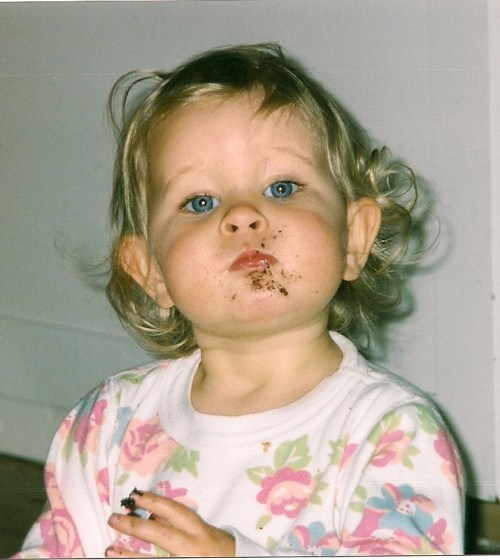
My Autistic daughter, Emma – 2002

Emma - 2002

Related articles

From Anthropological Duty To Love Or Things Not to Say to Your Sister-ln-Law by Kis Brink aka Gareeth

What follows is a guest post by Kis Brink (for those who follow this blog you will know her as Gareeth).  When she sent it to me, I was so taken with its insights, the power of her writing that I asked her if I could post it here.  Kis gave me her permission for which I am honored.  It was this piece by Kis that inspired yesterday’s post:  Yes, These Are Things I Think About, What About You?

“Love is a very controversial word in the history of autism. Hurtful ideas that autism was caused by the failure of parents to love their children and equally as hurtful ideas that autistic people were incapable of loving were put forward. Many still believe them. For me love was something I learned over time and it is still a word I use cautiously and sparingly. I do not say, “I love you” unless I am sure. The word is never used to express a strong preference for something. I think love is like many other aspects of Asperger’s and autism where our take on it may be slightly different but this in no way renders our love less real. It took time for me to learn this though.

Society has rules about love. Who you should and shouldn’t love. Who you should love the most and so on. I like rules. I wrote about my adherence to them and creation about them in a previous article. As a child when the word love was mainly a word devoid of emotional content I had no problem meeting the norms for when to use it. It was only as my range of emotion increased that this became a problem. 

Anyone who knows me well knows that unless you are prepared for honest answers don’t ask me a question. I know some people with Autistic Spectrum Disorders who have learned to use socially useful lies of the kind society expects. While seeing how they may be handy in many situations not only is this against my rules, I even have theory about why this is wrong.  I tell those unfortunate people trying to help me by explaining that sometimes you need to tell small harmless lies that I do not believe there are degrees of truth. I expect that some autism experts would be quick to label my thinking on this topic black and white thinking, but it is the way I think. I tell people trying to convince me it is useful to lie that I don’t believe in white lies. To me there is truth and non-truth. This is the reason why I must think very clearly and sometimes long on what may seem like a “no-brainer” to most people.

“An everyday example of something I give more thought than others is the simple, “How are you?” that comes up everyday. I have even concluded from experience that most people’s automatic answer of fine is seldom the truth. This whole ritual seems illogical to me. If you care about the person you then have to ask more questions to determine what the truth is and if you don’t, well to put it bluntly, why ask in the first place? I know it is a normative behavior in our society.  How this applies to love is it is also taken for granted that you will love your family and any offspring they produce. This, I think for most members of my family, would be reasonable. The part that gets me is, it is assumed that the onset of this love will be immediate. I don’t do immediate love. It seems illogical to me and perhaps even untruthful although it may be the truth for those who say they do. I have questioned some people on the subject but have yet to get a clear enough sample for a definitive conclusion.

“This brings me to the subtitle of this piece: Things Not To Say to Your Sister-ln-Law. I’ll say right off the bat that I am lucky to have an extremely understanding and kind one or looking back I suspect I provided ample opportunities for our relationship to grind to a complete and permanent halt. Almost ten years ago now my first nephew was born. He was in fact the first member of the next generation for our branch of the family tree. I was happy for my brother and sister-in-law and glad to be a Fasta (Danish for father’s sister). Society however expects more immediately. It seemed no one else had any reluctance to express love for this new scrap of humanity. I live some distance from my brother but planned a trip to see this child for the summer.

“When my nephew was four months old I made the trip to see him. On the coast I had been spared much questioning beyond his height and the usual things like that. I had none of his other kin to compare myself to. I had a new role as a human and I was going to figure out what it entailed.  The first night of my visit after my brother went to bed, my sister-in-law and I were in the kitchen together. She asked what I thought of my nephew. It was a question I was still working on internally. I had these vague feelings that I could not quite name. I didn’t feel it would be correct to call these new feelings love at that point so I commented that I felt a sense of responsibility and commitment to the first member of the descending generation. This was a concept I had learned in anthropology that, to me, seemed to best sum up what was happening inside of me.

“Well it was quickly apparent that this was not quite the answer she had been expecting. I don’t remember if she was near tears or merely frustrated or both when she told me, “You know it’s okay just to love him.” This didn’t really make sense to me. I suspected I would grow to love him. I had hopes about what our relationship would be like. I knew people love their nephews and nieces and that his other aunts and uncles were able to say they did without batting an eye. I went to my room feeling frustrated and confused. I had been looking forward to being a Fasta and it seemed I was already messing up at it.

“People have called me a kid magnet. Children seem to gravitate towards me and enjoy being with me. I enjoy them as well. Despite the fact that my nephew was only 4 months old I did feel a certain sense of pride as I observed how well he kicked his legs around at the gym-toy babies have for kicking. I felt more feelings which I couldn’t identify when I looked at him sleeping, I even took my friends in to admire the marvel of him asleep. Maybe if I didn’t have autism I would have concluded that all this did in fact constitute sufficient grounds to say I loved him.

“Pictures taken at that time with he and I show a softening in my face that is positively maternal. Journal entries reflect a marvel for even his simplest behavior. I spent a lot of time walking with him in the neighborhood, thinking about all the things I would teach him as he grew older. I felt equipped to handle my anthropological duties towards him. It was only when others spoke about him that a fear in me would surface that I was an inferior brand of aunt. That no matter what I had to teach him and how fierce my desire was to protect him until I could repeatedly say how much I loved him in a conversation I would not make the grade.

“Fortunately time passed. My own range of breadth of feeling was on a steep learning curve at this same time. With each subsequent visit I moved closer to knowing I loved him. I started to be able to do some of the things I had imagined. He learned to speak and could express marvel over issues that I did not really expect a child so young to notice or have thoughts about. One day at the zoo we passed the exhibit that explains poaching. I thought that he was way to young to really understand how bad it was and tried to explain it in a way that would make sense to him, but when his eyes filled with tears and he asked why repeatedly I knew he had a special soul. A soul that would require more diligent protecting and nurturing than I had thought.

“There were other signs in those days. He had an obsession for whales. One Christmas everyone seemed to know that they had better get him some form of whale or not even bother with a present..  All seemed well in his world until he opened up a whale that had the wrong color tongue. Most of us were surprised that he knew so much about so many kinds of whales but his action regarding this whale was decisive. Into the garbage it went. No amount of explaining that it was wrong to throw out a present or offering to correct this error would convince him that something horrible had not happened. He asked the perennial question of childhood although his whys were a little more detailed. Why would someone even make a model of a whale and not get the tongue color right. Well the kid had a point on that one.

“One day a few months after his maternal grandfather had died my sister-in-law phoned to report what he had said at pre-school. It was the final and convincing evidence I needed to conclude that his soul was so special that not only did I love him with all my heart, I was prepared to do battle against any who might attempt to hurt this soul.  His pre-school had a no-violent-toys rule that was enforced quite strictly. A boy had ignored this rule and had a toy sword with him. My nephew told him, “Sword all you can while you are young, because you can’t take your sword to heaven because when you go to heaven you are flat.”

“Well the first two parts of what he said amazed me. The part about being flat also made sense in the context of his life. His grandfather had been cremated and scattered in the mountains. This is where the flat notion came from. I couldn’t have been prouder of him if he had discovered a cure for cancer. I thought and felt all the things that I had worried about not feeling for the first few years of his life. I rushed to get the exact quote and pinned it to my bulletin board in my most sacred spot – right above my computer. I listed his age and his title: Philosopher and Theologian.

“I have always identified with the song by Don McLean, “Starry Starry Night.” The line where it says, “the world was never meant for one as beautiful as you” hits home to me. When the world hurts mostly because it fails to understand people like myself and people with other differences I think of this and there is some comfort in the idea that it might be a question of being an excessively beautiful soul for the world in which we live. I knew immediately that my nephew too was one of these people and any last question about whether the feelings that had strengthened overtime qualified as love vanished.

“Yes it was a journey to this point. Not a love that I could say I felt with confidence on his birth but this does not make it a conditional love. I love everything about him. Many of my happiest hours are spent in his company. His excitement when I come, hearing him brag about me to his friends, his joy in the simple things in life would make any aunt proud. I know longer worry that my brand of “Fasta-ing” (pardon the creation of a word) is inferior. It is clear from his response that it is not.

“This Christmas he bought gifts for other people for the first time. About mine he kept saying it was small but precious. I had no doubt that it would be. Like myself he too seems to need symbols to represent people who are absent and his feelings for them. I was delighted to receive a piece of pyrite from him on Christmas morning. He has one similar to it. I told him that I would keep it by my bed the way his was so we would both always be reminded of our love for each other as we fell asleep and woke up. I hardly need reminding at this point though. Still that once mysterious feeling of love fills me completely when I look at this precious stone and contemplate the beautiful relationship I enjoy with my nephew.

“For those of you who may have relatives with high functioning forms of autism, when they give you not quite the answer you expect, I hope you take into account our unique perspective on the world. Particularly in the realm of emotion we may be embarking on a whole new voyage. I feel so lucky to have a sister-in-law who could forgive my atypical response, who brings it up now and then with humor, but especially for having a nephew with a soul so beautiful he brought me into new waters.”

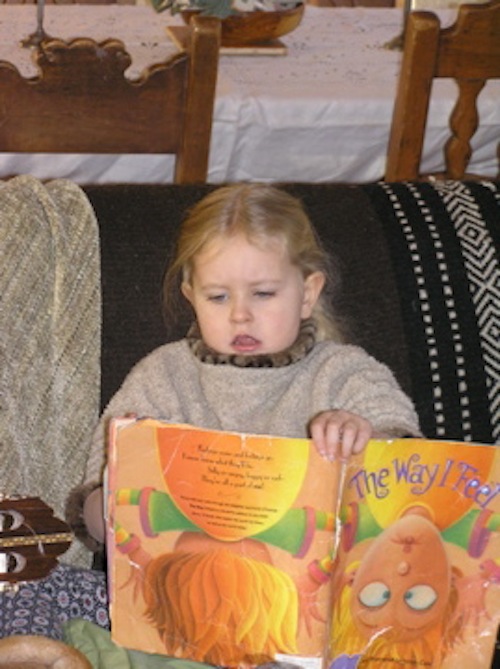
Emma reading her favorite book – The Way I Feel – 2008
Yes, These Are Things I Think About – What About You?

We, non-Autistics say all kinds of things without thinking.  We use a sort of socially accepted shorthand during a great many encounters.  It’s a way of being in the world that requires no thought, rote gestures and words that are mindless and often meaningless.  Expected utterances we don’t think about, we do and say them because we are taught to do otherwise is impolite.  Upon meeting someone we automatically put out our right hand in greeting.   We are taught to smile and ask, “How are you?”  The response is unimportant, after all we aren’t really asking the person we’ve only just met to seriously contemplate their mental state and then divulge this information to us, neither are we honestly curious except in specific instances when we know something about the person and have wanted to meet them.  But typically, “How are you?” is an opener.  It’s merely a polite question we’ve been taught to ask, showing the accepted degree of interest in the other person, even if we actually have none.

Someone I know sent me a wonderful piece she’d written about meeting her baby nephew for the first time and being expected to say immediately that she loved him and how disappointed her family member was when she couldn’t bring herself to say those words right away, even though she felt a number of things that we non-autistics would probably identify as feelings of “love”.  Reading her wonderful piece (click ‘here‘ to read it in its entirety) made me think about all those years when I would encourage Emma to say “I love you.”  I even said to her, on  a number of occasions, “I love you Emmy.”   To which she would reply, “So much.”  I then laughed and said, “No Em, you’re suppose to say, I love you, back.” And Em dutifully said, “You’re suppose to say I love you back.”  I don’t, for a second, doubt that Emma loves me.  I know she does.  I also know my desire to have her say so, is my wish and not a desire she puts much weight into.  For all I know Emma doesn’t say those words because she doesn’t  feel the need to, perhaps she doesn’t see the point in reminding me of this fact.  Perhaps, and this is the one I hope is most true, she doesn’t feel the need to utter those three words because she is secure in the knowledge of her love and assumes I am too.

Many of the “niceties” we non-autistics say are said with a degree of dishonesty because really, how “nice” is it to meet someone you may or may not ever see again, may or may not have anything in common with and do not have time to actually get to know?  And while we’re at it, let’s consider “how are you?”  How many people really care?  We are taught to respond with the equally (often) dishonest single word, “Fine” but how many of us really are “fine” when we’ve been asked how we are?  Seriously.  How many times have you been asked, “How are you?” and you either didn’t actually know, hadn’t had time to think about it or weren’t fine, but were instead feeling something else, yet replied with “fine” because it was simpler, easier, safer or because the conversation had already moved on, before you’d had the chance to give your more thoughtful reply?

So I’m curious – what if we didn’t ask or say things unless we were honestly interested and meant what we were saying as a way of communicating something new or that required discussion?  What would happen if, upon meeting someone we weren’t sure we really were pleased to meet, said nothing?  Would this be so bad?  What if, when asked “how are you?” we answered truthfully?  What if when we voiced our love for our children and they said nothing in return, we didn’t assume that meant anything other than our child did not find it necessary to state the obvious?

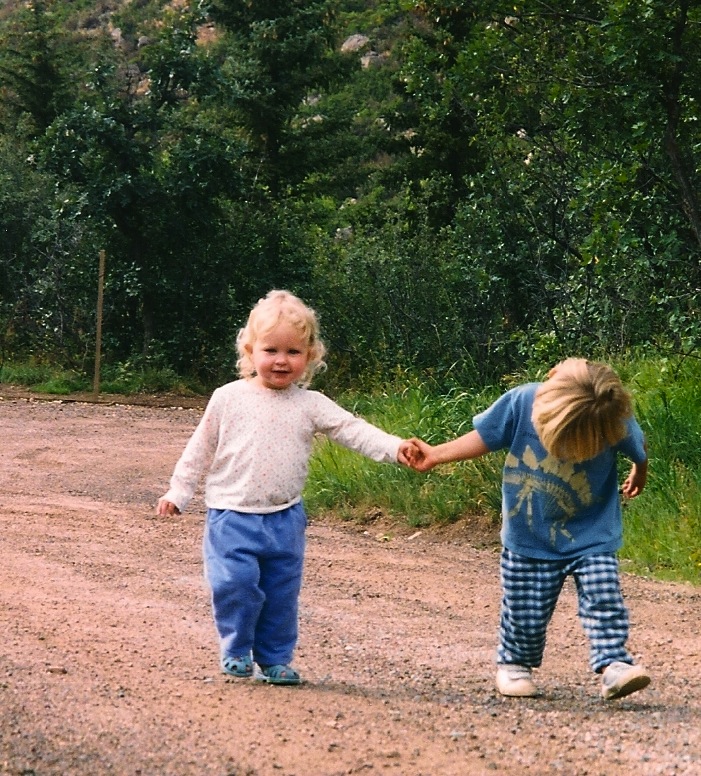
Em & Nic – Summer 2004