Author Archives: arianezurcher

Finding That Sticky, Messy Area Between Perfection and Despair

“Compare Emma to Emma.  Don’t ever compare her to another child.”  This was said to me years ago by someone whose name and face elude me.  I was reminded of their suggestion this morning as I rode the subway to my studio and read the chapter by Lucy Blackman from Douglas Biklen’s terrific, must-read book, Autism and the Myth of the Person Alone  – “That is  best illustrated by asking each reader to describe the cultural or emotional characteristics of their own sex, whether man or woman, without any reference to the opposite, not even by implication, as if you were completely unaware that there is another set of options available.”

As the subway careened along beneath the streets of Manhattan, I reflected on this idea of not comparing Emma to anyone else or even to an abstract idea of anyone else.  What if I didn’t compare her at all?   “…without any reference to the opposite, not even by implication…”  What if I saw Emma purely as Emma?  “..as if you were completely unaware that there is another set of options available.”  What if I pushed out of my mind all those evaluations, the reams of “reports” the specialist’s conclusions, the pages and pages of “information” gathered over the last eight years?  What if all of it, every last word was meaningless?  What if I emptied our file cabinet of all that and started anew?

We live in a culture of comparing.  We look to our neighbor and envy their garden or, as happens in Manhattan, how many square feet their apartment is. We salivate over other’s imagined life, we covet that which we do not have and may never have, we pore over the lugubrious details of fallen celebrities and the train wreck of their lives, we gawk at the photos of dimpled hips, bellies, thighs occupying pages upon pages in magazines we may never purchase while in line at the supermarket, relieved that we are not the only ones whose bodies are not the chiseled, polished, perfection obtained through that impossible combination of genetics and a willingness to give over hours of our lives to a gym.  Yet we still feel embarrassment and shame when we go to the beach and uncover ourselves.

I spent a great many years perfecting just this sort of thinking.  I spent far too many years feeling alternately “less than” and “better than”.  Oddly there was equal measure of shame in both and yet I couldn’t figure out how to extricate myself.  It was one or the other, that sticky, messy area between those two points was much harder to occupy.  But it is that area I long to find my place in.  It is exactly that middle ground I now find myself reaching for.  “…as if you were completely unaware that there is another set of options available.”  That is what I strive for, when I think about and interact with Emma, but also in every area of my life.

“Compare and despair” is something I have heard people say.  I can illustrate this saying with countless examples from my life and yet, even now, knowing what I know, the temptation to compare is seductive.  How does it serve me?  This is the question I know to ask.  And I have the answer to this.  It doesn’t, but it is a habit.  Thankfully I am learning to stop myself when I catch myself comparing.  What I am coming to realize is, comparing is my knee jerk response to stress.  It is where I go when I’m tired.  It’s my default setting for when I’m overwhelmed, hungry, sad or just confused.  Repetition is how we acquire skill.  Repetition is how we undo learned behavior.  When I compare Emma to Emma I see tremendous progress, I see possibilities, I see limitlessness, I see the beauty in the small steps taken, I see a kind of poetry in her growth.  Challenge becomes subjective, goals are no longer solid lines but instead shimmery bands of light, something one moves in and out of, no longer a mountain to climb, but rather a place to visit and then move on.

How do I stop comparing my child?  By seeing her through a lens of wonder and curiosity.  When I am able to accomplish this, I have found true bliss.  A blissfulness Emma innately occupies and patiently awaits me.

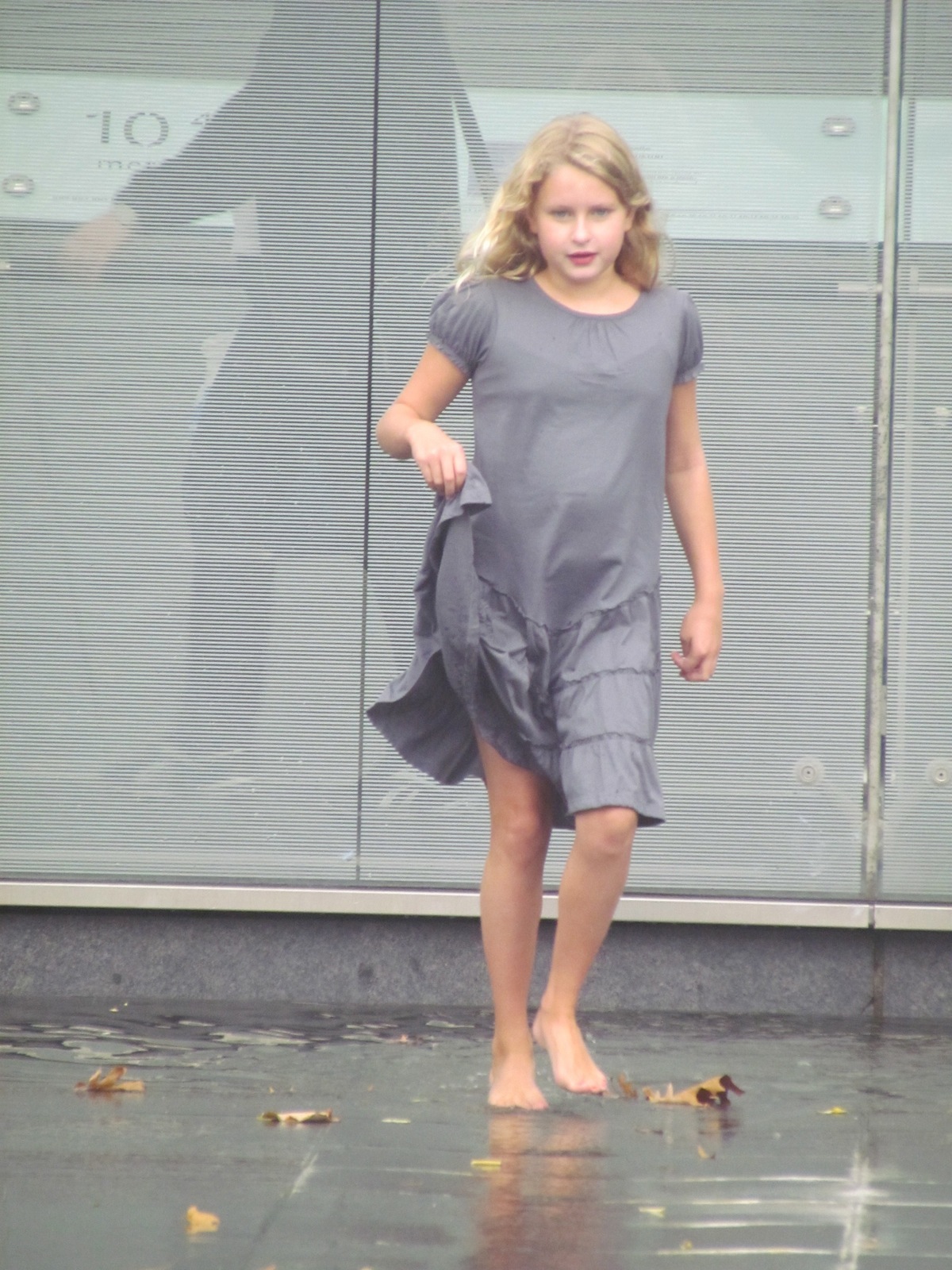
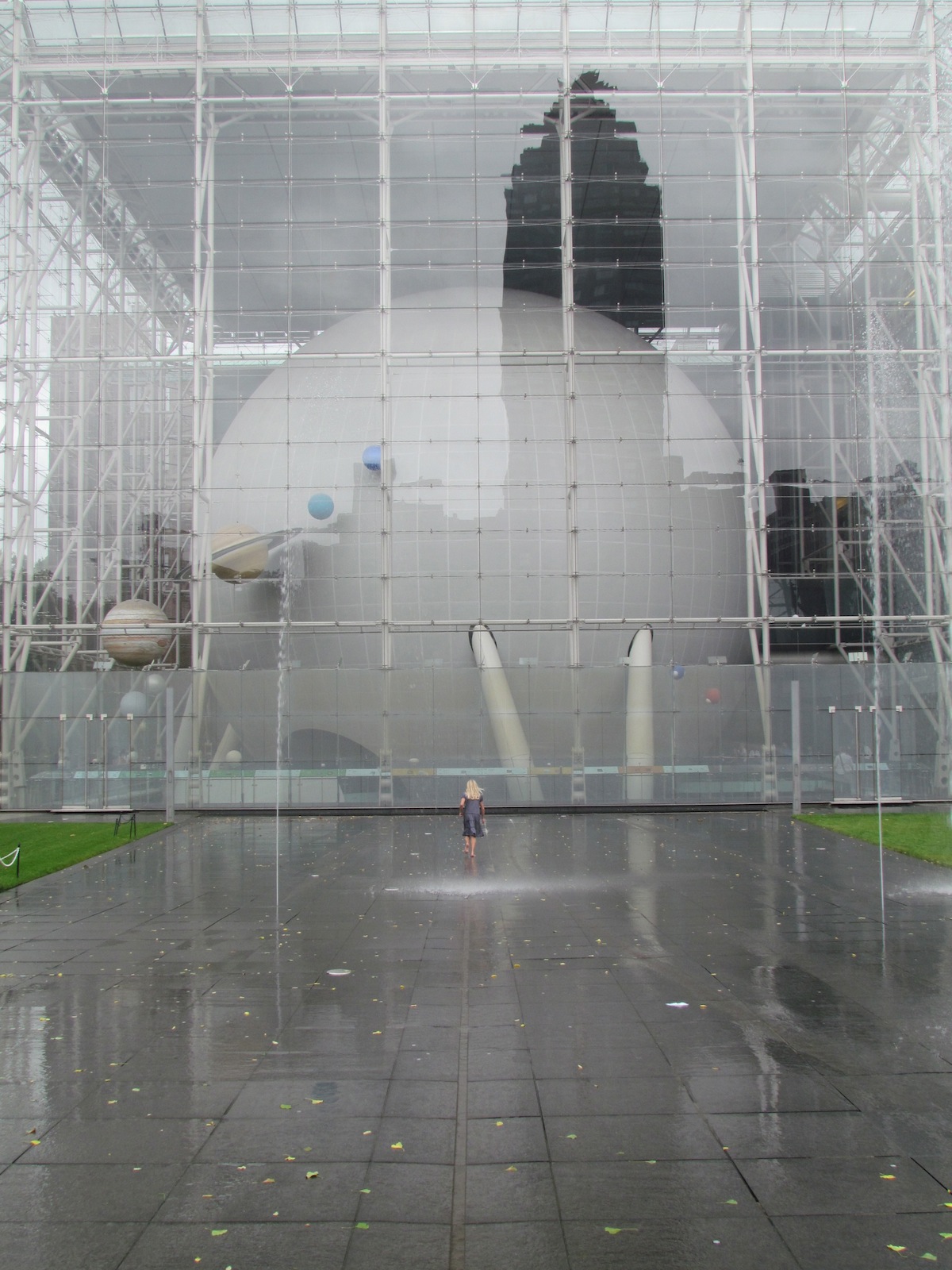
Emma running through sprinklers outside the Museum of Natural History

SpyGear, Flamingos, Freedom Tower And My Handsome Husband

Update:  Emma arrived safely at her new school via the school bus this morning!  The tracking device, surveillance cameras, James Bond style secret pen with microphone hidden in her backpack, spy cam disguised as trendy sunglasses and stress relieving songs of the humpback Whale downloaded (for me) worked wonders…  (Just kidding)

I encouraged Emma to rehearse with me this morning what she might say if the bus didn’t take her to the correct school again and Em, never one to pass up an opportunity to perform, said in a loud, clear voice, while dramatically gesticulating, “You’re going the wrong way!  You have to go this way!  I go to new school..  I go to ______  (name of her new school)!”  Then she beamed at me as I applauded and cheered.

Yay Emma!

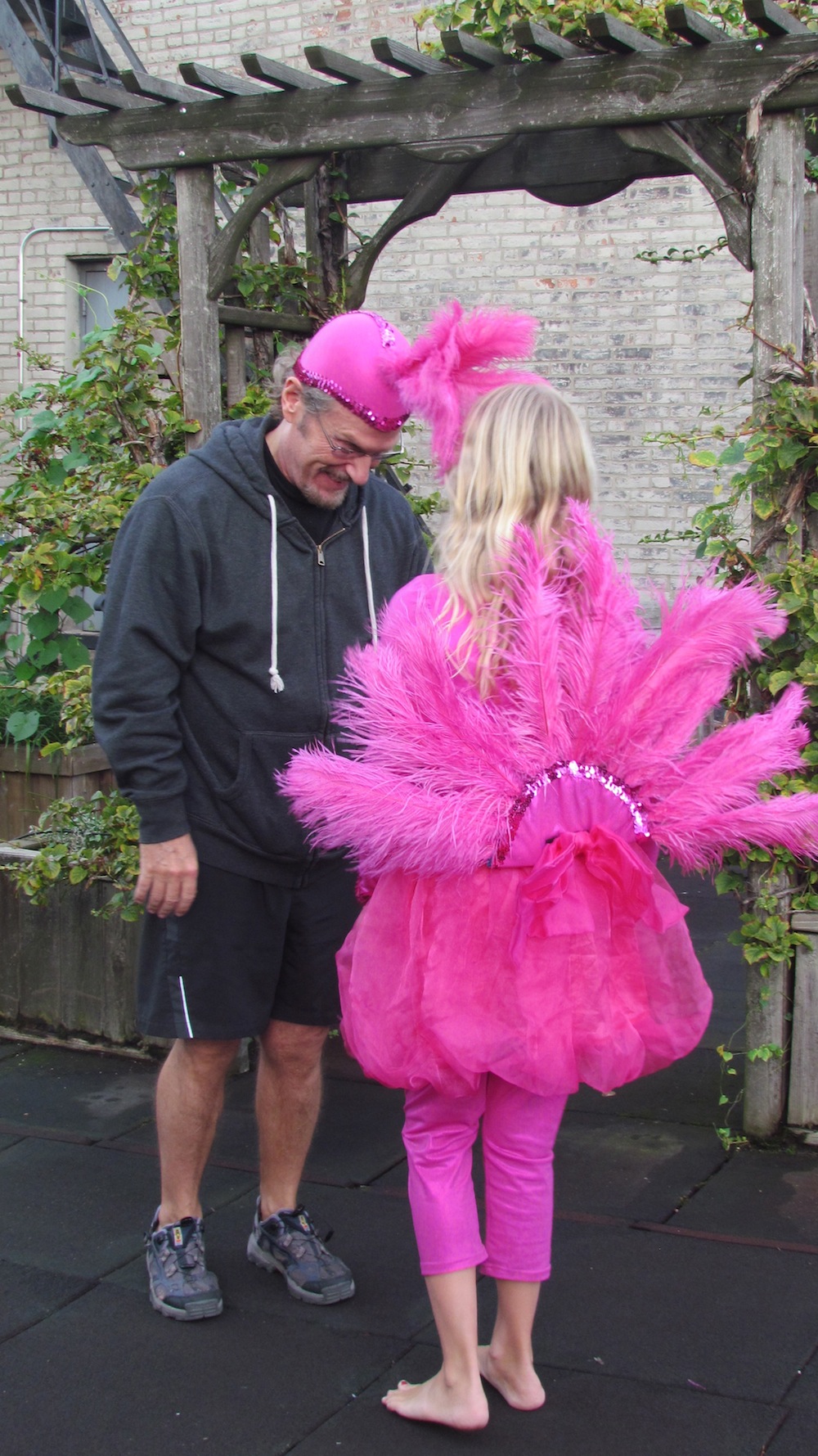
Emma in her favorite Flamingo costume last night on the roof

Playing with Daddy who donned Emma’s hat as though it were a feathered pith helmet.  Can we all just gasp in appreciation at Emma’s magenta tail feathers! 

The light was so beautiful last night – A glimpse of the Empire State Building

And to the South, Construction of Freedom Tower Continues..

And finally my handsome husband…  who was engaged in an animated conversation with our son, Nic (off camera) about his, just released and new favorite, video game – Borderlands2

The School Bus: How Do We Make Sure Our Children Will Be Safe?

Last week I wrote this – Emma Refuses To Get Off The Bus And A Self Advocate Is Born!  That Friday afternoon, I received a letter from the OPT (Office of Pupil Transportation) saying we had a new bus and route number for Emma and to call the bus company for a pick up time.  When I called they informed me I would need to call this morning to get a specific pick up time, but assured me that this time the bus was scheduled to take her to the correct school.   This morning I called and received their anticipated pick up time and told Em that I would go downstairs to wait with her.  Emma was noticeably and justifiably nervous about getting on another bus after last week’s mishap and so I consoled her by saying I would talk to the driver, make sure they were going to the correct school and see if they’d allow me to ride on the bus with her, just this once.

When the bus arrived I spoke with the driver asking that I be allowed to accompany Emma just this one time, given how badly things went last week.  The driver told me he’d have to get an okay from the company, despite the bus matron’s loud protests that this was not allowed.  Emma held onto my hand as we stood together on the sidewalk and waited while he called various phone numbers, each time being told I would not be allowed to accompany my daughter this ONE time.

I have to interrupt this narrative to say, this is not the first time we’ve had issues with OPT and the bus for my daughter.  A few years ago a driver picked Emma up and then, because it was summer and most of the children on his regular route no longer took the bus, he arrived at her school 45 minutes early.  Instead of telling the bus company and adjusting the pick up time or telling us so that we could call the company, he drove to a side street, parked the bus and waited for FORTY-FIVE MINUTES with Emma, the only child in the entire bus who had no idea why she was being held captive in an empty school bus on a side street for, what must have seemed like an eternity.  He did not try to explain to her what was going on, it did not occur to him (evidently) that being told to remain seated for that length of time might be distressing.  The only reason we even learned of this was because Emma came home from school that afternoon agitated and upset and because she is echolaic and is a terrific mimic and captured the driver’s voice and accent so that I was able to finally figure out why my daughter was scripting,  “You sit back down!  You have to WAIT!  I told you to sit down and be quiet!”  As there are no cameras on board, I had only Emma’s scripts to rely on.  We then called the bus company and our lawyer and Emma never rode with that driver again.

So this morning when the bus told me they would not allow me to accompany my daughter, I did not put her on the bus, but took her to school myself.  After numerous phone calls to the OPT, her school and the  bus company it was explained to me that they are not legally allowed to have parents ride the bus as it opens them up to all kinds of other issues, the least of which is if one parent is allowed, all parents then must be.  I get it.  Really, I do.  I understand.  But how do we move forward?  How do we make sure our children will be safe?  How do we entrust our children to people who may be given the wrong information?  How is it that there are no cameras on board busses taking Special Education children to school?  How is it that the State of NY does not have a law that ALL school busses have a GPS on their busses?  How is it that once our child steps on that bus, there is no way to supervise what goes on?

Tonight we will, once again do our best to prep Emma for tomorrow’s bus ride.  We will tell her that the bus is going to pick her up and will then pick up two more children, that they will then drop some of those children off at a different school, before driving Emma and the remaining children to her new school.  I have asked the school to have a familiar and friendly face greet her tomorrow morning.  I will do my best to reassure her.

I will tell her she is going to be taken to the correct school this time.

I will go over what she can do if she becomes nervous or scared.

And I will hope that she’s going to be okay.

Waiting for the bus this morning


Emma at the American Natural History Museum

The Art of Negotiating – Get Them to Beg

“Go to Natural History Museum with just Daddy,” Emma announced this morning.

Because of the Jewish New Year it’s a four-day weekend.  Richard took Em to the museum yesterday.  Today is my turn to hang out with Em, while Richard spends the day with Nic and his friend Masiah.

“I know you do love going to the Natural History Museum with Daddy,” Em said as I came over to her.

“But Em, I’m going to spend the day with you.  What do you want to do with me?”

“Emma loves Natural History Museum with Daddy.  But they wants Museum of Natural History with Mommy.  I love playing elevator game with Daddy.  Emma loves BioLife.  Emma loves…”

“Em, what do you want to do with me?  Daddy’s staying home today.  I can take you to the Natural History museum.  Is that what you want to do?”

“Go to Toys R Us with Mommy, then Natural History Museum with Daddy!”

“No Em.  It’s just you,” I pointed at her, “and me today,” I pointed to me.  “What should we do today?”

Emma whispered, “Go with Daddy!  Oh I know you want to go with Daddy.  Say bye-bye Mommy!”  Then Em made fish lips at me.  Meaning she puckered her lips together and pretended to be a fish.  This is what she does when she really, really wants us to acquiesce.

I began laughing.  “Em.  I will take you anywhere.  Anywhere you want to go.  I’ll ask Daddy to explain the elevator game so we can play it together.  Or you can show me how.”

“Go with Daddy,” Emma said very quickly and in a mischievous voice.  Then she whispered again, “Daddy, Daddy, Daddy, just Daddy!”

So I sidled up to her and whispered back, “Emmy.  Can I take you to the Natural History Museum?  Just you and me?  Please?”

Emma grinned and nodded her head.  “Okay, okay!”

When both the children were toddlers I took them to the Natural History Museum every single day, one memorable day we even went twice.  After a few years of this, I announced to Richard, “I hope never to set foot in that museum again.”

“Uh-huh,” Richard said.

“Ever.  Seriously.”

“Yeah.  Got it,” Richard answered.

“Never.  For the rest of my life.”

“OKAY!  I hear you,” Richard said with a touch of annoyance.

So for the last few years Richard has taken Em whenever she has asked to go.  I think I’ve gone once, maybe twice in the last several years.  That I now find myself  literally begging, BEGGING Emma to take her, is just another example of Emma’s brilliant negotiating skills.

If Emma ever loses interest in being a singer, I feel confident she will find any number of career options available to her… diplomat, anyone?

Emma – Autumnal Fairy

Related articles

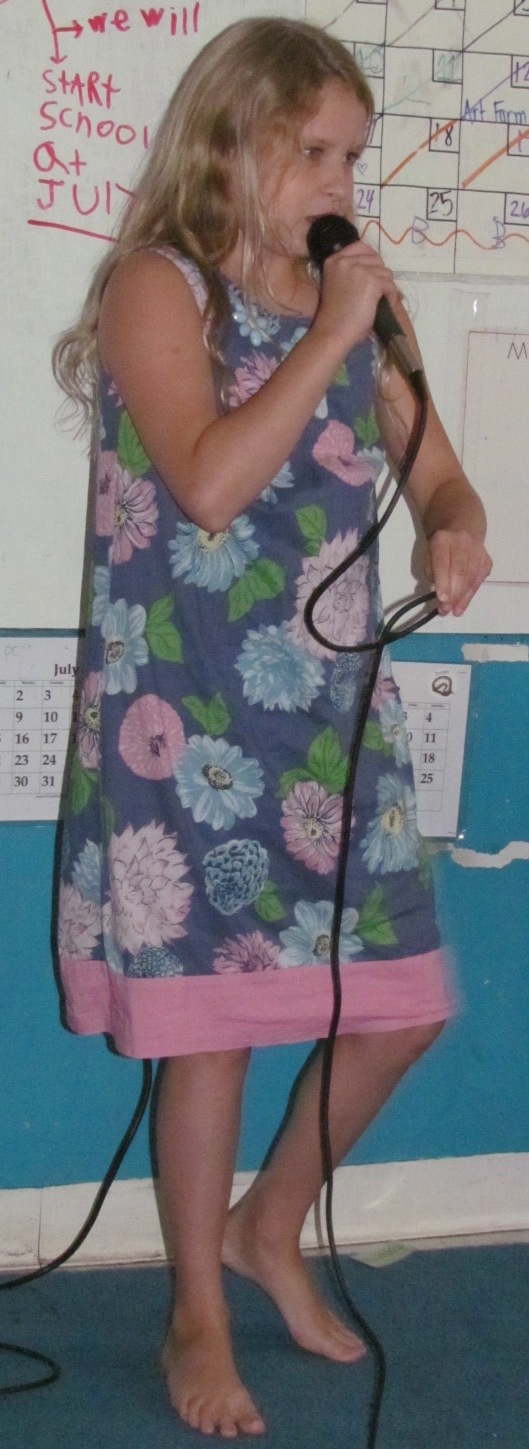
“I Want to be a Singer on the Stage!”

Emma told us she wants to be a “singer on the stage!”  She said this a few weeks ago and repeated this desire last night.  Richard and I are doing and will continue to do all we can to support and encourage her desire.

Emma’s love of costumes and theatrics, coupled with her love of music, performing and singing in front of an adoring audience will go a long way in helping her achieve this lofty goal.  It is the perfect window by which we can enter to help her acquire language, encourage her reading, writing and typing.  I am starting to print out the lyrics to her favorite songs (reading) and find other ways to encourage writing (lyrics? poetry?) or anything else she might find motivating.

Emma dressed as a knight

Emma in her flamingo costume with her favorite Alien doll

Related articles

The UN and Henry’s Struggle To Be Heard

Another short post today as I have a meeting in another two hours.

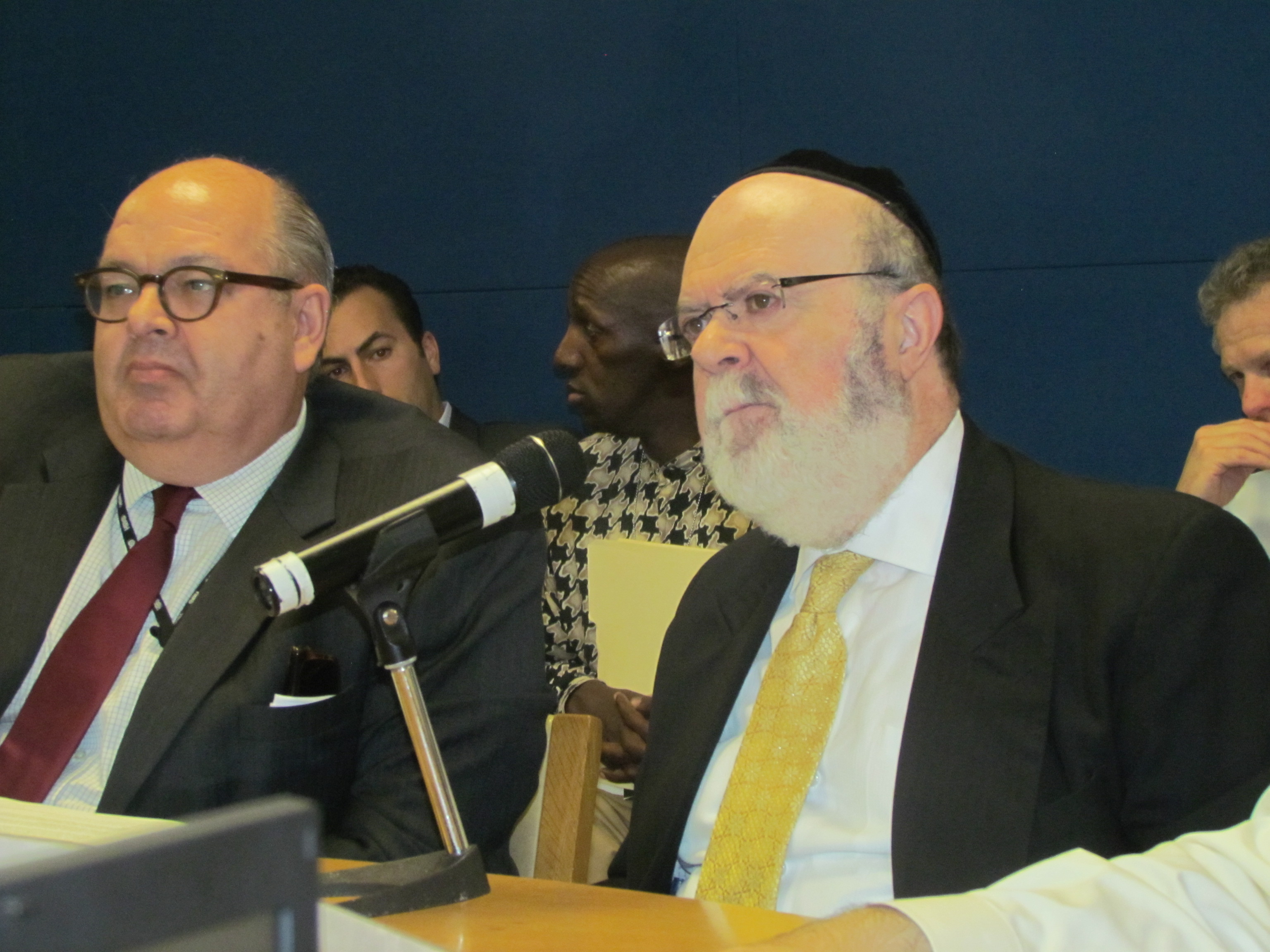
As I wrote yesterday I went to a meeting at the UN – The Fifth Conference of State Parties to the Convention on the Rights of People With Disabilities moderated by Juan Carlos Brandt, Chief, Advocacy and Special Events, Department of Public Information, United Nations.  The specific event I was invited to attend entitled:  “Urgency and Hope, Report from Global Leaders in Autism Research, Education, Treatment and Policy” Joshua Weinstein, CEO and Founder of the organization, icare4autism, presented with Stephen Shore, Beth Diviney and Eric Hollander presenting as well.  ICare4Autism is the organization that invited me to attend their conference in Jerusalem this past August, which I wrote about.

Juan Carlos Brandt and Joshua Weinstein 

I asked an Autism group I’m a part of whether anyone had messages for me to take to the event and a number of people wrote things such as A. who asked that I say something about “using a functioning level (usually an assumed one) to silence someone is never ok” and S. who wrote “Disability Rights are Human rights.  More specifically Autistic Rights are Human Rights.  We deserve to be treated as equals.”  Several asked that I stress the need for all to presume competence and P. asked that I be sure to say, “don’t assume I have nothing to say, just because I do not speak.”  But the first person who reached out to me was Henry who sent me this:

He wrote:  “Could you please tell them I would like to be included and learn with friends my age and where I live? I wrote this.”I am a self advocate. I want the same rights as everyone. 

Today I read about Martin Luther King.
The worksheet said because of Dr King’s work, the Civil Rights Act of 1964 gave equal rights to all people.
I am a person.
I want these rights.

I want to go to school in my neighborhood.

Why can’t I?

Joshua Weinstein and Juan Carlos agreed to allow me to show Henry’s video, but when they tried to run it, they weren’t able to as evidently the internet was down in the entire building.  (It’s the UN!  And we think we have technical problems!!)  So as they were trying to get the video up and running I read some of the quotes from others.    I’m sorry Henry! But I’m going to keep trying.  I know many others are too.  To everyone reading this, please watch Henry’s video and “like”, comment and share.  This is one person’s struggle, but it represents the struggle of so many.

Related articles

From Storm Clouds to Sunshine

Yesterday was one of those days when everything felt harder, everyone seemed grumpy, everything seemed to go wrong.  Yesterday felt like this:

By the time I got home I didn’t even try to conceal my irritability.  “You okay?” Richard asked when he saw me walk in.  “Just feeling out of sorts.”  Richard nodded his head.

I stayed away from everyone, tried to keep my interactions to a minimum lest I take my grumpiness out on my family.  After an hour or so I could feel my mood lifting.  Richard and I had the following conversation.

Me:  Standing in doorway  Hey honey?

Richard:  deeply engrossed in writing  Uh-huh?

Me:  What do you think about having some down time, you know, just you and me?

Richard:  still writing  Yeah.  That sounds good.

Me:   Still standing in doorway   Um.  Yeah.  Like, you know.  Just the two of us.

Richard:  Looking up from the computer.  Yeah.  Okay. 

Me:  Continuing to stand in the doorway

Richard:  Yeah  Big grin.  I’d like that.

Me:  Reaching for “Autism is a World” DVD   Great!  Cause I’ve got this autism video I’ve been wanting to watch with you…  Waves video in the air.

Richard:  confused look, trying to assess whether I’m being serious.  He knows me and knows this is just the sort of thing I might suggest, though the previous dialogue suggests otherwise.   So he’s trying to figure it out.  I can see him going through the mental gymnastics.  

Me:  Laughing

Richard:  Look of relief.  

Me:  Does a little dance.

Richard:  Glad you’re feeling better.

Fade to black

*As my friend Ib would say – on a lateral side note – I am off to the UN today for The Fifth Conference of State Parties to the Convention on the Rights of People With Disabilities moderated by Juan Carlos Brandt, Chief, Advocacy and Special Events, Department of Public Information, United Nations.  I intend to speak up about the need for including Autistic voices (emphasis on the plural) at any and ALL meetings such as this one.  Wish me luck.  It’s a beautiful day!

Related articles

A Revised Interview With Amy Sequenzia!

After posting last week’s interview with Amy I asked her if she was comfortable with me asking some follow-up questions inspired by her answers to my original questions.  She, very generously, agreed.  This is the new extended interview! Amy talks about her poetry, (including a poem about having a seizure) writing, being in an institution and how it feels to be ignored and thought incompetent by so many.  This interview has also just been published on Huffington Post, click ‘here‘ to read it there and do “like” it, share it and tweet it.  We need Amy’s voice to be heard to counter the massive amounts of misinformation out there.  For all of you who wonder what you can do – share Amy’s voice.  Get people to read what she’s saying.  

Amy Sequenzia, a non-speaking autistic self-advocate, poet and writer, agreed to an interview with me. Amy is someone whose work I have been following since I met her this past spring. Her powerful book of poems, My Voice: Autism, Life and Dreams, can be purchased by contacting Amy here. Amy’s writing and poems are regularly featured on Ollibean.

2012-09-10-mail.jpegAZ: Hi Amy. Thank you so much for agreeing to this interview. You describe yourself as a self-advocate. Can you tell us how that came to be?

“I think it was in PA, when I had my first real contact with a group of autistics who where typing to communicate (The Lonesome Doves). That was in 2003, and I realized I could be speaking up for my rights to more people. After that I began writing poems that were a little bit about my life. Then I decided to write to, and meet with, legislators, was encouraged to write to newspapers and later for blogs.”

AZ: How old were you when you began writing poems?

“I wrote some things soon after I learned how to type that my family thought were poetic. When I was about 16 I had a good teacher, and I wrote poetry with her. But then she left and for a while I did not have good facilitators.”

AZ: Is poetry your preferred way of expressing yourself?

“Sometimes it is easier to write in verse. That happens when I want to write but the subject is upsetting or if I am hurting. Sometimes I just feel inspired.”

AZ: What were your dreams for the future as a child?

“I had many. I was surrounded by ableism, although I did not realize that back then. I remember two things: I wanted people to know I was smart, and I wanted the other kids to play with me.”

AZ: You’ve described how people have spoken about you when you were present, as though you couldn’t hear them or understand them. Can you talk about what that feels like?

“It feels like you don’t count as a whole person. It is rude and frustrating because I can’t respond or will not walk away. It makes me sad when people who love me do it anyway. Some people even continue to do this after being reminded that I can hear, type and think.”

AZ: Do you have memories of that happening when you were younger, before you could communicate through typing?

“Yes and I would get angry, frustrated, sad. Sometimes I would cry, sometimes I had a meltdown.
Sadly, it still happens.”

AZ: Were there things you did, sounds you made, actions you took when this happened?

“I answered in the question before, but I have to add this: I don’t have meltdowns anymore. But I need to have my support person with me to make sure I can express myself, if I want to. Some people still don’t get it.”

AZ: How did you learn to communicate through typing?

“It was a long and emotionally-draining session with someone from the Institute on Communication and Inclusion (I think it was called FC Institute back then). I was 8.”

AZ: From the day when you were 8, how many months or years did it take before you were able to type your thoughts and feelings, your opinions and able to converse, or was that immediate?

“It was immediate. But soon I began having seizures and for many years I made almost no progress. After that, finding good facilitators became harder. I can type with some people now, still hoping to be able to type with more.”

AZ: There’s been a great deal of negative notions and even so called “studies” done regarding facilitated communication. Can you address this idea that FC is not an accurate or meaningful way of communicating?

“It is how I communicate. It means it is how I can have my voice heard.

FC is a process, with clear steps and a final goal — independence. It is not easy and many factors play a part in the process.

As far as I know, from all the people who say FC is a hoax, none of them has ever interviewed a user who became independent, or has acknowledged the many studies, including double-blind studies done by different facilitators with different users. All this is documented.”

AZ: For those people who have only read the negative views on FC, is there anything that might make them understand what you experience when you try to communicate without FC?

“I am misunderstood. My face does not always show how I feel and I have other disabilities that prevent me from being more pro-active. My body can be stubborn. Without FC I don’t really participate in the world. But it is important to know that sometimes I choose not to type and other times I might be too overwhelmed or tired to type.”

AZ: Have you ever had a bad facilitator? If yes, how so?

“Yes. When I was in school, sometimes people would try to facilitate with me without any information about the method. Some would guide my hand; others would not offer resistance or the right support. I could not type like this.”

AZ: How did you cope with that?

“Sadly, I did not do anything. There was no encouragement from some and with others it was as if I was a piece of entertainment. I felt disrespected. FC is a lot of serious work. I had to wait until I met someone who believed in me and was committed to follow the best practices.”

AZ: How long did it take you to learn to type?

“I took only the first session for me to find out that I could type. Typing is also a matter of practice and trust. Today I am more confident and I can type fairly well with trained facilitators after a few minutes. If I know they will follow the best practices and nothing else interferes (like a seizure or spasms), I type really well, even if I don’t know the facilitator well.”

AZ: You mention that you have other disabilities. What are they and how do they impact your life?

“I have cerebral palsy and epilepsy. I also have dyspraxia. Movement is hard for me. I am unbalanced and I tend to bump on things; I have many bruises. I cannot go down stairs safely by myself. My body takes a long time to respond and I fall easily.

My fine motor skills are basically non-existent and get spastic sometimes. I don’t feel parts of my body as I think other people do.

I can deal with all that. But epilepsy is the worst. I have seizures almost every day, without warning, at any time. It is not nice.”

AZ: Can you talk about what it is like having a seizure? Do you have any warning?

“I wrote a poem…

Seizures

Seizures are like falling into
a sad and dark hole.
Rest is necessary and no sense
is strong enough
Yet the senses are very awake.
Beside me is my soul
so tortured by synapsis
of unconsciousness.
Seizures are hopelessness
going deep into the zone
of nothing.
A giant man coming after me
vital, intense
like an entity of torture.”

Copyright 2005 by Amy Sequenzia

“It is scary, I feel like I am falling in a deep, dark hole. I only realize I had a seizure when I am back, after a while. I also have partial seizures that are like hallucinations. I don’t remember anything about those.”

AZ: Is there anything you’d recommend to parents of nonverbal children who are hoping their child might communicate through typing and/or FC?

“Give your child every possible chance to communicate. Don’t believe in every article or every ‘expert’ who says FC does not work. Go to the Institute on Communication and Inclusion’s website (ICI Website click  here) and question them yourself. Being skeptical is okay. That’s why Dean Biklen and the others at the institute do such a good job documenting everything.”

AZ: My daughter Emma is just learning to read, write, and type. She is extremely resistant, however. I’ve been told this is often the case. Were you resistant to communicating in the beginning?

“No. I wanted to leave the school/institution where I was living, so I had to make it clear. But it can be scary to have all the power to say things that can change everything.

I don’t know Emma. Maybe she just needs some time.”

AZ: When were you in a school/institution and for how long?

“I was 6 and I asked to leave after I learned how to type, when I was 8 years old.”

AZ: Can you describe that experience?

“Painful, isolating, lonely.”

AZ: What are the most common misperceptions people seem to believe when they first meet you?

“That I am ‘not there,’ that I am not smart or that I cannot think by myself, that I am a child and that I deserve pity. None of these are true.”

AZ: If you could write a script for a stranger meeting you for the first time, what do you wish they would say?

“Not what they would say, but how they would approach me. With respect and interest. Not ignoring my disabilities or how I look and act — I am not ashamed of that — but wanting to know what I think, how I feel.”

AZ: What is your living situation like now?

“I live with friends. It is their house, but it is our home. We call it life sharing. I have state funding which is not good, especially in Florida. But because my friends respect me, I can have a life I can be proud of, and happy with.”

AZ: Did/do you have a mentor? If yes, can you talk about that experience and relationship?

“My mentors are people who show me the many possibilities of my life. They don’t always know that.”

AZ: I know several people consider you extremely important in their own process of learning to communicate and in their life. They think of you as a mentor. How has mentoring others changed you/helped you?

“I hope it has helped them. I still need mentoring. It is a good exchange of ideas, experiences, encouragement and support. It feels good to be considered important in someone else’s growth. It is lovely.”

“Thanks Ariane. This was a good interview. And thank you for being supportive of autistic voices.”

Amy’s voice needs to be heard.  Please help me inform the misinformed, educate those who are being given incorrect information by any number of well-meaning people not just in the field of Autism, but all fields of  “Mental Health” as well as Education by sharing Amy’s words.  Email this, share it on Facebook, tweet it.  Amy has given interviews to others as well as written a great many pieces for other blogs.  I am listing but a few of them below.  

Emma Refuses To Get Off the Bus and A Self Advocate is Born!

Monday morning Richard and I awaited Emma’s school bus.  I had prepped Em the night before.  “Okay, so Em.  The bus is going to come and it’ll pick you up and take you to your new school, okay?”
Em nodded her head.
“When the bus gets to your new school, it’s going to let you off in the front and there will be someone to meet you.  They’ll take you into the auditorium where your teacher will be waiting for you.”
“Go see Katie!”
“Yeah and Katie will take you upstairs to your classroom.”
“Go with Mommy!”
“No, Em.  I can’t go on the bus with you.  They won’t let me.  But I’ll wait for it with you, okay?”
“Okay.”

Emma bounded back and forth on the sidewalk in front of us as we waited.  When the bus pulled up Em ran up the steps, we spoke with the driver, who reassured us we had the correct contact info for her and as the bus pulled away I waved, remarking to Richard how nice it was to have such a friendly driver.

Forty five minutes later the bus driver called, saying Emma was very upset and refused to get off the bus.  “What?”  I heard Richard say.  “Well that’s because you’ve taken her to the wrong school!” There was a pause.  “Uh-huh.  Yeah, well it’s good she didn’t get off because that’s not her school.” Meanwhile I began talking to Richard as though the driver could hear me.  “They have to bring her home and they need to tell her what they’re doing.  She’s probably really upset and confused.  They need to tell her…”  Richard thrust the phone at me.

To the apologetic driver I said, “I’m sure Emma is upset.  May I speak to her?”

I could hear the driver, who was clearly upset herself say to someone, “hand my phone to her. No it’s okay.  Give her the phone, it’s her Mom.”  And in the background I could hear Emma’s anxiety laced voice repeating, “No I don’t want to get off the bus.  Emma goes to new school!”
“Your mommy’s on the phone, honey.  Here…”
Then I could hear breathing and Em’s voice very quietly said, “Mommy?”
“Emmy, Emmy!  The driver made a mistake.  They’re going to take you back home now.  I’m waiting for you.  Okay?”
“They go wrong way.  Emma said, no!  NO!  I don’t want to go to old school.  I want to go to new school!  I don’t want to get off the bus!”
“That’s right Em.  You did the right thing.  You told them they were going the wrong way.  They’re going to take you home now.”
“Go home, see Mommy!  I’m going to be right back!”
“Yes, Em.  I’ll see you in a few minutes.  I’m waiting for you.”

When I got off the phone I looked at Richard and said, “Wow.”  We looked at each other.  “She advocated for herself.  She totally advocated for herself.  Wow!”

When the bus arrived, returning Emma to me, I gathered her in my arms and said, “Em!  I am so proud of you!”
“No not this way!”  Emma pointed east toward her old school.  “You go wrong way.  You have to go this way!”  Emma said, pointing west, toward her new school.
“You are so awesome, Em.  If they had listened to you, you could have directed them to your school!  You advocated for yourself!  You told them they were going the wrong way.”
Emma beamed.
“You did the right thing!  You refused to get off the bus.  I’m so proud of you!”

By the time we got upstairs Emma was smiling and laughing.  Richard congratulated her on standing up for herself and for trying to make them understand.  With each compliment Emma’s smile grew wider.

By the time Richard had gathered his things to take her to her new school, Emma was happy, repeating the things she’d said to the bus driver.  It wasn’t until she came to say good-bye that I saw the teeth marks on her hand.

“Hey Emmy, I said, holding her close.  “Did you bite yourself?”
Emma nodded her head.  “Emma screamed.  Emma was frustrated!”
“I bet you were.  You were trying to tell them they were going to the wrong school and they didn’t listen.”  I stroked her head.
“Emma goes to new school now!”

“Yeah, Em.  You’re awesome. I am so, so proud of you!”

As she and Richard left, I thought about all our children who are trying so hard to communicate and yet aren’t being heard.  I imagined Emma sitting on that bus trying to make them understand that they were going the wrong way.  Using the right words, but not being understood. And finally, because no one was listening, no one was considering that she actually knew what she was talking about, she began to scream and bite herself.

My dream for Emma is that she be able to advocate for herself.

Now she is and I could not be prouder.

Em and the School Bus

Related articles