Monthly Archives: January 2013

Do You Prefer Writing to Speaking?

I think a great deal about writing and how I write less because it feels like a choice and more because it is a need.  I am far more comfortable writing than I am speaking, though people who know me well may find this surprising as I certainly can go on and on about things I feel passionate about.  Writing is the most honest way I can communicate.  When I am speaking to another person(s) I am easily caught up in the emotional exchange, whether it is verbal or not is of little consequence.  I am all too aware of the other person’s tone, their facial expression, the volume they are using, the emphasis they place, the way they move as they are speaking and together with the words that come out of their mouths I make interpretations about what they really mean.  I’m sometimes wrong, sometimes I’m right, but most of the time I have no idea whether I’m right or wrong because I cannot ask to verify my conclusions.

If someone raises their voice in anger, I cannot “hear” them.  Literally, they could be saying anything to me, but I cannot hear their words above the “anger tape” that is embedded in my brain and clicks on when they begin to shout.  The anger tape is ugly and cruel, words are brandished as weapons and used to make deep, painful cuts that take my breath away.  Once the tape begins to play it is almost impossible for me to turn it off.  Still I’ve gotten better and can even say, “I can’t hear you, when you’re yelling.”  Sometimes that works, sometimes it doesn’t, even so it’s better than remaining silent.  I think about these things a great deal because of my daughter, who cannot access language easily.   I think about communication and how much of it has nothing to do with actual words.  I think about how I am 52 years old and am just now beginning to really make strides in how I communicate with spoken words in the face of anger and upset.

Writing though, writing is different.  I can think about the words, I can use metaphor, simile and punctuation to enhance.  I can take my time.  I can savor and wallow, I can perseverate.  Words are little sparks, placed together they can sputter and die or surge forth creating something unexpected and beautiful.  Some days it’s easier, the words flow readily and easily.  Whatever I’m writing about takes on a life of its own, the words spill out, paragraphs come together.  On days like that it all feels magical.  But there are other days when I write and delete, I agonize, the words do not obediently fall into place, they are stubborn, they scatter or elude.  I must remind myself to breath and refocus.  But I am dogged and know from years of practice the written words will come if I’m patient.

However with the internet and social media written communication is presenting some of the same problems I have with speech.  If I’m having a written conversation with someone it can go too quickly for me.  I can’t take the time and care I want or need to say things in a way I’ve intended.  I can get swept up in the emotional content of the words being written, either my own or the other person’s and I become easily confused.  Sometimes I perceive the written words in the same way I do when someone begins yelling and I can no longer process what they are saying.  The anger tape has clicked on, the volume is so loud, the content so cruel I’m transported to that miserable place of feeling all my worst fears are being confirmed.  I have thought of this as an “anger tape” but another apt word for what happens to me is what is called “scripting”.  This is a word used often regarding autism; my anger tape is most definitely a script.  And once it’s been activated it is almost impossible for me to turn it off.

I welcome these insights.  So much about autism is covered in thick layers of seemingly impenetrable “otherness”.  That puzzle piece used to symbolize Autism isn’t doing any of us any favors by the way, but that’s worthy of a whole post all on its own.  Whenever I discover things I have experienced, things I know about myself that give me clues into what my daughter or my friends who share her neurology may be experiencing, I am grateful.  I need these insights to help me understand, but also to help me progress and grow as a writer and human being.

Em

The Magic of This Moment

Early this morning:

Nic: I’m late!  Gotta go Mom.

Me:  Okay,  babe.  Have a great day!

Nic:  I love you.

Me:  Love you!  Bye babe.

Emma:  Love you, Nicky..

Nic:  I love you Em.

Emma:  Bye bye

Just another typical conversation, right?

Um no.  No.  Not at all.  Nothing typical about it.  This.  This is why I don’t envy any other family, this is what I treasure about MY family.  This is exactly why, this conversation, this seemingly common, innocent, no-big-deal conversation…. yeah.  Because this conversation has never been uttered before until this morning.  And weirdly Nic and I were talking just five minutes before, while the three of us had breakfast about the importance and magic of being present.  We were discussing how this moment, right now, this second will never be repeated.  We may have moments like it, but this one?  Nope.  Never again.

And as we were talking about all of this, Nic interrupted me and we had the above conversation, the one I’ve just transcribed.  It may seem un-noteworthy to many of you, you may be thinking, so what?  Or who cares?  But to me, this conversation that other families have, perhaps on a daily basis and don’t think twice about, they are little nuggets of pure gold because these moments with my children are gifts, each one of them, pure gifts that I am so lucky to have.

In Buddhism there is emphasis on being present and practice and it isn’t easy.  It’s  a simple concept, but definitely not easy for most of us to actually do.  And yet, when I am able to really show up for this moment the joy is beyond description.

I will leave you with one more snippet.

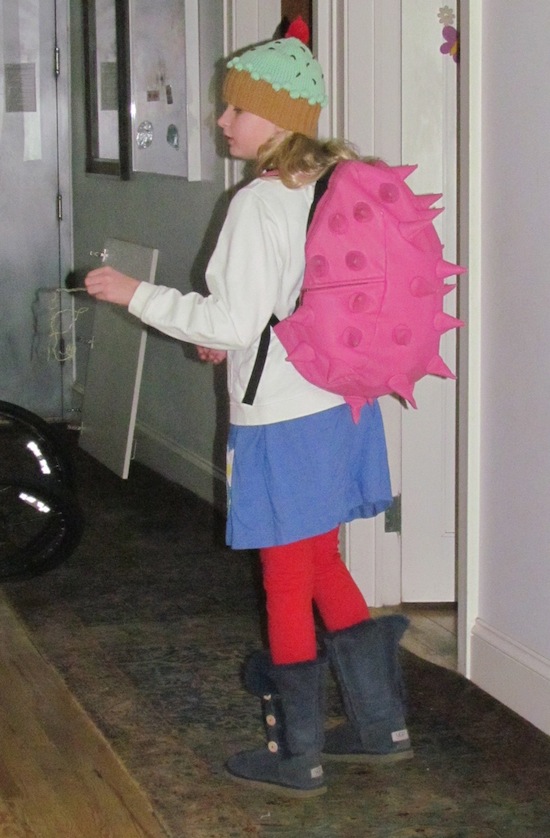
Later this morning as Em and I walked toward her school, we stopped at a red light.  As we waited she linked her arm through mine.  Not a single word was exchanged.  We waited, a mother and daughter, side by side for the light to turn green and once it did we made our way to the entrance to her school.  As Emma entered the gymnasium where the children and teachers were waiting, one of Em’s classmates called out, “It’s Emma.  Yay!  It’s Emma.  LOOK!  Look!  It’s a cupcake, I love cupcakes!”

And Em looked back at me and grinned before running to greet her friend.

The Cupcake Hat

Trouble Awaits if I Forget

I began this blog almost three years ago as a document of my daughter.  At that time I knew nothing about advocacy, I knew only one Autistic adult though I’d read the works of the most famous Autistic people ~ Donna Williams and Temple Grandin.  I assumed there were few Autistic adults because I believed what I was being told, that autism was an epidemic, and I feared it mightily.  I had a few people, made up of close friends and family members, who began to read what I wrote.  This blog was a place for me to write about how I felt and, while I tried to keep my feelings to a minimum and reported lots of dialogue and any progress I saw, I did write occasionally about how sad, angry, frustrated, scared and yes,  sorry for myself I was.  I never once considered how Emma might feel about what I was writing because Emma barely spoke, didn’t read (as far as I knew) and the idea of “presuming competence” was one I’d never heard spoken, let alone considered.  Regardless, I tried to stay upbeat.  I grew up in a WASPY enough environment to believe it was unbecoming to air one’s dirty laundry.  In addition, I believed and still do, in the power of positive thinking.  I wanted to feel hopeful, even though, it seemed to be in short supply.

As time went on and more people found this blog I continued to write about our life.  I understood that having an Autistic child made what I wrote more interesting than had I been writing about a neurotypcial child.  I never thought of it as an “opportunity” but I was certainly aware that I was being given a platform I might not have otherwise had.  I wrote a number of posts where I agonized about what it was to be the parent of such a child.  I saw nothing wrong with my thinking.  *Those posts have since been removed.  I do not post any photos or quotes without explicit permission.*  Had anyone said to me then – can you understand that your daughter’s neurology is not “good” or “bad”, that Autism in and of itself cannot and should not be judged as a deficit, with those whose neurology is in the majority held up as good and enviable, I might have been able to hear them.  But no one did say that.  No one said anything remotely like that to me.  Ever.  Not. Once.

Had someone patiently explained the concept of “presume competence” and exactly why it was so important would I have been able to hear them?  Had someone explained the relationship between depression, lack of self-esteem, how ALL children, whether they are verbal or not, whether they appear to understand or not, internalize what is said and thought of them, I probably would have understood.  I might have even felt the surge of hope I was so desperate for and that I felt so many years later when someone actually did take the time to patiently explain these concepts.  If someone went on to describe the problematic and ultimately destructive issues related to functioning labels I might have been able to comprehend, not right away, but I would certainly have found those concepts intriguing and would have wanted to know more.  Would these ideas have been enough to change the trajectory we found ourselves on?   I like to think the answer is yes.  I am just grateful, enough Autistic people took the time and energy to explain to me when they did.   These concepts are the basis for everything I do and think regarding Autism and my daughter.

Just a year ago, when I began to read the blogs of Autistics who were in their early 20’s, 30’s, 40’s and *gasp* 50’s my understanding changed radically and rapidly.  I started to see that if I wanted a personal place to vent I could do so in a support group or in a personal journal, but that what I wrote about on a public blog or submitted to the Huffington Post was reaching far more than just a few family members and close friends.  Things were easily misunderstood, my intentions were mistaken, the message I was sending was misconstrued.  Slowly, slowly over time I began to realize just how skewed public perception was and how that perception was affecting public policy, the media, where money was being spent.  I heard repeatedly how public perception played out in people’s lives.  I became aware of how pervasive the inequality and injustice was and remains and I became determined to speak out about it.  This was no longer just about my hopes and dreams for my children.  This was about human rights being blatantly ignored.

And yet, all of this is tricky.  There’s a huge danger of being seduced by one’s own ego.  When either of my children become boosters for my self worth and ego I know problems will arise.  When being a parent of an autistic child gives me a platform that I otherwise would not have available to me, I need to acknowledge that. Regardless of whether I asked for it, intended or even wanted that platform, I have to respect its presence.  When being the parent of an autistic child becomes my identity, I know I’ve drifted away from where I need to be.  My Autistic child is not “who” I am.  That’s putting way too much pressure on any child, and it sets up an unhealthy and untenable relationship.  Trouble certainly awaits me if I forget that.

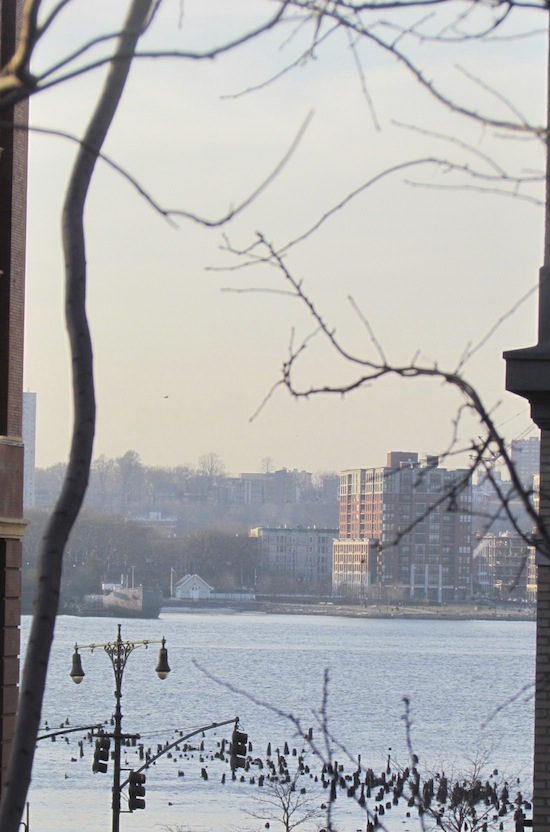
A Peek at the Hudson River taken from the Highline

The Hudson River

Anger, Confusion, Doing the Right Thing

My father was born and raised in Paris.  He was actually Swiss, hence my last name, but he grew up in France and only came to the States in his twenties.  As a child I remember feeling ever so slightly embarrassed by my obvious “American-ness” something my father was often critical of in not so subtle ways.  One of his complaints was regarding what he felt was an American preoccupation with “happiness”.  One of his favorite phrases, repeated to my annoyance when I was a teenager, was “no one ever promised you a rose garden.”  (It was an interesting statement coming from someone who lovingly tended to his rose bushes that accented an enormous cactus/rock garden in front of our ranch-style house.)  I hated when he said that.  I can remember driving in the car staring out the window, talking about the injustices of the world and our society and feeling it was all too much to bear and he would come out with the thing about the rose garden or another of his favorites, “it’s a wicked world”  and I would silently scream in my head, while saying nothing.

It’s snowing right now.  My studio windows look north onto a bridge where hundreds of commuters barrel along to and from Manhattan.  On sunny days to my left the Manhattan skyline beckons in all its grandeur, to my right massive factory buildings rise up, grey concrete and windows where I can see heavy machinery, artist’s studios and manufacturing.  Often, on the street my studio building occupies, film crews shoot TV shows I’ve never watched, parking is suspended, barricades are set up and large tables laden with food, none of the actors will eat, take up space on the sidewalk.  But this morning it’s snowing.  Manhattan is completely obscured by heavy, grey clouds.  Different sized flakes whirl about as though unaware that gravity will eventually win out.

I spent most of my teens in a state of confused, directionless, rage.   Eventually all that anger found its target…  me.  For the next few decades I took my upset and sense of injustice and dumped it on my self over and over until I had all but forgotten there was anything else to be outraged about.  Slowly over time that changed.  I learned to have some acceptance, I learned that my anger was not the single worst thing about me, to be buried and beaten down and hidden.  I learned that other people’s anger, while uncomfortable, would not kill me.  I learned about myself and I began to see that my resentments led me to behave in ways that would eventually crush me.  My addictions (click for more on that) were all about rage, debilitating resentments turned inward.   I learned the only way I could crawl out from under my addictions was through honesty, acceptance, compassion and love.  I learned I could feel rage, but that I had to learn how to respect and care for it.  I am still learning.  I haven’t gotten it all figured out yet.  I still falter and make missteps, but I know the key points so that I don’t completely fall off into self-destruction.

Anger.  What is it telling me?  I have to keep my actions honest.  I have to keep conflicts centered on separating feelings from facts.  I have to try to recognize when I am responding with judgment, prejudice, privilege, superiority or defensiveness (this is no small feat!)  I have to step away and ask myself – am I being honest?  Am I being willfully hurtful?  Am I intentionally or unintentionally being manipulative?  Am I afraid?  If so, what of?  Am I speaking from truth or because I want others to think well of me?  Am I placing principles above personalities?  Am I practicing these principles in all my affairs?  Am I gossiping?  Am I feeling superior or conversely inferior?  Am I demonstrating any of these things in my behavior?  What can I do to support those I care about and love?  What can I do to be of service?  What is the next “right” action in the face of conflict?  Sometimes the answer to this last question is to be present and enjoy the snow falling outside my window and to see the beauty in its gathering on the rooftops and farther below on the ground.  Sometimes, not always, but sometimes, taking care of myself so that I can take action at a later point means doing absolutely nothing in this moment.

January 2013 – The Chrysler Building at night

Chryslar Building

The Joy Of Communicating Without Words

This morning it was 17 degrees fahrenheit, but with the wind chill it felt as though it were 5 here in Manhattan, this was according to my “The Weather Channel” iPhone app.  Because of the ongoing New York City school bus strike and because my husband is SuperDad minus the voluminous cape and lycra tights, Richard has been taking Emma to school each morning for the past ten days.  But this morning it was my turn to step up to the plate.

7:30AM this morning

Me:  Okay Em.  So here’s the deal.  I’m going to take you to school today, but Daddy told me it’s tough getting a cab, so we may have to walk.

Em:  Take taxi with Mommy to school.

Me:  Well, we’ll try to get a taxi outside our building, but if we can’t get one right away, we’re going to walk.

Em:  No, I don’t want to walk.  Take taxi.  Just you and me.

Me:  Em, we’re going to try to get one, but if we can’t we’re going to walk.

Em:  Nodding her head.  Together.

8:15AM

After trying for several futile minutes to hail a taxi we began to walk to Emma’s school.  The sidewalks were crowded with parents and children.  As Emma and I made our way in the cold, Emma began to make a loud singing like sound.  It wasn’t a song, more like one line of a song, sung loudly.  People turned to look at her.  At first I just continued to walk next to her, my hands tucked into the pockets of my coat for added warmth while Emma repeated the same song-like refrain loudly.  A few people stared.  Em linked her arm through mine and sang again.  I looked over at her, ignoring the curious looks from those we passed and sang back, but in a slightly different pitch.  She smiled and did it again.  I echoed her.  She laughed.  As we continued along toward her school in this way I noticed a few people smiling as they walked by us.  Once at an intersection Emma stopped “singing” and instead winked at me.  I winked back.  When we eventually arrived at her school, Emma turned to me and said, “Bye bye Mommy.  Had so much fun walking to school with Mommy!”

Yup.  Me too.

Emma – 2003

Em2003

When the Words Don’t Match

The other night Em woke up at around 2:00AM crying.  She kept saying the same words over and over.  It was a kind of script, about an indoor playground that I used to take both children to when they were toddlers.  It is a playground that has been closed for more than six years.  “Mommy has to look.  Daddy has to find new Sydney playground.  The tickets are broken.  Mommy has to fix it.  Oh.  You want to go to new Sydney playground!”

Do not try to translate this.  Lean into the emotion, what is she telling you?  Forget the actual words, the individual words are less important, it’s the emotion, it’s the intent… 

This is what I’ve been taught.  I’ve paraphrased the exact words my friend Ibby actually used, but it captures the general idea of what she has reminded me of more than once.  It’s an important concept and one that I didn’t readily understand at first.  In fact our initial conversation went something like this –

Ibby:  Do you speak another language?

Me:  What?  No.  I barely speak English.  Do I need to learn another language?  If you tell me I need to learn Russian to help me understand, I’m on it.

Ibby:  (I imagine Ibby took a deep, calming breath before continuing)  No.  You do not need to learn Russian.  But you need to feel the words instead of trying to do a word for word translation.

Me:  Feel the words?  Mind began to race, a panicky feeling overtook my body. I don’t know what that means!  What does that mean?

And so Ibby patiently tried to explain that by getting lost in the exact meaning of the words I was missing the emotions being expressed.

With this in mind, I went back to Emma’s bedroom with her.  Very distressed, she continued to repeat the script and then suddenly veered off to an unrelated, yet another, unattainable, desire.  “I want to go to Martha’s Vineyard.  Not binyard, v, v, v, vineyard.  Mommy I want to go to Martha’s Vineyard.  No baby.  We can’t go to Martha’s Vineyard, it’s too cold.  I want to go to Martha’s Vineyard.”

As I sat with her listening, I tried to be present, neither lying to her nor adding to her anxiety, just being present and as I did this I felt a flood of recognition.  I realized I do a version of this too, only I call it “spiraling out”.  It happens at odd times, but being tired makes it harder to cope with.  When I think about how I spiral out an image of a pin ball machine comes to mind.  My thoughts are the little metal ball careening around hitting one side, ricocheting off the little bouncy things that make noise while the lights flicker, before shooting off in another direction.  Nothing anyone says helps me.  In fact, often well-intentioned people will make it much, much worse, because my mind is literally looking for things to think about that will create more anxiety.  The only thing that has ever helped me when I get this way is a calm, loving voice gently nudging me down a different path.  It has to be authentic and very, very loving and very, very calm or I become suspicious and even angry.  With this thought in mind I gently said to Em, “Is it okay if I tell you something?”  She nodded her head.

“I get upset too, Em.  Just like you are right now.  And when I do I have thoughts that I can’t stop going around around in my head.”

She sat up and looked directly into my eyes.  “Sometimes when I feel stressed and tired I can’t make the thoughts go away.  Sometimes the same thoughts just keep repeating in my head and I can’t get rid of them.  Daddy calls it spiraling out.  But you know what?  It’s going to be okay.  I’m going to stay with you.  It’s going to be okay.  I promise.  Try to breathe.  Here breathe with me.”  We inhaled together and then exhaled.  “Feel the cool air on your face and the warmth of the blanket on your body.”  I continued in this way, talking to her softly, trying to guide her, trying to make her aware of the present.  These are the things that help me when I’m agitated and feeling overwhelmed and eventually she rested her head on me, leaning her body into me as I spoke to her in a soft voice.

It was during those early morning hours with the two of us sitting together while everyone around us slept that I felt a surge of understanding.  When I get lost in the words that fill my head and when the words don’t match up with the emotions it feels confusing and I become perseverative and spiral out.  I see this now.  In the past I’ve called it anxiety.  I’ve said I’m overwhelmed and tired.  These are good words to describe what I’m feeling, but a more accurate explanation is that when I become fixated on specific thoughts, in my case they are often in the form of fears, I can become so lost in the specifics I lose sight of the emotions.  This has happened my whole life, only it took my daughter to get me to make the connection.  We are not so different, my daughter and I.

An image that calms me – The Manhattan Skyline taken while walking to my studio the other morning

Manhattan Skyline

What Does Autism and The Hubble Space Craft Have in Common?

Most of you have probably read Jim Sinclair’s famous essay Don’t Mourn For Us.  If you haven’t, do.  In the Loud Hands:  Autistic People, Speaking Anthology a version of that essay comes after Julia Bascom’s wonderful Foreword.  By the way, if you didn’t see the Huffington Post interview I did with Julia regarding the anthology and future projects, you can read that by clicking ‘here‘ and I’ve also embedded a link so those of you who haven’t read the Anthology can buy it and read, because..  well this book needs to be read by every person on this earth AND it’s now available in paperback as well as on Kindle, so who can resist?  Here’s the “link” (again) to buy it.  Full disclosure – I bought this book for a number of my family members and gave it as a Christmas gift!

I read the anthology as a PDF file first, then I read it again in paperback and now I’m rereading it with my highlighter in hand.  There is not a single essay that has not been streaked with neon green highlighter.  The anthology has contributions from a wide range of people (a few of my favorite writers are missing, but I am hoping this anthology will be followed with a second that will include writing from E. of The Third Glance (not to be confused with “E.” who is in the current anthology), Aspie Kid, Michael Scott Monje Jr and Sparrow Rose Jones to name just a few.)  It’s not the type of book you can really quote from as each piece needs to be read in its entirety to get the full weight and power of it.

Having said that, I have to quote Jim Sinclair and hope that all of you will get the book and read it from cover to cover.  Jim wrote, “The ways we relate are different.  Push for the things your expectations tell you are normal, and you’ll find frustration, disappointment, resentment, maybe even rage and hatred.  Approach respectfully, without preconceptions, and with openness to learning new things, and you’ll find a world you could never have imagined.”  “… you’ll find a world you could never have imagined.”  This has been my experience, exactly.  I think I’ve even said something close to this before.  I believe I’ve said finding Autistic voices and reading their words was like being presented with proof that another universe exists, but that I never knew about.  So for all of you who need or want proof that another universe, a more wondrous and fantastic universe than is imaginable, read the Anthology and be prepared to have your world changed in the best possible way!

One of Emma’s favorite Imax movies is about the Hubble Space Craft found to have a faulty lens and requires repair.  Once fixed, it produces absolutely hallucinogenic images of the universe that are so beautiful it is hard to believe they are real.  To me, autism is like those images, beyond anything I could have imagined.

Images taken from Hubble Space Craft 

HubbleSpaceTelescope_N90

6a01053624b365970c0120a5b6a7b5970b-800wi


A Celebration With Some Unexpected Surprises

This past weekend we spent celebrating Emma’s birthday.  For the past few months we have been planning Emma’s birthday with her.  Emma was very specific.  She asked that we spend the night in a hotel that had a swimming pool followed by a party at the same place she takes gymnastics with her brother every weekend.  We visited the hotel with Emma before booking it.  The pool was on the roof and when we visited, the saline water was at a lovely 94 degrees.  We booked the place where she wanted her party and sent out invitations.  We called the hotel ahead of time to confirm they had wi-fi and a DVD player as Em wanted to bring her favorite Charlie Brown video.  Saturday afternoon we piled into a taxi, arrived at the hotel, settled into our room, donned our bathing suits and made our way to the roof where it was windy and quite cold, but looked forward to the lovely warm water awaiting us.

Emma jumped into the water without hesitation, with Richard following.  I turned as Richard gasped in surprise.  It was the sound someone makes when the wind’s been knocked out of them.  I stared at him.  “It’s really, really cold!” Richard said in answer to my confused look.

“Seriously?”

“Uh.  Yeah.  Feel it.”

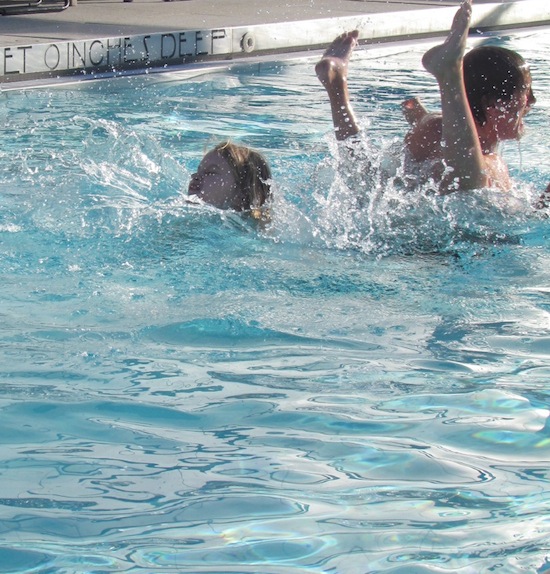
Tentatively I dipped a hand into the water.  It was not a lovely 94 degrees, it wasn’t even a tolerable 84, in fact, it seemed unlikely that it was anywhere close to being “warm”.  The outside temperature had barely climbed above 35 degrees and the wind was brisk.  Nic took one look at my face and voiced what I was thinking, “There’s no way I’m getting into that water.”  Richard, being the champ that he is, hung in there for another ten minutes before getting out, his lips having turned blue and his teeth chattering, while Emma, being impervious to cold of any kind lasted another half an hour.

It's Cold!

The beauty of Manhattan awash in the afternoon light. Taken from the hotel roof’s pool.

Manhattan

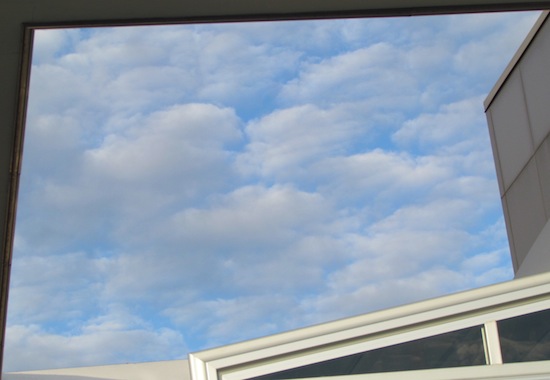
Framed Sky – Taken from the hotel’s roof while Em and Richard swam

Framed Sky

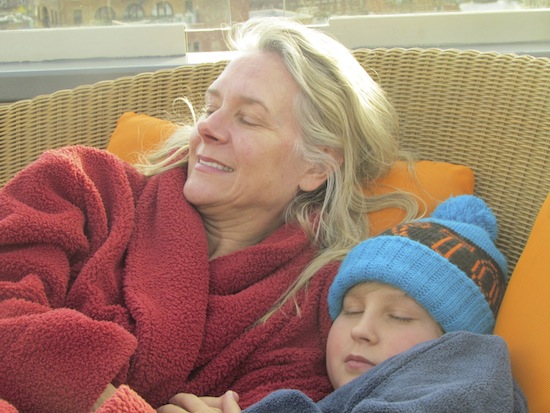
The hotel assured us the pool would be warmer by the following day, so we promised to come back the next morning for a longer swim.  Our evening was lovely, the children had a blast, and the next morning, after a wonderful breakfast we headed back up to the pool.  This time Emma did not immediately jump in, but felt the water with her toe.  It was a little warmer, though not much, but despite its cold temperature we resolved to bite the bullet and swim anyway if Emma chose to jump in.  Eventually she did and was delighted when the rest of us followed her.  It was cold, very, very cold, but it was also beautiful up on that roof, with the sun shining and the gorgeous view of Manhattan spread out before us.  We swam laps and splashed and played and Emma had a wonderful time.  When we finally got out of the water, dried off and put on our fluffy robes, we snuggled together on an enormous wicker chair, Richard called “the egg”.

Nic and I in the “egg”

In the egg

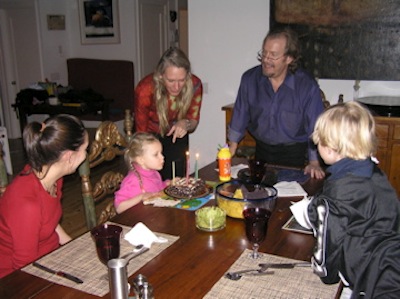
Later that afternoon we went to the gym where we celebrated Emma’s birthday with half a dozen other children whom she’d specifically asked to have invited.

Over the years we have learned to involve Emma in every aspect of planning her birthday, doing what she requests as much as possible.  Despite some unexpected surprises we have gotten better and better at giving her what she wants rather than what we think she might want.  And over the years we get it right more and more.

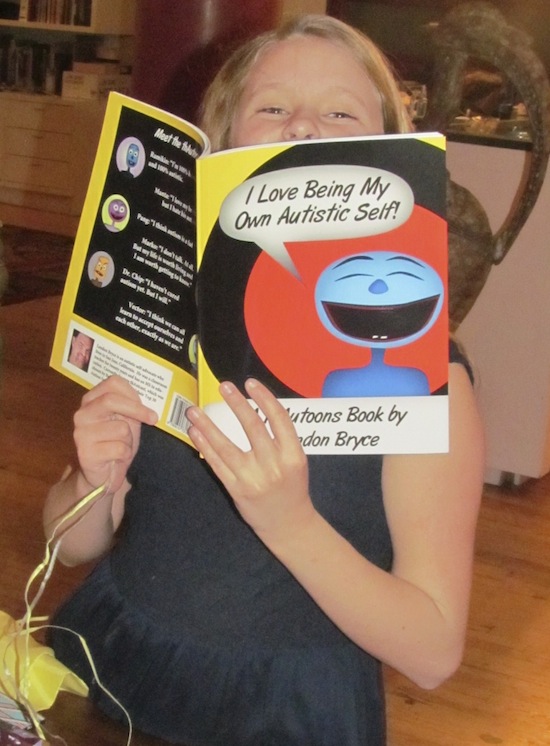
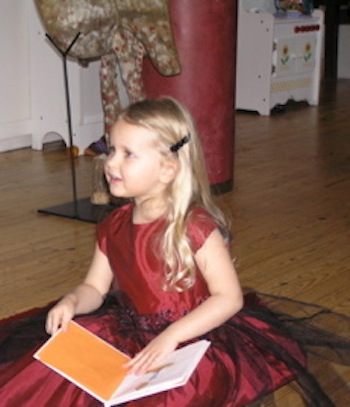
Em with her string and her new book – Landon Bryce’s “I Love Being My Own Autistic Self!”

Presents


A Confession

In my teens, through my twenties and half way into my thirties  I used food the way a junkie uses heroin, only my “highs” didn’t last as long.  As a teenager I realized there was nothing like eating large quantities of food to quell my discomfort, boredom, pain, happiness, sadness or anger.  I found I could “cancel” out my overeating by purging.  Vomiting quickly became as much a compulsion as eating was.  At a certain point I had to do both, and though I didn’t think of it as one and the same, both provided the relief I sought from the pain I was in.  Very quickly I went from making a decision to eat, to feeling it was no longer a choice, but something I had to do.  The pain felt so unbearable, the food and vomiting so wonderfully seductive and numbing, I began to feel I would die if I didn’t give in to my compulsions.

By the time I was seventeen I knew I had a problem.  I had tried, on numerous occasions, to cut back or stop, but I could not.  By the time I was eighteen it was clear to me that I was an addict, but few agreed.  Being addicted to food is not a popular or commonly accepted idea.  Being addicted to food is not considered, by many, to be a true or real addiction.  Instead people said, “Just go on a diet.” “Just stop eating when you’re full.”  “You’re not an addict, you just like food.”  “You can’t be addicted to food, you just have a problem with will power and self-control.”  “Why don’t you talk about it, maybe that will help you understand your real problems.”  “Fast for a few days and cleanse your body.”  “Here’s a hypnotist I know, he was very helpful when I decided to stop smoking.”  “You need to get a hobby, take your mind off eating and food.”

So for years I followed everyone’s advice.  I went to psychiatrists, psychologists, behavioral therapists, group therapy, eating disorder specialists, body workers.  I tried diets, fasting, cutting out particular food groups, visualization, aromatherapy, and read every book I could find dealing with weight loss, compulsive eating and dieting.  I kept journals and wrote about my feelings, I weighed myself and measured all my body parts.  I kept detailed records of weight gain and loss with the corresponding inches gained or lost.  I viewed myself with a critical eye, carefully evaluating the “problem areas” and resolved to work on those with trips to the gym and exercises targeting those troublesome parts of my body that didn’t measure up.  And as I did all of this I kept telling myself that there was obviously something fundamentally wrong with me or else I would be able to eat like everyone else.

It never once occurred to me that my self loathing and self-criticism did little except make me want to eat more and only served to increase my anxiety and self-hatred, which in turn increased my compulsiveness.  Over the years as I continued to try, and failed at various “treatments” I became more and more depressed, until eventually I felt the only real option left was suicide.  And as I contemplated this, as I seriously began to consider this as a viable option I was told to go to a group of people who were grappling with the same issues I was – food and compulsive overeating.  It was there in those rooms filled with people just like myself that I felt, for the first time, I belonged among the human race.  Finally I had found my people.  Up until that point I felt like an interloper, a perpetual outsider, the one who couldn’t figure out how to live with the same kind of simplicity and ease everyone else seemed able to do.

This group of people taught me how to be in the world.  I learned that my actions, the things I said and did, affected how I felt about myself.  These other addicts helped me navigate life one day at a time, reminding me that I was not alone and that others had come before me.  They held out their hands, offered me  support and guidance and encouraged me.  They taught me about honesty and taking “the next right action” and the importance of being present.  I came to understand that my life was of value and that I in turn had something to offer others.  As I learned to behave in a kinder more tolerant way toward others, I became kinder and more tolerant of myself.  As I became more tolerant of myself I felt more comfortable in my own skin and began to accept myself for exactly who I was.  As I did this day by day I found my compulsions lessen.  I found I could concentrate on other things.  I realized I had a great many interests and was able to begin pursuing them.  I found I had the energy and the desire to help others who were like I once was.

Now, close to twenty years since those early, painful days when I first discovered I was not alone, my life has completely changed.  That person I was all those years ago is not who I am now.  But I still remain an addict.  It is who and what I am.  It is important for me to remember that, because it is when I forget that I once again find myself back in the food, obsessing about my body and how much I weigh, wondering how many calories are in any given food and where and what I can or cannot eat.  It is so easy to go there and when I do, I lose out on my life.  As an active addict everything and everyone else takes a back seat to my addiction.  Active addicts are not fun to be around.  They have little to offer.  But those of us who have come out the other side, who have learned how to be in this world without picking up our substance of choice, we have so much to offer and give.  Some of the finest, most generous and trustworthy people I know are addicts with years of recovery under their belts.

I am an addict.  I am a mom.  I am a wife.  I am a friend.  I am a human being.

1988 in New York City

1988

Happy Birthday Dear Emma!

Happy Birthday Dear Emma!  

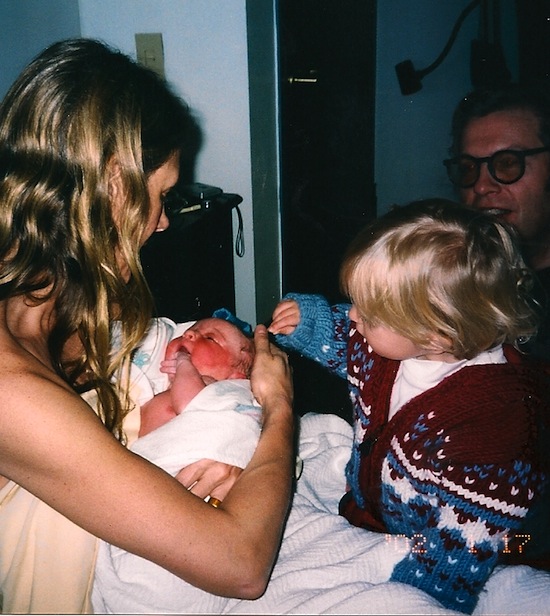
Eleven years ago you came into this world and graced us with your presence.  Eleven years ago you presented yourself to us and from that first moment that you drew breath you began to have an impact on all who met you.  You are an example of perfection, exactly as you are, without need of tweaking.  You are strong and wise and smart and intelligent and funny and talented and beautiful.  You are determined and a terrific negotiator.  You are fiercely independent and artistic and your mind, how you think, the way you perceive the world and those in it is a beautiful thing. You are patient and generous and kind.  You are loving and good.

You are perfect.

You are just at the beginning of your life, but already you have taught me more than I could ever teach you.  Eleven years ago I had no idea that because of your life, mine would change as dramatically as it has.  I could not know that because of you and who you are, my entire outlook on life, the world and it’s inhabitants would change so radically.  These are changes I welcome.  These are changes I am so very grateful for.  They are good changes, important changes.  You have forced me to see what I once could not.  You have shown me another way of living, a better way of being in this world.   You have opened my eyes to all that is possible, and it is beyond my wildest dreams.

You are perfect exactly as you are.

One day I hope you will be able to read this on your own.  But until that day arrives, I have one wish I would like to have granted on this day, your eleventh birthday and it is this –  flourish and do not ever, ever allow anyone to bring you down, make you feel badly or cause you to doubt yourself.  Spread your wings and fly dear Emma and I will be here to support you, to love you, to cheer you on and to remind you of your perfection.

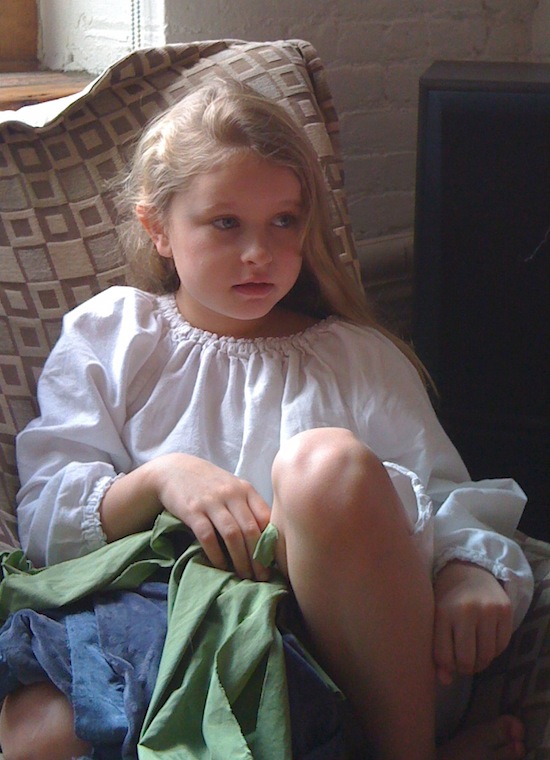
You are beautiful Emma Rose.

You are perfect.

4:30PM January 17th, 2002 

sc000a1b04

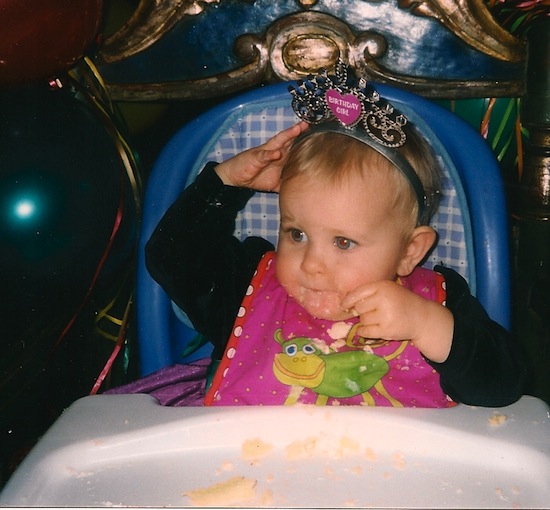
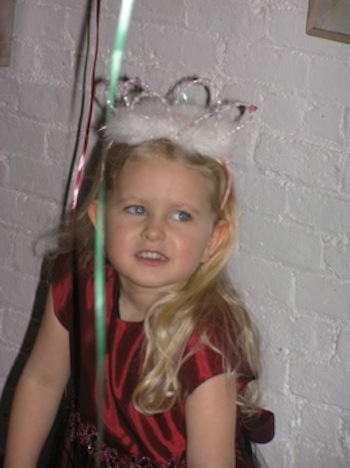
January 17th,  2003

Birthday Girl-2003

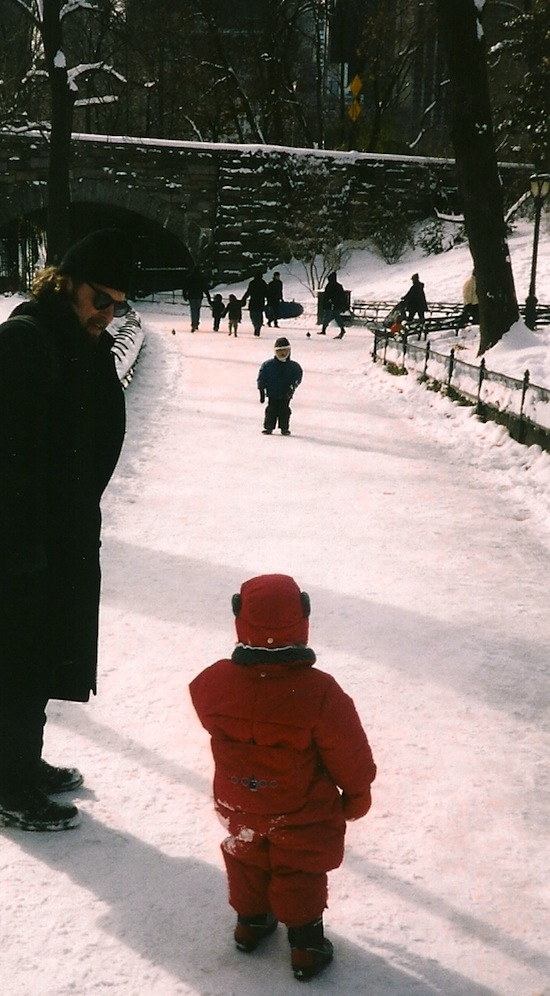
Central Park – January 2004 

2004

January, 2005

2005

Jamuary 17, 2006

2006

January 17, 2007

2007

January, 2008

2008

January 2010

2010

January 2011

2011

January 2012

Birthday Girl-2012


Try to Imagine

Imagine… Imagine that from the moment you were born every aspect of your being was evaluated and studied with a critical eye.  Imagine that who you were, the way you spoke, moved and behaved was seen as deficient.  Imagine that from an early age you were talked about as though you didn’t understand and even if you did not fully understand everything said, you understood the emotions behind the words, the disappointment, the fear, the anger, but you had no idea why you had caused such a response.  Imagine how that would make you feel.  Now imagine how you would feel if you understood every single word uttered, but you could not speak or make it known to others that you understood.  Imagine how you’d feel if you grew up believing your very existence caused others discomfort, pain and suffering.

Imagine that as a small child you were assaulted by light, sound, touch, odors, taste, things that did not cause others pain, but that made your life almost unbearable.   Imagine that you also felt people’s energy intensely but were often confused and overwhelmed by these feelings.  Imagine that when you cried in distress you were greeted with anger, confusion or were told nothing was wrong and to stop behaving this way.  Imagine how you would feel when you finally located the correct words and spoke them, people misunderstood you, became angry with you or you were told the tone you used was “wrong”, inappropriate or the volume with which you spoke was too loud or too soft.  Imagine trying as hard as you could to speak as you’d been instructed, but no matter how much you tried, you never seemed able to get it “right”.  Imagine what that would be like.

Try to imagine how you’d feel if you mustered up the courage to connect with another human being only to be shunned, teased or rejected and told to go away.  Imagine what it would be like to want to have friends and play dates and sleepovers but you had none.  What if you tried to make friends, but when you tried to connect you weren’t able to and didn’t know why.  What if your attempts to be friendly were seen as acts of hostility.  What if you punched someone on the shoulder because you’d seen friends do that to each other, but when you did it you were taken to the principal’s office, reprimanded and threatened with expulsion.  How would that make you feel?

Try to imagine what it would be like if the few things that brought you joy were stopped or taken away from you.  Imagine if you loved nothing more than to jump up and down, that this motion made you happy and calm, but when you did this you were punished.   Just imagine what it would be like if the things you found fascinating were ridiculed and joked about.  Now imagine that you are unable to make words form in your mouth so that you could say anything to explain or protest.  Or imagine what it would be like if you were able to speak and when you did, you were told your words were unacceptable.  You were threatened with punishment and institutionalization.  Take a moment to really imagine how that would feel.  Imagine what it is like to need help, to have to rely on people and to have those people hurt you, betray you, get angry with you over and over again.

Just imagine how it would feel if experts talked about your neurology as a deficit.  Imagine how it would feel to be told over and over that you were neurologically incapable of understanding what another person feels, and that you couldn’t truly understanding your fellow human beings.  When you suggested you felt a great deal, when you talked about how painful it was to look directly into people’s eyes because it was like seeing into their souls, or when people went to hug you it made your skin crawl or the odor emanating from the other person was too overwhelming, imagine what it would feel like to have people suggest you should just try harder or that you should do it anyway.  Imagine just for a moment how you’d feel if those same people then accused you of being difficult and told you it was impossible to have a “rational” conversation with you or you were told you were rude when you confronted them with their insensitivity.  Imagine what it would be like to be dismissed and silenced over and over again.  Just try to imagine what that must be like.

Try.

Try to imagine what it might be like to be Autistic.

Islands of Words

In Judy Endow’s book, Paper Wordsshe describes the process she went through to communicate.  She writes about the “bridge pieces” or information storage system she experienced, “Then world-people might see the little bridge pieces stuck onto the sides of all these stone islands.  

“Bridge pieces just hanging there serving no purpose (other than to underline the fact that a bridge was meant to be there, but isn’t) little bridge pieces going nowhere with gray -matter   g   a   p   s    where the bridges should be.

“Perhaps then the world-people might come to understand that even though she may know all the info that’s needed to answer their question or to produce a reciprocal response to keep up with her part of their conversation, sometimes it takes a lot of her time to jump in a boat and float around in that gray-matter space of her mind floating in the    g   a   p   s     trying to find all the right islands of stone that might hold any relevant data pertinent to the subject at hand.

“Sometimes it’s a cumbersome task to access information in this manner and at other times it is downright impossible.”

Judy’s book is incredible on so many levels and I hope she will forgive me for butchering the placement of her words, because my blog would not allow me to replicate what she does in her book.  However, I will try to explain.  She literally breaks the sentences apart in meaningful ways.  There are the words she’s writing, but there is another layer of meaning to be gleaned from her words, and that is how and where she places the words on the page.  As an example of the above quote, these words are placed in such a way as to create islands of words, separate from each other and yet the meaning overlaps, but the placement of the words (the islands) do not.  This requires the reader to visually leap from one island of words to the next, just as she describes her thought process must do.  It is a wild experience to read in this way and further illustrates her struggles with “bridge pieces” (information storage), “gaps” (information processing),  and canoe transportation (information retrieval).

In her chapter entitled,”People Are Not Interchangeable” Judy Endow writes, “…meaning that if PERSON ONE has a conversation with her today   …then tomorrow she can’t speak her response to PERSON TWO even if both persons belong to the very same group  sometimes when she knows what she’s talking about and the person to whom she is speaking acts like he doesn’t understand her the first thing she does is to repeat herself saying her exact words over but if the person still acts confused she begins to wonder… this may be one of those times when she needs to be talking to PERSON ONE but because both of them are in the same group it somehow makes perfect sense to her to be talking to PERSON TWO but this kind of mistake rarely works out so she must always remember the rule that she made for herself:  “People are NOT interchangeable.”

Again I couldn’t duplicate the arrangement of these words on this blog, an arrangement that serves to visually recreate the issues she describes having.

As I read Judy’s powerful book it was impossible not to reflect on my daughter.  How often has she said something that I did not/ could not understand?  How many times has she spoken to me about something or someone who I didn’t understand the context of, but that she seemed to know and understood me to know as well.  Only I did not.  How many times did I think – what am I missing?  And now I wonder, was she speaking to me, assuming I was PERSON TWO, while PERSON ONE might well have known exactly what she was referring to?  How many times have I been PERSON ONE and then explained to PERSON TWO what I thought was meant?

It happens often.

Emma doing one of her favorite “finger mazes” – 2013

Emma mazes

That Wasn’t A Question

Last night.  I’m at my computer writing.  Emma walks past me.

Em:  Have cereal and toast?

Me:  Em, you just had dinner a little while ago.

Em:  Time for cereal and toast?

Richard:  What?  No Em.  You just ate.

Em:  Emma’s hungry.   Have cereal and toast.

It took three times, but then I understood.  This wasn’t a question, this was a statement.

And with that, Emma went into the kitchen and fixed herself dinner #2 – cereal and toast, while Richard and I looked at each other and laughed.  

Evening light – New York City, 2013

Light

Musings on Fear, Dehumanization and Other Light Topics Worthy of A Friday Morning…

I have always had an irrational fear of institutionalization.  Irrational because I have no “diagnosis” or valid reason that would make such a fear reality unless you count being high-strung, emotional and I’ve been told over the years, “too sensitive” but I don’t think people are ever actually institutionalized for that… or are they?

Maybe it was the stories I was told as a child about a couple of my relatives, now dead, who were institutionalized against their will by family members intent on getting them out of the way, or perhaps it was from all those months my father spent in the hospital clawing his way back to the living after a horse back riding accident that left him disabled for the remainder of his life, or maybe it was the books I read and was drawn to as a teenager.  Books detailing (supposedly) real lives lived such as Dibs in Search of Self, Sybil, The Three Faces Of Eve and Go Ask Alice.

Whatever the reason, I had and have a terror of being “put away”, locked up somewhere.  This fear includes hospitals, group homes, prison, any place that removes my ability to walk away when I choose, and places my care in the hands of others.  As a quick example of how much this fear permeates my life, I gave birth to both my children naturally and in birthing centers, not because I have an aversion to drugs, (I had a lively and deep attraction to drugs of all kinds during my teens and early twenties – I do NOT recommend this) or because I’m a granola-eating, Birkenstocks wearing vegan. (I’m not.  Not that there’s anything wrong with anyone who might fit that description.)   No, I gave birth naturally and in birthing centers because my fear of hospitals aka institutions is so great I begin to feel real panic even writing about it.

When I had to have a partial hysterectomy last winter I informed my surgeon I wished to be the first one in and assured him I would be going home that evening.  When he suggested I might want to stay overnight at the hospital, that even in the best of circumstances I would probably NOT be released to go home, I became so agitated and visibly upset he relented and said he would do all he could to get me home that night.  And sure enough, despite being so out of it I could barely put two words together, let alone a whole cohesive sentence and had a head the size of a watermelon from having been hung upside down for more than five hours, I managed to get myself upright.  My husband, using all his strength half carried, half dragged my useless, morphine infused body out of the hospital and into the relative safety of a taxi driven by a kind, middle eastern gentleman whose upper head was encased in white cloth aka a turban, that reminded me of medical bandages.  In my drugged state I kept imagining I saw blood pooling on the white cloth and had to open a window so as not to hyperventilate and throw up.  As the taxi careened along the streets of Manhattan, I allowed my body to slump against my poor, patient husband who was busy distracting himself with the latest New York Times Crossword puzzle.  Even so, all of this was well worth the effort as I made it home and into our bed by 10:00PM that night.  Panic attack thereby averted. *Whew*

When my daughter was diagnosed with autism, my fear of  institutions was the one fear, outstripped by any other, that brought me to my knees.  For years it was this vision, that horrifying gothic institution, dark and forbidding that I became convinced would be the inevitable conclusion of not my life, but hers once my husband and I died.  It was this looming image in my mind that made me hurl myself headlong into various remedies and treatments.  For years I felt sure that anything we could do to save her from such a bleak future was surely a worthy goal.  It just never occurred to me that what I thought was inevitable was not. And this is where I thank my Autistic friends for courageously sharing their stories with the world.  Because of them, their lives, their stories, I no longer believe this is my daughter’s inevitable future.

Judy Endow is a writer, a consultant, a mom, who conducts workshops on Autism related issues.  Judy is Autistic and spent several years in an institution as a teenager.  In her terrific book, Paper Words she discusses how she perceives the world by the movement and sounds of colors and writes,  “… please entertain the notion that a person who has an internally wired neurology to enable this, though a bit different from most, may not be any less intelligent, or indeed any less of a human being, than the typically wired folks, who are clearly in “The Majority” in the world-people world that we all inhabit.

As I read Judy’s powerful book I reflected on the nature of institutions, disability, aging and difference and how we humans tend to dehumanize those we believe to be weaker than ourselves, whether physically or mentally or both.   Until we can begin to embrace that which we do not understand or have experienced we cannot really know the harm we do, intentionally or not to those who must rely on others for understanding, accommodation and help.  Most of us, at some point in our life, will be dependent on another human being to have, at least some of, our needs met.  Let’s all hope we are fortunate enough to have someone who understands theirs is not a position of power, but a gift each of us can give to another, until it is our turn to receive it.

Em’s Self-Portrait – January, 2013

Self-Portrait

Group Dynamics – This Was NOT the Post I Intended to Write…

I don’t like groups.  I never have.  There’s something about group dynamics that I find more than a little frightening.  Too often groups develop an entity all their own and while it may beautifully reflect many individuals within the group, it never reflects all.  The loudest voices are often perceived as having the “best” or the “right” ideas and others who are not as loud or are just in the minority fall into line or if they don’t, are seen as threatening renegades and nonconformists.  Aspie Kid wrote an incredible post last week about something related to this, The Power of Suggestion on his terrific blog Aspie Kid: Perspectives From the Autism Spectrum.  While his post is not about group dynamics per se, it is about how easy it is to convince people of things when they perceive the source to be trustworthy or “in the know”.

Studies have been done regarding the power of suggestion and how groups can influence individuals to do and think just about anything.  Below is the famous Asch Experiment done in the 1950s; it is truly incredible, as well as troubling.  It’s important to note, this experiment has been done repeatedly, but always with neurotypicals.  I would be interested to see the results if it were done with Autistics.

More recently Kazuo Mori and Miho Arai redid the Asch Experiment but had each participant wear glasses that showed them the same image, yet each saw different things, thereby making them believe the answer they were giving was correct, unlike the original experiment where all but one participant was told to choose the same answer regardless of what they actually believed.  They also used both men and women and found that the results when using women replicated Asch’s, but did not with the men.  (That women were more likely to cave and agree with the group or majority view despite what they “knew” to be true is a whole other post!)  You can read more about that experiment ‘here‘.  Further studies showed that when the participants were acquainted with one another they were even more likely to go along with the majority than when they were strangers to each other.

Seventh grade:  I was the new girl at a new school with new kids and teachers in a new home.  I was extremely unhappy and had been for many years, though I had little self-awareness.  It was just before Easter.  There were only a few months left before summer vacation, but I couldn’t imagine how I would get through the year.  In my desire to “fit in” I told a great many lies.  I had been doing this for years.  The lies were so easy and seductive.  Words that were understood by the other kids in this small junior high school to have been fabricated.  I was shunned and ate my lunch alone by the chain link fence bordering the oval track where I excelled at running the mile, mostly because almost no one else was willing to run the mile, they were much happier running the 50 yard dash.  I found a shred of solace in running, and eating my lunch alone next to the oval track made me feel safe.  I cannot remember much of that year except that despite this I was surprised to be invited to a slumber party by one of the “in” girls.  Everyone was friendly at first and I let my guard down.  Without even meaning to I told more lies, all the while ignoring the tug in my stomach that I shouldn’t.  Lies were so comforting to me.  I preferred the lies to the truth, because I could no longer sort out what the “truth” was.   

The following morning all the girls gathered in a group and told me they wanted to talk to me.  I knew what was coming.  I froze and sat staring out the large window of the large house nestled on a hill.  I heard their voices, angry, accusatory, hurt, but it was just noise swirling around me as I gazed out that window at the fog as it slowly, slowly receded over those Northern California foothills, burnt away by the morning sun.  Each girl repeated a lie I’d told.  Each girl repeated the things I said, often behind the other’s back in my attempt to be liked, to fit in, to be like one of them.   My mind went numb.  I left my body.  Much later, I do not know how much actual time had passed as time stopped, my mother came to pick me up.  “How was the slumber party?” my mother asked.

“Fine,” I answered as the car sped away from those girls who I was clearly not like toward our home where I would at last be safe. 

In the refuge of my room later that day I felt something click deep inside.  I understood that I would never be safe.  There was nothing and nowhere I could go.  That day was the beginning of a long, painful slide into self-injury, bulimia, anorexia and addiction to quell the beast within.  There is nothing like addiction to shut the world out.  Addiction is the ultimate “lie”.  It is a living lie and betrayal of self.  I didn’t have the means to see that my actions had brought me hardship.  I did not understand yet that there was another way of being.  I didn’t have the necessary tools to guide me because I had long ago forfeited my self, there was no me to find or return to.  There was no “I”.  Addiction helped me forget the truth.

It is impossible to live in this world and not be part of a group. (Unless you are a hermit.)  We humans tend to crave companionship, whatever our neurology.  Yet we have a terrible time actually getting along peacefully with one another.  It took me thirty years to figure out a way to be with myself that I didn’t hate.  Slowly as I practice honesty, being kind and of service to others I was able to very slowly, very tentatively become a part of.  Groups can be wonderful.  Together we can accomplish and do what no individual can. I am a part of a number of groups that I have come to rely on.  But when groups become hotbeds of strife and gossip, where people forget that the groups principles are more important than any one individual’s grievance,  I know I must leave them.   I spent far too many years betraying my “self”.  I know how this ends.  And it isn’t pretty.

The Freedom Tower, taken this morning.   It represents the full scale of what we humans are capable of – to destroy or create… it’s up to each of us to decide.

Freedom Tower