Monthly Archives: August 2012

An Identity Crisis and Other Ramblings

*Warning – This post is written with humor.  If it offends, stop reading immediately and find another post.  There are lots of posts on this blog that are humorless.  Seriously.  Stop.  I mean go.  I mean…

My friend, Ib, (thank god she has returned from her various travels as I have felt decidedly “off” while she’s been away) and I were joking yesterday about the identity crisis I am currently undergoing due to the result I was given from taking the Broader Autism Phenotype test.  I was told “You scored above the cutoff on all three scales. Clearly, you are either autistic or on the broader autistic phenotype.”   It also said something about having an “aloof personality” something I’ve been accused of my whole life.  So I did what any sane human being would do – I retook the test.  This time the results said I had scored above the cutoff on two scales and therefore it was no longer “clear” that I was either autistic or on the broader autistic phenotype, but rather “likely” that I was.

And no.  I do not intend to take it a third time.  However I have resisted (so far) the desire to do a more thorough research of this test, how they are scoring it, exactly who is taking it, etc.  I so want to share my conversation with Ib, but didn’t think to ask if it was okay, so I’ll just share some of the tidbits from me, which is a pity as Ib had the best lines and is hilarious.  Ib is truly one of the funniest people I know, which, given the current view of Autistics being unable to understand irony and sarcasm, makes her so rare, she should be concerned that some autism specialist doesn’t catch wind of this lest they cart her off and stick her in a cage for more thorough examination.  But then those specialists haven’t gone on twitter and read tweets from my friends CoyoteTooth, HardAspie, TwinsMa, or AspieChap, nor have they listened in on FaceBook conversations with Brigianna, Kassiane, Julia, Rachel and countless others, all of whom have the whole sarcasm, appreciation for irony thing down to a science.

But I digress…  So in response to a hilarious, dry comment by Ib about my newly found status/nonstatus/questionable status I wrote:  “Ib… I do love you so.  And you really, really make me laugh, because you have that (oddly nonAutistic) humor, which clearly, despite being saddled with autism, you have managed to hang on to.”

To which she wrote something I cannot repeat.  And then mentioned one of the other myths regarding Autistic children, (it’s always regarding children and not adults because the common perception is that there are no Autistic adults and evidently never will be) which is that they are all so “exceptionally beautiful.”  This is something many have written about in a great many books, memoirs and on every single one of Emma’s reports and evaluations.  Each is prefaced with – “Emma, a beautiful little girl, of 5 years and 2 months, bounded around the classroom, only stopping to pick up a chair, which she hurled against the wall.  She spoke in one or two-word utterances, refused to obey any of the rules….” and the report would continue with the evaluator’s “observations” of Emma’s various activities as one might write about an animal under observation in the zoo.

So I responded to Ibby with this:  “…but that whole “oh they’re angels sent to us from God is crap.  I’ve heard the whole “unusually good looking” thing and I, personally do not see this as the case.  Sure there are lots of cute Autistic kids, there are also lots of really “cute” non Autistic kids.  I mean isn’t this the puppy syndrome?  Most puppies are pretty damn cute.  I think it’s that NTs expect an Autistic kid to look “weird” and so when they don’t they say, “oh she’s an angel, sent to teach us lessons that we’ve still not learned and never will, but while we’re NOT learning them at least we can feel better that the kid is so damn cute.

 SOS – Need Ibby home NOW..  Losing all patience with humanity’s stupidity…..  eeeeeeeeeeee”

Ib then responded with a whole diatribe that was so funny I laughed out loud and she ended said diatribe with the word – “sarcasm.”

I responded:  “I know you identified that last bit with “sarcasm” because now with my newly found identity you are assuming I’ve lost all ability to understand that that was in fact sarcastic.  Richard only this morning pointed that out to me and I tell you, it was an enormous relief to me.  Because now that it seems I am (at the very least) precariously close to being near if not ON the spectrum I will be humorless, incapable of understanding nuances and suddenly, miraculously very good at math, plus my IQ will take a massive leap upwards, for which I am extremely grateful.”

*To all whom I’ve now offended, this was not meant as offensive, but was poking fun at just a few of the ridiculous generalities, assumptions, theories and labels that continue to plague anyone who is Autistic.  And anyway if you reached this far and are still offended you clearly did not read the warning label, which suggests you are not good at following rules, coupled with your inability to see the humor, I therefore encourage you to take the Broader Autism Phenotype test.

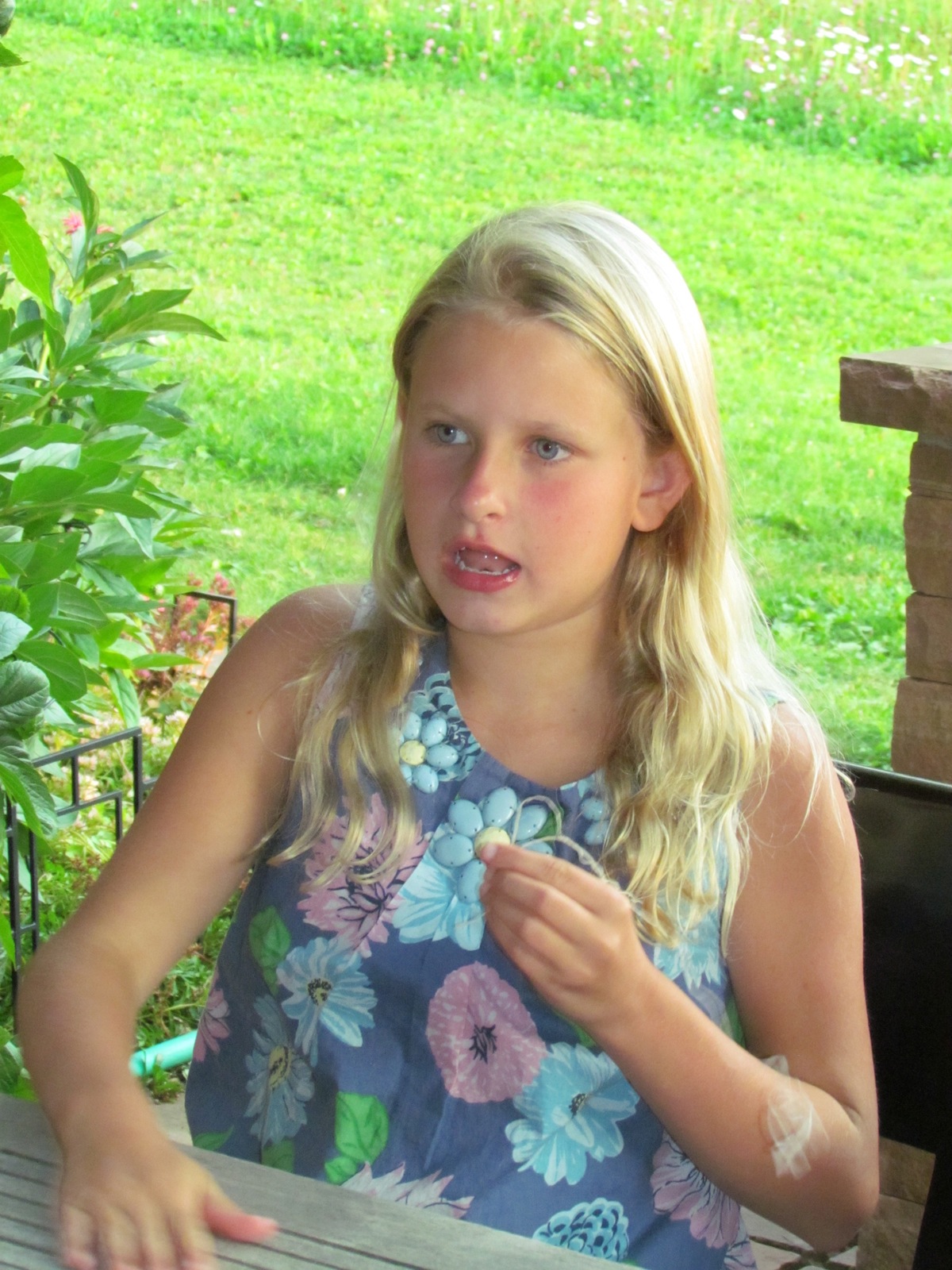
My two exceptionally beautiful children (sarcasm, sort of)

 Related articles

Autistic Role Models and Mentoring

In addiction recovery, specifically in 12-step programs, mentoring (they use the word sponsorship, but it’s the same thing) is a key component to staying clean.  Within the “civilian” population, as addicts refer to those who are not addicts, most people who have achieved any degree of financial success, climbed the corporate ladder and found even a modicum of happiness in their chosen careers will cite at least one person in their life who served in the role of mentor.  Mentors (a good one) can open doors, provide insights, gently propel you down the right path when you’ve gone astray.   Good mentors mentor because they understand the joy of giving, of being generous to those just starting out, of helping another who may be struggling, of reaching out a hand in support to someone less fortunate and expect nothing in return.  They understand the joy of giving is how they also receive.  The founders of AA understood that no one understands another alcoholic as well as an alcoholic and to stay sober, one must “be of service.”

On a personal note (and this blog seems to have fallen off the precipice of vague, broad sweeping generalities and is now firmly rooted in personal, blatant, unabashed honesty) I became intimately familiar with mentoring when I most needed one.  I was in my thirties, I was searching for a way out of the hole I’d dug myself (click ‘here‘ and ‘here‘ for more on that) and I was told, “find someone who has what you want and ask them to sponsor you.”   It was also advised that I find a female to avoid any “conflict.”  So I promptly approached a man in his 60’s, who worked a blue collar job.  A big, craggy guy with more than two decades of sobriety under his belt and almost as many from an eating disorder.  He had “lost the desire to eat compulsively” and since that was akin to finding the holy grail, as far as I was concerned, he fit the criteria for “having what I wanted.”  When I asked him, he looked a bit taken aback, but graciously accepted and so began one of the most important relationships I had in those early years as I struggled to emerge from my various addictions and find my way in the world.  That man helped me.  He had no degree or training, by the world’s standards of “success” he certainly fell short, but he had a lifetime of personal experience to impart.  He was as unlike me as one human being could be from another, except for one – he knew what it was to struggle with an addiction and come out the other side.  He was kind, compassionate, patient and generous, and with his guidance I felt the joy of connecting with another human being who knew intimately what I was going through, while trusting that if I followed his lead, I had a chance of coming out the other side.  I have since had the privilege of mentoring a great many others over the years.

We all need mentors.  (It is equally crucial we also become mentors.)  People we can turn to who have been where we currently find ourselves.  People who can guide us, whether it’s in our relationships, our careers or just in living life more fully.  Mentorship can mean a great many things to different people, but finding someone who “has what you want” is a pretty good starting point.  Which brings me to autism and my dream for my daughter, Emma.  I would love to think she might find a few Autistic adults to mentor her.  Autistic adults who might help her as she grows older, who want to take her under their wing and be a presence in her life.  An adult who is not her parent.  Come to think of it, I want this for both my children.  I don’t know how to orchestrate that.  But it’s something I think about a great deal.

Yesterday’s post, Wretches and Jabberers – Defying Labels was inspired by some wonderful comments from the day before.  One commenter, (Lauri who very generously agreed to let me share one of the video clips she sent me, you can see the others ‘here‘ ) told me about her son, H. whose life was transformed when he met his idols, Larry Bissonnette and Tracy Thresher (the stars of Wretches and Jabberers.)  She described how they spent a long evening communicating with one another.  She wrote how Larry and Tracy “have continued to nurture, support and mentor H in ways that are really magical.” Lauri wrote – “Here is a video Henry and I made last summer, it shows the magical ( I know that may sound trite, but it really was/is magical) connection he has with his mentors and friends Tracy and Larry.”

For my daughter I want an Autistic Adult with whom she might form a meaningful relationship with.  Ultimately Emma must choose such people for herself, I can only offer situations that might encourage this.  What they do or don’t do for a living is not something I care about.  I am much more interested in who they are as human beings.  The people I am drawn to have a couple of things in common.  Each of them has struggled, experienced hardship, worked through fear, taken risks, and maintained a sense of humor.  That’s the criteria for any mentor I am interested in, however Emma’s criteria may be different.  To all who have served as mentors and role models in my life and there are many, I am deeply grateful to each and every one of you.

One such role model, Amy Sequenzia, (I have written about Amy before, a non-speaking Autistic adult, self advocate, poet and writes often at Ollibean) has agreed to an interview with me.  I know many of you may have questions for her and she has agreed to answer as many as she can.  So if you want to ask Amy something, please list your questions in the comments section of this post and I’ll make sure she receives them.  Thank you Amy for agreeing to do this!

Emma – 2008


Wretches and Jabberers – Defying Labels

A few months ago, my friend Ib, gently encouraged me to watch the documentary Wretches and Jabberers.  It’s available on Netflix and iTunes.  I was traveling at the time, Richard was in Colorado, I was in NYC.  In addition I can’t be bothered with the four different remote controls required to watch anything on our TV, let alone find a specific movie, put it in the queue, figure out which remote(s) to use, download the movie and watch it.  Yeah.  I know.  When I see a TV, anywhere (unless it’s already turned on) I automatically walk away.  It’s like a Pavlovian response at this point.  If I’m home alone or just with Em, the TV screen stays dark.  And I’m totally f*cked if Em wants to watch something and presses the wrong button by mistake.  My 12-year-old son, Nic, has been known to pat me on the head and say in condescending tones, “Aw… Mommy.  It’s okay.  Let me help you with that.”  Really.  This has actually happened.  Several times.   So, yes, it took me awhile before I finally was able to watch Wretches and Jabberers with Richard on Netflix.  I cried.  I laughed.  Wow, what a documentary!  I’ll wait here while you go to the above link and put it in your queue.

Larry Bissonnette and Tracy Thresher are predominantly nonverbal Autistics.  Larry is a painter, lives with his sister and was institutionalized as a child.  He hits himself in the head when frustrated.  He is echolaic.  Tracy is homeless. *Please read Tracy’s mom’s comment on this comment thread as my statement is incorrect.*   In the documentary he has places he is able to go for a few nights here and there, but nowhere he calls “home”.  Both Larry and Tracy communicate through facilitators by typing.  The documentary follows them as they travel all over the world meeting other nonverbal Autistics.  The film defies the accepted and common neurotypical views and assumptions about Autism and what it means to be Autistic.  Powerful, funny, poignant, it is essential viewing for all human beings, not just those interested in Autism, because it rattles our unexamined biases, our beliefs, our perceptions and everything we are being “told” about autism.

A terrific discussion took place in the comments on yesterday’s post.  The whole issue of mentorship and hf/lf (high functioning / low functioning) was brought up.  One person mentioned how “our functioning level should be based on how we treat our fellow humans not whether someone judges another’s way of communicating or perceiving the world as correct, or less or greater than another’s.”  Her remarks made me think about the neurotypical world.  What if each of us were given a functioning label?  What if our lives, our abilities were reduced to a set list of priorities.  Let’s say each of us was given a “critique” of our ability to meet that criteria?

If I was put under a similar magnifying glass as Autistics, it could be argued (of course all of this is subjective and that’s the point) I would fall into the moderately functioning category for neurotypicals depending on the set of agreed upon priorities.  I do not hold any position of power.  I write a blog for which I earn not a single cent.  I publish occasionally on the Huffington Post, again, I am not “employed” by them, I submit pieces, they publish them, no money is paid for those pieces.  I am mother to my two children, I do my best to care for them, but I do not “make money” for the privilege of having two children.  I have my own business, I make a decent living (for a great many years I did not and barely was able to pay my rent.)

I flounder in the face of tests.  I score poorly on most of them unless I have taken the time to study the material to ensure I am able to breeze through and even then I tend to make mistakes.  I freeze up when I feel nervous or stressed.  My vocabulary can be spotty, particularly when in stressful situations, I go off on tangents, I have difficulty writing a standard 5 paragraph essay.  I shut down completely in the face of mathematical word problems.  I use lots of adverbs, sometimes I change tenses in the middle of a sentence.  Sometimes it’s hard for me to stay on track.  I’m terrible at most cocktail parties.  My interest in cocktail conversation wanes after the first 5 minutes.  I have a passing interest in the weather, a favorite topic at such events.  I have special interests that I can go on and on and on about.  I cannot remember people’s names.  I’m marginally versed in social networking.  I dislike most TV.  I cannot stand any show with the word “housewives” in it.  I am extremely sensitive.  I make social faux pas (what is the plural of faux pas?) often.  I am not patient.  I am a terrible liar.  The list goes on and on.

We neurotypicals are not held to the same scrutiny our Autistic brothers and sisters are held to though.  We don’t have to worry that we will be slapped with a functioning label, which will be prominently placed on our resumes.  But what if we were?  I doubt we’d sit passively, without resistance and “accept” this kind of limited categorization.  I think many of us would protest vehemently.  I think many of us would rise up, organize protests, argue for our rights as human beings, we would advocate for ourselves, we would fight,  just as gays, African-Americans, Women and now…  Autistics are.

Emma – 2008

It Begins With My Father

Emma – This morning


Yesterday’s post inspired more thought.  I have often asked myself why?

Why did I believe all those specialists, doctors and “Autism experts,” particularly as I have always been so wary of authority figures?  Why didn’t I question the specialists, why did I engage in a war for so long?  Why wasn’t I one of the parents who saw through the autism = tragedy model?  I have always been somewhat of a rebel, what happened to that rebellious streak?

The answer begins with my father.

My father had a horse back riding accident when I was nine years old.  He was just shy of his 50th birthday.   It was a Wednesday.  I was home sick with the flu.  For years afterward I blamed myself for his accident.  If I had put up a bigger fuss, maybe he wouldn’t have left.  If only I’d been sicker he would have stayed home with me.  If only I had begged him to read another chapter from the incomprehensible book he’d been reading to me, if only, if only…  But that wasn’t what happened.  He left.  He did not come back as promised.

The next few weeks are a blur of images and sensations.  Sounds of my mother crying behind her bedroom door.   My grandmother arriving in a dramatic swirl of lavender and rose perfume and silk, her hair perfectly brushed, the grey curls delicately framing her beautiful features, her gnarled, arthritic, fingers turning the pages to one of my school books as she helped me with my homework.  The afternoon I yelled, “I hate you” to my mother who dropped the rolls of toilet paper she was carrying to the floor.  Her receding figure disappearing behind the door to her bedroom, their bedroom, now half empty.  The rolls of toilet paper, partially unfurled, lay in disarray at my feet.  My fury, shame, and horror, tangled and confused, waiting for an acknowledgment I was incapable of giving, instead I stormed into my bedroom and kicked the drawers of my bureau, leaving the mess on the floor in the hallway for someone else to pick up.  My feelings, I learned much later, were not as easily left behind.

Visits to the hospital.  Doctors in white coats, clipboards, a red light next to my father’s bed, the beeping emanating from a monitor overhead, his life reduced to one thin jagged line on a screen.  The needles inserted into his veins, pumping clear liquid contained in bags held by poles and hooks into his damaged, broken body.   The nurse who crackled as she moved, her shoes squeaked as she approached.  The smell.  That horrible, unmistakable, antiseptic smell that burned my nostrils and pulled at my stomach, making me worry I might vomit.  The emotionless, grave, tones used by the doctors, carefully offering opinions as though they were a given, as though fact.  The statements, each a warning, a flag being hoisted up the mast of hopelessness –  “He may not make it.”  “He may be paralyzed for the rest of his life.”  “He will never walk again.”  Each pronouncement proven wrong.  Each learned statement shown up for what it really was, nothing more than a thought.

My father confounded them all.  He, alone, it seemed to me at the time, had risen up from the dead, shown them their stupidity.  He was underestimated time and time again.  For decades, through sheer force of will, determination and hard work, he showed the medical profession, and me, what was possible.   And yet, even my father eventually succumbed to a wheelchair the final decade of his life.  I saw first hand the prejudices, the attitudes of people who came into contact with him. And while his was also a disability, it was of a very different kind from autism.  He and by extension, I, never “accepted” it.  His neurology was unaffected as his legs gave out.  He needed support, yet proudly refused help.  When he died, “his” doctor refused to come to the house, saying my father was no longer under his care because he hadn’t been to see him in so many years.  We were forced to call 911.  My father had no respect for the medical profession.  He had proven them wrong.  His life was a testament to that.  He believed in self reliance.  He believed in himself.

When we were given Emma’s diagnosis, without thinking, I knew what I had to do.  I, too, would confound all the naysayers, those who said, nothing could be done.  Those who grimly wrote evaluations, itemizing my daughters deficits with matter of fact, clinical words.  Her vibrant personality reduced to a critique, her intelligence, not applicable, not even a number as she was deemed impossible to test.  I would show them, just as my father had.  It was the beginning.  I didn’t know it at the time.  I didn’t realize I had chosen the wrong road to go down.  I didn’t see that my initial, knee jerk reaction to her diagnosis was correct after all.  The word “autism” wasn’t what was wrong.  It was the information and interpretation of what that word meant that was wrong.   If you’d told me this at the time, I would have responded in rage.  I would have told you, you were wrong.  I would have told you I could save her from the diagnosis, when what I needed to do was save her from the misperceptions surrounding the diagnosis.

Related articles

Want to Know About Autism? Ask An Autistic

There’s a blog I love, written by E. called The Third Glance.   I found it last winter.  Written by a PHD student, E. describes her life, her passions, her studies, while detailing her thought process while socializing with friends during an afternoon at a café or memories of growing up with abusive parents who didn’t understand her.  E.’s compassion for humans and their neurological differences is striking as one considers the stigma she experienced growing up Autistic.  The Third Glance was one of the first blogs I found in my search for Autistic Adults.  E’s compassion and kindness shines through all her posts no matter the subject.  Her determination to give people the benefit of the doubt was something I was astonished by, particularly during those first few months of my discovering Autistic blogs and reading that so much of what I’d done was not as altruistic as I’d believed.

When Em was diagnosed, the words “Autistic adults” were not uttered.  Ever.  We heard about how imperative it was to immediately implement early intervention, we were shuttled off to get an “independent diagnosis,” we were advised to start investigating ABA therapy, we were inundated with ABA therapists, speech therapists, occupational therapists, a social worker came to our home once a week, team meetings were held regularly, we were trained to continue Emma’s ABA therapy after the last therapist had gone home.  We were advised to put Em on a gluten free/casein free diet, we were encouraged to read the thousands and thousands of pages of material thrust at us from a wide variety of well-meaning and well intended people.

In that first year of Em’s diagnosis, I was well versed in various theories regarding gut issues, lead levels, mercury levels, toxicity in our food and water, and I could reel off at least six different unpronounceable ingredients in vaccines.  I’d read at least 30 memoirs written by parents of Autistic children as well as books with titles such as A Parent’s Guide to Autism: Answers to the Most Common Questions, The World of the Autistic Child: Understanding and Treating Autistic Spectrum Disorders, Handbook of autism and Pervasive Developmental Disorders and  Biological Treatments for Autism and PDD.  I’d taken Em to cranial sacral therapists, homeopaths, lead specialists, developmental pediatricians, nutritionists, allergists and a DAN (Defeat Autism Now) doctor.  I knew about ABA, VB, RDI, PECS and DIR therapies.  I read and reread Catherine Maurice’s Let Me Hear Your Voice with the same dogged, determination and devotion evangelicals read the bible.  I knew about sorghum flour, rice flour, garbanzo bean and fava bean flour.  I honed my cooking skills on perfecting a gluten-free/casein free birthday cake for Em’s third birthday with platters of tasty GFCF finger foods, which Emma refused to touch, let alone sample.

Autism, seemingly overnight, had become my focus.  I was set on fighting it.  I was engaged in nothing less than a war.  My weapons were my determination, my tenacity, my stubbornness and my love and devotion for my daughter.  Everything else came to a screeching halt.  Everything else fell into line behind my research.  I was on a quest.  To my way of thinking, I was on a mission to save my daughter’s life.

When my husband, understandably alarmed by the fervency with which I threw myself into my research, suggested I was spending too much time searching, I was furious.  I railed at him, enumerating all the things I was doing with the sole intent of saving our daughter.   I was furious that he seemed unable to fully understand the battle I was waging.  It never occurred to me there was another way.  It never dawned on me I was battling windmills.

That Autism was the enemy, something to be vanquished, defeated and destroyed, I did not question.  I didn’t have time to question, I was too busy dealing with the Board of Education, therapists, Doctor’s appointments, tracking down every “cure,” and baking foods my daughter wanted nothing to do with.  Every time I turned around someone was sending me a link to a new “cure” a new treatment, a new therapy, a new “miracle worker.”  Countless people would begin a conversation or email with, “Have you tried…”  “Have you heard of…” and I would grab a pen and begin taking notes.  Doggedly I pursued each and every tip.  Determined not to leave a single stone left unturned, my days and nights were filled.  I was busy.  There was no time for calm contemplation, there was no time to sit and consider the path I suddenly found myself.

The Seven Year War.

And then…  what happened?  What changed?  Everything.  I began to question the “truth” about autism.  I began to question the dogma.  I began to question the “facts.”  It was inevitable, I suppose when you read as much as I do.  But the single biggest change occurred because I found Autistic Adults like E.  I’ve written about this before, ‘here‘ (the post where E. first reached out to me in the comments section) and again ‘here.’  I won’t go on about that process, except to say this – there is something about the immediacy and the interactive quality of a blog that no book can replicate.  In addition, a blog written by someone who is Autistic is far more interesting to me than anything I’ve heard from researchers, specialists, therapists, teachers, doctors because Autistics are talking about their lives, it’s not a theory, there’s no speculation.

Want to know about Autism?  Ask Autistics.

Thank you E. for reaching out to me.  Thank you for generously holding out your hand to me in kindness and friendship.  Should all parents be so fortunate as I have been.

A quick aside, E. was also one of the creators of the Autism Positivity Flash Blog (see badge on right side of this blog) where a group of bloggers reached out to hundreds of us asking that we write a post in answer to the google search words “I wish I didn’t have Aspergers.”  If you haven’t gone to that blog, do.  It’s a veritable who’s who in Autism blogging by Autistics and parents coming together to support someone on the spectrum.

Related articles

Emma Riding Beau – 2005

Autism = A Human Rights Issue

Sometimes I read something and I am completely overwhelmed by the weight and content of the words.  Yesterday I read this – written by Kate.  It’s entitled Scarred.   It was posted on The Thinking Person’s Guide to Autism.  I am including just the first few sentences.  Please click on the link to read it in it’s entirety.  This piece needs to be read – by every parent, every school, every “specialist,” every researcher, everyone and anyone who every comes into contact with anyone, ever, on the spectrum.

“Scarred

Kate

We are scarred, we adults on the spectrum.

We are scarred, both inside and out.

Our lives are twisted paths littered with diagnoses. We have fought for years to get to where we are now, and still it isn’t good enough. 

We are scarred.” 

Autism is a human rights issue.  We must begin thinking of it this way.  We are condemning a group of people, treating them worse than we treat convicted felons, murderers, rapists, psychopaths.  We must stop.  We must stop the way we think about Autism.  We must stop the way we think of Autistics.  We must stop oversimplifying, we must stop applying our Neurotypical thought processes to Autistic people.  We must stop with our assumptions.  And the only way we are going to stop is by LISTENING!  We must, every single one of us, listen to those on the spectrum who are communicating and we must put aside our “but my child can’t talk, therefore this person isn’t like my child” or “this person must be high functioning and therefore doesn’t know what it’s like for me and my child” or “my child is in diapers and is nonverbal and therefore this other Autistic person has nothing of any importance to say to me”  or “I can’t hear this person, they’re too angry.”

We must stop speaking for Autistics.  We must stop arguing about semantics.  We must stop and hear the pain our misinformation and misperceptions are causing.  We must stop and listen.  Listen to what we, as a society, are doing.  Listen to what Kate and so many others are saying.  A group of people are being abused, shamed, yelled at, blamed, talked about, treated with contempt by schools, specialists, doctors, teachers, organizations carrying the word “autism” in it’s name, parents, siblings, cousins, society, the world.  We are arguing over wording.  We are bristling at the word Neurodiversity, we are shouting at one another, but shouldn’t we start listening to those who we are all supposedly wanting to help?  Isn’t it condescending of us to pretend to care about autism and yet make excuses as to why what so many of them are saying shouldn’t be listened to?  I hear people say, well that person is too angry, therefore, what?  Therefore their voice is invalid?  Really? Do we really believe that when  someone is saying something we agree with and want to hear?  Isn’t it that we don’t like it when someone is saying something that goes against what we think or believe?

Can we all try harder to look at what we’re doing when we try to silence those who are speaking out.  Do you think so many would be so angry if they felt they were being heard, that what they had to say was having an impact?  Hasn’t every movement had voices of anger as well as those who tried to be civil?   Don’t we need both?  Do you think they would be shouting if they didn’t feel ignored, condemned, brutalized?  Many Autistics are angry?  Yes.  Why wouldn’t they be?

Autism is a human rights issue that has been sadly overlooked.  That has to change.

It must.

I know, I know.  I just went on a rant.  I’m taking a deep breath…  

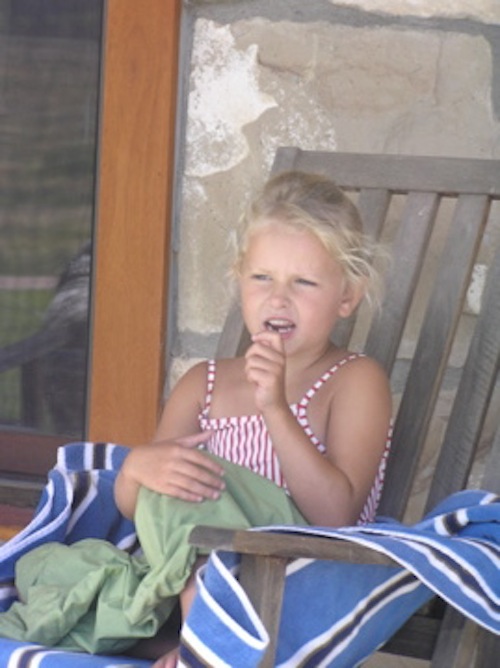
Autism can look like this… (2002)

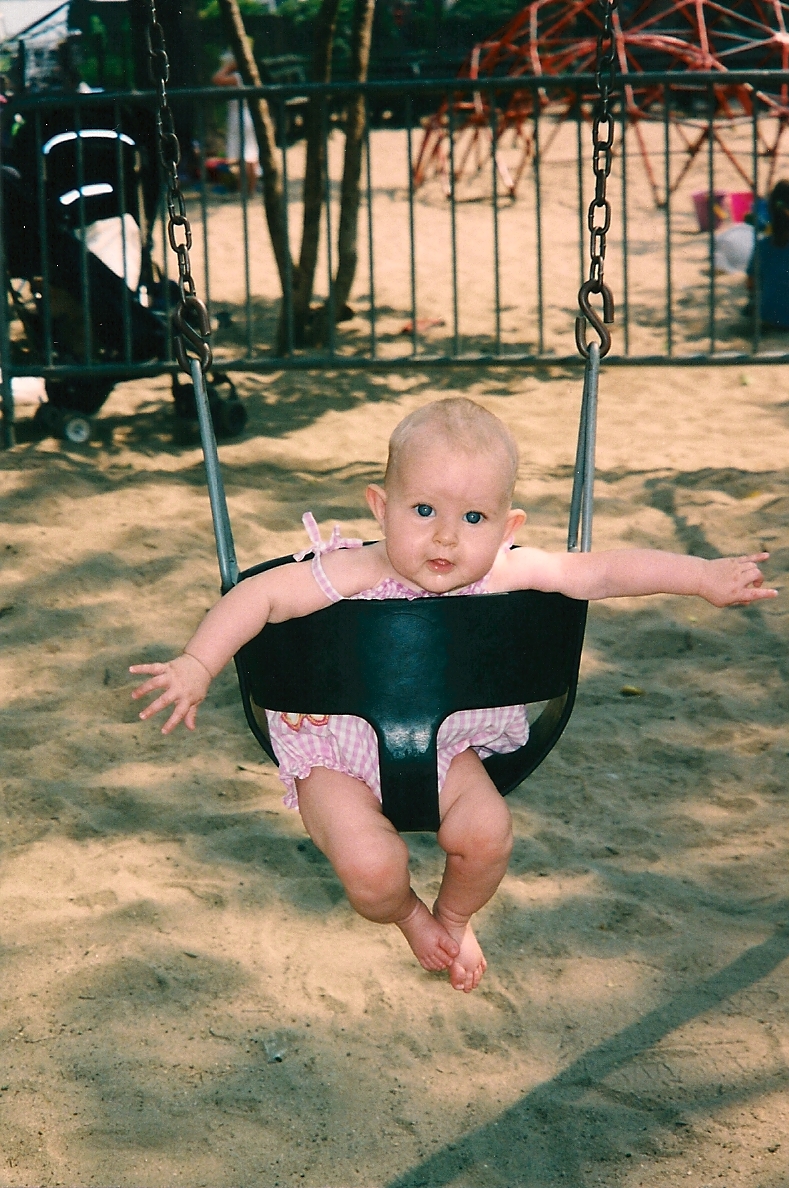
and like this… (2003)

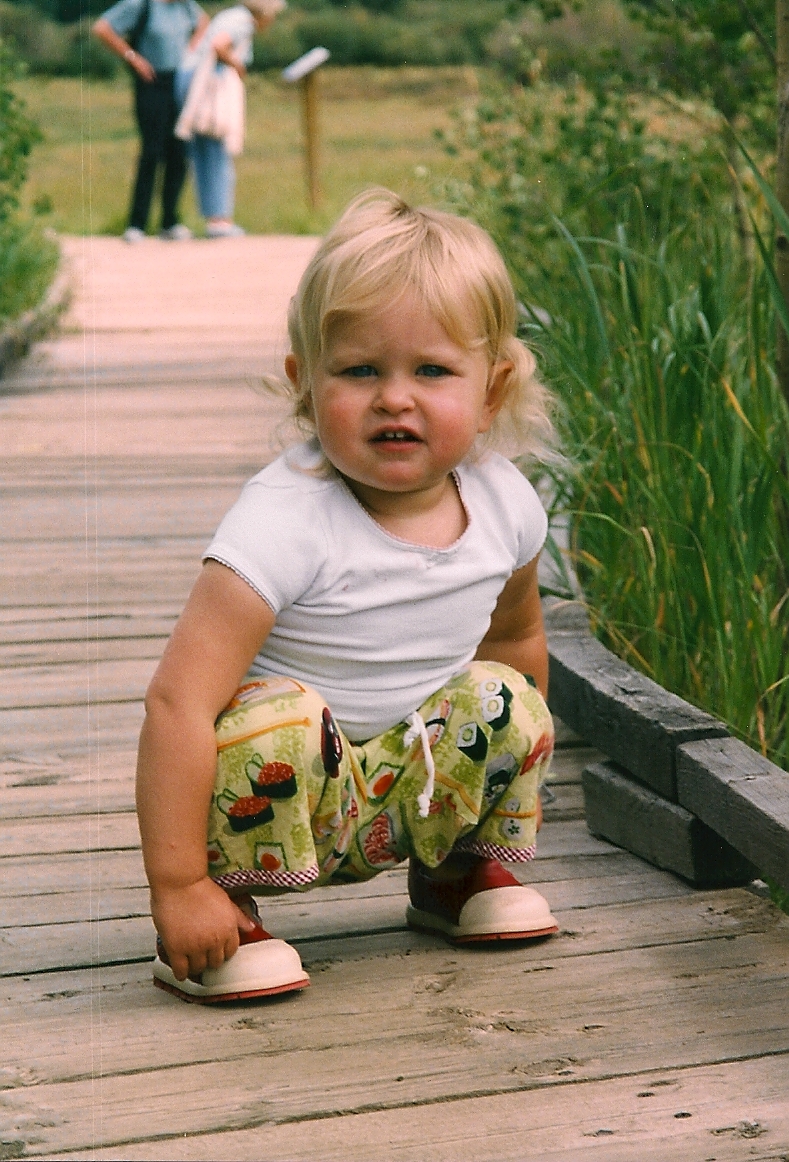
and this… (2004)

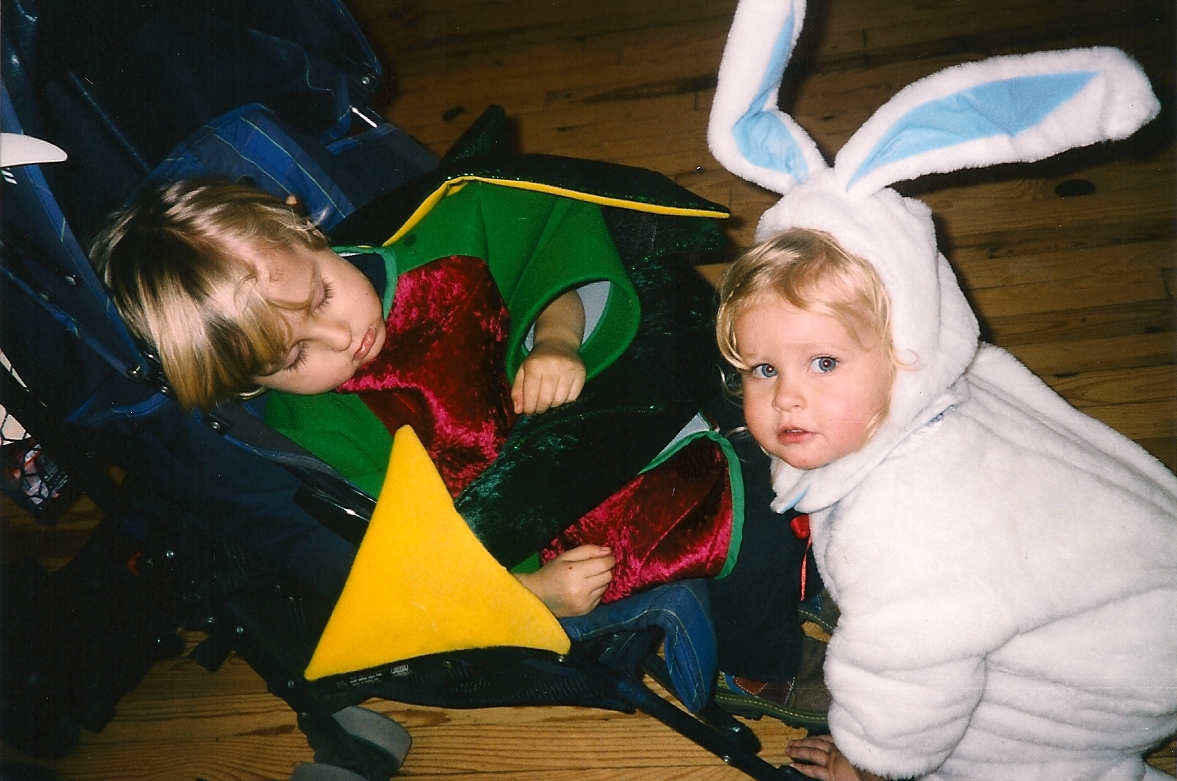
and this, too… (2012)

Related articles

There is Always Hope, Sometimes It’s Hard To Find

Sometimes I feel completely inadequate in the face of our society’s insanity.  Sometimes I wish I weren’t a part of the human race.  Sometimes I feel so much rage at all that’s WRONG with the world, with the mess we’ve made of our planet and each other.  Sometimes I just want to go live in a cave in some part of the world that isn’t inhabited by other people, just me, my husband, my children and a few select others.  I want to build a new world, a new community, a new set of societal rules where minority doesn’t equal less.  Where prejudices weren’t tolerated, where people helped each other without expectations of what they would get in return.  A place where people understood that the reward in helping and being of service to our fellow human beings was in the act of doing and not in the form of monetary gain, gold medals, our names engraved on plaques or statues carved in our likeness.

I spent most of my twenties and half of my thirties in hiding.  I hid inside my eating disorder.  I drank more alcohol than my body could cope with, I smoked cigarettes, I took drugs, I did anything I could NOT to be present.  Even in those moments when I did manage to show up, I wasn’t really present.  Not completely.  Not really.  I was angry and hated how angry I was.  I was depressed and hated how depressed I was.  I couldn’t face any of it, for so many years, I just couldn’t.  Eventually I became suicidal.  I couldn’t stand the feelings any more.  I was filled with so much rage, I turned it inward and thought the answer was to kill myself.  I remember I fantasized about driving to a state where I could buy a gun.  That was how I wanted it all to end.  I would blow my brains out.  I was seeing a therapist and when I admitted this to him he said, “You have to go to a 12 step program.   You have to find people who are struggling with an eating disorder just as you are.”  When I told him all the reasons why this was not a possibility he leaned forward and said, “What have you got to lose?”  I will never forget that.  I will never forget how he looked at me.  I will never forget the feeling I had when he said those words – “What have you got to lose?”

So I went.  And I hated it.  A bunch of obese people, a couple of anorexics and an assortment of others sitting around talking about how they couldn’t stop eating or starving or obsessing.  I was horrified.  How had I ended up here?  Wasn’t I different?  Wasn’t I better than this?  I remember I looked around that circle of people in that dingy room lit with strands of donated christmas lights, despite the fact that it was March, and the signs with various slogans plastered on the wall – “We came for the vanity and stayed for the sanity”  and “One Day At a Time”  and “Progress not perfection” and I thought to myself, I have entered hell.  This is not what I want.  This is not where I want to be.  I am not one of these people.  I am BETTER than them.  I don’t NEED to be here.

But I stayed.  Because really, where else was I going to go?  I knew what lay outside the door of those rooms.  I knew, left to my own devices, I would binge and puke and rage and cry and binge and puke.  I knew the cycle, I’d been doing it for more than twenty years.  So I kept going to the “meetings” and I bought the literature and people gave me little notes with their phone numbers and hearts on them that I’d promptly throw away, but they kept giving me more notes with more little hearts and more phone numbers and eventually, eventually I called one of these people and they took the time to talk to me.  There were the steps, each one mapped out a way of behaving that was different from the way I lived my life, so I began doing them, never once thinking that those “steps” would become a way to live my life more than a decade later.  There was a great deal of talk about taking the next right action, staying in the present, taking things slowly, changing ingrained behaviors and being of service.  There was talk of “god” and again I felt there was no hope for me.  How could there be?  I didn’t believe.

I have never believed in god, I’ve tried, I just don’t, but I do have faith.  I have faith in human being’s ability to do great things if we are shown how.   Some of us need more help than others.  I’m one of them.  I needed a great deal of patience, support and help.  I needed to have my hand held by those who had once been where I was.  I needed others to show me the way.  I needed to hear about their struggles, I needed to know that I wasn’t alone.

When Emma was diagnosed, I had a road map, instructing me, helping me.  All those meetings spent in dingy basements without heat in the winter or air conditioning in the summer had shown me another way.  I knew, if nothing else, I had to keep showing up.  There were days I didn’t want to.  I’ve done a great number of things I wish I could take back.  I’ve made countless mistakes.  But I know, I know with all my being that hiding, that not showing up, isn’t an option.  So I research, I read, I reach out to Autistics, I listen, I ask questions and I try to learn everything I can so that I can better understand and help my daughter.  In helping my daughter, I am helping myself.  I am helping myself become a better human being.  There are mornings when I wake up and think, What the hell am I doing?  I don’t know how to do this.  I don’t know what the right decision is.  Is this the right school?  Is this the best therapy?   Does she understand?  What would she say if she could communicate her thoughts?  What would she tell me?  

Much of the time I don’t know.  What I do know is that the basic principles and actions that got me free from the grip of my eating disorder are the same actions and principles that help me parent both my children.  Be honest.  Find safe people to talk to.  Have the willingness to show up.  Be present.  Reach out to others.  Ask questions.  Listen.  Really listen.  If I’m overwhelmed, acknowledge that.  Take a break.  Sometimes doing nothing is better than doing something.  But the thing that helps me more than anything else (I know I’ve said this so many times) is to be in conversation with Autistics.  When I am feeling sad or confused, or overwhelmed, or have questions, I reach out to my Autistic friends.  And even when they don’t know the answer to my question, they remind me of what’s possible.  They remind me that my neurotypical take on my daughter is often incorrect.  They remind me of all the misinformation out there.  They remind me of what is important.

So for any of you reading this who are despairing, who feel it’s hopeless, that the divide between your child and you is too great, know this:  There are hundreds and hundreds of verbal and nonverbal Autistic adults who are blogging, on Facebook, on Twitter, they are talking, they are asking to be heard, they are asking to be respected, they are asking for the same rights as any other human being, they are asking to be treated as you would want to be treated.  Reach out to them.  Google, read books, read blogs, get on Twitter and Facebook, do the research, ask questions, make comments.  If you’re suicidal or feeling you can no longer cope, get help.  Get support.  There are a great many organizations like 12-step programs that do not cost anything, but rely solely on donations given voluntarily.  Find the people whose voices resonate and then find more.  Because really, what have you got to lose?

2002 – Me with Em and Nic

Belly Go Bang-Bang

We are flying back to New York today.  Last night as I was packing Emma called out for me.  “Mommy!  Mommy!”  Em has only just begun to do this – call our name if she wants us or is wondering where we are.  It’s such a small thing, but every time she does it, my heart skips a beat.  I’ve even caught myself holding my breath, waiting to see if she’ll do it again.  It brings me such joy.  “Mommy!”  she called, then waited to hear my answer.  “Hey Em!  I’m downstairs!” I called to her.  “Mommy’s downstairs,” I could hear her saying as she came down to find me.  (Another interruption. I know, but I can’t help it.)  The fact that Emma came downstairs to find me is another thing that is fairly new.  I could hear her footsteps coming down the stairs.  “Have to go see Mommy nurse,” Emma said as she plopped into a chair near me.

“Oh no Em.  What’s wrong?”

“Belly go bang-bang,” Emma said, bending over and holding her stomach.  (This is what Em typically says when she’s about to throw up.)  “You cannot punch.  Have to go to the hospital.  Go see hospital nurse.”

I looked at her and went through the following thought process – Oh shit.  Could it be her appendix?  What side is she holding?  No, she’s holding the middle of her stomach, this can’t be her appendix, but what if it’s something serious?  An ulcer, a tumor?  Em doesn’t usually complain about aches and pains unless it’s serious.  I then calculated how long it would take to drive her to the hospital, how long we would have to wait, how long it would take to get an x-ray, and then see an actual doctor to tell us the results…  Finally having run through the entire scenario I decided I needed more information.  

“Em.  Where does it hurt exactly?”

She pointed to the middle of her stomach.  “Hurts here.  Emma’s sick.  Take temperature?”  I felt her forehead, which felt fine.  “I’m cold.  Emma has to stay home.” She wrapped her arms around herself and then said, “Emma can’t go to new school.”  She frowned and pouted, while nodding her head.  “I know, I know.  Emma’s sick.  Emma has to stay home with Mommy.”

“Oh Emmy.”  I reached my arms out to her.  She came over to me and rested her head on my shoulder.  “I know.  Emma doesn’t feel well,” she said.

Just as she said this Richard’s voice could be heard calling out, “Hey Em!  Want to go for a ride on the 4-Wheeler?”

Em jumped up from the chair and called back, “Yes!”  Then raced out the door and bounded up the stairs.

Anxiety.  Stress.  Fear.  And that’s just what I’m feeling…  For Em it’s got to be even more complicated.

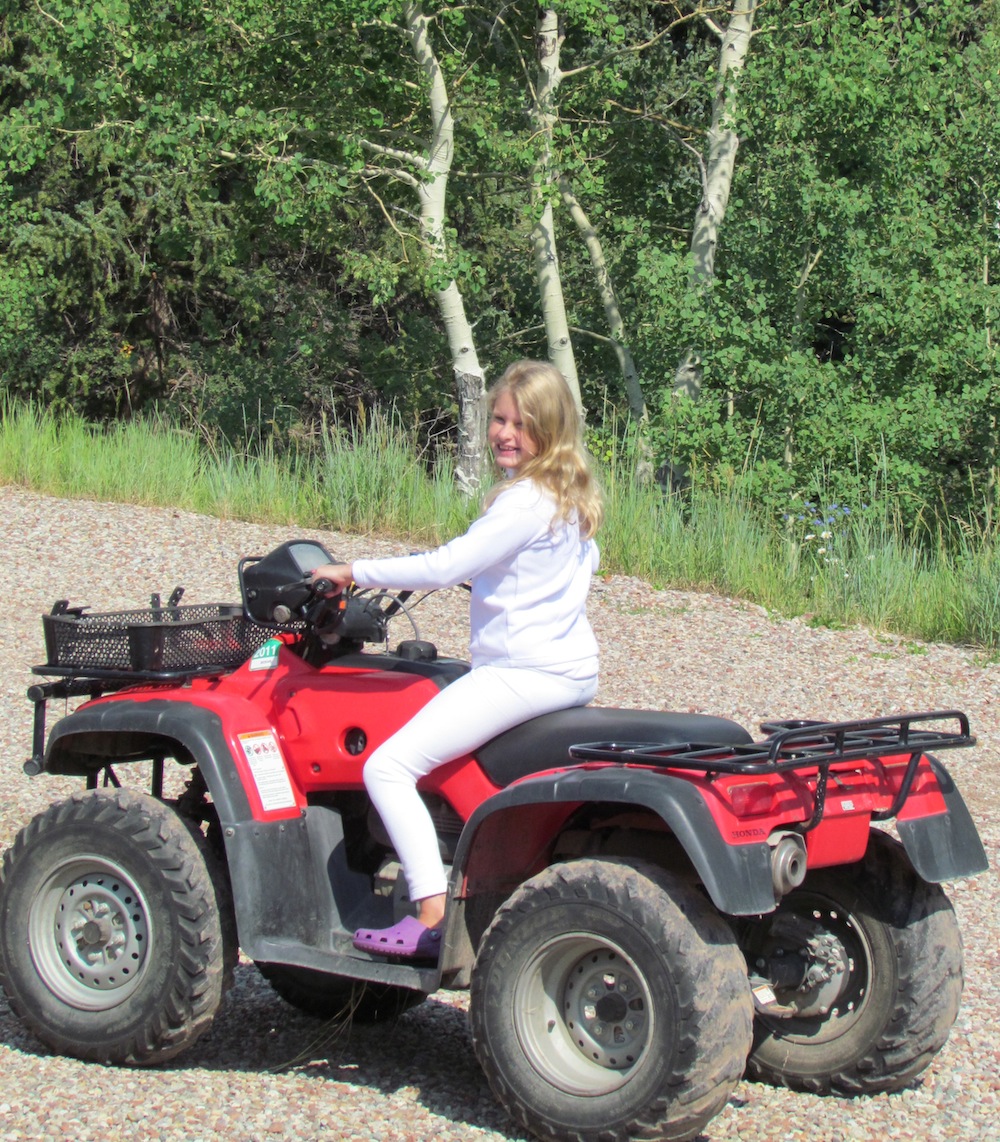
Em on the 4-wheeler

It’s My Birthday and I’ll Laugh if I Want To

Saturday was my birthday.  I’m 52.  Or as my twelve-year-old son said to his younger cousin last night, “Do you understand how old she is?”  A look of confusion lingered on his cousin’s face.  Then, apparently tiring of her lack of response, Nic said in a grave tone, “She’s fifty-two.” There was a moment of silence and then to be sure he’d left no room for error he added, “Fifty two years old.”   His cousin looked at me with raised eyebrows and what I imagined to be a new-found appreciation or maybe it was horror, it’s impossible to know what an eight year old, having been given this sort of news, might think.

I figure I’m at the halfway point, though my husband would say I’m being unrealistic as he fully intends to live… forever.  Yeah, you read that right.  As in eternity.  I’m not as optimistic.  However, I like the idea of having reached the halfway mark, forget that I felt I was at the halfway point last year and the year before and the year before that too…  But let’s just say I’m right, that would mean I’ve got another 52 years ahead of me.  And I don’t know about you, but I fully intend to make good use of them!  Because the first 35 or so I kind of made a mess of.  There’s good reason I have a 12-year-old and 10-year-old when many of my same age friends have children graduating from high school and college.  Don’t get me wrong, I’m grateful for my past, I’ve learned a great deal.  I just wouldn’t want to do any of it over again.  I really like being 52.  I like being where I now find myself.  But mostly I really like my life.  

Birthdays are a time of celebration, but more than anything they’re a milestone of how far we’ve come.  At least that’s how I like to think of them.  I’ve come far in 52 years, but this last year has been more significant than any other year to date.  It has been within the last year that I have completely changed how I see my daughter.  And that change has unexpectedly altered my view of the world and my life.  I don’t know that any other single thing has changed my thinking and views of life and the world as quickly, dramatically or completely.  There have certainly been milestones – getting help for my eating disorder, stopping my bulimia and anorexia and getting sober are two examples of significant change.  And while the actual stopping of an action happens in a single moment, real change occurs over many such moments, repeated over and over.  The larger changes that take place as a result of those repeated actions or inactions can take years to recognize.  It is, as they say, a slow recovery.

My introduction into the world Autistics inhabit and talk about, was swift, abrupt and in many ways, more life altering than anything I’ve ever experienced.   I am still reeling from the force with which this knowledge has transformed my life and the lives of my immediate family.  As a result, I have never been so happy.  I have never felt so hopeful.  I have never been so sure we are on the right path.  I have never enjoyed my family as much as I do now.  Most surprisingly, my happiness is not because Emma has become a “normal” child.  On the contrary, my happiness is, in large part, because she is not.  I view her with wonder, without judgement and an open mind.  I have learned to see her as neurologically different, not wrong or broken or in need of fixing.

I no longer speak of Emma as though she cannot hear me or understand me.  When she doesn’t answer or walks away when I’m talking to her I no longer assume she’s not interested in what I have to say.  I have learned to examine all of my assumptions.  I have learned to question everything, and I mean literally everything I think or think I know.  At my friend Ib’s urging I’ve begun reading Autism and the Myth of the Person Alone by Douglas Biklen.  This book, like so many that I’ve read in recent months, throws everything we neurotypicals think and say about autism and Autistics out the window.  Judy Endow, just posted a terrific piece entitled, Seeing Beyond My Autism Diagnosis.  She talks about the lens through which NTs view Autistics and writes:  “Stereotypical views of autism are based on the neurotypical (NT) assignment of “truth” as they look at us.”

One of the greatest gifts I’ve received this past year is the joy that has come with  questioning my “truth” when it comes to Emma.  In questioning it I have found my sense of humor.  It never entirely left me, more like it had been tamped down by stress and worry.  To laugh, to really feel the absurdity of situations that used to cause me tremendous upset and concern, to feel the carefree pleasure of being with my family and enjoying them…  this is the life I had always hoped for, but felt would never be mine.

Yeah.  I turned fifty-two on Saturday and I’ve never been happier.

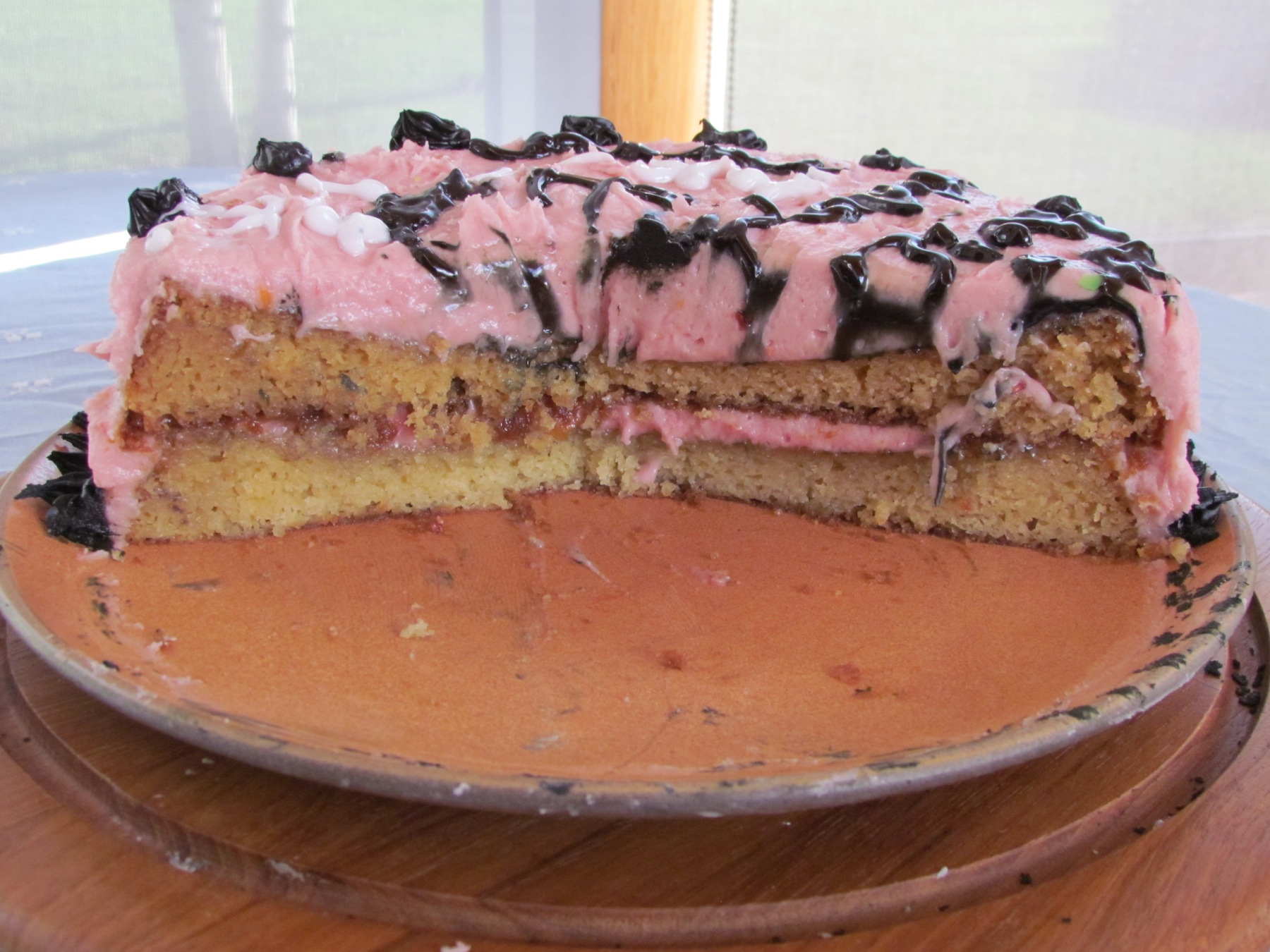
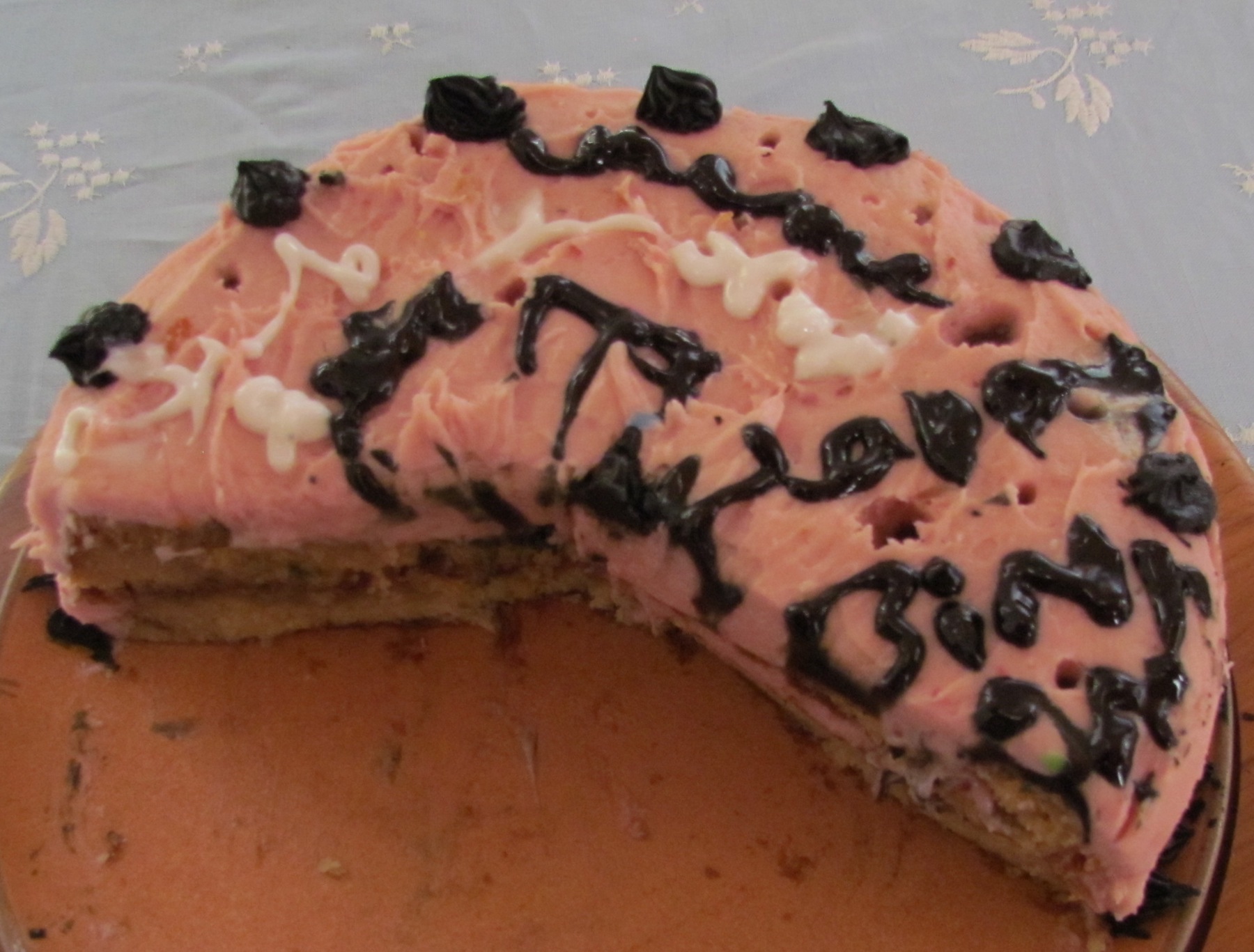
The vanilla cake with raspberry icing Em and I made.  Nic and Emma decorated it by writing everyone’s name on it.  And yes, it was delicious!

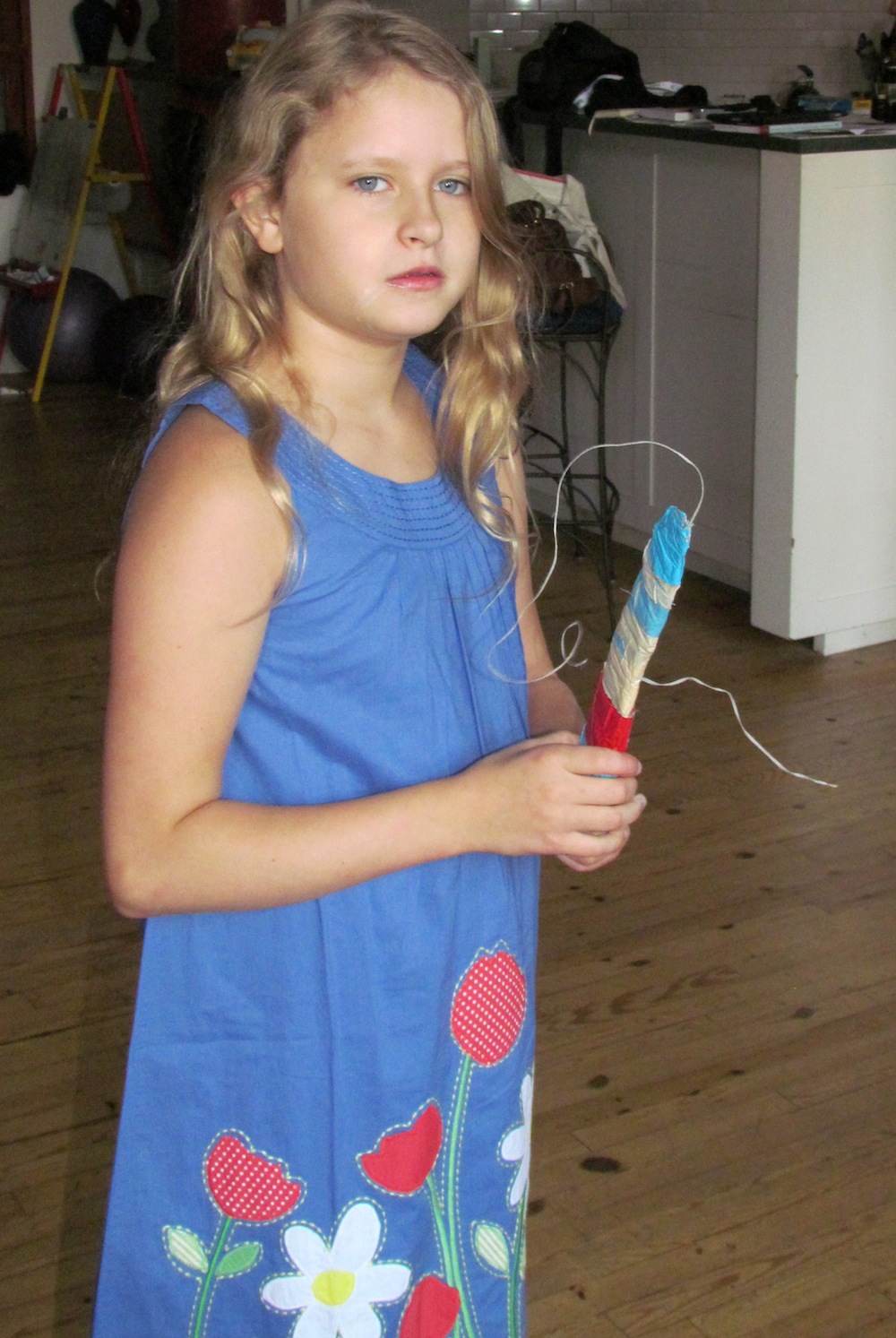
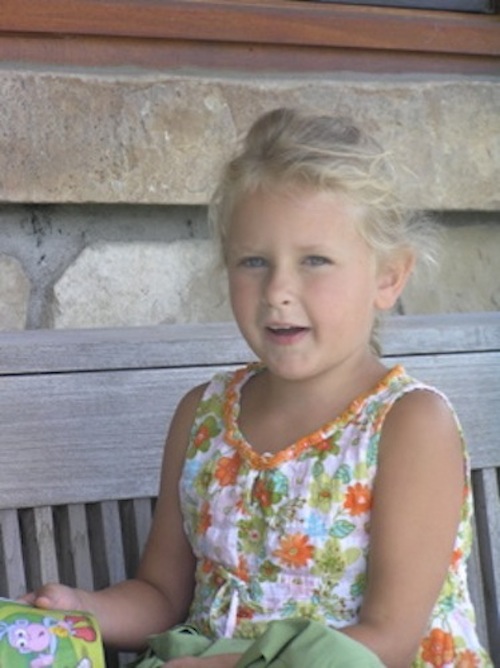
Beautiful Em wearing one of her pretty dresses

The Intense World Theory Of Autism And An Interview With The Markrams

At the ICare4Autism Conference, held in Jerusalem August 1st & 2nd, I had the opportunity to interview the neuroscientist team Henry and Kamila Markram who created The Intense World Theory for Autism.  Henry Markram is also director of Blue Brain, and is a coordinator on The Human Brain Project.  Both were at the conference presenting.  The Intense World Theory for Autism states autism is the result of a “super charged brain.”  Feelings, visual, auditory and tactile sensations are felt so intensely they are painful.  These intense feelings, coupled with extreme pain memory causes the child to become overwhelmed and shut down, withdrawing from stimulus.

I first read The Intense World Theory in March of this past year.  I was also just beginning to find blogs written by Autistics.   My world completely changed.  It was the first time I heard anyone working in the field of autism who did not speak of it as a deficit.  I remember reading every paper they’d written, making Richard read everything I was finding as well.  We stayed up every night for weeks discussing what this might mean, how it changed our view of our daughter, how it completely upended how we worked and communicated with her.  It was as close to a spiritual awakening as I’ve ever had.  I felt as though everything I thought I knew about Emma opened up and I was introduced to a vibrant, new and hopeful world.

So it was with great excitement that I sat down with Kamila and Henry Markram after their presentation on August 1st.  I have not delineated who was speaking, other than to write my questions in bold, as the conversation was a casual one and the dialogue often overlapped.  What follows is an edited version of my interview as we spoke for close to an hour and I didn’t want to repeat much of what was covered in their terrific interview with John Scott Holman of Wrong Planet.  For a more thorough reading of The Intense World Theory of Autism read his interview ‘here‘.

In your presentation you spoke about neuroscience and how the biggest impediment to Autism is that it continues to be listed in the same category as mental retardation in the DSM.  (Diagnostic and Statistical Manual of Mental Disorders)  Can you talk about that a bit more?

“Autism is not a form of mental retardation. If parents approach their child as mentally retarded, then naturally they will apply a whole program of hammering the brain. If the Intense World Theory is correct, and the brain is already hyper-reactive, then this could just accelerate autism.  We have a grant now to study this for the Swiss National Science Foundation.  We hypothesize that you need an environment that is filtered from surprise.  Surprise can be painful.  You can’t easily undo the pain.  Memories shape your life.  normally, it is difficult to undo them, but for an autistic it is much more difficult to forget.  The other problem with Autism being listed as a form of mental retardation in the DSM is that it directs the way scientists research the problem. For decades, they have just been looking for deficits. So, the biggest impediment to Autism is the way it is classified in the DSM.  This should change.”

So what do you think of ABA as a recommended therapy during early intervention?

“It can be very dangerous and irresponsible.  ABA is for mental retardation.  Evidence points to the fact that ABA could be very dangerous for autistic children.  We don’t have proof yet, we don’t have an animal model, but the risk is very high. From our analysis of it, ABA, especially in the early phases, the critical developmental stage of from birth until about 5, is very dangerous.  You cannot know the intensity in which these children see the world and they are seeing things you can’t see.  There is a hyper emotionality.   ABA at an early age is definitely a no–no.”

How do parents facilitate the transition from this early phase of a filtered environment to the real world?

“The main critical periods for the brain during which time circuits form irreversibly are in the first few years (till about the age of 5 or so). We think this is an important age period when autism can either fully express to become a severe handicap or turned to become a major advantage. We think a calm filtered environment will not send the circuits into hyper-active modes, but the brain will keep most of its potential for plasticity. At later ages, filtered environments should help calm the autistic child and give them a starting point from where they can venture out. Each autistic child probably will first needs its own bubble environment before on can start mixing bubbles. It should happen mostly on its own, but with very gentle guidance and encouragement.  Do all you would want for your child ….but in slow motion…let the child set the pace…they need that control to feel secure enough to begin to venture off into any other other bubbles.”

Given that Autism is not a psychiatric illness, that it should not be in the DSM to begin with, but rather is a difference in neurology, what do you say to psychiatrists who are coming up with theories that people then believe as though these theories were fact?

“It is very difficult.  There are lots of theories , not so many facts.  Theory of Mind is a deficit model.  I think it’s been a very distorted interpretation.  When we first came out with the Intense World Theory people were quite opposed to it.  But now people are starting to move away from the deficit model.”

Your son is Autistic?

“Yes, he is now eighteen years old, living in Israel.  The opposite of what people tell you about autism, he is so emotional, he feels so intensely.  The smallest thing happens, he is mortally wounded.  He doesn’t know how to organize himself.  He has hyper memory.”   Henry:  “I’m pretty much also autistic.  I learned all kinds of tricks,  all kinds of strategies and I was able to develop tricks.”  

It seems a great many Autistic children also have GI issues.  What do you say to that?  

“When you alter something in the brain it alters the communication in the body.  It is very difficult to separate them.  All of these things could be secondary to a neural insult.”

What about diet?

“Some respond better to diet than others.  Some may be very sensitive to diet, not necessarily because of their autism.  Allergies can affect all people.  A diet can help the symptoms of autism if that is a stressor.  You need to lower the stressors, diet, sleep, all those things are stressors, combined with their sensory overload it’s going to exacerbate everything.  These aren’t treatments for autism, they are things that can place stress on an autistic child.”

What do you say to the parent who is considering drug treatments?

“Drugs are being given by doctors who have no idea how the neurons are affected. We are living in an illusion that we can easily treat brain disorders.  The human  brain project will change everything in the way we think and treat autism.”

Care to weigh in on the ongoing vaccination controversy?

“There is no evidence to support the connection.  The idea of toxic effects after the first trimester and the idea of toxic effects after birth seem very unlikely.  Parents should not avoid vaccinations.  I think the insult has to be in utero.  The first trimester is the danger.  Avoid anything extreme, no extreme stress.  That should be taken as a black out period for women from the moment they know they are pregnant.  Stay calm, sleep well, eat well.  All we can do is guess.”

Given the intensity of an Autistic child, how can we help manage their environment?

“In the early phase of the child’s life..  Repetition is a response to extreme fear.  The Autist perceives, feels and fears too much.  Let them have their routines, no computers, television, no sharp colors, no surprises.  It’s the opposite of what parents are told to do.  We actually think if you could develop a filtered environment in the early phase of life you could end up with an incredible genius child without many of the sensory challenges.”

Kamila Markram

Henry Markram


Emma’s New String And A New School

Emma will be attending a new school this fall.  We were given a placement by the Department of Education mid June that was not over an hour from our home. This new school seems to understand the concept of sensory issues and needs, or at least they’ve heard of the idea and appear willing to consider that this is important to Emma.  They seem interested in my desire to be involved.  We will be working together on a transition.  I plan to meet with her new teachers and the assistant principal.  I will photograph all of them as well as the interior and exterior of the school to put in a book that Emma can look at prior to her first day.

The school has a large gymnasium and a huge auditorium with a stage.  There’s a roof playground and a little area filled with books.  It’s a special education school within a larger “regular” public school.  They seem interested in having Emma do at least some things, like PE, with the kids from the larger school, so she’s not completely segregated out.  It’s by no means ideal, but we have yet to visit a school, private or public, that is.

I took Emma to visit the school in July.  She was anxious, kept saying, “No, I don’t like the new school.  I don’t want to go to new school.”  We talked about how new things are scary.  I told her that at this school she would be able to go swimming in the pool across the street once a week and that there would be new teachers and children.  I could see how anxious she was, just visiting.  I felt the tightness in my heart and stomach.  That feeling hasn’t left me.  I am as frightened as Emma.  This is a big change.  It is an enormous question mark.  Emma has been dealing with her anxiety by saying goodbye to all her old teachers and classmates.  “Lauren is gone.  Charlie is gone.  Soufien is gone.  Rachel J. is gone…” Emma will go through the lengthy list and then always ends with, “Emma goes to a new school!”  I’ve asked her whether she’d like to visit her old school to say goodbye, she is adamant that she does not.  I’ve asked if she’d like to see some of her old friends, she has shaken her head no.

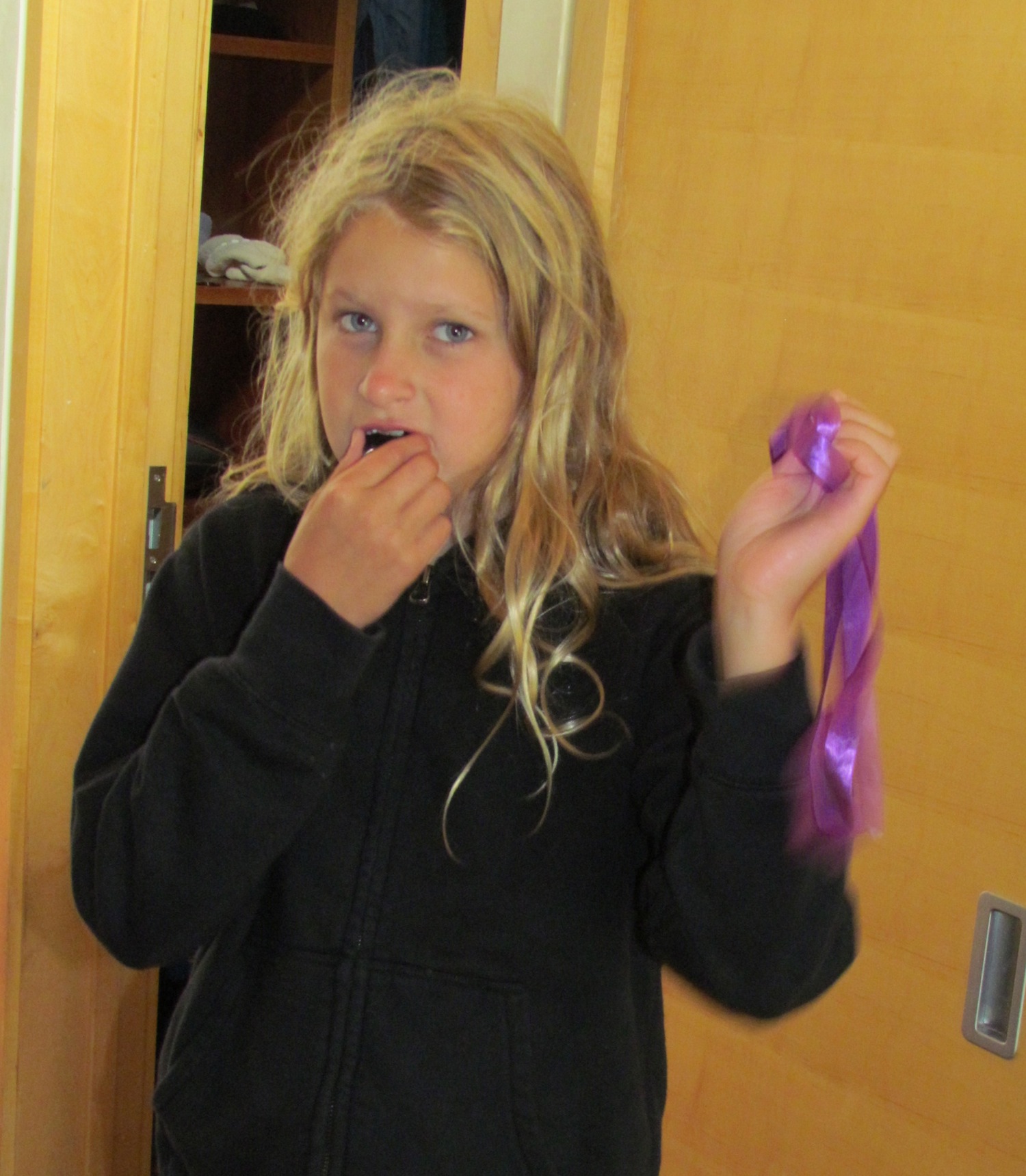
Emma has a new string that she loves.  I’ve written about her string before.  Unlike her scrap of blanket (cokie) which works like a sedative and makes her sleepy, her string seems to help her focus.  She twirls it or will hold it in her hand as she runs, jumps on the trampoline and plays.  Since we’ve been in Aspen she has lost her string three times now, leading to shrieks of terror and screams of “You lost it.  You cannot throw it.  Have to look.  Mommy!  I need help!”  And then tears.  Lots of terrified crying.  Each time we’ve turned the house upside down and eventually found it, but it’s been traumatic for all of us.  This last time it went missing, Richard and I began to think we’d have to place limits on it to ensure it didn’t get lost.  A couple of friends suggested alternate strings, a kind of backup string.  So I asked Em if she’d like to find an “outdoor” string.  She easily chose a long piece of purple ribbon.  She cheerfully took it out with her when we went for our morning ride on the 4-wheeler yesterday.

It occurred to me then that she could have a number of alternate strings.  I thought about her new school and realized she could have a special “school” string too.  I asked her if she liked this idea and she nodded her head vigorously.  “How about a school string and a Saturday string, a back up string and we can find another indoor string,” I said.  “Yes!” Emma replied, clasping her new purple string in her hand as she got on the 4-wheeler.

At her old school several years ago one of her teachers introduced a school “cokie” to detrimental effect.  Emma would sit in the corner with her scrap zoning out.  Over the years her various teachers tried to curtail her use, put limits on her cokie, but nothing they did worked.  Every few months I would get a call from her teacher describing melt downs, her inability to attend, her desire to have it with her all the time.  Each time my heart ached for her as I put the phone down knowing I’d been unable to help alleviate the situation.  At her new school we are hoping by providing her with a school string some of her anxiety may be mitigated. I am hoping she does not latch on to a “school cokie” I am praying some well-meaning teacher does not introduce her to one.  We will see.  In the meantime if any of you have suggestions about how to help us help her with this transition – let loose!

Emma’s Cokie

Emma’s old string

Emma’s new string

Emma’s purple string

A Conversation in the Car

Because Em has just brought in the timer and set it for ten minutes, this will be quick!  Kind of like speed posting.  (Post on Markram interview will have to wait yet another day!)

I posted the following conversation on Emma’s Hope Book page on Facebook last night.

Driving home from the swimming pool. Nic and Em in the back seat. 

Nic: Em stop it.

Em: Cha, cha, cha

Nic: Mom! Make her stop. She’s doing that just because she knows how much it annoys me!

Em: Cha, Cha, Cha

Me: Turning around to monitor the situation  Okay, Em. What are you doing?

Nic: She’s trying to bug me!

Em: Grinning  Cha, cha, chocolate milk!

Me: Oh my god, that’s hilarious. Richard! Putting my hand on Richard’s shoulder.  Did you hear that?

Richard: What? What happened?  Looks in rearview mirror.

Em: Laughing  Cha, cha, cha, chocolate milk

Nic: She just changed it so you guys wouldn’t make her stop!

Em: Leaning toward Nic, gets right in his face  Cha, cha, cha, chocolate milk!

Nic & Em begin laughing hysterically.

Not only was the above conversation noteworthy because this type of interaction between Nic and Emma is not typical, but it was also worth mentioning because of Em’s increased interest in word play.  I see this in her desire to play Duck, Duck, Goose where she comes up with different word associations.  Sometimes, as in the case of “China boat, china boat, ocean!”  I’m not clear what the word association is, but I no longer doubt that there is one.

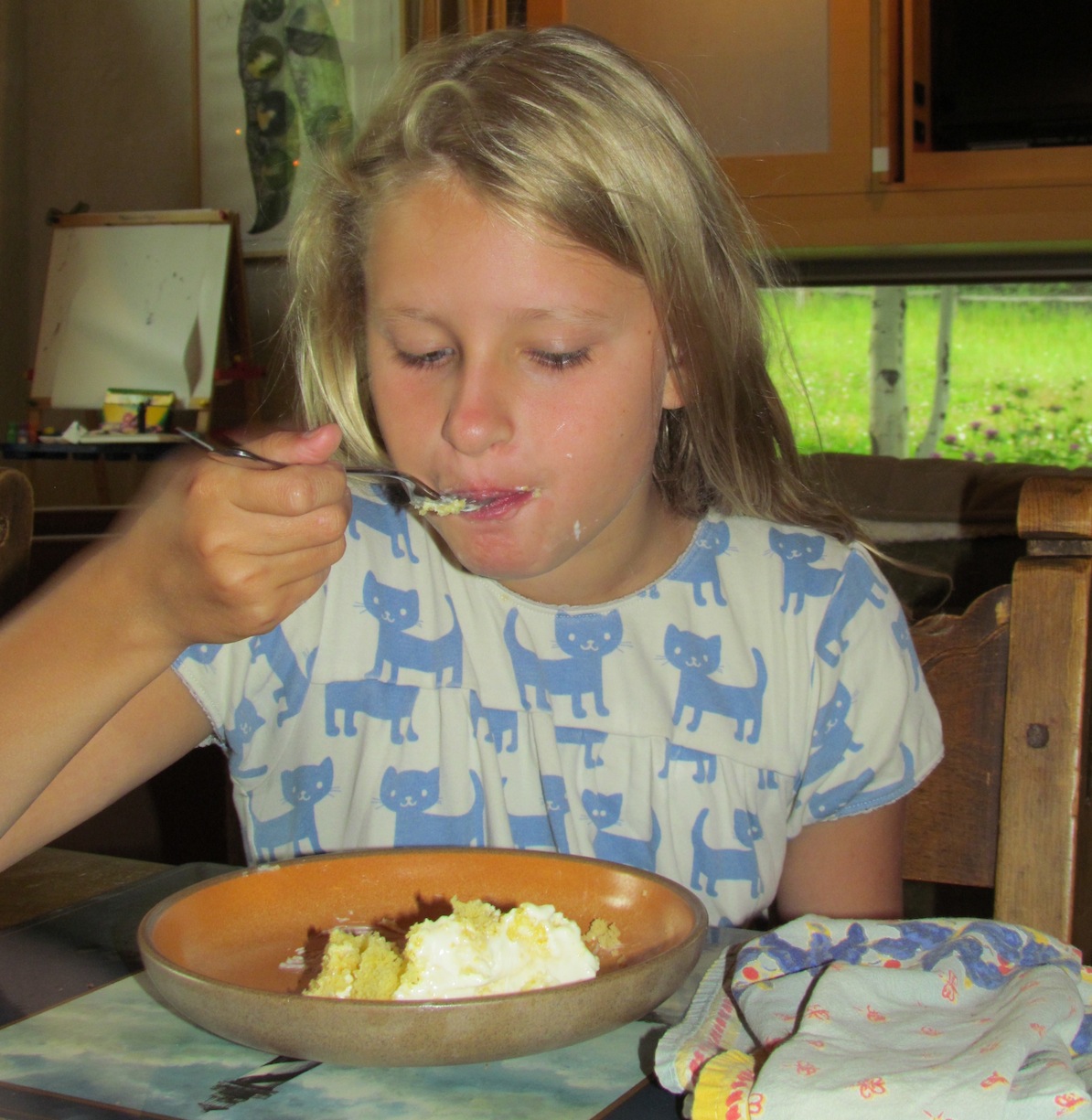
Emma eating her cake

Cloud cover over the Rockies

Walter and friends

Paul

Posting Under Pressure

I’m working on a post of my interview with Henry and Kamila Markram when I was in Jerusalem attending the ICare4Autism Conference.  Henry and Kamila Markram are the neuroscientist team who created The Intense World Theory For Autism.  I am trying to finish that for tomorrow’s post.  However, Em is up right now and insisting I made cake with her and that takes precedence over this post getting written.   Besides she has a timer which she’s just set for fifteen minutes.  She started with three minutes, but I’ve negotiated for the fifteen, so I’ve got just enough time to post these photos…

Say hello to Walter.  Yup, he’s one of three bucks who lives next to the barn.  And yes, my cousins named him…  Walter, after my grandfather.  Yeah, I know.  It is a specific sense of humor.  And yes it appears it is genetic.

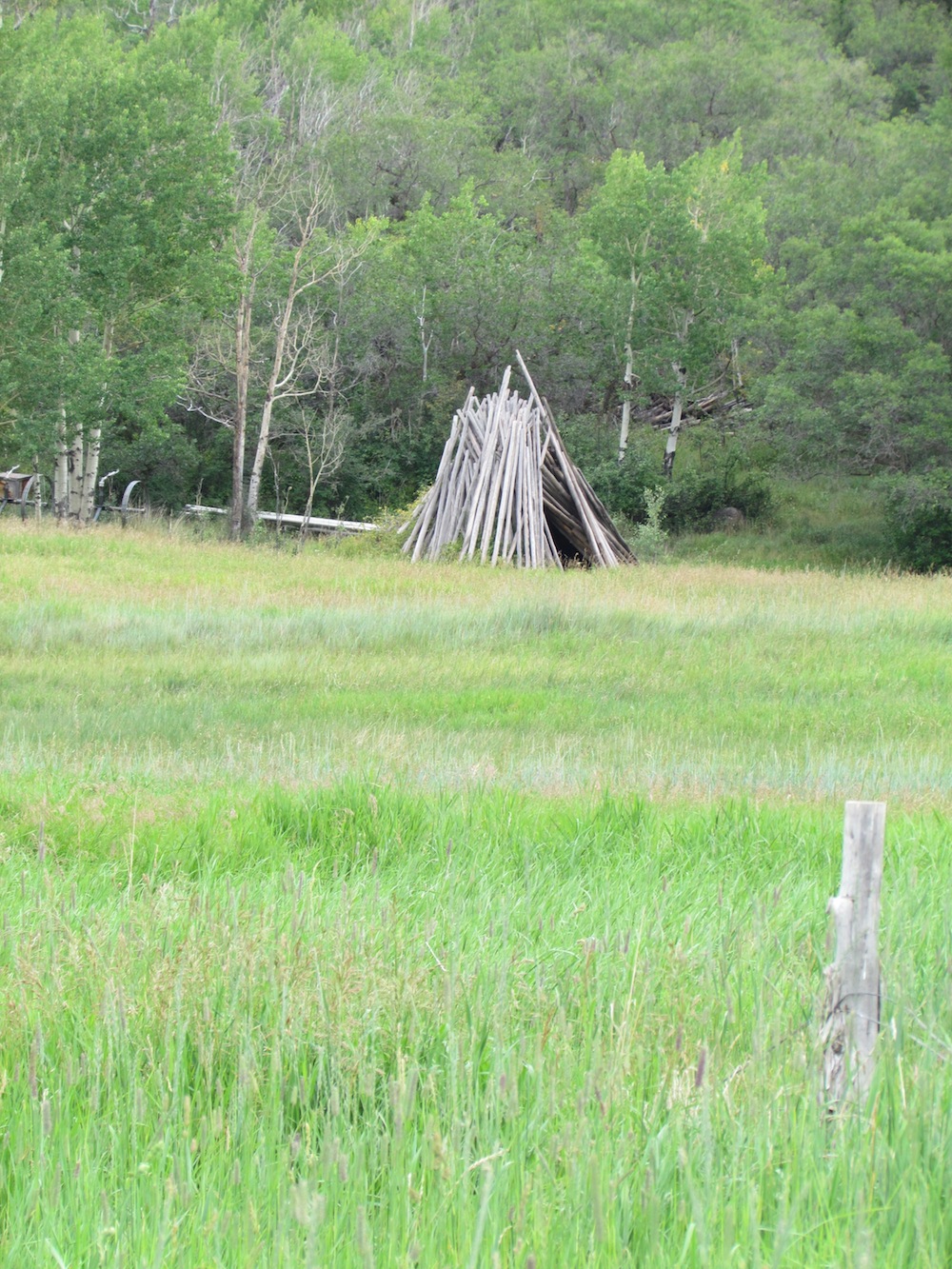
The teepee that has been on the property since the 70’s or maybe even the 60’s, I can’t remember.  I just know it’s been here almost as long as I have been on this earth.

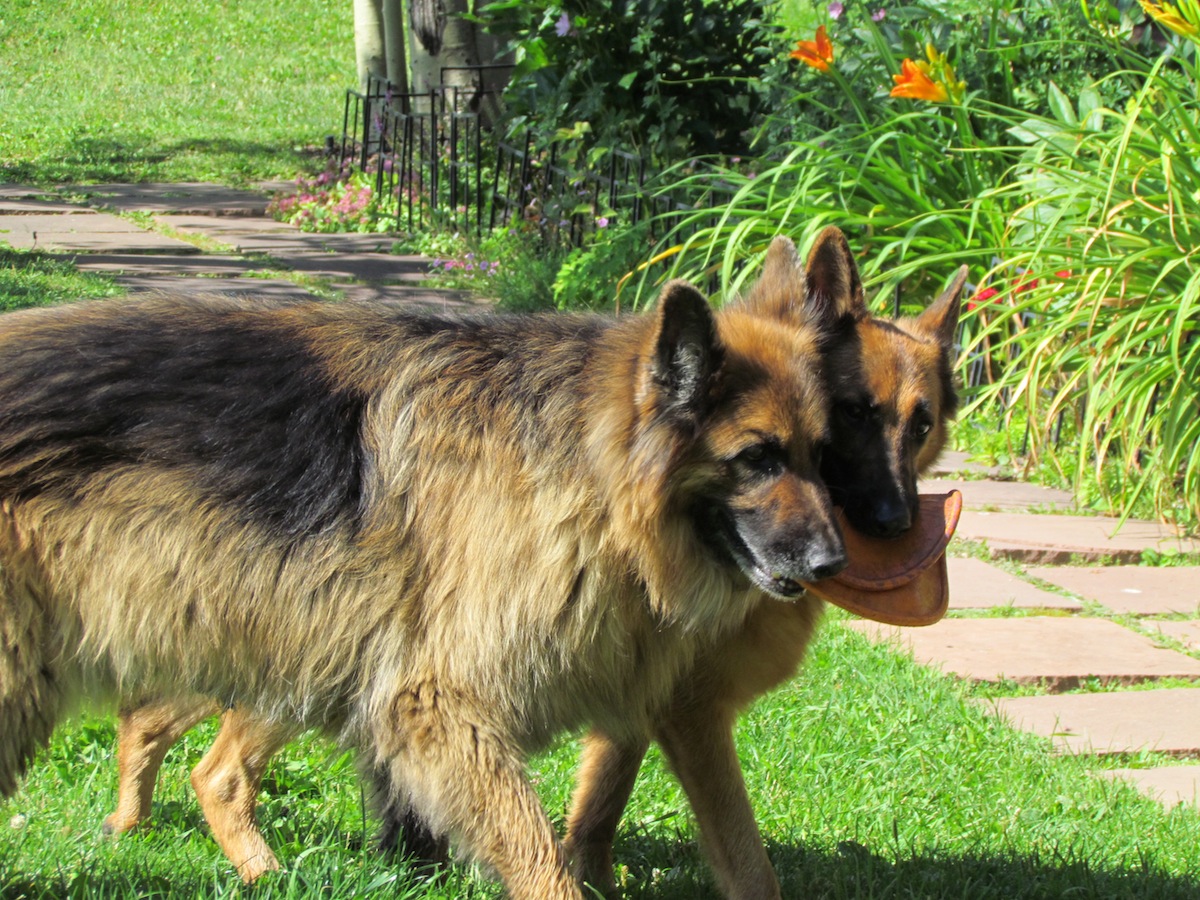
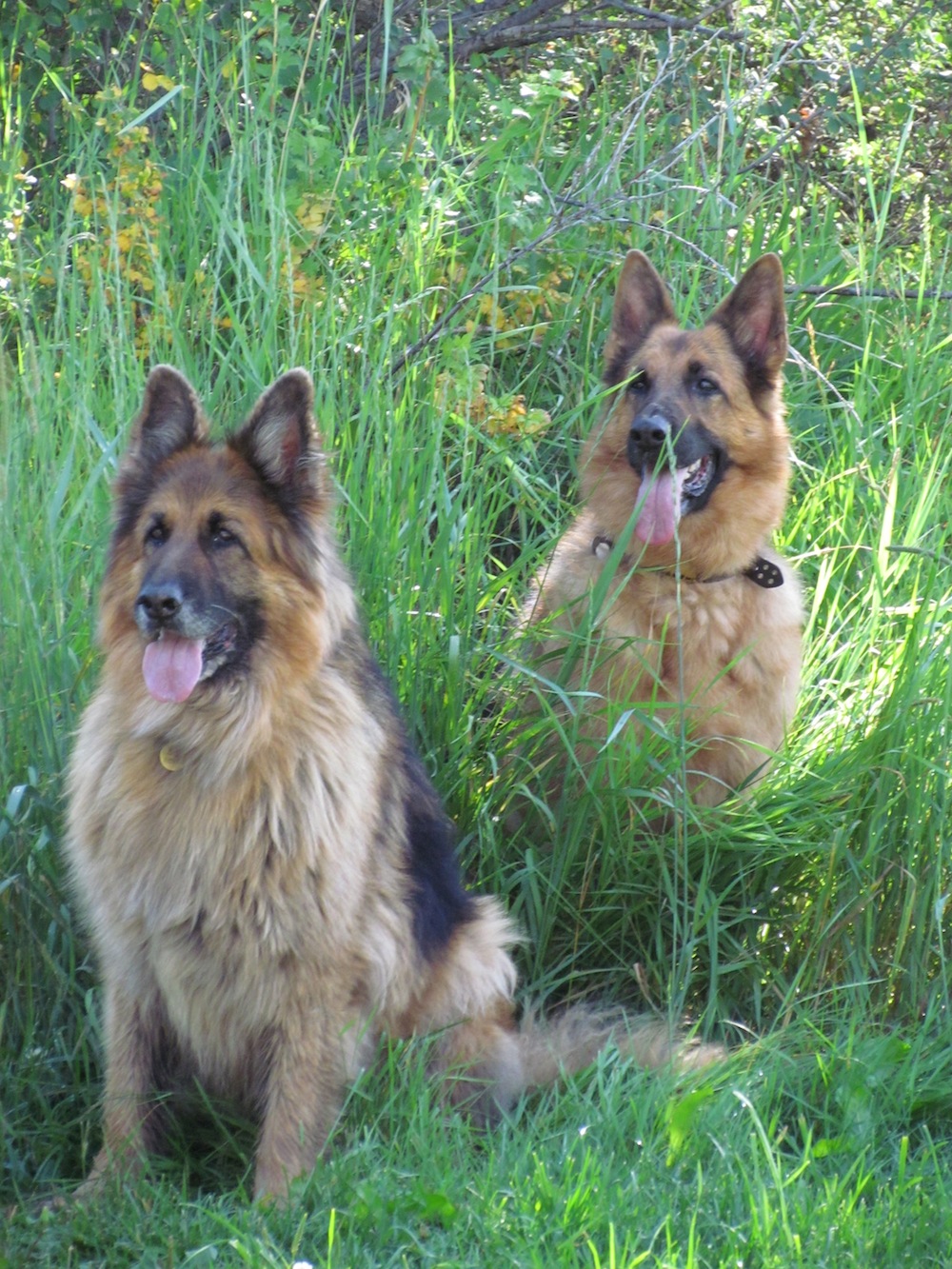
The dogs – Folgen & Gaia – who love nothing more than to have their frisbee thrown to them.  Emma likes it when I throw their frisbee too.  They just don’t like giving it back to me so that I can throw it again.  Which leads to lots of yelling, “Drop it!  Drop the frisbee!”  And then they do this…

And when they’ve had enough running after the frisbee they take it far away and guard it.  Like this.

We have been playing some massive games of Duck, duck, goose and even Granma has started to run when picked.  My brother and sister-in-law are here so  the game has become a nightly event with lots of laughter and shouting, “Hurry, hurry, SIT, SIT!”

Emma waits to be chosen…

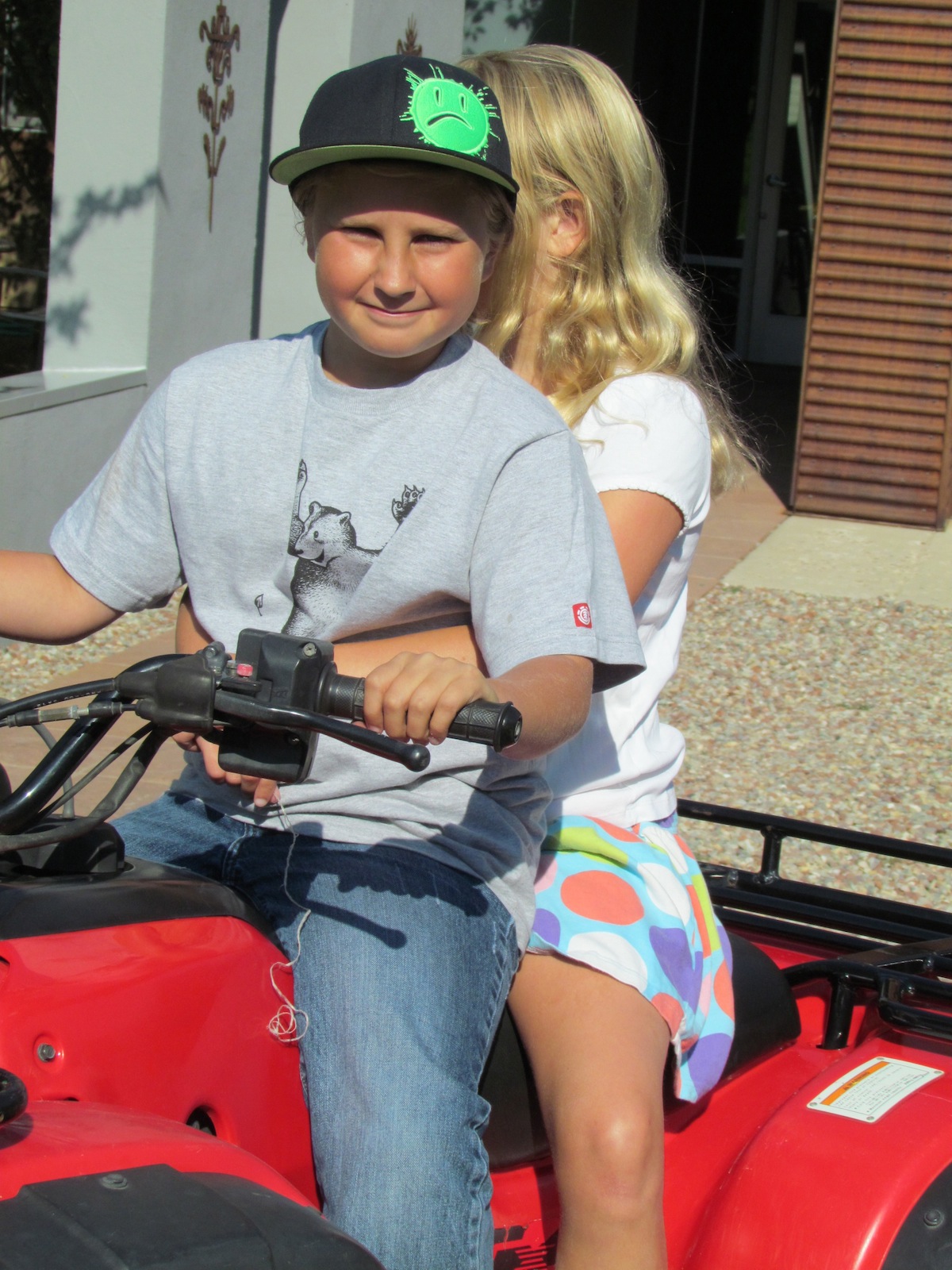
Nic has mastered the art of driving the 4-Wheeler and now takes Em around the ranch.

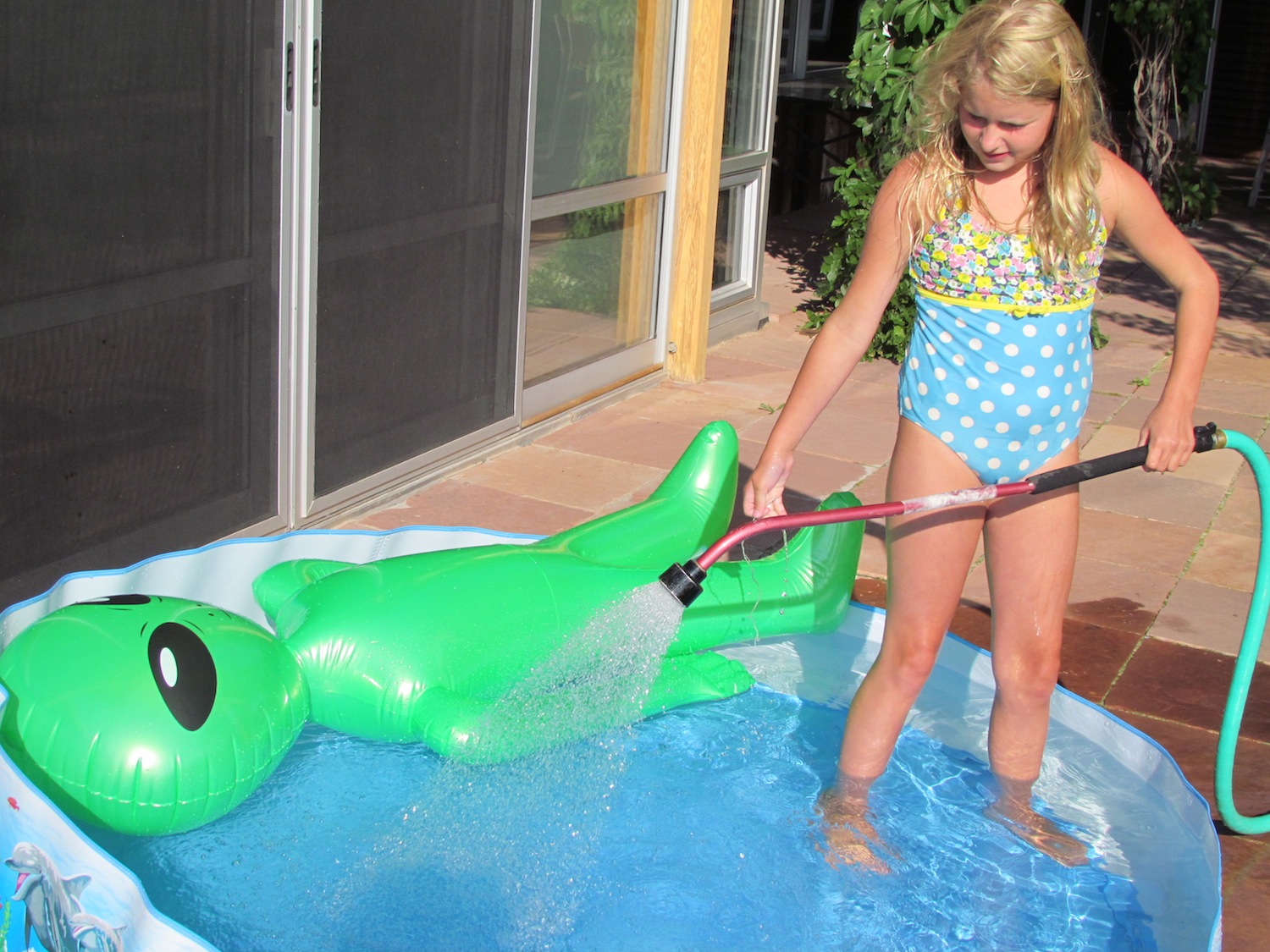
Em takes the Alien swimming

Whew!  That’s it, I’ve got 42 seconds to hit the “Publish” button!

Related articles

It’s A Man’s World – The Cabin, Outhouses, Peeing & Bladders

I have the bladder of a camel.  Only now that I think of it, this may be factually incorrect as I’m not certain camels really do have exceptionally large bladders, for all I know, they just pee where ever they are because they can, and that I’m confusing this with the fact that they go for long periods of time without drinking water, but that first sentence has a certain power to it and it gets the point across.  Okay, moving right along here…

You may wonder why I bring this up.  You may be thinking, this is not the sort of post I am interested in reading.  You may be thinking I don’t care about camels or bladders in general and particularly not hers and anyway what has this got to do with autism?  Or you may be thinking – Oh DO get on with it.. or you may be heading over to google because now you want to know all about camels, or you may be..  okay, okay.

Allow me to explain.  Both my children have, it appears, inherited my ability to not pee for inordinately long periods of time.  I can also go for long periods of time not drinking any liquids, coupled with my excruciatingly slow metabolism I could basically out live anyone should I ever be stranded somewhere, like a broken elevator, where there was access to neither.  (Oh I know.  Welcome to my mind.)  This ability to go long periods without having to pee comes in handy: long car trips, aversions to using public restrooms, and sleepovers at our cabin.

I’ve mentioned our cabin before.  It’s a rustic, one room log cabin, which my family built (literally) in the late 70’s.  It has no electricity or running water.  There is a sink with cold water piped in from the creek that runs nearby, but I think we turned that off and since no one lives in the cabin, it’s not something we bother with.  My father dug and built an open sided outhouse just up the mountain.  The outhouse is far enough away that you definitely do not want to try to go there in the middle of the night or at any time of the day or night during the winter because of the snow drifts, unless you’re wearing neck high gators.  Trust me, post-holing up the mountain at 3AM, while trying to locate the outhouse because you forgot to bring a flashlight (and toilet paper) in below zero temperatures to pee is not a good idea.  I speak from experience.

Emma LOVES the cabin, as do I and Richard, who couldn’t quite figure out the allure the cabin held, was converted last summer when he had his first sleepover there.  Nic…  not so much.  Every time we come out here to stay with my mother, it’s a given that we will have a sleepover at the cabin.  Emma anticipates this event days in advance.  “Sleep, wake-up, sleep, wake-up, sleep, wake-up, sleep, wake-up, have sleep over at the cabin!” she will say upon our arrival and before we’ve even had a chance to unpack.  “Yes!” one of us will confirm, while Nic looks at us with a look of Please-tell-me-I-do-not-have-to-go-too on his face.  (That kid has way too much attitude for a twelve-year old.)

I think I look forward to sleepovers in the cabin as much as Emma does.  Last night was our designated sleepover night.  After unpacking our things, sweeping out mice droppings, cobwebs, dead wasps, opening the windows and airing the place out I realized I hadn’t peed before leaving my mother’s house.  “Hey Em, do you have to pee?” I asked, figuring I’d take her with me, since I was going to make the trek to the outhouse anyway.  “No!” Emma said emphatically.  So off I went while contemplating the positioning of the outhouse, its considerable distance from the cabin, how inconveniently located it was, how Richard AND Nic have never even used the outhouse, how only a man would build an outhouse this far away and while it was certainly positioned in such a way that one could appreciate the view as one sat in it, how many people were seriously going to do that when it was freezing cold or in the middle of the night?  No, I concluded, this was the sort of outhouse only a man would build and then never use.  And then I bushwhacked my way back to my family.

Which brings me back to my bladder and the ability I, and both my children, have  in not needing to relieve ourselves for hours on end.  It’s a gift, pure and simple.  One that I was particularly grateful for last night, knowing that not only would Emma not require me to accompany her up the mountain at some ungodly hour, but that I would not need to go either.

It’s important to contemplate these things.

Bucks – there were three of them, but I was only able to capture two, the third is just to the right.

View of our ranch

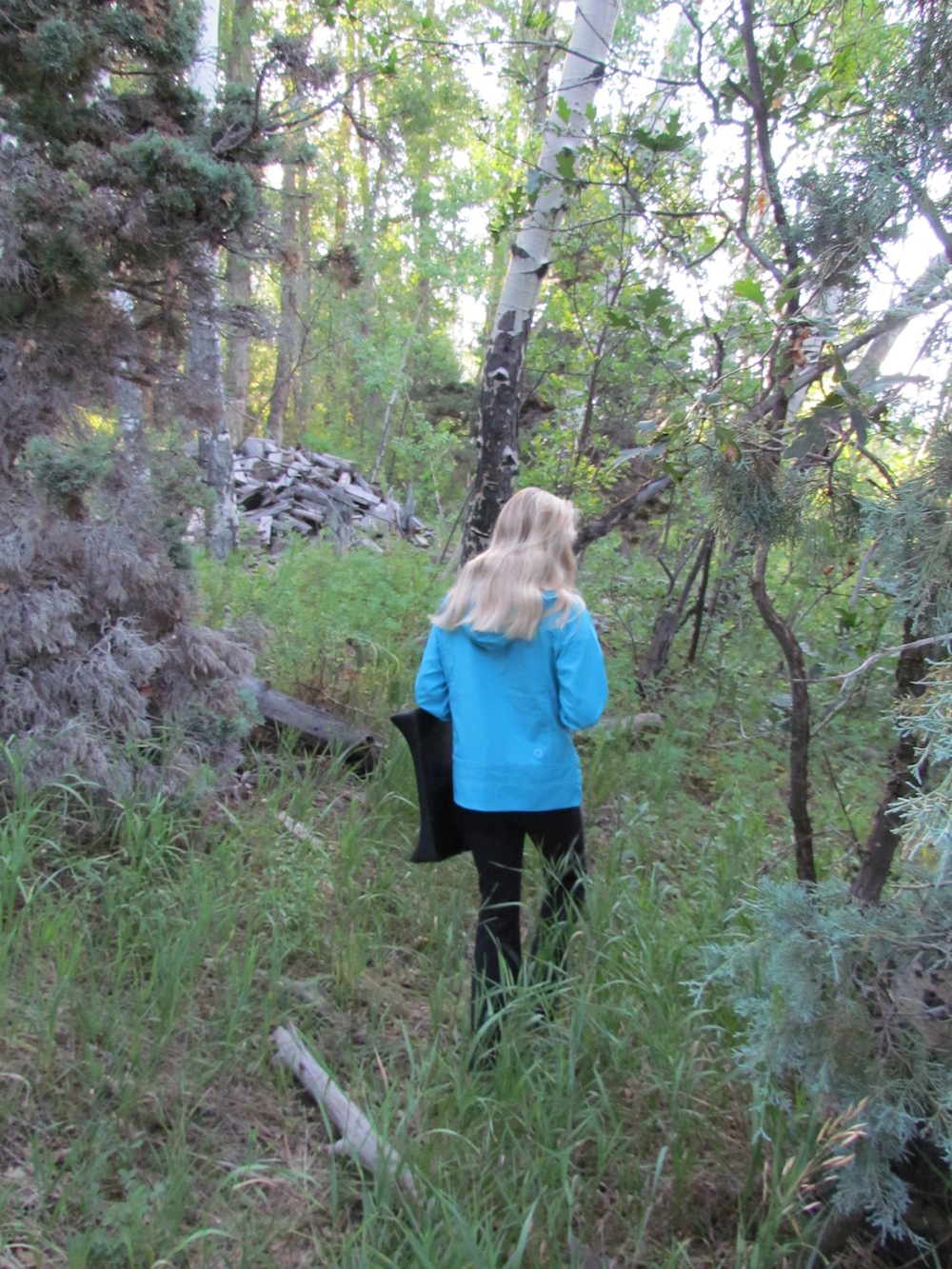
Emma heading up to the cabin

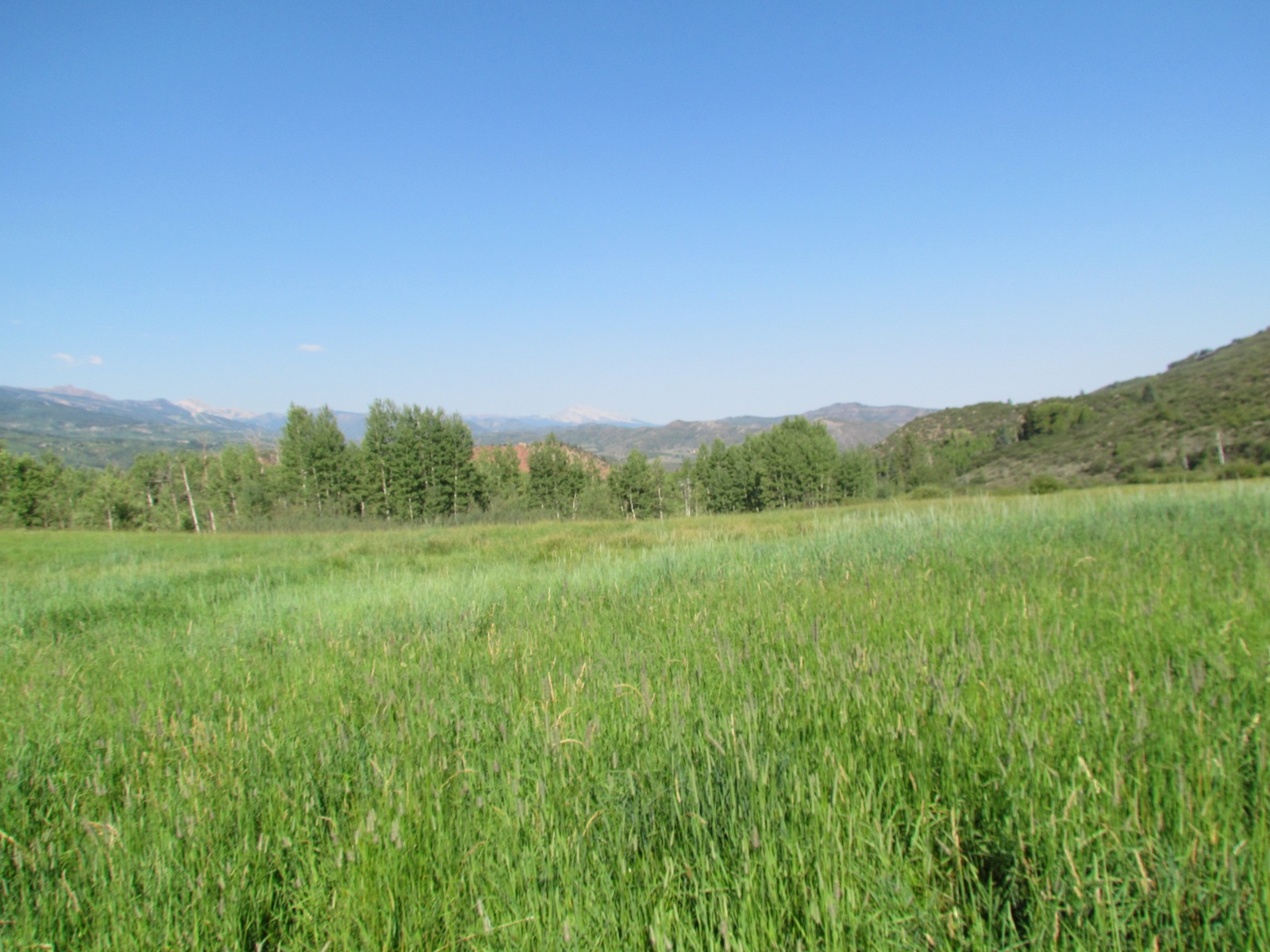
View of the Rockies from the cabin’s porch

Em heading home

Related articles

ICare4Autism – An Opportunity to Make a Difference

I attended the ICare4Autism conference in Jerusalem last week.  I wrote about this not long ago in the post Synchronicity, Jerusalem and Autism. As a quick recap Jerusalem was the place Richard and I had intended to go for our honeymoon.  Not six weeks before we were due to leave, the intifada broke out, forcing us to abandon our plans. That was thirteen years ago.  This past May I received a letter from the “State of Israel” inviting me to be their guest.

In addition Dr. Henry and Dr. Kamila Markram were presenting at the conference.  They are the neuroscientist team who came up with The Intense World Theory For Autism, the only theory to date that has validated my observations of my ten-year old daughter, Emma.  When I read they were going to be in Jerusalem this past winter I joked with Richard about how amazing it would be to meet them AND go to Jerusalem.  At the time we just laughed at the insanity of the idea and went on with our lives.  Then the invitation arrived.  I knew it meant I would need to write about the conference.  Writing about the conference was why I’d been invited.

Except I do not consider myself a “journalist.”  I am not an impartial, unbiased observer, prepared to provide an even-handed summation of my observations.  I am highly opinionated and exceptionally biased in my ever evolving perspective on autism.  I regard the motivations of most so-called autism advocacy organizations with suspicion and even outrage.  I am frequently hostile in my view of the self-appointed Autism experts, medical charlatans and other “professionals” who make a living off desperate parents, like myself.  If I had all the money I’ve spent on the various “cures,” biomedical interventions and dubious therapies we have employed over these past eight years, I wouldn’t have cared about an invitation providing me with airfare and hotel accommodations.

In less than a year, my perspective has radically changed.  Had I attended this conference last August my focus would have been on meeting as many researchers and doctors as time would allow.  I would have spent each break roaming through the many tables set up outside the conference rooms selling all manner of goods purported to help a child with Autism (and yes, that is how I would have described my daughter – a child with Autism) hoping for something that would cure my daughter with the same longing and desperation that had dragged me from one “specialist” to the next for all those years, not so very long ago.

But that was before.

That was before we began implementing Emma’s literacy program.  That was before Emma showed signs that something we tried could and would work.  That was before I read Henry and Kamila Markram’s Intense World Theory.  That was before I began reading the blogs of Autistic adults and as a result began communicating with a number of them (see yesterday’s post).   Suddenly, and it really was relatively quick,  I began to view my daughter through the eyes of someone seeking to understand rather than fix.  I began to see her actions, whether it was stimming or echolalia or self-injurious behavior – as her attempts to communicate rather than aberrant behaviors that needed to be quelled and eliminated.

Was ICare4Autism going to be different than any of the other organizations out there promoting interventions, therapies and the ever illusive and questionable promise of a cure?  The information I compiled prior to the conference did not look promising.  But, I kept reassuring myself, the Markrams would be there and if nothing else, I had set up an interview to speak with them.  Beyond that there seemed little to distinguish them from any of the other organizations using “autism” in their name.  Still I went to the opening dinner with an upbeat, hopeful attitude, eager for a better idea of the organizations intentions.  When the opening video played I consoled myself that at least the distraught parents filmed were not openly weeping and talking about their distress in front of their children.  By the way, just in case anyone misunderstands me, less than two years ago I could have been one of those sobbing parents and I would have wept in front of my daughter and spoken of her with the mistaken assumption that she couldn’t understand.  It would not have occurred to me that hearing her mother speak of a desire to cure her might have made her feel horrible, sad and depressed, things she wouldn’t be able to communicate to me, which would only further her sadness and feelings of isolation.  I get it.  Really I do.

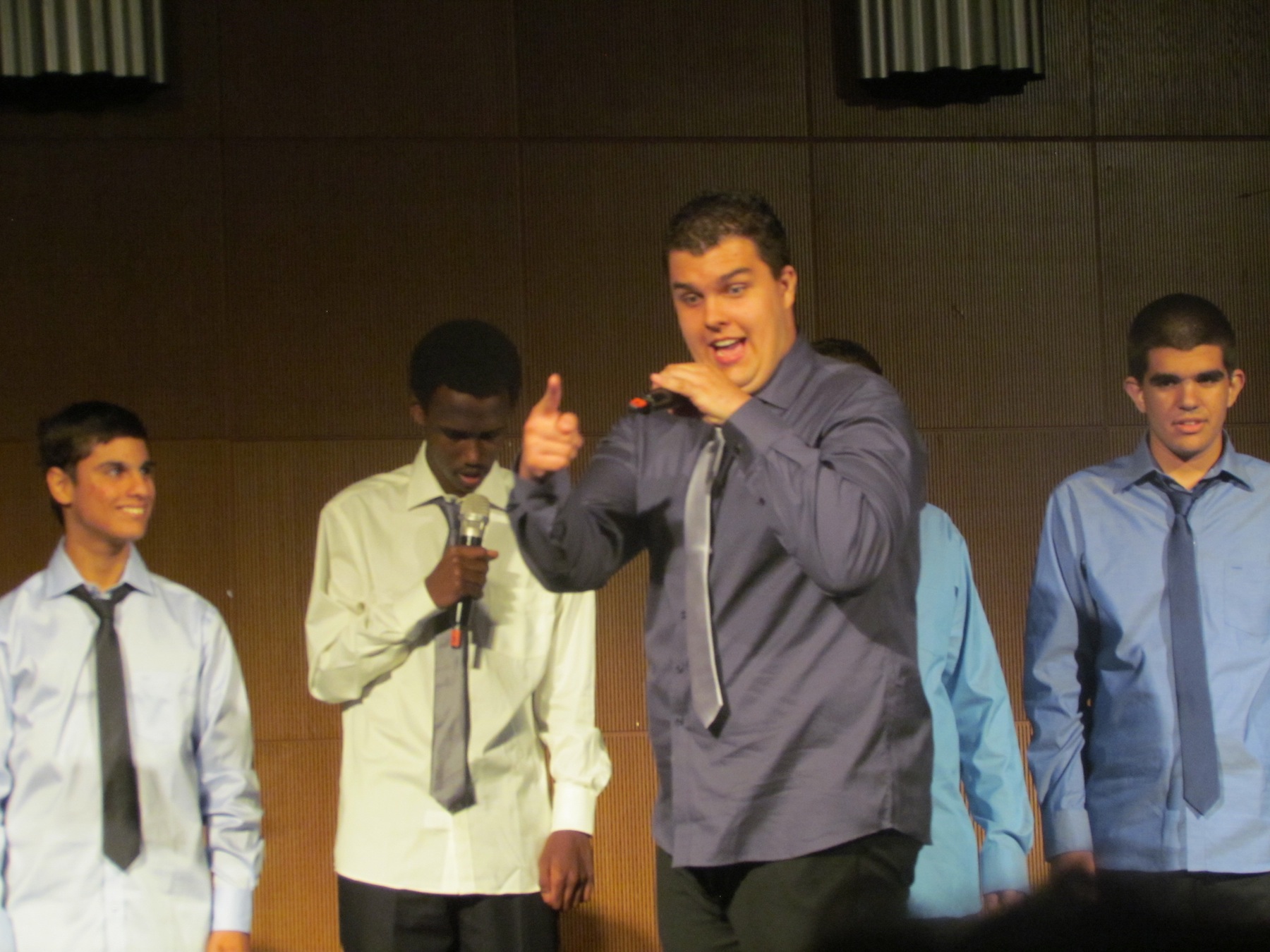
The conference began with a Welcoming Ceremony with a speech from the founder and CEO, Joshua Weinstein, who called for communication and collaboration.  He spoke of plans to move their headquarters to Jerusalem, a city with a long history of misunderstanding and strife, making his call for communication and collaboration all the more significant. The Mayor of Jerusalem, Nir Barkat spoke of his pride in hosting the ICare4Autism conference and eagerness in it becoming a world center for Autism research.  Dr. Shekhar Saxena, director of Mental Health and Substance Abuse at the World Health Organization spoke briefly as did a number of others.  And then the Autistic Boys Choir got on the stage.  Seven teenagers began to sing, their voices rang loud and clear, their pitch was perfect, their enthusiasm and joy infectious and the audience began to weep.  I was right there with them, madly rummaging around for my kleenex, trying not to let out too much noise other than the odd sniffle.   I wept from sheer gratitude, because these teenage boys/men were like my daughter.  One young man in particular who clearly reveled in performing reminded me of Emma.  So yes, I wept from relief, from joy, from seeing Autism shown not as a tragedy, but as difference and of hope for what can only be described as the possibilities, not just for our children, but for us as a society when we hand the microphone over to those we say we care about and want to help – Autistics.

Over the course of the next day and a half I tried to meet with Joshua Weinstein, but for a variety of reasons, wasn’t able to.  Then finally in the afternoon of the last day of the conference, I saw Joshua Weinstein and mustered up the courage to approach him.  I spoke to him about why the Autism = Tragedy model needed to be discarded, that while it may get people to write checks it was an unbalanced view, completely disregarding the feelings of Autistics (our children) who are being sent the message that they make their parents and families desperately unhappy, the very people who are supposedly trying to help them.  Josh was not only kind and receptive, but later thanked me for coming over to him.   He assured me that he really was interested in communicating with Autistics and would take me up on my offer to introduce him to a number of people I know, both verbal and nonverbal, and am in contact with.

Josh invited me to be on the advisory board, which I’ve agreed to.  He is working with a number of people at the UN, as well as WHO (World Health Organization) and asked that I attend the UN meeting.  He has, since we spoke at the conference called and we are in email contact demonstrating his sincere desire to follow through with his promises and words.  Am I surprised?  Yes.  I am.  But more than that I am hopeful.  Hopeful that ICare4Autism will actually include the very people they say they care about by putting them on their advisory board and by listening to them as they develop and attempt to fulfill their mission in becoming a world-wide Autism organization that does more than pay lip service to those who are Autistic.

“Caring about autism – what we know of it and how we put it in our narratives – is something from which all manner of people can and must benefit.”  Representing Autism Culture, Narrative, Fascination by Stuart Murray

Autistic Boys Choir

Related articles