Category Archives: presume competence

Early Intervention

Last week I wrote a post,  Autism “Experts” about how I used to attribute any action or sentence uttered by my daughter as evidence that whatever therapy or treatment we were employing at the time was “working.”  It was my way of staving off the persistent fear that if we were not intimately involved in a constant barrage of therapies, she would make no progress or whatever progress she made would be less, than if we devoted every waking hour to constant involvement and interaction.  Suddenly every waking moment became a moment we must engage, interact, teach and push for more.

We were told about the human brain and the small window when the brain’s plasticity is at its most optimal for learning.  From the moment that diagnosis was handed to us, we felt we were in a race against time.  Any time we sat down to read the newspaper or took ten minutes in our daughter’s presence to relax and just be in each other’s company without “working” with her was reason for guilt and the feeling that time was slipping away from us.  The nagging worry, if only we did more than we already were, she would be better served, is one I remember well and can still feel the residual stress of.

I want to clarify a couple of things that perhaps were not entirely clear in last week’s post.  I do not believe an autism diagnosis means we sit and do nothing to help our children, but I believe there must be a balance.  What we did was detrimental to all involved and I do not encourage anyone to follow in our footsteps.  All our hard work, the round the clock therapy, (more than 40 hours a week) the training, the evenings and weekends spent taking over once the therapists had gone home, did not ensure our child’s brain was rewired.  She was not mainstreamed within a few years.

This idea, popularized by the book, Let me Hear Your Voice by Catherine Maurice was NOT our story.  I do NOT recommend that book, in fact I urge parents to avoid it.  It was the first one recommended to me by Emma’s ABA supervisor and it set us on a very painful road of discouragement and disappointment, but perhaps even more importantly and destructive, it put into play the belief that Emma’s neurology could and should be “fixed.” And it pushed us further away from any degree of acceptance and eventually embracing and yes, celebrating our daughter for the amazing, uniquely beautiful being that she is.

That early intervention is so often equated with ABA is worrisome to me.  I hope this is changing.  People suggest it is, but when my daughter was diagnosed it was a given.  It was ABA or nothing.  Agencies offered versions of ABA, but it was still ABA.  My child was not helped by ABA.  I would not have done it could I do it all over again.  I’ve written about ABA before ‘here‘ and ‘here‘.  I know many of you feel it has helped your child, many have written to me and described some version of ABA that bears no resemblance to the method used with my daughter.   Evidently ABA has, in some cases, changed.  The bottom line is this – Does it presume competence?  Does it respect the child as a human being?   Is this a method I would use on a child who was not Autistic?

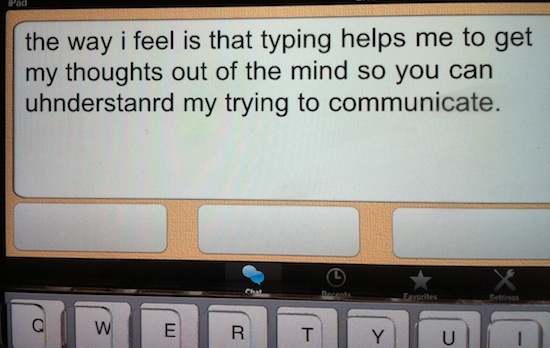
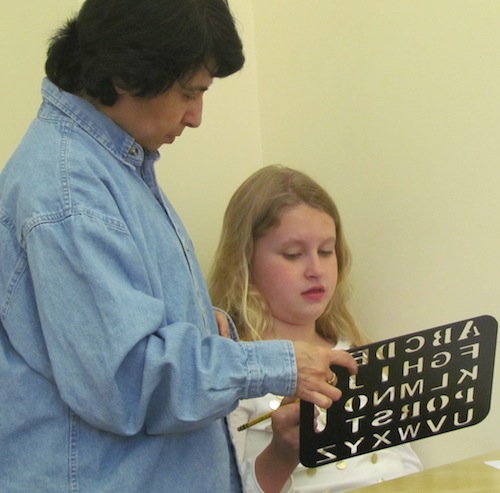
What I would have done when my daughter was first diagnosed was OT.  I would have enrolled her in gymnastics, trapeze school, swimming and I would have introduced her to a stencil board and AAC (Augmentative and Alternative Communication) devices.  I would have begun using Proloquo2go and many of the terrific Grasshopper apps had we had iPads when Emma was diagnosed.  And I would have begun working with Soma Mukhopadhyay.  In an ideal world all of these things would be a given.  All of these things would fall under “early intervention.”  All of these things would be available to ALL families despite their level of income.  These are the things that have proven to help my daughter.  All children may not respond to the things she has responded to.  But in an ideal world “services” would include an evaluation determining what things would help and a plan would be made.

In last week’s post I questioned those who are not Autistic and have little or no contact outside of a professional setting to those who are and yet call themselves “experts.”  I was not referring to the many professionals who are intimately involved in the autism community (and by that I mean the community of people who are Autistic) who have dedicated themselves to helping our kids and us so that we can be, not only the best parents we can be, but also equipped with information that will help us help our children flourish.  There are a great many of you out there, and to you I am incredibly grateful.  To all those professionals in the field of autism who are not familiar with Autistic blogs, books or do not have have any Autistic people in your life who are friends and colleagues, please become familiar with Autistic people’s work so you can tell parents.  Many parent’s first contact with anyone involved with autism, outside of their child, will be a therapist.

Please make sure parents know there is a growing population of adults who share our child’s neurology.  Even if that means just giving us a list of blogs and books written by Autistic people.  Ideally there would be programs in place that employed Autistic people, just as social workers, therapists, parent liaisons are employed. Autistic people who are interested in interacting with new parents and their newly diagnosed children would become a part of “Early Intervention.”

Ideally we would live in a society where we did not segregate those who were more profoundly affected by physical impairments and do not speak, so that all of us came into daily contact with those whose neurology was similar to our child’s as well as those with an array of impairments.  Perhaps families with older kids who are farther along in the process would volunteer to reach out and be available to other families new to all of this.   The point is that we could help each other more than is being currently done.

No family should feel they are alone, or feel the fear we felt or the terror and worry that dogged us every waking moment of those first years after my daughter’s diagnosis.  Years we spent in a state of almost constant panic that we should be doing more, that if we didn’t we were losing time, that our daughter’s life depended on it and that anything less meant we were failing her.

No one, who is given a diagnosis of autism, should feel they are alone.  None should feel less than or believe they are damaged or broken.  No child should feel ostracized or that the way they process and view the world is “wrong” or “bad.”  None should feel that because they are Autistic, they need to hide or feel abandoned by society. No one should be made to feel ashamed for the way they were born.  No one.  This is what I want to see change.  This is why I keep writing.  All of us can work together to create a world that embraces one another and encourages, rather than condemns.  Each of us can play a small part in making this happen, by increasing our awareness, by accepting difference, by working together.
**Em

Taking Action ~ Presuming Competence

A full transcript of Richard’s Blog Talk Radio Show is now available for any who want it by clicking ‘Blog Talk Radio Transcript‘.  I am trying to add it to Facebook, but have run into problems as the file is too large to add to “notes” and I can’t add it even when changing it to either a txt file or an .htm file.  So unless someone knows how to attach a large file, (12,540 word count) I am not sure how to get this on Facebook.  I may need to break it into several smaller segments, which would be too bad.  Please advise!

Lots of people have been asking questions about “presuming competence” and how that applies to either their child or someone they are working with.  So I am adding links to a couple terrific articles that I’ve found helpful.

Kathie Snow, entitled: PRESUME COMPETENCE:  Challenging Conventional Wisdom About People with Disabilities.

An interview with Douglas Biklen, winner of the UNESCO/Emir Jaber al-Ahmad al-Jaber al-Sabah Prize to promote Quality Education for Persons with Intellectual Disabilities and Dean of the School of Education at Syracuse University.

Presume Competence – a PDF from the Peal Center

Presuming Competence ~ By Douglas Biklen and Jamie Burke (Jamie, who we met this past March, just graduated from college and types independently! Yay Jamie and congratulations!!)

I am just beginning on this road of “presuming competence”.  There are others who are far ahead of me, many of whom have been kind enough to email me privately with their experience, strength, wisdom and encouragement.  There are many of you who are directly affected by society’s inability to “presume competence” and all that means to you and your life.  Many of you I know, others I am just getting to know, some I don’t know, but hope to know, but all of you are living with the consequences of a society that does not believe in a basic right we should all have granted to us – a presumption of competence.

What follows is a list of things I try not to forget that have helped me presume competence, please add your own thoughts, as I am well aware many of you are further along than I am.  I am still learning!

*I hesitated publishing this post because I do not want anyone to take this as a lecture or that I think I have all the answers.  I don’t and it isn’t.  I made the decision to publish this because many people have contacted me privately asking for help in presuming competence.  These are the things I do and continue to do, tools really, that I’ve personally found helpful.

In order to presume competence I have to:

1)  Presuming Competence is a “practice”.  Much like anything I want to get really good at, I must practice this.  It is very much an action.

2)  Examine my preconceived notions about autism and what that means to my child.  For me I made a list.  Everything that comes to mind, no matter how awful I may feel about myself for thinking such things, I must “out” myself so that I can come face to face with ingrained beliefs, prejudices, things I assumed, but couldn’t know, fears… a full inventory of all that I once believed and may still believe about autism and Autistic people.  It is helpful to share this list privately with another trustworthy human being who will not judge or condemn.  By the way, this is not something I will ever share publicly.  None need see it as it would be hurtful to many and judged by others.  But for my progress it is important that I be able to admit these things so that I may change.

Once I have my list and I’ve confided in someone I trust, I must be willing to examine and dismantle any remaining destructive beliefs.

To do this I must ask myself:
How is this belief continuing to serve me?
What am I afraid of?
What do I think will happen if I let go of this thought?

I have to be willing to face my fears.  I have to be willing to honestly and without judgment acknowledge my own thinking.

3) Question everything.  Literally, question everything.  Do not take my word for any of this, try it yourself.

4)  Be curious, ask questions, seek advise from those who are ahead of you.  This has been key as there are many people who have been doing this much longer than I have.  Talk to them.  Many people are living with the results of being presumed incompetent.  Read what they are writing.  Listen to them, learn from them.

5)  When in doubt ask.  When in doubt don’t act.  Doing nothing is often far better than doing something or saying something that I’ll later regret.  If I am not sure how to proceed, it may be the least dangerous option to not continue until I can figure out how best to approach the situation.

6) We all make mistakes.  It’s okay.  It’s part of the human condition, no matter what our neurology.  I make mistakes all the time, so do my children.  It’s okay.  Keep moving forward.

7) If my daughter isn’t communicating in a way that I’m able to understand, I need to try a different method of communication.  All human beings seek connection.

8) I cannot and do not speak for either of my children, nor do I own them.  They are not extensions of me.  They are their own people, with their own unique personalities.  It is my job as their parent to encourage them and find the best ways to support them so they can flourish.  Any embarrassment, shame, fear or assumptions about who they should or shouldn’t be are mine.  They have little to do with my children as much as I may believe otherwise.  These are things I am responsible for working through privately.

9) Realize I don’t know.  There is just a great deal I don’t understand.  The only way I can hope to understand is by admitting that I don’t.  I don’t have all the answers.  I am learning.  My daughter is my best teacher.

10) Listen.  I have to be willing to listen to her.  I don’t mean just verbal language, I mean “listen” in a more holistic way.  Listen to every aspect of her.  What is she trying to tell me?  Often I will not immediately be able to understand.  Sometimes it may take years before I will, but it is more important that I continue to try even when I don’t understand than deciding she isn’t trying to tell me anything.

11) Patience.  This is one of the single most difficult things for me to practice.  I am, by my very nature, incredibly impatient.  Impatience serves me in some ways, but in approaching my children, impatience almost always hurts them and me more than it helps.  I have to “check my impatience at the door” as a friend of mine once said.  If I am unable to do that, it’s probably best if I take a break and come back when I’m able to.

This list is not complete… there are many more things to add… but they will have to wait for another day…

Soma Mukhopadhyay's First RPM session with Emma ~ 2013

Soma Mukhopadhyay’s First RPM session with Emma ~ 2013

A “Miracle” or the Norm?

Years ago I saw Autism is a World, about Sue Rubin who is non-speaking and Autistic.  I was amazed by her and thought how incredible she was.  I had similar thoughts when I read about Tito Mukhopadhyay, saw the news program about Carly Fleischmann, watched and listened to Amanda Baggs‘ You Tube video… there were others, all non-speaking for the most part, all Autistic and each time I was struck by how “miraculous” they were.  They gave me hope, but each one, individually, seemed incredible, too good to be true.  The word “miracle” implies a rare occurrence.  I didn’t dare believe any of these Autistic people were indicative of a larger truth.  When it came to my daughter, I could not make the connection.

I have to interrupt this post for a second because last week I went through the blog and deleted all the posts I thought might hurt my daughter’s feelings if she were to ever read them or ask me to read them to her.  (That I realized I needed to do this, is yet another example of how far I’ve come!)  I am not trying to erase the truth or the past, I just do not want those posts in the public domain for all to view, at my daughter’s expense.  I do not want people coming to this blog to read an old post and leave thinking I am supporting or encouraging people to try any of the various treatments we once did.  There is plenty of negative, stereotyped thinking going on when it comes to autism and Autistic people, I don’t want this blog to be one more place people come to read that.

As I was going through old posts I was confronted with the level of panic and desperation I felt not so long ago.  I was confronted with how completely I had bought into the way autism is represented in the world, encouraged by the media’s representation and the public’s ignorance of it.  None of which is in accordance with these stories of Autistic individuals, unless they are “miracles”.  So when I heard about people like Carly and Tito and Sue, I could not make the leap required to apply what they were accomplishing, to my daughter who was then in a private, special education, school being taught the same fairy tale going on two years.  A place where, as well-meaning as they certainly were, they were not taught or trained to presume competence of their students.  The curriculum, if you could call it that, was not remotely age appropriate, yet she was loved and safe, though not challenged intellectually; it seemed it was the best option available to us.

I was fortunate.  I had some terrific people who recommended books and documentaries that I’ve included on the Resources page of this blog.  I was asked to speak at the Autcom Conference and met a great many more Autistic people who do not speak or speak intermittently or un-reliably, but who are communicating a great deal.  So many, that it finally began to occur to me that maybe, just maybe, my daughter might be one of them.  Perhaps they were not the exceptions, perhaps she too could learn to communicate as so many of the Autistic people I was meeting were.  And once I made that connection, once I stopped viewing each person as a miracle, but began to wonder whether given appropriate accommodations this was more the norm, than not, that was when I was able to understand what practicing presuming competence really meant.  And the more I was able to do this, the more my daughter rose to the occasion.  The more she proved she could and did understand, the more I presumed her competence and on it goes…

Em types us a message that astonishes us ~ April, 2013

EmTypes ICI

“Proof” of Competence

Last night I asked Emma, “Do you want me to read Anne of Green Gables or something else?”  I was seated at the computer responding to a comment left on yesterday’s post.  Em was leaning over my shoulder looking at the computer screen.  She pointed and said, “Look!  There’s Harvey and Tracy and Pascal!”

“Yeah!  I’m just finishing up here, Em.  Did you brush your teeth?”

“Uh-huh,” she answered.  Her one hand gently rested on my shoulder, her head about an inch from mine, she twirled her string and continued to peer at the screen.

“So Em.  Should I read Anne of Green Gables?”

“Nah.”

“Oh!” I said, surprised.  Turning toward her, I looked at her, “What do you want me to read then?”

“This,” she said pointing to the screen.

“You want me to read the blog to you?”

“Yes,” she said.

I mentally scanned yesterday’s post, suddenly wondering if I’d written anything I would feel badly to have her read or hear.  And as I did so, I marveled that this was something I was having to be concerned about.  Several years ago, had someone cautioned me to be careful about what I wrote on this blog and gave the reason for their concern as one day my daughter would express an interest in reading it, I would have laughed and assumed the person did not understand my child.  The idea that my daughter would be interested in anything I wrote, let alone anything I wrote on a blog about autism was the LAST thing I was worried about.  And yet, last night, there I was, and not for the first time, rereading a post I’d written with a critical eye.  This says far more about me and my limitations in imagination, as Anne of Green Gables would say, than about my daughter who continues to surprise, astound and prove us wrong.

That my daughter continually “proves us wrong” is something I am working hard to change, because again, this says far more about me and my limited thinking than it does about her.  Why should she need to “prove” anything?  So many of the various therapies used for Autistic children spend an inordinate amount of time requiring our children to “prove themselves” to us.  Often, having done so, we then change the question or the format, suggesting that this is for their own good as they need to “generalize” the information.  We ask again, insist that the answer be given within a certain time frame, insist that it be given with specific wording or in a different format, as though their first answer wasn’t enough to convince us.  Who exactly is benefitting from these exercises?  We say we are doing this with their best interests in mind.  We tell ourselves we are “teaching” and this must be done in order for them to learn, but it seems to me, it is often the other way around.  It seems to me these exercises are done to convince the skeptics among us.

We do not treat our Autistic population as equals.  We do not presume Autistic people are competent, often we believe they are incompetent and ask that they prove to us their competence again and again.  We pity them and often their families too.  Organizations set on “helping” those who are Autistic discuss their work initiative programs, their mentoring programs, (almost always it is non Autistic people mentoring those who are Autistic) yet fail to see how their well-meaning programs are biased, do not presume the competence of those they suggest they want to help, do not include Autistic people in the planning and implementation of such programs and express shock when their various programs are met with resistance within the very population they say they are helping.

This is really at the crux of the most astonishing thing I’m learning.  It is not that my child is limited.  It is that I and others like me have been limited in our thinking about her and those like her.  It is this, that I hope I will see change in my lifetime.

“Read the blog,” Emma stated as she crawled into bed last night.

And so I did.

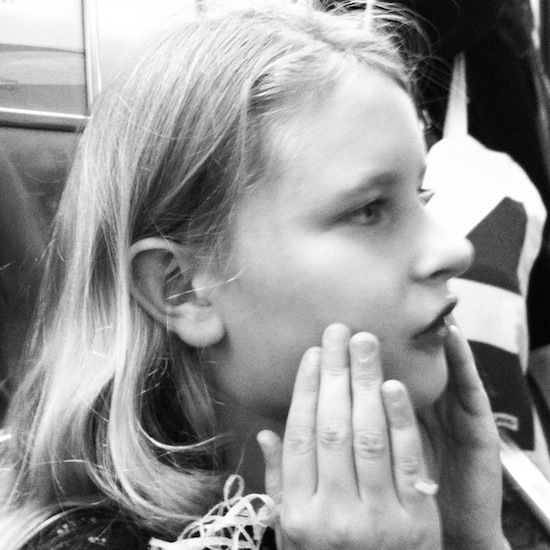
Nic and Em ~April, 2013

Nic & Em

Parenting & Presuming Competence

I am reading Anne of Green Gables to Emma.  Three years ago it would not have occurred to me to read her a book that I might have enjoyed at her age.  Three years ago I was “reading” picture books to her before bed.  Three years ago I did not assume she understood the stories in those picture books.  Three years ago I not only did not assume my then eight year old child understood what I read, but I also did not assume she understood 90% of what was being said to her.   Because I did not assume she understood I treated her as though she couldn’t understand.  I treated her as though what I thought was a fact.  Then I learned I was wrong.   Not only did I learn my assumptions were incorrect, I began to see how those assumptions caused me to act and treat her as less capable than she actually was.  I treated her as though she couldn’t and I didn’t see how this attitude was hurting her.  Instead of teaching her to do things for herself, I did them for her.  It was quicker, easier…

I wrote a post not long ago ~ Presume Competence, What does that mean exactly?   People have a tough time with the idea of presuming competence,  let alone putting that idea into action.  I get that.  I did too.  Here was a child, my child, a child we had been told was capable of this, but not of that, a child who was treated by society as much younger than she actually was, a child who, because of her unreliable language did not have conversations with us, did not answer most of our questions, never asked us questions, and so we assumed had little if any interest in such things.  We made the mistake of assuming language retrieval issues were indicative of lack of intent and desire.  We made the mistake of limiting our thinking and therefore limited our child.  We thought we knew, until we didn’t.  We behaved as though what we thought was true and our behavior and actions or inactions fed into that erroneous thinking.

I’ve spoken a great deal about the brilliant documentary by Gerardine Wurzburg, Wretches and Jabberers.  I continue to urge everyone I know to watch it because it is the best illustration I know of, that explains the concept of presuming competence and what can happen as a direct result of doing so.  It is a highly entertaining, moving documentary following two (mostly) non-speaking Autistic men as they travel the world meeting other non-speaking Autistic people who are all far more capable than society believes.  Many are in “life skills” programs or work initiatives doing menial tasks like paper shredding and folding towels.  They type about their mind numbing boredom and brutal frustration they feel as a result of being treated as far less intelligent than they are.

Presuming competence is an act, it isn’t just an idea.  Presuming competence is the single most powerful action we have taken that has directly helped our daughter flourish and grow.  Nothing, absolutely nothing else we’ve done has helped Emma as much as presuming competence.  When we stopped limiting her with our limited beliefs of what she is or isn’t capable of and began giving her the information and materials she needed, she has taken off.  In school she is being taught grade level science, at home she is being taught grade level geography, I am reading age level fiction and nonfiction, she clears her own dishes, cleans them and puts them away.  She sorts her own laundry, helps fold it and knows how to make pancakes without assistance.  She takes a shower on her own, has learned to shampoo her hair and brush it afterwards.  She brushes and flosses her own teeth with minimal support, she dresses herself.  When it is clear she needs help learning to do something, we help her, without admonishment, without distress, but instead with the knowledge that she will eventually learn to do it on her own.

Presuming competence does not mean we expect her to know how to do something without support and instruction, it means we assume she can and will learn with appropriate accommodation.  This is is a very different way of thinking than either assuming she can’t do something and never teaching her, or teaching her, but requiring her to prove her knowledge over and over before moving on.  With reading comprehension we realized we were asking the wrong questions.  Often we were asking her to answer questions that were not obvious to the story.  When she couldn’t answer, we’d dumb down the reading material and then wonder why she wouldn’t pay attention.

In the beginning, presuming competence felt like a leap of faith.  It scared me.  I didn’t want to get my hopes up.  I didn’t want to feel the disappointment that I knew I’d feel if I was wrong.  It felt like a massive disconnect.  But presuming competence is not about my ego, my expectations or anything else involving me.  Presuming competence is about respecting my daughter and respecting her process.  It is about honoring her.  It is about giving her what she needs to flourish.  It is about dispensing with what I think, believe and have been told.  Presuming competence has nothing to do with my fears of success or failure.  Presuming competence is not about me at all.  It is all about my daughter.

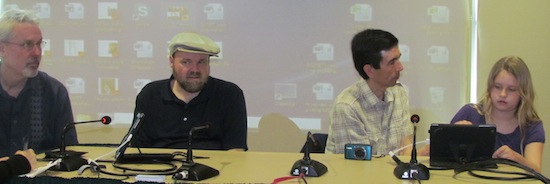
Harvey, Tracy, Pascal & Em @ USFEmma takes the stages with Pascal, Tracy Thresher and Harvey

Rethinking Unhappiness

I was alerted to an article written by Dr. Michael Oberschneider entitled, Ask Dr. Mike: Expecting and Anxious About Autism.  In the piece he writes, “Some of the happiest parents I know (both personally and professionally) have children on the Autistic Spectrum.”  In the comments section people weighed in with their thoughts.   Many parents wrote of their outrage (and a few of their disbelief) that Dr. Mike suggest “happy” parents of Autistic children even exist.  They seemed to equate happiness with a lack of concern.  A number of parents suggested that Dr. Mike was simply wrong and refused to believe that he could actually know such parents.  One person went so far as to suggest he was trying to trump up more clients, which is an interesting idea, but the logic of that argument eludes me.

Before I go any further, I have to say this – there was a time, not so very long ago – when I was one of those parents who was incredulous that anyone could be “happy” and have an Autistic child.  I no longer feel that way and the reason is, I stopped trying to cure my child of herself.  I feel sad that this was my experience.  I wish it hadn’t been.  I know it negatively affected my daughter.  I know it negatively affected my entire family.  I know now that the depression I felt was because I believed I could cure her.  I was angry, I was depressed, I believed that no one could truly understand.  I felt alone and isolated in my sadness and rage.  I was engaged in a war only to realize I was fighting myself.  I know this now, but I didn’t then.  I wish I could hit the rewind button and do it over differently, knowing what I know now.  But I can’t.  I have to move forward.  In moving forward I am aware that I owe it to my daughter to make a living amends to her for my past mistakes.  Mistakes that I cannot know and will never know how badly they impacted her. Part of my living amends to her, beyond trying my best to be the best mother to her (presume competence) that I am capable of is to counter the negativity and fear that continues to swirl around the very mention of autism.

Today I am one of those happy parents Dr. Mike mentions.  I have two beautiful children, one who happens to be not autistic and one who happens to be Autistic.  And yes, there are times when I worry about both their futures.  There are times when one of them does something or is going through something and I find myself concerned.  Concern is one of those feelings, like worry, that actually does not help my child.  These are things I feel and it is up to me to figure out what to do about them.  Are there actions I need to take that will help my child get through whatever it is that is troubling them or causing problems?  Are those problems something I can control or are they things that require patience, compassion, love and support?  What can I do to accommodate my child so that they might better cope with whatever is going on?

The single biggest issue I confront repeatedly with having a child who is Autistic, with unreliable verbal language, is the misinformation, the fear, the misperceptions and the ignorance of those who meet her and what they then assume because of what they see.  Fear coupled with ignorance = prejudice.  We fear that which we do not know or understand.  We make judgments, we believe ourselves to be superior, we then behave accordingly.  None of this helps anyone.

It makes me sad that I was once so unhappy and that I attributed my unhappiness to my child.  I know now this was not true.  It wasn’t my child who made me so unhappy, it was my perception of her and what I believed that meant that caused my unhappiness.  I assumed things about her that I now know are not true.  They are not fact.  What is true, what is a fact is this:  My Autistic child is far more capable than most people give her credit for.  My autistic child does not use language the way most people expect.  Through a great deal of hard work and over the course of many years my daughter is learning to communicate through typing.  She has proven repeatedly that she is not only aware of what goes on around her, but she is extremely intelligent and capable.  At the moment she requires support to communicate, though we believe she will not require that level of support in the future.

My happiness or unhappiness has nothing to do with either of my children or my husband or my marriage.  My ability to feel joy is an inside job.  It takes work to excavate all those old beliefs, to throw everything you think you know and believe and start over.  I encourage anyone who is suffering and believes their suffering is directly the result of their child’s neurology to examine their beliefs.  Throw it all out.  It isn’t serving you and your suffering isn’t helping you help your child.  Isn’t that ultimately what all of this is about?  Aren’t we all trying to be the very best person we can each be?  Isn’t that what we hope and want to model for our children?  Isn’t that the point?

April 2013 – With my beautiful friend Lauri, another “happy” parent 

A & L

Autism Positivity & a New Blog ~ Where Art & Life Meet

Tomorrow is the Autism Positivity 2013 Flashblog event!  Anyone can make a contribution, whether you have a blog or not.  ANYONE!  Just follow the instructions on the link above and submit your word document, post, photo, poem or whatever you’d like.

cropped-autismpositivitybanner3

When I began Emma’s Hope Book just over three years ago, I did it because it seemed logical.  We wanted a document, a place to write notes, a place we could write our observations that extended family could read if they wanted.  Like those annual letters some people send out, updating family and friends about what’s happening in their and their children’s lives, this would be a place Richard and I could write about our daughter.  Never did it occur to me to ask our daughter what she thought, or consider how she might feel about having her childhood and life dissected for anyone to see who might stumble upon this blog. 1) I didn’t understand yet that she might be able to understand what a blog was, let alone able to read it, and 2) that she might have an opinion about it one way of another.

I cannot actually express how horrible it makes me feel to realize how wrong I was with not just the assumptions I made about my daughter, but the decisions I made and how I behaved as a direct result of those assumptions.  As horrible as it makes me feel, I have wondered and begun to ask her how it has made her feel.  My daughter surprises me consistently and constantly.  She shows me that what I think I know is usually incorrect.  She has countered my worries with her love of performing, her desire to be heard, her wish that people would listen to her.  (This is important and not remotely the same as my writing here about my thoughts and feelings.)  But I’m only now beginning to fully understand all of this.  And I cling, desperately at times, to the idea that at least I am beginning to “get it” now.  At least I have the chance to do things differently.  At least I have the opportunity to respect her, to ask her, to listen to her, to honor her and not assume she doesn’t understand just because she doesn’t look directly at me, nod her head and say some version of, “Yes, Mommy, I understand what you’re saying and this is what I think and believe about what you’ve just said.”

So no.  I didn’t know when I began this blog and I never once stopped to consider how it might feel to her to have her mother writing about her as I have, as I do.   But I am and I continue to, though now with her permission, and as I do, I cycle through the feelings of discomfort and I also know that writing is something I must do.  It isn’t a choice.  It’s what I do.  Hence the creation of my new blog ~ Where Art & Life Meet.  A second blog!  A blog about life, marriage, parenting, art, design and everything in between.  This morning I published the first post for it.  Please go over and say hello.  It’s more of an image friendly blog, a kind of blog meets Pinterest format and if you like it, I hope you’ll follow it. header-title

Watch Emma Fly!

Years ago Richard and I went to hear Temple Grandin speak (this was before the documentary about her had been made).  She had slides and gave a terrific talk about what it was like growing up as an Autistic child in a not autistic friendly world.  After the talk she went into the front entrance of the auditorium where she sat near a table displaying her latest book.  I went over to tell her how much I enjoyed reading her two previous books and to ask her if she had any suggestions for me regarding Emma’s inability to stay seated when on an airplane  prior to take off and again once we landed.  (This was something Em had a terrible time dealing with and would get a look of abject panic, before launching into a high volumed scream that had all the passengers covering their ears.  We were pretty desperate to find some way to help her cope.)

Temple said she was pretty sure there were sensory issues at work and gave some suggestions of things we might do to mitigate those.  I remember thinking that Temple in no way resembled my daughter and then made the assumption that Temple must have been far more able when she was my daughter’s age than my daughter currently was.  Whether this is actually true or not is something I cannot know, but a version of this thought process on my part is one I’ve repeated over the years on more than a few occasions.  So desperate to quell my fears and worries I have sought to find my daughter’s adult replica.  I have made the mistake of comparing an adult, possibly an adult who is now even in their 30’s, 40’s or even 50’s, and then drawn conclusions about what I imagine they were like when they were my daughter’s age.

Comparing Em to any adult has proven to be unhelpful to me, to my daughter and, I imagine to the person I am comparing her to, if they were aware I was doing it.  In addition, comparing a child to an adult is never going to give an accurate view of anything, there are too many variables involved.  And this kind of thinking completely ignores the fact that all human beings progress, evolve and change.  This is an obvious statement when applied to a non autistic child, but somehow I came to believe that my Autistic child was different.  I worried she would not progress.  I worried she would not be able to learn.  I worried because, in part anyway, we were given information about our Autistic child that has been proven to be not true.  We were given information that was in direct contrast to presuming competence.  Just as Emma no longer suffers when traveling in an airplane, she also now reads and writes and has, as of three days ago, mastered the complicated skill of a “catch” at her trapeze school.

http://youtu.be/fF46D0NMGnI

Excuse me while I jump up and down while wiping away my tears of joy.  Emma wasn’t able to do a catch upon her first try or second or even third.  Em has been going to trapeze school for more than two years.  She also goes to gymnastics once a week where she has been working hard for almost three years strengthening her core muscles.  In the last month she is now able to do a cartwheel.  Emma began learning to type two and a half years ago.  She practices every day.  She practices reading too.  She practices and works really hard.  None of this has come easily or automatically, there is no “magic” involved, unless magic means being given the opportunity to work toward her strengths, to learn and practice and the belief that she can and will succeed.  Watch that video again, because all her hard work is paying off.  Watch Emma fly!

Bungee jumping barefoot – December 2012

photo

Acceptance And A Webinar

When my daughter was diagnosed first with PDD-NOS and later with autism, I easily fell into the ~ I-completely-love-and-accept-my-daughter-but-I-do-not-accept-her-autism ~ mindset.  At the time, this seemed perfectly logical and I didn’t think a great deal more about it.  Autism was the “problem” after all, not her, and once we got rid of the autism, everything else would fall into place.  When people said the word “acceptance” and “autism” in the same sentence I nodded my head yes, while my mind carefully separated autism from my daughter, plucked the word from the sentence and placed it into a box before closing the lid.

It took a very long time for me to understand that my daughter and autism were not to be separated.  And it wasn’t until I began developing real friendships with Autistic adults that I stopped trying or wanting to separate the two.  Acceptance is much more than tolerating something or saying – okay I won’t actively fight this any longer.  Acceptance is an embrace, it’s understanding and actively celebrating difference, it’s about looking inward and asking questions.  It’s about self-reflection and digging deep into the darkness of preconceived beliefs and being willing to be wrong.  It’s about saying – I don’t know and I don’t understand, will you help me?  It’s about being vulnerable and not “right” and it’s about the excitement of discovery and being curious and open to different ways of being and seeing the world.  To me, it is the most exciting way to live life.

To say I’m grateful to all those people in my life whose neurology falls under the Autistic label, would be a vast understatement.

Today at 4PM eastern time, Brenda Rothman of Mama Be Good, Melody Latimer of AS Parenting and I will be speaking about Parenting Toward Acceptance.  The webinar can be found at the following link – http://www.icdl.com.

In other news, I was more than a little surprised to see this – Top 10 Social HealthMakers

“Presume Competence” – What Does That Mean Exactly?

When my daughter was first diagnosed at the age of two and a half, presuming competence was not a concept I was ever told about or had heard of.  And even if someone had suggested we do so, I’m not sure I would have fully understood what that meant exactly.  So what does “presume competence” really mean?  And how and why should we carry out a presumption of competence?

In an interview, Douglas Biklen explained:  “Assume that a child has intellectual ability, provide opportunities to be exposed to learning, assume the child wants to learn and assert him or herself in the world.”

A key component to presuming competence is to become aware of the prejudice that currently exists regarding autism and how these ingrained beliefs harm not just our children, but ALL Autistic people.   Like any prejudice, based on layers and layers of misinformation, misperceptions, and misunderstandings, we must be willing to acknowledge our own “beliefs” before we can begin to deconstruct them.

When my daughter was little with almost no language I could not understand how it was possible for her to learn to read and write if she did not speak first.  I was surprised and confused when I learned how completely wrong I was.  When I read about all the non-speaking Autistic people who had learned to read and write despite being given no formal instruction, it seemed magical to me.  This mind that seemed, from my limited perspective, to not understand so much, actually was taking in far more than I could imagine, let alone believe.  It wasn’t until I was able to see my own limitations caused by the things I had been told about autism and hence, my daughter, that I was able to move beyond that thinking and embrace another way of thinking.  I had to acknowledge my misperceptions and the misinformation I was given, then I had to question everything I thought I knew and was being told.  I had to seek out Autistic people who were kind enough to share their own experiences before I was finally able to dispense with my erroneous ideas and move beyond them.  In case anyone’s missing it, there is a certain irony in my early assumptions regarding Autistic competence.

At the Institute on Communication and Inclusion conference, which we’ve just returned from, and I began writing about in yesterday’s post, Tracy Thresher typed, “… couldn’t let anyone know I could read and I understood what was said to me the training gave me the way to communicate with others.”  On the Wretches and Jabberers website, Tracy wrote, “My communication is paramount to my well-being and is key to my being an active citizen.”  He goes on to say, “I may appear to be a man shrouded by a cloak of incompetence but if you will take the time to listen to my typing you will understand I am intelligent.”

What I have come to understand, is that a presumption of competence is much more than a set of beliefs, it is a way of interacting with another human being who is seen as a true equal and as having the same basic human rights as I have.

A presumption of competence may seem like a leap for many non Autistic people,  it may even feel like a disconnect.  Some may argue that their non-speaking child cannot possibly understand, that they know this beyond any doubt and I must ask, but how can you know this for sure?  We may tell ourselves that our child is too “severe” and we are setting them up for certain failure by presuming competence.  To these people I would suggest the opposite is true.  The only true failure is when we walk away and assume incompetence.

Presume competence means – assume your child is aware and able to understand even though they may not show this to you in a way that you are able to recognize or understand.

To presume competence means to assume your child or the other person does and can understand when they are being spoken of and to.

Presume competence means talk to your child or the other person as you would a same age non-Autistic child or person.

Read and have available age appropriate stories and give access and instruction to age appropriate learning material.

Presumptions of competence means treating the other person with respect and as an equal without pity or infantilization.

It does not mean that we will carry expectations that if not met will cause us to admonish, scold or assume the person is being manipulative or just needs to “try harder”.

To presume competence does not mean we assume there is a “neurotypical” person “trapped” or “imprisoned” under an Autistic “shell”.

Presuming competence is not an act of kindness.

Presuming competence is not something we do because we are a “good” person.

We do not get to pat ourselves on the back because we have presumed competence.  If we believe we deserve a pat on the back and/or acknowledgement, then we are not presuming competence, we are more likely being condescending.

One last thought regarding presuming competence…   to presume incompetence is to actively do damage.  Let’s all agree not to do harm to our fellow human beings.