Author Archives: arianezurcher

Emma Discusses – Awareness

“Awareness is deciding something is worth your time and attention.  It is not necessarily good.  Real awareness needs to be balanced.” ~ Emma Zurcher-Long

I asked Emma whether she wanted to write something about autism awareness since April 2nd is World Autism Awareness Day, designated by the UN in 1989.  Emma wrote,

“Autism awareness really does me very little.  It is not honoring or making my life easier.  So many believe I am unintelligent even though I write well.  Until they see me writing, it is not what they assume.  What good is awareness if it doesn’t tell people the truth?”

Ariane:  “What is the truth?”

“The truth is, so much of what we perceive compared to another, isn’t known.  People see me, but don’t understand what they are seeing.  I want people to know what it is like to have smart thoughts, but not be able to prove it.

“No one wants to be treated with impatience.  I am happy when people are aware of how bright I am.  Maybe they have a special light bulb for that.  Shine some awareness on those of us who can’t talk the way we think.”

Texas ~ September, 2013

Texas ~ September, 2013

Experiencing Without Words

Over the weekend we played a story telling game.  The round robin story telling was an idea Emma came up with during an RPM session she had a few weeks ago and it seemed like a great idea for a rainy Sunday morning.  (Unfortunately, I didn’t get everyone’s permission to print our story here.)  Suffice it to say, it involved rain, a family made up of two parents, a girl, a boy, and a tornado carrying a herd of walrus.

Emma began the story with one sentence, then each person added a sentence and we continued going around in a circle.  Emma spelled out her sentences by pointing to letters on her laminated letter board, my husband and son said their sentences out loud while I transcribed what they said, but when it was my turn, I found it very difficult to think of what to add out loud, and so I wrote my sentence down first and then read it to the group.

After each person’s contribution there was much laughter and ad-libbing.  At one point Richard, who, it must be said, couldn’t help himself, constructed perhaps the longest, and wonderfully, creative run-on sentence every spoken.  He did look a bit sheepish afterwards, but the story moved along until it was Emma’s turn again, where upon she said, “All done.  No.  You have to work!”  Her comment reminded me that for Emma this “game” that was intended as fun, was “work” for her.  As no one else was viewing it as work we stopped after the fourth go around, at which point Emma raced off.

I think a great deal about how hard it is for Emma to communicate, whether that is through spoken language or writing; they are both hard.  This surprises many people who assume, as did I, at least in the beginning, that someone who cannot rely on spoken language to communicate, would be more than a little relieved to finally find a way to express themselves by writing instead.  However Emma has told me on several occasions that while she is relieved that people finally can understand her when she writes, it is also very, very difficult for her.

Emma recently described writing as, “It’s too hard work,” but it’s easier for the rest of us, particularly as it tends to be more accurate of her thinking than her spoken language.  Not long ago Emma wrote, “I can’t talk the way I think.”   But it would be a mistake to then assume writing is easy or that she eagerly does it.  And I was reminded of all of this when it was my turn to come up with a sentence for the story.  I couldn’t come up with a sentence through spoken language, but had to write it down first.  What if everyone had insisted that I say my sentence out loud, what if someone had said that it was against the rules to write the sentence down first?

I can tell you it would have been much more difficult for me, though it still would have been fun.  But what if I experienced the world in other ways and not with words?  What if my experience of people and things was not through pictures, words or anything that can even be described with words?  Wouldn’t both written and spoken language through the use of words be equally difficult for me?  What if my experience of the world was completely different and having to translate this experience into words was actually impossible?  What if so much was lost in the translation that it no longer represented my experience?  What then?

Em with her string

Em with her string

Seeing Others Write To Communicate

I often think about that first time I saw someone who was unable to express themselves through spoken language, but who spoke through writing.  There is nothing quite like seeing to believe or at least to begin to believe what many of us have been told is impossible.   So I’ve compiled a few Youtube videos of different people who communicate the way Emma does.  A couple of them show people who have graduated from the laminated letter board and now type independently on a stationary keyboard.  This is our goal and what Emma is working toward.   For those who may feel someone holding a laminated letter board is cumbersome and suspect, please keep in mind the letter board is a stepping stone, which all hope will eventually lead to full independence.

The first video is of Ido who now types independently on a keyboard.  Ido’s blog is Ido in Autismland where, in a recent post, A Challenge to Autism Professionals, he wrote:

“The theories regarding autism have been based on observation of our odd behaviors. Lists of these behaviors make a diagnosis. I have limited independence in selfcare. I have limited eye contact. I have flat affect often. I can’t express my ideas verbally. I have poor fine motor control. I have impaired initiation. I have impaired gross motor control. I have difficulty controlling intense emotions. I have impulse control challenges and self stimulatory behavior.”

At the end of this terrific post he writes:

“Thousands of autistic people like me live life in isolation and loneliness, denied education, condemned to baby talk and high fives, and never able to express a thought. The price of assuming that nonverbal people with autism have impaired thinking is a high one to families and to people who live in solitary confinement within their own bodies. It is high time professionals rethought their theories.”

Ido wrote a book with the same title as his blog – Ido in Autismland.  I cannot recommend this book enough and have written about it before ‘here‘ and ‘here.’   It should be required reading for all parents with an Autistic child as well as anyone who is considering entering or is already in the field of special education and/or autism.

This second Youtube video is of a boy who writes a letter to his church.

Jackie Dorhurst is a speech/language pathologist shown here working with Gavin.  Jackie has an organization called RPM+ located in Wisconsin.

This next video is of my friend Sue Finnes’s son Chris.  Sue has a wealth of videos that she’s posted on Youtube over the years of Chris working with a number of people whom she’s trained to work with him.

And finally this video is of another independent typer, Mitch Helt who writes a letter to his aide.

This post was inspired by a comment from Ari,  who has a wonderful blog, Pixie Perceptions.  You are not alone Ari.  Doing all I can to make sure others realize this…

Talking By Writing

*Emma gave me permission to write about the following…*

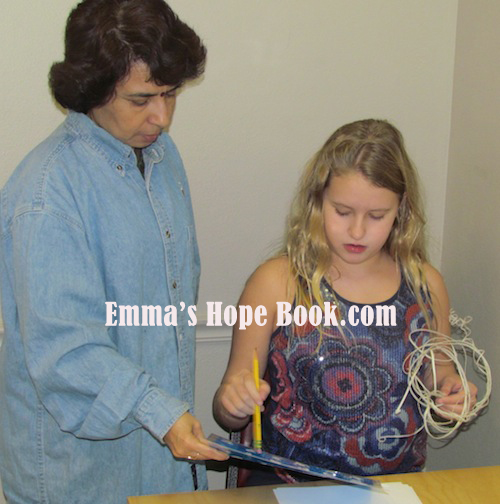
Every Tuesday afternoon I go to Emma’s school where Emma and I do a sample lesson, or Emma answers questions from staff or sometimes someone wants to share what they worked on with her and what her answer was.  As Emma “talks” by pointing with a pencil to the letters on a laminated letter board she twirls her string, and often, while she is “talking” by writing, she is also talking, as she describes it, “with my mouth” at the same time.  When I mentioned this to her at our last training session she smiled and wrote, “It is hard for non autistic people to multitask as well as I can.”  Which was one of those frequent – oh-my-gosh-Emma-you-are-so-fabulous – moments, because, really, not only does she have a wickedly wonderful sense of humor, but whoa(!) how right she is!

Later Emma wrote in answer to the question, “Is it problematic for you to switch from the letter board to a qwerty board, she wrote, “No.  It’s not a problem.  Is it hard for you?”  I was so taken aback by her response, because, honestly I had not ever considered that it isn’t a problem for me, so why did I assume it would be for her?  And yet, I have.   This was yet another reminder to me of how I presume competence as best I can with all that I know and yet, am humbled by constant little nudges urging me to go farther.  How beautiful is that?  Seriously?!

When I began witnessing people who use spoken language like my daughter does or who do not speak at all, but write, often poetically, often beautifully, I was astonished.  It was unlike anything I had ever seen before.  It’s been close to two years now since that first time I witnessed in real life someone communicating this way.  At first I was so incredulous, all I could do was watch and try to take in what I was witnessing.  After many encounters, repeated by so many people, men, women, teenagers, boys and girls as young as seven or eight I went from shocked amazement to a more calm feeling of  excitement, but even now, having spent nearly every day watching my daughter write this way, I often still feel like I’m in a dream.   It is as though I have been allowed into another dimension, and it is more beautiful than anything I ever believed possible.

"Talking" with the letter board

“Talking” to Soma using the letter board


On Being Judgmental

The other day a parent felt I was being judgmental because of my Demanding Speech post.  I felt terrible that was her take away from the post, but I also understood why she felt that way.  One walks a fine line when criticizing current therapies or suggesting we do things differently while not sounding preachy or judgmental to those who feel the very thing I’m criticizing has helped their child. And I have to admit here that in writing the previous sentence I initially wrote, “suggesting we do things better for the sake of our kids…” which, yeah…  that sounds judgmental and yet…

So how do we protest, how do we talk about things, things we feel outrage about, things we believe are wrong without sounding like all those “autism experts” I so often criticize here on this very blog?

And the only answer I have, for myself and anyone else, is – stay open to other points of view, be willing to listen and learn.  But how do I speak my truth while understanding that what I say may upset some?  I don’t think it’s possible and I’m okay with that.  Not everyone is going to agree with me.  That’s okay.  I don’t agree with the vast majority!  But what I won’t do is stop talking about all of this.  I won’t.  And while I talk about all of this, people comment and email and reach out and give me feedback and many times after reading what they’ve written I rethink my position. I change, I grow, I learn.  All of this is a process, and by that very fact it means that what I believe, is in a state of constant flux, there’s movement, more to learn, more to understand.

I know what it feels like to feel another person is judging me.  It isn’t a great feeling.  And it doesn’t help me understand the other person’s point of view and it definitely doesn’t make me feel particularly inclined to stick around to hear what else they might have to say.  In fact, when I believe someone is judging me, my visceral response is to retreat or fight back.  But, if I can let go of that initial desire to flee, I often learn, even if it is a lesson in verifying what I already thought.  The most important thing I can do is not preach, not convince, not judge, but speak honestly about my experience.  If that resonates with others, great, if it makes people angry, so be it, if it alienates some, okay, but this blog is about our experience, mine, Emma’s and Richard’s.  I don’t speak for anyone but myself.  I don’t pretend to know what Emma’s experience is, even when she writes about it here.  The best I can do is interpret it, respond to her words, talk about what it means to me and ask more questions, but that’s it.  The same goes for my husband, I don’t and cannot speak for him.

And in the end, that’s all any of us can do.  I hold deep convictions about much of what I see going on with autism.  I object to most of what is commonly believed to be the “truth”.  Yet I also know I continue to get things wrong.  I have tremendous humility when it comes to all of this.  I am constantly learning.  People, usually Autistic people, are generous enough to share with me their experience of things and it changes my thinking.  I listen. I revise.  I tweak my constantly shifting beliefs.  I ask questions.  I continue to learn more, I realize how I haven’t gone far enough in my thinking.  I  dig deeper.

But when I am in a room where a teenage boy is being watched like he is a prisoner while eating his lunch, pelted with questions he cannot easily answer by speaking, his favorite food, in this case, rice, withheld until he finishes some other food, again in this particular case fresh, cut up fruit, overseen by someone else, whose only real power is that they can speak easily while the boy cannot, spoken to with barely concealed impatience and irritation, I’ve got a problem with that.  When I see a group of people being treated as unequal, with less respect simply because their neurology is in the minority, I feel physically ill.  When someone who cannot communicate through spoken language is treated as incompetent I feel sick.  When people speak to my daughter or speak about her, often in front of her, with exasperation, irritation, barely disguised annoyance, I feel enraged.  When a human being is treated with condescension by another human being simply because that person is deemed less intelligent regardless of whether this is true or not, I am motivated to speak out.

This is personal, it isn’t just some issue I feel strongly about.  Do I feel judgmental?  Sometimes, but more often I feel  sad.

What follows are a few photos that make me happy…

Henry and me laughing as Emma tries to convince Henry that the water isn't freezing cold

Henry and I laughing as Emma tries to convince Henry that the water isn’t freezing cold

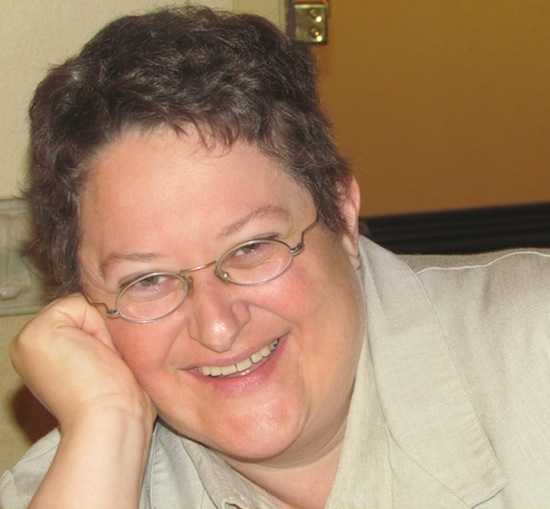
My friend Ibby

My beautiful friend Ibby.  Photo taken by Emma
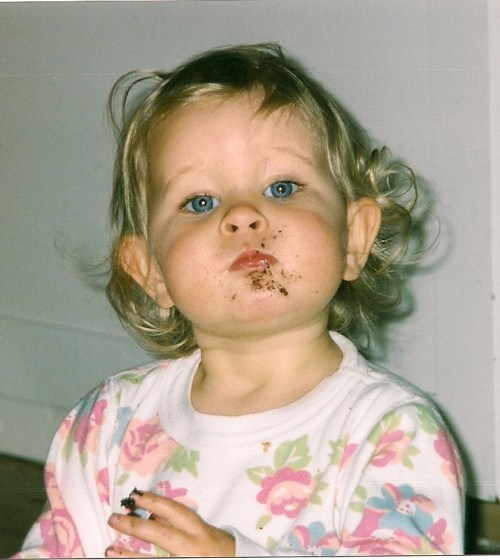
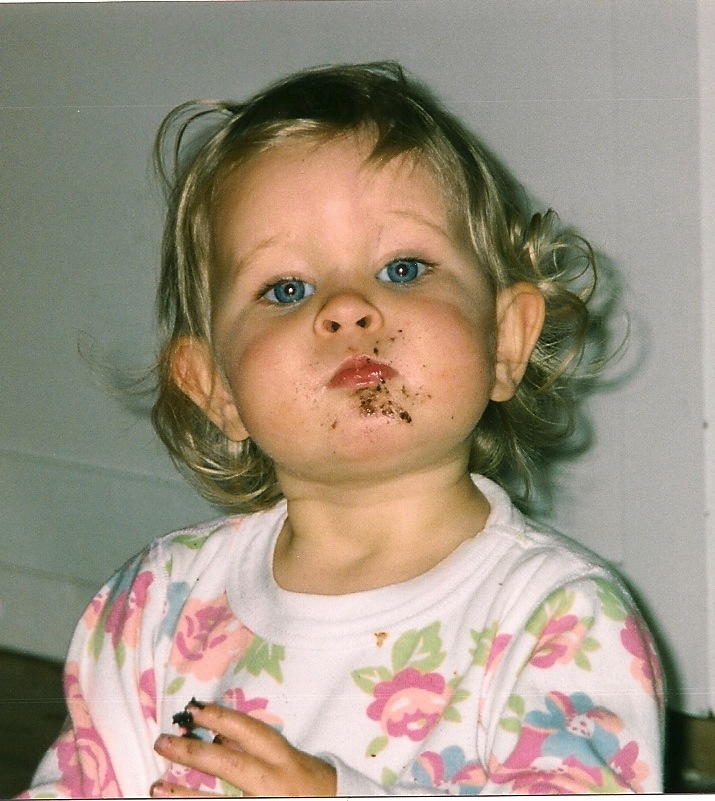
One of my favorite photos of Emma as a baby, because even then her personality shines!

One of my favorite photos of Emma as a baby, because even then her personality shines!

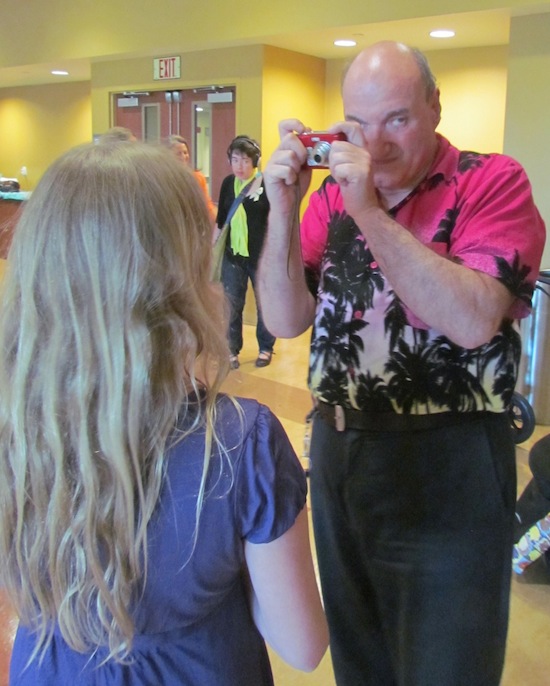
Larry Bissonette takes Emma's photograph

Larry Bissonette takes Emma’s photograph

Some Thoughts on Stereotypes and Empathy

Stereotypes are more problematic than not and yet most people, even though they may be unconscious of this, behave according to what they’ve been told or have observed to be true, even though it may not be true.  So, for example, if we are told Autistic people lack empathy, we will unconsciously be on high alert for any example of this.  In doing so, we behave in accordance with the very stereotype we are critical of.  In other words our own empathy suffers.

In the case of war, where we are fighting an “enemy” this type of stereotyping is actively sought and pursued so that those who are on the front lines can justify their actions.  We are told the enemy are “radicals” or “terrorists” or “fundamentalists” or “extremists” or unduly aggressive, thus justifying our own aggression toward them, which is seen as “good” and “necessary”.  Often we are told the enemy is deceitful, even “evil” or “bad”.  Stereotyping is usually negative, but not always.  It is a way to claim pride and feel a sense of belonging to one group, while seeing the other group as different, lacking understanding and often threatening.

To take this a step further, the people, usually a group of people who are not the majority, such as those who are being grouped into the “lacking empathy” category, may also internalize this idea and be on the look out for instances where they “lack empathy.”  And yet, most of us can find examples of this if we look hard and long enough, times when we have behaved in ways that would be seen as “lacking empathy”.

Empathy is both a feeling and the ability to sense another person’s emotions as well as imagine what they might be thinking or feeling, coupled with the ability to communicate all of this.  If communication is even remotely an issue, expressing one’s empathy will be difficult.  If you are in a country where the spoken language is not one you understood or know, its culture one you are not familiar with, would you be able to adequately express the empathy you felt in a way that would be recognized and understood?   Is it possible you would be misunderstood and labeled as something that you are not, simply because the cultural norms did not come naturally to you or you had not learned them and could not express yourself in a way that the other group recognized?

Additionally being on the defensive, feeling constantly attacked and criticized might also erode your ability to express yourself.  Feeling anxiety, judged, and ill at ease might put you on high alert.  It’s really tough to feel for other people when you are in a state of almost constant attack.  This is counter intuitive to all human beings regardless of their neurology.  But saying that those who are under almost constant attack (and for those of you who will argue that this is hyperbole, please know I am not suggesting every single person whose neurology is Autistic is feeling attacked, rather I am pointing out that many are and have been saying so for quite some time now) lack empathy is an interesting twist, exonerating one’s own actions and part in all of this, while holding another to a higher set of standards.

While stereotypes may help one identify with a specific group, they are largely negative and encourage assumptions that, more often than not, exclude rather than include.   I keep hoping we are heading toward a more inclusive society, but so many of the current debates suggest otherwise…

Emma, Mark Utter and Ibby at the ICI Conference - July, 2013

Emma, Mark Utter and Ibby at the ICI Conference – July, 2013

This post was inspired by yesterday’s post over on  Diary of A Mom, that Jess alerted me to.

Related Links from others:

Empathy as a Form of Communication by Michael Forbes Wilcox
Not Guilty by BJForshaw
I am in here by Mark Utter
The Sound and Worry By Arianna
Inventing Empathy by M Kelter

Demanding Speech

Over the weekend I witnessed a young man who did not easily speak and when he did say a word, it was clear how hard he was having to work for that one syllable.  Yet the people around him bombarded him with questions.   Questions he could not answer with spoken language, but that did not stop them from asking.  When he managed to make a sound resembling the answer they wanted, they would pause for a moment before asking him another question.  After about ten minutes of this he retreated into what looked like a sensory friendly room, where he rocked gently back and forth, holding his hands over his ears.  Even so, the questions continued.  

Another boy who was having his lunch was told during a ten minute time period to “look at me” more than a dozen times.  He too could not easily speak and was asked a great many questions.  Things like, “Is that good?” When he said, what sounded like, “Yes,” the other person said, “Look at me.  Stop.  Put down your fork.  Look at me.  Is it very good?”  When he again said, “Yes,” he was allowed to eat his lunch for a few seconds in peace before the next question came.

People often ask me why I object to ABA therapy.  It is not only ABA therapy that I object to.  It is ANY therapy that treats another human being as these very well-intentioned people were treating these young people, all of whom were teenagers.  I object to the way so many, who are in the field of autism are trained and how that training  affects how they speak to and interact with people who are autistic.   I do not, for a moment, doubt that they believed that what they were doing was good and ultimately helpful to the kids they were working with.  Yet each one of them was unconsciously or not, treating those kids as though they could not and did not understand what was being said to and about them.  The kids were not being treated as one would treat their same age non autistic peers.

On the Presume Competence – What Does That Mean Exactly – post I wrote, “What I have come to understand, is that a presumption of competence is much more than a set of beliefs, it is a way of interacting with another human being who is seen as a true equal and as having the same basic human rights as I have.”

What I saw was fairly typical of what I see often – well-meaning people who are working with autistic people, but who do NOT presume them competent, not really.  Had I said something to any of these people, I’m sure they would have expressed surprise with my observations of what they were doing and how they were interacting.  I would even guess that they would have told me that they were presuming them competent.  These were not mean people, they were not sadistic people, these were people who believed in the training they’ve been given and believed this was the best way to interact with these teenagers.

At one point the young man who was trying to eat his lunch, looked over at me and my son.  My son, smiled at him and I did a little wave and said, “hi.” He nodded his head ever so slightly at us and then the person who was paid to sit with him, asked him another question.  I do not doubt for a second that all the kids there were competent.  In fact I am convinced of it.  I know it to the core of my being as I have been around so many people who cannot speak, or who can speak, but not easily or naturally and who are all competent.  But this was not how they were being treated.  This idea, which is popular with a number of therapies, not just ABA, that we withhold desirable things until the person speaks as demanded, is not something I agree with because it is based in a presumption that wanting something is equated with ability and this is incorrect, even if it obtains the desired result – a verbal utterance.

Until Emma began to write, using her letter board, I had a great many thoughts about her that have proven incorrect.  Until she began to express herself through those words she painstakingly spells out, I was not treating her as the exceedingly  competent human being that she is, even though I often thought I was.  Even now, on any given day, I do not do this as well as I’d like to.  All those years of ingrained thinking are extremely difficult to change.  But change I must…

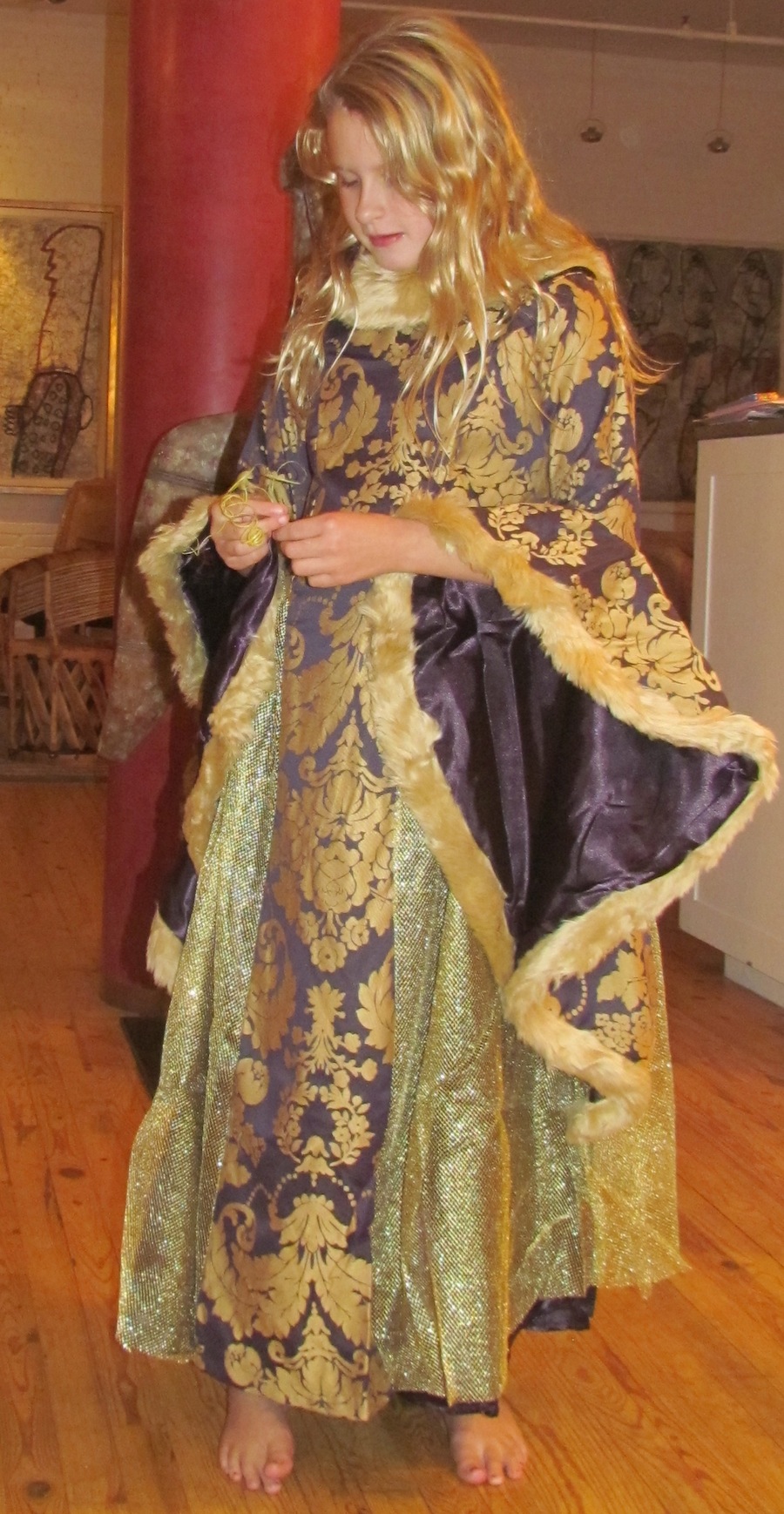
A Renassaince Princess

A Renassaince Princess

Separation Anxiety

In our ongoing “spring cleaning” (which never seems to end) I came upon a large spiral notebook filled with notes from the dozen or so ABA therapists who came to our home beginning in November, 2004 through August, 2005.  Emma was just two years old when all of this began.  It’s a fascinating document of that time period and it depresses me to no end.  Over and over the notations remark upon Emma’s “clingy-ness to Mom”, her “whimpering” and “despondency” when I would leave the room and her internal discomfort.

It is impossible for me to read the notes and not see an obvious pattern.  For a therapy that prides itself in collecting data, it is curious that this larger and, what seemed to me anyway, obvious pattern was largely ignored or, perhaps it is what naturally happens when we pathologize a neurology.  Emma’s desire to seek comfort and assurance from me, her mom, was seen as a negative, something to be trained away, something that was getting in the way of more important things.  It is ironic that this was being said about a young child who was diagnosed with autism, which has, according to all those experts, as one of its most defining characteristics, “social impairment” and an inability to form close bonds.

A two-year old not wanting to go off with a stranger is considered a “good” thing by most people.  That this same child would prefer being with their mother, even after getting to know someone else, would still, in most instances, be thought of as an excellent example of bonding and having a close relationship with one of the most important people in that person’s life – their mother.  After all, if you cannot trust your mother to protect you, to be there for you when you are two, how will you learn to trust anyone later in life?

Richard and I talk about “what we would have done” all the time.  Not as in – what would we have done if we could do it all over again – as much as, what would we do now if we had a two-year old today who was just like Emma.  And the first thing, the absolute first thing would have been PRESUME COMPETENCE.  That is the key, the foundation by which everything else would have been gauged.  This does not mean expecting a two-year old to understand, know and behave as a twenty year old.  It means we would have presumed she understood and felt what a two-year old is capable of understanding and feeling not less.

When Emma began her ABA based preschool in the fall of 2005, I was told to drop her off and immediately leave.  Yet when my non autistic son went to preschool they had a three-week “transition period’ in place where parents routinely stayed with their child, slowly reducing the time they stayed until eventually the child separated from their parent when they felt comfortable to do so.  Each child was different.  Some children ran off within the first few days, others needed more time, some needed several weeks, but no one said, “Leave now, even though your child is hysterically crying and clinging to your leg, it will be good for them.”  I remember asking about this at Emma’s preschool and being told they didn’t allow parents to stay with their child as this only prolonged the child’s suffering.  How is it that one method is good for one child, but not another?

Knowing how sensitive my daughter is and was, knowing how intensely painful this must have been for her, I can only sit here, filled with sadness that we just didn’t know better.  It was as though, when we got her diagnosis, all common sense left us.

So I am asking all my Autistic friends – What would have helped you when you were a small child?  Would it have been helpful to have your parent stay with you until you were comfortable and felt safe enough to go off on your own?  Would you have liked knowing your parent was there, even if you didn’t need to be right next to them?  What do you advise parents new to all of this?

OT session ~ 2005

OT session ~ 2005

“How Did You Learn To Read?”

A few days ago someone asked Emma, “How did you learn to read and spell?”  Last night, in response to this question Emma wrote, “I learned by watching the words my mom read to me.”  She went on to write, “I was able to read many years ago and could write, but didn’t have any way to show it.”

I asked, “Were you able to read as a very little girl?”

Emma wrote, “Yes.”

“As a toddler?”

“Yes,” Emma wrote again.

What is interesting about this is that for years, when Emma was very young, I assumed she didn’t like being read to because when I tried she would grab the book, insist on flipping the pages faster than I could read them, and generally seemed (to me) uninterested.  But from what she wrote last night, it suggests I was incorrect about these early assumptions or at least was partly incorrect.  I am no longer shocked by all that I didn’t understand.  It no longer surprises me to find out, even now, how wrong I was and continue to be about so much when it comes to my daughter.

Because Emma did not sit quietly while I read to her, I thought she didn’t like being read to.  Because Emma preferred holding the book and would turn the page before I had time to finish reading the words I assumed she wasn’t interested in the story.  Because Emma protested if I tried to take the book from her to continue reading, I assumed she wanted to be left alone.  Because Emma seemed distracted while I read, I believed she didn’t like the story, didn’t care for the book, didn’t like books in general.

How would I have viewed her various therapies, preschool, and later grade school, had we understood that she already knew how to read at such a young age?  Our decisions on how to proceed, our opinions regarding what others told us, so matter-of-fact, so sure of themselves… who knew how wrong they all were?   How wrong we were?

People say things like – parents know their child better than anyone.  In our case no one knew our child better than anyone.  We didn’t.  All those therapists who worked with Emma didn’t.  All her teachers, everyone who came in contact with her, not a single person during those early years ever said, “I’m guessing she already knows how to read” or “maybe she already knows, but we haven’t found a way to help her show us all she knows.”  Emma’s need to move, her inability to consistently say out loud what she intends, her deep need for sensory input, her attempts to regulate herself, none of that was understood by anyone, including us.

Had we not begun to find ways for Emma to communicate through the written word, had we insisted on her “speaking,” we would continue to be in the dark. All the things emphasized in  school for a child like Emma who is physically capable of articulating words made us believe spoken language was what we needed to concentrate on.  What we are seeing is that the less we focus on her speaking and the more we focus on her writing, the more she is speaking.

“Hey Em, do you want to put the smaller string in your backpack, just so you have it?” I asked as we headed down to meet her school bus this morning.

“N” “O” Emma said, as she bounded toward the elevator.

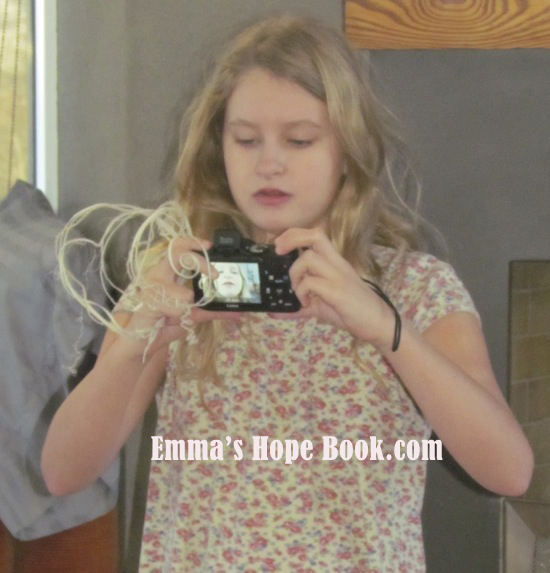
A self portrait in the making

A self portrait in the making

“Social Impairment”

“Autism spectrum disorder (ASD) is a range of complex neurodevelopment disorders, characterized by social impairments” ~ NIH (National Institute of Neurological Disorders)

When I first learned about autism, as defined by many organizations, I understood it to be a “disorder,” with “social impairments” being one of its defining characteristics.  As autism was also spoken of as meaning someone who did not and could not understand others, and that the very word “autism” stemming from the Greek word “autos” or “self”, suggested a person who had little interest in other people, I assumed this meant my child didn’t care about or want to make friends.

Add to this the unfortunate wording of what so many of our kids engage in – “self stimulation” – which to my ears anyway sounded vaguely  masturbatory, and as we live in a society tending toward the puritanical, self stimulation, even to my liberal notions, carried with it a decidedly negative connotation.  The word “stimming” is a bit better, but even so, I cannot get away from the sense that this feeds into those negative assumptions about intent and a lack of interest in connecting with others, which is still believed by a great many.

When my daughter described stimming as “self-care” (you can read that post ‘here‘) I  was filled with admiration.  Self care is such a wonderful way to describe what I see her doing.  Self care is not about rejecting others, but instead describes a way of regulating oneself so that one can engage with others.  This idea that autism means disinterest in other people, an idea so many have embraced, does not describe my daughter at all.  To the contrary, my daughter and so many of my friends who share her neurology care deeply and take tremendous pleasure in their various relationships, just as those who are not autistic do.  (That this last sentence is even necessary to write, demonstrates how far we have to go.)

This idea that autism characterized by “social impairments” is something that drives me crazy.  It isn’t a social impairment.  It’s a complete misrepresentation and misunderstanding of what autism means to those whose neurology is called autistic.  My daughter does not lack a desire for friendship or have a disinterest in other people.   Unable to often communicate what she intends, constantly distracted by things others cannot and do not necessarily see, hear or feel and a need to move her body in ways others misinterpret, it is no wonder “friendships” present a whole series of issues for her.

So many of the assumptions about autism, based on what non autistic people witness and believe they are seeing and the theories they then develop supporting these assumptions continues.  Assumptions, spoken of as though fact, with therapies devised to “help” what is assumed to be true and yet, is not, is based on a false premise.   But when we were given Emma’s diagnosis, I did not question these various theories.  I, as did so many others, took them at face value, believing that though there was much we still did not know about autism, these beliefs at least, were some of the things we DID know about autism and by extension autistic people.

Oh how wrong I was…

Emma holding Teddy

Emma holding Teddy With her String

When the Body Does not Obey the Mind

Emma gave me permission to quote her words, written this past Sunday.

“Please remember that my mind tells my body and my mouth to do all sorts of wonderful things constantly, but they don’t obey.

“Sometimes I want to scream.  I am trying so hard, but no one notices and they are annoyed instead of understanding.”

Emma wrote this in response to her gymnastics teacher, but it applies to so many instances where she confounds those around her by doing things she knows she shouldn’t, things she doesn’t want to do, doesn’t intend to do and yet does anyway.  Typically people assume she is doing these things because she doesn’t care, or is trying to be mischievous, or “wants attention” or any number of assumptions people make when witnessing her actions.  But in speaking with Emma, it is clear how incorrect these assumptions are.  As Emma wrote, “I am trying so hard, but no one notices and they are annoyed instead of understanding.”

Sydney Edmond is an Autistic young woman who describes herself as “… locked inside a body that won’t cooperate.”  Sydney published a book of poems, The Purple Tree and Other Poems.  Recently Sydney gave a lecture to a group of Special Education students and educators at a high school.  She generously gave me permission to reprint some of her lecture here.

“People need to know, because Society apparently thinks autistic people are lacking intelligence. Our wandering wayward eyes and hands flapping, screaming, and anxious stimming don’t help, either. But in truth, we polish our souls deep down inside where they can’t see us, while our dastardly bodies act in ways we can’t control. That’s right. I told you I have lousy control over my behavior. Can you relate? Perhaps you have moments when your body does things without your permission? When you lose control and shout at someone or hit out? Well imagine what it would be like if you were just the opposite, and were always out of control with little solid gold moments when all the pieces come together and knowledge passes impulse? For those moments we are the captain of our ship and we feel unbelievably perfect. But, passing time wipes it away. Possibility becomes disability again. Look at your fellow students with autism deeply and with patience. We are in here.  And we are exhausted, panicked, and lonely.”

Ido Kedar, who wrote the book Ido in Autismland writes about the body/mind disconnect he experiences, as well as the embarrassment he then feels when his body does not do as he wishes.

“I feel it’s time autistic people finally say what it’s like to be drilled in flashcards over and over when your hands don’t move to your thoughts, or to have your teacher say in front of you that you can’t count because your stupid hands refuse the right number you’ve counted in your head.  I remember standing miserable and embarrassed, holding the wrong number of straws and hearing my teacher say, “It’s clear he has no number sense,” as if I couldn’t understand or had no emotions either.  When I think of these frustrating experiences I am grateful I am not in that situation anymore.  But many of my friends still are.  That’s why I cry for them.”

Sydney Edmond, from her recent lecture, wrote:

“I found freedom and wonderful joy when, as a ten year old, I was taught how to point to letters on a Letterboard and spell what I wanted to say. I eagerly worked, and within a few months, I was able to communicate. In the beginning, I needed a lot of support. I couldn’t even point my finger when I wanted to. My body, as usual, did not cooperate. I had to force it to, so all my words, stored away for ten years, could finally come out into the world. Do you want to know what I asked for? Well, I asked to have my own pizza. And then I asked to learn ballet. And piano. And I asked to learn about history. I was thirsty to learn. I finally had a way to ask questions that let people know I was intelligent. Soon I learned how to type on a keyboard and have a lovely voice added to my words. I went back to school to prove I was intelligent. I had been tested and told again and again I had the intelligence of an infant. Having a method to communicate turned it around. My language comprehension was college level in 8th grade when I was actually given a means to show what I knew.

“Loads of us, people all over the world, type to communicate. I am one of many, and we all want people who cannot speak to have the opportunity we are enjoying. I hope that my words today might spark a willingness to proceed on the journey of a lifetime. I hope one of you will take action to give a voice to someone who cannot speak.”

Ido, Sydney and Emma all began writing to communicate by using a letter board.  All of them discuss what it is like to have a mind that “…tells my body and my mouth to do all sorts of wonderful things constantly, but they don’t obey.”  Each of them describes their experience, whether that includes frustration, embarrassment, or shame and what it is like to be so thoroughly misunderstood.

I am grateful to each for allowing me to reprint their words in the hope that others will begin to reconsider their assumptions and how they then respond.

"Happy"

“Happy”

“Put it on the Blog!”

“Put it on the blog!” Emma said with glee as she bounded into the house. A master at multi-tasking, she twirled her string, unzipped her coat and raced off to put on some music all within seconds of opening the front door.  I knew what she wanted to put on the blog.  She’d successfully completed a catch in Trapeze School that morning.  I knew it had been recorded.  So… here it is, for all of you to see.


Yesterday afternoon Emma wrote some pretty wonderful stuff about how her body and mind are often not in sync and what that’s like for her.  We taped some of it and once I have her permission and we’ve uploaded it, I will attempt to post it here.

Earlier I showed Emma a NYTimes article about the missing Malaysian Airlines jet leaving Kuala Lumpur heading to Beijing.  I asked Emma what she thought and she wrote, “It is terrible and worrisome for all of us.”  I then asked if she had any questions and she wrote, “Has anyone asked for anything yet?”  I asked her if she meant a ransom note of some kind, to which she answered, “yes.”

I write this as an example of the sorts of things we discuss these days and because there are some who continue to doubt Emma is capable of understanding such things…

When Time Stands Still

After publishing yesterday’s post, “So Many Kids Are Just Like Me” I added a video of Emma writing those words and more.  I hadn’t added it when I first wrote the post because Emma hadn’t given me permission yet and we were still trying to get the video uploaded, ran into problems with the picture being condensed and other issues.  In any case, for those who want to view it now, you can.  On a personal note, I’ll just add that this video makes me feel very squirmy because it does not capture the playfulness we usually have together, and I’m hyper aware of the anxiety I was feeling while we were taping…  Also the video does seem to be taking longer than it should to load, at least it is on my computer, but Emma has said she’d like to tape more, so I’m hoping we will get better at uploading as we continue.

My friend Alex commented on yesterday’s post about the impact of watching Emma write, as opposed to reading about it.  It was exactly for this reason that we decided it was important to post the video.  There is nothing like seeing in real-time another person writing this way.   No amount of words, no matter how well phrased can describe this process the way watching it in real-time does.

I will never forget that moment at the Autcom Conference in 2012 when I watched a boy, younger than Emma is now, write such insightful and profoundly wise comments  that his mother then read out loud during a presentation.  It was that moment when I thought to myself – maybe, just maybe my daughter has thoughts like this, and we just have to find a way for her to express them.  It makes me cry with gratitude thinking about that moment not so very long ago.  No one could have convinced me then that just a year and a half later we would be where we now find ourselves.

It is inevitable that there will be people who say things like, “well it takes too long” and  “how can this work in a class room?”  But as a parent who has wanted nothing more than to know what my daughter was thinking, who believed despite what the majority of people believed and were telling us that maybe, just maybe they were wrong, watching Emma write is when time stands still.  The excitement I feel when she begins to point to a letter is like nothing I’ve ever experienced.  Each letter she points to is a tiny gift wrapped in beautiful paper, as the paper peels back to uncover the word inside the world and everything in it stops.  It is a sensation like none other.

To my daughter, who works so very hard to accommodate my need to hear her experience of the world put into words, I thank you.  Every single time you do, even though you feel it’s tedious, I thank you.  Gratitude does not come anywhere near my feelings.  There are no words for this.  And I know this is a tiny glimpse into what you, Emma, feel every time you are asked to put into words your thoughts.  Words can’t come close…  finally I understand…

Em & Ariane on New Year's Eve ~ 2013

Em & Ariane on New Year’s Eve ~ 2013

“So Many Kids are Just Like Me”

“I am smarter than most people think.  So many kids are just like me.”

Emma wrote this yesterday in response to my question, “What would you like teachers, who want to teach Autistic kids, to know?”

There are a number of young people who write to communicate things that they cannot with spoken words, just as Emma does.  Many of them are starting blogs of their own, some have parents who have blogs and like Emma they are beginning to take ownership of those blogs.  On the “Resources” page here on Emma’s Hope Book I’ve listed a great many blogs beginning with those written by non-speakers, or people who write to communicate.

When Emma wrote “so many kids are just like me” I thought about how when Emma was diagnosed I knew of none (of any age) who wrote to communicate.  The entire concept was completely foreign to me.  In fact, and I hate admitting this, I hadn’t spent any time considering neurology, literacy, language, or which parts of the brain process language.  I remember being confused by the idea that someone who didn’t speak, could still read.  I’ve come a long way!

I would like to take the opportunity to list here just a few blogs that I personally know of where people around or near Emma’s age are writing to communicate.  This is by no means a comprehensive list and I welcome any additions, which I will add here and on the resources page as they come in.

Oliver – Day Sixty-Seven
Philip – Faith, Hope and Love… With Autism 
Aidan
Cindi’s Blog
Henry Frost – Ollibean
Matteo – Matteo’s Loving Blog
Ido – Ido in Autismland
Joey Lowenstein
Nick – Teen Typer

“So many kids are just like me…”

Emma with her friend Henry ~ January 30, 2014

Emma with her friend Henry ~ January 30, 2014

I Used to Believe…

The degree of arrogance displayed by more than a few who claim to be “experts” with decades of hands on experience in the field of autism is absolutely staggering.  Their arrogance is only rivaled by their mindset of assuredness. They are unwavering in their absolute knowing about a neurology that continues to baffle the best neuroscientists in the world.  These practitioners not only speak from a place of “authority” they are imperious, contemptuous and profoundly scornful of any who suggest they might want to consult with a few people who are actually living their lives with the neurology these so-called experts claim to understand and know all about.

We have run into more than a few of these professionals over the years.  These are the people who fill me with fear.  They come into contact with hundreds and thousands of children over their decades of “expertise” and it terrifies me.  They win grants and are paid to speak at conferences.  Their opinions are sought by a great many.  They swagger about with their self importance, wearing their years of working with the Autistic population as though it were a badge of honor.  They think nothing of grouping an entire neurology into a small, convenient box labeled “autism”.

They smirk and posture and plaster their walls with their many credentials and degrees.  They make sure everyone understands exactly how many years they’ve been working in the “field.”  They say things like, “autistic children are…” accuse those they disagree with of “falsehoods” and go on at length about how they know what “autistic children” want, need and care about.  They are profoundly dismissive of those who actually ARE Autistic and who dare question or disagree with them.  Instead of listening to the very people they claim to know so much about, they silence with words of contempt.  They attack.  They strike out, bring in reinforcements of like-minded colleagues.  Sometimes they even target someone, almost always someone who is autistic, and try to do damage to them by contacting their employers, or those they have professional contact with.

I used to be shocked that such people would choose to be in a profession where the people they are supposedly wanting to help, end up being the very people they silence and hurt.  It used to surprise me when I would read comments by people who have no trouble using language either written or spoken to get their point across, dismiss and question someone who does not enjoy the same ease with which they do, to communicate.  I used to be naive enough to believe those calling themselves an “expert,” and had degrees suggesting study and dedication in their given field was further evidence of their title.

I used to believe in a great many things.

*This post is not about any one person, but about the dozens of people I’ve met over the years who fit the above description.  There are many people, both autistic and non autistic, who have dedicated their lives to autism, who (thankfully) do not fit this description.  They are open to new ways of thinking, they are actively listening to those who have different experiences than their own.  All of them are engaged in learning, discovering, uncovering more information and examining what they think.  They are operating from a place of humility, and to those people I am profoundly grateful.

facts
Related posts from others:

Cart Before the Horse Research ~ By Michael Forbes Wilcox