Tag Archives: Autism

A Word of Thanks

Em and I are traveling again, so after publishing Emma’s post debut, and what a first post it was (!!!!), for the “This is Autism Flashblog” we got on an airplane.  As we didn’t get to our hotel until after eight in the evening, we didn’t read all the lovely comments so many of you left until quite late.  Thank you.  As a parent it means a great deal to have such an outpouring of support and encouragement for Emma’s first post, particularly as it was a post that was incredibly personal.  Emma wrote, “Thank you everyone”  before falling asleep.

The flashblog has almost 250 posts at the moment.  It was a wild success and shows the range and complexity of views about what exactly “autism” is.  Anyone who hasn’t gone over there to read what others had to say, I encourage you to  spend some time doing so.

There is so much I want to say about the flashblog, autism, grassroots protesting, being the parent of a child whose neurology I do not share, but have overlaps with, functioning labels, how we can all influence change, how the more of us who join in, the quicker these shifts will occur, why I keep showing up here day after day instead of sleeping for another couple of hours, but I don’t have time this morning as we have an appointment in another hour that we cannot be late for.

Thankfully I had the foresight to opt for a GPS system on our rental car and do not anticipate getting lost as I did the last time we made this trip.  As a testament to this decision, Emma did not once shout from the backseat, “Oh no!  We’re going the wrong way!” last night, for which I am extremely grateful.

The adventure continues!

Em

This is Autism (Written by Emma)

*A quick note on today’s flashblog ~ This is Autism.  In response to Suzanne Wright’s upsetting and fear-inducing letter entitled A Call for Action  a Flashblog has been organized to take back the phrase “this is autism”, which Suzanne Wright used several times in her letter that was posted on Autism Speaks’ website, the organization she and her husband Bob Wright created eight years ago.   Suzanne and Bob Wright and their organization’s beliefs are exactly what I hope my daughter never sees, hears or is confronted with, but that she feels the repercussions from on a daily basis.

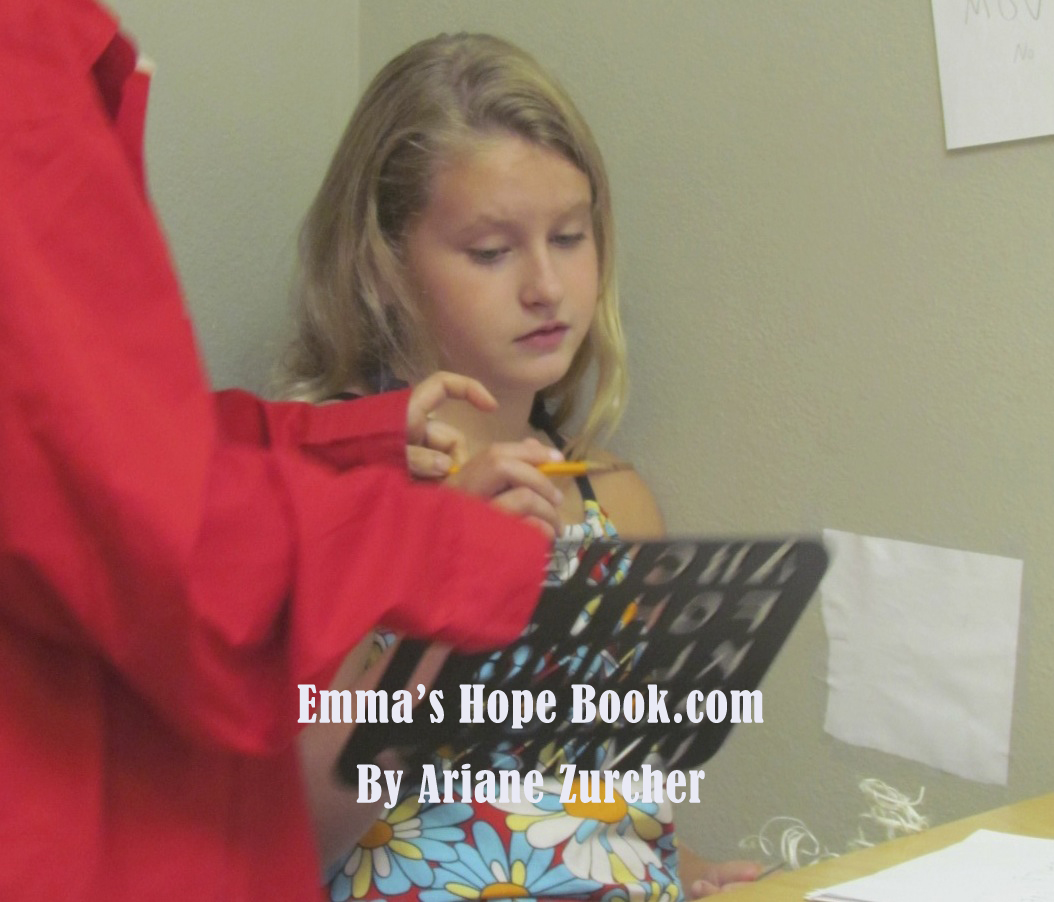
I asked Emma if she wanted to write something for today’s post with the title, “This is Autism”.  She wrote that, yes, she did.  The following is what my daughter wrote, pointing to one letter at a time on a stencil board with a pencil.

This is Autism

Autism is anything.  

It is not bad,  

it is a mindset.

Autism is a method of energy,

it is how I think.

Autism is derided and except in some accepting eyes,

it is seen as not a nice thing,

but

it is me.

*Em

A Guest Post From Richard Long…

What follows is a guest post from my husband, Richard Long

After Ariane’s post What’s Wrong With Autism Speaks yesterday, I thought I’d throw my three cents in here. I didn’t know ANYTHING about autism when our daughter Emma was first diagnosed–except that it was BAD, very BAD and that I should be terrified. My wife went out and read most of the books written about autism at the time, mostly written by parents of autistic children documenting their torturous journey, many about the miracle cure they found that “cured” their child.

Like most guys, I Googled my ass off to try and bottom line the situation. And the news was BAD. My child was probably incapable of feeling empathy, of understanding sarcasm, of connecting with other people. Wow. Since Emma was making very little eye contact at the time and was not interested in cuddling or hugging, I thought this all had to be true. Poor Emma. Poor Ariane. Poor me.

I was told life would be difficult. Meltdowns, speech and language processing issues, OCD symptoms, toilet training. I watched horrifying videos like the ones made my Autism Speaks, (I won’t post links here, but they are on the other posts I linked to earlier if you want to get the crap scared out of yourself as well). I was told that a cure may be possible if we ponied up enough $ to Autism Speaks or TACA, so I opened my wallet. I was told about other miracle cures from casein-free, gluten-free diets, hyperbaric chambers, even stem cell therapy! We actually tried them all. We were so very desperate to “save” our daughter.

Then a true miracle happened. Ariane discovered the blogs of adult autistics who were telling a very different story. They DIDN’T want to be “cured.” Autism was part of who they were, as integral as any other component of their personalities. We were told that there were many advantages of autism: heightened senses, high intelligence, great analytic capabilities. I discovered all the famous inventors who were probably autistic.

Most importantly, we learned that what you see isn’t necessarily what you get.

We thought our daughter couldn’t understand what we were saying. Why? Because A) she didn’t react like she was listening B)  she didn’t comment on what we were saying C) she never spoke about things like that herself and D) she didn’t seem capable of very much speech at all. But now that we have found new communication systems, it turns out Emma understands EVERYTHING we are saying and has AMAZING things to say about her world. She is HIGHLY intelligent (I suspect she is more intelligent than me). Her sense of humor is incredibly sophisticated. She thinks about some things we never considered at all and sees things in such a creative, unique way.

Live and learn. It took us SEVEN YEARS to realize these things. During that time, we really did think of our lives as tragic. And now I can see how much better all our lives would have been if we had received the right information about autism from the very start. Information that came directly from autistic people, rather than people who claimed to “Speak for Autism”. Information from the parents of autistic children who had also discovered the truth about autism from adult autistics. Parents who weren’t looking for a cure, but instead trying to help their children communicate more effectively and deal with the other issues that make life difficult.

It’s a brave new world for us. Thank god. “Better late than never” I keep repeating to myself. But better yet, my hope is that all children who are born autistic are lucky enough to have people around them who actually understand what this means, that don’t look at this as tragedy, who are ready to help in the best ways possible because they have truly useful information available to them.

And I have never seen any useful information come from Autism Speaks. Then again, if they had said something useful recently, I wouldn’t know because I stopped listening to a group that never speaks with the voice of actual autistic people.

Speaking of which, yesterday Emma had another writing session, which Ariane will post in full on her blog tomorrow. It is mind-blowing so don’t miss it. Here’s a preview: In the session before last, Emma was taught about an inventor of oil pumps for train steam engines. At the end of that session the teacher asked Emma to think about what she would want to invent. So yesterday the teacher asks her what would be a really great thing to invent. Emma’s response:

“Let me tell you that it is not a train engine.”

What is it then?

“It is more from the future. It is a spaceship.”

I can’t wait to show her my UFO videos tonight.

Summer 2008 ~ Richard, Em and Ariane

Richard, Em & A

What’s Wrong With Autism Speaks?

When my daughter was diagnosed, we heard about Autism Speaks.  Their message supported everything else we were reading and hearing about autism, so I didn’t spend much time thinking about what they were saying or who they were involved with or even what they were doing with all the money they received.  In fact, we gave money to them during those early years.  When friends and family asked who they should donate money to, I encouraged them to give to Autism Speaks.

“Autism Speaks has a long and continued pattern of exclusion of Autistic voices from its work on autism. As an organization without a single Autistic person on its board of directors, Autism Speaks is the last group our nation’s leaders should be entrusting with the creation of a “national plan to address autism”. ~ ASAN (Autistic Self Advocacy Network)

“No reasonable person would dare suggest that an organization comprised entirely of men represents women’s interests or that an organization led entirely by white people represents the interests of people of color, yet the same standard evidently does not apply to disability organizations despite the existence of many cross-disability and autism-specific organizations led by actually disabled people.” ~ Lydia Brown,  Autistic Hoya

I didn’t know.

“Only 4% of Autism Speaks’ budget goes towards the “Family Service” grants that are the organization’s means of funding services.” ~ ASAN, Before you Donate to Autism Speaks..

“Their slogan is “Autism Speaks to Washington.” It is neither “autism” nor Autistics who are doing the speaking, though.” ~ Paula Durbin-Westby

I didn’t know.

Autism Speaks has aligned themselves with the Judge Rotenberg Center, (read Autistic Hoya’s:  An Unholy Alliance) a center that uses electric shock as an “aversive”.   The Judge Rotenberg Center continues to accept “students” despite this video footage showing a young man being tortured.

For more about the Judge Rotenberg Center read Autistic Hoya’s post with dozens of links ‘here‘.

Bob and Suzanne Wright, whose grandson is Autistic created Autism Speaks in 2005.  Since then Autism Speaks has become one of the most influential autism organizations in the world.  What Autism Speaks does and says is often the first thing parents and people reading about autism hear.

“If three million children in America one day went missing – what would we as a country do?

If three million children in America one morning fell gravely ill – what would we as a country do?

We would call out the Army, Navy, Air Force and Marines. We’d call up every member of the National Guard. We’d use every piece of equipment ever made.

We’d leave no stone unturned.

Yet we’ve for the most part lost touch with three million American children, and as a nation we’ve done nothing.”  ~ Suzanne Wright’s  A Call to Action

The problem with this kind of rhetoric is that it is not a “call to action” it is a call to terror.   Terror that our children are “missing,” or have been “stolen,” or that if we are not careful any of our children will be “taken away” from us.  It furthers the misconception about autism and likens it to a predator, a kidnapper who will steal our children from our loving arms.

This is not awareness, this is propaganda.

Autism Speaks is responsible for a number of public service announcements which show screaming children and their exhausted parents who talk to the camera about how hard it is to have an autistic child while those same children are present.  I might have been one of those parents not so long ago.  In fact I allowed a camera crew to come to our home several years ago and film us.  The short film showed us sitting on our couch talking about our daughter as she sat beside me, (not realizing my daughter understood everything that I said, this is yet another of my many regrets) intercut with clips, I provided them with, of my daughter in full melt down.  I have since asked that our interview and all clips of my daughter be removed and I am grateful they respected my wishes.   The parents in the Autism Speaks videos are not so fortunate.

So many of us have supported organizations we thought were working toward positive change.  We believed they were helping us, our children and Autistic people.  We thought they had our children’s best interests in mind.  We believed they were doing good, only to find we were wrong.

I didn’t know.  Now I do.

Related Articles by Autistic people speaking out about Autism Speaks:

John Elder Robison – I Resign My Roles at Autism Speaks
Wikipedia – Talk: Autism Speaks/Controversy links
Golden Hearted Rose – So, What’s the Problem with Autism Speaks?
The Caffeinated Autistic – Why I am Against Autism Speaks
Evil Autie – This is Autism Speaks
One Quarter Mama: Why I don’t like Autism Speaks
Initiative Action

Facing the Skeptics

It’s snowing.  In New York City.  Right now.

“Look Daddy!  It’s snowing!”  Em said this morning.

There’s nothing particularly spectacular about that comment, except to us, it’s not only spectacular, it is exciting and yet another example of how my husband and I continue to underestimate our child.  (This is less a criticism of us and more a statement of fact to illustrate a larger point.)

“Em, do you know who the president of the United States is?”

“Yes,” she spelled out.

“What is our president’s name?”  I asked.

“Barak Obama,” she spelled.

“Do you know our vice president’s name?” I asked, thinking this might be taking things too far.

“Yes,” she spelled again.

“What is the name of our vice president?” I asked.

“Biden,” she wrote matter-of-factly.

“Communication is the most essential use to which spelling should be devoted.  It should not be used as a test or an exhibition piece.  Try being confined to a sentence a week and see h ow you feel about using that sentence to answer some stupid question about whether you live in St. Nicholas.  If Rosie had spent all her time giving tests we would not have had time to use spelling for our own communication.  Crushing the personalities of speechless individuals is very easy: just make it impossible for them to communicate freely.” ~ Anne McDonald from the book Annie’s Coming Out

This is what we are striving toward.  Annie’s comment here is one I have read and reread and yet find so difficult to apply because I am in a near constant state of disbelief when it comes to all that my child is capable of.  I write often about presuming competence, I write about how we dehumanize Autistic people with the language that is commonly used to describe them.  I write about how important it is to treat all people as equal.  I talk about human rights and how the rights of those who are Autistic, particularly those who do not speak reliably or at all, are dismissed, ignored or simply not acknowledged.  And yet I underestimate my child’s ability constantly and without meaning to.

On a daily basis she writes something that blows my mind.  EVERY DAY.  Read that again.  Every.  Single. Day.  It’s like living in an alternate universe.  Every day I feel excited to know what the day will bring.  Every day when I sit down with her I am prepared to feel that mixture of excitement, surprise and overwhelming gratitude.  Every day I think, will I ever stop being surprised?  How long will it take?  I don’t know.  But here’s what I do know – everyday I am overcome with emotion, respect and profound joy in  all that is my daughter.  I am sincerely grateful to read what she tells us, and grateful to all the people who have made it possible for her to do so.  Grateful doesn’t cover the emotions, but it’s the best I can do at the moment.

Yesterday in her *RPM session (follow this link to read more about RPM, which is not the same as FC or facilitated communication, though there is some overlap in that they both presume competence and treat the person with the respect most of us take for granted) she was asked, “What else has an engine?”

Emma spelled out, “Lets say leaf blower.”

My smile was like the Cheshire Cat’s, from ear to ear.  Leaf blower?  I LOVE that!  And later she asked for a clarifying question and then wrote a wonderful answer to a question about what changed once we began using automatic train engines.

“Until I could prove that they were intelligent nobody would come and assess them.  Guilty until proved innocent.  The children were profoundly and hopelessly retarded until they could prove they were intelligent.”  ~ Rosemary Crossley from  Annie’s Coming Out

“It was simply too threatening; my discovery questioned the basic assumptions on which care was offered…”  ~ Rosemary Crossley from Annie’s Coming Out

My daughter is one of hundreds of Autistic people who are writing and typing to communicate and in doing so she is proving every day how extremely gifted she is.  We are at the very beginning with all of this.   There are others who are far ahead of us, those who have published their thoughts, with more being published all the time.  Incredibly, what Rosie experienced, those deeply held prejudices back in the 1970s, continue to flourish today, now more than thirty years later.

“This was one of our standard problems:  people who doubted the children were always so sure of themselves that they openly expressed their skepticism in front of them.  It did not occur to them that if they were wrong they were terribly rude, and that they were making it very difficult for the children to respond to them.  How do you talk to someone who tells  you that they are convinced that you cannot talk?  What are they going to ‘hear’ when you try to talk?” ~ Rosemary Crossley from Annie’s Coming Out

We are living in a time when more and more parents, educators, people who work with Autistic people and Autistic people are facing the skeptics.  We are offering continued proof of our children’s and Autistic people’s intellectual gifts, indisputable evidence of all they are capable of.   My daughter is but one of a great many.  As long as she gives me her permission, I will continue to report some of what she is saying here while hoping that one day soon she, and others like her, will no longer be placed in  the insulting position of having to prove their vast intelligence, and themselves, to anyone.

Rosemary Crossley and Anne McDonald

Unknown

The Purple Tree

The Purple Tree and Other Poems is a collection of poems by Sydney Edmond who is non-speaking and autistic.  She learned how to write using a letter board when she was ten-years old, two years later she gave her first public presentation  and has presented at a number of other conferences since then.  Now ten years later, Sydney continues to write, present and is the subject of a documentary called, “My name is Sydney

“Lazy, achy lady
lived by the sea.
Lazy, achy lady,
move away, please.

You are always blabbing,
talking long and loud.
You are closing in on
my lovely little cloud.” ~ From the poem, Some Early Poems

One of the most exciting things happening now is the emergence of a growing number of non-speaking Autistic people who are writing.  Thankfully self-publishing and blogs are making their work accessible to the public.  As more non-speaking Autistic people write and publish their work, it will become increasingly difficult for the public to deny that the assumptions we have long-held about Autistic people are incorrect.  Eventually we will have to re-evaluate how we are viewing those who are Autistic and what that actually means.  Our notions of “intellectual disability”, our ideas about what someone is or is not capable of are being challenged and will continue to be until what we think we know now, what is considered common knowledge will be seen as antiquated and our limited assumptions an example of just how ignorant we once were.

“I lack the lovely peace of mind,
lack my always smile.
Who listens to a lonely girl,
Listens to a child?”  ~ From Dear Friend

The first presentation Sydney gave was in 2005, just two years after she began communicating on a letter board.  This poem, Love, Love, Love! was part of her presentation at the West Coast Symposium on Facilitated Communication.

“But Soma came along
and changed my life.
She actually lifted poor little me
out of darkness
and into light,
love,
and lovable, lovable, lovely happiness.

Soma taught Mom
how to communicate with me,
and Mom and I have been talking
ever since.
Now I can choose my own clothes,
make my own decisions,
and make lovely friends out of people.”

For those of us with children who do not speak or whose language is unreliable, or does not necessarily reflect what is meant or intended, we are entering a time of tremendous hope.  There is a great deal of work still to be done, but in publicizing the work of those who are like our children, who are communicating by typing and pointing to letters on letter boards, we will shift how people view not only our children, but all our children and people.  By questioning commonly held beliefs about any one group of people we affect change for all mankind.

Unknown

What I Want For My Children

As a parent I want to protect my children.  I want to shield them from hatred and cruelty and the kind of rage that leads people to abandon their principles in favor of power.  I want them to make mistakes, dust themselves off, learn from them and not be crushed by them.  I want to protect them from self-hatred.  I want to protect them from pain.  I don’t want them to suffer.

I want them to flourish.  I want them to know happiness, and the beauty of falling in love.  I want them to know the immeasurable joy friendship brings.  I want them to feel that indescribably delicious sensation of doing something for another human being, not because it’s expected, or because they’ve been asked to, or because they will be thanked or appreciated, or because they expect anything in return, but because it’s “right” to do so.  I want them to understand, truly understand what it feels like to believe in themselves, to feel good about who they are and what they can accomplish in this life.  And I want them to realize the connection between giving and generosity and having self-respect.

I want them to have options in life.  I want them to have the space, energy and luxury to find the things that captivate them, and I want them to be able to follow those interests.  I want them to know that when they are fearful, they will not be consumed by it.  I want them to be secure enough to stand up for themselves, to push back, to say no when they see others doing things they disagree with.  I want them to have that option.  I want them to feel the joy of being consumed by an interest.  I want them to know what it is like to be in this world and to feel safe, that wherever they are, they are not alone.

I want them to know they are loved and cherished.  I want them to know they are unique and yet the same as everyone else.  They are not superior, nor are the inferior, they are one of many, yet each has something special to contribute to mankind and this world. As a child, we used to go camping and my father would instruct us to pick up any trash we found.  We would strenuously object.  “Why do we have to pick up other people’s trash?  I didn’t leave this garbage here!”  And he would always say the same thing, “We leave a place better than we found it.”

This is what I want for my children.

“The greater danger for most of us lies not in setting our aim too high and falling short; but in setting our aim too low, and achieving our mark.”
Michelangelo

Framed Sky

“It’s Good to Be Heard”

It’s good to be heard

These are the words my daughter spelled out yesterday during an RPM session.  She wrote some other wonderful things too, but I don’t have her permission to print them here.

“It’s good to be heard”

Imagine a life where it was not a given that what you said would be listened to, or even understood.  Imagine if you said things you didn’t mean or that people couldn’t follow the meaning and so you were dismissed.  Imagine being treated “like a three-year old” (this was something else my daughter wrote last week) by people who do not understand, cannot understand, are incapable of understanding because it flies directly in the face of all they’ve been taught and know.  My daughter does not have the mind of a three-year old, despite what anyone else may think or assume.

“It’s good to be heard”

Thanks to a number of dedicated people who have devoted their lives to figuring out alternate ways for people to communicate who cannot or do not reliably speak, my daughter is communicating with us.  Much to our surprise she has managed to learn an enormous amount despite the fact that she has spent years of her life in little more than holding tanks, i.e. special education schools where “life skills” classes are lauded as progressive, where verbal speech is seen as the only true barometer by which intelligence can be gauged.

It’s good to be heard”

RPM copy

Controversy and Commenting

Yesterday I quoted Ido Kedar, whose book, Ido in Autismland is his account of what it’s like for him as a non-speaking, Autistic, teenager.  The quotes I used were specifically about his experience with ABA, the acronym for Applied Behavior Analysis.  (Ido also has a blog of the same name.)   A couple of people accused me of “falsehoods” and spreading “inaccurate information”.  One person wrote, “I have never read so falsehoods in one post in my life.  You clearly have zero understanding of ABA or the methods used in its approach.”  Except that the bulk of the post he was objecting to was made up of quotations from Ido’s book about his experiences as an autistic person.

I asked for clarification and was told, “Falsehoods being projected do not need to come as a quote from you directly. This is your blog and you are the one responsible for providing accurate information. If you are going to show a quote from a student, then maybe you should also factor in that the particular therapist the student had was not a very skilled one or a qualified one at that.”  Except to make such a claim that “this particular therapist was not skilled or qualified” would be inaccurate and something I cannot possibly know as I’ve never met the therapist being referred to.  Evidently telling a lie is acceptable if it’s done so in favor of another’s opinion, however quoting someone’s firsthand experience is reason to be accused of creating falsehoods.

Another commenter wrote, ” The posts regarding ABA on this blog are grossly inaccurate. Unfortunately, the author of this post (and subsequent commentary) are so misinformed on the topic that they are not able to recognize exactly how inaccurate the information is. For those of us who understand the field, this can certainly be frustrating.”  Except that so many being referred to and who were commenting are Autistic.  In fact a couple of those who commented yesterday are teachers and work directly with Autistic children, one is a professor and teaches disability studies to special education educators at the university level.  These are a few of the people this commenter believes to be “misinformed” and even went so far as to scold, “I urge you to become better informed on the topic.”  It would have been comical had it not been so upsetting to read the condescending tone and level of rage this one post and comments inspired.

I’d like to clarify a few things…  Let’s take ABA out of this, I do not care what the “therapy” is being called, if it is not respectful of the person it is meant to help, if it uses dehumanizing techniques such as electric shock, restraints, isolation rooms, repetitive testing requiring the person to master an action before being allowed to move on, it is not a therapy I will ever support.  If a therapy is meant to teach compliance, teach someone whose neurology and sensory issues do not make sitting still simple or easy, who cannot listen, attend and make eye contact all at the same time, I question it’s objectives.  If a therapy is looking to “fix” another’s neurology, make that person “indistinguishable from their same age neurologically different peers” I will continue to speak out against it and will encourage others to do the same. If the therapy in question does not presume competence at its core and does not take into account the person’s specific neurology and sensory issues, it is flawed.  If these ideas are threatening to some, so be it.

So let’s stop talking about ABA specifically, because it seems to me the conversation continues to get derailed about what ABA is or isn’t, how some practice it or do not, how it has or has not evolved, instead, let’s discuss these other concepts.  And if you believe something that goes against what I’ve just said, fine, quote me in the comments section, tell me why you disagree, back up your ideas with examples, preferably with words from Autistic people and I will happily listen.  Accusing me of “falsehoods”, “inaccuracy”, being condescending, lashing out and making personal attacks are not comments I will allow through moderation.

Colin sent me this graphic, something I think we can all relate to…

923025_522914117804644_1130511149_n

More On ABA

I finally did something I’ve never done before.  I’ve closed down any further comments on a post I wrote about the ethics of ABA.  I continue to get up to thirty views on that post daily, now over a year later.  Most of the comments are coming from ABA therapists who write in defense of ABA, which is fine, except most of them are saying the same thing and my response is also to repeat what I’ve said before, but I’m also getting comments from people who are furious that I dare suggest ABA is anything but wonderful, so instead of endlessly repeating myself, I have shut comments down, just on that post.

If you are an ABA therapist, it is your obligation to, at the very least, read what those who are autistic and were given ABA as children are saying about it.  If nothing else, please read Ido Kedar’s book Ido in Autismland where he describes what it was like to be a non-speaking autistic child, with a body that does not do as he would like, and who was given hours of ABA therapy every day for years.

Ido writes:

“It frustrates me to look back at how my ABA teachers drilled me endlessly in basic skills only to say it wasn’t mastered because I had inaccurate pointing.  I knew everything so easily.  I was bored to tears but my apraxic hands would go to the wrong card so they thought I didn’t know “book” or “tree”.  I did it over and over.  It was the worst.  The assumption that people don’t understand if they reply incorrectly is a huge misconception.  ABA is built on this erroneous premise.”

Again from Ido in Autismland:

“My ABA teachers would talk baby talk and tickle me to reward me.  I cared that they see me as smart, so I tried, but I think it was pointless.  I often felt that they couldn’t see my potential, just the drills.  I feel it’s time autistic people finally say what it’s like to be drilled in flashcards over and over when your hands don’t move to your thoughts, or to have your teacher say in front of you that you can’t count because your stupid hands refuse the right number you’ve counted in your head.  I remember standing miserable and embarrassed, holding the wrong number of straws and hearing my teacher say, “It’s clear he has no number sense,” as if I couldn’t understand or had no emotions either.  When I think of these frustrating experiences I am grateful I am not in that situation anymore.  But many of my friends still are.  That’s why I cry for them.”

Regarding eye contact, Ido writes:

“I can listen better if I don’t look at the person.  I can look, but it’s not pleasant.  In ABA I had to look in people’s eyes with a timer.  It was so torturous I did it, but with terrible anxiety.”

Anyone reading this, I hope will be asking themselves what the objective is to insist someone “look at my eyes”.  Would we prefer someone looks at us and pretends to listen to what we’re saying or that they listen?  If someone is not able to do both, is there any point in insisting they do so anyway?

Again in Ido in Autismland:

“In ABA supervision I had to do drills in front of a supervisor with all my teachers.  Then they’d talk about me in front of me to decide how to improve my performance.  It’s miserable to be an object of study especially because they never realized I understood what they were saying.  The consequence of testing me in front of people is that I grew embarrassed and ashamed inside.  By analyzing me in front of me, usually wrong, I grew resentful.  It was so frustrating I don’t like remembering it to tell it now. It’s over for me, thank God, but not for other kids so I have to share this to help them too.”

Rather than continue to quote Ido’s book, I urge you to read it.  This is one person’s experience, but it is also an experience that a great many have said they understand and had as well.  For those who believe in ABA’s benefits, I just ask that you consider Ido’s words, echoed by so many.  There is no “winning” this argument.  All of us have, I believe, similar goals, and that is to do what proves most helpful for our children.

slide-1-728

The Way We Treat Others

There is no other life than this one.  It doesn’t matter what one believes regarding death and the after life, this is the one life we have, right here, right now.  How will we live it?  What we do, what we say, how we behave in this moment is indicative of how we do anything.

I’m reading Rosemary Crossley’s first book, Annie’s Coming Out, which she wrote with Anne McDonald and was made into a movie in the 80’s, released in the US under the title, “A Test of Love.”   (As a side note, I find it interesting that the book’s title places Annie as the protagonist and yet the US film title suggests the therapist is.  By the way, I’m one of the people who believes both Anne and Rosemary were/are heroic and have nothing but tremendous respect for both.)

“Children, even children who could sit up, were generally laid down to be fed.  Their heads would rest in the nurse’s lap, and their bodies would lie across another chair placed in front of her knees.  This meant children were being fed with their heads tilted right back, a method called, for obvious reasons, ‘bird feeding’: gravity drops the food straight to the back of the throat, and there is no chance to chew.  Children were encouraged not to shut their mouths – a second mouthful immediately followed the first.  I have filmed a nurse feeding a child:  food is piling high on his face because he is unable to swallow it at the rate the nurse spoons it in.”  ~  Annie’s Coming Out by Rosemary Crossley and Anne McDonald

The above is, but one of many harrowing passages in the book describing the institution Anne McDonald was placed in when she was three years old.

“To be imprisoned inside one’s own body is dreadful.  To be confined in an institution for the profoundly retarded does not crush you in the same way; it just removes all hope.”  ~ Anne McDonald in the book Annie’s Coming Out

It is impossible to read this book and not feel horror.  Horror at our ignorance, horror that a place like St. Nicholas Hospital was more the norm than not, horror for all we didn’t understand or know, horror for our capacity as human beings to treat one another with such indifference and cruelty.  It is easy to console oneself with the thought that this happened more than thirty years ago and this sort of thing would never happen now, not here in the United States, not now.

This article in the NYTimes was written just last year, I wrote about it and other atrocities ‘here‘.

How will we view the “treatments” commonly used with Autistic children thirty, forty years from now?  What will we think about the commonly held views regarding autism and Autistic people.  Will we look back with the same horror I feel as I read Annie’s Coming Out?

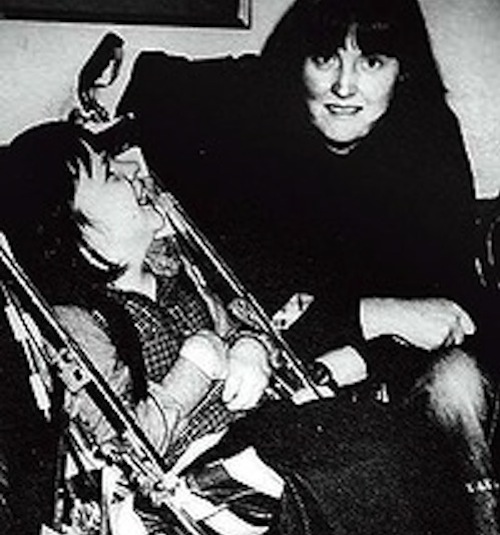
Anne McDonald and Rosemary Crossley

Anne-Mcdonald2-200x0

Autism is Not Like Cancer

I’m traveling and haven’t had time to blog.  But a couple of comments came in on the last post about How We Discuss Our Children that made me think a bit more about all of this.

When my daughter was first diagnosed we were told a great many things that frightened us as well as some things that were very encouraging, but when those, seemingly “good” things did not come to pass, we became even more frightened. In part because it became clear no one actually knew what they were talking about and coupled with that realization was the idea that if they didn’t know what they were talking about, how were we going to help our child?  Add to that our expectations, no one talked with us about any “positive” aspects of the diagnosis, nor did anyone suggest anything that sounded remotely “good”.  All of this was done with good intentions, lots of well-meaning advice, but all of it came from non autistic people who were operating under the assumption that our neurology was the gold standard and one that everyone should aspire to, as if that were possible.

Autism was framed in the “disease” model with people alluding to cancer as an appropriate analogy. As I have family who have both died and survived cancer, and have witnessed what chemotherapy does to a person, both when it works and does not, this was particularly awful as I took it literally and began to see any and all “treatments” as a kind of “chemotherapy”.  I even consoled myself with the idea that this “risky” treatment would all be worth it, if it “saved my child’s life”.  I spoke of it in this way and thought of autism as “life threatening” because I could not imagine a life without language, friendships, empathy, etc and this was what we were being told autism was.  This is an incredibly dangerous idea for any of us to engage in and is why I find it incredibly unethical for organizations and public figures to talk about autism and Autistic people in this way.

Now add to this the financial toll of all those unverified “treatments”, the appointments, dealing with schools and the general anxieties that come with parenting on too little sleep and too much caffeine, along with a parent who has expectations that something she does will “save her child’s life”, and that’s a pretty great recipe for discontent, depression, anxiety and upset.  Particularly when it becomes increasingly clear that there is little available that will actually prove helpful to our kids.

Think of how different it would be if our pediatrician was a non-speaking Autistic person and our non autistic older child had a couple of Autistic teachers and another kid’s parent was Autistic and one of our closest friends happened to be Autistic and Autistic kids were not segregated out of schools and work places accommodated their neurology and made it easier for Autistic people to be among us.  Part of that initial fear we parents often have is because we have never met anyone who is Autistic.  All the information we then receive is taken as fact and not questioned immediately.

So yeah, there are things that really do need to be addressed and changed because the stress of parenting is massively exacerbated by society’s use of the medical model and because of the way we have segregated those who are Autistic. It isn’t that a child who has all kinds of medical issues and co-occurring diagnoses will not be cause for concern, it is that to add to these concerns the – oh-and-by-the-way, autism-is-an-epidemic-that-is-analogous-to-cancer-try-anything-and-everything-to-erradicate-it, is increasing everyone’s pain and suffering, including our children’s.

To Educators, Therapists & Doctors

You are the first people most parents meet after getting our child’s diagnosis.  Therefore you have tremendous influence on how we view autism, what that means or doesn’t mean, what services we seek, and how we then view and treat our child.

That’s a huge responsibility.

The onus is not entirely on you, of course, but don’t kid yourself, you have the power to change the course of a child’s life and their family’s with your knowledge and what you tell their parents.  If you don’t know the answer to a question, do not pretend you do.  Do not rely solely on whatever university you went to, or the medical journals you may subscribe to, the most recent statistic, medical study or your colleagues for information.

If you’ve been taught a particular therapy or  teaching method is the only scientifically proven method to “treat” or teach Autistic children, find Autistic people who were given that therapy or method as children and learn what they have to say about it.  If you find a number of Autistic people are speaking out about a specific treatment or method, saying they have post traumatic stress as a direct result, reconsider your position.  If you still feel this therapy is important to pursue, ask yourself why and at the very least, inform the parents who are considering this method that there are Autistic people who believe it was damaging to them.  It doesn’t matter whether non autistic people and professionals agree, you have an ethical obligation to tell parents that this treatment or method has caused damage to a great many.

If you think you know, if you are convinced you are right about some aspect related to autism, do more research and make sure what you think you know, is in fact true, if it isn’t or if it isn’t clear, then do not present it as though it is the “truth”.  I don’t care how well known or famous you are in the field of autism, if you are not engaged in reading and talking to Autistic people outside of a clinical setting, you have more to learn.  And do not be afraid to admit when you don’t know something or if you find you are wrong about something you previously thought to be true.  Most of us would prefer being told by a professional that you don’t know something or thought you knew something, but now realize you were wrong than to be given incorrect information.  There’s massive amounts of incorrect information out there.  Please.  Don’t add to it.

You have a responsibility, not just to Autistic people, but to those of us who are their parents and to your profession to read everything you can about autism and what it means to be autistic.  If you’ve never read anything written by an autistic person, now’s the time to do so.  If you cannot bear the idea of doing so, if you believe your various degrees are enough, if you feel annoyed, believe I’m being presumptuous by suggesting you do more, then find another profession.  You aren’t doing anyone any favors by continuing to pursue a career in a field that has so few concrete answers but that you are convinced you know all there is to know.

Even if you’ve read one or two books, maybe seen the latest documentary featuring one or two autistic people, it’s not enough.  You need to read blogs and books written by non-speaking Autistic people, there are more and more of them being published every year.  You need to read the writing of people who speak, can sometimes access language, access language all the time, but do not say what they intend, people who have intense sensory sensitivities, those who are hypo sensitive as well as those who are hyper sensitive and those who have a mixture of the two.

Examine your beliefs:  Do you believe that non speaking Autistic people cannot speak because they aren’t trying hard enough or because they do not have anything to say?  If someone’s facial expressions are hard to read, do you believe that means they do not feel emotion?  Do you think Autistic children lack empathy?  Are you convinced that Autistic people are unreachable?  Do you believe Autistic people have no desire for friendship, lack the ability to love, cannot understand what is being said and written about them?  Do you think that if an Autistic person acts more like a non autistic person they have “recovered”?  Do you believe this is a worthy goal?

Please.  Do all of us a tremendous favor.  If you are entering the field of autism or are an educator, therapist, doctor or professional in the field, in whatever capacity that may be, question everything, read, ask questions, examine your beliefs.  Learn what so many have gone through at the hands of well-meaning professionals.  Remain curious, stay open to new ideas and continue to adjust what you believe.

I was terrified when we received my daughter’s diagnosis.  I knew very little about autism and I looked to all of you for answers.  The answers I was given I’ve since learned were mostly incorrect.  Because of those answers, we made a great many mistakes.  Mistakes that hurt our daughter.  Other parents do not have to go through what we went through.  There is so much great information out there, but often finding it can feel overwhelming and impossible for parents.  You have a great deal of power to affect how families think about and respond to their child and their child’s diagnosis.  You can help so many families help their children in ways that are respectful, by honoring them and their neurology and not making them feel they are broken or are to blame for how society misunderstands and treats them.

To those non autistics who this letter does not apply, you who have dedicated your lives to helping children like mine, I thank you.

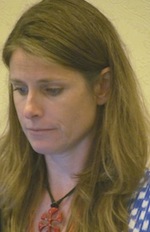
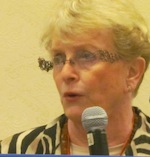
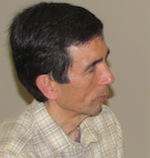
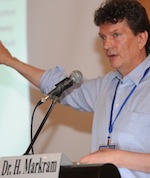
Rosemary Crossley, Soma Mukhopadhyay, Christine Ashby, Anne Donnallan, Douglas Biklen, Mary Schuh, Leah Kelley, Pascal Cheng, Harvey Lavoy, H. Markram, K. Markram, *Marge Blanc, Susan Marks,  Paula Kluth, Char Brandl, Cecilia Breinbauer, Phil Smith, Barry Prizant *do not have photos* and so many others, thank you.
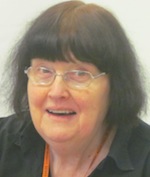
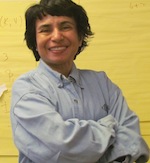
Rosie Crossley

Soma Mukhopadhyay

Christy AshbyAnne DonnallanDouglas Biklen

Mary ShuhLeah

PascalHarvey LavoyH. MarkramK.Markram

My Resistance to Practice

I’ve been struggling, feeling very emotional in a “bad” sort of way.  You know how when you’re weepy all the time for seemingly no good reason?  Those times when you keep crying every time you hear sad music, and all music strikes you as sad, even really upbeat music, or when someone looks at you with a stern face, or uses a harsh tone, or if you read something sad, and everything you read seems really sad, and you keep having to wipe tears from your face and hope you remembered to bring tissues with you, but you never do?  Yeah, sort of like that.

*Sigh*  It’s been a tough few weeks.  I have felt off-balance because I have been expecting myself to be able to do what I’ve seen a number of people do with my daughter, but that I have not been able to do.  I returned from our trip to Texas and thought, after only a couple of sessions with my daughter, I’d be able to start asking her open-ended questions, just as I’d seen Soma Mukhopadhyay do.  (Despite the fact that Soma advised me NOT to ask any open-ended questions in the beginning.)  *Define beginning, I kept thinking.  I HAVE begun.  Surely now after the second or third day home I am beyond “beginning”!  This thinking is akin to seeing a master jeweler create a beautiful ring and expecting that I should be able to create that same ring without having spent years practicing the craft as a bench jeweler, or hearing a Rachmaninoff piano concerto played at Carnegie Hall and then going home and thinking after a couple of piano lessons that I would be able to replicate that piano concerto.  The point is, Soma is a master at RPM (rapid prompting method).  She’s been doing RPM for close to two decades, first with her son Tito and later with hundreds of Autistic people.

But I so wanted to have the kind of conversations with my daughter that I saw her having with Soma.  It was like catching a little glimpse of paradise, but not being able to find the bridge to actually get there.  I kept trying to leap.  I kept trying to find a short cut.  And as I did this, each day, my distress grew.  I felt frustrated and then angry and then beaten down.  All because I was expecting myself to be able to do something without any practice.  So when my suffering reached an all time high, when the occasional weeping, became more than occasional and my son, upon seeing me asked, “why are you always crying?” I realized I had to get help.  I did what years of recovery from addiction has taught me – I reached out to another human being.  I contacted someone I only know through the internet, but who has been working with her son for a number of years now.

She gave me wonderful tips.  She sent me videos to watch.  She listened to my distress.  She told me it took months of practice and as I read everything she sent me, I kept thinking both how grateful I was to her for being so kind and generous in sharing her experience with me, but also was reminded that I need to practice and I need to start at the beginning.  Everything takes practice.  My expectations of myself were causing me tremendous pain.  They were unrealistic.  It isn’t that I can’t do this method with my child, it’s that I can, but I need to practice.  And as I realized this, as I thought more about this, I saw the parallels to presuming competence in my child.  I have written about what “presume competence” means, but in all the posts I’ve written on the topic there is one piece of this that I have neglected to mention and that is, presuming that we can and will be able to learn with appropriate accommodations and enough practice.  I forgot to include myself in presuming competence.  I need that presumption too.  I need to remember that I can and do learn if I’m given instruction and give myself the opportunity and time to practice.

I had the proper instruction, but I haven’t been practicing long enough to get the results I wanted.  So last night I wrote up a lesson plan, just as Soma had instructed during a previous four-day intensive workshop I took last spring.  I made sure I followed her format of how to create a lesson plan.  I made sure I began with choices and spelling key words.  I even tried to embody her lovely, sing-song, calm, kind voice.  I laid aside any expectations of what would or should happen.  And you know what?  It was a great session.  I made a couple of mistakes, I had to refer to my notes often.  I had to make some adjustments.  I forgot a couple of key things, but I jotted down some comments to myself so I can remember to revise accordingly for our next session this afternoon and more importantly, we were both more relaxed than we have been since we returned home.

Practice.  I hate the idea of having to practice.  I want to go from never having done something, to immediate fluency.  But once I begin practicing and let go of that desire and those expectations for immediate fluency, practicing can be incredibly enjoyable.

To Sue:  This post is for you.  Thank you.

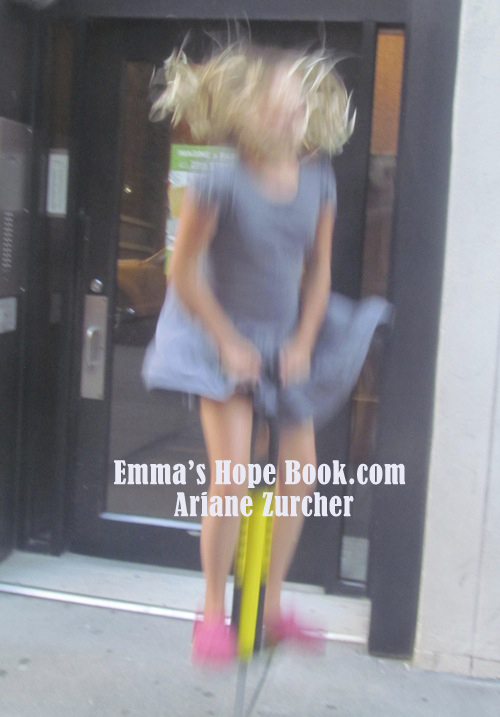
Em practices jumping on her pogo stick.  New all time record?   127.

Joy copy

The Joy of Being Wrong

When my daughter was eight I was so envious of my friends who had daughters the same age, because they were going out together, having mother/daughter outings, getting pedicures, doing girlie things and I despaired that I would never have these kinds of outings with my child.  I know how selfish this sounds.  I know this statement is all about me and has nothing to do with my child or her interests or her feelings.  I always dislike hearing parents talk about their children as though they were some sort of glorified extension of themselves, like a conduit for all the parent’s failings, as though this child was a metaphoric phoenix rising from the parent’s DNA, destined to be all that the parent hopes for, but has failed to do and be themselves.  But at the time I did feel envy and also, was aware enough to also feel badly for having those feelings.

Flash forward to this summer.

A friend of ours returned home one Saturday afternoon with Emma, who ecstatically showed off her newly painted RED toenails.  I was astonished. “You guys went and had a pedicure?” I asked.  “Red toenails!” Emma exclaimed with glee, while positioning her foot next to our friend’s, who had the same color red on her toenails.  “They match!”  Since then Emma and I have gone every other weekend for our “pedicure spa” where we sit side by side and have our toenails painted.  Emma picks out the color, which she insists we both have so that we “match.”  Both of us look forward to these outings.

There are other examples of times I’ve despaired, thinking that whatever our current situation is, it will remain so forever.  This is not specific to my daughter, but is something I am aware that I have a tendency to do in life and always have.  The idea that things are fluid and constantly change, is a tough concept for me.  I tend towards extreme thinking.  When things seem bleak, I am convinced they will always be.  When things are good I am suspicious and await the inevitable.

It is as though I believe I will have to pay for those good times, like an invisible law that shows no mercy.  The good times are tempered with the “knowing” that they will be fleeting and won’t last.  Over the decades I’ve gotten better at this, I am aware this is my tendency.  I catch my thoughts quicker and am able to remind myself that I do not know what will happen next.  But still I find myself easily sliding back into that old way of thinking.  It’s not the reality of someone else’s life, it is the idea of someone else’s life that I compare myself to and that idea is never true.

These days I try to head off comparing the minute I become aware of it.  It does not serve me.  It does nothing to help me.  I am not a better person because of it.  It makes me sad and miserable and has nothing to do with either of my children or my life.  In fact that thinking hurts my children.  Both are highly sensitive to other people’s moods, they easily pick up on emotions and take them on.

At the moment, Emma and I are sporting pink toenails and every time I see our toes, I smile. They remind me of all those years when everything seemed grim and hopeless.  When despair surrounded my every breath, when desperation hung in the air I breathed, when I believed I knew what we were up against, when I believed this was going to be our life, when I thought I knew and no one could convince me otherwise.  That toenail polish, that gorgeous pink toenail polish that Emma insisted we both wear is proof of just how wrong I was.  About everything.  About everything.