Tag Archives: Autism

Exhaustion

The vicissitudes of our daily life with Emma require a certain degree of hope in order to stave off the depression lurking in the background.  I need a plan of action, something I can refer to when I am tired, when my defenses are down, when I feel my grip on that tenuous thread of hope beginning to loosen.

At the moment I am reading about RPM – Soma Mukhopadhyay’s Rapid Prompting Method for autistic children, which gave her non-verbal son Tito a voice.  I have watched the videos, have read her book and am now rereading the book while taking notes.  I am on a waiting list to go with Emma to Texas to have a four-day session with Soma.  In addition I have just started reading Dr. Howard Shane’s book – Visual Learning.  I need to be alert while reading as the subject matter is dense and I have difficulty taking it all in.

Emma continues to wake the entire family at all hours of the night, resulting in all of us being exhausted, relying on caffeine to get us through the day with no end in sight.  Poor Nic, who is not allowed to drink caffeine, has to muddle through as best he can.  It is certainly affecting his ability to concentrate at school.

“We don’t have a plan,” I said to Richard this morning.  “We need a plan of action.”

But the truth is, I need an infusion of hope.  Like an IV – hook it up and let it drip into my veins.  Hope is the thing, more than anything else motivating me to keep pushing ahead.  Hope is the lens through which the world can seem grey and dull or bright and cheery.  I need hope.  So I think about the phone call Richard had yesterday regarding Emma’s last QEEG.  We had the brain scan done the day before we left for Panama for her second round of stem cell treatments.  Our conflicting schedules have made it impossible to meet to go over the results.  Richard is meeting with one of the doctors this Friday.  The doctor told us he thought there were some interesting things going on with that last scan.

So we wait and we hope.

Autism and the Family

“Mom! “ Nic’s cries could be heard throughout our home.

“What is it, Nicky?” I asked.  It was 1:00AM.  I could hear Emma whimpering.

Nic began to cry.  He stood in the middle of the living room, pointing toward his bedroom.  “She’s in there, she woke me again,” he said before bursting into tears.

“Oh, Nicky.  Come on.  I’ll get her out of your room,” I took his hand and led him back to his bed where Emma lay.

“Emma!  This is not okay.  You may not wake up Nic!”

“Nic’s room, bye-bye!”  Emma said cheerfully.  Then she began to whimper.

“That’s right.  You may not wake up Nic.  Go to your room,” I said.

“No.  Not going to wake up Nic,” Emma said.

The night before Emma woke everyone by screaming in the middle of the night.  It was similar to being woken by an air raid siren, jarring, disconcerting.  The shrieks were deafening.  We punished Emma by not allowing her to have her beloved pancakes the following morning.  Even so, she seemed not to fully understand the connection.

Emma’s nocturnal awakenings affect all of us, but so do her public melt downs, her inability to communicate, her inability to understand and empathize with others, her limited food choices, her inflexibility.

Perhaps of all of us, it is hardest on Nic.  He is the one who gets the brunt of our impatience.  It is Nic who feels the weight of being expected to be the “normal” one, who understands and feels our stress, who feels fury with Emma for her very public displays, which he finds increasingly intolerable and embarrassing.  He longs for a “regular” sister, one he can play “hide and seek” with, one who will play card games with him.  One he can talk to.  As exhausted as Richard and I are by our sleep- deprived nights, we do our best to plod along.  We talk with one another, lean on each other.  We rely on gallows humor when everything seems bleak.  And while we encourage Nic to talk honestly about his emotions, I wonder whether he really feels he can.  I wonder whether he doesn’t feel he is placing yet another burden on us, and censors his thoughts and feelings.

For several years after Emma’s diagnosis Nic went to see a child psychologist.  A year ago he requested that he not go any longer.  We spoke with him at length and promised him we would not force him to continue seeing her if he didn’t want to go back.  Since then, I have asked him several times whether he’s sure he wouldn’t like to return or find a new therapist, he has continued to say no.

I have learned over the years, that as bad as things are or seem:  a) they can always get worse, b) they can seem worse than they are and c) one can always shift ones perspective ever so slightly enabling one to see things differently.  I have found when I am able to achieve a more balanced perspective I am better able to cope.

Emma has changed all of our lives dramatically.  She has pushed each of us.  Sometimes it feels to our breaking point, but we have all survived thus far.  Emma forces me (I will not presume to speak for any of the other members of my family) to pay more attention.  I appreciate small gestures, small acts of kindness more than I did before Emma’s diagnosis and it inspires me to do the same for others.   For instance, I am constantly aware of how hard my husband, Richard works to help her, to help Nic, to help me.  He is a rare breed, fiercely ambitious, a visionary and yet places his family firmly first, not just in thought, but in his actions.  He believes in equality and behaves in accordance to those beliefs.  He is as strong a man as I have ever met, giving both emotionally and physically of himself.

Emma has taught me to see the world differently.

And it is beautiful.

“It’s Light Out”

Good job waiting til it’s light out.  You didn’t wake up Mommy.  High five!”  Emma said this morning as I was getting dressed.

“But Em, you did wake up Mommy.  Remember?  You were crying in the middle of the night for Mommy,” I said.

“You have to pull on Mommy’s robe.  Mommy!  Can I come get you in the other room?”  Emma said looking at me sadly.

“No Em.  You have to try to stay in your own bed at night.  You have to wait until it’s light out,” I said, peering out the window at the decidedly unlit grey sky.  Rain pummeled the sidewalk below.  How confusing this must be to Emma.  After all it was not light out this morning at 6:30AM when all of us needed to get up and begin our day.  In fact, it was extremely dark.

Last night in addition to her ears bothering her, Emma managed to lose her scrap of what was once a blanket, which she calls “Cokie”.  The 2:00AM wake up call reverberated throughout our home.  I have a vague memory of waking up, confused and saying to Richard, “Is that Emma screaming?”   When we are in Colorado Emma’s middle of the night screams sound similar to the coyote, who kill their prey out in the field below our bedroom window.

“Yup,” Richard said wearily.

“Okay.  I’ll get her,” I said, donning a bathrobe.

“You sure?”

“Yeah.  I’ll try to get her back to sleep,” I answered.

When I went into Emma’s room she was sitting on her bed with all the lights on crying, “Cokie!  Cokie!”

“Okay, Em.  It’s okay,” I said.

“You have to look,” Emma said, helpfully.

“Yes.  We have to look.  I’ll help you,” I said, digging around under her bed.  “Here it is, Em,” I said holding up a tattered strip.

Emma grabbed her Cokie from me and began sucking her thumb.  “There you are!  There’s Cokie!”

Last night Richard and I, having missed the unusually early starting time of Bloody, Bloody Andrew Jackson, managed to get tickets for Next to Normal.  Knowing nothing about the play, we took our seats with no expectations.  The play was brilliant.  The subject matter though surprising, about a mother who is bi-polar and the burden this places on the rest of the family, is beautifully depicted.   Throughout the play I thought of Emma and Nic.

During the first act the mother goes to her psychopharmacologist who tells her it’s an inexact science and later when she again complains about the drugs she has been given, he tells her there is no cure, but asks her to stay with him and not give up on the meds.

While we have not put Emma on medication, we have tried any number of other things.  Always with the assurance, whatever it is will help, always with the slight retraction when it has not.

“Sleep, wake up make pancakes?”  Emma said this morning.

“Yes, Em, tomorrow we can make pancakes together,” I said.

“It’s Nic’s Mommy,” Emma said pointing to me.

“I am Nic’s mommy.  And I’m your mommy too,” I said.

“It’s Mommy,” Emma said, kissing me on the cheek.

I held her to me and said, “That’s right, Em.  I love you.”

“It’s light out,” Emma said pointing out the window.

“Yes, Em.  It’s light out.”

The Elusive Pronoun

Autistic children are known to have trouble with pronouns.  It is not simply mixing up “you” and “me”, but all pronouns; he, she, her, his, I, you, me, we, us…  There are theories regarding this confusion.  One such theory from Simon Baron-Cohen who coined the phrase “mindblindness” suggests autistic children have trouble self differentiating and therefore become confused when confronted with pronouns.  He has since amended his theory, suggesting autism is a form of “male brain” or empathizing-systemizing (E-S) theory.  He goes on to explain that autism is a series of deficits and delays in empathy.

As with all things “autistic”, it’s a theory.

Last night Emma came into our room at 2:30AM.

“C’mon Em.  You have to go back to your bed,” I told her.

“Mommy come.  You have to ask Mommy.  Mommy can I get you come into the other room?” Emma said, sadly.

“I’m going to go with you.  Come on.  Let’s go back to your bed,” I said, holding her hand.

I tucked Emma into bed and sat next to her, stroking her head.  “Now Em, you need to try to go to sleep.  You need to go to sleep and stay in your own bed until it’s light out.  Then you can come into my room.”

Emma took her hand and gently pressed it to my cheek, “You,” she said.  Then she took my hand and pressed it to her cheek, “Me,” she said.

“That’s right, Emmy!  You,” I pressed our hands to her mouth, “and me,” I said, holding our hands to my face.  This is going better than I expected, I thought. “I’m going to go back to bed, Em.  You have to stay here and try to go back to sleep, “ I explained.

“Okay,” Emma said.

I stood up.

“No!  You and me!” Emma cried.

And then I understood.  She was telling me she wanted me to stay with her.  I had assumed she was showing me she understood the correct use of the words, “You” and “Me.”  It was an interesting moment, with me taking her words literally, and Emma trying desperately to convey her upset and desire for me to stay with her.

“Okay, Em,” I said.  “But I’m really tired.  I have to get some rest,” I tried to explain.

“It’s okay,” Richard said, appearing at the door.  “You go ahead.  I’ll stay with her.”

“Mommy stay with Emma!” Emma said tearfully.

“Mommy has to go to sleep, Em,” I reminded her.

“Okay,” Emma said.  With that she got up and raced past both Richard and me to our bedroom.

“It’s okay,” Richard said with a resigned tone.  “Go with her, I’ll stay here.”

This morning as we went through the motions of getting breakfast for the children, checking backpacks, I said to Richard, “And how long did it take you to fall back asleep?”

“Oh, about an hour and a half,” he said.

“Yup!  Em and me too,” I answered with feigned cheeriness.

“Looks like a beautiful day,” Richard commented, glancing out the window.

“Another gorgeous day,” I agreed.

“Fake it til you make it,” Diane Von Furstenberg told an audience member at the WIE Symposium a few weeks ago.

It’s all in ones perspective.

A Zen Koan

Living with an autistic child, forces one to “think out of the box.”  Emma’s mind is, to a neuro-typical person, a tangled web of odd phrases, misplaced pronouns, questions posed that may be statements or may be questions, interchangeable tenses, words used literally within non literal contexts.   I often find myself feeling I have been given a Zen koan when I’m with Emma.  For those who may not know what a koan is, it is a non-answerable verbal puzzle.  One of the most famous Zen koans is:  Two hands clap to make a sound.  What sound does one hand make?  The answer is – there is no answer and if you attempt to verbalize one you miss the point.

Emma’s behavior is often perplexing, her speech difficult to decipher, her desires often impossible to understand.  And just as with a Zen koan, if one attempts to apply intellect and reasoning to Emma’s actions, one will have missed the point.  My best, most joyful moments with Emma are when I am simply present.  No agenda, no preconceived plan of action, no desired outcome, just present in her company, enjoying her without judgment.

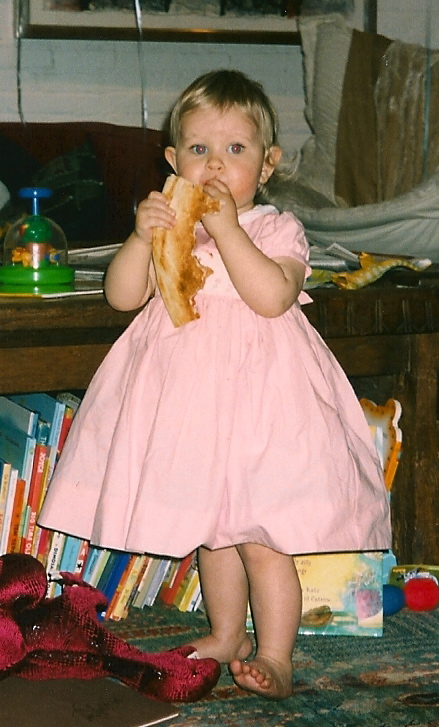
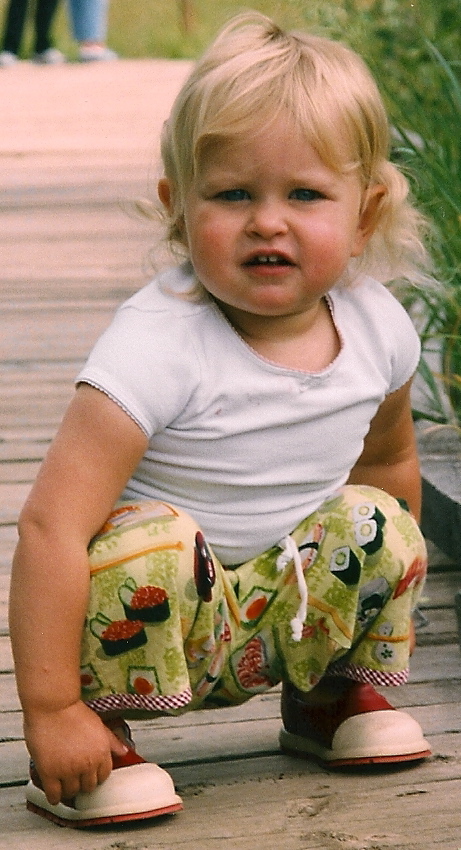
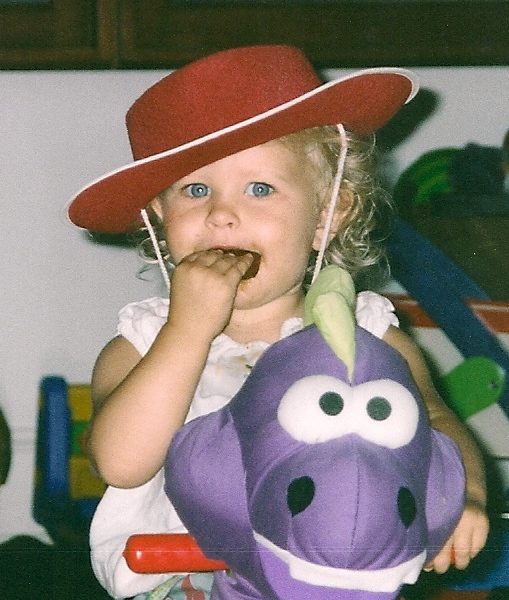
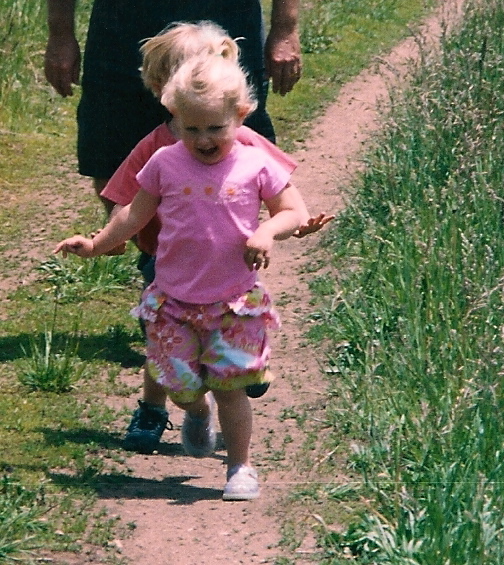
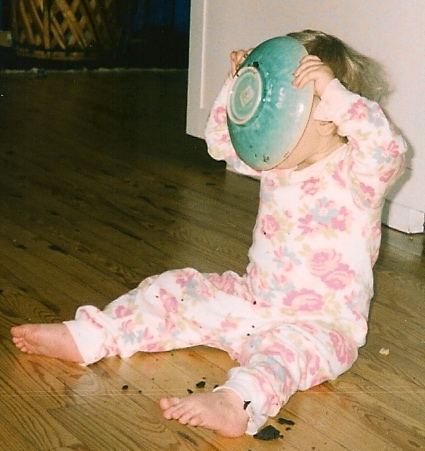
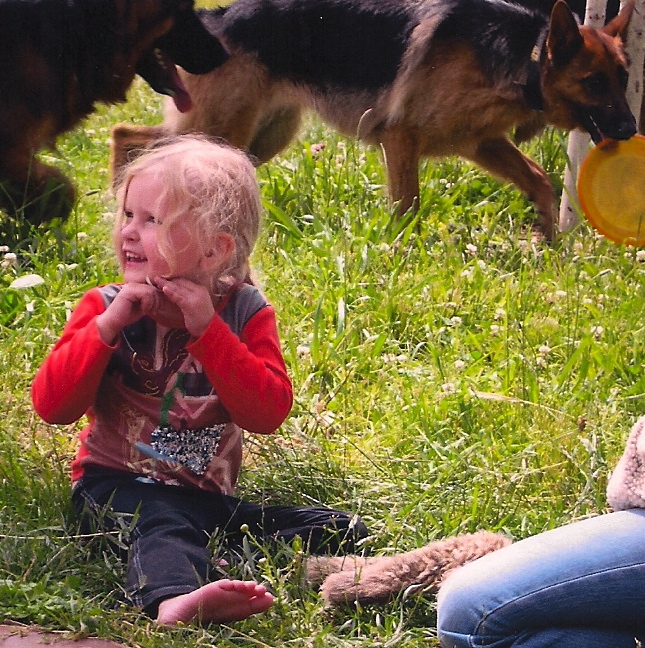
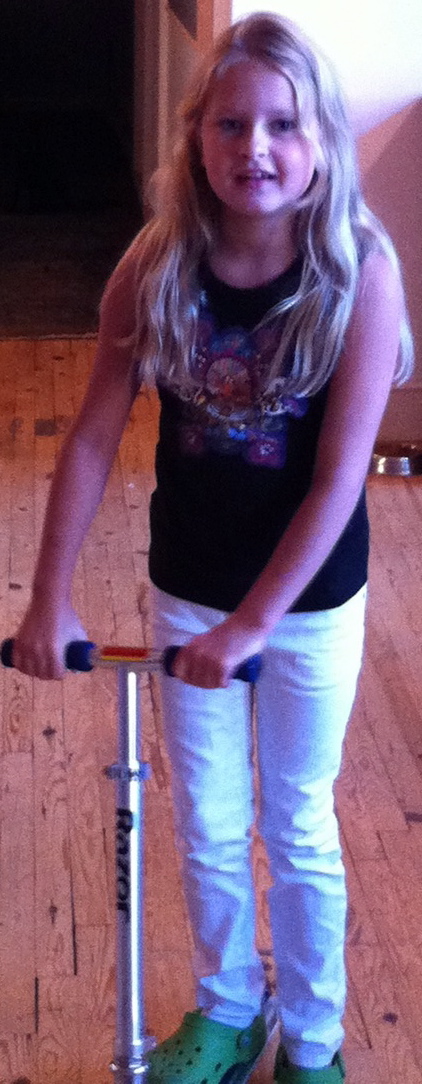
Here are some of my favorite photos of Emma when she was young before all eye contact went away and one taken over the weekend now that her eye contact has returned.

Emma and Lists

Whenever I am feeling discouraged, I make lists.  I have a number of lists going simultaneously.  I have one for my jewelry business, one for my jewelry e-commerce site (yet to be launched), I have another, which is a general To Do List and then there are the lists for Emma.  Emma – research is one, Emma – goals, is another.

Several days ago, when I posted “What Now?” I was feeling particularly down.  Out came the paper and pen.  A list was created with the simple heading:  Emma.  Below the heading I began to make an action plan.  As I worked on my list Emma appeared caring my Ipad.

“Mommy go to bed?” Emma asked.

“Do you want to sit in my bed with me, Em?” I asked.

“Yes.  You have to ask Mommy.  Mommy come to your bed with you?”  She pulled on the sleeve of my robe.  “Mommy can you come to my bed sit with you?”

“Yes.  But you say – Mommy, can you come with me?” I said standing up.

“Mommy can I come with me,” Emma said, struggling with the ever elusive proper use of pronouns.

“Okay.  Come on!  Let’s go.” I said taking Emma’s hand.

Emma loves the Ipad app – Interactive Alphabet – ABC Flash Cards.  She loves the music, which plays as she taps on different letters, each letter coming to life as she touches it.  This app has become such a favorite, Emma requests it each night before she goes to bed.

EE IS FOR EGG,” the female voice said, when Emma tapped on the egg.  She tapped again and watched it cracked open, a raw egg splatted down next to the first one.

“Hey Em,” I said, “What letter is that?” I asked pointing to the E.  Emma said nothing and tapped on the A.

AA IS FOR APPLE,” the voice said.

Emma tapped on the picture of the apple and watched as the apple was eaten with accompanying crunching noises.

“What about this letter, Em?  What letter is this?” I asked pointing to the B.

Emma ignored me and pressed the B.  We continued in this way for a few more letters, with me watching her as she listened to a letter and then when asked what that letter was, she could not answer.

“Press U Em,” I said.  Much to my surprise, Emma immediately pressed U.

UU IS FOR UMBRELLA,” the voice said.

“Hey Em, press P,” I said, holding my breath.

Without hesitation, Emma pressed the letter P.

“Em what letter is that?” I asked, excitement creeping into my voice.

Emma said nothing and pressed P again.

PP IS FOR PLANT,” the voice intoned, as Emma bopped her head up and down keeping time with the music.

“Okay, how about B?  Press B, Em,” I said.

Sure enough, no hesitation, Emma tapped on the letter B.

BB IS FOR BEACH,” the voice said.

I repeated this with more than a dozen letters, picked at random with never a hesitation on Emma’s part, until I asked her, “What about W.  Press W,” I said.

Emma held her finger over W and then tapped on V, just to the left of it.

“Em!  That’s not W,” I said.

“No.  Not W,” Emma said laughing.

“Come on Em.  Press W,” I said.

Again Emma tapped on V and laughed.

V. V IS FOR VOLCANO,” the voice said.

“Okay, what about R?” I asked.  “Press R.”

Emma looked at me, smiled and tapped on Q, again the letter just to the left of R.  After this had gone on for three or four more times, it was clear Emma was choosing the letter to the left on purpose. Each time she did so, she laughed.  It reminded me of all those therapy sessions when I would be called in to discuss Emma’s progress.  The puzzled therapist would then describe a session with Emma regarding something she thought Emma knew, only to question whether perhaps she didn’t.

“So it’s a processing issue,” Richard said later that night when I described my session with Emma.

“Yes, it’s really interesting,” I said.  “She knows every letter of the alphabet if I ask her to point to it.  I think she even knows almost all the sounds they make, but if I ask her to name a letter, she can’t.”

Of course the implications are exciting.  Up to this point I have wondered whether Emma could learn to read or write. I wondered if the wiring in her brain was too jumbled to be able to, just as many autistic children who can read and write, cannot speak.  The other night convinced me; reading and writing are achievable goals.

I spent several hours researching other apps for the Ipad and will be previewing a number of the free ones recommended by other parents of autistic children.  In addition, I have watched the first video from Soma Mukhopadhyay regarding her Rapid Prompting Method and intend to watch the second tonight.

I looked at my list just now.  Below the heading – EMMA – I had written Help Emma with Reading and below that Help Emma with Writing.

Maybe, just maybe, I will one day be able to cross those off my list, just as I have been able to cross off:  Toileting & Bedwetting.

By the way, have I mentioned Emma slept the last TWO nights in her own bed without waking anyone, coming into our room at 6:30AM and 6:45AM?

Jessie & “Dolls”

Autistic children are known for their inability to engage in imaginary play.  A defining moment for my husband, Richard and me was when it was pointed out Emma did not seem interested in any form of pretend play.  Until then I had reasoned:  she was too much of a tomboy, she didn’t like dolls, she was like my sister, it ran in the family.  But the truth was; not only did Emma lack any interest in dolls, she showed no interest in stuffed animals or toys of any kind including horses, a favorite of my sister’s when she was small.

When Emma began playing with her monster, Muzzy, we were elated.  Despite the comments other children, especially little girls who saw Emma, made.  “Mommy, why does she have a monster in her stroller?” One such child asked in puzzled wonder this summer.

“I don’t know honey,” the mother said, looking from me to Emma with a speculative glance as she grabbed her child’s hand and hurried away.

Comments aside, we were ecstatic.  Muzzy was the first toy Emma had shown any sustained interest in.  Granted she played with Muzzy in an odd way – tossing him in the air while laughing, throwing him on the ground so he would, “hurt his head” – it was play however unusual, which suggested tremendous progress.  See Em & Muzzy, Emma’s Pal Muzzy & The Porkmepine and Panama – Day 3.

Last night when Emma disappeared into her bedroom only to emerge moments later carrying not one, but two of her dolls, I was again ecstatic.

“Richard!” I whispered.  “Look!”

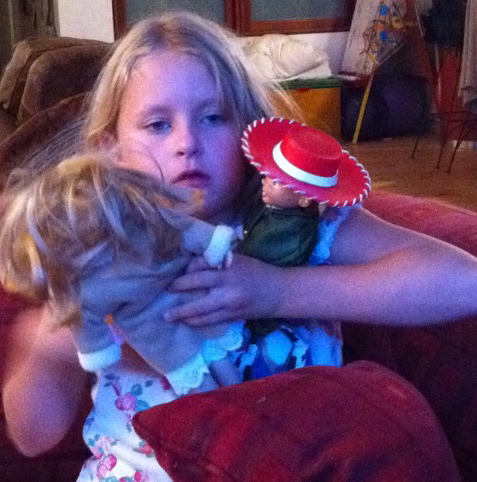
Emma sat on the couch holding Jessie who had on a fabulous green coat over her chaps and another doll I’d forgotten we even had.  Granted the doll’s hair looked like a “bad hair day” poster child, but Emma seemed unaware and proceeded to hold each in one hand making them bop up and down.

“It’s Jessie,” Emma said, surveying her red cowboy hat with a discerning eye.

“And what about her?  What’s her name?” I asked gesturing to the other doll.

“Dolls”, Emma said.

“But what’s her name?” I asked again.

“Her name Dolls,” Emma said, turning her back to me.

Emma with Jessie and “Dolls”

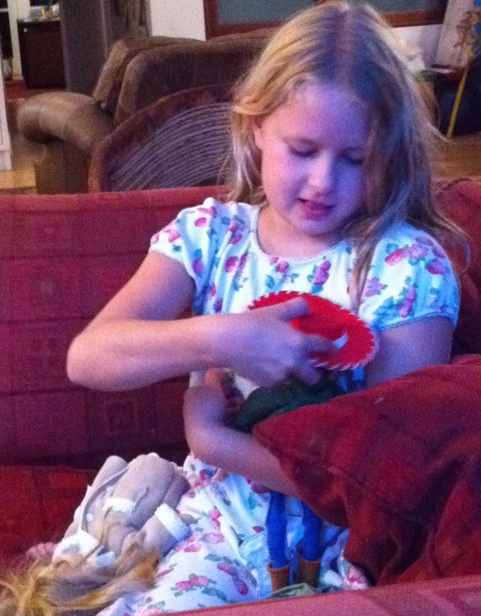
Emma did not engage in much language as she played and rebuffed our attempts to “play act”.   But she said hi to Jessie and observed Jessie was hot and needed to take her hat and coat off.  She repeated this with “Dolls”.

Emma Taking Off Jessie’s Hat

At a certain point she looked over at Richard with an impish grin and said, “Dolls fall down?”

“Is the doll falling down?” I said.

“Uh!  Uh!  Uh! Uh!” Emma laughed before flinging the doll to the floor.  Then she pretended to cry and said, “Doll crying, doll hurt.  Doll hurt her head.”

“Oh no!  Did she fall?  Is she alright?”

“Down, down, down!  Help you up, help you up!” Emma said in a sing songy voice.

“Who’s going to help her up, Em?” I asked.

“Help you up,” Emma said again.

“Are you going to help her?” I asked.

“Doll, Doll, come!” Emma said.   Emma leaned down and made the doll pat her head while saying, “Doll hurt her head.”

Emma became stuck in a verbal loop with the above dialogue, repeating it over and over again.

Richard and I suggested she be the one to help Doll up, which she finally did.

“Thank you!” Emma said as she lifted Doll up and gently placed her on the couch.  “Doll crying, Doll see Mommy, Doll hurt her head,” Emma said.

“Oh, no!  Let me see,” I said.

“Hi Mommy, time to go home,” Emma said without giving me Doll.

“Can I hold her, Em?” I asked.

“Time to go home,” Emma repeated, ignoring me.  Then she put Doll’s coat back on and laid her carefully on the ground.  “Good night,” she said, pretending to be the doll.

“Good night Dolls,” Emma said, in response.

Hey it’s play, no matter how bizarre.  It is imaginary play.  Each tiny step of progress, no matter how small, is progress.

“Let’s Talk to Her”

Making the decision to talk with Emma about something has not been a consideration until recently.   For those of you who are loyal followers of this blog you might be caught off guard by the hopeful tone to this first sentence.  If so, you’re right.  It’s all part of the roller coaster ride we’re on.  Feeling despair, feeling hopeful, feeling despair, feeling hopeful…  Like some sort of Möbius strip, we twist and turn.  Someone said to me once:  feelings aren’t facts.  I try to remember that when I am feeling gloomy and attempt to forget it when I’m optimistic.

Fact:  Emma waking in the middle of the night disrupts the entire family.   Richard and I decided a few weeks ago we would try talking with her about it with varying degrees of success.  See What Now? , Wake Up and Good Bye Diapers! The fact that we had even one night without the sound of her mind-numbing shrieks or her stealthily crawling into our bed at 2:00AM was progress.  So last night I decided to spend some time going over what I hoped she would be able to understand.

“Em, it’s time to get ready for bed,” I began.

“Go to sleep now,” Emma said, nodding her head.

“Yes, and when you go to sleep you stay in your own room,” I waited for a response.

“Okay, Emma?  You have to stay in your bedroom all night.  You cannot wake Mommy and Daddy,” I waited for some indication of understanding.  When there was none, I added, “You have to wait until it’s no longer dark.  If you wake up in the middle of the night you look out your window.  If it’s still dark you stay in your own bed and go back to sleep.”

“Go into Nic’s room,” Emma whispered.

“No, Em.  You stay in your own bed,” I explained.

“You have to wait,” Emma said, nodding her head up and down.

“That’s right, Em,” I smiled at her and kissed her forehead.

“You have to pull on Mommy’s robe.  Mommy can I come get you into the other room?”  Emma said.

“No, Em.  You wait until it’s light out.  Then you can come into Mommy’s room.”

“You have to wait,” Emma said again.

I continued to go over the plan with her, step by step.  I attempted to explain the need for her to try and go back to sleep if she woke up in the middle of the night, the importance of staying in her own bed.  I even went over breathing techniques to help her if she began to get upset and wanted to wake us.  Emma nodded her head throughout all of this and interjected with things like, “Mommy’s so upset” and  “You cannot wake Mommy”.

“You’re beating a dead horse,” Richard would have said had he been there to witness the ‘conversation’.  I stopped talking, unsure if any of what I said had been understood.

When it was 6:30AM and Emma had not appeared, I smiled as I readied myself for the day.  By 6:50AM and still no Emma I congratulated myself on a job well done.   As I made my way out to the kitchen I paused at Emma’s room and peeked in.  Her bed, a crumple of sheets, duvet tossed on the floor, pillows scrunched into the corner, looking as though a brawl had broken out, was empty.  I opened the door to Nic’s room and saw Emma snuggled up to her brother fast asleep.

Nic woke with a start and groaned.

“Hey Nic.  Are you okay?” I asked.

“No,” he moaned.

“What happened?” I asked.

“Emma!  She kept me up all night.  I’m so tired,” he said.

“Oh, Nic, I’m so sorry.  Was she awake a long time?”

“I don’t know, she kept going like this,” he said putting his hand over my mouth.  “And then when I ignored her, she’d do this,” he demonstrated by pushing my forehead with the palm of his hand.

“Nicky, I’m so sorry.  I told her not to wake us, so she woke you instead.”

“It’s okay, Mom,” Nic said looking up at me blearily.

“Ach”, I muttered under my breath.  “Next time come get me, okay?  I’ll get her out of your room,” I said.

“Yeah, okay Mom,” Nic said.

As I rode the subway to my studio I consoled myself with the thought that even though I feel terrible for Nic that Emma woke him, it is an enormous sign of progress she understood at least part of the message I tried to convey to her last night.

I will speak with Emma again tonight.  Maybe she’ll understand the entire message.

Who knows?  .

As my brother Andy says, “Who knows anything?”

What Now?

Richard and I have both been worrying since we returned to New York City.  We worry Emma has flat lined or worse begun to regress.  She seems more irritable, for the past three nights she has gotten up at 3:45AM, 4:00AM and last night at 2:30AM.  She seems more easily frustrated, quicker to tantrum, less able to tolerate anything she is not able to directly control.

I must add; I am tired, which always affects my outlook, casting everything in a grey laden tone.  I do not know whether I can trust my perceptions.  Is Emma really regressing or am I just tired?  She woke us at 2:30AM last night and though I was not the one returning her to her own bed until she fell back asleep, I felt guilty.  Richard was with her and would be facing a full workday as well.  He had also covered for me, “flying solo” as he put it on both Sunday and Monday morning, as I was an attendee and exhibitor at the WIE Symposium with my jewelry.

I stayed up for over an hour tormenting myself.  Is she regressing?  Have the stem cells had any impact?  What will we do now?  What if none of this works?  What will happen to her?  How will we continue?  My thoughts devolved as the minutes ticked by.

The stem cell treatments have, until recently, provided me with such hope.  I hoped they would make a significant improvement cognitively, in her speech, in her ability to tolerate frustration.  I hoped they would allow us to have a conversation with her.  I hoped they might even help her attend at school, learn eventually to read and write.  Now I am not so sure.  I am feeling beaten down.  What will become of Emma?

I do not know.

We are in uncharted waters.  No one can predict what our autistic children will be like in five years, ten years.  No one can show us autistic children, now adults and say to us – if you do this, this and this, your child will be like this adult.  Functioning, living independently, able to hold a job, have relationships with people who genuinely love them for who they are and not because they are being paid to care for them.

I spent yesterday at the first annual WIE Symposium  (Women, Inspiration, Enterprise).  The day was sponsored by the White Ribbon Alliance, a non-profit, attempting to help pregnant women all over the world have a safe pregnancy and childbirth.  I listened to women who have traveled the world tell horrifying stories of the women and children they have met and are trying to help.

One of the speakers spoke of how all children are our children.  She said it is up to all of us to ensure all children are given opportunities, food, medicine etc.  And I thought about Emma.  Richard and I both hold jobs.   We were both born and raised in the United States.  I have a family who is involved.  We have been given opportunities which vast portions of the world’s population do not have available to them.  And yet, we both have felt the profound isolation which comes with having a child with special needs.  And it is profound.

Mellody Hobson, President of Ariel Investments on a panel – “Business as Usual” told a story of a moment when the market crashed, she called her boyfriend in despair.  He reminded her she was from Chicago.  Not sure where this was going, she said something like, “And?”

“What do you do when there’s a blizzard?” He asked.

She was exasperated, couldn’t figure out the point to his line of questioning and began getting impatient.

“You look at your feet, you don’t look up, because you’ll fall.  So you look at your feet and you keep walking,” he said.

Later, each panelist was asked what advice had proven most helpful to them over the years, Mellody said she’d been told to smile.  Mellody is an African-American woman who said she made the decision she did not want to be “an angry black woman.”  She spoke of how it was important to her to carry on her life with elegance.  She told another story about conducting a meeting at her office only to have the first gentleman who arrived hand her his coat.  She said nothing, hung it in the closet and proceeded to sit at the head of the conference table where she began the meeting.

The last panel was on Philanthropy and Advocacy.  A young African girl, Nthabiseng Tshabalala was on the panel and spoke last.  She looked to be about Emma’s age, perhaps a few years older.  She spoke beautifully about her experiences and ended with, “I am here because I am educated, you (gesturing to the moderator Sarah Brown) are here because you are educated, all of you are here because you are educated”, and again I thought of Emma and all the children in this country who are not “educated”.  Where does that leave us?  Where do we go from here?

For today I am going to look at my feet and keep walking.

“Do something for someone else,” Diane Von Furstenberg told a young audience member, seeking advice.  “And fake it ‘til you make it.”

I’ll try that as well.

Emma & Music

My studio, where I design my jewelry has windows facing west into Manhattan and north looking out onto the 59th Street Bridge.  The flow of traffic making its way to and from Manhattan is oddly soothing to me, though I never take anything other than the subway to and from work.

Many autistic children are fascinated by some mode of transportation.  I remember at Emma’s preschool there was a little boy who was high functioning. He would recite all the stops on every subway line in New York City.  When he was on the carousel in the park he would shout out the stops.  “Next stop, 59th Street, Columbus Circle,” he’d yell.  “Connections to the A, B, C, D and 1 trains!”

Richard was standing next to the child’s father as this went on.  “He forgot 50th Street,” Richard said at one point.

“No, 50th Street is under construction this week,” the boy’s father replied without taking his eyes off his son.

Emma doesn’t keep tabs on the subway system, if she did, I wouldn’t need my iTransNYC app on my iphone.  However she does prefer taking the subway and can lead anyone through its maze of exits and entrances like the seasoned subway rider she has become.  She knows which train to take and will say things like, “No take the red train.”  Meaning she wants to take the train running under 7th Avenue leading from our house to Central Park or she’ll say, “Take the yellow train?”  Which typically indicates she wants to go to the zoo in Central Park or FAO Schwartz and the Apple store.

Emma is an adept traveler on airplanes, trains of any kind and even in cars, she will sit quietly gazing out the window, humming.   Emma’s memory comes into play with events which happened often years ago – as demonstrated when she says things like, “Amy all gone.  Amy move away.”

This is in reference to her preschool teacher now almost five years since she last saw her.  In addition, Emma has an uncanny ability of remembering the tunes to songs.  She is able to hear a song once and then we will hear her sing it note for note sometimes a week or two later.  The lyrics are often garbled and when she doesn’t remember the exact words or cannot pronounce them she’ll sing an incomprehensible version or will fill in by humming, keeping the tune intact.  I am in awe of Emma’s ability to hold a tune and her memory of lyrics, particularly when she usually does not understand the words.  This is an audio recording of Emma singing “The Mambo” one of her favorite songs from an Elmo Video in which Linda Ronstadt, dressed up as a mariachi band member sings.

Emma Singing The Mambo

“But She Looks So Normal!”

Is what someone said to me the other day when I mentioned the reason Emma wasn’t responding immediately was because she’s autistic.  And when Emma finally did respond, it was with a reply which had no application to the question asked.

If we went on looks alone, we would all be in trouble.  However in Emma’s case it both serves her as well as complicates things.  People look at Emma and assume she’s “normal”.  They see an athletic, cheerful child.  It is difficult for people to believe she cannot communicate as other children her age do.

I have had the experience of being told on more occasions than I can count, “Oh my toddler does that too!”  or “She sounds just like my son!” and then they go on to tell me stories about their impish child’s antics which remind them of Emma.  Except that Emma is not an extremely tall two-year old who is acting out.  She is an autistic eight-year old who’s verbal skills continue to progress at a snail’s pace.  When people comment she is like a two-year old, they are right in some ways, but in most ways it is an incorrect assumption.  Emma is not “delayed”, she’s autistic and there is a vast difference between the two.

Explaining Emma to our son Nic, has forced me to become aware of just how complicated it is to describe her.  To say that she is doing something – biting herself, for example – as a way to get attention, would be incorrect.  Emma is not seeking attention.  I believe she is trying to gain control around a situation, which is uncontrollable.  The pain she causes herself is more tolerable than the pain she feels from a situation she has no power over.

When I look at her brain scans and see the lack of symmetry, the bright colors, which should be dark, like a strange Rorschach test gone wildly awry, I try to detect patterns.  I try to make sense of what I’m seeing, but cannot.

“Emma’s brain is not like ours,” I tell my son and myself in times of upset.  She does not think, feel, see or hear as we do.  She is decidedly “other”.

But how to explain this to the family on the airplane we recently took when asked if they wouldn’t mind sitting across the aisle from their grown children so that we might sit next to Emma?

When they refused, the father added, “I don’t see what the big deal is, you’re sitting near her, just the aisle’s between you.”

How does one then explain how agitated Emma will become?  How can one really make people understand, who have little or no contact with autistic children or if they have, one unlike Emma?  Of course Emma did become agitated and eventually we found two kind souls many rows back who were happy to take our seats so we could sit next to Emma, disaster narrowly averted.

“I can’t imagine what it must be like to parent an autistic child,” a friend of mine said a few weeks ago.

“I can’t imagine what it’s like to have two neuro-typical children,” I responded.  Afterwards, I thought about our conversation.  I really cannot imagine.  Emma informs every aspect of our lives.  When Emma says or does something new we record it.   Every milestone, each new word uttered is met with astonished elation.

I remember when Richard and I were planning our wedding.  A friend of Richard’s told us to take a few moments to absorb everything that was happening because it would go by so quickly.  We took his advice and to this day I can remember the beautiful floral wreath arrangements hanging from each lighting fixture, the candles casting their golden shadows across the room, Richard’s handsome face as I walked down the aisle toward him.  I remember because I stopped for a moment and took the time to take it all in.

Emma has provided us with something similar.  Her progress is so slow.  We celebrate each and every tiny step forward.  Of course we are also forced to spend much more time than we’d like, being present for the steps not taken, the fumbles, the excruciating process of growing up in a world where people do not understand, who judge Emma and us, assume she’s a “normal” child who is just being obstinate, difficult or “spoiled”.

The trick is to savor it all, I suppose.  A trick I continue to work on.

Wake Up

5:18AM – High-pitched screams emanated from Emma’s room waking us.

“I cannot believe this,” I said.

Richard groaned in response.

“Sometimes I think she reads our blog,” I said, referring to yesterday’s post.

Richard groaned again and turned over.

“Emma!  You cannot lie in here screaming,” I said when I went into her bedroom.

“Emma bit.  You cannot bite.  It’s not okay,” Emma cried.

“Emmy, did you bite yourself?”

“Yeah,” Emma said, sadly.  “You make Mommy so upset.  Mommy is angry.”

“Oh Em.  You can’t lie in your room screaming,” I said, stroking her bitten arm.

“You have to get Mommy.  Mommy, can I come into the other room now?” Emma asked.

What was incredible about this conversation was not only did Emma identify emotions (mine, not hers), she also asked whether she could come into our room.  I do not remember her ever asking before.  Typically she says, “Mommy come!” or “Mommy go in other room” or some variation of the two.

As we made our way back into Richard and my bedroom I reminded myself that at least she slept through the night until after 5:00AM.  The 2:00AM wake-up calls are, by far, the worst.  In addition Emma did not wet the bed, an added bonus I am grateful for.

After breakfast Emma took my breath away by saying, “Mommy take Emma’s picture?”

“Really?” I asked.  “You want me to take your picture?”

“YES!” Emma shouted, jumping up and down.

“Okay, Em,” I said laughing.  “Do you like having your picture taken?”

“Yes!”  Emma said again, smiling at me.  “Say cheese!” she laughed, posing for the camera.

For more on just how extraordinary this is, go to: Emma and The Camera

Transitions

Transitions can be difficult for all of us, but particularly troubling for autistic children.  One of the defining characteristics of autism is an insistence on sameness and routine.  When a routine is disrupted the autistic child suffers.  Anything I write regarding this will be an understatement.  How can I describe the abject terror in Emma’s eyes when she cannot adequately communicate her fears and anxiety?  I cannot.

Emma has had meltdowns, several in a day since we returned home.   They tend to increase in intensity in the late afternoon, early evening when she is tired.  When I examine the behavior it continues to baffle.  Last night was a perfect example.  I was preparing to go out when Emma who was listening to a music video suddenly screamed,  “I need help!”  And then bit herself on her forearm.  The bite didn’t draw blood, but it was hard enough that we could see the teeth marks and it immediately began to swell.  She tends to switch arms and so both of her forearms have bruises on them from previous biting.

“It’s not okay to bite, Emma, I said, kneeling down.  “What’s going on?” I asked,

“No biting!” Emma yelled and then said, “I need help!”

“What do you need help with?” Richard asked joining us.

“You have to ask Mommy.  You have to pull on Mommy’s shirt,” Emma said, mimicking Joe.

“Do you want to listen to a different video?” I asked, confused.

“NO!”  Emma wailed.

“Okay. Emma, you have to take your thumb out of your mouth, so that I can understand you,” I said.

“Mommy, I need help to look for it,” Emma said.

“What are we looking for?” I asked.

Emma got down on her hands and knees and began crawling around on the floor.

“Em, tell me what we’re looking for?” I asked, joining her.

“I think she lost the foam to her earbuds,” Richard said.

“Em, are we looking for the foam?” I asked.

“Yes!” Emma wailed.

It turned out Emma had thrown the foam covering one of the ear buds onto the ground, for some unknown reason.  Once the foam was found, I joked to Richard as I left, “I’m leaving, I may not come back.”

“I don’t blame you,” he said.

“My phone will be turned off, text me if you need me,” I said. When I returned home Richard looked exhausted.

“How bad was it?” I asked.

“Bad.” Richard answered.

After I left Emma went from one upset to the next, she cried about the video not downloading quickly enough, once that was fixed there was a missing photograph.  See “Photographs” for more on this.  And on it went through out the night until she finally fell asleep around 8:00PM.

Looking at my husband, I knew how he was feeling.  There’s the thought of – I just need to get through this next hour.  And once Emma’s fallen asleep the sense that the tenuous shred of hope we both desperately cling to is fraying.

“Do you want to talk about it?” I asked.

“I really don’t,” Richard said.

I nodded.

For more on Marriage go to:  “Marriage (Part 1)” & “Marriage (Part 2)”.

Desperation & Coping (Part Two)

For the first two years after Emma was diagnosed we did an aggressive intervention of ABA (Applied Behavior Analysis) therapy – 40 hours a week with additional speech therapy and Occupational therapy.  Advocates of ABA believe it is the only therapeutic intervention for autism that has any scientific validity.  Others have questioned those studies, claiming Lovaas used only the highest functioning children to obtain his results, which were published in 1987.

Regardless, ABA did not help Emma.  In fact, she “flat lined”.  We were called into the principal’s office of the pre-school she was then attending and were told Emma’s lack of progress was a “red flag”.   While other children at her pre-school flourished, going on to be mainstreamed even, Emma stalled out, unable to generalize the things she learned in the classroom setting, unable to make progress.  I have spoken to dozens of parents whose children have been helped using ABA, parents who swear it was the single most important thing they did for their child, and yet, for Emma, ABA did not help.  It is easy to feel angry, blame the therapy, blame the child, blame something rather than acknowledge how baffling and insidious autism is.

It was around this period when we found Stanley Greenspan and began his DIR/Floortime therapy with Emma.  For more on Stanley Greenspan see “A Tribute to Stanley Greenspan”.

While Emma responds much better to the DIR model, she still continues to confound experts in the field.  She has not progressed as quickly as any expected or hoped.

When Emma was first diagnosed we were given a diagnosis of PDD-NOS.  We were told to watch her, that perhaps she would “grow out of it” or if not, then at least we would have begun an aggressive early intervention program which would undoubtedly have her mainstreamed by the time she was in kindergarten.  This was not to be, however.  Emma was not mainstreamed when she reached the age to enter kindergarten.  In fact, her diagnosis changed to “Autism” and though she was considered “mildly” autistic, by the time she was 7, she was categorized as moderately so.  How to explain this?

We cannot.  None of the “specialists” we’ve seen can either.  The only thing that has really changed is all those “specialists” no longer offer their long-term view of where she’ll be in another few years.  Gone, are the comforting talks of how she’ll soon be mainstreamed, no longer do we hear the cheerful prediction that she’s – “on her way”.

Desperation can make for odd decisions, but for those of us who have attempted to manage our feelings of overwhelm as we do our best to live our lives with an autistic child, it is a feeling we are all too familiar with.  Richard and I have tried any number of remedies. Were I not the mother of an autistic child I would respond to many of the very things we’ve tried with an incredulous shake of my head.  When someone tells me their child has had several hundred treatments in a hyperbaric chamber, I do not think – Poor fools, they really are clutching at straws – I take notes.  How could anyone believe ____________________ (fill in the blank) would work?  We don’t believe as much as we hope.   We will do anything we can to help our daughter.

Desperation?  Probably.

Coping?  Absolutely.

Emma – August, 2010

Desperation & Coping (Part One)

Desperation is the shared feeling almost all parents of autistic children feel at some point.  It may be fleeting, but I have yet to meet a parent who did not feel some degree of desperation as they tried to make sense of what it means to their child and entire family when autism is diagnosed.

Since Emma’s diagnosis, many people have recommended all kinds of things.  Books to read, vitamin supplements, therapy programs, diets, doctors, specialists, DAN (Defeat Autism Now) doctors, Gastro-Intestinal Pediatricians, Neurologists, Developmental Pediatricians, Psychics, Nutritionists, healers, Shamans, Homeopaths, massage therapists, Qi Gong Masters, I could go on, but I won’t.  When I look back on those first few months after Emma was diagnosed, everyone I ran into seemed to know someone with an autistic child whom they wanted me to speak to or who was doing something they felt might be useful.  See Our Emma, The Beginning and The Beginning (Cont’d) for more.

Many of these suggestions turned out to be extremely helpful.  But in the beginning it was overwhelming.  I simply could not process my emotions as well as organize her therapies quickly enough to make good use of the plethora of information I was being given.   I made a file, which I labeled “Emma” and threw everything into it.  For months I was unable to look in the file.  During that initial period, when I wasn’t taking Emma to various doctors and overseeing her therapists, often seven in a single day, I was reading books and on the Internet trying to learn all I could.  Only then was I able to start going through the file filled with suggestions.  It was a difficult period for all of us.

Emma – Summer, 2006 – Two Years After the Diagnosis

As time went on and we adjusted to our life with autism, I found it easier to take the time to investigate a suggestion made.  Now when I receive a suggestion and if it seems even vaguely helpful I will pursue the suggestion with more vigor.  There have been times when people suggest things, which I have already tried or seem very close to something we’ve already tried and so I dismiss it.  And then there are the times I have dismissed something, only to revisit it later.  I try to maintain an open mind while being aware that unfortunately there are many people who see autism as an opportunity to make a great deal of money from desperate parents like myself.  Anyone can claim anything with little or no proof of its efficacy.

Like the many doctors we have spoken to, parents of autistic children have very strong feelings regarding autism and what will or will not help.  With few guidelines and only anecdotal evidence to go by, it is easy to become mired in a stew of conflicting information or as in most cases, not enough information, studies or clinical trials to make a decision, which doesn’t carry some doubt.

I remember speaking to one mother of an autistic boy who was becoming increasingly violent.  She had bite marks on her chest and arms from his latest tantrum.  She was frightened of her child and said to me, “I don’t want to put him on meds, but there are days when I dread going home.  As he gets bigger and stronger I become more afraid. I don’t know what to do, anymore.  And how do I know the meds won’t harm him in the long run?  Our kids are guinea pigs.”

She was but one of many parents faced with the realities of caring for an autistic child.