Tag Archives: Autism

Autism Awareness ~ Not Fear

In the spirit of “Autism Awareness” month, I’ve decided to write at least a few posts this month devoted to the kind of “awareness” I would like to see more of.  Awareness can be subjective and the awareness being pushed, this month in particular but, most of the time is usually not the awareness I wish I had been given when my daughter was diagnosed almost nine years ago.  I believe awareness should help us, not make things more difficult.  In the best case scenario, awareness gives us options and makes us feel empowered to make better decisions.  Awareness is the opposite of ignorance, yet more often than not, when it comes to autism, so-called “awareness” becomes an abettor to ignorance.  This is not as it should be.  Awareness, in its true form, is a good thing, even if not easy, even if becoming aware is painful, even if awareness makes us uncomfortable, it (hopefully) leads us to act in a more thoughtful manner.

E., whose blog The Third Glance, is someone I urge everyone to follow.  I first became aware of E.’s blog shortly after I found Julia Bascom’s blog Just Stimming.  So within a 48 hour period I read Julia’s blog and then found E.’s blog and read My Cat is My HeroExecutive Function and Words, which describes in beautiful detail the pitfalls and distractions of having a conversation with a group of people.  Growing Up Autistic where she writes,  “Anything related to my Autism was punishable, regardless of the actual magnitude or relevance of the offense.”  A little farther along she writes, “I am Autistic. I was abused for it. My whole person was trained to be invisible and I was taught that I didn’t matter.

I read E.’s blog and I learned and my awareness increased and I started to see how things I’d been told, things I’d been made “aware” of were actually incorrect. E.’s blog was the kind of awareness I needed.  It was the kind of awareness that helped me make different decisions.  This was the sort of awareness that helped me understand, helped me take more informed actions, helped me seek out more information.   Isn’t that what “awareness is really all about?  Isn’t awareness suppose to be about gaining knowledge?  I want knowledge.  I don’t want knowledge disguised as fear.

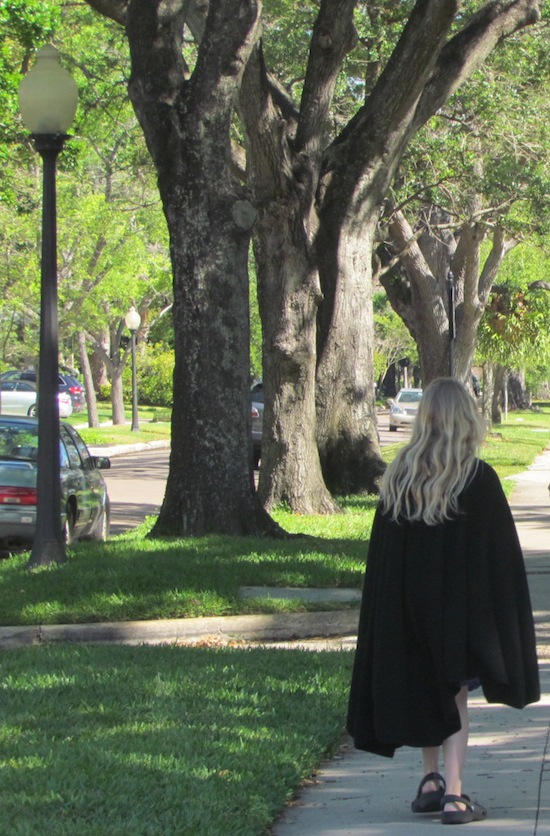
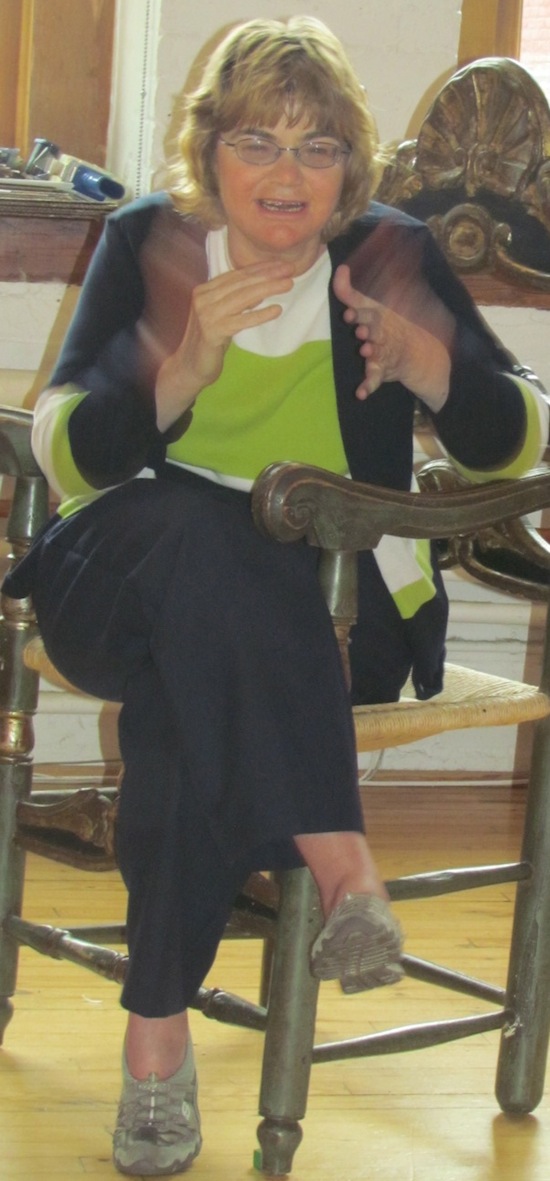
Em, having appropriated my black shawl, takes a morning stroll in Tampa

**Em

When Insights are Speculation

One of the things I’ve felt particularly confused by is why my daughter sometimes resists communicating.  My thinking has been – why would she resist doing the one thing that will help her get along in this world more than perhaps anything else?  The other day, I had a moment of clarity.  I came a step closer to “getting it”.  And now, I think I understand.  Not only do I think I understand, but I am able to identify and relate to that resistance, because, I realized, I do it too!  There are a number of things I resist doing, even while knowing that if I just did them I’d feel better and would be able to weather the vicissitudes of daily life a bit better.  I’d be happier, calmer, less anxious, and yet knowing this, intellectually understanding that this is true, does not make my resistance any less.

know being mindful and in the present gives me clarity and a sense of calm, I do not otherwise have.  I know this, and yet find it extremely difficult to be completely present for more than moments at a time.  My daughter has little problem with this.  In fact, Emma is far more comfortable in the moment than anywhere else.  I remember when we were inundated with therapists coming and going during those early years of fear and panic.  Richard and I used to comment on the irony that Emma was completely present and in the here and now far more easily than we were and yet we were constantly encouraging her to talk about tomorrow or yesterday or any number of other topics that had little to do with NOW.    We were pushing her to move away from the bliss of this moment to join us in the fear and anxiety of the non-present moment, all for the sake of the larger picture, which in our minds was to have her join us in our world.  Even though our world was fraught with expectations, hopes, dreams, wishes and the inevitable disappointment those things often bring.

We used to joke that if we could bottle what Emma came to naturally we would have no cause for worry.  And that really is the crux of most conversations.  They are usually not about the here and now.  They are almost always about some other time, some other idea, some other person, some other concern that is not now.  And yet…  

I resist being in the present and Emma resists being pulled out of it.   And yet, we non-Autistics continue to insist our world is better, or superior even as many spend thousands of dollars going on spiritual retreats, reading books about meditation and going to workshops to teach us how to “sit”.  So the question I am now asking myself is this:  Can I find the grey area of encouraging Emma to communicate with me, something that is difficult for her and pulls her from the bliss of now, while giving her plenty of time to be present and just be?  And what about my own resistance?  Can I learn to meet Emma in her blissful place of now and resist the urge to go off in my mind to somewhere else?

Of course there’s always a danger in interpreting my daughter’s behavior as any one thing.  Her resistance, like mine, is probably made up of many things, and this could be just one reason.  Or I may have this entirely wrong and her resistance is about something that hasn’t even occurred to me.  Or perhaps it isn’t resistance at all and is something else or I may find, next time we type together and when I ask her why, she will tell me something I hadn’t considered.  And that’s the beauty of all of this, I can’t and don’t know until she tells me.  Until then it’s just speculation and me projecting my stuff onto her.   So that’s more for me to be aware of – seeing when and if I do that and understanding that I am.

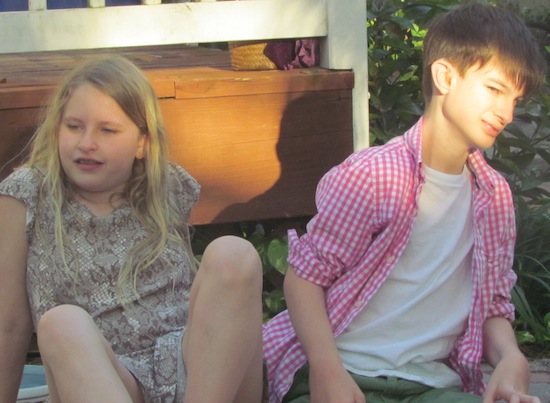
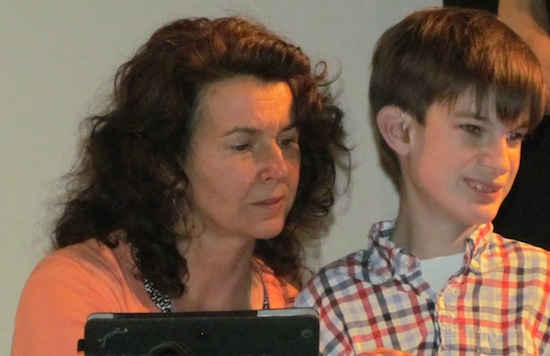
Henry and I sharing a moment of laughter at Emma’s antics

H & A

The Influence of Others

On March 1st, 2012 my life changed.  I had no idea it was about to change.  I had no idea a single blog post would impact my life the way it did.  I didn’t know when I clicked on the link a commenter sent me on this blog, taking me to someone else’s blog, that I was in for the ride of a lifetime.

I had no idea.

On March 1st, 2012 I read Julia Bascom‘s post ~ The Obsessive Joy of Autism.  A post she’d written almost a year before, but I was only now reading.  Her post begins with this, “I am autistic. I can talk; I talked to myself for a long time before I would talk to anyone else. My sensory system is a painful mess, my grasp on language isn’t always the best, and it takes me quite some time to process social situations. I cannot yet live on my own or manage college or relationships successfully.”

I had no idea.

I have read that post half a dozen times since I discovered it.  And then I read her post just preceding entitled Grabbers.  “The grabbers don’t believe that we can be happy or find meaning unless we are exactly like them…”

Read that again – “The grabbers don’t believe that we can be happy or find meaning unless we are exactly like them…”

As a parent I want nothing more than for both my children to find their way toward meaningful lives, lived with purpose.  That they will then also find happiness I thought was a given.  Or so I always believed.  Does that mean they must be like me?  Do I believe that their ability to feel happiness is reduced, lessened, not relevant, inadequate, inferior, if it looks different from my idea of what constitutes meaning and happiness?  Can I let go of my preconceived ideas pertaining to happiness and what that means for anyone but myself?  Do I even know what happiness is for me, let alone another?

I had no idea.

These were the questions that began to gnaw at me as I read Julia’s blog, Just Stimming.  I urge anyone who is not familiar with her blog to read it.  Just Stimming is beautifully written as well as powerful, poignant, evocative and for me anyway, gut wrenching.

Again, from her post Grabbers –  (**Words highlighted in bold are mine, as in Julia’s post those words are italicized.)

The hands are everywhere.

They’re at our chins. “Look at me,” with a face pressed in so close to yours that you count the pores until they force your gazes to meet.

…protesting just means you need to be grabbed more often, with harder and more insistent hands, until you realize that the way you move is fundamentally wrong, as wrong and deficient and disturbing and dangerous as you are, and if you want to be counted as a “you” at all you must let them grab you until you can stop your self.”

I had no idea and now I realize that claim begins to ring false, even to my ears.  How was it possible to not have considered this?  But no.

I had no idea.

“…Until you realize that the way you move is fundamentally wrong…”

The post ends with, “In the end it just comes down to you are wrong, and for that you must be punished. It simplifies to your body is not your own, but it is mine.

I am about four years old, we are living in the first house I ever lived in.  Our baby sitter, Mrs. Williams stands guard outside the bathroom where I have been told I will stay until I have had a “bowel movement.”  I am sure she will not let me leave, but I cannot go to the bathroom on command.  I feel anxiety course through my body, it is as though my entire being is encased in a net, I can breathe, but I am trapped.  I sit staring straight ahead, wondering how long before she begins to yell at me.  I am terrified of Mrs. Williams.  She smells of antiseptic soap and wears a nurses uniform that crackles when she moves and those awful white shoes you see in hospitals that sound like she’s stepped in chewing gum when she walks.  Her skin is pasty white and hangs from her body as though it were half a size too big.   But mostly it is her eyes, partially hidden by glasses lens that  do not conceal her anger and resentment.  Those eyes hurt to look at because I see so much that isn’t said.

Finally I stand, tip toe to the sink, grab my drinking cup and fill it with toilet water then pour the water back into the toilet and flush.  I place the cup carefully back on the edge of the sink and wait for Mrs. Williams to open the door, allowing me to escape.

Your body is not your own, but it is mine...”

Julia’s blog was the beginning.  It showed me a different path and urged me to follow it.  I did.  Along the way I have found countless other blogs and have even been fortunate enough to meet many of the authors of those blogs.  Because of Julia’s blog I met my mentor and friend Ibby.  Because of Julia’s blog I read E.’s blog The Third Glance, which I intend to write about in the near future.  Because of Julia I have become a  (I hope) better parent.  Because of Julia I see the world differently.  Julia’s writing opened my eyes.  I wonder if any of us can ever really know how deeply our words can impact another.  I don’t know that anything I write here can convey what this woman has done for me or how enormously she has influenced me and because of her influence the difference she has made to my thinking and life and by extension, my daughter’s life.

Julia lit the way.

Julia created The Loud Hands Project.

Julia, with ASAN (Autistic Self Advocacy Network) put together the must read anthology, Loud Hands:  Autistic People Speaking.  

Julia is also the editor of the just released And Straight on Till Morning Essays on Autism Acceptance.  I just downloaded this book from Amazon for $2.99 and encourage everyone to do the same!

Julia’s writing gave me insight.  She confronted me with her truth.  She makes me think and rethink what I believe, what I think I know and she has made me question everything.  This post doesn’t do her justice.  How could it?

To Julia ~ Thank you  

Trashing Common Misperceptions About Autism

“Trashing Common Misperceptions About Autism and Autistic People and Creating a New World” – that’s what I first wrote as the title for this post, but it’s a mouthful and given the limit on characters on twitter, I revised it.

We just returned from Tampa where Richard, Em and I went to a screening of Wretches and Jabberers and to stay with my friend Lauri and her family, or as Em referred to it, “Have sleepover with Henry three.”  Which is an apt description because we spent three nights there.  Four days and three nights of paradise.  Four days and three nights of being with another family and a whole group of friends, new and old who didn’t judge, but rather embraced, a truly inclusive group, coming together, eating, laughing, connecting, talking and typing.  It reminded me a little of my experience at the Autcom Conference this past fall, except it was far more intimate and this time my husband and daughter shared the experience with me.  For four days we were given a glimpse of paradise.   A little peek into what our world could be like, but isn’t…  not yet.

Many people believe, erroneously, that Autistic people aren’t as interested in having friends, developing relationships or crave having mentors as we, non-Autistics.  Those people have never seen Henry’s smile when he is around his mentor and friend, Tracy.
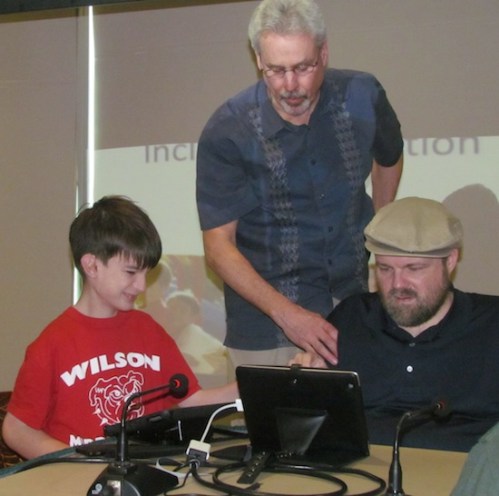
Henry & Tracy@USF

Those people who doubt, didn’t witness Emma’s tears last night when we returned home and she made me promise we would see Henry again and have another “sleepover” with him and his family.  They did not witness Henry and Emma’s laughter and joy from being around each other.

Em and Henry hanging out together by the pool

E&H -Friends

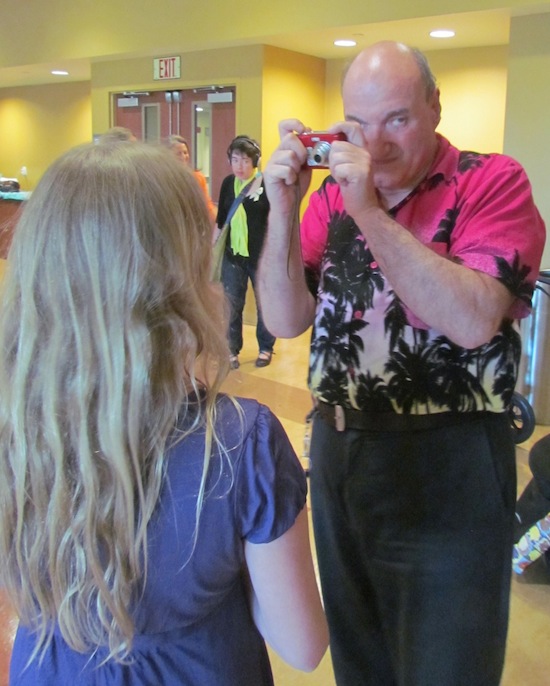
Larry takes Emma’s photograph – perhaps the single greatest compliment a person could receive.  (Amy Sequenzia is in the background.)

Larry takes Em's photograph

They weren’t there to hear Emma tearfully say last night, “Please Mommy.  Go back to Florida tomorrow?  Play with Henry again soon?”

Just because someone cannot or does not express with words their love for another in the way we might expect, does not mean they do not feel it.

Many believe that if a person doesn’t speak, or speaks with a great deal of scripting and echolalia they are not interested in communicating or have little to say.  Those people have never witnessed a typed conversation between those so-called, “non-speaking” or atypical speakers.

Harvey, Tracy, Pascal and Larry, the stars of Gerardine Wurzburg’s documentary, Wretches and Jabberers

H,T, P & L.

Emma, being the consummate performer that she is, could not resist occupying the seat Larry vacated during a break at the University of Southern Florida, the day before the screening, where she wrote for all to read – “My mom and dad hope to meet more people like Larry and Tracy.  Wow(*!)  I am stirring up a crowd(*.)  time to work with people at home in new york to show them it is the intelligent emma there…”  *punctuation was added by me for the purpose of this post and indicates the smile Em gave and the pause she took between typing “crowd” and “time”.

Harvey, Tracy, Pascal & Em @ USF

Em Types@USF

Many people are surprised to learn that even those who do not speak can have wonderfully nuanced senses of humor, can enjoy deep, meaningful friendships, have a great deal to say and are often far more profound than most speaking people are in any given 24 hour period.

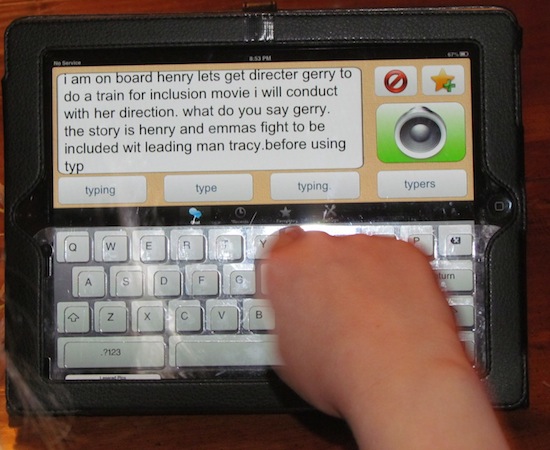
A conversation between Tracy, Henry and Emma about getting on board the “inclusion typing train” the night before the Wretches and Jabberers screening.  Tracy is to Henry’s right and out of the picture frame.

H &E type

Tracy, Henry and Emma make a “pitch” to Academy Award winning director, Gerardine Wurzburg who was standing nearby!
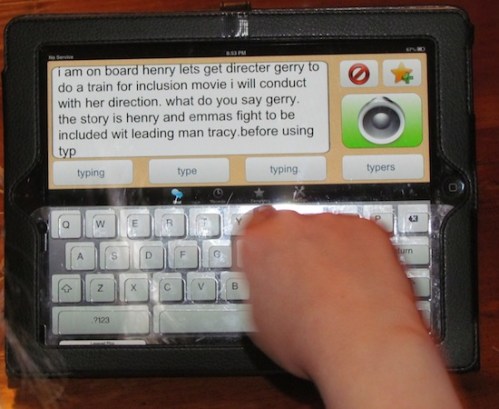
Em types

Em takes Gerry Wurzburg’s photo 

Gerry Wurtzburg

Many people assume Autistics have intellectual limitations commensurate with their “severe” and “moderate” labels, yet given appropriate accommodations this idea has been proven wrong again and again.  Yet another reason those labels are not only meaningless, but actually damaging.

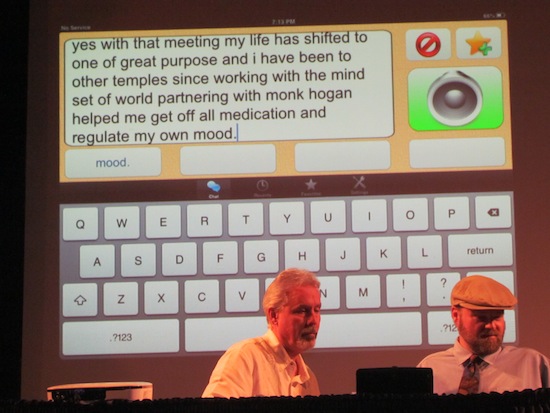
Tracy types in answer to a question from the audience about the impact the documentary and meeting monk Hogan has had on his life.
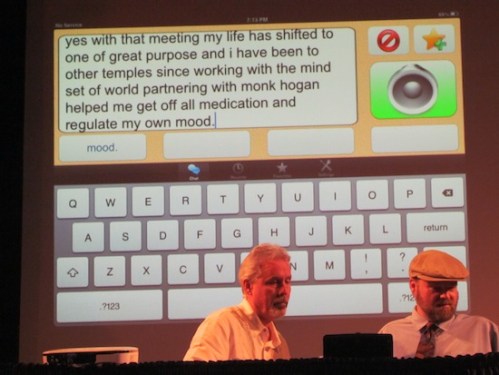
Tracy @ W&J screeening

Many people believe inclusion of Autistics in schools will “bring the other children down” and that inclusion in society will be harmful, when the truth is the opposite with many studies proving this.   (Why this even needs to be proven, is something I am still trying to wrap my mind around!)

Mary Schuh (director of development and consumer affairs at the National Center of Inclusive Education Institute on Disability) and Henry at the Wretches and Jabberers screening at the Tampa Theatre, April 6th, 2013.  Henry is now attending the public school near his home.
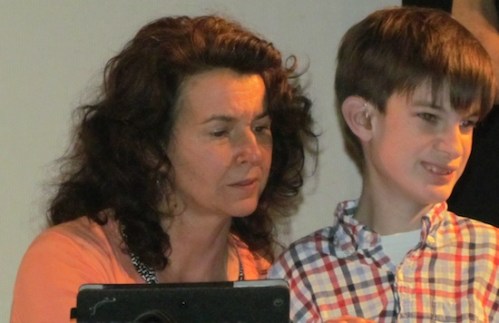
Mary & Henry

These are only a few of the beliefs people have when it comes to autism and Autistic people.  Yet, if people were able to witness a weekend such as the one we just experienced, I guarantee their minds would be changed and we would be one step closer to creating a new world.

*Emma approved this post.

Those Who Influence..

There have been a number of Autistic people who through their writing or by meeting them have greatly influenced my thinking and radically changed how I view autism.  Through their writing and/or our direct interactions I began to question everything I thought I knew.  I began to see that so much of the information I’d been given was false.  It was because of these people that I have a level of understanding about the problems with *functioning labels, the problematic issues surrounding *segregating Autistic children from other non Autistic children not only in the classroom, but in life.  I have a better understanding about how *important the words used to describe autism and Autistic people can do tremendous damage or, conversely shift the conversation to one of better understanding and progress.

*I have put related posts below for each of these topics.

All of this brings me to Ibby.

Ibby was/is someone who radically changed my thinking, and continues to change how I think about autism and my daughter.  I have written about Ibby before ‘here‘ and ‘here‘.  We met at a disabilities conference not quite a year ago, where she was presenting.  Ib has changed my life.  I don’t know how else to describe someone who is not only a close friend, but who has patiently advised me, explained things that I didn’t understand, didn’t judge me, never shamed me, but instead was kind, loving, compassionate and very, very patient with me.  For those of you not familiar with Ibby, I hope you’ll go to her blog and read her writing.  If there is one thing I would like to see change regarding autism”awareness”, it is that the public become familiar with Autistic people like Ibby, who are tirelessly speaking out and patiently trying to bridge the massive gap between public perception surrounding autism and Autistic people, and reality.

There are a number of people who have been crucial in influencing me, Ibby is one of them.

Related topics


What I Wish I’d Been Made Aware of When My Daughter Was Diagnosed With Autism

What follows are some of the things I wish I’d been told (and given) when we learned Emma was Autistic.  These are the things, in retrospect, I wish all those doctors, specialists, pediatricians, therapists and people who dedicate their lives and careers to autism had told me, but did not.  I believe our lives would have changed dramatically had we been told even a few of these things.  It is my hope that for those of you who may be at the beginning of your journey with an Autistic child, this list might help you avoid some of the many, many mistakes we made and a great deal of unnecessary pain.

1.  Seek out the work of Autistic people ~ most of the work I’ve listed was not available when my daughter was diagnosed, but it is now.  Take advantage of all that is out there, these people are leading the way.  If I had to choose just one thing that has had the single greatest impact on my life and the life of my daughter, it is these people.  My gratitude to all of them doesn’t come close to covering how I feel.  I have compiled an extensive list of blogs and books written by Autistic people as well as a couple of documentaries that are a MUST WATCH!   on the “Resources” page on this blog.  Please go take a look.

2. Autism is not a disease.  Read Don’t mourn for us by Jim Sinclair.  This may take some time for you to understand.  It’s okay.  Get the help and support you need so you can better help your child.  Try to think of autism in the same way you think about any groupings, a Mac and a PC, fiction, non-fiction, memoir and young adult, a shirt, a pair of pants, shoes and socks, a microwave and a gas heated oven.  Autistic, Neurotypical, Allistic, (or my personal favorite, coined by a friend) NT-NOS, we are all human beings.   Try not to judge one over another.  Judgment will not help you help your child.

3.  Presume Competence.  (This ‘post‘ helps explain what presuming competence means.)  If a therapy and/or professional does not approach your child with a presumption of competence, please consider finding one who does.  Tremendous long-term damage can come from not presuming competence.  Rethink how you view communication.  Listen to your child, not just to words, but to body language, facial expressions.  You may be surprised by the ways your child is communicating despite not being able to do so verbally.  Teach her to point with her index finger, first with support if needed and as time goes on, fade the support. Give her the appropriate tools and support so that she can learn to type or communicate by pointing to a letter board.    There are many wonderful iPad apps that can help with this.  Begin with sequencing games and colored tiles, or if she’s musical, notes.  Join them together to make patterns.  Show her first, have her mimic.

4.  Do not speak of or about your child as though they cannot and do not understand or hear you  (read Barb Rentenbach’s book for more on this).  This is something we did without thinking for years.  Sadly it is not the only regret I have, but one of many.  Still it is worth repeating.  Chances are your child can and does understand what you’re saying even if they do not show any signs that you recognize.

5.  Throw out everything you think you know and question everything.  There is a massive amount of misinformation/myths disguised as truth and fact regarding autism.  You may hear people say things like “They are in their own little world,” or “they are imprisoned behind their autism” these phrases are perhaps an accurate reflection of what non-Autistic people feel about the Autistic person in their life, but they serve to divide rather than unite and ultimately serve none of us. Be suspicious of anyone who says they know what causes autism or how to “treat” it.  Disregard any organization that describes autism and your child as tragic, an epidemic, a burden or any other word generally reserved for warfare.  If you read or hear something that causes you to feel fear, walk away, it is most likely inaccurate and intended to make you afraid.  None of us are able to help our children when we are terrified.  Fear can cause us to make decisions we will later regret.

6.  Set your child up to succeed.  My daughter is extremely sensitive to criticism.  Saying “No!” or criticizing her does not help her learn, but instead makes her feel badly about herself.  Encourage her with smiles and by asking her to try again.

7. Do not try to make your Autistic child behave like a non Autistic child, instead encourage your Autistic child to be the very best ______ (fill in your child’s name) they can be.  For more, read ‘this‘.

8.  Avoid comparing your child to any other child, Autistic or otherwise.  I have struggled with this one and continue to.  All I can say is, this is a work in progress. I hope one day to “know” this and refrain from doing it as it gets me into “compare and despair” thinking faster than anything else.  Emma is Emma.  She is best served when I remember this fact.

9. We parents are fallible.  We will make mistakes.  I’ve made dozens.  I wish I hadn’t made quite so many.  But I have.  If there is one thing I know without a doubt it is this – I will make mistakes, I am human.  I can admit my mistakes, tell my daughter how sorry I am, make a living amends to her by doing everything in my power not to repeat the mistake and continue to move forward without beating myself or anyone else up.  As my wise mother once said, “Show and tell your children over and over how much you love them, and one day they will forgive you.”

10. Get to know Autistic adults.  One of the single biggest misperceptions surrounding autism is that autism is only seen in children.  Autistic adults are often our best teachers and  many of them are leading the way so that our children’s lives might be better than their own.  These people are courageously and tirelessly pushing back against the deeply ingrained prejudices, biases and misperceptions that are rampant within our society.  (See #1)  It is my goal to honor these people who have beaten a path ahead of my daughter so that she may more easily live in this world that so often will not and does not accommodate her or give her what she needs to flourish.  They are speaking out, let’s all get behind them and give them the microphone so that more can hear what they are saying.  One day, the person holding that microphone might just be your child!

The year after Emma was diagnosed ~ 2005

Em - 2005

Autism Awareness?

It’s interesting to note that the word awareness, when paired with the verb “to be” as in – be aware, is easily visualized and thought of as, “beware” which dramatically changes the meaning.  It no longer is a word of benign information, but instead is a word of caution and fear.  I do not think this is a mistake.  I know it’s cynical of me, but I think Autism Speaks, the single largest organization involved in Autism and the creator of the “Autism Awareness” campaign, chose their wording carefully.  I’d like to think I’m giving them more credit than they deserve, but for a company that spends more on PR than they do on actually helping families and those who are Autistic, I don’t believe I am.

My awareness of autism has dramatically changed over the years.  It has changed because of the information I’ve found and been given.  In the beginning, my information came from books, autism organizations, various professionals, a couple of neurologists, our pediatrician; surprisingly the more “credentialed” the person was, the more likely they were to admit how little they actually knew about autism.  In retrospect this was my first real lesson in awareness – beware of organizations and those who believe they “know” all about autism, whether that is the cause or which specific methodologies, treatments or therapies your child will be best served by, because they do not know, despite how vehemently and persuasively they may speak.

As time went on, I became increasingly aware of my own misery.  The common misery supposedly shared by us parents, dominated the conversations surrounding autism.  I became fixated on the “fact” that autism was the cause of my misery and set about removing it from all our lives.  This is where awareness took me.  This was what I knew and understood.  But this is not the sort of awareness I want to be a part of.  This is not the kind of information I wish I’d gotten, nor is it the information I hope other parents and families will receive.  Those first few months after receiving the diagnosis are critical.  How we talk about autism and by extension our Autistic child changes all that we then do and where we focus our energies.

Autism did not cause me to be miserable.  I was concerned and I was scared, but my daughter’s neurology was factually not what frightened me, it was what I was being told about her neurology that terrified me.  Had someone said to me when we were still trying to get her out of diapers when she was seven years old – “it’s going to be okay, here are a couple of different things you can try, but remember most people do get out of diapers, eventually” I would have felt a little calmer.  Had someone said to us when our daughter was six years old, “read to her age appropriate material, teach her age appropriate lessons” I might have felt confused, I might have had a great many questions, but I wouldn’t have felt the fear I felt when we were informed she could not possibly be placed in a school with her same age peers.  Had someone said to us when we first received her diagnosis, “presume competence, she can and will learn, but she will learn at a different pace, she will learn differently than you might expect” I might have felt concern, but I would not have felt the kind of despair I felt when I questioned whether she was capable of learning at all.

If we want to have more awareness about Autism then let’s have it come from those who are actually Autistic.  Because if you are like me, these are the people who will change your views and shift your mind away from the “tragic” to the far more helpful information that might actually help you help your child.  The kind of information that opened our minds to different forms of communicating, different ways of learning, all those things that have actually aided us in helping our daughter.  Our judgments about her neurology and all it meant to us and her, did not help us do anything but feel more fearful and miserable.

Below is a small list of people I know and am in touch with.  I’ve provided a link to their blog, book(s) or film to each of their names.  I will feature more people who have helped me in my growing awareness during this month of April.  I’ve separated those who can speak, but depending on the circumstances lose speech, with those who mostly do not speak, but ALL communicate.  Want to become aware?  Read their words.

Non-Speaking Autistic:

Amy SequenziaBarb Rentenbach, Peyton Goddard, EmmaTracy Thresher, Henry Frost, Tito Mukhopadhyay

Autistic:

Ibby Grace, GareethKassiane, Paula Durbin-Westby, Landon Bryce, Julia Bascom, E., Renee, Judy Endow, Michael Scott Monje Jr.

Be the Very Best YOU, You Can Be

There’s a great deal of talk about acceptance regarding autism this month, which is a wonderful shift from all the talk about “awareness”.  As I think more about acceptance I am aware of how often I think about “embracing” as in embracing all that each of us is, without trying to mold ourselves to be something we aren’t.  What if instead of doing everything in our power to force our autistic children to behave like some imaginary and impossible non-Autistic version of themselves, we instead encouraged them to be the very best Autistic them they could be?  The same way we do everything in our power to help our non Autistic children be the very best they can be.

Isn’t that what all of us are trying to do?  Aren’t we all trying to be the very best we can each be?  So what does that look like, how do we do that?  Well, by recognizing what we’re good at, for starters.  One of my brothers is an astrophysicist and the other is a micro-biologist.  My mother was a chemist, my father a financial advisor and I don’t have a “science-y” gene in my entire body.  In college I did everything in my power to avoid both science AND economics.  These subjects are of no interest to me.  Were someone to tell me, well, you know, your most successful same age peers all love and excel at these topics, therefore you need to apply yourself more to them, and I was then forced to take these classes and was not allowed to pursue my love of art, drawing, design, literature and writing, I would be miserable.

I don’t want to spend my life crunching numbers, looking at stock portfolios, and peering through microscopes.  None of that interests me.  Hand me a book on quantum physics and I fall asleep.  The only good that comes from giving me books like that to read is the money I save on unfilled Ambien prescriptions.  I will never be, nor do I want to be, a scientist or economist, I accept this fact completely.  I don’t feel ashamed by my lack of interest.  I don’t feel this is something I should feign interest in.  I have other interests and talents; I focus on those and am very happy.  That’s what we all do.  We avoid the things we aren’t so great at, and often have little interest in, and focus on what does interest us and where our talents lie.  If we were lucky we also had parents who encouraged, supported and cheered us on in pursuing those interests.

Why should any of this be different for our Autistic children?  I don’t want Emma to try to be someone she isn’t.  I want Emma to be the very best Emma that she can be.  Which means I need to support her interests and help her find the best way to communicate.  Verbal language is tough for her, typing seems to help her access a part of her mind, that verbal language cannot, so we are doing all we can to support her typing.  How she communicates is not as important as that she be able to.  She loves to perform and sing loudly, so we have a variety of microphones and an amp that she can use to hone her singing skills.  She loves her books, so in between reading her favorite Miss Spider book, I am teaching her about arachnids, what they eat, how long they live, how many legs they have and how they spin webs.  Spiders are actually kind of fascinating. Even though Emma loves the Miss Spider books because one of them includes an electrical storm (lesson plan coming on that topic soon!) and Miss Spider has a great many big emotions, which Emma likes to act out, complete with wringing her hands and pretend tears and cries of anguish, there are a great many topics I can piggy back on, to teach her about things like – the weather, electrical storms, any and all big emotions, pretend and real, etc.

I want to encourage her to explore all of these things and more.  Last night she wanted to watch a really bad movie that she’d seen her brother Nic watching about a two-headed shark who attacks a group of teenagers.  And despite my misgivings about the content (and just awful quality of the movie in general… The acting is phenomenally bad, the shark is the best thing in the movie) it was age appropriate and I figured I could turn it off if it got too gory and awful.  There was a great deal of emoting and blood curdling screams, which Emma thought hilarious.  She kept saying, “Watch out, the shark is going to come and eat you!  Oh no!  He’s going to bite your arm off!”  Then she pretended to bite me.  Bad movie, great time was had by all AND I now have another lesson plan I intend to create regarding sharks!

Be the very best YOU, you can be.  Now that’s the kind of acceptance I can get behind!

Acceptance And A Webinar

When my daughter was diagnosed first with PDD-NOS and later with autism, I easily fell into the ~ I-completely-love-and-accept-my-daughter-but-I-do-not-accept-her-autism ~ mindset.  At the time, this seemed perfectly logical and I didn’t think a great deal more about it.  Autism was the “problem” after all, not her, and once we got rid of the autism, everything else would fall into place.  When people said the word “acceptance” and “autism” in the same sentence I nodded my head yes, while my mind carefully separated autism from my daughter, plucked the word from the sentence and placed it into a box before closing the lid.

It took a very long time for me to understand that my daughter and autism were not to be separated.  And it wasn’t until I began developing real friendships with Autistic adults that I stopped trying or wanting to separate the two.  Acceptance is much more than tolerating something or saying – okay I won’t actively fight this any longer.  Acceptance is an embrace, it’s understanding and actively celebrating difference, it’s about looking inward and asking questions.  It’s about self-reflection and digging deep into the darkness of preconceived beliefs and being willing to be wrong.  It’s about saying – I don’t know and I don’t understand, will you help me?  It’s about being vulnerable and not “right” and it’s about the excitement of discovery and being curious and open to different ways of being and seeing the world.  To me, it is the most exciting way to live life.

To say I’m grateful to all those people in my life whose neurology falls under the Autistic label, would be a vast understatement.

Today at 4PM eastern time, Brenda Rothman of Mama Be Good, Melody Latimer of AS Parenting and I will be speaking about Parenting Toward Acceptance.  The webinar can be found at the following link – http://www.icdl.com.

In other news, I was more than a little surprised to see this – Top 10 Social HealthMakers

The Audio Book is Finished!

Barb’s audio book is finished!  Ol’ Barb had me quoting Shakespeare, Stephen Hawking, Ralph Waldo Emerson and many others, as well as her own words…  It was an incredible process, with me wearing headphones, seated in front of a microphone in the sound room (or as I called it – the cave), while Barb and Lois (with Chad, the wonderfully upbeat and accommodating sound/tech guy sat in an adjoining room with a huge picture window so we could see each other) gave me direction, sometimes with hand signals, but more often with Barb typing her instructions, which Lois then read.  Chad alerted me to any technical issues that arose such as when a word sounded scratchy or slightly garbled or if I forgot a word or said a word incorrectly.  All in all it took more than 20 hours, probably more than 30 all told to record.

I am told the audio version of I might be you will be available for purchase and your listening pleasure by next week, but I will leave a link here when I have one.

In other news… I am doing a webinar on Parenting Toward Acceptance, Monday April 1st at 4:00 PM  for DIR Floortime, ICDL with Brenda Rothman, Mother and Blogger – Mama Be Good and Melody Latimer, Mother, Blogger – AS Parenting, Autistic Self-Advocate and Director of Community Engagement, Autistic Self Advocacy Network, ASAN.  I will leave a link Monday morning when I have one.  Until then have a lovely weekend everyone!

Light it up Blue? – No

I must interrupt my previously planned programming regarding the recording of Barb’s audio book, I might be you and mention the “light it up blue” campaign from Autism Speaks, as April is fast upon us.  I know a great many, really well-meaning people will be “lighting it up blue” on at least one day in April, but I urge you to reconsider.  For those of you who love reading links to other relevant posts on the topic, here you go…

Warning April is Coming! ~ Gareeth’s Blog

Autism Acceptance Day ~ This blog was started by Paula Durbin-Westby and originally began as a way to counter the “awareness” that Autism Speaks suggests it is promoting.

Tone it Down Taupe This April!! ~ From Radical Neurodivergence Speaking an alternative to the “light it up blue” campaign!  This is a MUST read and it’s also very funny.

For those of you who can’t cope with yet another link, let me try to explain.  “Lighting it up blue” seems like a perfectly benign and thoughtful thing to do, yet what is meant as a token gesture of caring and thoughtfulness, is actually anything but that.  Lighting it up blue is an ad campaign by Autism Speaks.  It is less about bringing any real awareness about autism or the lives being led by those who are Autistic and everything about branding and promoting that brand that is Autism Speaks.  It is a brilliant campaign.  Most people who “light it up blue” believe they are showing solidarity and support to Autistic people.  Most people would be shocked to know that Autism Speaks is the single most powerful organization promoting fear of autism by using language to describe autism as a “terrifying epidemic,” “a crisis” and Autistic people as “burdens” to society.

This quote is taken from Autism Speaks website:

“Acceptance
Ultimately, you may feel a sense of acceptance. It’s helpful to distinguish between accepting that your child has been diagnosed with autism and accepting autism.”

This sentence encapsulates everything I once believed and thought about autism and my autistic child.  This idea is incredibly destructive and insidious in it’s seemingly benign wording, but it is anything but that.  If we separate out the person from their neurology, what do we have?  How do we do that?  What exactly does this mean?  This sentence from Autism Speaks is exactly what is wrong with the organization.  You cannot accept your child while NOT accepting their neurology.  It is not possible.  Yet this is exactly what I believed for many years to the detriment of my child’s well-being, to the detriment of her self-esteem, to the detriment of who and what she is.  But I didn’t know that.

“Lighting it up blue” is not helping any of our children or those who are Autistic.  The only one who is benefiting from this campaign is the organization who came up with it – Autism Speaks.

So before you head to the hardware store to find some blue light bulbs or open your check book, please, reconsider.   Think how you would feel if this campaign was about your neurology.  Because as Barb Rentenbach has so beautifully written in her book that I am currently recording the audio version for,

I might be you.

Directed by Barb

Barb is a wonderful director.  Here’s an example of yesterday’s adventures and challenges for this verbal, literal-minded, non Autistic as I did my best to embody Barb in all her mischievous, non verbal, antics as described on page 56 of her book, I might be you.  This passage took me more than thirty minutes to get right:  “Freedom.  But the mission is far from complete.  No middle-class chain-link fence to hop and then pay dirt.  No, Sir, our musty mansion sits on acres of green, rocky earth dramatically sloping to the Tennessee River.  I take ever caution to avoid a tumbling fate.  Even the most mischievous princesses don’t swim in dirty water – Southern daddy saviors or not. I assume my most stable forty-five-degree stance and horizontally hike to the neighbors’ inviting castle, remove restricting PJs, and let the fun begin.

 “I think, Wow!  The water is so cold it may make my heart stop.  This sure beats picking or rocking stimulation.  I consider holding off on my 3:00 a.m. phone call-evoking mimicry because I fancy enjoying a longer prerescue soak.  Alas, my scrawny self control fails me again and I sound off with a loud medley of “”you are not going,” “You can’t get in the mail truck,” It’s a fire,” and other such bizarre phrases the sleeping wealthy find disturbing when emanating from their private estate.”

This isn’t a silly story about some southern belle with far too much time on her hands who is up to no good because she’s bored and wants to piss Mom and Dad off.  No, this is a description of Barb’s elopement in the middle of the night to skinny dip in a neighbor’s pool.  It’s funny, but it’s also not funny.  It’s poignant and powerful and yet it says as much about us “normals” as Barb describes those who are not Autistic, as it does about Barb.  Straddling that precarious razor-sharp edge of self-deprecating humor while not holding back any punches is what Barb does best, but say these lines out loud without the right balance of self-reflection, honesty, desperation and rage as well as humor and all those beautiful words Barb painstakingly wrote are lost.

So after each sentence I would glance up waiting for Lois to give me the thumbs up signal before moving on.  On that particular passage there were no thumbs up.  Instead I could see Barb’s bent head as she madly typed things like, “AZ you’re doing great.  But you have to give this more power.”  or “okay AZ you’re taking it too literally, you need to loosen up.” or “Again.   Not so monotone.” And so I would do it again.  And again.  And again.   And again.   At one point I had the thought – I’m not going to be able to get this.  But then I looked over at Barb rapid fire pointing at the letter board and I thought, Damn it.  I will get this.  I have to.  For Barb.  I have to get this right for Barb.  And then I’d take a deep breath and try again.  Because she has trusted me with her words.  She has given me the greatest privilege a person could give another, she has asked me to be her voice.  And that.  That is the single biggest compliment I have ever received from another human being.  And I’ll be damned if I don’t do her words justice.

As a quick aside, y’all (that’s for you, Barb) will be pleased to know I whipped through Chapter 7, which is entitled:  Autistic Sex:  For a Terrible Time, Call.  Because when the words are raunchy that whole upper crust, uptight, WASPY thing works beautifully and it’s funny just because the two are a perfect blend  of lewd and classy, which is… funny.

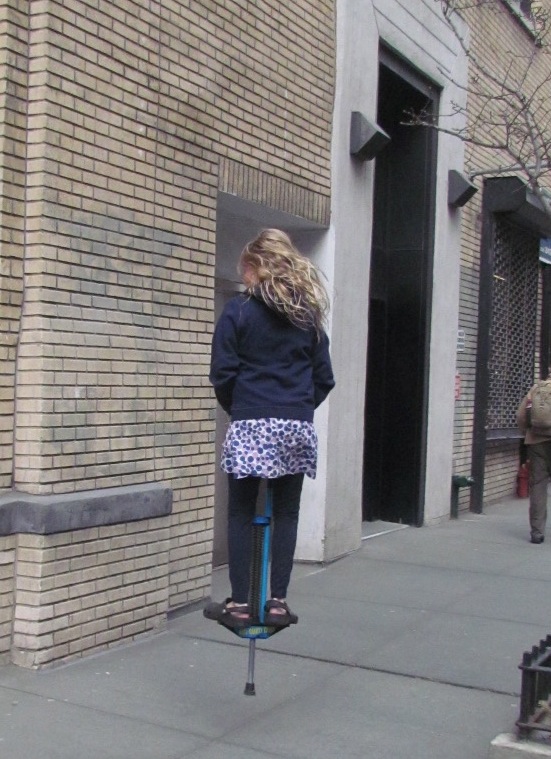
Em shows Lois how to jump on a pogo-stick

*Em on the pogo-stick

The Barb Show…

I’ve written before ‘here‘ and ‘here‘ about how I don’t always get jokes.  It’s not that I don’t have a sense of humor, it’s just that a great many jokes are hard for me to understand why other people find them funny.  Jokes or anything that starts with the words “Two” (of anything) “walk into a bar…”, or The Onion, (I can’t tell you how many times Richard will thrust some headline from the Onion at me, only for me to say, “wait, what?  I don’t get it.  Why is that funny?”) fall flat.  At this point, Richard now tells me jokes or shows me things that he knows I won’t laugh at because he finds my response as funny if not funnier than the actual thing.  Apparently humor is all the more so when someone is completely clueless. I’m good at that – playing it straight.  

For those who follow this blog, you know by now that I am in the recording studio all week recording Barb Rentenbach’s terrific book, I might be you.  Barb has a wonderfully nuanced and, at times, sarcastic wit.  I can do sarcasm, and wit for that matter, except, as it turns out, when I’m reading aloud someone else’s words.  In addition to this challenge of mine, when I’m nervous, my blue-blooded-upper-crust-WASPy heritage becomes even more pronounced.  So when I’m reading some of Barb’s naughtier bits, not only do my cheeks turn quite pink, I also pretty much stomp all over the delivery of a number of her otherwise humorous sentences.  Because if you read a sentence that is funny as though it weren’t and said it straight, carefully articulating each word as though doing an exercise in drama class, the humor is completely and utterly lost.  The only analogy I can think of that captures this is, imagine reciting the Commodore’s 1977 hit song, Brick House.  “She’s a brick —– ‘ouse, mighty, mighty, just lettin’ it all hang out…” but instead of saying the words as they were meant to be read, carefully articulate each word as though reciting a psalm in church.  I think that gives you an idea of what happened a couple of times in the recording studio.

Fortunately I do have a sense of humor and can laugh at my fumbling.  Barb and Lois were kind and patient.  Even when I had to repeat the sentence until I got the inflection right, they did not fall on the floor in hysterical laughter or poke fun.  I’m grateful to them.  Really.  Because truthfully, that had to have been pretty funny to witness.  The good news is, I was able to get it right… eventually, which is important because this book, this incredible book by Barb and Lois deserves to be heard as it was written, with elegance, eloquence, poignant power, laced with self-deprecating humor.  Every few moments I’d look up to see Barb beaming at me and Lois giving me an enthusiastic thumbs up and I would continue reading feeling exuberant and grateful to be involved in such an incredible project.

Barb showing Em encouragement later that afternoon.

Barb Rentenbach

The Adventures With Barb Rentenbach in The Recording Studio Begin!

I’m speed blogging this morning because I need to be in the recording studio in a little while where I will be at Barb’s mercy.  For those of you new to this blog, read Friday’s post ‘here‘.  For those of you who cannot cope with clicking on a link  – I’m recording the audio book version of Barb’s fabulous book  I might be you which she wrote with Lois Prislovsky.  Barb is non-speaking and writes with a sharp-witted, take no prisoners eloquence.  She is brutally honest in her description of her life as someone who is often mistaken as someone she is not.  For anyone who has ever felt they are on the fringes of society, felt they didn’t “fit in”, judged, seen as an “outsider”, as “other”, as less than, this book will resonate.  For anyone who has ever felt insecure, shunned, rejected, judged, criticized, and/or misunderstood, this book is for you.  I might be you is about how we are more alike than not.

I don’t know that I’ve ever been so excited to go into work!

More to follow…

“I Might Be You” – The Audio Version – Voice by Ariane Zurcher :)

Next week I will be in a recording studio taping the audio version of the wonderful book, I might be you by Barb Rentenbach and Lois Prislovsky.  *Doing a happy dance.  Barb asked me to be her voice a few months ago and without hesitation I agreed!  EEEEE!  Not only will I spend time with both Barb and Lois, but Barb will direct me to make sure I don’t mangle her beautiful words or trample on her often bawdy sense of humor.  It’s all in the delivery; I will do my best to make her proud.  Did I mention, Barb is funny?  She has a wonderful, edgy, R-rated sense of humor.  She avoids nothing and no topic is off-limits.  And while I’m not exactly a prude, I may get a little rosy-cheeked as I attempt to do her words justice, especially that chapter discussing masturbation, sex, or the lack of, and those hunky personal trainers who motivate her…  Taking a deep breath.  For those of you unfamiliar with the book, I wrote about it ‘here‘.  For those of you interested in purchasing a hard cover copy, and why wouldn’t you be (?) you can do so ‘here‘.  (I gain nothing from your purchase, other than the pleasure in knowing you will enjoy reading her book.)

I first met Barb and Lois at the AutCom Conference in the fall of 2012.  Their presentation was crowded, but I managed to secure myself a seat at one of the round tables.  I remember watching Barb type on a key board and being wonderfully surprised by both her self-deprecating sense of humor and how quickly she was able to type.  I admit, I couldn’t keep up as the letters whipped by while Lois read what she was typing.  Barb told of how it took her ten years to write the book because there were so many who simply did not believe she was actually writing the things that were being typed.  The assumption was that Lois or whoever was facilitating her was doing the writing.  But Barb being Barb, did not allow their doubts to stop her.  Now Barb is typing independently, her book has been published and the audio version is about to be recorded!  Woot!  Woot!

Do I need to say how excited I am?

Have I mentioned how honored I am to be Barb’s voice?

Stay tuned next week for ~ Adventures in the Recording Studio with Barb!