Tag Archives: Autism

A Few Thoughts…

I haven’t written anything on this blog for an entire week, the longest I have gone without posting something since I began blogging over three years ago.  A combination of things kept me from my routine, the first being – Emma and I were away, traveling to a new place with food we do not usually eat, people, most of whom we did not know, sleeping on beds we weren’t use to.  Everything about our environment was different, but there was something else too.  Something I can’t completely explain because I haven’t figured it all out yet.  Something that was more than just a disruption to routine, something about identity and society and how the two intersect and influence each other, what that means and how that changes the way we live our lives.  These are all thoughts that are more like wisps of random words than fully formed structures I am able to describe.  I am in the midst of these words, loosely pieced together ideas; I am twirling among them, investigating, looking, feeling and trying to be still in my discomfort of not knowing or being able to define.

Em and I traveled to a place that was created, organized and for Autistic people.  I took Emma because I wanted her to experience being in a place where her neurology was in the majority.  I wanted her to meet others who are more like her than not.  Em has not commented on our time away other than to say she had fun.  I, however, have a great many thoughts and feelings about being in such a place.  And I suppose the thing I felt more than anything else was how much more alike we humans are no matter our specific neurology.  But there is always a danger in making such a statement.  I have been accused of “sugar-coating” autism.  I have been told my daughter must be “high functioning” because surely if she were like their child it would not be possible for me to have come to a place of not just acceptance, but celebration of all that makes her who she is.  Some people have written that by accepting I am giving up.  They equate acceptance with resignation and doing nothing.  Others have said that acceptance will not get my daughter and others like her the services needed, that the negative rhetoric is necessary.

People have written me that they want to hear about the hardship, the difficult times, the pain…  they wonder at my decision NOT to talk about that.  To all those who come to this blog hoping to hear about the gory details of parenting an Autistic child – better to move along, you aren’t going to find that here.  There are countless blogs that do that far better than I ever could, even if I wanted to.  I lived too many years of my life neck-deep in pain and all that was wrong with this planet and my life.  And by the way, I did that well before I had an Autistic child.  I am more than capable of seeing the world as a dark and miserable place.  I don’t need a great deal of encouragement to go there.  Perhaps one of the greatest gifts I have been given is that I was once in such tremendous pain and know how easy it is to live in a place that feeds off that misery.  I have no desire to return to that mindset.

I am interested in hope.  I am interested in both being the recipient of and the giver of hope.   Hope gives me energy.  I feel invigorated by it.  When my daughter types something I have never heard her communicate to me before I am filled with joy. When she says something I have never heard her say, I am filled with happiness.  When she performs a new song, in Greek, no less, I feel proud, I feel excitement, I feel the beauty of her voice fill my soul, I feel bliss.  When my daughter reads something and makes a comment about what she’s just read I am euphoric.  When she tries something new, I am cheering her on.  None of this erases the moments of pain.  None of this means everything is simple or easy or that there are never moments of sadness or difficulty.

I will and do write about my own challenges, not because of my children, but because of who I am.  Placing blame on others for my issues and challenges is not something that helps me change and it definitely does not make me feel any degree of happiness.  My best moments with my daughter are spent when I have no expectations and greet each moment with wonder and curiosity.

“Type three colors,” I said this morning.

“…Violet, slate blue and red,”  Emma typed.

I’m in awe.

Emma’s ever-changing “string”

Em's String

Being an Anchor

Yesterday I wrote a post, Seeing But Unable to Believe about people who see people like my daughter and assume they are incapable of a great many things.  These are the people for whom presuming competence is not only the exact opposite of what they do, but is something they have trouble wrapping their minds around.  In the comments section of yesterday’s post, someone I adore, Chou Chou, who has been commenting on this blog for almost two years now, wrote, “…if I am walking in a confusing environment, I can hold Doc’s arm and find my way, and even lead the way. He doesn’t guide. He anchors.”  She was relating this to my thoughts about supporting my daughter while she types.   Even though my daughter can type independently, she is able to converse if supported.

He anchors.”  I thought about this idea ever since Chou Chou left it here.  The idea of anchoring is one I love.  It is exactly what I hope to provide for both my children; to be an anchor.  Solid, stable, grounded, rooted…   Being an anchor, someone who provides both physical and emotional support for another human being.  I think we all need that, I know I do.  I have a number of anchors in my life and I rely on all of them.  In the context of supporting my daughter as she types, I am reminded of something Amy Sequenzia told me once when I asked her about being supported.  She told me it was more than physical support that was needed; she needed to be able to trust the person supporting her.

Trust.  When I am with someone who I do not trust it is impossible for me to relax.  If I feel I am doubted or am on the defensive I have a much harder time getting my needs met.  If the person who says they are trying to help me, keeps ignoring my requests, continues to tell me I should need something else, I become confused.  I do not, for a second believe I am alone in my response to those who say they want to help, but who seem unable to hear me when I tell them what I actually need.

If you’ve ever spent time in a hospital or have been in a situation where you were accused of something you did not do, or have been told that what you’ve stated is not believed, you will have an idea of what I am talking about.  In a world where people are living longer, more and more of us will one day have to consider living without the independence we might prefer.  Many of us will need assistance, many of us will be forced to rely on others.  Being an anchor for those who need support is something each of us can give to another, but it is also something most of us will need at some point in our life, or if you are like me, throughout your life.

One of my anchors…

*Richard

Seeing But Unable to Believe

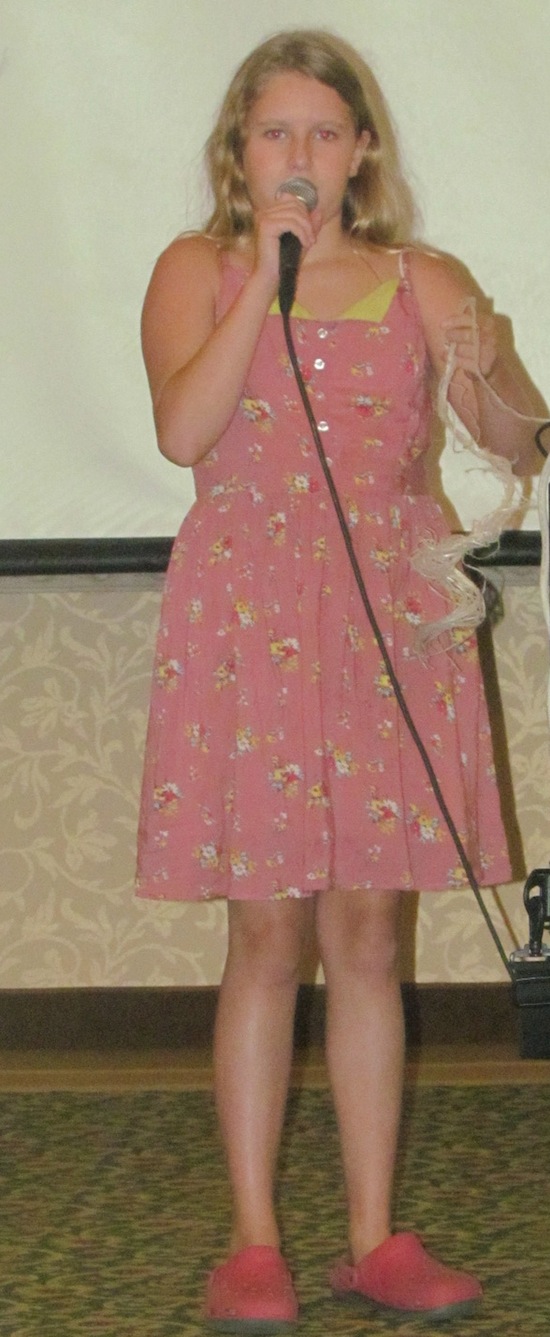
When some people hear that my daughter is Autistic they see a beautiful blonde haired girl with no noticeable physical impairments.  They see a pre-teen who has terrific eye contact.  They see someone who is happy and playful and who laughs often and with abandon.  They see someone who loves loud music, a good party and will grab hold of a microphone if given the opportunity.  They see someone who obviously loves to perform in front of an audience.  She doesn’t fit their concept of autism so they assume the diagnosis must be wrong.  They say things like,  “But I never would have known if you hadn’t said something.”

When it becomes clear that she cannot carry on a conversation with them, but demonstrates her intelligence by typing something with lots of insights and wisdom, they see a doting mother who is supporting her daughter’s arm or holding on to the other end of a pole and they assume it is all a manipulation.  They decide it is me who is writing these things, “putting words into her mouth”.  After all my daughter cannot carry on a conversation, how could she possibly be writing such beautiful words?  Later, when I am no longer present they might say, “Poor thing, she’s deluding herself about her daughter, of course she would, how could she not?  It would be giving up all hope to do otherwise.”

In our field, assumptions about labeled people are so deeply rooted that we tend to think they are facts.  They are not – they are only shared beliefs.” ~ Autism: Sensory-Movement Differences and Diversity by Martha R. Leary and Anne M. Donnellan

I explain that my daughter is typing these things, but needs support to do so, without that support, which is in the form of resistance, she will impulsively revert to her favorite scripts, and they think to themselves – that doesn’t make sense.  How is that possible?  She can type independently now, why don’t they just leave her alone and let her type what she wants?  If she can’t type these things independently, it must not be coming from her.  Her mom must be writing those things for her daughter.

I then talk about how my daughter is doing math, multiplication and division (in her head) without any formal training and they think – well, that simply isn’t  possible.  That can’t be.  They look to see if my daughter is somehow being manipulated, prompted, even though she is not being touched.  When I state that my daughter is reading faster than I can, they wonder – but how can she really know that for sure?  When Emma then obviously passes reading comprehension multiple choice tests, they think – well, but it’s just a coincidence, after all it IS multiple choice, that’s much easier than if she had to write an essay.  Those who do believe, assume she must be the exception.  They say things like, “But my child/the child I work with can’t possibly do that. You’re so lucky.  Your daughter is very, very special.”  They place my child into a little file in their mind.  A file entitled –  anomaly.

When you have enough exceptions you have to start questioning the legitimacy of the rule, the assumptions, and the paradigm.” ~ Speechless by Rosemary Crossley.

I have interviewed  a great many non-speaking Autistic people and published our conversations here and on the Huffington Post.  I have an entire page on this blog devoted to Resources, the first list is of all the blogs and writings of non-speaking Autistics that I know of, but there are a great many more that I do not know about.  Even so, people will write about how those non-speakers didn’t really write their own words or, conversely, they say –  isn’t it wonderful that these individuals are so amazing and an inspiration, but they are exceptional, they are not like my non-speaking child, or the children I teach, or the children I work with or…  Perhaps they are right, but what if they are wrong?

I would rather have my daughter surrounded by people who believe her capable than around those who do not.

Ariane Zurcher, Amy Sequenzia and Ibby Grace at the ICI Conference ~ A conference dedicated to accommodating those who do not speak

Me, Amy & Ib

Variations in Neurology and Other Ramblings

I say I’m an addict and you envision a bum passed out in a gutter on the lower East side.  I don’t look like that bum.  I don’t fit that image.  So you smile at me and say things like, “well, you can’t really be addicted to food, can you?” or “oh you’re not really an addict, why label yourself that way?” or “you just need to use a little more self-control,” or “why can’t you just stop?”

I call myself an addict, not because I am active, but because I cannot allow myself to forget that my brain is hard-wired that way.  Once active, I can’t “just stop.”  I call myself an addict because that is the best descriptor of how my brain works.  I accept this.  I know this about myself.  There’s no judgment, it is what it is.  I call myself an addict because I don’t have the wiggle room to say I’m not.  Whenever I delude myself into thinking maybe, just maybe I can do x, y or z just this once, I’ve opened the door to addiction and I can’t afford to do that.  Once I become active, I may be able to stop, but I may not and that’s not a risk I am willing to take.  For twenty-two years I lived as an active addict and by the time I finally found the support and help I needed, I was ready to end my life.  It is not a way of life I want to revisit.  (I’ve written about some of this, ‘here‘, ‘here‘ and ‘here‘.)  But people have a tough time with this concept.  People who aren’t addicts, find this difficult to grasp.  That’s okay.  They don’t need to understand it.  I just need to keep doing what I’m doing.

There are things I need to do that help me stay “clean”.  I need support from other addicts.  Those friendships and relationships are not only important, they are essential.  All of us have a similar vision for each other and ourselves.  We place our shared vision above individual personalities.  If a disagreement arises, we try to remind ourselves and each other that our common goal is far more important than whether we like or dislike someone.  We try hard to keep away from gossip, judgment and personal attacks as best we can.  We talk about progress not perfection.  We mentor each other and reach out to those who are struggling.

Within these principles there are a great many tools that help us.  For me, the single most important thing has been realizing that when I behave with integrity, and by that I mean, do not lie, cheat, take advantage of another, treat others as I would like to be treated, do my best to keep my energy directed at my behavior and actions, reach out to those who may be struggling, listen, learn, remain curious and tapped into the wonder of life and all that I do not know, then I will live a far better life than if I do not do these things.  This also is the only method I know of to stay free from my addictions.  It’s pretty simple, right?  Simple, but not easy to practice.  I often don’t get it right.  But I keep trying.

I bring all of this up because there are many of us who have neurologies that differ from the majority.  As I said, judging my own or anyone else’s as good or bad, better or worse is unhelpful.  It is what it is.  We can get caught up in semantics, we can argue about addiction or any other neurological variation from what is considered the “norm”.  But more importantly (to me anyway) is the vision.  Many do not agree with that either.  My vision includes a society of inclusion.  I am reminded over and over that compassion and love are actions.  Who I am and the way I behave have nothing to do with what others think of me.  There are people who need support to do things I can do without thinking.  Things I take completely for granted, like communicating.  There are people whose lives could be transformed from one of misery to one of purpose if their neurology was accommodated.

In yesterday’s interview, Tracy said, “The man I am today is because my autism is the gift I was given to be a leader to anyone who has ever felt less than human based on their appearance. Martin Luther King knew that hurt and he took it to the mountain of peace. My mind is more like a Mensa candidate than I can type. My life is a testimony to the lesson of humanity. Like Larry typed “More like you than not” is the guiding principle to inclusion.”

We are all more alike than we aren’t.

A Conversation with Tracy Thresher

One of the things I love about having a blog are the conversations I get to have with people I would not feel courageous enough to approach and/or get to know.  Tracy Thresher is one of those people.  Tracy Thresher and Larry Bissonnette are the stars of Wretches and Jabberers, the documentary by Oscar Award winning and two-time Academy award-nominated filmmaker Gerardine Wurtzburg.  Wretches and Jabberers follows two non-speaking Autistic men, (Tracy and Larry) as they travel the world, reaching out to other non-speaking Autistic people in an attempt to change public perceptions surrounding intelligence and autism.

“Leading man, Tracy” as he often jokingly refers to himself, is a terrific public speaker.  I have seen him speak through typing many times now and each and every time I am riveted.  It isn’t just the poetic way Tracy puts words together, it is his humanity, his humor, generosity, and ultimately, his tremendous compassion for this world and the people who inhabit it, that makes people sit up and listen to every word he taps out one painstaking letter at a time.

The following is a dialogue Tracy and I have been having for about seven months now.  It has taken so long because of our schedules, but also because I could not stop asking more questions.  Every time Tracy answered one question, I would have about ten more.  Tracy was not only patient with me, but his kindness infiltrates his every response.  As this conversation could go on and on, as far as I’m concerned, I thought I better post what we’ve been discussing thus far.

AZ:  Tracy, how would you describe the documentary, Wretches and Jabberers that stars you and Larry Bissonnette?

TT:  Our film catapulted me to realize my dream of traveling the world to educate, learn and change old attitudes of discrimination toward people of varying abilities. The Larry and Tracy duo illustrates how intelligence is often worked out in a much different way. Our journey takes us to places of enlightenment and our humanity, humor and intelligence comes shining through our typing. Our mission to spread the reality of our amazing intelligence through our typing is our way of promoting the Presumption of Competence dispelling myths. Our story is one that is a road trip for two friends who are in Larry’s words “more like you than not”.

AZ:  “More like you than not” is such a wonderful description.  So much of the literature surrounding autism is about the “deficits” of Autistic neurology compared to non Autistic neurology. Can you talk about the assets and the similarities?

TT:  In my way of thinking, my experience initially was uncontrollable anger for the life I had trying to break through the misunderstanding in school. Kids can be brutally honest, reflecting the language that was the accepted norm in my childhood. Labeling kids is crippling. MR (mental retardation) on a diagnostic chart equates to NOT a candidate for the honor roll. Now I am able to communicate the reality of autism. I met Monk Hogen during the filming of “Wretches and Jabberers”, shining his wisdom on my autism. My true desire and purpose in life is breaking the walls of injustice down and my autism is the gift God gave me. I now focus on how I am connecting with all kinds of people through my work on the road. The high I feel in my own community is so wonderful, knowing that people want to know me. The man I am today is because my autism is the gift I was given to be a leader to anyone who has ever felt less than human based on their appearance. Martin Luther King knew that hurt and he took it to the mountain of peace. My mind is more like a Mensa candidate than I can type. My life is a testimony to the lesson of humanity. Like Larry typed “More like you than not” is the guiding principle to inclusion.

The anger on stage during my presentation in Japan was related to the lost opportunities in my education. I kept shouting out my automatics like “Look at me now! The kid you told one another to keep in isolation now is mentoring students which is healing salve to old wounds of injustice.” The other anger in Sri Lanka is more about the heat in the way it took my overly heated mix of perspiration soaking my clothing to extreme discomfort. Also, the popular foods in their culture are not in my comfort zone. Finland washed my anger, turning my heart to love of the climate. The cuisine helped too. Primarily, beautiful lands of countryside put my spirit at ease. Henna melted years of lost hope by crumbling away the feelings of isolating my heart to love.

People in the world often fear the paradox that autism usually presents. Larry and I mostly felt gracious vibes in our travels but the camera crew likely alters reality. To reflect on the cultural attitudes, the typing of my international friends is the true compass pointing to injustice.

AZ:  For children who may be trying to cope with similar frustrations and anger, what do you suggest to them and their parents, teachers and therapists?

TT:  This is my mission to show kids and their supports that putting communication to the top of their list of priorities is vitally cleansing to the mind. Releasing deep thoughts is the key to alleviating anxiety. Frustration leads the body to unproductive anger. Being able to show intelligent thought is the path to happier futures and true quality of life, leading to purpose. That is what I sought and found with typing.

AZ:  Was there anything others might have done to help when you were overwhelmed with anger?

TT:  Harvey and I have trust in our partnership. I need his firm yet kind support to stay on course with managing my autism. Harvey and I work well together. Typing is my outlet and open communication is the key.  Long term shared goals helps to keep me on track. Harvey’s commitment to my communication is the big time dosing of calm energy that I need. The commitment to presuming competence is the major breeze of refreshing air to cooling anger.

AZ:  You communicate by typing, but need someone to support your typing.  Why is it necessary to have someone physically supporting you? 

TT:  Impulse to type out my most irritating automatics like going to radio stations or wcax news gets looping in my mind. Having good facilitators is helping me to slow my typing to think and connect to my inner thoughts. I also need high goal of working on fading physical support to be more independent and type with lessening support. Building trust is critical to fading.

AZ: What issues and resources do you feel are most important for a parent to be aware of when encouraging their child to self-advocate?

TT:  I look up to pioneers in the FC world like Annie McDonald for her courage in the looking with the harshest disbelief on her typing. Rosie Crossley I also find gave me hope with her tell-it-like-she- sees-it firm approach. On a daily basis, the man of firm guidance is Harvey Lavoy. Harvey is my guru of staying focused. I would say he is my mentor of communication.

AZ:  When and how did you begin typing?

TT:  I was one lucky man to meet Alan Kurtz in 1990. Alan was motivated to unlock my wisdom. He treated me to intelligent conversation. Alan picked up on my eyes grazing on morsels of typing in magazines and the local paper.  I was one of the first people in my Green Mountains of Vermont to be treated to this life changing mode of communication. I was 23. Alan unlocked years of pent up chaotic thoughts. My intelligence was masked by autistic looping of hurtful labeling.

Early Supports:

I had my job coach Donna. Donna was kind and gentle. I liked her. Her support for typing limited me to Kinney’s work. It takes time to build foundations of trust and to build connections. Alan presumed my competence. The feeling of being spoken to in an intelligent manner was exhilarating. My inner thoughts hid in my mind looking for light like trees needing to flourish. My true communication jumping out on thin strips of paper was like first steps, shaky building of freeing my mind.

AZ:  Did you know you could write, but had nothing you could write on or with?

TT:  I could put letters together in my mind to make them join to form words. It was my life to play with vocabulary in lonely times. I did not think too much about how I could put my thoughts out on paper. The labeling I heard made for pesky lapping up of my hope for sharing my thoughts.

AZ:  How hard was it to start typing?

TT:  The torch of my fiery need to have a communication partner passed from Alan to Harvey Lavoy. Looking into my dark deep chaos was like unlocking madness. I held many hard grudges toward a label of retardation. The looping replay was non-stop with no way to talk or vent to Mom or a friend. Using miserable behavior is release of the locking in of intelligence. I had lots of my pre-scripted looping thoughts coming through my typing; things like radio and my local news station WCAX. My inner thoughts got masked in too much of holding on to my autism. I did not know the term proprioception then. Lack of knowledge of my own body ticked me off. My movement looked like no control in the beginning. Harvey had many arm wrestling contests with me. Ha-ha.

AZ:  Was it frustrating?

TT:  Oh big time ticked off was my typing in my starting out with Harvey. I had my liking of typing with my days with Alan. Mighty communication got put to the derailed track when Alan moved to Maine. Harvey took my brutal frustration in stride. I was brewing with lots of anger. I worried I would lose my life line of typing.

AZ:  Did you immediately feel motivated and liberated?

TT:  I did feel the tangled web of thoughts trying to be set free. My body was like a tight coil pulling so anxiously; did not easily break free to allow for liberation. Harvey motivated me by talking to me about self-advocacy. I began to hope life would be mine to choose. Emerging from despair is hard work. The power of typing took my mind to freeing the grip of autism but it took lots of grueling typing sessions.

AZ:  Were you resistant to typing at first?

TT:  My body took over my logical mind many times. I often ran from the typing space out to the parking space trying to regulate. It did not help to be gulping Mountain Dew. My impulsive habits with food led me to not think with clarity. I needed much support from Harvey to stay in my typing space.

AZ:  If yes, did anything help with the resistance?

TT:  Placing high expectations on me truly is my need. Harvey looked me in the eye to insist that I decide my purpose in life. To be in control I needed to make big changes in my life. I had terrible grating on Mom’s nerves yelling to be rid of. Holistic life of Buddhism is my goal but I easily revert to junk food at times. Harvey leads me to mindfulness by pointing out hard truths to help me make thoughtful choices.

AZ:  What did it feel like to be able to communicate in a way that people seemed to finally understand?  Was it at all scary?

TT:  Typing lifted my label of retard. Scary, it was not. More like “Take that!”  I had begun my journey to change perceptions. It was like the locking in of my voice was over. I was giddy with hope.

AZ:  Lots of people who watched Wretches and Jabberers have asked about your living situation.  Do you mind answering the question so many continue to ask – What is your living situation right now?

TT:  My Mom and Dad live near my week day home provider. I have my Wednesday family dinners. My mom is very involved in my life. I made the choice to leave my parents’ home to embark on my journey toward having a life of my own. It has been arduous at times but I have learned hard lessons toward life of my own making. Right now I live in one place Monday through Friday. I spend weekends with my family or with my weekend provider. I am working with my team on finding a place of my own.

In addition Tracy sent me a word document which he said I could share with all of you:

Many people have tried to help with my residential situation. I would like to clarify my search is plagued with difficulties of lack of knowledge in the way I would like to be supported. My family is my greatest place of stability but my idea of independence is having my own home to hang my hat, to set up in the way I choose. Mom has been there my entire life to help me on my path to being the independent thinker I want to be.

It is my time to search for the place I want to live that is both independent oriented but gives me the right thinking type of support I need. By that I mean it is necessary for me to have physical cues to get my body moving not bossy final answers made by others. My dream is to be in my own place where I make choices of the groceries I wish to buy; the decorative theme is of my choosing; the communication is open; the weekends’ activities fill my desire for exercise.

The most important thing is the commitment to learning how to support my typing. I have to let it be known that my family would never turn me from their home; this is my desire in my search for being in control of my life that I want to make for myself. I know my fans mean well to help in my residential search. For me it is more than a hook to hang my hat on; it is being in peace in my way of living where I make the house rules in cooperation with my like minded roommate.

For more on this blog about Tracy and Larry click ‘here‘, ‘here‘, ‘here‘ and ‘here‘.

Tracy – 1991
Early shot Tracy

Tracy at the ICI Conference – July 2013
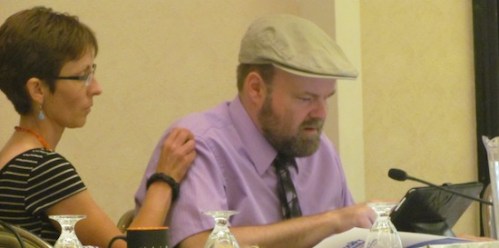
Tracy @ICIConference

The Snowball Effect

The snowball effect began with, what I now think of as, a leap of faith.  Richard and I leapt into that great abyss better known as the unknown.  It turns out this was actually not true, it would be more accurate to say we chose to neither believe nor disbelieve, but instead began to examine all we were being told.  Perhaps it’s better to say that instead of leaping into we jumped out of.  From there it was more of a hop to begin presuming competence.  However, as a commenter on this blog said, “presuming competence isn’t enough.” And knowing what we now know, I have to agree.  It’s the starting point.  It’s like that initial leaping off point, it’s just the beginning.

At the moment we are experiencing something akin to being in free fall.  It’s the feeling of discovery, limitlessness, surprise, and pure ecstasy that comes with being present without expectation or preconceived ideas about what should or will happen.  Our perspective continues to change as we move along.  Like any great adventure, the path is at times rocky, but the triumphs are exquisite.  As we move deeper into this process it becomes easier and more familiar to be solidly in the discomfort of the unknown.  There is bliss in that.  True bliss.

Last fall I wrote a post about how I was worried Emma was not comprehending a story that had been sent home in her back pack from school.  It was a simple story, perhaps 1st grade level reading with some questions that she seemed unable to answer.  In the post I write how I am trying to find ways to help her reading comprehension.  I talk about presuming competence.  What I am struck by now is not Emma’s level of supposed incomprehension, but by my own.  I reread all the comments just now and am amazed, amazed that though I thought I was presuming competence, I was only able to go so far with my presumptions and, as it turns out, wasn’t going far enough.  I could only presume as much as my limited thinking would allow me.  The idea that she was not only comprehending this story, but was so far beyond it, was not something I was capable of fully understanding, let alone considering.  I was much more stuck, as it turns out, than my daughter was.

Now jump forward to yesterday afternoon, almost nine months after I wrote the post I refer to in the above paragraph.  Emma chose to talk about adjectives.  We watched the BrainPop movie about adjectives and then she took the quiz.  I copied what Rosie had done, asked her to read the questions silently to herself while using a laminated card to direct her visually and then quickly guided her to read each of the four multiple choice answers.  She only hesitated once, on a question about a possessive adjective, but otherwise breezed through the quiz with 90% accuracy.  Not only was Emma reading faster than I was able to, but she was accurately answering the questions faster than I could read them, let alone answer them.

The snowball effect:  “The basic workings of a literal snowball effect can be illustrated by taking one’s average baseball-sized snowball and dropping it down the side of a snowy hill. As it descends it gathers more snow and whatever leaves, sticks, etc. are in its way. The snowball accumulates not only size, but speed.” ~ From the Urban Dictionary

Self Portrait

photo

Audio Book “I might be you” Giveaway!

Barb Rentenbach, author of the wonderful book I might be youwhich if you haven’t read it yet, you must, is giving away the audio version to the first 5 people who click on this link and enter your name.  Ready… set… GO!

For those of you new to this blog or who may have missed the posts or who read them the first time, but can’t remember them any more or those of you who want a refresher course on all things involving Barb (and why wouldn’t you?) I wrote about recording Barb’s book last spring, you can read all about it ‘here,’ ‘here,’ ‘here‘ and ‘here‘.  If you want to hear directly from Barb about the giveaway and why she is doing this, read her post “Introducing: ‘Ask Barb’

Now I’m going back to bed because I seem to have caught some nasty bronchial cough, runny nose, sneezing, achy, maybe even feverish horror that I mistakenly thought was allergies but that I am now convinced is a distant cousin to whooping-cough.  In other words I’m miserable and unless you want to read an entire post about just how awful I feel, you should go now and pick up that FREE audio book quickly while they last.

No, no, never mind me… *coughing while feebly gesturing you to get on with your day.

Barb Rentenbach & Lois Prislovsky in the recording studio (I was in the ‘cave’ aka recording booth with headphones on)

Barb & Lois

Emma’s Story

Emma told me I could post her story on here this morning.  This is a story she wrote yesterday with Rosie (Rosemary Crossley).  Rosie developed a technique more than thirty years ago to help people with a variety of issues, specifically those that make speaking difficult or impossible .  Em held onto a tube with one hand while Rosie held the other end as Emma typed.  Rosie began yesterday’s session by asking Emma to write a story that began with either, “once upon a time” or “one day.”  I was standing near Emma, with Richard, Joe and Em’s teacher, Katie, all watching as she typed the following.

“One day there was a boy called george. He had been in afight can’t tell you how he got into the fight but he was bruised all over.  He fought a lot and his teacher was very angry.  The next day he was all purple and his mother said you can’t go to school looking like that.  The very clever boy covered himself in flower and his teacher thought he was sick and sent him home.  The end.” 

Not sure I can actually continue writing here…  but I’m going to try… *Breathe*

I have read this story more than a dozen times already.  I know I’m totally biased, but I’m just going to say it – what an incredible story!  There are so many layers to it.  This story that Emma wrote with great concentration, with little pause is the first story she’s ever written.  She was focused and when asked about the word “flower” she verbally said “powder” in explanation.  Rosie explained that flower/flour are words that sound alike but are different in meaning.  Rosie explained that the powder kind is spelled “flour.”

But there’s more…  A little later Rosie brought out a math app called Math Magic where Emma proceeded to zip through addition, subtraction, multiplication and division.  None of this is particularly noteworthy, except that Emma has never been formerly taught division.  She was choosing the correct answers from a field of four.  A sample equation is:  “56 ÷ 8” and the multiple choices available were: 2, 9, 7, 6.  Emma chose the correct answers independently.    Allow me to say that again.  Division.  Emma chose the answers independently.

It was at this point that I felt so many things all at once it was almost impossible to speak.  But more than anything I kept thinking about how we continue to underestimate our daughter.  I had no idea she could do division.  Not only can she do division, she can do it quickly.  There’s another app Rosie recommended – Brain Pop and Brain Pop Jr. which Emma also did as we watched.  Not only did she listen to the short lesson, but then read all the questions silently, read the multiple choice answers and chose the correct answers.  It seems verbal speech is tricky, particularly when she is expected to answer questions verbally.  When asked to read silently and then identify the correct written statement by pointing to it, Emma did beautifully… about Ellis Island, no less!  The only interaction Rosie provided with both the math and Brain Bop was to use a laminated card that she silently moved across the words as Emma read and she did not allow Emma to point to any answer until she’d finished reading all the choices.

I cannot imagine how awful it must be to be so capable and yet treated as though you were not.  I imagine it must feel like being “bruised all over.” I imagine it must feel like you “fought a lot”.  My wish for my daughter is that she may continue to do all that she is doing, while we provide her with every opportunity to flourish and continue to show the world how very “clever” she is.  The only limitations are the ones we provide.

I am incredibly grateful to all who believe in her, all who have helped and who continue to help us so that we can be better parents to our daughter.  The list continues to grow…

Rosemary Crossley

Rosemary Crossley

On Being Fallible

At the conference Em and I just returned from I was confronted by someone who told me I was being disrespectful of my daughter.  She actually went further and said I had spoken “inappropriately” to her.  Furthermore she said these things to me in front of a room filled with people, all of whom could hear her, because she was leading the presentation.  Yup.  It was one of those moments when you really wish the floor would arbitrarily open up and allow you to slide into its blissful dark, abyss.  It was also the final day of the conference and I was feeling pretty fragile and emotional.  My ability to filter was at an all time low, my ability to think logically was pretty much non-existent, and finally, my ability to hear her and reflect on her words without defensiveness was hovering in the red-high-alert-grab-your-oxygen-mask-we’re-going-down-save-yourself range.  It was one of those moments you wish had never happened, but more to the point you wish you’d never said the thing that was being criticized so publicly.  It was a moment of intense shame.  And my first thought was – defend, defend, defend!

But remember, I was in overwhelm before her words had found their target and I didn’t feel strong or able to fight back, nor did I feel I was in a position to fight back, after all not only was she leading the workshop, she was someone I have a massive amount of respect and admiration for.  This is someone I had looked forward to seeing ever since I was told we would be in her workshop.  This was the person I’d read about and anticipated meeting with eager excitement.  Meanwhile there my daughter was, typing out “I’m happy.”  To which she said, “I’m guessing you’re happy when your mom gets called out on her behavior.” Ouch. Ouch.  Ouch.  Let’s just get a knife while we’re at it and see some real blood.

But here’s the thing…  she had a point.  The details aren’t relevant, what is, though, is that if I am speaking to my Autistic child in a way that I wouldn’t speak to my non autistic child, then that’s clearly a problem.  If I am speaking to my Autistic child in a way that I would speak to my non autistic child, (as was the case in this instance) and someone who has spent their life working with children and advocating for them calls me out on what I’ve just said, I need to, at the very least, consider their words and reflect on my own.  I have never claimed to be an ideal parent.  Years of parenting has taught me that sometimes I get it right, often I get it wrong, but hopefully I will always be willing to look honestly at my actions and behavior without defensiveness, but with a desire to learn and be the best parent I can be one day at a time.

So if someone says something that really hurts, when their words pierce, I’m old enough and smart enough to spend some time thinking about my reaction and at least try to see where the other person is coming from.  Sometimes people say things without the necessary information, sometimes people say things that hurt because they are operating from a set of false assumptions, and sometimes hurtful things are hurtful because there is truth to their words.  I’ve spent the last 36 hours trying to figure out which of these was true or if it was a combination of things, but more importantly, I have reflected on whether the sentence I said to my child was the best way I could have spoken to her and if it wasn’t, what would have been.

Even in my state of overwhelm, I was able to whisper to Em right away, “I’m so sorry, Emmy.”  And I was.  But I was also angry with this other person.  I still felt the need to defend.  I still wanted to “save face” in front of this room filled with people.  But instead I went silent and tried not to cry.  Shame.  Shame is brutal and though all of us have probably felt first hand what it feels like, we also probably, inadvertently have shamed others without realizing it or even meaning to.  I know I have.  The above example is a case in point.  Without meaning to – I had shamed my daughter by questioning out loud what she’d just typed.  I get that.  I have enough humility to know that I make tons of mistakes… every day…  but I also know the beat up job that is my default reaction to making a mistake is not a healthy one.  I’m working toward more measured and thoughtful responses.

One of the things I love about Pascal Cheng, the first person to help me begin supporting Emma with her typing was that when I did something that he saw was unhelpful, he would/will say, “May I give you some feedback?”  He then says things like, “Instead of saying, ‘No!’ ask her if that’s the word she meant to type.”  He has taught me to try and give her just the right amount of resistance (to make sure that she doesn’t go to favorite scripts) combined with the emotional support and encouragement she needs to continue typing with me. Pascal models the same respectful interaction with everyone he comes into contact with.  When I grow up I want to be like Pascal.

But in the meantime, I am looking at my words and seeing how important it is for me to be aware and conscious and respectful of my daughter.  Perhaps the better question I must remember to ask myself is not – would I speak to my son this way, but, would I want someone else to speak to me this way?  The beauty of life is that  we can always improve if we want to.  And I desperately want to.  My goal isn’t to be “right” or never to do anything “wrong” or to make someone else “wrong” when they confront me, my goal is to have the willingness to look honestly at my behavior and the things I say and do, face my mistakes and learn from them.  That’s my goal for this short life I have been given.

Me and Em at the ICI Conference
Me & Em

Transitions

We returned home last night from the ICI Conference (Institute on Communication and Inclusion) at Syracuse University and though it was wonderful to see those family members we’d left behind, being “back” is hard.  I don’t do transitions well. As a kid I would eagerly anticipate having a sleepover at a friend’s house weeks in advance, only to return home depressed.  It is still like that.  It often takes several days before the weight of sadness, that accompanies returning from a place where I’ve had a terrific time, is lifted.  Even though all that excitement, fun and the constant interaction with lots of people is exhausting.  Yesterday I was so emotional I knew I was in overwhelm, but we had a whole day of presentations ahead of us, so I ploughed through.

When I reach this point of exhaustion and overwhelm I become emotional.  Anything can set off a torrent of tears.  If someone says something even remotely critical the tears begin to flow, watching a movie, saying good-bye, tears and more tears; it’s as though the social dam I’ve constructed gets chipped away until there are too many cracks to hold the feelings back.  Everything becomes intense, my friends become a lifeline, it’s no longer just nice to see them, I feel dependent upon them, as if without them, I may die, words spoken with anything other than kindness, feel like knives, music induces feelings of pain and euphoria all at the same time.  I am hyper aware of and easily overloaded with the feelings and interactions and the sheer numbers of people.  This is how I’ve always been.  I understand this about myself.  I am able to function, barely, but not without lots of tears.  So much so that Ibby handed me her plaid handkerchief at one point, causing me to cry even louder and harder and then came over and hugged me as I sobbed on her shoulder.

I become hyper aware of the injustices of the world, I feel both ecstatic to be among so many wonderfully accepting people, while also horrified by the “real” world we live in and must soon return to.  The disconnect starts to feel impossible.  I begin to believe the change so many are trying to create will never come about.  I slide helplessly into despair.  And then I bolster myself up by remembering other people’s words.  At yesterday’s keynote address with Jamie Burke, Sue Rubin, Tracy Thresher and Larry Bissonnette, Tracy typed,  “Larry likes typing out poking fingers on hurtful labeling to push his wrecking ball toward brick walls of structures of old thinking.  What I intend is to push my own ball of fiery passion of change to the global stage and shatter the glass like Pascal did in the city.  Pascal clumsily broke the water glass; Tracy intends to go about the Inclusion Movement more like George Clooney.  Charming Tracy’s plan; worldly connections repairing injustices is the wretches-in-arms plan.”

I have the choice to join all those who are using their “own ball of fiery passion”.  It feels less like a choice and more like an honor.   We can join each other.  Linking our arms, united in making society understand that to include is in everyone’s best interests and all will benefit.

I am ending with photographs from the last three days spent immersed in a world that accepted, appreciated and above all else, presumed one another competent…

Ibby
Ib

Christine Ashby
Christy

Rosemary Crossley
Rosie

Em types with Leah
Leah& Em

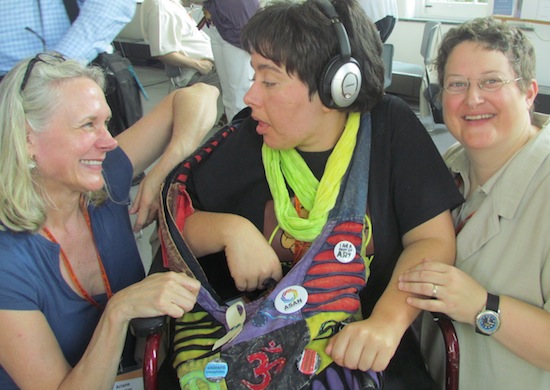
Me, Amy & Ibby after our presentation, “Blogging to Communicate”
Ariane, Amy & Ib

Em takes the stage
*Em


Ibby & Larry Bissonnette
Ib&Larrry

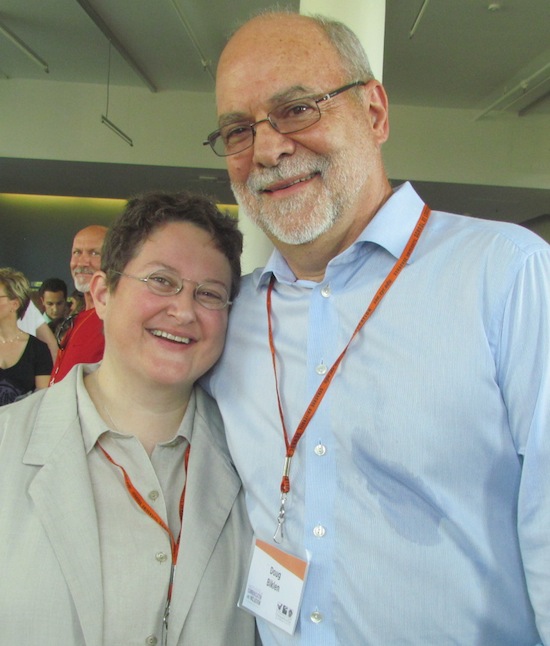
Douglas Biklen and Me
Doug &Me

Doug Biklen and Ibby
Ib& doug

Doug Biklen & Amy Sequenzia
Doug&Amy

Mark Utter during the Q & A after the screening of his film, I am in here
Mark Utter

Anne Donnellan
Anne Donnallan

Typing with Emma
Me & Em

Sue Rubin
Sue Rubin

Tracy Thresher
Leading Man Tracy

Emma’s String
Em's String

Em, Mark Utter & Ibby
Em, Mark & Ib


The ICI Conference – Day 2

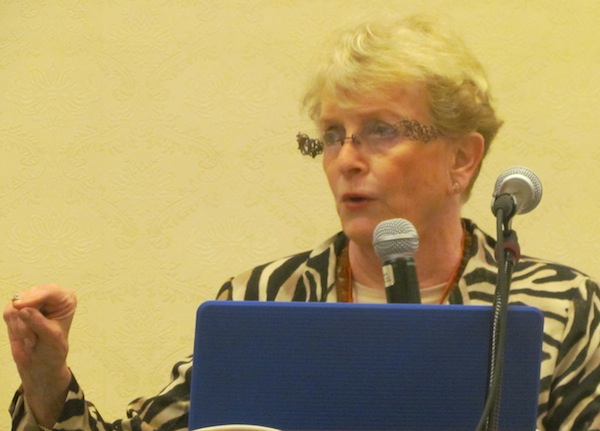
Anne DonnallanDr. Anne Donnellan, Professor in the School of Leadership and Education Sciences at the University of San Diego gave the keynote address yesterday morning.  She said,  “I’m very happy to say, when it’s true – I don’t know.”  This sentence should be framed and placed inside of every doctor’s, educator’s and professional’s office.  In fact, this should be in every human being’s home, office, place of work, car… well, you get the idea.  Anne went on to say, “If you don’t know the answer, if you’re not sure, what are you going to say?”  She waited for those in the audience who speak to shout, “I don’t know!”  I have pages of notes from Anne’s speech which centered on how autism is mischaracterized as a communication, behavioral and social deficit, yet the massive sensory-movement issues that most Autistics experience is completely ignored.  Early in her presentation she said, “We didn’t notice people with autism have bodies.”  And a little later she said, “We tend to invent knowledge.”  I will be reading Anne’s book, Autism: Sensory-Movement Differences and Diversity by Martha R. Leary and Anne M. Donnellan.

The bulk of the day was spent supporting Em in her typing.   (I dreamt last night Em had taken over Emma’s Hope Book Face Book page!) Our session with Rosemary Crossley was terrific, with a young woman who is aiding Rosie, and all of twenty years old, came over and expertly supported Em in her typing.  Em proceeded to inform us that “math is not my favorite subject in school” and “The subject I like is english.”  Which… yeah…  because excuse, me young lady, but there’s this blog with YOUR name on it, all set to go!  Trying hard to contain my excitement.  Em then typed, “I am very creative.”  And in answer to my question about whether she’d like to maybe write something for the blog at some point, she typed, “I would like that.”  Yet as I write this, I paused just now and asked her if she’d like to write  something now, to which she gave me a resounding “NO!”  But she did say that she didn’t mind if I quoted her in the sentences above.  This is a work in progress for both of us!

Emily and Mark UtterAfter lunch Em and I watched a wonderful documentary by Mark Utter called, “I am in here.”  Before the movie began Mark typed, “i am totally happy you all are moving with me down this fine river.”  Mark is wonderful, and I have to say, he is one of my new favorite friends, even though we have exchanged few words.  I intend to devote a post to his creative and moving movie about what daily life is like for him and how he would respond to people were he able to talk.  Mark is one of a number of people we have met that I hope to stay in touch with.

PascalLater Em and I met with another family who also live in New York City hoping to have a conversation between Em and a non-speaking teen.  Pascal agreed to help facilitate, but as it turned out, I was able to work with Em pretty well with only a few pointers from Pascal.  It was a great day, though it’s really hard work for Em.  Later she typed with Pascal, “Much of my work with people is patterns and things like spelling is like that…”  And then she added, “And I love to work with Pascal.”
This photograph of Pascal was taken by Emma.

I must end this post now, but not before saying, these conferences are profound.  They are profound because of how they are completely unlike the world we live in.  They include, embrace and celebrate difference.  Every person is treated with respect.  People are allowed to be, without judgment.  It is bittersweet to be here, because this afternoon we will have to leave and return to the world that is not even remotely like this tiny piece, of what can only be described as, paradise.

Live From The ICI Conference In Syracuse!

IbYesterday began with Ibby, as any proper day should.  Ib, assistant professor, blogger, activist, advocate and all around amazing human being, gave the keynote opening day address at the Institute on Communication and Inclusion here in Syracuse.  The room was packed.  Everywhere you looked people milled about from all over the country, ranging in age from under ten years to over seventy.  Some sat in wheelchairs, others moved their bodies back and forth, from side to side, some quickly in staccato gestures, others more slowly and rhythmically. Verbal utterances were not cause for stares or frowns, this was not a “quiet room” but a room filled with the sound of human beings in all their vibrant diversity, being themselves without censorship, without admonishment.  You can’t go to a conference like this and not get swept up in the beauty of unedited human beings being.

Ib & SteveJust prior to Ibby’s address I met the wonderfully talented, Stephen Kuusisto of the blog Planet of the Blind. Steve is a poet, author, professor, disability advocate and Fulbright Scholar.  Douglas Biklen, Dean of the School of Education at Syracuse University introduced us. This is Doug’s final conference as acting Dean and so I am particularly grateful to be here before he leaves.

This photo of Ibby and Steve Kuusisto was taken during Amy Sequenzia, Ibby and my presentation, “Blogging to Communicate.”

RosieAfter the keynote, we went to our “Hands-On Skill Building Workshop” with Rosemary Crossley.  Rosie is the one who developed facilitated typing more than 30 years ago in Australia, so I was very eager to meet her, finally.  Rosie went around the room and asked people to introduce themselves.  When she came to Emma, Em sat up and said loudly, “I don’t want to type!  My name is Emma.” To which Rosie said, “Oh! Hello Emma, how old are you?”  Em responded with, “I’m nine.” (Em is actually eleven, but tells people she’s nine, when asked.)  “Have you ever been to Australia?” Rosie asked.  “Yes!” Em answered. This time, however Rosie had a small machine that she held with a “yes” and “no” button on it and a laminated square with the words “yes” and “no”.  “Have you been to Australia?” she asked again.  This time Em, without hesitation pressed the “no” button.  A little later Rosie came and sat next to Emma and asked, “What’s your favorite color?”  While supporting Emma’s elbow, lightly with one hand, Em typed, “Pink.  What’s yours?” Then Em astonished me by continuing to type, “I hate yellow.”  Hate?  Seriously?  I hate yellow too, but really, I had no idea my daughter hated anything, much less a color!  Presume competence.  I’m going to reread that post I wrote…

RalphLater in the day Ralph Savarese and Steve Kuusisto presented on “Autism, the Brain and Poetic Creativity”  where they led participants in a poetry writing workshop.  After which Emma typed to Pascal, “really am telling my sameness self that its good to find different ways to that things and watching Ralph is fun.”  So there you go, Ralph.  A solid endorsement from Em.

Amy Sequenzia gave a personal and moving presentation about blogging and why she blogs, followed by me and then Ib who also spoke about why blogging is such a terrific platform, not least of all because it is interactive and immediate.  Ib then opened our presentation up for questions and comments and then…

Ib, Amy & Ariane

well, and then Em indicated that she’d like to say a few words, so Ib introduced her and Em took over, beginning with – “Ladies and Gentleman…” and ending with a list of all the various doctors, therapists, and people we once took her to see, followed by a list of all the people who now help us.  “Now we have Pascal and Harvey and Ibby and Ibbia (because Ibby has been given her own country, apparently) and Soma…”   Take it away Em!

It's the Em show

*I have to interrupt this post as I have to get to Anne Donnellan’s keynote starting in 30 minutes.  Peyton and Dianne Goddard sent me a copy of Anne’s book two weeks ago and I’ve been carrying it with me ever since.  So when I ran into Anne yesterday I pulled it out and showed it to her.  She is lovely and I cannot wait to hear her.  More to come!

One last photo though before I leave you…

Me with Amy and Ib – you guys rock!

Me, Amy & Ib


Being the Adult I Want my Children to Become

“Are you the adult you want your child to grow up to be?” ~ Brené Brown from her book Daring Greatly.

Are we being honest here?

Because if we’re being honest, then – no, no I’m not.

I could hit the publish button right now and call this a post, but I’ve got a couple of things to add here.

From Daring Greatly – “…we should strive to raise children who:

  • Engage with the world from a place of worthiness
  • Embrace their vulnerabilities and imperfections
  • Feel a deep sense of love and compassion for themselves and others
  • Value hard work, perseverance, and respect
  • Carry a sense of authenticity and belonging with them, rather than searching for it in external places
  • Have the courage to be imperfect, vulnerable, and creative
  • Don’t fear feeling ashamed or unlovable if they are different or if they are struggling
  • Move through our rapidly changing world with courage and a resilient spirit

Now read every one of these things as a directive for yourself, like this:  Embrace your vulnerabilities and imperfections.  Feel a deep sense of love and compassion for yourself and others.  Carry a sense of authenticity and belonging with you, rather than searching for it in external places.  Don’t fear feeling ashamed or unlovable if you are different or if you are struggling.

I am becoming increasingly aware of how often my critical responses to my children are often reflections of my deepest insecurities. I don’t want them to make the same mistakes I’ve made.  I think I can control their future by making sure they understand just how serious all of this is.  I admonish my son for forgetting to feed the cat, while remembering the time my parents left me in charge when I was fifteen, two years older than my son is now, and how I forgot to feed the horses and had nightmares for years afterward.  I try to remember to phrase my sentences as – You forgot to feed the cat, what might help you remember?  Instead of my knee jerk response of “Did you forget to feed the cat again?  Why can’t you ever remember to do that?”  Because, wow, there’s a world of difference between the two…  and yes, I’ve said both.  The first is when I’m being the adult I want my children to grow up to be and the second is the adult I hope beyond measure they never become.

I worry about what a neighbor is thinking when he asks how we are and my daughter responds with, “Yeah, baby Teddy can’t go on the pogo stick.  Baby Teddy might fall and hurt his head.  Baby Teddy will cry and have to go to hospital…” and then describes how the doctors are going to have to put a breathing mask on baby Teddy.  I stand there feeling increasingly uncomfortable, because I care what our friendly neighbor thinks or because I’m afraid of what this might say about me and the things we put her through years ago?  And even as I am writing this, I marvel at how she really was answering his question, far more honestly than I ever would dare.

The truth is my children are closer to the adult I’d like to be, but am not yet.  I figure since my husband is hard at work figuring out the whole anti-aging thing, I’ve got at least as many decades ahead of me as I’ve got behind me to work on this goal.  I’m grateful for that, really.  I’m going to need every year I’ve got left.

“Have the courage to be imperfect, vulnerable, and creative”

Yup, check.

“Move through our rapidly changing world with courage and a resilient spirit”

Yup, check.   I got this.

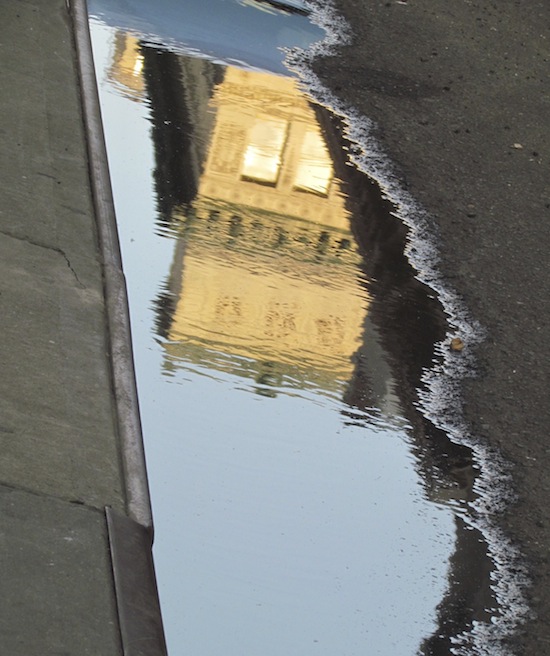
Reflections in a puddle

Reflections in a puddle


Beauty in Being

A couple of years after my daughter was diagnosed with autism, a well-meaning acquaintance said to me, “God must think you very strong.”  It was one of those comments you wish the person hadn’t said.  I understood they meant well, I understood it was some sort of convoluted compliment, I understood they meant to be something like supportive, but it felt awful.  Least of all because I have never gained any solace from the existence or non-existence of the G-word, but mostly because of its obvious prejudice to those who are Autistic.  The person then followed that sentence with this next one, which was like a second jab to the solar plexus.  “I could never handle an Autistic child.”  I stood there in stunned silence.

At the time I think I probably looked away and tried to untangle the multitude of feelings that surged through me.  But today, now years later, I have a couple of things I want to say.  Let me tell you about my beautiful, perfectly wonderful, very human, child.  She is like the sunlight that glimmers off the leaves of an Aspen tree.  She is that first ripple that appears on a crystal clear lake, extending outward in ever-widening arcs.  She is the sound of rain on fallen autumn leaves, she is the smell of sage brush after an electrical storm, she is the glimmer of morning sunlight when it first appears rising up over snow capped mountains, she is imperfectly perfect and a gift and yes, a blessing.  And if I’m going to be completely, utterly selfish, I must say this:  she has taught me more in her short eleven years of existence than any book, spiritual leader, graduate class, academic study or person I’ve ever read, listened to or met.

I know Emma’s life will have challenges because of her specific neurology.  I know she will often have to fight harder, prove herself more often, work more doggedly and persistently than her non Autistic peers to accomplish things that many do not even consider accomplishments, but assume are a given.  Yet there are some things she can do and will learn to do that will be easier for her than many of her non Autistic peers.  I no longer see autism as a road block, but more as a different road all together.

Every morning I wake up filled with gratitude for my family.   But it is my daughter, my beautiful, beautiful daughter who has introduced me to a world I never knew existed.  A world that is beyond anything I could have imagined, a world filled with other Autistic people who enhance my life and the world on a daily basis because of their existence.  Emma has taught me the true meaning of gratitude.  She impacts my life in ways I will never be able to fully describe or express.  Gifts are like that.  Strength has nothing to do with receiving gifts.  It does not require strength to see the good in others.  It does not require anything actually.

That is another lesson my daughter has taught me –  the beauty in being.

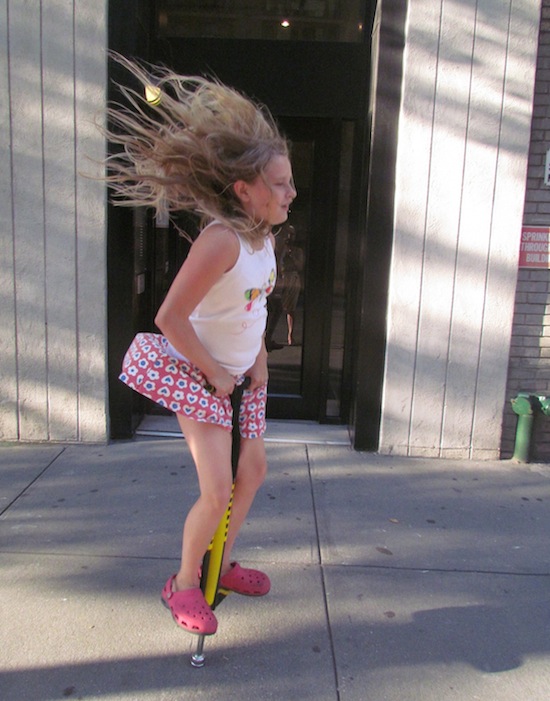
Em testing out her new pogo stick.  Her record?  62 bounces.  

*Blue Pogo Stick

  • Reflection (whereartandlifemeet.com – Ariane’s other blog)


We Are Like Your Child: The Blog

*To Emma’s Hope Book followers – This post was password protected so that those I quoted could read it first and give their approval before I published.  They have and now it is here for everyone to read!

We Are Like Your Child is a new blog created by a group of people, all of whom have been instrumental in helping me understand autism and what it means to be Autistic.  These are the people I think of as my mentors.  They have helped me more than I can describe.  They are a diverse group in every way, but one.   They all have lived their lives with the same neurology as my daughter.  They are Autistic.  These are the people I often reference when I talk about how our lives changed.  It is their voices, their lives, their stories that have changed mine.  To say I’m excited to introduce their collective blog to all of you, doesn’t really sum up what I’m feeling!  I am grateful.  I am incredibly grateful.

This is exactly the sort of blog I would have devoured, had it existed in 2004 the year Emma was diagnosed.  The year when everything was so terrifying.  The year I began, unsuccessfully, to look for adults who might give me insights into my child’s mind.  We Are Like Your Child is created by those adults.  I will be following eagerly and closely.  Posts so far have included such topics as time agnosia, how one person dealt with having meltdowns as a child, routines and what happens when they are disrupted, and life skills.

A number of the blog’s creators agreed to answer a few of my questions.  (Thank you everyone!)  What follows is a group interview representing the many voices and points of view of its creators.

What is “We Are Like Your Child”?

“We Are Like Your Child is a collective, community blog by disabled, mostly neurodivergent folks.  The name comes from the whole declaration of “You aren’t like my child!  You can X, Y, and Z!” that we hear all too often.  The thing is, my way of doing Z, Y, and X is vastly different from how most people do, because I have a profound inability to do Q, G, and -7 but am absolutely rockin at P, F, and pi or whatever.  So this is kind of a place to write about our self accommodating mechanisms, the workarounds we use to function in a world not even a little built for us.  It’s a collection of coping strategies.  It’s our difficulties.  It’s our strengths.  It’s a collection of awesome people talking about our unique problem solving. ”

“We are more like your children than you know… and while we are all different, we are a roadmap of sorts, a set of guideposts pointing to the many potential directions your child may end up journeying to in the course of their life.”

“There are difficulties and sometimes they are very difficult. I actually do talk about them on tinygracenotes fairly often but since it is in the context of relating to what someone else is asking, perhaps that does not stand out the way it needs to. In this blog, we want to have our stories show that things are sometimes difficult and sometimes very difficult, and yet we live lives.” ~ From the post Lost, Mistimed and Melty.

Why did all of you create this blog?

“The most common stories in the media about disability tend to be inspiration porn or people who have a disability but have never had any problems ever (a subset of inspiration porn) or are the tragedy, doom, gloom narrative.  We are presenting a bit more reality than that.  Reality is sticky and messy and complicated and beautiful and difficult and sparkly all at once.”

“We love your child.  What?  You say we do not know your child?  No, maybe not.  But your child is a member of our tribe, our neuro-tribe, our extended family of those who share similar types of brains and similar ways of being in this world and so we do love your child and we want to try to help the Hard Knocks in their School of Life fall a little softer than they did on us.”

” The number one most important thing to guide you in your journey of parenting an Autistic child is your child.  Listen to your child – really listen.  The number two most important piece of your map in the huge love you have for your child.  Feel that love, feed that love, let that love guide you toward doing the best for your child.  We want to be the third big resource for you.  We are the grown-ups who used to be your child.  We want to help your child.  We want to help you.  We created this place as a bridge between our world and yours where we can meet and conspire.  Our collective job is to make the world a better place for Autistics and , specifically, for the Autistics you know and love.  Let’s work together to make that a reality for all of us.”

Yay!  Who among us doesn’t want to work together to make this world a better place?  I do!  I do!  *Jumps up and down.

Ahem.  My next question:  Who do you want to reach?

“I’m hoping to reach other disabled folks, really.  But I am also hoping to provide a resource for people who know and love disabled kids.  If we’ve tried 8,000 things, none of which are “well don’t be autistic then” and had some success, then maybe that’ll mean some kid doesn’t have to reinvent the wheel.”

“We want to reach other adults who are looking for ways to be in this world that suit their needs better.  We have advice from our own experience.

“We want to reach those who love autistic adults and want to help make their lives better.  We can tell you what kind of help we appreciate and explain why help that is not very helpful is… not very helpful.

“We want to reach parents of Autistic children.  Your child’s diagnosis was not the end of the world!  It was the beginning of a new and beautiful life as a member of our tribe.  Your child is not a tragedy!  Your child is beautiful and we want to rejoice with you in the diagnosis that will help your child get their needs met in ways you never dreamed possible.

“We want to reach anyone who wants to know that the lived experience of autism can be difficult, yes, but can be indescribably beautiful as well. We want to reach anyone who is open to learning about Autistic people and how to accept us, how to live co-operatively with us, or even how to be a happier Autistic yourself.”

The guidelines for submissions can be found ‘here‘, but in addition to what a couple of the creators had to say, I just had to quote from their blog:  “So you think you want to submit to We Are Like Your Child? Great! We want to hear from a large number of people, about how you manage to exist in a world that isn’t made for you, and yet like yourself anyway.”

Who can submit?

“We do not take submissions from not disabled people.  Well, I mean, they can send them, the system won’t explode, but we only print submissions from disabled people.”

“We also don’t print submissions that amount to “I just decided to act normal yay me” or “woe unto me life is terrible bc disability.”  Those markets are pretty saturated.”

Do you encourage people to ask questions?

“Yes!  Please ask questions!  We have a facebook page and we also are all reading comments on the blog itself.”

A wonderful new blog has been born.  Let’s welcome it into the world!

The Blog:  We Are Like Your Child

The Facebook Page:  We Are Like Your Child