Tag Archives: addiction

A Confession

In my teens, through my twenties and half way into my thirties  I used food the way a junkie uses heroin, only my “highs” didn’t last as long.  As a teenager I realized there was nothing like eating large quantities of food to quell my discomfort, boredom, pain, happiness, sadness or anger.  I found I could “cancel” out my overeating by purging.  Vomiting quickly became as much a compulsion as eating was.  At a certain point I had to do both, and though I didn’t think of it as one and the same, both provided the relief I sought from the pain I was in.  Very quickly I went from making a decision to eat, to feeling it was no longer a choice, but something I had to do.  The pain felt so unbearable, the food and vomiting so wonderfully seductive and numbing, I began to feel I would die if I didn’t give in to my compulsions.

By the time I was seventeen I knew I had a problem.  I had tried, on numerous occasions, to cut back or stop, but I could not.  By the time I was eighteen it was clear to me that I was an addict, but few agreed.  Being addicted to food is not a popular or commonly accepted idea.  Being addicted to food is not considered, by many, to be a true or real addiction.  Instead people said, “Just go on a diet.” “Just stop eating when you’re full.”  “You’re not an addict, you just like food.”  “You can’t be addicted to food, you just have a problem with will power and self-control.”  “Why don’t you talk about it, maybe that will help you understand your real problems.”  “Fast for a few days and cleanse your body.”  “Here’s a hypnotist I know, he was very helpful when I decided to stop smoking.”  “You need to get a hobby, take your mind off eating and food.”

So for years I followed everyone’s advice.  I went to psychiatrists, psychologists, behavioral therapists, group therapy, eating disorder specialists, body workers.  I tried diets, fasting, cutting out particular food groups, visualization, aromatherapy, and read every book I could find dealing with weight loss, compulsive eating and dieting.  I kept journals and wrote about my feelings, I weighed myself and measured all my body parts.  I kept detailed records of weight gain and loss with the corresponding inches gained or lost.  I viewed myself with a critical eye, carefully evaluating the “problem areas” and resolved to work on those with trips to the gym and exercises targeting those troublesome parts of my body that didn’t measure up.  And as I did all of this I kept telling myself that there was obviously something fundamentally wrong with me or else I would be able to eat like everyone else.

It never once occurred to me that my self loathing and self-criticism did little except make me want to eat more and only served to increase my anxiety and self-hatred, which in turn increased my compulsiveness.  Over the years as I continued to try, and failed at various “treatments” I became more and more depressed, until eventually I felt the only real option left was suicide.  And as I contemplated this, as I seriously began to consider this as a viable option I was told to go to a group of people who were grappling with the same issues I was – food and compulsive overeating.  It was there in those rooms filled with people just like myself that I felt, for the first time, I belonged among the human race.  Finally I had found my people.  Up until that point I felt like an interloper, a perpetual outsider, the one who couldn’t figure out how to live with the same kind of simplicity and ease everyone else seemed able to do.

This group of people taught me how to be in the world.  I learned that my actions, the things I said and did, affected how I felt about myself.  These other addicts helped me navigate life one day at a time, reminding me that I was not alone and that others had come before me.  They held out their hands, offered me  support and guidance and encouraged me.  They taught me about honesty and taking “the next right action” and the importance of being present.  I came to understand that my life was of value and that I in turn had something to offer others.  As I learned to behave in a kinder more tolerant way toward others, I became kinder and more tolerant of myself.  As I became more tolerant of myself I felt more comfortable in my own skin and began to accept myself for exactly who I was.  As I did this day by day I found my compulsions lessen.  I found I could concentrate on other things.  I realized I had a great many interests and was able to begin pursuing them.  I found I had the energy and the desire to help others who were like I once was.

Now, close to twenty years since those early, painful days when I first discovered I was not alone, my life has completely changed.  That person I was all those years ago is not who I am now.  But I still remain an addict.  It is who and what I am.  It is important for me to remember that, because it is when I forget that I once again find myself back in the food, obsessing about my body and how much I weigh, wondering how many calories are in any given food and where and what I can or cannot eat.  It is so easy to go there and when I do, I lose out on my life.  As an active addict everything and everyone else takes a back seat to my addiction.  Active addicts are not fun to be around.  They have little to offer.  But those of us who have come out the other side, who have learned how to be in this world without picking up our substance of choice, we have so much to offer and give.  Some of the finest, most generous and trustworthy people I know are addicts with years of recovery under their belts.

I am an addict.  I am a mom.  I am a wife.  I am a friend.  I am a human being.

1988 in New York City

1988

Group Dynamics – This Was NOT the Post I Intended to Write…

I don’t like groups.  I never have.  There’s something about group dynamics that I find more than a little frightening.  Too often groups develop an entity all their own and while it may beautifully reflect many individuals within the group, it never reflects all.  The loudest voices are often perceived as having the “best” or the “right” ideas and others who are not as loud or are just in the minority fall into line or if they don’t, are seen as threatening renegades and nonconformists.  Aspie Kid wrote an incredible post last week about something related to this, The Power of Suggestion on his terrific blog Aspie Kid: Perspectives From the Autism Spectrum.  While his post is not about group dynamics per se, it is about how easy it is to convince people of things when they perceive the source to be trustworthy or “in the know”.

Studies have been done regarding the power of suggestion and how groups can influence individuals to do and think just about anything.  Below is the famous Asch Experiment done in the 1950s; it is truly incredible, as well as troubling.  It’s important to note, this experiment has been done repeatedly, but always with neurotypicals.  I would be interested to see the results if it were done with Autistics.

More recently Kazuo Mori and Miho Arai redid the Asch Experiment but had each participant wear glasses that showed them the same image, yet each saw different things, thereby making them believe the answer they were giving was correct, unlike the original experiment where all but one participant was told to choose the same answer regardless of what they actually believed.  They also used both men and women and found that the results when using women replicated Asch’s, but did not with the men.  (That women were more likely to cave and agree with the group or majority view despite what they “knew” to be true is a whole other post!)  You can read more about that experiment ‘here‘.  Further studies showed that when the participants were acquainted with one another they were even more likely to go along with the majority than when they were strangers to each other.

Seventh grade:  I was the new girl at a new school with new kids and teachers in a new home.  I was extremely unhappy and had been for many years, though I had little self-awareness.  It was just before Easter.  There were only a few months left before summer vacation, but I couldn’t imagine how I would get through the year.  In my desire to “fit in” I told a great many lies.  I had been doing this for years.  The lies were so easy and seductive.  Words that were understood by the other kids in this small junior high school to have been fabricated.  I was shunned and ate my lunch alone by the chain link fence bordering the oval track where I excelled at running the mile, mostly because almost no one else was willing to run the mile, they were much happier running the 50 yard dash.  I found a shred of solace in running, and eating my lunch alone next to the oval track made me feel safe.  I cannot remember much of that year except that despite this I was surprised to be invited to a slumber party by one of the “in” girls.  Everyone was friendly at first and I let my guard down.  Without even meaning to I told more lies, all the while ignoring the tug in my stomach that I shouldn’t.  Lies were so comforting to me.  I preferred the lies to the truth, because I could no longer sort out what the “truth” was.   

The following morning all the girls gathered in a group and told me they wanted to talk to me.  I knew what was coming.  I froze and sat staring out the large window of the large house nestled on a hill.  I heard their voices, angry, accusatory, hurt, but it was just noise swirling around me as I gazed out that window at the fog as it slowly, slowly receded over those Northern California foothills, burnt away by the morning sun.  Each girl repeated a lie I’d told.  Each girl repeated the things I said, often behind the other’s back in my attempt to be liked, to fit in, to be like one of them.   My mind went numb.  I left my body.  Much later, I do not know how much actual time had passed as time stopped, my mother came to pick me up.  “How was the slumber party?” my mother asked.

“Fine,” I answered as the car sped away from those girls who I was clearly not like toward our home where I would at last be safe. 

In the refuge of my room later that day I felt something click deep inside.  I understood that I would never be safe.  There was nothing and nowhere I could go.  That day was the beginning of a long, painful slide into self-injury, bulimia, anorexia and addiction to quell the beast within.  There is nothing like addiction to shut the world out.  Addiction is the ultimate “lie”.  It is a living lie and betrayal of self.  I didn’t have the means to see that my actions had brought me hardship.  I did not understand yet that there was another way of being.  I didn’t have the necessary tools to guide me because I had long ago forfeited my self, there was no me to find or return to.  There was no “I”.  Addiction helped me forget the truth.

It is impossible to live in this world and not be part of a group. (Unless you are a hermit.)  We humans tend to crave companionship, whatever our neurology.  Yet we have a terrible time actually getting along peacefully with one another.  It took me thirty years to figure out a way to be with myself that I didn’t hate.  Slowly as I practice honesty, being kind and of service to others I was able to very slowly, very tentatively become a part of.  Groups can be wonderful.  Together we can accomplish and do what no individual can. I am a part of a number of groups that I have come to rely on.  But when groups become hotbeds of strife and gossip, where people forget that the groups principles are more important than any one individual’s grievance,  I know I must leave them.   I spent far too many years betraying my “self”.  I know how this ends.  And it isn’t pretty.

The Freedom Tower, taken this morning.   It represents the full scale of what we humans are capable of – to destroy or create… it’s up to each of us to decide.

Freedom Tower

Another Topic of Controversy… No I am NOT Trying to Find Them, They Are Everywhere

Ever feel compelled to write about something that you’d just as soon not talk about?  I’m feeling that way about today’s post for a whole host of reasons which I’ll discuss.  But before I do, let me just say,  this is another one of those topics people feel strongly about.  I’m going to launch in anyway, because I’m either a glutton for punishment or I just can’t help myself or maybe, just maybe, this will strike a chord for others who may find it helpful, but please do remember I am not pretending to be an expert about any of this.  I am going to relate my story.  If it resonates with anyone else, great and if it doesn’t that’s fine too, but it is one of those topics that needs to be discussed.  So let’s do that.

THE DIET.

The gluten-free, casein-free diet was one of the first things I read about after receiving Emma’s diagnosis.  I have to add that when I read about it I had enormous misgivings that had nothing to do with Autism or my daughter.  You see, from the age of fifteen until my mid-thirties I had an eating disorder.  I compulsively over-ate, I sought comfort and solace in food, but I was also morbidly afraid of gaining weight so I would eat enormous amounts and then taught myself to vomit.  Somewhere along the way I became anorexic too and over the next two plus decades yo-yoed between my all time lowest weight of just under 110 pounds to over 160 pounds.  Food and my weight were nothing short of an obsession.  In truth, I was an addict.  For those of you who recognize the addiction analogy with food I don’t need to say more, but for those of you new to this idea, I’ll just say this, food was as addictive to me as heroin is to a junky, the only difference being I can’t ever just stop eating.  I have to “play in the pool of my addiction” as my fabulous husband likes to say.

I’ve written about all of this ‘here‘ ‘here‘ and again ‘here‘ for those of you interested in all the gritty details.

In my mid-thirties I found help from other food addicts who were no longer active in their addiction.  I was able to form a whole support team who held my hand, talked me off the ledge, who became my allies and eventually I was able to stop the cycle of binging, puking and self-hatred that went along with those behaviors.  By the time I gave birth to Emma I had more than five years of freedom from my food obsessions. (Which at the time seemed like a VERY long time!)  I had my wonderful support group in place and a road map of tools and behaviors to help guide me.  So when I began reading about “the GF/CF diet” and how critical it was to implement should Emma be one of those kids who responded to it, I had a lot of “feelings” about it.  There was no question whether or not I would put her on it, but I also knew I had to be careful because of my history and what it would inevitable kick up for me.  So I called in my supports, made sure I kept honest, made sure my “team” of recovered addicts knew what I was about to embark on and took a deep breath before plunging into that dark water, which I hoped might help my daughter.

I won’t describe in great detail what happened as I’ve written about the diet in detail, ‘here‘, ‘here‘, ‘here‘ and ‘here‘.  You can also go to the right hand side bar on this blog, type “diet” into the search box and you’ll be taken to everything I’ve written on the topic over the years.  The short version of all of this is – we saw little change.  Emma’s constipation was unaffected, there may have been a slight increase in eye contact, but not enough to warrant the trauma the diet was causing Emma, who continued to drop weight at a frightening rate.  I wrote about the trauma of the diet and it’s aftermath ‘here‘.  But I must add that her trauma was a significant and distressing piece to all of this.  It is one thing for an individual to decide they must stop eating something because they know it causes their bodies distress, or allergies that are clearly identifiable and another thing to put a non-speaking child on a highly restrictive diet that they cannot comment on and which is only deemed successful by a parent who is doing their best to watch for measurable changes.

As a new parent who is just embarking on all of this, what do you do?  It was overwhelming for me.  I remember vividly how frightened I was.  There was so much information, often conflicting and I remember feeling the stress and anxiety all that information caused.  I also remember feeling terrified that I was doing everything wrong, that I was harming my daughter, setting her up to have an eating disorder further down the road and since my eating disorder was all consuming and eventually caused me to contemplate suicide, this was no small concern.  I became convinced that there was a right and wrong way, that if it worked it was “right” and if it didn’t it was my fault because I had done it “wrong”.

I don’t feel particularly comfortable giving advice to other parents.  As I wrote in the first paragraph, this is one story and it happens to be mine.  It’s the only one I can tell, but that doesn’t mean it will be yours.  So here’s the only question I can answer – If I had to do it all over again (thankfully I do not!) would I have put Emma on the diet that first time?  The answer is – I would have sought out a reputable pediatric neurologist who could have given Emma the blood work necessary to tell us whether the diet was something she would benefit from.  I would have looked for scientific evidence giving me reason to put her on such a diet and without that evidence I would not have put her through it.  There are enough people, regardless of their neurology, who have benefitted enormously from modifying their diet.  There are too many anecdotal stories of significant change from those who do benefit to ignore it as just another bit of quackery.  BUT, and this a big but, no diet, in my opinion, is capable of changing an Autistic child/person into a non-Autistic child or person.  Or as Karla Fisher gave me permission to quote her said, “… it can and may seem like the autism goes away but it is important to remember that it does not. The EF (executive functioning) and SP (sensory processing) issues get reduced but the context difference will always be there so child will always need support.” *Parentheses are mine.

So let’s discuss and if you disagree, explain why, if you agree, please say so because I really love being agreed with! 🙂  And if you have some other thoughts about all of this go ahead and say what they are, because this topic is one that comes up all the time and it is confusing, complicated and for new parents can be the cause for tremendous anxiety and worry, not to mention the upset and trauma it can cause our children.

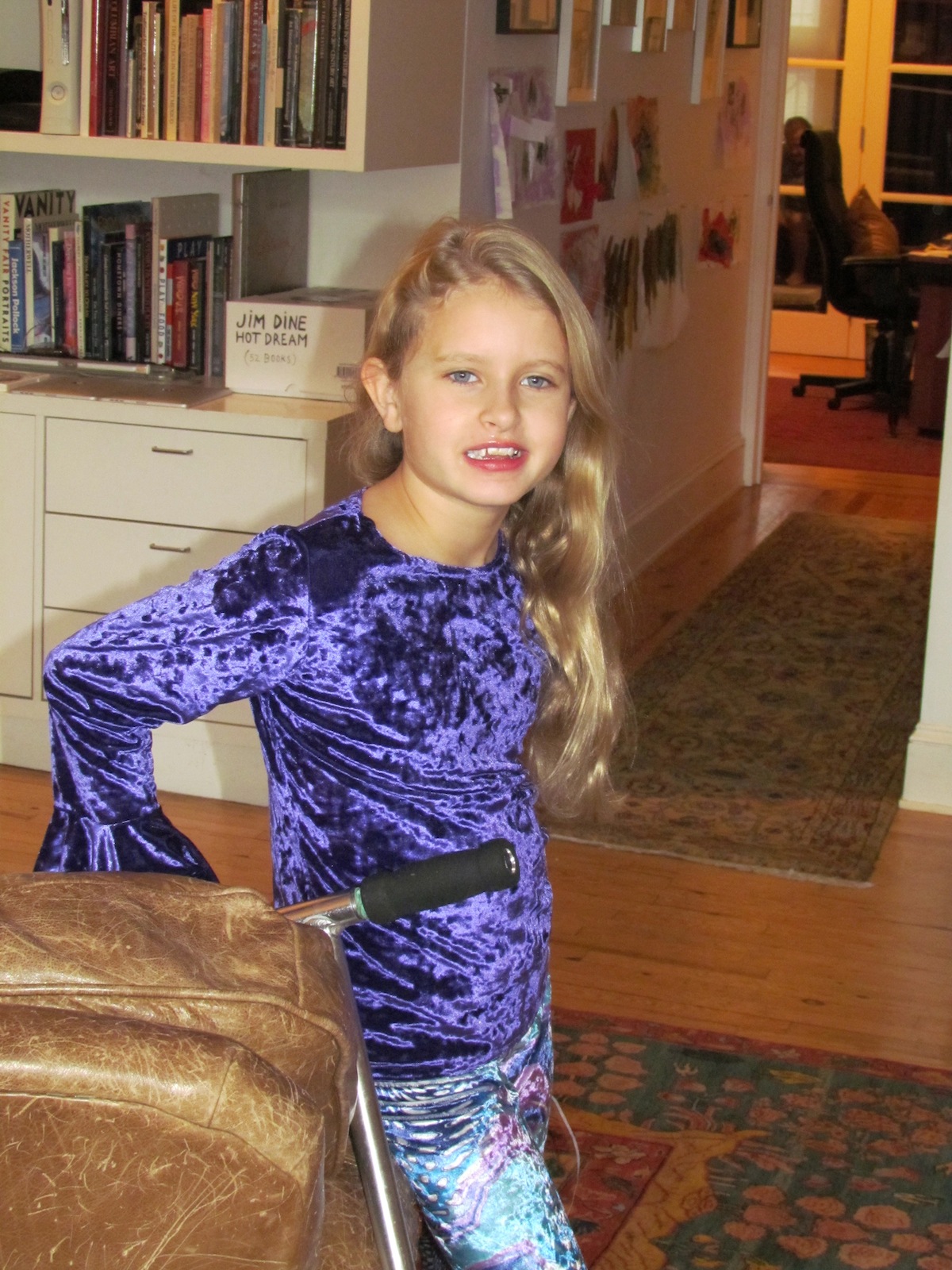
Emma – November, 2011 – after five weeks on the diet

There is Always Hope, Sometimes It’s Hard To Find

Sometimes I feel completely inadequate in the face of our society’s insanity.  Sometimes I wish I weren’t a part of the human race.  Sometimes I feel so much rage at all that’s WRONG with the world, with the mess we’ve made of our planet and each other.  Sometimes I just want to go live in a cave in some part of the world that isn’t inhabited by other people, just me, my husband, my children and a few select others.  I want to build a new world, a new community, a new set of societal rules where minority doesn’t equal less.  Where prejudices weren’t tolerated, where people helped each other without expectations of what they would get in return.  A place where people understood that the reward in helping and being of service to our fellow human beings was in the act of doing and not in the form of monetary gain, gold medals, our names engraved on plaques or statues carved in our likeness.

I spent most of my twenties and half of my thirties in hiding.  I hid inside my eating disorder.  I drank more alcohol than my body could cope with, I smoked cigarettes, I took drugs, I did anything I could NOT to be present.  Even in those moments when I did manage to show up, I wasn’t really present.  Not completely.  Not really.  I was angry and hated how angry I was.  I was depressed and hated how depressed I was.  I couldn’t face any of it, for so many years, I just couldn’t.  Eventually I became suicidal.  I couldn’t stand the feelings any more.  I was filled with so much rage, I turned it inward and thought the answer was to kill myself.  I remember I fantasized about driving to a state where I could buy a gun.  That was how I wanted it all to end.  I would blow my brains out.  I was seeing a therapist and when I admitted this to him he said, “You have to go to a 12 step program.   You have to find people who are struggling with an eating disorder just as you are.”  When I told him all the reasons why this was not a possibility he leaned forward and said, “What have you got to lose?”  I will never forget that.  I will never forget how he looked at me.  I will never forget the feeling I had when he said those words – “What have you got to lose?”

So I went.  And I hated it.  A bunch of obese people, a couple of anorexics and an assortment of others sitting around talking about how they couldn’t stop eating or starving or obsessing.  I was horrified.  How had I ended up here?  Wasn’t I different?  Wasn’t I better than this?  I remember I looked around that circle of people in that dingy room lit with strands of donated christmas lights, despite the fact that it was March, and the signs with various slogans plastered on the wall – “We came for the vanity and stayed for the sanity”  and “One Day At a Time”  and “Progress not perfection” and I thought to myself, I have entered hell.  This is not what I want.  This is not where I want to be.  I am not one of these people.  I am BETTER than them.  I don’t NEED to be here.

But I stayed.  Because really, where else was I going to go?  I knew what lay outside the door of those rooms.  I knew, left to my own devices, I would binge and puke and rage and cry and binge and puke.  I knew the cycle, I’d been doing it for more than twenty years.  So I kept going to the “meetings” and I bought the literature and people gave me little notes with their phone numbers and hearts on them that I’d promptly throw away, but they kept giving me more notes with more little hearts and more phone numbers and eventually, eventually I called one of these people and they took the time to talk to me.  There were the steps, each one mapped out a way of behaving that was different from the way I lived my life, so I began doing them, never once thinking that those “steps” would become a way to live my life more than a decade later.  There was a great deal of talk about taking the next right action, staying in the present, taking things slowly, changing ingrained behaviors and being of service.  There was talk of “god” and again I felt there was no hope for me.  How could there be?  I didn’t believe.

I have never believed in god, I’ve tried, I just don’t, but I do have faith.  I have faith in human being’s ability to do great things if we are shown how.   Some of us need more help than others.  I’m one of them.  I needed a great deal of patience, support and help.  I needed to have my hand held by those who had once been where I was.  I needed others to show me the way.  I needed to hear about their struggles, I needed to know that I wasn’t alone.

When Emma was diagnosed, I had a road map, instructing me, helping me.  All those meetings spent in dingy basements without heat in the winter or air conditioning in the summer had shown me another way.  I knew, if nothing else, I had to keep showing up.  There were days I didn’t want to.  I’ve done a great number of things I wish I could take back.  I’ve made countless mistakes.  But I know, I know with all my being that hiding, that not showing up, isn’t an option.  So I research, I read, I reach out to Autistics, I listen, I ask questions and I try to learn everything I can so that I can better understand and help my daughter.  In helping my daughter, I am helping myself.  I am helping myself become a better human being.  There are mornings when I wake up and think, What the hell am I doing?  I don’t know how to do this.  I don’t know what the right decision is.  Is this the right school?  Is this the best therapy?   Does she understand?  What would she say if she could communicate her thoughts?  What would she tell me?  

Much of the time I don’t know.  What I do know is that the basic principles and actions that got me free from the grip of my eating disorder are the same actions and principles that help me parent both my children.  Be honest.  Find safe people to talk to.  Have the willingness to show up.  Be present.  Reach out to others.  Ask questions.  Listen.  Really listen.  If I’m overwhelmed, acknowledge that.  Take a break.  Sometimes doing nothing is better than doing something.  But the thing that helps me more than anything else (I know I’ve said this so many times) is to be in conversation with Autistics.  When I am feeling sad or confused, or overwhelmed, or have questions, I reach out to my Autistic friends.  And even when they don’t know the answer to my question, they remind me of what’s possible.  They remind me that my neurotypical take on my daughter is often incorrect.  They remind me of all the misinformation out there.  They remind me of what is important.

So for any of you reading this who are despairing, who feel it’s hopeless, that the divide between your child and you is too great, know this:  There are hundreds and hundreds of verbal and nonverbal Autistic adults who are blogging, on Facebook, on Twitter, they are talking, they are asking to be heard, they are asking to be respected, they are asking for the same rights as any other human being, they are asking to be treated as you would want to be treated.  Reach out to them.  Google, read books, read blogs, get on Twitter and Facebook, do the research, ask questions, make comments.  If you’re suicidal or feeling you can no longer cope, get help.  Get support.  There are a great many organizations like 12-step programs that do not cost anything, but rely solely on donations given voluntarily.  Find the people whose voices resonate and then find more.  Because really, what have you got to lose?

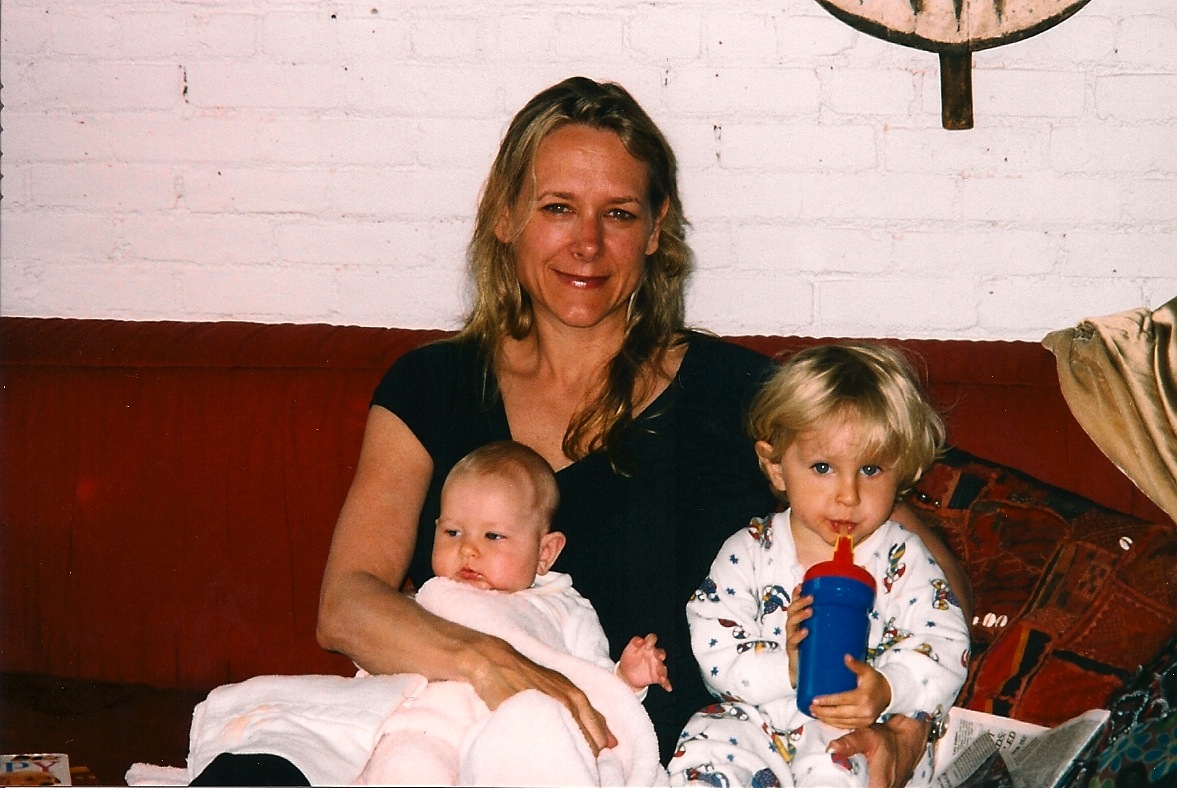
2002 – Me with Em and Nic

Tolerance, Despair and Hope – Autism

A follower of this blog emailed me this morning about a new app for the ipad called, Pop It.  It’s a “book” that when one shakes the ipad, the perspective of the story changes.  The creator, an artist named Raghava, gave a talk on Ted.com, which is terrific – about perspective and tolerance of others and the role of art and creativity.  Listening to Raghava made me think of a book I am currently reading by the extremely talented and insightful theologian, James H. Cone.  His book – The Cross and the Lynching Tree is a deeply touching and powerful investigation of suffering and hope.  James Cone writes at length about the nature of faith, how God “could make a way out of no way”, how “hope could remain alive in the world of Jim Crow segregation.”

I do not claim to know of the existence, nor can I claim to know of the non-existence of a god.  I cannot even define that word.  It is not a word that holds any meaning for me.  But I do know what it is to struggle with hope.  Hope for Emma, hope for all our children who will grow up to become adults, who many will fear, ignore or just wish would go away.  Our children with autism are often misunderstood, in their inability to fall into line with societal norms they are in turn rejected by society.  The continued negligence and worse, abuse, of people with disabilities is rampant.  Their abuse is done by people who have deemed them incompetent, imbeciles and without value.  This is the common thread that exists in the abuse of all groups of people throughout history.  It is our intolerance of those we believe to be “less than” that makes us believe we have the “right” to punish, shun, ignore, hurt, torture and kill.

James Cone writes:  “The cross is a paradoxical religious symbol because it inverts the world’s value system with the news that hope comes by way of defeat, that suffering and death do not have the last word, that the last shall be first and the first last.”

When I was in my late teens I began using food as a way to quell anxiety and emotions I felt incapable of dealing with.  My overeating turned to full blown bulimia and the bulimia became a way of life – for 22 years.  I remember when I finally stopped, the idea of “surrender” seemed antithetical to all I had, up to that point, believed.  I thought that if I just had more will power I would be able to stop the destructive behavior.  I believed that the bulimia was something I could control.  I believed that my lack of control simply proved how despicable I was, which only served to fuel more of the same behavior.  It wasn’t until I took a leap of faith – really took in that I was, in fact, out of control, that I received a respite from the behavior.  Early in my “recovery” from bulimia someone said to me, “don’t you think that if you could have controlled the bulimia, you would have by now?  Isn’t it true that in fact you have tried to control it all these years and this is where that control has gotten you?”  With a great deal of support from others who had eating disorders and had come out the other side, was I finally able to find a way out from under it.  In surrendering to the fact that I was unable to control it, was I finally able to find freedom from it.

I’m all over the map with this post, but perhaps some of these thoughts will prove helpful to someone else or if not at least encourage thought and conversation.

For more on Emma and our journey through her childhood of autism, go to:   www.EmmasHopeBook.com