Category Archives: Autism

Desperation & Coping (Part Two)

For the first two years after Emma was diagnosed we did an aggressive intervention of ABA (Applied Behavior Analysis) therapy – 40 hours a week with additional speech therapy and Occupational therapy.  Advocates of ABA believe it is the only therapeutic intervention for autism that has any scientific validity.  Others have questioned those studies, claiming Lovaas used only the highest functioning children to obtain his results, which were published in 1987.

Regardless, ABA did not help Emma.  In fact, she “flat lined”.  We were called into the principal’s office of the pre-school she was then attending and were told Emma’s lack of progress was a “red flag”.   While other children at her pre-school flourished, going on to be mainstreamed even, Emma stalled out, unable to generalize the things she learned in the classroom setting, unable to make progress.  I have spoken to dozens of parents whose children have been helped using ABA, parents who swear it was the single most important thing they did for their child, and yet, for Emma, ABA did not help.  It is easy to feel angry, blame the therapy, blame the child, blame something rather than acknowledge how baffling and insidious autism is.

It was around this period when we found Stanley Greenspan and began his DIR/Floortime therapy with Emma.  For more on Stanley Greenspan see “A Tribute to Stanley Greenspan”.

While Emma responds much better to the DIR model, she still continues to confound experts in the field.  She has not progressed as quickly as any expected or hoped.

When Emma was first diagnosed we were given a diagnosis of PDD-NOS.  We were told to watch her, that perhaps she would “grow out of it” or if not, then at least we would have begun an aggressive early intervention program which would undoubtedly have her mainstreamed by the time she was in kindergarten.  This was not to be, however.  Emma was not mainstreamed when she reached the age to enter kindergarten.  In fact, her diagnosis changed to “Autism” and though she was considered “mildly” autistic, by the time she was 7, she was categorized as moderately so.  How to explain this?

We cannot.  None of the “specialists” we’ve seen can either.  The only thing that has really changed is all those “specialists” no longer offer their long-term view of where she’ll be in another few years.  Gone, are the comforting talks of how she’ll soon be mainstreamed, no longer do we hear the cheerful prediction that she’s – “on her way”.

Desperation can make for odd decisions, but for those of us who have attempted to manage our feelings of overwhelm as we do our best to live our lives with an autistic child, it is a feeling we are all too familiar with.  Richard and I have tried any number of remedies. Were I not the mother of an autistic child I would respond to many of the very things we’ve tried with an incredulous shake of my head.  When someone tells me their child has had several hundred treatments in a hyperbaric chamber, I do not think – Poor fools, they really are clutching at straws – I take notes.  How could anyone believe ____________________ (fill in the blank) would work?  We don’t believe as much as we hope.   We will do anything we can to help our daughter.

Desperation?  Probably.

Coping?  Absolutely.

Emma – August, 2010

Desperation & Coping (Part One)

Desperation is the shared feeling almost all parents of autistic children feel at some point.  It may be fleeting, but I have yet to meet a parent who did not feel some degree of desperation as they tried to make sense of what it means to their child and entire family when autism is diagnosed.

Since Emma’s diagnosis, many people have recommended all kinds of things.  Books to read, vitamin supplements, therapy programs, diets, doctors, specialists, DAN (Defeat Autism Now) doctors, Gastro-Intestinal Pediatricians, Neurologists, Developmental Pediatricians, Psychics, Nutritionists, healers, Shamans, Homeopaths, massage therapists, Qi Gong Masters, I could go on, but I won’t.  When I look back on those first few months after Emma was diagnosed, everyone I ran into seemed to know someone with an autistic child whom they wanted me to speak to or who was doing something they felt might be useful.  See Our Emma, The Beginning and The Beginning (Cont’d) for more.

Many of these suggestions turned out to be extremely helpful.  But in the beginning it was overwhelming.  I simply could not process my emotions as well as organize her therapies quickly enough to make good use of the plethora of information I was being given.   I made a file, which I labeled “Emma” and threw everything into it.  For months I was unable to look in the file.  During that initial period, when I wasn’t taking Emma to various doctors and overseeing her therapists, often seven in a single day, I was reading books and on the Internet trying to learn all I could.  Only then was I able to start going through the file filled with suggestions.  It was a difficult period for all of us.

Emma – Summer, 2006 – Two Years After the Diagnosis

As time went on and we adjusted to our life with autism, I found it easier to take the time to investigate a suggestion made.  Now when I receive a suggestion and if it seems even vaguely helpful I will pursue the suggestion with more vigor.  There have been times when people suggest things, which I have already tried or seem very close to something we’ve already tried and so I dismiss it.  And then there are the times I have dismissed something, only to revisit it later.  I try to maintain an open mind while being aware that unfortunately there are many people who see autism as an opportunity to make a great deal of money from desperate parents like myself.  Anyone can claim anything with little or no proof of its efficacy.

Like the many doctors we have spoken to, parents of autistic children have very strong feelings regarding autism and what will or will not help.  With few guidelines and only anecdotal evidence to go by, it is easy to become mired in a stew of conflicting information or as in most cases, not enough information, studies or clinical trials to make a decision, which doesn’t carry some doubt.

I remember speaking to one mother of an autistic boy who was becoming increasingly violent.  She had bite marks on her chest and arms from his latest tantrum.  She was frightened of her child and said to me, “I don’t want to put him on meds, but there are days when I dread going home.  As he gets bigger and stronger I become more afraid. I don’t know what to do, anymore.  And how do I know the meds won’t harm him in the long run?  Our kids are guinea pigs.”

She was but one of many parents faced with the realities of caring for an autistic child.

Emma’s Art

Emma has never shown a great interest in painting, unless it meant stepping in paint with her feet and rubbing paint on her body.  A few summers ago Emma demanded, “paint” and when I brought out all the supplies; butcher paper, an easel, paintbrushes, she ignored all of it and proceeded to rub paint all over herself.  Within minutes my mother’s family room resembled a giant canvas, with me frantically running around with wet sponges trying to keep the mess to a minimum.  This was then followed by about an hour of bathing, cleaning Emma’s body, washing her hair and face all of which were covered in paint.  (Not to mention the inside of her mouth as she had licked the paintbrush several times before I was able to stop her.)  Once Emma was clean, the tub then needed to be scrubbed.  It reminded me of The Cat in the Hat when the parent’s leave and the demonic Cat shows up to wreck havoc on the otherwise tidy home, much to the children’s horror.

For Emma the entire activity was less about “painting” and more about the sensory pleasure derived from having wet paint on her feet and body.  I reasoned that this was a good way for her to express herself and attain fine motor mastery as well as have fun.  But after the third morning of “painting” I had to take all the paint away because Emma became so perseverative – she had to have certain colors on certain parts of her body – making her increasing anxiety palpable.  It hardly seemed worth whatever pleasure she obtained from the original pursuit.

Last night we had friend’s over for dinner.   Both Jody and Michael are artists and so there was a great deal of conversation about art and studio visits, painting etc.   Nic, who has been an avid artist since he was about two, announced he was going to paint something.  Whether his sudden inspiration was in part due to our conversation or from the fact that another friend had recently asked to purchase one of his paintings cannot be known.  Regardless, out came the paint, paintbrushes, glass of water and paper.  Emma wandered over to the easel where he was working and said, “Do art?”

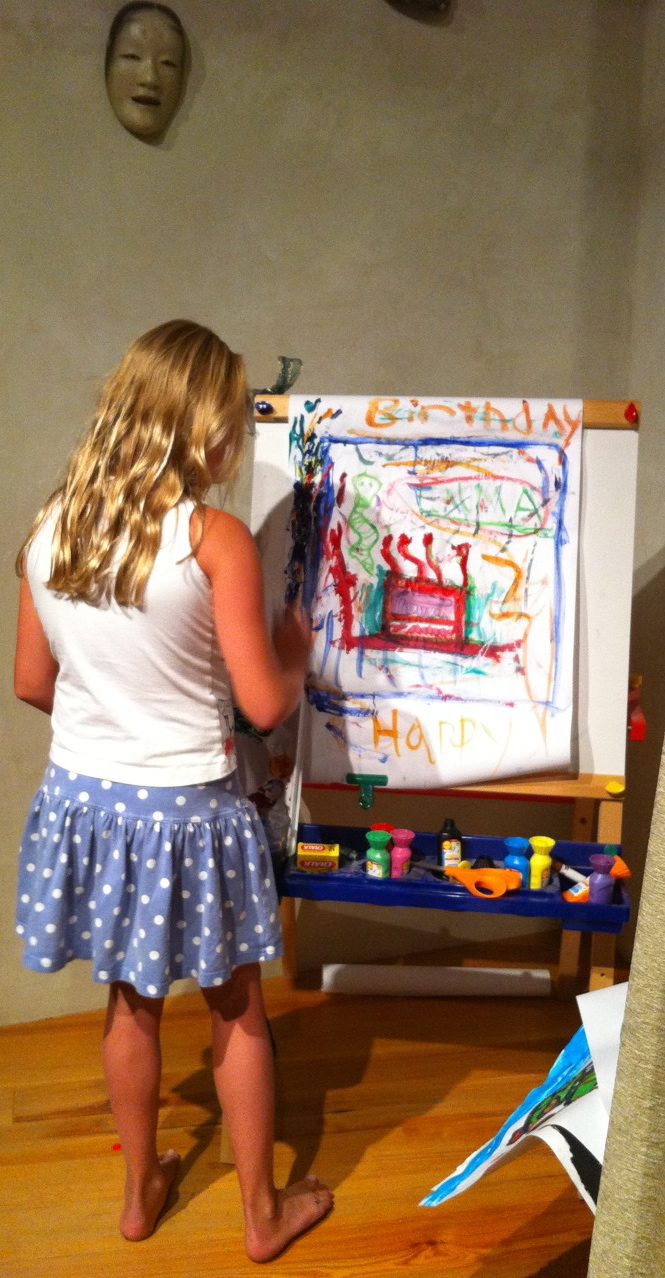
Nic magnanimously agreed to let Emma paint too.   We produced fresh paper for the easel and Nic and Emma painted together.  After awhile, Nic came back to the dining room table, as Emma continued to paint.  Below is a photograph of Emma and Nic’s work.  It shows one of Emma’s favorite subjects – Birthdays and Birthday Cake.  Nic wrote “Happy Birthday” and made Emma’s name darker than the light blue she had written it in.

Periodically as Emma worked, she would say, “Art!”

Not only was this significant and exciting because Emma was keeping paint on the paper and not on her body, but also because she collaborated with her brother, wrote her own name independently without help or prompting, as well as continued to paint on her own.

This morning Emma asked, “Paint?”

We produced the necessary supplies and again, Emma painted, with a brush putting paint to paper.

Art has informed my life.  Being a jewelry designer, having found the medium I love and being able to express myself while creating a thing of beauty is as close to perfection as I have experienced.  I have up until now, assumed Emma’s “art” took the form of music and singing.  See “The Performance”, “Talent Show” and to hear Emma singing, listen to the audio clip “Emma Singing”.

That Emma may find joy in other types of art is something I have often hoped for, but not dared expect.

A Conundrum

We are often baffled by words Emma says which we do not understand the context or meaning of.  See Emma’s Language and Sunday Morning’s Conversation for more.   A few weeks ago we were dumbfounded by the utterance, “cheese-solos” which Emma requested over and over again.  Prior to that it was something that sounded like, “atta-tah”.  It turned out the first was cheese doodles, evidently given to her as a snack at her school, but since we never bought them, it took a moment of sheer genius on Joe’s part to make the connection.  The latter turned out to be, “go to town” as in “No we’re not going to go to town.”  Except Emma would say, “No, we’re not going atta-tah.”  Even as a baby, Emma’s first words were, “All done!” though it sounded more like “ah-dah”.  As she has grown older the words continue to confound us, but even when they are intelligible they often do not make sense to any of us.  For the past few weeks in answer to the question – what would you like to do today? – Emma has responded with, “Go to downtown Aspen, push the button game?”

One day last week Joe, determined to get to the bottom of this, spent some two hours in town with Emma trying to figure out what she meant.  He came home as perplexed as when he’d left.

So when Emma said to me, “Downtown Aspen?  Push the button game?”

I inwardly groaned as I knew we would be spending a great deal of time wandering around town trying to find a game which I no longer was convinced she even knew what or where it was played.  But Nic was at the skateboard park with my friend Claudia, so I figured I would go wherever Emma pointed me and see where our adventure took us.

“Go this way,” Emma said from the back seat of the car, pointing in the direction leading toward Independence Pass.

“But Em, that will take us out of town,” I said.

Emma nodded her head.  “Go downtown?” she said with the inflection making it sound like she was posing a question.

“If I turn left Em, we will be heading out of town,” I said, hoping this would clarify things.

“Yes,” Emma said.

“Okay,” I said, taking the next left leading us out of town.  “Is this the right way?” I asked after a few minutes.

“Yes?” Emma said.

“Okay, Em.  You want to go out of town.  This is not downtown, this is leaving town,” I said.

“Leave town?” Emma repeated.

“Where should I go now?” I asked as we passed the turn off to the Aspen Club.

“Go this way?” Emma said.

“Which way, Em.  You have to point,” I said looking at her in the rear view mirror.

“Go this way?” Emma said pointing to the turn off for the cemetery where both my grandparents are buried as well as my father and a number of family pets.

“Oh, do you want to go to the cemetery?” I asked.

“Cemetery?” Emma repeated.  “Push the button game?”

“Okay, Em,” I said as we neared the padlocked gates.  I stopped the car.  “Is this where you play push the button game?”

“No!  Downtown Aspen!” Emma cried.

“But Em, I’ve been asking you where you want to go and you told me to come here. I’ve gone exactly where you wanted, I just can’t understand where it is you want to go,” I said, exasperation and exhaustion crept into my voice.

“Go downtown Aspen?”  Emma managed to say in between tears.

“But Em we just were downtown, remember?  We spent at least 45 minutes downtown with Muzzy in the stroller,” I said.

“Go downtown, push the button?”  Emma repeated sobbing.

“Em.  I give up.  I don’t know where you want to go.  Should we go back to Granma’s?”

“Push the button,” Emma, now inconsolable, cried.

As I turned the ignition on, Richard called asking how things were going and where we were.  He agreed to come meet us at the skateboard park and said he’d take Emma.

The entire way back into town, Emma cried in the back seat, “Push the button!”  Then she paused and said, “Shhhh!  You have to be quiet.  Stop screaming.”  Listening to her I could hear the echo of other people in her life, speaking to her.  Not only was she repeating what had been said to her, she was also adopting the tone and inflection of the many people in her life who have cared for her over the years.

Hours later, while Nic, Claudia and I sat outside the fountain in the middle of town, Richard and Emma appeared.

“Hey!  How did it go?” I asked.

“Well, my theory regarding the push the button game was correct,” Richard said triumphant.

“What theory?” I asked.

“I told you the other day,” Richard said.

“You did not!” I said.

“I did.”

“Tell me.”

“It’s a water sculpture and fountain on the other side of the mall.  If you look at it from a certain angle it kind of looks like a hot tub and she pretends to push a button to make the water jets come on.”  Richard looked at us.

“I cannot believe it,” I said, looking at Emma who was happily sitting on the chair across from me.  “You’re a genius,” I said to Richard.

“The only problem with being a genius is no one recognizes it,” Richard said.

Emma on the Telephone

I must begin this post by stating the obvious.  I am not a scientist.  Biology was the one class in high school I almost failed.  In fact I had to go to summer school in order to restore my grade point average.  In both undergraduate and graduate school I avoided all things science by first going to Parson’s School of Design and majoring in Fashion Design and later did my graduate studies in Creative Writing.  Science courses did not play a large role in either of these majors.  That I now find myself steeped in science, stem cell research specifically, is more than a bit ironic.  And I have to say my avoidance of science is not serving me well in these on-going conversations with some of the most highly regarded stem cell specialists in the country.

Tuesday Richard and I had more disheartening news regarding the stem cell treatments Emma underwent.   We spoke with another stem cell specialist.  He told us if the donated umbilical cord blood from which they harvested the stem cells was from a male, then she could develop troubling complications as she reaches puberty.  Another specialist we spoke to an hour later refuted this claim.  I will not pretend to understand or repeat all that was told to us, suffice it to say, the news was not good.  On an optimistic note, we are learning a great deal even if I am unable to articulate all of it and there are some very positive things happening on the stem cell front in this country, just not so much with autism.

Richard and I are scheduled to speak with several other stem cell and autism specialists within the next few days.  In the meantime we are doing our best to manage our fears.  And it really does come down to just that – management.   I allow myself a specific time frame, say five minutes, in which I let myself think every frightening thought and then I tell myself – okay.  Time’s up, you have to think about something else.  As an entrepreneur, there is always work to be done, so this technique works well.

I am ending with a scene from yesterday afternoon.

Emma returned home while Richard was on another phone call.  Emma patiently waited a minute then went to his computer to watch a youtube video of the Beatles singing Happy Birthday.

“Emma, I’m on the phone you’ll have to wait,” Richard said.

“Have to wait,” Emma said, turning the video off.  She stood in front of the computer waiting.

“Hey Em, it’s Geneva, do you want to talk to her?” Richard asked, hoping to distract her.

“Yes!” Emma said, taking the phone from him.  “Hi Geneva!” Emma said.

“Hi Emma!  How are you?” Geneva said.

“No, not going to see Geneva on the airplane,” Emma said, shaking her head.

“No you’re not going to see me on the airplane…” Geneva began to say.

Emma interrupted her and laughed, “That’s so silly!”

“But you’ll see me when you get back to New York,” Geneva said.

“Okay.  Bye Geneva!” Emma said brightly and then handed the phone back to Richard, before turning back toward the computer.

“Not yet, Em.  You have to wait til Daddy’s off the phone,” I reminded her.

“Wow!  That was the longest phone conversation Emma’s ever had with anyone,” Richard said.

“Yeah, that was great,” I agreed.

“Hey Emma, do you want to talk with someone else?” Richard asked, holding out the phone to her.

Emma nodded.  “Hi,” she said.

“Hey Emma!” Joe’s voice was heard to say.

“Hi Joe!”

“Is your stomach still hurting?” he asked, referring to the 24 hour stomach flu she just had.

“Yeah, bye Joe!” Emma said cheerfully and then placed the receiver back in the cradle.

“Em!   Your stomach doesn’t hurt and you just hung up on Joe! ” Richard said.

Emma gave him an impish grin and began to laugh.

“You want to listen to your video, don’t you?” Richard said, laughing.

“No you cannot hang up on Joe!” Emma said, giggling.  “Now watch video?” she added quickly.

“You hung up on Joe so you wouldn’t have to wait any longer, didn’t you?” Richard said.

“Watch video?” Emma said, grinning.

For more on Emma’s therapist, Joe go to:  http://www.emmashopebook.com/?p=615

The Journey Continues

Many concerned people have contacted me asking what’s going on, so I will try to explain the recent course of events.  But before I do so, I just want to say I am extremely conflicted by what we have been told to date and by the opinions we have recently been given.  Unfortunately this represents the inherent problems with autism.  One is given a diagnosis based on observation and by the anecdotal evidence provided by parents.  There is no blood test, no x-ray by which a diagnosis is made.  No one knows what autism is, no one knows what causes it and no one knows how best to treat it.  There isn’t even one thing (whether a drug, a therapy, or any other kind of remedy) that everyone agrees will help.  As parents of an autistic child struggling to make sense of all the opposing opinions, it becomes a formidable task to wade through the copious amounts of information, opinions, articles and books.  We are continuing to do our best to make sense of all we are hearing, reading and learning and will continue to keep posting as we gather more information.

To give a summary of what has happened in the past week – through a series of unrelated incidences, Richard was put in touch with the two Drs. he and I referenced in the past two posts.  They voiced their deep concerns with the stem cell treatments we have been doing with Emma.  They gave an example of a boy who evidently developed tumors as a result of stem cell treatments he received in a third world country.  I do not know any more details.  We have, since our initial conversation with them, been put into contact with a number of other professionals in the field of autism and stem cell research.  Richard and I are doing all we can to get as many opinions from different researchers and doctors who specialize in autism and stem cell research.

Last winter when we began looking into stem cell treatments, wondering if it might help Emma, we spoke with a number of doctors who felt it was worth a try.  The two doctors who have been following Emma and meeting with us over the past few years were in the process of putting together a group of 40 autistic children to take to the Costa Rican clinic before it was closed.  They had funding in place, which has since fallen through.  These two doctors were our main source of information as they had both been to the Panama clinic as well as the Costa Rican clinic.  In one conversation with them, I was shown the brain scan of an autistic boy before he had done any stem cell treatments and then his brain scan after six treatments, which occurred over the course of two years.  His brain showed marked change and he is now in a regular school.  Seeing that scan was a turning point for me.  I remember standing in the doctor’s office and thinking – we have to at least try this. For another example of anecdotal success stories see comment to my last post, “Hope for Emma?”

Prior to Emma’s first stem cell treatment in Costa Rica I spoke with a couple of other doctors, a few of whom felt it was inadvisable to go, but prefaced their comments by saying they did not know of the work the Stem Cell Institute was doing personally, and two who said they were watching what the Institute was doing and hoping to replicate their treatments once it was allowed in the US.

To date we have not seen the sort of huge uptick we would hope to see on Emma’s brain scans.  We have been told we shouldn’t expect to see results so soon and that these things can take up to six months to show up.  Again these are opinions regarding a treatment, which has only been done to a few hundred children during the past few years.  Richard and I intend to continue monitoring her through our own observations as well as with periodic brain scans.  We continue to pursue the leading specialists in the field of stem cell research and autism.

At the moment, however, we have decided we cannot return to Panama and the Stem Cell Institute.  Richard and I agreed, when we began advocating for Emma, we would try anything to help her if there was no risk of harming her.  We cannot ignore what we are now being told.

Hope For Emma?

I have spent several hours starting different blog posts over the weekend and this morning, but have been unable to finish any of them.  I am still raw after the phone call Richard and I had with the director of the Stem Cell transplantation program at Children’s Hospital in Boston and the director of the Stem Cell Research Program also at Children’s Hospital in Boston.  See the previous post below, written by Richard on Friday.  An hour after our phone conversation in which they both expressed their concern with the stem cell treatments we have taken Emma to in Central America we received an email from them saying:  “We know that you are trying to do the best for your daughter, but given the issues we discussed, George and I think that you should not go back for stem cell treatment.”

I am feeling overwhelmed with emotions at the moment which is why I am having such a difficult time writing a post.  This blog is about Emma, not my fragile emotional state and though I have certainly written of the difficulties in parenting an autistic child I have tried to always keep Emma front and center – she is the star of this blog.  And yet, it is hard for me to write about anything at the moment because this blog is also about our hopes for Emma.  At the moment my hope is in short supply.

Research

I’m feeling stunned. Early this morning, Ariane and I spoke at length with two of the pre-eminent doctors in the field of stem cell research out of Boston Children’s Hospital. They not only called into question the theoretical basis of what we had been told about the scientific rationale for the stem cell treatments we gave Emma, but warned us that they had the potential to be “extremely dangerous.”

It is possible that this could be another case of “he said, she said,” and that the doctors who recommended the treatment we have been following are every bit as knowledgeable and experienced as the doctors who were warning us not to undergo another such treatment, but frankly, these particular doctors are so highly credentialed that I have to give their opinions more weight – at least until we have gathered more information from others who are universally regarded as experts in both autism and stem cell research.

They gave us the names of two doctors in the Boston area who are considered to be experts in autism research and (perhaps?) stem cell research as well. It wasn’t clear to me from our phone call that the doctors being recommended were definitely doing research with stem cells, but they are involved with autism research as well as a variety of other neurologically based disorders. I made a promise to myself after the phone call today to stop making assumptions, so until we speak, I’ll just say that I’m looking forward to learning more. I visited both their websites and they have impressive credentials. They are both involved in genetic research so even if stem cells aren’t part of their programs perhaps they have other promising treatments under development.

Perhaps. Maybe. Possibly. I’m filled with doubt and uncertainty as to where we go from here. I do know that we have to keep doing more research, and since the entire field of autism is rife with contradictory theories from highly regarded researchers, we have our work cut out for us. More to come.

Emma & Our Barbeque

Last night we walked up to our cabin for a barbeque.  I posted once before about our cabin –  “Zurcher’s Folly” dated July 5th, 2010 – it’s a one room, rustic cabin with no electricity, only cold running water and an outhouse just far enough away to make you reconsider the urgency, particularly if it’s in the middle of the night and you’re female.

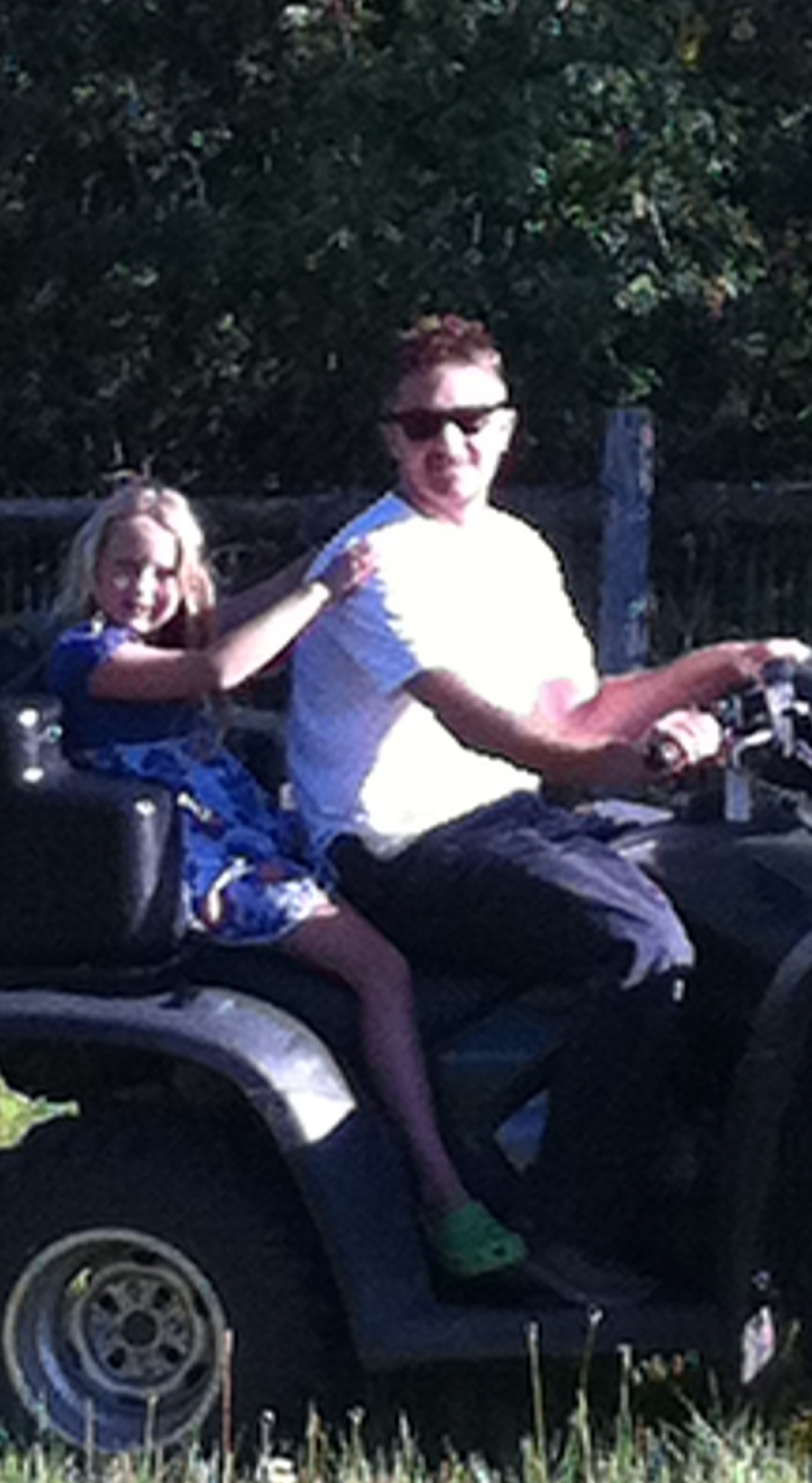
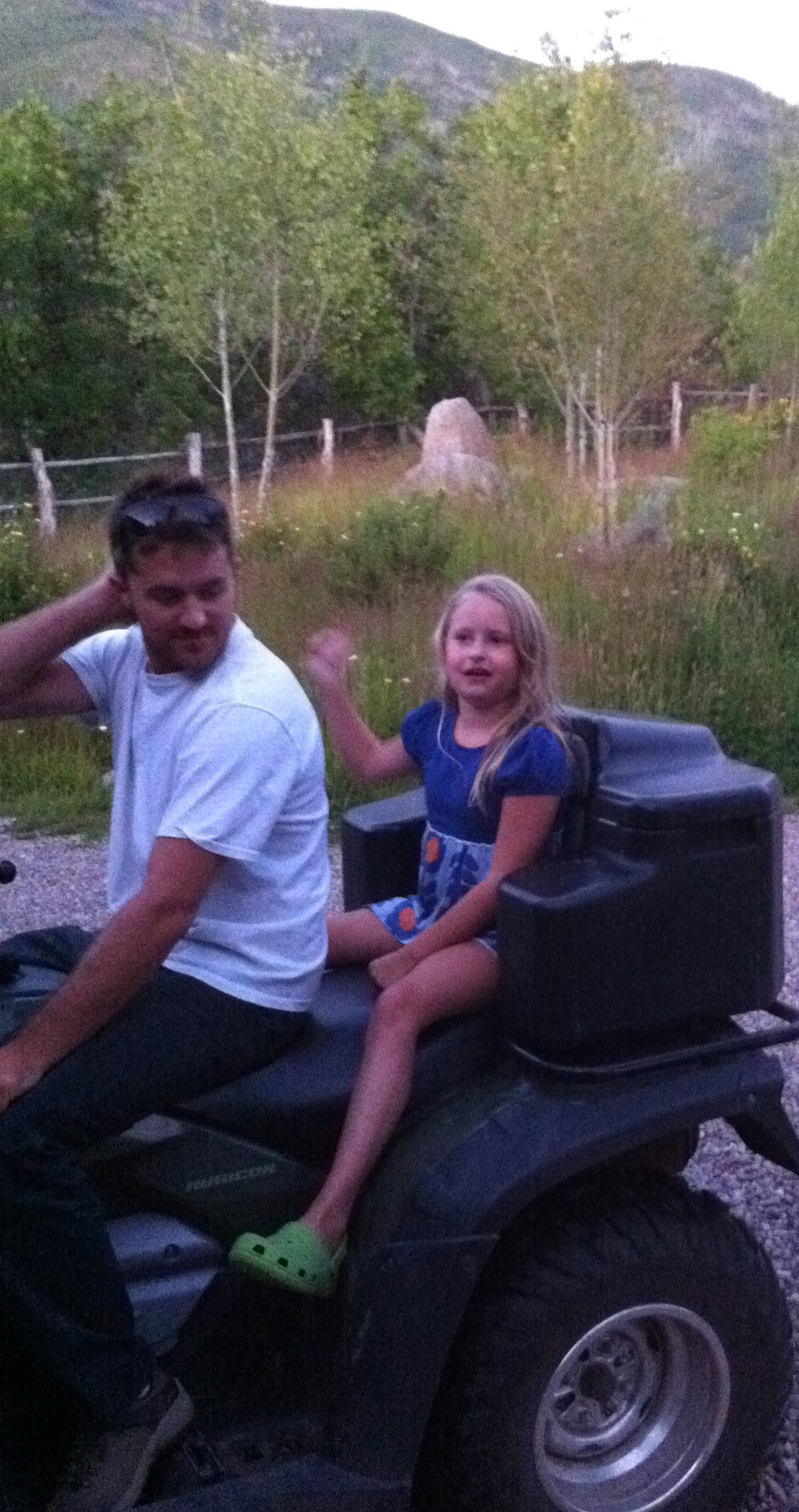
A group of us made our way down the hill and over the stream that each summer the beaver dam up, and then up a little way until we rounded the bend and caught a glimpse of the cabin’s red roof.  Emma was ahead of us riding on the four-wheeler with my nephew, Bridger.

Em & Bridger Heading Out on the Four-Wheeler

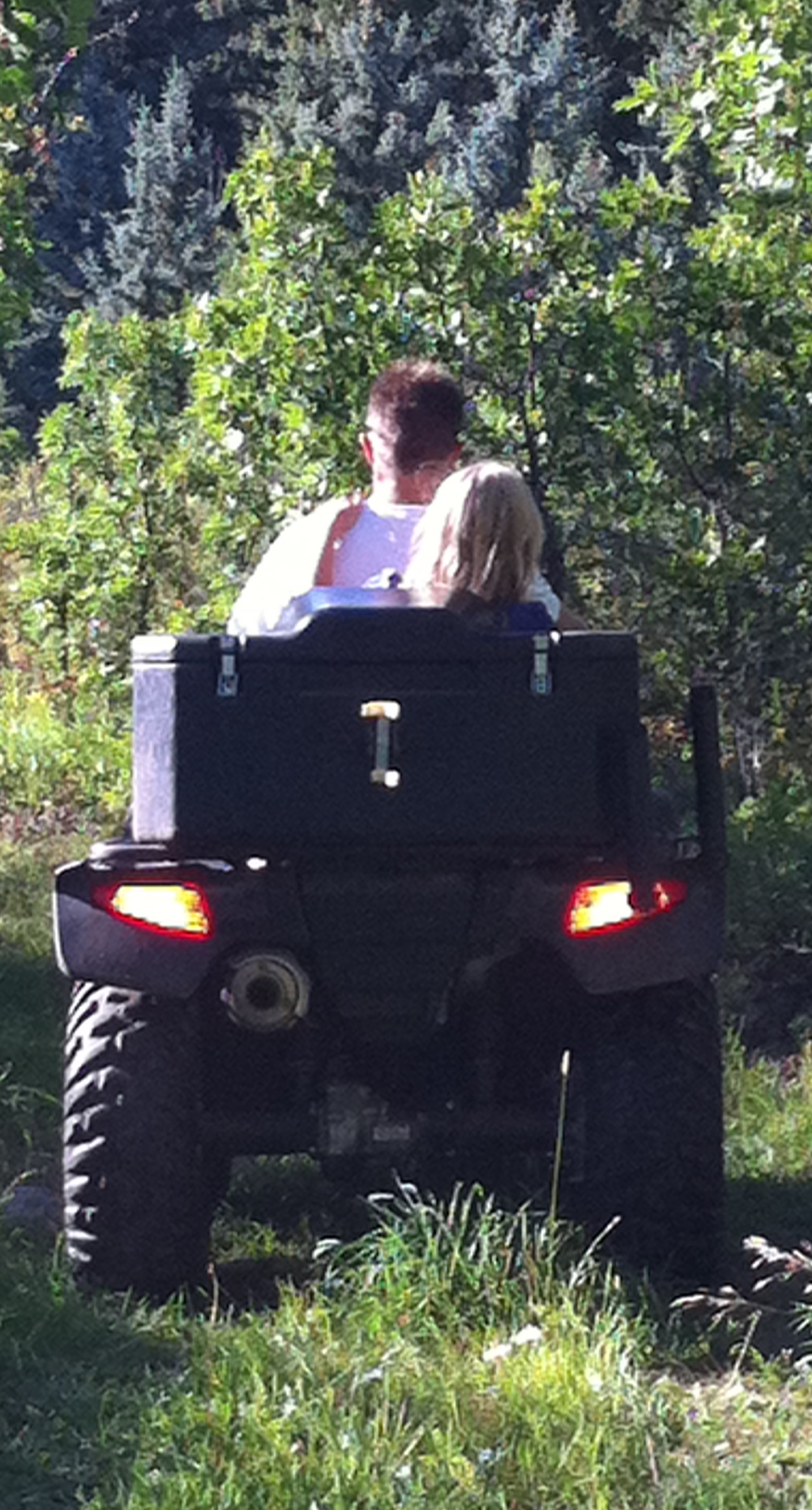
Colter, my other nephew was leading the way in a piece of machinery I actually do not have a name for, but it looks formidable, with much of our food in the back.  It was a procession and Emma was ecstatic riding along with Bridger as the rest of us trudged behind bringing up the rear.

Briger & Em Lead the Way

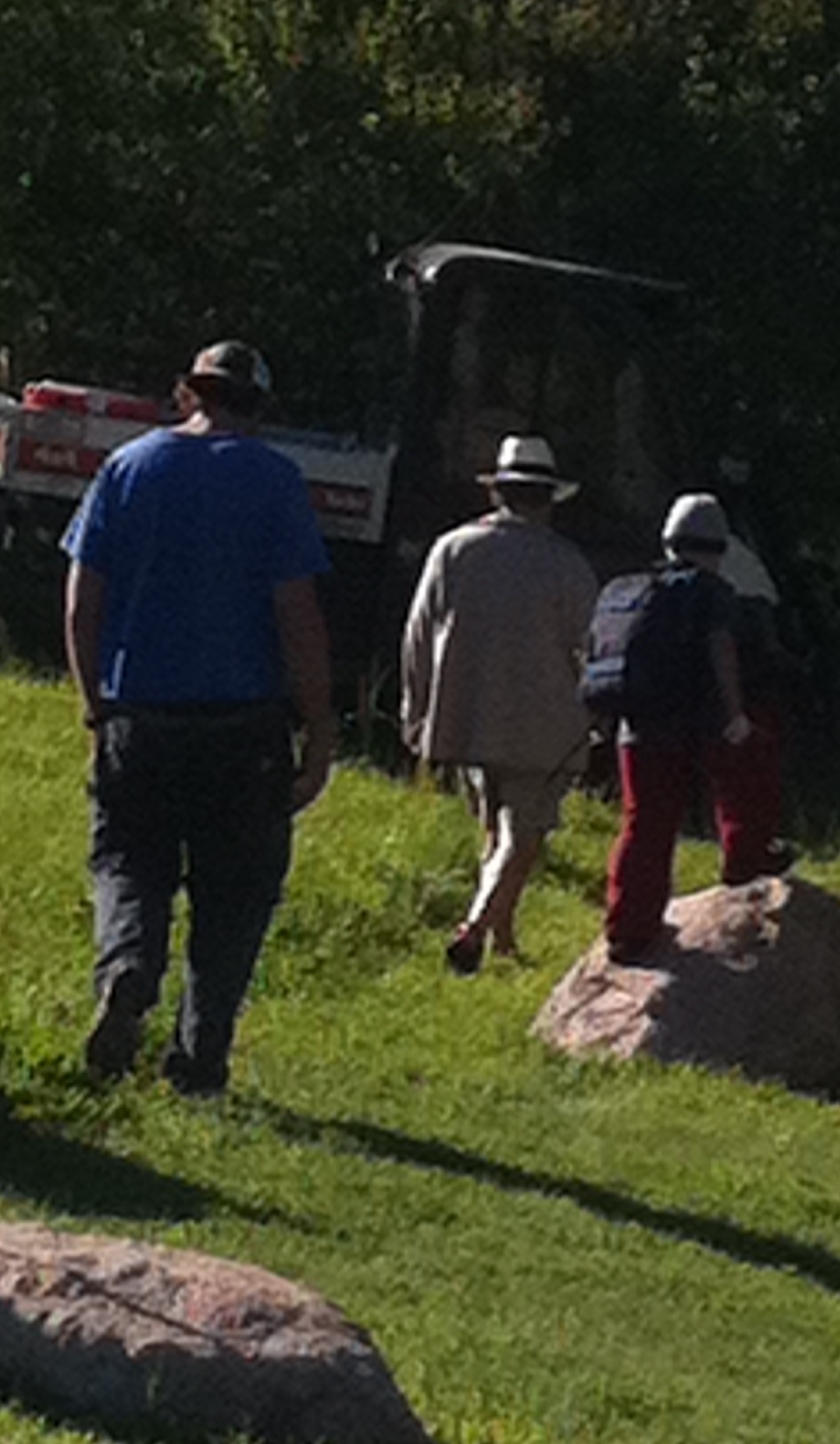
The Rest of Us on Foot


The dogs frolicked and fought over various sticks, pushing and shoving like small children, very nearly toppling my mother over on a few occasions.  As the cabin came into view everyone picked up the pace, dashing up the log steps and throwing themselves onto the now bare mattresses (they were once covered in quilts my mother and I meticulously made, but the mice got to them and now they are without) which serve as beds, sleeping two or three each.
“Have dinner?”  Emma asked, wasting no time in getting down to the essentials.

“You have to wait.  We’re going to eat together,” Richard said.

“Snack?” Emma asked.  It was good to see her father’s negotiating skills had not passed her by.

Then when none of us responded immediately she said, “Muzzy have snack?”  It was her killer instincts at work, going straight for the jugular.  What parent in their right mind could veto that?   Particularly as this was displaying everything we have dreamed of, attachment to a toy, pretend play…

Smart kid, I thought.

“Sure Em.  What does Muzzy want?”

“Yogurt!” Emma said.

“What kind?” Joe asked, never one to pass up an opportunity to get more language from her.

“I want yogurt,” Emma said.

“Yes, but what kind of yogurt?  Do you want peach yogurt?  Blueberry yogurt?” Joe continued.

“I want vanilla yogurt!” Emma said.

“Got it,” Joe said, rummaging around in his pack.

As Joe produced the vanilla yogurt, Emma sat down on the bench at the table, which occupies most of the floor space in the cabin.

“Here you are,” Joe said, setting it down in front of her.  “What do you need?”

“A spoon!” Emma answered.

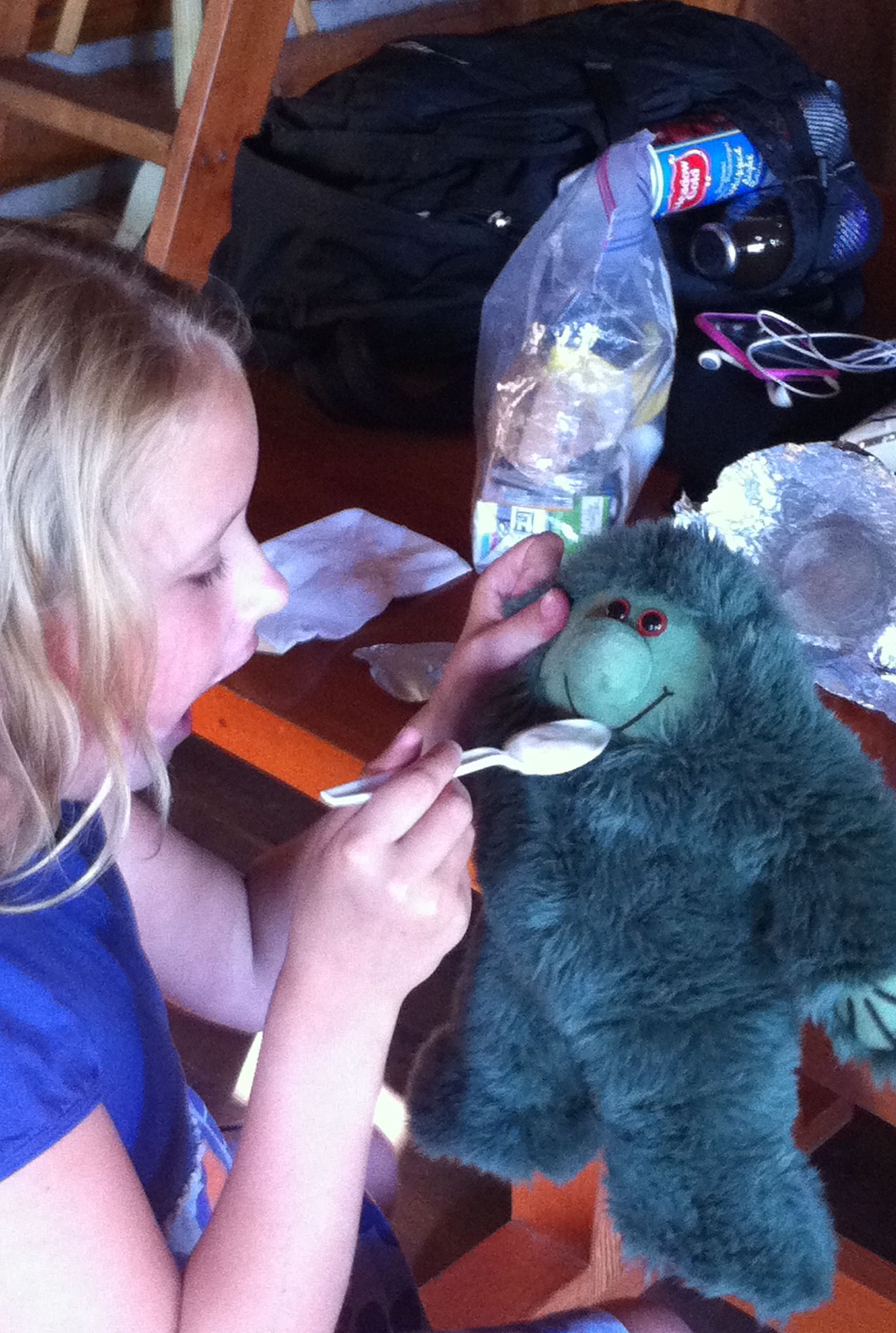
She peeled open the foil cover and said to Muzzy, “Open wide!”

Muzzy’s Snack

“Mmmmm…  all done.  Now it’s Emma’s turn,” she said, after pretending to spoon the yogurt into Muzzy’s mouth.

“It’s my turn,” Richard said.

Emma looked at him.

“You say – it’s my turn,” Richard said.

“It’s my turn,” Emma repeated.

By the time the coals were ready and the burgers and hot dogs grilled, Emma had eaten her entire dinner.  She sat with us as we ate, serenading us with her favorite songs.  At times she became caught in a favorite refrain and needed to be reminded she had already sung that part several times and it was time to sing something else.

Emma Singing

“Go back to Granma’s?”  Emma said after awhile.

“No Em.  We aren’t going back until it’s dark,” Joe explained.

A little while later after we’d roasted marshmellows for our s’mores, Emma said, It’s getting dark!  Time to go back to Granma’s house!”

“You’re right Em.  It is getting dark.”

And with that she charged off as we gathered up our things.

Emma Waiting To Return To Granma’s House

When we were back at the house, Emma looked at Bridger, waved her hand goodbye and said, “Bye Bridger!  Thank you for the ride in the four-wheeler!”

Emma waving Goodbye and Thanking Bridger

Richard, Joe and I stared at each other in astonishment, literally with our mouths open.  This was unprecedented.  In the past we would have prompted Emma to say exactly what she said.  That she did it without anyone reminding her, entirely on her own, with terrific eye contact and waving her hand…

It was nothing short of amazing!

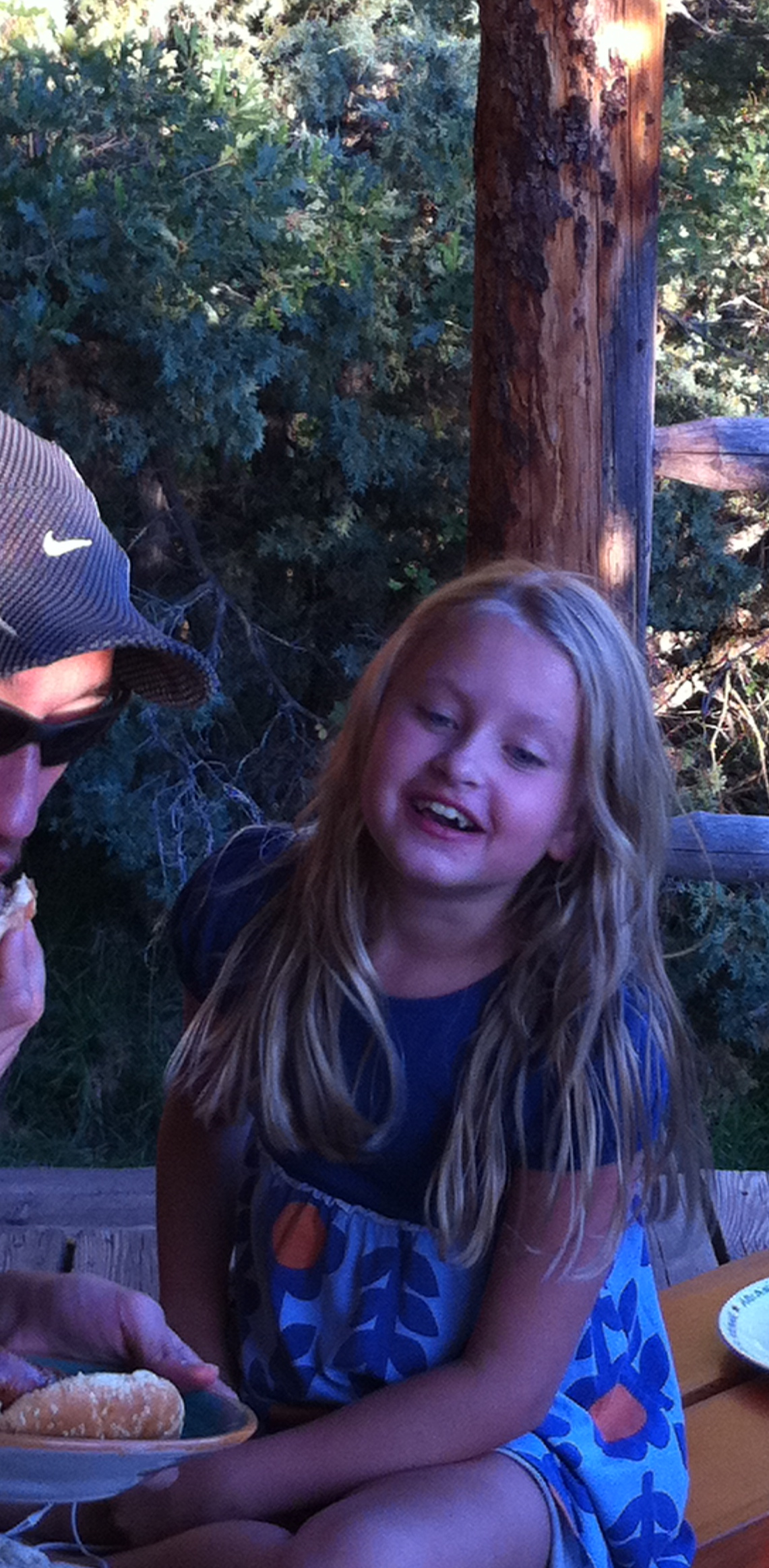
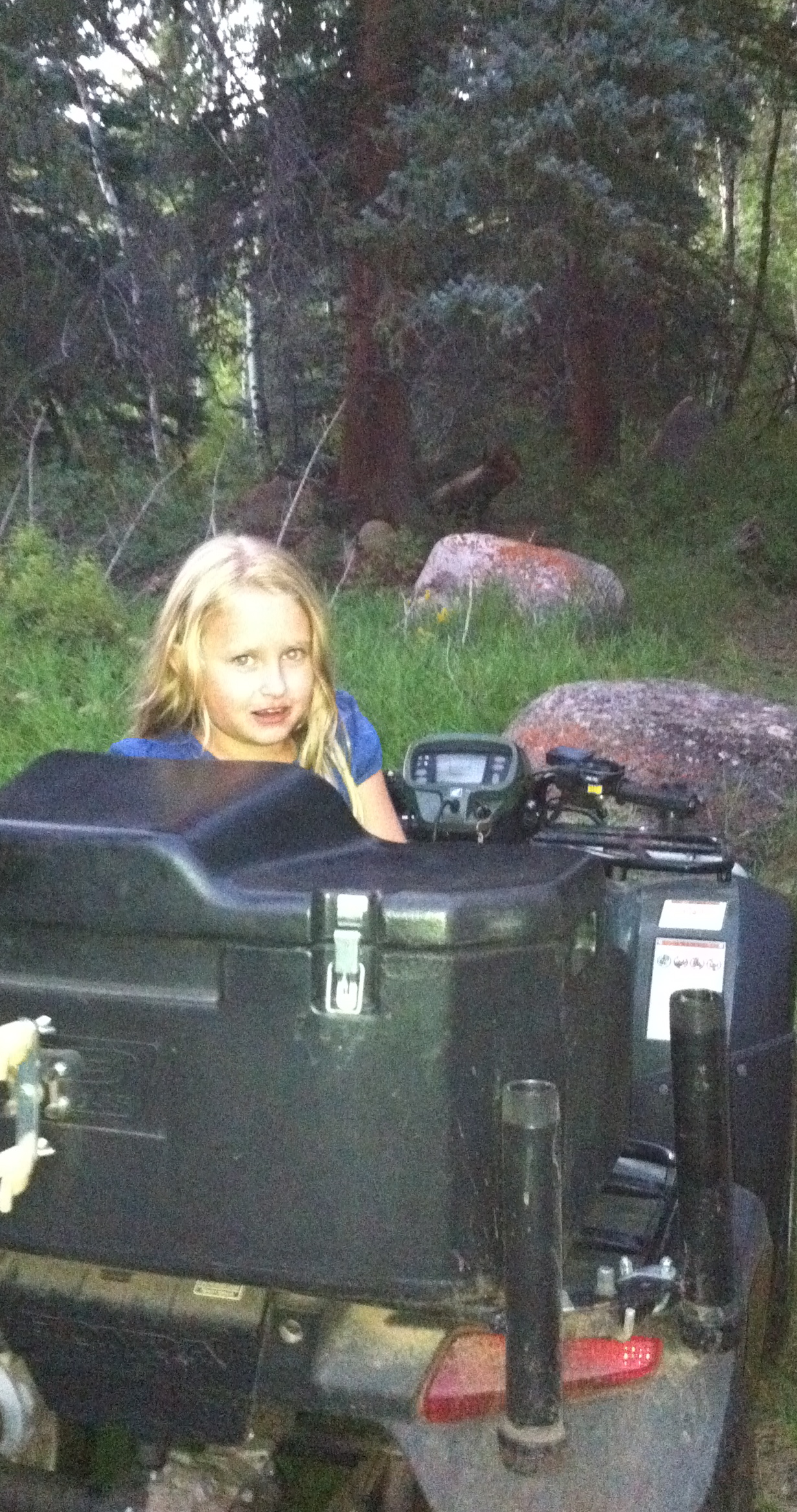
May I just comment on the incredible eye contact in almost all of these photos?  Have any of you who loyally follow this blog seen such great eye contact?!

It’s unbelievable!

Em & Muzzy

Emma’s attachment to her green furry monster, Muzzy has grown to such a degree I feel compelled to honor Muzzy with his own post.

There are a number of significant early “signs” of autism:  An absence of pointing as a toddler, unresponsiveness to ones own name and a complete lack of interest or emotional attachment to inanimate objects such as stuffed animals or dolls, to name just a few.  Emma could be counted on to display all three of these things from an early age.  So it has been with great excitement we are witness to her growing desire to bring Muzzy with her on outings.  It is an attachment, which made itself apparent to us during her first stem cell treatment.  Emma asked to take Muzzy into the operating room and the doctors agreed it would be fine.  It was during that initial trip that Emma said to the anesthesiologist, “Muzzy first.”  Thankfully everyone was wonderfully good-natured and went through the motions of putting Muzzy under before it was “Emma’s turn.”

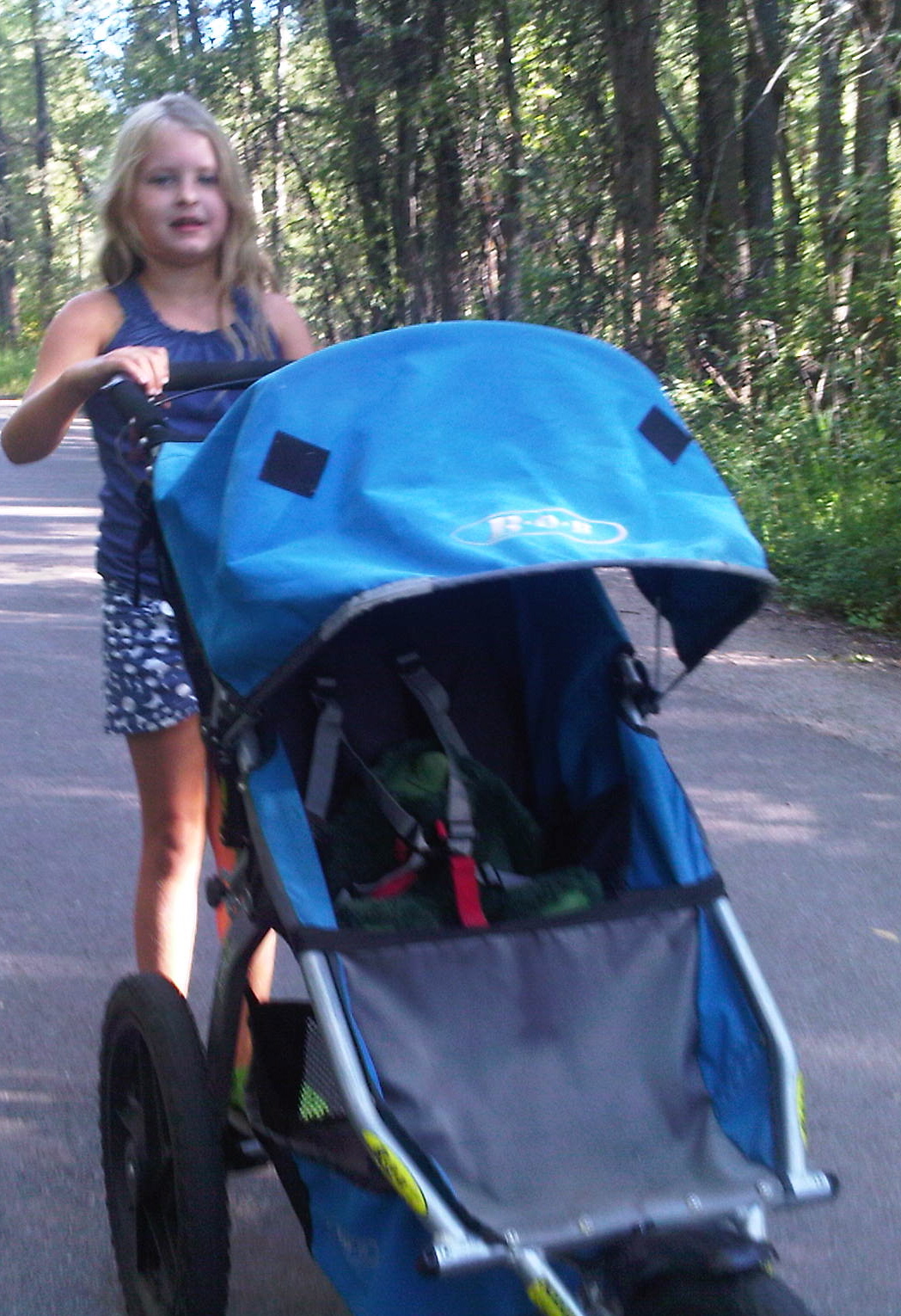
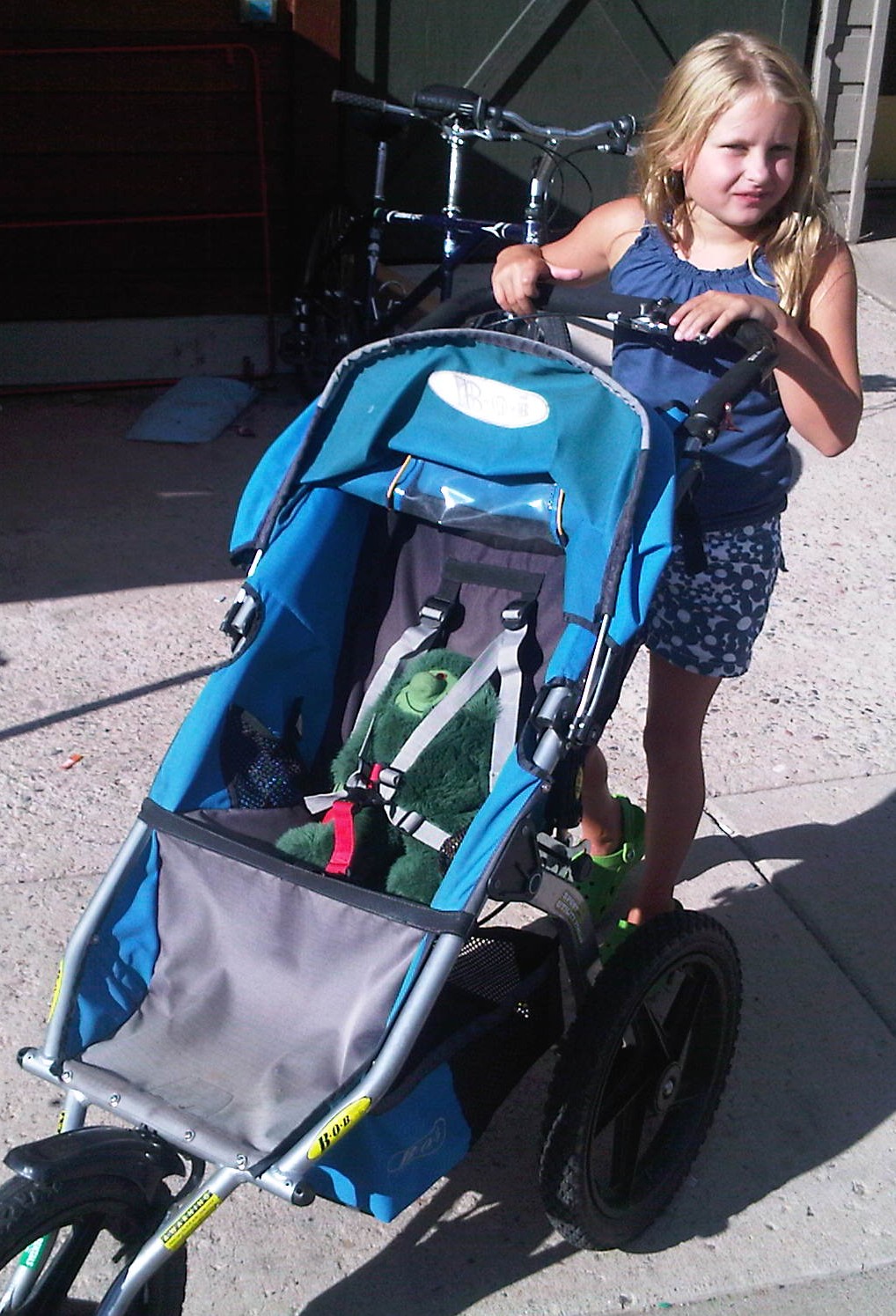
On a recent excursion with Joe, Emma insisted they take the jogger stroller out.  When they returned, I had Joe go over the outing in detail as I took notes.  Joe also took a video, which I haven’t been able to figure out how to post, so I’ve transcribed much of it.  I am always struck by Joe’s ability to use any opportunity to draw more language from Emma.

“Em, you’re too big for the jogger,” Joe said.

“Jogger stroller!” Emma said.

“Who’s going to go in the jogger?  Am I going to sit in it?” Joe asked pretending to climb in.

“NOOOOOO!” Emma said squealing with delight at the absurdity of it.

“I can’t fit!”  Joe exclaimed.

“Too big!” Emma said.

“Yes, I’m too big!” Joe said.  “Who do you want to go in the jogger?”  Joe asked.

“Muzzy!” Emma shouted twirling him around her head by one large furry arm.

“Oh!  You want to put Muzzy in the jogger?”  Joe asked.

“Yes!  Put Muzzy in the jogger.  Go for a walk!”  Emma jumped up and down.

“Okay, where should we go?”

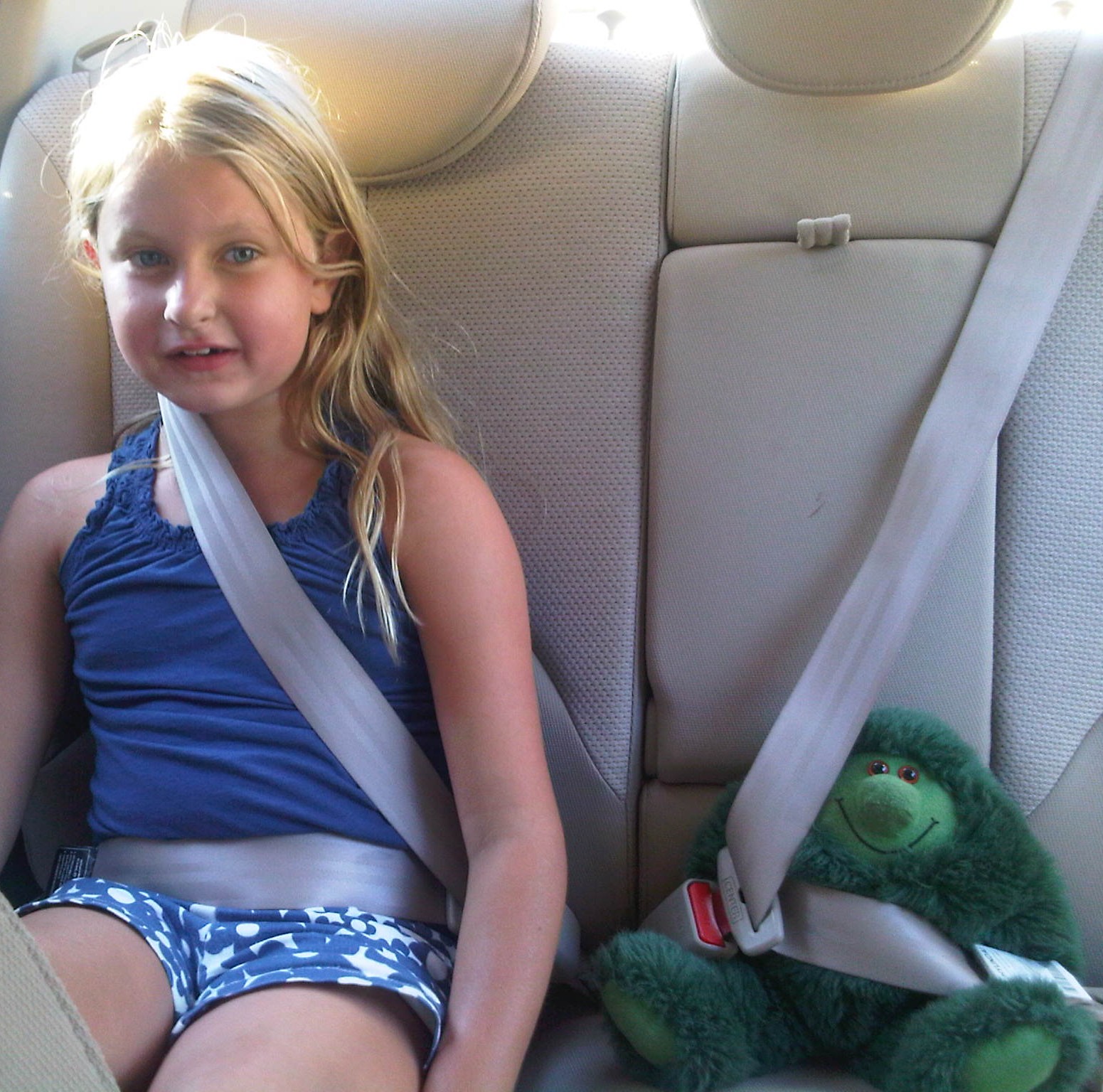
“Muzzy needs to put on his seat belt,” Emma said, carefully buckling Muzzy in.

“Which way should we go?” Joe asked.

Emma carefully pulled up the “hood” on the canopy of the stroller, a flap of fabric covering a plastic window to peer down at Muzzy, checking to be sure he was all right.  “Muzzy sleeping,” she said.

“Big Muzzy is okay.  Esta bien!” Joe said in his Muzzy voice.

“This way!” Emma said, pointing east.  “Muzzy needs to go in the rain jogger,” Emma said.

“Do you think it’s going to rain?” Joe asked.

Emma stopped and lifted the flap to check on Muzzy.  “No!” Emma laughed.  “Let’s go this way, down the hill.”  Emma peered into the jogger stroller at Muzzy and asked him, “Do you want to go fast?”  Then she started running, pushing the stroller ahead of her.

“Do you want to go slow or fast?” is the type of question we often ask Emma as it is still hard for her to answer an open ended question and so we give choices.  Joe is terrific at coming up with choices for her, often one will be ridiculous such as –  Emma do you want to have some yogurt or should we eat this stick?  Emma will then laugh at how absurd this is and choose yogurt.  When we trained with Stanley Greenspan he emphasized the use of choices to increase language and back and forth dialogue.  It is not as easy or simple as it may seem.  I have found myself grappling for creative choices and coming up empty many times.

“How’s Muzzy doing?” Joe asked after a little while.

“Muzzy sleeping,” Emma said.  She stopped running and looked into the stroller.  “Do you want to go back to sleep?” she asked.  Looking at Joe she said, “Muzzy wants a snack.”

“Muzzy’s hungry?” Joe asked.

“Yeah.  Muzzy wants some vanilla yogurt,” Emma said.

After they stopped for a snack and continued on several miles, Emma said, “Time for Muzzy to go back to Granma’s house.  Muzzy needs to put on PJ’s.”

“Then what should we do?”

“Brush teeth, Muzzy go back to sleep,” Emma said.

Family

When Richard, Joe and I took Emma to Costa Rica for her first round of stem cell treatments this past March, we arranged to have Alycea stay with Nic.  Alycea is one of those people who is multi-talented; a musician-singer- songwriter, terrific with both children, with an unbelievable upbeat-can-do attitude.  So when we explained to Nic he could either come with us to Costa Rica or stay in New York with Alycea, he didn’t hesitate in saying, “I’d rather stay with Alycea.”

And he had a blast, though there were logistical hoops we had to go through to get him to Denver where we met up with him and Alycea before we continued on to my mother’s.

Upon our return from Costa Rica, my mother said, “Next time you must leave Nic with me.” She said it more as an announcement than anything else.

“But Mom, are you sure?” I asked.  After all she is 81 years old with degenerative disk disease and though she and Nic have a special relationship, I wondered just how she would manage.

“Yes.  I’m sure,” she said, with the authoritative tone used by someone of a certain age – in other words – there would be no further discussion.  “He might like to go visit your sister Toni,” she added brightly.  “I thought we’d drive down with the dogs after you leave,” she said.

My sister operates a working ranch with free-range pigs, sheep, lamb, chickens, a number of ornery roosters and that’s just naming the non-domesticated animals.  In addition she has four dogs, horses and I’m sure, upon this post she will have acquired new animals I have failed to mention.  I can just hear her as I write, “Ariane!  I can’t believe you forgot the __________________!”  (Fill in the blank of some rarely heard of species belonging on a ranch.)  In summary her ranch is a ten-year old boy’s version of heaven.

About a month after it was decided Nic would stay with his Grandma, I heard from one of my three brothers, Victor.  He and his wife, Susan had decided they would also come out, “to help with Nic”.  As it turned out another brother, Andy and his fiancé were planning a trip to Colorado during the same period.  Andy is on Nic’s top ten list of favorite people.

So it was with a certain amount of mental freedom that I boarded the first airplane on my way to Panama to meet up with Richard, Emma and Joe three weeks ago.  I knew Nic would be well taken care and the removal of that particular concern was deeply appreciated.

When we returned from Panama, Nic greeted us with countless tales of Wilbur the several hundred pound boar, the pigs, the lamb, the dogs and all the various adventures he had had while we were gone.  Not once did he mention missing us.  Why would he?  He had been surrounded by my siblings, their significant others and my mother – who should be sainted – for the entire week.  If anything, Nic had a difficult time adjusting to our return as his carefree week of animals and family came to a screeching close.

Victor and Susan extended their stay so they could be here for my birthday festivities, which meant Emma was able to spend a week with them upon our return from Panama.  Emma has always loved Victor and Susan and they return her love. During the winter we over lap for the Christmas Holidays and Victor and Susan make sure they spend a few days skiing with Emma.  When we return to New York Emma asks after them for several months.  We know she misses them.  To also spend time with them during the summer was an added bonus.  Emma was overjoyed, as was I.

“Victor and Susan tomorrow!” Emma said after they left a few days ago to return to their lives in Illinois.

“No, Em.  But we’ll see them over Christmas,” I said.

“See Victor and Susan later,” Emma said. Her way of conveying how much she wants to see them and wishes they were still in Colorado with us.

“Yes, over Christmas.”

“Ski with Victor and Susan,” Emma said, showing she understood.

“That’s right, Em.  You can ski with them.”

“Victor and Susan tomorrow?”  Emma said sadly.

“Do you miss them?” I asked.

“Yeah,” Emma said.

Later that day as my mother, Emma and I were out walking the dogs, Emma said, “Say hi to Victor?”

“Sure Em, good idea.  I’ll send him a text and you can say hi to the camera, I’ll text the photo to them.”

Below is the photo I took as Emma said, “Hi, Victor!”

Richard and I realized early on we needed help if we were going to give Emma the support she needed to make ‘meaningful progress’ as Stanley Greenspan use to say.  We realized her needs were greater than our ability to provide them on our own.  When we made the decision to start doing stem cell treatments, the help we required multiplied.  My family jumped in unasked, voluntarily and cheerfully.  My siblings and mother joining forces so Richard and I could take Emma for her second round of stem cell treatments without worrying about our son was an act of kindness above and beyond the call of familial duty.  It is my family and our close friends who have helped us help Emma.  We could not have done or continue to do as much were it not for them.  Because of my good fortune in having such an amazing family and friends who have given of themselves so selflessly time and again, I feel all the more determined Emma should be given the opportunity to have a life, which includes deep friendships.  That she may one day know the indescribable joy of connecting with family and friends is my hope for her.

Emma’s Pal Muzzy and the Porkmepine

While Ariane was taking a break, I took Emma for a ride on the ‘four-wheeler’, a small ATV that’s good on the unpaved roads here and the big fields beyond. We like to go early in the morning and late in the afternoon after a long day of swimming, walking, bowling, bungee cord jumping — in other words, all things physical and fun.

On our 4-wheeling adventures, it’s not uncommon to spot a variety of wildlife; deer, foxes, a family of coyotes (with four baby cubs!) and unexpected surprises, like today’s sighting of a large, chubby porcupine who was wobbling around behind the barn. Like most of the animals here, he/she? was fairly inured to human contact, but when we approached within fifteen feet I cut the engine, to see if he might stick around long enough for a good visit.

“Look Emma, see that? That’s a porcupine!”

No response.

He started wobbling in the opposite direction, crawling beneath the barn, which I assumed was his new living quarters from the practiced ease with which he hid away. Before he vanished I pointed to him again and said, “Emma, can you say porcupine?”

“Morepickpine,” she said, or something to that effect.

“No Emma, PORC-U-PINE,” I slowly enunciated.

“Porkmepine,” she replied.

“No Emma, not porkmepine, porc-ya-pine!” I smiled, shaking my head, changing my pronunciation of the second syllable so she didn’t think I was somehow talking about her (“you”) when identifying the animal.

“Porkapine,” she said.

“That’s right Emma,” I said, starting up the engine.

It was pretty funny, a little frustrating and a little encouraging. Frustrating because she still has such a hard time making distinctions in simple labeling. Encouraging because she was at least grasping the distinction between the words “you” and “me” when it came to identifying herself. Most of the time, she still talks like Elmo when she speaks of herself.

“Emma go on four wheeler?”

Sometimes I’ll just nod and answer, “sure Emma, let’s go for a ride.” But it’s better if I remember to correct her and suggest a more appropriate response:

“Emma, you can say, ‘Daddy, I want to go on the four-wheeler.'”

She will usually echo that response and occasionally (very occasionally) remember to phrase a question correctly. She has the same trouble with “you, I, me, she, he.” So we will often correct her when she says “you” when she means “me”, or “he” when she’s talking about a girl, etc.

Later in the afternoon, Joe took her out to play. She insisted on bringing her stuffed animal Muzzy along. See the attached photos Joe took after Emma buckled Muzzy’s seat belt in the car and then strapped him into a jogger, pushing him down one of the local bike paths. This new affectionate attachment to her stuffed monster-animal pal is another very encouraging sign. Muzzy recently accompanied her in a hospital bed, and now that he seems to have fully recuperated, she’s taken him for an outing in the countryside.

Emma may not care much about prickly porkmepines, but she sure does love her fuzzy Muzzy. And that’s just fine with you.

The Performance

Emma loves nothing more than a birthday party.  And so it was with great excitement that she descended the staircase wearing her party dress with a pair of lime-green and black crocks on her feet last night.

“Oh Emma!  You look so beautiful!”  I said when I saw her.

“It’s Mommy’s birthday,” She said in response.

If we are having a few people over for dinner, Emma will say, “It’s a birthday party!”

“No, we’re just having some friends over for dinner,” I will try to explain.

“Party,” Emma will say, nodding her head and then she’ll add quickly, almost under her breath, “Birthday party.”  As though by saying this it will make it so.

It doesn’t matter how often we explain that any given holiday such as Christmas is different than a birthday it becomes a  – “Christmas Birthday party.”  If we are having family and friends over for Thanksgiving – it becomes a “Thanksgiving Birthday party”.  My mother’s birthday falls on Thanksgiving every seven years, which has only compounded the problem, making our explanation all the more inexplicable to Emma.  How is it that just two years ago we had a huge birthday celebration on Thanksgiving for my mother with relatives flying in from all over the US and now this year it’s a regular Thanksgiving.  As far as Emma’s concerned we are making things far too complicated.  A party is a birthday party no matter what we say.  And yet, now after the other night’s monologue I wonder if this is true.  Perhaps the subtleties are not lost on her, perhaps she simply is unable to express herself well enough to tell us how she feels and it’s the excitement she is trying her best to convey.  The kind of excitement we can understand and which we are able to share with her derived from a birthday celebration.

So it was last night as I celebrated a half-century of life, which does seem an awfully long time.  But age carries little importance to Emma.  Often when asked, “Emma, how old are you?”  She will answer, “Three!” or “Five!” as likely as what her real age is, “Eight!”  These are words, which she tries to remember but sometimes forgets.  When I hear her answer, it seems to me the number holds no meaning to her.    As it should be, I say.

Last night after the birthday cake was served and my mother had given a toast, Emma ran up to the front of the room, grabbed hold of a pretend microphone and proceeded to say in a loud voice, “Ladies and Gentleman!  Enjoy the show!”

Richard and I exchanged a nervous look.  Emma has been known to get up in front of an “audience” whether it’s on the subway and they are involuntary and captive or at any dinner party to sing.  Often Emma will sing the same song over and over until she is told to stop.  When we are home and it’s just us we will allow her to sing the same song repeatedly.  However even then we will try to redirect her and encourage her to sing a different song to break her out of the increasingly perseverative loop she can get herself in.

“Emma!  Would you like to sing?”  I asked.

“Yes,” Emma said, bouncing up and down.

“Okay, one song,” I said holding up an index finger.

Emma nodded her head, “Okay.”

“What would you like to sing?” I asked.

“It’s My Life,” Emma said.

It’s My Life by Gwen Stefani is Emma’s favorite song, hands down.  Not only does Emma know the lyrics by heart, but she has all the instrumentals down and does her best to make noises replicating them.  Our guests, all 50 plus of them gave her their attention as Emma began.  It was a flawless performance, which began somewhat timidly, for Emma is usually not shy in either pitch nor volume, picking up in intensity after the first few bars.  By the end she was dancing and singing with abandon.  When she finished everyone cheered and applauded as Emma beamed.  She ran over to me.

Looking into my eyes she said, “Daddy’s turn and then Emma sing again?”

That’s our beautiful girl – a Gwen Stefani wannabe, rock and roll princess who loves an appreciative audience.  I’m just hoping someone recorded it.

A Gift

Last night we all settled into the family room to watch Groundhog Day, a family favorite and movie some of us have seen more than a few times.  Toward the end of the movie there is a scene where Bill Murray’s character climbs up onto a stage to be auctioned off to the highest bidder during a party.  Emma, who was sitting to my right with her legs folded, torso leaning against me suddenly said, “It went up, up, up high into the air.  I said I can’t reach, it’s too high,” she reached her arm up as though trying to grab something.  “You have to pull on Mommy’s shirt and ask for help,” as she said this she pulled on my robe.  “Mommy – I need help!  You have to get it down.  Daddy go up the stairs to get it.  Uh-oh it’s up on the ceiling.  We cannot reach it.  You have to reach!  Reach high up.   Jump!  Daddy gets it!  It comes down, down, down, then bump!  Now we have to hold on.  You cannot let go or it goes up, up, up to the ceiling, up into the sky.” Emma looked from Richard to me.  The depth of her eye contact took my breath away.  Her face, filled with sadness, her eyes steady seeking out mine showed understanding.

“This is incredible,” Richard said watching her.  “Do you remember this?”

I nodded my head.  “Oh Em.  Were you sad?” I asked.

“It was a long time ago.  It was a long, long time ago,” She said.

After the movie ended we sat in the living room and Emma continued, repeating the first part of the story and now adding, “You have to hold on, you cannot let go.  If you let go it will fly away.  You have to tie the string,” she gestured with her hands tying a string around her wrist.  “You go to Gaby’s house.  It’s Lili’s birthday party!  We cannot get another balloon.  You cannot let go.  If you let go, it’s all gone.  Emma so upset.”  Emma touched the outer corners of her eyes to show she had once cried over this.  It was absolutely astonishing to witness.  The scene Emma was describing took place either last year or the year before.  Her cousin Lili, who was spending the summer just down the road, was celebrating her birthday, which falls on August 15th.

There is so much to say about Emma’s words last night I hardly know where to begin.  The sheer length of her sentences and the way in which she was relating and putting together a series of events was something I have never seen before, not to this degree.  There was the recognition that it happened around the same time of year as now, and the comment “It was a long time ago”, both of which suggest a depth to her thinking we have rarely if ever seen as well as the understanding of something so abstract as time.  I just posted two days ago regarding Emma’s inability to understand time, and yet here she was referring to an event, which occurred over a year ago and she clearly understood it was “a long time ago”.  I could not imagine these were words she understood much less knew to use in a sentence within an appropriate context had I not heard her last night.

Joe, Richard and I looked at each other in astonishment as Emma continued to talk about Lili’s party and how she had once lost a helium balloon, once there at their house and a couple of times here at ours.  The events were conflated, but the meaning, the emotional weight she felt as a result of loosing the balloons and how she lost them were all correct and factual.

As we climbed the stairs to our bedrooms Richard said, “Hey Emma!  Do you know what tomorrow is?!”

Without turning around or with any hesitation Emma shouted, “It’s Mommy’s birthday!”

This too is noteworthy as Emma is just as likely to have said it was Folgen’s (one of my mother’s two German Shepherds) birthday or Nic’s or hers or Granma’s or my brother Victor’s or his wife Susan’s, who in fact just celebrated her birthday or any number of people who currently occupy the house.  That she has been hearing about the birthday celebrations and activities surrounding today are not so unusual.  What is unusual is the fact she was able to answer Richard’s question without hesitation, demonstrating she has heard us discussing the birthday planning and knew for whom they were for.

Today is my birthday.  I am celebrating half a century.

Emma’s monologue last night was a gift surpassing my wildest dreams.

Back Home

We arrived back in Aspen late Saturday night.  Even Emma, who is the world’s best traveler, was feeling tired.  By the time we arrived in Denver, having missed our connecting flight to Aspen she said, “Go see Granma?”

“Absolutely.  But we missed our connection so we have to wait a few hours.  Then we’ll see Granma.”

“Go see Granma?” Emma said again, anxiety creeping into her voice.  Which is her way of saying – NOW!

Concepts of time are difficult for Emma, if not impossible.  The idea something will happen tomorrow is not something she understands.  If one says, “One minute,” she will patiently wait as she knows from the kitchen timer we use, one minute is a length of time she can count.  Beyond five minutes it all becomes muddled.  Emma will often answer the statement, “tomorrow” with “You have to wait one minute.”

To which we respond, “No Emma.  Tomorrow.  Much longer than one minute.”  We might as well have said, “Next year.”

As we had been traveling for the entire day, having woken up at 6:00AM in Panama and were still traveling at 9:00PM, the idea we would catch a flight at 9:30PM and be back in Aspen by 10:15PM did not lessen her anxiety.  Still, Emma was terrific and did not make too much of a fuss.

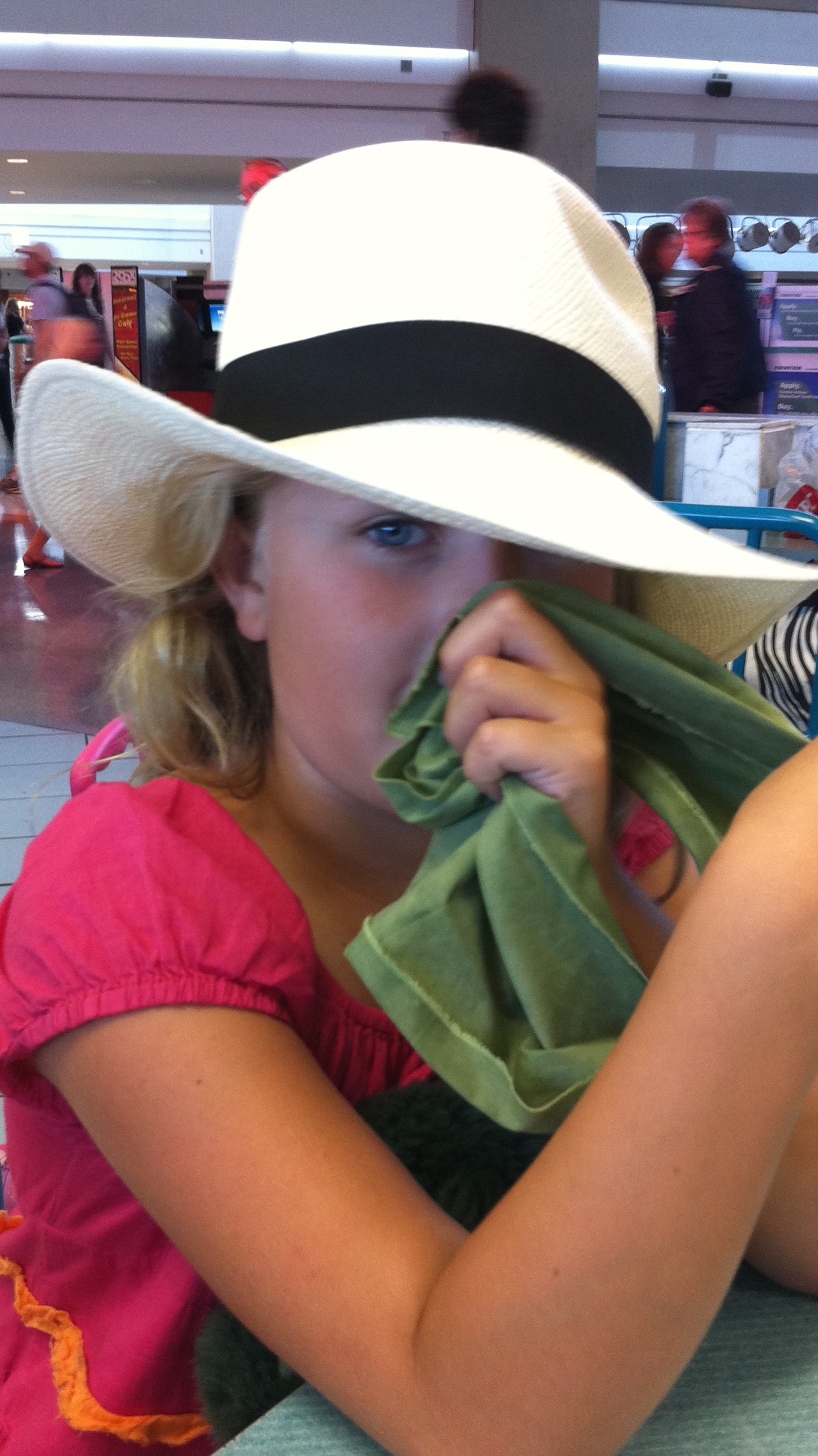
I took this photo in the Denver airport.  While waiting for our next flight, Emma grabbed Richard’s newly acquired Panamanian hat and put it on her own head.  Muzzy is in her lap and she is holding her cokie.  (Evidently the Ecuadorians are to be credited with making the first hat we now think of as a Panama Hat.)

One of our faithful readers commented last week she had noticed how Emma was making eye contact in all the photos I have recently posted.  She is right.  Of course I didn’t post the dozens of photos I took when she wasn’t looking at the camera, but that I was able to get any photos of Emma looking at the camera is nothing short of miraculous.  And of course my immediate thought has been – is this the stem cells?!  Is it possible her terrific eye contact since she had her second round of stem cells could possibly be due to the stem cells?  Impossible to know, but it is a striking difference.

Friday night Richard and I went to a wonderful restaurant in Panama City – Manolo Caraccole.  It was absolutely terrific with no menu.  The chef wields his magic in a kitchen one can see from the dining area and produces 11 tapas courses which are brought out – one more delectable than the next.  As we were dining, a young American woman walked in with the attending physician who treated Emma the day before.   It was Dr. Hernandez who spoke to us at length, patiently answering our questions, giving us his opinion and generally making us feel calmer about the entire procedure as we waited for Emma to wake up from the anesthesia on both Tuesday and Thursday.  So when he walked into the tiny restaurant we were happily surprised.  The young American woman said, “This is the man who saved my life.”  She told us she had MS and he was the doctor who had taken care of her.  She was overcome with emotion, her eyes filled with tears as she told us about coming to Panama to have stem cell treatments.  She said she had had to stop working and now was able to go back to work.  She was taking Dr. Hernandez out to dinner to celebrate her recovery.  It was a bizarrely serendipitous meeting on our final night in Panama.

We can only hope the stem cells are doing their work in Emma’s small body as I write this.  It continues to be quite a journey.

It’s good to be home.