Tag Archives: autism children

Emma’s Struggle with Pronouns

I have written about this before – Emma’s continuing struggle with using the correct pronouns.  It is something one sees in children on the spectrum.  Pronoun confusion, lack of pointing at an early age, a lack of engagement or initiating play, these are all warning signs in small children and almost all children diagnosed with autism share at least a couple of these.

Emma uses the word “you” when speaking about herself, but also when speaking about someone else.  It’s a word she uses for anyone, herself included.  As in “You want to go on the 4-wheeler?”  Someone who doesn’t know Emma would assume she’s inviting them to go with her and the response is often an enthusiastic, “Yes, I do want to go on the 4-wheeler!”

Emma, then happily runs outside, turns the engine on and waits for the unsuspecting person to join her.  This scenario actually happened with our cousin Max, whom neither of the kids had ever met until last summer.  But when Emma says things like, “Bye Emma!” to the person she has just been introduced to, things get a bit more confusing.

So last night when Richard and Emma picked me up from my store in town, she said, “No not going to see July fireworks.  They’re too scary.  Mommy has to pick you up.”  Then she paused and said, “No, Mommy has to pick me up!”  We were surprised and pleased.

“That’s right Em!”  And then as an aside to Richard, “Wow!  That was pretty great.  She corrected herself!”

Emma then repeated herself several times, “Fireworks too scary.  Mommy will pick me up.”  She looked from Richard to me proudly.  “Good talking!” she said, before leaping into the car.

During the ride back to the ranch she tried various variations on this theme.  Each time using “me” correctly.

It was a proud moment for all of us.

For more on Emma’s journey through a childhood of autism, go to:  www.EmmasHopeBook.com
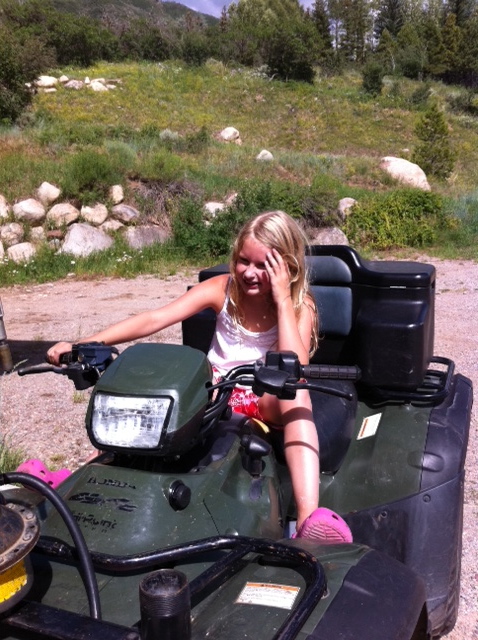
Em & The 4-Wheeler

Emma on the 4-wheeler

Perhaps more exciting than even the ARC (Aspen Recreational Center) is the 4-wheeler kept up on the ranch.  For those who are not familiar with this piece of machinery, it is a cross between a kind of Hummer version of a motorcycle and an open air golf cart.  My two nephews, Colter and Bridger, are cringing at this crude and citified description of mine, because it is actually an essential piece of powerful ranch equipment used to change sprinkler heads, and to haul a variety of other things.  Things I do not pretend to know about.  To me, it is the vehicle we use to go looking for coyote, fox and other wild life up on the ranch.  Last summer we found a den of coyote pups, so cute(!) whose mom lay basking on a nearby rock, unruffled by our intrusion, she didn’t move a muscle as we rode by within ten feet of her pups.  (I know Colter and Bridger – you guys might want to just shut your computer down at this point – it’s got to be painful to read this description.)

Now that I have thoroughly humiliated my fabulous nephews with my utter ignorance in all things to do with ranching, I will attempt to move on.  When Emma arrived in Aspen the night before last, one of the first things out of her mouth was – “Go on the 4-wheeler?”  Followed by, “Go to DuBrul’s (my cousins’s) house?”

When we told her she couldn’t do either of those things, she then went for her back up list.  “Go see motorcycle bubbles?”  (This requires interpretation as this is what Emma calls the 4th of July fireworks, which we missed this year as we were in New York.

“No not going to see motorcycle bubbles.  Go swimming in indoor pool.  Yeah, go to the ARC.”

When we informed her that as it was almost 9:00PM, this wouldn’t be possible, but promised to take her the following day, she said, “Go to outdoor pool?”  (Meaning the Snowmass rec center’s outdoor saline water pool)

Finally tired of our feeble excuses about the late hour and how everything was closed, she conceded sadly, “Time for bed.”

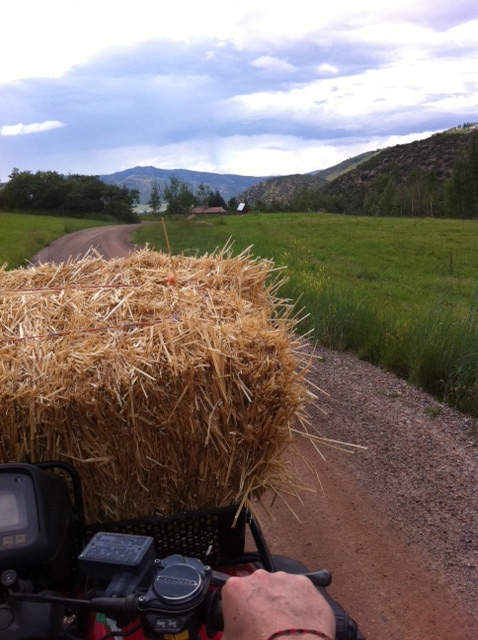
But the following morning the list was proffered up and there wasn’t much we could say as our excuses of it’s too late, no longer held any weight and she knew it.  So off to the ARC Emma went and then a trip to the grocery store where she was able to procure her favorite chocolate milk from Horizon, before getting the 4-wheeler from the barn.  We were also able to load a bale of hay into the front to carry back to the house to set up with a bull’s eye so that Nic can practice his archery skills.

Bringing hay back to the house for Nic

It’s good to be home with the family!

For more on our escapades and Emma’s journey through a childhood of autism, go to:  www.EmmasHopeBook.com
Bliss

I am sitting here writing this, with Emma to my left singing “Three Little Elephants” in Spanish.  Okay, so you might not know that was what she was singing even if you were a native spanish speaking person, but I know the song, because the tune is exact even if her pronunciation is not.  Richard and the children arrived in Aspen last night.  To say that I was pleased to see them, really doesn’t sum up my excitement and happiness.  I am blissfully happy!

Last night Emma was so excited to be here that she didn’t want to go to bed.  As my husband, now to be referred to as the man-of-the-decade (MOD – I tried “century” whose acronym then became MOC and have opted for “decade” simply because of the acronym and not because there’s a time limit on my admiration for him and all he does) was unpacking, I got Em into her nightie and brushed her teeth.  When she finally felt it was time for bed, at around 10:00PM (that’s midnight by New York time) she said, “Time for reading and bed!”

“Are you ready for bed, Em?” I asked.

“Yes.  Mommy come,” she replied.

I am reading a book written by a wonderfully talented friend of ours – Dan Elish – whose book is entitled “The School for the Insanely Gifted” and Emma is enjoying it immensely, as am I.  As I read to her, Emma snuggled up against me, putting her head on my shoulder as I read.  I use to do the exact same thing when my mother used to read to me and it filled me with joy.  When her little body succumbed to sleep I lay with her, not wanting to move, just relishing her head on my shoulder, her body pressed up next to mine.

This morning Nic and Emma woke at the rousing hour of 5:30AM – in part because the dogs began barking at a particularly tenacious coyote who has a habit of coming right up to the house and yelping.  The dogs, in a spectacular display of frenzied aggression twirl around barking and ramming their bodies against the door in an effort to get outside.  My mother’s voice shouting from her bedroom, “be quiet!” does nothing to calm them.  And in fact, may just rile them up further, though I’d never say this to her directly.  The whole thing has a comedic aspect to it – dogs making more noise than one would think possible, coyote howling, children bolt upright in bed, Mom shouting for quiet in a kind of exaggerated stage whisper and Richard covering his ears with a pillow.

Once downstairs Emma and I made chocolate pudding, while Nic proceeded to play his newest composition on the piano.  By the way – Piglet – if you’re reading this – any tips on how to keep the instant pudding from turning into soup after an hour or so in the frig?  I think it has something to do with the altitude, as this doesn’t happen to us in New York.  But I digress…  After making pudding, Nic proceeded to demonstrate his newly acquired skill of blowing bubbles and Emma went upstairs only to return wearing her bathing suit.  “Time to go to the indoor pool!” she cheerfully announced.

Nic proudly blowing a bubble

The aftermath of another bubble

“But Em, it’s not open yet.”

“We have to wait.  Then going to go to the indoor pool, jump off the diving board, go down the slide, go in the carousel.  Go with Mommy?”

“I can go later today or tomorrow Emmy,” I told her.

“Okay,” she said.  “Mommy has to work,” she added in a serious tone.

“How about getting dressed so you’re all ready to go?”

Emma returns wearing her swimsuit and clothing over her suit.


“Playing bells,” Emma explained as she pounded on the keys of the piano.

Everyone is together and I am in bliss.

For more on our crazy family and Emma’s journey through a childhood of autism, go to:  www.EmmasHopeBook.com

These Last Few Days

Every day for the past month, Emma has gone on the bus to summer camp with her brother, Nic and her therapist Joe, shadowing her.  Joe tells me this year has been terrific.  Emma has tried new things, been engaged and interacted with the other children more than the year before.  Today is their last day before coming out to join me in Aspen.  Because it’s their last day, Nic told me, they can do whatever they like.  Nic said he was probably going to play soccer, practice his archery, swim “a bunch of times” in the the lake and do gymnastics.

I am interested to hear what Emma will do.  When I called last night, she was with Joe in her “study room” so I couldn’t speak to her to ask.  Not that I would have gotten a clear answer.  The future and past are difficult concepts for Emma to express.  I never know when I speak with her if she’s referring to something she wants to do, did do, will do in the future or wished she could have done in the past. Despite my confusion in regards to what time frame is being referenced, Emma is usually without complaint.

Emma at camp – 2011

Every afternoon upon returning from camp, Joe and Emma go into her “study room” where she works on her literacy program.  I haven’t worked with her for the last ten days, so I am eager to see how she is coming along.  Emma’s literacy program, perhaps more than anything else, has caused a significant shift, in Emma, but also in me.  The progress she’s made since this January when she was just learning to form her letters, to now, where she is writing one and two sentences, is tremendous to see.  But I also feel she is gaining a certain degree of self confidence.  Working with her has been incredible as I know how hard it is for her, but she continues to do the work anyway.

Sleep, wake up, sleep, wake up, go on the airplane and see Mommy!

For more on Emma’s journey through a childhood of autism, go to:  www.EmmasHopeBook.com

A Phone Conversation With Emma

Speaking on the phone with Emma has always been challenging.  She tends to forget that there is a person on the other end and often walks away, leaving the phone dangling there before someone either abruptly hangs the phone up, not realizing I’m still there or answers it in a harried sounding voice.  Sadly, since I’ve been out here in Aspen working, both my children and husband remain in New York City, so the only communication I have with any of them is by phone.  This morning I called before the children left for camp – which meant calling them at 5:45AM Rocky Mountain time.  The following was my conversation with Emma.

A rustling sound followed by, “Hi Joe!”

“No, Emmy.  It’s me, Mommy.”

“Oh!  Hi Mommy!”

“How are you Emma?”

“I’m fine.  Have so much fun at camp.  Last day.  Last day summer camp.”

“Two more days, Em.  You have two more days and then it’s Saturday and then you and Daddy and Nicky and Jackie fly out to Aspen!”

“No more summer camp.  Fly to Granma’s house!”

“That’s right Em.  I can’t wait to see you.  I miss you so much.”

Silence.

“I’ll be at the airport, Em, waiting for you guys.  I am so excited to see you.”

Silence.

“Emmy, have you enjoyed camp?  What are you doing there today?  Anything exciting?”

Silence.  Then humming.

“Emmy?”

More humming of a carousel song – whose name I cannot remember.

“Hey Em?”

More humming and the sound of her moving away from the phone until the humming was from far away.

“Em?”

“Oh hi honey.  She took off.  Nic wants to talk with you though.   He was going to call you this morning,”  Richard said.

I then spoke with Nic who informed me that he missed me and Emma did too.  He now knows how to blow bubbles from a single piece of gum, a proud accomplishment and something he had become convinced he would never be able to do.  He’s practicing his Alto Sax and loves it, is playing the piano and is working on a blues composition for it, while learning the guitar, so he is not as good at it, but is still enjoying it.  The sax he is shipping out to Aspen so he can practice while out here and his skateboard he intends to leave in New York.  He explained to me that he plans to buy another one for Aspen so he’ll have one here as well as in New York.  He requested that I find him a bail of hay so he can set up a bulls eye to practice his archery, which I’ve promised to look into.  As he told me all of this I could hear Emma in the background, talking, singing and laughing.  I could hear that Joe had arrived.  As I spoke to Nic, mining him for more information there was silence.

“Hey Nicky!”

Silence.

“Nic!”

Silence.

“Nic!  NIC!”

“Oh yeah, Mom?”

“Nicky, I was talking to you.”

Sorry.  Joe’s here, playing with Emma.  I got kind of distracted.”

Shrieks of laughter were then heard along with running and more laughing.  Talk about feeling out of the loop!  But also relieved everyone is having a good time and I will get to see them in another four days.  Just four more days…

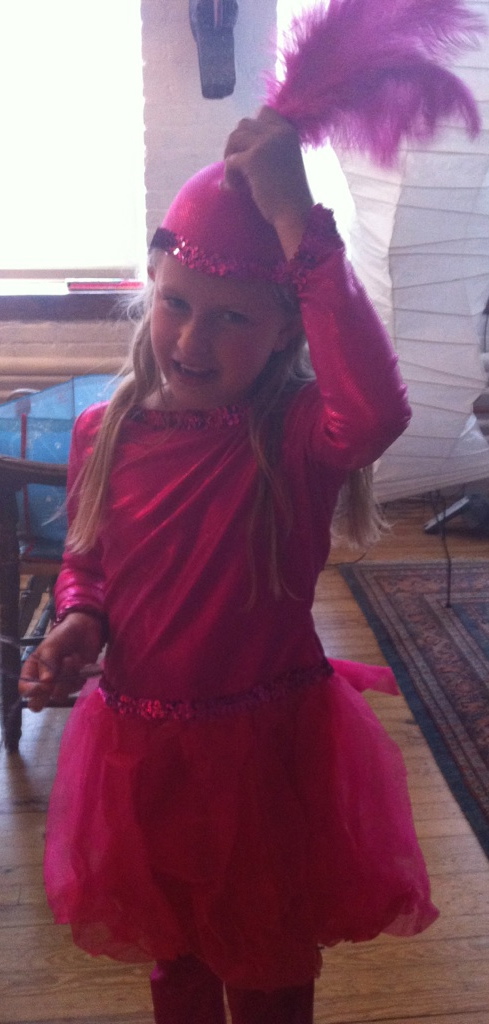
Emma in her Pink Flamingo costume

For more on Emma’s journey through a childhood of autism, go to:  www.EmmasHopeBook.com

Labels – Autism

Labels are easy, they’re shorthand for what we want to communicate and yet they often obscure what is really being said.  (These are the things I think about when I’m away from my family for an extended period of time, as I have been, since coming out to Aspen because of work. All of this reflection will end in another four days, because the children and Richard will be joining me out here this Sunday – Hurray!)

We say things like – “oh he’s schizophrenic,” “she’s bi-polar,” “she’s anorexic,” “he’s an alcoholic” and the meaning gets conveyed and yet, is it?  After all that’s not ALL the person is.  It’s something they have been diagnosed with, perhaps are struggling with,  it’s a medical term, but it does not encompass who and what that person is in their entirety.  When I hear someone describe another person as “autistic” I understand that person has been given a diagnosis of autism, but I don’t presume to know much more about that person.  For example, I won’t know if this particular person diagnosed with autism can speak, read or write, they may have other issues, physical issues, other diagnoses added on to further illuminate, but the labels begin to overwhelm the actual person.  I can’t know from the various labels whether the person has a sense of humor, if they have terrific eye contact or no eye contact, whether they cringe at physical contact or whether they seek it.  The word “autistic” does not give me any clues as to whether the person is gregarious or shy, enjoys reading about painting or knows everything there is to know about quantum physics.  The label does not tell me about the person’s passions, dreams, desires or talents.  If I knew nothing about autism, having someone described to me as such might cause me to presume a great many things.  Things I would be completely wrong in assuming.

In my daughter, Emma’s case, the labels are almost always unhelpful.  I use them, it is shorthand after all, but they reduce her to something that doesn’t help people know her or understand her.  For example, Emma has a terrific sense of humor, she loves playing jokes, being silly, making faces, repeating things in a way that will guarantee a laugh.  When I use the word autism, or say to someone – she has autism – it’s the best I can do in a short period of time.  It’s a little like when we say to one another – “How are you today?”  The answer we all know to give is:  “I’m fine, how are you.”  Even if we aren’t fine.  Can you imagine if you asked that seemingly innocuous question and the response was:  “You better take a seat, this may take some time.”

I avoid using the word “autistic” because it implies more to me, than saying “she has autism.”   It’s a subtle distinction, but to me, anyway, it’s there.  Emma is so much more than a diagnosis.  She is pure Emma. And Emma is complex, just like the rest of us.  She is funny, a talented singer with a beautiful voice, she has a personality and temperament that are unique to her.  She loves to run and swim and swing her arms and zip around on her scooter.  She enjoys being read to, sung to, and any game that involves running.  I dislike that her diagnosis takes up so much room in people’s minds.  I do not like that when people hear she’s “autistic” they make assumptions about her, almost always incorrect.

Can you imagine what the world would be like, if all of us took all these labels, our shorthand for communicating and tossed them out the window?  We would live in a world, which would make prejudice and judgements much more difficult to come by.  We would have to live in the discomfort of not knowing.  But what a great way to live!

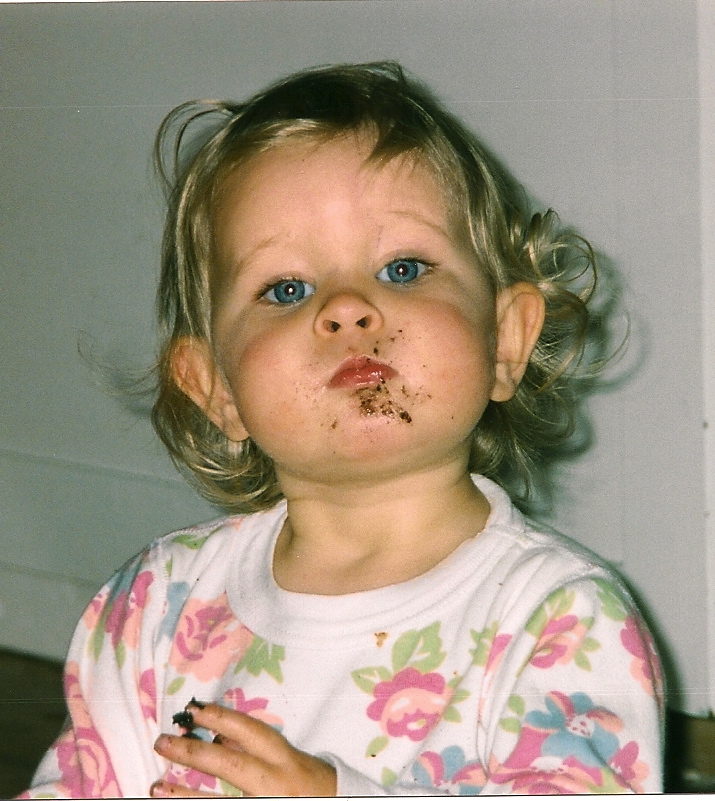
Emma – 13 months – eating a brownie.

For more on Emma’s journey through a childhood of autism, go to:  www.EmmasHopeBook.com
What is Normal – Continued

A few weeks ago while at the swimming pool with Emma, a woman asked me where she should take her two grandchildren, who were going to be staying with her.  After inquiring what the age of her grandchildren were – just a bit younger than Nic and Emma –  I began with a list of parks, (all with water features) moved on to museums, then zoos, botanical gardens etc.

At one point she pointed to Emma, who was standing near me twirling her hair around her index finger, and said, “What are her favorite things to do?”

I waited to see if Emma would respond, when she did not, I said, “Emma likes any park with water and the Central Park carousel,” I said.  As I was speaking Emma was twirling her hair and opening all the lockers in the dressing room.  Trying to engage her I said, “Hey Em.  What do you like to do on the weekends?”

Emma turned to me and said, “You have to ask Mommy.  Mommy can I go home now?”

The woman looked kindly at Emma, then with a certain amount of confusion said, “Oh!”

“Emma has autism,” I said.  “Pronouns have always been tough.”

“I would never have guessed that looking at her,” the woman said.

I put my arm around Emma and said, “It was nice speaking with you, have a lovely time with your grandchildren.”

As we left I thought about what the woman said.

Autism is often invisible.  With many children they have no discernible signs of physical issues, they look healthy, they seem “normal”.  Unless one tried to engage Emma in conversation, one would never know there was anything amiss.  Even then, I’m surprised by how often people still don’t know.  We have such a wide range of what we deem “normal” in human behavior.  I think people assume they are speaking to a neuro-typical child and so it can take awhile before they discern that they are not.  In Emma’s case she also can appear shy or perhaps people assume she’s one of those children who hasn’t been taught to be “polite” and answer when spoken to.   Many of us find it confusing to see someone who “looks normal”, only to find there are deeper neurological issues lurking.  Most people think, when first meeting Emma that she’s aloof or bored.  Sadly, many people assume she hasn’t been brought up properly and so they become rude or scolding, speak to her harshly, before I can intervene.

So what exactly is normal?

I don’t know.   But I’m not convinced it’s anything I aspire to.

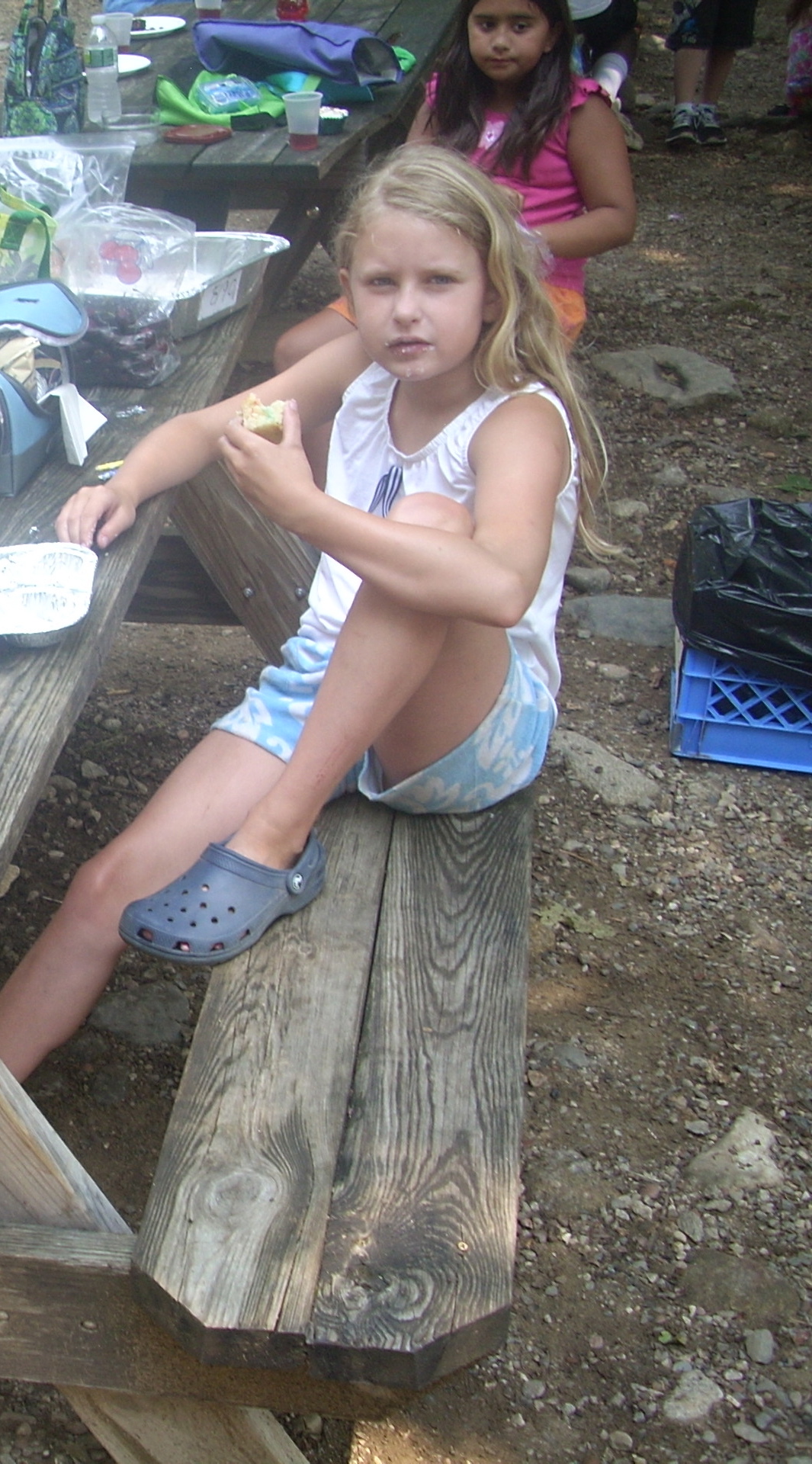
Emma eating lunch at camp

For more on Emma’s journey through a childhood of autism, go to:  www.EmmasHopeBook.com
What is Normal?

Having a child diagnosed with autism, one inevitably comes up against this question – What exactly is normal?

According to Dictionary.com – “Normal:  1. conforming to the standard or the common type; usual; not abnormal; regular; natural.  2. serving to establish a standard.  Psychology – a. approximately average in any psychological trait, as intelligence, personality, or emotional adjustment.  b. free from any mental disorder; sane.”

Autism is a neurological disorder, yet interestingly, if one goes to dictionary.com and looks up autism, the word “neurological” never shows up in it’s definition.  In fact, it is defined as:  1. Psychiatry – a pervasive developmental disorder of children, characterized by impaired communication, excessive rigidity, and emotional detachment.  2.  a tendency to view life in terms of one’s own needs and desires.”

Okay  – so the definition certainly suggests something outside of “normal”, though “a tendency to view life in terms of one’s own needs and desires” certainly describes a great many people I’ve come in contact with over the course of my life.  In fact, couldn’t one even say that this is one of the great flaws of being human?  We all tend to view our lives as our own private universe, and though we have grown to understand we are not the center of it, a great many still wish we were.

Have you ever engaged in a conversation with another person only to begin lamenting the problems of the world, our government, other governments only to conclude that if everyone just listened to us, the world would be a better place?  How many times in a relationship have you thought, if only the other person would listen to me, do as I wish, everything between us would be so much easier?

It all comes down to the degree.  I didn’t bother to look up narcissism, but I’m pretty sure people who have that tendency would fall under the second definition of autism – though the resemblance stops there.

When I think about my daughter, Emma, she is the antithesis of narcissism.  Emma is without ego.  She is also without malice.  It would never occur to Emma to tease or set out to hurt another person’s feelings.  These are not things she is cognitively capable of.  I remember the first time she told a lie, I was ecstatic.

“Did you hear her?” I asked my husband, Richard.  ”I asked her if she’d brushed her teeth and she told me she had, but when I went into the bathroom, her toothbrush hadn’t been used!”

“Things are all falling into place,” Richard said with a grin.

The idea that Emma understood that if she told me what she knew I wanted to hear, even though it wasn’t true, it might allow her to get away with not doing something she didn’t want to do, was a huge step toward “normalcy”.

I have grown to dislike these definitions and labels.  I find them utterly unhelpful.  Perhaps in the beginning when I knew nothing about PDD-NOS – the diagnosis first given to Emma when she was two – I had no idea what people in the field were talking about, and so it was imperative that I learn what these labels meant.  But now, some seven years later, those same labels do little to help us help our daughter.

For more on Emma’s journey through a childhood of autism, go to:  www.EmmasHopeBook.com
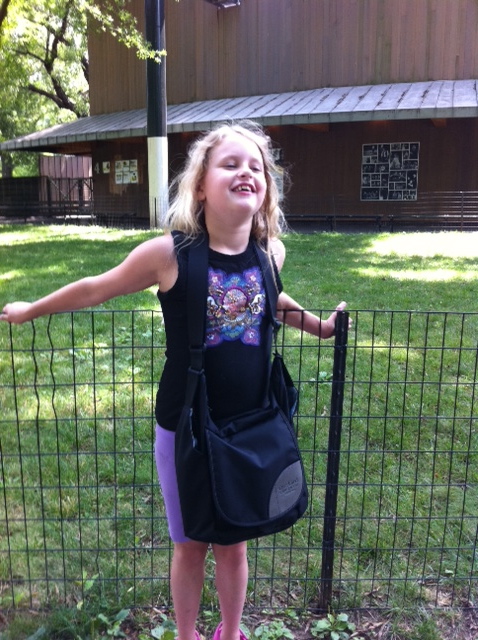
Emma in Central Park carrying her dad’s “man bag.”

Explaining Travel to Emma

I flew back to Aspen, Colorado yesterday, alone.  Explaining to Emma why I had to return so quickly was difficult.  First of all I don’t know how much she understands and since she cannot ask me questions the way her older, neuro-typical, brother, Nic does, I cannot know what goes through her mind.  So when I told both children ten days ago that I was going to have to go back to Aspen because of my store, Nic said, “NOOOOOO!  You only just came home!  That’s so unfair, Mom.  Why do you have to go back?”

Emma remained silent.  I explained that there were things I needed to take care of at the store, that it was part of the deal with owning one’s own business, it’s just what one has to do.  After awhile, Emma wandered away muttering, “Sleep, wake up, camp on the lake, sleep, wake up, get on airplane.”

Nic meanwhile was angry, then teary, then resigned.  “I know, honey.  It’s a drag.  But you, Daddy and Em will come out in August so it won’t be so long this time that we’re all apart.”

“No Mom.  It’s not a drag.  This sucks,” he said, before turning away from me, his arms crossed, to stare out the window.

“I’m so sorry, Nicky.”

And as sorry as I was that Nic was upset, I wondered what was going on through Emma’s mind.  Was she just accepting that this was how things were, did she have questions?  What was she feeling?

Impossible for me to know.

This past weekend I pulled out a calendar and went over it with Nic and Emma.  Pointing to various dates, I said, “Okay so this is when I have to leave.”

“Get on airplane, fly back to Aspen,” Emma said, looking at the box with the number 19 on it where my finger was positioned.

“Yeah.  That’s right Em.  That’s the day I have to go back.”

“Sleep, wake up, get on airplane,” she said.

“Just me, Em.  You guys are going to go to camp and stay in New York with Daddy,” I explained.  “Then look, on this day you, Daddy, Nic and Jackie are going to fly out to Aspen.  That’s in twelve days.  And here, this is when Joe comes out and Jackie has to go back, then here is when we all fly back to New York together.”  I looked at both of them.  “Okay?”

“I don’t want you to go again.  We’ve only had you for like three days,” Nic said.

“Two weeks.”  I put my arm around him.  “I know.  I know.”

“It’s not fair,” Nic said.

“Sleep, wake up, sleep wake up…”  Emma began, counting on her fingers how many sleep, wake ups it would be before they flew out to Aspen to meet me.  “Go to YMCA with just Mommy?”  Emma said after she had finished counting out 12 “sleep, wake ups”.

“No, Em.  But Daddy will take you.”

“Go to YMCA with just Daddy,” she repeated and then scooted away on her scooter.

Yesterday morning as I was gathering my things to go downstairs, Emma ran over to me and threw her arms around me.  “Bye Mommy!” She said, burying her face into me.

“I’m going to miss you so much, Em.”

“Miss you,” she said, before pulling away.

For more on Emma’s journey through a childhood of autism, go to:  www.EmmasHopeBook.com
Sunday with Emma

Yesterday Richard and I took the children to the park, where Emma played in the sprinklers, while Nic sat with us in the shade and talked.

Emma in Union Square Park

Then off to Toys R Us to return a Nerf gun that was faulty, then to MOMA (Museum Of Modern Art) where we watched several video installations by the Belgian artist – Francis Alӱs.  Emma wasn’t interested in the video of him pushing a huge block of melting ice through the streets until it disappears, but she was fascinated with the video of him chasing tornadoes, particularly when he entered the tornado.  Another video she liked was one in which he is driving a VW Bug up a very steep dirt road, but never makes it to the top, instead rolls backwards, before attempting to climb the hill over and over again.  Talk about the trials of Sisyphus…

When we went to a lower floor Emma pointed to a giant collapsed fan and said, “Telephone.”

“Look Em.  It’s a huge fan!”

“Fan,” Emma said, before going to the next sculpture with wheels, “Bicycle,” she said.  Then she turned and pointed to an enormous sculpture of a man holding a steering wheel.  “Bus driver!” she said, jumping up and down.  And on it went.  When she didn’t know what something was or if it didn’t look like any recognizable object she would point out it’s color.  “Red!” She said.  Or, “Green!”

“Hey Em.  Look.”   I pointed to two sculptures that resembled melting metal.

“Blobs,” she said nodding her head before running over to a sculpture of a vaguely female form.  “Mommy,” she said, pointing and smiling at me.

Emma at MOMA

After the museum we made our way to the swimming pool at the Vanderbilt YMCA, where we went swimming.

Prior to our leaving the house that morning, I’d made a list of all the things we planned to do and went over it with Emma.  “Okay so first we’re going to go to Union Square, then the museum, then the pool and then Toys R Us.”  I pointed to each item on the list as she repeated all our activities.  Except when we got to Union Square and saw how hot it already was and how heavy Nic’s Nerf gun was we amended out list.

“I think we better unload this thing,” Richard said gesturing toward Nic who was barely able to lift the bag carrying his broken toy far enough off the ground so that he could carry it.

Once we got to Toys R Us and Nic found a newer, bigger, better and even heavier Nerf gun, Richard turned to me and said, “I guess we’re going to have to take this thing home before we go to the museum.”

Meanwhile the list I’d painstakingly made and gone over with Emma was no longer relevant.  I worried with each change that a meltdown was imminent.  But the meltdown never came.  In fact Emma was great, took each change in stride, repeating the change of plans to me, before cheerfully going along with the next activity.

“Well that was a great day!” Richard said as we headed home.

Everyone agreed.

For more on Emma’s journey through a childhood of autism, go to:  www.EmmasHopeBook.com
Empathy and Autism

My thinking on this topic has changed since I last posted about Emma and Empathy over a year ago.  I am not convinced that Emma “has a terrible time figuring out what another person is thinking or feeling.”  Today that is not something I would say.  I often wonder if Emma feels things in the extreme rather than not at all.  I have read a great many articles written by people on the spectrum who describe their feelings and responses to other people’s emotions as being too much for them.

One young woman, Dora, says:  “I often feel things too deeply or have too much empathy and have to run away, not because I am callous, but because I feel so strongly it causes my brain to shut down or freak out.”    Her statement is similar to another woman with autism, who’s amazing mother, Clara Claiborne Park wrote two books about her daughter, Jessy.  She describes how Jessy would cover her ears and could not tolerate certain words because they were “too good”.

When one of us is upset and Emma appears to completely disregard our emotional state, whether by ignoring it or making sympathetic comments, which to our ears strikes us as insincere, I have to question whether our interpretation is accurate.  How can we know what she is really experiencing?  We cannot.    I choose to believe Emma is deeply sensitive to her  own and our emotions, but just as she has trouble expressing herself verbally, she may express her feelings differently as well.

Dora goes on to point out:  “The notion that we don’t have feelings frees up people to commit atrocities against us without accountability.”

When I hear neuro-typical people discussing autism I am often surprised by the conclusions they come to.  How differently might we treat someone if we believed them to be fundamentally unintelligent?  How would we speak to them?  What things would we say because we believed they have a low IQ, lack empathy, could not understand us?  How would we treat them as a direct result of our assumptions?   If we decide a child’s behavior is a form of manipulation or because the child is “spoiled” or because they “think they can get away with it”, do we not treat them differently?  Isn’t it true we can behave in some pretty horrific ways when we make assumptions about other’s actions?  Isn’t it easy to rationalize our behavior when we’ve decided a person or child is “dumb”, “less than”, “inferior”, cognitively unaware”?  And what if all those assumptions we’ve so quickly and easily come to are completely wrong?  How does our response stand up under further scrutiny?  Have we not behaved with callous disregard?  Have we not completely “disregarded” their “feelings”?

For more on Emma’s journey through a childhood of autism and her relationship with her brother, Nic go to: www.EmmasHopeBook.com
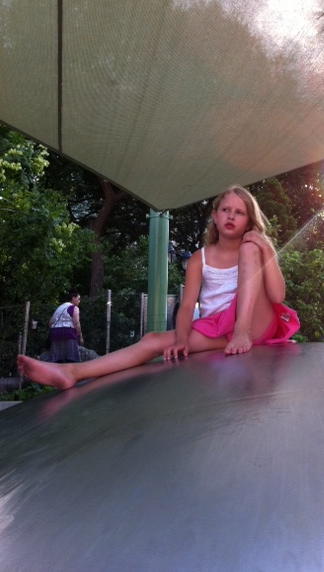
Emma in Union Square Park – Summer, 2011

A Brilliant Mind

I have maintained in previous posts, that I continue to believe in my daughter’s brilliance.  Current IQ tests do not account for children who are non-verbal or with limited or impaired speech.  I have no way of knowing what Emma’s IQ is, but I can tell you there are things Emma does, on a daily basis, indicating her mind is capable of some pretty astonishing leaps.  What follows are a number of examples.

Our refrigerator light is out.  The first thing I did was replace the bulb, only to find that wasn’t the problem.  A little later Emma opened the refrigerator door and pressed a switch on the ceiling of the refrigerator and immediately all the lights came back on.

“Wow Em!  How did you know to do that?” I asked incredulous.

“Lights broken,” Emma said, nodding her head up and down as she removed her caramel yogurt from the frig.

“Yeah, but how did you get them back on?” I went over to her and watched as she reopened the door and pressed on the little white button that activates the lights when the door is opened, something I did not realize until Emma showed me.  The lights flickered for a second and then went out.  Emma reached up and matter-of-factly jiggled the switch and the lights came back on.

“There,” she said, with a certain degree of satisfaction.

After a few days of all of us wiggling the switch, the lights flickered on and off feebly one last time before remaining permanently off and I had to call the company to get the light switch replaced.  Now to many of you, this may seem completely commonplace, but I can tell you, I had spent quite a bit of time trying to figure out what was causing the problem.   I should have saved my time and just asked Emma.

Yesterday while Emma and I worked on her literacy program requiring her to choose the word “leg” from several options, she positioned the cursor over the correct button then clicked on the space bar.  Then she looked over at me with a mischievous grin as if to say – did you see that?

Again, hitting the space bar instead of clicking on the mouse or the return key never would have occurred to me.

Another thing I’ve noticed while working with Emma is that she has an amazing ability to see patterns.  So, for example, if I show her a series of “words” but with only parts of the letters showing such as:  _a_s,  r_ _ _, _e_ _, _ _s_ and ask her to find the one that can be “eats” she will find the correct one immediately, less than a second, faster than I am able to.  I am consistently amazed by this.  It is in keeping with her ability to know instantly when a photograph is missing from her pile.

Emma’s box of photographs – over 200

The other day Emma was singing while shooshing around on her scooter.  Richard was reading in the rocking chair, Merlin happily nestled in his lap.  “You know what she’s doing right?” Richard said looking over his reading glasses at me.

“Yeah,” I said without looking up.

“She’s created her own carousel.  Do you hear her?  She’s singing all the songs they play on the carousel.  And watch.  She’s going around and around on her scooter in the same direction as the carousel.”

I stopped reading and watched and listened.  Emma was currently singing “Georgy Girl” one of the many songs they play at the Central Park Carousel.

“I wonder if she’s singing the songs in the correct sequence,” he wondered out loud.  “We’ll have to make a note of that next time we go.”

Emma riding on the Central Park Carousel

These are only a few examples of Emma’s brilliant mind.  There are countless others.

We, as a society have a tendency to view ourselves and others with a critical eye.  We are taught early on to look at our deficits and then do all we can to take corrective measures to make up for those deficits.  I don’t believe this kind of thinking is helpful with children diagnosed with autism.  The deficits pile up unbidden until that’s all we can see.  Our children are routinely viewed as “less than” as we struggle to help them.  I feel strongly a more balanced approach is necessary.  Our children are often brilliant.  If I approach Emma with this in mind, I am able to more fully help her, by focussing on her talents, on the things that are easy for her and using those assets to help her with the things that are more difficult.   In addition I find I can learn a great deal from her.

For more on Emma’s journey through a childhood of autism, go to:  www.EmmasHopeBook.com
Emma’s Ears – Autism

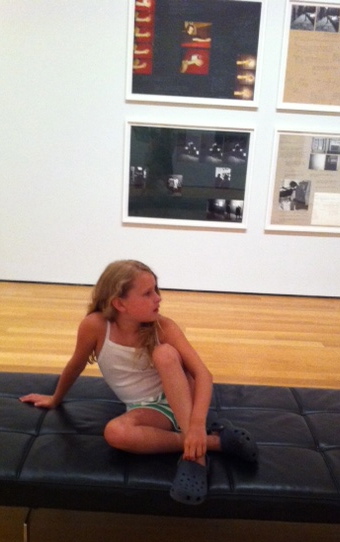
Monday night Emma was up at midnight screaming.  Her ears were bothering her.  This has been an ongoing problem for many months now.  She is highly sensitive to the changing air pressure.  As a result of Emma’s sensitivity, I too have become increasingly aware of it and am surprised that I have lived this long without noticing how often it changes, causing my ears to “pop”, as Emma describes the sensation, too.  Still, just to be safe we have taken her to her pediatrician who assured us her ears were fine and referred us to an ear specialist.  To date Emma has gone to the ear specialist three times.  Her ears are fine, we’ve been repeatedly told.  She’s just extremely sensitive to the air pressure which is constantly fluctuating.

“I need help!”  she screamed.  “Ears popping, have to unpop!  Mommy!  Mommy I need help?”

This can go on – as it did Monday night for hours.  That night she was up until past 4:00AM, I don’t know when she finally fell asleep as I eventually lapsed into a kind of restless state of unconsciousness.  When I woke it was just past 7:00AM and Emma was fast asleep, arms spread out like Christ on the cross, blonde hair fanned out on the pillow beside me.  Richard had long since relinquished his place in our bed and gone to her bed.  Merlin, preferring the rocking chair in the living room, was happily curled up away from all of us when I came into the kitchen to begin preparing the children’s breakfast.

I reminded myself that Emma used to regularly wake up at around 2:00AM only to finally fall back asleep somewhere between 4:00 or 5:00AM.  How we managed to get through those middle of the night awakenings month after month is something I cannot fathom given how exhausted I was yesterday.  The combination of crying in pain and screaming for help, help I am unable to give, is what breaks my heart.  I try to remind myself that being there, just sitting with her, even though I cannot change the air pressure, is a kind of help too.  Still it’s difficult not to feel the rising panic and accompanying helplessness that come with witnessing ones child in such obvious pain.

“Please Mommy.  You have to unplug.  Ears!  Ears!”  she continued to cry while twisting her blanket up and trying to push it down her ear canal.

“Em, try to yawn,” I told her opening my mouth in an exaggerated yawn.

“NOOOOOOOO!”  Emma screamed, pounding the side of her head with her hand.  “Nooooo!  Mommy!  Mommy!  I need help!”

It is during moments like these that I want to scream.  I want to hit the wall with my fist.  I want someone or something to help my daughter.  So I go wake up my blissfully sleeping husband, Richard and get him to help me.

“I got this,” he told me after I woke him, waving me away.  “Go back to sleep.”

Only I couldn’t go back to sleep so I followed him into her bedroom where he had ingeniously pulled out a balloon and told her to blow into it for a few seconds.  He also had the foresight to bring some nasal spray which the ear specialist had given us for her.

And while none of these things were “magical” cures for her popping ears, his calm demeanor helped settle her and me down.

“I’m going to lie down with her, you go back to bed,” I told him.  As he got up to leave, I said, “And thank you.”  To say I feel gratitude that I have a husband who is so completely in the trenches with me, who is more than willing to do his share and often does much more than that, who isn’t afraid to submerge himself in all things that make up our crazy family, would be a vast understatement.

An hour later, Emma, still in pain, but at least not screaming like an air raid siren, whimpered, “Ears still popping.  Go to Mommy’s bed?”

“Okay Em.  Come on.”  I led her through the hallway into our bedroom and climbed into bed with her.

Last night, exhausted and concerned that we might have a repeat episode, I went to sleep early.  Miraculously Emma slept until almost 7:00AM.

For more on Emma’s journey through a childhood of autism, go to:  www.EmmasHopeBook.com
Dreams For Emma – Autism

A follower of this blog and mother of two children on the spectrum asked me if Emma used an ipad.  I wrote about Emma’s ipad last fall for both this blog as well as the Huffington Post, so in responding to her email, I reread both those posts.  The one for Emma’s Hope Book is entitled Emma and Lists.  What struck me was how far Emma has come since then.  I looked at the date – September 24th, 2010 – and while yesterday I was feeling a bit discouraged with Emma’s ongoing struggles with handwriting, I cannot help but feel incredibly optimistic with her progress after reading those posts.  It’s funny how rereading something I’d written less than a year ago can have such an impact, but it has.

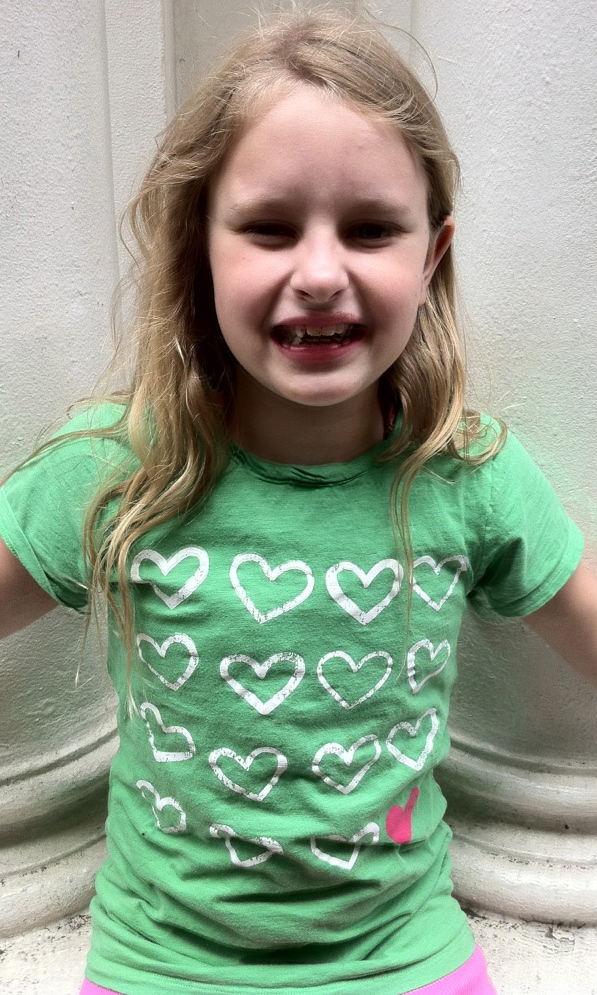
Emma has certainly come a long, long way.  In the post “Emma and Lists” I write about how when I am feeling a little sad or discouraged I make lists.  I go on to recount my current lists, (hopes) for Emma.  “Help Emma with Reading,”  “Help Emma with writing,” are two such items.  I remember when I wrote that post, thinking that these were dreams, perhaps dreams I might not ever see accomplished.  And yet, here I am in July of 2011 and not only are both these dreams coming true, but so are others that I hadn’t even thought to put on my list.  Things like:  beginning math concepts, writing in full sentences, learning to type, following three and four step commands.  These are all things Emma is in the process of learning.

I will try to remember to take a photograph of Emma’s handwriting this afternoon.  She is coming along.  She is learning, she is progressing.  It’s easy to forget, though.  I forgot that last September I could only hope Emma might one day learn to read and write.  That she is now doing so is remarkable and wonderful.  Last fall we were still riding on the wave of our success with having finally gotten her out of diapers at night.  We were still struggling with getting her to sleep through the night.  I’d forgotten all of that.  It seems so much longer than ten months ago.  It feels as though years have slipped by.

I haven’t dared dream for awhile now.  But rereading those posts reminds me of how important it is to have dreams, for ourselves, for our children.

For more on Emma’s journey through a childhood of autism, and to see how far she’s come in one year go to:  www.EmmasHopeBook.com
Summer Camp For Emma

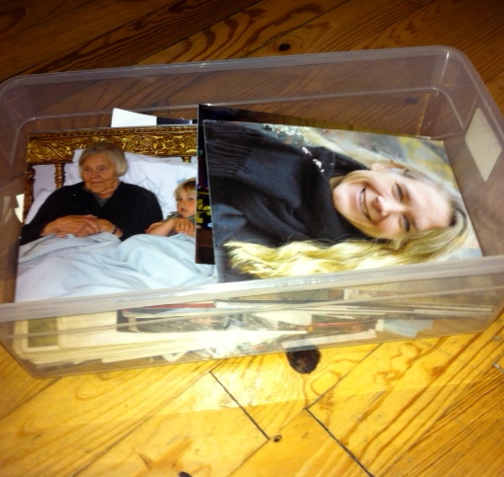
For the last three summers we have enrolled Emma in summer camp with her therapist, Joe shadowing her.  The director of the camp has been incredibly accommodating, allowing Joe to shadow Emma and doing all he can to provide Emma with a “typical” camp experience among her neuro-typical peers.  Each year the other children, while often not exactly clear on why Emma behaves as she does, have been incredibly patient and eager to help when Joe told them she was  just learning to speak and sometimes didn’t understand all that was going on.  Each summer one or two little girls have taken it upon themselves to help Emma, self assigning themselves to her, urging her to join in and making sure she stayed with the group.  The first two summers we signed her up for two weeks and since it went so well, we went ahead and signed her up for a full month, just like her brother, Nic this year.  Yesterday was her first day.

Summer Camp last year

“No not going to go to Becky’s class.  Going to go on the bus to summer camp!”  Emma said yesterday morning as I fixed her breakfast.

“Are you excited, Em?”  I asked.

“Yes!” she shouted.  Then, “Going to go to summer camp with Nicky and Joe.  Going to go swimming in the lake!  Not going to take the school bus, no!  Going on different bus.”

“Yeah, Em.  That’s right.  It’s a different bus.  Which one do you want to wear?” I asked, holding up three different skorts.

“This one!” she grabbed hold of a pink skirt with shorts attached.  “And this one!” she said taking a white t-shirt from me.  “And this one,” she added, pulling a white and blue striped two piece bathing suit from the drawer.

“Okay, and how about we take this one for back up?” I held up a colorful one-piece suit in front of her.

“No, no, no!  This one.”

“Yes, I know you want that one, but we’ll just bring another one in case you need it too.”

“No mommy.  Just this one,” she insisted, jabbing her finger at the two piece.

Emma often reminds me of the children’s book character, Olivia.  Olivia is a pig who loves clothes, particularly accessories with stripes and shoots around on her scooter.  Which is where the similarities end – not the pig part, just the scooter and love of clothing and striped accessories.

When the bus arrived, Emma, Nic and Joe climbed the stairs amid shrieks of excitement and greetings.  Several children from last summer were riding the bus again and as the bus moved away from the curb, I could still hear the excited voices of the children.

When everyone arrived home yesterday afternoon, I asked Emma if she had fun.

She literally jumped up and down she was so happy.  But even during the summer, we must continue to work with Emma on her reading, writing and now, math.  Joe and I worked out that if he came early each morning, he could work one session of math in before they left for camp, while every afternoon I will do a session of her reading and writing.  Yesterday we worked on the word cat/cats.  Emma is coming along beautifully with increasingly difficult sentences which she now types out on the computer using her two index fingers or writes by hand – something that is by far the most challenging for her.  Pointing to an illustration of a man, I said, “This is not a kid.  This is a man.”  Then she was to write these two sentences from memory.  It was the only one which tripped her up, all the other exercises she did, often without hesitation, beautifully.  Such as when I pointed to a group of frogs jumping and asked, “Are these frogs jumping?”

Emma then typed – Yes, these frogs are jumping.

Progress, lots of wonderful progress!

For more on Emma’s journey through a childhood of autism, go to:  www.EmmasHopeBook.com