Monthly Archives: November 2013

“It’s Good to Be Heard”

It’s good to be heard

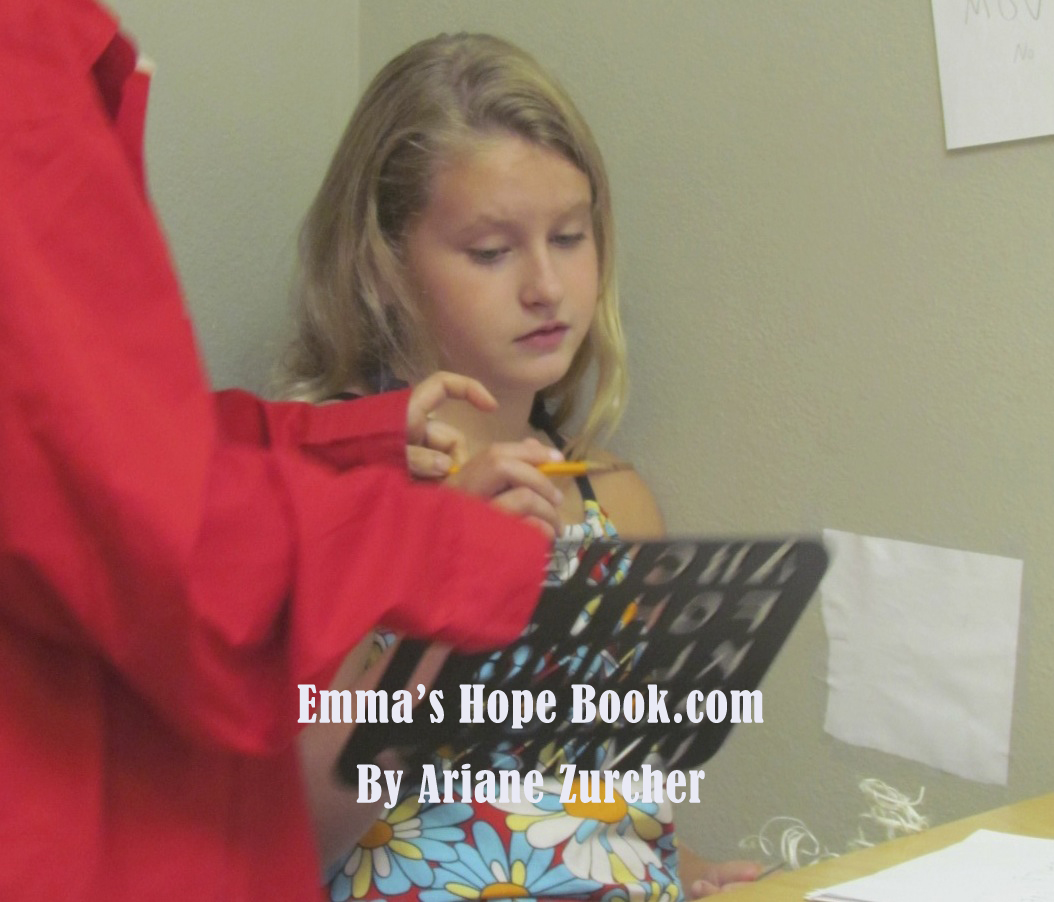
These are the words my daughter spelled out yesterday during an RPM session.  She wrote some other wonderful things too, but I don’t have her permission to print them here.

“It’s good to be heard”

Imagine a life where it was not a given that what you said would be listened to, or even understood.  Imagine if you said things you didn’t mean or that people couldn’t follow the meaning and so you were dismissed.  Imagine being treated “like a three-year old” (this was something else my daughter wrote last week) by people who do not understand, cannot understand, are incapable of understanding because it flies directly in the face of all they’ve been taught and know.  My daughter does not have the mind of a three-year old, despite what anyone else may think or assume.

“It’s good to be heard”

Thanks to a number of dedicated people who have devoted their lives to figuring out alternate ways for people to communicate who cannot or do not reliably speak, my daughter is communicating with us.  Much to our surprise she has managed to learn an enormous amount despite the fact that she has spent years of her life in little more than holding tanks, i.e. special education schools where “life skills” classes are lauded as progressive, where verbal speech is seen as the only true barometer by which intelligence can be gauged.

It’s good to be heard”

RPM copy

Controversy and Commenting

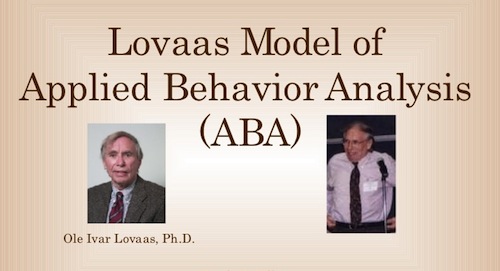
Yesterday I quoted Ido Kedar, whose book, Ido in Autismland is his account of what it’s like for him as a non-speaking, Autistic, teenager.  The quotes I used were specifically about his experience with ABA, the acronym for Applied Behavior Analysis.  (Ido also has a blog of the same name.)   A couple of people accused me of “falsehoods” and spreading “inaccurate information”.  One person wrote, “I have never read so falsehoods in one post in my life.  You clearly have zero understanding of ABA or the methods used in its approach.”  Except that the bulk of the post he was objecting to was made up of quotations from Ido’s book about his experiences as an autistic person.

I asked for clarification and was told, “Falsehoods being projected do not need to come as a quote from you directly. This is your blog and you are the one responsible for providing accurate information. If you are going to show a quote from a student, then maybe you should also factor in that the particular therapist the student had was not a very skilled one or a qualified one at that.”  Except to make such a claim that “this particular therapist was not skilled or qualified” would be inaccurate and something I cannot possibly know as I’ve never met the therapist being referred to.  Evidently telling a lie is acceptable if it’s done so in favor of another’s opinion, however quoting someone’s firsthand experience is reason to be accused of creating falsehoods.

Another commenter wrote, ” The posts regarding ABA on this blog are grossly inaccurate. Unfortunately, the author of this post (and subsequent commentary) are so misinformed on the topic that they are not able to recognize exactly how inaccurate the information is. For those of us who understand the field, this can certainly be frustrating.”  Except that so many being referred to and who were commenting are Autistic.  In fact a couple of those who commented yesterday are teachers and work directly with Autistic children, one is a professor and teaches disability studies to special education educators at the university level.  These are a few of the people this commenter believes to be “misinformed” and even went so far as to scold, “I urge you to become better informed on the topic.”  It would have been comical had it not been so upsetting to read the condescending tone and level of rage this one post and comments inspired.

I’d like to clarify a few things…  Let’s take ABA out of this, I do not care what the “therapy” is being called, if it is not respectful of the person it is meant to help, if it uses dehumanizing techniques such as electric shock, restraints, isolation rooms, repetitive testing requiring the person to master an action before being allowed to move on, it is not a therapy I will ever support.  If a therapy is meant to teach compliance, teach someone whose neurology and sensory issues do not make sitting still simple or easy, who cannot listen, attend and make eye contact all at the same time, I question it’s objectives.  If a therapy is looking to “fix” another’s neurology, make that person “indistinguishable from their same age neurologically different peers” I will continue to speak out against it and will encourage others to do the same. If the therapy in question does not presume competence at its core and does not take into account the person’s specific neurology and sensory issues, it is flawed.  If these ideas are threatening to some, so be it.

So let’s stop talking about ABA specifically, because it seems to me the conversation continues to get derailed about what ABA is or isn’t, how some practice it or do not, how it has or has not evolved, instead, let’s discuss these other concepts.  And if you believe something that goes against what I’ve just said, fine, quote me in the comments section, tell me why you disagree, back up your ideas with examples, preferably with words from Autistic people and I will happily listen.  Accusing me of “falsehoods”, “inaccuracy”, being condescending, lashing out and making personal attacks are not comments I will allow through moderation.

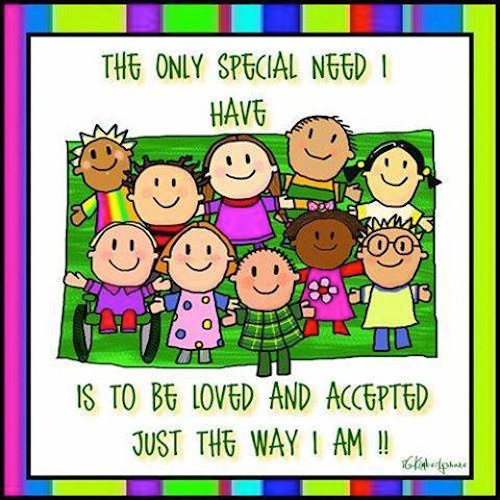
Colin sent me this graphic, something I think we can all relate to…
923025_522914117804644_1130511149_n

More On ABA

I finally did something I’ve never done before.  I’ve closed down any further comments on a post I wrote about the ethics of ABA.  I continue to get up to thirty views on that post daily, now over a year later.  Most of the comments are coming from ABA therapists who write in defense of ABA, which is fine, except most of them are saying the same thing and my response is also to repeat what I’ve said before, but I’m also getting comments from people who are furious that I dare suggest ABA is anything but wonderful, so instead of endlessly repeating myself, I have shut comments down, just on that post.

If you are an ABA therapist, it is your obligation to, at the very least, read what those who are autistic and were given ABA as children are saying about it.  If nothing else, please read Ido Kedar’s book Ido in Autismland where he describes what it was like to be a non-speaking autistic child, with a body that does not do as he would like, and who was given hours of ABA therapy every day for years.

Ido writes:

“It frustrates me to look back at how my ABA teachers drilled me endlessly in basic skills only to say it wasn’t mastered because I had inaccurate pointing.  I knew everything so easily.  I was bored to tears but my apraxic hands would go to the wrong card so they thought I didn’t know “book” or “tree”.  I did it over and over.  It was the worst.  The assumption that people don’t understand if they reply incorrectly is a huge misconception.  ABA is built on this erroneous premise.”

Again from Ido in Autismland:

“My ABA teachers would talk baby talk and tickle me to reward me.  I cared that they see me as smart, so I tried, but I think it was pointless.  I often felt that they couldn’t see my potential, just the drills.  I feel it’s time autistic people finally say what it’s like to be drilled in flashcards over and over when your hands don’t move to your thoughts, or to have your teacher say in front of you that you can’t count because your stupid hands refuse the right number you’ve counted in your head.  I remember standing miserable and embarrassed, holding the wrong number of straws and hearing my teacher say, “It’s clear he has no number sense,” as if I couldn’t understand or had no emotions either.  When I think of these frustrating experiences I am grateful I am not in that situation anymore.  But many of my friends still are.  That’s why I cry for them.”

Regarding eye contact, Ido writes:

“I can listen better if I don’t look at the person.  I can look, but it’s not pleasant.  In ABA I had to look in people’s eyes with a timer.  It was so torturous I did it, but with terrible anxiety.”

Anyone reading this, I hope will be asking themselves what the objective is to insist someone “look at my eyes”.  Would we prefer someone looks at us and pretends to listen to what we’re saying or that they listen?  If someone is not able to do both, is there any point in insisting they do so anyway?

Again in Ido in Autismland:

“In ABA supervision I had to do drills in front of a supervisor with all my teachers.  Then they’d talk about me in front of me to decide how to improve my performance.  It’s miserable to be an object of study especially because they never realized I understood what they were saying.  The consequence of testing me in front of people is that I grew embarrassed and ashamed inside.  By analyzing me in front of me, usually wrong, I grew resentful.  It was so frustrating I don’t like remembering it to tell it now. It’s over for me, thank God, but not for other kids so I have to share this to help them too.”

Rather than continue to quote Ido’s book, I urge you to read it.  This is one person’s experience, but it is also an experience that a great many have said they understand and had as well.  For those who believe in ABA’s benefits, I just ask that you consider Ido’s words, echoed by so many.  There is no “winning” this argument.  All of us have, I believe, similar goals, and that is to do what proves most helpful for our children.

slide-1-728

The Way We Treat Others

There is no other life than this one.  It doesn’t matter what one believes regarding death and the after life, this is the one life we have, right here, right now.  How will we live it?  What we do, what we say, how we behave in this moment is indicative of how we do anything.

I’m reading Rosemary Crossley’s first book, Annie’s Coming Out, which she wrote with Anne McDonald and was made into a movie in the 80’s, released in the US under the title, “A Test of Love.”   (As a side note, I find it interesting that the book’s title places Annie as the protagonist and yet the US film title suggests the therapist is.  By the way, I’m one of the people who believes both Anne and Rosemary were/are heroic and have nothing but tremendous respect for both.)

“Children, even children who could sit up, were generally laid down to be fed.  Their heads would rest in the nurse’s lap, and their bodies would lie across another chair placed in front of her knees.  This meant children were being fed with their heads tilted right back, a method called, for obvious reasons, ‘bird feeding’: gravity drops the food straight to the back of the throat, and there is no chance to chew.  Children were encouraged not to shut their mouths – a second mouthful immediately followed the first.  I have filmed a nurse feeding a child:  food is piling high on his face because he is unable to swallow it at the rate the nurse spoons it in.”  ~  Annie’s Coming Out by Rosemary Crossley and Anne McDonald

The above is, but one of many harrowing passages in the book describing the institution Anne McDonald was placed in when she was three years old.

“To be imprisoned inside one’s own body is dreadful.  To be confined in an institution for the profoundly retarded does not crush you in the same way; it just removes all hope.”  ~ Anne McDonald in the book Annie’s Coming Out

It is impossible to read this book and not feel horror.  Horror at our ignorance, horror that a place like St. Nicholas Hospital was more the norm than not, horror for all we didn’t understand or know, horror for our capacity as human beings to treat one another with such indifference and cruelty.  It is easy to console oneself with the thought that this happened more than thirty years ago and this sort of thing would never happen now, not here in the United States, not now.

This article in the NYTimes was written just last year, I wrote about it and other atrocities ‘here‘.

How will we view the “treatments” commonly used with Autistic children thirty, forty years from now?  What will we think about the commonly held views regarding autism and Autistic people.  Will we look back with the same horror I feel as I read Annie’s Coming Out?

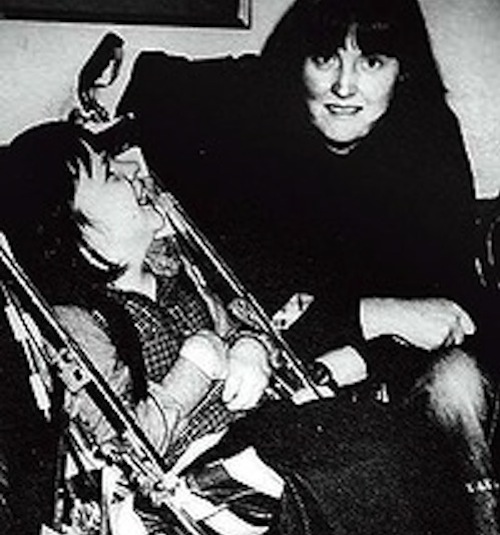
Anne McDonald and Rosemary Crossley

Anne-Mcdonald2-200x0