Tag Archives: children with autism

Empathy and Autism

My thinking on this topic has changed since I last posted about Emma and Empathy over a year ago.  I am not convinced that Emma “has a terrible time figuring out what another person is thinking or feeling.”  Today that is not something I would say.  I often wonder if Emma feels things in the extreme rather than not at all.  I have read a great many articles written by people on the spectrum who describe their feelings and responses to other people’s emotions as being too much for them.

One young woman, Dora, says:  “I often feel things too deeply or have too much empathy and have to run away, not because I am callous, but because I feel so strongly it causes my brain to shut down or freak out.”    Her statement is similar to another woman with autism, who’s amazing mother, Clara Claiborne Park wrote two books about her daughter, Jessy.  She describes how Jessy would cover her ears and could not tolerate certain words because they were “too good”.

When one of us is upset and Emma appears to completely disregard our emotional state, whether by ignoring it or making sympathetic comments, which to our ears strikes us as insincere, I have to question whether our interpretation is accurate.  How can we know what she is really experiencing?  We cannot.    I choose to believe Emma is deeply sensitive to her  own and our emotions, but just as she has trouble expressing herself verbally, she may express her feelings differently as well.

Dora goes on to point out:  “The notion that we don’t have feelings frees up people to commit atrocities against us without accountability.”

When I hear neuro-typical people discussing autism I am often surprised by the conclusions they come to.  How differently might we treat someone if we believed them to be fundamentally unintelligent?  How would we speak to them?  What things would we say because we believed they have a low IQ, lack empathy, could not understand us?  How would we treat them as a direct result of our assumptions?   If we decide a child’s behavior is a form of manipulation or because the child is “spoiled” or because they “think they can get away with it”, do we not treat them differently?  Isn’t it true we can behave in some pretty horrific ways when we make assumptions about other’s actions?  Isn’t it easy to rationalize our behavior when we’ve decided a person or child is “dumb”, “less than”, “inferior”, cognitively unaware”?  And what if all those assumptions we’ve so quickly and easily come to are completely wrong?  How does our response stand up under further scrutiny?  Have we not behaved with callous disregard?  Have we not completely “disregarded” their “feelings”?

For more on Emma’s journey through a childhood of autism and her relationship with her brother, Nic go to: www.EmmasHopeBook.com

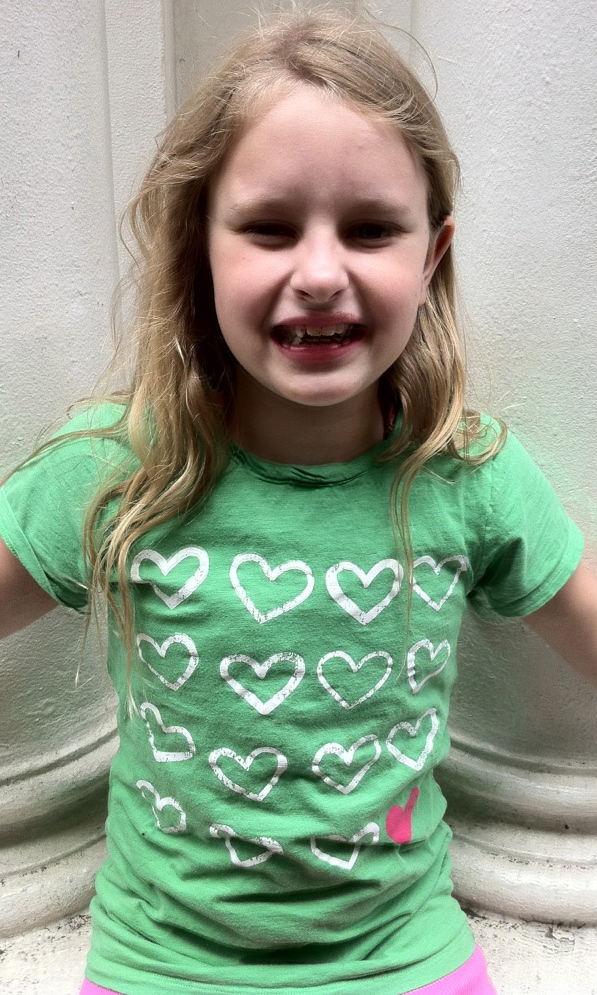
Emma in Union Square Park – Summer, 2011
Dinner With The President – Autism

I received a form letter from Vice President Joe Biden yesterday.  It was one of those mass emails one gets, but rarely reads.  For some reason I glanced at it and read that the president will be having dinner with one person who makes a small donation of five dollars.  Their name will be thrown into a hat and one name will be drawn.

I thought about what I would say to the President were I to have the opportunity to have dinner with him.  And of course I knew what the answer was without hesitation.  I would speak with him about the rising numbers of children diagnosed with autism.  I would direct him to the countless news stories regarding the rampant abuse of those same children and adults living in group homes and institutions.  I would ask him to help set up communities where individuals with autism would have more control over how they lived, allowing them to pursue their interests, encouraging them to follow their dreams.  I would tell him about our trips to Central America with our daughter, Emma for stem cell treatments.  I would encourage him to put more funding into stem cell research, umbilical cord stem cells, using the patients own stem cells, and any other form of stem cells that might prove viable in restoring the lives of hundreds of thousands, even millions.

As I continued to think about all the things I wanted to say and ask for, in the name of autism, I thought of the families like mine who have been affected.  I don’t just mean on an emotional level, but financially as well.  A diagnosis of autism is devastating to any family financially.  We have chosen to pursue a more aggressive route than many can or want, but any family, even those who have not taken their child to foreign countries for stem cell treatments has found the cost of caring for a child with autism staggering.  For those who have little or no resources, who have to rely on social services to help them, who cannot afford to have a caregiver come to their home to give them a break, they live in a world starkly different from those with similar financial constraints who have neuro-typical children.

So Mr. President, on the off chance my name isn’t chosen and I don’t have the opportunity to sit down with you, can you please help galvanize the medical community and make autism a priority in research, can you look at what we’re doing when we cut so much funding from our already overwhelmed schools, can you earmark autism as something we need to find answers to?

To read about the genesis of this blog and Emma’s journey through a childhood of autism, go to:  www.EmmasHopeBook.com

“Go Back” – Autism

Last week Emma began crying and said, “Go back to hotel.”  Richard felt she was missing me, as I had to leave my family to return to Colorado for work when we left California instead of returning with them to New York City.  We also felt she was wishing we could have stayed longer and spent more time with my extended family, all of whom she loves being with.  She had such a wonderful time with so many family present at the Bed & Breakfast in Napa, California where we stayed for my brother’s wedding.

There’s a mistaken thought by many people that because a great number of children and adults with autism cannot express themselves well and often do not show tremendous emotional attachment to those they love, that they do not love.  Some people believe they do not feel the same intensity of emotion that we neuro-typicals do.  I disagree with this thinking.  I believe Emma loves and misses people as much as any neuro-typical child.  I believe she misses them with the same aching as any of us do.  The difference is, Emma doesn’t have the same neuro circuitry or the ability to put into words her feelings.  She lives in a world that must be incredibly confusing so much of the time.

I wonder, when I get on the phone with her, how much does she understand?  Does she understand that I am in Colorado and not in New York with her, Nic and Richard because I have to work?  Because time is a difficult concept for her, does she really understand when I will be returning?  When she wakes up in the morning does she wonder if I might be there only to find I’m not?   Our phone conversations are limited.  When speaking with Nic, I can reassure him that I will be home in another couple of weeks.  We can discuss what he did, he can describe the breakfast he fixed for his dad yesterday for Father’s Day.  We can talk about things.  With Emma, who does not and cannot ask questions, I ask – How are you?  She tells me she’s fine, even if she isn’t, because it’s the conversation we always have on the phone.  She may add some random thing such as – “Seal park, Chelsea piers carousel” and I can deduce that Richard took the children there yesterday.  I always ask her – What did you do today?  To which I can receive an accurate list of what she did, but just as easily I can receive a somewhat confusing version of events that may or may not have taken place.  I then will verify with Richard to get a clearer idea.

Yesterday was Father’s Day and Richard spent it with the children.  There was no sleeping in for Richard as I’m not there to give him a break.  Nic made him a special breakfast and then Richard took the children to various parks.  I know it wasn’t the day Richard would have liked.  I know how hard it is being the sole parent taking care of everything, especially for such an extended period of time.  And particularly tough when it’s a day designated to celebrate fatherhood.  When I spoke to Emma yesterday I said, “Be sure to tell Daddy – Happy Father’s Day and give him a hug, Em.”

“Happy Father’s Day,” Emma said into the phone.  I have no idea where Richard was or if he overheard her.  I can only hope he did.  I know Emma loves her dad.  She isn’t able to express it in the typical ways we are used to, but she does.

For more on Emma’s journey through a childhood of autism, go to:  www.EmmasHopeBook.com

Emma and Art – Part 2

As promised, I arrived home yesterday evening and found the art bin in Emma’s room.  After brushing off the dust I pulled it out into the living room.  “Hey Em.  Look!  Let’s make something together!” I gestured at the pop beads, the wooden beads, the string, the glitter, paint and brushes.

“No, no, no, no, no!”  Emma said, casting an eye at the art supplies before returning to the vigorous twirling of her velcro strip.

“Oh come on!  Look at these things.  These look great.  Let’s make something with these,” I said, digging into the bin and producing a bag filled with brightly colored wooden beads.

“No, no, no, no, no!  Mommy go away!  Go away!”  she said, whipping her plastic strip around so that it made crackling noises.

I sat there looking at the bin and then at her.  “Are you sure?” I asked.

“Mommy no!  Go away!   Go away!   Go away!”  she said very quickly so the words all slurred into each other.

“Go away!” is new for Emma.  She says this either when she is going into the bathroom, a very good sign in my opinion, or when she is doing something she thinks we might object to.  That she was now using these same words to indicate displeasure with a suggestion seemed like an advancement as well.  This is a child who just months ago might have bitten her arm or hand or punched herself in the face to express her dislike of an idea.  I was relieved to hear her say – Go away!   And while it might not be considered the most polite response to someone who is trying to engage in an activity with her, it’s certainly a step up from self injurious behavior.  We parents of autistic children take what we can get.

An old familiar feeling of determination crept into my thinking, as I sat on the floor with the art bin before me.  Right, I thought, we need better art supplies.  Wooden beads and pop beads just weren’t going to do it.  As I considered what sorts of things to look for, it occurred to me that I have a great many things at my studio which I will never use.  Drilled gemstones I bought years ago when I first began designing jewelry, glass beads, cooper and brass wire, as well as lots of silk thread in dozens of beautiful colors.   I have a wide assortment of origami paper, leftover from the year I became obsessed with paper folding while pregnant with my son, Nic.  We have glitter, paint, construction paper, tissue paper, scraps of hand pressed paper, pipe cleaners, all the things one might need to make a wide variety of art projects.

“Okay, Em.  Don’t worry.  We can make something together another time,” I said, dragging the bin back into her room.

Emma followed me.  She bent her head down so that it was about an inch away from mine and said, “Play – Don’t say Mommy?”

“Don’t say Mommy” is a chase game where Emma and sometimes her brother Nic will come very close and say, “Don’t (two second pause)  say  (two second pause)  Mommy! (shouted)” and then they run screaming through the house while I chase them.  This game usually involves lots of doors being slammed and beds being torn apart as they burrow under sheets and blankets.  A variation on this game is – don’t say Daddy!  When we catch up to them, we walk very, very slowly giving them plenty of time to hide and ruin whatever bedroom they’ve sought refuge in, we tear the blankets off them while saying in a loud voice, “AHHHHHHH!  There you are!  I found you!” followed by villinous sounding laughter and tickling until they cry for mercy.  This game can go on for a very long time, so we have found, for the sake of ourselves and our neighbors, it’s important to put limits on it.

“Okay, but just two games and then we have to get into PJ’s and brush teeth.”

Emma stared at me intently with a little grin on her face and a wild look in her eyes, “Okay, okay.  Don’t… say… Mommy!” and off she went like a shot, her feet thumping against the floor as she disappeared into our bedroom.

Art will have to wait one more day.

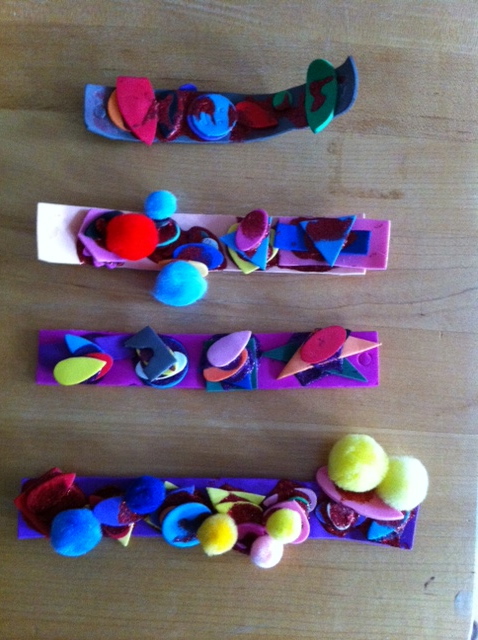
Emma’s art project brought home from school.

What makes these significant is the detail, the number of “bracelets” she made and the fine motor skills required to make them.  For any neuro-typical preschooler, these would be commonplace, but for Emma these bracelets show a marked improvement in her finger dexterity, concentration and focus, not to mention the sheer artistry. (Okay I’m totally biased, but they are pretty fabulous!)

For more on Emma’s continuing journey through a childhood of autism go to:  www.EmmasHopeBook.com

Routine

Emma is not alone in liking her routines.  She is most comfortable when she knows she will do something she enjoys or is use to.  What separates Emma from the rest of us is that instead of being able to adjust when her routine is disrupted, she is thrown completely off-balance to a degree that often catches even us by surprise.

Last night Emma went through her nighttime routine of getting ready for bed.  After her teeth had been brushed she came to find me in the back where I was reading.

“Just five minutes,” she said as she got into our bed.  “Just five minutes with Mommy.”

“Hey Em.   Okay five minutes, then you’ll go back to your bed,” I agreed.

About ten minutes later I looked up from my book and realized Emma had fallen asleep.  There was a moment when I wondered if I should just let her sleep and try to carry her into her bed later, but she’s gotten so big, short of carting her out on a gurney, this is no longer an option.

“Hey Emmy,” I whispered as I put my arm around her.  “You have to go to sleep in your own bed.”

She resisted me.  “Stay here with Mommy,” she muttered.

“Come on.  I’ll take you back to your bed.”  I held out my hand and waited for her to get up.

“Go with Mommy into the other room,” she said.

Ever compliant, she allowed me to lead her back to her own bedroom where she got into bed.  “Mommy sing a song?”

Having sung her a lullaby I went back to my book, relishing in the fact Emma was back asleep in her own bed without a fuss, something I am still consistently surprised by.

Half an hour later, cries from Emma’s room could be heard.  She tearfully offered us her flashlight, a gift from my brother, which glows in the dark.  “It’s broken,” she sobbed.

We tried replacing its batteries with no success and finally placated her with promises of repairing it in the morning.

Another half hour went by and then there Emma was, like a spectre, at the foot of our bed.  “Mommy come!” she cried.

This went on for about an hour.  Emma would tearfully return to her bed, one of us would sit with her for a few minutes, tuck her in, say good night and leave, only to have her reappear ten or fifteen minutes later, crying about something else.  It’s like watching a pin ball ricocheting around, from one thing to the next until eventually Richard took her back to her bed and for whatever reason, this time she was able to go back to sleep.

Emma is sensitive to the slightest variation in her routine.  It is something we know about her and do our best to accommodate.  When she was little we use to mix things up on purpose.  We tried to avoid routines with the mistaken idea that if she were not allowed to have any routines, she would learn to adapt to change more easily.  But this proved wrong and impossible.  Emma would go along with things as chaotic as they might be, but the instant we did something, anything more than a few times, she would become fixated on doing the same, over and over again.  In addition the children’s school, our own work requirements, all need a schedule, as do regular bedtime, meals etc.

There are a number of studies being done on the link between autism and obsessive-compulsive disorder.  I don’t know if Emma has a comorbid diagnosis of OCD, but until one witnesses such behavior, it is almost impossible to explain the panic, the sheer terror, disruption causes them.

Wake Up

5:18AM – High-pitched screams emanated from Emma’s room waking us.

“I cannot believe this,” I said.

Richard groaned in response.

“Sometimes I think she reads our blog,” I said, referring to yesterday’s post.

Richard groaned again and turned over.

“Emma!  You cannot lie in here screaming,” I said when I went into her bedroom.

“Emma bit.  You cannot bite.  It’s not okay,” Emma cried.

“Emmy, did you bite yourself?”

“Yeah,” Emma said, sadly.  “You make Mommy so upset.  Mommy is angry.”

“Oh Em.  You can’t lie in your room screaming,” I said, stroking her bitten arm.

“You have to get Mommy.  Mommy, can I come into the other room now?” Emma asked.

What was incredible about this conversation was not only did Emma identify emotions (mine, not hers), she also asked whether she could come into our room.  I do not remember her ever asking before.  Typically she says, “Mommy come!” or “Mommy go in other room” or some variation of the two.

As we made our way back into Richard and my bedroom I reminded myself that at least she slept through the night until after 5:00AM.  The 2:00AM wake-up calls are, by far, the worst.  In addition Emma did not wet the bed, an added bonus I am grateful for.

After breakfast Emma took my breath away by saying, “Mommy take Emma’s picture?”

“Really?” I asked.  “You want me to take your picture?”

“YES!” Emma shouted, jumping up and down.

“Okay, Em,” I said laughing.  “Do you like having your picture taken?”

“Yes!”  Emma said again, smiling at me.  “Say cheese!” she laughed, posing for the camera.

For more on just how extraordinary this is, go to: Emma and The Camera

Research

I’m feeling stunned. Early this morning, Ariane and I spoke at length with two of the pre-eminent doctors in the field of stem cell research out of Boston Children’s Hospital. They not only called into question the theoretical basis of what we had been told about the scientific rationale for the stem cell treatments we gave Emma, but warned us that they had the potential to be “extremely dangerous.”

It is possible that this could be another case of “he said, she said,” and that the doctors who recommended the treatment we have been following are every bit as knowledgeable and experienced as the doctors who were warning us not to undergo another such treatment, but frankly, these particular doctors are so highly credentialed that I have to give their opinions more weight – at least until we have gathered more information from others who are universally regarded as experts in both autism and stem cell research.

They gave us the names of two doctors in the Boston area who are considered to be experts in autism research and (perhaps?) stem cell research as well. It wasn’t clear to me from our phone call that the doctors being recommended were definitely doing research with stem cells, but they are involved with autism research as well as a variety of other neurologically based disorders. I made a promise to myself after the phone call today to stop making assumptions, so until we speak, I’ll just say that I’m looking forward to learning more. I visited both their websites and they have impressive credentials. They are both involved in genetic research so even if stem cells aren’t part of their programs perhaps they have other promising treatments under development.

Perhaps. Maybe. Possibly. I’m filled with doubt and uncertainty as to where we go from here. I do know that we have to keep doing more research, and since the entire field of autism is rife with contradictory theories from highly regarded researchers, we have our work cut out for us. More to come.

Emma & Our Barbeque

Last night we walked up to our cabin for a barbeque.  I posted once before about our cabin –  “Zurcher’s Folly” dated July 5th, 2010 – it’s a one room, rustic cabin with no electricity, only cold running water and an outhouse just far enough away to make you reconsider the urgency, particularly if it’s in the middle of the night and you’re female.

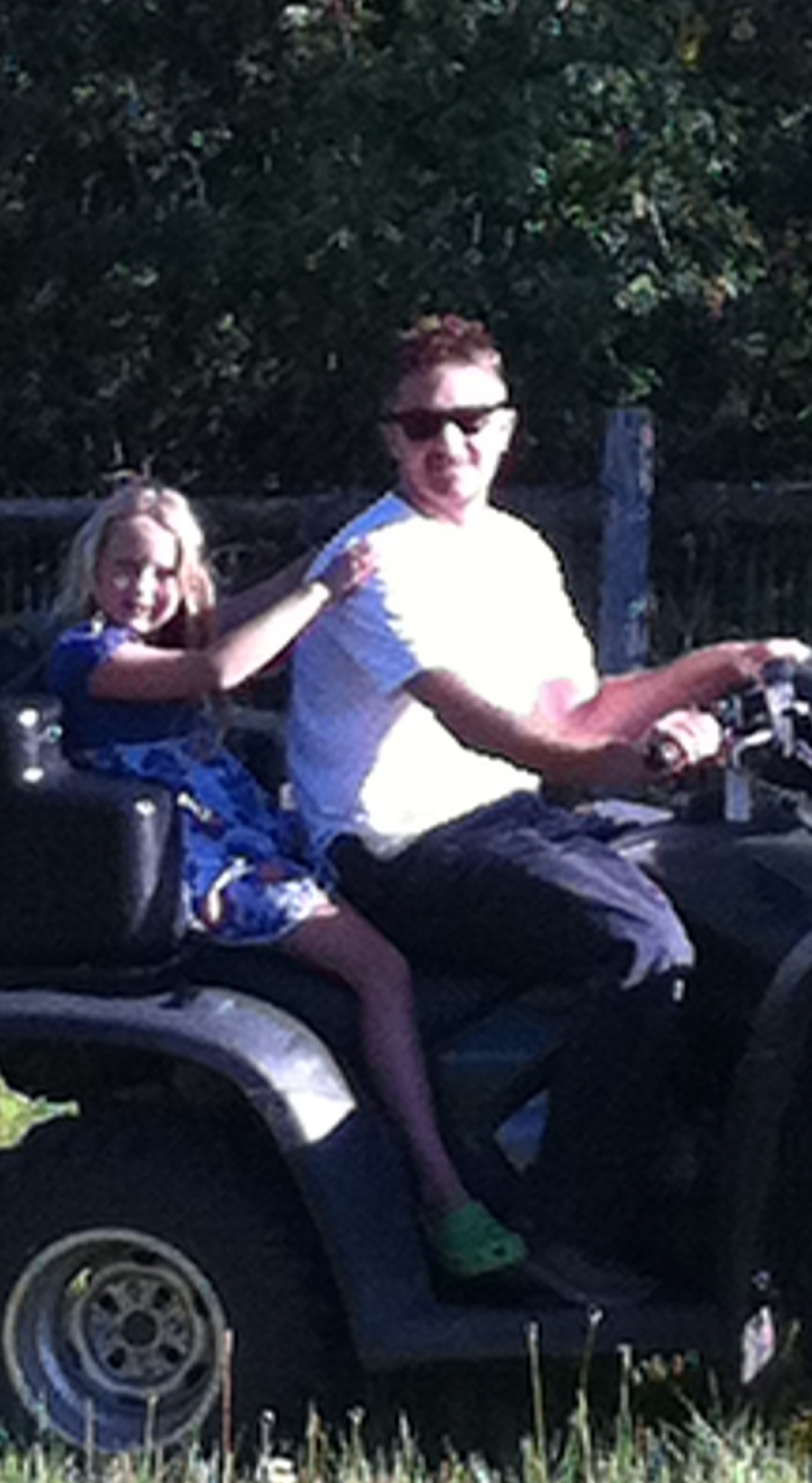
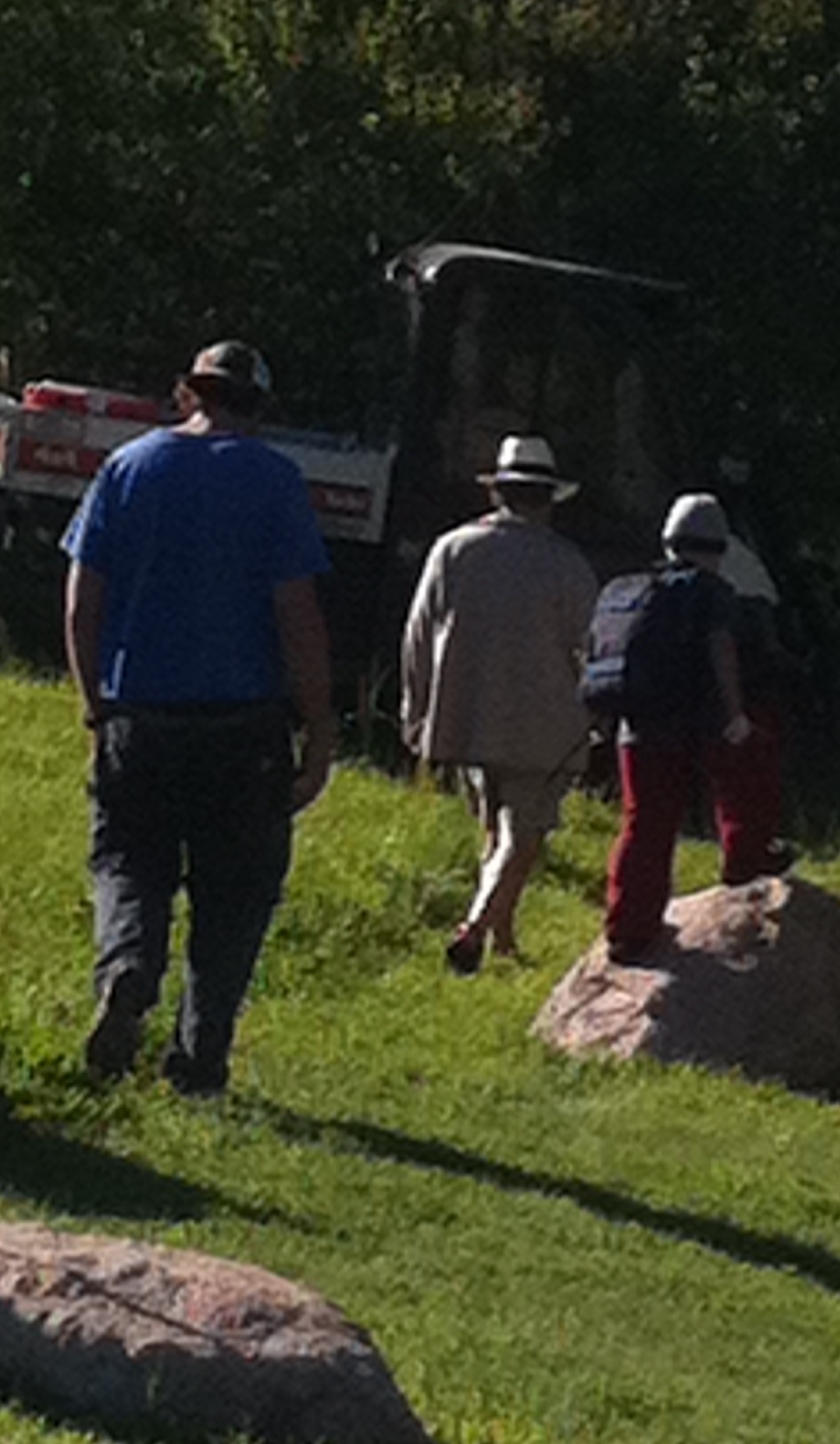
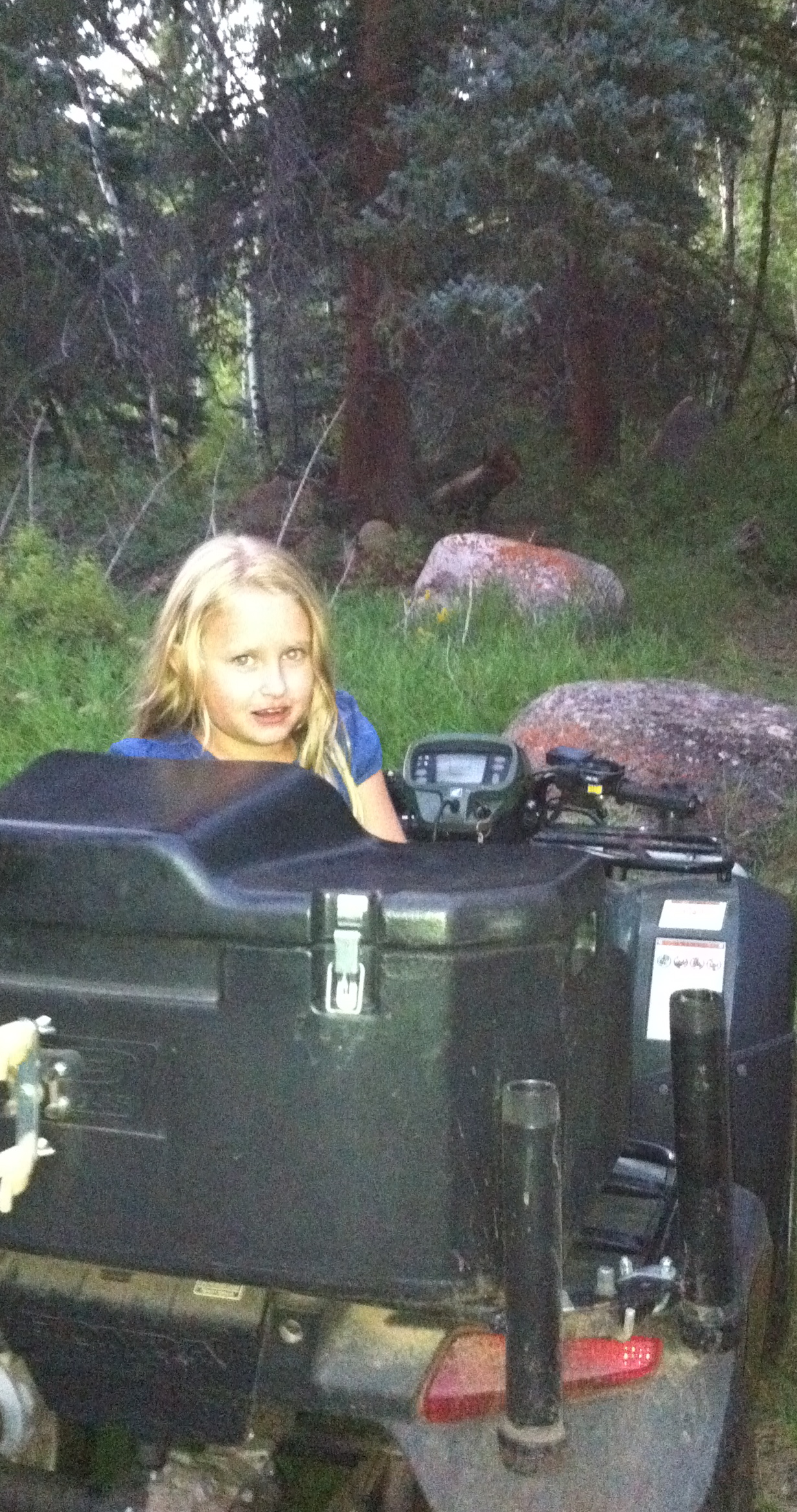
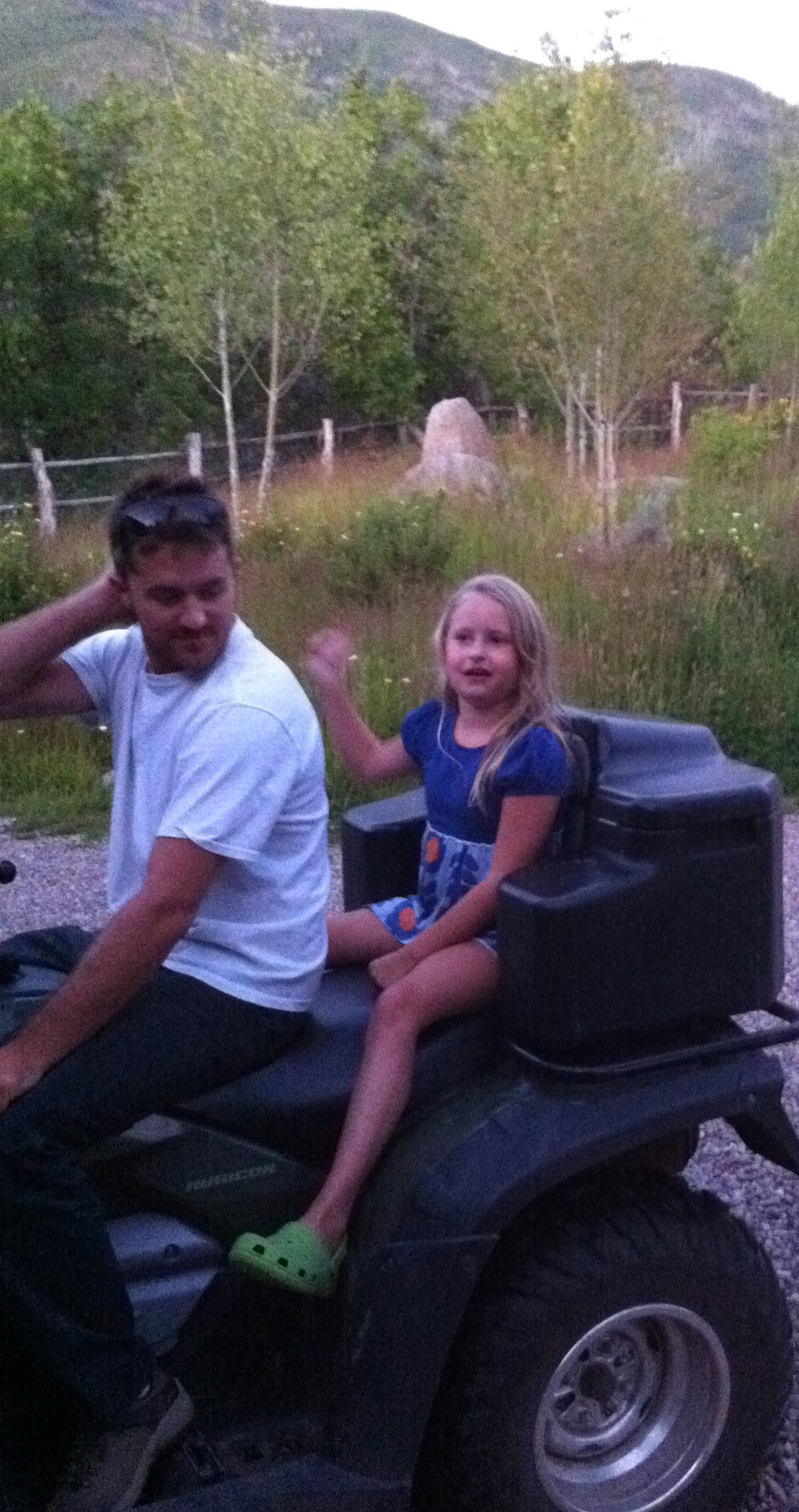
A group of us made our way down the hill and over the stream that each summer the beaver dam up, and then up a little way until we rounded the bend and caught a glimpse of the cabin’s red roof.  Emma was ahead of us riding on the four-wheeler with my nephew, Bridger.

Em & Bridger Heading Out on the Four-Wheeler

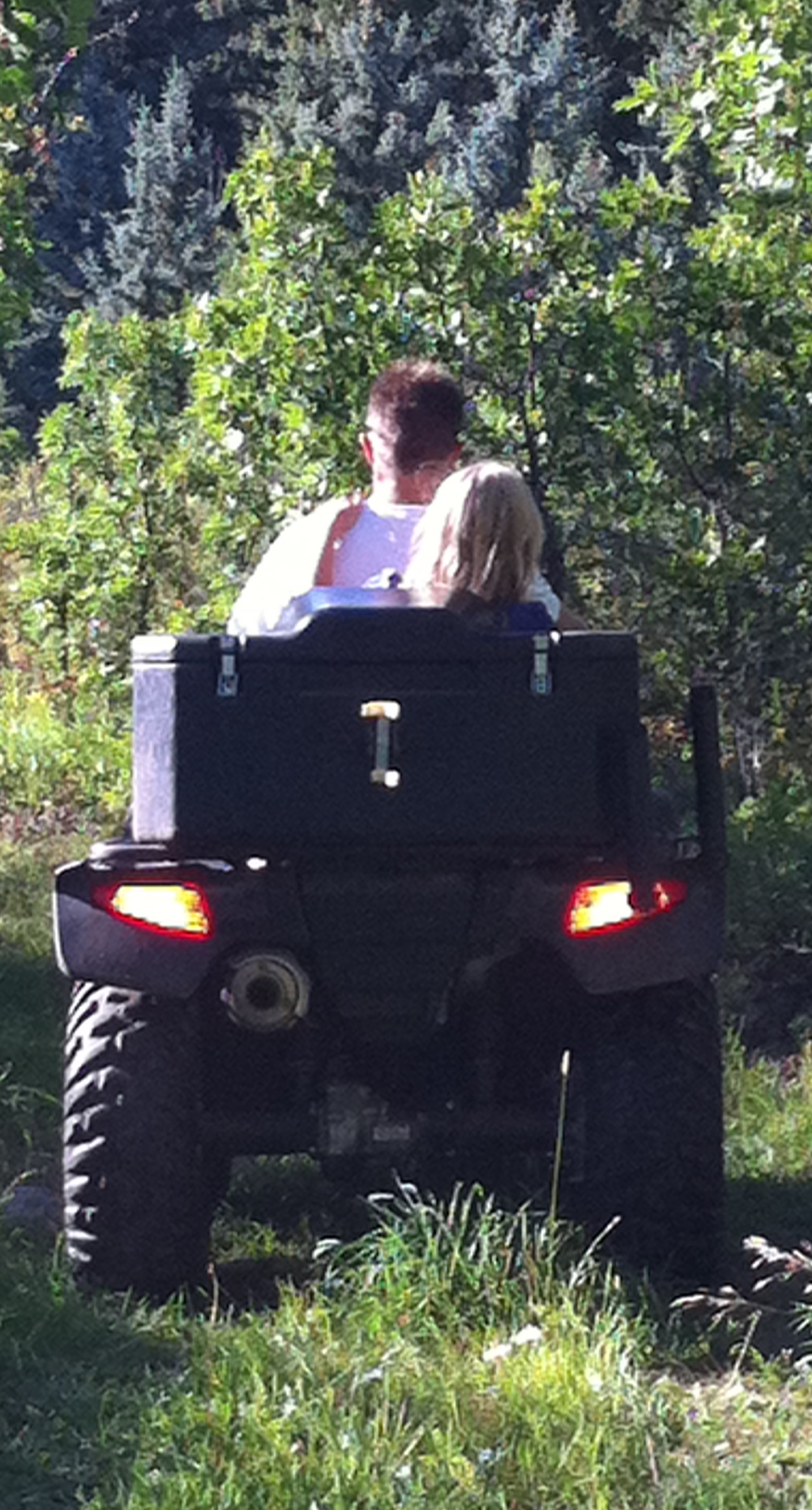
Colter, my other nephew was leading the way in a piece of machinery I actually do not have a name for, but it looks formidable, with much of our food in the back.  It was a procession and Emma was ecstatic riding along with Bridger as the rest of us trudged behind bringing up the rear.

Briger & Em Lead the Way

The Rest of Us on Foot


The dogs frolicked and fought over various sticks, pushing and shoving like small children, very nearly toppling my mother over on a few occasions.  As the cabin came into view everyone picked up the pace, dashing up the log steps and throwing themselves onto the now bare mattresses (they were once covered in quilts my mother and I meticulously made, but the mice got to them and now they are without) which serve as beds, sleeping two or three each.
“Have dinner?”  Emma asked, wasting no time in getting down to the essentials.

“You have to wait.  We’re going to eat together,” Richard said.

“Snack?” Emma asked.  It was good to see her father’s negotiating skills had not passed her by.

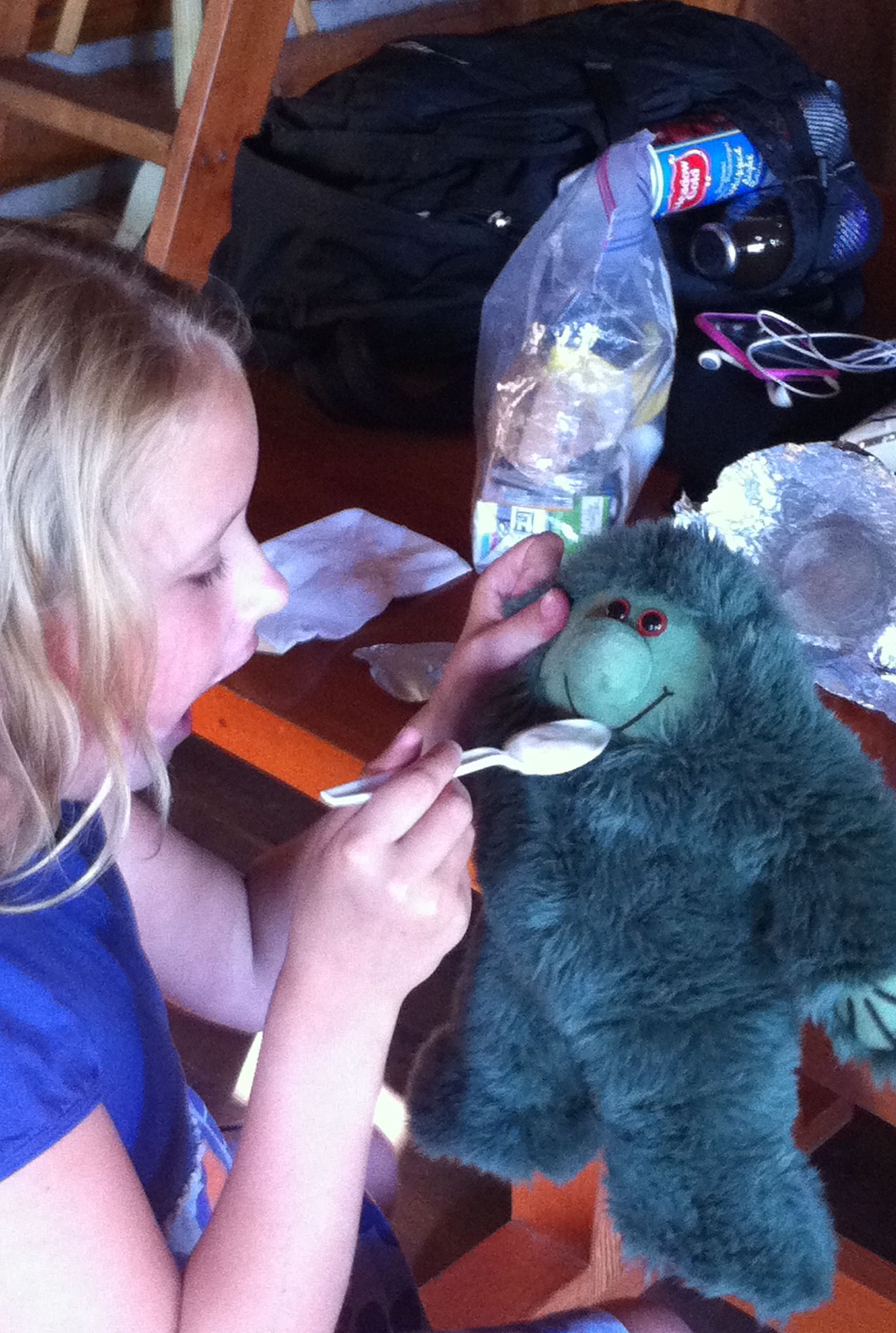
Then when none of us responded immediately she said, “Muzzy have snack?”  It was her killer instincts at work, going straight for the jugular.  What parent in their right mind could veto that?   Particularly as this was displaying everything we have dreamed of, attachment to a toy, pretend play…

Smart kid, I thought.

“Sure Em.  What does Muzzy want?”

“Yogurt!” Emma said.

“What kind?” Joe asked, never one to pass up an opportunity to get more language from her.

“I want yogurt,” Emma said.

“Yes, but what kind of yogurt?  Do you want peach yogurt?  Blueberry yogurt?” Joe continued.

“I want vanilla yogurt!” Emma said.

“Got it,” Joe said, rummaging around in his pack.

As Joe produced the vanilla yogurt, Emma sat down on the bench at the table, which occupies most of the floor space in the cabin.

“Here you are,” Joe said, setting it down in front of her.  “What do you need?”

“A spoon!” Emma answered.

She peeled open the foil cover and said to Muzzy, “Open wide!”

Muzzy’s Snack

“Mmmmm…  all done.  Now it’s Emma’s turn,” she said, after pretending to spoon the yogurt into Muzzy’s mouth.

“It’s my turn,” Richard said.

Emma looked at him.

“You say – it’s my turn,” Richard said.

“It’s my turn,” Emma repeated.

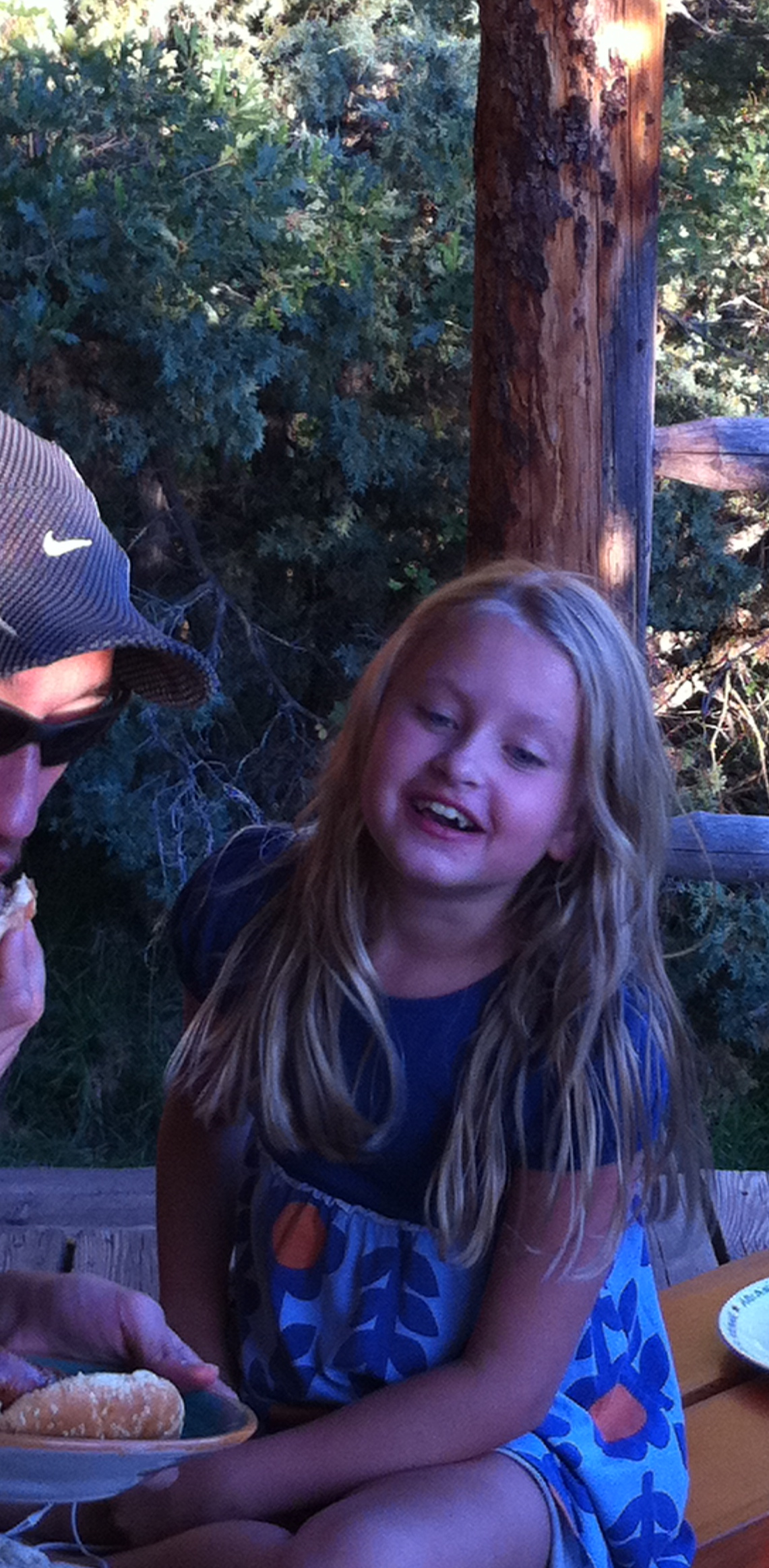
By the time the coals were ready and the burgers and hot dogs grilled, Emma had eaten her entire dinner.  She sat with us as we ate, serenading us with her favorite songs.  At times she became caught in a favorite refrain and needed to be reminded she had already sung that part several times and it was time to sing something else.

Emma Singing

“Go back to Granma’s?”  Emma said after awhile.

“No Em.  We aren’t going back until it’s dark,” Joe explained.

A little while later after we’d roasted marshmellows for our s’mores, Emma said, It’s getting dark!  Time to go back to Granma’s house!”

“You’re right Em.  It is getting dark.”

And with that she charged off as we gathered up our things.

Emma Waiting To Return To Granma’s House

When we were back at the house, Emma looked at Bridger, waved her hand goodbye and said, “Bye Bridger!  Thank you for the ride in the four-wheeler!”

Emma waving Goodbye and Thanking Bridger

Richard, Joe and I stared at each other in astonishment, literally with our mouths open.  This was unprecedented.  In the past we would have prompted Emma to say exactly what she said.  That she did it without anyone reminding her, entirely on her own, with terrific eye contact and waving her hand…

It was nothing short of amazing!

May I just comment on the incredible eye contact in almost all of these photos?  Have any of you who loyally follow this blog seen such great eye contact?!

It’s unbelievable!

The Performance

Emma loves nothing more than a birthday party.  And so it was with great excitement that she descended the staircase wearing her party dress with a pair of lime-green and black crocks on her feet last night.

“Oh Emma!  You look so beautiful!”  I said when I saw her.

“It’s Mommy’s birthday,” She said in response.

If we are having a few people over for dinner, Emma will say, “It’s a birthday party!”

“No, we’re just having some friends over for dinner,” I will try to explain.

“Party,” Emma will say, nodding her head and then she’ll add quickly, almost under her breath, “Birthday party.”  As though by saying this it will make it so.

It doesn’t matter how often we explain that any given holiday such as Christmas is different than a birthday it becomes a  – “Christmas Birthday party.”  If we are having family and friends over for Thanksgiving – it becomes a “Thanksgiving Birthday party”.  My mother’s birthday falls on Thanksgiving every seven years, which has only compounded the problem, making our explanation all the more inexplicable to Emma.  How is it that just two years ago we had a huge birthday celebration on Thanksgiving for my mother with relatives flying in from all over the US and now this year it’s a regular Thanksgiving.  As far as Emma’s concerned we are making things far too complicated.  A party is a birthday party no matter what we say.  And yet, now after the other night’s monologue I wonder if this is true.  Perhaps the subtleties are not lost on her, perhaps she simply is unable to express herself well enough to tell us how she feels and it’s the excitement she is trying her best to convey.  The kind of excitement we can understand and which we are able to share with her derived from a birthday celebration.

So it was last night as I celebrated a half-century of life, which does seem an awfully long time.  But age carries little importance to Emma.  Often when asked, “Emma, how old are you?”  She will answer, “Three!” or “Five!” as likely as what her real age is, “Eight!”  These are words, which she tries to remember but sometimes forgets.  When I hear her answer, it seems to me the number holds no meaning to her.    As it should be, I say.

Last night after the birthday cake was served and my mother had given a toast, Emma ran up to the front of the room, grabbed hold of a pretend microphone and proceeded to say in a loud voice, “Ladies and Gentleman!  Enjoy the show!”

Richard and I exchanged a nervous look.  Emma has been known to get up in front of an “audience” whether it’s on the subway and they are involuntary and captive or at any dinner party to sing.  Often Emma will sing the same song over and over until she is told to stop.  When we are home and it’s just us we will allow her to sing the same song repeatedly.  However even then we will try to redirect her and encourage her to sing a different song to break her out of the increasingly perseverative loop she can get herself in.

“Emma!  Would you like to sing?”  I asked.

“Yes,” Emma said, bouncing up and down.

“Okay, one song,” I said holding up an index finger.

Emma nodded her head, “Okay.”

“What would you like to sing?” I asked.

“It’s My Life,” Emma said.

It’s My Life by Gwen Stefani is Emma’s favorite song, hands down.  Not only does Emma know the lyrics by heart, but she has all the instrumentals down and does her best to make noises replicating them.  Our guests, all 50 plus of them gave her their attention as Emma began.  It was a flawless performance, which began somewhat timidly, for Emma is usually not shy in either pitch nor volume, picking up in intensity after the first few bars.  By the end she was dancing and singing with abandon.  When she finished everyone cheered and applauded as Emma beamed.  She ran over to me.

Looking into my eyes she said, “Daddy’s turn and then Emma sing again?”

That’s our beautiful girl – a Gwen Stefani wannabe, rock and roll princess who loves an appreciative audience.  I’m just hoping someone recorded it.

Baseline

Before and after. Since we are not involved in any control group study, we need to establish a baseline reading of Emma’s brain waves before the stem cell treatment next week and then again afterward, probably a month or two post-procedure.

Joe and I will take Emma to the NYU brain research lab today where she will have a QEEG brain scan. It measures alpha, beta, delta, gamma and theta brain wave activity in the various regions of her brain illustrated with nifty color-coded pictures of her brain cross-sectioned from above and from the side. Black, navy blue, and brown – good news. Orange, yellow and red – not so good. We won’t see the results until after we come back from Panama so it will be a while until we can say anything about the ‘before’ baseline scan.

I’m hoping that we will see our doctor today and I’ll have an opportunity to ask him some more questions about the stem cell therapy. If so this will be a two-part entry. Before and after. If not, then it’s a brief blog today.

The Washing Machine

“Should we put Emma in the washing machine?!” Emma asked, while pointing to the washing machine filled with clothing.  Then before I could answer, she shouted gleefully, “NO!!   We cannot put Emma in the washing machine!”  At which point Emma began to laugh hysterically.  “Should we put Mommy in the washing machine?” Emma asked, still laughing and pointing at me.

“Good idea, Em.  But will I fit?” I asked.

“NO!”  Emma shrieked with laughter.  “You cannot fit in the washing machine.  Mommy’s too big!”

“But maybe I could squeeze inside if I scrunched down into a teeny little ball,” I said, sucking my cheeks in and curling my arms up next to my sides.

“NO!”  Emma shouted.  “You cannot fit inside the washing machine.  Emma’s too big!”

“Emma’s too big?  Or Mommy’s too big?”  I asked, laughing along with her.

“Emma AND Mommy too big!  We cannot put Emma in the washing machine,” Emma said.

This went on for quite some time, with me asking if we should put a whole variety of people in the washing machine:  Daddy, Nic, Granma, Uncle Andy, Uncle Victor, Aunt Toni, Uncle Chris…  the list went on.

Each time Emma would answer, “NO!  We cannot put  Nic in the washing machine. Nic is too big!” or “NO!  We cannot put Daddy in the washing machine.  Daddy’s too big!”

“What about Merlin?  Should we put Merlin in the washing machine?” I asked, expecting the same answer from her.

But Emma surprised me by saying, “Yes.”

Taken aback I didn’t say anything for a second.  Then I repeated, “We should put Merlin in the washing machine?”

“Yes!”  Emma said.

“Are you sure?” I asked buying for time and trying to figure out how to save poor Merlin from such a murky fate.

“YES!”  Emma shouted.  “We can put Merlin in the washing machine!”

“Nooooooo!  We cannot put Merlin in the washing machine,” I said.

Emma threw her head back and laughed and laughed.  I don’t know that I have seen her derive so much joy from anything in days.

Poor Merlin.

Theories

Autism is nothing without theories.  Specialists, doctors, scientists, geneticists, parents, everyone has a theory when it comes to autism.

Richard claims I have more theories regarding autism than the most versed specialist.  And he’s right, I do.  The only difference is, I freely admit 95% of them turn out to be wrong and the remaining 5% have no validity because while they may prove right for Emma on any given day, they do not hold up long term or within the larger autism population.

Richard and I have a running joke about my desire, my need for theories.  When we are confronted with any new behavior from Emma, Richard will look at me and say, ”And your theory is?”

The beauty of having theories is, autism remains an enormous question mark and so the most impractical of theories hold weight if for no other reason than because they are difficult to prove wrong.  There is so much more we do not know than we do.  The other thing about theories is they give us  (me anyway) hope.  Hope that we’re moving forward.  Hope that maybe this line of thinking is going in the right direction.  Hope that the theory will lead to another theory, which in turn will prove to be true, leading us to a cure, a cause, something, anything…  No matter how crazy, the theory stands until proven otherwise and with autism that may be for a long time.  It’s something, anything, to go on amidst the great expanse of unknown.

Richard usually leaves the theorizing to me, so I was surprised when he said to me last night, “I have a theory.’

“Really?” I said looking at him to be sure he wasn’t making fun of me.

“Yes,” he said.

“Great!  Tell me more.” I said.

“Emma is doing great. “

“And your theory is?” I prodded.

“That is my theory.  She’s doing great.  The other day she and I were walking down the street.  I passed her and stepped off the curb to hail a taxi, but she didn’t see me.  She looked around, her eyes got really big and then she said something, I can’t remember what.  But she was scared and didn’t know where I was.  I called out to her – Emma!  I’m right here!  When she saw me, she cried out – There’s Daddy!  There’s Daddy!  I found you!  That’s never happened before,” Richard paused.  “She was really frightened when she thought I wasn’t there,” he said.

Suddenly I remembered when Emma was three and we went to New Paltz for the weekend.  We stayed at a huge rambling hotel right out of The Shining.  Richard and I in one room, the children with Joe in an adjoining room.  At around 2:00AM I heard a door slam, thinking nothing of it I started to go back to sleep.  Five minutes later our door opened and Joe said, “Is Emma with you guys?”  In a panic all of us threw on clothes and began searching the labryinthian hallways calling for Emma.  We split up hoping we might cover more ground that way, I ran to the front desk and reported her missing to the hotel staff.  It was the dead of winter, snow drifts piled up around the hotel, I was terrified Emma might open one of the self locking doors to the outside and not be able to get back in.  She was bare foot with just her nightgown on.  After about 20 minutes when panic had turned to ice – when your body no longer feels it is your own – one of us found her.  It was either Joe or Richard, I can no longer remember, but I know I began to cry in relief.  She was holding hands with some man who worked for the hotel.  He was quietly talking to her – at that time she had almost no language – and leading her back to the front desk.   I was in tears, thinking of all the horrible things that might have happened to her.  But Emma acted as though nothing unusual had occurred.

Richard continued, “Her sentences are becoming more complex, she’s become much more engaged, she talks all the time now and it’s not just because she wants something.  She’s talking to connect with us.  She wants to connect with us.  And except for the other night, she hasn’t wet the bed in almost a month now.”  He looked at me and then added, “She’s doing great.”

I remember when Emma turned four we had a big birthday party for her, hired a musician to come and play the guitar and sing kid friendly songs.  Emma was dressed up in one of her “party” dresses with a tiara on.  She spent most of the party trying to lie down inside of the musician’s guitar case, ignoring all the other children and the music.  I remember plastering on a smile for our guests, at one point I excused myself and wept in the back, giving myself two minutes to cry before returning to the party and pretending everything was fine.  I didn’t fully understand her sensory issues; I hadn’t developed any theories at that point.  I was still in the process of reading everyone else’s theories regarding autism.

“It’s a good theory,” I said to Richard.

“Yup.  I like it,” he said.

Pancakes

Emma loves pancakes.  Until recently she was a purist, adamant that the pancakes not contain any other items.  Ours were not the pecan-raisin pancakes or the macadamia-banana pancakes, just pancakes, plain, drenched in pure maple syrup.  One weekend in a moment of elated inspiration I dumped a container of blueberries into the batter only to watch Emma’s face crumple into sobbing tears of despair by my act of betrayal.  I tried, on a few more occasions, to add something to the batter, hoping to expand her limited repertoire of foods.  Each time Emma refused to touch the pancakes and I learned my lesson.  Don’t mess with Emma’s pancakes.

And then we had my cousin and her two girls over for a slumber party one weekend.  We had discussed the “weekend pancakes in the morning routine” prior to their arrival.  When Liesl and Lily arrived they produced a plastic bag filled with chocolate chips.

“We brought chocolate chips for our pancakes,” Lily solemnly informed me.

“Great!” I said.  I looked over at Emma.  “Look Em, Liesl and Lily brought chocolate chips for our pancakes tomorrow morning!”

Emma peered suspiciously at the bag.

“We can make some with chocolate chips and some plain,” I said cheerfully.

Emma said nothing, but there was no mistaking the look of despair on her face.

The next morning we heated up the griddle and the girls and I got out the pancake mix, milk, a whisk, bowl and the chocolate chips.  The girls crowded around, taking turns pouring the milk into the pancake batter and stirring everything together.  I poured some of the batter onto the grill, making sure Emma would have two pancakes before Liesl and Lily dumped most of the contents of the baggie into the remaining batter.  Emma watched in resigned silence.

“It’s okay Em.  I’ve made you some without the chocolate chips,” I said.  “Look, they’re right here.”  I prodded the plain pancakes with the spatula.

When the pancakes were all cooked I said, “Hey Em, how about trying just one pancake with chocolate chips?”

“No!” Emma said loudly in her sing songy voice, edged with panic.

“Okay.  How about one bite?” I offered her the corner of one pancake sullied with a chocolate chip.

“One bite, Emma?”  Emma said, looking as though I’d just offered her someone’s intestine.

“Yes.  Just one bite,” I said.

Emma reached out and took the offered piece, very reluctantly she smelled it, then placed a tiny piece in her mouth.

“Is it good?  Do you like it?”

“Yeah!”  Emma said.  “Okay, okay, one more bite?”  She looked at me expectantly.

“Okay.  Sure,” I said offering her another piece.

Again she ate it.

“Hey Em, how about you take the rest of this pancake and eat it with the Liesl and Lily?”  I said, going over to the dining room table and placing her plate down next to her two cousins.

Emma then proceeded to eat the entire pancake along with the other two plain pancakes.

The next weekend Emma said, “Pancakes with Mommy?”

Yes!  Come on.  Let’s make pancakes,” I said.

“Pancakes with chips?” Emma asked, rooting around the cupboard for a bag of chocolate chips.

“Let’s see if we have any,” I said.  “Otherwise we will go to the store and buy some.”

“Have to get some chocolate chips,” Emma muttered, still searching.  “Here they are!” She exclaimed holding up a bag.

Emma looks forward to Saturday and Sunday mornings with unadulterated excitement and anticipates our pancake mornings by saying on a Wednesday morning, “Sleep wake up, sleep wake up, sleep wake up, pancakes with Mommy!”

“Yes!  We will have pancakes Saturday morning,” I answered.

“Sleep wake up, pancakes with Mommy!” Emma said the other day, hoping to trick me into making pancakes with her on a non-weekend morning.

I was tired and not paying attention,  “That’s right,” I said.

Emma jumped up and down.  “Pancakes!”

Then the realization I’d made a terrible blunder hit me.  I explained why we couldn’t make pancakes; it was a school day, we wouldn’t have time, the bus was coming, etc.

Now it is a given the pancakes we make will include chocolate chips.  Last Saturday morning I asked, “Hey Em!  What about adding sliced bananas with the chocolate chips?”

“No bananas,” Emma said.

On another Saturday I asked, “Should we add some blueberries?”

“No blueberries,” Emma said.  Then offering an alternative she added, “Do you want pancakes with chocolate chips?”

“Sure, Em,” I said.

“Yes, pancakes with chocolate chips!” Emma said.

M

I took Emma whitewater rafting today, while Ariane attended a seminar. Emma asked me to go rafting a few days ago, so I booked it for today and we slathered on the sunscreen. We went rafting last summer, all four of us, with Nic and Emma riding in the front of the raft, getting soaked and laughing like crazy. Nic was attending day camp today, so he didn’t join us. Just me and Em.

I assumed that Emma would want to ride in the front again and asked the guide to accommodate us (and perhaps prevent a meltdown if she was denied her preferred seat selection). The guide said sure, but when we climbed in the raft Emma wanted to ride in the middle instead. I was surprised and a little disheartened to be honest, thinking she had lost her gung-ho enthusiasm.

It was a gorgeous, crystal clear, blue-sky day. The river was running fast with lots of great rapids. Emma sat in the middle of the seat in the middle row. I was behind her to the left, the guide in the stern to her right. In the formerly coveted front row was a mother and father and their daughter Sydney, who looked about three years younger than Emma, but who of course, was talking like she was three years older. They were all laughing and screaming and squealing as they got soaked to the bone in the 40˚ mountain-fed water — acting pretty much like Emma and Nic and Ariane and I did when we rode together last summer.

Emma sat silently for most of the hour long ride, looking around, or maybe not looking around at all. Maybe just staring off in space. It’s hard to tell. I tried to get her more engaged and excited by alerting her to upcoming waves and waterfalls, whooping it up. She seemed to get slightly more jazzed, but not enough to laugh or scream like she would on a carnival ride, or like she did in our last raft ride. I got a little bummed but then I thought about how much Nic’s and Ariane’s company means to her — how much she laughs when we all play together.

“She misses Nic,” I thought. “Misses mommy too.”

It made enough sense that I stopped worrying about her autistic detachment and just enjoyed the ride, which was about as perfect as a raft ride could be. When we hit a calmer stretch, Emma started singing and grabbed the strap they gave her to hold, leaning way back until her head was resting on the seat next to me, whereupon I tickled her chin and elicited those squeals I wanted to hear. This was repeated many more times between the rapids.

I asked, “Are you having a good time Em?”

She replied, “Yeah,” with a smile as convincing as the eager tone of her voice.

“Me too Em,” I said, smiling back at her.

I noticed how much I’d been calling her ‘Em’ lately, instead of Emma. For some reason, the thought popped into my head that Em should be her stage name when she becomes a huge rock star a few miles further downstream. Then I thought ‘M’ would be even better, out-abbreviating Madonna and Cher and other one-named divas — assuring her charismatic status with a single letter. I pictured what the T-shirt ‘M’ logo would look like – maybe a graceful art nouveau scroll – then I got concerned that Bette Midler, ‘The Divine Miss M’ might claim trademark infringement.

SPLASH! My daydreaming came to an abrupt end as I got soaked head-to-toe by a big wave that blasted over the side. Emma sat upright, placid and unconcerned in her self-selected (and very dry) seat in the middle of the boat. “Em, you’re not even wet!” I laughed and the guide laughed too.

“Yeah, looks like she picked the right seat after all,” he added.

Mmm hmm. I guess she did.

Zurcher’s Folly

Yesterday I asked Emma, “Do you want to go to the indoor pool?”

To my surprise she answered, “No.”

“Do you want to go for a walk?” I asked.

She said nothing, which could mean she wanted to or it also might mean she didn’t.  It could go either way.

I needed to be more specific.  “Do you want to go to the cabin?”

“Yes!” She replied.  She ran into the mudroom and grabbed a leash, which she attached to my shorts.  There is a history (as there is with almost everything she does) to the leash.  When she was a toddler, she became absolutely terrified of dogs, all dogs.  We would explain to her that the dogs wouldn’t hurt her and anyway they would be on a leash.  The only way she could be convinced to go on a hike was if she could hold the leash.  Over time that led to putting me on a leash and now it is a given that the dogs run freely, but I am on a leash that Emma holds and occasionally tugs on if I am not going quickly enough or conversely, am going too quickly to force me to slow down.  In any event, it works.

Off to the cabin we went, the dogs racing around fighting over various sticks they found along the way and Emma and I leashed together.

The cabin, one room, no hot water, no electricity, a wood burning stove and fireplace, was nick named “Zurcher’s Folly”.  My immediate family built it log by log and at the time, my father, in particular wondered if it would sit unused.   In the 1970’s the ranch had no houses on it, just fields, shrub, irrigation ditches some beaver dams, herds of elk roamed through each winter, bears and coyote took over in the summer.   The only structures were a barn and the ranch house at the edge of the property where a revolving door of people lived in return for taking care of the irrigation ditches, sometimes boarding horses on the land.

Since the cabin was built various family members have slept in it.  During a brief break between colleges I even lived in it for four months, packing my food and water in, sitting out on the deck looking out onto the Rockies and contemplated life.  The cabin has always held a special place in my heart, a place my family built with their own hands and hard work, a place of solitude, removed from everything else.  Unless an airplane flew overhead one would not know what year it was.  We go out to the cabin at least once every time we come to Aspen.  A pilgrimage of sorts, it is a reminder of what is important in life and what we all love about being in this part of the world.

My two children have been going out to the cabin ever since they were born.  So it was with a certain degree of excitement that Emma and I made our way through the grass and fallen trees before rounding the bend and caught our first glimpse of the cabin’s roof.

Emma immediately began to run.  After I’d unlocked the door, she dropped the leash and fell onto a mouse dung covered platform, which serves as one of two beds.  We stayed there for a few hours, me rereading the journal we keep where everyone who has visited the cabin over the past thirty plus years is encouraged to make an entry, and Emma singing and dancing.

On the way home Emma grabbed the leash once again and tugged on it.

“What?” I asked.

“Go to the indoor pool,” Emma said.

“But it’s too late now, Emma.  We have to go home and get dressed for the picnic we’re going to,” I said.

Emma pretended to cry with an exaggerated facial expression.  Sometimes this leads to Emma actually crying, what begins as a kind of joke can soon turn into the real thing.

I began to sing, “We can’t go to the indoor pool.  We’re going to a picnic.”

Emma picked up where I left off, “I want to go to the indoor pool,” she sang, then looked at me.

“We can’t, we can’t, we can’t,” I sang back.

Then Emma sang, “Tomorrow, tomorrow, tomorrow.”

We went on like this making up verses and melodies, sometimes overlapping each other, sometimes stopping mid “verse” until the other picked it up.

“I could hear you two singing all the way up the trail,” Richard said when we eventually returned to the house.

“Wasn’t that great?” I asked.

“She’s doing great, Ariane,” Richard replied.

And he’s right.

She is.