Tag Archives: autism & parenting

Emma’s Sense of Humor – Autism

Emma’s sense of humor, much like everything else about her, is… quirky.  As a baby, Emma squealed with excitement when we popped out from behind things and yelled, “Boo!”  As Emma grew older she continued to delight in anything resembling silliness.  We were filled with hope when, during one of Emma’s many early intervention therapy sessions, she offered some play-doh to the therapist, only to pull it away just as the therapist reached for it.  Emma howled with laughter as the confused therapist realized Emma was playing a joke with her.

Afterward the therapist made a point of telling us how Emma’s sense of humor suggested tremendous potential, how she was expressing a desire to interact, how unusual this was for a child with autism to want to initiate in such a creative way.  Emma continues to display her silliness and creativity in surprising ways.

Emma with what’s left of her cokie  (this use to be a crib blanket filled with down).

When I came into her bedroom and saw her I said, “Em!  What are you doing with cokie?!”

To which she laughed, “Stick cokie up your nose.”
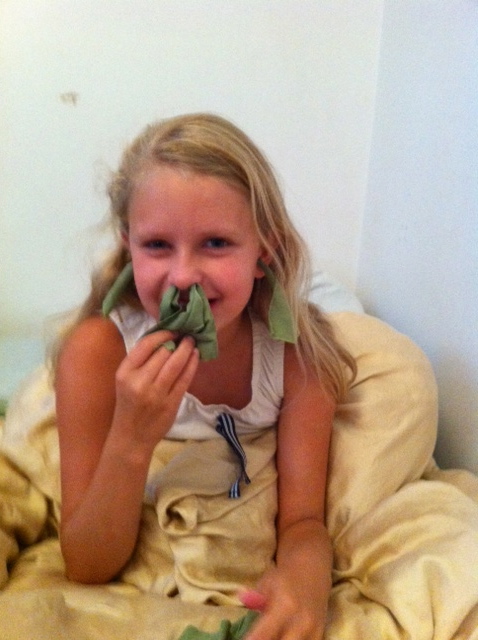
“That’s so gross, Em!”

“No not going to stick cokie up your nose, stick cokie in your ears,” she replied, still laughing.

“Ew!”

“That’s funny,” she then said.

It reminded me of when we took Nic out to eat at a Japanese restaurant.   “Look Mommy!”  He said as he unwrapped his chopsticks and stuck each into a corner of his mouth.    “I’m a walrus,” he managed to say.

My grandmother was known for, after a few drinks, rolling a napkin up, and placing it above her upper lip pretended it was a mustache – so maybe it’s genetic and not a display of extreme intelligence after all.  Not that she wasn’t extremely intelligent, she was…

For more on Emma’s journey through a childhood of autism, go to:   www.EmmasHopeBook.com
A Work In Progress

As we have added more work to Emma’s already busy schedule, I have had to adjust my own schedule to accommodate.  Since her new school year began this week, I am now doing her literacy session before the bus comes to take her to school in the morning, while Richard gets Nic ready.

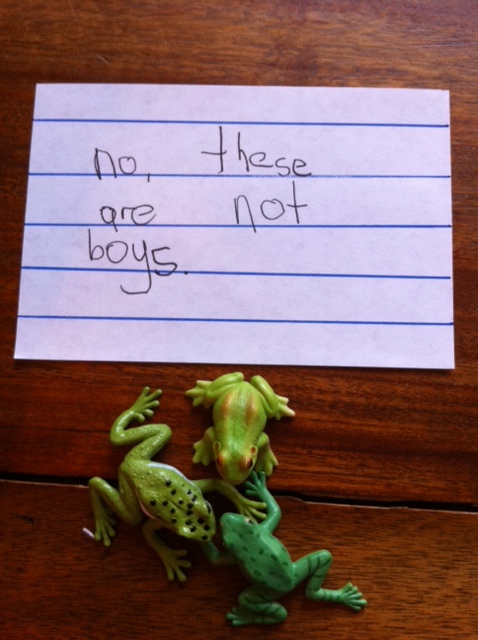
This morning we worked on the word “boy”.  Emma wrote this in answer to my question – “Are these boys?”

“What are they?”

Wait for it…

Yes, they most certainly are!

The beauty of this is that all of it is done non-verbally.  Emma is able to concentrate fully on answering the questions posed by either writing or typing the sentences on the computer.  Today she learned how to use the shift key while hitting the appropriate letter to create an upper case letter to mark the beginning of a sentence.  The grin on her face when she wrote:  “Here are some boys.  They are sitting.” complete with punctuation and upper case letters for the “H” and the “T” was as close to euphoria as one can get.  She even giggled when she was finished and beamed at me with pride.

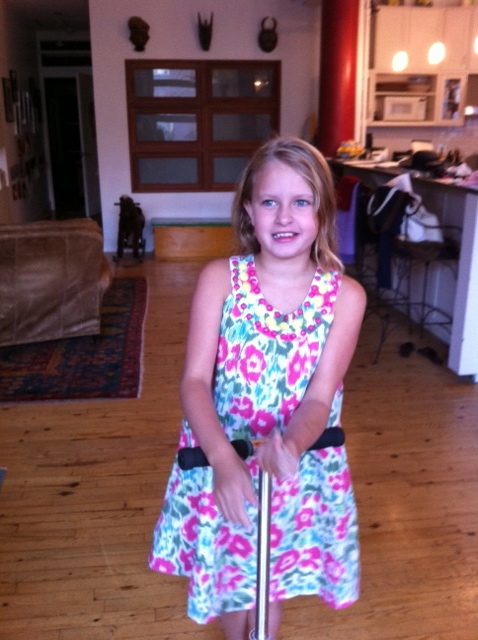
This is the dress Emma chose to wear to school today.

For more on Emma’s journey through a childhood of autism, go to:   www.EmmasHopeBook.com

In the Playground – Autism

Yesterday while at the playground, Emma pushed a little boy off of a roundabout.  It wasn’t clear why she did this, though it reminded me of a game they played at camp where the little girls stood in line by the pool and then pushed the girl in front into the water.  (I can hear the defensiveness in this sentence, I know. But let me continue.)  The boy was seated on the edge of the spinning circle, like a giant saucer, filled with a dozen other children.  A few children were on the ground pushing, while running to make it go faster.  The children seated within the saucer were shrieking with laughter and then the little boy went flying off.  The child’s mother, understandably upset, was furious with Emma and yelled at her that this was unacceptable behavior.

I was seated with a friend of ours whose son was playing with Nic.  I noticed Nic staring at me with a horrified expression and making gestures with his hands for me to come.  When I reached him he told me what had happened.  “She just pushed that kid off, Mom.”

“Which kid?” I asked Nic.

“That one,” he pointed to a young child being led away by his mother.  “We were all just playing and this one kid was spinning the thing around really fast.  Emma was laughing and that boy was sitting pretty close to the edge and then Emma just pushed him and he went flying.  The mom got really mad and started yelling at Emma.”

“Okay.  Thanks Nic.”

I made Emma get off and had her sit on a bench next to her father.  I told her she was to sit still until I returned.  I then ran after the mother and her son, apologizing and explaining to her that Emma has autism.  I told her how very sorry I was and inquired after her son, who seemed frightened and confused.  I told him Emma hadn’t meant to hurt him.  The mother told me, with an apologetic look that Emma’s behavior wasn’t okay.  I nodded my head and agreed with her.  She then said, “Oh dear, I didn’t know.  I hope I didn’t scare her when I yelled at her, but I was so upset.”

I assured her that Emma was fine and again apologized for Emma’s behavior.  When I returned to where Emma was seated I said, “Emma.  You cannot push other children.  It is not okay to do that.  You could have hurt him.  Do you understand that, Emma?”

“You cannot push,” Emma said, nodding her head.

“That’s right.  You cannot push.”

“Go back?”  Emma asked, pointing to the spinning saucer.

“No.  You can sit here next to me.”

“One minute,” Emma said.

“Ten minutes.  You will sit next to me for ten minutes Emma.  And you may not play on that again.  You can run around and do other things.  And Em, if you push again, you will go home.  It’s not okay.  You could have hurt that little boy.”  Emma looked down at her hands.  “Do you understand, Em?  It’s not okay to push.”  I watched her for any sign of understanding.  She continued to stare down at her hands, which were in her lap.  “Em.  Do you understand?”

“Yes, mommy.  You cannot push.  It’s not okay.”

It is times like these that I feel at a loss.  We so rely on communicating through speech that these sorts of situations feel impossible with Emma.  She showed no sign of understanding, she wasn’t angry, she didn’t seem particularly upset, if anything she seemed completely baffled by the whole situation.  “Emma.  Why did you push him?”  I finally asked.

“You pushed.  It’s not okay to push,” was her response.

One hears about aggression in children with autism all the time.  Emma, when upset, frustrated or angry, usually hurts herself.  Biting her arm or hand is her most common reaction, but a few times she’s thrown something or punched herself in the face.  It is difficult to witness these acts of violence against herself.  It is even more difficult to make her understand why it’s not okay to hurt herself.

But this episode in the playground was different.  Emma wasn’t acting out in anger, evidently she’d had no interaction at all with the little boy she pushed.  What was going through her head?  Why did she push him?  It’s impossible to know.  But I do have a few ideas, none of which dismiss her behavior, but they do explain what may have happened.  Emma craves sensory input.  Often children who crave vestibular movement can be calmed by having ten minutes or so of it.  Emma appears to never be satisfied no matter how much she gets.  Richard and I have had countless conversations with her various therapists about this.  In our neuro-typical world we call people like this “thrill-seekers”.  In the world of autism it’s called sensory integration disorder –

Someone once explained to me that it’s a bit like having a body part fall asleep and the desire to stomp, pinch or hit that body part in the hope of “waking” it. Roller coasters, swings, trampolines, carousels, anything that moves quickly and erratically are Emma’s way of “waking”.  Pushing the boy was not an act or display of aggression as much as it was an unconscious response to her craving more movement.  It may be that he brushed against her by mistake or perhaps he was too close to her or she may not have been aware of him at all.  Unfortunately none of this helps the child who was pushed or his mother.

For more on Emma’s journey through a childhood of autism, go to:  www.EmmasHopeBook.com
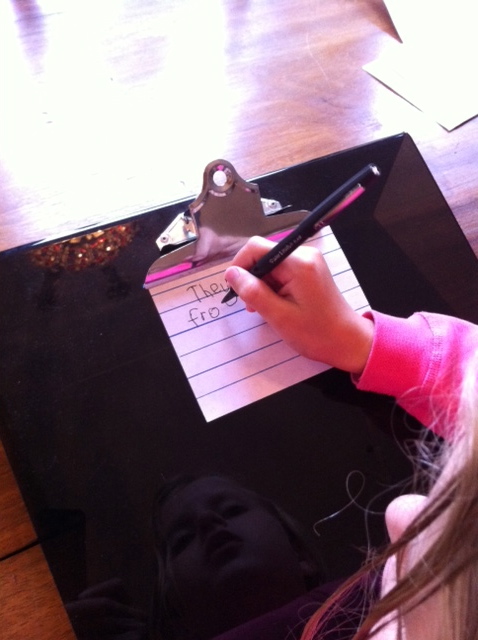
Asking – Autism

I remember the first time Emma’s older brother, Nic asked permission to do something.  He was about 14 months old and he asked if it was okay to take a particular toy with him to the playground.  It was noteworthy for a number of reasons, but as his mom, I remember thinking how incredible it was that this tiny child understood that if you asked, rather than just did something, chances were you would be able to do whatever it was.  The whole “polite” thing wasn’t part of the equation yet, but it soon came to be, shortly thereafter.

With Emma it was different right from the beginning.  For one thing, she didn’t ask questions as much as demand that her basic needs were met.  Because her language was severely delayed, she would often drag one of us to the refrigerator and indicate what she wanted.  As she didn’t “want” our attention, toys or many of the things other neuro-typical children do, there was less motivation to ask for things.

As Nic grew older his questions became more complicated and interesting.  Suddenly we were discussing such topics as religion, questioning the existence of God and if there was a God, who made him.  Could there be a heaven without a “God”, why did people die, was there life beyond our planet earth, how did we come to be and what was our purpose, where did the earth come from, how is it possible that the universe is infinite and what does that mean, exactly.  Nic also became curious about Richard and my experiences.  He wanted to know if I’d ever felt scared (yes!), whether I was nervous when in front of new people (often), when did I know what I wanted to be when I grew up (that concept continues to evolve), when did Richard and I meet, and the questions have never stopped.

Emma does not ask questions about life and the world.  She has never asked me a personal question.  But she has learned to ask for things that she needs or wants.  Often the question is a demand with an upward lilt added, making the demand more palatable, as in  – “Go to the zoo?”  “See the snake bite boy?” “Apple juice?”  However lately her questions have changed slightly.  It’s a subtle difference, but I have noticed it a number of times in the last few days.  This morning she came into the study (this in and of itself is startlingly new as in the past she would simply ask from where ever she was and then when no one responded because no one heard her, she would begin to scream until someone appeared) but today she found me and said, “Mommy?”  Then she waited for me to respond.  When I looked up, she said, “Can I have a caramel yogurt?”  Again she waited for my response.  This too is different.  In the past she might have asked if I was standing nearby and then after uttering the words she would have raced off, not waiting for a response.  The question was rhetorical.

“Sure Em.  Go have a caramel yogurt,” I said.

To which she ran off, only to reappear a few minutes later saying, “Okay.  Last one caramel yogurt?  Eat one more and then it’s all done.”

“Yeah.  Okay, Em.  That sounds good.  Go have another one.”

“Okay!”  She yelled as she went back into the kitchen.

Last night she found me in the bathroom, where I was brushing my teeth.  “Mommy?”  She waited.

“Yes, Em?”

“Can I watch Winnie-the-Pooh?”  Again she stood looking at me expectantly, waiting for my answer.

“Sure Em.  But first put on your nightie and brush your teeth.  Okay?”

“Okay!”  she said tearing off to change.

I cannot describe my surprise at her actually waiting for me to respond.  This is new and a welcome change.

For more on Emma’s journey through a childhood of autism, go to:  www.EmmasHopeBook.com

Siblings – Autism

Nic is Emma’s older, neuro-typical brother.   Nic is eleven, about to enter the sixth grade and an all around amazing kid.  Having Emma as his younger sister is often difficult for Nic, though he usually doesn’t complain.  The siblings of children with autism are often burdened with responsibilities far beyond their years.  Despite our attempts to encourage Nic not to take on the role of her personal body guard, supervisor and parent, he often does on his own accord.  He can’t help himself.  He worries about Emma.

Nic has witnessed horrific and violent melt downs.  He has seen Emma punch herself in the face, bite herself repeatedly on the hand or arm.  He has stood by helplessly as she screamed and shrieked her frustration at not being understood.  He has joined in countless searches for such bizarre and arbitrary items as a missing balloon string, a piece of packing tape, a scrap of paper, a specific photograph or a microscopic shred of what is left of her blanket.  He has panicked with us when one of us uttered the dreaded words:  “Where is Emma?”

Nic is older than Emma by 21 months, yet he is very much the adult to her childlike innocence.   In an effort to give Nic time to enjoy himself without the stresses that can come with Emma, Richard and I spend at least one day a week with Nic, alone.

So yesterday, instead of going into my studio I asked Nic if he wanted to hang out with me.

“I’d love that Mom,” he said, nodding his head.  “We’ll have some Mom and son time.”

We ended up going to Elephant and Castle (a place that’s been around for almost forty years and where I used to love going when I was in college because of their bowls of latte) for lunch.  We discussed the coming school year, who he hoped would be in his class and what teachers he hoped to have.

“What are the top five things you like best about yourself?” I asked.

“I like that I’m a good person, I’m kind, thoughtful, I care about people, I want to help people and I work really hard.”

“You do!  That’s all so true,” I said.

“I like that I’m an average skateboarder,” he added.

“You’re a really good skateboarder.  What do you mean by that?”

“I like that I’m okay, but not great yet, it gives me something to work toward.  Cause like if I was really great and already knew everything, that wouldn’t be as much fun,” he took a bite of his cheeseburger.  “Mom, you’ve got to try this.  It’s amazing!”  He offered me a bite of his burger.

“Okay, if you could change anything about yourself, what would it be?” I asked.

“I’d be a genius,” he answered without hesitation.  “What about you?”

“I’d be more patient and not so quick to anger,” I said.

“I think you’re perfect just the way you are, Mom.  I don’t think you have to change a thing,” he said, patting my arm.

“Wow, Nic.  That’s such an incredibly kind and lovely thing to say.”

“It’s okay Mom.  It’s true,” he said looking at me and smiling.

That’s Nic – kind, supportive, incredibly loving and thoughtful.

After we had lunch we went to the movies, then took a walk and talked some more.

“This was a great day, Mom.  Thanks for suggesting it,” Nic said as we made our way home.

“I loved it, Nic.  I loved spending today with you.”

“Yeah, me too.”

We walked together in silence for awhile, then Nic said,  “Mom?”

“Yeah Nic?”

“Do you think we could get a dog?”

For more on our family’s journey through Emma’s childhood of autism, go to:  www.EmmasHopeBook.com
We Have to Keep Trying – Autism

When Emma was first diagnosed, she was four months away from her third birthday.  Since that fall, now seven years ago, we continue to show up for her in ways we could not have imagined.  As many of you with a child with autism know, engaging your child can be complicated.  Emma cannot have a “conversation” the way her neuro-typical brother, Nic can.  We cannot have discussions with her, there is no easy back and forth of ideas and opinions.  Because Emma is rigid in her desires, outings can become problematic if they are not kept to a strict schedule.  The central park carousel must be ridden and then we must go to the zoo, but only after we have watched the brass animals go around when the clock strikes every half hour.  Once in the zoo we must watch the seals being fed and then go see the penguins, followed by the aging and now blind seal, then the polar bear and finally a visit to the bats, before we can leave.  Often Emma will then insist on a visit to the petting zoo where she is more interested in patting the metal replicas of the animals, which then make the appropriate animal sounds, than the real animals.

When both the children were toddlers we were frequent visitors to the American Museum of Natural History on the upper west side of Manhattan.  During the winter months I often took the children four or five times a week.

“Once the kids are older, I hope never to go to that museum again,” I grumbled to Richard one afternoon after an exhaustive five hours spent there.  “And can we add every playground that exists?”  I added.

And then we got the diagnosis and everything was up for grabs.

My time with Emma now includes listening to music and dancing together, walks and yes, lots of playgrounds, amusement parks, the zoo, the various carousels the city has to offer, swimming, but also reading and her literacy program.  Richard still takes Emma to see “the snake bite boy”, which is Emma’s name for the American Museum of Natural History.  But it is during Emma’s “study room” sessions that I see her progress in real, identifiable and concrete ways.  It doesn’t matter whether I am feeling optimistic or not, the evidence is there, right in front of me.  We have kept a record of those first hours when she was learning to form the letter “a” to now, when she is struggling to write two and three sentences at a time.

This morning was a difficult session.  She was required to write three sentences from memory.  At a certain point I said, “We cannot give up, Em.  We have to keep trying.  I know it’s hard, but you can do this.”

Those words were probably more meaningful to me, than to her.  They would be an apt mantra for me to repeat to myself every morning.

No matter what, we cannot ever give up.  We have to keep trying.

For more on Emma’s journey through a childhood of autism, go to:   www.EmmasHopeBook.com

Literacy and Autism

We have been working intensively with Emma on her reading, writing, typing and more recently math and verbal skills.  The reading, writing and typing program we began in January.  It was at this time that she painstakingly learned how to form each letter of the alphabet.

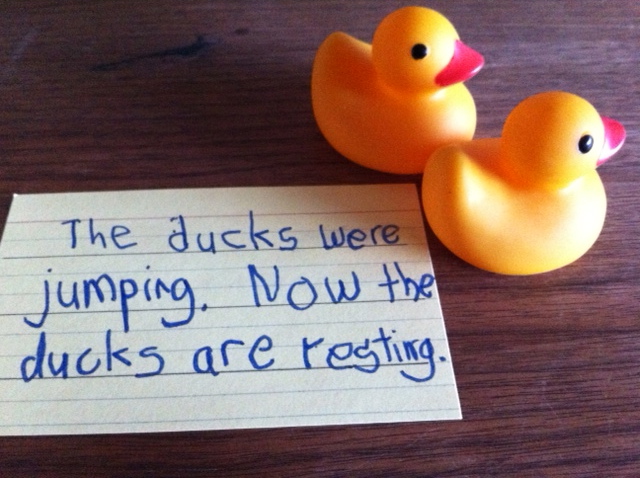
This morning Emma wrote this, in answer to the written question – Did the cat jump? – after I had made the cat jump.

In answering the question – Did the boy jump? (the boy as seen in this photo was lying in a bed) Emma wrote:

In accessing Emma’s progress, I need to compare her to herself and not other children.  I have seen over the years how easy it is to become discouraged when I compare Emma to her brother or any neuro-typical child or even other children on the spectrum – unless they are much more severe.

“This isn’t going to be a sprint,” Richard once observed, after seeing yet another neurologist.

And it isn’t.  Emma is making slow and steady progress.  We work with her for about three hours every day on her literacy, math and verbal exercises.  There has been no instantaneous miracle.  She has not begun to write on her own in complete, complex and revealing sentences.  She has not gotten to the point where she is able to tell us what it is like for her to be her.  She cannot answer questions regarding anything remotely abstract.  (Which doesn’t mean I don’t continually hold out hope that one day she will.  I do.)  But at the moment, I am happy to reflect on her slow, steady progress and it fills me with joy to work with her each morning and to see these beautiful sentences that she constructs on her own.

Someone once asked me – Is it good enough?

The idea being that I had a preconceived notion of how I wanted something to be and anything short of that meant it was an utter failure.  Sometimes being “good enough” is still pretty fabulous.  So yes – Emma’s progress is good enough.  In fact, it’s better than good enough, it’s wonderful.

For more on Emma’s journey through a childhood of autism, go to:  www.EmmasHopeBook.com

Hope – Autism

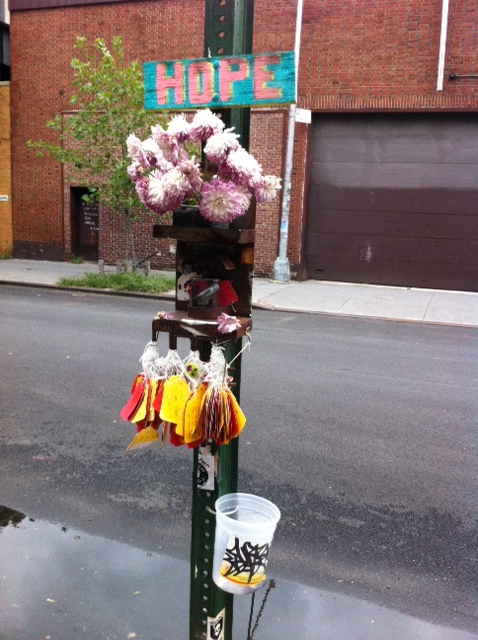
For those of you planning a trip to New York City, you must take in the High Line, New York City’s most creative and interesting park, built on the old elevated tracks on the west side of downtown Manhattan.  The High Line spans more than twenty blocks and eventually will end at 34th Street.  Last Sunday we came upon this art installation at the bottom of one of the High Line’s many entrances/exits.

On each of the little red and yellow tags people had written what they hoped for.  One said, “Cure Ann of her cancer” another said, “I hope I will love Miquel forever”, and still another read, “Please make Mom get better”.

Love and health were the most popular “hopes”.  I would have written one of my own had I’d thought to bring a pen with me – Let Emma live an independent, happy life, filled with loving relationships.  I guess the thing about hope is it keeps us moving forward.  Hope allows us to get through tough times.  I am reminded of the prayer of Saint Francis of Assisi:  “Where there is hatred, let me sow love; where there is injury, pardon; where there is doubt, faith, where there is despair, hope…”  Regardless of ones beliefs, these words have given solace to a great many, myself included.

For more on Emma and her journey through a childhood of autism, go to:  www.EmmasHopeBook.com
What Matters

We are leaving soon.  Back to New York City where our other life awaits us.  The children need to get ready for a new school year, medical forms need to be filled out, bus companies need to be contacted and confirmed, school supplies need to be bought.  Nic will be entering 6th grade and there’s a certain excitement in that.  Emma doesn’t enter a “grade”.  She will be placed in a class with other children on the spectrum, who are near to where she is academically.  I am always filled with trepidation at the start of a new year regarding Emma.  It is difficult not to give in to fears and worries.  Will she excel?  Will her new teacher and classroom be a good fit?

The truth is, Emma has progressed more in the past seven months than she has in five years.  We attribute this to the literacy program we began in January of this year.  We have now added a math program as well as a verbal program.  Emma is working each day for about three hours on these various programs.  It has been amazing to witness.  Progress.  This is the word every specialist we’ve ever spoken to has used.  Is she progressing?  And the answer to that question is a resounding – Yes.  We cannot predict what the future holds for Emma.  We cannot know how far she will go.  But as long as she continues to progress we know we are on the right track. I heard someone say once – Progress, not perfection.  It’s an apt thought for any of us.

Emma at dusk last night

For more on Emma’s journey through a childhood of autism, go to: www.EmmasHopeBook.com

Deficits and Assets – Autism

It is easy to see what’s wrong – with the world, with other people, with ourselves.  When Emma was diagnosed with autism we were told about all that was “wrong” with her.  Her deficits were listed with great care:  Her eye contact was weak.  She showed little interest in interaction with others, she didn’t point, she didn’t ask questions about others, she showed little awareness of others, she seemed oblivious to others pain or feelings.  Her verbal skills were delayed, her fine motor skills were delayed, her ability to play, to project, to engage in any sort of fantasy or pretend play was almost non-existent.  The list went on and on.

But what of her assets?  What about all the things she did that showed tremendous creativity and intelligence?  Where was the balance in her many and varied evaluations?

When Emma went to a Special Education Pre-School I met a little boy who couldn’t have been older than three.  He was pointing to all the signs in the building and reading them.  I exclaimed to one of the therapists standing nearby how incredible this seemed to me.  She then told me he was hyperlexic and that they discouraged him from reading as it wasn’t “normal”.

I have never forgotten that.  Here was a child with an unusual ability.  A talent that could be used to further his education and perhaps interests and yet it was being discouraged.  Is that what we want from our children – to be “normal”?  What do we sacrifice in our attempts to “fit in”, to adapt, to be like everyone else?

Emma has a beautiful voice and a love of performing.  If we have guests over she asks to “sing a song” for them as she did last night.  Sometimes she needs to be reminded that the song must eventually end as she can get into a loop, singing the same refrain over and over again.  She hasn’t mastered the whole concept of “losing ones audience”.  But we encourage her singing and desire to perform just as we encourage Nic to practice his Alto Sax and the piano.  Emma has a great many assets, things she loves doing over and over again.  With Nic we use the word “practicing”, with Emma we say she is “perseverating.”  Yet in her perseveration Emma is practicing as much as Nic is.  The difference is, Emma will do the same thing over and over again for hours, whereas Nic will practice for 20 or 30 minutes and move on to something else.

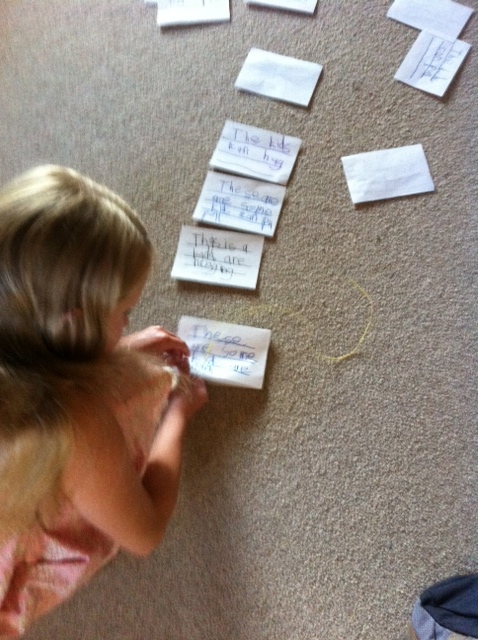
Last night as guests began to arrive, Emma was upstairs in her “study room”, sitting on the floor in her party dress writing.  When I went upstairs, this is what I saw.

She was talking to herself and picking up each piece of paper then reading it before placing it back down and moving to the next.

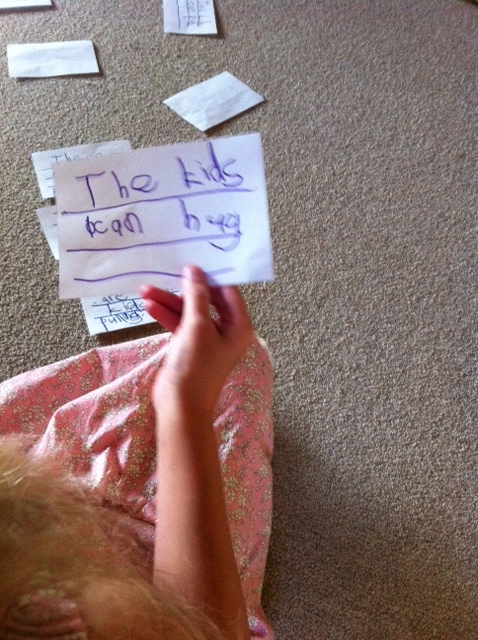
As we had run out of lined paper, she had made the lines herself, before writing the sentence – The kids can hug.

Now this scene isn’t exactly “normal”, on the other hand very little in our household is.

For more on Emma’s journey through a childhood of autism, go to:  www.EmmasHopeBook.com
Skateboarding – Autism

When Emma was a toddler, she taught herself how to swing by herself.  She thrust her legs out in front of her and then leaned her body forward as she tucked her legs under her.  It was an amazing and beautiful thing to witness.  I remember the first time it happened, we were in the Washington Square playground in New York City.  She pushed me away as she clambered up onto the swing.  I stood just to the side and behind her ready to push, but she shook her head no.  Then she reached down with her toes to the ground pushed off.  A small group of caregivers and parents gathered around as she sailed up higher and higher, so incredible was it that a child of just eighteen months could swing so high unassisted.

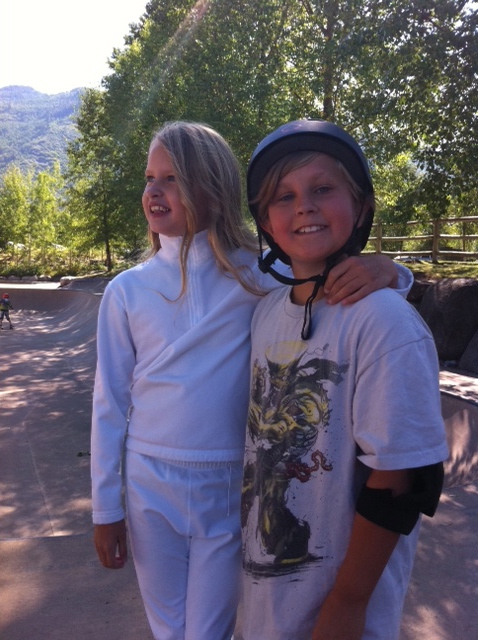
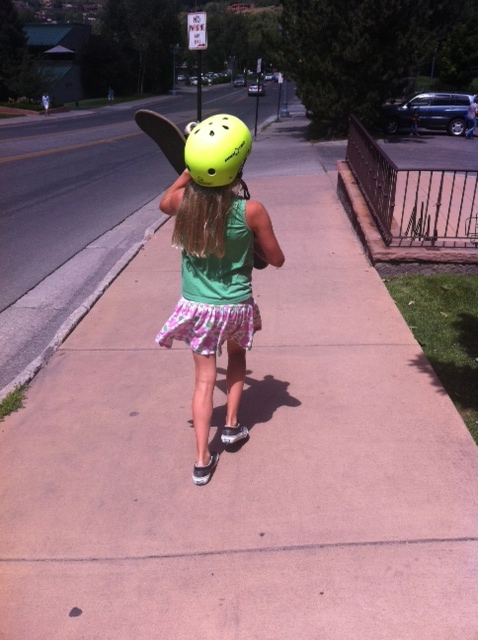
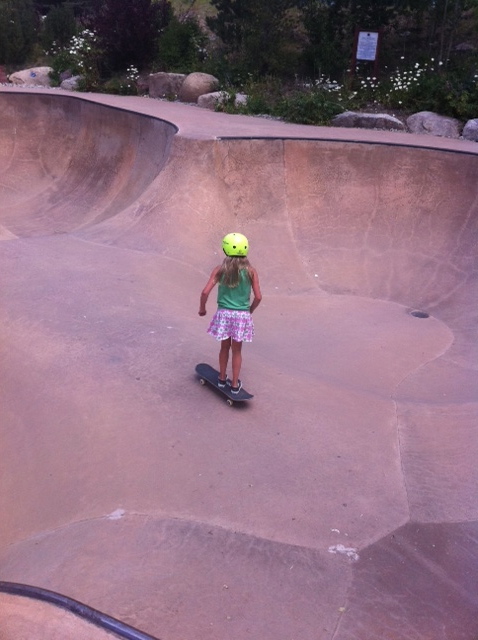
That’s how it is with Emma when it comes to physical things.  She has always insisted on doing things herself and while she can take direction, it is often very difficult for her to be taught by someone who relies on verbal explanation.  Emma feels and learns from watching and doing.  So when she put her arm around her brother, Nic the other morning at the skateboard park and said, “Nicky’s turn, then Emma’s turn,” we knew we were going to have to get creative if she was going to learn to skateboard.

We spoke to one of the instructors from Nic’s skateboard camp and arranged a lesson for Emma that afternoon.  When we finally went to meet him, we realized we hadn’t brought sneakers for her to wear and so bought a new pair at the skateboard shop.  They didn’t have any socks small enough for her, so she just wore the shoes without socks, despite my fleeting concern that she would get blisters.  With borrowed skateboard in hand, we headed to the skateboard park, Emma leading the way.

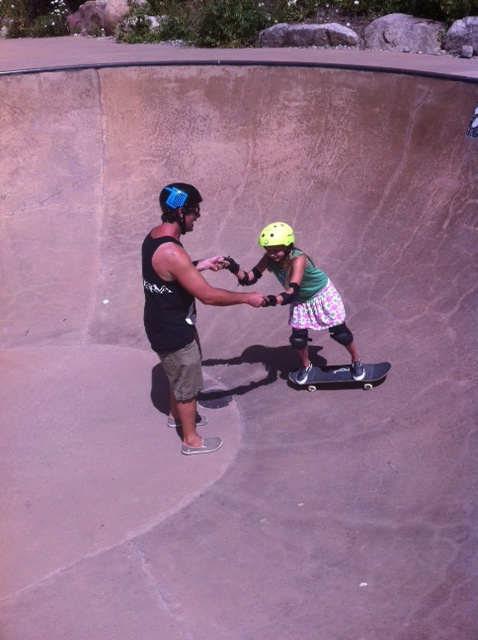
The instructor got her to put on elbow, knee and wrist pads and then together they slid into the bowl to practice foot positioning.  Emma wanted to skateboard though and didn’t want to practice standing on the board.  She wanted to go.

In this way Emma is fearless.

And then the blister on her heel became too painful and she tried to take her shoes off.  From there the lesson took a downward turn and after another ten minutes or so, Emma had had enough.  I am convinced that if we just let Emma experiment on a skateboard for awhile, she’d eventually figure it out on her own.  Just as she did so many years ago on the playground swing, and later with her scooter.  But for now, we will let her dictate how this goes.  If she shows interest in skateboarding again, we’ll try to borrow one for her to practice on.

For more on Emma’s journey through a childhood of autism, go to:  www.EmmasHopeBook.com
Bumps In The Road

Inevitably in life we have all experienced things that have forced us to slow down, perhaps take another route, do things differently than we would have liked.  I think of these things as bumps in the road.  I try to refrain from judging them as good or bad, but just as the way things are.  There are some moments I’m better at achieving this kind of calm perspective than others.  It’s easy for me to feel all that is happening at work is “horrible”, but the truth is, a series of events have been set into motion and I have had to make the decision to fight back, to defend myself or allow another person to harm me and in harming me, harm my family.

Emma experiences her own “bumps” along the way.  Things that happen, which force us to change well laid plans.  Plans she is excited about and is looking forward to.  But more and more, lately, Emma has taken these things in stride.  She is learning to adapt to a world that is often precarious, constantly changing and shifting.  It is a wonderful thing to witness.  We all must adapt to our ever changing circumstances.

Emma makes me happy –  Both my children do.  Try not to smile while looking at this next photograph.

I dare you.  No smiling.  Come on, it’s impossible not to feel a tiny degree of joy, right?  I love that.

Here’s another photograph that can’t help but bring a smile to my face.

This was done yesterday during Emma’s “study room”.  She is writing longer and more complex sentences.  Her reading is coming along beautifully.  Excuse me while I jump up and down with excitement!

So no matter how heinous things get at work, I have my family.  My beautiful, amazing family – and that’s all I need to bring things into the proper perspective.

For more on Emma’s journey through a childhood of autism, go to:  www.EmmasHopeBook.com
Emma’s Rainbow

One of the wonderful by-products of this mess at work is that I am spending every day with my family.  Yesterday we ended the day with Emma saying to me during dinner, “Go outside with just Mommy?”

“Yeah okay, Em.  We can go outside together as soon as everyone’s finished eating their dinner,” I told her.

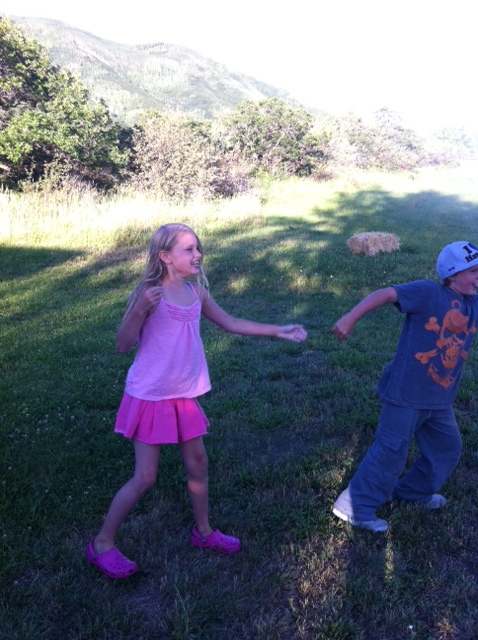
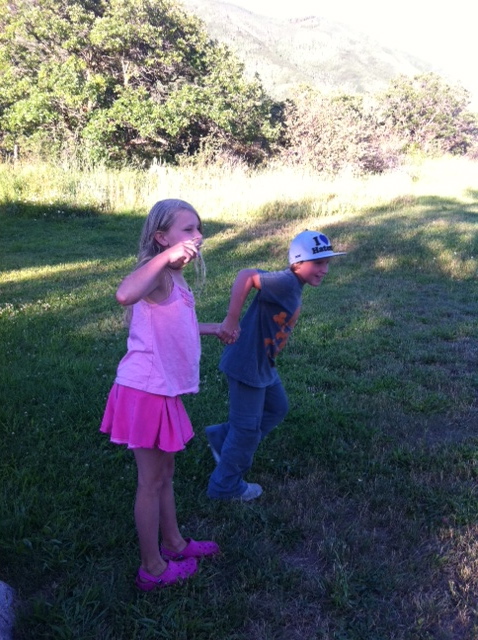
Once outside, Nic was already there throwing the frisbee for the dogs.  Emma said, “Hold hands with Nicky?”

“Sure Em,” Nic said.

“Run through the sprinklers with Nicky?”  Emma said, jumping up and down.

“I’ll run through the sprinklers with you, Em.  Here,” he said, holding out his hand.

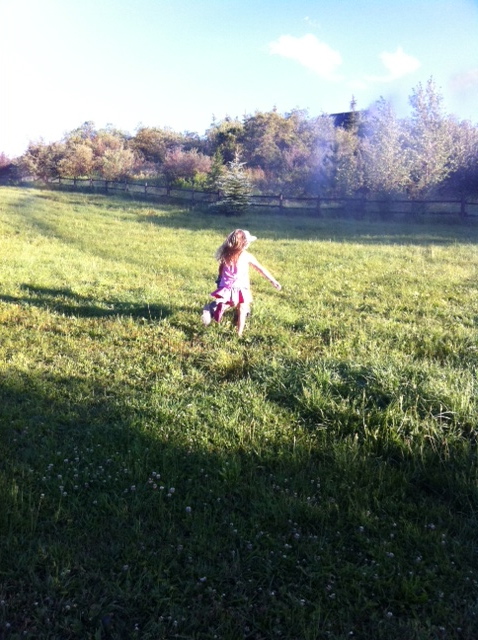
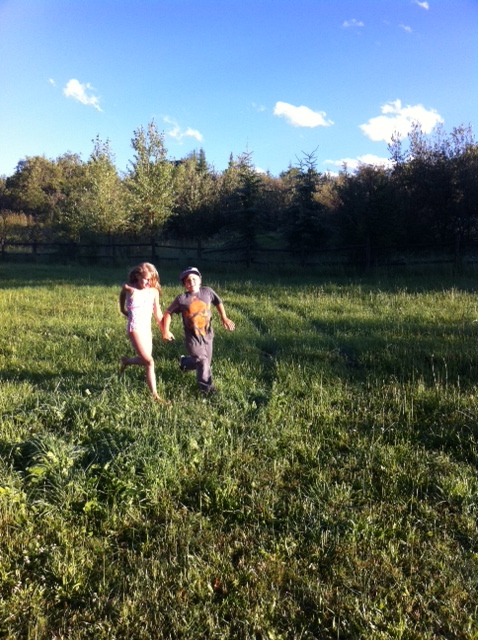
And then they began to run together.

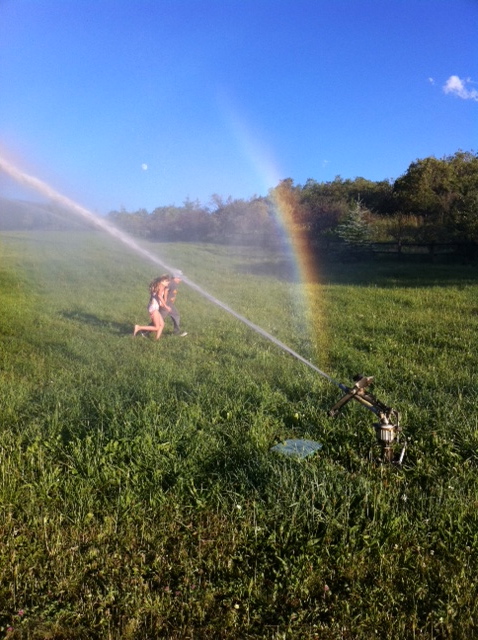
Through the sprinklers…

And then Emma changed into her bathing suit and they ran again, this time through a rainbow…

And out the other side.

Laughing and together, just the way any brother and sister might.

For more on Emma’s journey through a childhood of autism, go to:  www.EmmasHopeBook.com
Work and Family

Things have been horrific at work.  Tremendous stress and upheaval, but despite it all, my children and family keep things in perspective.  I remember when I first heard the word “autism” and later read how those with this diagnosis tended toward anti-social behavior  I felt terribly sad.  Sad because I thought at the time it meant that Emma would miss out on the things that have made my life most meaningful.  My happiest moments have all been with my family, my favorite memories are all involving family and friends.  But so are Emma’s.  She still asks to go back to California to – “Uncle Andy’s wedding.”  When we’ve told her he won’t be getting married again or at least everyone hopes this to be the case, she says -“Go to California.  Andy’s wedding again?”

We’ve tried to explain that weddings are unusual celebrations, not the sort of thing one does every few years, at least for most of us.  But nothing we say fazes her.  She had such a wonderful time in Napa Valley at my brother Andy’s wedding, she wants to go back, be among my extended family.

My fondest childhood memories are of coming out to Aspen to visit my grandmother.  Her house was brimming with relatives, her brother, my Great Uncle Paul, a number of his children would come for tea every afternoon after skiing.  She had dinner parties, more relatives would descend and close friends were called, “Aunt” and “Uncle” even if they weren’t technically speaking.  The smells of cooking, burst forth from the kitchen, the upstairs always had the distinct smell of moth balls.  I loved going up to her attic and rummaging about through enormous steamer trunks filled with clothing and photographs from another time.

Emma is like me in this way.  She has a phenomenal memory and it is always about people and family that she refers to when she is recalling something she wants to do again from the past.  “Go back to Cape Cod” is one of her more recent requests.  Every summer Richard and I used to go to North Trurro.  We always had friends come and join us, a kind of revolving door of people – there was Kat and Randy, Christian and his girlfriend at the time, Anna.  Emma asks for these people by name, she hasn’t forgotten any of them.

So when things become difficult with work, problems arise, no matter how dire things can seem, it is my family who always bring things back into perspective.

For more on Emma’s journey through a childhood of autism, go to:  www.EmmasHopeBook.com
Sunday in Aspen with Emma

Yesterday I spent the entire day with my family.  This was a first since they arrived a week ago.  In the morning I took Emma on the 4-wheeler.  I couldn’t remember how to put the thing in reverse so I made sure we went places which only required forward movement.  The whole shifting gears thing was a bit tricky, so Emma learned quickly that she needed to hold on to me as we galumphed along – something she doesn’t usually do when riding with Richard.

After our ride we took the dogs for a walk.

And on the way we saw this…

Upon further investigation, it turns out it was the desiccated pelt of a coyote or perhaps a deer, hard to tell at this late stage.  My mother evidently found it lying on the path several months ago and hung it on this shrub so the dogs wouldn’t drag it around.  Emma was utterly uninterested and walked right by.

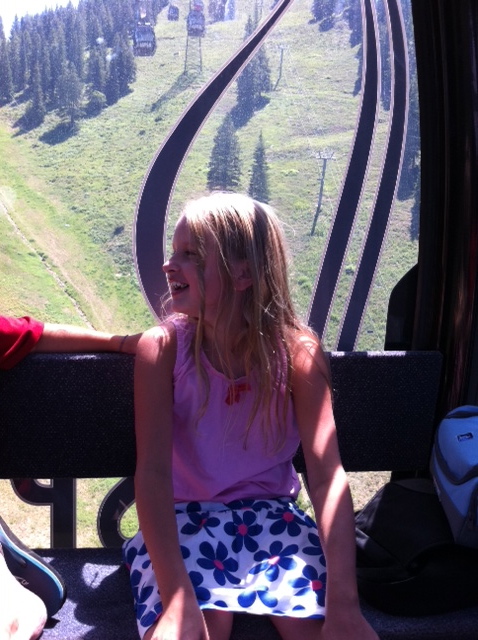
After our walk, we went up on the gondola to the top of Aspen Mountain where a blue grass band played.

On the ride up the mountain, Emma played a game where she went through a list of all our various relatives and added, “cousin” or “uncle” or some other title before their name.  Then she got a little creative and said, “Jungle Andy!”

“No Em!  Not jungle Andy, Uncle Andy,” we said, laughing.

“Uncle Andy,” she responded, then very quickly added, “Jungle Andy!” as we screamed “No!  Not jungle Andy!”  Emma thought this so hilarious that she kept it up for the entire 20 minute ride.  And in truth, it was pretty funny.

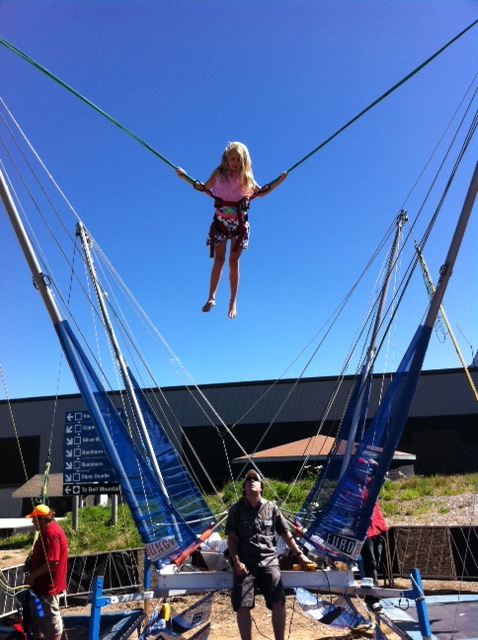
After our lunch on the top of the mountain, Emma stood in line to bungie jump.  The weekends are particularly crowded and so we ended up waiting…  and waiting…  and waiting.  For 45 minutes or more, I lost track of how long we waited.  But finally it was Emma’s turn.

After Emma finished bungie jumping we drove out to the Snowmass Recreation Center and swam in their outdoor saline water pool.  Finally we drove home, changed and went to Takah Sushi for dinner.

Emma was terrific.  Not a single meltdown.  She waited the interminably long wait to bungie jump, she went along with all the plans, even when they changed at the last minute due to things beyond our control.  And at the pool, she showered, washed her hair and then for the first time ever, brushed her own hair, completely, without any help from me.  When we went out for dinner that evening, we brought along her food, she ate with us, then played, making faces and being silly.  When it was time to leave, she ran ahead toward the car, never a protest.

Now that’s a great day!

For more on Emma’s journey through a childhood of autism, go to:  www.EmmasHopeBook.com