Category Archives: Autism Acceptance

It’s My Birthday and I’ll Laugh if I Want To

Saturday was my birthday.  I’m 52.  Or as my twelve-year-old son said to his younger cousin last night, “Do you understand how old she is?”  A look of confusion lingered on his cousin’s face.  Then, apparently tiring of her lack of response, Nic said in a grave tone, “She’s fifty-two.” There was a moment of silence and then to be sure he’d left no room for error he added, “Fifty two years old.”   His cousin looked at me with raised eyebrows and what I imagined to be a new-found appreciation or maybe it was horror, it’s impossible to know what an eight year old, having been given this sort of news, might think.

I figure I’m at the halfway point, though my husband would say I’m being unrealistic as he fully intends to live… forever.  Yeah, you read that right.  As in eternity.  I’m not as optimistic.  However, I like the idea of having reached the halfway mark, forget that I felt I was at the halfway point last year and the year before and the year before that too…  But let’s just say I’m right, that would mean I’ve got another 52 years ahead of me.  And I don’t know about you, but I fully intend to make good use of them!  Because the first 35 or so I kind of made a mess of.  There’s good reason I have a 12-year-old and 10-year-old when many of my same age friends have children graduating from high school and college.  Don’t get me wrong, I’m grateful for my past, I’ve learned a great deal.  I just wouldn’t want to do any of it over again.  I really like being 52.  I like being where I now find myself.  But mostly I really like my life.  

Birthdays are a time of celebration, but more than anything they’re a milestone of how far we’ve come.  At least that’s how I like to think of them.  I’ve come far in 52 years, but this last year has been more significant than any other year to date.  It has been within the last year that I have completely changed how I see my daughter.  And that change has unexpectedly altered my view of the world and my life.  I don’t know that any other single thing has changed my thinking and views of life and the world as quickly, dramatically or completely.  There have certainly been milestones – getting help for my eating disorder, stopping my bulimia and anorexia and getting sober are two examples of significant change.  And while the actual stopping of an action happens in a single moment, real change occurs over many such moments, repeated over and over.  The larger changes that take place as a result of those repeated actions or inactions can take years to recognize.  It is, as they say, a slow recovery.

My introduction into the world Autistics inhabit and talk about, was swift, abrupt and in many ways, more life altering than anything I’ve ever experienced.   I am still reeling from the force with which this knowledge has transformed my life and the lives of my immediate family.  As a result, I have never been so happy.  I have never felt so hopeful.  I have never been so sure we are on the right path.  I have never enjoyed my family as much as I do now.  Most surprisingly, my happiness is not because Emma has become a “normal” child.  On the contrary, my happiness is, in large part, because she is not.  I view her with wonder, without judgement and an open mind.  I have learned to see her as neurologically different, not wrong or broken or in need of fixing.

I no longer speak of Emma as though she cannot hear me or understand me.  When she doesn’t answer or walks away when I’m talking to her I no longer assume she’s not interested in what I have to say.  I have learned to examine all of my assumptions.  I have learned to question everything, and I mean literally everything I think or think I know.  At my friend Ib’s urging I’ve begun reading Autism and the Myth of the Person Alone by Douglas Biklen.  This book, like so many that I’ve read in recent months, throws everything we neurotypicals think and say about autism and Autistics out the window.  Judy Endow, just posted a terrific piece entitled, Seeing Beyond My Autism Diagnosis.  She talks about the lens through which NTs view Autistics and writes:  “Stereotypical views of autism are based on the neurotypical (NT) assignment of “truth” as they look at us.”

One of the greatest gifts I’ve received this past year is the joy that has come with  questioning my “truth” when it comes to Emma.  In questioning it I have found my sense of humor.  It never entirely left me, more like it had been tamped down by stress and worry.  To laugh, to really feel the absurdity of situations that used to cause me tremendous upset and concern, to feel the carefree pleasure of being with my family and enjoying them…  this is the life I had always hoped for, but felt would never be mine.

Yeah.  I turned fifty-two on Saturday and I’ve never been happier.

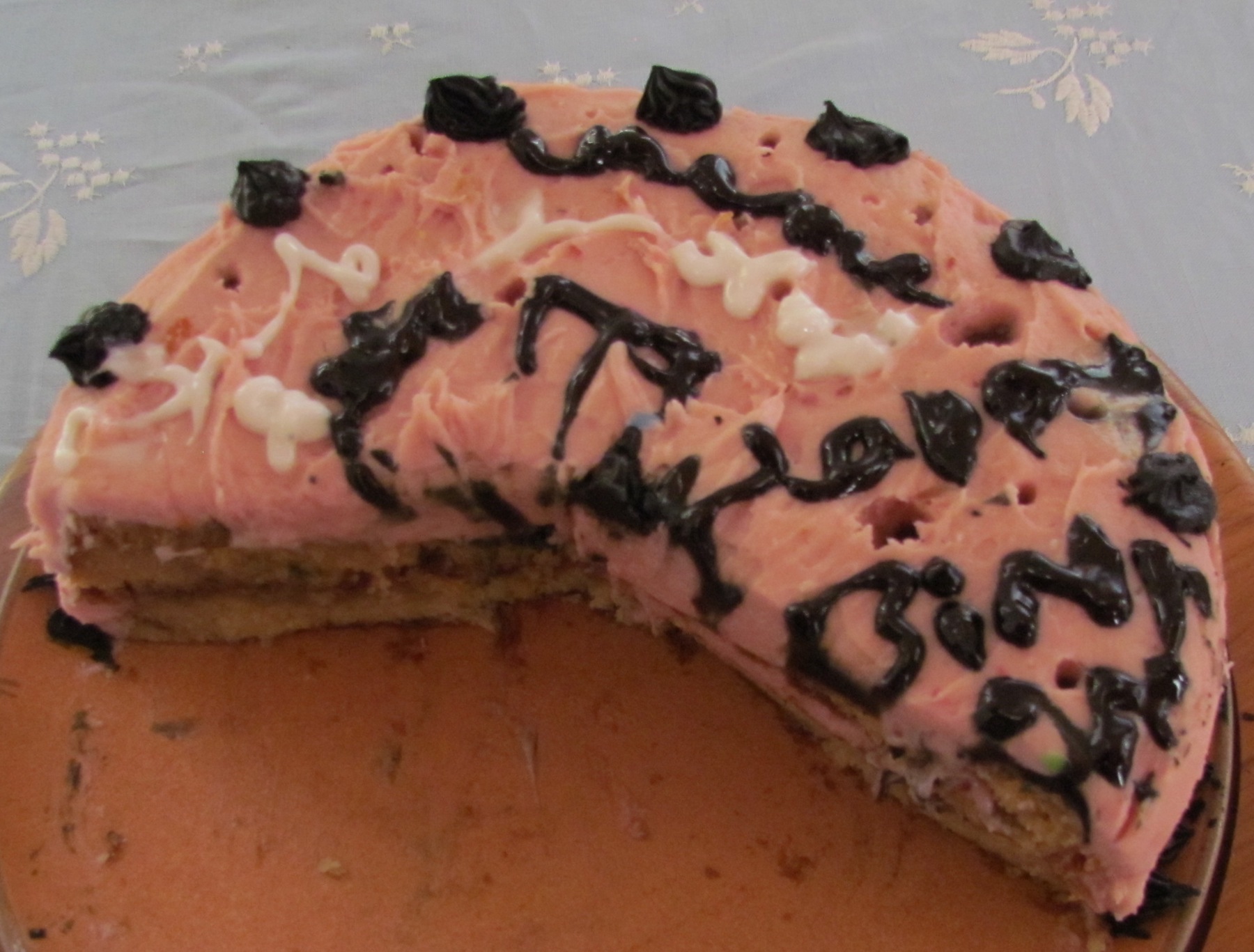
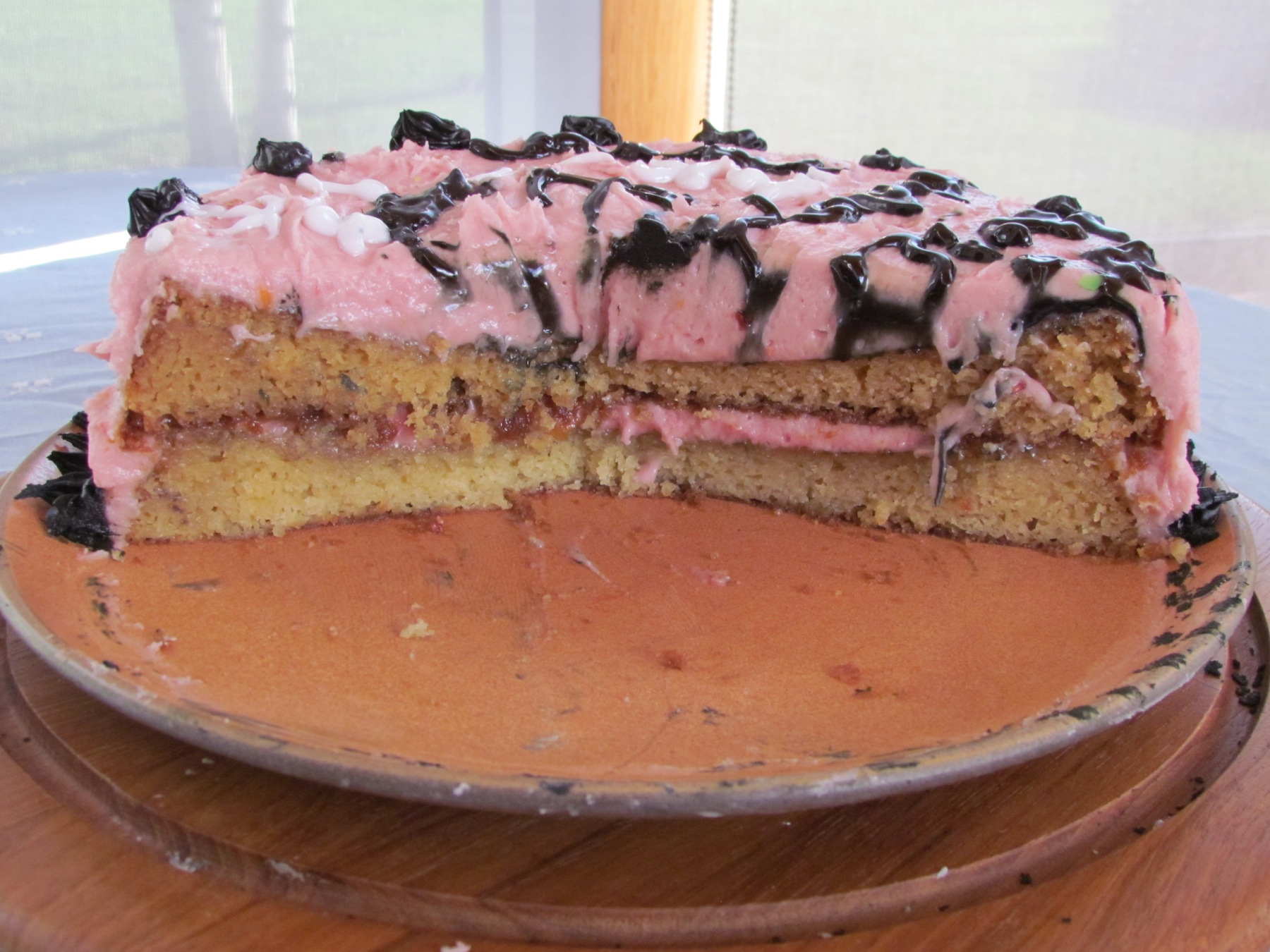
The vanilla cake with raspberry icing Em and I made.  Nic and Emma decorated it by writing everyone’s name on it.  And yes, it was delicious!
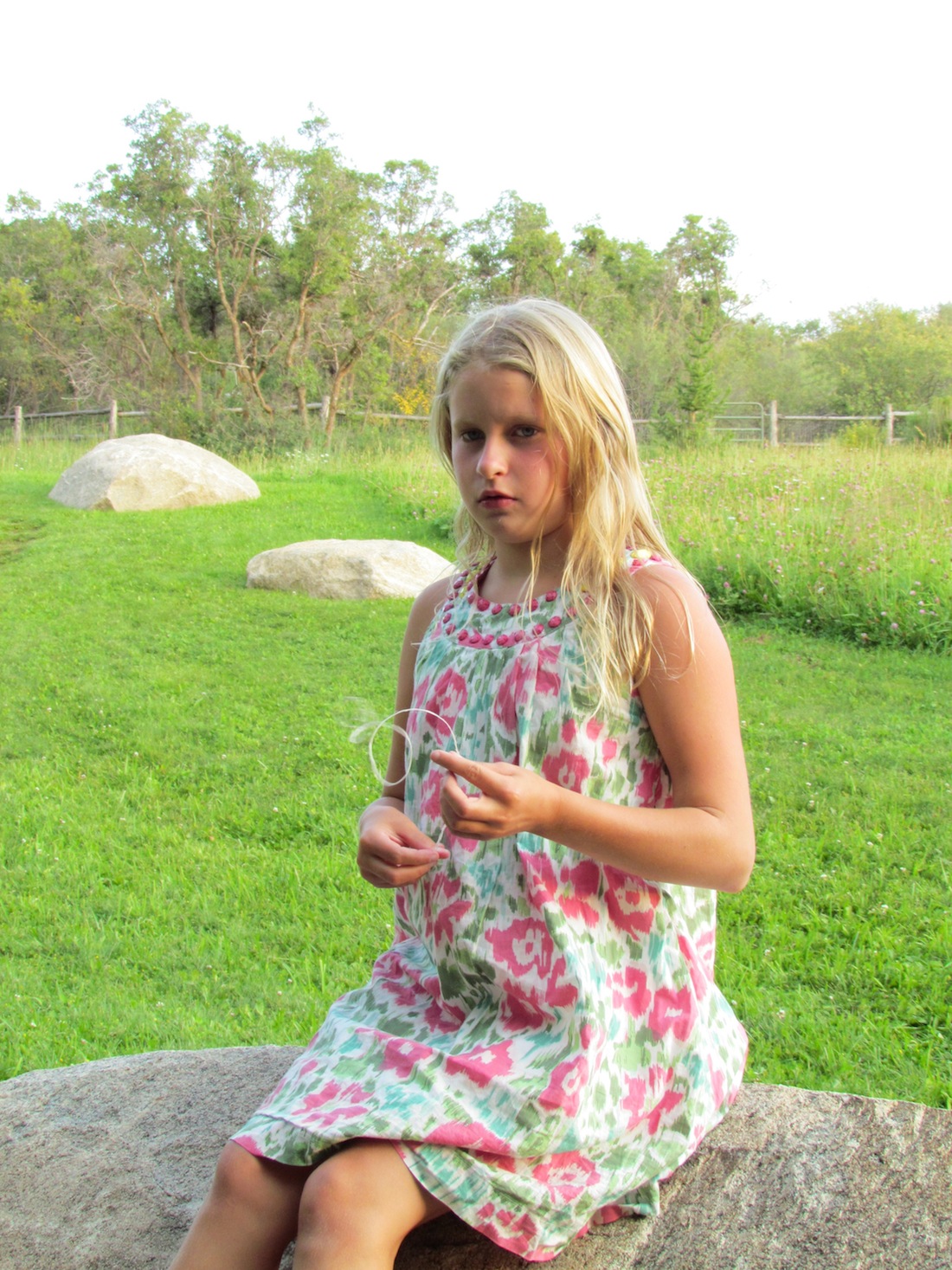
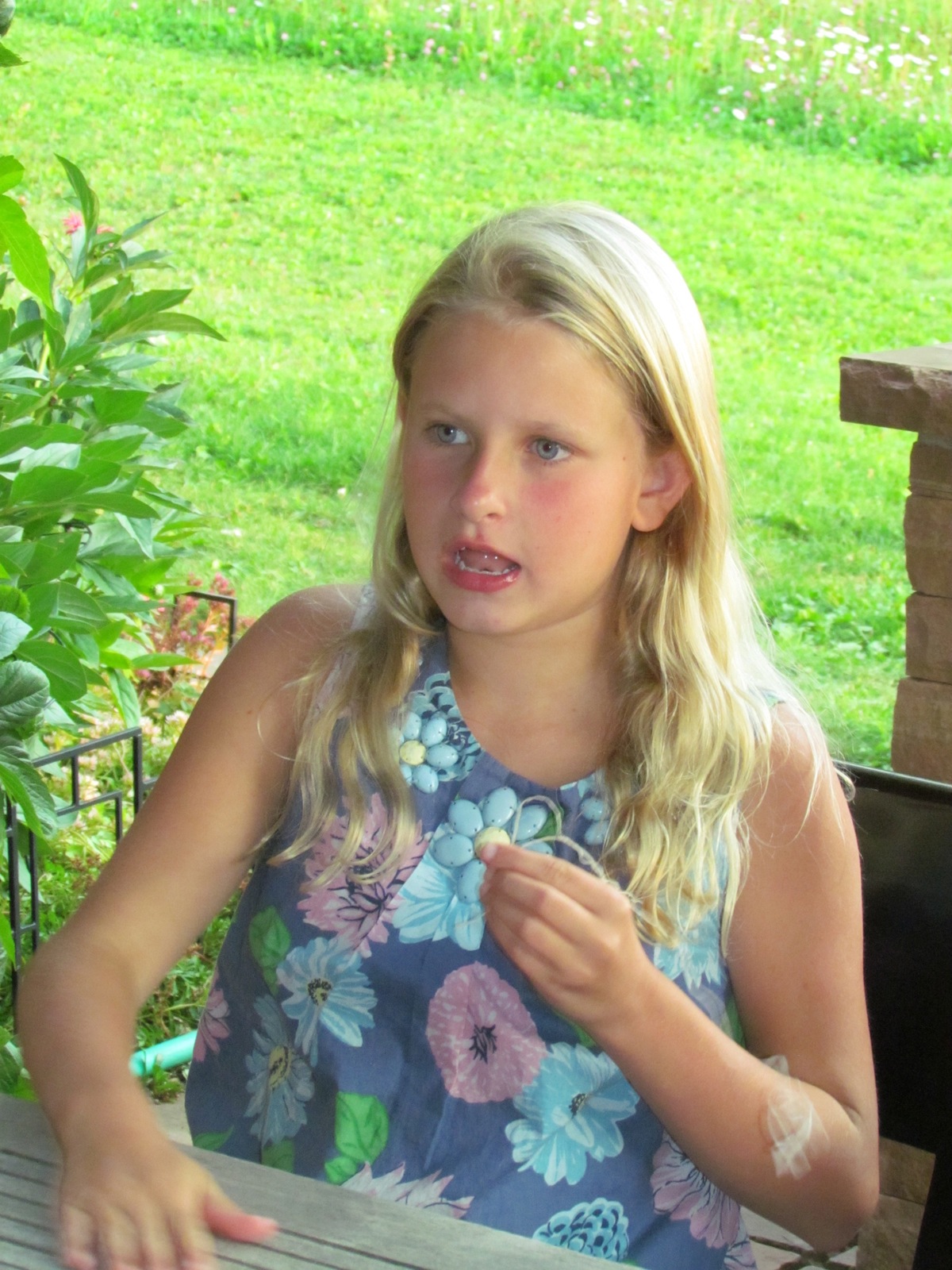
Beautiful Em wearing one of her pretty dresses
A Little Gratitude And Love

I have to begin this post with some gratitude.  Angela, whose blog – Half Past Normal – a wonderful blog I hope all of you will visit, reached out to me yesterday with a lovely comment.  As with all the comments people leave, I was left feeling so fortunate to be among such a wonderfully vibrant and diverse community.  Thank you Angela for thinking of me and reaching out to me.  It made me very, very happy.

I wrote yesterday about feeling off kilter, feeling what my father would have termed – je ne c’est quoi – I couldn’t put my finger on it, thought it was from all the travel and jet lag, maybe some overwhelm too, I didn’t know really.  But I’m closer now to what it is.  My friend Ib, whom I adore and carry with me in my heart at all moments, helped clarify it for me yesterday.  She calls it “weltschmerz” and she said, “it is located in your language of erosion of trust… disappointment… the need to help underscored with a note of (in my ears) not being sure it will work or anyone will listen… I think it is weltschmerz and I think it got in your body like it does for us and made your bones tired.”  The “us” she is referring to are all the Autistics who are advocating for change.  They are constantly working to change our thinking, our perceptions and the way Autism and Autistics are viewed and treated.

As I read Ib’s explanation I thought of @Coyotetooth who tweets poems in 140 characters or less and photos of his walks.  He is one of the many brilliant, kind souls who is quietly making a difference.  His post, Unshattered is just one example of his poetry on his blog CoyoteTooth13.  His tweets are the ones I try to find first thing in the morning. Sometimes if I’m very lucky I will come upon his and @AspieChap’s conversations, often conducted in rhyme, the best way to begin any morning, it seems to me.  Then there’s @Aspie_Warrior who is tweeting and blogging (blog – Aspiewarrior) about  what it’s like for him as Dad to AS son and NT family.  He writes, “This has led to me working as kind of translator in my household. Kind of a bridge between my NT family and my son.”

@SpectrumScribe with his wonderful blog, Postcards From the Edge of the Spectrum writes about his journey of discovery, revelation, acceptance and self-reconciliation.  He has wonderful suggestions for books and film in addition to his terrific posts.  There’s @AspieKid whose comments on Emma’s Hope Book have inspired whole posts  and who writes on his blog, AspieKid about his life and what it was like for him as a child.  There’s Laura Nagle, featured in the wonderful documentary, Vectors of Autism: Laura Nagle and gives one of the best monologues I’ve ever heard about what it is to be Autistic.

There is Amy Sequenzia and Peyton Goddard and Emma Studer, all of whom are nonverbal Autistics communicating through typing and whose words are having an impact.  One by one they are changing people’s perceptions of their children and what it means to be a nonverbal Autistic adult in the world.  There are countless others and I will try to include them in future posts, but these are all Autistic people who help me understand, who through their kindness help me forgive myself for the mistakes I’ve made, who have helped me do things differently.  Maybe they already know they are making a difference or maybe this will come as a surprise, but they are and they have.  They have made a difference in my life and by extension in my daughter’s life.

If there is one thing I can do with my writing and with this blog, I hope it is to inspire other parents and organizations to read what Autistics are writing and to interact with Autistic people.  If I can have any impact on the organization – icare4autism – it is to persuade them to seek out the advice of Autistics, to hand the microphone over to them and to work closely with them in moving their organization forward.   We parents can give each other support and cheer each other on, but it is Autistics who can best advocate for themselves, who can explain to the rest of us what it’s like, who can encourage us to not concentrate on deficits, but on assets and who can show us we are not so different.  We are, after all, human, regardless of our neurology.  Perhaps it is in sharing our commonalities, rather than our differences that will encourage people, all people to come together to help one another.

I have to end this post with my friend Ib.  Ib doesn’t have a blog, but she is a powerful presenter and advocate.  She also is my friend, someone who reminds me when I feel discouraged, frustrated, tired or angry that kindness was what changed things for me.  Kindness from Autistics who reached out to me and extended their hand not so long ago.  E. from the blog The Third Glance was one of the first, and I’ll never forget how much her comment on this blog meant to me.  Ib has not only extended her hand to me, but opened her arms in embrace, no matter my mood, no matter my lack of understanding, patiently, lovingly, she has given herself in friendship and I can only hope she feels my love for her in return.

Yesterday evening


Vectors Of Autism: Laura Nagle

Vectors of Autism: Laura Nagle   For those of you who have not yet viewed this powerful documentary, you must.  I cannot urge you enough.  Just do it.  Watch it.  Keep a box of tissue nearby, because if you’re like me, you’ll need it.  I wept throughout the entire film, from joy, from sadness, from relief that such a film has finally been made, from pain that we have so far to go in educating ourselves, the public, the media about autism and what it means to be autistic.  At one point Laura laughs and says, “I figure I was built out of reworked parts.”  It is a poignant example of both her sense of humor, but also how society’s view of her has weighed heavily.

Anything I say about this documentary is inadequate.  So I’m going to give you a couple of fun facts while you click on that link above and purchase the DVD.  I know, it’s $35.00 but think of it as an investment in your child’s future and to the future of this film.  The more people who buy it, the more likely it will make it to film festivals, and to the larger public where this message needs to be seen more than ever.

Laura Nagle wrote the lyrics to the theme song and plays the harmonica on it, she’s also an architect, an artist and Autistic.  It’s hauntingly beautiful, which is kind of perfect because so is she and so is the documentary about her.  The couple in the documentary with two little girls on the spectrum, Jennifer Turrell and Stewart Anderson wrote the music.

*Addendum – I was so tired when I wrote this post late last night, I just didn’t have the energy to write more.  But I need to add, this documentary is everything I and others like me have been saying.  It is imperative Autistics speak out about their experiences and it is vital that we, in the neuromajority, listen.  For those of you who are still uncertain as to why I say this, it is because I know I am not the only parent of an autistic child who went through a hellish period (far too many years) in which I struggled with my daughter’s diagnosis and what that meant to her and to us as her family.  I tried my best to understand, I did what I could with the knowledge I had available to me, but even so, I fell short.  I cannot help but wonder, had I heard Laura Nagle and others speak of their experience, would I have done things differently?  Would my stress and fears have been abated even if only by a little?  Would I have sought the opinions of all those specialists with such tenacity and fervor?  Would I have been able to set aside some of my fears in favor of a more rational and calmer mindset?  And most importantly, would any of this have effected Emma?  I think it would have.  I hope others can learn from some of my mistakes.  I hope that by writing about my journey, others who are closer to the beginning of theirs can avoid some of the traps I so easily and readily fell into.

What I know now is that having operated with a stress level hovering in the red for so many years, I am relieved to see this documentary.  I am grateful to have friends who are autistic and whose lives, opinions and experiences help pave the way for my daughter.  The question is – how do we go about making these kinds of connections available to other families?  Families who do not have blogs, who do not know where to go to find Autistic adults who are interested in speaking to them and sharing their experiences with them.

One of the reasons 12-step programs work as well as they do, is because they provide a model for living through mentorship.  The role of the addict who has cobbled together some time as a sober and abstinent being, who then goes on to offer support to other addicts with less experience and who may be still struggling with their addictions is a powerful model for any community.  A huge component of 12-step programs is the idea of being of service.  Without being of service to a fellow addict we will almost certainly lose our way.  But this idea, this model can be translated to include any community.   Within the autism community, for those self-appointed Autistics who have a desire to extend their hand to families with autistic children, it is a vital lifeline, one that everyone involved can profit from.

If you’re still undecided here’s a preview video:

http://youtu.be/9NUMrP43tMM

After you have watched it, I want to hear your thoughts.  What did you think?  What did you learn?  What surprised you?  What made you cry?  What made you laugh?  Laura is very funny, so that one is probably easy!  Laura has not just started a conversation, she is extending her hand.  It is up to us to grab it.

I Got To Meet A Unicorn Named Ibby

Celebrities and important people populate New York City in the same way Starbucks does, in other words, look hard enough and you’ll find one on every street corner.  But Sunday I had an encounter that was more impressive than running into a dozen A list celebs.  Sunday I met Ibby Grace.

Ibby, also known by her professional name, Dr. Elizabeth J. Grace,  Assistant Professor at National Louis University, is a terrific public speaker, wonderfully sarcastic, understands irony and rhetoric, has a sense of humor and is an extremely kind and compassionate human being, in a long standing relationship, a new mom to twins, and is Autistic.   If you believe the common assumptions about Autistics, Ibby is an anomaly.  According to the current “statistics” citing 1 in 4 Autistics diagnosed are girls, Ibby is even more unusual.  That she also displays qualities thought to be nonexistent in all Autists makes her, as she suggested with a certain degree of sarcasm, “a unicorn” or as a participant volunteered, “pegasus.”

Ibby spoke Sunday at the 12th Annual International Conference on Disability Studies in Education on Autistic and Female:  They say that’s rare, and so many other things.  She proceeded to dispel the many myths surrounding the little known and misunderstood segment of the human population – The Autistic Female.  In her talk she mentioned various theories including Simon Baron-Cohen, the creator of possibly the single most destructive theories regarding autism, The Theory of Mind and Mindblindness, which postulates that Autists are unable to empathize and his latest theory – The Extreme Male Brain.  I will not do Ibby’s talk justice by trying to represent it here.  Suffice it to say, you should have been there.

After the talk I stayed and chatted with a number of people.  As  Ibby and I walked together I told her how thrilled I was to meet her and other Autistic women who were beating a path, a path my own daughter may choose to one day walk down.  “You’ve found her people,” Ibby laughed.  I have and a formidable group of women it is.  Then she put her hand out and said, “Welcome to the tribe.”  The gloom and doom and horror I have grown used to feeling whenever I have attended any group discussion regarding anything to do with autism was in stark contrast to the joy I felt attending Ibby’s talk.  I think I may even try to go to other Autism conferences as long as most of the speakers are Autistic.

Ibby makes me happy.  She is interesting, smart, articulate, funny, doing what she loves and is one of those people who lights up the room.  It’s just the way she is.  Were it not for deeply ingrained societal restraints I would have physically jumped up and down upon meeting her I was so excited.  I think I did bounce a little on my toes when I went up to her after the talk had ended.

But I don’t think anyone noticed.

*An addendum to Sleepovers, Staycations, Sixteen Hours and Other Words Beginning With the Letter S – it turns out Oliver and Trouble are the names of Angelica and Joe’s two cats.  Mystery solved!  I should never question Emma.  She is always right.  I have to learn how to listen to what she’s saying better.

My latest piece My Fear Toolkit published in the Huffington Post

“You Have To See The Horror, But Not Be Defeated By It.”

Yesterday I had lunch with the inspirational and brilliant James Cone, also known as the “father” of black theology, and a professor at Union Theological Seminary. For those of you who aren’t familiar with James and his work, he is the man who wrote the powerful book, The Cross and the Lynching Tree.  Sometimes in life you meet people, people who are special, for whatever reason, they reach us in ways that most people do not.  James is one of those people in my life.

Over lunch, as we got on the topic of various movements:  the civil rights movement, the disabilities movement, the LGBT (Lesbian, Gay, Bisexual, Transgender) movement, he said, “You cannot let your circumstances define you, who you are, your race, your gender or what others say about you.”  And I thought about Emma and how autism is perceived by many as a tragedy.  I thought about how I don’t ever want her to define herself by the way some may see her.  I thought about how that perception does damage to so many, how the way we perceive people is how we justify our treatment of them, how we treat them differently without even realizing it.  I thought about how I want to protect Emma from that.

I thought about the neurodiversity movement and how so many Autists are speaking out, asking for acceptance, asking for respect, asking to just be heard.  I thought about all those Autists who cannot speak, who are non-verbal and cannot communicate their thoughts, ideas and opinions at all.  I thought of those who are called “severely Autistic” and I thought of those who are, at this moment, in institutions or group homes run by people who may not understand them.  People who will use their ideas and perceptions of who they think they are to treat them in ways that will hurt them.  Who fights for them?  Who ensures their rights are respected and considered?   As I thought about all of this, I felt myself falling into despair.  And then James reached over and took my hand.  He said, “You have to see the horror, but not be defeated by it.”

I thought about all the stories I’ve read of Autistics who have been abused, often by their own family members, caregivers, or in homes where they were placed.  The people who cannot fight back because they do not have words.  The people who cannot fight back because even by communicating through other devices they are viewed as less than and so their words are disregarded.  I thought of those who have risen up and despite their challenges are blogging about their experiences.  I thought of the unimaginable horrors they have endured.  “You have to see the horror, but not be defeated by it.”

Those people have lived the horror, the rest of us are only witnesses to and only if we choose to be.  And that is a critical and striking difference.  We have a choice.  We can turn away if we choose.  We do not have to read their stories.  We do not have their memories etched into our brains, their experiences scarring our bodies.  We will not get triggered by those who behave in similar ways to the perpetrators of their abuse.  “You have to see the horror, but not be defeated by it.”

One blog I read not long ago, described in graphic, terrifying detail the abuse she was subjected to at the hands of her stepfather, mother, siblings and cousins.  As I read her post, I thought, this isn’t abuse, this is torture.   I felt nauseous reading her blog.   When I wanted to click the little red button on the top left corner of the page to delete it forever, I had to remind myself that this is her life, the least I could do was read what she’d written.  How do you take what you’ve read and continue living your life as you had been, before you knew what you now know?

“You have to see the horror, but not be defeated by it.”

And I know.  I know I have to keep writing about all of this.  I have to keep reading the stories, they aren’t going to disappear just because I’ve made the choice not to read them.

“Strive toward an ideal,” James said at one point.  He paused and then he said, “Write where the hurt is most.”

And so I will.  I will try.  It’s the least I can do.

Emma in one of her “pretty summer dresses.”

Read My Fear Toolkit published in the Huffington Post

A Fantasy for Parents of Newly Diagnosed Autistic Children

I wrote about some of these ideas before in the Fantasy For Autists post a couple of weeks ago.  This is a follow up post, a fantasy for parents of newly diagnosed autistic children.

When Emma was first diagnosed I felt fear more than any other emotion.  It was overwhelming and crushing.  The word “autism” carried with it a weighty sense of doom.  People have described it as akin to receiving a “life sentence,” it was a word I knew almost nothing about, and what I did know wasn’t good. “We don’t know what causes it,” “There is no cure” were the words we were told many, many times by the various specialists we went to, seeking help for our beautiful, happy, fiercely independent daughter.  Those words were said matter-of-factly, but the grim set of the lips by those who spoke those words belied the truth, it seemed.  Some specialists would follow those words with a sad shake of their head, often done while uttering, “I’m sorry”  as they ushered us out of their office.  The doctor’s appointment now over, we were left standing alone, confused, terrified and overwhelmed by what we could not understand, by what could not be explained, by what seemed like a dark cloud enveloping every aspect of our lives.

Then there were the depictions in the media of the devastated families struggling to make ends meet, the scary images of the perseverative, stimming children in full meltdown, family members run ragged, siblings, silent and resentful, spouses angry and argumentative, and the autistic child, always somewhere in the background, seemingly oblivious to all the chaos they supposedly had created within, what would otherwise have been, the perfect American family, had they not been born.  While this may help with fund raising by preying on people’s fears and pity for those less fortunate than themselves, it is these depictions that the newly diagnosed child and her family will see.

Can we take a moment and consider how these depictions make the newly diagnosed child feel?  What message is being sent?  This child that everyone is so sure isn’t picking up on any of this, but perhaps is.  What if that child understands a great deal, even at the young age of a year and a half ?  What if that child is extremely intelligent and feels the overwhelming sadness their very existence seems to be causing their family?  What if these feelings are then intensified by the things that are said between family members in front of the child or within hearing distance of the child?  How would this affect the CHILD?  Think if you grew up feeling you were a mistake, damaged and broken?  What if the words that were used about you and to you were said with anger, exasperation and annoyance?  What if instead of being given the help you so desperately needed, you were told that the things that helped you concentrate and focus were wrong?  What if you were told almost everything you did was wrong?  Would that help you do things differently?

These negative images are also what will flash through the minds of the parents as they are given the “dreaded” diagnosis.  Listen to any newscast about autism.  The way the news anchors say the word – “autism” – the voice lowers, there is often a hesitation before the word is spoken.  Look at the statistics, the alarming statistics that cause everyone to feel frightened, because we know so little, so we fall into fear, fear of the unknown, fear of what might be, fear of the future, fear of the present, fear.  Is all of that fear helping any of us?  Does fear help us as parents do a better job parenting our autistic children?  Does the fear give you patience, does it help you when your child is unable to express themselves and so acts out?  Does that fear make any of us behave better, more appropriately?  Does the rampant fear help us sleep at night?  How’s all that fear working out for you?  Does it help?  And if you think it does, I’d love to know, how?

But what if this was not the way families were introduced to autism?  What if instead of sitting with the sympathetic, yet professionally aloof specialist the family was introduced to a group of self appointed adults, all of whom were autistic. What if these adults were verbal and nonverbal, women and men, spanning a wide range of ages?  What if each Autist “spoke,” whether through language or by typing or through a voice activated device?  What if the families were able to ask questions and were allowed to approach these Autists and even were able to have one or two or more assigned to them, the way a social worker is now, during Early Intervention?  What if those Autists were available to the family and their autistic child?  What if these were the people the family could turn to when they had questions, needed help finding resources, schools, methodologies or just wanted to check in with someone who might understand their child better than any pediatrician, psychologist, developmental pediatrician or neurologist could?

What if each Autist was given an opportunity to discuss what it was like for them growing up, the things that helped, the things that didn’t?  What if those Autists discussed how to teach life skills?  What if each family went away from this initial “welcoming” meeting with a folder that included a handbook written by Autists, a list of resources of Autistic doctors, neurologists, pediatricians, Autistic run schools with curriculum approved by Autists and others designed by Autists, and a list of  some of the essential things parents need to know and remember as they help their autistic child live and thrive?   What if, instead of being bombarded with frightening stories of self injurious nonverbal children we were shown videos of nonverbal Autists helping those children learn how to cope?  What if we were shown videos and news programs about all the Autistic adults who are pursuing their passions?   What if there were Autistic lawyers, neurologists, accountants, pediatricians, veterinarians, Occupational Therapists, Speech Therapists, Teachers, Educators, Head Masters, scientists, musicians, singers, performers, painters, writers, that we were all exposed to and knew about?  How would this change how we viewed our own children?  What if we were given the support we needed to help our children reach their potential without sadness, fear and pity?  What if?

My wish for Mother’s Day is that one day this will no longer be a far-fetched fantasy, but will be a reality.

To read my latest piece, Emma’s New Shoes, in the Huffington Post, click ‘here

And if you haven’t already done so, do vote for Emma’s Hope Book by clicking this ‘link‘ and clicking on the “like” button opposite Emma’s Hope Book.

The Path Leading Away From Hell – Continued

Yesterday when I began writing The Path Leading Away From Hell I knew halfway in, I wouldn’t have time to finish, but I plowed along anyway and at a certain point had to stop.  To pick up where I left off  – until recently finding a “cure” to my mind, was synonymous with helping Emma overcome all the things that caused her such pain and misery.  “Curing” her meant finding a way to help her read and write, figuring out how to help her with her GI issues, helping her with language and speech so that she might have an easier time making friends, helping her with her vast and varied sensory issues, helping her tolerate change, finding alternate ways for her to cope when she was overwhelmed so that she would not bite herself and punch herself in the face, helping her stay engaged and focused so that she might progress academically, helping her be in the world so that she might one day have the opportunity to live independently should she want to, surrounded by people she loved and who loved her.  I was intent on finding ways to help give her the tools she would need to travel if she wanted to, find a job and career she found interesting and close friends so that she might never feel alone.  These were/are my goals for Emma, and the word “cure” seemed to sum up all of these points, succinctly, in one compact word.

When I began reading blogs written by adult autists who objected vehemently to the word, “cure,” I was surprised.  At first I didn’t understand and reasoned that they objected because they were functioning at a much higher level than Emma is and does.  They spoke and articulated what they thought.  Emma cannot do any of that.  I felt sure that if they were unable to make their opinions and feelings known, they too would seek a “cure.”  But then I read some posts by autists who were not able to live independently, who had tremendous difficulty keeping a job, who found social situations impossible, yet they too objected to the use of the word “cure.”

I knew I was missing something, so I kept reading.  I wanted to understand.  I have always wanted to understand.  After days spent reading blogs and comments, many of which I’ve listed in past posts and some that are featured on the blogroll on this site,  I came upon an autistic woman who described two general types of parents, the first who wanted their autistic child to function as best they could and would do everything in their power to help them accomplish this and the second was a parent who wanted to cure their child of their autism so that they might have a “normal” child instead.  It was in reading her description that I began to understand, this wasn’t an argument about “cures” in the way I had understood and interpreted that word to mean regarding Emma, this was about the potency of words and how they can be used to dehumanize, discriminate and hurt.

No one was saying – Don’t help your child.  On the contrary, almost every single autist who wrote on the subject, spoke of the many challenges they faced and of the help they often required.  The argument was not about debating the merits or worthiness of who needed help, this was not a debate about needs, challenges, being non-verbal or verbal, being independent or dependent, the number that accompanied ones IQ or where on the autism spectrum one was.  What most of the autists I read objected to, was the use of the word “cure” because it implied who they fundamentally are, needed to be excised.

Many spoke of the shame they felt growing up, the alienation, and punishment they endured because of how they were perceived.  Almost everyone mentioned being bullied, being abused, being subjected to insults, derision and criticism.  All because they were autistic.  Add to that the various erroneous theories regarding autism and how autists lack empathy, do not feel as neuro-typicals do and you can begin to see how destructive this type of thinking is.  Dehumanizing and marginalization are the ways of war.  It is how people have justified acts of violence against others throughout history.  Dehumanizing autists with talk of “cures” and theories regarding how they do not feel are ways in which people can rationalize abuse.

It is human nature to want to be understood, to be listened to, and to connect with others.  But first there must be a conversation, a dialogue in which we all participate, in which each person is listened to and given the chance to voice their opinion.  Who knows, we may learn all sorts of things.

I certainly have.

To read Emma’s profile in The Thinking Person’s Guide to Autism, click ‘here.’
To read my most recent Huffington Post, click ‘here.’

Emma is profiled on TPGA’s Slice of Life Series

Emma is featured on the blog – Thinking Person’s Guide to Autism today in their Slice of Life series that they’ve been running through the entire month of April.  For those unfamiliar with TGPA, it is a blog for and by autists and parents of autists.  On their website they write:  “Thinking Person’s Guide to Autism (TPGA) is the resource we wish we’d had when autism first became part of our lives: a one-stop source for carefully curated, evidence-based information from autism parents, autistics, and autism professionals.”

As Emma couldn’t answer many of the questions, I put together a scrapbook of photos, an audio clip of Emma singing, combined with her answers to the questions she did answer either verbally or through typing.  A couple of the questions I did my best to answer with my own thoughts, whether Emma would agree with them or not, or how she might have answered them were she able to, I do not know.

In preparing the various “answers” for the Slice of Life series I read many of the other profiles TPGA has run everyday this past month.  It was through reading those other profiles that I felt compelled to write the Fear post last Friday.  I fell into that hell of comparing Emma to others, adult autists and other autistic children profiled.   Each and every profile seemed to me to show someone far more “advanced” according to NT standards than Emma.  Because of those feelings, I felt all the more determined Emma should be represented, even if her answers were through other methods of responding than by the more traditional verbal answers.

Our goal is to help TPGA readers understand that autistic people are people who have interesting, complicated lives and who are as diverse and varied as any other population united by a label.”

There are so many things people believe regarding autism that I would like to help dispel.  Here are a few of them:

Just because someone cannot speak, does NOT mean they have nothing to say.  

Just because a person cannot say, “I love you,” does not mean they do not.  

Just because a person is not able to express their feelings in ways neuro-typicals can recognize, does NOT mean they do not have them.

Just because someone does not look at you, does NOT mean they do not see you.

Just because someone appears not to hear you, does NOT mean they do not.

Just because a person has been diagnosed with autism does not mean they cannot learn.  It may take longer or it may be quicker than a neuro-typical child, but they can and do.

Assume competence.

Thinking Person’s Guide to Autism is the site I wish had existed when Emma was first diagnosed.  It is the blog I urge anyone who is autistic or with a child who is, to go to.

*And if you haven’t already done so, do vote for your favorite Top Autism Blogs, (you can vote for as many as you like.) I hope Emma’s Hope Book will be one of them!

To read my most recent Huffington Post, click ‘here.’

To read my guest post on Special Needs.com, click ‘here


Autism Acceptance

Paula Durbin-Westby is an adult autist, an advocate, a writer, blogger, and mother. She writes extensively about autism on her blog – Autism Acceptance Day.  I had planned to do a series throughout the month of April of Autistic writers discussing autism, “awareness” and acceptance, which I planned to submit to the Huffington Post.  However, HuffPo does not take “guest bloggers” and as I hadn’t gotten permission beforehand, this piece from Paula was never printed.   I am printing it here, instead:

This article introduces a new celebration for the month of April: Autism Acceptance Day.  First, the background.  Autism Awareness month has been around for quite awhile.  Unfortunately, much of the deluge of “awareness” has been demeaning and even discriminatory.  Many Autistics have written pieces on the theme “April is the cruelest month.”  Parents talk about wanting to turn off the TV during April so their Autistic children will not have to see the alarmist statistics and “medical mystery” reporting.  Autistic friends, weaving their way through a barrage of autism “warning” signs placed prominently on campus, talk about how they can’t wait for April to be over.

In 2008, the UN declared April 2 World Autism Awareness Day.  A year later, in September 2009, during an autism conference the UN showed a video called “I Am Autism,” which portrays autism as a demonic persona that threatens harm to parents and families. In one section, voices chime “We are the United Nations,” showing people from many nations who will stand up to “autism.”  It was outrageous.  The United Nations, by showing this film, violated its own principles in the UN Convention on the Rights of Persons with Disabilities.   The UN wrote in Article 8, and I quote, “As a change of perceptions is essential to improve the situation of persons with disabilities, ratifying countries are to combat stereotypes and prejudices and promote awareness of the capabilities of persons with disabilities.

Against this backdrop, I organized the first Autism Acceptance Day in 2011.  Autism Acceptance Day was to be everything that Autism Awareness Month was not. Rather than “awareness” that insults and even damages the life chances of Autistic people, I promoted complete acceptance, not just mere tolerance. As Autistic activist Nick Walker puts it, “If it doesn’t involve acceptance of autism, and acceptance of autistic people as autistic people, you don’t get to call it “autism acceptance.” I was tired of my friends being hurt, and dismayed at the media and parent- and researcher-led autism organizations portraying autism and Autistic people in what my nine-year old calls a “despicatizing” light.

Autism acceptance means an active acceptance of neurodiversity. Neurodiversity sometimes gets a bad rap, but it’s really fairly simple: neurodiversity encompasses all neurologies, from “typical” people to those who have a variety of neurologically-based differences and disabilities. We support all people with disabilities, even though our emphasis is on neurology. We assert the worth and dignity of every person, no matter what their disability or level of disability, including people with significant disabilities. Our aim is not to gloss over the very real difficulties that people with neurologically-based disabilities face. Our focus is on access to services, supports, education and employment opportunities. We support the development of communication systems, a high priority for Autistics, some of whom do not speak, and many of whom do not have reliable access to language-based communication at times.

The first year, Autism Acceptance Day was primarily an online, Facebook event. I started a blog so that people who were not on Facebook could read about Autism Acceptance Day and participate. Over 1000 people signed up for the Facebook event. This year, as more people made plans and expanded on the idea, I wrote – “It’s time to take back April!” ASAN did a series on its blog and there were other events and activities.

Like any other community, the Autistic community and our supporters have developed expressions of community involvement.  Some events are celebratory; some are not.  On March 30, people attended candlelight vigils to mourn and remember people with disabilities who have been murdered by family members or caregivers. The vigil effort was organized by Zoe Gross. An online vigil was implemented as well.  As with other minority communities, a sense of identity, pride, and accomplishment, as well as a time to pause and reflect, is a way to build upon our strengths, learn to work together to promote our own interests and concerns, and ultimately to foster a greater societal acceptance of people with disabilities including autism.  Sadly, the day after the vigil, Daniel Corby, age 4, was murdered.  We still have much to do toward acceptance of Autistic people.