Monthly Archives: September 2012

A First Day And Life Continues..

Bounce, bounce, twirl!  Bounce, bounce, twirl!  I’d provide a visual, but I don’t have one, so you’re going to have to take my word for it…

Yesterday was Emma’s first day at her new school.  Emma was scared and anxious.  I was scared and anxious.  Every time I tried to do the breathing exercises we’ve been practicing, Emma begged me to stop, “No Mommy.  I don’t want to do breaths!”  So I did them quietly to myself hoping she wouldn’t notice.  We did exactly what we planned.  I took her to school.  I brought her up to her classroom where she joined three other children, two non-speaking and one verbal.  I stayed with her longer than I should have, but seated across the room out of her line of vision.  Her head teacher, who’s been teaching for more than ten years, and special ed for six of those ten, was kind, respectful yet reassuringly authoritative without seeming intimidating.  I set the timer for three minutes, gave it to Em and told her I’d leave when the timer went off.  She said, “Go sit with other kids when Mommy leaves” and I cursed myself for not having set the timer for 10 seconds, at the same time congratulating myself that I hadn’t set it for 10 minutes.  But that was the kind of day it was.  A day of juggling opposites.  Emma’s favorite book kept up a steady patter in my head…  Matman stands, matman sits, let’s say opposites!  Staaaaaannnndddd!   Siiiiittttt!  Staaaaaannnnndddd!  Siiiittttt!

And in between matman’s curious chant, I watched and listened.  I could see Emma relaxing.  I could see her watching.  She began to join in.  The timer beeped, I stood up, Emma walked over to the table to join her peers, just as we’d mapped out and I left.  When I returned to have lunch with her she was happy and laughing.  As we sat in the cafeteria with her teacher, aides and other kids I mentioned the “letter” I’d written.  I said, “I hope you didn’t feel it was condescending, I didn’t mean it…” and one of the teacher’s aides interrupted me and said, “Not at all!”  She then went on to tell me she’d gotten out a highlighter and made notes.  She and the head teacher reassured me that they appreciated it and credited it with the success of Emma’s first day.  I was relieved and grateful for their kindness.  When Emma was finished with lunch, she turned to me and said, “Go with Mommy to the big carousel?”  This was what I’d promised and I nodded yes.  As we got up to leave, Emma turned, said, “good-bye” and then said each person’s name and blew each a kiss (the ultimate compliment from Emma and not something she usually does.)  It was all I could do not to openly weep with relief.

There’s a great deal of talk about us parents.  How we feel, what we think, our emotional state, our perceptions, our understanding of events as they occur, what we think our child may or may not be feeling, thinking, understanding.  All of it is through the filter of our own experiences, what we’ve learned or been taught.  It takes a leap to realize what we think we know or believe may be incorrect.  That’s a hard concept to digest.  It’s taken me eight years and there will always be more for me to learn and understand, I’m still very much at the beginning of this journey.  This fall will mark eight years since Em’s diagnosis.  Eight years ago when I believed I knew things about my daughter, only to learn how very wrong I was.

I think I understand and then find I really don’t.  I don’t “own” Emma, she isn’t “mine” in the sense that she is not my possession.  She is a being in her own right, with her own ideas, opinions and thoughts.  I have ideas about what constitutes a quality of life, I have opinions about other people I meet, I view their lives through the lens of my life, my hopes and dreams.  It’s easy to fall into the idea that my views are the correct views, but I know how often I am incorrect.

I began this blog to record Emma’s journey, but have found I am increasingly uncomfortable making the assumptions necessary to actually do that.  In recent months I see this more accurately as a record of my journey.  I find myself not wanting to talk about Emma as much and when I do, I ask myself is she okay with what I’m writing?  I have her photo splattered all over the internet and while I am perfectly fine divulging the gory, messy details of my past in a public way, I haven’t given Emma the choice.  I’ve just done it.  I don’t know where to go from here.  Just because she often cannot communicate her ideas and opinions doesn’t mean she doesn’t have any.  I know now how incorrect this assumption is.  I’ve asked her about this blog.  I’ve shown it to her.  A few times she’s asked me to read her a post I’ve written.  I’ve asked her which photo is okay to post, but just because she points to one, doesn’t necessarily mean it’s okay.  It’s a dilemma and one I am not clear on, though increasingly I’m uncomfortable with the choices I’ve made.

Someone once said to me, “We give birth, the umbilical cord is cut and from that moment until we die our job is to learn how to let go.”  The timer hasn’t beeped yet, but I know it’s ticking.

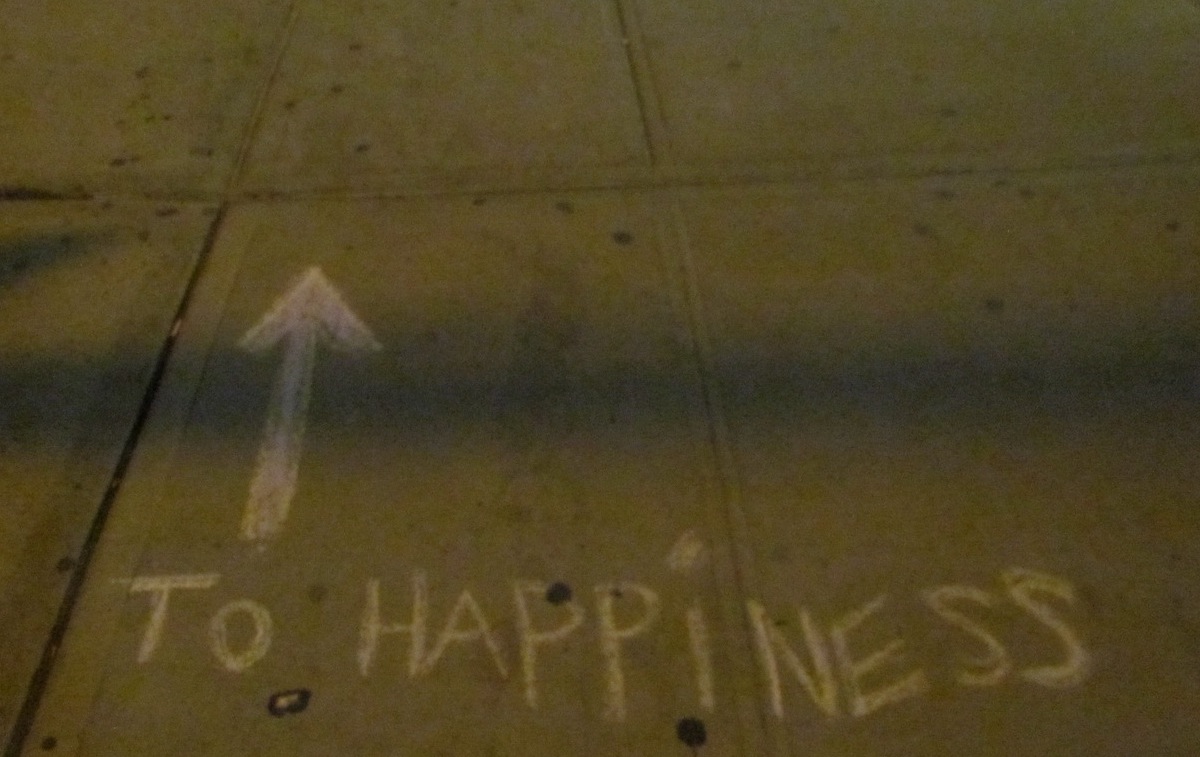
Chalk Art on 7th Avenue – “Happiness”

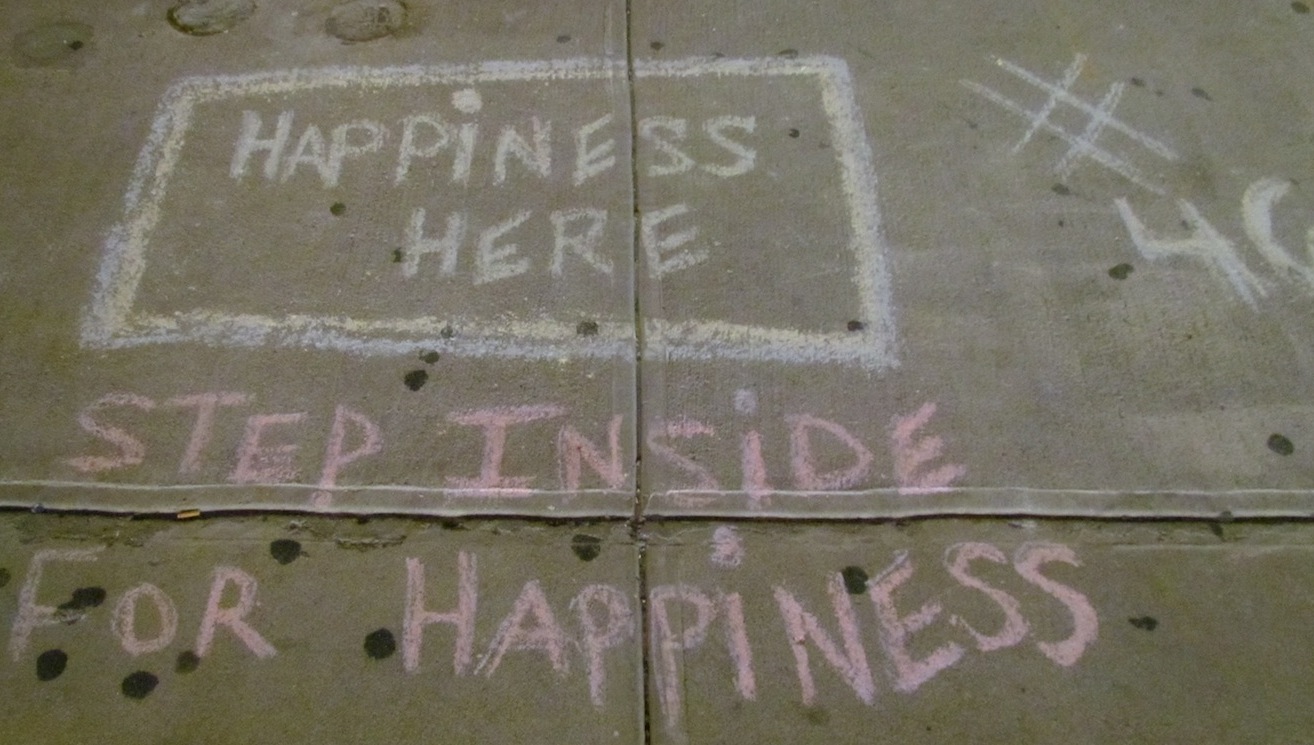
“Step Inside”

An Interview With Amy Sequenzia

Amy Sequenzia, a  non-speaking Autistic self-advocate,  poet and writer agreed to an interview with me.  Amy is someone whose work I have been following since I met her, this past spring.  Her powerful book of poems, My Voice: Autism, Life and Dreams can be purchased by contacting Amy ‘here‘.  Amy’s writing and poems are regularly featured on Ollibean.

Amy Sequenzia

AZ:  Hi Amy. Thank you so much for agreeing to this interview. You describe yourself as a self-advocate.  Can you tell us how that came to be?

“I think it was in PA when I had my first real contact with a group of autistics who where typing to communicate (The Lonesome Doves). That was in 2003 and I realized I could be speaking up for my rights to more people. After that I began writing poems that were a little bit about my life. Then I decided to write to, and meet with, legislators; was encouraged to write to newspapers and later for blogs.”

AZ:  You’ve described how people have spoken about you when you were present, as though you couldn’t hear them or understand them. Can you talk about what that feels like?

“It feels like you don’t count as a whole person. It is rude and frustrating because I can’t respond or will not walk away. It makes me sad when people who love me do it anyway. Some people even continue to do this after being reminded that I can hear, type and think.”

AZ:  Do you have memories of that happening when you were younger, before you could communicate through typing?

“Yes and I would get angry, frustrated, sad. Sometimes I would cry, sometimes I had a meltdown.

Sadly, it still happens.”

AZ:  Were there things you did, sounds you made, actions you took when this happened?

“I answered in the question before, but I have to add this: I don’t have meltdowns anymore. But I need to have my support person with me to make sure I can express myself, if I want to. Some people still don’t get it.”

AZ:  How did you learn to communicate through typing?

“It was a long and emotionally draining session with someone from the Institute on Communication and Inclusion (I think it was called FC Institute back then). I was 8.”

AZ:  There’s been a great deal of negative notions and even so called “studies” done regarding facilitated communication. Can you address this idea that FC is not an accurate or meaningful way of communicating?

“It is how I communicate, it means it is how I can have my voice heard.

FC is a process, with clear steps and a final goal – independence. It is not easy and many factors play a part in the process.
As far as I know, from all the people who say FC is a hoax, none of them has ever interviewed a user who became independent, or has acknowledged the many studies, including double-blind studies done by different facilitators with different users. All this is documented.”

AZ:  For those people who have only read the negative views on FC, is there anything that might make them understand what you experience when you try to communicate without FC?

“I am misunderstood. My face does not always show how I feel and I have other disabilities that prevent me from being more pro-active. My body can be stubborn. Without FC I don’t really participate in the world.

But it is important to know that sometimes I choose not to type and other times I might be too overwhelmed or tired to type.”

AZ:  Have you ever had a bad facilitator?

“Yes. When I was in school, sometimes people would try to facilitate with me without any information about the method. Some would guide my hand; others would not offer resistance or the right support. I could not type like this.”

AZ:  How did you cope with that?

“Sadly, I did not do anything. There was no encouragement from some and with others it was as if I was a piece of entertainment. I felt disrespected. FC is a lot of serious work. I had to wait until I met someone who believed in me and was committed to follow the best practices.”

AZ:  How long did it take you to learn to type?

“I took only the first session for me to find out that I could type. Typing is also a matter of practice and trust. Today I am more confident and I can type fairly well with trained facilitators after a few minutes. If I know they will follow the best practices and nothing else interferes (like a seizure or spasms), I type really well, even if I don’t know the facilitator well.”

AZ:  Is there anything you’d recommend to parents of nonverbal children who are hoping their child might communicate through typing and/or FC?

“Give your child every possible chance to communicate. Don’t believe in every article or every “expert” who says FC does not work. Go to the Institute on Communication and Inclusion (ICI) and question them yourself. Being skeptical is ok. That’s why dean Biklen and the others at the Institute do such a good job documenting everything.”  (Click for the link to the ICI website)

AZ:  My daughter Emma is just learning to read, write, and type. She is extremely resistant however. I’ve been told this is often the case. Were you resistant to communicating in the beginning?

“No. I wanted to leave the school/institution where I was living, so I had to make it clear. But it can be scary to have all the power to say things that can change everything.

I don’t know Emma. Maybe she just needs some time.”

AZ:  Do you remember what it was like in the beginning for you? Were there things that could have helped you more that what was done?

“I wanted to type. I could choose food, clothes, anything. Then I began typing my thoughts. Maybe Emma is not interested yet. It has to be her choice, at her own time.”

AZ:  What is your living situation like now?

“I live with friends. It is their house, but it is our home. We call it life sharing. I have state funding which is not good, especially in Florida. But because my friends respect me, I can have a life I can be proud of, and happy with.”

AZ:  Did/do you have a mentor? If yes, can you talk about that experience and relationship?

“My mentors are people who show me the many possibilities of my life. They don’t always know that.”

AZ:  I know several people consider you extremely important in their own process of learning to communicate and in their life. They think of you as a mentor. How has mentoring others changed you/helped you?

“I hope it has helped them. I still need mentoring. It is a good exchange of ideas, experiences, encouragement and support. It feels good to be considered important in someone else’s growth. It is lovely.”

“Thanks Ariane. This was a good interview. And thank you for being supportive of autistic voices.”

Thank you so much Amy for being willing to answer all my questions.  Please help me thank Amy, everyone!

A Letter To My Daughter’s Teacher

*I’ve never removed a post before.  But I couldn’t get away from the creepy feeling the original post was giving me.  I have kept much of the original content, but rephrased it so that I’m not speaking as though I were my daughter, which I have no right to do, and am instead speaking as her mother, which I am.

My daughter, Emma will be in your class this year.  A few days ago, Emma told me she was “scared to go to new school.”  Emma loved her teachers and friends from her old school.  So I want to introduce you to her.  I cannot speak for Emma, I cannot know if everything I write here is completely accurate, but these are things that I have learned over the years, things that are specific to Emma and that may be helpful, at least that is my hope.

Sometimes Emma does not look at you when you are speaking to her, but that doesn’t mean she doesn’t hear you.  Her hearing is excellent.  She may not know how to process what you’ve said or she may not know what is expected of her.  Often if you ask Emma a question, especially if it’s a question she knows the answer to she either won’t answer or will say something nonsensical because she isn’t sure what’s expected of her or why the question has been asked.  Sometimes people get nervous and don’t know what to say, so they’ll ask, “Oh Emma, that’s a pretty dress.  What are you wearing?”  or  “What color is that?”  These are questions that aren’t being asked for any real purpose or they are testing questions.  Typically these are the kinds of questions Emma will not answer.

Change is difficult for all of us and Emma is no exception.  Having a written or picture schedule for the day and week will reduce her anxiety.  Like everyone, Emma really appreciates having a say in what happens throughout the day.  Whenever appropriate allowing her to set a timer for a one, two or five-minute warning before a change in activity will go a long way in helping her do what she needs to prepare herself.   Usually Emma will go along with any change if she’s given sufficient warning.

General Disposition:

Emma loves people.  She is gregarious.  Her fall back position is one of happiness.  She is also very sensitive.  She can tell if someone is upset, stressed or angry and can become easily overwhelmed by those feelings.

 Particularly good at:

Emma is terrific at leading others.  She can be extremely persuasive and is a great negotiator.    Her negotiating skills are wonderful for math and science and her leadership skills are wonderful motivators.

 LOVES:

Emma loves music, dancing, being on stage in front of an audience.  Give Em a microphone and she will sing and dance.  She loves “talent shows.”  She loves any game involving running, swimming, holding her breath under water, laughing and being silly.  She loves playing versions of “Duck, duck, goose” or as Emma would say, “Raincoat, raincoat, umbrella!”  Musical chairs is another favorite, dance parties, hide and seek, dressing up, bouncing, swinging and going to any playground.  Emma is very athletic and very girly.  She likes cooking and while she won’t eat most of what she cooks, unless they’re pancakes, she will enjoy the opportunity to cook.

Does NOT like:

Emma gets upset if she is told not to do something she has just done.  Example:  “You cannot shout!” after she has just shouted is difficult for her.  Obviously she CAN shout, she just did, with you right there watching.  Telling her she “can’t” is not true and it’s confusing.  Instead say, “You mustn’t shout.” Then in a voice that models what you’d like you can say, “Here is how you can speak instead.”  By doing that, you are helping to give her other choices.  If she is not allowed to do something, be sure to tell her what she can do as an alternative.

Academics:

Emma is fairly new to all academics.  Within the past year she has learned to form the letters of the alphabet and is now reading, writing and typing at a 1st – 2nd grade level, likewise with math.   Emma loves the Hubble Imax movie and her favorite museum is the American Natural History Museum.  She is showing interest in learning about our world, the ocean, the moon, other planets and the universe.  She told me last night that she doesn’t want to be an astronaut though, she said she wanted to be a “singer on the stage!”

Needs extra help:

Emma resists academics.  They are hard for her and she becomes upset when she makes a mistake.  She doesn’t like getting anything wrong.  But if you help her succeed, she will flourish.  If she is reading and doesn’t know a word, give it 15 seconds or so to see if she can work it out on her own, (don’t say “sound it out” or “try again” because she didn’t learn to read phonetically and while she is able to sound some words out on her own, it won’t help her with all those exceptions like limb and thought.)   Emma has a strong desire to learn and an even stronger desire to do things independently.  With your help, she can and will succeed.

Frustration and Signs to watch for:

Emma gets a look of panic on her face.  She may begin breathing with short sharp intakes and she will often talk to herself in a high-pitched questioning voice laced with anxiety. When Emma is overwhelmed she may shut down and withdraw.  She may begin scripting, using set phrases she’s heard. Those scripts may be in context with what’s going on or their connection may not be clear to you, but that doesn’t mean there is no connection, it just means you don’t understand or know what it is.  Emma often has trouble processing her feelings and the feelings of others.  Sometimes she needs help identifying those feelings, just as we all do.  Sometimes she will start repeating things other teachers have said to her in the past in a scolding tone, such as, “No Emma!  You may not __________.  If you ____________ we will take ________________ away!”  When Emma is overwhelmed she has to rely on her scripts as all other words have left her. Try to listen even if the words seem meaningless, she is trying to communicate her feelings of distress to you.  Sometimes she might say, “You have to ask for help!”  This is what she says when she needs help, but sadly this can confuse those who do not know Emma well.  She might also say, “Do you want to go swimming?”  Which means she really, really wants to go swimming.  If you show her on the schedule when she’ll be able to go she will usually calm down.

It’s too late, the storm has hit!

This is not the time to engage in a power struggle.  Emma is not trying to manipulate you or upset anyone.  She is simply expressing her frustration in the only way she knows to.  Sometimes if she’s very upset she will bite herself or punch herself, usually on the hand or arm, sometimes if things are very bad, she will punch herself in the face.  Do not exacerbate this challenging time by raising your voice or telling her “You cannot hit!”  or “You cannot bite!”  or even “We don’t bite.”  (See Does not like paragraph above) Restraining her in an attempt to stop her will not prove helpful either.   Emma bites or hits herself because the feelings of frustration are overwhelming her.  The pain she causes herself by biting or hitting is within her control and is therefore preferable.  It things have escalated to the point where Emma is hurting herself, everyone must try to understand what has happened before things became this derailed and try to prevent them.  Sometimes it isn’t possible, but Emma is trying to cope as best she can.  When she is calmer you can work on helping her find alternate ways to cope.

What helps you when you feel overwhelmed?  What things do you do when you feel anxious, scared or upset and no longer feel you’re able to function?  Maybe the things that work for you will help Emma too.  Remember, be patient.  Showing Emma once or twice will not mean she’s learned, she will likely need to be shown numerous times.  Often there is a sensorial component to her upset.  She is overwhelmed with feelings or a sensation or too many sensations.  She may be tired or hungry, too hot, cold or thirsty.  Sometimes a sensory break will do wonders to restore her equilibrium.

Strategies that work well:

Make it into a game!  Music can be incorporated into just about any activity and can change anything.  High affect and silliness can make something that feels difficult seem fun!

Humor:

Emma loves anything silly and ridiculous.  Silly faces, silly dances, playful interactions, games!  She has specific jokes she likes to play with specific people.   Emma loves to laugh.  She loves to make up word games.  She enjoys taking a word like “uncle” and changing it to “Jungle.”  She will happily tell you that she has a “Jungle Andy and a Jungle Victor.”  Come up with silly word games and Emma will join in with glee.

Things that have a tendency to backfire?

If you say, “You have to do ________________.  If you don’t, I’m going to take __________________ away” will make her upset and anxious.  She will have a hard time concentrating because she will worry about having something she wants taken from her.  Instead say, “You can ______________, but first you need to __________________.”  That way Emma can concentrate on having/doing something she loves as opposed to taking something away.

Emma’s String:

 Emma has a string that she loves.  Please do not take away her string or use it as a form of punishment.  Her string helps her focus and it makes her feel safe.  If you take it away or threaten to she will become completely overwhelmed.  Sometimes, when she is writing or typing and needs both hands to do so, you can ask her to set her string near her or in her lap.  If you allow her to control where she puts her string she will feel safe enough to concentrate and do her work.  Also (a little secret) if you get some string or ribbon and copy her movements in a playful way, you might see and feel for yourself how wonderful it can be and Emma will be delighted that someone wanted to interact with her in a way that she loves.

Food:

Emma does not have any allergies or foods she cannot eat.  However she likes to eat the same food everyday.  Some food looks, tastes and smells strange to Emma.  Please do not make her eat anything she isn’t interested in eating.  Please do not tell her she must finish something in order to have something else.  If Emma shows interest in something someone else has or is eating and it’s appropriate, do allow her to smell, lick, taste or eat it if she wants to.  And please do tell me so that I can find whatever it is and offer it to her at home too.  We will pack Emma’s lunch everyday.

One last thing:

 Assume competence and respect Emma’s process.   Emma can and does learn.  She may take longer or less time than another child, but she will learn.  She is extremely independent.  Show her, help her, let her.   You are her role model.  Emma has dreams, just as we all do.  You can help her achieve those dreams by believing in her.

 I am available to talk, discuss and strategize.  I am here to help in any way that I can.  Nothing is more important to me than my daughter.  Please keep in touch with me.  Please let me help in any way that I can.  There is no detail about Emma’s day that is too small.  Do not hesitate in emailing me _____________ or calling  _____________. 

 Thank you so much,

Ariane

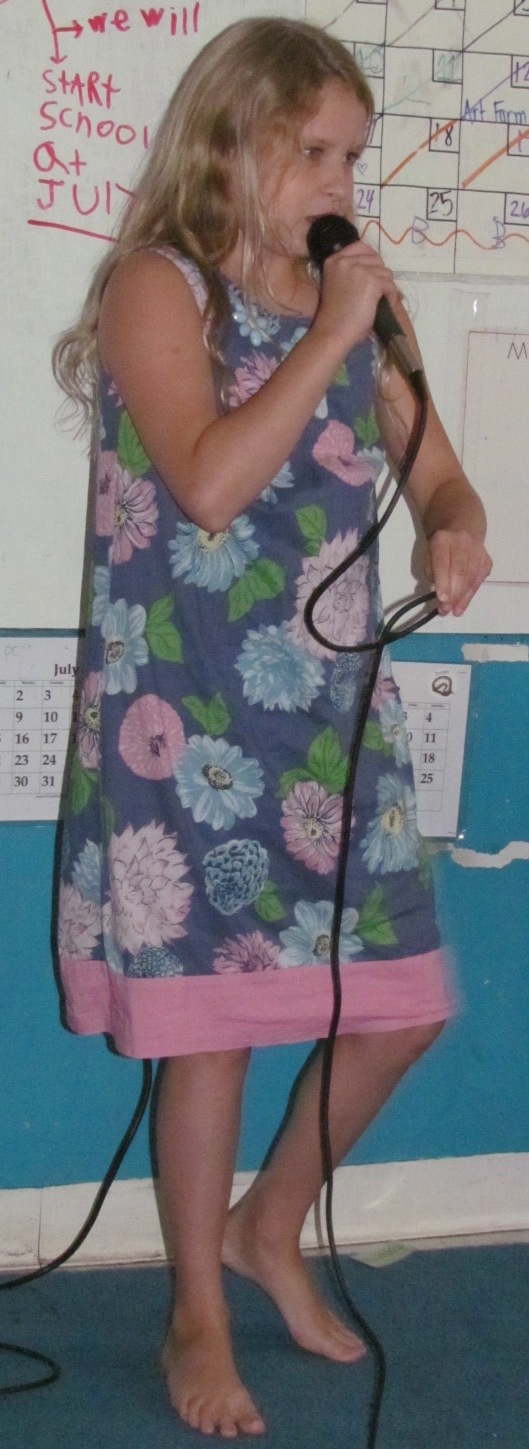
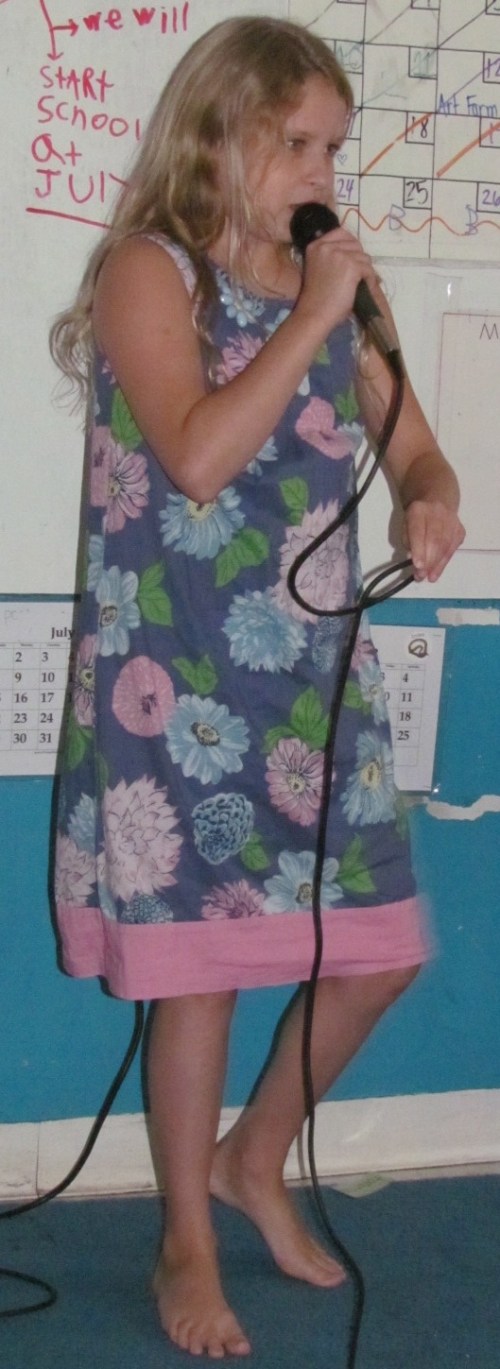
Emma performing at her old school

*The above “letter” was inspired by a form letter Ann sent me by Jene Aviram© http://www.nlconcepts.com

Anxiety, Fear and The Buddha

Emma’s new school begins Thursday.  I’m grateful for this because the pulling sensation in my stomach coupled with the constriction in my chest is increasing with each passing day.  As awful as that feels, it’s a familiar feeling, one I know to identify as anxiety and it feels better than the feeling of fear AND anxiety I’m going to feel Thursday morning when Emma looks at me with abject terror and says, “Please Mommy.  I don’t want to go to new school.  We go together.  You and me together.”

When I explain to Emma, as I have every day for the past two weeks, that I will be with her, when I explain that I am going to go into her classroom with her to meet her teachers for the first time, because the school has not returned any of my phone calls or emails since we returned from Colorado, when they explain how busy they’ve been, when they say that the assistant principal did, after all, reach out to me and whose name, phone number and email address I scribbled on a piece of paper because I was in Jerusalem at the time and cannot find that scrap of paper, I will nod my head.

I will hand someone the letter I’ve written about Emma so they can better help her and understand what she needs.  The letter that Emma would not participate in writing with me, but instead wandered off, insisting that she be able to watch the Hubble Imax theatre movie in our bedroom instead.  I will thrust that letter into her teacher’s hands and hope she will get around to reading it.  None of this is happening the way I envisioned it.  None of my plans, while in Colorado have been put into action because the school was closed, not a soul was around by the time we returned to the city.  So I will make some utterance of understanding, just as I did two minutes ago when I finally got through to the Office of Public Transportation who was unaware Emma was attending a new school, which means there will not be a bus for her until this gets straightened out.  It will require a dozen more phone calls to her new school who hasn’t picked up their phone, a dozen more messages like the one I left this morning will be left, and finally I will physically go to the school and find someone to speak to face to face because leaving endless messages on various extensions is an exercise in futility.   I know this.

In between writing this post I will pick up the phone and call several more times, just in case, just on the off-chance an actual human being will pick up and miraculously connect me to someone who knows that Emma is enrolled in their school and will be kind enough and compassionate enough to understand how big a deal this is for her.   Someone who will understand the enormity of this next step in Emma’s life.  Someone who will hear me when I say she is anxious.  Someone who will not judge me for wanting to ease Emma into her new school and will be kind to both Emma and me when we arrive.  Someone who will agree to work with me in these next few days or weeks, or however long it might take before that anxiety, that terror subsides.  Someone who will honor those feelings and not dismiss them.  And in the meantime while I try desperately to find that person who may not exist, I can, at the very least, be that person for my daughter.

I am walking that precarious fine line of honoring her feelings, while not changing the subject or saying anything that might encourage more fear and anxiety.  Identifying my own feelings, helps me in keeping my own overwhelm at bay, so that I might better help Em manage her own.  I try to reassure Emma, but not promise things I cannot know or keep.  This requires finesse, calm, tact, a level head, the knowledge of when to remain quiet and when to speak, this requires things I do not possess, but am trying to learn.

“I don’t want to go to a new school,” Emma said again yesterday.

“It’s scary to go somewhere new,” I answered as she put her head on my shoulder.

Em nodded,  “I don’t like the new school.  I’m scared, Mommy.”

“New things can be scary, Emmy.  But on Thursday I’m going to go with you.  I’m going to meet your new teachers with you.  And then when you are safe, I’m going to go for just a little while and then I’ll come back and we’ll go somewhere together.  Somewhere fun.  Where would you like to go?”

“Mommy will be right back.”

“That’s right.  Where would you like to go after your first day of school?”

I want to go to the big carousel and the zoo,” Emma said.

“Okay.  That’s what we’ll do then,” I promised.  I’ve cleared my calendar for both Thursday and Friday.  I am planning on hanging around the vicinity of her new school, I will be there to pick her up, I will go with her in the morning, I will photograph her bus driver and the bus, her teachers, her classroom, her classmates.  I will go over these photographs with her on the weekend.  It will take what it takes.  I can’t remove her fears, but I can try to ease them.

Over the weekend I took Em shopping for a new dress to wear to school.  We didn’t find one, but we did find some other things for her to wear.  On the way to the store Emma stopped in front of a shop window and said, “Look!  It’s a Buddha.  It’s a wonderful Buddha!”

And in that moment we were both happy.