Tag Archives: acceptance

Dreams of a New World…

Moral dilemmas continue to plague…  I have never seen myself as one of those mothers who poured all of her competitive spirit into shamelessly promoting her child.  A kind of stage mom gone rogue, using her kid’s exuberant charm and/or talents to gain recognition from thousands of strangers.  A kind of warped narcissistic mirror of neediness, an adult version of a child’s plea, Look at me!  Look at me!  Yet, in light of recent events with parents blogging about their children, posting photos, using their real names, telling excruciatingly personal stories, many not kind or endearing, while supposedly illuminating their child’s and their struggles for all the world to read, judge and comment on as a way to advocate for better services, it’s impossible for me not to reflect on what exactly am I doing here and how is what I’m doing so dissimilar?

I began this blog as a record, of what I hoped and expected would be, Em’s progress after a series of radical stem cell treatments.  I didn’t think or expect this would be read by anyone other than family and friends and those who might be thinking of embarking on similar radical treatments to “cure” their Autistic child.  At the time, April 2010, I wasn’t thinking ahead, I didn’t consider the broader implications, I thought of this space, this blank page, as a place I could come to record what I saw and hoped for, while believing that whatever it was, it would be “miraculous”.

What I didn’t know, couldn’t have known, was that the miracle that occurred ended up having nothing to do with stem cell treatments or any other treatment or therapy.  The miracle has been my own evolution, a kind of 180 degree turn from where I once was in my thinking, in my attitude and in my expectations about autism and what it means to be autistic.  And while there is no doubt that my daughter continues to make wonderful, steady progress, it is not as the result of various remedies and treatments we embarked upon, but rather as a direct result of NOT engaging in those various so-called “therapies”.   What harm we may have done to our daughter because of those treatments, bio-medical and otherwise, is something we will never know, but must live with the uncertainty for the rest of our lives.  

So why write about all of this?  Does the world really need another parent blog about their kid?  Probably not.  However, and here is where things get muddy for me, every time I think about ending this blog, every time I think I can’t keep doing this, it’s not right, it’s not fair to my daughter, it’s not for me to write about her, it’s not for me to broadcast what she says and/or does, it’s not for me to post photos of her, these are not my truths, they are hers to tell if and when she can, every time I think along these lines I wonder if I would have done things differently had I read a blog of someone’s journey that was similar to mine?  Would I have still gone to such drastic lengths?

Is it possible a child’s life might be made just a little easier because of something I write or say here?  Is that just ridiculously grandiose to even think in these terms?  And yet, I have to go back to my own history of having an eating disorder for more than 2o years and the help I was given from hearing others candid, uncensored stories of hope and recovery.  Those stories that resonated were the ones I clung to so desperately during those first painful and terrifying years as I tried to change my life.  Years when making it through a single day without binging and puking was considered a “good” day.  I needed those stories.  Had those people NOT told them I doubt very much I would have gotten through.  I don’t mean that to sound self-congratulatory, it’s actually the opposite, I could not have gotten to where I am without all those people, all those stories, all those people who reached out to me and said, “it’s okay, you can do this.  Here’s my number, give me a call if you’re in trouble.”  I learned to lean on people, I learned that I didn’t have all the answers, I learned that there were more things I couldn’t control than I could.  I learned what it meant to accept what is, the here and now.  I learned about being present and that I hold my breath when I’m fearful and I learned that I wasn’t alone.

So in the end, this blog is no longer a document of “my daughter’s journey through a childhood of autism” as I once described it.  This blog is a document of my journey as a parent and as a human being and how autism has changed my views.  It is a far more beautiful and complex world than I ever imagined or dreamed possible.  It is a world that is evolving, far too slowly for my taste, but I have seen glimmers of what is possible.  A world where we do not segregate, where ALL people are treated as equals, not just as an idea, but in reality, a world where everyone is fortunate enough to have an Autistic person in their life.  A world where autism is no longer feared, but is embraced.

Sunset

The Impact of Acceptance and Non-Acceptance

My friend Steve Summers wrote this a few days ago.  I asked Steve if I could repost his words here and he gave me his permission.

“Today I feel tired. —

Tired of being rejected.
Tired of being ignored.
Tired of being excluded.
Tired of being treated like an outcast.
Tired of being treated like a misfit.
Tired of feeling like others look down on me for being different.
Tired of being expected to try and act ‘normal’ to have a ‘normal’ life. — I am not ‘normal.’ I am Autistic.
Tired of people who think that just trying harder will make Autistic people ‘more normal.’ — Would you tell a blind person to try harder to see? Would you tell a paraplegic to try harder to walk? Would you tell a colorblind person to try harder to see the colors that they can’t see?
Tired of people who don’t understand Autism and who don’t make any effort to learn about Autism so that they can cure their own ignorance.
Tired of people who refuse to accept Autistic people just as they are.
Tired of people who presume incompetence.
Tired of neuro-bigotry.
Tired of the silence of others. Silence is *not* support.
 
Want to help us? —
Listen to Autistic people.
Make an effort to learn about Autism.
Educate yourself about what we go through each and every day.
Learn about how negative attitudes make us feel.
Practice Autism Acceptance.
Accept that we are different, not less.
Accept that we are different, but *not* defective. Don’t try to make us into a poor copy of your idea of ‘normal.’
Accept that we are okay to be ourselves — just as we are.
Accept that we are  humans with feelings just like everyone else.
Accept that Autistic rights are human rights.
Presume our competence.
Don’t avoid us, include us.
Most of us have social anxiety. Please be kind and reassuring to us.
Please reach out to us. We won’t often make the first move after suffering from a lifetime of rejection, exclusion, and being bullied.
Please practice inclusion.
 
I am Autistic and I want to be valued and accepted for simply being me. ~ Steve Summers”

Steve is my friend.  I am so glad I know him.  I value our friendship.  I enjoy our conversations.

Yesterday I wrote about acceptance, specifically acceptance of one’s Autistic child by a parent.   Parents who do not accept their “child’s autism” often feel criticized and bristle at the perceived implication that they do not “love” their child, “correctly”, “in the right way” or “enough”.   I know how completely uninterested I was in the idea of acceptance when I was engaged in an all out battle with Emma’s autism, intent on extricating her from its gnarled grasp.  (This last sentence was very much in keeping with how I thought of autism at the time.)  What I didn’t consider, what I didn’t know to consider, was Steve and every single person who is autistic who feels the way Steve does.

My inability to accept my daughter’s autism impacts her.  Just as I cannot extricate the Autistic parts of her, I cannot pluck out the “autism” from how she sees herself.  My non-acceptance, as well intended, as well-meaning as it was, was still felt by her as a criticism of her.  But I didn’t know that at the time.

I think we, human beings, forget how pervasive and destructive our ideas about others are.  If we are in the majority, our influence, the reach of our opinions are even more destructive.  We say, oh but I love her, I just hate the way she walks, talks, the sound of her voice, the color of her skin, eyes, hair.  I love her, but I hate the way her mind works, how long it takes her to get dressed, the way she eats…  No really, I DO love her.  And we do.  We feel tremendous love.  I loved my daughter all those years I was fighting her autism.  I did.  I absolutely did.  I fought her autism BECAUSE I loved her so much.  But then I met people like Steve and Julia and E. and Kassiane and Bridget and Savannah and Laura N. and Sam and Amy and Gareeth and I read what it was like to be brought up by parents who didn’t accept their “autism” and how it felt.   And I began to understand.  I was able to hear what they were saying and I began to see the connection.

Thank you Steve for allowing me to print your words here. Thank you for writing this.  Thank you for helping me parent my daughter differently, so that in ten, fifteen, twenty years from now maybe, just maybe, she will not feel quite so tired.

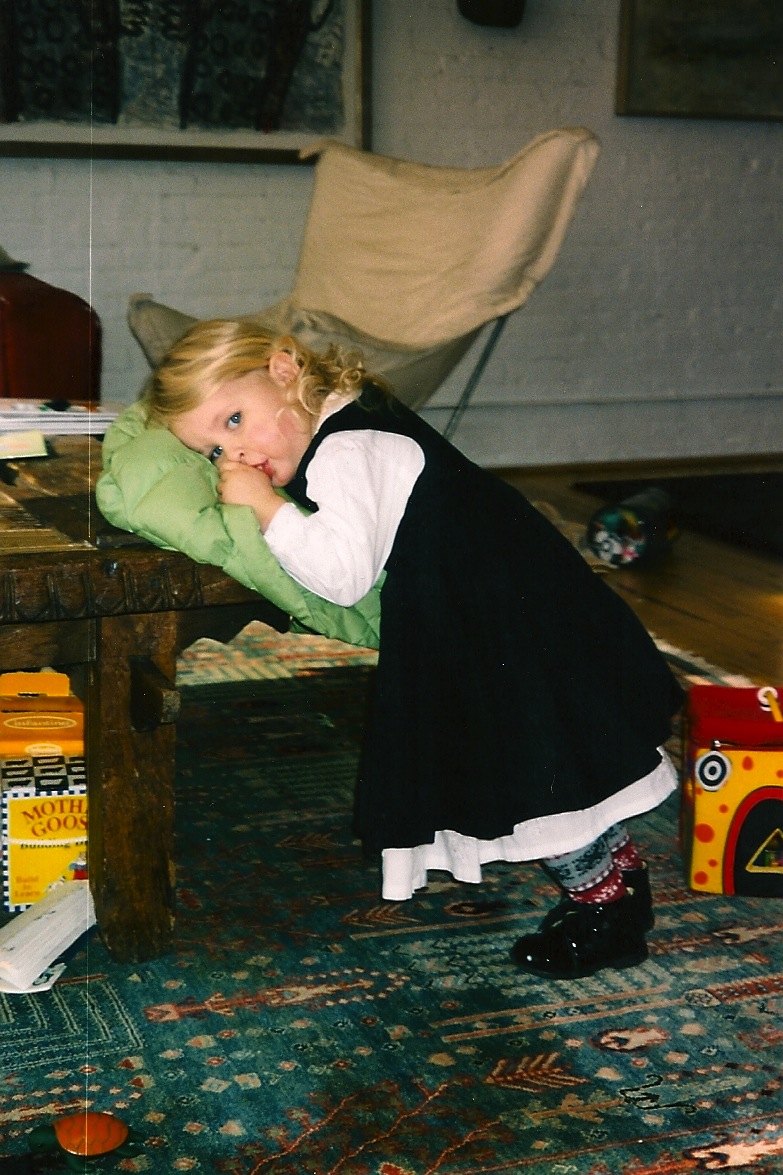
Emma – 2004

  Related articles

Parental Bullying and Autism

I have kept the specific blog, post and commenter who I refer to in this piece anonymous because my point is not about any particular person, but about a larger issue.  But first, a little background…   I was alerted to some negative comments left on a friend’s blog.  She had written a post about learning to accept her Autistic child.  It was a beautifully written, honest and loving post detailing what things had helped her find her way to acceptance and how that journey had changed her and her relationship to her child.  The path she describes was similar to my own, except mine took much longer and was more circuitous, but I could completely relate to her process.  It was my journey, only on speed.

I went to the blog to read the comments and read this:  “”You accepted autism, I fought it.”  I stopped breathing.  I felt as though someone had taken a 2 X 4 and rammed me in the solar plexus.  I became aware of the fluttering in my stomach with the simultaneous sensation of dizziness in my head, starting just behind my eyes and then a prickly feeling at the back of my skull.  I could feel my heart pounding.  I swallowed.  I read on.  The words are no longer important.  She  related how she had “recovered” her child as though it were scientific fact and then said that her thinking would one day be common knowledge and any other view would be considered “archaic.”

I had to stop reading.  I stood up.  I left the room, walked around, drank some water and came back.  I could feel tears welling up.  I swallowed again.  I was aware that my hands trembled as I read “Seems to me a thinking person would keep an open mind and once you accept autism…there is no more thinking that occurs…just the acceptance.”  I couldn’t work out what that meant as there was no logic that I could get a firm handle on, but the feeling those words evoked was one of failure and shame.  I had to make a conscious effort to take a deep breath.  I felt the sting of her words, like a knife cutting me open.  I sat there and read the other comments and another from her, reiterating her stance, her position.  Her story, no longer a personal tale, but one given forth as though evidence in a court of law.  And her love shining through it all, triumphant, jeering, condemning.  Her actions and the outcome of her actions worn like a medal of honor, the purple heart of parenting, pinned to her chest, evidence of her supremacy.

I could no longer hold back my tears.  My tears, physical expressions of my inadequacies.  As I cried, as the tears ran down my cheeks, dripping off my chin on to my shirt, I closed my eyes and felt all those feelings of pain, of sadness, of shame that had nothing to do with autism, but are feelings I carry around, despite how hard I try to get beyond them, feelings I have had my entire adult life, long before I became a mother.  Those feelings of not being good enough, not being worthy, not being pulled together, not having all the answers.  Those feelings of being “less than” all of them came bubbling to the surface.  Those biting words from that commenter cut through the fragile dam I so carefully constructed for myself.

“You accepted… I fought…”

I am better than you.  My love is stronger, better… I love my child more than you do.

This is bullying.  Words used to personally attack or intimidate another person.  It makes us think we are not as good as someone else.  For me, her words took me back to all those years when I believed all those parents who spoke with assurance, with superiority, without doubt about something that could not be proven or even replicated, stories that are not based in any science, but are “one offs”.  All those false hopes I had and mistook for the real thing.  False promises that lead me down a path of tremendous pain, ultimately harming my daughter far more than helping her.  The biggest strides I’ve made that have positively impacted my daughter are when I was able to completely accept every aspect of Emma and put down the whip beating me to change her neurology.   This is not to say we do not do everything in our power to help her learn, teach her to care for herself and try to give her tools she can use to flourish.

Richard said to me the other day, “Parents are spending all this time and energy trying to teach their kids to be normal, when they should be teaching their kids how to be themselves.”

My husband is brilliant.

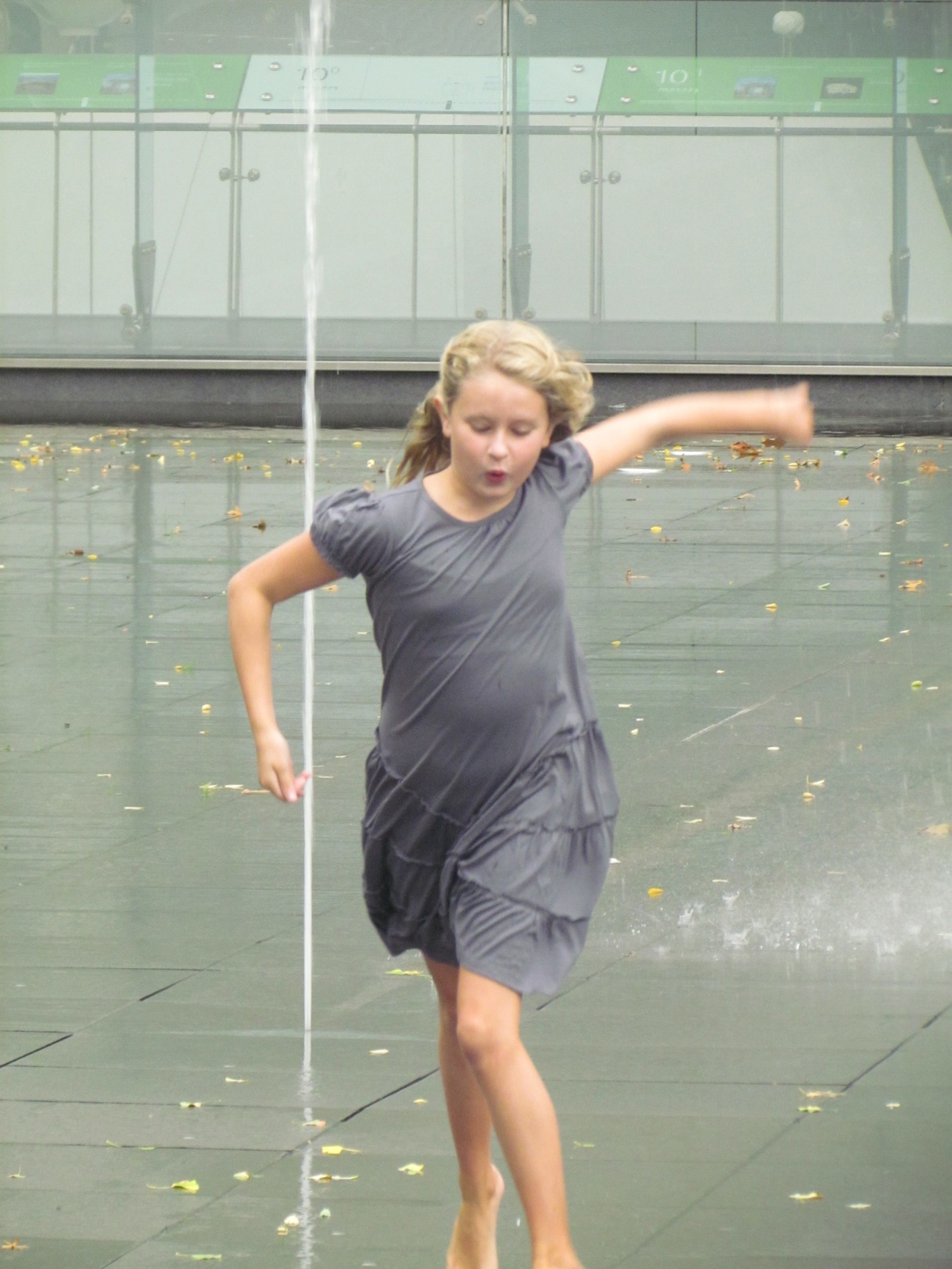
Emma – September, 2012

A Fantasy for Parents of Newly Diagnosed Autistic Children

I wrote about some of these ideas before in the Fantasy For Autists post a couple of weeks ago.  This is a follow up post, a fantasy for parents of newly diagnosed autistic children.

When Emma was first diagnosed I felt fear more than any other emotion.  It was overwhelming and crushing.  The word “autism” carried with it a weighty sense of doom.  People have described it as akin to receiving a “life sentence,” it was a word I knew almost nothing about, and what I did know wasn’t good. “We don’t know what causes it,” “There is no cure” were the words we were told many, many times by the various specialists we went to, seeking help for our beautiful, happy, fiercely independent daughter.  Those words were said matter-of-factly, but the grim set of the lips by those who spoke those words belied the truth, it seemed.  Some specialists would follow those words with a sad shake of their head, often done while uttering, “I’m sorry”  as they ushered us out of their office.  The doctor’s appointment now over, we were left standing alone, confused, terrified and overwhelmed by what we could not understand, by what could not be explained, by what seemed like a dark cloud enveloping every aspect of our lives.

Then there were the depictions in the media of the devastated families struggling to make ends meet, the scary images of the perseverative, stimming children in full meltdown, family members run ragged, siblings, silent and resentful, spouses angry and argumentative, and the autistic child, always somewhere in the background, seemingly oblivious to all the chaos they supposedly had created within, what would otherwise have been, the perfect American family, had they not been born.  While this may help with fund raising by preying on people’s fears and pity for those less fortunate than themselves, it is these depictions that the newly diagnosed child and her family will see.

Can we take a moment and consider how these depictions make the newly diagnosed child feel?  What message is being sent?  This child that everyone is so sure isn’t picking up on any of this, but perhaps is.  What if that child understands a great deal, even at the young age of a year and a half ?  What if that child is extremely intelligent and feels the overwhelming sadness their very existence seems to be causing their family?  What if these feelings are then intensified by the things that are said between family members in front of the child or within hearing distance of the child?  How would this affect the CHILD?  Think if you grew up feeling you were a mistake, damaged and broken?  What if the words that were used about you and to you were said with anger, exasperation and annoyance?  What if instead of being given the help you so desperately needed, you were told that the things that helped you concentrate and focus were wrong?  What if you were told almost everything you did was wrong?  Would that help you do things differently?

These negative images are also what will flash through the minds of the parents as they are given the “dreaded” diagnosis.  Listen to any newscast about autism.  The way the news anchors say the word – “autism” – the voice lowers, there is often a hesitation before the word is spoken.  Look at the statistics, the alarming statistics that cause everyone to feel frightened, because we know so little, so we fall into fear, fear of the unknown, fear of what might be, fear of the future, fear of the present, fear.  Is all of that fear helping any of us?  Does fear help us as parents do a better job parenting our autistic children?  Does the fear give you patience, does it help you when your child is unable to express themselves and so acts out?  Does that fear make any of us behave better, more appropriately?  Does the rampant fear help us sleep at night?  How’s all that fear working out for you?  Does it help?  And if you think it does, I’d love to know, how?

But what if this was not the way families were introduced to autism?  What if instead of sitting with the sympathetic, yet professionally aloof specialist the family was introduced to a group of self appointed adults, all of whom were autistic. What if these adults were verbal and nonverbal, women and men, spanning a wide range of ages?  What if each Autist “spoke,” whether through language or by typing or through a voice activated device?  What if the families were able to ask questions and were allowed to approach these Autists and even were able to have one or two or more assigned to them, the way a social worker is now, during Early Intervention?  What if those Autists were available to the family and their autistic child?  What if these were the people the family could turn to when they had questions, needed help finding resources, schools, methodologies or just wanted to check in with someone who might understand their child better than any pediatrician, psychologist, developmental pediatrician or neurologist could?

What if each Autist was given an opportunity to discuss what it was like for them growing up, the things that helped, the things that didn’t?  What if those Autists discussed how to teach life skills?  What if each family went away from this initial “welcoming” meeting with a folder that included a handbook written by Autists, a list of resources of Autistic doctors, neurologists, pediatricians, Autistic run schools with curriculum approved by Autists and others designed by Autists, and a list of  some of the essential things parents need to know and remember as they help their autistic child live and thrive?   What if, instead of being bombarded with frightening stories of self injurious nonverbal children we were shown videos of nonverbal Autists helping those children learn how to cope?  What if we were shown videos and news programs about all the Autistic adults who are pursuing their passions?   What if there were Autistic lawyers, neurologists, accountants, pediatricians, veterinarians, Occupational Therapists, Speech Therapists, Teachers, Educators, Head Masters, scientists, musicians, singers, performers, painters, writers, that we were all exposed to and knew about?  How would this change how we viewed our own children?  What if we were given the support we needed to help our children reach their potential without sadness, fear and pity?  What if?

My wish for Mother’s Day is that one day this will no longer be a far-fetched fantasy, but will be a reality.

To read my latest piece, Emma’s New Shoes, in the Huffington Post, click ‘here

And if you haven’t already done so, do vote for Emma’s Hope Book by clicking this ‘link‘ and clicking on the “like” button opposite Emma’s Hope Book.

The Path Leading Away From Hell – Continued

Yesterday when I began writing The Path Leading Away From Hell I knew halfway in, I wouldn’t have time to finish, but I plowed along anyway and at a certain point had to stop.  To pick up where I left off  – until recently finding a “cure” to my mind, was synonymous with helping Emma overcome all the things that caused her such pain and misery.  “Curing” her meant finding a way to help her read and write, figuring out how to help her with her GI issues, helping her with language and speech so that she might have an easier time making friends, helping her with her vast and varied sensory issues, helping her tolerate change, finding alternate ways for her to cope when she was overwhelmed so that she would not bite herself and punch herself in the face, helping her stay engaged and focused so that she might progress academically, helping her be in the world so that she might one day have the opportunity to live independently should she want to, surrounded by people she loved and who loved her.  I was intent on finding ways to help give her the tools she would need to travel if she wanted to, find a job and career she found interesting and close friends so that she might never feel alone.  These were/are my goals for Emma, and the word “cure” seemed to sum up all of these points, succinctly, in one compact word.

When I began reading blogs written by adult autists who objected vehemently to the word, “cure,” I was surprised.  At first I didn’t understand and reasoned that they objected because they were functioning at a much higher level than Emma is and does.  They spoke and articulated what they thought.  Emma cannot do any of that.  I felt sure that if they were unable to make their opinions and feelings known, they too would seek a “cure.”  But then I read some posts by autists who were not able to live independently, who had tremendous difficulty keeping a job, who found social situations impossible, yet they too objected to the use of the word “cure.”

I knew I was missing something, so I kept reading.  I wanted to understand.  I have always wanted to understand.  After days spent reading blogs and comments, many of which I’ve listed in past posts and some that are featured on the blogroll on this site,  I came upon an autistic woman who described two general types of parents, the first who wanted their autistic child to function as best they could and would do everything in their power to help them accomplish this and the second was a parent who wanted to cure their child of their autism so that they might have a “normal” child instead.  It was in reading her description that I began to understand, this wasn’t an argument about “cures” in the way I had understood and interpreted that word to mean regarding Emma, this was about the potency of words and how they can be used to dehumanize, discriminate and hurt.

No one was saying – Don’t help your child.  On the contrary, almost every single autist who wrote on the subject, spoke of the many challenges they faced and of the help they often required.  The argument was not about debating the merits or worthiness of who needed help, this was not a debate about needs, challenges, being non-verbal or verbal, being independent or dependent, the number that accompanied ones IQ or where on the autism spectrum one was.  What most of the autists I read objected to, was the use of the word “cure” because it implied who they fundamentally are, needed to be excised.

Many spoke of the shame they felt growing up, the alienation, and punishment they endured because of how they were perceived.  Almost everyone mentioned being bullied, being abused, being subjected to insults, derision and criticism.  All because they were autistic.  Add to that the various erroneous theories regarding autism and how autists lack empathy, do not feel as neuro-typicals do and you can begin to see how destructive this type of thinking is.  Dehumanizing and marginalization are the ways of war.  It is how people have justified acts of violence against others throughout history.  Dehumanizing autists with talk of “cures” and theories regarding how they do not feel are ways in which people can rationalize abuse.

It is human nature to want to be understood, to be listened to, and to connect with others.  But first there must be a conversation, a dialogue in which we all participate, in which each person is listened to and given the chance to voice their opinion.  Who knows, we may learn all sorts of things.

I certainly have.

To read Emma’s profile in The Thinking Person’s Guide to Autism, click ‘here.’
To read my most recent Huffington Post, click ‘here.’

Autism “Awareness” and a State of Bliss

I’m having “a morning.”  You know, the kind where, despite how organized you are, despite how well you laid everything out the night before, everything seems to work against you.  So rather than go on a rant, enumerating all the things that have managed to go “wrong” in the last three hours, I’m going to reflect on Emma.  Because Emma is a very, very happy little girl.  In fact, unless Emma has gotten into a perseverative loop about going to the zoo or someplace that she has become fixated on and feels she cannot do without, she is in a state of bliss.  It is the sort of blissful state achieved by gurus, yogis or LSD, or so I’m told.  Yet Emma comes to this place naturally.  She does not have a “practice,” she does not sit cross-legged staring at a fixed point for an hour each day, she does not meditate, feeling euphoric if she managed to pause the endless chatter in her head for even a few seconds, no, Emma is full of joy almost constantly.

Today is Autism “Awareness” day.  It is a day that was intended, and no doubt with the best of intentions, to bring much needed awareness to the larger community.  Yet, instead it has become a day that many of us dread.  Instead of bringing awareness about what it means to be autistic, we are bombarded with frightening statistics.  Statistics that many will read and then, feeling helpless, will turn the page.  I’m all for awareness, but let’s then be aware.  Let’s be aware that our society does not embrace those with disabilities.  Let’s acknowledge that our school systems are failing our autistic children.  Let’s look at our government and exactly what is being done to help those who are autistic.  Let’s take a good hard look at autism. Let’s look at the prejudices, the bullying, the marginalization of people on the spectrum.  Let’s take a good hard look at ourselves.  Are we assuming incompetence when confronted with someone who makes grunting noises, whose speech is garbled, who flaps their hands, or doesn’t look us in the eye?  When someone cannot speak do you assume they have nothing to say?  When you see someone, on the airplane, in the playground, sitting next to you on the bus or subway, who is acting differently, do you move away?  Do you feel irritation?  Do you feel annoyed?  Do you feel impatient and wish you’d gotten onto a different car or bus?  Awareness begins with each of us.  Awareness is more than lighting something up a given color.  Awareness begins with being open.  Awareness means stopping and examining our beliefs.  Awareness means asking questions.  Awareness begins with each of us.

Awareness.

It’s a great word.

Let’s not allow it to become meaningless.

For more on Emma’s journey and ours through a childhood of autism, go to:   Emma’s Hope Book

Impatience

How you do anything, is how you do everything.  I don’t know if that’s a direct quote, but the idea is from a Buddhist teacher who wrote a book with a similar title, which I also cannot remember exactly.  What I do remember is reading that idea and how it resonated.

So I had surgery on Wednesday, was home that night, was in a lot of pain Thursday, barely remember Friday, but know I felt much, much better and by Saturday was over it.  I don’t mean physically, I mean I was over it, as in – we did the whole surgery thing, now let’s get on with life, this has becoming tiresome.  When I woke up on Saturday and still felt like I’d been hit broadside by a semi, I thought –  I should feel well enough to get up and do things.  Then I had to remind myself, it had only been two full days since I woke from the anesthesia and that this was the third day and I would feel better, eventually.  With that thought in mind I wandered around and went back to bed.  Sunday I was more active and yesterday I was a whirlwind of activity, comparatively speaking.  But I did have to take a nap at one point and had a brutal headache.  Today, determined to just “act as if” all was well, I woke with everyone else, tried to do my part in getting the children ready for school, did a load of laundry, and now, sitting here, feel exhausted again, and, it must be said, tired of feeling tired.

How you do anything is how you do everything.

So the bad news is I’m impatient, but that’s also the good news because my impatience pushes me to be active, which is a good thing after surgery as the worst thing one can do is give in to the feeling of just wanting to stay in bed… forever.

Like so many things, emotions tend to seep into everything.  When I feel upbeat and full of energy everything takes on a brighter hue, people seem friendlier, minor delays and the vicissitudes of  life don’t have a lasting impact.  But the opposite is also true.  So this morning while getting Emma ready for her school bus she said she wanted to play a game.

“Okay.  What game do you want to play?” I asked.

“Imagine that game,” she answered.

“How do you play it?”  I asked.

She then began to sing an Elmo song entitled – “Imagine That” and began to script the dialogue between Zooey and another Sesame Street character.

“Now we know what the – imagine that – game is,” Richard remarked.

Yep.  And here’s the thing, this isn’t terrible.  There’s nothing inherently wrong with her choosing to do this during the ten minutes she had left before her school bus arrived.  But I felt disappointed.  I had hoped she wanted to play a game.  You know, a game where we actually interacted.  But that’s not what Emma had in mind.  And it’s okay.  She wanted to sing her song and so she did.

Impatience.  Acceptance.   Impatience.  Acceptance.

How you do anything is how you do everything.

For more on Emma’s journey through a childhood of autism, go to:   Emma’s Hope Book